Donald Trump’s sharp contrast from Obama and Bush on Islam has serious implications – The Washington Post

Well-worth reading, William McCants assessment of the risks of Trump and his team, providing historical context:

President-elect Donald Trump and his top political and security advisers are convinced Islam’s moral rules, the sharia, not only imperil the safety of Americans but their very way of life. They break sharply with Presidents Obama and George W. Bush who refused to equate traditional Islam with terrorism. The rupture view could ultimately serve as a boon to jihadist recruitment.

The president-elect has called for an “ideological screening test” for immigrants “who believe that sharia law should supplant American law.” His chief political strategist, Steve Bannon, has said that the Roman Catholic Church and the “Judeo-Christian West” have to “struggle against Islam” just as their ancestors did. He is reportedly taking advice from the notorious sharia conspiracy theorist Frank Gaffney, whose team briefed Trump on the dangers of sharia during the campaign.

Trump’s national security adviser, Michael Flynn, called Islam a “cancer” and a “political ideology” that “hides behind this notion of it being a religion.” (Flynn regularly promotesfalse stories of sharia law taking over in the United States.) And Trump’s nominee for the nation’s chief law enforcement officer, Sen. Jeff Sessions, has said that the true threat confronting the United States is “the toxic ideology of Islam” and has proposed screening out immigrants who “believe in sharia law.”

Suspicion of Sharia is not confined to Trump and his advisers. It permeates mainstream Republican politics. More than half Fox viewers believe American Muslims want to impose sharia. Former House Speaker Newt Gingrich, a front-runner in the previous election cycle, described sharia as “a mortal threat to the survival of freedom in the United States and in the world as we know it.” (He upped the ante during Trump’s campaign, calling for deporting every Muslim citizen who believes in it.)

The content of the sharia alone cannot explain fears of it. Many of its controversial rules, like death for blasphemy and apostasy, have parallels in the Hebrew Bible, a book revered by many Americans. Most Muslim countries to do not impose the sharia in total — they either limit its application to family law or ignore it entirely. And most of the 1 percent of Americans who are Muslim believe the sharia is just ethical personal guidelines that should not supersede the Constitution — even according to the crudest online polls promulgated by the right. Like any faith community in the United States, American Muslims can practice the Sharia as long as it does not violate American law.

So whence the worry? It arises from deeper fears of physical and cultural death. The physical fear is a consequence of the 9/11 attacks, which deeply scarred the psyche of a nation that is not used to war on its soil. The attacks shattered Americans’ sense of security and invulnerability. Because the attackers justified their atrocity on the basis of Islamic scripture, the religion and its adherents became objects of suspicion blame — never mind that the kind of Sharia jihadists want is not the kind most American Muslims want.

That paranoia has grown following a series of lone wolf attacks claimed by the so-called Islamic State: San Bernardino, Orlando, St. Cloud. In some ways the fear is worse now than after 9/11 because the attacks are carried about by Americans acting on their own and not by foreigners directed by an organization. When I was promoting my book on ISIS in small towns, I was stunned to hear audience members expressing their terror that their local mall or Walmart could be next. If it can happen in San Bernardino, it can happen here, they suggested.

The paranoia is stoked by jihadist organizations like the Islamic State, who claim attacks in its name even if the attacker has no connection to the organization. It wants non-Muslims to distrust their Muslims neighbors, hoping they will become alienated and more susceptible to recruitment. Even lone-wolf attackers deliberately foster distrust. “Btw, every single Muslim who disapproves of my actions is a sleeper cell, waiting for a signal,” wrote the Ohio State attacker on Facebook.

That the Ohio State attacker was a refugee from Somalia plays into the related fear that immigrants from non-Western countries are a threat to the American way of life, especially immigrants from Muslim-majority countries. Notice that condemnations of sharia as a security threat almost always accompany peaens to America’s Judeo-Christian heritage. The sharia is presented as the inverse of everything America stands for — the shadow that offsets the light.

The distant fathers of American law, the Romans, would have empathized with this strain of America’s cultural anxiety. In their day, the Roman elite worried about Jewish law subverting Roman culture, including those who were particularly concerned about Romans who converted to Judaism. The senator Tacitus scorned “those who come over to their religion adopt the practice, and have this lesson first instilled into them, to despise all gods, to disown their country, and set at nought parents, children, and brethren.”

The fear of Jews, which a historian of the ancient world dubbed Judeophobia, continued on in the Christian empires that replaced Rome for many of the same reasons. Jews were deemed a people apart, worshiping a law that God had annulled when he sent his only begotten son. “I advise that their rabbis be forbidden to teach henceforth on pain of loss of life and limb,” Martin Luther wrote, because “they wantonly employ the poor people’s obedience contrary to the law of the Lord.”

There was some anti-Semitism in early American history, but there weren’t enough Jews in America to worry about until the mid-19th century when Jewish immigration began to sharply increase. Because Jews were associated with international banking in the public imagination, they were blamed for the financial downturns in the late nineteenth century that triggered spasms of populist rage.

When global anti-Semitism reached a fevered pitch in the run-up to World War II, Christians and Jews combated it together by portraying Judaism as part of a common American patrimony. To that era we owe the phrase, “Judeo-Christian heritage.” The national guilt for failing to protect the Jews from the Holocaust forever enshrined the phrase in the America’s political lexicon.

Jews are again the target of populist rage in the United States. Hundreds of journalists received anti-Semitic death threats on Twitter during the election. But to those who consider minority faiths to be a threat, Jews have been eclipsed by Muslims, who, in the popular imagination, threaten to destroy the white Christian West physically with terrorism and immigration and culturally with alien laws.

A classically American approach that protects the many religious streams running together to form the American cultural heritage rather than damming one in favor of another. As historian Denise Spellberg observes of Thomas Jefferson’s view of Islam, “In the formation of the American ideal and principles of what we consider to be exceptional American values, Muslims were, at the beginning, the litmus test for whether the reach of American constitutional principles would include every believer, every kind, or not.” Jefferson didn’t care for Islam (or any organized religion, for that matter). But he understood that America would be stronger if citizens favoring one stream of its heritage vigorously argued its merits without seeking to place legal limits on those arguing for the merits of a different stream.

In the short term, Jefferson’s approach will not alleviate the fear behind the laws contemplated by Trump and his team. But by refusing to put unfair restrictions on Muslims, we rebuff the jihadist recruiters and ensure that our roiling cultural heritage, energized by passionate debate, can continue to adapt to the ever-changing demographic landscape.

Demonizing and repressing a religious minority because it has different moral rules than the majority can have unintended consequences. Just ask the pagan Romans who scorned Jews because of their religious laws. Some of those Jews reacted by changing how they practiced their religion, arguing that one could be faithful to the spirit of Judaism without obeying Jewish law and faithful to Roman law without disobeying God. The change made it easier for those Jews — known as Christians — to proselytize among the Gentiles, which ultimately paved the way for their takeover of the empire. Presumably that’s not the outcome Trump and his advisers have in mind for the restrictions they are contemplating.
Source: Donald Trump’s sharp contrast from Obama and Bush on Islam has serious implications – The Washington Post

ICYMI – Saudis and Extremism: ‘Both the Arsonists and the Firefighters’ – The New York Times

Good long read:

The idea has become a commonplace: that Saudi Arabia’s export of the rigid, bigoted, patriarchal, fundamentalist strain of Islam known as Wahhabism has fueled global extremism and contributed to terrorism. As the Islamic State projects its menacing calls for violence into the West, directing or inspiring terrorist attacks in country after country, an old debate over Saudi influence on Islam has taken on new relevance.

Is the world today a more divided, dangerous and violent place because of the cumulative effect of five decades of oil-financed proselytizing from the historical heart of the Muslim world? Or is Saudi Arabia, which has often supported Western-friendly autocrats over Islamists, merely a convenient scapegoat for extremism and terrorism with many complex causes — the United States’s own actions among them?

Those questions are deeply contentious, partly because of the contradictory impulses of the Saudi state.

In the realm of extremist Islam, the Saudis are “both the arsonists and the firefighters,” said William McCants, a Brookings Institution scholar. “They promote a very toxic form of Islam that draws sharp lines between a small number of true believers and everyone else, Muslim and non-Muslim,” he said, providing ideological fodder for violent jihadists.

Yet at the same time, “they’re our partners in counterterrorism,” said Mr. McCants, one of three dozen academics, government officials and experts on Islam from multiple countries interviewed for this article.

Conflicting Goals

Saudi leaders seek good relations with the West and see jihadist violence as a menace that could endanger their rule, especially now that the Islamic State is staging attacks in the kingdom — 25 in the last eight months, by the government’s count. But they are also driven by their rivalry with Iran, and they depend for legitimacy on a clerical establishment dedicated to a reactionary set of beliefs. Those conflicting goals can play out in a bafflingly inconsistent manner.

Thomas Hegghammer, a Norwegian terrorism expert who has advised the United States government, said the most important effect of Saudi proselytizing might have been to slow the evolution of Islam, blocking its natural accommodation to a diverse and globalized world. “If there was going to be an Islamic reformation in the 20th century, the Saudis probably prevented it by pumping out literalism,” he said.

Photo

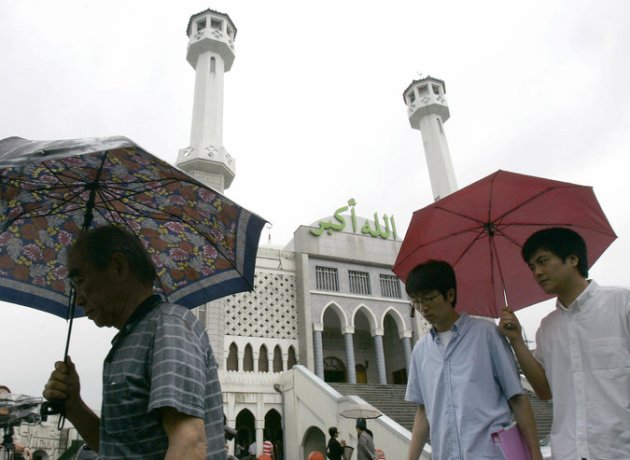
The Seoul Central Mosque in South Korea, one of hundreds of mosques around the world built using Saudi donations. CreditChoi Won-Suk/Agence France-Presse — Getty Images 

The reach of the Saudis has been stunning, touching nearly every country with a Muslim population, from the Gothenburg Mosque in Sweden to the King Faisal Mosque in Chad, from the King Fahad Mosque in Los Angeles to the Seoul Central Mosque in South Korea. Support has come from the Saudi government; the royal family; Saudi charities; and Saudi-sponsored organizations including the World Muslim League, the World Assembly of Muslim Youth and the International Islamic Relief Organization, providing the hardware of impressive edifices and the software of preaching and teaching.

There is a broad consensus that the Saudi ideological juggernaut has disrupted local Islamic traditions in dozens of countries — the result of lavish spending on religious outreach for half a century, estimated in the tens of billions of dollars. The result has been amplified by guest workers, many from South Asia, who spend years in Saudi Arabia and bring Saudi ways home with them. In many countries, Wahhabist preaching has encouraged a harshly judgmental religion, contributing to majority supportin some polls in Egypt, Pakistan and other countries for stoning for adultery and execution for anyone trying to leave Islam.

Limits of Influence

But exactly how Saudi influence plays out seems to depend greatly on local conditions. In parts of Africa and Southeast Asia, for instance, Saudi teachings have shifted the religious culture in a markedly conservative direction, most visibly in the decision of more women to cover their hair or of men to grow beards. Among Muslim immigrant communities in Europe, the Saudi influence seems to be just one factor driving radicalization, and not the most significant. In divided countries like Pakistan and Nigeria, the flood of Saudi money, and the ideology it promotes, have exacerbated divisions over religion that regularly prove lethal.

And for a small minority in many countries, the exclusionary Saudi version of Sunni Islam, with its denigration of Jews and Christians, as well as of Muslims of Shiite, Sufi and other traditions, may have made some people vulnerable to the lure of Al Qaeda, the Islamic State and other violent jihadist groups. “There’s only so much dehumanizing of the other that you can be exposed to — and exposed to as the word of God — without becoming susceptible to recruitment,” said David Andrew Weinberg, a senior fellow at the Foundation for Defense of Democracies in Washington who tracks Saudi influence.

Exhibit A may be Saudi Arabia itself, which produced not only Osama bin Laden, but also 15 of the 19 hijackers of Sept. 11, 2001; sent more suicide bombers than any other country to Iraq after the 2003 invasion; and has supplied more foreign fighters to the Islamic State, 2,500, than any country other than Tunisia.

Mehmet Gormez, the senior Islamic cleric in Turkey, said that while he was meeting with Saudi clerics in Riyadh in January, the Saudi authorities had executed 47 people in a single day on terrorism charges, 45 of them Saudi citizens. “I said: ‘These people studied Islam for 10 or 15 years in your country. Is there a problem with the educational system?’ ” Mr. Gormez said in an interview. He argued that Wahhabi teaching was undermining the pluralism, tolerance and openness to science and learning that had long characterized Islam. “Sadly,” he said, the changes have taken place “in almost all of the Islamic world.”

In a huge embarrassment to the Saudi authorities, the Islamic State adopted official Saudi textbooks for its schools until the extremist group could publish its own books in 2015. Out of 12 works by Muslim scholars republished by the Islamic State, seven are by Muhammad ibn Abd al-Wahhab, the 18th-century founder of the Saudi school of Islam, said Jacob Olidort, a scholar at the Washington Institute for Near East Policy. A former imam of the Grand Mosque in Mecca, Sheikh Adil al-Kalbani declared with regret in a television interview in January that the Islamic State leaders “draw their ideas from what is written in our own books, our own principles.”

Small details of Saudi practice can cause outsize trouble. For at least two decades, the kingdom has distributed an English translation of the Quran that in the first surah, or chapter, adds parenthetical references to Jews and Christians in addressing Allah: “those who earned Your Anger (such as the Jews), nor of those who went astray (such as the Christians).” Seyyed Hossein Nasr, a professor of Islamic studies at George Washington University and the editor in chief of the new Study Quran, an annotated English version, said the additions were “a complete heresy, with no basis in Islamic tradition.”

Accordingly, many American officials who have worked to counter extremism and terrorism have formed a dark view of the Saudi effect — even if, given the sensitivity of the relationship, they are often loath to discuss it publicly. The United States’ reliance on Saudi counterterrorism cooperation in recent years — for instance, the Saudi tip that foiled a 2010 Qaeda plot to blow up two American cargo planes — has often taken precedence over concerns about radical influence. And generous Saudi funding for professorships and research centers at American universities, including the most elite institutions, has deterred criticism and discouraged research on the effects of Wahhabi proselytizing, according to Mr. McCants — who is working on a book about the Saudi impact on global Islam — and other scholars.

One American former official who has begun to speak out is Ms. Pandith, the State Department’s first special representative to Muslim communities worldwide. From 2009 to 2014, she visited Muslims in 80 countries and concluded that Saudi influence was pernicious and universal. “In each place I visited, the Wahhabi influence was an insidious presence,” she wrote in The New York Times last year. She said the United States should “disrupt the training of extremist imams,” “reject free Saudi textbooks and translations that are filled with hate,” and “prevent the Saudis from demolishing local Muslim religious and cultural sites that are evidence of the diversity of Islam.”

Source: Saudis and Extremism: ‘Both the Arsonists and the Firefighters’ – The New York Times

Why Foreign Fighters Come from Francophone Countries | Foreign Affairs

Interesting take by William McCants and Christopher Meserole (thanks to those who brought it to my attention), and another indicator of the failure of the French (and Belgian) models of integration (and in the case of France, laïcité):

As with the Francophone finding overall, we’re left with guesswork as to why exactly the relationships between French politics, urbanization, youth unemployment, and Sunni militancy exist. We suspect that when there are large numbers of unemployed youth, some of them are bound to get up to mischief. When they live in large cities, they have more opportunities to connect with people espousing radical causes. And when those cities are in Francophone countries that adopt the strident French approach to secularism, Sunni radicalism is more appealing.

For now, the relationship needs to be studied and tested by comparing several cases in countries and between countries. We also found other interesting relationships—such as between Sunni violence and prior civil conflict—but they are neither as strong nor as compelling.

Regardless, the latest attacks in Belgium are reason enough to share the initial findings. They may be way off, but at least they are based on the best available data. If the data is wrong or our interpretations skewed, we hope the effort will lead to more rigorous explanations of what is driving jihadist terrorism in Europe. Our initial findings should in no way imply that Francophone countries are responsible for the recent horrible attacks—no country deserves to have its civilians killed, regardless of the perpetrator’s motives. But the magnitude of the violence and the fear it engenders demand that we investigate those motives beyond just the standard boilerplate explanations.

Source: Why Foreign Fighters Come from Francophone Countries | Foreign Affairs