The idea has become a commonplace: that Saudi Arabia’s export of the rigid, bigoted, patriarchal, fundamentalist strain of Islam known as Wahhabism has fueled global extremism and contributed to terrorism. As the Islamic State projects its menacing calls for violence into the West, directing or inspiring terrorist attacks in country after country, an old debate over Saudi influence on Islam has taken on new relevance.
Is the world today a more divided, dangerous and violent place because of the cumulative effect of five decades of oil-financed proselytizing from the historical heart of the Muslim world? Or is Saudi Arabia, which has often supported Western-friendly autocrats over Islamists, merely a convenient scapegoat for extremism and terrorism with many complex causes — the United States’s own actions among them?
Those questions are deeply contentious, partly because of the contradictory impulses of the Saudi state.
In the realm of extremist Islam, the Saudis are “both the arsonists and the firefighters,” said William McCants, a Brookings Institution scholar. “They promote a very toxic form of Islam that draws sharp lines between a small number of true believers and everyone else, Muslim and non-Muslim,” he said, providing ideological fodder for violent jihadists.
Yet at the same time, “they’re our partners in counterterrorism,” said Mr. McCants, one of three dozen academics, government officials and experts on Islam from multiple countries interviewed for this article.
Conflicting Goals
Saudi leaders seek good relations with the West and see jihadist violence as a menace that could endanger their rule, especially now that the Islamic State is staging attacks in the kingdom — 25 in the last eight months, by the government’s count. But they are also driven by their rivalry with Iran, and they depend for legitimacy on a clerical establishment dedicated to a reactionary set of beliefs. Those conflicting goals can play out in a bafflingly inconsistent manner.
Thomas Hegghammer, a Norwegian terrorism expert who has advised the United States government, said the most important effect of Saudi proselytizing might have been to slow the evolution of Islam, blocking its natural accommodation to a diverse and globalized world. “If there was going to be an Islamic reformation in the 20th century, the Saudis probably prevented it by pumping out literalism,” he said.
Photo
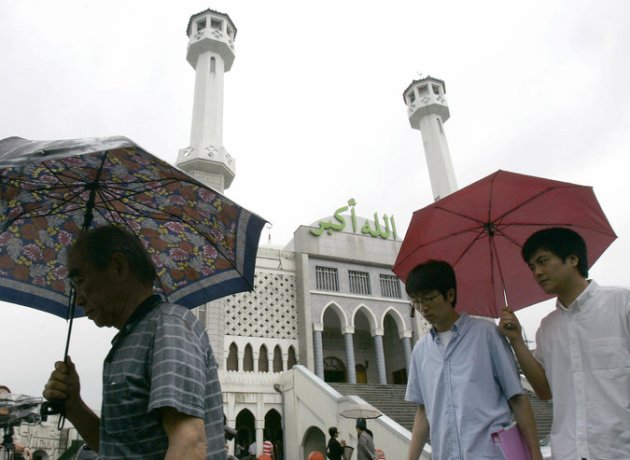
The Seoul Central Mosque in South Korea, one of hundreds of mosques around the world built using Saudi donations.CreditChoi Won-Suk/Agence France-Presse — Getty Images
The reach of the Saudis has been stunning, touching nearly every country with a Muslim population, from the Gothenburg Mosque in Sweden to the King Faisal Mosque in Chad, from the King Fahad Mosque in Los Angeles to the Seoul Central Mosque in South Korea. Support has come from the Saudi government; the royal family; Saudi charities; and Saudi-sponsored organizations including the World Muslim League, the World Assembly of Muslim Youth and the International Islamic Relief Organization, providing the hardware of impressive edifices and the software of preaching and teaching.
There is a broad consensus that the Saudi ideological juggernaut has disrupted local Islamic traditions in dozens of countries — the result of lavish spending on religious outreach for half a century, estimated in the tens of billions of dollars. The result has been amplified by guest workers, many from South Asia, who spend years in Saudi Arabia and bring Saudi ways home with them. In many countries, Wahhabist preaching has encouraged a harshly judgmental religion, contributing to majority supportin some polls in Egypt, Pakistan and other countries for stoning for adultery and execution for anyone trying to leave Islam.
Limits of Influence
But exactly how Saudi influence plays out seems to depend greatly on local conditions. In parts of Africa and Southeast Asia, for instance, Saudi teachings have shifted the religious culture in a markedly conservative direction, most visibly in the decision of more women to cover their hair or of men to grow beards. Among Muslim immigrant communities in Europe, the Saudi influence seems to be just one factor driving radicalization, and not the most significant. In divided countries like Pakistan and Nigeria, the flood of Saudi money, and the ideology it promotes, have exacerbated divisions over religion that regularly prove lethal.
And for a small minority in many countries, the exclusionary Saudi version of Sunni Islam, with its denigration of Jews and Christians, as well as of Muslims of Shiite, Sufi and other traditions, may have made some people vulnerable to the lure of Al Qaeda, the Islamic State and other violent jihadist groups. “There’s only so much dehumanizing of the other that you can be exposed to — and exposed to as the word of God — without becoming susceptible to recruitment,” said David Andrew Weinberg, a senior fellow at the Foundation for Defense of Democracies in Washington who tracks Saudi influence.
Exhibit A may be Saudi Arabia itself, which produced not only Osama bin Laden, but also 15 of the 19 hijackers of Sept. 11, 2001; sent more suicide bombers than any other country to Iraq after the 2003 invasion; and has supplied more foreign fighters to the Islamic State, 2,500, than any country other than Tunisia.
Mehmet Gormez, the senior Islamic cleric in Turkey, said that while he was meeting with Saudi clerics in Riyadh in January, the Saudi authorities had executed 47 people in a single day on terrorism charges, 45 of them Saudi citizens. “I said: ‘These people studied Islam for 10 or 15 years in your country. Is there a problem with the educational system?’ ” Mr. Gormez said in an interview. He argued that Wahhabi teaching was undermining the pluralism, tolerance and openness to science and learning that had long characterized Islam. “Sadly,” he said, the changes have taken place “in almost all of the Islamic world.”
In a huge embarrassment to the Saudi authorities, the Islamic State adopted official Saudi textbooks for its schools until the extremist group could publish its own books in 2015. Out of 12 works by Muslim scholars republished by the Islamic State, seven are by Muhammad ibn Abd al-Wahhab, the 18th-century founder of the Saudi school of Islam, said Jacob Olidort, a scholar at the Washington Institute for Near East Policy. A former imam of the Grand Mosque in Mecca, Sheikh Adil al-Kalbani declared with regret in a television interview in January that the Islamic State leaders “draw their ideas from what is written in our own books, our own principles.”
Small details of Saudi practice can cause outsize trouble. For at least two decades, the kingdom has distributed an English translation of the Quran that in the first surah, or chapter, adds parenthetical references to Jews and Christians in addressing Allah: “those who earned Your Anger (such as the Jews), nor of those who went astray (such as the Christians).” Seyyed Hossein Nasr, a professor of Islamic studies at George Washington University and the editor in chief of the new Study Quran, an annotated English version, said the additions were “a complete heresy, with no basis in Islamic tradition.”
Accordingly, many American officials who have worked to counter extremism and terrorism have formed a dark view of the Saudi effect — even if, given the sensitivity of the relationship, they are often loath to discuss it publicly. The United States’ reliance on Saudi counterterrorism cooperation in recent years — for instance, the Saudi tip that foiled a 2010 Qaeda plot to blow up two American cargo planes — has often taken precedence over concerns about radical influence. And generous Saudi funding for professorships and research centers at American universities, including the most elite institutions, has deterred criticism and discouraged research on the effects of Wahhabi proselytizing, according to Mr. McCants — who is working on a book about the Saudi impact on global Islam — and other scholars.
One American former official who has begun to speak out is Ms. Pandith, the State Department’s first special representative to Muslim communities worldwide. From 2009 to 2014, she visited Muslims in 80 countries and concluded that Saudi influence was pernicious and universal. “In each place I visited, the Wahhabi influence was an insidious presence,” she wrote in The New York Times last year. She said the United States should “disrupt the training of extremist imams,” “reject free Saudi textbooks and translations that are filled with hate,” and “prevent the Saudis from demolishing local Muslim religious and cultural sites that are evidence of the diversity of Islam.”
Powerful statement from an obviously distraught mother:
My son embraced the harsh, isolating view of the Wahhabis. He was encouraged to reject any information from non-Saudi sources. He scorned moderate imams and his parents. He learned to speak Arabic, read the Koran and form his own legal rulings. But since he’d never lived under a totalitarian regime, he broadcast their teachings openly. You mix a few ounces of religious fervour with a pound of a dogmatic, irrational ideology and you end up with extremists and terrorists. That’s the concoction ultraconservatism offers. His teachers and friends criticized him and withdrew. Now they claim they don’t know him.
They offer no guidance to men who take Wahhabism to its inevitable extreme. There is no authority among them who can rein in people who let their emotions or lusts inform their religion. No one among them takes responsibility for what they teach. If a follower becomes mentally ill, he will be scorned, perhaps accused of demonic possession.
Wahhabism or Salafism is the same Dr. Frankenstein that created the monstrous Islamic State, Boko Haram and al-Qaeda. It’s a politically motivated, pseudo-religious cult designed to extinguish the free-thinking liberality of moderate, traditional Islam. Salafism, fed by petro-dollars, teaches political obedience to Muslim rulers as a religious obligation.
Wahhabism is one of the vehicles by which ignorance is spread. Ignorance of Islamic history, Islamic law and modern politics fuel that vehicle. Ignorance should not be spread by religious leaders.
Here in Canada, religious teachers should be held responsible for what they teach and how their students interpret their teachings, especially when those teachings have led to the kind of chaos, strife and destruction Wahhabism has caused. Men like my son have taken sail on the ship of ultraconservatism, and his mentors have abandoned him and set him adrift. He was not a radical until he was radicalized.
And even when it does not lead to violence, extreme fundamentalism, in any religion, means living apart from society, with little or no integration.
A rather polite article on how the history of Mecca and Muslims is being re-written by the Saudi government:
Overseeing Mecca is also a key source of prestige for Saudi Arabia’s monarchy. The past two kings — the current one, Abdullah, and his predecessor, Fahd — have adopted the further title of ‘‘custodian of the two holy mosques’’ to boost their status, referring to Mecca’s Grand Mosque and Muhammad’s mosque in nearby Medina.
Now Mecca is being molded to a particularly Saudi vision that bolsters the rule of the Saud royal family.
Two forces shape that vision. One is raw, petrodollar-fueled capitalism. Mecca’s planners are largely catering to wealthier pilgrims by constructing five-star hotels, surrounding the Kaaba in marble-sheathed luxury. Nearby, pilgrims can shop at international chains, including a Paris Hilton store and a gender-segregated Starbucks.
The other force is Wahhabism, the strict, puritanical interpretation of Islam that the Saud rulers elevated to the country’s official doctrine. Saudi kings, for example, have given Wahhabi clerics a monopoly over preaching at the Grand Mosque. In return, the clerics staunchly back the monarchy.
One tenet of Wahhabism is that Muslim tombs or sites connected to revered figures — even the Prophet Muhammad, his family, and companions — should be destroyed to avoid veneration of anything other than God. It is the same iconoclastic zeal that has prompted militants from the Islamic State group to blow up Muslim shrines in Iraq and Syria.
In Mecca, few sites associated with Muhammad remain. Many were destroyed in previous expansions of the Grand Mosque in the 1980s and 1990s, and the new development is finishing off much of what remains. In 2008, the house of Abu Bakr, Muhammad’s successor as leader of the Muslim community, was razed to make way for a Hilton.

 Multicultural Meanderings