‘Anchor babies’: the ‘ludicrous’ immigration myth that treats people as pawns

A different situation than that normally captured by the term “birth tourists” without the abuse implied by those visiting only to give birth for the purposes of obtaining citizenship for their child:

Daira García wakes up at 5.50am. She takes out her dog, then tries to eat some breakfast before boarding the bus that gets her to school by 7.26 in the morning.

After class, she heads back home, where her parents, Silvia and Jorge, watch Noticiero and sip mate (she sometimes tries the drink as well but admits she’s never quite gotten used to it). They eat something, talk. When Daira goes off to finish her homework, she forgoes the desk in her room to curl up in her parents’ bed.

“It’s more comfy,” she quips.

Daira, 17, has a fairly standard routine for an American teenager: school, homework, family time. But unlike most kids, the schedule she’s come to rely on each day could easily be disrupted at any point.

Silvia and Jorge traveled from Argentina to the United States as 2001 became 2002, and with a new year came their new life in an unknown country. Daira’s big brother was just an infant then; now a college student, he doesn’t even really remember the place where he was born. And yet he’s only shielded from deportation because of Deferred Action for Childhood Arrivals (Daca), an Obama-era program the Trump administration has been trying to end for years. Silvia and Jorge, meanwhile, have no protection and could be picked up by agents from Immigration and Customs Enforcement (Ice) at any time.

Daira begins to cry just thinking about it.

“We’ve never had a plan for it if it happened,” Silvia says in Spanish. “Maybe we don’t give much thought to that because we think it’s healthier.”

An estimated 4.1 million US-citizen children lived with at least one undocumented parent in recent years, according to the Migration Policy Institute. They’re kids who anti-immigrant groups disparage as “anchor babies”, a derogatory term that insinuates these children are little more than pawns used by their immigrant parents to get a foothold in the US and eventually become citizens themselves.

Source: ‘Anchor babies’: the ‘ludicrous’ immigration myth that treats people as pawns

For Chinese, US visa halt puts jobs, citizen hopes at risk

More impact of the travel ban on some highly skilled immigrants:

Courtney Huang fell in love with the U.S. as a nursing student in Texas. She ended up staying 13 years and wants to become a U.S. citizen.

But Huang now finds her job, future, and dreams of citizenship on the line since the Trump administration barred entry last month to non-U.S. citizens and residents flying in from China over the coronavirus outbreak.

With crucial deadlines looming, her plans look increasingly at risk.

“I’m really scared,” Huang said. “I have a lot there. If I don’t go back, it’s just going to be very difficult.”

The U.S. suspended visa processing in China on Feb. 3, citing limited staffing during the virus outbreak. No deadline extensions have been announced and it’s not known when the suspension will be lifted. That’s put hundreds of Chinese citizens applying for U.S. work visas in limbo, fretting as their jobs look increasingly at risk.

Huang had returned to China to see her parents over the Lunar New Year holiday in late January. She had recently landed a new job in California and her work visa was on the verge of approval when the American Consulate in Shanghai announced it was returning everyone’s passports.

After weeks of fretting and weighing her options at her parent’s home in eastern China, Huang flew to Thailand. She now plans to wait out a mandated 14-day self-quarantine before seeing if she can get her visa from the U.S. Embassy in Bangkok.

Though Huang was born and raised in China, her whole life is now in Oakland, California, where she has an apartment, car, friends and job. With her Christian faith and gregarious, outspoken manner, the U.S. feels like home.

“I feel like I fit in better there. Free speech, free religion,” Huang said. Clean air, better career opportunities for women and a liberal social environment were also draws, she added.

Huang obtained a nursing degree in Texas, then a master’s degree in bioengineering from U.C. Berkeley. She’s on the verge of completing an M.B.A., with an eye toward settling permanently.

Now, Huang is concerned those plans could fall apart. Though her new employers, a company that provides clinical support for physicians, are understanding, Huang worries that as the months go by, there’s a possibility she may lose her job — and with it, her right to work in the U.S.

Like Huang, Kevin Yang, a Chinese doctoral student researching immunology at an American university, is also reconsidering his options. After moving to the U.s. eight years ago, Yang has returned home each winter holiday and had his student visa renewed without a hitch.

This year, though, Yang became one of many Chinese citizens caught up in the brutal tussle between Beijing and Washington over trade and technology.

When Yang applied for a visa in December, the State Department told him it was being delayed while they investigated his background for ties to the Chinese government. American officials have in recent years grown alarmed over the alleged theft of U.S. technology by China, casting a cloud of suspicion on Chinese citizens like Yang who work in the sciences.

Told the check would take four weeks, Yang changed his flights and prepared to stay longer.

Then in late January, the Chinese government began locking down whole cities to contain the virus. Soon after, Trump announced the U.S. travel ban. Yang got his passport back in the mail with no visa.

American officials told Yang’s academic adviser that since Yang no longer had a visa, they could no longer pay his stipend or fund his research with federal grant money. Hospital surveys that Yang said he spent “thousands of dollars and thousands of hours” over two years to set up were now in peril, something he described as a crushing blow.

“Maybe it’s time for me to start thinking about an alternative career,” Yang said, mulling the possibility he won’t be able to finish his Ph.D. “It’s like restarting my life.”

Discouraging high-skilled foreigners from immigrating could undermine the U.S. economy and its global prominence, said Anastasia Tonello, former president of the American Immigration Lawyers Association.

Nearly 2.5 million Chinese were in the U.S. as of 2018, according to the nonpartisan Migration Policy Institute, and most are significantly better educated than the average American. China is also the main source of foreign students enrolled in U.S. higher education.

While health and safety are legitimate concerns, blanket travel bans aren’t the answer, Tonello said.

“I just don’t think this was thought through,” she said. “These are just such broad strokes and can cause so much damage.”

The U.S. isn’t the only country currently restricting entry from China. Travelers face restrictions across the globe, from neighboring North Korea to far-flung New Zealand, Somalia, and Guatemala. Australia, a major destination for Chinese students and immigrants, also has banned arrivals and stopped issuing visas.

Such restrictions have been loudly criticized by China’s Foreign Ministry, though Beijing frequently singles out the United States.

Yang and Huang both say they understand why a travel ban could help contain the virus. But they say the U.S. halt on new visas — with no deadline extensions or other accommodations — is frustrating and unreasonable.

Even more frustrating for Huang is the sense that the U.S. is trying to bar her from coming back.

“I’m not being respected. I work in the states as a talent; I pay my taxes diligently,” Huang said. “This just makes me feel like, ‘Oh, maybe I’m just not welcome in the states.’”

Even for Chinese with visas, the clock is ticking. Tom, a programmer from the epicenter of the outbreak, the city of Wuhan, had just obtained a master’s degree in computer science from Emory University in Georgia. He has a U.S. visa but got stuck in Wuhan after the city was quarantined.

Under American law, foreign students have 90 days after graduation to start new jobs if they want to stay and work in the U.S. If Tom is still trapped in Wuhan by May, he’ll lose both his new job at Amazon and his chance to work in America altogether.

“I’d have to start all over again,” Tom said, declining to provide his last name for fear it could affect his visa and career prospects. “I just worry every day about whether I can go back to America.”

Tom says his family spent around $70,000 to send him to Emory for a shot at a better life in the U.S. He didn’t want to work in China, deterred by the Chinese tech industry’s notoriously-long hours, popularly known as “996” –9 a.m. to 9 p.m., six days a week.

U.S. officials told him there was nothing he could do.

“We just want some help or advice,” Tom said. “Please don’t ignore us, it’s something completely out of our control. That’s the worst thing.”

Source: For Chinese, US visa halt puts jobs, citizen hopes at risk

At Census Time, Asian Americans Again Confront the Question of Who ‘Counts’ as Asian. Here’s How the Answer Got So Complicated

Of interest. Canadian visible minority groups have three Asian groups: East Asian, South Asian and West Asian, in addition to Korean and Japanese.

With the U.S. Census online form set to go live starting March 12, Americans will soon get the once-in-a-decade opportunity to stand up and be counted. But while many of the questions on the Census may seem simple — name or date of birth — at least one is more complicated: race.

For many Asian Americans, who are the least likely among ethnic groups to fill out the Census, this can be especially true. The Census Bureau defines a person of the Asian race as “having origins in any of the original peoples of the Far East, Southeast Asia, or the Indian subcontinent including, for example, Cambodia, China, India, Japan, Korea, Malaysia, Pakistan, the Philippine Islands, Thailand, and Vietnam.”

That means, according to the Pew Research Center, that the Census definition of “Asian” — the fastest growing American population — covers more than 20 ethnicities and 20 million citizens in the United States.

But American culture tends not to think of all regions in Asia as equally Asian. A quick Google search of “Asian food nearby” is likely to call up Chinese or Japanese restaurants, but not Indian or Filipino. Years after someone posted a thread on College Confidential, a popular college admissions forum, titled “Do Indians count as Asians?” the SAT in 2016 tweaked its race categories, explaining to test-takers that “Asian” did include “Indian subcontinent and Philippines origin.”

This issue even made its way to the 2020 Presidential race: during his run for the Democratic nomination, Andrew Yang, who is of Taiwanese descent, was frequently framed by the media and his own campaign as the Asian candidate, despite his rival Kamala Harris having Indian heritage. In addition, while Tulsi Gabbard’s Samoan heritage might put her in a different category on the Census now, before 2000, the Census put “Asian” and “Pacific Islander” together in the same broader category.

“My Asian-ness is kind of obvious in a way that might not be true of Kamala or even Tulsi,” Yang said. “That’s not a choice. It’s just a fairly evident reality.”

But the history of Asian identity in the U.S. shows that what Yang asserted is self-evident today could perhaps have evolved differently — and that, as the U.S. counts its population, the result of that evolution can have serious consequences.

Inventing “Asian American”

The boundary between Asia and Europe has no official line, so the definition of “Asian” may include Central Asians, East Asians, Native Hawaiians and Pacific Islanders, Southeast Asians and South Asians, as well as West Asians — whom the Census counts as white Middle Easterners and may not self-identify as Asian. But today’s common American usage of the term is a relatively recent phenomenon, spiking in popularity in the United States after World War II.

The Corpus of Historical American English shows less than one appearance of “Asian” per million words in American texts from 1810 through the 1940s, but that number rose to nearly 15 mentions per million words in the 1950s. A similar spike can be seen in British English.

At the time of this rise, in the U.S., contact with Asian cultures was predominantly via East Asian countries. “The U.S. was at war with Japan, then Korea, then Vietnam, and has occupied other parts,” explains linguist Lynne Murphy. In addition, the Immigration and Nationality Act of 1965 made way for large-scale immigration from Asia to the U.S.

It’s easy to see how important that contact was. After all, in the U.K., where the breakup of the British Empire contributed to a wave of immigration from South Asia in the mid-20th century, “Asian” has a different meaning. In The Prodigal Tongue: The Love-Hate Relationship Between American and British English, Murphy writes about a British journalist whose use of the word “means ‘from the Indian subcontinent,’ and so when he wants to talk about people from China, Korea, or Japan, he [says] east Asians. In America, the situation is just the opposite: say Asian and people assume ‘east Asian.’ When people mean ‘south Asian,’ they’ll probably say Indian or maybe South Asian.”

As civil rights movements swept the United States in the 1960s and ‘70s, Asian populations likewise seized the moment to agitate for their rights. The term “Asian American” emerged from student activists inspired by those movements and was purposefully broad. Given that their numbers individually were much smaller than other race-based movements, “it was a moment in which Chinese American, Filipino American, Japanese American activists came together and said, ‘You know, let’s unite under this umbrella of Asian American,’” explains Anthony Ocampo, a sociologist at Cal Poly Pomona. The movement soon expanded to include South-Asian Americans, Korean Americans and Vietnamese Americans.

As Asian Americans worked for increased visibility, “Asian” and “Asian American” became more general ways of talking about people while avoiding other terms that were incorrect or problematic, like Oriental, which was prominent before the ‘50s, Murphy notes. But it wasn’t long before the term’s meaning narrowed, increasingly coming to apply only to the most visible subgroups.

Eventually, the term “Asian” came to be associated with “what you look like, how your eyes are shaped, your skin tone and your hair texture,” says Ocampo. “When people hear the word ‘Asian,’ they think of certain types of last names that are aligned with Chinese, Korean or Japanese folks.”

A 2016 study done by the National Asian American Survey found that 42% of white Americans believed that Indians are “not likely to be” Asian or Asian American, with 45% believing that Pakistanis “not likely to be” Asian or Asian American. In addition, 27% of Asian Americans believed that Pakistani people are “not likely to be” Asian or Asian American with 15% reporting that Indians are “not likely to be” either. “The question of Asian American identity is contested, with South Asian groups (Indians and Pakistanis) finding it more challenging for American society to view them as Asian American,” concluded the researchers.

A narrow vision

According to the Pew Research Center, the very first U.S. Census in 1790 only had three categories: “Free white males, Free white females,” “All other free persons,” and “Slaves.” It took nearly a century, until 1870, for a category to be added for people of Asian descent. That category was simply called “Chinese.” In 1890, the Census Bureau added “Japanese,” followed by “Other” in 1910 (which primarily referred to people of Korean, Filipino and Indian descent), and “Filipino,” “Korean,” and “Hindu” (referring to Indians regardless of religion) in 1920.

People were allowed to choose their own race from 1960 onward, and this year’s Census will have the same categories for people of Asian descent it used in 2010: “Chinese,” “Japanese,” “Filipino,” “Korean,” “Asian Indian,” “Vietnamese,” and “Other Asian.”

As straightforward as that list may sound, question of who “counts” as Asian clearly endures, and many are now speaking up about why it matters.

“The narrative defines who gets the already few limited resources and airtime that are afforded to Asian Americans,” says Ocampo. For example, discussion of Asian representation in film centers mainly on films with East Asian characters, like Parasite, The Farewell and Crazy Rich Asians. “I find that Black Asians are nearly entirely erased from the convo of being Asian. Like, I’m not even allowed to audition for Asian roles because Hollywood’s vision of ‘Asian’ is just East Asian,” tweeted actress Asia Jackson.

That feeling can be particularly relevant when it comes to checking a box on a form like the Census. Research into what’s known as “social identity threat” has shown that asking people about their identity can make them doubt their social belonging, which can make people doubt their abilities in areas that have nothing to do with race. “Anything that makes you conscious of your identity in a way that is confusing or upsetting or makes things high-stakes for you in some way can represent a problem,” explains Joshua Aronson, a professor of applied psychology at New York University.

Under-representation on the Census can lead to the misallocation of federal resources and a weak understanding of states’ needs, as the population tally plays a major role in deciding on political issues and funding nationwide. The division of seats in Congress and state legislatures is also affected by Census data.

So why are Asian Americans, even today, relatively less likely to fill out the Census?

Along with questioning the safety of offering up personal information to the government — perhaps due to the fact that the government also used Census data to round up people of Japanese descent for imprisonment in camps during World War II — language barriers, feelings of neglect and lack of familiarity with the Census all play a part in discouraging Asian Americans from participating, according to the New York Times. One study showed that Asian Americans are more likely than other groups to worry that their answers would be “used against” them.

As part of an effort to address the situation, volunteers from civic organizations are canvassing to educate Asian populations about the Census and appease any fears. And, in January, the Census Bureau began rolling out ads in Asian languages, including Chinese, Japanese, Filipino, Tagalog and Vietnamese. But last July, Representative Grace Meng of New York sent a letter to Steven Dillingham, the director of the Census Bureau, urging him to extend that outreach to the South Asian community. “I’m shocked that the Census Bureau failed to include the South Asian community in its outreach leading up to the 2020 Decennial Census,” she wrote. Dillingham wrote back, in a letter shared with TIME, saying that the Census Bureau is in fact trying to expand the campaign to include content produced in South Asian languages.

Whether that outreach made a difference — and whether it worked among allAsian Americans, or just some — won’t be known until after the Census is done.

For demographers, there is some benefit to seeing each subset of “Asian” as separate: “Good data should always be as disaggregated as possible,” says Lakshmi Sridaran, executive director at South Asian Americans Leading Together. “To understand the nuances within the Asian American community, it does matter if somebody is a Pacific Islander, Southeast Asian, East Asian, etc. In terms of how resources get allocated for diversity and hiring, it is actually very critical to meet the needs of those communities, which can be very different.”

However, as the original Asian American activists of the mid-20th century knew, there’s also power in banding together. According to Sridaran, the question for activists today should be “how we can leverage the power of coming together under that broader identity, but also uplift those who often get erased or sidelined.”

Source: At Census Time, Asian Americans Again Confront the Question of Who ‘Counts’ as Asian. Here’s How the Answer Got So Complicated

Trump’s Immigration Policies Will Make the Coronavirus Pandemic Worse

Frightening given the implications. And former Kenney staffer Candice Malcolm continues to defend the Conservative government’s reduction of healthcare coverage of refugee claimants despite the risks it poses to public health at times like this (MALCOLM: Docs show asylum-claimant health access expanded to 20 years):

Pandemics have a way of testing us. Throughout history, societies have responded to plagues by blaming immigration and minority populations. Such approaches usually make matters worse.

If pandemics reveal anything, it is that our health depends in no small measure on how we treat the most vulnerable among us.

The Covid-19 outbreak is now testing the U.S. Some recent and not-so-recent immigration policies do not put us in a good position to combat it.

On February 24, just one day before the Centers for Disease Control and Prevention warned Americans to prepare for the spread of Covid-19 inside the U.S., the Department of Homeland Security began enforcing its new public charge rule. Under a provision that has been in our immigration laws since 1882, many classes of immigrants are ineligible to receive a visa or permanent residency status if they are found likely to become a public charge. Prior to the new rule, the receipt of non-cash benefits, except for long-term care, did not enter into the public charge determination.

The new rule will change that, defining a public charge as someone who receives Medicaid (and other listed benefits) for 12 out of 36 months, and treating receipt of Medicaid after February 24 as a heavily weighted factor in the determination of whether the individual is likely to be a public charge in the future.

To avoid being identified as a public charge, millions of non-citizens are expected to disenroll from Medicaid. Confusion and fear about the rule may also drive many parents to disenroll their children, even though the use of Medicaid by minors will not count against them.

Thus, just as more people are likely to start needing testing and treatment for a worrisome infectious disease, untold numbers of them may drop their health insurance and avoid health care for fear of being found a public charge. With more people uninsured, hospitals will likely experience drops in revenue, even as they need to purchase new infection control equipment, and cope with a surge of patients in emergency departments and needing intensive care. These totally predictable consequences do not bode well for our ability to mitigate the pandemic.

The public charge rule is not the only way in which our immigration laws and policies may impede an effective response to the pandemic. At least four other mechanisms warrant attention.

First, long before the new public charge rule, non-citizens faced numerous legal hurdles to accessing publicly funded health insurance. A 1996 federal law, for example, makes most undocumented immigrants ineligible for federal Medicaid except to cover emergencies. Undocumented immigrants are also ineligible to purchase insurance or receive subsidies under the Affordable Care Act.

Even lawfully present immigrants face barriers. Although they can purchase insurance on the Affordable Care Act exchanges, most lawfully present non-citizens are not eligible for Medicaid for the first five years of their lawful status.

As of result of these barriers, as well as the fact that non-citizens are disproportionately employed in jobs that don’t provide insurance, non-citizens are far less likely to have health coverage than citizens. Not surprisingly, they are also less likely to have an ordinary source of care. While always troubling for public health purposes, these barriers are likely to be especially dangerous during a pandemic.

Second, fear of immigration enforcement may deter immigrants from seeking health care or working with public health authorities. Under guidelines from Immigration and Customs Enforcement (ICE), health care settings are “sensitive zones” in which enforcement actions should not normally be conducted. Even so, since President Trump took office there have been highly publicized cases of individuals being detained by immigration agents on their way to seeking care. As a result, many undocumented immigrants have forgone medical appointments.

In an epidemic, that can have dire consequences for public health as those who are undiagnosed and untreated are particularly likely to spread the infection.

Equally concerning is the prospect that immigrants, as well as citizens, who are infected with the coronavirus will fear sharing with public health officials the names of undocumented contacts—a key part of containing any epidemic or pandemic. This classic public health tool will be undermined if patients fear that sharing names can lead to immigration enforcement actions.

Third, restrictive immigration policies may exacerbate shortages of health care workers, especially in nursing homes and other long-term care facilities, just when we need more such workers. Since Trump took office, legal immigration to the U.S. has been falling. The new public charge rule will almost certainly add to the decline, as many of its provisions will make it exceptionally difficult for low-wage individuals to receive visas to come to the U.S. That means trouble for nursing homes and other health care institutions that rely heavily on low-wage workers and that may need new workers as some take time off due to infection. About one-quarter of nursing, psychiatric and home health aides are currently immigrants — precisely the people who will likely be denied visas due to the public charge rule.

In addition, many existing workers, citizens and non-citizens alike, rely on Medicaid. Their inability to get the care they need due to their loss of health insurance will heighten the risk for their vulnerable patients.

U.S. border policies create further risk. In the last three years, at least seven children have died in immigration custody, mostly due to the flu. Adding to the risk was the fact the Customs and Border Control officials refused to vaccinate detainees against the flu. Immigrants who have been forced to stay in makeshift camps in Mexico due to the administration’s so-called Remain in Mexico policy are also facing health risks from living in overcrowded conditions without adequate hygiene or health care. Such settings are especially susceptible to outbreaks of contagious diseases.

What can be done? This week I joined more than 700 experts in law, public health, and human rights in writing an open letter to Vice President Mike Pence and other federal, state, and local policymakers outlining guidelines for a fair and effective response to Covid-19. Among our recommendations were that health care facilities must be immigration enforcement-free zones. We also urged the administration to ensure that individuals should not face any immigration consequences related to contact tracing. These policies, we wrote “should be clearly and unequivocally articulated to the public by the federal, state and local governments.”

In addition, the Department of Homeland Security should stay implementation of the public charge rule as a whole—or at least suspend the adverse consequences attached to using Medicaid until after the outbreak passes. There simply is no justification for rushing to implement a rule that may worsen a pandemic.

Fourth, the Department of Homeland Security must work to improve health care in detention facilities and relax the policies that are adding to crowding both north and south of the border. During a pandemic, overcrowding and unsafe conditions not only pose a risk for migrants, but can endanger the health of everyone.

There are precedents for these four steps. After 9/11, the Immigration and Naturalization Service (the predecessor agency to Immigration and Customs Enforcement), announced that it would “exercise discretion in a compassionate way towards families of victims during this time of mourning and readjustment.”

With a pandemic upon us, it doesn’t require compassion to ensure that our immigration policies don’t threaten public health. It just requires common sense.

Source: Trump’s Immigration Policies Will Make the Coronavirus Pandemic Worse

Keep Immigration Requirements in Mind When Preparing Coronavirus Response Plans

Practical advice from US immigration lawyers. Have not seen any indication of any impact on Canadian immigration but welcome comment from any Canadian immigration lawyers:

As employers prepare plans to handle possible alternate employee work arrangements in light of the 2019 Novel Coronavirus outbreak, it is important to keep in mind how these plans and policies—including telework policies—may affect foreign national employees working pursuant to US work visas.

H-1B Employees

Telework Arrangements May Necessitate Amended or New H-1B Petitions

It is US Citizenship and Immigration Services (USCIS) policy, based on case law, that an amended or new H-1B petition must be filed whenever there is a move to a location outside the area of intended employment. Once an employer properly files the amended or new H-1B petition, the H-1B employee can immediately begin to work at the new place of employment. Approval of the amended or new H-1B petition is not required in order for work to commence at the new site.

USCIS has made it clear that a new Labor Condition Application (LCA) and amended or new H-1B petition are not required in the following circumstances:

  • A move within an “area of intended employment”: Where the H-1B employee moves to a new job location within commuting distance, a new LCA is not required, provided there are no other changes in the terms and conditions of employment.
    • Although a new LCA and H-1B petition are not required, the employer must post the previously certified LCA in two conspicuous locations at the new work location and update the corresponding public access file.
  • Short-term placements: Under certain circumstances, an H-1B employer may assign an H-1B employee at a new worksite outside the area of intended employment for up to 30 days in a one-year period, and in some cases 60 days in a one-year period (where the employee is still based at the “home” worksite), without obtaining a new LCA. In these instances, a new LCA and H-1B petition are not required, provided there are no other changes in the terms and conditions of employment.
    • We note that short-term placement is not available where there is already an LCA covering the area of intended employment for the occupational classification. The short-term placement provisions provide H-1B employers with flexibility in assignments to afford enough time to obtain an approved LCA for a worksite outside the area of intended employment where the H-1B employer intends to have a continuing presence.
  • Non-worksite locations: Where the H-1B employee is going to a non-worksite location (e.g., going to a location to participate in employee developmental activity, or the job is primarily at one location but requires occasional travel for short periods to other locations) and there are no material changes in the authorized employment, a new LCA and H-1B petition are not required.

Our Recommendation

Before finalizing telework arrangements for H-1B employees, we recommend that employers first review the change in work location with their immigration counsel to confirm whether a new LCA and amended or new H-1B petition are required.

F-1 (Student) Optional Practical Training Employees

Telework Arrangements May Require Updates to Student and Exchange Visitor Information System (SEVIS) Records

The US Department of Homeland Security (DHS) requires that international students on any type of optional practical training (OPT) report changes, including changes in their employment, to their designated school officials (DSOs) to properly annotate their SEVIS records and maintain their student status.

Additionally, every six months, students benefiting from a two-year science, technology, engineering, and mathematics (STEM) OPT extension must work with their DSOs to confirm that their SEVIS records accurately reflect their employers’ addresses and the status of their employment, among other things. STEM OPT students and their employers are obligated to report to their DSOs any material changes to, or material deviations from, Form I-983, the formal training plan for STEM OPT students.

Our Recommendation

Once a telework arrangement is finalized for an F-1 OPT employee, we recommend that the employer remind the F-1 OPT employee to communicate the changes to his/her DSO to ensure that his/her SEVIS record is updated appropriately.

Other Situations

Other Work Visas such as L-1, E-1, E-2, E-3, TN, and O Visas

The above-listed visa classifications do not have geographic limitations in terms of work location. Unless a change in work location creates a material change in the job duties of an employee in one of these classifications, there is no need to notify USCIS about the change.

Should it become impossible to carry out the duties described in the foreign national’s visa petition, we recommend that you consult with immigration counsel to discuss appropriate steps.

Employees Working Remotely from Outside the United States

There may be situations in which foreign nationals who are outside the United States may be unable to return. For example, limited staffing at certain US embassies and consulates abroad may lead to delays in visa application processing times, which could require a foreign national employee to remain abroad for longer than originally anticipated.

While abroad, foreign national employees can work remotely and remain on US payroll without any legal implications with respect to US immigration laws. While US immigration laws are not an issue, we recommend that employers consult counsel to determine whether there are any US tax implications or tax implications in the foreign location as a result of such an arrangement.

Additionally, we note that working remotely from a country other than the foreign national’s country of citizenship may require prior approval from the local immigration authorities. We recommend that employers consult their global immigration counsel to discuss appropriate steps.

Source: Keep Immigration Requirements in Mind When Preparing Coronavirus Response Plans

Caribbean immigrants finally get to say where they’re from in Census. They aren’t alone

Ethnic ancestry has been in the Canadian census for a long time:

When the U.S. Census rolls out on March 12, Caribbean immigrants like Felicia Persaud will get to do something many have wanted to do ever since they filled out their first questionnaire: identify themselves beyond race.

The 2020 Census will mark two firsts: people will be able to primarily fill out online, and will be able to note their ethnic identity or nation of origin while still choosing their race.

“We can actually begin to tell our story in some numbers, which we are not able to do right now, at all. It’s just sort of a guesstimate,” said Persaud, a Plantation resident and Caribbean activist who in 2008 launched CaribID 2010, a lobbying effort to get Congress to add a special Caribbean or West Indian category on the census.

Caribbean immigrants from Haiti, Jamaica and elsewhere have long argued that their communities — often lumped in with African Americans — were under-counted and much more diverse than what was being reflected in the Census. The community’s inability to provide a true count has affected everything from the power of its vote, to organizations’ and businesses’ ability to get sponsorship, advertising or contracts from corporations, Caribbean nationals have noted over the years.

“They dismiss you and say, ‘You’re too small; you’re not part of the mainstream; we can’t tell your numbers,’ “ said Persaud, speaking from personal experience as a Guyanese-born media entrepreneur and founder of Invest Caribbean Now, which connects investors with opportunities in the region. “It leaves us completely disrespected; completely ignored and dismissed.

“You feel it all of the time. You see it in this presidential debate and in every election cycle,” she added. “You never hear anything about the Caribbean voter. You hear consistently about the black voter. But you never hear anything about us at all until [the candidates] come to Florida and decide they need to have these Caribbean people come and join us.”

South Florida is home to one of the fastest growing Caribbean-American populations in the United States. The non-Hispanic Caribbean population is estimated at 861,560 in Miami-Dade County, with Haitians leading the growth followed by Jamaicans, according to the 2017 American Community Survey, the questionnaire run by the U.S. Census Bureau. In Broward County, the estimate is 265,278, with Jamaicans slightly ahead of Haitians, 86,845 to 80,201, respectively.

Further north in Palm Beach County, the Caribbean community’s 150,343 nationals are mostly from Haiti, with 70,197, followed by Jamaicans at 24,212.

“I am hoping that Caribbean nationals will identify themselves,” said Broward County Mayor Dale Holness, the first Jamaican-American to hold the position. “The significance is that we will be counted and recognized as a force that’s here and our numbers will show what we do. It will benefit us to the extent that entities looking to see who we are and what we are about, will be able to then use those numbers to recognize the contributions we’re making to build this great nation.”

Though the Census Bureau first began allowing individuals to self-identify more than one race in its 2000 survey, the fight to get self-identification on ethnicity, similar to what Cubans, Puerto Ricans and Mexicans have been able to do since the 1970 Census, did not come easy.

Throughout their push, Caribbean activists were met with angst and resistance, especially from African Americans. Vocal black activists argued that a separate non-Hispanic Caribbean category would dilute the black community’s numbers and the amount of federal funds they may be entitled to based on Census data, which is collected every 10 years.

“That has not really been the case because Caribbean nationals are not just black,” Persaud said. “There are a whole lot of cultural and mix up that goes on there and the only thing that brings us together is when we say, ‘We are from the Caribbean,’ whether you’re from Haiti, or Guyana or Jamaica.“

The new write-in question, number 9 on the 2020 Census form, which is opened to everyone, is a compromise and was made administratively by the Census Bureau.

“There were a whole lot of problems we had to face in this lobbying effort,” Persaud said. “So we decided we were going to settle for this, and we would accept this. And so this form is coded to read those ancestries or nationalities that are written in there.

“We were just happy to be able to get something to start, especially in this administration, because we weren’t sure it was even going to happen even though the national [Census] committee had approved the form in 2018.”

From concerns about the digital roll-out to questions about a potential under-count, this year’s constitutionally mandated count has not been immune from controversy.

Lawsuits erupted last year when the Trump administration proposed asking, “Is this person a citizen of the United States?” on the survey. Community leaders and immigration activists from around the United States argued that allowing the question would lead to an inaccurate count.

In June 2019, the Supreme Court decided not to allow the citizenship question on the form, a decision that was consistent with the recommendations of every U.S. secretary of commerce dating back to 1950.

Now with the Census just days away — households will begin receiving a card on March 12 inviting them to go online or to call a number with 13 languages available to fill out the form — activists and organizations are pushing people to “stand up and be counted.”

“It’s intense this year and our push is to get people to complete the Census. We are not going to be picky,” said Gepsie Metellus, the executive director of Sant La Neighborhood Center, which provides social services to the Haitian-American community in Miami. “Given the president’s comments and statements, policies and tactics, what we are simply focused on is getting people to count and to count everyone in their household.”

Still, Gepsie, an early supporter of the CaribID 2010 campaign, applauds this year’s write-in opportunity.

“It’s about ensuring that we have a decent texture of the Haitian communities throughout the United States, ensuring that bilingual education and resources are properly allocated, and having an idea how many people are likely to become citizens after they pass their five-year requirements,” she said. “All of these resources’ implications have been at the basis for our push to get people to identify themselves.”

In addition to being used to allocate an estimated $1.5 trillion a year in federal funding based on states’ population counts, Census data is used to redraw voting districts and redistribute congressional seats and votes in the Electoral College.

Households that fail to fill out their forms will receive two additional reminders. Those who still fail to respond will receive a paper form in the mail they can fill out with pen or pencil. By mid-May, volunteers will also be fanning out to collect data.

“Right now, we want people to go online. They can either do it from their smart phone, tablet or laptop,” said Andrea Robinson, a spokeswoman for the U.S. Census Bureau Atlanta region. “We have governments that will also have phone banks, either at their offices or libraries. We are partnering with different civic organizations, churches and community leaders, ministers, priests, imams , rabbis, a host of people who have agreed to help us to make it as easy as possible.”

After years of being in the “other category,” when filling out the form, Persaud, who is black and Asian, said she is looking forward to for the first time also claiming her other identity. “I am Guyanese. That’s my ancestry and nationality.“

Source: Caribbean immigrants finally get to say where they’re from in Census. They aren’t alone

Most of the 23 million immigrants eligible to vote in 2020 election live in just five states

Useful perspective and comparisons:

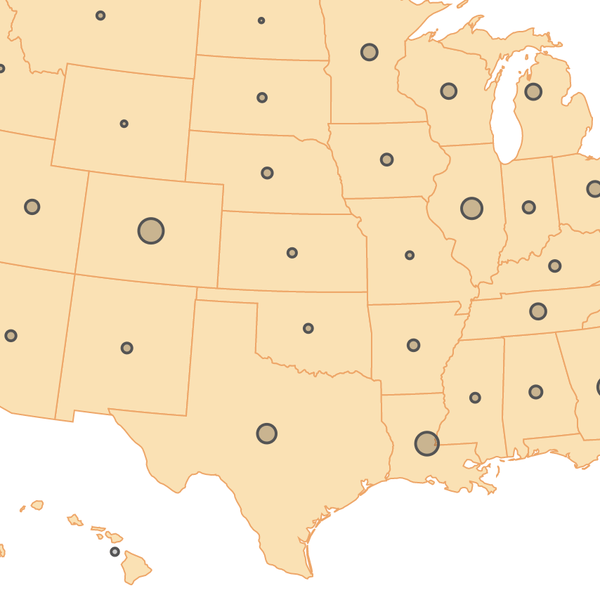
About one-in-ten people eligible to vote in this year’s U.S. presidential election are immigrants. And most (61%) of these 23 million naturalized citizens live in just five states.

California has more immigrant eligible voters (5.5 million) than any other state, more than New York (2.5 million) and Florida (2.5 million) combined. Texas and New Jersey round out the top five, with 1.8 million and 1.2 million immigrant eligible voters, respectively.

Here is a closer look at immigrant eligible voters in these five states.

How we did this

1Asians make up 43% of immigrant eligible voters in California, the highest of any racial or ethnic group.Nationally, Latinos make up a higher share of immigrant eligible voters than Asians (34% vs. 31%), but the reverse is true in the Golden State, where many Latino immigrants are ineligible to vote because they do not hold U.S. citizenship.

California’s immigrant eligible voters come from many countries. But three origin countries account for 46% of the total: Mexico (1.5 million immigrant eligible voters), the Philippines (604,000 voters) and Vietnam (430,000 voters).

The vast majority of California’s immigrant eligible voters (75%) have lived in the United States for more than 20 years. The share is highest (82%) among California’s Latino immigrant voters. Smaller majorities of Asian (71%), white (71%) and black (59%) immigrant eligible voters in California have lived in the country for at least two decades. English proficiency varies widely among the state’s immigrant eligible voters. For example, 86% of black immigrant eligible voters in California are English proficient, a substantially higher share than among all the state’s immigrant eligible voters (55%).

2New York stands out for the racial and ethnic diversity of its immigrant eligible voters. Asians (26%), Latinos (25%) and whites (25%) make up similar shares of the state’s immigrant eligible voters, while black immigrants (21%) are a slightly lower share.

When it comes to speaking English, black immigrant eligible voters in New York are substantially more likely to be English proficient (89%) than white (66%), Asian (52%) and Latino (47%) immigrant voters.

In New York, no single birth country accounts for a large share of the state’s immigrant eligible voters; about a quarter of foreign-born voters come from the state’s three largest birth countries. Immigrants from the Dominican Republic are the largest single group, with 264,000 eligible voters, followed by China (207,000) and Jamaica (143,000).

3Latinos make up 54% of Florida’s immigrant eligible voters, far higher than the shares of white, black and Asian immigrant voters in the state (17%, 16% and 10% respectively).

Florida’s immigrant voters have varying levels of English proficiency. For example, around half (51%) of Latino immigrant eligible voters are proficient in English, a far lower share than among white (82%) or black (81%) immigrant voters.

With 606,000 voters, Cuban immigrants are the largest group in Florida’s foreign-born electorate. Colombian immigrants, at 190,000, and Haitian immigrants, at 187,000, are the second- and third-largest groups.

4Texas rivals Florida in its share of Hispanic immigrant voters. Roughly half (52%) of all immigrant eligible voters in Texas are Hispanic, a share that trails only Florida (54%) among the top states. Asian immigrants are the second-largest group in Texas at 29%.

Around seven-in-ten immigrant voters in Texas (68%) have lived in the U.S. for more than two decades, similar to the share among all U.S. immigrant voters (68%). However, the share of long-term residents is notably lower among black immigrant voters in Texas (40%).

A high share of black and white immigrant voters in Texas are English proficient (88% and 85%, respectively). Lower shares of Asian (64%) and Hispanic (47%) immigrant voters are proficient. This is similar to the pattern nationally.

By country of birth, Mexican immigrants alone account for 40% of all immigrant voters in Texas, or 736,000 people. The second-largest group, with 130,000 voters, are immigrants from Vietnam, while Indian immigrants, with 115,000 voters, make up the third-largest group in the state.

New Jersey has the highest share of Asian immigrant eligible voters with a bachelor’s degree or higher5New Jersey has a high share of Asian immigrant voters with a college degree. About two-thirds of Asian immigrant voters in New Jersey (66%) have a bachelor’s degree or higher. That’s substantially higher than the share among other immigrant voter groups in the state and the share among immigrant voters in the U.S. overall (36%), including those who are Asian.

Among New Jersey’s 1.2 million immigrant eligible voters, 32% are Latino, 30% are Asian, 25% are white and 11% are black.

Meanwhile, the top birth countries for immigrant eligible voters in New Jersey are India (122,000 voters), the Dominican Republic (103,000) and the Philippines (63,000).

See the table below (or open it as a PDF) for detailed characteristics of immigrant eligible voters in California, New York, Florida, Texas, New Jersey and nationally.

Demographics of naturalized citizen eligible voters in select states

Source: Most of the 23 million immigrants eligible to vote in 2020 election live in just five states

Wealthy Indians see a route to US via Grenada

Didn’t know about this relatively low-cost loophole:

With the EB-5 immigrant investor visa to the United States getting more expensive, wealthy Indians are turning to the Caribbean island of Grenada as a route to their US citizenship dreams.

Immigration lawyers said, in the past three months, interest in the Grenada Citizenship by Investment (CBI) programme has increased from India, as the Caribbean country has an investment visa treaty with the US. Mark Davies, the global chairman of immigration law firm Davies & Associates, said there had been a definite drop in interest towards the EB-5 programme after the US changed the investment guidelines under it.

1From November 2019, the minimum investment required under the EB-5 Immigrant Investor Program had been raised to $900,000 from $500,000 in a Targeted Employment Area (TEA) and from $1 million to $1.8 million in non-TEAs. “This, coupled with a longer wait time for Indians because of an annual country cap of 700, has led people to explore other options,” said Davies, who has been working with clients in India on their EB-5 investments for almost a decade.

Davies’ firm is currently helping processes a few applications for the Grenada CBI programme. There are a lot more enquiries which are likely to convert into applications over time, he said. Turkey is another country which offers a similar route to the US. Under the Grenada CBI programme, the applicant has to make a $220,000 investment in a government-approved real estate project. What makes the country an attractive destination is that it has an E2 visa treaty with the US, wherein a Grenadian can apply for US citizenship and usually get it within three months. A US E-2 visa allows an investor to live and do business in the US in exchange for a minimum investment of $150,000. The investment must be in an enterprise that the investor is able to “develop and direct” and which is at least 50% owned by the investor. In 2018, the US processed 40,000 E2 visas. Country-wise breakups are not available.

Mohammed Asaria, who is the director of Range Investments that facilitates investments in real estate projects for citizenship in Caribbean countries, said he was seeing a lot of interest from Indians, including NRIs from the Middle East, for this programme. The quick processing time, typically 90 days for the Grenadian citizenship, and another 90 days for the E2 visa, is also a big factor driving the shift towards this. “This is no longer an outlier — at all immigration conferences, Grenada is very topical and is at the forefront at the moment,” he said.

The added advantage of this route is that it allows the spouse of the visa holder to freely work in the US and also covers dependent children under 21. And it’s not just the Caribbean island that is benefiting from the higher entry threshold for the EB-5 programme. The Republic of Cyprus, which also offers a similar programme, is emerging as another preferred option. “In the last few months, we’ve seen a lot more interest from India after the changes to the EB-5 programme,” said Dillon Bhatt, the chief of international business development at investment consultancy firm Millwood Kane International.

Source: Wealthy Indians see a route to US via Grenada

H-1B Denials Remain High, Especially For IT Services Companies

Some good analysis here (and more on the “Canadian advantage”:

New U.S. Citizenship and Immigration Services (USCIS) data show denial rates for new H-1B petitions increased from 6% in FY 2015 to 21% in FY 2019. Companies that provide information technology (IT) and other services to U.S. businesses had the highest denial rates due to Trump administration policies.

“In FY 2019, USCIS adjudicators denied 21% of H-1B petitions for “initial” employment (which is primarily for new employees) and 12% of H-1B petitions for “continuing” employment (mostly for existing employees),” according to a new National Foundation for American Policy (NFAP) analysis. “The 12% denial rate for continuing employment was the same in both FY 2018 and FY 2019, indicating there has been little change in USCIS policies over the past year.”

USCIS explains that H-1B petitions for “initial” employment are primarily cases that would count against the H-1B annual limit (i.e., new employment). H-1B petitions for “continuing” employment are mostly extensions for existing employees at the same company but could also be for an H-1B visa holder changing to a new employer.

As the NFAP analysis notes, this is the first time that data for all four quarters of FY 2019 are available and can be separated into initial and continuing employment, which provides a clearer picture of USCIS adjudications. The analysis found the 12% denial rate for continuing employment in FY 2019 was four times higher than the 3% rate as recently as FY 2015. The 21% denial rate for initial employment in FY 2019, while lower than the 24% rate in 2018, was still much higher than the 6% denial rate for such cases in FY 2015.

The statistics bear out what immigration attorneys have said for more than a year: “USCIS has raised the legal standard they use to decide whether enough evidence has been presented with petitions to approve them, without any legal authority to do so and without any notice to the public,” William Stock, a founding member of Klasko Immigration Law Partners, LLP, told me in an interview.

The analysis found H-1B denial rates have risen for nearly all major companies. However, it is clear USCIS has used a different standard to adjudicate cases for IT services companies. “The denial rate for H-1B petitions (initial employment) for at least 9 major companies that provide IT services or other consulting services reached over 30% in FY 2019,” according to the analysis, “In comparison, technology product companies, such as Apple, had far lower denial rates for initial employment, ranging between 2% and 7%, although these rates were generally higher than in FY 2015.”

The denials seem focused on H-1B employees who will perform work at customer sites to service contracts. Employers that keep employees primarily in a single location, such as product companies, have much lower denial rates.

Attorneys say there is plenty of evidence that USCIS changed the standards without a change in the law or new USCIS regulations. Between FY 2015 and FY 2019, the denial rate for initial employment increased by 20 percentage points or more for at least 10 major companies that provide information technology or other business services.

For continuing employment, the denial rate for H-1B petitions was 3% between FY 2011 and FY 2015 but increased to 12% in FY 2018 and FY 2019. A USCIS memo that told adjudicators not to provide deference to prior determinations has forced long-time employees waiting for green cards to leave the United States because their cases were denied.

It should not be surprising that the most successful technology companies have needed to hire highly skilled people to grow. The leading employers for H-1B petitions for initial employment in FY 2019 included Amazon, Google and Apple, all of which have passed $1 trillion in market capitalization. When companies recruit at U.S. universities, they find 80% of the full-time graduate students in computer science and electrical engineering are international students.

In contrast, other companies are sponsoring fewer workers. “New H-1B petitions (for initial employment) for the top 7 Indian-based companies declined by 64% between FY 2015 and FY 2019,” according to the NFAP analysis. “The 7 companies had only 5,428 H-1B petitions for initial employment approved in FY 2019. Denials may have contributed to this decline but the primary reason for the drop in H-1B visas is a choice by companies to build up their domestic workforce in the United States and rely less on visas. Moreover, these and similar companies are part of an industry trend when servicing clients to use more digital services, such as cloud computing, bots and artificial intelligence, which require fewer workers.”

The supply of H-1B petitions has been gone before the end of the past 17 fiscal years. The demand for tech talent across industries and the low number of H-1Bs relative to the size of America’s economy are the major reasons. The annual limit of 65,000 H-1B petitions and the 20,000 exemption from that limit for individuals with an advanced degree from a U.S. university comes to 85,000 new H-1B petitions each year – only 0.05% of the U.S. labor force of 164 million people.

High denial rates are not the only problem for companies under Trump administration policies. The percentage of completed cases with Requests for Evidence (RFEs) increased from 22.3% in FY 2015 to 40.2% in FY 2019, according to USCIS, which increases costs and processing time for employers.

Given the problems in the United States, it’s not surprising companies, international students and foreign-born engineers are looking to the north. In Canada, the number of Indians who became permanent residents increased from 39,340 in 2016 to 85,585 in 2019, a rise of more than 117%, according to a National Foundation for American Policy analysis of Immigration, Refugees and Citizenship Canada data.

Under Canada’s Global Skills Strategy, adjudicators approve many applications for high-skilled workers within two weeks with a low number of denials. “Canada is benefiting from a diversion of young Indian tech workers from U.S. destinations, largely because of the challenges of obtaining and renewing H-1B visas and finding a reliable route to U.S. permanent residence,” said Peter Rekai, founder of the Toronto-based immigration law firm Rekai LLP, in an interview. (See here.)

In the United States, we often ignore the positive role technology professionals, both native-born and foreign-born, play in making U.S. companies more competitive. “Digital transformations and digital platforms are just starting to take off and, as we look into the near future, the current skill shortages are going to grow as the demand for digital and IT skills explodes,” said Everest Group CEO Peter Bendor-Samuel. “If this administration wanted to harm U.S. competitiveness, then restricting access to this vital labor would be an excellent approach.”

The situation may grow worse for employers and high-skilled foreign nationals. The Trump administration has pledged to publish a new H-1B visa rule in 2020 to “revise the definition of specialty occupation . . . and revise the definition of employment and employer-employee relationship.”

The rule would put into regulation many of the current USCIS practices that have resulted in higher denial rates – or may be a source of new ways for USCIS to restrict the employment of foreign nationals.

Meet the Reocons

New term for me, although the characters are familiar:
On the American right, a growing group of intellectuals are using acute cultural fears to secure an illiberal future. It’s reactionary politics at its most explosive and unpredictable.

On September 7, 2016, Rush Limbaugh–who averages 15 million listeners a week–spent most of his show reading from a pseudonymous essay in The Claremont Review of Books. “2016 is the Flight 93 election,” he announced. “Charge the cockpit or you die. You may die anyway. You—or the leader of your party—may make it into the cockpit and not know how to fly or land the plane. There are no guarantees. Except one: if you don’t try, death is certain.” Death, you will have guessed by now, is a stand-in for a Hillary Clinton presidency–which, according to the Claremont author, would have meant “pedal-to-the-metal on the entire Progressive-left agenda, plus items few of us have yet imagined in our darkest moments.”

Rush is exuberant: “The piece is so good. It is just a home run, every paragraph.”

We know what happens next. Limbaugh was elated at the election outcome (“There are so many vibrantly great feelings to share. We have not lost our country”).Michael Anton dropped his pseudonym and stepped into the White House. Intellectual Trumpism was born.

Today, a growing number of prominent conservative intellectuals have joined Anton and are planning openly for America’s illiberal future. Though they typically maintain a genteel collective persona – Anton actually wrote a book called The Suit: A Machiavellian Approach to Men’s Style – there is an ugliness to their anti-liberal message and a deceptive vagueness to their political vision that make for a destabilizing brew. And unlike Trump, their influence among conservatives is likely to continue and grow regardless of what happens in the election. I call them reactionary conservatives, or Reocons, and they are only getting started.

Know thy Reocon

If Michael Anton’s essay marked the first wave of Trumpy conservative intellectualism, Patrick Deneen’s 2018 book, Why Liberalism Failed, marks the second. Deneen is a political theory professor at Notre Dame, and the book (which was reviewed by pretty much everyone, and even made Obama’s 2018 reading list) explains why liberal democracy is doomed to fail. His basic argument is that in modern democracies, liberal individualism leads to inevitable social decay, which leads in turn to vast state expansion. The book offers a useful articulation of some of the worst pathologies of neoliberalism – one perfectly timed to Trump – but, as a rebuttal to liberal modernity, it’s a vast overreach.

But the Trumpists kept coming. In 2019, the New York Post’s op-ed editor Sohrab Ahmari emerged as another forceful anti-liberal critic. Ahmari launched a much-discussed personal crusade against conservative David French, who he considers too civil and accommodating of liberal views. When the two eventually tangled in person, they garnered quite a lot of attention, largely thanks to Ahmari’s polemical style.

Then, in the summer of 2019, the growing group of anti-liberals gathered together formally under the inauspicious banner of National Conservatism. The conference was organized by Yoram Hazony, an Israeli-American scholar whose book The Virtue of Nationalism came out last year. The meeting was consecrated to “the revival of the unique national traditions that alone have the power to bind a people together and bring about their flourishing.” A similar group met up again in Romeearlier this month.

Finally, rounding out our reactionary squad, we have Attorney General William Barr – no doubt the most powerful and controversial of the Reocons. Barr delivered twoparticularly controversial speeches last fall. Both were explicitly anti-liberal.

These reactionaries may not see eye to eye on everything, but they tend to be glad that the old GOP consensus has collapsed, and clearly want to turn back the clock. What specifically characterizes them as reactionaries, however, is their insistence that the American Left poses an existential threat, combined with serial vagueness about the future.

There are other ways to define ‘reactionary.’ Corey Robin makes a powerful casefor the idea that all conservatism is essentially reactive. To me, the term necessarily implies something about the degree of opposition to political change: it’s not just nostalgia and resistance to hierarchy that unite the Reocons, it’s a galvanizing sense of fear and paranoia. This sentiment is not new on the Right, but it’s this, in combination with a cagey, unaccountable view of the future, that sets the Reocons apart.

The reactionary core: animus against the left 

As with most of the Reocons, and judging strictly by his public demeanor, Bill Barr does not seem like a paranoid man. He speaks slowly and quietly, conveying a mood of quiet reluctance, in a slightly bumbling, and even appeasing manner. This, of course, is a stark contrast to the president’s vulgarity and bombast.

What Barr actually says, however, tells a different story. His public speeches convey acute moral panic about the dangers posed by liberals and secularists.

In his November speech at The Federalist Society about executive power, Barr offered an astonishing display of crude partisanship. Drawing on hackneyed old tropes about liberal excess, Barr argued that “it is the Left that is engaged in the systematic shredding of norms and the undermining of the rule of law.” He then expounded a more general theory:

“In any age, so-called progressives treat politics as their religion. Their holy mission is to use the coercive power of the State to remake man and society in their own image, according to an abstract ideal of perfection. Whatever means they use are therefore justified because, by definition, they are a virtuous people pursuing a deific end. … They never ask whether the actions they take could be justified as a general rule of conduct, equally applicable to all sides.”

Barr’s sweeping generalities are unprecedented for the office of Attorney General. He is referring not just to a few radicals, but to everyone on the left, whom he characterizes as  fanatical idealists that never consider the implications of their conduct. This is the highest ranking official in the Department of Justice, speaking in terms of “them” and “us” about entire swaths of the American populace.

When Barr gave a speech at Notre Dame on the subject of religious liberty last October, his target was very much the same. The liberals and secularists, he implied, are out for blood:

“This is not decay; it is organized destruction. Secularists, and their allies among the “progressives,” have marshaled all the force of mass communications, popular culture, the entertainment industry, and academia in an unremitting assault on religion and traditional values.”

He goes on to explain that the campaign of destruction against traditional morality has already brought “immense suffering, wreckage, and misery,” and laments how the secularists just turn a blind eye to the tragedy, pressing on “with even greater militancy.” He warns that this is all just another form of tyranny, where we are enslaved by our appetites, and “the possibility of any healthy community life crumbles.”

Patrick Deneen was present at Barr’s Notre Dame speech, calling it a “masterful, learned, and extremely important speech that should be widely read and pondered.”

This, at least, is unsurprising. Much of what Barr says might as well have been lifted straight from Why Liberalism Failed – the first chapter of which, for example, echoes an old trope, traceable to Alasdair MacIntyre and popular on the reactionary right, about rising liberal “barbarism.”

Bill Barr and Patrick Deneen are, by a good measure, the most rhetorically clement of the Reocons. The others are less cautious. For example, while Barr and Deneen often use scare quotes to refer to modern liberal causes ( it’s always “pluralism,” “diversity,” “multiculturalism,” and “social justice”), they don’t openly refer to these things as inanities. Michael Anton does. And whereas Barr and Deneen will make passing reference to liberal barbarians and cultural destruction, Anton is comfortable talking about the “ceaseless importation of Third World foreigners with no tradition of, taste for, or experience in liberty”; he considers American immigration policy as “insane” evidence of “a society, a country, a people, a civilization that wants to die.”

Hazony, for his part, believes that multiculturalism is an “evil” Marxist doctrine that forces the “equalization of all tribes”; he equates it to “destruction for the sake of destruction.”

And Sohrab Ahmari explicitly holds that leftists are secret authoritarians who want everyone to bend to their radical will:

The libertines take the logic of maximal autonomy to its logical terminus. They say, in effect: For us to feel fully autonomous, you must positively affirm our sexual choices, our transgressions, our power to disfigure our natural bodies and redefine what it means to be human, lest your disapprobation make us feel less than fully autonomous.

He goes on to admit that, for him, all politics boils down to “war and enmity.” The tone differs from Barr’s, but the message is the same. Taken together, the Reocons offer up a relentless barrage of paranoid fear-mongering about social and political change. Leftists are the enemy: they out to destroy our culture and control our lives.

Rightful concern or myopic paranoia? 

Of course, it’s not paranoia if the crisis is real. And it is doubtless true that cultural norms and demographics are changing quickly. The question we need to ask is whether the result has been oppression in the opposite direction.

Sohrab Ahmari’s go-to example of leftist cultural oppression is Drag Queen Story Hour. In a now-infamous tweet, he labeled these events “demonic” and called for cultural civil war: “To hell with liberal order. Sometimes reactionary politics are the only salutary path.” Why Ahmari equates the existence of something he considers bad with cultural tyranny is not at all clear. Drag Queen Story Hour is entirely voluntary, and not particularly widespread. What is more, as David French was quick to point out, its existence hinges on the same laws that continue to protect religious minorities.

But there are many challenging cases, in which sincerely held religious beliefs do come into real conflict with increasingly progressive social norms. There’s theMasterpiece Cakeshop case, where an artist’s faith came up against equality rights for homosexuals. There’s the case of the Little Sisters, who have fought for an exemption to the contraception mandate under the ACA. There are ongoing disputes over accommodations for medical staff who oppose abortion.

Each of these instances involve delicate matters of conscience and difficult, competing moral claims. In each case we see individuals’ traditional beliefs come up against rapidly-transforming social norms and laws.

The Reocons, however, tend to conflate these newly emergent forces with totalizing forms of coercion. To hear them tell it – and please forgive my glibness here – you would think that liberals were requiring people to marry against their sexual orientation, mandating universal contraception, or forcing women to have abortions against their will. The fact that such suggestions sound so outrageous gives the lie to their paranoid fear-mongering: the Reocons hold that “liberalocratic” tyranny is upon us, but the best they can show for it is a series of legal cases in which the concerned parties are treated with basic dignity and respect by the state.

Meanwhile, it’s worth recalling that far more overt traditions of inequity and oppression – of women, people of color, and the LGBTQ community – continue to exist in our present, to say nothing of the past. For example, it took until 1993 to outlaw marital rape in this country, and it’s still a complicated area of the law. Gay marriage has only been legal for four years.

The distortions of the Reocon mind were fully laid bare with the Kavanaugh case, which both Anton and Ahmari describe as personal flashpoints for their outrage. Ahmari said in May that “Kavanaugh snapped something in me.” And Anton exclaims how the Left’s “disgraceful calumnies” against Kavanaugh radicalized him even more: “I always expect the Left to behave badly—very badly—but their treatment of this fine man shocked even me.”

Here again, a difficult, protracted situation is taken by the Reocons as an obvious affront. It makes perfect sense that Kavanaugh’s supporters would be upset by his ordeal. But how hard is it at the same time to imagine that Dr. Christine Blasey-Ford could have been speaking the truth? Or to fathom that a credible allegation of attempted rape might make someone less entitled to a place on the Supreme Court of the United States?

The Reocon tinderbox

Justice Kavanaugh was confirmed in October, 2018. Bill Barr became Attorney General in February 2019. Rush Limbaugh now holds a Presidential Medal of Freedom.

And to date roughly 158 federal judges have been appointed under Trump. In Trump’s first years in office, we’ve seen major roll-backs of Obama-era policy, and serious efforts are underway to dismantle the so-called “administrative state.” Bill Barr seems to be involved in the overt politicization of the Department of Justice. At the highest levels of our government, and at the most concrete level of action, it’s not the GOP that is under threat. So what more are the Reocons after? What is their ultimate vision for the future?

If one thing is certain, it’s that the paranoid reactionary attitude has explosive justificatory power, and the Reocons plan to use it. In the abstract, they have different emphases and orientations – there are, as Zach Beachamp observes, formal differences between localists like Deneen, nationalists like Hazony, and religious integrationists like Ahmari – but, as a general matter, the reactionaries aim to create and conserve sealed-off enclaves of homogenous traditional culture.

What might such a trajectory actually look like? Here is where the Reocon phenomenon is most chilling, especially given the tinderbox of paranoia they’ve been drumming up. The problem is that they leave so much unclear, and, I worry, unspoken.

For example, someone like Ahmari is upfront about his desire for a theocratic future, and a reordering of the state towards the “the Highest Good.” But what does this actually mean? What specifically does he actually desire and intend? The debate with French does not prove clarifying.

Patrick Deneen is a case study in this kind of circumvention. As others have noted, it’s hard to decipher what exactly Deneen has in mind for America’s post-liberal future, besides his advocacy of retreatist experiments in living. Towards the end of his book, though, he does acknowledge that, in order to take part in his new cultural experiments, modern people will want some guarantees against autocracy and theocracy:

“Demands will be made for comprehensive assurances that inequalities and injustices arising from racial, sexual, and ethnic prejudice will be preemptively forestalled and that local autocracies or theocracies be legally prevented.”

His reply is dismissive. And disturbing:

“Such demands have always contributed to the extension of liberal hegemony, accompanied by simultaneous self-congratulation that we are freer and more equal than ever, even as we are more subject to the expansion of both the state and market, and less in control of our fate.”

At this crucial moment, Deneen quietly discloses the fact that, for him, the basic rights of democratic citizens are not a concern. Would Deneen protect womens’ rights in the local enclaves? Who knows.

Similarly, what does it mean when Deneen pays a flattering visit to Viktor Orban of Hungary, a self-styled “illiberal democrat”? It’s hard to say.

What does it mean when he implies that he’d like to see a “dramatic shift” in American’s current demographic trajectories? Again, it’s quite unclear.

Or take the Attorney General. William Barr isn’t a professor, of course, he’s the Attorney General of the United States. And he may have willfully misrepresentedthe work of Robert Mueller’s team. He may have insinuated that black and brown communities are less deserving of protection under the law. And he may have compromised the legitimacy of the entire Department of Justice. What kind of precedent does all this set for the future? It’s awfully hard to say.

And that, I worry, is the obfuscating point. The reactionaries’ end-game is awfully vague. They’d like the limits on their power to be too.

Explosive illiberalism, in power 

We shouldn’t be under any illusions: the rise of the Reocons isn’t just a battle for the future of conservatism, as it is sometimes described. It’s about the future of our democratic freedoms.

That means it’s also fundamentally a moral fight. Probably the biggest mistake we can make about the Reocons is to suppose that they are power-hungry grifters like Trump. On the contrary, they’ve cast themselves at the center of an epochal,international, fight for redemption. These redemptive ends – however vague, however unaccountable – are what, in their minds, justify an illiberal approach.

In the fall of 2016, Michael Anton wrote a pseudonymous essay that exploited the tragic heroism of Flight 93 to help put Donald J. Trump into the White House. Today, the Reocons are out there in the open, and in power. We don’t need Anton’s ugly metaphor to see all that’s at stake.

Source: Meet the Reocons