Regg Cohn: Is discussion of the Queen problematic? Let’s talk about it
2022/09/19 Leave a comment
Good commentary on excessive “trigger” warnings and the lack of meaningful civics knowledge:
Everyone has an opinion on the Queen, right or wrong.
But in some schools, not every student should have a right to mourn her passing in public — not if other students might be “triggered.”
That edict came from a GTA public school board that instructed teachers to avoid the topic of Queen Elizabeth’s death — and the legacy of her life. In the classrooms of York region, the late monarch was not so much dethroned as deplatformed.
How can the Crown be cancelled in the classrooms of Ontario? How do state schools disavow the head of state?
Good questions. According to a memo distributed to all teachers this month by the York Region District School Board, the answers were strictly black and white.
Diversity of identity trumps diversity of ideas, to wit:
“School staff please refrain from developing tributes or activities to memorialize the death of the Queen,” the note admonishes.
“For some, the death of the Queen is very triggering. We are committed to maintaining neutral learning environments in our schools.”
Neutral? Even going halfway, with half-mast, seemed a stretch to the school board:
“Some students and staff may require support as a result of seeing the flags lowered,” the memo continued.
To be sure, the monarchy affects different people differently, notably if they or their ancestors lived under British colonization. Many believe in abolition or refuse absolution for the Crown’s past sins.
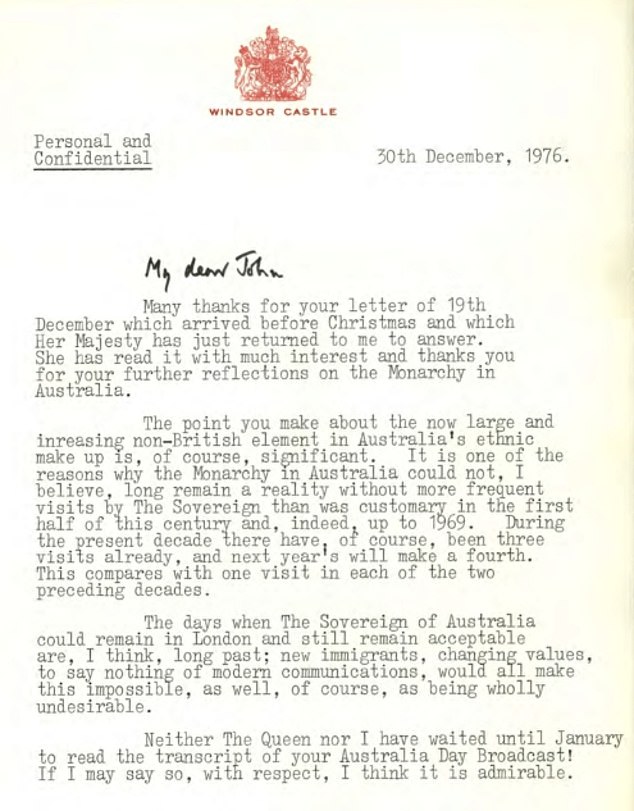
As a foreign correspondent, I covered the referendum on abolition in Australia, which would have succeeded but for the failure of voters to agree on what to replace it with. As a columnist, I’ve written about the absurdity of a foreign-born monarch presiding over our homegrown Canadian democracy while simultaneously juggling more than a dozen other foreign realms — from Antigua to Tuvalu.
I’ve long argued that the Crown has a case of conflicted multiple personality that defies credulity. Be that as it may, it will remain that way for years to come, for Canadians have no appetite for the domestic constitutional combat required to reconfigure our democratic infrastructure.
Like it or not, the ineluctable consequence is that the British King is to be Canada’s King until further notice. That’s a complication that requires education and elucidation, not the silent treatment for fear of offending.
Trigger warnings are cited five times in the school board memo, including this alert about the perils of press coverage: “Media coverage will be frequent … Try to offer a neutral space in your classroom to have a break from this potentially triggering media exposure.”
Remember when students learned media literacy, not sanctuary? Are schools now “safe spaces” from overexposure to newspaper funeral coverage?
The “tip sheet” counsels teachers on how to respond to students who dare to say out loud, “I’d like to honour the Queen.”
Recommended staff response: “Thank you for your idea… While this might feel important and helpful for you, for others in our class/school it might not feel this way … We need to be respectful of everyone.”
In other words: Forget it, kid — no mourning this morning.
Predictably, the memo triggered Ontario’s Progressive Conservative government. Education Minister Stephen Lecce issued a statement reminding school boards of the province’s “expectation (to) honour the Queen on the date of her funeral, and enrich students with a strong understanding of the values and enduring legacy of Canada’s constitutional democracy.”
All schools are expected to observe a moment of “silent reflection” (students are free to opt out) on Monday — designated a day of mourning (or holiday) across Canada — according to a note sent out by the deputy minister of education, Nancy Naylor.
What is most instructive about the peculiar memo from York’s school board is what it says about the state of educational instruction today. Basic civics — teaching students about the complications and contradictions in our constitutional system — can’t be taught if educators are told to duck controversy because of potential sensitivity.
Never mind the endless debates about ending debates — so-called “cancel culture.” Quarreling over the Queen’s legacy should be part of our democratic discourse.
Indigenous leaders from Canada will be at the Queen’s funeral in London, as will our first Indigenous vice-regal representative, Gov.-Gen. Mary Simon. Perhaps they understand it is possible, in the spirit of truth and reconciliation, to also reconcile contradictions — to call out the Crown’s historical blunders and blind spots while still paying respect to she who wore the crown.
It’s called context and critical thinking, as opposed to trigger warnings that compel conformity and uniformity lest anyone feel uncomfortable. Whatever one thinks of the monarchy, the point is to make people think — not to warn teachers against letting students think out loud in classrooms.
When the schools of state forbid talk about the head of state, it’s time for a refresher course on civics.
Source: Is discussion of the Queen problematic? Let’s talk about it


 Multicultural Meanderings