#COVID-19: Comparing provinces with other countries 30 September Update

Highlights:

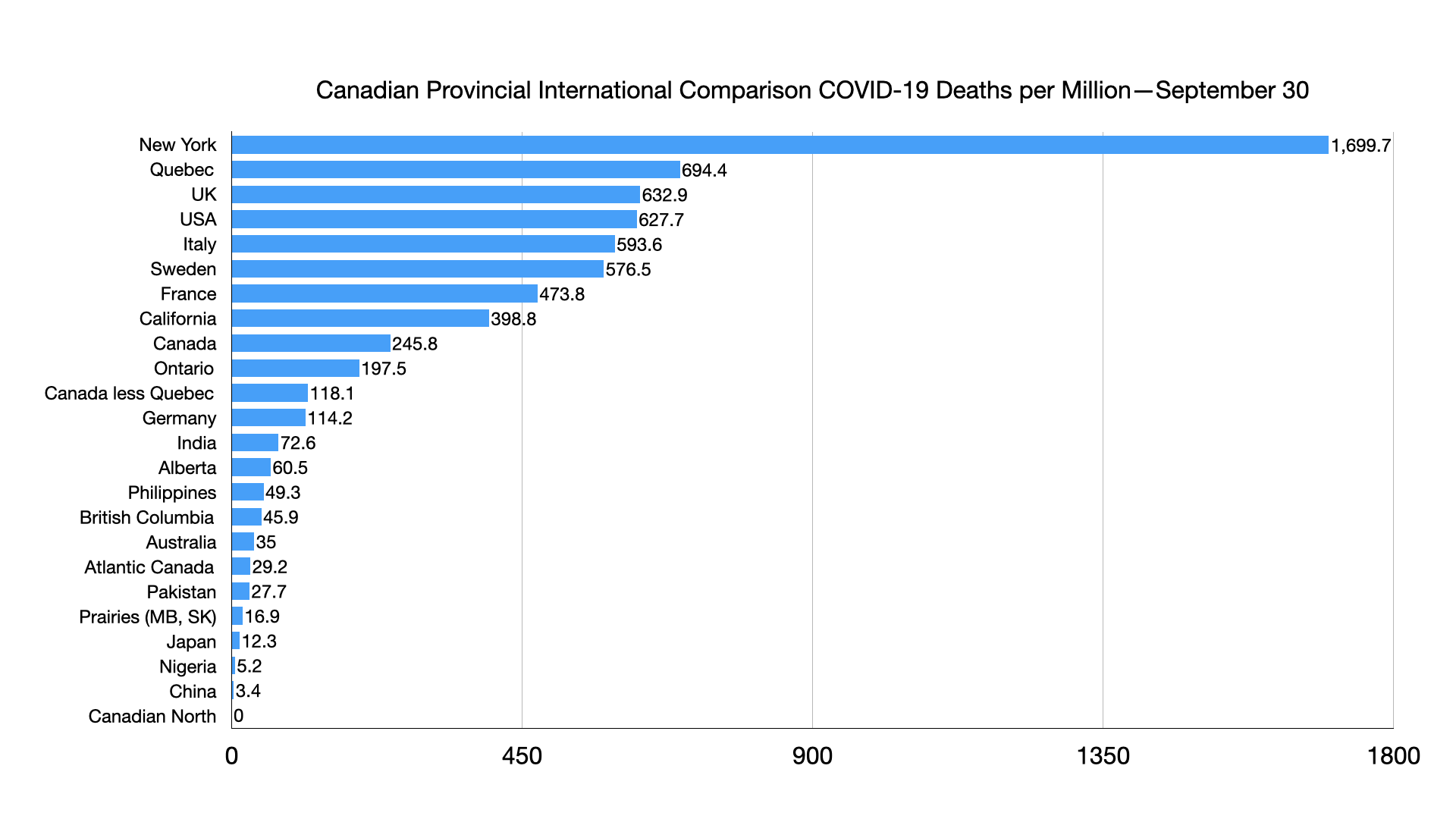
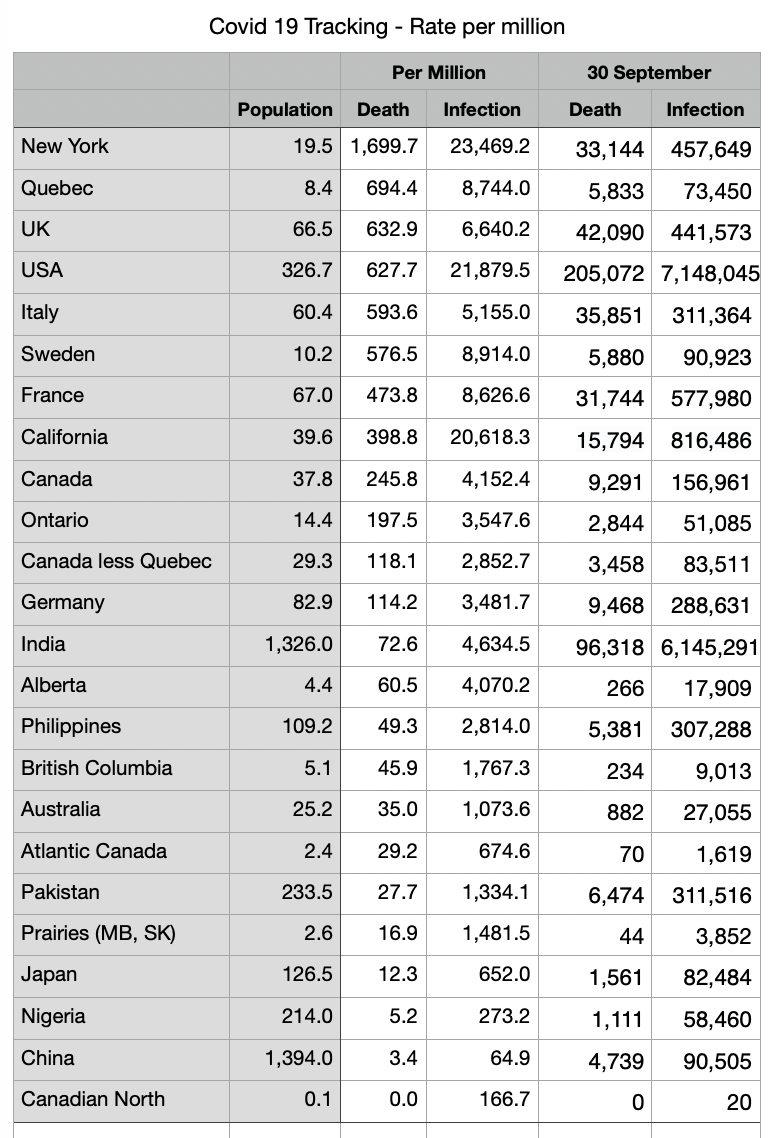
Deaths per million:Canada less Quebec now ahead of Germany

Infections per million: Ontario now ahead of Germany, Canada less Quebec ahead of Philippines
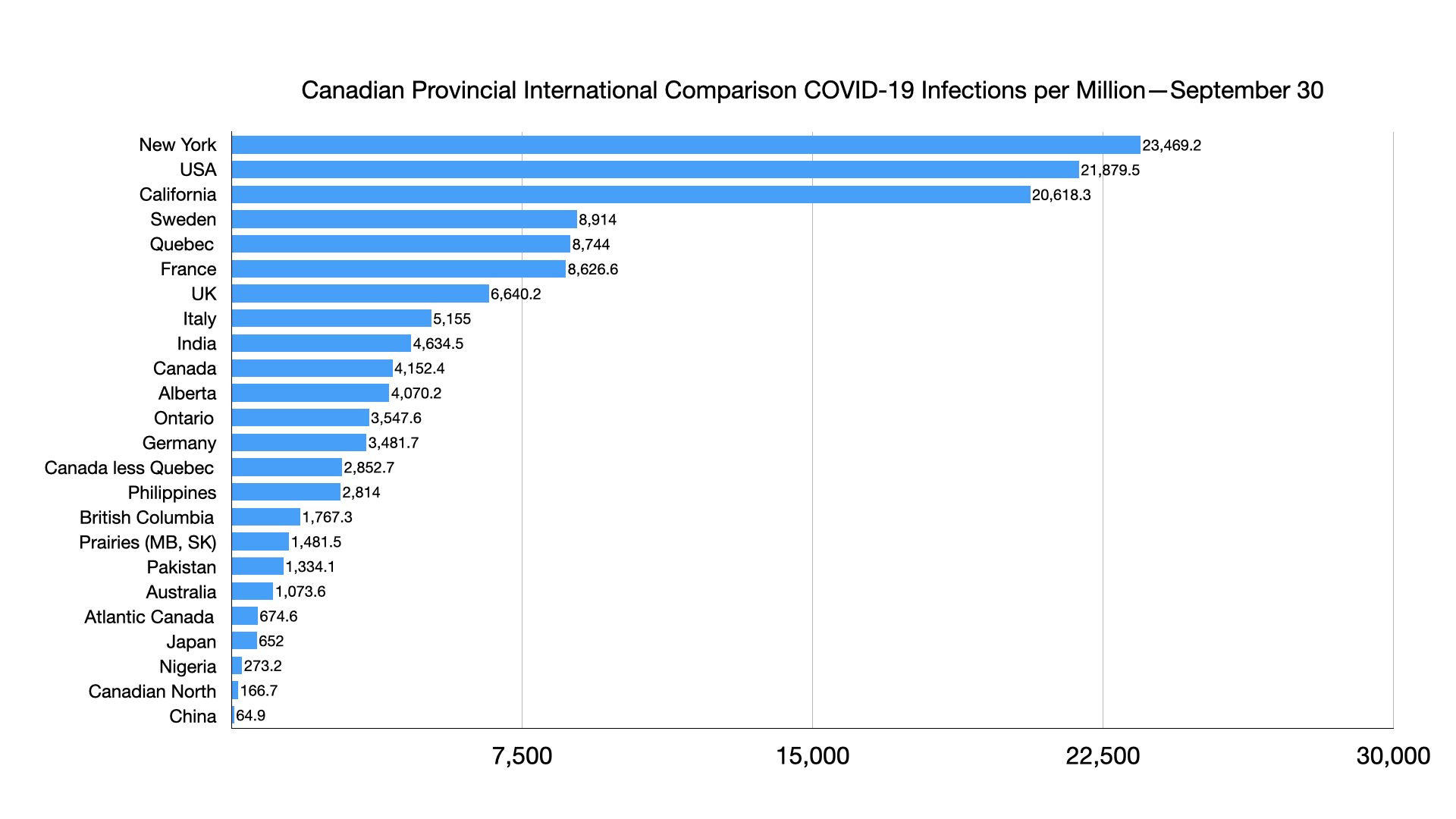
Weekly:

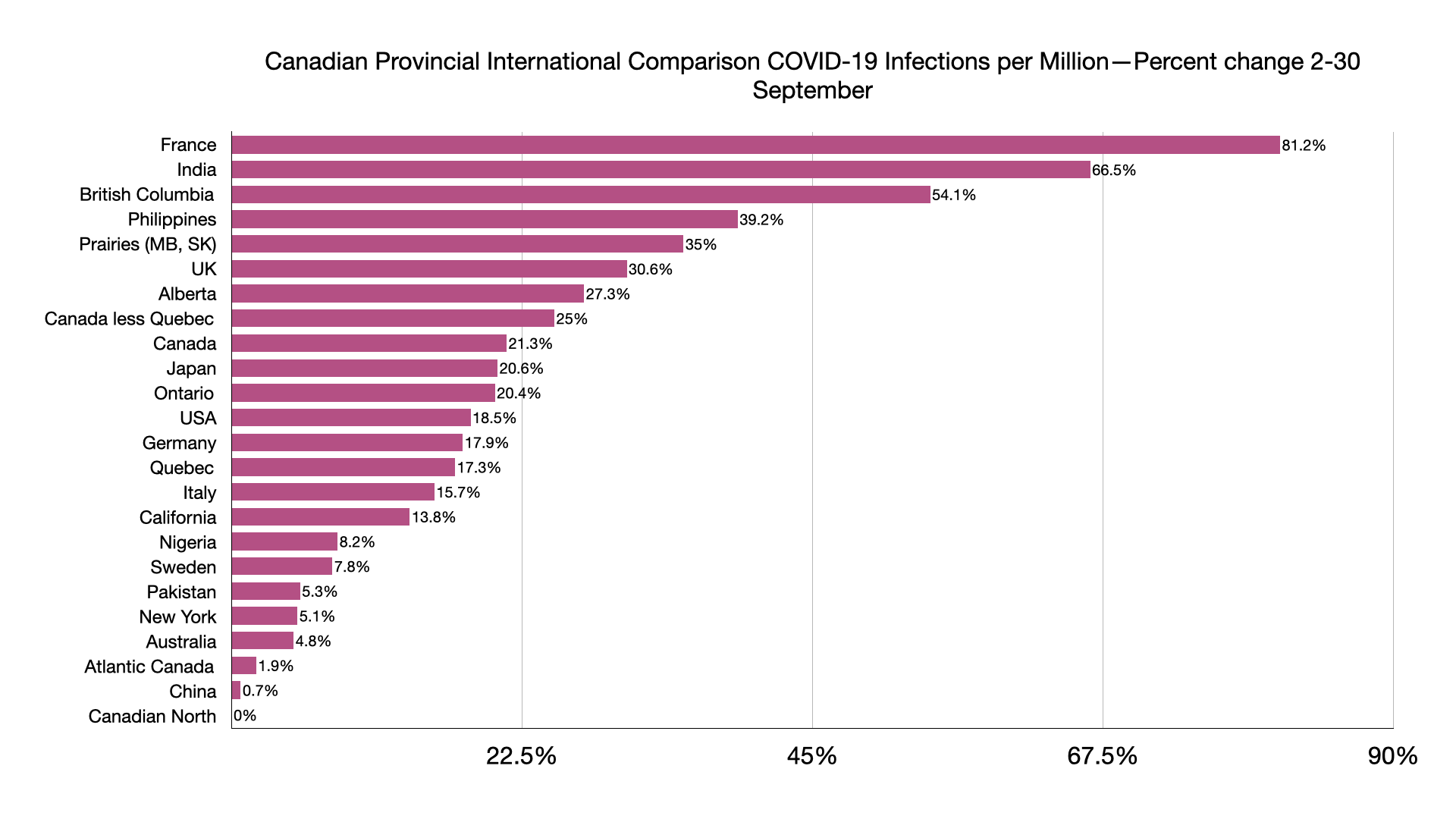
Monthly Comparison (September 2-30 increase percent):
Infections: British Columbia and Prairies in top 5 jurisdictions with highest increases
Deaths: No provinces in top 5 in terms of increased death rates but British Columbia, Alberta and Prairies in top 10
The Globe has an editorial highly critical of the Ford government:

The German language probably has a word for the state of being surprised by the unsurprising, unprepared for the expected, and caught off guard by the danger you were on guard against. English does not have such a word. But when this pandemic is over, we are going to have to come up with one.

We’ll need it to describe what appears to be happening right now, in Canada.

Governments from coast to coast knew a second wave was coming. It was as predictable as fall. It was as expected as the rising of the sun. It was as surprising as the first snowfall – timing and severity uncertain; occurrence inevitable.

And yet, somehow, many governments have reacted like someone who forgot to set the alarm clock. Leading the parade of those surprised by the unsurprising is Premier Doug Ford’s Ontario government.

On Monday, Ontario reported 700 new cases of COVID-19, a new single-day record. Also on Monday, Ontario casinos reopened their doors to gamblers.

They say timing is everything in comedy and politics. In pandemics, too.

Also on Monday, the Ford government announced that, in response to the second wave, it would be hiring 3,700 more frontline health care workers. It’s a move that should have been made in May or June, not late September.

Still on Monday: Ontario reported processing more than 41,000 tests, but had a backlog of 49,586 waiting to be analyzed. By Tuesday, the backlog was nearly 55,000. The province, like many parts of the country, has recently seen enormous lineups at testing centres; lineups that are – how is this surprising? – driven by the predictable and predicted combination of rising infection rates and people needing to get tested to allow a safe return to school.

Yet again on Monday: The Ottawa Citizen obtained a memo showing that provincial health bureaucrats ordered a reduction in testing in some areas, owing to labs being overwhelmed. It’s another unsurprising result of too little test-processing capacity meeting growing demand for tests.

As of Tuesday afternoon, the pinned tweet at the top of Health Minister Christine Elliott’s Twitter feed still said: “It’s never been more important to get tested for #COVID19.” She’s right. The more people who get tested, the more often, the better. That should include lots of people who have no symptoms. But if everyone takes that advice to heart in the current system, where there are not enough tests or facilities to process them, Grade 3 math points to the inevitability of a surprisingly unsurprising outcome.

For anyone who remembers what Ontario went through last spring, that outcome looks all too familiar. We have lived this movie before.

Yes, Ontario is conducting several times more daily tests than it did back in April. Yes, Ontario has the second-highest provincial testing rate (Alberta is tops). There has been progress. There just hasn’t been enough.

With case numbers rising, as in the spring, and testing not keeping pace, as in the spring, this looks a lot like a sequel. The script has a disturbing amount of consistency. If it were run through plagiarism-detection software, someone would be getting an “F.”

More unsurprisingly surprising findings:

The most recent data from Toronto Public Health, as reported by the CBC, show that most people testing for COVID-19 don’t get results for at least two days. And nearly half of those who test positive are not followed up by contact tracers within 24 hours. Both of those numbers are well below the targets that need to be met for a program of heavy testing and contact tracing – which the province is supposed to have, but doesn’t – to be able to quickly find infected people before they infect others, and even more quickly track down anyone they may have infected.

In an effort to speed things up, the Ford government last week gave the green light for some pharmacies to begin administering tests to some asymptomatic individuals. The province also intends to hire more contact tracers. The mystery is why it didn’t do that months ago.

And last week, the province began rolling out plans for its response to the pandemic’s second wave. But this is like announcing in January that, in response to recent snowfalls, you plan to put out a tender for snowplows. It’s a bit late in the game.
And CBC has an analysis of what went wrong in Quebec:

A little over a month ago, Health Minister Christian Dubé congratulated Quebecers for their hard work at containing the spread of the coronavirus.

It was a Tuesday, Aug. 25, and the province had registered just 94 new cases of COVID-19 in the previous 24 hours.

“We have really succeeded at controlling the transmission of COVID,” Dubé said at a news conference in Montreal.

It was a statement of fact, but the ground had already started to shift. In the weeks that followed, transmission increased. At first it grew slowly, then exponentially.

On Monday, the government implicitly acknowledged it has again lost control of the virus. The province is reimposing lockdown measures on Quebec’s two biggest cities, starting Oct. 1.

Until Oct. 28, Quebecers won’t be able to entertain friends or families at home. Bars, restaurant dining rooms, theatres and cinemas will also be closed.

“The situation has become critical,” Premier François Legault said Monday evening. “If we don’t want our hospitals to be submerged, if we want to limit the number of deaths, we must take strong action.”

The new measures will bring abrupt changes to the lives of millions of Quebecers. They will also prompt questions about how the public health situation could have deteriorated so quickly.

This story tries to trace how Quebec again lost control of the spread of COVID-19.

At first, a stern warning

As Dubé addressed reporters on that Tuesday in late August, public health officials in Quebec City were busy trying to track down patrons of Bar Kirouac, a watering hole in the working-class Saint-Sauveur neighbourhood.

A karaoke night at the bar ultimately led to 72 cases and the activity being banned in the province.

There were also numerous reports by then of young people holding massive house parties and flouting physical distancing recommendations. One of them, in Laval, led to a small outbreak.

On Aug. 31, as Quebec’s daily average of new cases neared 152 cases, Legault delivered a stern warning.

“There has been a general slackening in Quebec,” Legault said. “It’s important to exercise more discipline.”

Legault and his health minister threatened stiffer punishments for those who disobeyed public-health rules, but stopped short of imposing new restrictions.

Private gatherings identified as the culprit

In late August, public health officials were attributing the rise in infections to Quebecers returning home from vacations around the province, as opposed to the start of school.

Though Quebec’s back-to-school plan wasn’t met with widespread criticism, some experts expressed concern about the large class sizes and the lack of physical distancing guidelines for students.

The government also ignored advice that it should make masks mandatory inside the classroom.

But the first weeks of the school year went relatively smoothly. By the start of Labour Day weekend, only 46 out of the province’s 3,100 schools had reported a case of COVID-19. Importantly, there were no major outbreaks.

The problem was elsewhere. Outside schools, in the community at large, cases continued to rise. On Sept. 8, the province was averaging 228 cases per day.

By now public health officials had identified private gatherings as the main culprit behind the increase.Montreal’s regional director of public health, Dr. Mylène Drouin, was among those who urged more caution when hanging out with friends and family.

“Yes, we can have social activities, but we have to reduce contacts to be able to reduce secondary transmission,” Drouin said on Sept. 9.

Warning signs

In an effort to spell out the consequences of the increase in cases, the Quebec government unveiled a series of colour-coded alert levels.

Areas coded green would see few restrictions; yellow zones would see more enforcement of existing rules; orange zones would be the target of added restrictions; and red zones would see more widespread closures of non-essential activities.

When the scheme was announced on Sept. 8, Quebec City was classified yellow. Montreal was classified green.

At this point, though, health experts were already concerned that more was needed to curb the spread of the virus.”It is important to intensify these measures,” Dr. Cécile Tremblay, an infectious disease specialist with the Université de Montréal hospital network, said after the alert levels were announced.

The warning signs were starting to multiply.

Officials in Montreal were investigating 20 outbreaks at workplaces on Sept. 9; a week later that number had risen to 30. Long lines were also forming outside testing centres, filled with anxious parents and their children.

And more stories were circulating of private gatherings where the 10-person limit was ignored, angering the health minister.

He told reporters about a dinner with 17 people at a restaurant in Montérégie, which led to 31 cases. A corn roast in the Lower St. Lawrence, he said, resulted in 30 cases.

“To me, that’s unacceptable,” Dubé said on Sept. 15.”If people won’t understand from these examples then, I’m sorry, but they’ll never understand.”

He moved Montreal, and four other regions, into the yellow zones and banned bars from serving food after midnight. The province was averaging 338 new cases per day.

Second wave arrives

The warnings from the government did not curb the spread of the virus. By mid-September, authorities were reporting more cases in closed settings.

On Sept. 17, Herzliah High School in Montreal became the first school in the province to say it was shutting down for two weeks to deal with an outbreak. At least 400 other schools were also dealing with active cases of COVID-19.

Cases accumulated too in private seniors homes (known as RPAs), a major source of concern for public officials given the vulnerability of the residents to COVID-19.There were only 39 cases in RPAs at the start of the month, and 157 by Sept. 20.

On that day the government announced it was moving Montreal, Quebec City and the Chaudière-Appalaches region into the orange zone, the second-highest alert level. Private gatherings were capped at six people.

The province was by then averaging 501 new cases per day. The second wave had begun, according Quebec’s public health director, Horacio Arruda.

Red zone

Over the last week, Quebec’s health system has shown signs of strain as authorities race to contain the spread of the virus.

Drouin, the Montreal public health director, admitted on Sept. 21 that her contact-tracing teams were swamped by the demand.

Until now, the increase in cases had not been accompanied by a corresponding surge in hospitalizations. Most of the new cases were concentrated in younger people.But the number of hospitalized COVID-19 patients in Quebec has increased by 45 per cent in the last seven days. Hospital staff are starting to get stretched. Several thousand health-care workers are in preventive isolation.

“We’re feeling the second wave,” Dr François Marquis, the head of intensive care at Montreal’s Maisonneuve-Rosemont hospital. “We were apprehensive about it, but now it’s a reality.”

On Monday, Quebec reported 750 new cases of COVID-19. Montreal and Quebec City were classified as red zones later that evening.

Source: How Quebec went from COVID-19 success story to hot spot in 30 days

COVID-19 disproportionately impacted immigrants and refugees in Ontario, new report finds

Better data confirming what we know:

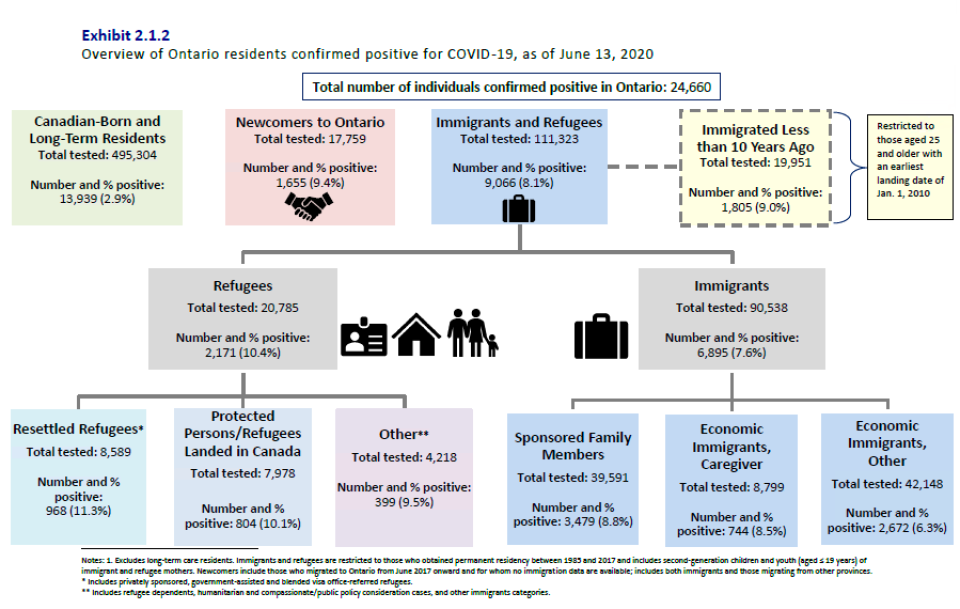
The spread of COVID-19 has disproportionately affected immigrants, refugees and those who live in low-income neighbourhoods in Ontario, a new report has found.

The report released Wednesday by ICES, a not-for-profit research institute focusing on health-related data in Ontario, found that while immigrants and refugees in the province accounted for only about a quarter of those tested for COVID-19 between January and June, they represented 43.5 per cent of all positive cases.

“We document disproportionately higher rates of infection among those who landed in Ontario as economic caregivers, refugees, those with lower levels of education and language fluency, those who currently live in lower income neighbourhoods and with more crowded housing,” Dr. Astrid Guttmann, Chief Science Officer at ICES and lead author on the report, said in a statement.

“Apart from addressing many of (the) root causes of higher risk of infections, very high test positivity in certain groups of immigrants also suggests that there may be important barriers to testing that will be important to address if there is a second wave in Ontario this fall.”

The data was pulled from test results conducted between January 15 and June 13. According to the report, rates of testing were lower for most immigrants and refugees compared with Canadian-born and long-term residents—with an exception for economic caregivers who tend to work in health-care and were prioritized for testing.

The data found that of the 4.4 per cent of Canadian-born and long-term residents tested for COVID-19 in Ontario, 2.9 per cent tested positive.

Of the 3.4 per cent of people who identify as immigrants or refugees who were tested for COVID-19, 8.1 per cent received a positive diagnosis.

Refugees alone had the highest positivity rate within that time period at 10.4 per cent.

Chart

The report also found that while testing positivity peaked at the beginning of April among Canada-born and long-term residents, there were two “pronounced peaks of positivity” for immigrants, refugees and newcomers in April and May respectfully.

“The pandemic has sharpened the focus on structural and societal inequalities that have long existed,” the report reads. “These inequities put many racialized and immigrant populations at higher risk of both contracting the infection and suffering poor outcomes.”

The highest rates of positivity in Canada were found in racialized immigrants and refugees from Central, Western and East Africa, South America, the Caribbean, Southeast Asia and South Asia, the report found. The rates were also higher for those living in low-income neighbourhoods.

Public health units with larger immigrant populations such as Toronto, Peel Region, Durham Region, Waterloo, Windsor and York also reported a high number of COVID-19 positive patients among that demographic.

In Toronto specifically, 4,027 immigrants and refugees have tested positive for COVID-19 (9.8 per cent of those tested) compared to 3,788 Canadian-born patients (4.9 per cent of those tested).

What data was available and what was missing?

The general findings presented in the report are not necessarily new. Advocacy groups have been calling on all levels of government to support the gathering of race and socio-economic data for months, arguing that marginalized communities are disproportionately contracting or dying from COVID-19.

As a result of these calls, the City of Toronto began collecting race-based data in May.

Toronto Public Health said that of the data collected between May 20 and July 16, 83 per cent of known COVID-19 cases involve members of racialized communities.

It also found that patients with a household income level of $50,000 or less represents more than 50 per cent of reported infections in the city, despite the fact that the 2016 census revealed only 30 per cent of Toronto’s population reported being in that income bracket.

The data released by city officials are based on voluntary questions collected by a local public health unit.

Provincially, officials and politicians have all said they support the collection of race and income-based data, but they have yet to provide any information about the trends they are seeing.

In mid-June, the government proposed regulatory changes that would allow those who test positive for COVID-19 to be asked about their race, income, languages spoken and household size.

The questions are optional and the government said personal privacy would be protected. Since then, not much has been said about the data collection.

The ICES report said they were limited in the creation of the report by incomplete immigration data and could only include information on immigrants or refugees who landed in Ontario from January 1985 to May 2017 and who became permanent residents. They also included second-generation immigrant children under the age of 19 who were born in Ontario to permanent residents.

A “newcomer,” a status defined separately from an immigrant or refugee, is described as an individual who became eligible for OHIP after May 31, 2017

The authors also noted that ICES lacked data on “important risk factors for testing and positivity” such as occupation and living conditions.

“We currently do not have comprehensive data on important outcomes such as hospitalization and death,” the report says. “We have data on demographic and some census-based characteristics but not on the critical structural factors that play an important role in shaping inequities.”

ICES was able to access information on the health-care sector. The report found that employment as a health-care worker, especially among women, accounted for a disproportionate number of COVID-19 cases among immigrants and refugees. Among the 36 per cent of women employed as health-care workers and who tested positive in Ontario, 45 per cent were within that demographic.

Inequities ‘are complex’ and often rooted in racism

The report suggests that the “causes of these inequities are complex and often rooted in social and structural inequities, including systemic racism.”

It notes that a large proportion of immigrants, refugees and newcomers to Canada hold temporary or minimum-wage jobs at facilities where physical distancing is difficult. These positions may also not have paid sick leave or other health benefits.

ICES says that employment in any of these sectors— such as occupations in retail, factories or transportation– “is considered precarious” and could impact testing and quarantine.

Other factors such as language barriers, education and accessibility to quality healthcare could impact whether a person gets a COVID-19 test.

The not-for-profit is calling for more accessible testing options ahead of a possible second-wave in the fall as well as better training and enforcement of safety measures for those at risk of COVID-19 exposure in the workplace.

“A continued focus is needed on securing funding to house those who cannot safely quarantine in their homes or are homeless, as well as for income supplements for workers must quarantine who do not have employer-sponsored sick leave,” the report says.

The report also noted that the findings should be interpreted in the context of Ontario’s testing strategy. Initially, local public health units were only testing those in essential workplaces, those who had recently travelled and for those with acute medical conditions. Later that strategy evolved to include long-term care homes, hospitalized patients, and the general population, including asymptomatic patients.

“This means that some groups are over-represented in the testing numbers and that positive cases include those who were symptomatic at the time of testing, as well as those who were asymptomatic,” the report says.

“This may distort some associations of characteristics with both testing rates and potential to test positive. It also means that there is an unknown number of untested infected individuals in the general population.

Source: https://toronto.ctvnews.ca/covid-19-disproportionately-impacted-immigrants-and-refugees-in-ontario-new-report-finds-1.5097363

Ontario government spending $1.6M to fight racism, supporting community-based anti-hate initiatives

Small change, more symbolic than substantive:

Ontario is investing $1.6 million over two years to fight racism and hate in the province.

The money will support community-based anti-racism and anti-hate initiatives, focusing on anti-Black racism, anti-Indigenous racism, anti-Semitism, and Islamophobia.

“Racism and hate will not be tolerated and our government is doing everything it can to protect people from being victimized because of their race or religious beliefs,” Solicitor General Sylvia Jones said in a statement.

“This new grant program will be developed collaboratively with community partners across Ontario to ensure it leads to the most effective solutions in the fight against racism and hate in our province. These much-needed solutions cannot come from government alone.”

Evan Balgord, the executive director at the Canadian Anti-Hate Network, said in an interview that allocating the funds from the new Anti-Racism and Anti-Hate Grant has to be meaningful.

“We see grants disproportionately go towards research projects or small-scale education programs or art programs,” said Balgord.

“We’re just not at the point anymore where we need a whole bunch more research on it. We need tangible action, and governments should be prioritizing grants that promise to take tangible, measurable actions against hate speech, hate crimes, and groups that promote organized hate in Canada.”

A press release said beginning in fall 2020, Ontario’s Anti-Racism Directorate (ARD) will collaborate with community groups to learn about individual experiences and local needs to form the grant. The ARD was established in 2016. It works to eliminate systemic racism in government policies, decisions, and programs and advance racial equity for Black, Indigenous, and racialized people.

The grant will focus on increasing public awareness of the impact of systemic racism and hate. It supports Ontario’s Anti-Racism Strategy to fight and mitigate systemic racism in government decision making, programs, and services.

Balgord said people should be concerned about racism and hatred in Canada.

“People feel very emboldened to be racist and spread death threats,” he said. “That’s something we need to bring social accountability back to.”

Source: Ontario government spending $1.6M to fight racism, supporting community-based anti-hate initiatives

Ontario issues directive to end birth alerts in the province

Yet one more historical practice with unfortunate results falls:

The Ontario government has issued a policy directive that orders children’s aid societies in the province to cease the controversial practice of issuing birth alerts.

Birth alerts are notifications issued by hospitals in the province regarding an expectant parent when the societies believe the child may be in need of protection after delivery.

The alert prompts the hospital to contact the society when the baby is born regardless if hospital staff have independently developed concerns regarding a parent’s ability to care for their infant.

Children Minister Jill Dunlop told The Globe and Mail that the Ontario government is issuing the directive as part of efforts to address systemic racism including in the province’s child-welfare system.

Child protection services in the province are delivered by children’s aid societies, Ms. Dunlop said, adding that birth alerts are not required under any provincial legislation or policy.

The ministry does not track their use specifically, she added, but she said in the past 12 months 442 children were removed from their mother within seven days of birth and their first birthday, and that 50 per cent of referral sources were from medical staff at a hospital.

The government heard through consultations with First Nations organizations that birth alerts have regularly affected members of communities particularly near Thunder Bay, Hamilton and Brantford, she said.

“We know it is unacceptable,” Ms. Dunlop said. “This is why we are ending the practice across the province.”

She said the government has also heard from families that birth alerts cause trauma, including to children, adding that she hopes other provinces will end the practice.

Provinces such as British Columbia and Manitoba have also put an end to the practice of birth alerts that have been the subject of concern from advocates and the national inquiry on Missing and Murdered Indigenous Women and Girls.

Last June, the inquiry, among other things, called upon provincial and territorial governments and child-welfare services to put an immediate end to the practice of “targeting and apprehending infants (hospital alerts or birth alerts) from Indigenous mothers right after they give birth.”

In January, Manitoba announced the end of birth alerts, and B.C. said in September, 2019, that it would end the practice immediately, citing the call from the inquiry.

In a statement, B.C. conceded at the time that birth alerts were primarily used for marginalized women and disproportionately for Indigenous women.

The directive from Ontario’s assistant deputy minister David Remington says the intent of the new policy order is to provide guidance on ceasing the practice in the province and to ensure there is collaboration with local hospitals, prenatal and postnatal services and other health care professionals.

Among the new requirements, societies must halt the practice by Oct. 15 and prepare to do so in the interim. Societies also must confirm in writing to the ministry that it has implemented requirements by that month.

The Ontario Native Women’s Association has told the government that 450 Indigenous families a year will benefit from the ending of birth alerts based on the programs they administer and sites they have, Ms. Dunlop’s office said.

The province’s child-welfare system has also been the subject of consultations since last August, including with youth who have been in care, family members and organizations, the minister added.

She said that “fundamental change” will be announced in the coming weeks, adding that the review of the child-welfare system includes the overrepresentation of Indigenous, Black and other racialized children and youth.

The government is focused on prevention and early intervention and working with families about services they receive, she added.

“We know that birth alerts do the exact opposite [with families],” Ms. Dunlop said. “This is a key starting point for us.”

Source: https://www.theglobeandmail.com/politics/article-ontario-issues-directive-to-end-birth-alerts-in-the-province/

Ontario overestimated cost of services to irregular border crossers, AG finds

In contrast to Quebec, which estimated correctly:

Ontario significantly overstated the costs of providing services to asylum seekers coming into Canada from the United States, the province’s auditor general said Wednesday.

In a special report, Bonnie Lysyk said the $200 million estimate given by the governing Progressive Conservatives in 2018 represented the cost of providing services to all refugee claimants, not just so-called “irregular” border crossers.

She said the minister of social services at the time, Lisa MacLeod, was given inaccurate information by civil servants.

“The accuracy of information provided by the ministry to the minister for the public announcement was far off the mark,” Lysyk said in a statement Wednesday.

“Senior government officials need to ensure the accuracy of the information provided to government for public announcements and decision-making.”

MacLeod had formally requested $200 million from Ottawa to cover costs she said were incurred by the province and its municipalities as a result of an influx of asylum seekers arriving from the U.S.

Lysyk said her office found the Ontario government spent roughly $81 million on services for irregular asylum seekers between April 1, 2017 — when the federal government first started tracking their arrival — and July 31, 2018.

More costs were incurred until the border was closed due to the COVID-19 pandemic, Lysyk said.

She recommended Ontario seek an immigration agreement with the federal government that includes compensation for providing services to refugee claimants, including irregular border crossers.

The current deal does not, and the federal government has given $15.6 million in compensation to Toronto, Ottawa and Peel Region for their expenses during the April 2017 to August 2018 period, she said.

Quebec, which has a separate cost-sharing agreement with Ottawa, incurred $300 million in costs and has received $286 million in compensation, Lysyk said.

When asked about the report Wednesday, Premier Doug Ford said his government did not intentionally mislead the public and was simply relying on the information provided.

Ford blamed the federal government for leaving the province to shoulder the costs of what he called “illegal immigration,” and suggested the auditor general should do another report to examine more recent expenses related to the issue.

“Where’s the money? We need the money,” the premier said. “Every single day, it’s costing us more and more and more.”

Opposition legislators criticized the government for using inflated numbers to make policy decisions.

“The auditor general’s report makes clear that the claims Doug Ford and Lisa MacLeod made about the cost of accommodating asylum seekers in Ontario were pure fiction,” NDP Leader Andrea Horwath said in a statement.

“Shame on them for making stuff up to fan the flames of division instead of uniting us like they should have been.”

Liberal House Leader John Fraser said the Ford government has a record of “continually overstating, overstepping, and exaggerating.”

Ford previously came under fire for saying his government inherited a $15 billion deficit from the Liberals, and later revising that number down by about half, to $7.4 billion.

Green Party Leader Mike Schreiner said the debate over the costs of services for irregular border crossers took place at a time when many governments were “playing politics with immigration.”

“The government inflated this number … to provide cover for what in this case is a divisive political agenda, which I think was to question immigration policy in this country. And I think it’s wrong,” he said.

Canada’s Safe Third Country agreement with the U.S. says asylum seekers are required to make their claims in the first “safe” country where they arrive, which means those who try to enter Canada at an official land crossing are sent back to make their claim in the U.S.

The agreement does not cover those who come in through unofficial crossings, known as “irregular” asylum seekers.

The auditor says 36 per cent of refugee claimants in Ontario in recent years entered at unofficial points.

Federal data show 26,415 asylum claims were filed in Ontario in 2019, which could include some filed by irregular border crossers.

The province provides services such as temporary housing, settlement services and language training.

Source: Ontario overestimated cost of services to irregular border crossers, AG finds

They were once directed to take applied courses. Now they say ending the discriminatory practice of streaming is ‘long overdue’

Credit due to the Ford government for ending this long standing practice. While likely well-intentioned, like so many good intentions, bias (explicit and implicit) along with implementation, resulted in systemic discrimination and racism;

By the time she reached the end of Grade 8, Toluwanimi Oseivhi had no doubt whatsoever about what stream she would pick for high school. Her marks were excellent, she knew which courses she loved, and her parents who immigrated from Nigeria “definitely” expected her to go to university.

So she picked all academic courses and, to her total shock and bemusement, her teacher told her she had to take applied classes instead.

“She actually changed the forms and put down all applied courses,” said Oseivhi, recalling it was “demoralizing” to be told she was not equipped to handle academic courses despite her efforts and great performance.

“To have that choice made for me, it made me feel small especially as a child of immigrants. But it’s also motivational. It builds your confidence and the desire to do better and prove everyone wrong.”

With her insistence and the advocacy of her parents who were also educators, Oseivhi ended up getting into the academic stream. She graduated high school in 2009, enrolled at the University of Toronto and later got a master’s degree in education from York University.

Oseivhi called the Grade 9 streaming system, which on Monday the Ontario government announced will be cancelled, discriminatory toward students from both poor and racialized communities.

“I do know that it does happen to a lot of Black and brown kids in the system,” she said.

Ontario is the only province in Canada that still divides students into the hands-on “applied” or university/college-track “academic” streams starting in Grade 9, a practice Education Minister Stephen Lecce called systemic and racist. He said the practice needs to end in order to give racialized students “a fair chance at success.”

For years education advocates have called the streaming system into question, pointing out that Black and Indigenous students as well as those from low-income neighbourhoods are overrepresented in the applied stream. Being left out of the academic stream impacts many of these students and limits their options for post-secondary education.

In 2015, People for Education, a Toronto-based advocacy and research group, published a report that was critical of the streaming system. The report indicated that Grade 8 was too early for kids to be deciding on courses that are potentially going to determine their life careers, and recommended delaying such decisions until later in high school.

People for Education’s executive director Annie Kidder told the Star the province’s decision to scrap the streaming system is a step in the right direction, but just one in the process of understanding systemic racism and its different facets. Government needs to look at practices that need to continue to change in order to give children a fair opportunity to excel in their education.

“We need to look at ourselves and understand how unconscious bias can have an impact on other people,” she said, noting society should have the same high expectations of its students regardless of their families’ income or racial backgrounds.

“When you divide students, when you group students apart from each other, it has a disproportionate effect on students who were already disadvantaged.”

Bernisha Thomas knows first hand how being streamed into applied or academic courses “has little to do” with a student’s ability to excel in those subjects. She grew up in Scarborough and at 14 when she finished Grade 8 and it was time to choose her high school courses, she remembers being told that academic was for those going to university while applied was for those going to college and into the workforce.

“I didn’t even know what that meant. I had no idea what I wanted to do,” Thomas said. She said she was a straight-A student and was confused when it was decided for her to go into the applied stream, where she was often sent into the resource class for extra help.

“It made me question myself. It made me think that I was not as smart as I always thought I was heading into high school.”

She said streaming is a form of discrimination because students who are sent into the general/applied track instead of the academic/advanced one are “made to feel like subpar or average, that there’s nothing really special about you.”

Thomas said she ultimately ended up going to Centennial College afterwards, simply because she was made to believe that maybe university would be too hard for her. She took a project management program, where one of her general education diploma teachers once told her she should be in university instead.

“It was the first time since high school that somebody had told me I was good enough and capable enough,” she said.

Years later, it was quite telling to her when her son was at the same stage in Grade 8 to make the choice and the school decided to put him into the applied stream and send him to the resource class for extra help.

“My son never needed extra help,” Thomas said, noting her son just finished his first year in college, studying marketing. He also applied and has been accepted into a joint college and university program at the University of Ontario Institute of Technology.

“I’ve really never seen any change in the school system between when I went and when he went until this week when they announced they’re getting rid of streaming. It’s long overdue.”

Ontario is starting to collect race-based COVID-19 data. Some worry it could do more harm than good

Sigh. Yes, groups should be consulted, yes, the data should be made public, but hard to see that minorities will be worse off with data than without.

Having better data facilitates discussion of current realities and possible policy options to address disparities:

With Ontario’s race-based COVID-19 data collection beginning “imminently,” health experts say crucial unresolved questions will determine whether those efforts help alleviate the pandemic’s brutal disparities, or cause more harm.

Regulatory changes came into effect last Friday that mandate the collection of information on race for all newly reported COVID-19 cases province-wide, along with data on income, household size and languages spoken. Data collection is beginning once training for public health units and changes to data entry systems are complete, according to a health ministry spokesperson.

Community organizations, researchers, doctors and public health experts have called for the collection of this data, pointing to the disproportionate burden of COVID-19 in areas with more racialized, low-income and newly immigrated residents.

But health researchers said the question of how this data is managed and used is even more important than whether it is collected.

“The collection of race-based data is not the outcome,” said Camille Orridge, a senior fellow at the Wellesley Institute and longtime advocate for health equity data collection. “The outcome is to have the information and use the information to reduce disparities. That’s the goal.

“We need to be clear with people who are collecting the data — government, etc. — that there are a number of things that must be answered before we come to the table to give up the data,” she said.

Orridge cited a list of questions, including whether the data will stay in Canada, whether it will be sold in any form to the private sector, how artificial intelligence will be used with the resulting databases. And most importantly, for her: whether the racialized communities most affected will have oversight and input on whether the data is being used to answer questions and create policies that counter the pandemic’s unequal toll.

She cited a phrase often used in the world of Indigenous policy: “Nothing about us, without us.”

Alexandra Hilkene, the health ministry spokesperson, said “We’re currently in the process of finalizing the terms of reference for the working group that will report to the ministry and help ensure we interpret the data accurately. The group will include policy experts from racialized communities.”

In Toronto, some of the neighbourhoods most affected by COVID-19 have case rates 14 times higher than the least affected neighbourhoods. Those hard-hit neighbourhoods are all clustered in the northwest of the city, an area that has been historically underserviced and has higher rates of poverty, inadequate housing, and other symptoms of systemic disadvantage.

The city’s most affected areas also have significantly higher percentages of Black residents than the least-affected areas, and higher percentages of Southeast Asian and other racialized groups. But health experts say these area-based analyses, which rely on matching the postal codes of known cases to census data, are less revealing than collecting the data directly from individuals.

Toronto, Peel Region and some other health units have already begun collecting this data, but officials argued that it should be mandated province-wide to provide a complete picture. After weeks of urging, the province made regulatory changes to the Health Protection and Promotion Act to mandate the collection of race and sociodemographic information for COVID-19.

But now that the government is about to begin collecting that data, it shouldn’t be exclusively available to them, said Arjumand Siddiqi.

“I would worry that if the data stays in the domain of the government, or if they handpick a small group of people to use it and no one else sees it, we have to rely on what those people tell us,” said Siddiqi, Canada Research Chair in population health equity and a professor at the University of Toronto’s Dalla Lana School of Public Health.

Making the data available more broadly ensures that independent researchers can check the work of others, rebut flawed analyses and conclusions, and ask different kinds of questions.

But Orridge said it’s also important to ensure that the researchers who do get access to race-based COVID-19 data have real relationships in and accountability to the communities that are most affected.

“We have researchers who have no connection to the communities having access to the data, and making their careers on the use of that data,” said Orridge.

“We’ve got to make sure that the data, when it’s being used and published, always has a context, so that we don’t further stigmatize communities.”

LLana James, a doctoral candidate at the University of Toronto Faculty of Medicine who researches race-ethnicity, health data, privacy, AI and the law, noted that Ontario and Canada collect health data in a legal framework that has failed to catch up to the massive technological changes that have occurred, especially in the last decade with the rise of machine learning.

“We have one of the lowest thresholds for legal use of data in the developed world,” said James, noting that technology companies see Ontario as an attractive market for lucrative health-care data, and contrasting Canada’s poor data privacy protections with Europe’s robust framework.

James provided critical comments on the province’s proposed regulatory changes to begin collected race-based COVID-19 data, and believes the current, government-driven data efforts will not help Black, Indigenous and other racialized communities.

Race-based data assumes that “we need to know the race of the person, not how racism is functioning. Those are two completely different scientific questions,” James said.

“We have 400 years of data about what happens to Black people during pandemics,” said James. “We have hundreds of years of race-based data, and it’s changed very little. It’s the will to act (that’s missing), not the will to collect more stuff.”

Like Orridge, however, she believes that any data collection that avoids harm must be centred in and directed by communities. James is the co-lead of REDE4BlackLives, a research and data collection protocol that provides a framework for the ethical engagement of Black communities in Canada.

“Black communities, like Indigenous communities, know exactly what they need,” says James. “They know who advocates for them. They know who shows up for them. And they know who to trust, because they see it with their own eyes.”

Trudeau, Ontario health minister say they’re looking at collecting race-based pandemic data

Long overdue. But this needs to be national in scope, with consistent definitions and practices across all provinces and publicly available through CIHI (Quebec will predictably not play along, unfortunately):

The federal and Ontario governments say they’re now working toward collecting race-based health data as part of their response to the COVID-19 pandemic.

Human rights commissions from across Canada have added their voices to those of municipalities, health advocates and elected officials calling for the collection of raced-based COVID-19 data to ensure that vulnerable groups are protected.

“Colour-blind approaches to health only serve to worsen health outcomes for black, Indigenous and racialized people because we can’t address what we can’t see,” said B.C.’s Human Rights Commissioner Kasari Govender.

Federal, provincial and territorial human rights commissions say that collecting pandemic data without breakdowns by race leaves public health officials with no window into COVID-19’s impact on vulnerable populations.Earlier today, both the federal and Ontario governments said that while they typically do not collect race-based health data, they are working on plans to start doing so now.

Prime Minister Justin Trudeau says the government has invested millions of dollars towards improving the collection of race-based data. 2:17

“We recognize that there have long been challenges in Canada about collecting disaggregated data … which is why a number of years ago, we invested millions of dollars towards Statistics Canada to start improving our ability to collect race-based data,” Prime Minister Justin Trudeau said Friday in Ottawa.

“We’ve flowed greater funding to community organizations and grassroots organizations that are helping out people who we already know to be more vulnerable and marginalized … But yes, we need to do a much better job around disaggregated data and that’s something that we’re going to do.”

Ontario Health Minister Christine Elliott said that local health agencies in the province can collect race-based data legally now, should they choose to do so, providing they respect privacy and confidentiality.

‘We haven’t traditionally collected race-based data in health but there are a number of organizations that have come to us to ask us to do that,” Elliott said.’We are working with the anti-racism directorate to set up a broader framework in order to collect that in a meaningful way. It is something that we are working on as an active project.”

Ontario Health Minister Christine Elliott says that while her province has not traditionally collected race-based health data, it is working on a plan to start. 0:41

Canada does not collect race-based pandemic data. Both the United States and the United Kingdom have started doing so.

Earlier this week, Toronto City Council called on provincial health authorities to begin collecting province-wide data on COVID-19 cases, broken down by race, occupation and other “socioeconomic factors.”

“The old adage of ‘what gets measured gets done’ is especially relevant right now. In order to tackle COVID-19, we must fully understand it and who is most at risk,” Toronto City Coun. Joe Cressy said in a media statement.

“Toronto’s data has shown that while we’re all susceptible to the virus, parts of the city are more impacted than others. In order to protect our residents and beat COVID-19, we need the Ontario Government to collect and share disaggregated data.”

Basic data not collected: Trudeau

One of Canada’s leading experts on the social causes of disease told CBC Radio’s The House last week that Canada’s failure to collect race-based data on COVID-19 infections amounts to discrimination by “neglect.”

“Discrimination is not necessarily about what you do. It’s often about what you don’t do,” said Dr. Kwame McKenzie, a psychiatry professor at the University of Toronto and CEO of the Wellesley Institute, a think tank that studies urban health issues.

“It’s not about people being actively discriminatory or racist. It’s sometimes about just neglect,” he said. “And the fact that we haven’t collected this data seems neglectful, because everybody really knew we should be collecting these data but it was never at the top of anybody’s list of things to do.”

Liberal MPP Mitzie Hunter, who represents the provincial riding of Scarborough-Guildwood, said the lack of information about who is getting the virus now, and who is most in danger of getting sick, puts people in her community at greater risk.

“One of the weaknesses in the Ontario Public Health Response is the lack of the collection of disaggregated data based on race and other demographic profiles that could help track the progress of this virus by individuals, where they work, where they live and income levels,” she told The House last week.

“All of those factors … could help to save lives.”NDP Leader Jagmeet Singh also has called for the collection of race-based data to improve health outcomes for vulnerable groups.

“We need to make sure we have the data, that there is race-based data that allows us to make the evidence-based decision making to remedy these injustices,” Singh told the House of Commons earlier this week.

On Friday, Trudeau admitted that during the early days of the COVID-19 outbreak, public health officials were not always collecting basic demographic information, such as age and gender.

“We know we need to do much better to properly understand where things are hitting hardest in this COVID-19 crisis,” he said.

Source: Trudeau, Ontario health minister say they’re looking at collecting race-based pandemic data

Race-based coronavirus data not needed in Canada yet, health officials say

Big miss here IMO, given the confluence of race and socioeconomic disparities.

While it may not be an immediate priority during the pandemic, better data of health disparities among visible and non-visible minorities would be helpful, not just during pandemics:

Despite a growing awareness in the United States that some minority groups might be at higher risk for the coronavirus, provincial health officials in two of Canada’s hardest hit provinces say race-based data isn’t needed here yet.

Dr. David Williams, Ontario’s chief medical officer of health, said Friday that statistics based on race aren’t collected in Canada unless certain groups are found to have risk factors. The World Health Organization hasn’t yet said that’s the case for coronavirus, he added.

He said resources are much more effectively used tracking down the people each infected patient had been in contact with, rather than targeting entire groups.

“Right now we consider our main risk groups (to be) the elderly, those with other co-morbidities, regardless of what race they are,” he said. “Regardless of race, ethnic or other backgrounds, they’re all equally important to us.”

There is early evidence from the United States that shows African Americans may be disproportionately affected by the pandemic. Some large cities are seeing higher rates among their large Black populations who historically have had poorer access to health care and higher rates of poverty.

Among them is Chicago, whose mayor vowed Monday to launch aggressive public health campaigns aimed at her city’s Black and brown communities after numbers showed Black residents accounted for 72 per cent of deaths from complications from COVID-19, despite making up only about one-third of the population.

Mayor Lori Lightfoot told The Associated Press that the disparities in Chicago “take your breath away” and required an immediate response from the city, community activists and health care providers.

In Alberta, chief medical officer Dr. Deena Hinshaw said they know some groups in Canada are systematically disadvantaged based on their appearance or socioeconomic status.

While the province also doesn’t currently collect the race of someone who is tested or treated for coronavirus, she suggested it’s something that may be looked at in future.

“The information that we collect is really focused more on risk activities and less about ethnicity,” she said Friday. “But it’s certainly something we need to look closely at to determine if we need to start collecting that going forward.”

Hinshaw said the province has good information-sharing agreements with many First Nations in particular, so that is one way they might be able to compare numbers, though it’s not something they could release publicly without the Nations’ consent.

Dr. Anna Banerji, a pediatric infectious disease specialist who co-chaired the Indigenous Health Conference at the University of Toronto, says First Nations are almost certainly at higher risk.

“A lot of Indigenous people have a lot of co-morbidities. For almost any disease out there they have higher prevalence of cardiovascular disease, diabetes, chronic obstructive lung disease,” she said.

They were also significantly overrepresented in the last pandemic to hit the country. Despite representing 4.3 per cent of the population, they accounted for 27.8 per cent of hospital admissions reported to the Public Health Agency of Canada during the first wave of H1N1 in 2009, according to the National Collaborating Centres for Public Health.

Many First Nations are small or remote and face the added challenge of a historic lack of funding for things like medical services.

Banerji launched a petition last week to demand more action from the federal government, arguing Indigenous leaders have asked for more access to things like health care workers or rapid testing, but their communities have not received the same financial support as non-Indigenous towns and cities.

But while Banerji said it’s important to document how coronavirus is affecting Indigenous communities, she stresses that information is only useful if it leads to more supports.

“I think it’s good to collect that data,” she said. “But collecting data on how we failed Indigenous people is not a very useful thing, unless you act on it.”

Source: Race-based coronavirus data not needed in Canada yet, health officials say

Ontario urged to encourage immigrants to look beyond the GTA

Ongoing challenge that most provincial governments are grappling with – how to encourage immigrants to go beyond the largest centres.

Ontario actually does better than most other provinces in this regard, given the number of immigrants and visible minorities in cities such as Ottawa, Hamilton, Kitchener Waterloo, London and Windsor.

The real challenge lies more in rural and northern Ontario.

Ontario must start encouraging immigrants to settle in communities outside the GTA in order to reduce pressure on housing, transit and other infrastructure in the 905 and stimulate growth in the rest of the province, a new report says.

According to the Conference Board of Canada report, 45 per cent of Ontario’s 13.5 million people live in the GTA, but each year almost 80 per cent of new immigrants settling in the province make the region their home, meaning that most of Ontario doesn’t get enough newcomers to sustain their communities, and that even more pressure is being put on an already strained housing pool and other services in the 905.

Last year, 106,000 immigrants settled in the GTA, while just 31,000 made their homes in the rest of Ontario.

“The GTA has the difficult task of integrating large numbers of newcomers into its labour market each year. Nearly half of its newcomers arrive under the family and refugee classes, which means they require more labour market supports than economic class newcomers,” said the 47-page report, “Immigration Beyond the GTA,” being released Thursday.

“On the other hand, some communities across the province — particularly those in Northern Ontario — are in desperate need of immigrants to support their economic health, but less than one-quarter of the province’s newcomers choose to settle outside of the GTA.”

Spreading more immigrants across Ontario is more urgent than ever, the report warns, since demographic pressures, if not addressed, will significantly impact the province’s economic performance over the next two decades, with the average age of residents rising to 44.1 in 2040 from 40.5 in 2017. By 2040, almost a quarter of Ontario’s population will be 65 and over, compared with just 17 per cent in 2017.

While communities outside the GTA do not have the same number of job opportunities, settlement services, cultural amenities, and ethnic diversity, they still offer a range of immigration advantages compared with the GTA, said the report, written by researcher Kareem El-Assal.

With the exception of Barrie, it said, other census metropolitan areas currently all have lower unemployment rates than the GTA. Hamilton, Kingston, Guelph and Kitchener-Cambridge-Waterloo all have unemployment rates below 5 per cent, compared to 6.4 per cent in the 905 area.

Although all levels of government have recognized the need to “regionalize” the distribution of immigration, including the most recent federal pilot program to encourage newcomers to settle in rural and remote communities, the report calls for the creation of a regional strategy led by the province with active participation from municipalities.

Municipalities have had few options in immigrant recruitment because immigration is a shared federal-provincial jurisdiction. However, the report said all three levels of government can draw inspiration from Canada’s latest international post-secondary education strategy, which has successfully brought all players to the table to promote the “regionalization” of foreign students across the country.

The study said a regionalization strategy must set targets to ensure half of newcomers to the province settle outside of the 905. The province should juggle the point grids of the provincial immigrant nomination programs by rewarding applicants with community and family ties outside of the GTA because those are among the most important considerations for newcomer settlement.

A 2016 evaluation of Nova Scotia’s various provincial immigration streams found that 82 per cent of those who arrived under the community identified class with strong ties to an established cultural community had continued to stay in Nova Scotia instead of moving to other provinces.

Given immigrants always go where the job opportunities are, the report suggested business groups such as chambers of commerce take the lead in sharing information with local employers on hiring newcomers, creating a welcoming and inclusive environment and tapping existing newcomer communities to reach out to immigrant talent.

“Ontario municipalities must showcase their leadership. One way they can do this is by ensuring they have immigration strategies of their own in place,” said the Conference Board. “This is crucial to signalling their intention that they want to welcome more immigrants and will take all necessary steps to succeed.”

Source: Ontario urged to encourage immigrants to look beyond the GTA