Global Housing Shortages Are Crushing Immigration-Fueled Growth

Of note, Canada not alone (but doesn’t excuse the policy and program mistakes….). Money quote: “Canada’s experience shows there’s a limit to immigration-fueled growth:”

For decades, the rapid inflow of migrants helped countries including Canada, Australia and the UK stave off the demographic drag from aging populations and falling birth rates. That’s now breaking down as a surge of arrivals since borders reopened after the pandemic runs headlong into a chronic shortage of homes to accommodate them.

Canada and Australia have escaped recession since their Covid contractions, but their people haven’t with deep per-capita downturns eroding standards of living. The UK’s recession last year looked mild on raw numbers but was deeper and longer when measured on a per-person basis.

All up, thirteen economies across the developed world were in per-capita recessions at the end of last year, according to exclusive analysis by Bloomberg Economics. While there are other factors — such as the shift to less-productive service jobs and the fact that new arrivals typically earn less — housing shortages and associated cost-of-living strains are a common thread.

So is the immigration-fueled economic growth model doomed? Not quite.

In Australia, for instance, the inflow of roughly one million people, or 3.7% of the population, since June 2022 helped plug a chronic shortages of workers in industries such as hospitality, aged care and agriculture. And in the UK — an economy near full employment — arrivals from Ukraine, Hong Kong and elsewhere have made up for a lack of workers after Brexit.

Skills shortages across much of the developed world mean more, not fewer, workers are needed. Indeed, the US jobs market and economy are running hotter than many thought possible as an influx of people across the southern border expands the labor pool — even as immigration shapes up as a defining issue in the November presidential election.

While the US has seen a widely-covered surge in authorized and irregular migration, the scale of the increase actually pales in comparison to Canada’s growth rate. For every 1,000 residents, the northern nation brought in 32 people last year, compared with fewer than 10 in the US.

Put another way: Over the past two years, 2.4 million people arrived in Canada, more than New Mexico’s population, yet Canada barely added enough housing for the residents of Albuquerque.

Canada’s experience shows there’s a limit to immigration-fueled growth: Once new arrivals exceed a country’s capacity to absorb them, standards of living decline even if top-line numbers are inflated. The Bank of Nova Scotia estimates a productivity-neutral rate of population growth is less than a third of what Canada saw last year, which would be more in line with the US pace.

So even as that record population growth keeps Canada’s GDP growing, life is getting tougher, especially for younger generations and for immigrants such as 29-year-old Akanksha Biswas.

Biswas arrived in Canada in the middle of 2022, just as per-capita GDP started plunging amid the start of the post-pandemic immigration boom and the Bank of Canada’s aggressive interest-rate tightening cycle.

The former Sydneysider moved to Toronto for what she believed would be a better life with a lower cost of living and greater career prospects. Instead, she faced higher rent, lower pay and limited job opportunities.

“I actually had a completely different picture in my mind about what life would be like in Toronto,” said Biswas, who works in advertising. “Prices were almost similar, but there’s a lot more competition in the job market.”

Canada’s working-age population grew by a million over the past year but the labor market only created 324,000 jobs. The upshot: The unemployment rate rose by more than a full percentage point, with young people and newcomers again the worst hit.

Biswas spends more than a third of her income on the monthly rent bill of C$2,800 ($2,050), splitting the cost with her partner. She’s dining out less and making coffee at home instead of going to the cafe. She’s also pushing back plans to have children or buy a home.

“I don’t see my future here if I want to raise a family,” she says.

While millions of Americans also face a housing affordability crisis, their real disposable income growth has stayed above the rise in home prices over much of the past two decades. Not so in Canada. The median price for homes in Toronto is now C$1.3 million, nearly three times that of Chicago, a comparable US city.

The chronic underbuilding of homes and decades of continuous rises in prices has drained funds from other parts of the economy toward housing. That lack of investment in capital — combined with firms’ focusing instead on expanding workforces due to cheaper labor costs — has driven down productivity, which the Bank of Canada says is at “emergency” levels.

Growing anxiety around the housing crunch forced Prime Minister Justin Trudeau’s government to scale back on its immigration ambitions, halting the increase of permanent resident targets and putting a limit on the growth of temporary residents for the first time.

Canada’s goal is now to cut the population of temporary foreign workers, international students and asylum claimants by 20%, or roughly by half a million people, over the next three years. That’s expected to slash the annual population growth rate by more than half to an average of 1% in 2025 and 2026.

Meantime, Biswas and her partner are calling it quits on their Canada experiment and moving to Melbourne, where they reckon they can afford a two-bedroom apartment for less than what they paid for a one-bedroom space in Toronto.

But life won’t be easy Down Under either as many of the same strains are playing out, with Australia facing its worst housing crisis in living memory.

Building permits for apartments and town houses are near a 12-year low and there remains a sizable backlog of construction work, largely due to a lack of skilled workers. The government has tried to plug the labor supply gap by boosting the number of migrants, only to find that’s making the problem even worse.

Just like Canada’s experience, the ballooning population is not only exacerbating housing demand, it’s also masking the underlying weakness in the economy.

GDP has expanded every quarter since a short Covid-induced recession in 2020, yet on a per-capita basis, GDP contracted for a third consecutive quarter in the final three months of 2023 — the deepest decline since the early 1990s economic slump.

In absolute terms, Australia’s per-capita GDP is now at a two-year low — a “material under-performance” versus the US and an outcome that could spur higher unemployment, according to Goldman Sachs Group Inc.

Angst about the lack of housing, soaring rents and surging home prices has prompted Anthony Albanese’s ruling Labor government to crack down on student visas.

“It has been proven over many many years that there’s a positive to Australia from a high migration intake,” said Stephen Halmarick, chief economist at the nation’s biggest lender Commonwealth Bank of Australia. “But in the very near term, you can see that it’s putting upward pressure on rents, house prices and clearly that’s a concern for many and the demand for some services is seeing sticky inflation.”

Neighboring New Zealand is grappling with a similar headache.

The government there last month made immediate changes to an employment visa program, introducing an English-language requirement and reducing the maximum continuous stay for a range of lower-skilled roles, citing “unsustainable” net migration. The changes were part of a plan to “create a smarter immigration” that is “self-funding, sustainable and better manages risk,” Immigration Minister Erica Stanford said in the statement at the time.

Calvin Jurnatan, 30, moved to Sydney from Indonesia in December to study construction design as a gateway to becoming a permanent resident. Months later, he still doesn’t have a job. One reason is that migrants face long and expensive processes to get their qualifications recognized.

Jurnatan’s failure to find a part-time role in construction comes despite the sector being high on the skills shortage list, especially after the government set an ambitious goal of building 1.2 million new homes by 2029. That target looks increasingly unachievable, industry players say.

Frustrated, Jurnatan has stopped looking for construction jobs and is instead scouting the retail sector where roles are easier to find. He’s doing some freelance photography to eke out a living and says he wouldn’t recommend Australia to his family and friends back home.

“People are struggling,” he said. “I’m struggling. It’s not cheap and everyone needs to work really, really hard here. So, when people call me and ask, ‘hey, how is living in Sydney right now?’ I tell them the truth.”

Independent think tank the Committee for Economic Development of Australia found in a recent report that the hourly wage gap between recent migrants and Australian-born workers increased between 2011 and 2021. On average, migrants who have been in Australia for 2 to 6 years earn more than 10% less than similar Australian-born workers.

“There are big costs from not making the best use of migrants’ skills,” according to CEDA’s senior economist Andrew Barker.

Over in Europe, its largest economy, Germany, also saw a per-capita recession that comes against a backdrop of rising political tensions over a large number of asylum seekers, housing shortages and a misfiring economy. Bloomberg Economics analysis shows that France, Austria and Sweden are also among those who have suffered per-capita recessions.

In Britain, too, record levels of migration have begun to weigh on the economy. A technical recession in the second half of last year saw headline GDP slip 0.4%, yet the slump was longer and deeper when adjusted for population. Per-capita GDP has contracted 1.7% since the start of 2022, falling in six out of the seven quarters and stagnating in the other.

With Britain close to full employment and over 850,000 dropping out of its workforce since the pandemic, immigration has helped employers fill widespread worker shortages, not least in the health and social care sectors.

“A very good bit of the growth that we saw through the 2010s was down to net migration,” said Paul Johnson, director of the Institute for Fiscal Studies. “In terms of the overall size of the economy, it’s been really important. What’s really hard to say is what impact the net immigration has had on the per-capita numbers.”

UK GDP has expanded 23% since the start of 2010. On a per-person basis, growth in output has been far less impressive at 12%.

Over the same period, the population has surged, growing an estimated 11%, or almost 7 million, to 69 million. The Office for National Statistics expects it to hit close to 74 million in 2036 in updated population projections that now predict faster growth. Over 90% of the increase in the population expected between 2021 and 2036 will come from migrants, it said in January.

“If we hadn’t had such high immigration, housing would be cheaper than it is at the moment, possibly quite significantly,” Johnson said. “But the converse of that is that the problem has been that we simply haven’t built enough houses, given what we know is happening to the size of the population.”

The UK’s post-Brexit immigration system aimed to stop cheap labor from Europe and prioritize high-skilled workers. However, the government allows some foreign workers easier access if they are in shortage-hit sectors.

“Those shortages really are pretty much always caused by poor paying conditions, although the employers will tell you it’s all skills,” said Alan Manning, labor market economist at the London School of Economics. “Then they start complaining about ‘we can’t afford higher wages and so we have to have migrants so we can keep our existing wages.’”

The growing pressures on housing and stretched public services are prompting a backlash among voters against Rishi Sunak’s ruling Conservative government ahead of a general election expected later this year. It has hemorrhaged support to the right-wing populist Reform UK party, which is promising “net zero immigration,” while the Tories are polling in single digits among 18- to 24-year-olds who put housing as their second-most important issue.

The opposition Labour party has promised a “blitz” of planning reforms to unlock construction, as well as restraint on immigration as it heads toward what’s widely anticipated to be a sweeping election victory.

A shortage of properties for the bigger population has sent house prices to over eight times average earnings in England and Wales, and 12 times in London. In 1997, they were 3.5 times earnings and four times, respectively. A lack of supply has also caused rental costs to rocket at a record pace in the last 12 months, worsening a cost-of-living crisis for young Britons especially.

Official figures show that 234,400 homes were added to the UK housing supply in 2022-23, well below the levels needed to meet huge demand and the 300,000-a-year target the Tories promised to reach by the mid-2020s at the last election.

“If we’re looking to grow GDP by throwing more people at it, then we need more housing,” said Peter Truscott, chief executive of FTSE 250 housebuilder Crest Nicholson.

However, UK housebuilders and the government have struggled to boost construction of new homes to the levels needed. A restrictive planning system has been used by Nimbys — “not in my back yard” — to block local developments and efforts to overhaul the system by the ruling Conservatives were scuppered by concerns of a backlash in their rural southern heartlands.

“We have a completely utterly dysfunctional planning system in the UK,” said Truscott. “Forty years in house building, it’s never been so bad, and the rate of decline in planning has been quite incredible over the last couple of years.”

While encouraged by Labour plans, he cautions that it will take two parliamentary terms to make a difference as supply chain constraints will prevent an instant “flood” of new homes.

The longer voters in the UK, Australia, Canada and similar economies see their living standards go backwards, the more their opposition to rapid immigration programs will harden. A lasting fix requires government policies, especially in housing, that convince both would-be migrants and the existing populations of the benefits of immigration-led economic growth.

Source: Global Housing Shortages Are Crushing Immigration-Fueled Growth
NZ tightens visa rules amid ‘unsustainable’ migration

Common trend among a number of countries:

New Zealand has tightened work visa rules in response to “unsustainable” migration levels, say authorities. 

Low-skilled applicants now have to fulfil English-language requirements and are allowed to stay for three years – down from five previously.

“Getting our immigration settings right is critical to this government’s plan to rebuild the economy,” said Immigration Minister Erica Stanford.

A near-record 173,000 people migrated to New Zealand last year.

Under the tightened rules, applicants for most work visas now have to fulfill requirements for skills and work experience. 

Employers are responsible for ensuring that migrants meet the specified requirements before offering them a job.

Authorities have also decided to axe earlier plans to add 11 roles, such as welders, fitters and turners, to the list of occupations that would qualify for a fast track to residency.

These rules mark “the start of a more comprehensive work programme to create a smarter immigration system,” Ms Stanford said, adding that more stringent visa rules also help prevent the exploitation of migrant workers. 

New Zealand, which has a population of 5.3 million, has been experiencing a surge in migration since end 2022.

“The government is focused on attracting and retaining the highly skilled migrants such as secondary teachers, where there is a skill shortage.

“At the same time we need to ensure that New Zealanders are put to the front of the line for jobs where there are no skills shortages,” Ms Stanford said.

New Zealand’s Prime Minister Christopher Luxon had said last year that the country’s high net migration rates did not “feel sustainable at all”. 

New Zealand’s immigration system had been closed “at a time when employers were looking for workers [during the pandemic]… and then Labour opened the floodgates just as the economy was starting to slow,” Mr Luxon, who leads the conservative National Party, told Radio New Zealand in December.

“We’re inheriting a system that’s been a complete hash,” he had said.

Some policymakers have warned that the new arrivals may further drive up rents and house prices.

On Monday, New Zealand’s Employers and Manufacturers Association raised concerns that the new visa rules could have “unintended” consequences.

“We are supportive of ensuring we are bringing in the right workers, and that they are not exploited, but we do need to make sure we get the balance right,” said Alan McDonald, the association’s Head of Advocacy.

“Making it harder for motivated workers to come into New Zealand means they will go somewhere else, that hurts business and means our economy misses out,” he said.

At the same time, New Zealanders have been moving out of the country – often to its more prosperous neighbour, Australia. Last year, for example, New Zealand saw a record loss of 47,000 citizens. 

Australia, which has also seen an influx of immigrants, announced in December that it will halve its migration intake by tightening visa rules for international students and low-skilled workers.

The Australian government has been under pressure from some quarters to temporarily reduce migration to help ease Australia’s housing crisis and infrastructure woes.

Source: NZ tightens visa rules amid ‘unsustainable’ migration

Spoonley: Record immigration will put pressure on NZ’s population infrastructure and productivity – where’s the election debate?

Same question applies to Canada. Have argued before that immigration need not be a third rail of Canadian politics:

The concerns of various pundits and politicians earlier this year that New Zealand might struggle to attract immigrants turned out to be premature. In fact, the country’s population has been boosted to the extent it should be a bigger election issue than it is.

In the 12 months to July, total permanent migrant arrivals were 208,400 – exceeding previous levels by quite a margin. Accounting for permanent departures, the net population gain from immigrants has been 96,200.

That breaks all previous records, and even accounts for a return to the consistent pattern of a net loss of New Zealand citizens (39,500 in the same period). There is every indication the country will hit an annual net gain of 100,000 people.

At this rate, inward migration will provide a net annual population gain of 2% for 2023. Once natural increase is added (births over deaths being more than 20,000 a year), the overall rate will be around 2.3% to 2.4%. By contrast, the OECD average is less than 0.5%.

Auckland is beginning another period of rapid population growth, reversing the decline seen in 2021. The city’s growth accounts for around half of the country’s total net migration gain. Combined with a natural increase of around 7,000 to 8,000, it means the city will have significant population growth, even allowing for a net migration loss to other regions.

Some of this surge can be explained by the return to relative normal after pandemic restrictions were lifted. But there’s a range of other factors pushing people to New Zealand, including anti-immigrant politics and general disenchantment in other countries.

New Zealand is seen as a desirable destination. In a recent US survey Americans ranked New Zealand second on their list of “best countries” – ahead of the US itself

Immigration and productivity

In 2021, at the request of the finance minister, the Productivity Commission examined the ways immigration settings would contribute to the “long-term prosperity and wellbeing” of the country.

The Immigration – Fit for the Future report released in 2022 provided a very complete review of the data and issues. While it indicated that immigration and immigrants have positive effects and outcomes for New Zealand, it also pointed to a lack of consistency and strategy, and little public accountability.

Key findings included what the commission referred to as “an infrastructure deficit” as investment failed to keep up with population growth. It also described a “reliance risk” on migrant labour that had “negative consequences on innovation and productivity”.

In the trade-off between a reliance on migrant labour or investing in new technologies, the concern is that migrant labour presents an easy win, with little incentive for employers to innovate.

Yet the significant implications of the current immigration surge for planning and productivity are noticeably absent from this election campaign

The missing election issue

Mostly, the main parties are positive about the role and contribution of immigrants (unlike some countries where anti-migrant sentiment has been rising). But the parties are also mainly concerned with policy detail, not the bigger picture.

Labour, National, ACT and the Greens all propose family and parent visas. This is to be welcomed, as migration works best when extended families are involved. And there is a general recognition that talent recruitment needs more attention.

Specifically, Labour wants Pasifika and other migrants who have been in New Zealand for ten years or more to gain residency. The Greens propose a review of refugee and asylum-seeker policy. National wants a new visa category for highly educated migrants. And ACT would require a regulatory impact analysis for all immigration policy.

For its part, New Zealand First refers back to its policies from the 2020 election. This includes statements about the negative impact of “cheap labour undermining New Zealand’s pay and conditions”, something the Productivity Commission found little evidence of.

But the party also suggested greater attention should be given to a more regionally dispersed population and the establishment of a 30-year population plan. Somewhat by default, then, New Zealand First highlights the gaps in other parties’ policy recommendations.

Where is the population strategy?

A more robust and constructive election debate would have addressed those big gaps more directly.

What should be New Zealand’s annual target for migrants, both permanent and temporary? How do we meet the challenges created by the current high volume, including the processing of applications, potential for migrant exploitation, and the stress on services and infrastructure?

More broadly, shouldn’t we be looking at immigration policy in the context of all the elements in play? This would mean factoring in the rapid ageing of the population, declining fertility and very different regional demographic trajectories (with some places experiencing population stagnation or decline).

Asked in a recent radio interview about the housing and infrastructure challenges of immigration and record population growth, National leader (and potentially next prime minister) Christopher Luxon argued the numbers were a “catch-up” from the COVID years:

We’ve got to make sure immigration is always strongly linked to our economic agenda and where we have worker shortages.

This only emphasises the lack of a genuine national plan. Now that the workers kept out by COVID are flowing into the country in large numbers, the Productivity Commission’s observations and suggestions are more relevant than ever.

Otherwise, New Zealand risks allowing immigration to be the default answer to much harder questions about innovation, productivity and the development of a long-term population strategy.

Source: Record immigration will put pressure on NZ’s population … – The Conversation

Australia/New Zealand agreement: Citizenship celebration turns sour in record time

Always interesting to see the reactions when a long-standing irritant is resolved, provoking in the smaller country:

For 22 years, media stories regularly bemoaned Kiwis treated as second class citizens across the ditch. This week, the problem finally got resolved, only for coverage to turn to fears of a ‘Great Exodus’ within hours.​

In November last year 1News correspondent Andrew MacFarlane asked Australian home affairs minister Clare O’Neill why her government was treating New Zealanders as “second-class citizens”.

“That’s a really good question and that’s something that’s been bothering me for a long time,” she said.

Her frank concession came after years of reports about the perilous legal status of New Zealanders living long-term across the ditch.

They have been denied disability payments, jobseeker support and student loan services in Australia since the introduction of a 2001 law limiting their pathways to citizenship.

That has resulted in hardship and complaints about unequal treatment.

Back in 2011, Kiwis living in Australia were denied government assistance after being caught up in the Queensland floods.

Stuff story at the time picked up on the plight of Jayde Fuli, who was facing financial ruin due to a lack of assistance from the Australian government.

In 2014, Stuff reported on a sick toddler who was denied healthcare in Australia because his parents were Kiwis, despite him having never set foot in New Zealand.

It also published an investigation on what it called discrimination across the ditch in 2018, highlighting the case of a woman who fell into depression and drug addiction after being unable to access support following the death of her child.

This coverage has been matched in other media, which have consistently called out the Australian government for collecting New Zealanders’ taxes but failing to offer them the same rights as other citizens.

Given that, prime minister Chris Hipkins was probably expecting a glowing reception and a run of good press when he stepped up to a media scrum last weekend to announce a new citizenship pathway for Kiwis living in the lucky country.

“It is a very significant day for the trans-Tasman relationship, a very positive day for the relationship between New Zealand and Australia,” he said.

There was some positive coverage for the move on the front pages of the Weekend Herald, The Press and The Dominion Post.

But as it turns out, putting an end to a 22-year problem only wins you about six hours of good headlines.

By early Saturday afternoon, a less celebratory angle was starting to cut through on the websites of our major news organisations.

Both the Herald and Stuff ran stories about a potential “exodus” of New Zealand workers to Australia following the citizenship change.

Those worries amped up the following day.

The Sunday Star-Times carried two profiles of New Zealanders packing their bags and moving across the ditch.

Its editor Tracy Watkins accompanied those with a stinging editorial about the “big fish hook” in the Australia citizenship deal, which ended: “Will the last one to leave please turn off the lights?”.

On Wednesday TVNZ’s Seven Sharp joined the chorus warning that Australia is stealing our workers, just like they did with our best horse and our sweet treats.

“We’re used to Australia taking things from us: Phar Lapp, pav, Crowded House, and don’t forget lamingtons,” said presenter Jeremy Wells.

“Well it turns out they’re at it again: this time it’s Aussie employers trying to poach hard-working Kiwis,” added Hilary Barry.

That may have been a bit tongue in cheek, and Seven Sharp’s story delivered a useful comparison of the wages and conditions workers can expect in New Zealand and Australia.

In The New Zealand Herald commentator Richard Prebble was less constrained by facts, figures, or indeed reality, writing that New Zealand is “becoming a third-world country”, and Australia is only changing its citizenship rules to “strip this country of our best”.

The overarching theme of the coverage was that getting a better deal in Australia might leave some New Zealanders with little reason to stay here, and the rest of us worse off as a result.

There’s one small problem with that assertion: it doesn’t appear to have much – if any – real data underpinning it.

The economist Shamubeel Eaqub noted emigration to Australia peaked in 2013, and has since dropped off.

Infometrics chief executive Brad Olsen told AM a pathway to citizenship probably won’t be the biggest draw for New Zealanders thinking of heading across the Tasman.

“I don’t know if it moves the dial considerably on Kiwis wanting to move over to Australia. There are already a lot of reasons why people have been considering doing so.” he said.

At the least it’s too early to say whether there is – in Stuff’s words – a Great Exodus underway.

Other commentators criticised the negativity of the coverage.

The media isn’t a behemoth with a unified perspective, but politicians and news audiences could be tempted to feel like they’ve been the victim of a bait and switch after seeing 20 years of stories highlighting a pressing human rights issue, only to immediately see lines like about the government being “played like a didgeridoo” when it gets resolved.

At Newstalk ZB, afternoon host Heather du Plessis said she couldn’t get behind the backlash.

“There are a bunch of commentators who are seeing negative in Australia’s immigration announcement. I totally disagree with them. This is one of the most positive and significant changes for New Zealand in the ANZAC relationship. I don’t believe it’s going to lead to a significant brain drain. That brain drain’s already happening,” she said.

In The Guardian, commentator and former Stuff political reporter Henry Cooke took aim at those trying to paint the deal as a bad thing, saying their arguments “do New Zealand a disservice”.

He said people should focus on making New Zealand better for workers, rather than making sure Australia is worse.

“The answer to this challenge shouldn’t be just trying to build the walls up higher or guilt Kiwis into staying. It should be making New Zealand as good a place to live as Australia with comparable (or better) incomes and working conditions,” he wrote.

Cooke noted that Australia consistently pays out a higher proportion of its GDP in wages.

Figures produced by AUT's 2023 survey on trust in media.

Figures produced by AUT’s 2023 survey on trust in media. Photo: AUT

But analysis of why that is – and how to put New Zealand on par – has been limited, and the media bemoaning the trans-Tasman wage discrepancy might have done more to look at what’s actually behind it.

For instance, Australia has better productivity than New Zealand’s, lower taxes on low and middle income workers, a higher minimum wage, and a longstanding Modern Awards System similar to the Fair Pay Agreements legislation recently introduced here.

A deep dive into those topics might have been more useful than articles on whether we got played by making sure sick and otherwise out-of-luck New Zealanders can access support from the Australian government.

Maybe the quick turn toward pessimism was predictable.

Negativity bias in the news is an extensively studied phenomenon.

It’s pervasive, and not only in stories on Australian citizenship. For instance, this story isn’t focusing on the hundreds of worthy and informative stories published by the New Zealand media this week, and is instead honing in on a criticism of some coverage.

Even if – in the words of one 2001 review paper – “bad is stronger than good”, that bias comes at a cost.

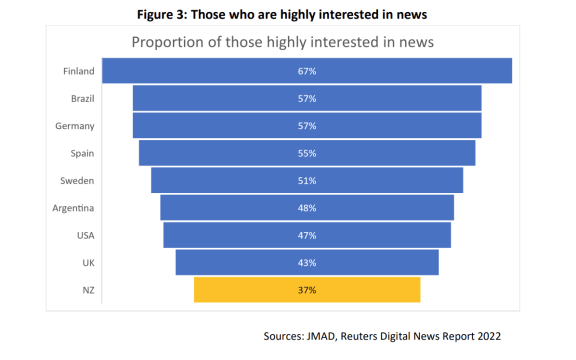
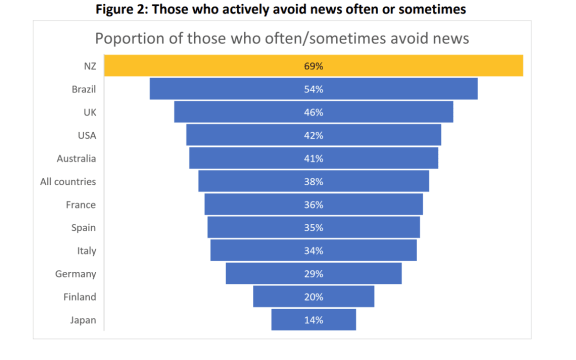
A recent trust in media survey by AUT produced a startling finding: New Zealanders are world-leaders in tuning out the news, with 69 percent of respondents saying they actively avoid it at least some of the time, and just 37 percent of us taking high interest in what’s being reported.

When asked why they were switching off, a common response was that the coverage is depressing and divisive.

The potential for an increase in people moving to Australia is a worthy topic to cover.

New Zealand does have a skills shortage, and workers leaving for greener pastures is a genuine concern.

But this week’s coverage could feel like a little bit of a slap in the face to the New Zealanders who’ve spent more than 20 years living as – in the media’s own words – second class citizens.

Perhaps our news organisations could do a little better at reporting and contextualising how their lives have improved in real terms, rather than just fretting over as-yet unrealised scenarios where their gain might be our loss.

Source: Citizenship celebration turns sour in record time

New Zealand shouldn’t be afraid of ‘brain drain’ after Australian citizenship deal

Of interest, some similar but different dynamics between USA and Canada although restrictive immigration policies in USA are shifting somewhat the patterns in tech:

For a very long time, the concept of New Zealand and Australia as meaningfully different nations did not make much sense. The Tasman Sea was awash with two-way traffic in the 19th century, when we were outposts of the same empire, with ideas and people floating between the two countries freely. Australia’s 1900/01 constitution famously retains an option for New Zealand to join its federation of states. The two countries did not send proper diplomatic missions to each other’s capitals until 1943, and did not create separate “citizenships” until 1948.

In the decades since we have established ourselves as properly different countries, albeit ones that are extremely closely linked, with over half a million New Zealand citizens living in Australia. Over the weekend those links got even closer, as prime ministers Chris Hipkins and Anthony Albanese announced a huge change to the way New Zealanders can get citizenship, which has been far more difficult since 2001.

Kiwis living in Australia will soon be eligible to apply for citizenship after four years of living in the country, with all their children born since mid-2022 in the country automatically made citizens. This replaces a cumbersome and expensive system by which New Zealanders who had lived in Australia for years had to apply to become permanent residents of Australia first, despite already being de facto permanent residents anyway.

This is a major win for Hipkins and New Zealand. It brings Australia’s system into line with New Zealand’s and will make many New Zealanders lives measurably better, as they are able to access social services for themselves and their children in the country they have moved to. Even NZ First leader Winston Peters, who publicly decries the Labour government as “dishonest” separatists, acknowledged that the deal was a victory.

But before long an old obsession was trotted out to attack the deal: the “brain drain”. Australia is not just a richer country than New Zealand, it is one that distributes those riches differently, consistently paying workers a higher proportion of GDP. Would this not, asked several prominent economists, just send more Kiwis over the ditch for higher wages, contributing to existing skills shortages? One editor even suggested the government may have been “played” by those cunning Australians.

These arguments do New Zealand a disservice.

For one, there is scant evidence that this will meaningfully contribute to more people crossing the ditch. Between late-2003 and late-2022, 778,000 Kiwis migrated to Australia from New Zealand, suggesting that the tougher path to citizenship John Howard introduced in 2001 didn’t really stop many. If you’re the kind of young person who typically did make that move, the prospect of citizenship after four years is hard to see as much of a pull factor – over and above more immediate benefits like higher pay, better working conditions, and that half of your friends are doing the same. It could keep some Kiwis in Australia longer, sure, but anyone who is happy to become a citizen of Australia is likely a lost cause for us anyway.

Source: New Zealand shouldn’t be afraid of ‘brain drain’ after Australian citizenship deal

Australia unveils direct pathway to citizenship for New Zealanders

Of note (longstanding issue):

Australia announced on Saturday a direct pathway to citizenship for New Zealanders living in the country, reversing controversial visa rules a day before a visit by New Zealand Prime Minister Chris Hipkins.

Hipkins, set to visit Queensland state’s capital Brisbane on Sunday, hailed the move as “the biggest improvement in the rights of New Zealanders living in Australia in a generation”.

The changes, effective from July, meant New Zealand citizens living in Australia for four years or more could apply for citizenship without having to become permanent residents first, Australian Prime Minister Anthony Albanese said in a statement.

“We know that many New Zealanders are here on a Special Category Visa while raising families, working and building their lives in Australia. So I am proud to offer the benefits that citizenship provides,” Albanese added.

New Zealand has long campaigned for changes since visa rules were altered in 2001, making it tougher for Kiwis in Australia to get citizenship.

The reform would bring New Zealanders’ rights more into line with those of Australian expats living in New Zealand, Australia’s Labor government said.

“Kiwis taking up Australian citizenship will still retain their New Zealand citizenship. These dual citizens are not lost to New Zealand – but draw us closer together,” Hipkins said in a statement.

The changes also meant children born in Australia since July to an Australia-based New Zealand parent would be automatically entitled to Australian citizenship, he said.

“This will make critical services available to them,” he said, adding the changes delivered on an Albanese promise that no New Zealander be left “permanently temporary” in Australia.

Around 670,000 New Zealand citizens live in Australia, while there are around 70,000 Australians in New Zealand, according to Australia’s Department of Foreign Affairs and Trade.

Australia’s Home Affairs Minister Clare O’Neil ruled out the changes being extended to other migrant groups, saying it was a “special arrangement with New Zealand”.

The reform was about ensuring the “strong friendship we have is reflected properly in law”, she told ABC television.

Source: Australia unveils direct pathway to citizenship for New Zealanders

New Zealand: Despite automation, citizenship applications taking longer

Canada not the only country to have processing and service standards challenges, along with effective implementation of automation:

The average time it takes to become a citizen is continuing to rise.

But Internal Affairs (DIA) said it had brought down a backlog of applications by 10,000, with 26,483 applications on hand this week, compared to 36,417 at the same time last year.

Average wait times for residents applying to become citizens have risen to 188 days, up from 27 days in 2017.

Decisions are quicker for applications where many decisions can be made via automated checks, DIA said in a statement.

“Our teams have been working hard to reduce the decision timeframes on citizenship applications,” said DIA general manager of services and access Julia Wootton.

“During 2022, we completely caught up on pending decisions for applications which could be assessed with the maximum number of automated checks. These types of applications are now being decided on within one to three months.

“The remaining applications we are working through require more intervention, but we are working to increase the number of these applications that can be processed with automated checks.”

The longest applications now take more than two years, compared to almost four years in 2016, when people had to make an appointment to see a citizenship officer. Some took longer because of automated checks failing or information being sourced from overseas, she said.

“Reducing the decision timeframes on citizenship applications continues to be a priority for us, and we’ve been able to do that by establishing automatic checks when possible. We are taking several other measures to further reduce decision timeframes, including more training, investing in technology changes to speed things up, and recruiting more staff.

“Based on current trends and the additional measures detailed above, we expect to continue to reduce average wait times and the number of applications awaiting allocation.”

Source: Despite automation, citizenship applications taking longer

‘Special treatment’ – different wait times for NZ citizen applicants

Of note, another country with wait time and backlog issues:

Fadi Hamdan, his wife and twin five-year-old daughters will become citizens at a ceremony next month after waiting for a year.

The Auckland IT engineer, who comes from Jordan, said it was galling to see other people go through the same citizenship by grant process in four months – and some quicker still.

“There are people who get their citizenship in 10 days, exactly 10 days. It’s not only a small amount of people, there are 600 people. So there is a special treatment going on, nobody knows about it.”

He was disappointed at the time it took and the lack of information when he asked for updates, querying why his application had failed automatic checks.

While there were not many practical differences between permanent residence and citizenship, a New Zealand passport could make travel simpler for people from countries where visas were usually needed.

For Hamdan, it became critical when his mother fell ill.

“I’m worried about going to see my dying mum. She had a stroke three times. I lost my father in October 2020 during Covid, because of Covid, and I don’t want to lose my Mum.

“We are not asking for an exception, all we are asking for is to be treated fairly and kindly. It will mean a lot, to be honest. It’s the last milestone that we were looking for since we arrived in the country.”

As of 18 August, there were 29,200 applications awaiting an outcome. Of those 9161 were from last year.

A random snapshot showed that on 17 August this year, 179 applications were approved for 2021 and 238 for 2022.

The National Party’s internal affairs spokesman Todd Muller said the backlog was similar to where it was last year when assurances were given about bringing waiting times down.

People would approach their MPs concerned about why their applications had failed to progress.

“It just gives them a huge amount of anxiety because they’ve understood that now they can move from residency to citizenship, they’re told they’ve got everything in order and then it just gets dropped into a big black hole and they don’t hear anything.”

Internal Affairs seemed to be processing recent applications first, which left those already in the queue waiting longer, he said.

Internal Affairs said it was analysing those who failed automated checks and categorising them to speed up the process.

Sixteen staff had been moved over to deal with the surge in passport applications and would move back there.

“The pipe coming into the organisation is bigger than the number of people that we have who are doing this work, particularly when you think about these are the same people who are also looking at the massive surge in passport demand that we’ve had,” said Internal Affairs deputy chief of service delivery Maria Robertson.

Not requiring migrants from English-speaking countries to prove their language ability had sped up their applications, she added.

Internal Affairs said some applications would take longer if the applicant had changed their name, spent a lot of time outside New Zealand since obtaining residency or had committed offences.

Others could be rushed through in urgent situations.

“Some applicants may not have been required to understand English in order to obtain residency – citizenship legislation requires most applicants to have sufficient knowledge of the English language, so sometimes additional checks may be required.

“It is not always easily possible to tell why an application has not passed an initial automated check. It could be related to data from INZ or another government agency or an answer in an application.

“Frontline staff who answer queries from applicants who have not yet been assigned a case officer do not have access to all the relevant information in an application.”

Source: ‘Special treatment’ – different wait times for NZ citizen applicants

New Zealand temporarily changes immigration rules to hire extra workers

Of note, the geographic distinctions:

New Zealand will make temporary changes to its immigration rules seeking to hire thousands of extra workers to plug a labor shortage, Immigration Minister Michael Wood said on Sunday.

Wood said the government was aiming at temporarily doubling numbers under the working holiday visa scheme.

The visa scheme allows people to enter and work from New Zealand for a period of up to 12 months, or sometimes even more, if they’re from select countries like the UK or Canada.

By throwing open more working holiday visa slots, New Zealand is hoping for 12,000 extra workers over the year.

“These measures are about providing immediate relief to those businesses hardest hit by the global worker shortage,” Wood said in a statement.

New Zealand announces measures to plug labor shortage

Michael Wood said there would be relaxation of wage rules for skilled migrants in key sectors like aged care, construction, infrastructure, meat processing, seafood and adventure tourism so  these businesses are slowly able to build necessary skills in the country.

Wood announced a temporary extension of working holiday visas by six months and an opportunity for those who previously held the visa but didn’t travel to New Zealand because of COVID.

“COVID brought the world to a standstill,” Wood said, adding that a workers’ crunch was being felt most by New Zealand’s hospitality and tourism sectors that traditionally rely on international workers.

While COVID had a major impact on international travel around the world, New Zealand’s response was unusually draconian by global standards. The isolated and remote islands closed their borders almost entirely during the pandemic, hoping to keep the virus out altogether, but ultimately failed in this goal. It finally reopened on July 31 this year.

Unemployment rate at record low, wages high

New Zealand’s unemployment rate remains at record lows, at around 3.3% in the second quarter which runs from April until June, according to Statistics New Zealand.

Annual growth in private-sector wages increased at the same time to 3.4% in the second quarter, their most rapid increase in 14 years.

The Reserve Bank of New Zealand last week lifted the official cash rate by 50 basis points to 3.0% in a seventh straight hike to rein in inflation.

Source: New Zealand temporarily changes immigration rules to hire extra workers

New Zealand launches new immigration visa category, opens from September | Mint

Higher threshold than most, along with focus on active not passive investment:

To attract experienced, high-value investors to invest in domestic businesses, the New Zealand government has created a new investor migrant visa category. The new Active Investor Plus visa category will replace the existing Investor 1 and Investor 2 visa categories. Eligibility criteria for New Zealand’s Active Investor Plus visa category includes a minimum $5 million investment and only 50% of that can be invested in listed equities.

“We have so many fantastic businesses in New Zealand that are making a real name for themselves in the global marketplace. Our Government has a goal to support these businesses to grow into even more successful global brands, and updating our investor visa settings is a key part of our strategy to attract high-value investors,” Economic and Regional Development Minister Stuart Nash said.

Source: New Zealand launches new immigration visa category, opens from September | Mint