Why Islam Gets Second-Class Status in Germany – The New York Times

Interesting commentary by Alexander Gorlach:

Religion in Germany is not a private affair. Government at all levels recognizes religious communities as public institutions, and encourages participation in them — Germans who register with the state as Roman Catholics, Protestants or Jews pay a “religion tax,” which the government then sends to their respective institution. Religious groups are also allowed to give faith-based instruction in public schools: It’s not uncommon for a small-town pastor, priest or lay person to have a spot on the local high school faculty.

To enjoy this privileged status, religious communities must have a defined set of beliefs, their members must be recorded, and they must have historical and social significance. The Catholic, Protestant and Jewish religious communities are organized as public institutions; in the state of Berlin, Jehovah’s Witnesses and the Mormon Church are as well.

It might seem as if Islam, with 4.3 million adherents in Germany, would have qualified easily. But so far, the German government has resisted including it.

The reason is both simple and complex: Muslim communities are separated along ethnic lines as well as along denominational lines among Sunnis, Shiites and Alawites. Often there is little unity among these groups, hence they fail the most important state criterion: a unified religious body with shared goals and doctrines.

These requirements for a religion to get a privileged status in Germany highlight the anachronistic state of the secular federal republic in its approach to faith. The idea that the state can cooperate with religious groups in the same way it cooperates with, say, labor unions presumes a certain unity and hierarchy on the part of those groups. But Islam doesn’t work that way. It simply doesn’t fit within criteria written for the structured Christian churches that have shaped Europe, with bishops and baptismal registers.

For quite some time, there have been demands that the law be renamed to the Religionsrecht (State and Religion Law), and for it to include a wider diversity of religions. Though nothing much has changed on the national level, there has been progress in the states, where most of the country’s religious laws are promulgated. Bavaria, a conservative Catholic state that polls very high in measurements of xenophobia and anti-refugee sentiment, nevertheless has been running an Islamic-education pilot program in schools; it is also home to Germany’s oldest mosques. Perhaps the Bavarians, precisely because they protect their own religious and cultural traditions so ferociously, are also the most willing to recognize and support the traditions of others.

But it’s not only in Bavaria that reform is moving forward. In the Protestant-dominated north, Christian Wulff, a premier of Lower Saxony, set up training courses for future imams and Islamic religious teachers at the universities of Münster and Osnabrück. Later, when he was president of Germany, Mr. Wulff said, “Islam belongs to Germany.”

Though Mr. Wulff served just two years as president before resigning in 2012 over allegations of corruption (since dropped), his actions on behalf of Islam — and that quotation in particular — set off a debate that continues across the country. Critics of Islamic religious education in the schools, including many Muslims themselves, say that there is no group in the country that can speak for all Muslims. And indeed, it is estimated that the Central Council of Muslims and the Islamic Council for the Federal Republic of Germany, the two groups that have the best claims to speak for Islam in Germany, represent no more than 20 percent of German Muslims.

Germany is a secular country, but the German legal framework approves of institutionalized religions in a biased way. The religions must organize themselves according to state standards, and those standards are tailored toward the structures of the Christian religion.

The result is a delegitimization of the state’s relationship to religious groups in the eyes of many non-Christians, particularly Muslims — a dangerous prospect at a time when rapid integration is essential to maintain social peace. In the context of a growing Muslim community and a rising number of citizens affiliated with no religion at all, Germany may not be able to maintain an order that arose many generations ago.
Playboy and the False Normalization of the Hijab: Maajid Nawaz

Nawaz provides historical perspective to wearing of the hijab, contrasting liberal and conservative perspectives, which will provoke discussion and debate:

As a reforming secular liberal Muslim, I do not endorse the gender-discriminatory body-shaming and moralizing of the hijab. I will fight fiercely to protect anyone’s right to wear this medieval flag of female “chastity,” but that doesn’t mean I think the wearer is right to do so. Let us not ban the hijab, but let us not glamorize it either. I prefer leaving that to religious conservatives who are fixated on nudity, “modesty,” and female “honor.” This is a conservative, not liberal, view of the human body. Such illiberal, regressive-left promotion of religious conservativism—only for Muslims mind you—is nothing short of exoticized Orientalism rehashed.

 The assumption made by some liberals is that the “authentic” Muslim woman is the hijab-wearing one, while non-hijabis are seen as Westernized, inauthentic Muslims. Likewise, the religious-conservative Muslim assumption equates concealing the female form to “modesty,” as if a woman who shows her hair or reveals her figure is somehow immodest.

This is a not-so-subtle form of bigotry against the female form, and it has real consequences, including rising social-conservative attitudes across Muslim communities around gender and sexual freedom. In too many instances across Muslim-majority societies, including those embedded in Europe, this “modesty theology” has led to slut-shaming of women who do not cover. Worse yet, it can lead to so-called honor killings.

Many non-Muslims simply assume there is only one—conservative—way of being Muslim. But we Muslims are no longer this distant and native “other” that liberals and conservatives can visit once a year to share a bit of falafel.

We are born and raised among you, and Islam is therefore now firmly native to our societies. So judge us by the same progressive standards you reserve for everyone else. We Muslim reformers have to be able to demand the same progressive rights within our communities that are enjoyed by everyone else. Your intervention and interaction with Muslims’ intra-religious debate around these issues is not neutral. A civil war is raging within our communities about the future of Islam for Muslims.

Liberal Muslim theologians such as Britain’s Shaykh Salah al-Ansari, Dr. Usama Hasan, and Pakistan’s Javaid Ghamidi, argue that the hijab is not a religious duty (fard) at all. And that is how it used to be.

Up until the 1980s, the female body was not shamed out of public view in Muslim-majority societies. But from the ’80s onward, theocratic Islamism began replacing Arab socialism as the ideology of resistance against “the West.” This struggle against the “other” necessitated defining what is “ours” and what is “theirs”—and women, of course, were deemed “ours.”

Suddenly, women’s bodies became the red line in a cultural war against the West started by theocratic Islamism. A Not Muslim Enough charade was used to identify “true” Muslims against “Western” stooges. Religious dress codes became a crucial marker in these cultural purity stakes. Any uncovered woman was now deemed loose, decadent, and attention seeking. In short, aligned to the “Western enemy.”

Back to the Playboy shoot: The admirably entrepreneurial Noor Taguri advises younger girls who look up to her to “stay fearless and remember that everything you want is just outside your comfort zone.”

My advice to Noor is: I hope you do the same, sister. Do look up the late great Egyptian feminist Huda Sharawi who truly stepped out of her “comfort zone” when, in 1923, she shocked Muslims everywhere by removing her hijab publicly for the first time.

Within months Muslim women the world over were encouraged to shed this gender-discriminatory medieval throwback to “modesty.” Those were the days when genuine Western progressives supported genuine Muslim feminists.

ICYMI: In the Attic of Early Islam by Robert F. Worth | The New York Review of Books

A reminder of an era where Islamic interpretation was not drowned out by fundamentalists:

Sometime around the year 1314, a retired Egyptian bureaucrat named Shihab al-Din al-Nuwayri began writing a compendium of all knowledge, under the appealingly reckless title The Ultimate Ambition in the Arts of Erudition. It would eventually total more than 9,000 pages in thirty volumes, covering all of human history from Adam onward, all known plants and animals, geography, law, the arts of government and war, poetry, recipes, jokes, and of course, the revelations of Islam.

At one point, Nuwayri tackles a subject that may seem familiar to the modern audience: the Islamic punishments for adultery, sodomy, and fornication. He cites authorities who declare that such sinners must be stoned to death or severely flogged, in language that conjures up the gruesomely “medieval” execution videotapes posted seven hundred years later by ISIS: “Whosoever engages in the act of the people of Lot—both the active and passive participant—must be put to death.”

Yet this authentically medieval author then continues unblinkingly with a long, celebratory chapter about erotic poetry, much of it homosexual and wine-fueled. A sample:

That sly and brilliant one
Who grows girlish in his impudence
He appears manly at first
But after a drink is suddenly a woman
When you tell him: “Baby, say Moses,”
He lisps moistly: “Motheth”
He embraces me until morning
Trading stories with me in the dark.

The juxtaposition is one of many in this bizarre, fascinating book that illustrate the sprawlingly heterodox reality of the early centuries of Islam, so different from the crude puritanical myths purveyed by modern-day jihadis. The Ultimate Ambition, a canonical work for scholars in the Islamic world for centuries, has been translated into English for the first time and radically condensed (to about three hundred pages) by Elias Muhanna, a professor of comparative literature at Brown University. Reading it is like stumbling into a cavernous attic full of unimaginably strange artifacts, some of them unforgettable, some merely dross. From the alleged self-fellation of monkeys to the many lovely Bedouin words for the night sky (“the Encrusted, because of its abundance of stars, and the Forehead, because of its smoothness”) to the court rituals of Egypt’s then-overlords, the Mamluks, nothing seems to escape Nuwayri’s taxonomic ambitions.

Nuwayri draws heavily on earlier Islamic sources, and his respect for tradition usually prevents him from passing judgment, even when the claims he is citing are hilariously implausible. In one section, for instance, he passes on a story about a sexually voracious she-bear who captures a man so that she can slake her lust on him again and again, licking his feet raw to prevent him from leaving the cave. Yet at a few points Nuwayri permits himself a brief editorial comment, as in one section about happiness: “Imru’ al-Qays was asked, ‘What is happiness?’ and he replied: ‘A delicate maiden burning with fragrance, burdened by her ample curves.’ He was infatuated by women.” At another point Nuwayri relays a story from “a trustworthy person among the Abyssinians” about how to escape the charge of a wild rhino: “If the man urinates on the rhinoceros’s ear, it will run away and not return to him. That way, the man will escape from it. God knows best.” One has to wonder if the pious addendum is slightly tongue-in-cheek—a rhetorical shrug of the shoulders.

At times Nuwayri allows his sources to compete with each other, citing different juristic opinions on wine-drinking, music, and the punishments for illicit sex. At least once, he even dramatizes such a disagreement:

The caliph al-Ma’mūn asked (the judge) Yaḥyā ibn Aktham about the meaning of desire, and he replied: “It is the auspicious thoughts that a man’s heart falls in love with and his soul esteems.” Then (the theologian) Thumāma spoke up and said: “Shut up, Yaḥyā! You should stick to answering questions about divorce or whether a pilgrim violates his ritual purity by hunting a gazelle or killing an ant.”

Mostly, the heterodoxy creeps in sideways, in the book’s unapologetic references to supposedly illicit pleasures. The section on the human body includes the sub-heading “On Poetic Descriptions of the Down on the Young Male Cheek.” The section titled “On the Buttocks” includes this poetic snippet:

The eyes of his onlookers gathered around
His haunches, like a second belt  

But Nuwayri is not deliberately sabotaging Muslim orthodoxy. He is merely reflecting a world in which moral prescriptions existed alongside a much messier reality, and some degree of dissonance between the two was accepted and forgiven. This loose fit between life and text applied throughout the pre-modern Middle East, but perhaps especially in the turbulent, plague-ridden years of the fourteenth century. Egypt’s rulers, the Mamluks, were a caste of military slave-soldiers who had seized power from their owners in 1250, three decades before Nuwayri’s birth, and remained in power until the Ottomans conquered them in 1517. They were mostly Turkic people from the Eurasian steppe whose forefathers had been kidnapped and trained (too well) in the arts of war. Culturally, it was a time when Sufi mysticism was gaining adherents, and rowdy religious festivals packed Cairo’s streets, encouraging promiscuous minglings of sect and ritual.

This kind of dissonance is still visible in much of the Middle East, despite the dramatic encroachment in recent decades of more literalistic and intolerant strains of religion. I was always struck, while living in Iraq and Lebanon, by the way Muslims could claim they accepted brutally categorical edicts on hellfire, Jews, and unbelief while living in a far more elastic and accepting way. This, I think, is what the late scholar Shahab Ahmed meant when he wrote in his posthumous book What Is Islam? that a true understanding of Islam must “come to terms with—indeed, be coherent with—the capaciousness, complexity, and, often, outright contradiction that obtains within” the religion’s lived history.

Religion aside, the book is full of strange myths and nostrums that hint at what mattered to people in the fourteenth century: sex, money, power, perfume. Nuwayri retails directions for incense and fragrance that are so elaborate it is hard to believe anyone really followed them. (One begins, “Take one hundred mithqāls of rare Tibetan musk and pound it after cleaning it of organ matter and hair.”) Then again, people and cities must have smelled awful, and olfactory relief made a difference. There are also many formulae for enlarging the penis, tightening the vagina, enemas, suppositories, contraceptives, and other sexual aids, with titles like “A Recipe for Another Medicine that Produces Indescribable Pleasure.”

Source: In the Attic of Early Islam by Robert F. Worth | NYR Daily | The New York Review of Books

To the music-banning Muslim father: Rejecting compromise is extremism: Zarqa Nawaz

Nawaz gets it right:

The school did its best to accommodate the father’s requests by offering alternatives to his children such as not playing instruments and writing a paper on Islam’s long history of religious-inspired music. But those compromises were rejected. Accommodation has to be a two-way street for it to work. To continually reject a reasonable compromise is also a form of extremism.

If a parent feels this strongly about an issue, they have two options: find a religious private school or home school. But to ask a public institution to create an environment that is micro-managed to appeal to every minute religious request is unreasonable. If you take the anti-music logic to the extreme, how can that parent buy groceries in stores where music is playing, eat in a restaurant or even go up an elevator in which many non-Muslims could get behind a music ban for the sake of some peace and quiet?

Muslims believe that Islam takes the middle road when it comes to dealing with issues. We are to be neither extreme in overindulgence or rejection.

The school board offered reasonable solutions and a middle way, which was very Muslim of them, but they were rejected. So if you’re going to be extreme in your response, then typically what happens is that people find enclaves to live their lives separately with their own set of rules. The most infamous example of this is the community of Mormons in Bountiful, B.C., where a sect of Christians believe that polygamy and child marriage is part of its belief system. Because these practices contravene the Canadian Criminal Code, the community has opted to separate itself from the larger majority to minimize their dealings with law enforcement. Muslims have chosen to not live in separate enclaves.

We have chosen to integrate and be part of the majority culture where we contribute and enrich the communities we belong to.

We have Muslim women and men creating art in the form of song, poetry, dance and music. Faith and fun don’t have to be mutually exclusive. You can have your cake and eat it while a Muslim screeches in a microphone near you.

Source: To the music-banning Muslim father: Rejecting compromise is extremism – The Globe and Mail

ICYMI – Saudis and Extremism: ‘Both the Arsonists and the Firefighters’ – The New York Times

Good long read:

The idea has become a commonplace: that Saudi Arabia’s export of the rigid, bigoted, patriarchal, fundamentalist strain of Islam known as Wahhabism has fueled global extremism and contributed to terrorism. As the Islamic State projects its menacing calls for violence into the West, directing or inspiring terrorist attacks in country after country, an old debate over Saudi influence on Islam has taken on new relevance.

Is the world today a more divided, dangerous and violent place because of the cumulative effect of five decades of oil-financed proselytizing from the historical heart of the Muslim world? Or is Saudi Arabia, which has often supported Western-friendly autocrats over Islamists, merely a convenient scapegoat for extremism and terrorism with many complex causes — the United States’s own actions among them?

Those questions are deeply contentious, partly because of the contradictory impulses of the Saudi state.

In the realm of extremist Islam, the Saudis are “both the arsonists and the firefighters,” said William McCants, a Brookings Institution scholar. “They promote a very toxic form of Islam that draws sharp lines between a small number of true believers and everyone else, Muslim and non-Muslim,” he said, providing ideological fodder for violent jihadists.

Yet at the same time, “they’re our partners in counterterrorism,” said Mr. McCants, one of three dozen academics, government officials and experts on Islam from multiple countries interviewed for this article.

Conflicting Goals

Saudi leaders seek good relations with the West and see jihadist violence as a menace that could endanger their rule, especially now that the Islamic State is staging attacks in the kingdom — 25 in the last eight months, by the government’s count. But they are also driven by their rivalry with Iran, and they depend for legitimacy on a clerical establishment dedicated to a reactionary set of beliefs. Those conflicting goals can play out in a bafflingly inconsistent manner.

Thomas Hegghammer, a Norwegian terrorism expert who has advised the United States government, said the most important effect of Saudi proselytizing might have been to slow the evolution of Islam, blocking its natural accommodation to a diverse and globalized world. “If there was going to be an Islamic reformation in the 20th century, the Saudis probably prevented it by pumping out literalism,” he said.

Photo

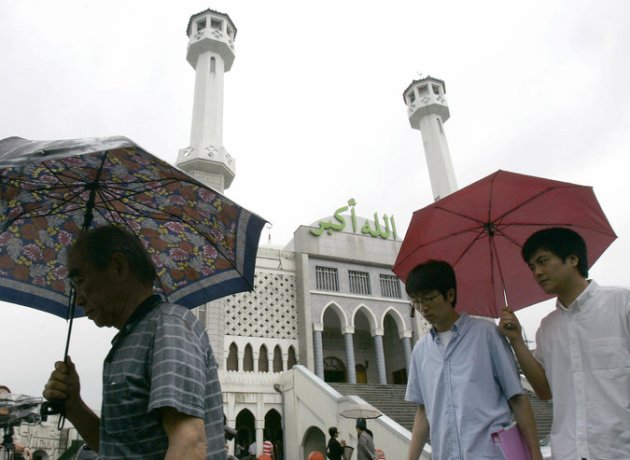
The Seoul Central Mosque in South Korea, one of hundreds of mosques around the world built using Saudi donations. CreditChoi Won-Suk/Agence France-Presse — Getty Images 

The reach of the Saudis has been stunning, touching nearly every country with a Muslim population, from the Gothenburg Mosque in Sweden to the King Faisal Mosque in Chad, from the King Fahad Mosque in Los Angeles to the Seoul Central Mosque in South Korea. Support has come from the Saudi government; the royal family; Saudi charities; and Saudi-sponsored organizations including the World Muslim League, the World Assembly of Muslim Youth and the International Islamic Relief Organization, providing the hardware of impressive edifices and the software of preaching and teaching.

There is a broad consensus that the Saudi ideological juggernaut has disrupted local Islamic traditions in dozens of countries — the result of lavish spending on religious outreach for half a century, estimated in the tens of billions of dollars. The result has been amplified by guest workers, many from South Asia, who spend years in Saudi Arabia and bring Saudi ways home with them. In many countries, Wahhabist preaching has encouraged a harshly judgmental religion, contributing to majority supportin some polls in Egypt, Pakistan and other countries for stoning for adultery and execution for anyone trying to leave Islam.

Limits of Influence

But exactly how Saudi influence plays out seems to depend greatly on local conditions. In parts of Africa and Southeast Asia, for instance, Saudi teachings have shifted the religious culture in a markedly conservative direction, most visibly in the decision of more women to cover their hair or of men to grow beards. Among Muslim immigrant communities in Europe, the Saudi influence seems to be just one factor driving radicalization, and not the most significant. In divided countries like Pakistan and Nigeria, the flood of Saudi money, and the ideology it promotes, have exacerbated divisions over religion that regularly prove lethal.

And for a small minority in many countries, the exclusionary Saudi version of Sunni Islam, with its denigration of Jews and Christians, as well as of Muslims of Shiite, Sufi and other traditions, may have made some people vulnerable to the lure of Al Qaeda, the Islamic State and other violent jihadist groups. “There’s only so much dehumanizing of the other that you can be exposed to — and exposed to as the word of God — without becoming susceptible to recruitment,” said David Andrew Weinberg, a senior fellow at the Foundation for Defense of Democracies in Washington who tracks Saudi influence.

Exhibit A may be Saudi Arabia itself, which produced not only Osama bin Laden, but also 15 of the 19 hijackers of Sept. 11, 2001; sent more suicide bombers than any other country to Iraq after the 2003 invasion; and has supplied more foreign fighters to the Islamic State, 2,500, than any country other than Tunisia.

Mehmet Gormez, the senior Islamic cleric in Turkey, said that while he was meeting with Saudi clerics in Riyadh in January, the Saudi authorities had executed 47 people in a single day on terrorism charges, 45 of them Saudi citizens. “I said: ‘These people studied Islam for 10 or 15 years in your country. Is there a problem with the educational system?’ ” Mr. Gormez said in an interview. He argued that Wahhabi teaching was undermining the pluralism, tolerance and openness to science and learning that had long characterized Islam. “Sadly,” he said, the changes have taken place “in almost all of the Islamic world.”

In a huge embarrassment to the Saudi authorities, the Islamic State adopted official Saudi textbooks for its schools until the extremist group could publish its own books in 2015. Out of 12 works by Muslim scholars republished by the Islamic State, seven are by Muhammad ibn Abd al-Wahhab, the 18th-century founder of the Saudi school of Islam, said Jacob Olidort, a scholar at the Washington Institute for Near East Policy. A former imam of the Grand Mosque in Mecca, Sheikh Adil al-Kalbani declared with regret in a television interview in January that the Islamic State leaders “draw their ideas from what is written in our own books, our own principles.”

Small details of Saudi practice can cause outsize trouble. For at least two decades, the kingdom has distributed an English translation of the Quran that in the first surah, or chapter, adds parenthetical references to Jews and Christians in addressing Allah: “those who earned Your Anger (such as the Jews), nor of those who went astray (such as the Christians).” Seyyed Hossein Nasr, a professor of Islamic studies at George Washington University and the editor in chief of the new Study Quran, an annotated English version, said the additions were “a complete heresy, with no basis in Islamic tradition.”

Accordingly, many American officials who have worked to counter extremism and terrorism have formed a dark view of the Saudi effect — even if, given the sensitivity of the relationship, they are often loath to discuss it publicly. The United States’ reliance on Saudi counterterrorism cooperation in recent years — for instance, the Saudi tip that foiled a 2010 Qaeda plot to blow up two American cargo planes — has often taken precedence over concerns about radical influence. And generous Saudi funding for professorships and research centers at American universities, including the most elite institutions, has deterred criticism and discouraged research on the effects of Wahhabi proselytizing, according to Mr. McCants — who is working on a book about the Saudi impact on global Islam — and other scholars.

One American former official who has begun to speak out is Ms. Pandith, the State Department’s first special representative to Muslim communities worldwide. From 2009 to 2014, she visited Muslims in 80 countries and concluded that Saudi influence was pernicious and universal. “In each place I visited, the Wahhabi influence was an insidious presence,” she wrote in The New York Times last year. She said the United States should “disrupt the training of extremist imams,” “reject free Saudi textbooks and translations that are filled with hate,” and “prevent the Saudis from demolishing local Muslim religious and cultural sites that are evidence of the diversity of Islam.”

Source: Saudis and Extremism: ‘Both the Arsonists and the Firefighters’ – The New York Times

Nawaz: Both Sides Are Wrong in the Burkini Wars – The Daily Beast

Maajid Nawaz on the burkini controversy:

The burkini is, in fact, a sad symbol of Islam today going backward on gender issues. France’s ban on it is a sad symbol of liberalism today going backward in reply.

Classical liberals of any religion or none would do well to remember that this does not have to be a zero-sum game. It is possible to oppose the French ban on burkinis while also challenging the mindset of those who support burkas and burkinis.

As a reforming secular liberal Muslim, I do not endorse the gender-discriminatory body-shaming and moralizing of burkas. I recoil, too, at the silly idea of a burkini. But I also believe that France’s ban on them is ridiculous, illiberal, and incredibly petty. It is also cynical.

As for liberalism going backward, when Mohamed Lahouaiej-Bouhlel drove a truck through the crowd in Nice on July 14, he sought to deepen division, and to further the ISIS aim of a global civil war. Strategically, he chose the right location.

The French Riviera is a traditional stronghold of French reactionaries. The area sees consistently high poll results for the far right. Last year, National Front leader Marine Le Pen’s niece, Marion Maréchal-Le Pen, ran a high-profile campaign there and succeeded in making huge gains. The region is now rapidly turning into a polarized hotbed of tension, pitching far-right sympathizers against Islamist extremists.

In this respect, the burkini ban is nothing but a product of political opportunism. With the proximity of elections looming, shortsighted politicking is the only consideration that matters. Local petty political chieftains would rather provoke national turbulence merely to win a local council seat than do what is in their country’s national interest.

As the 2017 French presidential and legislative elections approach, the country’s politicians are desperate to prove who can do the most—or anything at all—against the pernicious effect of jihadist terrorism. They have only a few months left. Sadly, grand gestures such as bans on symbolic pieces of cloth carry political currency in this game of mass-hysteria identity politics.

This is how our most valued asset, source of strength and global envy—liberalism—is capitulating to identity-based communalism, short-term electoral gain, populist appeasement, and a clamor to just do something.

This capitulation is exactly what jihadist terrorists were hoping to achievewith their sustained random attacks.

Perpetual identity-based civil war, rather than war between countries, suits those who wish to build a new world order—a caliphate—carved out of existing states. Equal treatment on a citizenship basis means nothing to jihadists.

There is no better way to kickstart dividing people along exclusively religious lines than by committing atrocities in the name of Islam. Their hope is that everyone else also begins to identify Sunni Muslims primarily by their religious identities, in reaction to the atrocities. In this way, religious identity has won and citizenship becomes redundant.

But the backward trajectory of contemporary liberalism is matched by a backward trajectory within Islam today.

In modern Muslim-majority contexts and up until the 1970s, the female body was not shamed out of public view. As one Egyptian feminist asserts, this was mainly due to the social dominance of the relatively liberal, middle-class elite in urban centers.

But throughout the ’80s, theocratic Islamism began replacing Arab socialism as the ideology of resistance against “the West.” As is always the case with misogynist dogma, the war against the “other” necessitated defining what is “ours” and what is “theirs”—and our women, of course, were deemed “ours.”

Suddenly, women’s bodies became the red line in a cultural war against the West started by theocratic Islamism. A Not Muslim Enough charade was used to identity “true” Muslims against “Western” stooges. Religious dress codes became a crucial marker in these cultural purity stakes. Only the fanatic can ever win in this Not Muslim Enough game. Any uncovered woman was now deemed loose, decadent, and attention seeking.

In short, too Western.

Many Islamists advocate total segregation between the sexes, and in fact they would reject the burkini. The full-body swimwear would certainly not be allowed in today’s Saudi Arabia: still too revelaing!

In that sense, it is actually a step forward from Islamism’s peak in the ’90s. But it is still a step backward from before theocratic Islamism took hold among Muslims. The more women succumb to this Not Muslim Enough charade, the more theocrats demand of them. Is it any wonder, then, that some of the most abusive, oppressive societies for women happen also to be the most religiously conservative?

When writing recently in defense of her burkini invention, Aheda Zanetti equated concealing the female form with “modesty” no less than three times.

She confessed to not participating in sports when young “because we chose to be modest.”

But the assumption that “modesty” equates to covering up is a subtle form of bigotry against the female form. It goes without saying that harassment on Western beaches, where the female form is more normalized, occurs less than in conservative societies, even though it is still present. But in too many instances across Muslim-majority contexts this “modesty theology” has led to slut-shaming of women who do not cover.

In the worst of cases, misogyny disguised as modesty has led to mass sexual harassment on the streets, most recently by gangs of Muslim migrants in Cologne. In Egypt, it has even given rise to a mass public rape phenomenon. As Muslim feminists note, violating Muslim cultural “honor codes” (irdh) and modesty theology (hayaa’) can lead to heinous legal and societal reprimand and the gross fetishization of a woman’s body.

Just like any other practice rooted in religiously inspired misogyny, the burkini cannot be detached from the body-shaming tied to its origins. Aheda Zanetti continued to insist that her product is “about not being judged” as a Muslim woman, yet she is wedded to a practice that inextricably judges the female form as being “immodest,” as she, too, did in her own piece.

“I don’t think any man should worry about how women are dressing,” she argued.

OK. But it has only ever been conservative-religious Muslim men telling Muslim women how to dress.

Over the course of my years immersed in Islamic theology and Arabic, I remain unaware of any medieval female Muslim exegete used as authority by Muslim women for the “duty” of wearing a hijab. It is only ever male exegetes of the Quran who are cited preaching for the duty of female “modesty.”

And it is simply an undeniable fact that most Muslim women judged and attacked around the world for how they dress are attacked by other Islamist and fundamentalist Muslims, not by non-Muslims. These are religious fanatics playing the Not Muslim Enough game.

I am a liberal. The headscarf is a choice. Let Muslim women wear bikinis or burkinis. Liberal societies have no business in legally interfering with the dress choices women make. I have consistently opposed the ban on face veils in France, just as I oppose their enforced use in Iran and Saudi Arabia.

Outside of this legal debate, though, and as a reforming secular liberal Muslim, I reserve the right to question my own communities’ cultural traditions and taboos.

As a liberal, I reserve the right to question religious-conservative dogma generally, just as most Western progressives already do with Christianity. Yet with Muslims, Western liberals seem perennially confused between possessing a right to do something, and being right when doing it.

Of course American Christian fundamentalists of the Bible Belt have a right to speak, but liberals routinely—and rightly—challenge their views on abortion, sexuality, and marriage. To do so is not to question their right to speak, but to challenge their belief that they are right when they speak. I ask only that secular liberal Muslims are also supported in challenging our very own “Quran Belt” emerging in Europe.

This is the real struggle. It is intellectual and it is cultural, more than it is legal.

It’s not right to equate Islam with violence, pope says

Worth noting:

Speaking to journalists aboard his return flight from Krakow, Poland, July 31, the pope also stressed that violence exists in all religions, including Catholicism, and it cannot be pinned to one single religion.

“I do not like to speak of Islamic violence because everyday when I look through the papers, I see violence here in Italy,” the pope told reporters. “And they are baptized Catholics. There are violent Catholics. If I speak of Islamic violence, I also have to speak of Catholic violence,” he added.

Spending about 30 minutes with reporters and responding to six questions, Pope Francis was asked to elaborate on comments he had made flying to Poland July 27 when he told the journalists that religions are not at war and want peace.

The pope’s initial comment came in speaking about the murder July 26 of an elderly priest during Mass in a Catholic church in Saint-Etienne-du-Rouvray, France. Two men, armed with knives, entered the church during Mass. The attackers murdered 84-year-old Father Jacques Hamel, slitting his throat. The Islamic State group later claimed responsibility for the murder.

Although the death of the French priest was committed in the name of Islam, the pope said that it is unfair to label an entire religion violent because of the actions of a few fundamentalists.

“One thing is true. I believe that in almost all religions, there is always a small fundamentalist group. We have them, too,” the pope said. “When fundamentalism goes to the point of killing — you can even kill with the tongue. This is what St. James says, but (you can kill) also with a knife. ”

“I do not think it is right to identify Islam with violence. This is not right and it is not true,” he said.

Instead, the pope said, that those who choose to enter fundamentalists groups, such as the Islamic State, do so because “they have been left empty” of ideals, work and values.

Source: It’s not right to equate Islam with violence, pope says

When does Islam generate Western anxiety? – The Washington Post

Interesting and relevant analysis, an interesting suggestion for further research and some likely controversial advice for Muslim groups in terms of their use of words:

In recent years, the United States and its “Western” allies have faced countless foreign policy choices involving the Islamic world, from engaging with Islamist governments in Egypt and Tunisia to negotiating with Iran to managing drone campaigns in at least three countries. While foreign policy decisions are shaped by many factors, public opinion is a major input. So how does the perceived Islamic character of actors influence foreign policy attitudes toward them?

Unfortunately, our existing understanding of these perceptions is limited. Research shows that religious differences are an important ingredient in foreign policy attitudes — recent survey experiments have shown that Western citizens were more willing to start a war against “Muslim” than “Christian” adversaries. But religious differences are often more complex.

Consider the key participants in the Syrian civil war: The Islamic State, Jabhat al-Nusra, the “moderate” Free Syrian Army, Kurdish rebel groups, Hezbollah and the Bashar al-Assad regime are all broadly “Muslim,” but their Islamic character is portrayed — by themselves as well as by Western media — quite differently. Do these differences shape foreign policy attitudes toward them? When are Western populations really fearful and mistrustful of Islamic political actors?

Our new study in Political Research Quarterly explores these dynamics. In an original survey experiment, we randomly assigned subjects different news stories about the ongoing Syrian conflict in which we manipulated the Islamic character of a fictitious yet realistic foreign actor — the “Free Syria Movement” (FSM) — seeking U.S. military assistance. Specifically, we examined whether giving the actor common Islamic language like “Allahu akbar,” policy goals such as sharia law, and/or labels including “Islamist” affected the respondents’ social affect, political attitudes and foreign policy preferences toward the group. Conducted in May 2015 via Amazon’s Mechanical Turk (MTurk) platform, the survey was completed by 1,095 respondents, with at least 120 in each of the eight conditions.

1. Islamic cues do indeed matter.

Under normal circumstances, we found that respondents’ attitudes towards the FSM were relatively benign. Although they knew the group was Muslim, they tended to give neutral or mixed responses about its level of trustworthiness, compatibility with American values, emotional impact on them and potential role as an American regional ally. Likewise, respondents had mixed views about sending FSM the requested American military aid, although they leaned slightly against doing so overall.

In contrast, with the three cues incorporated, all of these responses shifted in a significantly negative direction. Respondents tended to see the group as untrustworthy, incompatible with their values and interests, a source of fear and a potential regional adversary. Their willingness to give it aid moved firmly toward opposition, dropping on average by more than seven percentage points. And other attitudes saw even larger negative shifts, with the average trust in the group dropping by 10 percentage points. Essentially, respondents did not inherently have hostile attitudes toward the Islamic actor, only when “cued” to do so.

2. Some cues matter more than others.

Yet we also found that some of the Islamic cues harmed attitudes toward the group far more than others. Of the three, insertion of “sharia law” as a policy goal had the most harmful impact, while use of the “Islamist” label did not yield any statistically significant negative effects on any of the outcomes. This is not wholly surprising. Although sharia can have many different meanings in the Muslim world — from inclusive welfare states to punitive morality codes — Western elites have characterized this concept solely in terms of violence and oppression. In the words of Newt Gingrich, sharia is “a mortal threat to the survival of freedom in the United States and in the rest of the world as we know it.” In fact, anti-sharia legislation had been proposed in 23 American states by 2011. This “sharia-phobia” is not unique: other broad Islamic political goals such as the pursuit of a caliphate have been received with similar apprehension in Western political discourse.

3. The influence of these cues depends on partisanship.

Finally, we found that the impact of the cues depends on party identification. With all three cues activated, for example, we see a 22 percentage point drop in trust in the group among Republicans, a 10 percentage point drop among independents and a 5 percentage point drop among Democrats. This also is not wholly unexpected. Republican political elites often describe national security threats in more explicitly Islamic terms — with a greater willingness to label terrorist groups as “Islamic” and invoke concepts such as sharia and the caliphate to characterize their goals. We interpret this mostly as Republican identifiers taking cues from their elites. Yet, as indicated above, independents and Democrats are not immune from these reactions either.

This study suggests at least two promising areas of future research. First, we can examine the flip side of the coin: how adopting Christian language, policies and labels in the West influences foreign policy views in the Islamic world. This could help determine whether these processes mirror each other, in a Sisyphean cycle of religious politicization. Second, we could research whether and how these negative reactions to Islamic cues can be effectively countered. Does including brief translations and explanations of these cues that highlight their positive aspects, diverse meanings and/or Judeo-Christian equivalents ameliorate Western apprehension?

For now, we know that politicized Islamic cues such as sharia spark deeply negative Western perceptions and preferences toward their users. In the foreseeable future, Muslim actors seeking Western assistance or support would be wise to use them with great care.

Source: When does Islam generate Western anxiety? – The Washington Post

Let’s face it: The world has an Islamic problem – Marquardt

Felix Marquardt’s, founder of the Al-Kawakibi Foundation for Islamic Reform and the think tank Youthonomics, take on Islam and terror and, in particular, an interesting argument for showing the horrific videos:

If Muslims want to be taken seriously when we argue that our religion is one of love and peace and social justice, then we must not cede to the natural inclination to say we have “nothing to do” with the authors of the ignominious crimes committed in the name of Islam.

We have one thing in common with them. We all call ourselves Muslims. Of course, their vision of Islam is perverse and completely, well, wrong. There is a common thread between despicable acts of violence committed around the world these days. And that common thread is that the people who commit them think of themselves as Muslims.

In other words, no, there is no intrinsic “problem” with Islam, but yes, hell yes, there is a contemporary degenerescence of our religion that is threatening its very existence and future. If we, as Muslims, cannot agree on this, then we must brace ourselves, for Islam will disintegrate completely before our eyes in the coming years. To address a problem, one must first admit that there is a problem.

This brings into focus another major issue that has popped up since Thursday’s attack in Nice: the dissemination of the footage of the slaughter and its aftermath.

The French authorities are asking that people refrain from sharing the gruesome pictures and videos, claiming that doing so may galvanize or trigger other would-be kamikazes. Others argue the same thing out of respect to the families of the victims.

I have news for you: In this day and age, Islamic State admirers and supporters who want to gain access to this footage will find a way to do so.

And, as far as I am concerned, is it precisely out of compassion for the victims that I want all the people in the world who share my faith to see what is being done in the name of our religion. Images of Nazi extermination camps and the picture of the naked Vietnamese girl fleeing napalm bombings shocked the world and brought change, precisely because they shocked the world.

We are encouraged to share footage of police abusing and killing black people all over the United States to make the world aware of what is going on there, but we should hide what IS is doing in southern France? Muslims all around the world must see what is being committed in the name of their religion so they can finally confront the reality of Islam in the 21st century: Medina, Cairo …we have a problem.

Source: Let’s face it: The world has an Islamic problem – The Globe and Mail

A Saudi Morals Enforcer Called for a More Liberal Islam. Then the Death Threats Began. – The New York Times

Good long read by Ben Hubbard on the tensions within Saudi Arabia’s religious establishment and broader society:

For most of his adult life, Ahmed Qassim al-Ghamdi worked among the bearded enforcers of Saudi Arabia. He was a dedicated employee of the Commission for the Promotion of Virtue and the Prevention of Vice — known abroad as the religious police — serving with the front-line troops protecting the Islamic kingdom from Westernization, secularism and anything but the most conservative Islamic practices.

Some of that resembled ordinary police work: busting drug dealers and bootleggers in a country that bans alcohol. But the men of “the Commission,” as Saudis call it, spent most of their time maintaining the puritanical public norms that set Saudi Arabia apart not only from the West, but from most of the Muslim world.

A key offense was ikhtilat, or unauthorized mixing between men and women. The kingdom’s clerics warn that it could lead to fornication, adultery, broken homes, children born of unmarried couples and full-blown societal collapse.

For years, Mr. Ghamdi stuck with the program and was eventually put in charge of the Commission for the region of Mecca, Islam’s holiest city. Then he had a reckoning and began to question the rules. So he turned to the Quran and the stories of the Prophet Muhammad and his companions, considered the exemplars of Islamic conduct. What he found was striking and life altering: There had been plenty of mixing among the first generation of Muslims, and no one had seemed to mind.

So he spoke out. In articles and television appearances, he argued that much of what Saudis practiced as religion was in fact Arabian cultural practices that had been mixed up with their faith.

There was no need to close shops for prayer, he said, nor to bar women from driving, as Saudi Arabia does. At the time of the Prophet, women rode around on camels, which he said was far more provocative than veiled women piloting S.U.V.s.

He even said that while women should conceal their bodies, they needed to cover their faces only if they chose to do so. And to demonstrate the depth of his own conviction, Mr. Ghamdi went on television with his wife, Jawahir, who smiled to the camera, her face bare and adorned with a dusting of makeup.

It was like a bomb inside the kingdom’s religious establishment, threatening the social order that granted prominence to the sheikhs and made them the arbiters of right and wrong in all aspects of life. He threatened their control.

Mr. Ghamdi’s colleagues at work refused to speak to him. Angry calls poured into his cellphone and anonymous death threats hit him on Twitter. Prominent sheikhs took to the airwaves to denounce him as an ignorant upstart who should be punished, tried — and even tortured.

Source: A Saudi Morals Enforcer Called for a More Liberal Islam. Then the Death Threats Began. – The New York Times