Josiah Wilson, the Indian Act, hereditary governance and blood quantum
2016/07/11 Leave a comment
Fascinating account of the different aspects of identity, ranging from bloodline requirements to culture, and the challenge this poses across a number of fronts:
The story of Josiah Wilson, the Haiti-born, Heiltsuk First Nation adopted basketball player, has raised questions of Indigenous identity much bigger than whether he should be allowed to play in an All-Native Basketball Tournament in B.C.
The tournament committee’s decision to ban Wilson, 20, a status Indian, because he doesn’t have at least 1/8th First Nations ancestry or “blood quantum” is a symptom of a greater conflict.
This conflict lurks in band offices, treaty offices, on the land and on reserves across the country.
What, or who, defines someone as Indigenous — is it the hereditary system, the Indian Act, a blood test?
According to the Canadian government, Wilson is an “Indian.” According to the Heiltsuk, he is Heiltsuk. And according to the All-Native Basketball Tournament, he is an adoptee, Canadian and Haitian, but not Heiltsuk.
Heiltsuk hereditary system
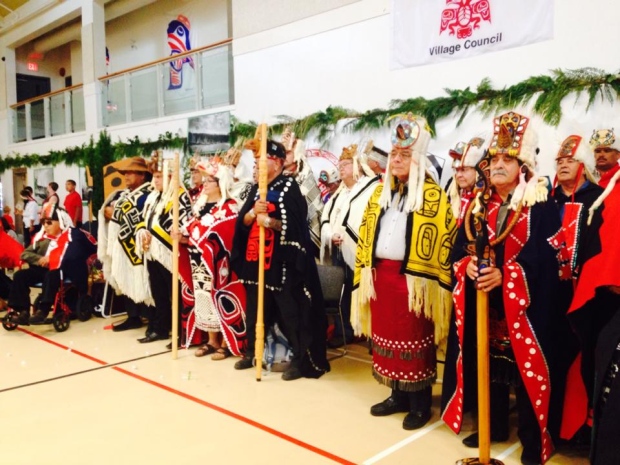
In the eyes of the Heiltsuk Hemas (hereditary chiefs), Wilson is Heiltsuk. The Hemas embody the Heiltsuk Nation’s traditional social structure and hereditary system of governance, which identifies members through cultural protocol and a connection to family crests and clans.
In the eyes of the Heiltsuk Hemas (hereditary chiefs), Josiah is Heiltsuk. Here, Heiltsuk Hemas are shown with Haida hereditary chiefs. (Don Wilson/Facebook)
Heiltsuk cultural adviser Frances Brown says the hereditary system is a complex set of laws that governs not only a responsibility to the land, but also social relationships to one another, including adoption.
“If there’s a customary adoption it means that you adopt a child and you do it in a potlatch where there’s many witnesses and the chiefs are there,” said Brown.
Gary Housty was one of the Heiltsuk Hemas to witness the ceremonial adoption of Wilson by a First Nations family. He says he wrote a letter to members of the all-native committee urging them to let Wilson play, but received no response.
“I really have a problem with the way they’re setting down rules that disallow people to participate in these very important cultural events, such as the All-Native Tournament. There’s so much culture there. And we are talking about culture here.
“In my eyes Josiah is a Heiltsuk boy, a Heiltsuk person. He belongs here with us,” said Housty.
Source: Josiah Wilson, the Indian Act, hereditary governance and blood quantum – Aboriginal – CBC

 Multicultural Meanderings