Greensboro has long cherished its reputation as a Southern progressive standout. This was the first Southern city to pledge to integrate its schools after the Supreme Court’s 1954 decision in Brown v. Board of Education, although it was among the last to actually do so. And when four black freshmen from North Carolina A&T State University occupied the orange and green stools at Woolworth’s whites-only lunch counter in 1960, Greensboro midwifed a sit-in movement that spread through the South.
Photo
North Carolina A&T State University students at the whites-only lunch counter at Woolworth’s in Greensboro in 1960. They were, from left, Joseph McNeil, Franklin McCain, Billy Smith and Clarence Henderson.CreditJack Moebes/Greensboro News & Record, via Corbis
But this is also where hundreds of National Guardsmen suppressed black student protesters in 1969 and where, a decade later, five protesters were murdered at an anti-Ku Klux Klan rally conspicuously devoid of police protection.
And it was here, in 2009, that 39 minority police officers accused their own department of racial bias in a lawsuit that the city spent nearly $1.3 million fighting before agreeing to settle for $500,000. In a city that is 48 percent white, 75 percent of Greensboro’s force of 684 sworn officers remains white.
The Rev. Nelson Johnson, a civil rights leader here since the 1960s, contends that like Greensboro as a whole, the Police Department “has a liberal veneer but a reactionary underbelly.” An activist group he heads recently established a citizens’ board to hear complaints about the police, arguing that official investigations too often are shams.
“This is not about one officer,” Mr. Johnson said at a recent meeting about police behavior at the Beloved Community Center. “This is about a culture, a deeply saturated culture that reflects itself in double standards.”
The Times analyzed tens of thousands of traffic stops made by hundreds of officers since 2010. Although blacks made up 39 percent of Greensboro’s driving-age population, they constituted 54 percent of the drivers pulled over.
While factors like out-of-town drivers can alter the racial composition of a city’s motorists, “if the difference is that big, it does give you pause,” Dr. McDevitt of Northeastern University said.
Most black Greensboro drivers were stopped for regulatory or equipment violations, infractions that officers have the discretion to ignore. And black motorists who were stopped were let go with no police action — not even a warning — more often than were whites. Criminal justice experts say that raises questions about why they were pulled over at all and can indicate racial profiling.
In the past decade, officers reported using force during traffic stops only about once a month. The vast majority of the subjects were black, and most had put up resistance. Still, if a motorist was black, the odds were greater that officers would use force even in cases in which they did not first encounter resistance. Police officials suggested that could be because more black motorists tried to flee.
In an interview, Chief Scott said that overall, the statistics reflected sound crime-fighting strategies, not bias. They have produced record-low burglary rates, and most citizens welcome the effort, he said.
Deborah Lamm Weisel, an assistant professor of criminal justice at North Carolina Central University in Durham, said the best policing practices “involve officers making proactive contacts with citizens, and traffic stops are the main way they do that.”
But many criminal justice experts contend that the racial consequences of that strategy far outweigh its benefits — if, indeed, there are any.
“This is what people have been complaining about across the nation,” said Delores Jones-Brown, a professor at the John Jay College of Criminal Justice in New York. “It means whites are ‘getting away’ with very low-level offenses, while people who are poor or people of color are suffering consequences.”
“It amounts to harassment,” she said. “And police cannot demonstrate that it is creating better public safety.” To the contrary, she added, it makes minority citizens less likely to help the police prevent and solve crimes.

 Good in-depth article and analysis: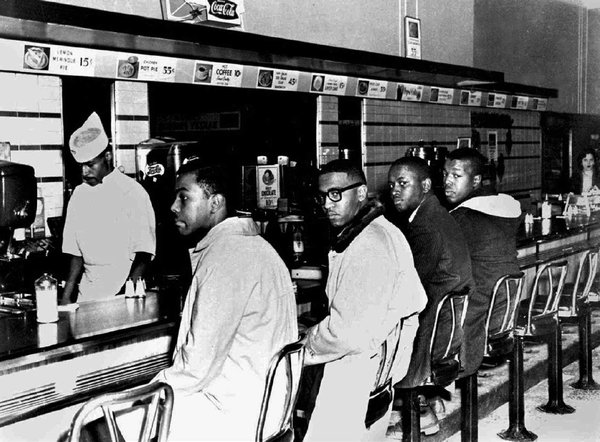

 Multicultural Meanderings