Conservative author Douglas Murray on immigration, Islam and why he doesn’t want to talk about Trump

I think the only points I agree with is the need to read widely, particularly those one disagrees with or who challenge us, and the need to travel outside one’s area:

…This particular Mr. Murray, 40 years old, is both a man who is read (his newly released book is The Madness of the Crowds: Gender, Race and Identity) and one who reads, and so the conversation this late afternoon almost inevitably begins with an inquiry about what is on his night table these days. It turns out that he’s dipping back into The Mandibles by Lionel Shriver (‘’I thought I finished it weeks ago but I hadn’t’’) and is deep into The Faber Book of Utopias(edited by John Carey, the Oxford literary critic and sworn enemy of elitism).

His journalistic inquisitor and tablemate this late afternoon has been making his way through the massive biography of Napoleon by Andrew Roberts, a British historian and – who knew? – a friend of Murray’s. “I pretended to him that I’ve read it, but I haven’t,” he said. “I bluffed.”

Ordinarily Murray is no bluffer, though he prefers not to talk about Donald J. Trump. But like everyone else in Great Britain and Canada, he can’t help himself, and in this case he is talking about why he doesn’t want to talk about Trump.

“I never talk about Trump because everyone does,” he begins. “I never talk about Brexit either. I don’t think they’re as interesting as everybody thinks they are. I’m sad everyone is shouting hopelessly into the wind about these topics. I just don’t think it is useful for everyone to devote themselves to these two subjects. No one’s opinion on either of them is all that interesting, and basically no one can change anyone’s views on either.”

So much for that. Murray – here in Montreal on a flying visit, just two days, in part to promote his latest book, at this moment understated in a cranberry sweater with a metal zipper at the neck – would rather talk about Canada. (You’d perhaps rather hear what he says about that anyway.)

“You’ve become one of those nations where you had one story and are moving to another story,” he says, and his listener (and perhaps you readers) begins to sense that maybe we are onto an interesting riff. “The sense of what Canada was is different from the sense of what Canada is….The interesting way to get through this is to say that Canada [now wants] to be a welcoming, pluralistic, multicultural place, open and tolerant, while you talk up LGBTQ and women and ethnic minorities.”

There’s no way this conversation can go in any direction but…immigration.

So here we go. “People know immigration has different consequences depending on the numbers, the speed and the identity of the immigrants. Any one of these is explosive. All three together is dangerous. Everyone knows this.”

We are not remotely finished with this topic.

“The interesting question is: Who don’t we want,” he goes on. “We’re very bad at this question. We should be able to answer it. The problem with immigration that makes it very difficult – and I’ve gone to a lot more refugee camps than my critics have – is that it is very hard for first-world countries to say why we have such luck and others don’t.”

“Such luck” meaning the bon chance to live in Canada, or America, or any one of the industrial countries with freedoms and prosperity.

Do we dare bring up climate change? Do we dare not? (It’s not his “thing,” as he puts it, which is the thing that could make this so interesting.)

“I have only one thought,” he says, and suddenly his inquisitor breathes a sigh of relief. “It’s the obvious, undisguisable way that it has become clear that this is a replacement in the West for religion for fairly well-off, white, educated people. I don’t know the science, but it has all the manifestations of a new religion.”

What can he possibly mean by that?

“It has every single component of religion – original sin, guilt, the need for atonement. But it also has the mechanism for getting out of the [problem]. The answer is to never drive or fly again, to never buy new clothes and to live your life carefully so that you’ll save this planet, having harmed nothing. Tell your children to seek to be harmless! If it weren’t for them the moss and the trees would be getting on fine!”

Murray is an atheist, though one who did not come by that creed – the Ontario Human Rights Tribunal ruled in 2013 that the term “creed” applies to it – naturally. It was (and here we go) Islam that made him an atheist, not that that was his religion to start with. Now he’s talking a bit about the subject that has put him into perhaps the most trouble: “Canada and America were not founded by Muslims. If they had been, we’d have a better way of understanding where the crazies emerge from. We are less literate in that religion. The second problem is that there are problems in Islam that we haven’t seen in Christianity in a long time: There’s a church/state problem. There’s a problem with extremist groups. …Where exactly is [Islam’s] cutoff line on extremism? Do the fanatics become fanatics from absolutely nowhere? It’s a very lively debate about where it comes from.”

Then this, and likely his critics will agree with at least the first sentence: “My stupidity is to tell what I think on this. I can’t pretend the Koran is a social-justice document.”

Murray has been flayed for saying that Hungarian tyrant Viktor Orban was a better representative of European values than the financier George Soros. He may be the only person outside the cabinet room in Budapest with that view. A New York Times reviewer scorched Mr. Murray’s lament for the Europe of the past for being “as fundamentally incoherent as its late-19th-century originals,” adding, “It never strikes him, or other secondhand vendors of fixed and singular identities, that nowhere in the world have individuals been the exclusive heirs of a single culture or civilization.”

Back to books before we close. What should Canadians be reading?

“My own books, obviously.”’ Well, of course. But what else should be on the Canadian bookshelf?

“People should read as widely as possible in authors they know they will disagree with,” he says, surely hoping to widen his own book sales among readers – you know who you are – who find his views contemptible. “I hate people who read by tribe. In America both political parties have their own libraries. The aim of this is to prove that your political party is always right, to say that your party got anti-Nazism, the Civil War and civil rights correct and the other side had got it wrong. That’s a danger. History is a mess for everyone.”

Just one more. Murray is a persistent and peripatetic traveler. Where should we mere middlebrows visit? “Any place in the world you haven’t visited is interesting,” he says, “even if nothing happens there.” He is not, he wants to assure you, talking about Canada.
Source:                         Conservative author Douglas Murray on immigration, Islam and why he doesn’t want to talk about Trump Subscriber content                                                

How the New Immigration Is Shaking Old Europe to Its Core – NYTimes

Good in-depth critical reviews of both books. Murray is of the Mark Steyn alarmist school, Chin takes a more balanced and interesting look:

In the mid-1890s, the German sociologist Max Weber warned against “the continual swarm” of cheap Polish laborers arriving in Germany. According to him, a “free market policy, including open borders in the east, is the worst possible policy at this point.” And not just for economic reasons. The likely integration of these aliens would threaten the “social unification of the nation, which has been split apart by modern economic development.” For Weber, a German nationalist, the “influx of Poles” was “far more dangerous from a cultural viewpoint” than even of Chinese “coolies.”

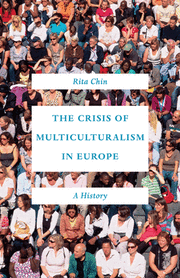
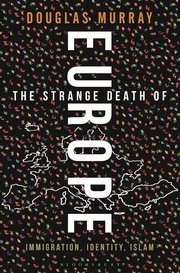
Compared with Weber’s rhetoric about Germany’s “struggle for existence” and his strictures against Catholics and Jews as well as Poles and Chinese, there is nothing overtly racist about the denunciations Rita Chin quotes in “The Crisis of Multiculturalism in Europe” by opponents of multiculturalism — which for them is shorthand for the nonwhite laborers Europe expediently imported after World War II to reconstruct its shattered economy. The political scientist Samuel Huntington’s comment that “multiculturalism is in its essence anti-European civilization” — approvingly cited by Douglas Murray in “The Strange Death of Europe” — also seems coded in comparison. But as demagogues across Europe and America rant against immigration and promise to build a strong and unified national community through exclusion, it is hard not to feel déjà vu.

Racial nationalism was commonplace in the late 19th century, the radically disruptive first phase of economic globalization. Hierarchies of race, ethnicity and religion were imposed on non-Western peoples as Europeans scrambled for territories and resources abroad, followed enviously by Americans. Exclusion was also central to their frantic effort to build political communities at home. Old bonds and solidarities had frayed in societies split apart, as Weber wrote, by modern economic development. Many of the aggrieved became eager to recreate and purify the social body, and to preserve “our” identity against people stigmatized as the “other” through their names, skin color or religious practices. Mass immigration to Western Europe and America, which peaked in the late 19th century, heightened the fantasy of a lost communal wholeness. So did unregulated flows of refugees: Pogroms in Russia sent thousands of Jewish survivors to Western Europe. (Weber’s warnings against the Polish “swarm” reflected a then widespread anxiety about Ostjuden.)

Virulent anti-Semites flourished in Austria-Hungary, Germany and France as the 19th century ended, while lynchings of blacks by white mobs in the United States became more common. The United States in the 1880s had pioneered racialized immigration policy, passing laws aimed at keeping Asians out. The Jim Crow laws that institutionalized segregation in the 1890s were accompanied by a mass hysteria in the United States against immigrants. Fears of degeneration haunted even powerful white men like Theodore Roosevelt. In 1905, amid widespread paranoia about the Yellow Peril, he warned of “race suicide,” exhorting white people to strengthen themselves against their rising nonwhite rivals.

History repeats itself as unfunny farce when, a century after Roosevelt, another macho president amplifies white fears of losing out in the struggle for existence. “The fundamental question of our time,” Donald J. Trump asserted in Warsaw in July, “is whether the West has the will to survive.” Indeed, the fear of decline has intensified as globalization appears to enfeeble once mighty Western nation-states while empowering those previously stigmatized as the Yellow Peril. As in the late 19th century, demagogues displace the anxieties of powerless people onto a clearly identifiable social group: immigrants or refugees. The mechanism of scapegoating — catalyzing mass disaffection and providing it with a simple culprit — has gone into overdrive in Europe and America as crisis besets the second phase of globalization.

In his surprisingly literate screed, the Norwegian mass murderer Anders Behring Breivik called his country the “most suicidal” in Europe for accommodating nonwhite minorities. The first sentence of Douglas Murray’s book, a handy digest of far-right clichés, claims that all of Europe “is committing suicide.” Like his numerous precursors, ranging from Max Nordau, the author of the popular “Degeneration” (1892), to Breivik, Murray goes on to depict Europeans as culturally and spiritually debauched. Evidently, they are not only helpless before the hordes of virile foreigners rampaging through their continent, but also keenly complicit in their own destruction.

“Only modern Europeans,” Murray writes, “are happy to be self-loathing in an international marketplace of sadists.” It is never quite clear which European masochists Murray, an associate editor of The Spectator in Britain, is talking about. A majority of his own countrymen, as a recent poll revealed, are proud of their former empire, and one might even argue that a xenophobic fantasy to regain imperial glory and power fueled Britain’s decision to leave the European Union last year. What is more, Murray does not seem wholly relieved, like most of us, that the vast majority of Germans regret their country’s Nazi past, and are determined not to repeat it. He offers a stalwart defense of the thuggish outfit Pegida (People Against the Islamization of the Occident/West) against criticism by German politicians and journalists; he claims that the English Defence League (a gang of hooligans shunned by its own founders for its “far-right extremism”) “had a point.” More disturbingly, he rates Hungary’s prime minister, Viktor Orban, a self-declared fan of authoritarian democracy, as a better sentinel of “European values” than George Soros.

Needless to say, Murray’s threnody for Europe is as fundamentally incoherent as its late-19th-century originals. It never strikes him, or other secondhand vendors of fixed and singular identities, that nowhere in the world have individuals been the exclusive heirs of a single culture or civilization. Europe as well as America has been a melting pot of diverse influences: Persian, Arab and Chinese, in addition to Greek, Roman, Germanic and Anglo-Saxon. As the Indian writer Rabindranath Tagore, a horrified witness to Europe’s suicidal nationalism in the early 20th century, once wrote: “In human beings differences are not like the physical barriers of mountains, fixed forever — they are fluid with life’s flow, they are changing their courses and their shapes and their volumes,” in what is a “world-game of infinite permutations and combinations.”

Murray’s retro claims of ethnic-religious community, and fears of contamination, call for close analysis. Their toxic effects, which have been amply verified by history, make it imperative to explore the deeper sources of contemporary anxieties: political, social and economic upheavals. And this is what Rita Chin’s book does, synthesizing the endless debates over multiculturalism into a vivid picture of postwar Europe. Lucidly written and resourcefully argued, it is a superb example of a scholarly intervention in a public debate dominated by unexamined prejudice.

Chin’s parents were ethnic Chinese forced to leave Malaysia after the end of British rule and to move through many “different cultural worlds as students, employees, colleagues, neighbors, friends and in-laws.” She wishes her reader to understand the multiple and perennially shifting identities of immigrants “in a world where much of the political discourse is quick to demonize them as groups.” Accordingly, she declines to accept identities — British, German or European — as unalterable essences. Rather, she explores the specific ideas that many in post-1945 British, French, Dutch and German societies have used to clarify their identity; and she never ceases to historicize what to a tub-thumper like Murray seems self-evident.

The very notion of Europe, for instance, began to emerge out of European encounters with Muslim populations during the Crusades. European self-consciousness was then sharply demarcated in remote trading posts and colonies vis-à-vis subjugated and supposedly racially inferior peoples. But, as Chin writes, the “reversal of migratory patterns” after World War II “shifted the process of European self-definition in a dramatic way”: “Instead of Europeans moving outward into the world as they had done for hundreds of years, people from around the world began to settle in Europe, filling the demand for labor created by wartime destruction.”

For Chin, an associate professor of history at the University of Michigan, this is the crux of the problem: “In the past, groups perceived as incompatible with European identity were usually located beyond European borders. But now they are firmly established within Europe itself.” In the 19th century, nation-states premised on homogeneous populations needed foreign lands and resources in order to expand; and they had the brute power necessary to enforce hierarchies of race, class and education that kept the “natives” in their place. This supremacy has been progressively weakened, first by the urgencies of postwar reconstruction, then by the accelerated flows of technologies, goods and capital in recent decades of globalization.

Chin pays little attention to the socioeconomic traumas that have led to an acute obsession with immigration: deindustrialization, the shrinking of the welfare state, the fragmentation of working classes and the rise of extreme inequality. Nor does she go into a pre-1945 history of immigration in Europe, and the projection of internal problems on to various “outsiders” — Jewish, Italian, Portuguese, Irish, Polish. But she is consistently acute on how European elites since 1945 have reacted to the darker-skinned strangers in their midst, ignoring, misrepresenting and marginalizing them at first, and then turning them into a problem, often broadly identified as “multiculturalism.”

Multiculturalism, in Chin’s account, appears largely to be a problem for people who have long been accustomed to an identity built on domination and exclusion, and are panicked by its slow crumbling. Certainly, immigration was not a problem foisted on Europe from the outside; the fates of Europeans and non-Europeans were inextricably connected in the 19th century by conquest, colonization and trade. Yet historical amnesia played an outsize role in dealing with nonwhite workers who were never expected to stay in Europe, let alone integrate or assimilate. Chin describes how people from the Caribbean who began to arrive in Britain after 1948, for instance, were seen as “colored immigrants” when in fact they were British citizens. An unreconstructed racism (exemplified by the commonplace sign “no dogs, no blacks, no Irish”) remained for many years the appalling fate of people who had shaped, like millions of toiling workers and peasants in the imperial provinces, the privileged destiny of the rich in the metropolitan center.

A backlash against multiculturalism began to gather force after the economic crises of the 1970s. The controversy over Salman Rushdie’s “The Satanic Verses” accelerated it. Black people had long been seen as culturally predisposed to crime and hooliganism. But after the Ayatollah Khomeini, wrongly identified by the uninformed as the sole representative of more than one billion Muslims, issued his fatwa against Rushdie, Islam began to seem incompatible with “Western values” too. Diversity has come to seem unworkable to many as the unequal world made by imperialism unravels, and Europe suffers terrorist attacks, economic crises and huge influxes of refugees from the countries it once brusquely made and remade in Asia and Africa. Chin vigorously tackles the “shared presumption,” recklessly echoed by even mainstream politicians in Britain, France and Germany, that multiculturalism is a failure. “Declaring multiculturalism ‘dead,’” Chin argues, “is a way of white Britons, Germans and French telling immigrants, ‘We don’t recognize you; you aren’t a part of our society.’”

Surely, the many populations that now exist in every part of Europe cannot be homogenized, except through the savage ethnic cleansing practiced in almost every European country in the first half of the 20th century. In any case, as Chin asks, “what exactly do Europeans imagine as a replacement for multiculturalism? How will they come to terms with multiethnic diversity moving forward?” Chin offers no simple answers, but her questions have never seemed more urgent as Europeans (and Americans) seem to move forward to their grim past.