September immigration impact of #COVID19
2021/11/20 Leave a comment
Latest monthly update:
Working site on citizenship and multiculturalism issues.
2021/11/18 Leave a comment
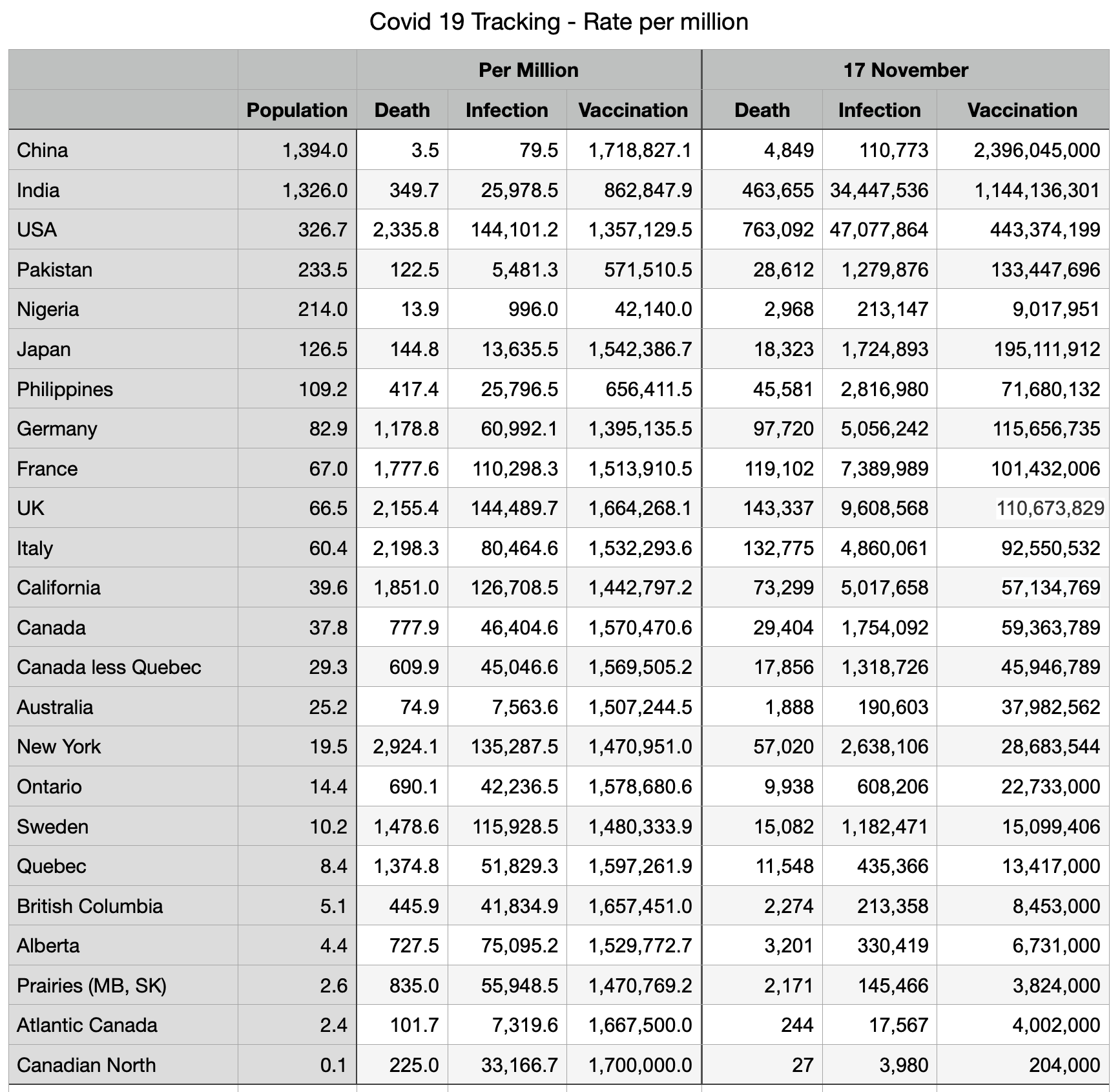
The latest charts, compiled 17 November. Canadians fully vaccinated 76.4 percent, compared to Japan 75.8 percent, UK 68.9 percent and USA 59.4 percent.
Vaccinations: Canadian North ahead of Atlantic Canada, UK and British Columbia, Sweden and New York ahead of Prairies. China fully vaccinated 76.8 percent, India 27.6 percent, Philippines 36.5 percent.

Infections: Recent trends of increased infections in Europe becoming more apparent. Canadian provincial trends showing minimal change from last week.
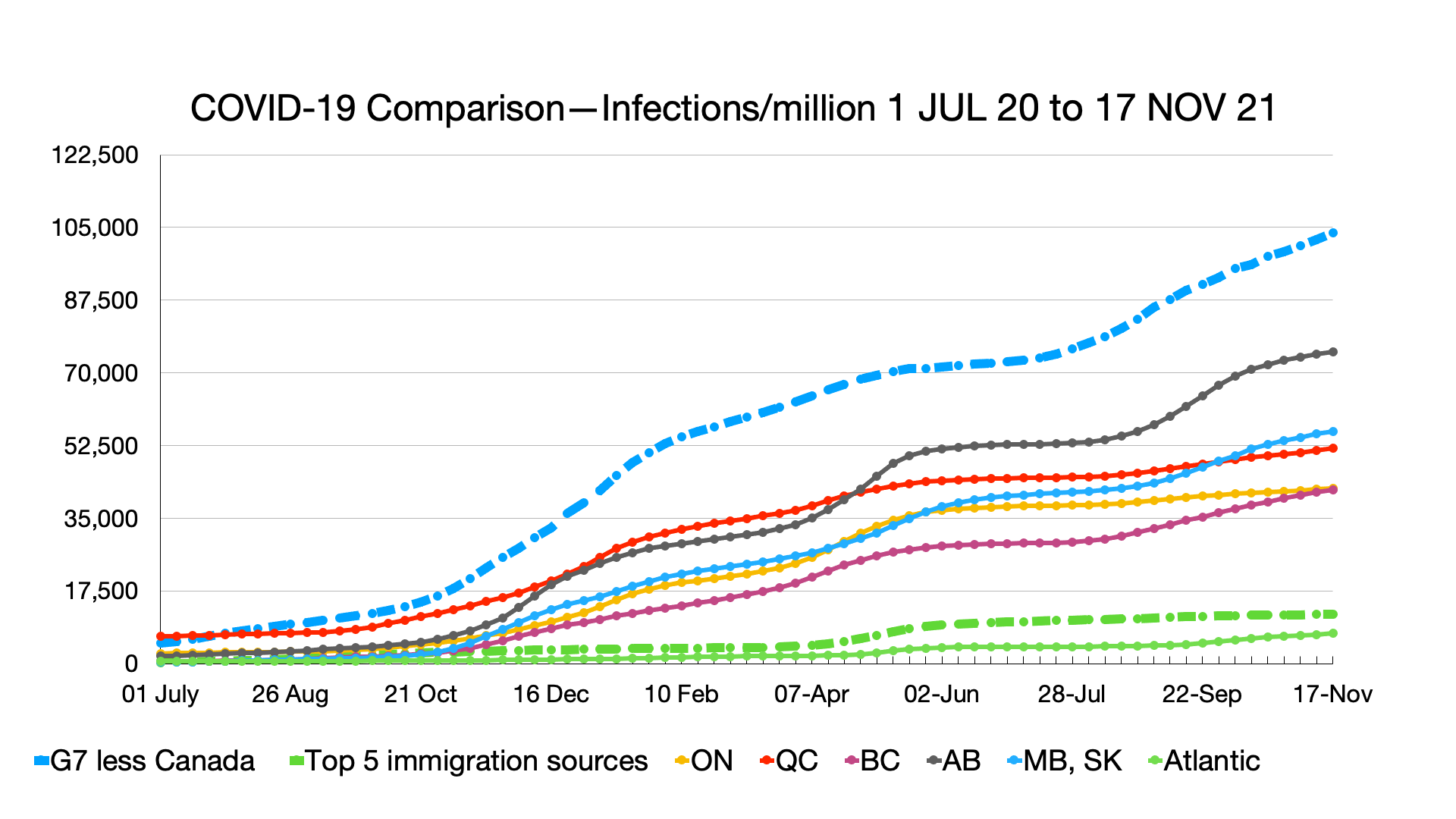
Deaths: Albert, Prairie and British Columbia deaths climb at slower à rate to G7 less Canada (driven mainly by USA).
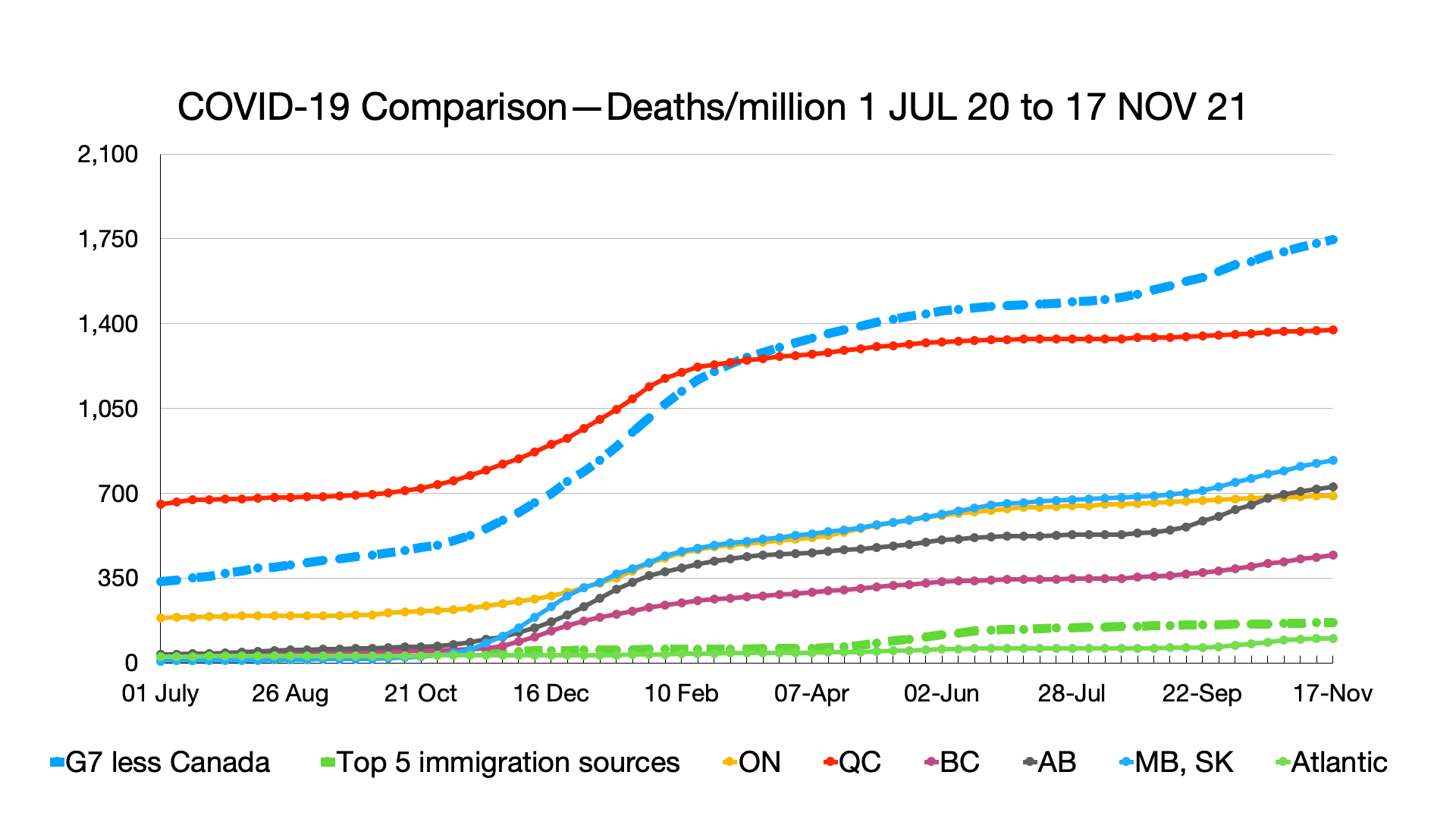
Vaccinations: Ongoing convergence among provinces and G7 less Canada and narrowing gap with immigration source countries.
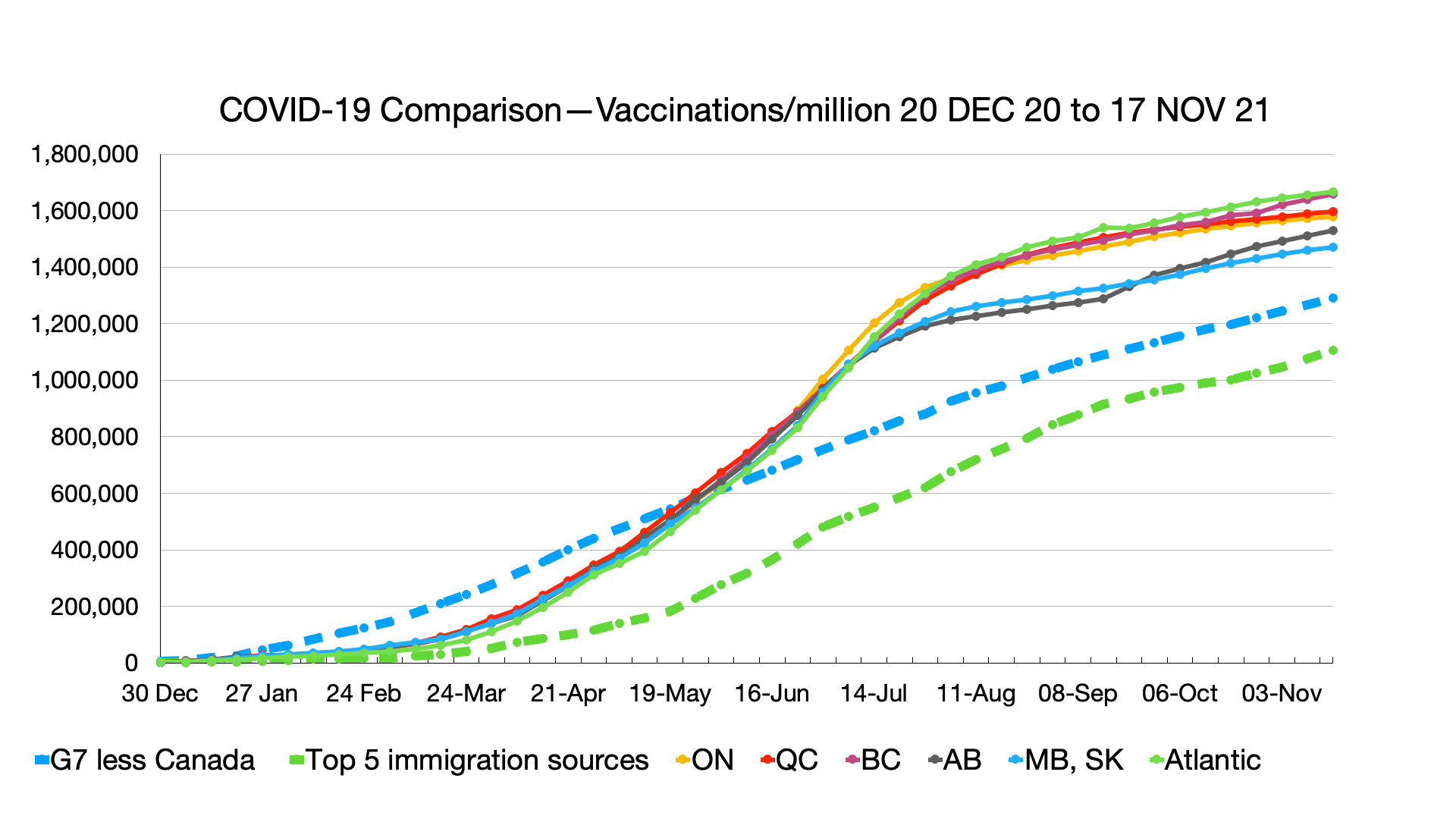
Infections: UK ahead of USA with no other relative change.

Deaths: No relative change

And an interesting article on cognitive bias and vaccine hesitancy:
The World Health Organization recognized vaccine hesitancy as a growing challenge in 2011, and identified it as a new priority topic. This was mostly because of the return of vaccine-preventable diseases like measles in Europe and the United States.
Ten years later, in 2021, we see that vaccine hesitancy has become an even more significant challenge despite all the efforts. The COVID-19 pandemic has brought it to a peak, and all efforts to manage the pandemic depend on the people’s willingness to take the vaccination. However, the numbers are not very promising as some percentage of populations in every country are reluctant to vaccinate.
Vaccine hesitancy means “delay in acceptance or refusal of vaccines despite availability of vaccination services.” Vaccine-hesitant people cite distrust in vaccine safety and concerns over vaccine adverse eventsas the most common reasons for reluctance to get vaccinated.
Vaccines are used in healthy people to prevent a disease that might harm them in the future. However, as they are healthy at the time of vaccination, they may worry about the vaccine’s safety.
Our team of business analytics and artificial intelligence researchers at Concordia University, along with a professor of epidemiology at McGill University, has published a paper in the BMC Public Health journal that investigated this critical concern from two perspectives.
First, we addressed vaccine safety concerns by analyzing data from vaccine adverse events systems. These are vaccine surveillance systems where adverse events following immunization are reported, monitored and stored in a database. Canada’s system is called the Canadian Adverse Events Following Immunization Surveillance System (CAEFISS).
Second, we focused on cognitive science and highlighted the critical role of cognitive biases in people’s vaccination decision-making that might lead to vaccine hesitancy.
A solution to mitigate distrust in vaccines safety is to provide evidence-based meaningful information about vaccine safety and adverse events. We followed this path and analyzed all the adverse events reported to the U.S. Vaccine Adverse Event Reporting System (VAERS).
We analyzed almost 294,000 reports over eight years from 2011 to 2018. It equals roughly 115 reports per million people, covering 87 vaccine types. The most frequently reported vaccines were those for chickenpox, influenza, pneumococcal bacteria and human pappilomavirus (HPV).
Each VAERS report (representing one incident) involved an average of three adverse events, the most common being rashes, fever, swelling, pain and headaches. Only 5.5 per cent of the reports were marked as serious, resulting in hospitalization, disability, threats to life or death. The top adverse events in this group also include fever, pain, vomiting, headaches and shortness of breath.
We also analyzed the vaccine adverse events reported to Canada Vigilance. Our findings were consistent with those from the VAERS.
We have provided our results in an interactive dashboard. Health-care professionals and others involved in vaccine communication can use this dashboard to provide evidence-based information to the public. Research suggests that summarized data is the best format for communicating vaccine safety information, so using this dashboard in vaccination communication can help mitigate vaccine hesitancy and safety concerns, and increase trust in vaccines.
In the second part of our study, after addressing concerns about vaccine adverse events, we examined the role of cognitive biases on vaccine hesitancy. We identified cognitive biases that might affect vaccine communication and decision-making.
As mentioned earlier, vaccines are administrated to healthy people. When people are making decisions about vaccination, they might feel some degrees of risk, ambiguity and uncertainty about the results, which can instigate cognitive biases in the decision-making process. Such cognitive biases might nudge people toward vaccine hesitancy.
For example, contrary to the positive effect of providing people with summarized vaccine safety information that increases vaccine trust, detailed vaccine adverse event reports will decrease trust because of two cognitive biases.
First, when vaccine hesitant people read a detailed report about a vaccine adverse event, it gives them the chance to see what they want to see. It is an example of confirmation bias, which is the tendency to recall and interpret information that confirms our existing beliefs.
Second, a detailed adverse event report will also increase the event’s vividness, making it easier to recall the next time there is a decision to be made about taking a vaccine. That is the effect of availability bias, the tendency to attribute more weight to factors that are easier to recall.
We identified 15 cognitive biases in the vaccine decision-making process and categorized them into three groups:
The full list of cognitive biases affecting vaccination decision-making and their examples is available here. Public health officials and practitioners can use this list and customize their plans, interventions and other forms of vaccine communication to decrease vaccine hesitancy.
You also can check the list and see if these biases have influenced your own vaccination decisions.
Source: https://theconversationcanada.cmail19.com/t/r-l-trtukldd-kyldjlthkt-b/
2021/11/11 Leave a comment
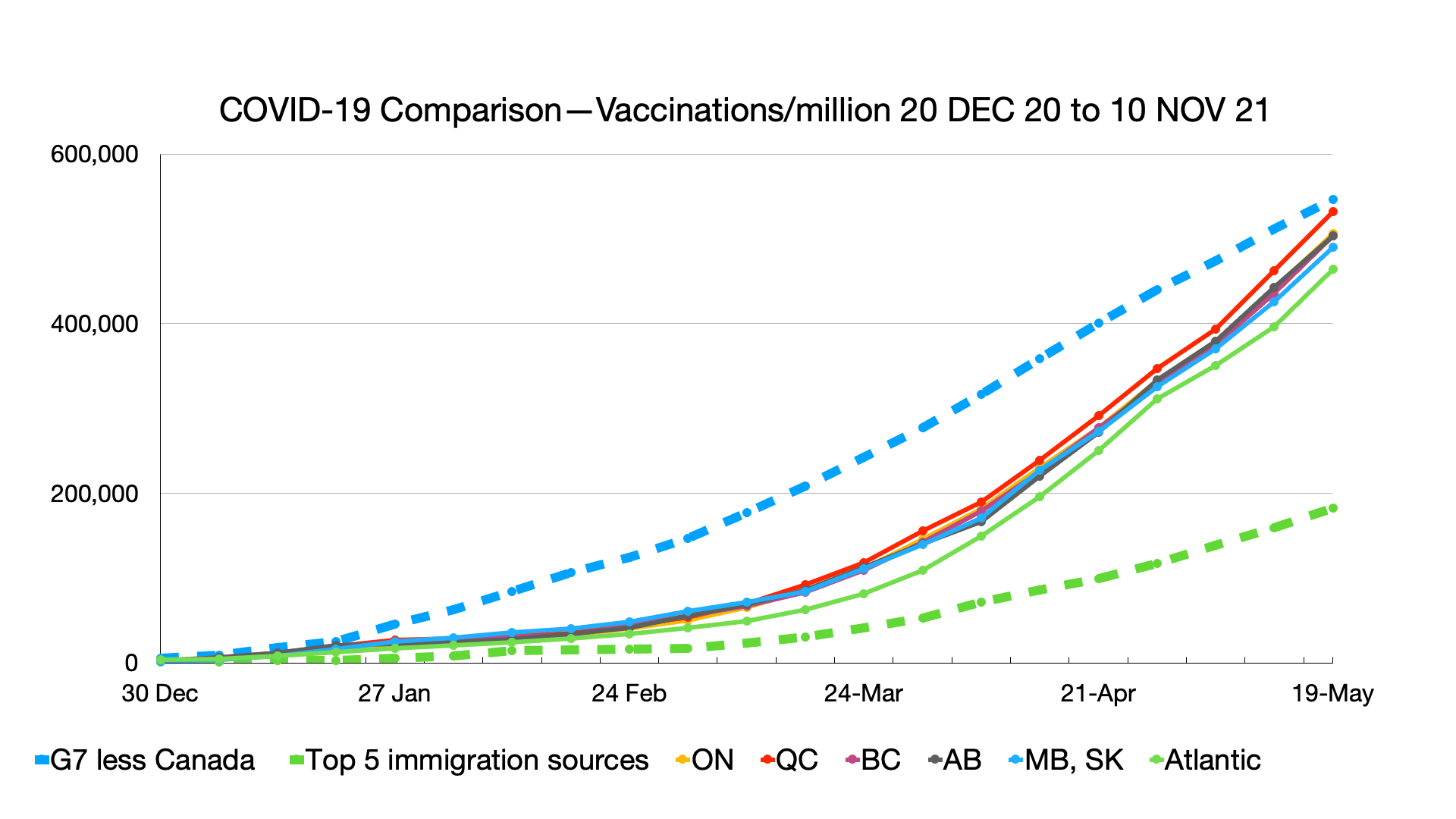
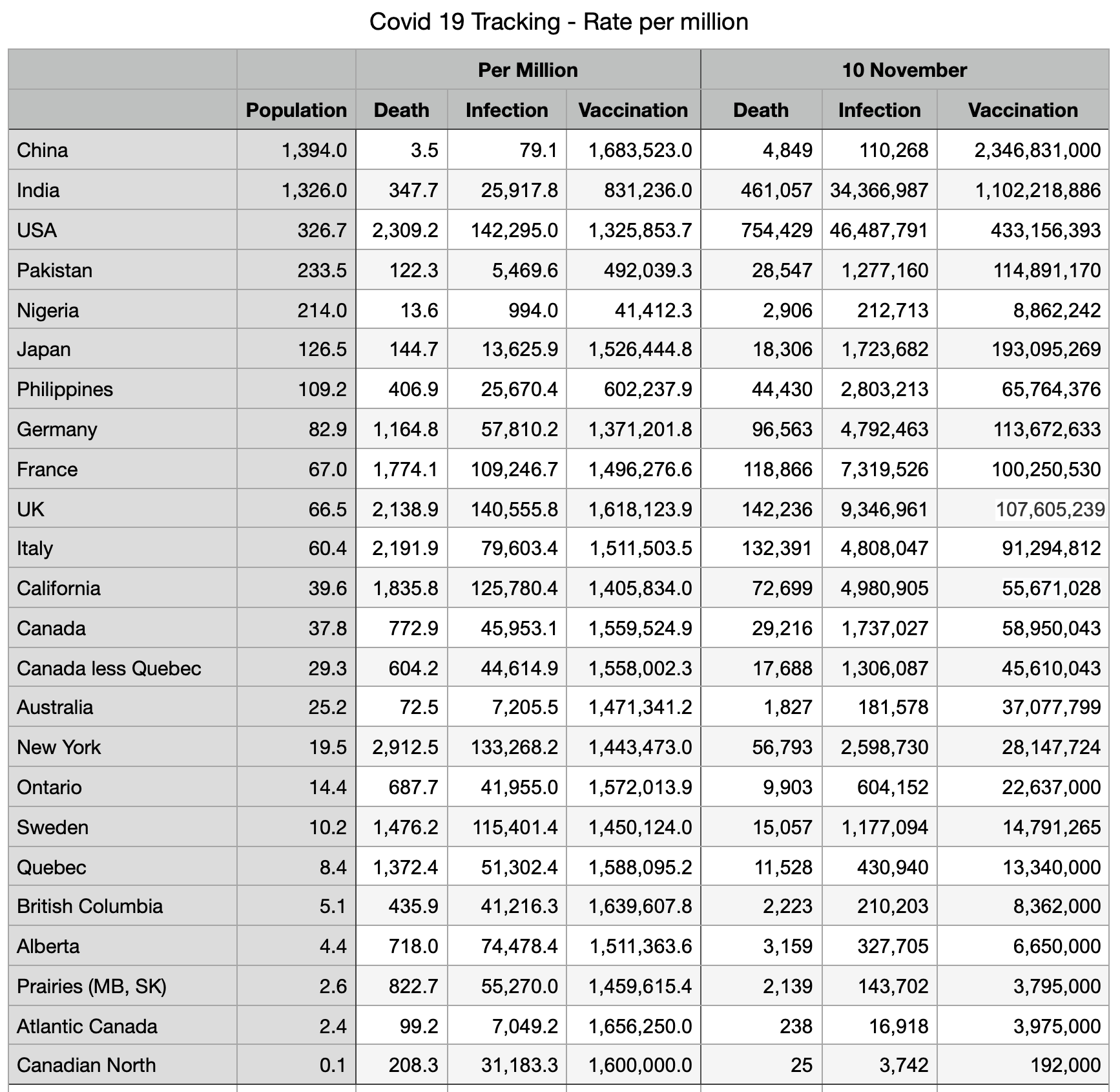
The latest charts, compiled 10 November. Canadians fully vaccinated 75.9 percent, compared to Japan 74.6 percent, UK 68.6 percent and USA 59.2 percent.
Vaccinations: China ahead of Atlantic Canada, UK and Canadian North ahead of Quebec, Australia ahead of Prairies. China fully vaccinated 76.7 percent, India 25.5 percent, Philippines 33 percent.

Infections: Recent trends of increased infections in Europe and elsewhere not fully apparent. Canadian provincial trends showing minimal change.

Deaths: Albert, Prairie and British Columbia deaths continue to climb at comparable rate to G7 less Canada (driven mainly by USA).

Vaccinations: Ongoing convergence among provinces and G7 less Canada.
Infections: No relative change although some shifts likely in the next few weeks given outbreaks in a number of countries and provinces.

Deaths: No relative change

Meanwhile, from Statistics Canada:
Statistics Canada says more than 19,000 Canadians lost their lives during COVID-19 than would have been expected had the pandemic never happened.
The report highlights the deadly toll COVID-19 has taken directly and indirectly on Canadian lives.
According to provisional data, approximately 19,488 more Canadians died between March 2020 and July 2021 than would have been expected.
That’s 5.2 per cent more deaths than if the pandemic never happened.
During that time frame, Statistics Canada says that while 25,465 people died as a direct consequence of contracting the virus, the pandemic also delayed medical procedures and led to a rise in substance use, which could also have contributed to the number of deaths.
On the flip side, some lives may have been spared by other causes, including public health measures that prevented influenza from spreading as usual last year.
The numbers don’t reflect all the deaths that occurred as some are still being investigated, so the data may under-represent the true number of deaths attributed to certain causes, including suicides.
They have also been adjusted to account for changes in the population, such as aging.
The highest number of deaths happened in the spring and autumn of 2020.
There was not a significant number of extra deaths between mid-January 2021 and the end of July 2021, according to the agency, despite the fact that COVID-19 claimed 6,255 lives in Canada during that time.
However, some provinces, including Ontario, Saskatchewan, Alberta and British Columbia, were an exception.
British Columbia and Alberta also saw more people dying than typically expected this past summer when a heat wave settled over both provinces.
Statistics Canada expects to release a more comprehensive picture of how many more people have died as a result of the pandemic by the end of November.
Source: More than 19K Canadian lives ended than if pandemic never happened: Stats Can
2021/11/10 Leave a comment
Another good commentary by Coren, with any number of political commentators pronouncing on the impact on the CPC and its leader:
Anybody who assumed that the struggle against the COVID-19 pandemic would be purely medical and humanitarian clearly didn’t quite grasp the dark depths of politics and religion. From the moment we knew that a deadly plague was smothering the world, those with warped agendas were as animated as a squirrel in a peanut store.
Enter the conspiracy theorists and the paranoid hysterics, claiming that the virus was either a hoax, a plot to reduce and control the population, or the beginnings of the “great reset.” And that vaccines are weapons of Satan, the mark of the beast, and developed from fetal stem-cells and thus — in their words — “the product of the abortion genocide.”
These Christian fundamentalists and libertarian fanatics are dismissed by almost every responsible religious figure, from the Pope to the Chief Rabbi, and by all political leaders worth the name. But not by all, and not everywhere — including Canada.
A small but galvanized set of right-wing church leaders resist vaccines and masks, and their activism has bled through into Canadian conservatism. Federal Tory leader Erin O’Toole and most Conservative provincial leaders may disagree with these people, but they also know that their base is swamped in denial lunacy. If they’re too bold in condemning anti-vaccine zealots, or in any way supportive of vaccine mandates, they could see their leadership challenged and even defeated.
Ontario Premier Doug Ford’s refusal to demand vaccinations for those working in health care, in spite of the advice of experts, is an obvious case. Ford is more secure than O’Toole, but he has long relied on the Christian right and owes them far too much to risk their anger, especially with an election so close.
Erin O’Toole’s decision not to require that all Conservative MPs be vaccinated against COVID-19 has annoyed many of his caucus, but placated those who see him as far too liberal on their chosen obsessions. Yet he still hasn’t gone far enough for many. At the end of last week it was announced that a group of 15 to 30 Conservative MPs and senators intended to start a “civil liberties caucus.” Conservative MP Marilyn Gladu says that it will speak for those who may be losing their jobs for refusing to be vaccinated.
It’s a tangible threat to the leader, already in a precarious position, and there are a number of potential rivals waiting in the shadows. One of the more prominent and ambitious is Leslyn Lewis, the newly minted MP for Haldimand-Norfolk. She did extremely well in the party’s leadership contest, and her candidacy was supported by a number of socially conservative groups who now oppose vaccines. She’s the darling of religious conservatives, with some “interesting” opinions on many of the issues that the Tory base in rural Ontario and Western Canada still consider vital. When I mentioned her views in a column more than a year ago she immediately blocked me on social media, and I was harshly attacked by some of her supporters. In other words, she’s not someone to take lightly.
One of the ironies of all this is that for a party that boasts of its patriotism, this new conservatism is far more American than Canadian. The progressive Toryism of former years, one that had far more in common with conservative parties in northern Europe and Britain, was abandoned long ago, and Canadian conservatives now look south to the U.S. Republicans. That party, in turn, has had to bend to the Christian right, because without that vote no Republican can ever hope to become president.
The conservative Christian world is much smaller in Canada, but it’s far from insignificant and punches well above its weight. It’s also become more energized and organized in the last 15 years, largely because it sees what has been achieved in the U.S. Canadian right-wingers witness the victory of Donald Trump and other hardline leaders and regard it as a triumph. The truth, however, is that the crisis faced by modern Christianity is largely due to its perversion by the very people so revered by the Canadian conservatives who are currently influencing policies on vaccines and public health.
Religion and politics. Pray, and pray hard, that in this case they stop mixing.
Source: Religion and politics shouldn’t mix when it comes to COVID-19
2021/11/04 Leave a comment
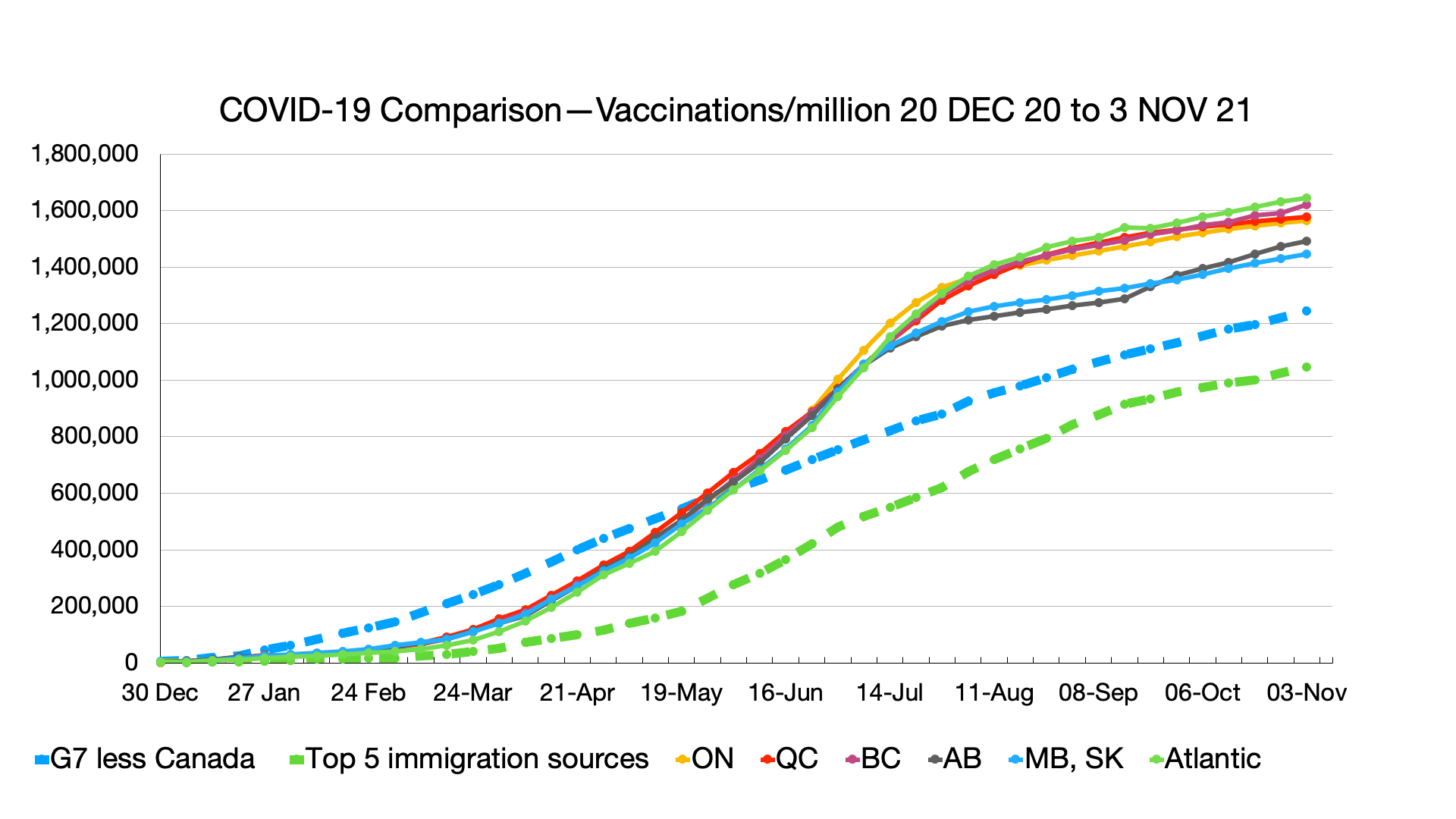
The latest charts, compiled 27 October. Canadians fully vaccinated 75.4 percent, higher than USA 58.7 percent and the UK 68.4 percent).
Vaccinations: Quebec and UK are now ahead of the Canadian North, where few vaccinations took place. Australia now ahead of New York. China fully vaccinated 76.6 percent, India 24.4 percent.

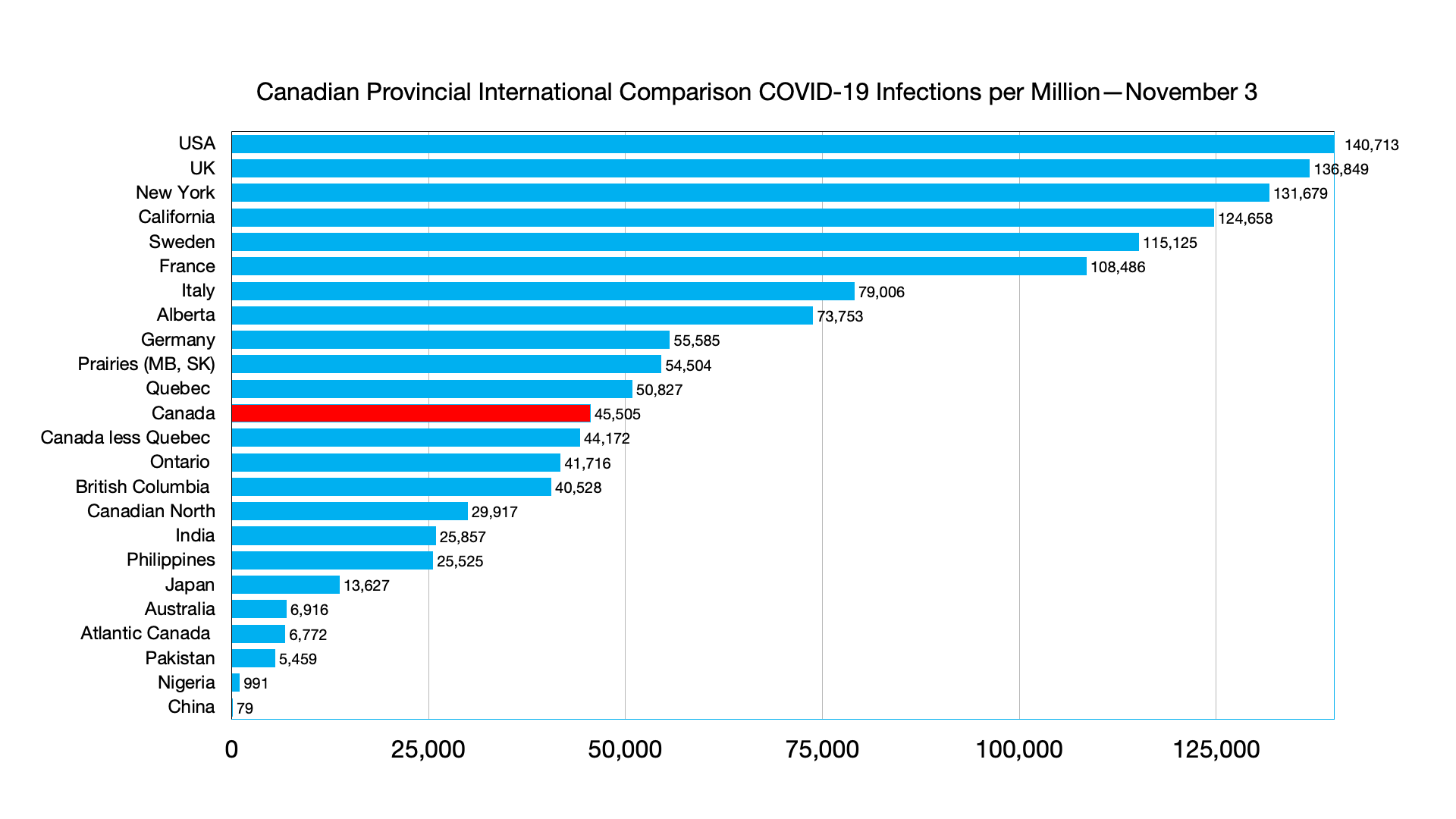
Infections: The chart shows the number of infections in Alberta continues to level off unlike the Prairies or British Columbia.

Deaths: Alberta deaths, along with the Prairies albeit to a lesser extent, continue to climb.

Vaccinations: Alberta vaccinations continue to surpass the Prairies. Immigration source country vaccination rates starting to increase again given India’s acceleration of its vaccination program.
Infections: Australia ahead of Atlantic Canada.
Deaths per million: No relative change.
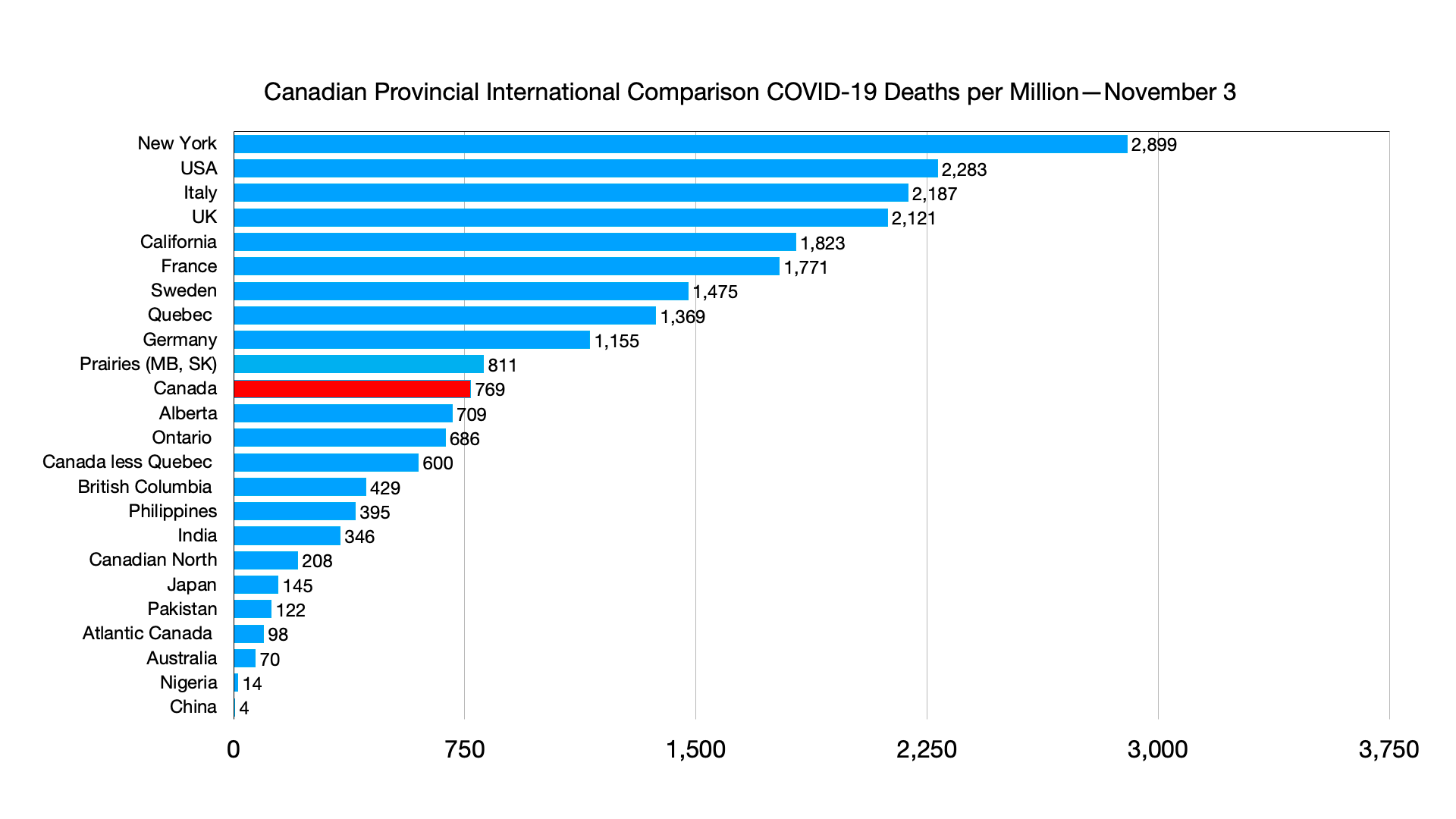

And a good piece on what the UK did wrong (applies to a number of Canadian provinces):
There are downsides to most Covid-19 precautions. Keeping children home from school can cause them to fall behind. Working from home can impede creativity. Staying away from friends and relatives can damage mental health. Wearing masks can muffle speech, hide smiles and fog eyeglasses.
For all of these reasons, the ideal Covid policy for any society balances the benefits and costs of precautions. It acknowledges that excessive caution can do more harm than good. By now, regular readers will recognize the search for Covid balance as a theme of this newsletter. Today, we want to focus on a place that seems to be erring on the side of too little caution: Britain.
Over the past year, Britain’s Covid response has included some major victories. The country rushed to vaccinate people (as we’ve explained) and was also willing to reimpose behavior restrictions last winter. These measures helped cause a sharp drop in caseloads.
In response, Britain reopened over the summer, allowing people to live largely without restrictions. Schools and workplaces have returned to normal, without masks. Restaurants are booked. Finding a taxi on a Saturday night in Central London is again a challenge.
“There’s a feeling that finally we can breathe,” Devi Sridhar, the head of the global public health program at the University of Edinburgh, wrote in August. “We can start trying to get back what we’ve lost.”
The problem is that Britain now seems to have lost a sense of balance, as Sridhar has also suggested. Cases have surged this fall, more so than in the rest of Europe, the U.S. or many other countries. Yet Prime Minister Boris Johnson’s government continues to oppose measures that could reduce cases.
We want to focus on Britain partly because it can offer lessons for the U.S. and other countries. The Delta variant arrived in Britain earlier than in many other places, making it something of a leading indicator. Cases in Britain rose for about two months starting in May and then started falling. But the decline didn’t last:

Over the past week in the U.S., cases have also stopped falling. The reasons are not clear, as is often the case with Covid, and the recent increase is minuscule. But it’s a reminder that the pandemic will probably keep having ups and downs.
Experts say Britain seems to be making three main mistakes that are aggravating the pandemic.
Despite being ahead of most of Europe on vaccinating adults, Britain waited to approve vaccines for adolescents. It did not recommend vaccinating 12- to 15-year-olds until September, weeks after many students had returned to school, as our colleague Josh Holder has noted. Today, only 21 percent of 12- to 15-year-olds in England are vaccinated, compared with 80 percent of adults.
The U.S. faces a related challenge. About 57 percent of Americans age 12 to 15 have been vaccinated, and children 5 to 11 are on the verge of becoming eligible. A significant number of parents remain wary, partly because Covid is rarely severe in children. But vaccinating children — in addition to the individual benefits — is likely to hold down cases for everyone else.
The biggest problem in the U.S. is a vaccination rate lower than in most other high-income countries.
The pace at which vaccines lose their effectiveness remains a subject of intense debate. Most experts believe that the vaccines remain excellent at preventing severe illness, even months after shots are given. But the bulk of the evidence suggests that the vaccines do lose some of their ability to prevent at least mild infections. That’s especially true of the AstraZeneca vaccine, which has been widely used in England.
Britain’s initial speed at vaccinating people brought down caseloads early this year. Yet it also meant that waning immunity became a problem sooner than in countries that were slower to give shots. Britain is now offering boosters to people 50 and above, as well as health care workers and the medically vulnerable.
Over the next few months, waning immunity could become a growing problem in the U.S., especially for more vulnerable people. All Americans 65 and above are eligible for boosters, along with anybody who received the Johnson & Johnson vaccine and some other people.
Behavior restrictions — like mask wearing — are not as effectiveas their proponents sometimes suggest. Britain offers a case study: Scotland, where masks are often mandated, has a similar level of Covid spread as England, where masks are less common, as John Burn-Murdoch of The Financial Times has written. If masks determined Covid spread, Scotland’s rate would be lower than England’s.
But there is a difference between a precaution having a modest effect and no effect. Masks do help, according to a wide variety of evidence, even if their impact is sometimes overwhelmed by other factors. Britain seems to be suffering from a lack of almost any restrictions, including mask mandates. Among the biggest problem, Burn-Murdoch notes, is the number of crowded indoor gatherings across Britain, including Scotland.
When cases are falling, it often makes sense to let people live more freely. When cases are surging, the reverse is true. Britain is ignoring that lesson — and pleas from many experts.
Britain’s recent Covid policy has led to deaths and overwhelmed hospitals. “When a health care system fails, increasing numbers of people suffer and die needlessly,” Dr. Kenneth Baillie wrote on Twitter. “This is happening, now, all over the U.K.”
Still, it is worth putting Britain’s troubles in perspective. The country’s high vaccination rate means that only a tiny share of recent cases have led to severe illness, and the death rate this fall has been a fraction of what it was last winter. “This virus is going to be with us for years, if not the rest of our lives,” Willem van Schaik, a microbiologist at the University of Birmingham in England, told us. “We’ve definitely left the worst behind us.”
Despite the Covid surge in Britain, the U.S. — where the overall vaccination rate is lower — arguably remains in worse shape, with a considerably higher death rate per capita. Why? Vaccination rates still matter more than anything else.
Source: https://www.nytimes.com/2021/11/02/briefing/britain-covid-cases-restrictions.html
2021/10/28 Leave a comment
The latest charts, compiled 27 October. Canadians fully vaccinated 74.8 percent, higher than USA 58.1 percent and the UK 68.2 percent).
Vaccinations: Canadian North ahead of Quebec, UK ahead of Canada, Japan ahead of Italy and France, Australia ahead of California. China fully vaccinated 76.4 percent, India 20.6 percent.
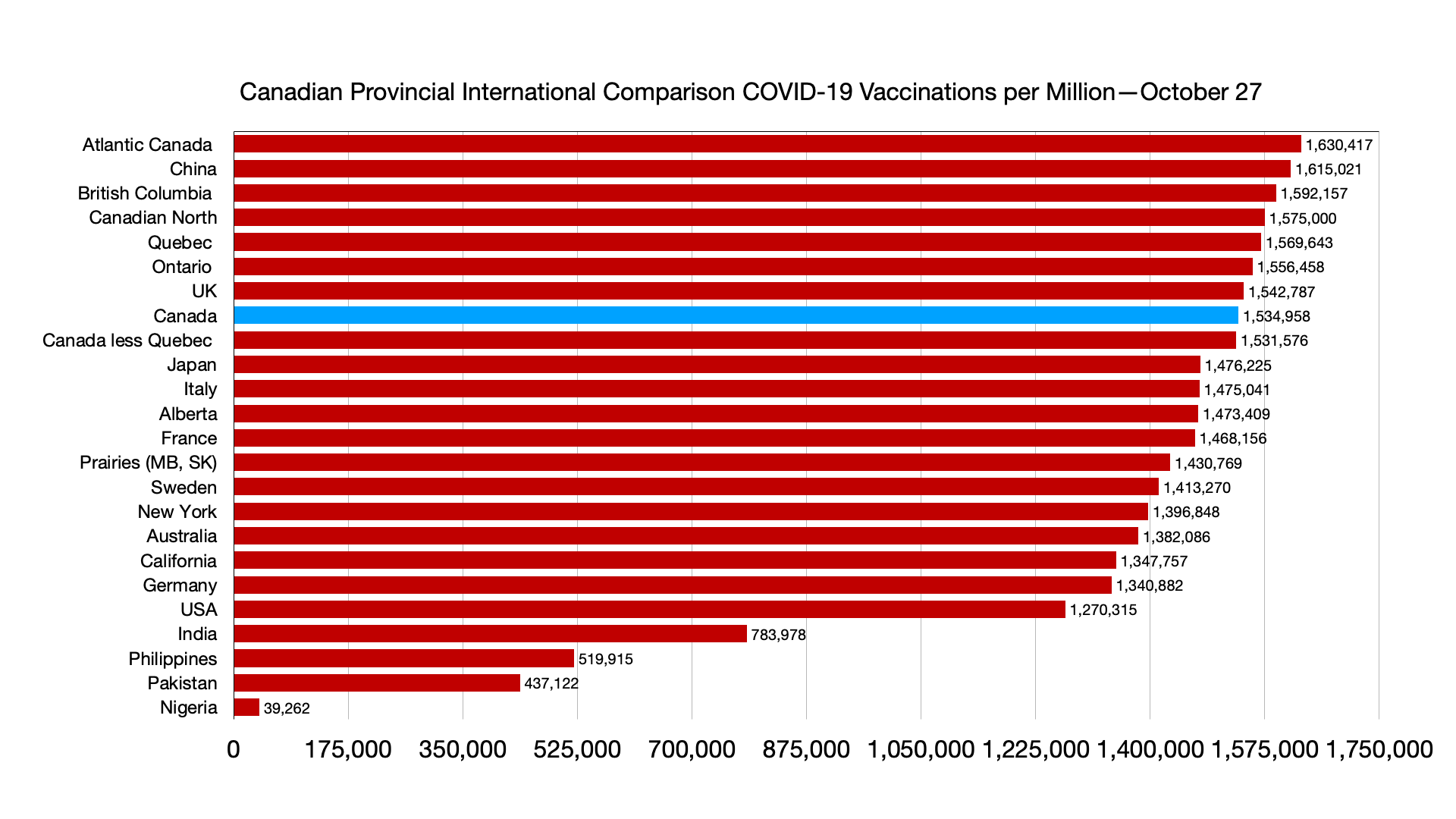
Infections: The chart shows the number of infections in Alberta starting to level off unlike the Prairies or British Columbia.

Deaths: Alberta deaths, along with the Prairies albeit to a lesser extent, continue to climb.
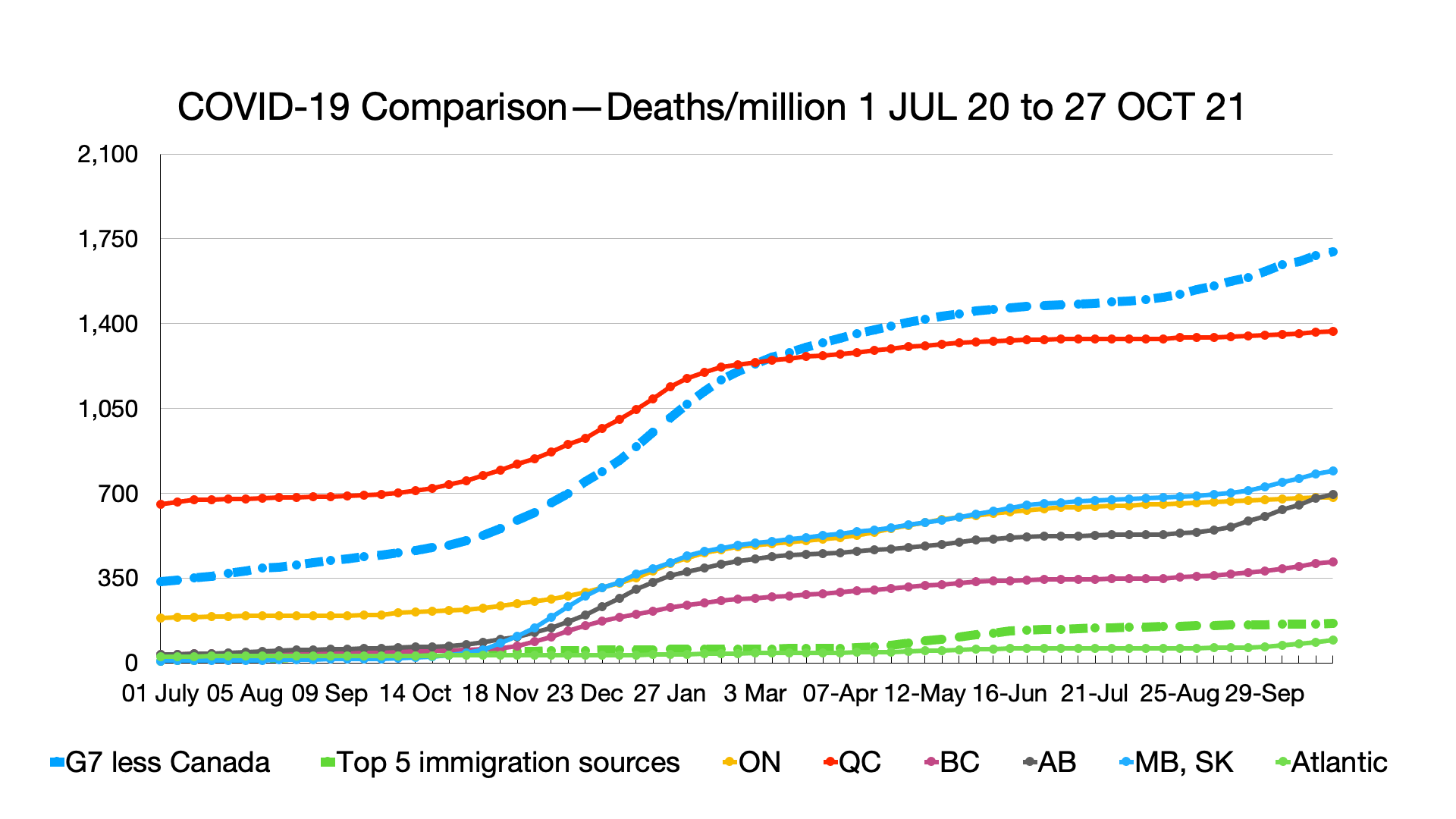
Vaccinations: Alberta vaccinations continue to surpass the Prairies. Immigration source country vaccination rates tapering off.

Infections: UK ahead of New York.
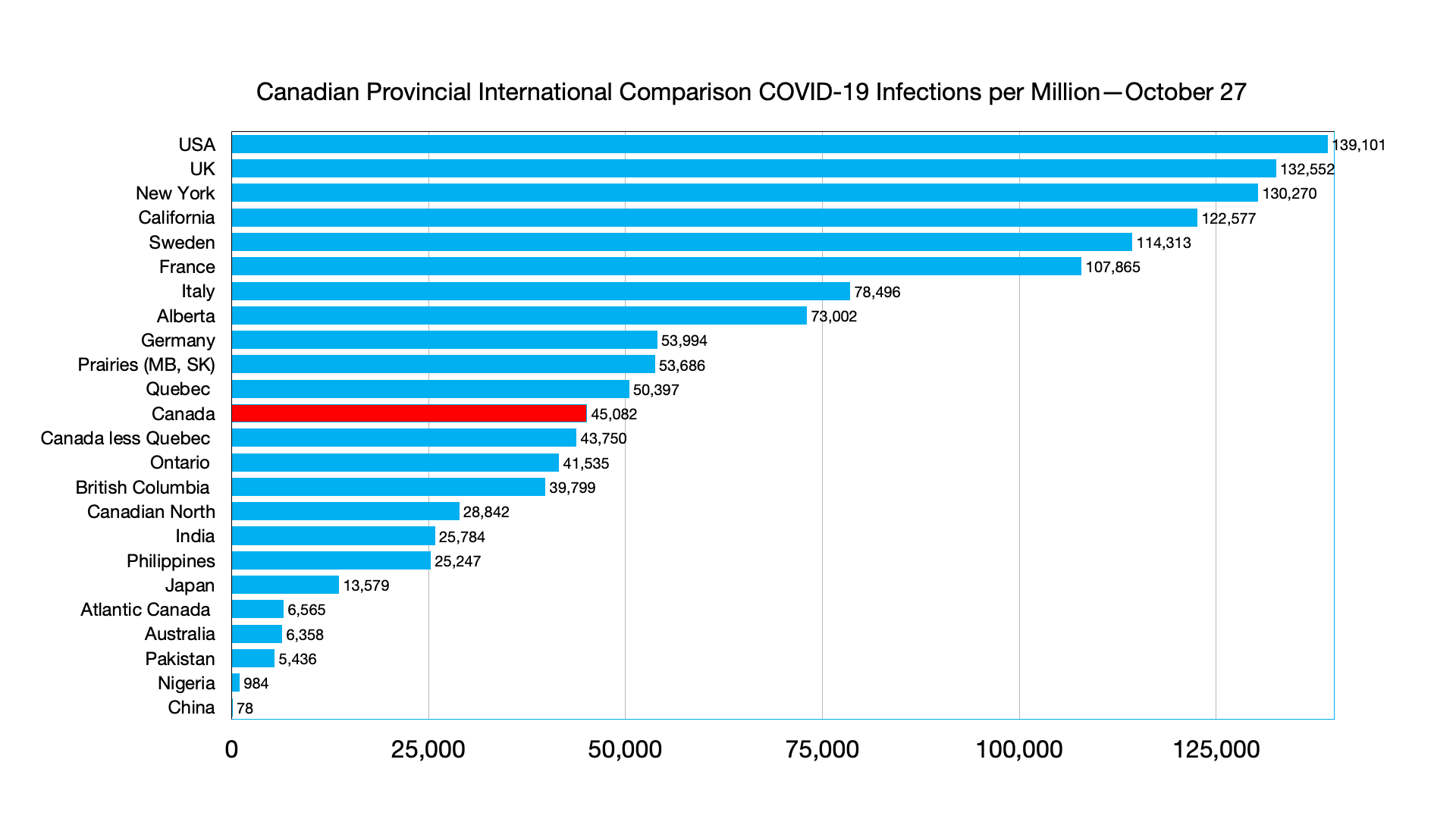
Deaths per million: Alberta ahead of Ontario.


Useful analysis in the Economist on the effectiveness of vaccine mandates:
In the 24 hours after France announced that it would require proof of vaccination or a negative covid-19 test to enter many public spaces, 1m people signed up for jabs. Other countries are following suit: Italy imposed a vaccine-or-test policy last week.Listen to this story
How effective will such rules be? The response in France was robust, but many of those people might have sought jabs anyway. In American polls, most unvaccinated people say they do not intend to get shots.
Because jabs for covid-19 are new, the impact of mandating them will probably differ from that of requiring children to get well-established vaccines. However, history still offers relevant data on hardline refuseniks’ susceptibility to legal fiat.https://infographics.economist.com/2021/20211023_GDC100_2/index.html
The link between mandates and uptake of standard vaccines in childhood is murky. Much of Europe enjoys broad coverage without mandates, whereas poor countries’ edicts are often honoured in the breach. Even among countries with similar gdp per person, those with mandates do not vaccinate more—perhaps because only places with low uptake resort to coercion.
Another way to assess impact is studying changes over time when new mandates come in. Uganda’s long-run upward trend in jab rates actually flattened out after the country imposed a mandate. However, it only began requiring vaccines once 80% of children were already getting them.
In rich countries mandates have helped a bit. In 2016 Australia ended an exemption for conscientious objectors. Its jab rate for polio rose by three percentage points. After imposing new mandates in 2017-18 following outbreaks of vaccine-preventable diseases, Italy saw gains in measles shots, and France in meningitis-C jabs. In six countries that have stiffened rules since 2000, the average gain was 2.2 percentage points.https://infographics.economist.com/2021/20211023_GDC100_3/index.html
The best evidence that mandates matter comes from America. Some states offer carve-outs from mandates only for medical reasons; others also recognise religious or philosophical ones. After adjusting for demographic and political characteristics that also affect jab rates, uptake in states with the fewest exceptions is 1.1 percentage points higher than in those with the most.
These effects sound small. But since jab rates cannot exceed 100%, mandates can only do so much if uptake is already high. Moreover, for diseases like measles, 95% of people need protection to reach herd immunity. A few percentage points can determine if outbreaks take off or fizzle out.■
2021/10/21 Leave a comment
The latest charts, compiled 20 October. Canadians fully vaccinated 73.7 percent, higher than USA 57.6 percent and the UK 67.1 percent). But all countries have essentially plateaued, making it highly unlikely that they will reach targets 80 percent or higher.
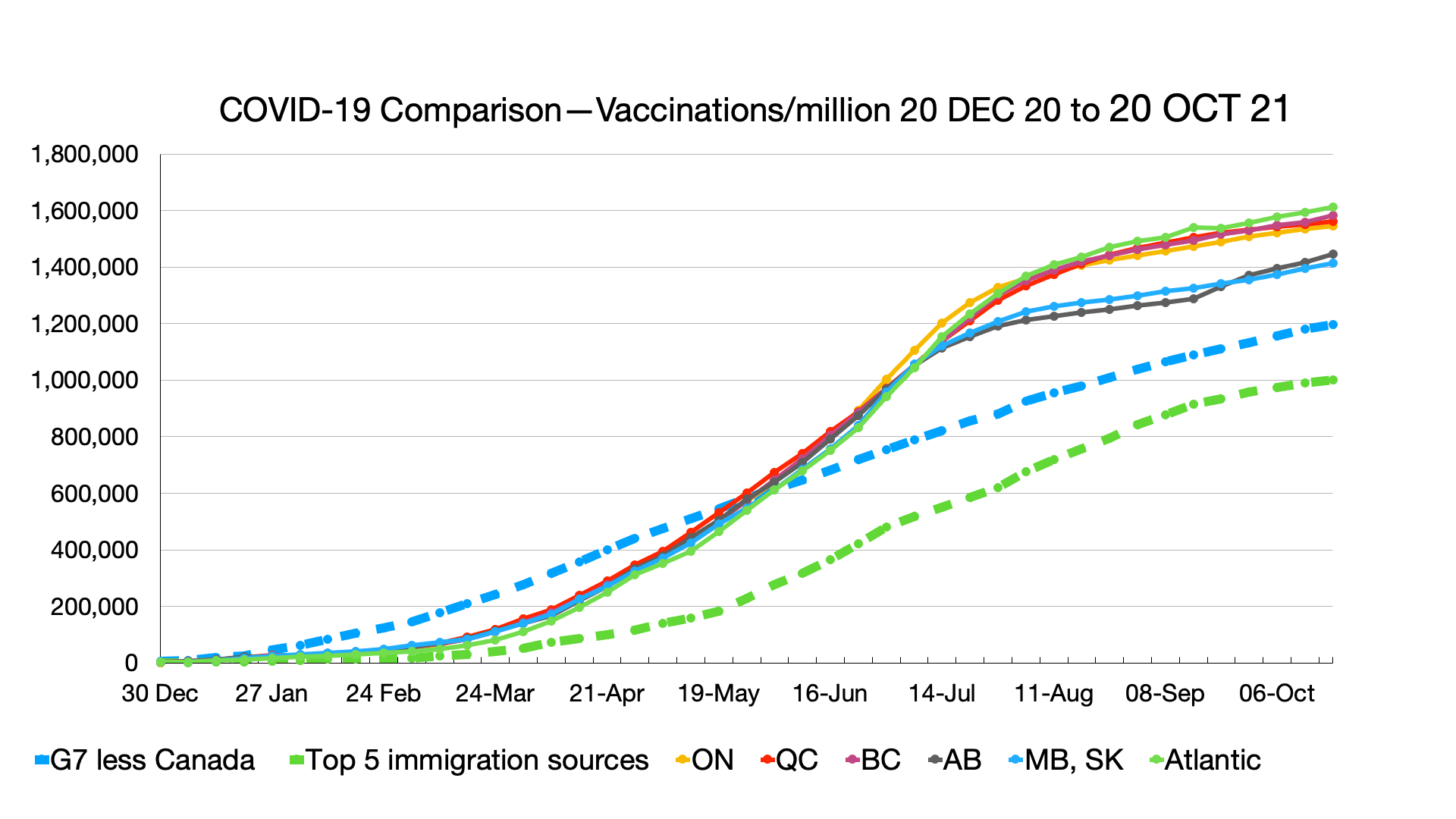
Vaccinations: Atlantic Canada ahead of China, Canadian North ahead of Ontario, Alberta ahead of UK, California ahead of Germany. China fully vaccinated 75 percent (unchanged), India 20.6 percent.

Infections: The chart shows the number of infections in Alberta starting to level off unlike the Prairies or British Columbia.
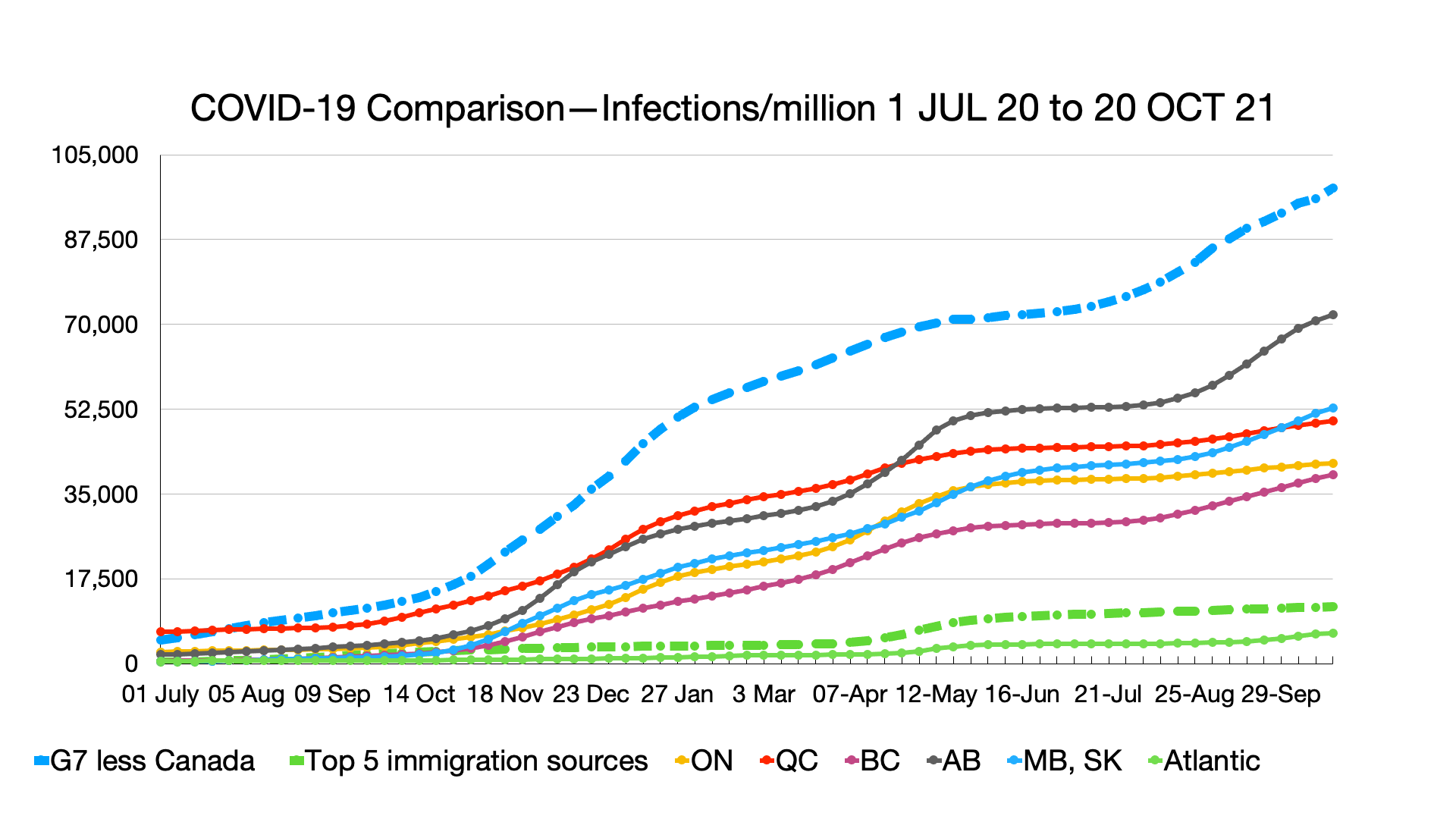
Deaths: Alberta deaths, along with the Prairies albeit to a lesser extent, continue to climb.

Vaccinations: Alberta vaccinations continue to surpass the Prairies. Immigration source country vaccination rates tapering off.
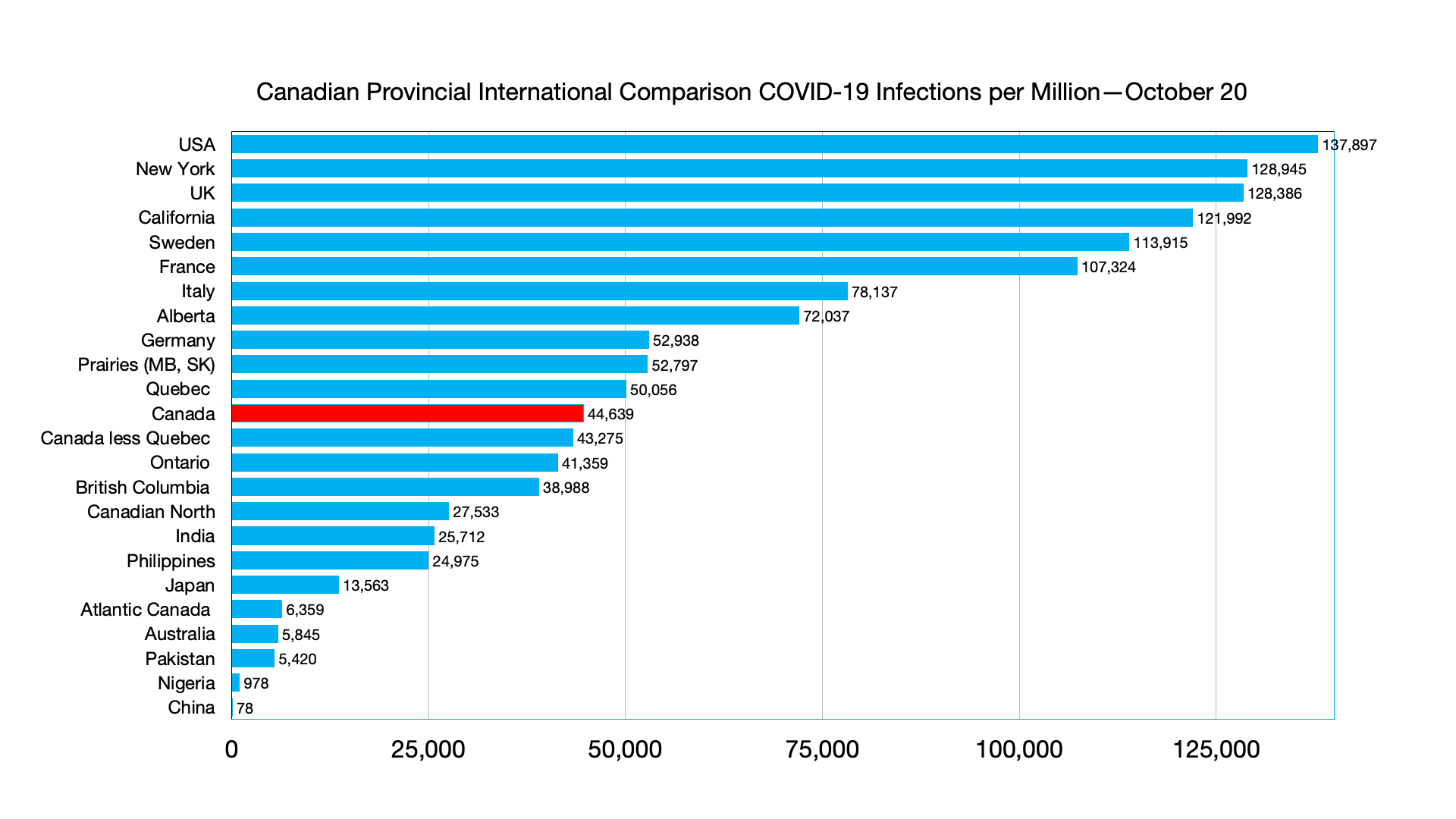
Infections: Canadian North ahead of India, Australia ahead of Pakistan.
Deaths per million: No relative change.


Meanwhile, the “UK faces calls for ‘Plan B’ with virus cases high and rising:”
Life has returned to normal for millions in Britain since coronavirus restrictions were lifted over the summer. But while the rules have vanished, the virus hasn’t.
Many scientists are now calling on the government to reimpose social restrictions and speed up booster vaccinations as coronavirus infection rates, already Europe’s highest, rise still further.
The U.K. recorded 43,738 new COVID-19 cases on Tuesday, slightly down from the 49,156 reported Monday, which was the largest number since mid-July. New infections have averaged more than 44,000 a day over the past week, a 16% increase on the week before.
Last week, the Office for National Statistics estimated that one in 60 people in England had the virus, one of the highest levels seen in Britain during the pandemic.
In July, Prime Minister Boris Johnson’s government lifted all the legal restrictions that had been imposed more than a year earlier to slow the spread of the virus, including face coverings indoors and social distancing rules. Nightclubs and other crowded venues were allowed to open at full capacity, and people were no longer advised to work from home if they could.
Some modelers feared a big spike in cases after the opening-up. That didn’t occur, but infections remained high, and recently have begun to increase — especially among children, who largely remain unvaccinated.
Also rising are hospitalizations and deaths, which have averaged 130 a day over the past week, with 223 reported Tuesday alone. That is far lower than when cases were last this high, before much of the population was vaccinated, but still too high, critics of the government say. Britain has recorded more than 138,000 coronavirus deaths, the highest total in Europe after Russia.
Against that backdrop, some feel Britons have been too quick to return to pre-pandemic behavior. Masks and social distancing have all but vanished in most settings in England, including schools, though Scotland and other parts of the U.K. remain a bit more strict. Even in shops, where masks are recommended, and on the London transit network, where they are mandatory, adherence is patchy.
A plan to require proof of vaccination to attend nightclubs, concerts and other mass events in England was dropped by the Conservative government amid opposition from lawmakers, though Scotland introduced a vaccine pass program this month.
Some scientists say a bigger factor is waning immunity. Britain’s vaccination program got off to a quick start, with shots given to the elderly and vulnerable beginning in December 2020, and so far almost 80% of eligible people have received two doses. The early start means millions of people have been vaccinated for more than six months, and studies have suggested vaccines’ protection gradually wanes over time.
Millions of people in Britain are being offered booster shots, but critics say the program is moving too slowly, at about 180,000 doses a day. More than half of the people eligible for a booster dose haven’t yet received one.
The U.K. also waited longer than the U.S. and many European nations to vaccinate children ages 12-15, and only about 15% in that age group in England have had a shot since they became eligible last month.
“It’s critical we accelerate the booster program,” said epidemiologist Neil Ferguson, a member of the government’s Scientific Advisory Group for Emergencies.
Ferguson said one factor influencing the U.K.’s high case numbers was that it has relied heavily on the AstraZeneca vaccine, “and, while that protects very well against very severe outcomes of COVID, it protects slightly less well than Pfizer against infection and transmission, particularly in the face of the delta variant.”
He also noted that “most Western European countries have kept in place more control measures, vaccine mandates, mask-wearing mandates, and tend to have lower case numbers and certainly not case numbers which are going up as fast as we’ve got.”
“But at the end of the day this is a policy decision for government to make,” he told the BBC.
Scientists in the U.K. are also keeping an eye on a new subvariant of the dominant delta strain of the virus. The mutation, known as AY4.2, accounts for a small but growing number of cases in Britain.
Francois Balloux, director of the University College London Genetics Institute, said the subvariant might be slightly more transmissible and was being “closely monitored.” But he said evidence suggested “it hasn’t been driving the recent increase in case numbers in the U.K.”
A report by lawmakers released last week concluded that the British government waited too long to impose a lockdown in the early days of the pandemic, missing a chance to contain the disease and leading to thousands of unnecessary deaths. Critics say it is repeating that mistake.
Last month, the prime minister said the country might need to move to a “Plan B” — reintroducing measures such as mandatory masks and bringing in vaccine passes — if cases rose so high in the fall and winter that the health system came under “unsustainable” strain.
For now, the government says it won’t change course, but will try to boost vaccination rates, with a new ad campaign and an increased number of sites outside of schools where kids can receive their shots.
Johnson’s spokesman, Max Blain, said “we always knew the next few months would be challenging.” But he said the government was trying to protect “both lives and livelihoods.”
“Clearly we are keeping a very close eye on rising case rates,” Blain said. “The most important message for the public to understand is the vital importance of the booster program.
But, he added: “There are no plans to move to Plan B.”
Source: UK faces calls for ‘Plan B’ with virus cases high and rising
2021/10/15 Leave a comment
Of note, both the hesitancy and the means taken to overcome it:
By the time vaccines for the coronavirus were introduced late last year, the pandemic had taken two of Lucenia Williams Dunn’s close friends. Still, Ms. Dunn, the former mayor of Tuskegee, contemplated for months whether to be inoculated.
It was a complicated consideration, framed by the government’s botched response to the pandemic, its disproportionate toll on Black communities and an infamous 40-year government experiment with which her hometown is often associated.
“I thought about the vaccine most every day,” said Ms. Dunn, 78, who finally walked into a pharmacy this summer and rolled up her sleeve for a shot, convinced after weighing with her family and doctor the possible consequences of remaining unvaccinated.
“What people need to understand is some of the hesitancy is rooted in a horrible history, and for some, it’s truly a process of asking the right questions to get to a place of getting the vaccine.”
In the first months after the vaccine rollout, Black Americans were far less likely than white Americans to be vaccinated. In addition to the difficulty of obtaining shots in their communities, their hesitancy was fueled by a powerful combination of general mistrust of the government and medical institutions, and misinformation over the safety and efficacy of the vaccines.
But a wave of pro-vaccine campaigns and a surge of virus hospitalizations and deaths this summer, mostly among the unvaccinated and caused by the highly contagious Delta variant, have narrowed the gap, experts say. So, too, have the Food and Drug Administration’s full approval of a vaccine and new employer mandates. A steadfast resistance to vaccines in some white communities may also have contributed to the lessening disparity.
While gaps persist in some regions, by late September, according to the most recent survey by the Kaiser Family Foundation, a roughly equal share of Black, white and Hispanic adult populations — 70 percent of Black adults, 71 percent of white adults and 73 percent of Hispanic adults — had received at least one vaccine dose. A Pew study in late August revealed similar patterns. Federal data shows a larger racial gap, but that data is missing demographic information for many vaccine recipients.
Since May, when vaccines were widely available to a majority of adults across the country, monthly surveys by Kaiser have shown steady improvement in vaccination rates among Black Americans.
How the racial gap was narrowed — after months of disappointing turnout and limited access — is a testament to decisions made in many states to send familiar faces to knock on doors and dispel myths about the vaccines’ effectiveness, provide internet access to make appointments and offer transportation to vaccine sites.
In North Carolina, which requires vaccine providers to collect race and ethnicity data, hospital systems and community groups conducted door-to-door canvassing and hosted pop-up clinics at a theme park, a bus station and churches. Over the summer, the African American share of the vaccinated population began to more closely mirror the African American share of the general population.
In Mississippi, which has one of the country’s worst vaccination rates and began similar endeavors, 38 percent of people who have started the vaccine process are Black, a share that is roughly equal to the Black share of Mississippi’s population.
And in Alabama, public awareness campaigns and rides to vaccination sites helped transform dismal inoculation rates. A store owner and county commissioner in Panola, a tiny rural town near the Mississippi border, led the effort to vaccinate nearly all of her majority Black community.
Today, about 40 percent of Black Alabama residents — up from about 28 percent in late April — have had at least one dose, a feat in a state that has ranked among the lowest in overall vaccination rates and highest in per capita deaths from Covid-19. About 39 percent of white people in the state have had one dose, up from 31 percent in late April.
Health officials and community leaders say that those who remain unvaccinated have pointed to concerns about how quickly the vaccines were developed and what their long-term health effects might be, plus disinformation that they contain tracking devices or change people’s DNA. The damage wrought by the government-backed trials in Tuskegee, in which Black families were misled by health care professionals, also continues to play a role in some communities, helping to explain why some African Americans have still held out.
“It’s less about saying, ‘This racial ethnic group is more hesitant, more unwilling to get vaccinated,’ and more about saying, ‘You know, this group of people in this given area or this community doesn’t have the information or access they need to overcome their hesitancy,’” said Nelson Dunlap, chief of staff for the Satcher Health Leadership Institute at the Morehouse School of Medicine.
When the U.S. Public Health Service began what it called the “Tuskegee Study of Untreated Syphilis in the Negro Male,” 600 Black men — 399 with syphilis and 201 without the disease — were told they would be treated for so-called bad blood in exchange for free medical exams, meals and burial insurance. In reality, treatment was withheld. Even after penicillin was discovered as an effective treatment, most did not receive the antibiotic.
The experiment began in 1932 and did not stop until 1972, and only after it was exposed in a news article. The surviving men and the heirs of those who had died were later awarded a settlement totaling about $10 million, and the exposure of the study itself eventually led to reforms in medical research. Still, the damage endured.
“Few families escaped the study. Everyone here knows someone who was in the study,” said Omar Neal, 64, a radio show host and former Tuskegee mayor who counts three relatives in the study and who wavered on a vaccine before finally getting one, his mind changed by the rising number of deaths. “And the betrayal — because that is what the study was — is often conjured whenever people are questioning something related to mistrusting medicine or science.”
Rueben C. Warren, director of the National Center for Bioethics in Research and Health Care at Tuskegee University, said the study served as a real example in the long line of medical exploitation and neglect experienced by Black Americans, eroding trust in the government and health care systems.
“The questions being asked about the vaccine should be understood in the larger context of historic inequities in health care,” Dr. Warren said. “The hope, of course, is they finally decide to get the vaccine.”
A national campaign led by the Ad Council and Covid Collaborative, a coalition of experts, tackled the hesitation. This summer, a short-form documentary including descendants of the men in the Tuskegee study was added to the campaign.
When Deborah Riley Draper, who created the short-form documentary, interviewed descendants of the Tuskegee study, she was struck by how shrouded it was in myths and misconceptions, such as the false claim that the government had injected the men with syphilis.
“The descendants’ message was clear that African Americans are as much a part of public health as any other group and we need to fight for access and information,” she said.
In Macon County, Ala., which has a population of about 18,000 and is home to many descendants of the Tuskegee trials, about 45 percent of Black residents have received at least one vaccine dose. Community leaders, including those who are part of a task force that meets weekly, attribute the statistic, in part, to local outreach and education campaigns and numerous conversations about the difference between the Tuskegee study and the coronavirus vaccines.
For months, Martin Daniel, 53, and his wife, Trina Daniel, 49, resisted the vaccines, their uncertainty blamed in part on the study. Their nephew Cornelius Daniel, a dentist in Hampton, Ga., said he grew up hearing about the research from his uncle, and saw in his own family how the long-running deception had sown generational distrust of medical institutions.
Mr. Daniel, 31, said he overcame his own hesitation in the spring because the risks of working in patients’ mouths outweighed his concerns.
His uncle and aunt reconsidered their doubts more slowly, but over the summer, as the Delta variant led to a surge in hospitalizations across the South, the Daniels made vaccination appointments for mid-July. Before the date arrived, though, they and their two teenage children tested positive for the coronavirus.
On July 6, the couple, inseparable since meeting as students on the campus of Savannah State University, died about six hours apart. Their children are now being raised by Mr. Daniel and his wife, Melanie Daniel, 32.
“We truly believe the vaccine would have saved their lives,” Ms. Daniel said.
Source: https://www.nytimes.com/2021/10/13/us/black-americans-vaccine-tuskegee.html
2021/10/14 Leave a comment
The latest charts, compiled 13 October. Canadians fully vaccinated 73.2 percent, higher than USA 57.2 percent and the UK 67.6 percent).
Vaccinations: Minor changes in Canada, with Ontario ahead of the Canadian North. France and Italy are now ahead of the UK, Japan is ahead of the Prairies, and Sweden and Australia are ahead of the USA. China fully vaccinated 75 percent (unchanged), India 20 percent.
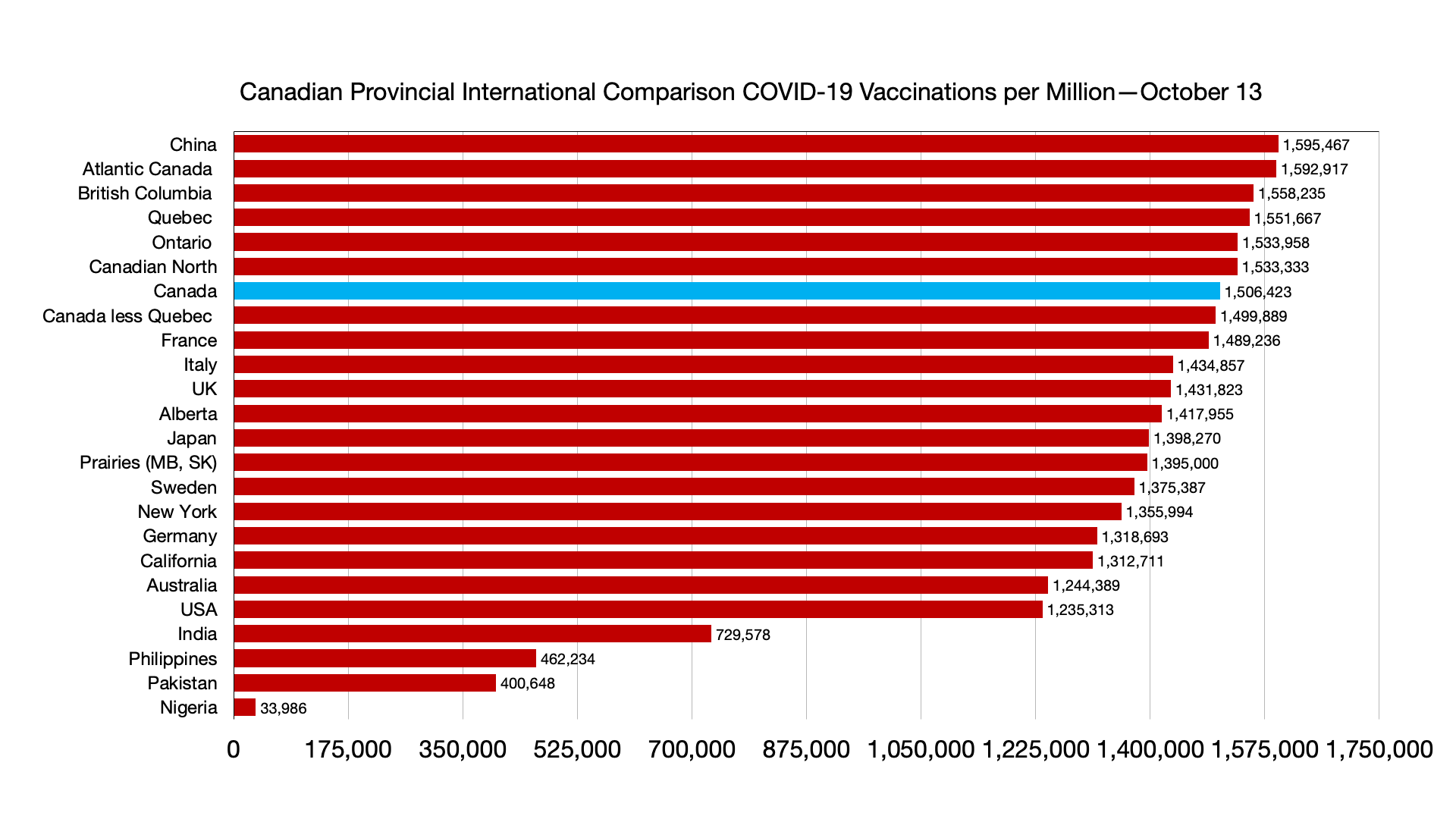
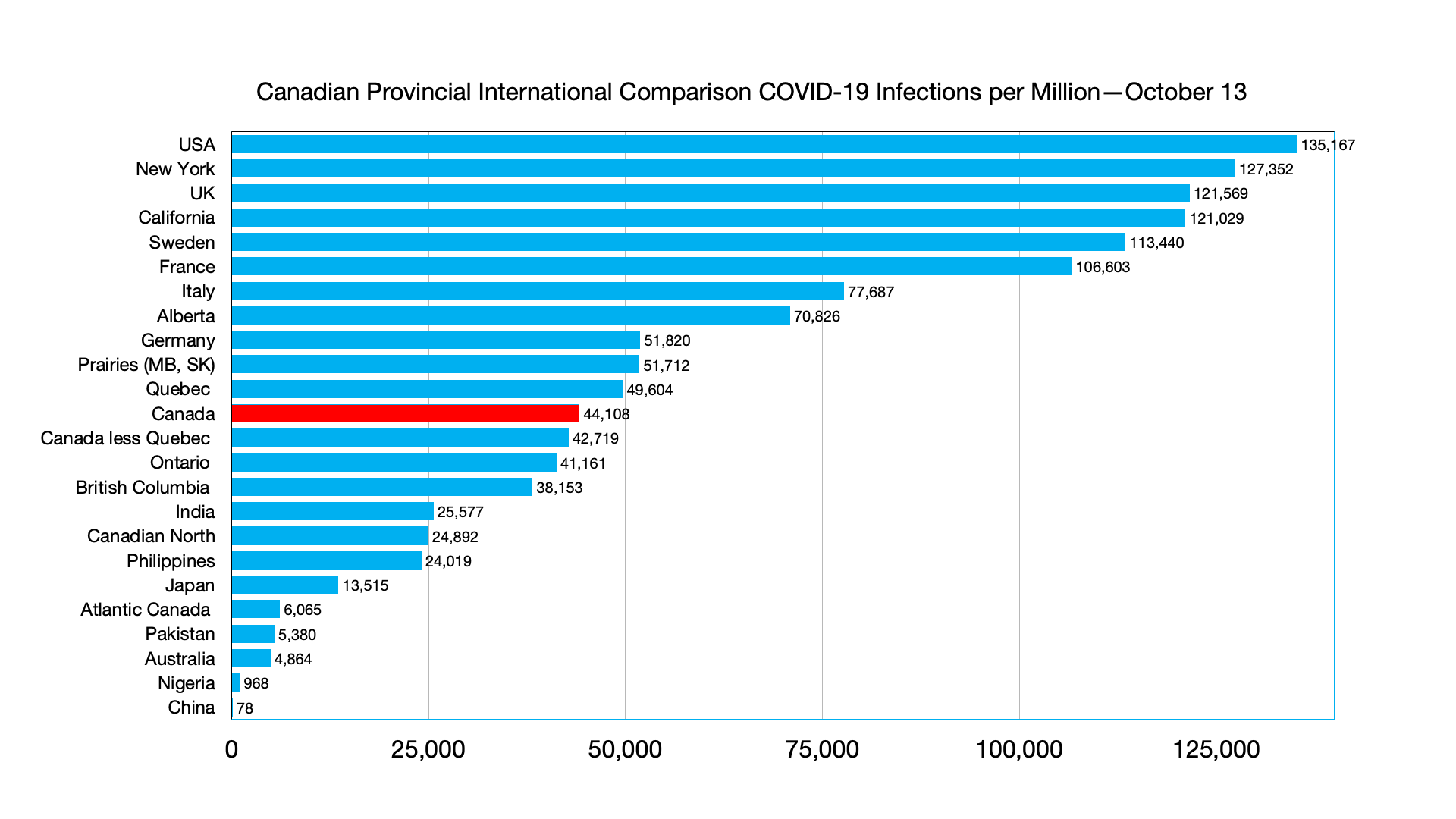
Infections: UK now has more than California, and the Canadian North has more than the Philippines. The chart also shows the number of infections in Alberta starting to level off.
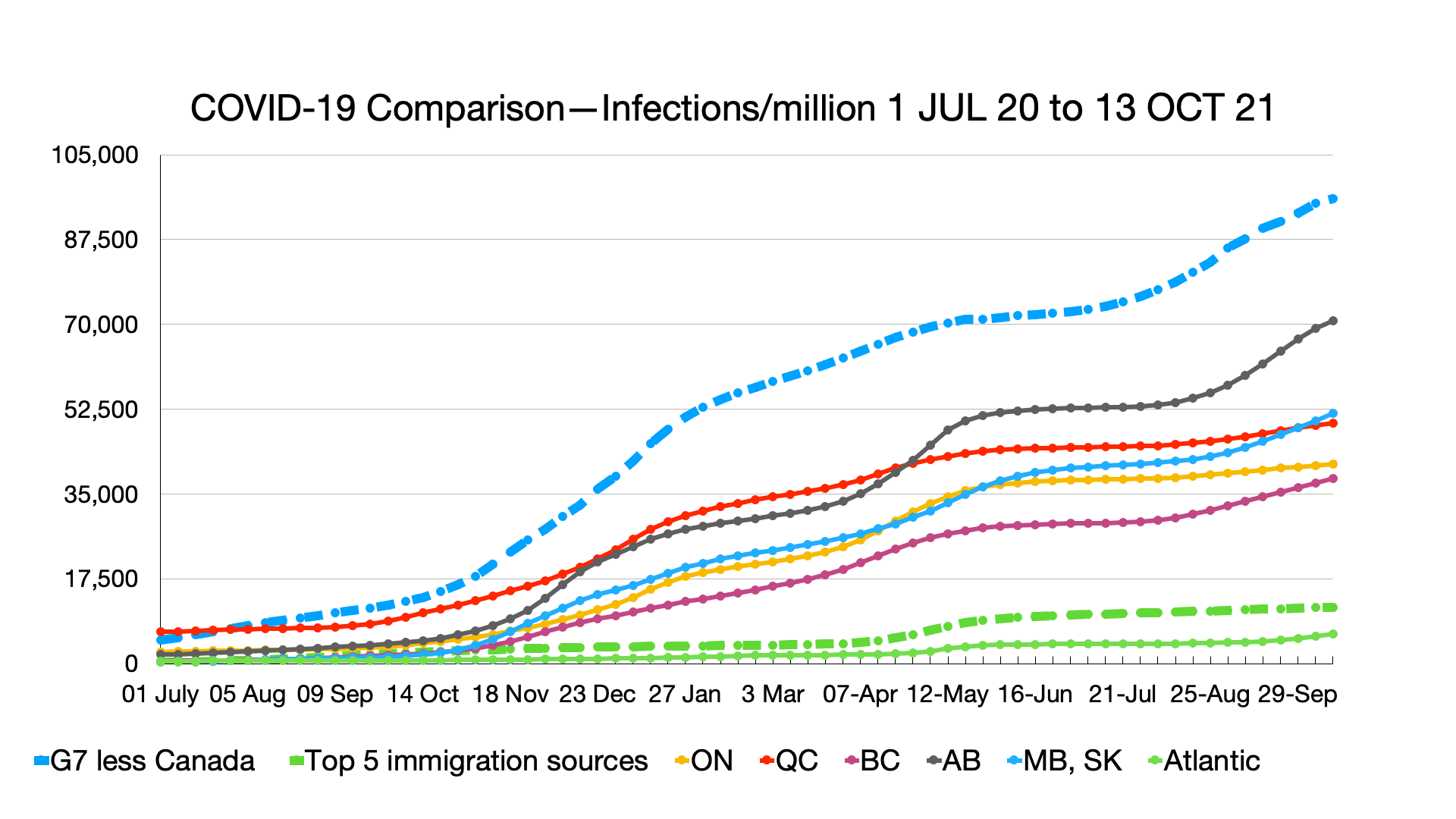
Deaths: New York and the USA have more infections than Italy, with California having more than France. Alberta deaths, along with the Prairies albeit to a lesser extent, continue to climb.

Vaccinations: Alberta vaccinations have surpassed the Prairies.

Infections:
Deaths per million:


2021/10/13 Leave a comment

Click image for book purchase
 Multicultural Meanderings