Quebec stops publishing daily COVID-19 data despite leading country in number of cases UPDATED: Quebec reversal

Update: Quebec announced that it will continue publishing the data on a daily basis following an outcry (Québec recule: les données sur l’évolution de la pandémie seront publiées sur une base quotidienne). Still curious about the rational behind the original decision.

——-

Not sure this strategy will address the “communications” issue as weekly reporting will likely continue to highlight Quebec’s relatively poor performance both domestically and internationally.

Not a great example of transparency and accountability.

Will change my weekly update to accommodate their Thursday release schedule:

Quebec’s Health Ministry says it will only provide weekly reports about COVID-19, rather than providing a daily rundown of the situation.

The province’s public health institute, INSPQ, had also been publishing daily updates, including the number of cases and hospitalizations in Quebec, the number of tests conducted and how many people have died.

The data was also broken down by age and region and showed how many long-term care homes have outbreaks.

The move from daily to weekly updates appears to mean Quebec is providing data less frequently than any other Canadian province, despite leading the country in number of cases. Ontario, which has the second-highest number of cases, continues to provide daily numbers.

As of Thursday, Yukon’s Emergency Measures Organization is providing a public update once per week — but the territory has only 11 confirmed cases.

Prime Minister Justin Trudeau addressed the change in his daily news conference on COVID-19 Thursday, saying it’s up to each province to decide how transparent it needs to be.

He also said that Quebec still has a “significant number of cases” and deaths every day.

“I certainly hope that Premier [François] Legault would continue to be transparent and open with Quebecers and indeed with all Canadians as he has been from the very beginning,” Trudeau said.

The Health Ministry and INSPQ will only publish the data on their respective websites every Thursday, the first of them beginning July 2. The ministry will also be sending out a news release with the figures on that day every week.

The decision was first announced in a news release on Fête nationale, the province’s annual holiday.Dr. Horacio Arruda, the province’s public health director, said Thursday that the decision was made in order to provide the public with “more stable numbers,” as fewer confirmed cases each day will make any day-to-day increase appear more significant than it is.

He said this would also allow the province to provide a more accurate portrait of how the virus is spreading, as reporting delays have often prompted a revision of the daily numbers.

“As soon as there is some important data to share with the population, we will do that.” Arruda said, suggesting that the daily updates could return in the event of a second wave of infections.

The government announcement appeared to take the INSPQ by surprise. A notice on its website Tuesday said it would begin limiting its updates to weekdays only, rather than seven days a week.

But on Thursday, following the Health Ministry’s announcement, it said it too would only provide a weekly update. A spokesperson referred any questions to the Health Ministry.

The number of daily cases and deaths in Quebec has declined in recent weeks.As of Thursday, 55,079 people in Quebec have tested positive for the coronavirus that causes COVID-19. That’s an increase of 142 new cases since Wednesday.

There are 487 people in hospital and 5,448 have died. A total of 520,227 tests have come back negative.

The Quebec government has allowed most businesses to reopen, including restaurants, bars, gyms and shopping malls, with physical-distancing restrictions in place.

Source: Quebec stops publishing daily COVID-19 data despite leading country in number of cases
Ibbitson: Tens of thousands of Canadians won’t be born due to COVID-19

Some serious thinking needs to be done regarding alternatives to solely relying on immigration to address the aging demographics, as immigration alone, even at higher levels, won’t eliminate the trend.

One or two missed years won’t make much of a difference in the longer term, and a too quick return to the existing plan, at a time when large segments of our economy will likely take a number of years to recover, is setting up immigrants for failure.

Previous recessions have resulted in worse economic outcomes for immigrants that arrive during downturns:

One of the worst long-term consequences of the COVID-19 pandemic for Canada will be the tens of thousands who won’t be born, a loss to this country’s future.

To make up for that loss, and for the immigrants who were unable to come to Canada this year because of the lockdown, the federal government would need to increase its immigration target beyond 400,000 next year and in future years, which may be politically and logistically impossible.

The lost potential population – the work not done, goods not consumed, taxes not paid – will be felt for decades to come.

The Brookings Institution, a Washington think tank, released a report this month that concluded “the COVID-19 episode will likely lead to a large, lasting baby bust.”

Like most developed nations, the United States has a fertility rate well below the 2.1 children per woman needed to sustain the population. (The U.S. fertility rate is 1.7; Canada’s is 1.5.) Women are choosing to have fewer children, and to delay their first child until their late twenties or their thirties. (The mean age at which a woman has her first child in the U.S. is 27; in Canada, 29.)

Economic uncertainty can cause a woman to put off having her first child even longer, which may lead to her having fewer children than she originally intended. Examining past recessions and recoveries, the Brookings study found that “a one percentage point increase in the state unemployment rate led to a 0.9 per cent reduction in the birth rate.”

More than simple economic calculation is at work. “Economic pressures and uncertainty cause enormous pressure and stress within households and relationships,” said Judith Daniluk, professor emeritus at University of British Columbia, where she specializes in women’s sexuality and reproductive health.

“Surviving, much less rebounding from, this type of economic and existential crisis is challenging and takes time,” she told me, which can lead to “some women being unable to bear a child when they have regained their economic and relational footing, or in having fewer children than they had hoped.”

Based on projected unemployment levels resulting from the coronavirus lockdown, and a drop in fertility that accompanied the Spanish flu pandemic of 1918-19, the Brookings study concluded that “we could see a drop of perhaps 300,000 to 500,000 births in the U.S.” in 2021.

Since Canada has about one-tenth the population of the United States, and the unemployment rate is similar (13.3 per cent in May in the U.S.; 13.7 per cent in May in Canada), we can expect to lose on the order of 30,000 to 50,000 babies next year – the equivalent of West Vancouver (population 42,694) or Belleville, Ont. (population 50,720) in the number of babies not born.

The fewer babies that are born each year, the more immigrants who are needed to replace them. The alternative is a shrinking and aging population, with too few workers and taxpayers available to fill vacant jobs, to power the economy through consumption, and to support the pension and health-care needs of the elderly.

The Trudeau government had planned to welcome 341,000 permanent residents this year and 351,000 in 2021. But with the year half over, and immigration essentially frozen through border closings, Immigration Minister Marco Mendicino faces a difficult choice when he presents his immigration update this fall.

To prevent an overall drop in immigration, he will have to increase next year’s intake to compensate both for immigrants who didn’t arrive in 2020 and for babies not born.

But a target between, say, 400,000 and 500,000 would strain the resources of the department and of settlement services, and intensify protests from those who believe Canada is bringing in too many newcomers as it is.

Compensating for lost intake could be staggered over several years. Even so, we may be forced to accept that many thousands of people who should be with us in the years to come won’t be.

“That will be yet another cost of this terrible episode,” the Brookings report concludes.

To limit that cost, this Liberal government should do everything within its power to bring in as many new Canadians as it possibly can in the years ahead.

Source: https://www.theglobeandmail.com/politics/article-tens-of-thousands-of-canadians-wont-be-born-due-to-covid-19/

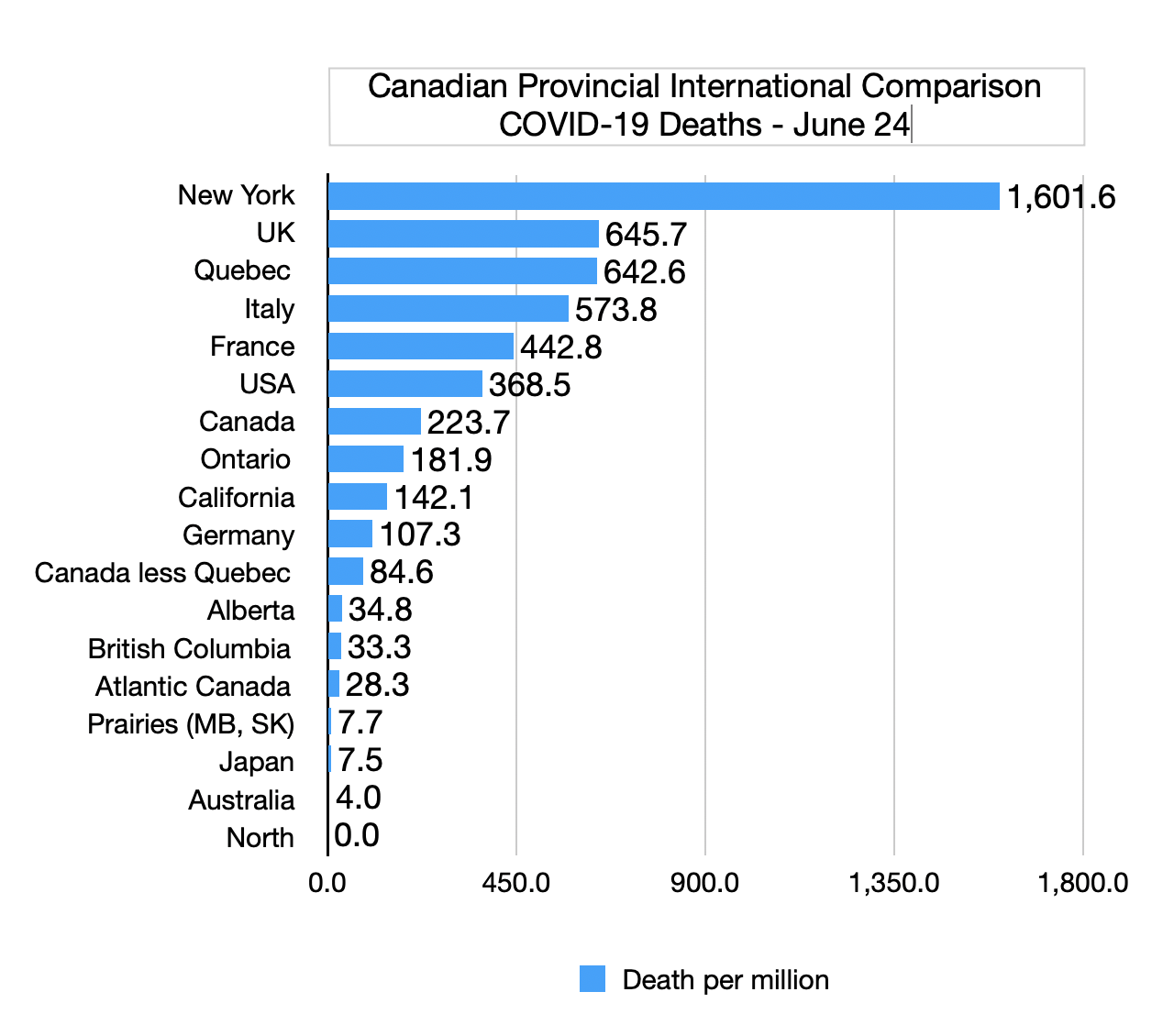
#COVID-19: Comparing provinces with other countries 24 June Update – Quebec deaths higher than UK

Latest update:


Howard Ramos: #Immigration to Canada May Not Return to Pre-Pandemic Levels

Good analysis and commentary by my friend, Howard Ramos, that asks some needed questions rather than assuming immigration will just bounce back, particularly the impact of Canada’s mixed handling of COVID-19 compared to immigration source countries:

After almost three months of lockdown because of the COVID-19 pandemic, Canada and other countries around the world are working to slowly re-open. As they do, immigration will be a key component to their economic recovery.

The question Canadian policymakers should be considering: will immigrants want to move and call Canada their new home? At the moment, it’s a theoretical question. However, a closer look at a number of trends suggests that a rebound in immigration to Canada is far from a guarantee.

A recent report by RBC underscores the extent to which the pandemic could derail Canada’s immigration-driven economy. With travel restricted and the pandemic still spreading in some parts of the world, quarantines and shutdowns are going to be a key part of the ‘new normal.’ The impact of closed borders and restricted movement on migration will not only interrupt movement but it will also create backlogs and other obstacles in immigration systems that most countries will have to wrestle with.

For Canada’s immigration levels to return to pre-COVID levels, Canadian governments will have to look beyond our borders to see how it has handled the pandemic relative to other countries.

Canada does not fare well compared to global counterparts

According to Worldometer, Canada ranks 17th worldwide in the most deaths per million, at 217, as of June 15, 2020. When this is broken down by region, as done by Andrew Griffith on the Multicultural Meanderings web site, death rates in Quebec are higher than the United States or Italy – and almost as high as the United Kingdom.

By this metric, Canada also does not fare well when it compares itself to the countries that are its most prominent sources of its immigrants. In 2019, the top 10 countries of citizenship of new permanent resident admissions to Canada were: India, China, Philippines, Pakistan, United States, Syria, Eritrea, South Korea, and Iran.

Among these, all but the United States had lower death rates, per million, from COVID-19 than Canada. And it wasn’t even close. China had a low of three deaths per million, while Iran had 107 deaths per million.

Policymakers would also be wise to consider that many of Canada’s hardest hit neighbourhoods by the pandemic were ones with a high concentration of recent immigrants. That reality undercuts many of the perceived advantages Canada presents to immigrants, such as its accessible and strong health care system or its quality of life.

When Canada is compared to other immigrant receiving countries such as Australia or New Zealand it does not fare well either. Australia ranks 129th in most deaths per million and New Zealand declared victory over the pandemic. Both managed the disease more efficiently and have a head start in reopening. As the world may experience a second or future waves of the pandemic, Canada does not look as attractive compared to competing immigrant receiving countries.

Multicultural ‘veneer’ tarnished by recent events

While Canada is recognized internationally for being open and multicultural, that veneer has been tarnished slightly by many reported incidents of anti-Asian discrimination. Polling shows that the majority of Canadians believe negative attitudes towards Asian-Canadians have increased since the pandemic and the Vancouver police report that anti-Asian hate crime has gone up in the city this year. Given that the top three source countries of newcomers last year were all Asian, this too makes the country less attractive.

The good news for Canada is that people have continued to apply for immigration and the country has continued processing applications during the pandemic. However, if the country aims to re-kindle its high level of immigration intake, it will need to reopen its borders. Canada cannot sit back and assume that people will want to come. Canadians will have to do the hard work of assuring newcomers that the country is indeed safe, healthy, and a welcoming place to build a future.

Immigration slowdown to weigh on Canada’s economic recovery

More on the likely impact on the Canadian economy.

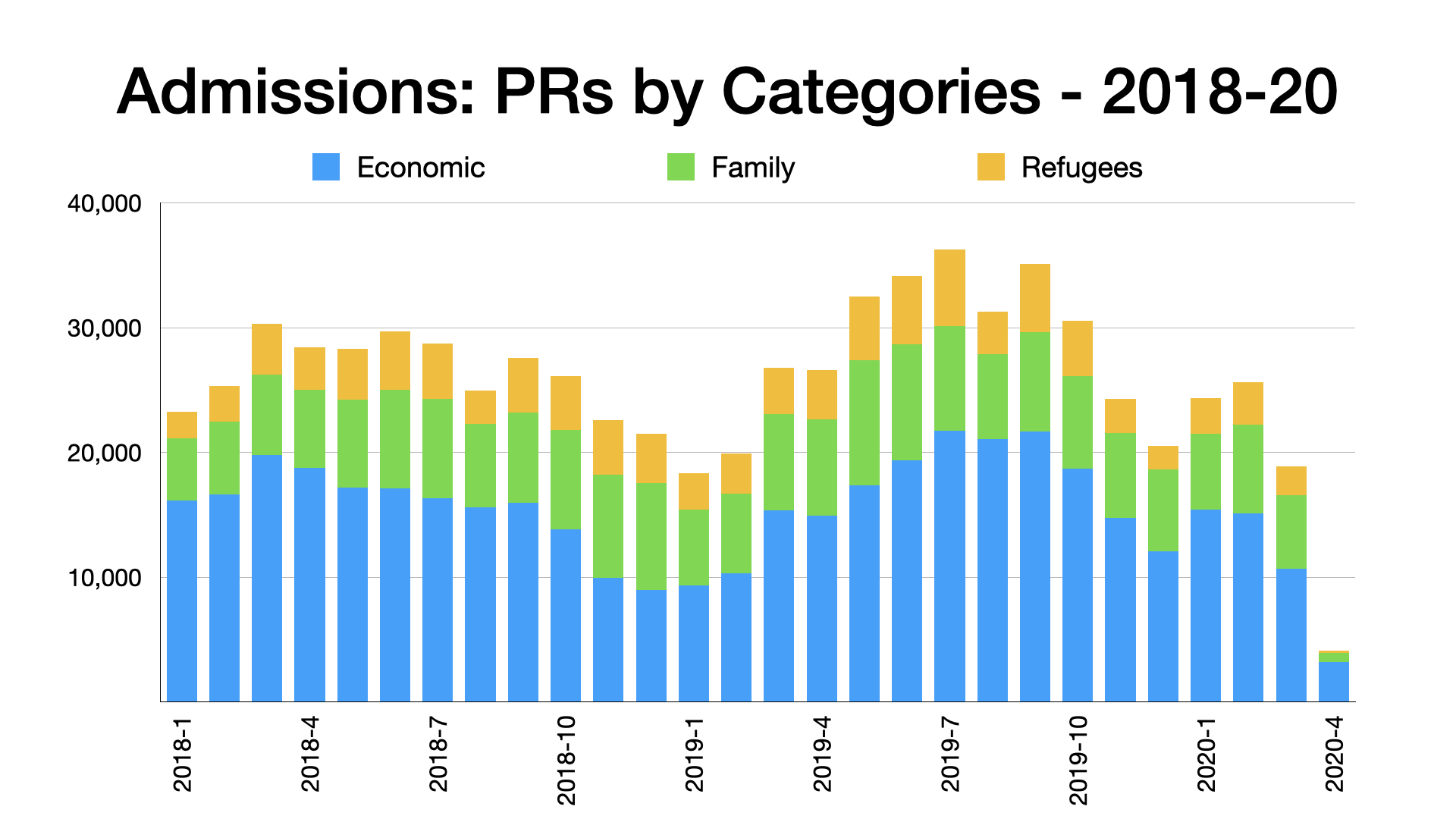
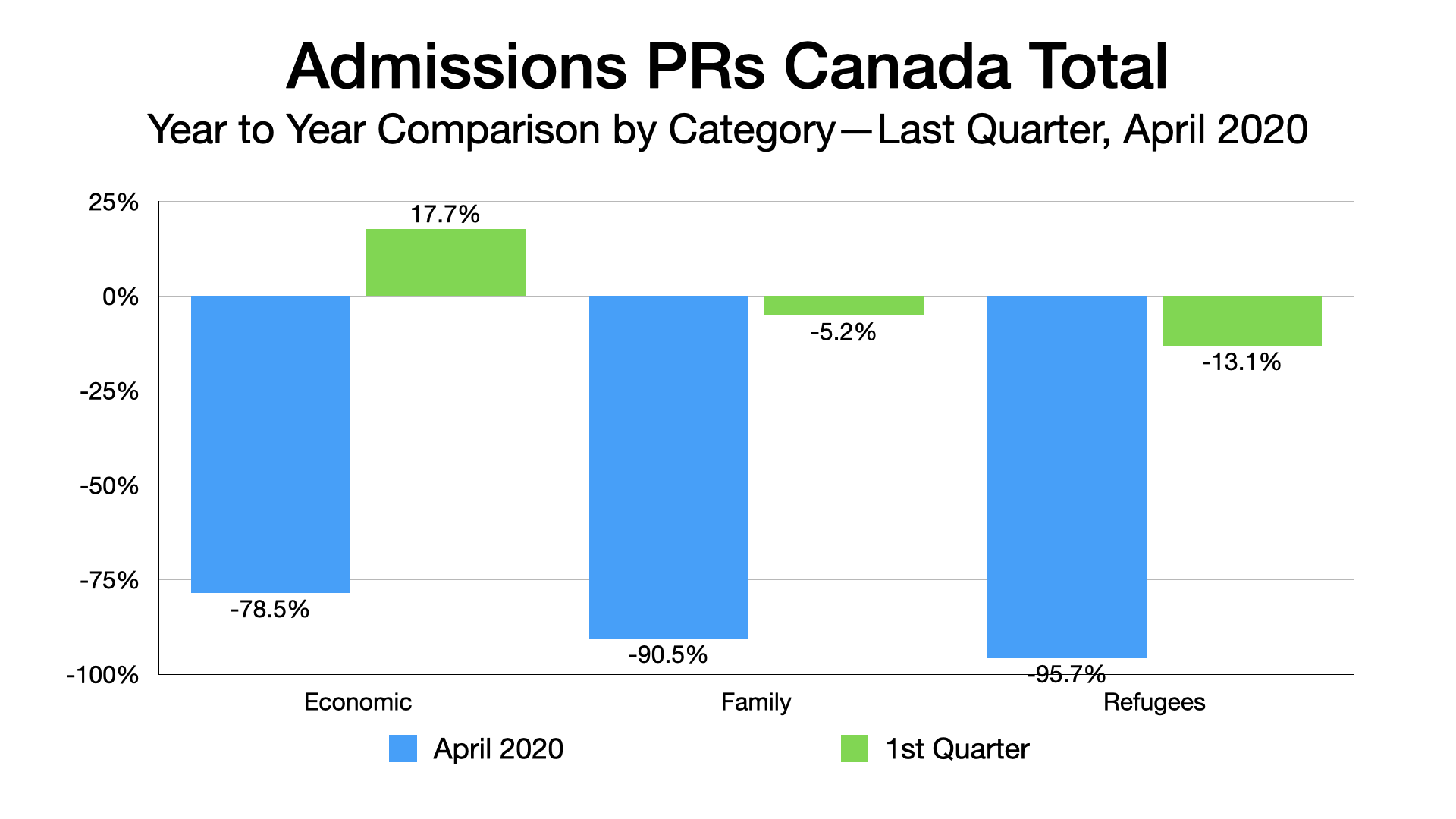
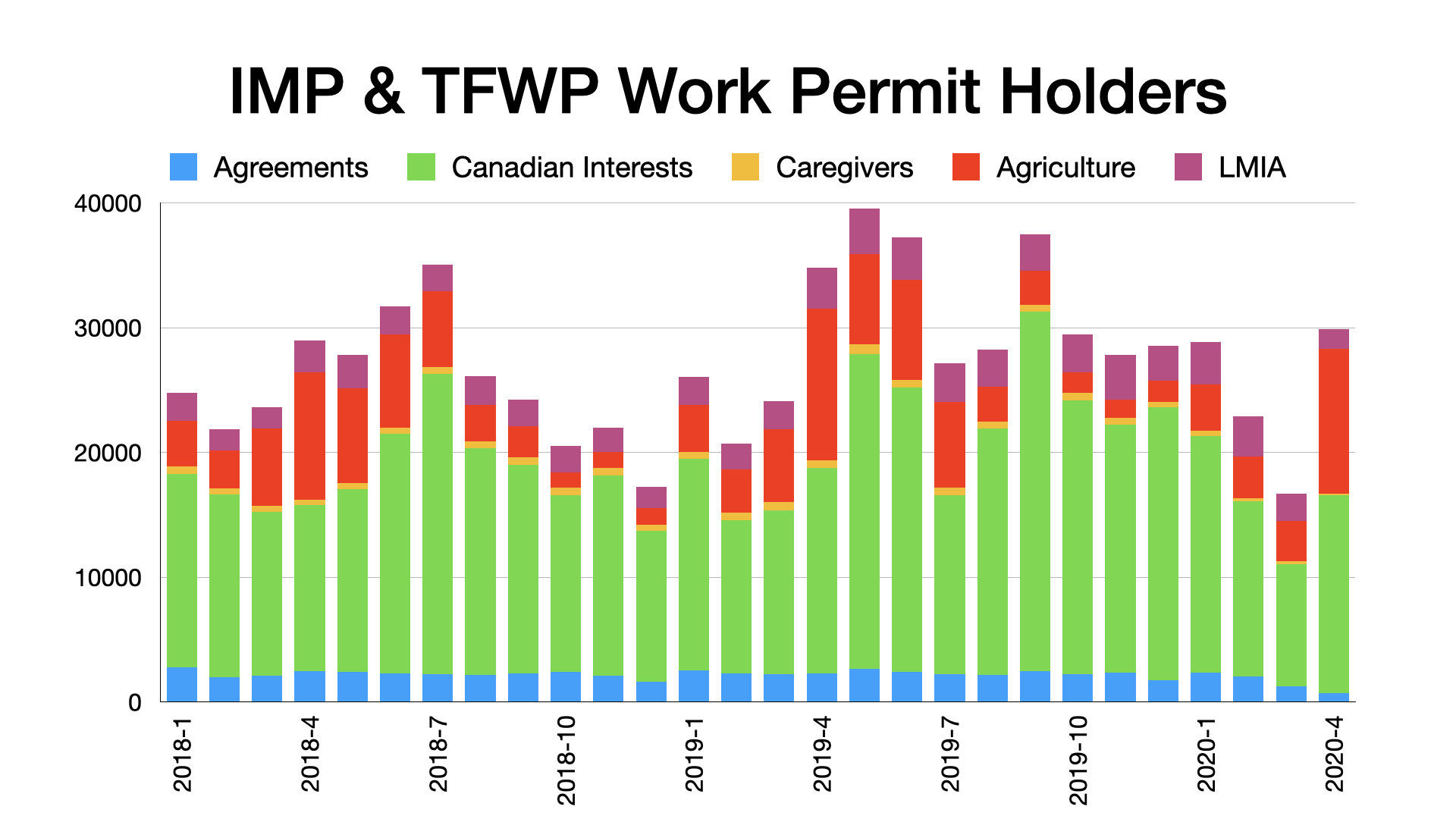
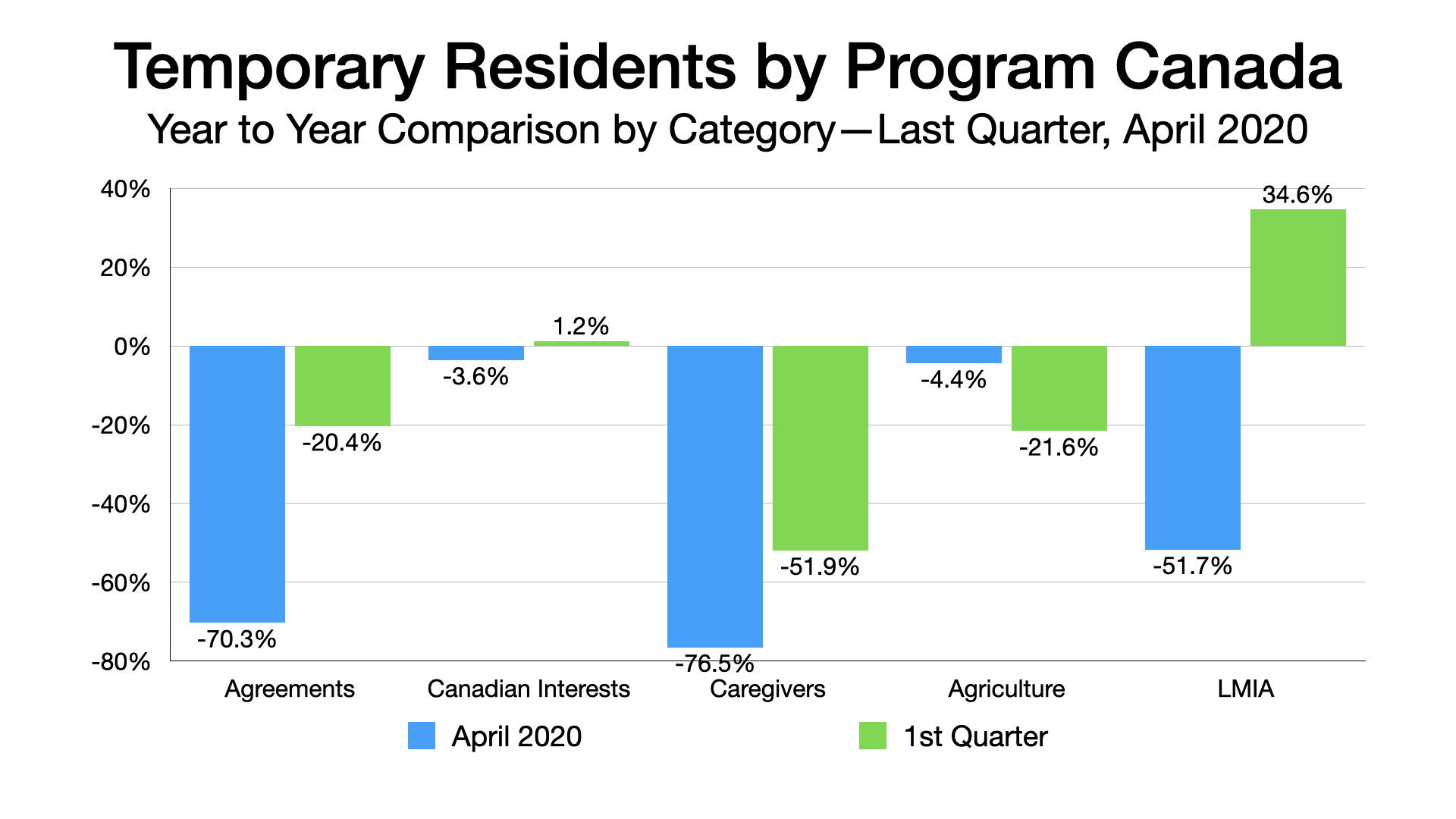
The slides below provide the monthly statistics since 2018 and capture the dramatic decrease in 2020:

Ramping up immigration without addressing Canada’s endemic productivity challenge means that any increase in GDP will not translate into an increase in GDP per capita, which economic and immigration should aim at:

Immigration to Canada has plummeted during the coronavirus pandemic, weakening a dependable lever of economic growth as the country mounts its recovery.

Canada’s population increased by about 76,000 people (0.2 per cent) over the first three months of 2020, the slowest growth in a first quarter since 2015, Statistics Canada said Thursday, warning a bigger impact will likely be felt in the second quarter.

The shift was severe for temporary immigration. The net increase of non-permanent residents in the first quarter was nearly 80 per cent lower than a year ago, largely because of fewer foreign students.

The dramatic slowdown is by design. In response to the pandemic, travel to Canada is heavily restricted. Those allowed entry include temporary foreign workers, along with foreign students and permanent residents who were approved before March 18. But for most people, the border is closed.

That is a complication for the recovery because the Canadian economy relies heavily on immigration to bolster output and consumption. Fewer immigrants will affect the labour supply, housing demand and university budgets, to name some prominent examples.

“If immigration falls by so much, then there’s a number of aspects of the Canadian economy that may be impacted pretty significantly,” said Andrew Agopsowicz, a senior economist at Royal Bank of Canada.

Before the pandemic, another record-setting year of immigration looked possible. The federal Liberals planned to welcome 341,000 new permanent residents in 2020, rising to 361,000 in 2022. The high-end estimate for 2020 was an intake of 370,000 permanent residents, which would have broken the 2019 record of about 341,000. Now, those targets look unfeasible.

For one, the Canada-U.S. border is closed to all non-essential travel through at least July 21, and with COVID-19 cases accelerating in some parts of the world, border restrictions may not ease substantially in the short term.

“We’re definitely not going to be growing very rapidly as a country this year,” said Robert Falconer, a research associate at the University of Calgary who studies immigration.

The early data suggest a massive slowdown in the second quarter. In April, about 4,100 people were approved for permanent residency, down 85 per cent from the previous April, according to the most recent data published by the federal immigration department. Most approvals were for people already living in the country.

If travel restrictions and border closings last all summer, Canada’s intake of permanent residents will decline by up to 170,000 people in 2020, RBC said in a recent report.

“The disruption will reverberate across the economy, given our reliance on immigration for labour-force growth and to offset Canada’s aging demographic,” Mr. Agopsowicz wrote at the time.

Higher immigration has been a key part of the Liberals’ economic strategy. Newcomers tend to be younger than current residents, helping to slow the country’s aging toward a fiscal cliff caused by non-working seniors with few working taxpayers to support them. They also provide talent to companies, buy goods and services, and often pay higher tuition to attend Canadian universities.

Moreover, the country is stuck in a productivity rut. For years, labour productivity – output produced for every hour worked – has essentially stagnated, Statscan data show. Instead, Canada relies on population growth – that is, more workers – to juice overall growth.

For instance, Canada’s population grew by some 580,000 people last year, the largest annual gain since 1971, and driven mostly by immigration. In percentage terms, the population grew 1.6 per cent in 2019, or the same as gross domestic product when adjusted for inflation.

Still, productivity gains are needed. As it increases, so too does the value of labour, resulting in higher wages and better living standards.

Ottawa remains committed to high immigration levels and is still accepting most applications, although processing times have been significantly affected by the virus. The federal government recently posted a tender to its procurement website, marked “urgent,” that seeks to modernize an application system that still relies on paper documents and in-person interviews.

“It’s going to be key for the government to figure out an effective strategy to ramp back up to high levels of immigration,” Mr. Agopsowicz said.

Source:  slowdown to weigh on

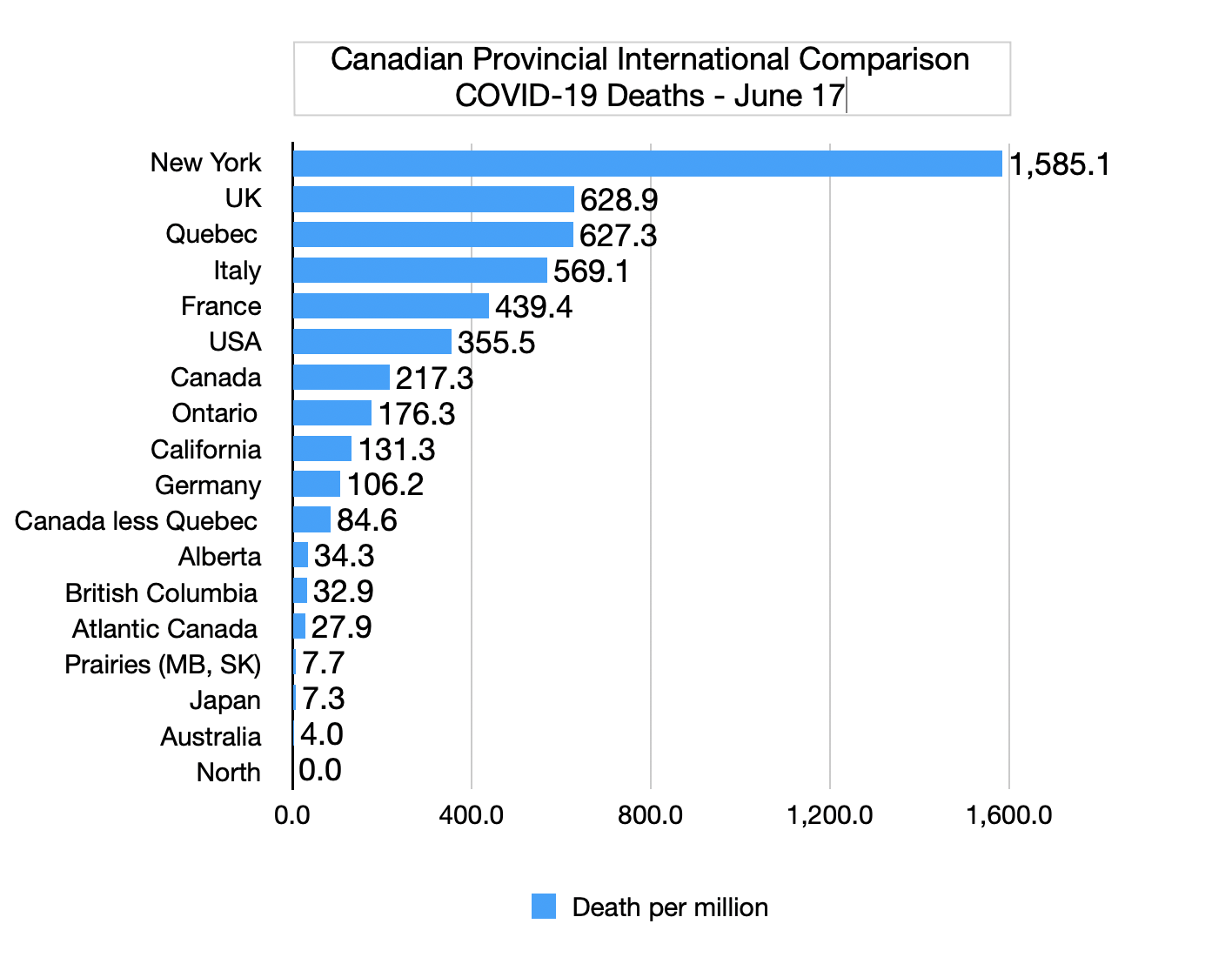
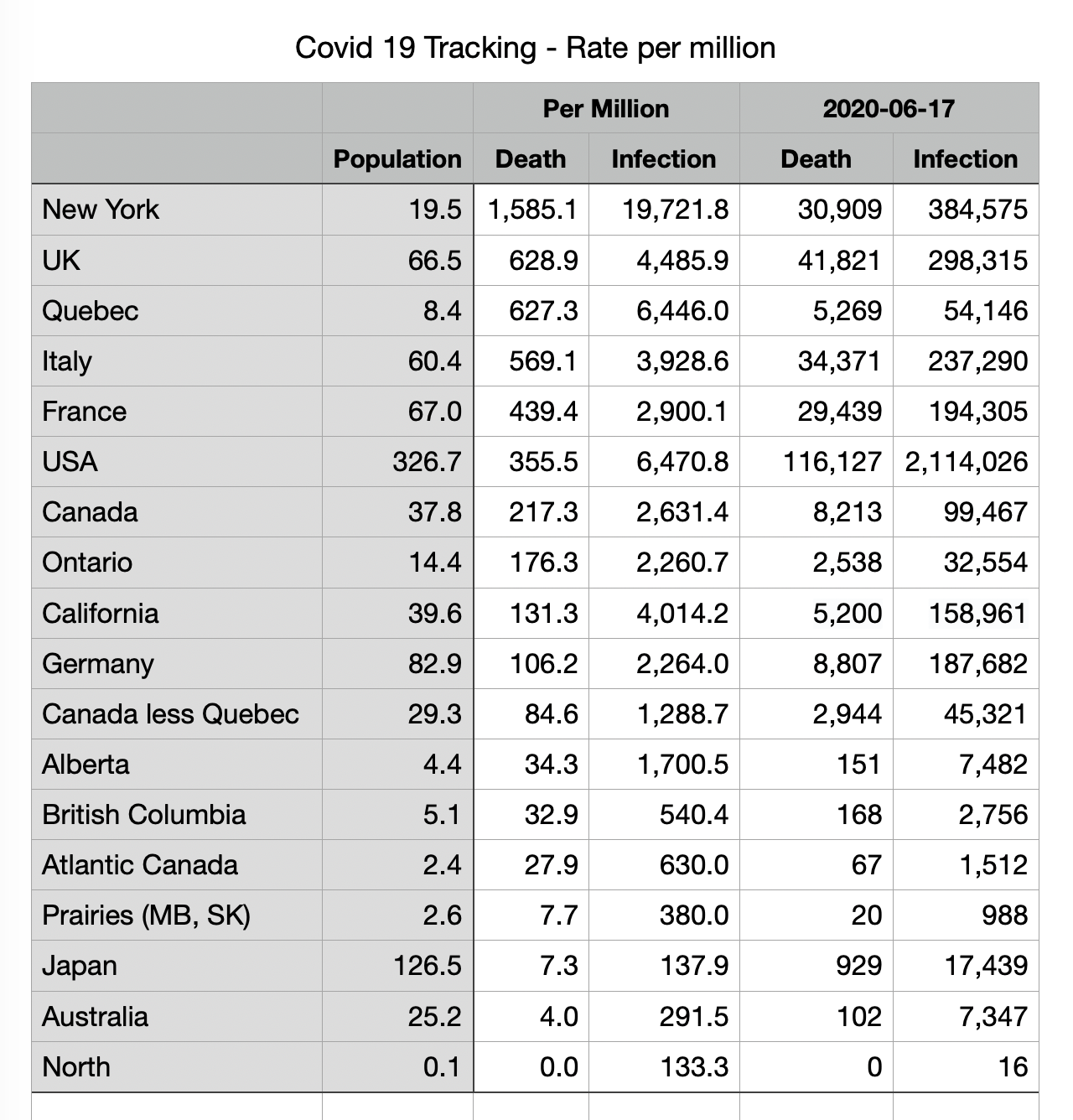
#COVID-19: Comparing provinces with other countries 17 June Update – No major change

Latest update:


Essential but expendable: How Canada failed migrant farm workers

Good investigative reporting on the policy and enforcement failures after the quarantine period:

When the novel coronavirus pandemic hit in March, the annual flow of farm labour into Canada hung in the balance.

Farmers feared that border closings and grounded planes would prevent agricultural workers, coming from countries such as Mexico, Guatemala and Jamaica, from reaching their fields and greenhouses in time for the seeding season. Knowing this, Ottawa allowed entry of temporary foreign workers critical to the food system.

Conditions – including a mandatory 14-day quarantine upon arrival – were put in place to protect Canadians. But advocates and health officials say not enough was done to protect the workers themselves.

In interviews, farm workers detailed the myriad reasons that COVID-19 has infiltrated farms with such success: a lack of personal protective equipment (PPE), an information vacuum and pressure to work, despite symptoms. In one instance, a feverish worker developed chest pains and a nosebleed that dripped on the vegetables he tended; he said his supervisors refused to take him home until the shift was over. Photos, videos and interviews portrayed overrun bunkhouses with broken toilets and stoves, cockroach and bed-bug infestations, and holes in the ceiling.

Rules were rolled out, but they weren’t adequately enforced and failed to consider what life on a farm is actually like for a migrant worker. Ottawa requires that farms, which generally provide housing under the Temporary Foreign Worker (TFW) program, ensure that accommodations allow physical distancing during the initial quarantine period.

But what happened after those 14 days was a massive blind spot. After isolating, workers often move into the bunkhouses, where they share bathrooms and kitchens and climb atop one another to get into bed. As former migrant worker Gabriel Allahdua put it, conditions in farm accommodations are a “recipe for COVID-19 to spread like wildfire.”

In Ontario alone, more than 600 foreign farm workers have tested positive for COVID-19, according to a Globe and Mail count; health officials have stressed that, for the most part, the workers came to Canada healthy and contracted the virus locally. British Columbia, Alberta and Quebec have also recorded outbreaks among migrant agri-food workers.

The situation is most dire in Southwestern Ontario, home to the continent’s highest concentration of greenhouses. Ontario’s largest outbreak is at Scotlynn Group, where at least 167 of 216 migrant workers have tested positive. Mexico has become so concerned by the outbreaks that Ambassador Juan Jose Gomez Camacho told The Globe that his country has “put a pause” on sending more workers – 5,000 more are still due to make the trip – until Canadian officials ramp up monitoring of health and safety rules, and ensure workers are paid while in isolation.

Two of Mr. Gomez Camacho’s countrymen have already died. Bonifacio Eugenio Romero, 31, and Rogelio Munoz Santos, 24, left their loved ones in Mexico to earn a better living. Their families are now planning the young men’s funerals. Mr. Eugenio Romero and Mr. Munoz Santos died – on May 30 and June 5, respectively – after testing positive for COVID-19. Their final days were spent mostly in hotel rooms, mostly alone.

“For a 24-year-old to die of this is beyond tragic,” said David Musyj, president and chief executive of Windsor Regional Hospital, where Mr. Munoz Santos died. “It should not happen. Just because he was from Mexico, I don’t give a damn. He was my son’s age. He was in Canada. And we should be taking care of him.” Mr. Munoz Santos is one of the youngest people in Canada to die from COVID-19-related causes. Ontario’s Office of the Chief Coroner is investigating both deaths and will decide whether to launch the province’s first inquest into a migrant worker fatality.

The federal government has the power to conduct pro-active inspections of farm accommodations, but during a six-week period at the height of the pandemic, these audits stopped. They are now being done virtually. The provinces are responsible for occupational health and safety, but in Ontario at least, the Ministry of Labour does not inspect employer-provided accommodations. Local public-health units in the province typically inspect farm bunkhouses once or twice a year, but this is done before workers arrive; an empty space looks markedly different from one with dozens of occupants.

In Canada, advocates and community health care workers for months warned federal and provincial politicians, as well as local public-health officials, that migrant workers were at a heightened risk. In letters, e-mails and conference calls, they asked for a number of measures, including increased funding for public-health units to ensure adequate housing inspections and limits on the number of people using each bathroom in bunkhouses. While some action was taken, many people say help came too little, too late. And advocates worry that unless enforcement and public-health outreach kick into high gear, there are lives and livelihoods at stake, along with the potential for disruption to the food system.

To understand what went so wrong, The Globe interviewed seven migrant workers across four farm operations, at times through a translator, as well as employers, advocates, academics, hospital executives, former migrant workers, doctors, lawyers and industry associations. The Globe reviewed four immigration files detailing allegations of employers who did little or nothing to protect workers. Migrant workers’ identities are being concealed because of privacy concerns and fears of reprisals.

The investigation revealed that problems in an already broken system have only been exacerbated by the pandemic. The experiences of workers varied, with some describing decent housing and respectful bosses who have worked hard to keep them healthy. Others spoke of racism and recounted threats of termination or deportation if they didn’t meet stringent productivity quotas.

Syed Hussan, executive director of Migrant Workers Alliance for Change (MWAC), said there is a massive disconnect at play. “Migrant workers,” he said, “have been treated as expendable and exploitable – and essential, all at the same time.”

….

The agriculture sector employs approximately 60,000 temporary foreign workers each year, with upward of 10,000 of them in Windsor-Essex county, which includes Leamington. Under the TFW program, foreign nationals are allowed to work for a particular employer for a set amount of time. Some stay for several months, others are here year-round. There are also foreigners who work in the country unauthorized; according to some estimates, Canada is home to hundreds of thousands of undocumented migrants.

Source: Investigation: Essential but expendable: How Canada failed migrant farm workers

Coronavirus Is Hitting Black and Hispanic Americans Harder. CDC Data Shows How Much.

Yet more evidence (and waiting for Canada to catch up with such data):

In a new, massive federal survey of novel coronavirus cases in the United States, a report by the Centers for Disease Control and Prevention offers an in-depth breakdown by gender, race, ethnicity, and health factors.

Among 1,320,488 laboratory-confirmed COVID-19 cases considered by the CDC between January 22 and May 30, 2020—of which only 45 percent had race or ethnicity data—33 percent were Hispanic or Latino of any race and 22 percent of infections were among Black Americans, the Morbidity and Mortality Weekly Report released Monday found. For context, those communities account for about 18 percent and 13 percent of the U.S. population, respectively.

The numbers amount to the best evidence yet that the deadly pandemic has had an outsized impact on communities of color.

“These findings suggest that persons in these groups … are disproportionately affected by the COVID-19 pandemic,” the report said, calling them consistent with previously reported data “that found higher proportions of Black and Hispanic persons among hospitalized COVID-19 patients.”

Of the 287,320 cases with data on underlying health conditions, the most common were cardiovascular disease at 32 percent, diabetes at 30 percent, and chronic lung disease at 18 percent.

Even as officials nationwide have forged ahead with re-openings, more than a dozen states—including Arizona, Arkansas, Oklahoma, North Carolina, South Carolina, California, Florida, and Texas—hit new daily COVID-19 case tally records in recent weeks. As the CDC put it in Monday’s report: “The COVID-19 pandemic is an ongoing public health crisis in the United States that continues to affect all populations and result in severe outcomes, including death.”

And as ProPublica previously reported, environmental, economic, and political factors have for years put Black Americans at higher risk of chronic conditions that overlap with COVID-19 risks, including asthma, heart disease, and diabetes.

Communities of color in every state have had a unique experience of the contagion, and these numbers suggest the outbreak is reflecting glaring health-care inequalities that no vaccine or treatment can cure.

Source: Coronavirus Is Hitting Black and Hispanic Americans Harder. CDC Data Shows How Much.

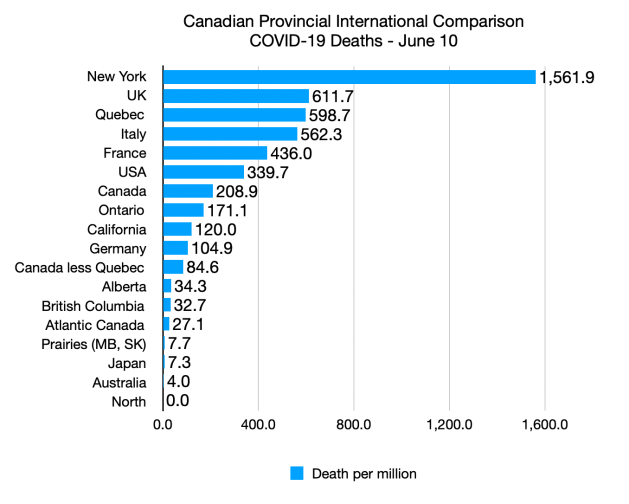
#COVID-19: Comparing provinces with other countries, Quebec death rate per million now greater than Italy: June 10 Update

Latest update:

Screen Shot 2020-06-10 at 13.29.08

Screen Shot 2020-06-10 at 13.28.38

A GBA+ case for understanding the impact of COVID-19

Agree. Starts, of course, with better and more comprehensive data:

In the COVID-19 era, Canada needs to better understand the relationship between identity and health. To do that, we need to use intersectional analysis, the study of the way identity categories such as gender, race and ability interconnect to create discriminatory systems that impact individuals in different ways. Fortunately, we have a policy tool in our policy toolbox for precisely this purpose, and it can and should be deployed by provincial ministries of health across this country: Gender-Based Analysis plus (or GBA+). Our federal government has been using GBA+ for years across many departments, though it is not mandatory for all federal departments. But it is in use at the Privy Council Office, Finance, the Department of National Defence and Health Canada. There is therefore a wealth of Canadian policy experience with this tool, and we need GBA+ now more than ever. 

The GBA+ tool was developed by the federal Department of Women and Gender Equality (WAGE), formerly Status of Women Canada. It is an approach to understanding sex and gender alongside other identity factors such as race, ability and age, to assess how various groups experience policies, programs and initiatives. The aim of GBA+ is the creation of equitable policies, programs and initiatives — equitable from inception to execution. Awareness of the differential impacts that government policies and actions have on different identity groups is central to that goal.

There are no hard and fast rules on how GBA+ should be done; in fact, it is perhaps best thought of as a competency rather than a methodology. In other words, there is no set formula to achieve equity in all situations; rather, progressing toward equitable change requires the continued cultivation of knowledge about various groups, the challenges they face and potential avenues for change. Nevertheless, GBA+ consistently relies on the use of disaggregated data, in addition to other forms of research, to gain insights into policy. Reliable data are essential to effect change, especially with identity-based issues. Showing patterns of discrimination is more compelling than anecdotal accounts in documenting a need for policy change. GBA+ also requires the monitoring and evaluation of the effects of policies on Canadians. It is not enough to enact change; change must be equitable.

Properly applied to the government’s COVID-19 response, GBA+ would have directed policy-makers to draw on fine-grained differentiated data to evaluate equity considerations. In asking whether policies are equitable, GBA+ analysts ask whether policy outcomes track a range of identity factors, including race, ethnicity and socio-economic background. Thus, if GBA+ had been applied to provinces’ public health response to COVID-19 from the start, requisite data would have been collected from the outset. These data, as the trickle of international evidence is making increasingly apparent, are key to targeting necessary medical supplies, policies and programs to those most affected, and hence helping to curb the spread of the virus.

GBA+ directs policy-makers to include identity-based considerations in the formulation, deployment and evaluation of their policies. Of course, GBA+ is not perfect: critics sometimes charge that it is too abstract, offering little actionable guidance to policy-makers. While its goals may be commendable, it is not always readily apparent how GBA+ should influence decisions within a specific portfolio or policy. This is why proponents of GBA+ argue it is a competency rather than a methodology. Policy-makers need to develop the ability and experience needed to make equitable decisions. Whether or not this response satisfies critics, it is true that GBA+ has clear implications in the context of COVID-19. If it had been employed in the appropriate offices before the pandemic, it would have helped policy-makers see and act upon considerations of identity in the making of health policy, including in their collection of data. Even at this later stage, the deployment of GBA+ would significantly improve our understanding of the virus and our response to it.

Several Western countries have discovered that factors linked to social determinants of health, most notably race, ethnicity and socio-economic status, are closely related to infection, hospitalization and death rates In Canada, however, we are flying blind, as COVID-19 data collection has been limited so far to age and sex.

Our obliviousness to the potential relationship between race, ethnicity and socio-economic status and infection, hospitalization and death rates will negatively impact our ability to control the spread of the virus in the short term and impair our understanding of how this virus impacts societies’ well-being in the long term. In response to criticism about this gap in data collection, Ontario’s chief medical officer of health, Dr. David Williams, for example, has said that statistics based on race aren’t collected in Canada unless certain groups are found to have risk factors.

Frankly, this position just does not align with mounting international evidence that race, ethnicity and socio-economic status have an impact on health outcomes related to COVID-19. A recent study released by a United Kingdom think tank, the Institute for Fiscal Studies, finds that minority groups are overrepresented in hospitalizations and deaths from the virus, with Black Britons nearly twice as likely to die from COVID-19 as the white British majority. Similar patterns have emerged in the United States, where the Centers for Disease Control confirmed that current data suggest a disproportionate burden of illness and death among racial and ethnic minority groups. New York City, for example, has recorded a disproportionate death rate among African-Americans (33.2 percent) and Hispanics (28.2 percent), and a Washington Post analysis shows that American counties that are majority-black have three times the rate of infections and almost six times the rate of deaths as counties where white residents are in the majority

There is further reason to apply a GBA+ lens to race, ethnicity and socio-economic data of those infected, hospitalized or succumbing to COVID-19. Academic studies have noted that racial discrimination, specifically when directed against Canada’s Black and Indigenous people, may itself be a determinant of chronic diseases and their underlying risk factors. Clearly, racial and ethnic inequalities in health outcomes are found throughout Canada, but the severity of these inequalities varies across racial and ethnic groups, further illustrating the importance of intersectional analysis. Moreover, academic evidence notes that a failure to distinguish between Canadian-born visible minorities and visible minorities who are immigrants to Canada is a key gap in Canadian health data of racialized individuals. This further indicates the importance of taking intersectionality into account when collecting health data.

When policy-makers truly embrace GBA+ as a lens for equitable policy-making, we can then better assess the toll of the pandemic. Only with an intersectional lens on the impact of COVID-19 on society will we see the differentiated impact of this virus on individuals and communities. Thus far, we have been flying blind, but it may not be too late to make a course correction in our COVID-19 policies.

Source: A GBA+ case for understanding the impact of COVID-19