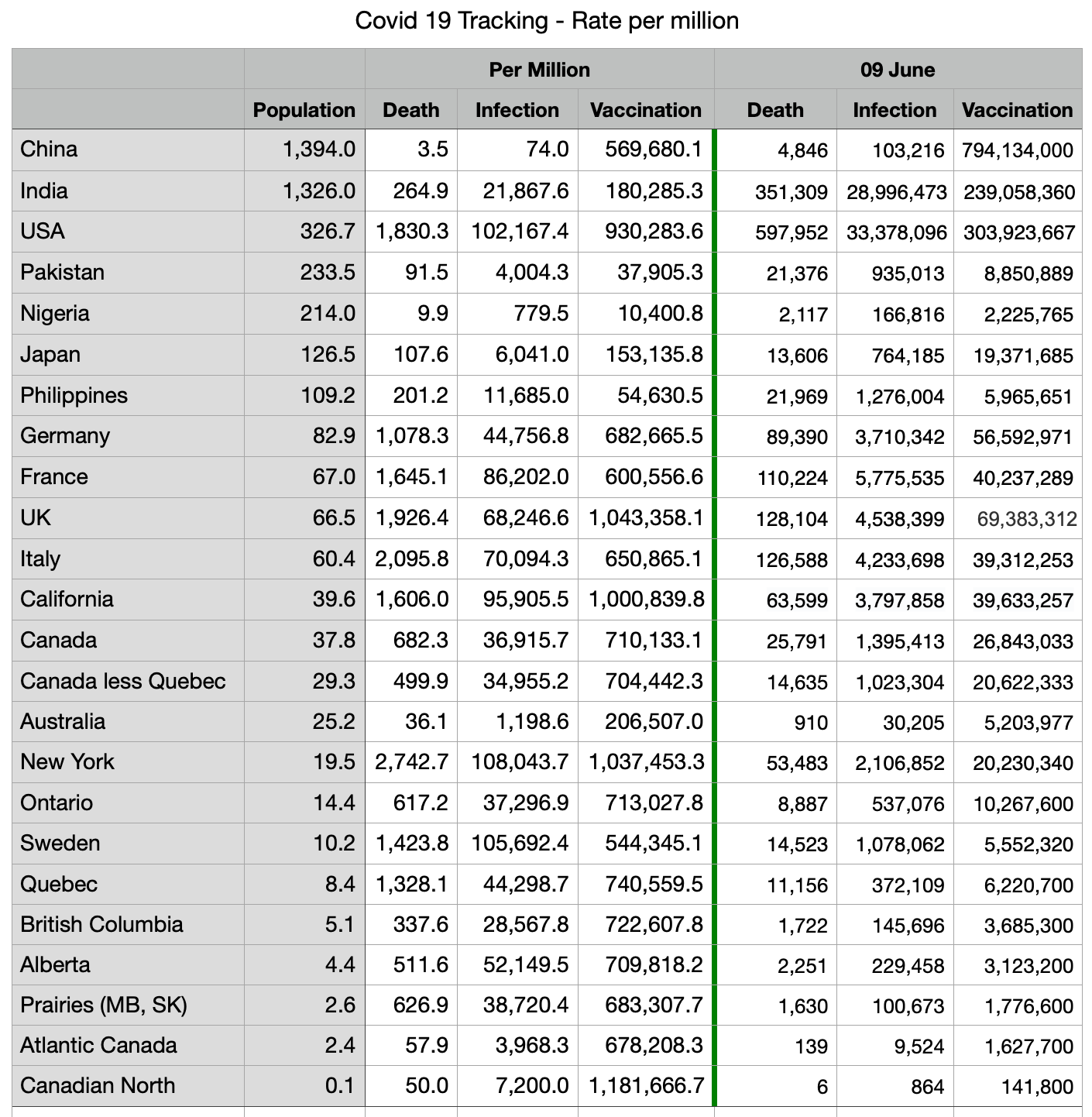
#COVID-19: Comparing provinces with other countries 6 July Update, Economist Normality Index

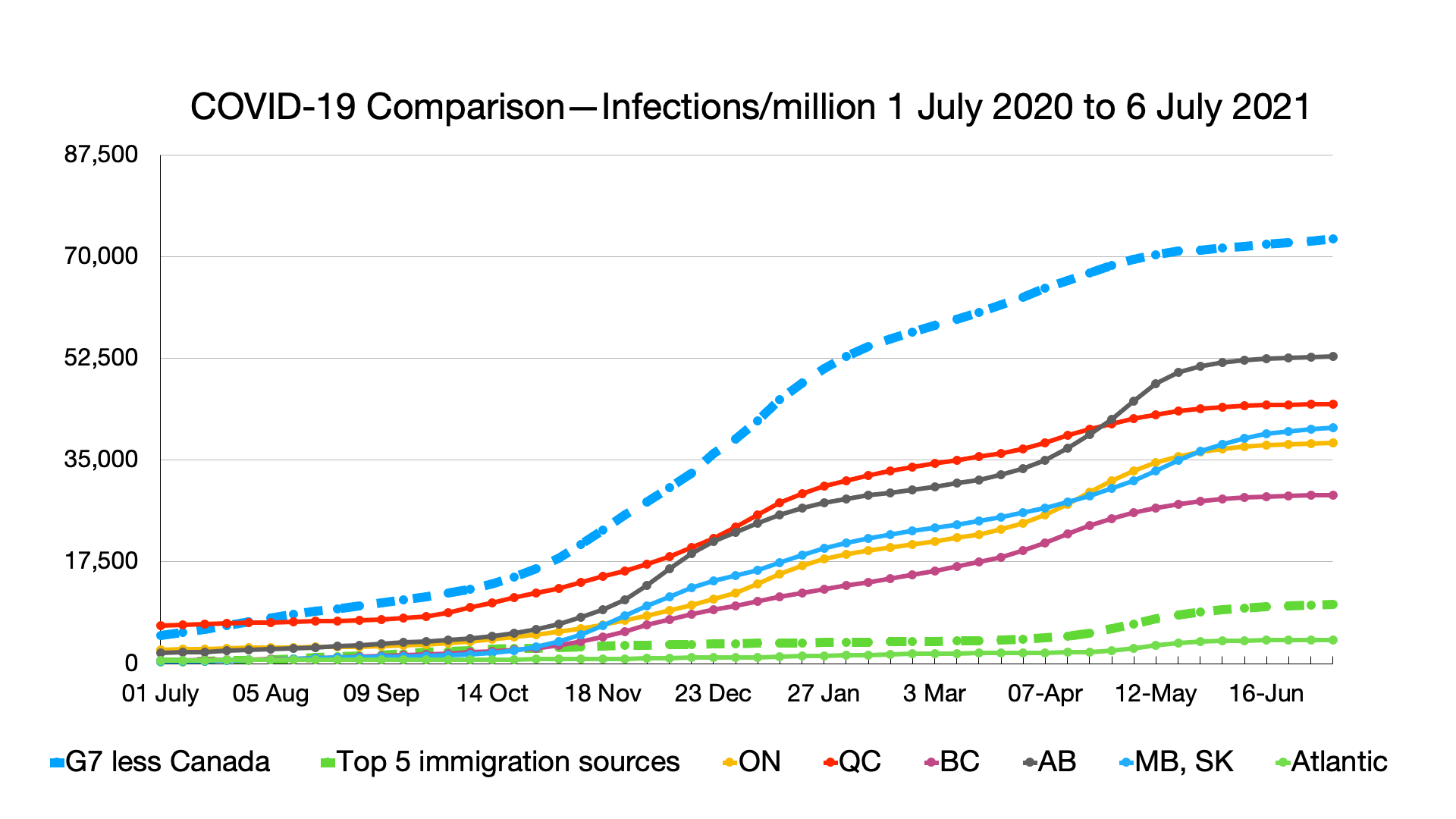
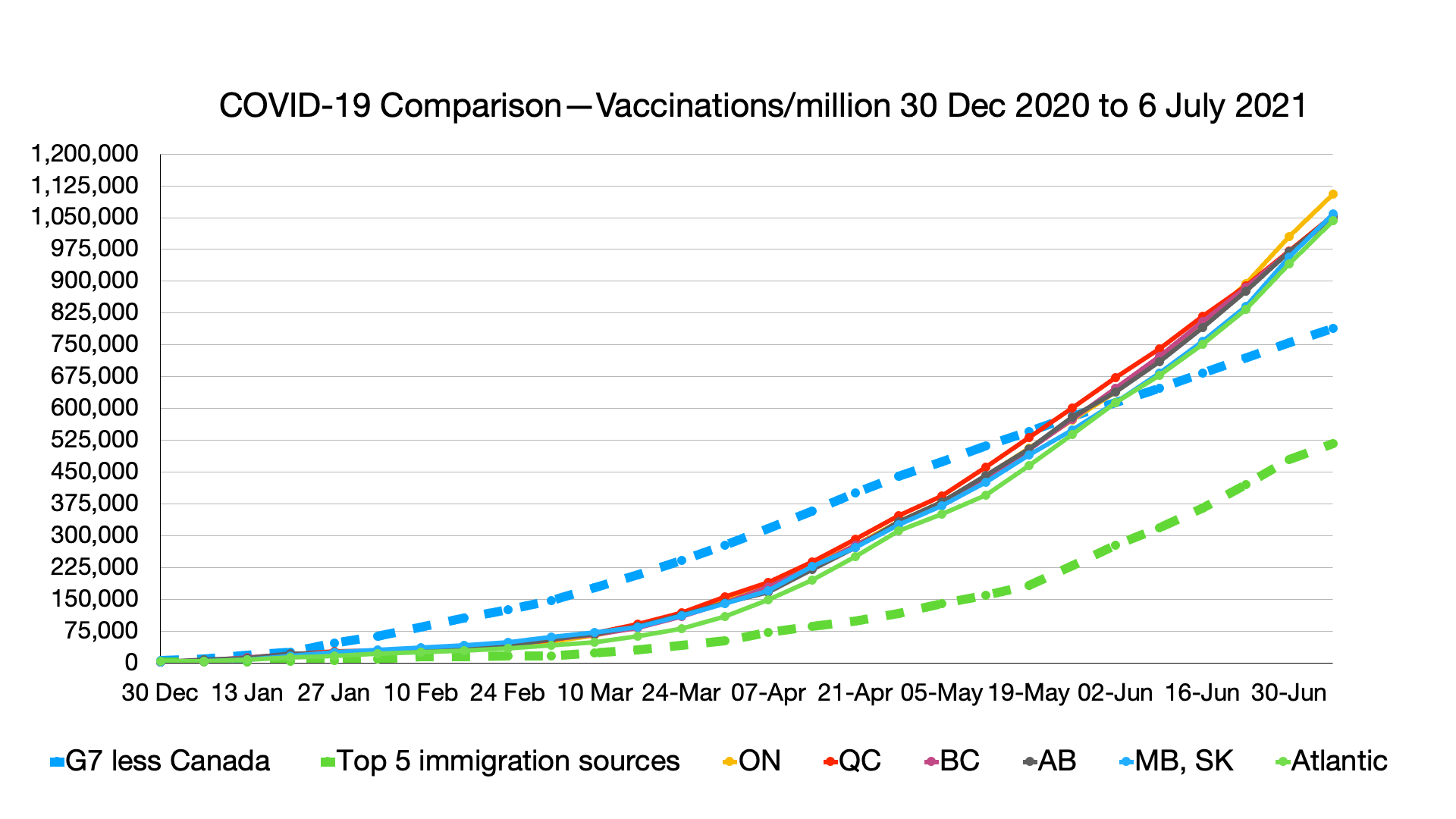
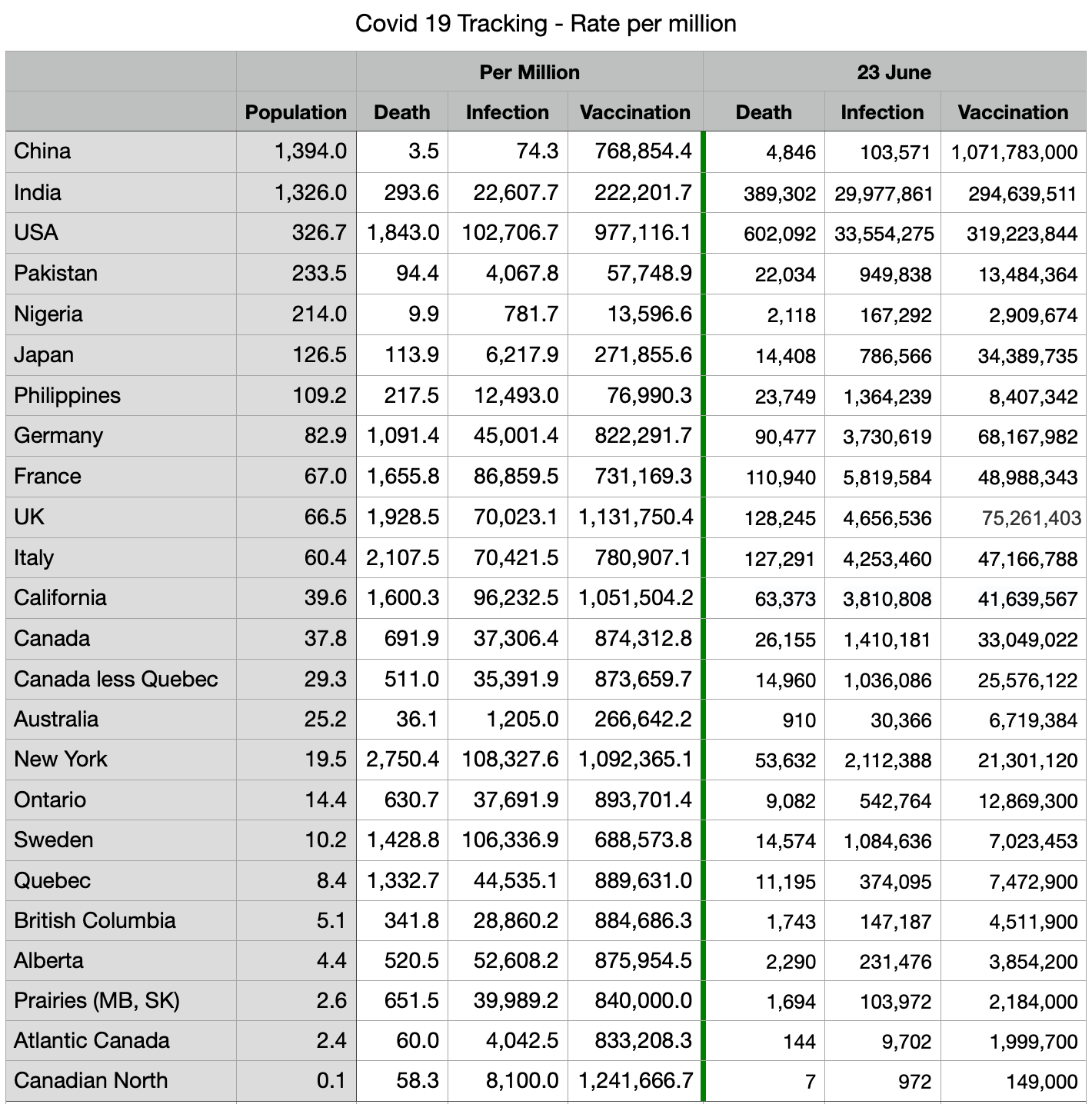
The latest charts, compiled 6 July as overall rates in Canada continue to decline along with increased vaccinations (still largely first dose, Canadians fully vaccinated 36.6 percent, comparable to or higher than most EU countries). Steep upward trend as per Globe chart below suggests gap between USA and UK fully-vaccinated will continue to narrow.

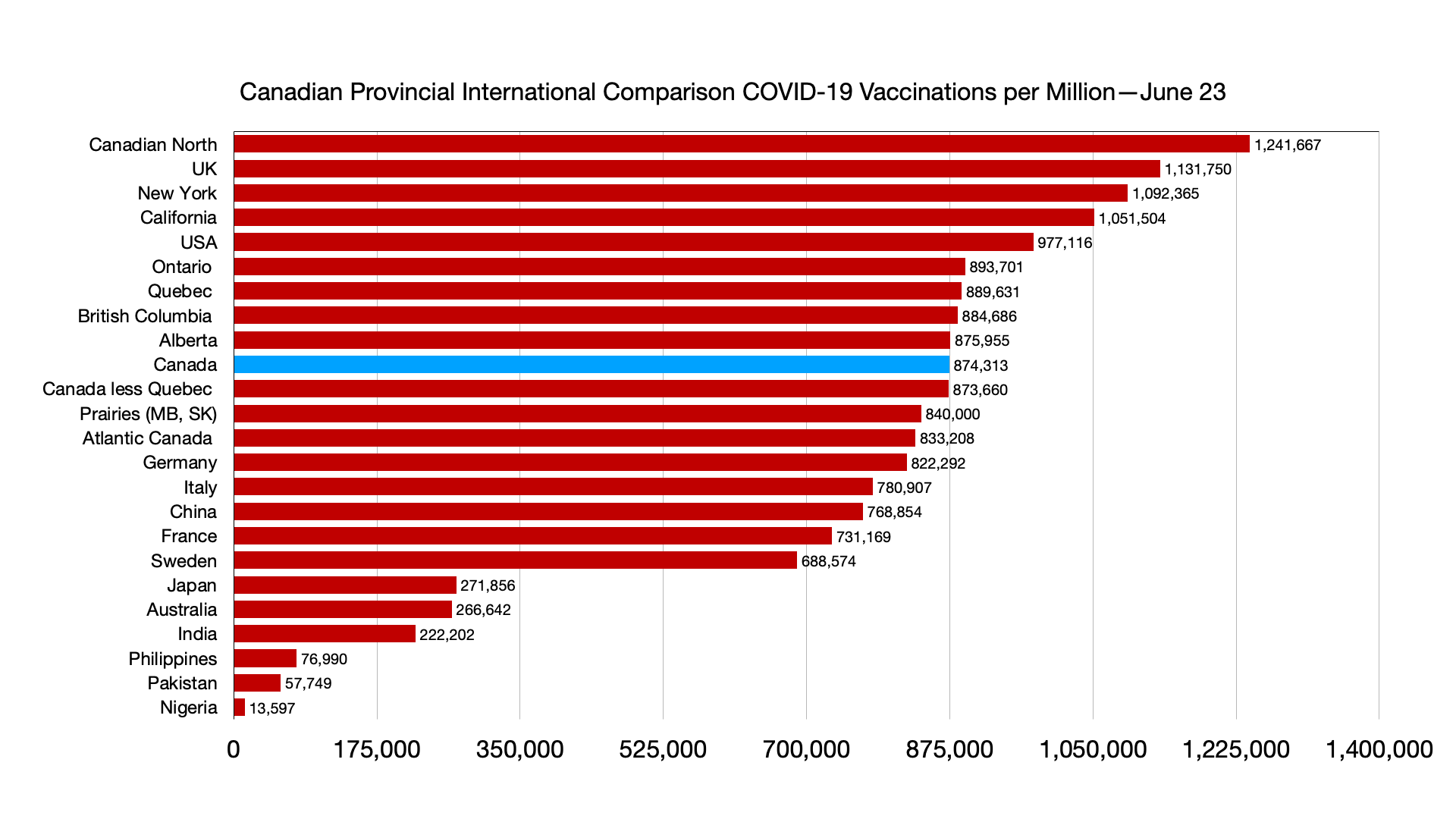
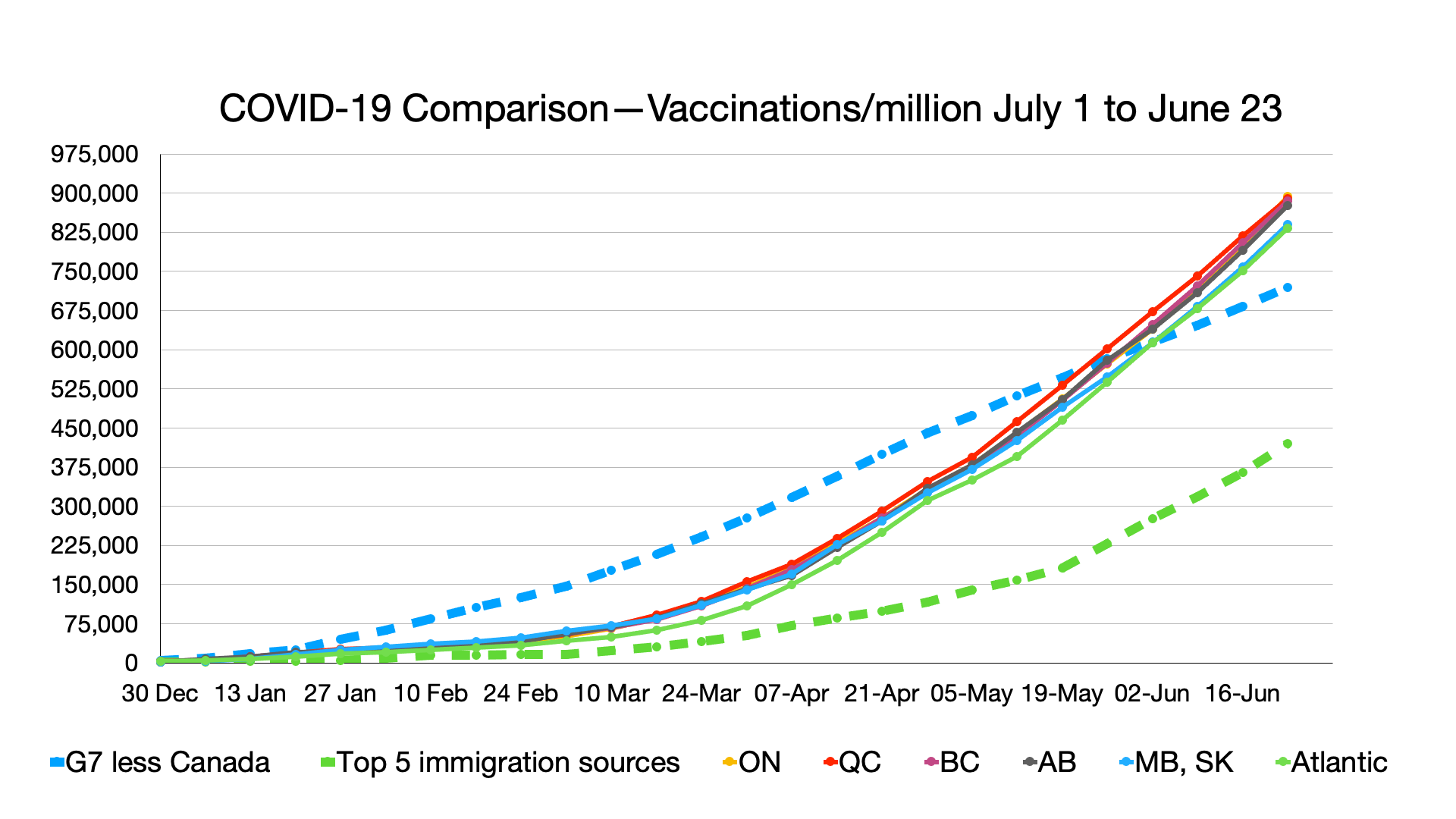
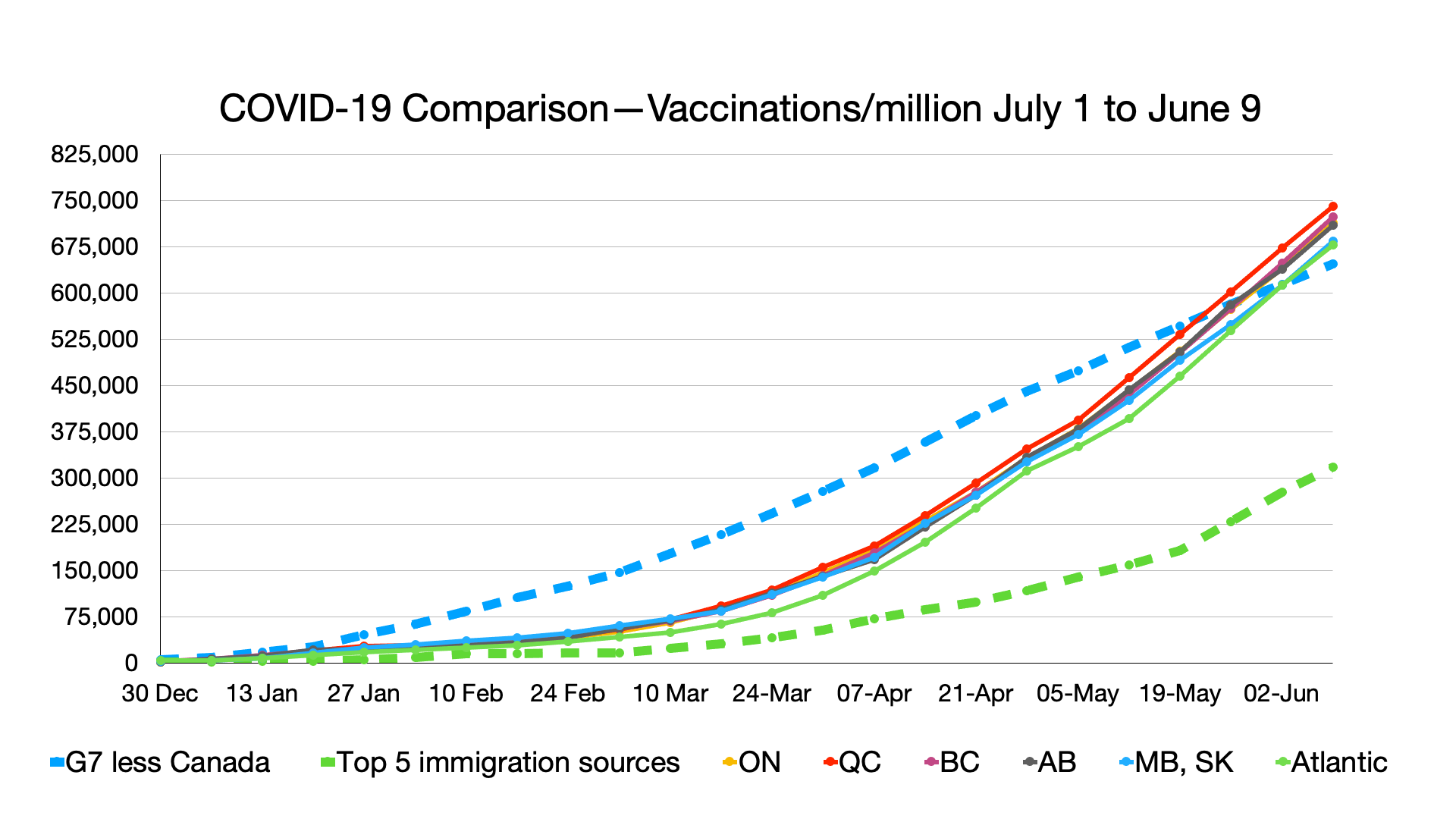
Vaccinations: All Canadian provinces ahead of USA, China now ahead of Germany and other EU countries.

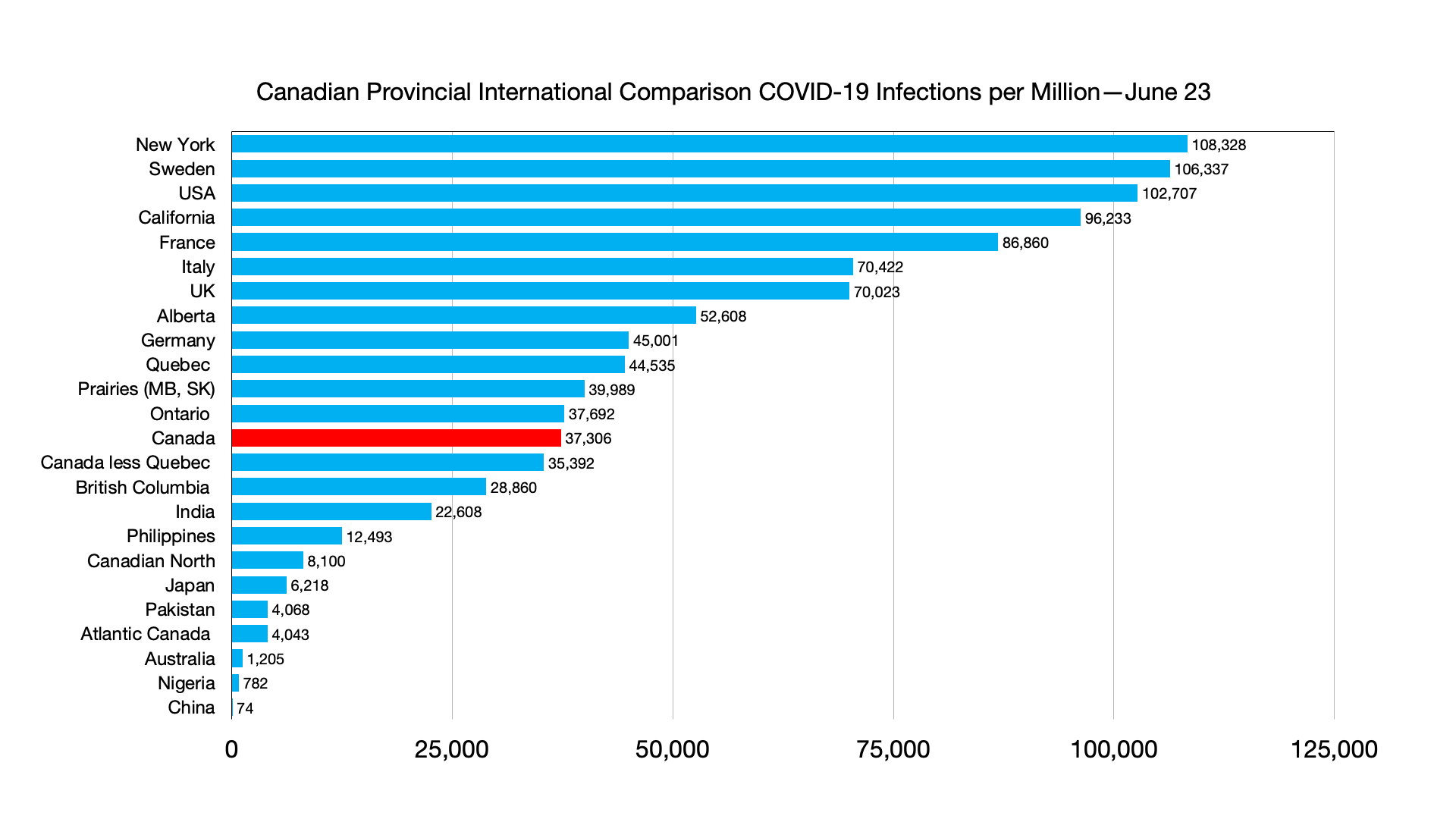
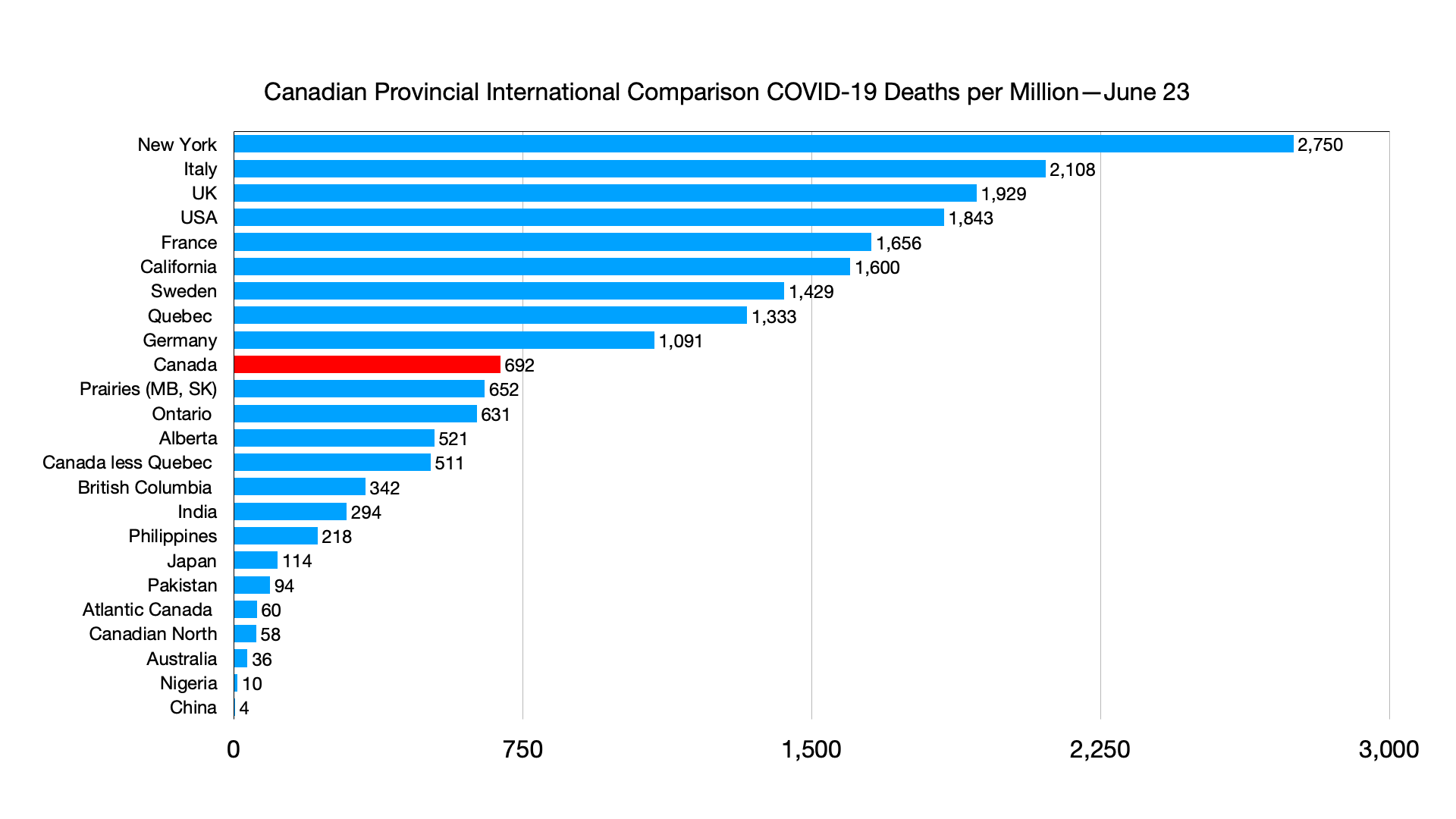
Trendline charts

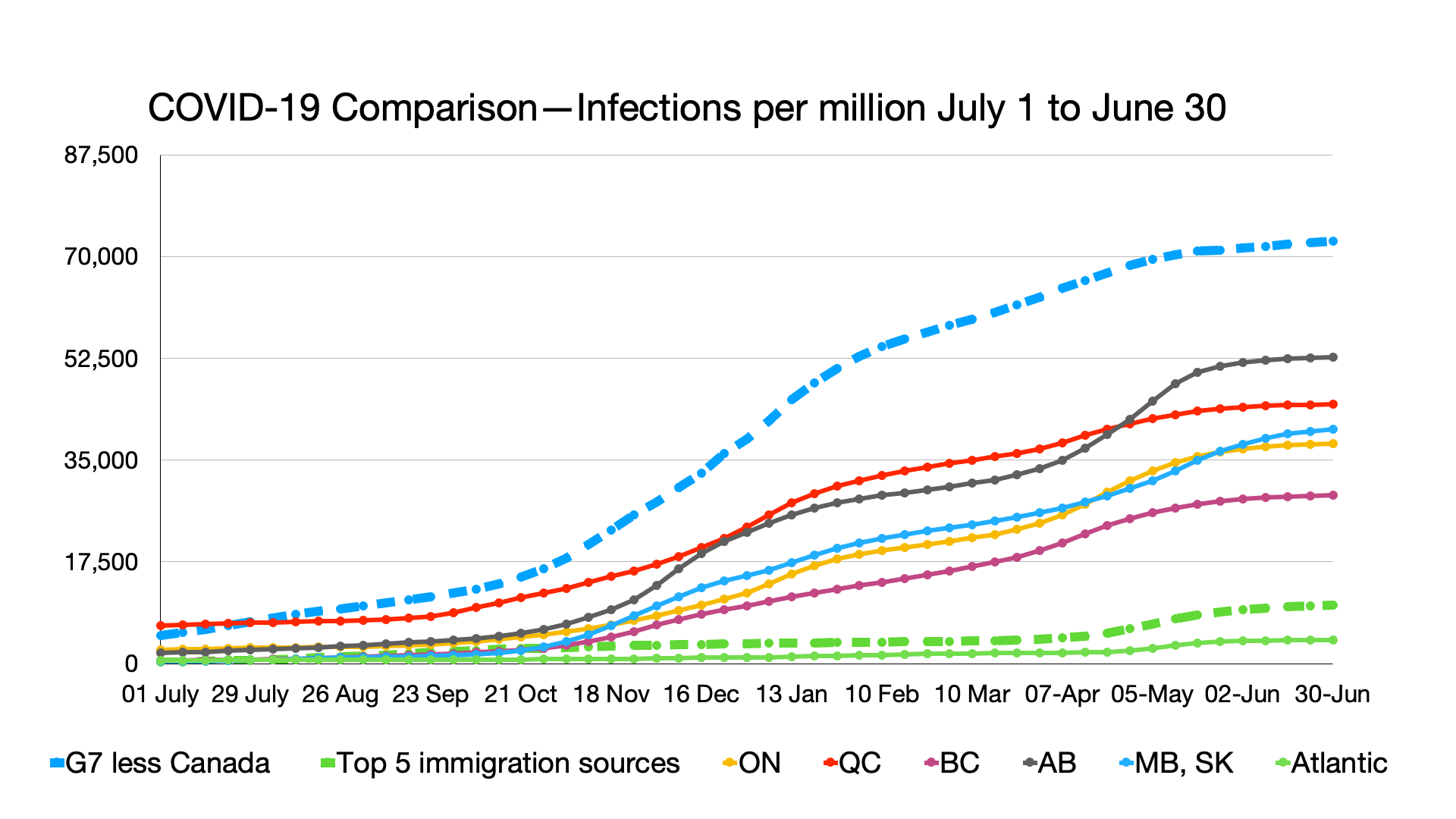
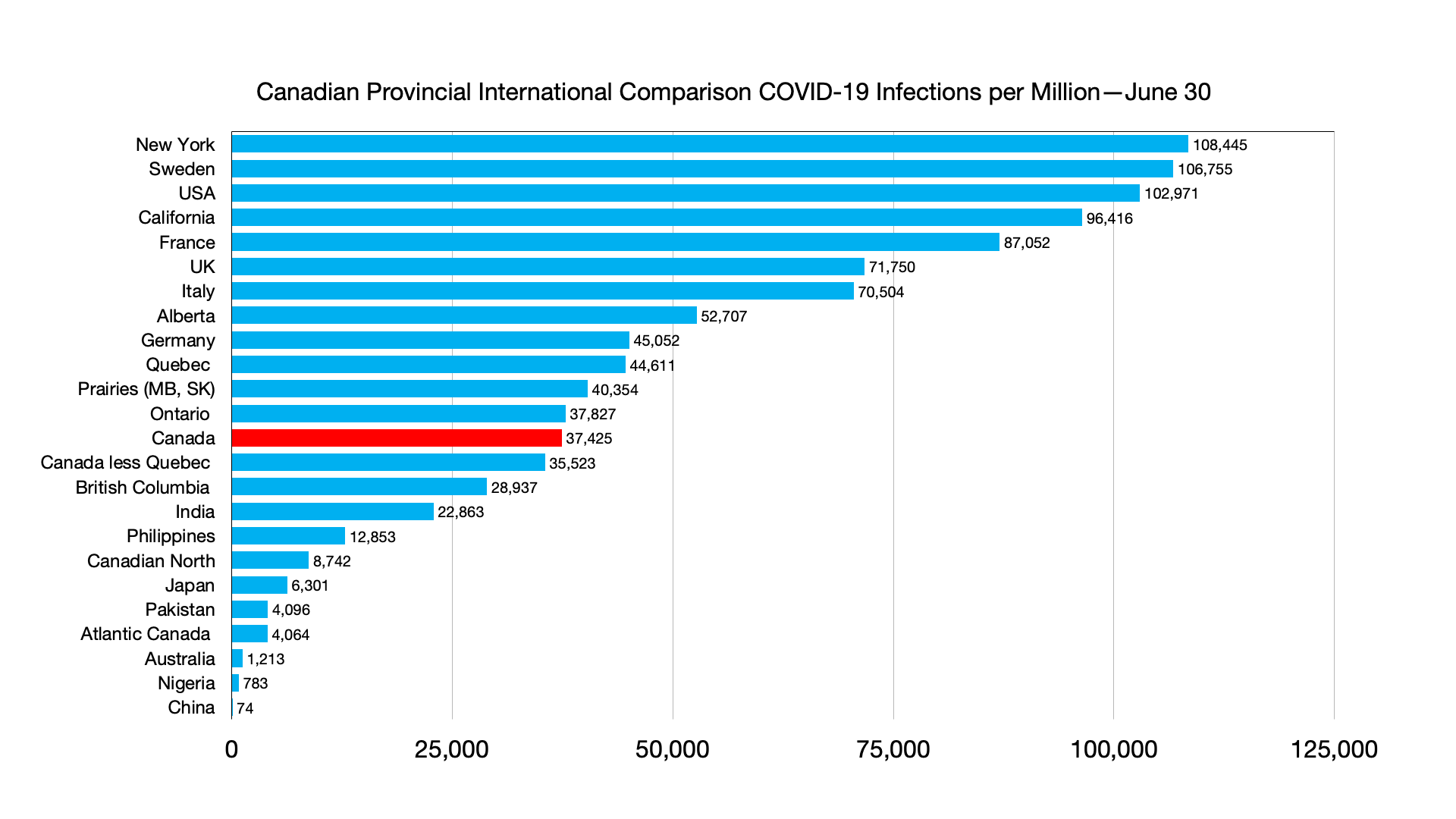
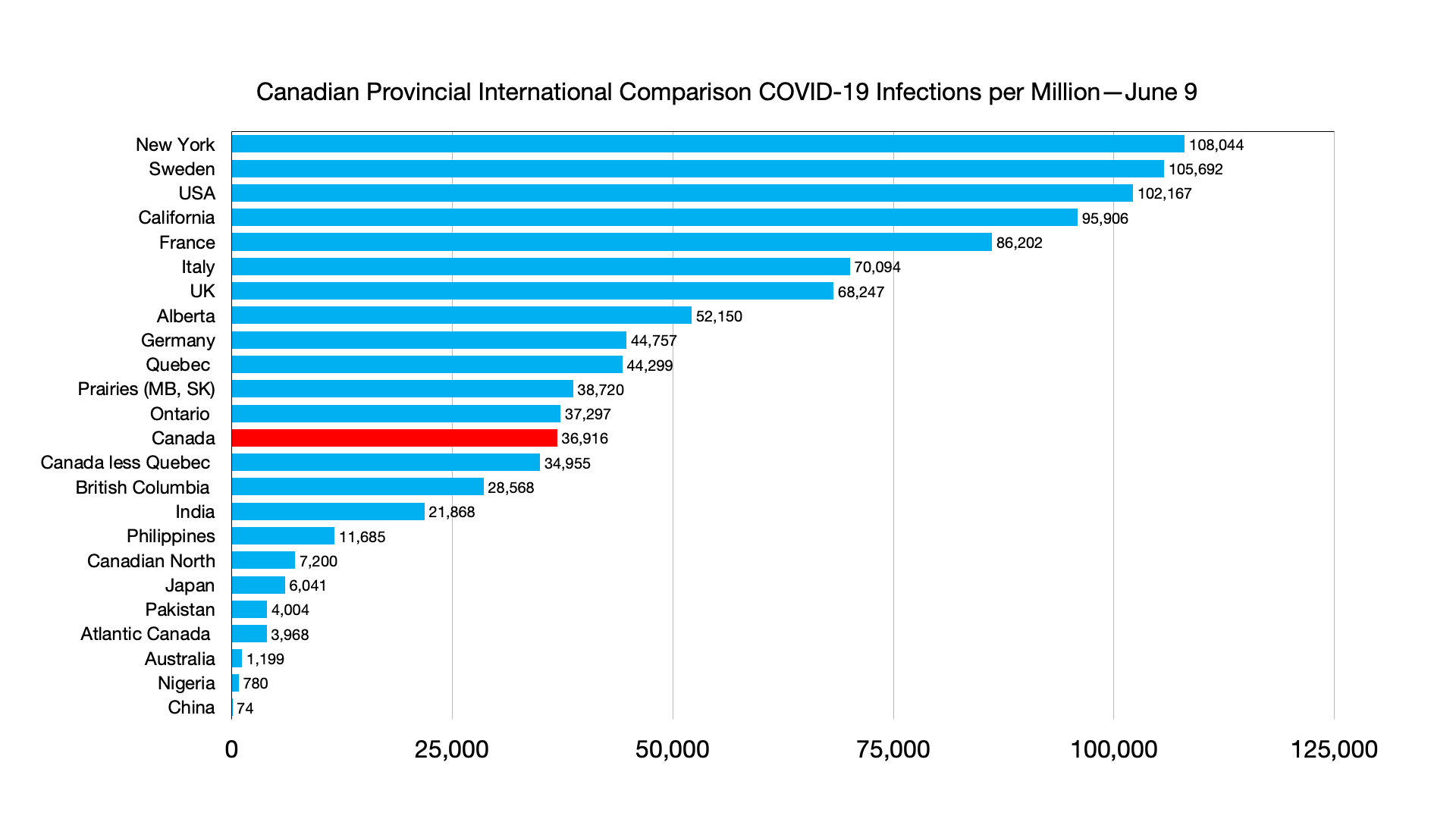
Infections: No significant change

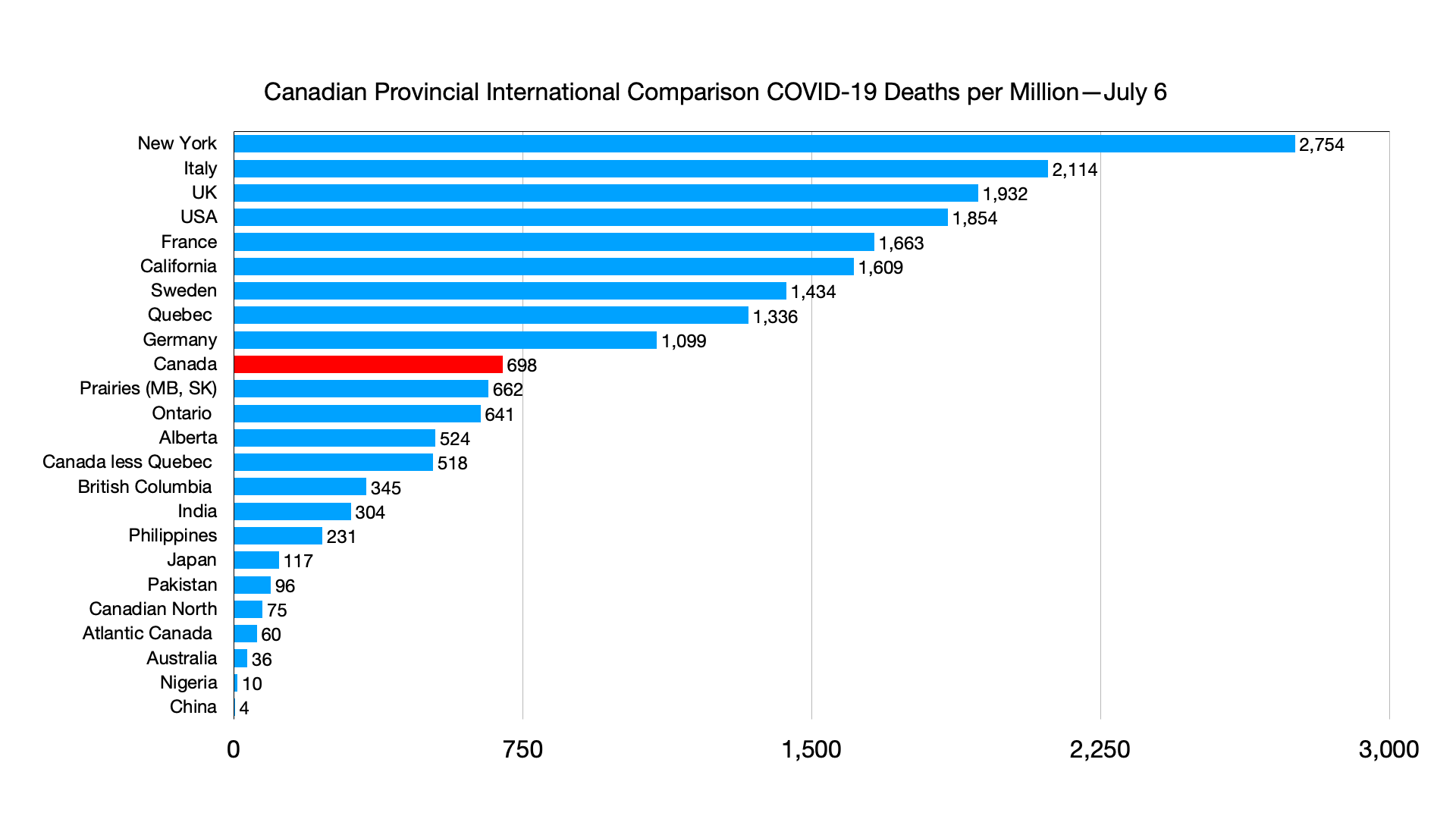
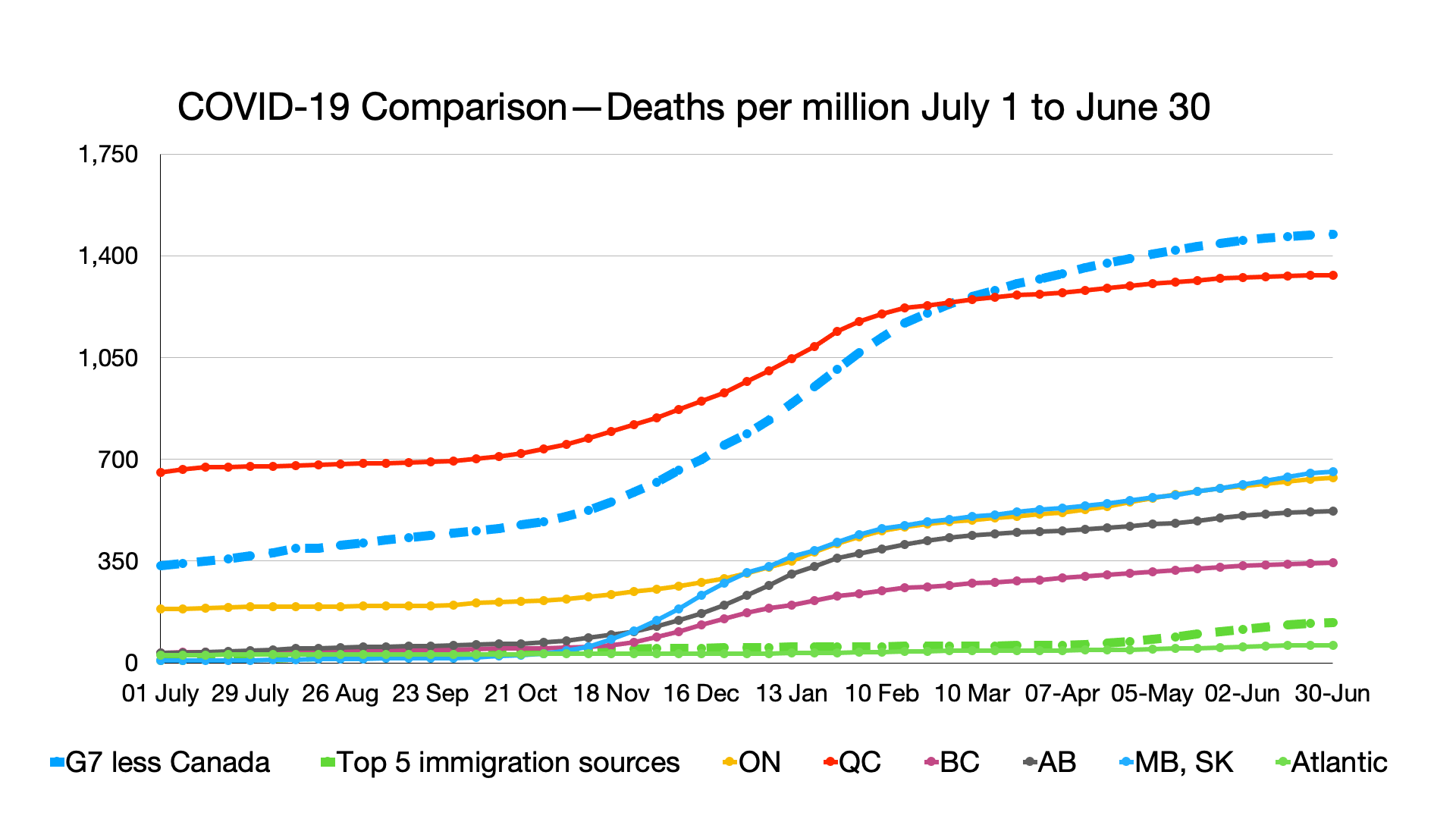
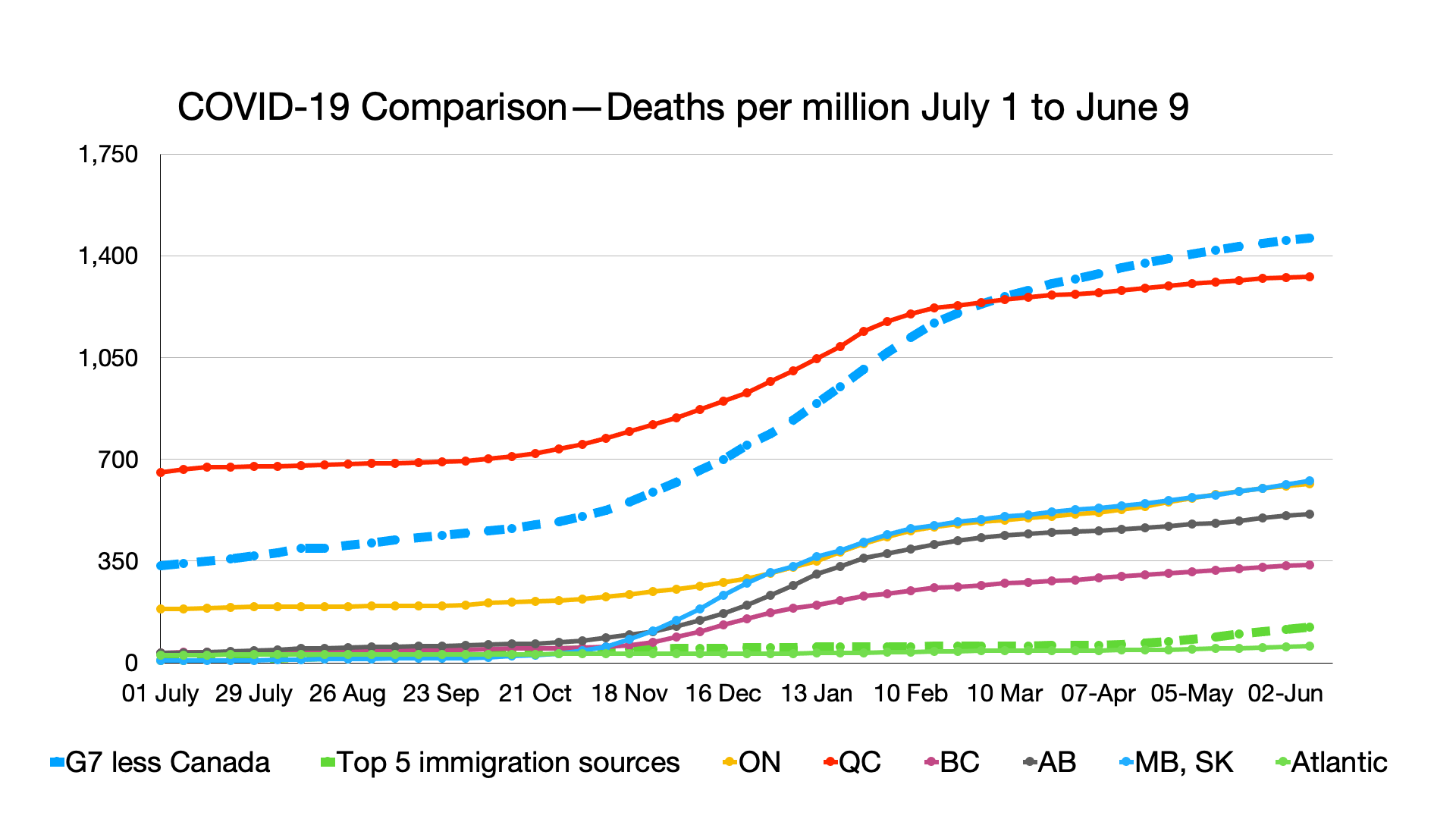
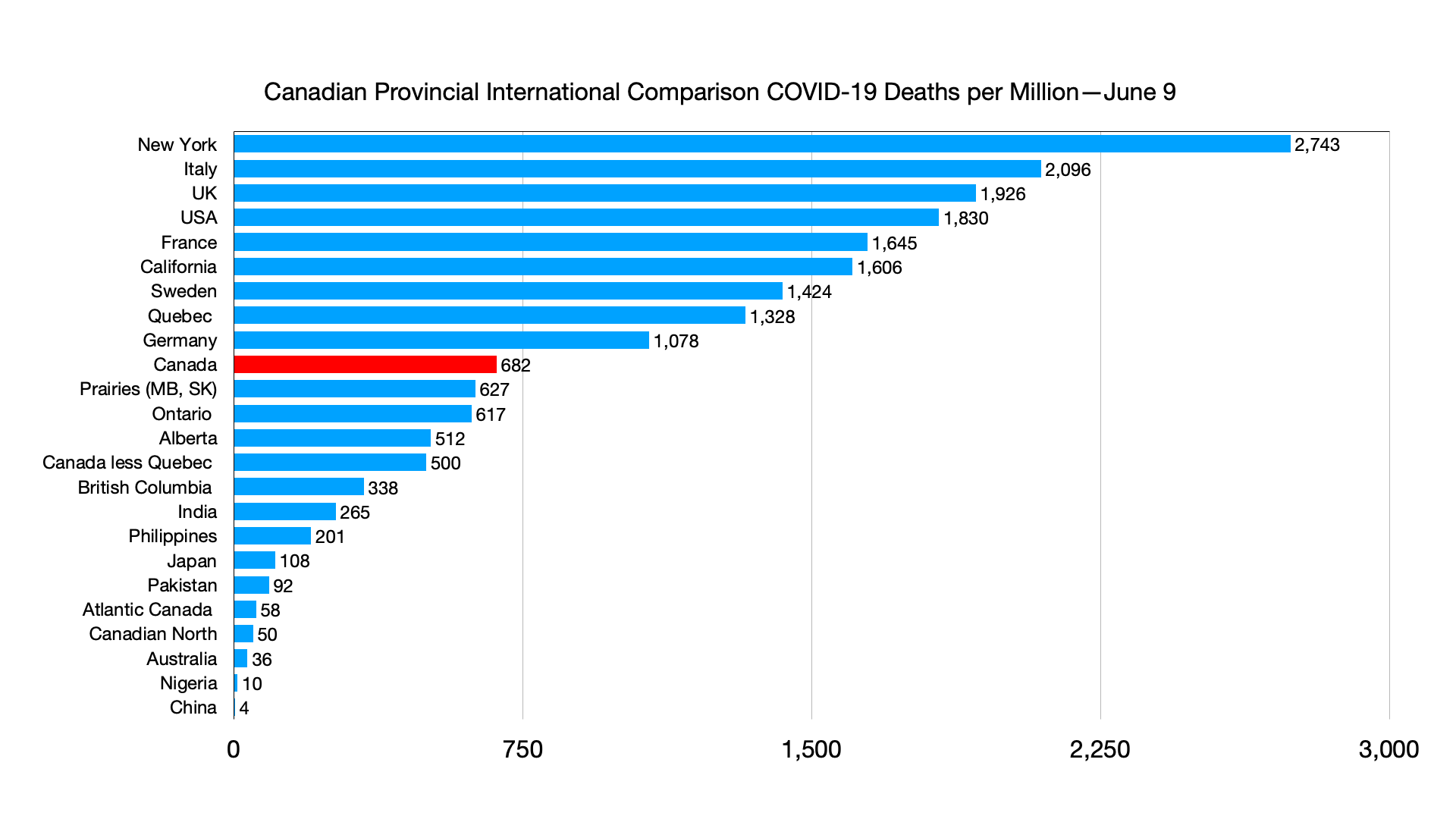
Deaths: No significant change.

Vaccinations: Captured above.

Weekly

Infections: No relative change.

Deaths per million: No significant change.

Interesting integration of various data sources to develop a normality index (Canada is 63.4, slightly below the number for all countries, ranking 35, just ahead of UK):

Since the onset of the coronavirus pandemic in early 2020 many have wondered when the world will return to “normal”. But whether things will ever go back to the way they were is unclear: remote working looks set to continue, for example, and going to the movies may never be as popular as it used to be. 

The Economist has devised a “normalcy index” to track how behaviour has changed, and continues to change, because of the pandemic. Our index comprises eight indicators, split into three domains. The first grouping is transport and travel: public transport in big cities; the amount of traffic congestion in those same cities; and the number of international and domestic flights. The second looks at recreation and entertainment: how much time is spent outside the home; cinema box-office revenues (a proxy measure for cinema attendance); and attendance at professional sports events. The third is retailing and work: footfall in shops; and occupancy of offices (measured by workplace footfall in big cities). 

Our index covers 50 of the world’s largest economies that together account for 90% of global GDP and 76% of the world’s population. Our aggregate measure is the population-weighted average of each country’s score. The pre-pandemic level of activity is set at 100 for ease of comparison. The tracker is updated with new data once a week. 

Overall activity

The global normalcy index plummeted in March 2020 as many countries imposed draconian restrictions on their citizens. It fell to just 35 in April 2020, before improving gradually over the following months. Today it stands at 66, suggesting that the world has travelled roughly half of the way back to pre-pandemic life. Some indicators, such as traffic congestion and time spent outside, have recovered faster than others, particularly sports attendance and flights. The global average masks a lot of variation across countries. Click on the drop-down box to explore how behaviour has changed in each one.

Source:

#COVID-19: Comparing provinces with other countries 30 June Update, Canadian excess deaths

The latest charts, compiled 30 June as overall rates in Canada continue to decline along with increased vaccinations (still largely first dose, fully vaccinated 30 percent, comparable to most EU countries).

Vaccinations: Ontario ahead of USA, all provinces ahead of EU countries, China ahead of Italy in total vaccinations but lower than EU countries in terms of fully vaccinated (16 percent).

Trendline charts

Infections per million: Surge in delta variant has resulted in UK moving ahead of Italy.

Deaths per million: Canadian North now ahead of Atlantic Canada.

Vaccinations per million: Gap between Canada and other G7 countries continues to grow. Gap between China and India narrows (14.4% compared to 13.0%).

Weekly

Infections per million: UK ahead of Italy

Deaths per million: Canadian North ahead of Atlantic Canada, reflecting additional death in Yukon.

And the excess deaths report, indicating that Canadian COVID mortality has been understated (not unique to Canada):

A new study suggests Canada has vastly underestimated how many people have died from COVID-19 and says the number could be two times higher than reported.

Dr. Tara Moriarty, working group lead for the study commissioned by the Royal Society of Canada, said in an interview while most accounts have put the majority of deaths in long-term care, the new data analysis suggests the toll of COVID-19 was also heavily felt outside the homes in the community.

Many of those deaths likely occurred in lower income, racialized communities and affected essential workers, new immigrants and people living in multigenerational homes, as well as clinically frail seniors living at home, the study says.

“If we’d had some sense early on of who was dying where, if we had had a sense of just how many deaths were actually occurring … maybe people would have started looking sooner or listening sooner to people in communities who were saying, ‘It’s really really bad here, people are dying,'” Moriarty said.

“It might have provided support for those claims that might have caused some kind of action that would have saved lives.”

Moriarty said seeing Canada out of step with similar high-income countries on the proportion of long-term care deaths was a red flag that inspired the analysis by the society.

The new peer-reviewed analysis casts doubt on the widely accepted assumption that 80 per cent of Canada’s deaths due to COVID-19 occurred among older adult residents of long-term care homes.

Instead, it says at least two-thirds of deaths caused by COVID-19 in communities outside of long-term care may have been missed. That would put the proportion of deaths in long-term care at around 45 per cent, much closer to the average of 40 per cent reported by peer countries in the Organization for Economic Co-operation and Development.

The conclusion is based on a review of reports of excess deaths across Canada, the pattern of COVID-19 fatalities during the pandemic and cremation data showing a significant spike in deaths at homes versus hospitals in 2020. It also relies on antibody surveillance testing that collectively unmasked the likely broad scope of undetected COVID-19 infections.

The researchers adjusted the data to account for things like increased deaths due to the drug toxicity crisis and the expected drop in deaths linked to the pandemic because of things like reduced traffic accident rates.

The extent of “likely missed” fatalities varies by province and there are major data gaps in what was available, Moriarty said.

The knowledge gap is particularly acute in British Columbia, Saskatchewan, and Manitoba where cause-of-death data is only complete into February 2020, the report says. It was less of a problem in Quebec, where the virus accounted for all excess deaths, and Ontario.

Between Feb. 1 and Nov. 28, 2020, the study found COVID-19 deaths of about 6,000 people aged 45 and older appeared to have gone undetected, unreported or unattributed to the virus.

“This suggests that if Canada has continued to miss these fatalities at the same rate since last November, the pandemic mortality burden may be two times higher than reported,” the report says.

Eemaan Kaur Thind, a public health practitioner who looked at both detected and undetected COVID-19 deaths in racialized communities, said the results weren’t a shock given previous reports linking the communities and deaths or hospitalization rates.

The study suggests it’s likely many cases in those communities were never identified, and the resulting deaths were never counted.

“We know that a high-proportion of essential workers happen to be visible minorities,” she said.

“None of that surprised me, although it never really becomes any less hard to see the official numbers when you see something like this.”

Thind said she hopes the findings push policy-makers to listen to those most affected, many of whom raised alarms about things like the role language barriers played in access to COVID-19 testing and care.

“Data is very important but I think it’s more important to also listen to people and believe them.”

About 25 per cent of likely deaths occurred in people between 45 and 64, the study said.

The researchers make several recommendations, including mandating weekly preliminary reporting of deaths due to all causes to Statistics Canada, performing COVID-19 testing on all people who die in any setting, and immediately adopting methods used by the U.S. Centers for Disease Control for estimating excess mortality during the pandemic.

The group also calls for the creation of a national COVID-19 mortality task force with the provinces and territories, and independent advisers to investigate why so many Canadian COVID-19 cases and deaths have been missed or unreported, including examining demographic and employment data for those who died.

Source: COVID-19 deaths in Canada may be two times higher than reported: Study

Fadden: Canada needs a national inquiry into its handling of COVID-19

Fully agree this is needed. And hopefully, the results and recommendations will lead to action, in the short and medium term, unlike the forgetfulness following the SARS enquiries:

As COVID-19 case counts continue to decline and Canada looks optimistically ahead to our future after pandemic restrictions are lifted, it may be time to also start looking back – specifically, at how this country handled the pandemic and how we should organize ourselves to deal with the next major disruptive event. The only way this can be done comprehensively and objectively is through the establishment of a public inquiry with national scope and freedom from political interference.

Two points can be made in favour of such an inquiry. The first is that it is indisputable that the pandemic could have been better handled. We were not properly prepared and many of the decisions taken from the very beginning were the wrong ones, or were at least not explained nearly as clearly as they might have been. The expiry of much of our national stockpile of personal protective equipment and the confusing initial advice on the wearing of masks are just two examples. A careful examination of the reasons for these types of mistakes could help us avoid repeating them in the future.

The second point underlying the need for an inquiry is the worldwide consensus that serious disruptive events will continue to occur and are likely to grow in intensity and variety. Other pandemics, flooding, fires or migration are the most obvious and likely. To fail to better prepare for such events will border on criminal, and proper planning requires a clear understanding of how the management of past events can be improved upon.

There are a number of ways to review our management of the current pandemic, but nothing short of a nationally oriented public inquiry established by – but not beholden to – the federal government will do. Internal reviews by the public service would be too narrow and they would be undertaken by the very institutions whose activities and advice need to be reviewed. Review by Parliament would fall prey to the excessive partisanship that seems to govern relations within our various legislatures. Auditors general will have a contribution to make to our understanding of what happened, but they are limited to their respective jurisdictions and have little if any ability to consider activity in the private sector and in civil society.

The COVID-19 crisis is unquestionably a national and international challenge that paid little attention to borders, and as such the inquiry must be structured to allow for a review of all aspects of how Canada fared. Three issues should be of particular focus.

The first is the need to consider to what extent Canada should ensure that certain essential goods be available, no matter what. This is not a matter for governments alone; it requires the participation of the business sector and the provinces.

The second issue is one of personal freedoms. We live in a country of rights and responsibilities, and that balance always needs to be carefully calibrated. The question of whether an individual’s right to refuse public health advice supersedes government efforts to ensure the greater good needs at least some measure of resolution.

The third issue involves the roles and responsibilities of the numerous levels of government within Canada, as well as the roles of other countries and of international institutions. The management of interprovincial and international borders is perhaps the most obvious example of something in this area that needs to be probed. The broad distribution of responsibility and action to deal with COVID-19 may or may not have been essentially correct. Either way, it needs an objective review to determine if any adjustments are necessary for the future.

A process like this could also help us recognize and fortify our strong points. The objective of an inquiry is not to assume bad faith or assign blame, but rather to look into what was done and how, with a view to proposing corrective action. Any inquiry must recognize what went well. In this respect, the relatively positive response of the public to instructions and the general level of co-operation between the federal and provincial governments (as evidenced by many First Minister virtual meetings) need mention.

Given the number of deaths Canada has seen throughout this pandemic, the enormous social and economic adjustments Canadians have made, and the unprecedented cost to taxpayers, this country needs a credible, practical and comprehensive look at how we can be better prepared for the next pandemic. A public inquiry established by the federal government, but independent of it, is the only practical vehicle to accomplish this. It needs to be set up before the next election to prevent its work from becoming a matter of partisan debate. Now is not too soon to get started.

Richard Fadden is a former national security adviser to the prime minister. He was director of the Canadian Security Intelligence Service from 2009 to 2013 and served as deputy minister of national defence from 2013 to 2015.

Source: https://www.theglobeandmail.com/opinion/article-canada-needs-a-national-inquiry-into-its-handling-of-covid-19/

#COVID-19: Comparing provinces with other countries 23 June Update, China’s vaccine diplomacy

The latest charts, compiled 23 June as overall rates in Canada continue to decline along with increased vaccinations (still largely first dose, fully vaccinated 20.8 percent, most EU countries are between 25 to 35%).

Vaccinations: Minor relative changes with Ontario ahead of Quebec and British Columbia. China’s vaccination rate continues to grow dramatically (about 16% fully vaccinated. Article below charts describes lower efficacy of Chinese-made vaccines.

Trendline charts

Infections per million: No relative changes.

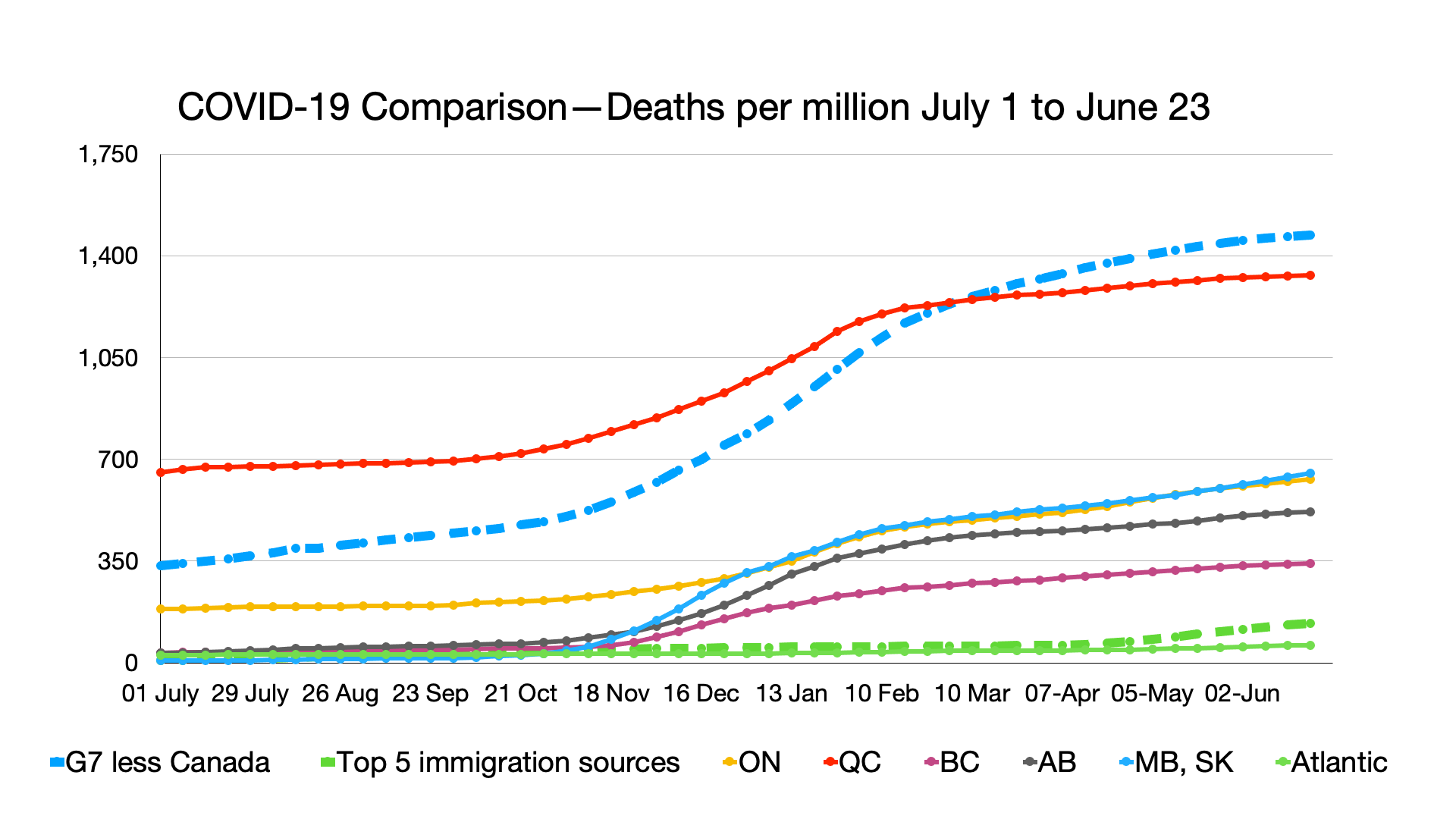
Deaths per million: No relative change.

Vaccinations per million: Canadian vaccination rates continue to exceed G7 less Canada. Vaccination rate increase in immigration source countries driven by China (up 16% from last week) with Indian vaccination rates up 12.5% compared to last week.

Weekly

Infections per million: No relative change.

Deaths per million: No relative changes.

They Relied on Chinese Vaccines. Now They’re Battling Outbreaks

Interesting data on the relative weakness of Chinese vaccines, likely to undermine the Chinese government’s vaccine diplomacy:

Mongolia promised its people a “Covid-free summer.” Bahrain said there would be a “return to normal life.” The tiny island nation of the Seychelles aimed to jump-start its economy.

All three put their faith, at least in part, in easily accessibleChinese-made vaccines, which would allow them to roll out ambitious inoculation programs when much of the world was going without.

But instead of freedom from the coronavirus, all three countries are now battling a surge in infections.

China kicked off its vaccine diplomacy campaign last year by pledging to provide a shot that would be safe and effective at preventing severe cases of Covid-19. Less certain at the time was how successful it and other vaccines would be at curbing transmission.

Now, examples from several countries suggest that the Chinese vaccines may not be very effective at preventing the spread of the virus, particularly the new variants. The experiences of those countries lay bare a harsh reality facing a postpandemic world: The degree of recovery may depend on which vaccines governments give to their people.

In the Seychelles, Chile, Bahrain and Mongolia, 50 to 68 percent of the populations have been fully inoculated, outpacing the United States, according to Our World in Data, a data tracking project. All four ranked among the top 10 countries with the worst Covid outbreaks as recently as last week, according to data from The New York Times. And all four are mostly using shots made by two Chinese vaccine makers, Sinopharm and Sinovac Biotech.

“If the vaccines are sufficiently good, we should not see this pattern,” said Jin Dongyan, a virologist at the University of Hong Kong. “The Chinese have a responsibility to remedy this.”

Scientists don’t know for certain why some countries with relatively high inoculation rates are suffering new outbreaks. Variants, social controls that are eased too quickly and careless behavior after only the first of a two-shot regimen are possibilities. But the breakthrough infections could have lasting consequences.

In the United States, about 45 percent of the population is fully vaccinated, mostly with doses made by Pfizer-BioNTech and Moderna. Cases have dropped 94 percent over six months.

Israel provided shots from Pfizer and has the second-highest vaccination rate in the world, after the Seychelles. The number of new daily confirmed Covid-19 cases per million in Israel is now around 4.95.

In the Seychelles, which relied mostly on Sinopharm, that number is more than 716 cases per million.

Disparities such as these could create a world in which three types of countries emerge from the pandemic — the wealthy nations that used their resources to secure Pfizer-BioNTech and Moderna shots, the poorer countries that are far away from immunizing a majority of citizens, and then those that are fully inoculated but only partly protected.

China, as well as the more than 90 nations that have received the Chinese shots, may end up in the third group, contending with rolling lockdowns, testing and limits on day-to-day life for months or years to come. Economies could remain held back. And as more citizens question the efficacy of Chinese doses, persuading unvaccinated people to line up for shots may also become more difficult.

One month after receiving his second dose of Sinopharm, Otgonjargal Baatar fell ill and tested positive for Covid-19. Mr. Otgonjargal, a 31-year-old miner, spent nine days in a hospital in Ulaanbaatar, the capital of Mongolia. He said he was now questioning the usefulness of the shot.

“People were convinced that if we were vaccinated, the summer will be free of Covid,” he said. “Now it turns out that it’s not true.”

Beijing saw its vaccine diplomacy as an opportunity to emerge from the pandemic as a more influential global power. China’s top leader, Xi Jinping, pledged to deliver a Chinese shot that could be easily stored and transported to millions of people around the world. He called it a “global public good.”

Mongolia was a beneficiary, jumping at the chance to score millions of Sinopharm shots. The small country quickly rolled out an inoculation program and eased restrictions. It has now vaccinated 52 percent of its population. But on Sunday, it recorded 2,400 new infections, a quadrupling from a month before.

In a statement, China’s Foreign Ministry said it did not see a link between the recent outbreaks and its vaccines. It cited the World Health Organization as saying that vaccination rates in certain countries had not reached sufficient levels to prevent outbreaks, and that countries needed to continue to maintain controls.

“Relevant reports and data also show that many countries that use Chinese-made vaccines have expressed that they are safe and reliable, and have played a good role in their epidemic prevention efforts,” the ministry said. China has also emphasized that its vaccines target severe disease rather than transmission.

No vaccine fully prevents transmission, and people can still fall ill after being inoculated, but the relatively low efficacy rates of Chinese shots have been identified as a possible cause of the recent outbreaks.

The Pfizer-BioNTech and Moderna vaccines have efficacy rates of more than 90 percent. A variety of other vaccines — including AstraZeneca and Johnson & Johnson — have efficacy rates of around 70 percent. The Sinopharm vaccine developed with the Beijing Institute of Biological Products has an efficacy rate of 78.1 percent; the Sinovac vaccine has an efficacy rate of 51 percent.

The Chinese companies have not released much clinical data to show how their vaccines work at preventing transmission. On Monday, Shao Yiming, an epidemiologist with the Chinese Center for Disease Control and Prevention, said China needed to fully vaccinate 80 to 85 percent of its population to achieve herd immunity, revising a previous official estimate of 70 percent.

Data on breakthrough infections has not been made available, either, though a Sinovac study out of Chile showed that the vaccine was less effective than those from Pfizer-BioNTech and Moderna at preventing infection among vaccinated individuals.

A representative from Sinopharm hung up the phone when reached for comment. Sinovac did not respond to a request for comment.

William Schaffner, medical director of the National Foundation for Infectious Diseases at Vanderbilt University, said the efficacy rates of Chinese shots could be low enough “to sustain some transmission, as well as create illness of a substantial amount in the highly vaccinated population, even though it keeps people largely out of the hospital.”

Despite the spike in cases, officials in both the Seychelles and Mongolia have defended Sinopharm, saying it is effective in preventing severe cases of the disease.

Batbayar Ochirbat, head researcher of the Scientific Advisory Group for Emergencies at Mongolia’s Ministry of Health, said Mongolia had made the right decision to go with the Chinese-made shot, in part because it had helped keep the mortality rate low in the country. Data from Mongolia showed that the Sinopharm vaccine was actually more protective than the doses developed by AstraZeneca and Sputnik, a Russian vaccine, according to the Health Ministry.

The reason for the surge in Mongolia, Mr. Batbayar said, is that the country reopened too quickly, and many people believed they were protected after only one dose.

“I think you could say Mongolians celebrated too early,” he said. “My advice is the celebrations should start after the full vaccinations, so this is the lesson learned. There was too much confidence.”

Some health officials and scientists are less confident.

Nikolai Petrovsky, a professor at the College of Medicine and Public Health at Flinders University in Australia, said that with all of the evidence, it would be reasonable to assume the Sinopharm vaccine had minimal effect on curbing transmission. A major risk with the Chinese inoculation is that vaccinated people may have few or no symptoms and still spread the virus to others, he said.

“I think that this complexity has been lost on most decision makers around the world.”

In Indonesia, where a new variant is spreading, more than 350 doctors and health care workers recently came down with Covid-19 despite being fully vaccinated with Sinovac, according to the risk mitigation team of the Indonesian Medical Association. Across the country, 61 doctors died between February and June 7. Ten of them had taken the Chinese-made vaccine, the association said.

The numbers were enough to make Kenneth Mak, Singapore’s director of medical services, question the use of Sinovac. “It’s not a problem associated with Pfizer,” Mr. Mak said at a news conferenceon Friday. “This is actually a problem associated with the Sinovac vaccine.”

Bahrain and the United Arab Emirates were the first two countries to approve the Sinopharm shot, even before late-stage clinical trial data was released. Since then, there have been extensive reports of vaccinated people falling ill in both countries. In a statement, the Bahraini government’s media office said the kingdom’s vaccine rollout had been “efficient and successful to date.”

Still, last month officials from Bahrain and the United Arab Emirates announced that they would offer a third booster shot. The choices: Pfizer or more Sinopharm.

Source: https://www.nytimes.com/2021/06/22/business/economy/china-vaccines-covid-outbreak.html?searchResultPosition=1

Canada’s data gaps hampered pandemic response, hurting vaccination tracking: report

An area that governments need to address:

The pandemic has exposed significant problems with how Canada gathers and processes data on everything from case numbers to vaccinations, which has hurt the country’s response to COVID-19, a new report conducted for the federal government says.

Canada could not track the spread of the virus as effectively as it needed to last year, according to a report prepared by the Pan-Canadian Health Data Strategy Expert Advisory Group that will be made public Thursday. The country is now struggling to keep tabs on vaccine effectiveness because of flaws in the system, including how different jurisdictions record and share information.

These data gaps, created by a patchwork of health systems that don’t always work together and often code data in different ways, need to be addressed with a national approach, the report warns.

“There is no doubt that our response to the pandemic has been severely limited as a result,” says an advance copy of the report, which was reviewed by The Globe and Mail.

The report was ordered by Ottawa last year to examine data problems exposed by COVID-19. The group will put together a list of recommendations to the Public Health Agency of Canada and other departments on how to fix these weaknesses, said Vivek Goel, who chaired the review.

When the COVID-19 outbreak hit, problems in reporting new cases, symptoms and other crucial data became apparent in Canada’s patchwork system. Since provincial and territorial jurisdictions don’t necessarily use the same standards for collecting or codifying information, pooling crucial data on a national level became difficult.

“Early on it was challenging to get a full national picture, even of basic case counts,” Dr. Goel said, noting that crucial information such as the sites of the outbreaks, or the occupations of those who became ill, weren’t always collected, codified, or shared between health jurisdictions. This prevented policy makers from knowing where and how hot spots were developing, and where the next crisis might be lurking.

“That [information] is something that is collected on the front lines of public health as people do their interviews, or it is collected at the time someone goes for testing. But if it’s not collected in a consistent way in every place and then coded and loaded into the system, we don’t wind up with a good picture,” Dr. Goel said.

“I would say if we had some of that information in a more timely manner, we might have had some decisions [by the government] being made sooner,” Dr. Goel said.

The country got better at processing information as the pandemic progressed, but “Canada had had some pretty significant challenges early on in even getting some of that basic data shared and uploaded,” he said.

These data gaps have become magnified as the country tries to mount a rapid immunization campaign across those same varied jurisdictions. Lacking the ability to quickly and effectively pool data from around the country, Canada is struggling to track, in real time, how effectively the vaccines are working in the broader population.

“Probably the most important question around vaccination in Canada is around the effectiveness of the vaccines in the real world with the dosing schedules and approaches that we’ve taken in Canada, because we’re the country that’s taken the longest dose interval,” Dr. Goel said.

“We’ve got reports that have started to come out, but they’re coming out at the provincial level,” he said. “We don’t have a national report, and every province’s systems are slightly different. So we wind up with slightly different estimates. They’re not going to be comparable.”

More detailed data on vaccine uptake is also difficult to compile, he said. “We need to have data coming together around how many people have been immunized by age group, occupation codes, all sorts of information. For example, people want to know how many teachers have had [the vaccine]. But we don’t have systems that really allow us to easily bring that kind of data together,” Dr. Goel said.

Questions specific to Canada, such as the effectiveness of mixing vaccines, are also hard to answer without properly collecting and analyzing data from across the country, he said. “We’ve got more of this mixing and matching coming up, so we need to be generating real-world evidence on how well it’s working,” Dr. Goel said.

The findings echo a report by the Auditor-General of Canada in March that said the government lacked proper data procedures to accurately track the spread of the virus. Dr. Goel said the issues are due to a number of causes, from lack of investment and concerns over privacy breaches to provinces simply wanting to oversee their own systems.

He also noted that various reports and governments have tried to address these issues in the past, but the problems were never fixed. After the 2003 SARS outbreak, Ottawa oversaw the creation of a database system known as Panorama, intended to improve infectious-disease surveillance and immunization tracking on a national level. However, the project struggled to gain support, ran into numerous roadblocks and was never effective.

“Despite all these good intentions, we don’t seem to make the progress we’d like to see,” said Dr. Goel, a professor at the University of Toronto’s Dalla Lana School of Public Health who is leaving to become president of the University of Waterloo next month.

The report calls for Ottawa to work with provinces and territories, as well as First Nations, Inuit and Métis organizations, to build a system where health data, including information on outbreaks and immunization, can be pooled effectively, and governments can act faster. Overcoming privacy concerns is a key challenge, and any such initiative must ensure that personalized information is protected, the report says.

“We need to tackle the root causes of the problems that have plagued our ability to make progress toward a common aim for all Canadians,” the report says. “Put simply, our systems, processes and policies are geared towards an analog world, while we live in a digital age.”

Dr. Goel said there are several examples of countries that collect, share and process data better than Canada, while still protecting privacy and respecting regional autonomy. Several Scandinavian countries have systems Canada should seek to emulate, he said, while the British, despite having data challenges of their own, have a more effective surveillance system implemented across England, Scotland, Wales and Northern Ireland.

“There are models for how we could approach that in Canada, but until we get to the point where we work together on these things, we wind up with these siloed sorts of approaches across the country,” Dr. Goel said.

“These issues have been underscored through Canada’s response to COVID-19,” the report says. The challenges include “timely collection and use of testing, case and vaccination data; assessing impacts of the pandemic in specific populations; sharing genomic data for management of variants; and the persistent challenges of long-term care.”

Source: https://www.theglobeandmail.com/canada/article-canadas-data-gaps-hampered-pandemic-response-hurting-vaccination/

#COVID19 impact on #immigration and related programs, April 2021 update

The latest monthly update (May for web traffic). Slide 3 has the summary numbers and changes.

Slight dip in number of Permanent Resident admissions compared to March, annualized rate now 275,000 (although likely to increase given the various policy measures announced (e.g., lowering of minimum CRS scores, special temporary program and Hong Kong measures).

Citizenship started to recover compared to earlier months but still far lower than historic levels.

Given the extremely low levels in all programs in April 2020 (travel restrictions and shutdowns), the year-over-year increases appear spectacular. Compared to April 2019, of course, changes are more modest and provide a more accurate picture of the impact.

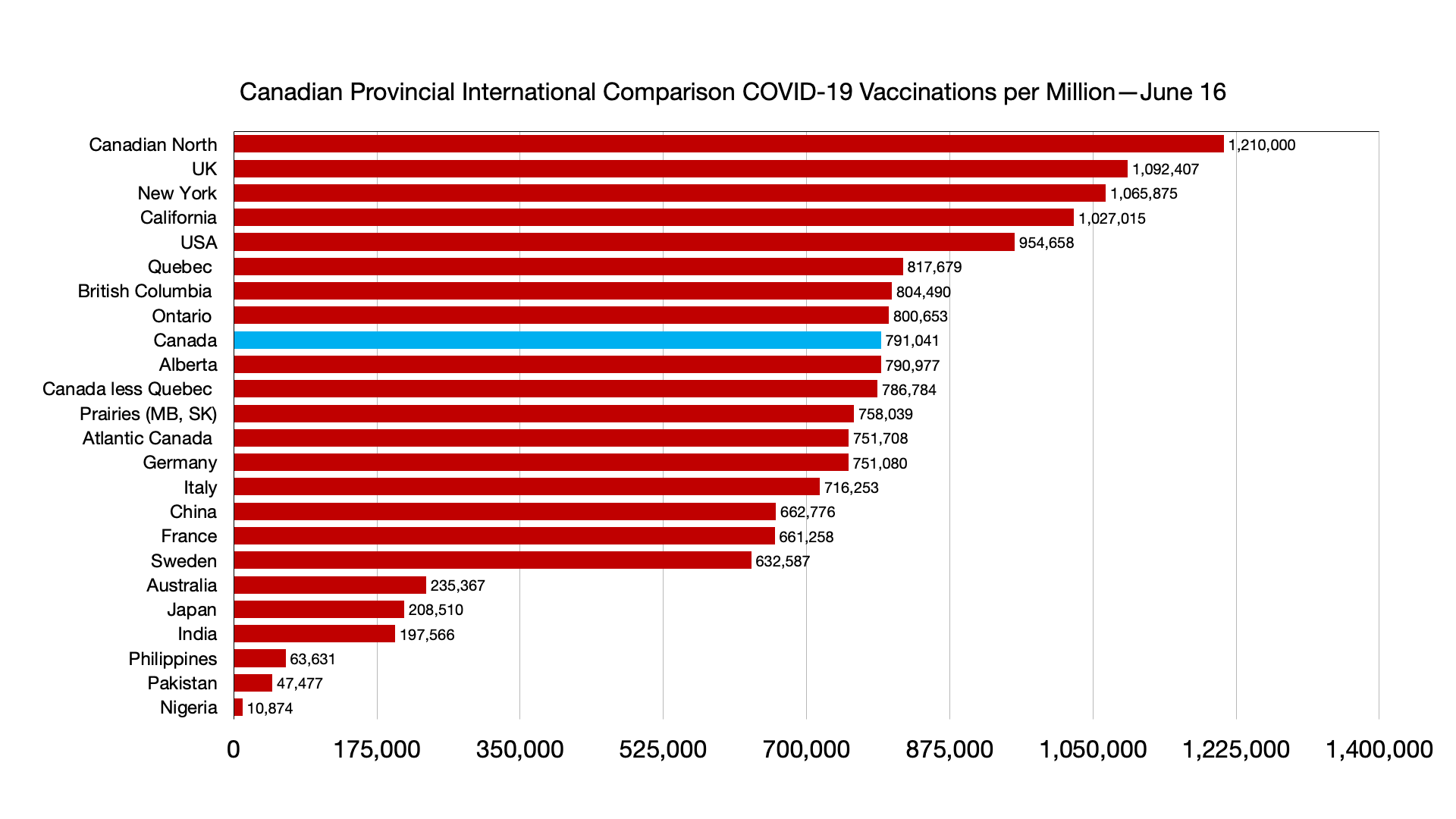
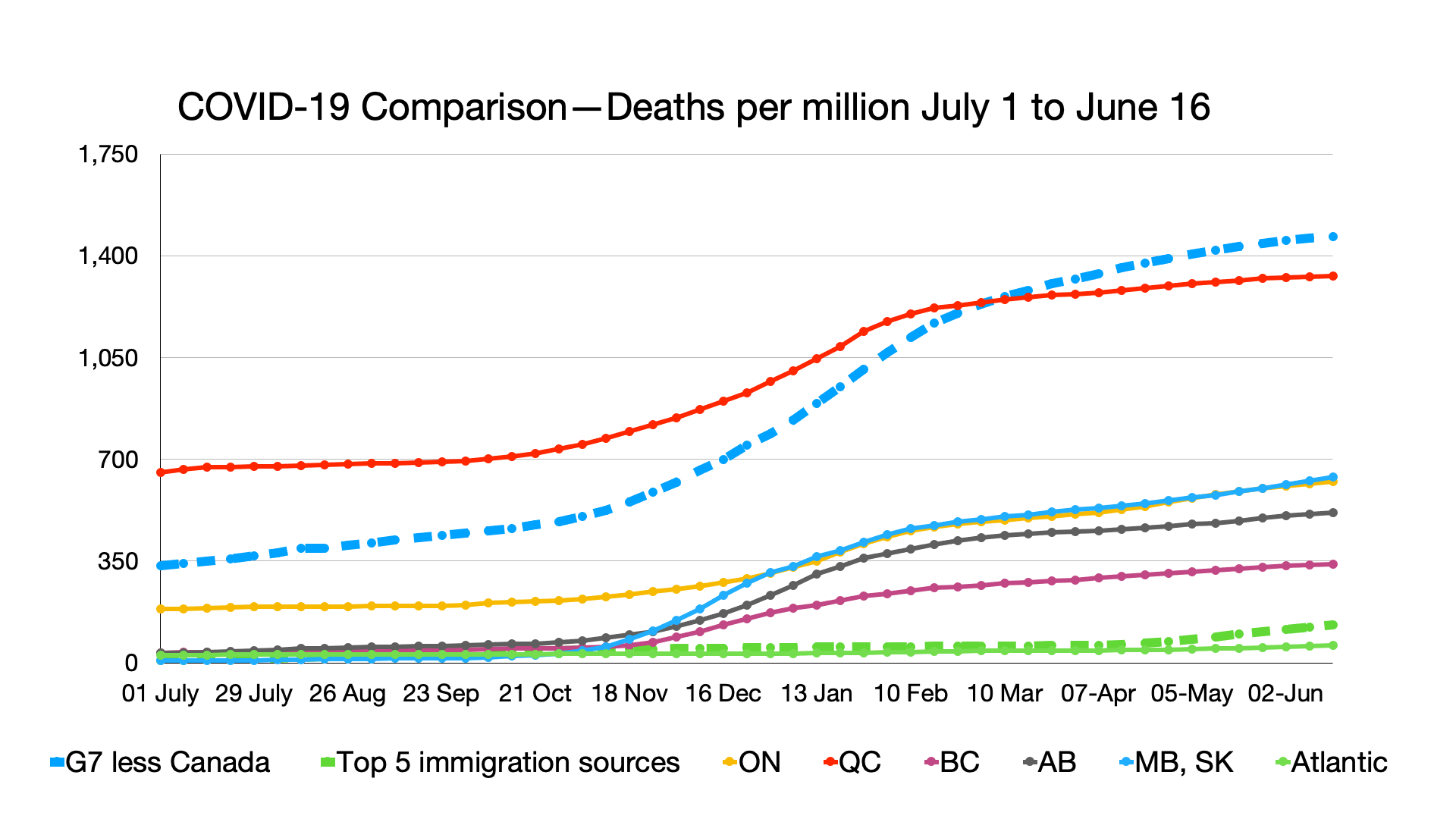
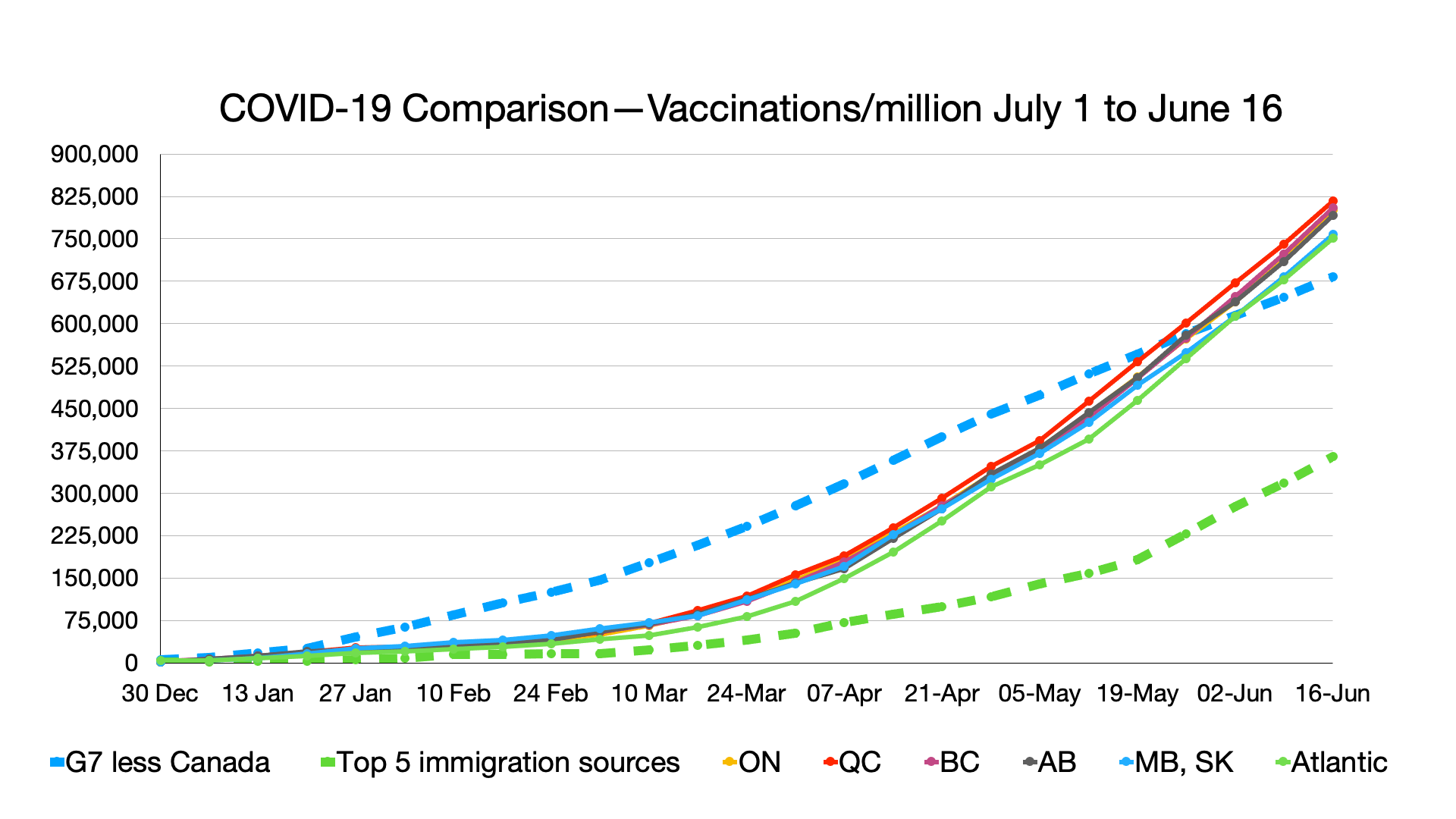
#COVID-19: Comparing provinces with other countries 16 June Update

The latest charts, compiled 16 June as overall rates in Canada continue to decline along with increased vaccinations (still largely first dose, fully vaccinated just under 14 percent).

Vaccinations: Minor relative changes. Most significant is China is now ahead of France and Sweden. Also, Atlantic Canada ahead of Germany and Japan ahead of India (pre-Olympics push?)

Trendline charts

Infections per million: No relative changes and recent surges levelling off save again for the Prairies (mainly Manitoba).

Deaths per million: No relative change.

Vaccinations per million: Canadian vaccination rates continue to exceed G7 less Canada with Quebec maintaining its slight lead. Vaccination rate increase in immigration source countries driven by China (up 16% from last week) with Indian vaccination increasing more slowly (10%).

Weekly

Infections per million: No relative change.

Deaths per million: No relative changes.

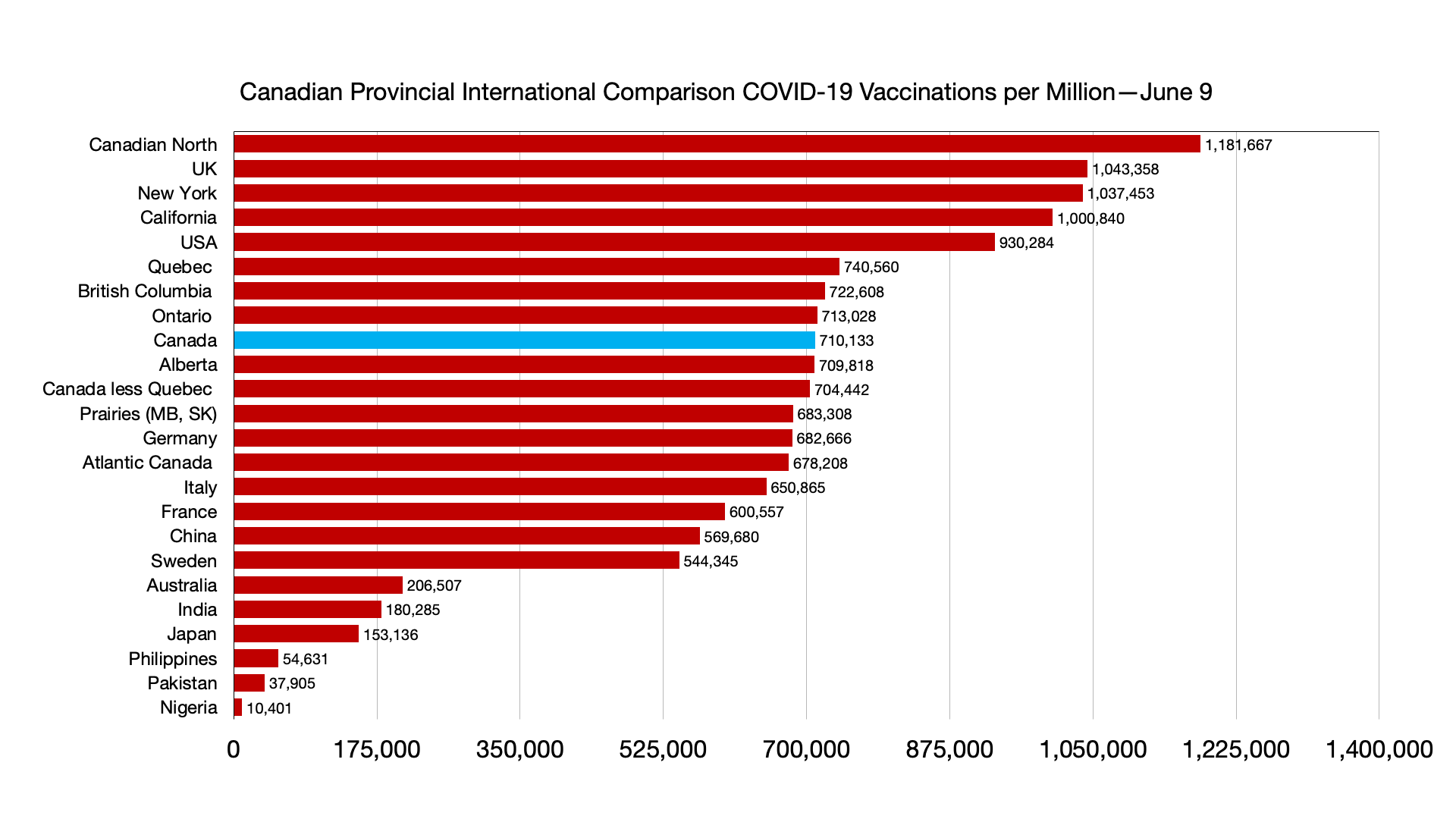
#COVID-19: Comparing provinces with other countries 9 June Update

The latest charts, compiled 9 June as overall rates in Canada continue to decline along with increased vaccinations (still largely first dose, fully vaccinated less than 10 percent).

Vaccinations: Minor relative changes, Canadian provinces all ahead of EU countries save Germany.

Trendline charts

Infections per million: No major relative changes and recent surges appear to be levelling off save for the Prairies (mainly Manitoba).

Deaths per million: No significant change, Prairies slightly ahead of Ontario.

Vaccinations per million: Canadian vaccination rates now exceed G7 less Canada with Quebec. US vaccination rates continue to stall. Vaccination rate increase in immigration source countries driven mainly by China and India to a lessor extent.

Weekly

Infections per million: No relative change.

Deaths per million: Prairies ahead of Ontario, driven by Manitoba.

Vaccine hesitancy raises alarms as COVID-19′s highly contagious Delta variant arrives in Brampton

Good ongoing focus on the challenges in Brampton and the L6P postal code:

Half the members of Sunidhi Sharma’s social circle have been vaccinated but it’s them, rather than the unvaccinated, who are keeping her from getting the jab.

None of the 22-year-old restaurant cashier’s friends or colleagues have had the novel coronavirus, so hearing friends’ accounts of developing fever and body aches after receiving their first dose has worried her more than COVID-19itself.

“It feels a bit scarier, so I’m not sure whether I should go for it or not,” said Ms. Sharma, who immigrated from India in 2019 and now lives in L6P, a postal code in northeast Brampton, Ont., that has logged the highest per capita cases of COVID-19 in the province.

She’s part of the 27 per cent of adults in Peel Region, west of Toronto, who have still not received their first dose of the vaccine, despite being eligible for more than a month.

Concerns about the highly contagious Delta variant, which now makes up one-quarter of COVID-19 cases in Peel, have prompted political and health leaders to call for an accelerated rollout of second doses of the vaccine in the area. A British-based study found that the variant reduced effectiveness of the Pfizer and AstraZeneca vaccines to just 33.5 per cent after one dose, but that two doses are nearly as effective against Delta as they are against Alpha (the variant first associated with Britain).

But there is a worry that people like Ms. Sharma, and others who haven’t yet rolled up their sleeves because of logistical barriers, vaccine shopping or hesitancy, may be left behind.

Despite being the hardest-hit city in Ontario, Brampton’s vaccination campaign got off to a slow start. Relatively few Brampton pharmacies offered shots early, and community pop-ups and workplace clinics took weeks longer to come online than they did in Toronto.

In L6P, overall coverage is still slightly below the provincial average, despite the area receiving extra vaccines, and Peel being the first public-health unit to open vaccines to everyone over 18. Seniors, in particular, are being left behind in L6P, with 69 per cent of people over 80 covered, compared with a provincial average of 83 per cent, according to the non-profit Institute for Clinical Evaluative Sciences.

This month, a team of researchers launched the COVID CommUNITY-South Asian study, a federally funded project that will investigate both vaccine effectiveness and hesitancy in South Asian communities. In Peel, 55 per cent of infections have been among South Asians, though they make up 32 per cent of the population. The team hopes to recruit 1,500 vaccinated and 1,500 unvaccinated participants in the Vancouver and Toronto areas – including Brampton.

“If health care workers from the South Asian community were hesitant to get the vaccine, they could have a very significant negative ripple effect in the community around them,” said principal investigator Sonia Anand, a professor of medicine and epidemiology at McMaster University in Hamilton. “Because if you say, ‘Well, if this ICU nurse is not getting the vaccine, then I’m not getting it, because she must know something I don’t.’ ”

On an evening in late May, just days after the Embassy Grand vaccine clinic in L6P had opened, the lineup snaked around the parking lot out front. The queue was filled with young teens, accompanied by parents and other relatives. The province had just dropped the age of eligibility for a first shot to 12.

But in that queue were many who had been eligible for weeks or even months.

Nancy Chandhi, a 31-year-old international student who moved to Brampton from the Indian state of Punjab in April to study business management at Conestoga College, came to the Embassy Grand for a shot with her six housemates.

A week earlier, they had walked away from their appointments at the Brampton Soccer Centre, one of Peel’s mass vaccination sites, because the site was administering the Moderna vaccine. The Pfizer-BioNTech and Moderna shots, which both use mRNA technology, performed nearly identically in clinical trials and real-world studies.

Ms. Chandhi hadn’t heard anything particularly bad about the Moderna product, but so many friends had recommended Pfizer-BioNTech that a sense of “brand loyalty” had developed in her circle.

At Peel Public Health’s fixed clinics, where about 40 per cent of all doses have been administered, 6 per cent of booked appointments last week were no-shows. But the no-show rate at pop-up clinics and hospitals has been much higher, said Priya Suppal, a Brampton family doctor who has worked at several of the vaccination sites in the city, including the Embassy Grand, where she is one of the medical directors.

After the initial surge of teens when it first opened on May 17, the site has seen a daily no-show rate of about 15 per cent to 20 per cent. Some clinics have reduced their hours or closed. One day last week, a clinic in Brampton had capacity to administer 600 daily doses and only did 50, Dr. Suppal said.

With cases of the Delta variant rising, she said the government should immediately move to opening up second-dose vaccinations to everyone over 18 in COVID-19 hot spots such as Brampton – but the variant is also good reason to keep pushing those first doses, she said.

With so few appointments booked in recent weeks at her clinic, her team has had time to canvass local gurdwaras, temples and supermarkets to draw people in, and they’ve learned why so many are still without first doses. There are the long-haul truckers who are only at home one day a week and have had difficulty finding an appointment, there are home-bound seniors who are unable to drive themselves to a clinic, there are warehouse workers whose schedules are too unpredictable to book an appointment weeks ahead of time, there are international students who mistakenly believe they must pay to get a vaccine.

“I think we have to sort of go full steam ahead with second doses, but really continue our efforts on [first doses],” Dr. Suppal said. “We don’t want to have all these mutations out and about and people getting sick all over again.”

For Muntaz Alli, the president of the Brampton Islamic Centre, vaccinating locals who are on the fence requires buy-in from trusted community leaders and institutions. In April, the city asked the mosque to hold a pop-up vaccination clinic. It ran from April 30 to May 11 and administered 6,200 first doses. A team of volunteers engaged with community members on social media and WhatsApp – a major source of local news and information – to encourage residents to come to the pop-up clinic.

“When community members heard about the [mosque’s] pop-up, their worries went away because it was their local community holding the vaccination clinic,” Mr. Alli said.

Leaders in Brampton’s Black, African and Caribbean communities followed that model when they launched a four-week pop-up clinic at the Bramalea Civic Centre in the L6T postal code, which has the lowest vaccination rate – 54 per cent – in the region.

They dispatched community ambassadors into apartment buildings and grocery stores to spread the word about the clinic and found Black doctors, nurses, staff and volunteers to work there. But the battle against vaccine hesitancy has been formidable.

Angela Carter, executive director of the Brampton non-profit Roots Community Services, said there is a well-founded mistrust of a health care system that has not always treated Black people well.

Some tell her “the government is inflating the numbers” of COVID-19 infections. Or explain, “I am not going anywhere, so I don’t need to get the vaccine.” Others say, “I don’t know what’s in the vaccine. I don’t know how it’s going to affect my body.”

The weekend soft launch of the clinic in mid-May was busy and celebratory, but a few days later, appointment bookings dropped and organizers pivoted to allowing anyone who qualified to walk in and get a shot.

Marsha Brown, the manager of community programs and services for WellFort Community Health Services, said even as the government’s focus shifts to second doses, the work to ensure residents get their first doses must continue long after the Bramalea Civic Centre pop-up closes on Friday.

“Knowing the mistrust, the hesitancy and the resistance that’s there, if we didn’t carve out a space and focus on our community, they could very easily just fall through the cracks and get forgotten,” she said.

Source: https://www.theglobeandmail.com/canada/article-vaccine-hesitancy-raises-alarms-as-covid-19s-highly-contagious-delta/?utm_medium=email&utm_source=Morning%20Update&utm_content=2021-6-7_6&utm_term=Morning%20Update:%20Pope%20Francis%20appeals%20for%20reconciliation,%20but%20offers%20no%20apology%20over%20residential%20school%20deaths%20&utm_campaign=newsletter&cu_id=%2BTx9qGuxCF9REU6kNldjGJtpVUGIVB3Y

Drastic drop in COVID infected international flights in May

Of note:

Transport Canada’s decision to ban passenger flights from India appears to have had an impact.

While numbers are always updated as new cases are diagnosed, data posted online by Health Canada as of Tuesday shows only 113 flights landing at Canadian airports last month carried passengers infected with COVID-19.

That’s compared to 288 flights counted in April — 66 of which were direct flights from India’s capital of Delhi.

Federal Transport Minister Omar Alghabra halted passenger flights from India and Pakistan for 30 days as of April 22, as well as adding additional restrictions on travellers arriving from India via connecting flights — including requiring a negative PCR COVID-19 test taken at the last port of entry before entering Canada.

This all but halted passenger traffic from both countries, as laboratory tests that typically require 24 hours can’t be accommodated during airport stopovers usually only lasting a few hours.

As many travellers from India had been connecting through Middle Eastern airports like Dubai, Abu Dhabi and Doha, infected passengers on those flights likewise saw big drops — just four from the United Arab Emirates last month compared to 35 in April.

Initially meant to last 30 days, the flight ban was extended last month to June 22.

During the first part of the pandemic, India typically only saw a handful of infected flights landing at Canadian airports each month.

All that changed in mid-February with a spike of infected flights coinciding with that country’s devastating variant-fuelled second wave.

Pakistan, meanwhile, has never been a significant factor, with Health Canada only reporting five such flights in April.

The United States was Canada’s largest source of infected flights last month, seeing 23 planes land with at least one passenger testing COVID positive — that’s compared to 49 in April.

Paris and Doha, Qatar, tied for second place with 11, followed by 10 from Guatemala, eight each from Frankfurt and Panama, seven from Istanbul, six from Amsterdam and five from Mexico City.

Toronto saw the most arrivals last month with 49 compared to 167 in April; followed by Montreal with 43 versus 57 in April; 14 in Vancouver compared to 42 in April; and six landing in Calgary compared to 19 the month previous.

Top sources of international flights with COVID-19 infected passengers in May (April’s total in parentheses)

1. USA: 23 (49)
2. Doha: 11 (21)
3. Paris: 11 (16)
4. Guatemala: 10 (4)
5. Amsterdam: 6 (12)
6. Frankfurt: 8 (13)
7. Panama: 8 (4)
8. Istanbul: 7 (18)
9. Mexico City: 5 (5)
10. Kingston, Jamaica: 3 (8)

Source: Drastic drop in COVID infected international flights in May