Latinos find that darker skin hurts their chances of getting ahead, a study says

Of note (common among minority groups):

Skin tone impacts the everyday lives and the long-term success of Latinos in the United States, according to a Pew Research Center finding that comes as the issue of colorism has become more mainstream.

The nonpartisan research center surveyed 3,375 Latinos who live in the U.S., finding that 62% say having darker skin hurts their chances of getting ahead while 59% say having light skin helps them. The study was released Thursday.

It comes just months after colorism — discrimination based on skin tone, often from within someone’s own ethnic group — captured wide attention with the release of the movie “In the Heights,” which was criticized for its lack of dark-skinned Afro Latinos in leading roles.

Over the last couple of years, racism has been at the forefront of the nation’s attention, but colorism isn’t deliberated as often.

Some social scientists believe this is in part because colorism highlights divisions within racial and ethnic groups. Others add that colorism is a centuries-old worldwide issue that’s notable in Latin American countries colonized by Spain and where white skin has long been considered superior to dark skin and Indigenous features. Many Latinos in the U.S. may have those internal biases.

The Pew study found that 57% of Latinos say their skin tone affects their everyday life, and the majority of dark-skinned Hispanics have experienced discrimination because of it.

Nadia Y. Flores-Yeffal, associate professor of sociology at Texas Tech University, said the findings are backed up by years of research that shows darker-skinned people earn less money and face more bigotry.

The problem isn’t just in the U.S. In Mexico, people with Indigenous features are looked down on, while white-skinned Mexicans are among the most powerful politicians, businesspeople and celebrities.

The way people with dark skin are portrayed in movies and in TV — if at all — also impacts how we perceive them, Flores-Yeffal said. “In the Heights” was hardly the exception — in most American media, darker Latinos are overrepresented in background roles or as gangsters, while lighter ones are more likely to have prominent roles, even as Latinos in general are underrepresented.

Flores-Yeffal says colorism has been going on for centuries. “And it doesn’t look like it’s going anywhere,” she said.

Laura E. Gómez, a law professor and author of “Inventing Latinos: A New Story of American Racism,” lauded the Pew study, saying it was based on rigorous data.

For Gómez, even talking about colorism is a good step toward solving the issue. While some Latinos may not feel comfortable talking about internal divisions, they are synonymous with racism in general, she said.

“You can’t choose one or the other. In order to combat anti-Latino racism, we must talk about racism within the Latino community,” Gómez said.

Source: Latinos find that darker skin hurts their chances of getting ahead, a study says

How a Canadian woman pushed a popular South Asian matchmaking site to drop its skin-tone filter

Impressive successful advocacy:

When Meghan Nagpal decided to take her chances at finding love by signing up for a popular matchmaking website, she never expected to be asked to describe her skin tone — let alone the skin tone she would find desirable in a partner.

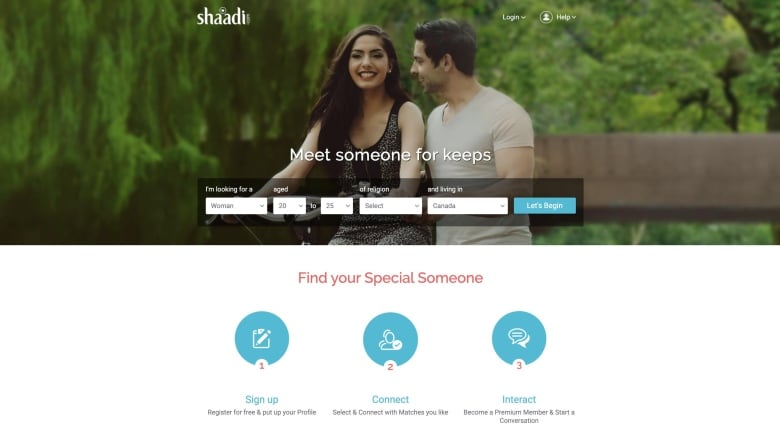
About a year ago, Nagpal joined Shaadi.com, a website that asks users to choose potential matches based on family background, status and body type. She said there was also a filter asking users for their preference of skin colour.

“I felt really uncomfortable,” said the University of Toronto graduate student, who is originally from Vancouver.

Nagpal soon deleted her account, but returned to the site last month after feeling some pressure from her mother to get married. She was again confronted with the skin-tone filter, which allowed users to select from “fair,” “wheatish” or “dark.”

This time, after all the worldwide anti-racism protests inspired by the Black Lives Matter movement, her discomfort turned to outrage.

The skin-tone filter, she said, sparked her realization that something needed to be done about what she called the South Asian community’s bias against skin colour.

“There’s a preference for fair skin in the culture when it comes to marriage and finding a life partner,” she said.

Discrimination within communities of colour

To Nagpal, the need to do something felt urgent because even though many prominent people in the South Asian community have come out in support of the Black Lives Matter movement, there are still some, including Bollywood actors, who continue to promote creams that promise to lighten skin tone.

She received a one-sentence response saying the filter was a popular feature with parents looking to arrange marriages for their children.

“Most parents do require this as an option so it is visible on the site,” read the response sent on June 10.

Nagpal then posted the response to a Facebook group with more than 2,000 South Asian women in North America.

They argued that it perpetuates a form of racial discrimination known as shadeism or colourism that’s prevalent in the South Asian community — with light skin being historically viewed as more desirable than dark.

Skin-tone filters removed

Overnight, the petition had amassed more than 1,400 signatures and Nagpal said the skin-tone filter was no longer on the site.

In an email, a spokesperson for Shaadi.com told CBC Toronto that they were not aware of the skin-tone filter and claimed it was a “non-functional aspect” of the site.

“There is no skin colour filter on Shaadi.com, on any of its platforms,” the spokesperson said.

A petition for shaadi.com to remove its skin-tone filter amassed more than 1,400 signatures overnight. Soon after, Nagpal said the skin-tone filter was no longer on the site. (Shaadi.com)

“[It] is a several year old product debris left-over in one of our advanced search pages on the website, which is non-functional and barely used and hence it did not come to our attention,” the email reads.

“We do not discriminate based on skin colour and our member base is as diverse and pluralistic as the world today is.”

Two other prominent South Asian matrimonial sites — Bharat Matrimony and Jeevansathi.com — were also pressured to remove skin-tone filters.

CBC News contacted both websites for comment on this story, but received no response.

‘Colourism is very easy to fester in communities’

Thurka Gunaratnam, a filmmaker and educator based in Toronto who has focused on shadeism in her work, says the filter did not come as a shock to her.

“When a group has been historically oppressed and they have not been given the freedom to understand what their own identity is, something like colourism is very easy to fester in communities,” said Gunaratnam.

Toronto-based writer and filmmaker Mirusha Yogarajah participated in a 2016 social media campaign called #unfairandlovely.

The campaign targeted the South Asian population in particular and was meant to tackle the issue of shadeism and the popularity of skin lightening creams — including one called “Fair and Lovely.”

“It’s so embedded in us from such a young age, it just makes me really sad,” Yogarajah told CBC News.

Prejudice should not be confused with preference, Gunaratnam said.

“In the wake of talking about colorism and racism, one thing that will help with unlearning is to really ask ourselves: Is it a preference or is it prejudice?

“And if it’s a preference, why is it that?”

Source: How a Canadian woman pushed a popular South Asian matchmaking site to drop its skin-tone filter

Black Lives Matter Gets Indians Talking About Skin Lightening And Colorism

Prompting a needed discussion:

Chandana Hiran loves reading, arts and crafts, and recycling. At 22, she’s enrolled in college, studying to be an accountant. She considers herself a feminist.

But something else is a big part of her identity too.

“I’m slightly dark,” Hiran tells NPR in a phone interview from her family’s Mumbai home, her bold voice suddenly going soft. “I’d be called one of the dark-skinned people in our country.”

In India, colorism is rampant. Darker-skinned Indians, especially women, face discrimination at work, at school — even in love. Some arranged marriage websites let families filter out prospective brides by skin tone.

So it may be no wonder that about half of all skin care products in India, according to the World Health Organization, are lighteners designed to “brighten” or “lift” — essentially to whiten — a user’s skin color. WHO estimates that such products amount to about a $500 million industry in India alone. Until recently, some of them even came with shade cards — like paint swatches — so that users could track the lightening of their skin.

Some products claim to “lighten” the skin using multivitamins such as vitamin B3, and many users have said they’re happy with the results. Other products may contain mercury or bleach, which WHO cautions can damage skin cells. Other skin-lightening treatments, including intravenous and pill formulas, have been linked to liver and kidney damage.

The most popular brand of skin lightener is Fair & Lovely, made by the consumer goods giant Unilever. Generations of Indians have grown up with grocery store shelves lined with Fair & Lovely creams and face washes. They’ve been sold in India since 1975 with a marketing campaign of TV commercials and billboards that equate pale, fair skin with beauty and success.

Those are stereotypes that many find deeply unfair. And as the Black Lives Matter movement spreads across the world, it has prompted a reckoning about skin color in India and a brazen revolt against one of its most popular cosmetics.

Feeling insecure

Being slightly browner than the average Indian, by her own assessment, has left Hiran feeling insecure all her life.

“Even the smallest of things, like not wanting to wear brighter colors or just random people coming to you and saying, ‘Oh, maybe you should apply something on your face,’ ” Hiran recalls. “There is not a single Bollywood actress who could represent my skin tone.”

Instead, Bollywood actresses star in TV commercials for skin-lightening creams.

The Indian beauty queen-turned-actress Priyanka Chopra — who starred in the U.S. TV hit Quantico — is one of the most famous. In 2008, she appeared in a series of promotional videos for a product called White Beauty. She played a forlorn-looking single woman who, in the first episode, watched a slightly lighter-skinned woman strut past with a handsome man on her arm. In later episodes, after she used the skin-lightening cream, the man fell in love with her instead.

Another ad for Fair & Lovely suggests using it before going to a job interview.

Praise for white skin is a theme in popular music too. In a 2015 hit song called “Chittiyaan Kalaiyaan” — which means “pale wrists” in the Hindi language — the male singer croons about how a woman’s pale skin makes him swoon.

“Oh my darling, angel baby, white kalaiyaan drives me crazy!” the refrain goes.

When Hiran was a teenager, listening to such songs, she started using Fair & Lovely. She didn’t even have to buy it; her mother always had some in the family medicine cabinet.

The impact of Black Lives Matter

So that was the backdrop in India this spring, when George Floyd was killed in the U.S. and calls for racial justice echoed around the world.

“Can Indians support Black Lives Matter when we ourselves have so many prejudices?” asks activist Kavitha Emmanuel, founder of a women’s charity in southern India called Women of Worth.

In 2009, Emmanuel started a campaign called Dark Is Beautiful to combat colorism in India. Over the years, while counseling girls, she says she realized how deeply hurt Indian women have been by media messages about skin color.

“In our counseling sessions, this would keep surfacing. [They would keep] saying, ‘I am dark,’ ” she told NPR by phone from her home in Chennai. “It is not just about self-esteem in terms of their looks, but it also affects their overall performance in life.”

A study confirms that the scenes in TV commercials for skin-lightening creams may sadly be accurate. A 2015 report by professors at Southern Illinois University and the Rochester Institute of Technology found that in India:

“A woman’s dark skin can preclude her from entering positions such as news anchor, sales associate, flight attendant and even receptionist because these jobs require exposure to and interaction with the public, who will judge her as unattractive, unworthy and incompetent. Fair-skinned women, conversely, are seen in most of these roles; their skin tone grants them unearned privilege and power within organizations as a result.”

Emmanuel says many Indians now expressing support for Black Lives Matter in the U.S. are blind to such discrimination against racial and religious minorities at home. Many of the same celebrities tweeting about racial justice in the U.S. have actually starred in ads for skin-lightening creams.

Bollywood backlash

Among the first Indian celebrities to express public sympathy after Floyd’s killing in the U.S. was the film star Chopra, who posted a lengthy message on Instagram in May with some of Floyd’s last words: “please, i can’t breathe.”

“There is so much work to be done and it needs to starts at an individual level on a global scale,” she wrote. “We all have a responsibility to educate ourselves and end this hate.”

Her comments drew a backlash online. When Chopra’s husband, American singer/songwriter Nick Jonas, tweeted that he and his wife “Pri” have “heavy hearts” over “systemic racism, bigotry and exclusion,” one user replied: “Was pri’s ‘heart heavy’ before or after she promoted skin lightening creams?”

Chopra has not replied to the tweets. But in a 2017 interview with Vogue India, she said she regretted appearing in ads for skin-lightening products. “I used it [when I was very young]. Then when I was an actor, around my early twenties, I did a commercial for a skin-lightening cream. I was playing that girl with insecurities. And when I saw it, I was like, ‘Oh s**t. What did I do?’ ” Chopra was quoted as saying.

She told Vogue that she now sympathizes with girls who feel insecure about their skin tone and has turned down offers to star in any more such ads.

Human rights activists in India have also accused Chopra and other Indian celebrities of hypocrisy for expressing sympathy for Floyd and outrage over his killing but not condemning similar violence against minorities, particularly Muslims, in India. In recent years, under Prime Minister Narendra Modi’s Hindu nationalist government, attacks on India’s minority Muslims have skyrocketed. Dozens have been lynched in the streets with little public outcry.

Colonialism and caste

Emmanuel and others trace India’s color discrimination back to the colonial period when mostly white Britons ruled over darker-skinned Indians. But its roots may go back even further than that — to Hinduism’s ancient caste system, roughly based on a hierarchy of professions people are born into.

Historians of ancient India say discrimination based explicitly on skin color has never been part of the Hindu caste system. But it may have evolved over time. For centuries, members of the less privileged, lower castes traditionally did manual labor outdoors under the sun.

“The British colonizers were able to build on India’s existing caste system. So the upper-caste people who were powerful had fairer skin. And the lower-caste people, when they would work outside, those castes started having darker skin [from prolonged sun exposure],” explains Neha Dixit, an Indian journalist who has studied the history of colorism and written about her own experience as a slightly darker-skinned woman. (The euphemism her relatives used for her skin color is “wheatish” — the color of wheat.)

“We have actually internalized all those prejudices,” she says. “So anybody with fairer skin is supposed to be better off than a dark-skinned person.”

Those stereotypes have been reinforced in India for millennia. But modern ideas of racial equality — and the Black Lives Matter movement — are slowly making a dent. A landmark case against caste discrimination is currently under litigation in California, where Indian American tech workers are accused of discriminating against a colleague because he’s a member of a lower caste.

New name, same cream

A few years ago, when she was in her late teens, Hiran, the accounting student, stopped using Fair & Lovely cream. Unilever says its products do not contain potentially harmful bleach or mercury. But Hiran’s decision had more to do with a maturing sense of self rather than any health concerns, she says.

“I started to realize, OK, maybe the problem is not with me. Maybe I’m not supposed to look any other way,” she says. “And I’m not supposed to feel insecure about my own skin.”

This year, Hiran started an online petition to get the name of the product changed. It’s one of several such petitions that have flooded the Internet in the wake of the Black Lives Matter movement.

A Texas woman of South Asian descent, Hetal Lakhani, also started an online petition against Shaadi.com, one of the most popular matrimonial websites, demanding that it remove a function that allows users to search for potential partners on the basis of their skin color. Last month, the website obliged, issuing a statement saying that it “does not discriminate” and that the skin color filter was a “product debris left-over in one of our advanced search pages.”

Then, in late June, Fair & Lovely’s manufacturer, Unilever, made an announcement: It’s removing any references to “fair/fairness,” “white/whitening” and “light/lightening” from all of its packaging.

“We are fully committed to having a global portfolio of skin care brands that is inclusive and cares for all skin tones, celebrating greater diversity of beauty,” Sunny Jain, president of the company’s beauty and personal care division, was quoted as saying. “We recognize that the use of the words ‘fair,’ ‘white’ and ‘light’ suggest a singular ideal of beauty that we don’t think is right.”

But even though the packaging now says only that the product moisturizes and gives a pink glow, these terms are understood to be euphemisms for lightening your skin.

This month, Unilever’s Indian branch announced a new name: Glow & Lovely. Its men’s product line will also be rebranded, as Glow & Handsome. The company says the name changes will happen in the coming months.

The cosmetics brand L’Oréal says it’s making a similar change.

But some activists say that’s not enough — that it’s not the names that needed to be scrapped but the products themselves. Another big company, Johnson & Johnson, says it’s discontinuing two of its skin-lightening products altogether.

Souvenir tube

Hiran calls the Fair & Lovely name change “a step in the right direction.”

“It’s not a small thing that Fair & Lovely has done. Because this brand has thrived all these years on the insecurities of women. This is really changing the narrative,” she says. “But it’s only the first step toward being more inclusive and diverse. No matter what you call it, it’s still going to be offensive.”

Even though she hadn’t used the product in years, Hiran says she recently found an old tube of Fair & Lovely in her medicine cabinet. She says she’ll probably hold on to it.

“Now it’s going to become a souvenir,” she laughs.

So the Fair & Lovely label will soon be history. But the question remains as to how long these skin-lightening products — whatever they’re called — will remain in India, along with the attitudes behind them.

Source: Black Lives Matter Gets Indians Talking About Skin Lightening And Colorism
The Origins of Colourism

Bit of an overly long read but some interesting anthropological studies:

…It’s notable that the issue of colourism in beauty norms has become a feminist issue in large part because of the sexually dimorphic nature of the phenomenon. As Lawton writes, “Colourism is a feminist issue because black men are allowed to be dark-skinned where women are not.” Which is to say that women in African American communities generally don’t perceive lighter skin in males to be any more desirable than darker skin—so that males can “get away” with being dark, even as they generally exhibit a preference for lighter skin in female mates. But this invites the question as to why slavery and oppression would arbitrarily lead to a male desire for female skin but have no corresponding effect on the opposite form of attraction. Clearly, some further explanation is needed.

*     *     *

“As to the colour, dark brown is decidedly a disadvantage,” noted the renowned anthropologist Bronislaw Malinowski in 1929, describing male desires for women in the Trobriand Islands off the east coast of New Guinea, “In the magic of washing and in other beauty formulae, a desirable skin is compared with white flowers, moonlight, and the morning star.” This description is specific to the Trobriand Islander’s own skin tones, and did not apply to white visitors, whose skin was perceived as too white. Ian Hogbin, similarly, wrote in The Island of Menstruating Men: Religion in Wogeo, New Guinea, the ideal skin tone was seen as “bright and clear as the petals of a flower,” but, “Europeans are most emphatically not envied for their blond coloring, which is regarded as far too reminiscent of albinos.” East of New Guinea in the Pacific Ocean lies the Solomon Islands, where Beatrice Blackwood wrote of the Buka in 1935, “In discussing with the men what physical attributes they considered desirable in their women, it emerged that they prefer a light skin, especially one with a reddish tinge, which is much less common than the darker brown.”

Leaving the Melanesian Pacific altogether and travelling northwest to Asia, we find a similar pattern. In Singapore, Cambodia and Thailand, billboards everywhere project images of light-skinned women smearing cream over their faces. Chinese people seem to be particularly judgemental on this subject; and for over a thousand years, the Geisha has been a symbolic focal point of perfection in beauty in Japan, her face smothered in white bird droppings or other whitening products. One Japanese scholar described the perfect skin tone as reflecting the “beautiful tuberculosis patient whose skin is pale and almost transparent.” The wealthiest Japanese men often are said to marry the lightest skinned females, paralleling sub-continental practises in India and Bangladesh.

Ancient Aztec codices in Central America revealed the use of cosmetics by women to attain a lighter skin, and paintings from ancient Egypt depicted women with lighter skin than males. In the Arab world, more broadly, one early traveller noted, “The highest praise is perhaps ‘She is white as snow.’” In North America, one Hopi chief commented, “We say that a woman with a dark skin may be half man.”

In subsaharan Africa, it’s much the same. Writing in 1910, Moritz Merker stated of the most sought after Masai women of Kenya and Tanzania, “Further requirements for being regarded as beautiful are an oval face, white teeth, black gums, a skin color as light as possible.” John Barnes wrote in 1951 of Ngoni in Malawi, “Young men say that what they like in a girl is a light skin colour, a pretty face, and the ability to dance and to copulate well.” Of the inhabitants of the Kalahari Desert in Botswana, among the most isolated people in Africa, another anthropologist wrote, “the generally admired type is a light-skinned girl of somewhat heavy build, with prominent breasts and large, firm buttocks.” Speaking of the strategic posturing of jealous women in Zambia, C.M.M. White recorded that, “dark-skinned women conscious of their possible disadvantage have been heard to tell men that light-skinned women will be found to be sexually unsatisfying.”

This pattern amounts to more than mere anecdote. In a 1986 report published in the journal Ethnic and Racial Studies, anthropologists Pierre van den Berghe and Peter Frost dusted off some understudied ethnographic archives contained in the Yale-based Human Relations Area Files, and found that in the great majority of societies for which there is data, lighter skinned females do in fact feature as the beauty ideal, whereas no clear pattern emerges for female’s preferences for male skin tone.

There were only three societies identified by the anthropologists that reportedly didn’t subject female beauty to a colourist evaluation, but in each of these cases the evidence was ambiguous as to beauty norms. Even counting these three cases as negative findings, van den Berghe and Frost concluded that there is an overwhelming cross-cultural pattern of colourism in male sexual desires that places lighter skin females above darker members of their community. They also argued that Western contact couldn’t possibly explain the phenomenon due to its ubiquity throughout the historical records of Egyptians, Indians, Chinese, Japanese and Aztecs, and in societies not colonized by the West or with limited contact. Van den Berghe and Frost calculate the probability of their data set arising by chance to be “less than one in 100 million.”

The two researchers also found that lighter-skinned women are not only preferred in almost every society, they also have lighter skin compared to men in most societies, and this anomaly could not be explained by sun exposure—which suggests that some force in evolutionary history has selected for lighter women.

In particular, Van den Berghe and Frost found that women tend to have the lightest tone of skin during early adulthood, during the most fertile period of her menstrual cycle, and when they are not pregnant—in other words, when a woman is most likely to conceive: “There appears, in short, to be a linkage not only between pigmentation and sex, but between light pigmentation and fecundability in women.”

They hypothesized, firstly, that the correlation between lighter skin complexion and fertility led to a genetically programmed learning bias in males, which usually manifests as a cultural preference for lighter skinned females. But once this colourist discrimination took place on the cultural level, they further hypothesized, sexual selection caused the further lightning of female skin pigmentation, explaining the lighter pigmentation we now find in females as compared with males.

This theory of gene-culture coevolution is not without its critics. And contradictory findings exist as to the difference in male-versus-female skin tones and the linkage between menstruation and skin tones. But what seems to be firmly established is that the cross-cultural bias for lighter skin does in fact exist and that it arises for reasons independent of oppressive forces exerted by the West. The question then becomes to what degree oppressive historical forces have further intensified a colourism toward women that already existed.

This is not an easy empirical question to answer, because hardly any longitudinal ethnographic studies exist on the extent of colourism in these communities before and after contact with the white world. One rare example does exist, however, in the form of a 1954 studyproduced by anthropologist Edwin Ardener, in regard to the Ibo of eastern Nigeria. Ardener noted that, “In Ibo culture…yellowish or reddish complexions are considered more beautiful than the darker, ‘blacker’ complexions,” and reproduced the statement of one Ibo man: “Well, you know that a thing that is ugly is first of all really black…You don’t want people to laugh at you and say, ‘Is that your wife?’”

Lost amidst the overflowing storm of contradictory grievances and the sweeping tide of politically motivated commentary, meanwhile, is a nuanced conversation about the actual origins of colourism. Such a discussion might help make people appreciate that the admiration for many different skin hues observed in modern Western societies is actually an unusual but thoroughly welcome development.

Source: The Origins of Colourism

Does Skin Colour Matter in News and Entertainment? Yes it Does – New Canadian Media – NCM

An inconvenient truth – “colourism”:

It has significant implications as people with darker skin tones are stereotyped, and as a result, treated differently throughout society. For example, various studies have shown that employers prefer to hire Black males with lighter skin tones, less education and work experience over Black males with higher levels of education and past work experience, but with darker skin tones. There are also studies that show that immigrants with lighter skin tones earn more than their darker-skinned counterparts.

Colourism plays out in the school system, with a recent American study showing that school discipline for girls differs by race and skin colour, with girls with darker skin tones being disciplined more harshly than their lighter-coloured counterparts. Similar patterns are also evident in the criminal justice system. One recent study found that women with lighter skin tones were more likely to receive shorter prison sentences than their darker-skinned counterparts.

Charges of colourism also reverberate throughout Hollywood. There is criticism that women with darker skin tones are cast in episodes of police shows dealing with the inner city while lighter-coloured women are cast in roles in which the beauty of the character is important. Lighter-skinned women are also disproportionately featured in People magazine’s annual “Most Beautiful” list. Some fashion magazines have been accused of lightening the photos of Beyoncé and Gabourey Sidibe. Similarly, darker-coloured Black men are portrayed in the entertainment industry in roles that are more violent and threatening.

Does Skin Colour Matter in News and Entertainment? Yes it Does – New Canadian Media – NCM.