Chinese immigrants happy with life in Metro Vancouver: survey

Chinese_immigrants_happy_with_life_in_Metro_Vancouver__surveyNot necessarily surprising results but interesting nevertheless, as well as the differences between mainland and Hong Kong Chinese:

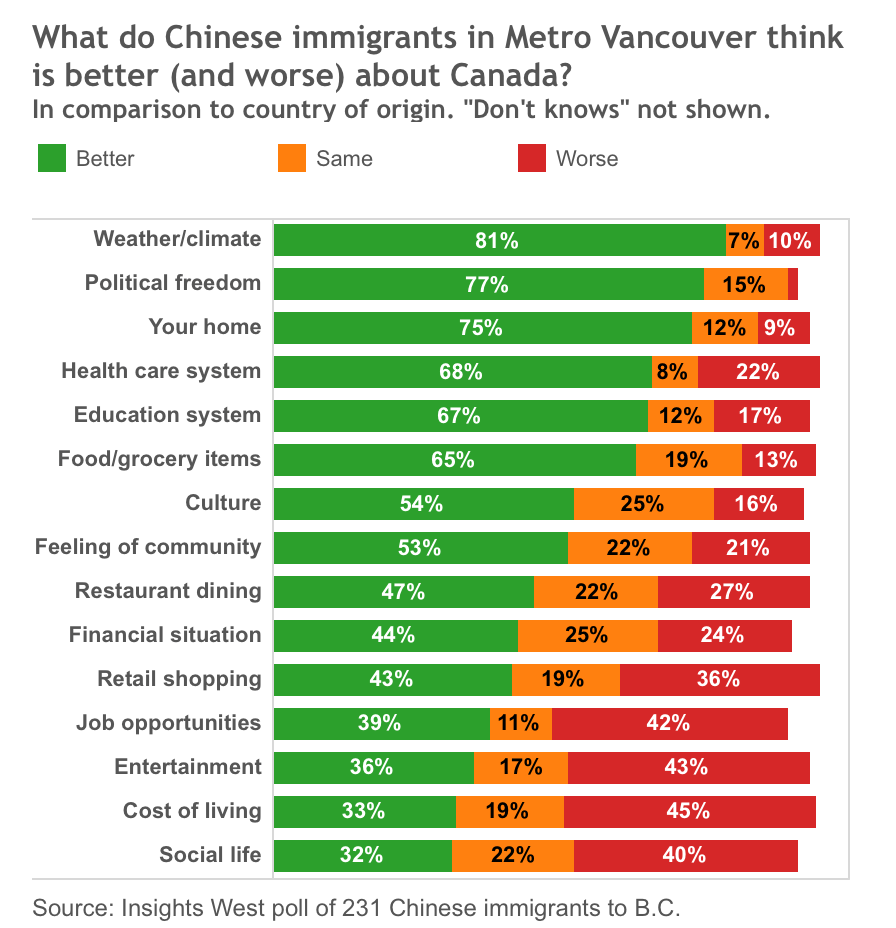
The survey found Chinese immigrants are very happy with their level of political freedom in Canada, with 77 per cent saying it’s better here and only two per cent saying it’s worse. They also like the weather, with 81 per cent saying the climate here is better than where they came from. And government services get a thumbs up, with 68 per cent saying Canada’s health care system is better and 67 per cent preferring our education system.

Immigrants are less impressed, however, with the job opportunities available to them in this country. Just 39 per cent say their job opportunities in Canada are better than in their country of origin, compared to 42 per cent who say they’re worse.

The cost of living in Metro Vancouver is also a concern, with 45 per cent saying life is more costly here.

Chinese immigrants happy with life in Metro Vancouver: survey.

Opinion: Reconciling injustices in a pluralistic Canada

Interesting commentary by Mark Winston of Simon Fraser’s Centre for Dialogue. Somewhat annoying that no mention of the federal government’s historical recognition program (and Chinese Head Tax program), which were aimed at allowing communities to share their stories and experiences, and have their experiences acknowledged:

What is clear is that the residual impacts of cultural, social, legal and economic injustice are perpetrated for many generations through the trauma of parents passed on to their children. To heal, communities are looking for genuine acknowledgment of what happened or continues to happen, as well as accountability from government, whose motives can appear cynical and suspect.

One theme emerged from all communities: government must uncouple reconciliation from electoral and political cycles, perhaps establishing an independent body to deal with resolving historical injustices.

The unique injustice perpetrated against Canada’s Aboriginal communities stands out as a particularly stark example of bias, due to the unique and extensive destruction of culture and community fabric among indigenous peoples….

How will we know reconciliation has been achieved? A quote from the South African Truth and Reconciliation process provided an answer: “When the past no longer invades the present but informs the future.”

Opinion: Reconciling injustices in a pluralistic Canada.