Ontario Legislature bans keffiyehs, premier calls for reversal: Need for consistency

This story continues to evolve, with the lack of unanimous support to overturn the speakers decision.

What has been lacking in the various discussions and limited op-eds is how does one decide objectively what should be considered as primarily identity vs what is primarily political in nature and the degree to which context plays a role. And how to apply any criteria objectively given that most identities also have political aspects and vice versa.

Religious symbols, while not without political significance to some, are primarily about identity.

Should members be allowed to have scarves or visible symbols with the colours of the Ukrainian flag? The Israeli flag? The Khalistan flag? The Russian flag etc?

Certainly, in the current political context, all could be argued as being interpreted as being more political in nature than just expressions of identity and the speaker made, IMO, the right call but needs to ensure consistency in any rulings:

The Ontario Legislature has banned the wearing of keffiyehs with its speaker saying the scarves are a “political statement,” while the premier along with opposition leaders are calling for a reversal of the move.

In an email on Wednesday, Speaker Ted Arnott said the legislature has previously restricted the wearing of clothing that is intended to make an “overt political statement” because it upholds a “standard practice of decorum.”

“The Speaker cannot be aware of the meaning of every symbol or pattern but when items are drawn to my attention, there is a responsibility to respond. After extensive research, I concluded that the wearing of keffiyehs at the present time in our Assembly is intended to be a political statement. So, as Speaker, I cannot authorize the wearing of keffiyehs based on our longstanding conventions,” Arnott said in an email.

Arnott’s email did not provide specifics on who drew keffiyehs to his attention or when.

Ontario Premier Doug Ford said in a statement on Tuesday night that he doesn’t support the ban and the decision was made by the speaker and nobody else.

“I do not support his decision as it needlessly divides the people of our province. I call on the speaker to reverse his decision immediately,” Ford said in the statement.

Keffiyehs are a commonly worn scarf among Arabs, but hold special significance to Palestinian people. They have been a frequent sight among pro-Palestinian protesters calling for an end to the violence in Gaza as the Israel-Hamas war continues.

NDP, Liberal leaders also call for reversal

Ontario Liberal Leader Bonnie Crombie also called for a reversal of the ban on Wednesday night.

“Here in Ontario, we are home to a diverse group of people from so many backgrounds. This is a time when leaders should be looking for ways to bring people together, not to further divide us. I urge Speaker Arnott to immediately reconsider this move to ban the keffiyeh,” Crombie said.

Ontario NDP Leader Marit Stiles urged Arnott to reconsider the ban in an April 12 letter to the speaker, saying she considers it unacceptable.

“The Assembly has always permitted Members, staff and guests to openly celebrate their culture, including wearing traditional clothing that represents their history, culture or faith, and I don’t believe it is your intention to change that precedent,” Stiles said.

Stiles said MPPs have worn kilts, kirpans, vyshyvankas and chubas in the legislature, saying such items of clothing not only have national and cultural associations, but have also been considered at times as “political symbols in need of suppression.”

She said Indigenous and non-Indigenous members have also dressed in traditional regalia and these items cannot be separated from their historical and political significance. 

“The wearing of these important cultural and national clothing items in our Assembly is something we should be proud of. It is part of the story of who we are as a province,” she said.

“Palestinians are part of that story, and the keffiyeh is a traditional clothing item that is significant not only to them but to many members of Arab and Muslim communities. That includes members of my staff who have been asked to remove their keffiyehs in order to come to work. This is unacceptable.”

Stiles added that House of Commons and other provincial legislatures allow the wearing of keffiyehs in their chambers and the ban makes Ontario an “outlier.”

Suppression of cultural symbols part of genocide: MPP

Sarah Jama, Independent MPP for Hamilton Centre, said on X that the ban is “unsurprising” but “nonetheless concerning” in a country that has a legacy of colonialism. “Part of committing genocide is the forceful suppression of cultural identity and cultural symbols,” she said in part. 

Jama added that “state powers” have suppressed Indigenous cultural dress, language, ceremony and beliefs “as tools of genocide” at various points in Canada’s history.

“Seeing those in power in this country at all levels of government, from federal all the way down to school boards, aid Israel’s colonial regime with these tactics in the oppression of Palestinian people proves that reconciliation is nothing but a word when spoken by state powers,” she said.

Amira Elghawaby, Canada’s Special Representative on Combatting Islamophobia, said on X that it is “deeply ironic” on that keffiyehs were banned in the Ontario legislature on the 42nd anniversary of Canada’s Charter of Rights and Freedoms.

“This is wrong and dangerous as we have already seen violence and exclusion impact Canadians, including Muslims of Palestinian descent, who choose to wear this traditional Palestinian clothing,” Elghawaby said.

Arnott said the keffiyeh was not considered a “form of protest” in the legislature prior to statements and debates that happened in the House last fall.

“These items are not absolutes and are not judged in a vacuum,” he said.

Arnott added that he reminded the legislature in a statement on Feb. 22 of its standard practice of decorum, saying: “It has long been the established practice of this House that members should not use props, signage or accessories that are intended to express a political message or are likely to cause disorder. This also extends to members’ attire, where logos, symbols, slogans and other political messaging are not permitted.

“This Legislature is a forum for debate, and the expectation in the chamber is that political statements should be made during debate rather than through the use of props or symbols,” he said.

Source: Ontario Legislature bans keffiyehs, premier calls for reversal

Trump administration extends work visa ban, creating uncertainty for Canadians

The Canadian angle (applies more broadly of course, with India likely being the country most affected):

The Trump administration said Monday that it is extending a ban on green cards issued outside the United States until the end of the year and adding many temporary work visas to the freeze — including those used heavily by technology companies and multinational corporations — tossing a cloud of uncertainty over thousands of Canadians, including cross-border workers and their families.

The administration cast the effort as a way to free up jobs in an economy reeling from the coronavirus. A senior official who spoke to reporters on condition of anonymity estimated the restrictions will free up to 525,000 jobs for Americans.

The ban, while temporary, would amount to major restructuring of legal immigration if made permanent, a goal that had eluded the administration before the pandemic. Long-term changes targeting asylum seekers and high-tech workers are also being sought.

Business groups pressed hard to limit the changes, but got little of what they wanted, marking a victory for immigration hardliners as Trump seeks to further solidify their support ahead of the November election.

The ban on new visas applies to H-1B visas, which are widely used by major American and Indian technology company workers and their families, H-2B visas for nonagricultural seasonal workers, J-1 visas for cultural exchanges and L-1 visas for managers and other key employees of multinational corporations.

There will be exemptions for food processing workers, which make up about 15 per cent of H-2B visas, the official said. Health care workers assisting with the coronavirus fight will continue to be spared from the green-card freeze, though their exemption will be narrower.

“In the administration of our nation’s immigration system, we must remain mindful of the impact of foreign workers on the United States labour market, particularly in the current extraordinary environment of high domestic unemployment and depressed demand for labour,” Trump wrote in his presidential proclamation.

Potential effect on Canadians

These moves could affect thousands of Canadians. They are far more severe than an earlier immigration announcement from Trump in April, which affected only applications for permanent immigration visas.

The new provisions touch work visas used by many Canadians. Canadians filed more than 4,000 H-1B applications in each of the last two years, and numerous others would get L1 business visas in a normal year, including executives working for cross-border companies.

Source: Trump administration extends work visa ban, creating uncertainty for Canadians

New Trump Immigration Order Does What Congress Rejected In 2018

The pandemic as opportunity. Good explanation of what is covered and what is not covered:

Donald Trump has issued a proclamation that would block indefinitely immigrants in categories the administration failed to eliminate in a bill before the U.S. Senate in February 2018. Economists consider the justification for the president’s action devoid of serious analysis and unconvincing. U.S. citizens will no longer be able to obtain immigrant visas for a parent, adult child or sibling, and the proclamation contains a lit fuse in the form of a 30-day review of H-1B and other temporary visas. In effect, the Trump administration has used the COVID-19 crisis to rewrite immigration law without passing a bill through Congress.

The presidential proclamation contains nearly identical provisions on legal immigration to those of a White House-designed bill the U.S. Senate rejected on February 15, 2018, which it voted down on a “cloture motion” 60-39.

The legislation, like the proclamation issued on April 22, 2020, would have eliminated the ability of U.S. citizens to sponsor a parent, as well as adult children and siblings (the family preference categories). It also ended the Diversity Visa lottery. (See page S1036 here.) The U.S. unemployment ratein February 2018 was only 4.1% when the administration attempted to stop immigrants from entering the United States in the same categories as were included in the April 22, 2020, presidential proclamation.

Originally, based on early discussions, the 2018 legislation was to represent a compromise between Democrats and Donald Trump to provide permanent legal protection for individuals brought to America as children, particularly those granted Deferred Action for Childhood Arrivals (DACA). However, press reports indicate White House adviser Stephen Miller intervened to ensure any administration-supported bill contained a “wish list” of immigration restrictions that Democrats would be unlikely to support. Miller is credited with drafting the new proclamation.

“Congress considered and rejected legislation that would have cut the same family-based visa categories that President Trump targets in the executive order,” said Lynden Melmed, a partner at Berry Appleman & Leiden and former chief counsel for USCIS, in an interview.

Trump says he will suspend all immigration into U.S. over coronavirus

Not terribly surprising given that has always been his intent and that of his senior policy advisor and anti-immigration hawk, Stephen Miller. Details yet to come:

President Donald Trump said on Monday he will suspend all immigration into the United States temporarily through an executive order in response to the coronavirus outbreak and to protect American jobs.

The move, which the Republican president announced on Twitter, effectively achieves a long-term Trump policy goal to curb immigration, making use of the health and economic crisis that has swept the country as a result of the pandemic to do so.

The decision drew swift condemnation from some Democrats, who accused the president of creating a distraction from what they view as a slow and faulty response to the coronavirus.

Trump said he was taking the action to protect the U.S. workforce. Millions of Americans are suffering unemployment after companies shed employees amid nationwide lockdowns to stop the contagion.

“In light of the attack from the Invisible Enemy, as well as the need to protect the jobs of our GREAT American Citizens, I will be signing an Executive Order to temporarily suspend immigration into the United States,” Trump said in a tweet.

The White House declined to offer further details about the reasoning behind the decision, its timing, or its legal basis.

“As our country battles the pandemic, as workers put their lives on the line, the President attacks immigrants & blames others for his own failures”, former Democratic presidential candidate Amy Klobuchar said in a tweet.

Immigration is largely halted into the United States anyway thanks to border restrictions and flight bans put in place as the virus spread across the globe.

But the issue remains an effective rallying cry for Trump’s supporters.

Trump won the White House in 2016 in part on a promise to curb immigration by building a wall on the U.S. border with Mexico. He and his advisers have spent the first three years of his tenure cracking down on both legal and illegal entries into the country. Crowds regularly chant “Build the Wall!” at Trump’s political rallies, which are now idled because of the virus.

Trump has lamented the economic fallout of the outbreak; his stewardship of the U.S. economy was set to be his key argument for re-election in November.

The U.S. death toll from the virus topped 42,000 on Monday, according to a Reuters tally.

The U.S. economy has come to a near standstill because of the pandemic; more than 22 million people applied for unemployment benefits in the last month.

“You cut off immigration, you crater our nation’s already weakened economy,” former Democratic presidential candidate Julian Castro said in a tweet. “What a dumb move.”

The United States has the world’s largest number of confirmed coronavirus cases, with more than 780,000 infections, up 27,000 on Monday.

But the president has made a point of saying the peak had passed and has been encouraging U.S. states to reopen their economies.

“It makes sense to protect opportunities for our workforce while this pandemic plays out,” said Thomas Homan, Trump’s former acting director of U.S. Immigration and Customs Enforcement. “It’s really not about immigration. It’s about the pandemic and keeping our country safer while protecting opportunities for unemployed Americans.”

The United States in mid-March suspended all routine visa services, both immigrant and non-immigrant, in most countries worldwide due to the coronavirus outbreak in a move that has potentially impacted hundreds of thousands of people.

U.S. missions have continued to provide emergency visa services as resources allowed and a senior State Department official in late March said U.S. was ready work with people who were already identified as being eligible for various types of visas, including one for medical professionals.

The administration recently announced an easing of rules to allow in more agricultural workers on temporary H2A visas to help farmers with their crops.

Source: Trump says he will suspend all immigration into U.S. over coronavirus

Muslim Refugees Were Admitted at a Lower Rate During Trump’s Refugee Ban – The New York Times

Numbers tell the story:

During the week when President Trump’s refugee ban was in effect, refugees were allowed in on a case-by-case basis. Just 15 percent of the 843 refugees who were admitted during this time were Muslim, compared with a weekly average of 45 percent in 2016.

Only two refugees were allowed in from the seven Muslim-majority countries affected by President Trump’s travel ban. About 1,800 refugees from these countries had arrived in the United States every week on average since 2016.

Trudeau must match words with action in Trump era, say critics, rights groups

Government is wise to wait and monitor before changing such a fundamental policy as safe third country. In the end, should the Trump administration continue with such policies, it will likely become harder to resist such calls, on both policy and political grounds:

Justin Trudeau’s invitation on Twitter to “those fleeing persecution, terror & war” attracted global attention as a subtle response to President Donald Trump’s order temporarily banning refugees and immigrants from seven Muslim-majority countries, but now Canadian opposition politicians and human rights groups want Mr. Trudeau to match his words with action.

Mr. Trump’s executive order banned refugees from resettling in the United States for 120 days and nationals from Iran, Iraq, Libya, Syria, Somalia, Sudan, and Yemen from entering the U.S. for 90 days. Thousands of people gathered outside of the U.S. embassy in Washington and consulate in Toronto to protest the decision Monday.

The prime minister’s “diversity is our strength” tweet sent the message that “regardless of [their] faith,” those seeking refuge will find an open door to Canada as the one in the U.S. temporarily closes.

The New Democratic and Green parties, along with Amnesty International’s Canadian and U.S. sections, in turn have called on the federal government to remove the U.S. as a “safe third country” for refugee determination under Canada’s Immigration and Refugee Protection Act.

A 2004 order-in-council giving the U.S. that designation, which was briefly overturned by the Federal Court and later reinstituted by the Federal Court of Appeal, requires most refugees travelling through the U.S. to Canada to make a claim for protection in the U.S.

Amnesty wants Immigration, Refugees, and Citizenship Minister Ahmed Hussen (York-South Weston, Ont.) to immediately rescind the U.S. as a safe country and allow refugees to cross the border and seek asylum in Canada. “The risk of not doing this is going to deny an avenue of protection for people who are going to need it in the days, weeks, and months to come,” said Alex Neve, secretary general of Amnesty International Canada, who believes that Mr. Trump might support the U.S.’s removal as a safe haven.

“It would mean more refugee claimants turning to Canada for protection rather than the United States, which seems to be what he wants,” said Mr. Neve. “Canada doesn’t have to issue a press release loudly and angrily denouncing the U.S.’s refugee-protection record. It’s something that can be done quietly and quickly through an order-in-council.”

Source: Trudeau must match words with action in Trump era, say critics, rights groups – The Hill Times – The Hill Times

No plans to change refugee target in wake of U.S. travel ban: immigration minister

Calibrated response:

As MPs debate U.S. President Donald Trump’s travel ban in the House of Commons, Canada has already confirmed it will not hike its refugee intake target in the wake of a contentious immigration and travel crackdown in the U.S., says Immigration Minister Ahmed Hussen.

Under pressure by the NDP, human rights groups and refugee lawyers to bring more asylum-seekers to Canada, the minister said Canada’s plan will not change in response to an executive order by Trump that suspends the U.S. refugee program and bars entry to nationals from seven Muslim-majority countries.

“Our immigration levels plan has an allocation that is historically high for refugees,” Hussen said. “We intend to maintain that plan.”

Canada’s 2017 immigration plan is set to accommodate 40,000 refugees.

Hussen also rejected calls to suspend the Safe Third Country Agreement, a pact which considers asylum-seekers safe in both Canada and the U.S.

“All the parameters of that agreement are in place and there is no change at this time,” he said.

MPs held an emergency debate Tuesday evening, which concluded around midnight, on the U.S. immigration and travel directives,.

Noting that the U.S. has now agreed to allow in 872 refugees who were already screened and in transit, and were previously denied entry, Hussen said that’s a sign the situation is evolving fast. He added that Canada will closely monitor developments.

“The responsible thing to do is to maintain contact, to continue to engage and make sure we monitor the situation closely to make sure we provide information to Canadians,” he said.

Ottawa U.S. Embassy Trump protest travel ban Jan 30 2017

People gathered outside the U.S. Embassy in Ottawa Monday afternoon to protest an executive order signed by President Donald Trump banning citizens of seven Muslim-majority countries from entering the United States. (CBC)

Call for ‘special measures’

NDP immigration critic Jenny Kwan, who requested the emergency debate, held a news conference Tuesday morning urging the government to lift a cap on privately sponsored refugees and to fast-track refugee claims.

The B.C. MP laid out a number of proposed “special measures” ahead of the debate.

“There is no question that this ban promotes hate and intolerance,” she said. “This ban will have a disastrous effect for thousands of innocent travellers and refugees.”

Calling it “absolutely shocking,” Kwan said the Trump travel ban will have a huge negative impact on the economy, as well as cultural and academic development.

…Conservative immigration critic Michelle Rempel used the debate to launch into an examination of whether Canada was effectively managing its own immigration file.

She questioned whether there was adequate funding to help refugees integrate into Canadian society, and whether it was wise to lift the visa restrictions on Mexicans coming to Canada.

“To respond to the immigration policies of other nations, we must first get our own house in order, and then through those actions, show the world what immigration policy best practice looks like,” Rempel said.

The job-creating, anti-extremist Canadian Conservative with a maple leaf tattoo now banned from the U.S. | National Post

National Post profile of the staffer Jason Kenney mentioned in his tweets (dealt with him during my time at CIC/IRCC, sharp guy, pleasant to deal with. Married to Candice Malcolm, another former staffer and current Sun columnist who is also extremely conservative and, IMO, overly partisan in her critiques):

Canadian Kasra Nejatian renounced his Iranian citizenship at 17, got a maple leaf tattoo and has been such an outspoken critic of the Islamic republic that he believes he would be immediately arrested if he ever returned.

He owns a tech company, Kash, with more than a dozen employees in the United States.

He’s also extremely Conservative. He spent years as a staffer for former Tory immigration minister Jason Kenney, who has described him as “one of the most hawkish people I know on national security and integration.”

But according to a bluntly worded executive order from U.S. President Donald Trump, Nejatian’s Iranian birthplace now makes him “detrimental to the interests of the United States.”

“This is virtue-signalling security theatre,” Nejatian told the National Post by phone from San Francisco.

On Friday, Trump issued an executive order that banned U.S. entry to nationals from seven Muslim-majority countries: Iran, Iraq, Syria, Sudan, Libya, Yemen and Somalia, for 90 days.

The suddenness of the ban meant that any nationals from the affected countries who were already airborne at the time of the order were detained upon landing.

The order does not make exceptions for nationals with valid U.S. visas.

Nejatian — who helped form Canada’s own protocol for screening would-be terrorists — said the new order “almost certainly makes the U.S. less safe.”

For one thing, the ban is so blunt that it excludes foreign-born nationals regardless of their loyalty to the United States, he noted.

Source: The job-creating, anti-extremist Canadian Conservative with a maple leaf tattoo now banned from the U.S. | National Post

In Iran, Shock and Bewilderment Over Trump Visa Crackdown – The New York Times

Laying out the impact on people and families (article was written before the weekend chaos):

TEHRAN — Families, businesspeople, athletes and tourists from seven countries in the Middle East and Africa found their travel plans — and even their futures — in a state of suspension on Friday after President Trump signed an executive order temporarily barring thousands from obtaining visas to travel to the United States.

The order is expected to freeze almost all travel to the United States by citizens from the Muslim-majority countries of Iran, Iraq, Libya, Somalia, Sudan, Syria and Yemen for at least 90 days. Three of those countries are considered sponsors of terrorism (Iran, Sudan and Syria), and three are designated countries of concern (Libya, Somalia and Yemen).

Passport-holders from those countries, who have American visas but are outside the United States, will not be permitted to return.

“We only want to admit those who will support our country and love deeply our people,” Mr. Trump said on Friday before signing the order at the Pentagon. “We will never forget the lessons of 9/11, nor the heroes who lost their lives at the Pentagon.”

(The 19 hijackers implicated in the Sept. 11, 2001, terrorist attack came from Egypt, Lebanon, Saudi Arabia and the United Arab Emirates. None of those countries will be subject to what Mr. Trump described as “new vetting measures.”)

During the 90-day period, the Trump administration will assess if the foreign governments on the list are providing enough information about citizens seeking visas to enable the United States to assess whether they pose a terrorism risk. If the governments do not comply, they will be given 60 days to do so; failing that, their citizens will be barred from entering the United States.

Government reaction to the order has been cautious. But there is little doubt that the demand for information will be a challenge for Iran, which sends far more people to the United States each year, around 35,000, than any other country on the list.

While Iran willingly allows its citizens to travel to the United States, it is ideologically opposed to sharing information with Washington. But if it does not, many of its citizens will be cut off from visiting relatives who are among the estimated one million Iranian-Americans living in America.

The visa ban will provide an early indication of where relations between Tehran and the Trump administration are headed, one analyst said.

Photo

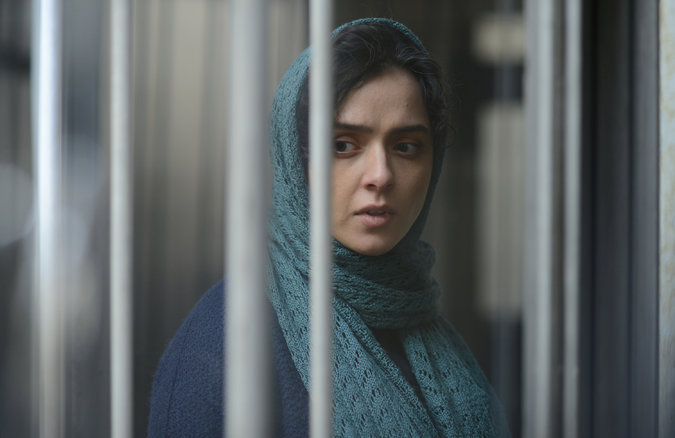
The Iranian actress Taraneh Alidoosti in “The Salesman.” She canceled her trip to the Academy Awards on Feb. 26 on news of President Trump’s visa crackdown.CreditHabib Majidi/Cohen Media Group, via Amazon Studios, via Associated Press 

“Trump will regard the Iranian reaction as a test,” said Farshad Ghorbanpour, who is close to the government of President Hassan Rouhani. “If Iran doesn’t comply, they won’t do so either on other issues. We will see in 30 days.”

Another analyst doubted the government would comply with the order.

“We are not obliged to give information about our citizens to the Trump administration,” said Hamidreza Taraghi, considered a hard-liner. “Such a move would be unjustifiable.”

In the United States, Americans of Iranian descent expressed shock and dismay at news of Mr. Trump’s impending policy change, and were particularly concerned about their relatives and friends in Iran.

Trita Parsi, president of the National Iranian American Council, a Washington-based advocacy group, said many Iranian citizens with valid green cards and American visas were distraught. Those outside the United States are fretting they will not be allowed in, and those already in the country fear they will not be able to leave, even temporarily, because they will be barred from returning.

“There is a sense of bewilderment, as well as a sense of injustice,” over why Iran was even included on the list of targeted countries, Mr. Parsi said. No Iranian has been accused of an attack on the American homeland. By contrast, he said, the Sept. 11 attackers included citizens from countries which are not on the list — and “the United States has produced more ISIS fighters than Iran has.”

Iran’s most popular actress, Taraneh Alidoosti, announced on Twitterthat she was canceling her trip to the Academy Awards ceremony in Los Angeles on Feb. 26, after reports that Mr. Trump was about to sign the sweeping executive order.

Ms. Alidoosti plays a leading role in ‘‘The Salesman,’’ directed by the acclaimed Iranian director Asghar Farhadi and nominated for best foreign film. She almost certainly could have obtained a visa as a ‘‘culturally unique artist,’’ but said she no longer felt like making the trip.

“This is not about me or the Academy Awards, it’s about having a discussion about this decision,” Ms. Alidoosti said. “This is such a bizarre ban, it is uprooting people’s lives in ways not imaginable.”

In 2015, according to the Department of Homeland Security, a total of 35,266 nonimmigrant visas were granted to Iranians to enter the United States, compared with 21,381 for Iraq; 16,010 for Syria; 5,549 for Yemen; 4,792 for Sudan; 2,879 for Libya and 359 for Somalia.

GRAPHIC

How Trump’s Executive Order Will Affect the U.S. Refugee Program

The order cuts the number of refugees to the U.S. in half and bars those from Syria.

 OPEN GRAPHIC 

As there is no American embassy or consulate in Iran, Iranians must travel to Ankara, Turkey, Dushanbe in Tajikistan or to Dubai, in the United Arab Emirates, to apply for a visa. The State Department says that more than 40 percent of all applications are rejected. There are numerous agencies in Iran and other countries that mediate and assist Iranians seeking appointments.