Why ‘golden’ passports and visas shouldn’t be abolished, but made better

Somewhat self-serving from one of the leading citizenship-by-investment companies:

Armand Arton has eight passports.

It’s a collection fitting for the CEO (or as Arton prefers, “Chief Global Citizen”) of a firm that helps ultra-wealthy people purchase second citizenships.

The passport business boomed during the pandemic, especially among wealthy Americans who, for perhaps the first time in their lives, were barred from entering many countries around the world.

Now, as Europe reckons with housing crises, inflation, extreme weather, and war, governments from Portugal to Ireland are banning foreigners from purchasing so-called golden passports and visas.

“Golden passports,” formally known as citizenship by investment programs, allow foreigners to receive citizenship in exchange for investing a certain amount of money in a country, often by purchasing real estate. Their less-advantageous siblings, “golden visas,” provide temporary residence permits in exchange for investment, as opposed to permanent citizenship.

Europe’s recent crusade against the programs boils down to a single question threatening the foundation of the $20 billion industry: is it fair to sell citizenship?

Arton thinks so — and not only because it pays his salary.

The CEO, whose firm has helped attract over $4 billion in foreign investment to various countries in the last 5 years, was born in communist Bulgaria after his family fled the Armenian genocide. When he drove with his parents through over a dozen countries to their new jobs in Morocco, he learned younger than most how your place of birth determines the degree to which you can move freely throughout the world.

“We had to go and apply for 14 visas, and convince 14 governments that were not refugees,” he said. “It makes you feel inferior and threatened everywhere you go, just because of the passport that you hold, which is not your choice.”

A lost financial opportunity

At the Carlyle hotel in Manhattan’s Upper East Side, the CEO wears a blue blazer and beaded rope bracelets, signifying that he is one of those wealthy people who is, or would like to be perceived as, down-to-earth. While Dr. Christian H. Kälin, the chairman of rival firm Henley & Partners goes by the nickname “passport king,” Arton tells me he thinks of himself as the “Robinhood of passports.”

“The rich will anyways get from point A to point B,” he says, beginning his pitch. “So removing the price they have to pay, it’s a lost financial opportunity.”

Instead of banning golden passports and visas outright, countries should adjust their investment requirements to match the current economic landscape and financial needs, he says.

In February, Portugal announced it will stop accepting new applications to its golden visa program as part of a package to help alleviate the housing crisis. Last year, approximately half of Portuguese workers made less than €1,000  per month, with many residents facing eviction.

But while blaming wealthy foreigners for rising housing costs is an easy political win, Arton says, the country would be better served if Portugal funneled the $7.4 billion in foreign investment brought in through the program since 2012 into projects that benefit local residents, like affordable housing or refugee services.

“Portugal should have stopped and said, listen, real estate doesn’t work for us anymore. Let’s find something else that the country needs,” he told Insider.

Dr. Kristin Surak, an Associate Professor of Political Sociology at the London School of Economics and author of “The Golden Passport: Global Mobility for Millionaires,” says that while firms like Arton’s obviously have a financial interest in the programs continuing, the founder does make some fair points.

According to Surak, there aren’t enough golden visa recipients to destabilize the entire country’s housing market. Since the program’s inception in 2012, Portugal has issued 11,628 investor visas, equating to approximately 0.1% of the national population.

“I think there’s a little bit of racism, to be quite honest, in terms of the way these programs get blamed for different things,” she said, noting that most foreign property owners in Portugal are from EU countries like France and Sweden. Meanwhile, Chinese and Brazilian nationals make up the majority of the country’s golden visa recipients.

A golden tax

In a country like Syria, home to the world’s largest refugee crisis, Arton has clients that pay hundreds of thousands to millions of dollars to purchase second citizenship and fly away on their private jets.

The stark contrast between the migration opportunities for the elite and the impoverished prompted Arton to advocate for a Global Citizen Tax, a 1% to 5% tax on all investor citizenship and residence applications to be put toward the nation’s most pressing needs.

“For me, it’s something that I really want to be able to make an impact on a larger scale, not only for the guys in first class and private jets,” he said.

A scandalous history

But golden passports don’t only raise the issue of inequality, the European Commission argues, they also pose a threat to national security. Following Russia’s invasion of Ukraine, sanctioned oligarchs were accused of using the schemes to dodge sanctions. And in 2020, an Al Jazeera investigation found that Cyprus’ now-defunct program sold citizenship to criminals and political fugitives.

Arton believes national security concerns may have been the motivation behind Ireland’s recent program closure, which happened right around the time of the Chinese spy balloon scare. Last year, 282 of Ireland’s 306 golden visa applications came from Chinese citizens, The Irish Timesreported.

Arton said due-diligence for vetting applicants could use improvement, and is in favor of increasing industry regulation and data-sharing between nations. However, he argues that the odds are much greater that so-called “unsavory actors” enter a country via undocumented routes.

“If I’m a terrorist, if I’m really somebody that wants to threaten the security of the European Union, the last thing I’m going to do is apply through one of these programs,” he said.

Surak said that, by the numbers, golden visas and passports are neither national security nor money laundering issues, and said in her experience, investor migration tends to invoke moral outrage among people who already have strong passports and have never had to think strategically about immigration.

“Migration is always somehow fundamentally economic,” she said. “I think it’s complicated, which is not to say there aren’t problems with the programs. But I think there’s also a lot of hypocrisy and that the inequalities and power dynamics aren’t exactly what one expects.”

Source: Why ‘golden’ passports and visas shouldn’t be abolished, but made better
How Covid-19 is changing citizenship by investment

More in depth than previous post:

Before Covid-19 connections and money could buy almost anyone the right to live pretty much anywhere they wanted.

The industry known today as CRBI—citizenship and residence by investment—began in 1984 in the Caribbean island of St. Kitts and Nevis, which offered a passport to foreigners who “invested substantially” in their economy. Today, more than half of the world’s 193 countries will trade citizenship or residency for cash. The industry is worth up to $25 billion a year and has spawned a new class of self-styled global citizens. But it’s also attracted criticism from those who say passports-for-purchase turn democracies into havens for criminals and facilitate money laundering and tax evasion.

The pandemic has led to unprecedented border closures and travel restrictions. Experts say that’s helped the CRBI industry grow but it’s also shaking it up, as high net worth individuals turn away from traditionally prized passports like the US and towards countries with high-quality healthcare systems.

London-based CRBI advisory firm Henley & Partners saw a 49% increase in enquiries in the first two quarters of 2020 compared to the same period last year. A competing advisory firm, Arton Capital, saw a dip in interest in the first quarter of the year as the pandemic spread in Asia. But enquiries rebounded and have increased 25% since April according to founder Armand Arton.

The CRBI industry was growing before the pandemic, thanks to demand from wealthy individuals in developing countries like India or Nigeria, whose economic growth has outpaced their diplomatic clout, “which is what bestows visa-free travel on citizens,” explains Paddy Blewer, public relations director for Henley & Partners.

A millionaire from oil-rich Gabon, for example, needs to apply for a visa to enter Europe’s Schengen zone. But that process can take up to 60 days and evidence suggests that Schengen visa applications from Africa are more likely to get rejected. Instead, a second citizenship from a Caribbean nation would guarantee them visa-free access to Europe for $150,000. That’s merely a “rounding error” for Blewer’s clients, who typically have about $6 million of assets under management.

Because of Covid-19, Blewer and Arton say investors are looking for countries who are perceived to have dealt with the pandemic better than others. That applies to Germany, Portugal, Australia, and New Zealand. Essentially, if people can work remotely from anywhere in the world, says Blewer, they are asking themselves one question: If another pandemic comes around, “where would they prefer to be?”

Finally, more Brits, Canadians, and Americans, whose passports are among the most valuable in the world, are becoming CRBI applicants. Henley & Partners reports “a dramatic 100% increase in enquiries from US citizens in the first six months of 2020,” which Blewer attributes to economic instability and a poor handling of the coronavirus. US citizens aren’t getting ready to leave en masse, he says, but they’re looking to hedge their bets. In September, a US passport holder could only travel visa-free to 86 countries, down from 171 last year.

“What we have seen with the pandemic is a complete change in the power of a passport,” Arton says.

Source: How Covid-19 is changing citizenship by investment

Arton Capital Partners With EnterPH, Enticing More Filipinos To Global Citizenship

Arton keeps expanding its services and trying to spin its services as “shaping a sustainable and responsible environment.” Who writes this kind of puffery? And does anyone actually believes it?:
“With the growing number of Philippine companies entering business in different parts of the world, we are very honored to work with Arton Capital to empower Filipinos with the flexibility and mobility to become global citizens,” said EnterPH President Atty. Rocky Chan.
The partnership between the two bodes well for future clients, who can expect the best of both worlds. Arton Capital brings its international knowledge and experience to the table, while EnterPH possesses a mastery of the local business landscape.Arton Capital was founded by Armand Arton, who also serves as the company’s president. A visionary entrepreneur and philanthropist, Arton has extensive background serving the specialized needs of high net worth investors around the world. Arton is a staunch ambassador of the global citizen movement, seeking to involve global citizens in shaping a sustainable and responsible environment.

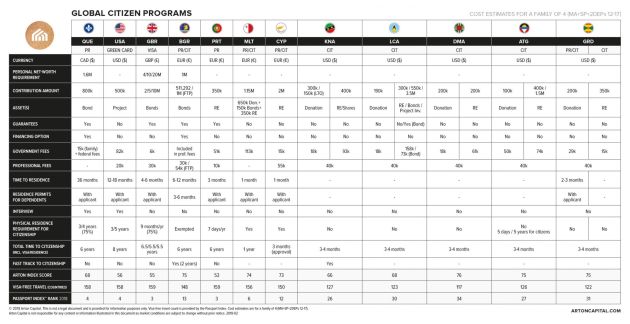
© 2018 Arton Capital. This is not a legal document and is provided for information purposes only. Visa-free travel count is provided by the Passport Index. Cost estimates are for a family of 4 (MA+SP+2DEPs 12-17). Arton Capital is not responsible for any content or information illustrated in this document as market conditions are subject to change without prior notice. 2018-02

The Global Citizen Foundation is committed to making a difference by reaching out to children and young people who are in need. They are focusing on education, but also lending a hand and contributing to the next generation of leaders and education policy worldwide.

“We live in the age of global citizens,” said Arton in a TEDx Talks session he gave recently. “As global citizens, the only boundaries we have are the way we see ourselves and the way we see each other.”

Arton Capital takes its leadership position in the global citizenship movement seriously. The company curates the Global Citizen Forum, a platform that brings together visionaries and global leaders.

The company is also a founding member of the Global Investor Immigration Council (GIIC), a group that whose mission is to establish best practices and foster sustainable and responsible industry governance; as well as a co-founder of the Global Citizen Foundation, which aims to contribute to the development of the next generation of leaders and enriching education policies worldwide.

“The place where we were born does not dictate who we are, where we can go, or what we can become. When we limit human mobility, we’re restricting the use of one of the most important growth tools humanity has at its disposal,” said Armand Arton.

Source: Arton Capital Partners With EnterPH, Enticing More Filipinos To Global Citizenship

These Countries Have the Most Powerful Passports in the World

For citizenship shoppers (the ranking is more click bait than substance and any difference of a few points is meaningless and no weighting is made for ease or difficulty in obtaining citizenship):

Singapore can be celebrated for more than its role in the hit film Crazy Rich Asians — its passport is now the most powerful in the world.

Its ranking was determined by Passport Index, an online tool that collects data from 193 United Nations member countries and six territories to compile an ever-changing list of the world’s most powerful passports. The Index is sponsored by global financial advisory firm Arton Capital, and its annual list of the most valuable passports is decided by the amount of countries to which a passport grants entry without a visa.

Singapore is the sole country to snag the No. 1 “power rank” spot, with a visa-free score of 166. A Singaporean passport will grant visa-free access to 127 countries, while just 29 countries would require a visa upon arrival and 32 countries would require a visa in any circumstance.

Singapore’s spot on the list comes as no big surprise, as the city-state ranked high on the index’s previous list, just behind South Korea, which ranked as No. 1. in the 2017 list that was announced in February. This year, South Korea has fallen to the No. 2 spot, with a visa-free score of 165.

The United States, Finland, Germany, Denmark, along with more European nations, also rank at No. 2 with a score of 165. [Canada is 164]

South Korea and Singapore are the only Asian countries with a power rank at No. 1 and 2, though Japan joins the ranks of Italy, France and Canada at No. 3.

Last year’s list impressed many with the rise of South Korea and Singapore to the top of the list. Armand Arton, the founder and president of Arton Capital, credited the changes to the world’s evolving view of Asian nations. “This is a testament to the increased global respect and trust Asian countries are commanding,” Arton said in a statement in February.

Singapore’s rise on the global passport ranking coincides with its growing wealth. WealthInsight, a data firm which ranks wealth around the globe, reported in May that Singapore is the sixth most millionaire-dense city in the world — one in every 34 residents of Singapore are millionaires. WealthInsight also determined that the city-state has increased in millionaire density by 2.9% in the last year alone.

However, a country’s wealth isn’t necessarily proportionate to its passport power ranking. Monaco, which was ranked No. 1 on WealthInsight’s list (and has one millionaire for every three residents), only ranks at No. 11 on the Passport Index with a visa-free score of 155

Source: These Countries Have the Most Powerful Passports in the World

Citizenship consultants file defamation claim | Caribbean News Now

Dispute among the citizenship-by-investment promoters:

On May 28, 2017, global citizenship consultants Arton Capital initiated legal proceedings for alleged defamation in the United Arab Emirates (UAE) against the Investment Migration Council (IMC) and its UAE representative office CI Businessman Services (which operates under the name Citizenship Invest).

Arton Capital has partnered with the governments of Antigua and Barbuda, St Kitts and Nevis and Saint Lucia, along with other countries around the world, in relation to their citizenship by investment programmes, as well as advising more than 5,000 investors on investment programmes that empower global citizenship.

In December 2016, IMC, Transparency International (Hungary) and Dr Boldizsár Nagy published a report entitled “In whose interests? Shadows over the Hungarian Residency Bond Program”, which is, in Arton Capital’s view, defamatory, contains false information and has caused serious reputational damage to the firm’s business.

Arton Capital contends that the spread of this false information forms part of a broader smear campaign that it believes is intended to damage its reputation within the industry.

Arton Capital said it has spent more than a decade building a reputation of trust with governments around the world, as well as building the investment migration community.

“Arton Capital takes its reputation extremely seriously and will take all necessary steps to correct falsehoods and protect its hard-won reputation for trust and diligence. The founders of the company are committed to driving forward the highest standards of best practice, regulation, and governance for the industry,” the firm said in a press release on Monday.

IMC is a Geneva-based self-proclaimed oversight association for investor migration and citizenship-by-investment prominently backed by Henley & Partners, another consultancy firm active in the Eastern Caribbean economic citizenship programmes.

Earlier this year, Henley & Partners came under fire for its perceived involvement in a controversial “60 Minutes” investigative programme aired by the US television network CBS on January 1, which focused on the citizenship by investment programmes (CIP) operated by three out of the five Caribbean islands that offer such programmes.

It was alleged that Henley, whose chairman Christian Kalin appeared prominently in the broadcast, was behind the production of the programme in the first place, although the firm later denounced the broadcast as “one-sided”.

However, according to one industry insider, Henley & Partners apparently forgot that they invited the 60 Minutes producers to one of their citizenship conferences in Dubai in order to initiate the report.

A number of resignations earlier this year from IMC’s advisory committee were, according to one resigning member, prompted by, amongst other things, the controversial 60 Minutes report in January that was a “PR disaster” and made the citizenship industry look ridiculous.

Furthermore, Kalin is one of the five-strong governing board of IMC and his critics now say that he is using the organisation to attack his commercial rivals. Members of the advisory committee apparently decided that they did not want to be a party to any potential lawsuits, with its involvement in attacking residency programmes such as Hungary’s going beyond its stated mission.

“The IMC is no more than a mouthpiece of Henley & Partners,” said an industry source.

IMC was established in October 2014 with the stated aim of bringing together stakeholders within the immigration and citizenship by investment industry and to give the industry a voice and, for reasons best known to itself, said it will soon be opening a representative office in Barbados.

Source: Citizenship consultants file defamation claim | Caribbean News Now

Cyprus launches redesigned citizenship by investment program

I always find these puff pieces advertising citizenship for sale revealing:

“We congratulate the Government of the Republic of Cyprus, and more particularly the Ministries of Interior and Finance, for their prudent work which took into consideration industry requirements and standards, the sensitivities, psychology and motives of the investors, the need for transparency and the need for ease of assessment of the applications.”, commented Armand Arton, President of Arton Capital, a leading global financial advisory specialised in investor programs for residence and citizenship.

Under the new program, it is no longer needed to form groups of 5 or more investors, the upper threshold on the required investment for single applicants has been halved to €2.5 million, more safeguards for the investors are introduced, while main applicants can secure citizenships for dependent parents.

The redesigned program seeks to retain the exclusive nature of the Cypriot passport, currently ranked 12th by the Passport Index. The speed of processing remains one of its unique features, currently unmatched by other EU countries competing to attract foreign direct investments such as MaltaPortugalHungary or Bulgaria. Within 3 months, qualified investors can be granted Cypriot citizenship approval, which makes it the fastest CIP in Europe. The speed, simplicity and the inclusion of dependent parents are the driving indicators of Cyprus’ updated ranking on the Arton Index, the industry benchmark of global citizen programs, where it scores 74 points, out of 100 and claims the pole position by a EU country.

Cyprus places an emphasis on the genuine ties with investors, ensuring that they maintain a permanent housing unit bought at a minimum of €500,000+VAT and held for the duration of their lifetime. The immediate needs of applicants are also addressed, as citizenship applicants are given a Residence Permit until they secure their passport.

“The new changes, Cyprus’s unique geographic location, Mediterranean climate and sound economic recovery provide ideal investment opportunities for new citizens of Cyprus,” added Arton.

Given that the economy of Cyprus is setting new records in recovery and is now an example of sound economic management, investors are expected to keep flocking to the island in increasing numbers. Values of property aimed at the local market have been stabilized, while the values of high-end, seaside properties geared toward the foreign market have been rising right through the crisis.

“The Government clearly aims toward further reduction in the unemployment rate, which has been deescalating sharply over the past months, and a reduction in non-performing loans, which are gradually becoming less of a problem.“, Arton concluded.

With offices in Cyprus and around the world, Arton Capital have been quietly driving the industry innovation through its sough-after sovereign advisory practice, vast certified partner network and bespoke investor relations.

Source: Cyprus launches redesigned citizenship by investment program