Removing religion as hate speech defence worth exploring: anti-Semitism envoy

Worth consideration but of course not without contention (Andrew Bennett, the former ambassador for religious freedom, currently at Cardus, appears to be ruling it out, unlike Lyons):

Canada’s special envoy for combating antisemitism is “very interested” in exploring the idea of removing religion as a possible defence against hate speech charges, she said Thursday, raising concern about creating a possible chill on religious expression.

Deborah Lyons, whose title also includes preserving Holocaust remembrance, made the comment before a parliamentary committee that is studying antisemitism on university campuses.

“I am very interested in exploring (it) as an option because I think, frankly, we are seeing it used in this country and in other places as a defence that frankly does not stand the ground in these very difficult times,” she testified Thursday.

Still, Lyons said she is not ready to offer a final opinion on the matter, and is still discussing it with Justice Department officials.

Jewish leaders, students and faculty have for months been voicing concerns over an increase in hate speech and violence since the beginning of the Israel-Hamas war last fall.

Lyons said she believes universities’ equity, diversity and inclusion strategies are “failing Jews in this country” because they don’t make much mention of antisemitism specifically.

Her office is working to develop better training to counter anti-Jewish discrimination, which she hopes institutions, including governments, will use.

Members of Parliament also asked Lyons about the role police and prosecutors play in laying hate speech related charges, and whether Criminal Code changes are needed.

They pointed to a recent decision by Quebec prosecutors not to charge Montreal imam Adil Charkaoui over comments said during a prayer — a scenario Lyons says she is discussing with the government.

The comments were delivered at a pro-Palestinian demonstration in Montreal, and led to a complaint alleging threats and incitement of violence, which was investigated by the RCMP.

Leading a prayer in Arabic, Charkaoui had called on God to “take care of aggressor Zionists,” adding “O God, don’t leave any of them.”

Last week the province’s director of public prosecutions announced that a committee of three Crown attorneys found the evidence insufficient to prove beyond a reasonable doubt that the words amounted to an incitement of hatred toward an identifiable group, as defined in the Criminal Code.

Using the case as an example, Bloc Québécois MP Rhéal Fortin asked Lyons whether she supports his party’s proposal to eliminate a section of the Criminal Code that allows the use of religious beliefs or a religious text as a defence against the promotion of hatred and antisemitism.

The Criminal Code states that people shouldn’t be convicted of the willful promotion of hatred or antisemitism — defined as downplaying or denying the Holocaust — if, “in good faith,” they expressed an opinion “on a religious subject” or “based on a belief in a religious text.”

Fortin says his party wants to ban “exceptions” to hate speech based on religion.

“Certainly I think that it’s something we’ve got to continue to examine,” Lyons said.

Justice Minister Arif Virani’s office did not immediately respond to a request for comment.

He is already seeking to increase the punishments for existing hate-related offences — including increasing the maximum consequence for advocating genocide to life imprisonment — in the Liberals’ legislation against online harms, tabled back in February.

The stiffer criminal justice reforms have fallen under harsh scrutiny from critics, including civil liberty advocacy groups, who say it could stifle free speech. Justice officials say criminal charges would only be laid in the most extreme examples.

Removing religion as a possible defence to a hate speech charge would likely be welcomed by those who oppose religion, but would create “genuine fear” for those who have deeply held religious beliefs about what they could say in the public square, said Rev. Dr. Andrew Bennett, who works at the public policy think tank Cardus.

“Often, religious people privatize their faith because they’re afraid that if I speak about what I believe, in good faith, in the public square, I’m going to be cancelled, or I’m going to be shut down,” said Bennett, Cardus’s faith communities program director.

He says if a “chill” is placed on religious expression it risks marginalizing a sizable part of the population, including many new Canadians for whom “religion is not just some sort of cultural relic” but “informs all aspects of society.”

“In many cases, they’ve come here because of the religious freedom we enjoy, and so to then say to those new Canadians in particular, ‘Oh, by the way, you can’t speak about your religion publicly for fear of being censured,’ I think that’s a very bad message to send.”

Bennett said the debate raises questions of how hate is defined and what makes a hateful view “different from a peacefully-held opinion that someone might profoundly disagree with?”

In the case of Charkaoui’s comments, Marco Mendicino, a Liberal MP, said he found the call by Quebec’s Crown not to press charges against the imam “incomprehensible and deeply problematic.”

Charkaoui’s comments were “perhaps one of the most egregious offences that I have seen” he told Thursday’s committee.

Mendicino, a former prosecutor who previously served as public safety minister, also cited other examples of demonstrators chanting offensive language, including glorifying Hamas’s Oct. 7 attacks.

He believes “Zionists” fit the Criminal Code’s definition of an identifiable group, which refers to “any section of the public distinguished by colour, race, religion, national or ethnic origin, age, sex, sexual orientation, gender identity or expression, or mental or physical disability.”

Source: Removing religion as hate speech defence worth exploring: anti-Semitism envoy
Douglas Todd: The promise and pitfalls of foreign-trained clergy in Canada

Interesting read:

It didn’t take too long for Father John Alex Pinto to realize he didn’t have nearly the authority in Canada as he did in his homeland of India.

In Pinto’s old city of Mangalore, the 4,500 loyal Catholic families who belonged to his mega-parish looked up to him as a powerful community and religious leader.

After Pinto moved to Canada 15 years ago, the Indian priest not only had to improve his English and get used to winter, but had to realize that Roman Catholics in Canada were less devotional than in India, were highly educated and much more “independent.”

Now serving as a priest in downtown Vancouver after time in Calgary, Pinto is one of more than 60 foreign-trained priests in the 200-clergy Catholic archdiocese of Vancouver.

Most of the imported priests in the Catholic church, Canada’s largest denomination with 14 million adherents, are from the Philippines and India, with others from Africa, parts of East Asia, the U.S. and Europe, says Rev. Gary Franken, the archdiocese’s vicar general. They’re needed to make up a priest shortage as the church welcomes an influx of Catholic immigrants, mostly from Asia.

Foreign-trained priests in Catholicism, however, are just the tip of the phenomenon. Thousands of clergy in a variety of Canada’s faiths received their religious preparation outside the country.

While the proportion of Catholic clergy in Canada who are foreign-trained range as high as one third in some dioceses, that is low compared to the ratio with Sikh, Muslim, Eastern Orthodox, Hindu and Jewish clergy in Canada.

Among Canada’s minority religious groups, a solid majority of imams, rabbis, priests, granthis and pastors are born outside the country, where they also receive their religious training.

There are many reasons why religious organizations in Canada rely heavily on foreign-trained clergy.

Outside Canada’s Catholic and large mainline Protestant and evangelical denominations, many leaders of faith groups say they do not have enough adherents to justify creating their own theological colleges in Canada.

It can also be enriching and reassuring for immigrants to attend a place of worship in Canada led by someone from one’s ancestral homeland. Angus Reid Institute polls show faith communities can ease immigrants’ transition to this new land.

And many congregations, according to scholars, believe there is status in having their clergy educated in places like the Punjab, Israel, Saudi Arabia, Pakistan or Iran — where they are typically steeped in a religious tradition that penetrates every aspect of the nation’s life and norms.

But foreign-trained priests also run into challenges, including adapting to Canadian culture, where secularism dominates and freedom and equality, particularly for women, are premier social values. Practically, language barriers can also be difficult.

While Pinto, 62, intends to stay in Canada for the rest of his life, most foreign-trained clergy, including in the Catholic church, come here for only a short time.

“On loan,” as Franken says.

Harjit Singh Gill, who is involved in gurdwaras in Surrey, says most Punjabi-trained priests who work in Canada come for less than a year. They are appreciated by older Sikhs, he says, but tend not to appeal to younger ones.

The situation is similar, but slightly different, for most of the rabbis who serve Canada’s 350,000 Jews. Almost all are trained abroad, usually in the U.S. or Israel. That is true even for those born in Canada, like Vancouver-born rabbi and writer Yosef Wosk.

Now retired from the rabbinate, Wosk studied formally in New York City and Jerusalem. “Many, perhaps most, Canadian congregations hire rabbis from the U.S.,” Wosk said, “with not enough Canadian-born individuals available to fill all positions.”

Abdie Kazemipur, a University of Calgary sociologist and the chair in ethnic studies, says the issue of foreign-trained clergy is a “very important” and sometimes sensitive one within religions, rarely discussed in wider society or studied by academics.

There are no theological schools for imams in Canada, Kazemipur said, even though the country has a Muslim population of more than 1.2 million, centred largely in its major cities.

Although every imam must know Arabic, since it is the language of the Qur’an and the religion, Kazemipur says many Muslims outside the Middle East aren’t fluent in the language.

Foreign-trained imams are respected in mosques, said Kazemipur, but in secularized Canada adherents sometimes struggle with how to respond to imams who often expect Canada to be like the Muslim-majority country they are from.

‘In India society is totally different’

“In India, society is totally different. It was a multicultural shock to come Canada,” says Pinto, who serves the West End parish of Guardian Angels in Vancouver.

“There is more of a fear of God in India. In India, the priest is like a leader on all sorts of issues. People listen to him on everything. But in Canada the priest is not as much an authority.”

Since many of the parish members Pinto served in India lived in villages and were not highly educated, he acknowledges he initially expected in Canada to be seen as the person in command. But he soon realized that didn’t work.

“I was so impressed by the Canadian parishioners’ in-depth knowledge of religion. They don’t necessarily fear God; there is more of a relationship,” Pinto said.

All in all, Pinto said he has loved the transition to Canada, appreciates his congregation’s friendly tolerance of his lack of administrative skills, and thinks the Canadian Catholic church would not survive without foreign-trained priests.

Andrew Bennett, Canada’s former ambassador for religious freedom, says that while most Sikh, Muslim, Jewish and Eastern Orthodox clergy are trained outside the country, there are ways to ease the cultural disconnect that can be experienced.

As a deacon in the Ukrainian Greek-Catholic Church, Bennett supports occasional efforts by small denominations like his to invite would-be clergy from other countries to spend a year in Canada before they start leading a congregation — to help them immerse in the culture.

Gill, an orthodox Sikh, said virtually every priest who serves the large Sikh populations in Metro Vancouver, Greater Toronto, Calgary and Edmonton is trained in seminaries in the Punjab region of northern India. And most only work in Canada on six-month visas. Many are not paid much.

Like Bennett, who is director of Cardus think-tank, Gill shared concerns that Canada’s Immigration Department lacks expertise to regulate the cross-border movement of foreign-trained clergy, including assessing applicants’ qualifications.

Since Gill was raised in the Punjab, he says he’s fortunate to be able to understand the India-trained spiritual leaders when they routinely speak the language of the homeland, while often toiling in English.

“It means,” Gill said, “they’re good for my generation, but they’re not good for my kids.”

Many Canadian-born Sikhs, Gill said, are not fluent in Punjabi, which contributes to them drifting away from the faith — a trend confirmed by the Angus Reid Institute, which found immigrants are more devoted to their religion than their second- and third-generation offspring.

Gill believes Sikhism and other minority religions would hold on to more followers if they had more Canadian-born priests trained in Canada.

Foreign-trained clergy face steep learning curve

Kazemipur, author of The Muslim Question in Canada: A Story of Segmented Integration, says many foreign-trained imams who travel to serve in Canada don’t realize that Muslims in North America, being a minority, live dramatically different lives from those in Muslim-majority countries, where Islam pervades every aspect of life, including laws.

“The imams are often not very good at grasping that,” Kazemipur said. “They would come to Canada as if it didn’t matter which country they go to.”

All foreign-trained imams are fluent in Arabic, in which they often lead prayers and services, but many struggle in English, which can contribute to “a cultural sense of alienation in the Muslim community.”

There are two major conversations about foreign-trained clergy, said Kazemipur.

One is what he calls the “outside conversation,” in which non-Muslims focus on the potential politicization or radicalization of Muslims. The other is the more refined “conversation within,” which focuses on adapting Islam to democratic societies that orient to free expression and sexual liberation.

It is largely the internal conversation that’s reflected in a new book by Ed Husain, an Arab scholar who quietly toured many of the 2,000 mosques serving Britain’s three million Muslims. While his book, Among the Mosques, applauds the way many Muslims have integrated into British society, Husain also found some Muslim communities distancing themselves from British culture while advocating strict versions of the faith, including religious literalism, gender separation and negative attitudes to gays and lesbians.

Kazemipur does not support attempts by politicians in countries like France, who are responding to such self-segregation by what he calls “over-regulating” mosques and religious training.

But he says clergy born and religiously educated in places like Turkey or Iran have to find ways to respond effectively to Canadian adherents facing issues that don’t exist in their native land. “If they end up in Denmark, Germany or the U.S., many would just give the same kind of sermon.”

For instance, Kazemipur said, some clergy trained in socially conservative nations are not equipped to instruct teenage Muslims about how to respond when exposed to sex education and gender-diversity programs in public schools.

A foreign-trained imam might also teach that Canadian Muslims should avoid taking out a loan that requires paying interest, since that’s forbidden in traditional Islam. “But that would basically mean Muslims in Canada can’t get a mortgage,” Kazemipur said, “or a car loan or put their money in the bank.”

Pinto has run into similar cross-cultural experiences in the Catholic realm. Until he came to Canada, particularly Vancouver’s West End, he had never ministered to Catholic parishioners who are openly gay and lesbian.

Despite the inevitable cultural challenges that occur when Canadian religious organizations import spiritual leaders, Franken, of the Catholic archdiocese, is not alone in concluding: “Ultimately, foreign-trained priests have been a gift.”

Source: Douglas Todd: The promise and pitfalls of foreign-trained clergy in Canada

Battle against religious persecution ‘diminished’ under Liberal government: ex-ambassador

Bennett’s comments are not surprising, as the intent of the merger into the human rights division was to encourage a more integrated approach to all rights, which ultimately means a lower profile for religious freedom than provided by a separate office.

Same thing happened when multiculturalism moved from Canadian Heritage to IRCC in 2008 under then Minister Kenney, where it withered away in terms of personnel, funding and importance, and has yet to recover despite its move back to Canadian Heritage:

I agree fully with his call for greater religious literacy among officials (not just diplomats), given the place that religion plays in many peoples lives:

Canada’s former ambassador for religious freedom launched thinly veiled criticisms at the new Office of Human Rights, Freedoms and Inclusion on Wednesday.

Speaking to the Senate’s human rights committee, Andrew Bennett, now a senior fellow with Christian think-tank Cardus, said the “ill-defined and thoroughly vague” concept of “inclusion” could muddy the water and distract from specific religious persecution issues faced by minorities abroad.

Bennett implied the Liberal government’s new office, which replaced his Office of Religious Freedom earlier this year, has a vaguer mandate less focused on specific issues of religious persecution than it did under the Conservatives.

He said more training is needed because there is a “relative ignorance” of religion in the public-service ranks and a “false understanding of separation of church and state” still seems prevalent. To ignore the fact that religion plays a role in public life is “out of step,” “historically inaccurate” and a “very serious diplomatic blind spot,” he said.

“Allies are wondering why there has been a diminishment in focus on religious freedom,” Bennett added, arguing that religious freedom is fundamental and that to prioritize it does not deny attention to other human rights.

“Certain human rights need to be brought to the floor and actively and persuasively championed when they’re most being challenged,” he said. His office could have been louder, Bennett noted, when it came to specific issues, such as the treatment of Falun Gong practitioners and Tibetan Buddhists in China, of Christians in Saudi Arabia and of Shia Muslims in Pakistan.

Bennett said he worked with the new office as part of a transition process, including extending his own network of contacts, until June. But, in the context of a question about the transition period, he said, “unfortunately I was never afforded the opportunity to brief the minister on the work of the Office of Religious Freedom.”

Foreign Affairs Minister Stéphane Dion’s press secretary, Chantal Gagnon, said however that the two had met earlier, on Feb. 10, when they “discussed the work of the office.”

In an emailed follow-up statement to the National Post, Bennett said the meeting was held with “no more than two hours’ notice” and that Dion requested “advice on the political sensitivities of the non-renewal of the office” and his relationship with the office’s External Advisory Committee. “But that was not a structured, formal briefing on the office itself.”

Liberals to let religious freedom office expire on March 31

Expected:

Mr. Dion confirmed the office’s closure at a global affairs conference in Ottawa on Tuesday.

“Our government shares the same conviction as the previous government, but it assesses the consequences of its chosen method of promoting this conviction differently. I am referring to freedom of religion or belief, which we will defend tooth and nail, but not through the office that the Harper government specifically set up for this purpose,” said Mr. Dion during a speech at the University of Ottawa.

The Liberals have previously indicated their intention to close the office. The office’s mandate expires March 31.

Last week, the Conservatives tabled a motion in the House of Commons to renew the mandate of the Office of Religious Freedom. The Liberals voted against the motion and it was defeated 225 to 90.

Prior to the motion, Religious Freedom Ambassador Andrew Bennett, who was appointed by the Conservatives in 2013, accepted a position as a senior fellow at Cardus, a leading Christian think tank. He will also serve as chair of the think tank’s Faith in Canada 150 program while he completes his term at Global Affairs Canada. His new position is voluntary and unpaid with support of Global Affairs Canada.

Mr. Bennett’s three-year term was originally set to end in February, but the Liberals extended it to March 31 to coincide with the expiration of the office’s mandate and $5-million in annual funding. While Mr. Bennett’s future at Global Affairs Canada is unclear, the minister’s office has applauded his work as ambassador.

The Conservatives first promised to create an Office of Religious Freedom during the 2011 election campaign. The office’s mandate is to “speak out and to protect and promote religious freedom around the world.”

While the Conservative initiative was criticized for mixing politics and religion, certain religious groups supported it. In a letter to Mr. Dion in January, Jewish, Sikh and Ahmadiyya Muslim organizations asked the Liberal government not to scrap the office.

On Tuesday, Mr. Dion reiterated the government’s thinking in determining how to best defend various rights.

“We believe that human rights are better defended when they are considered, universal, indivisible, interdependent and interrelated, as set out in the Vienna Declaration,” said Mr. Dion.

The remaining question is the degree to which future projects focused on religious freedom  will be funded within existing Global Affairs program funds. I expect not absent any declaration to the contrary.

Source: Liberals to let religious freedom office expire on March 31 – The Globe and Mail

‘Religious freedom is under attack’: How a Canadian agency [Office of Religious Freedom] teaches respect where it’s tough to find | National Post

While likely partly orchestrated to keep the Office of Religious Freedom in its current form (rather than programming being folded into the overall human rights organizational and programming structures, some of the examples are nevertheless compelling.

Ironically, had public servants under the previous government carried out similar activities (some did), they were accused of disloyalty and not ‘loyal implementation’:

It’s those deep-seated problems that the Office — amid speculation the new government will shutter its doors — tries to tackle, according to its ambassador, Andrew Bennett.

Courtesy of Forum for Development, Culture and Dialogue

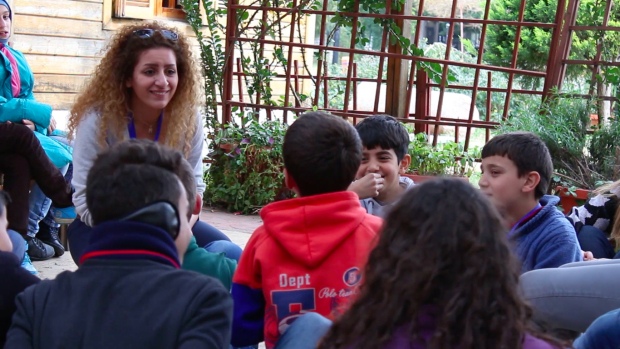
Courtesy of Forum for Development, Culture and Dialogue Children and mothers take part in a nine-day camp on religious dialogue in Latakia, Syria, in January 2016, funded by Canada’’s Office for Religious Freedom. 

“We’re talking about long-term, multigenerational change. Nothing is going to change in this countries overnight,” Bennett says in an interview.

Bennett describes his office as an advocate both abroad and within the Foreign Affairs department, amid more immediate initiatives like refugee resettlement and aid.

“Within government, in a highly secular country like Canada, we tend not to be very comfortable talking about religion or religious faith,” he says.

“Part of our work is to educate and raise awareness about the role that religious faith plays in foreign policy, and more generally in how people see themselves.”

In one case, Bennett’s staff invited the Mennonite Central Committee, which already runs development projects in Iraq, Syria and Lebanon, to submit a proposal in December 2014 — four months into Canada’s airstrikes in Iraq.

A Manitoba couple who oversees MCC’s regional work found groups in all three countries, and applied for $500,000 in funding. A fifth of that money supports the three Syrians’ projects, which teach youth to respect strangers. The couple helps the activists manage their budget, tallies their progress and offers moral support.

Laying a foundation for freedom

Though all three activists come from different religions, they all grew up with middle-class families and career goals. They’re now tackling the root of Syria’s conflict, and laying a foundation for when it finally ends.

Rami set up an interactive play that drew 1,200 people. The play starts with a Muslim and Christian neighbour who fall in love, and the end result is determined by the audience’s suggestions.

At one performance, a priest and a sheikh rose to give an impromptu speech on respecting others. At another, scores of displaced people who sleep in a nearby mosque talked about feeling alienated in their new city.

Despite sporadic water and electricity, for three days Rami got 400 people into the basement auditorium of a blown-out building last December.

Emma crisscrosses her country, including territory held by ISIL, to co-ordinate civil society groups.

“When the war ends, people will need to work together,” Emma says. “For peace to last, they have to trust each other.”

The 34-year-old trains groups in managing projects, securing foreign funding and evaluating whether participants are less likely to join terrorist groups. She’s abandoned her dreams of raising a family, and knows her work puts her life at risk.

Alex facilitated a nine-day choir camp in Latakia, one of Syria’s less dangerous cities, where many displaced people have settled.

His team taught 32 children and 22 mothers to respect people of different religions — almost all their fathers are on the frontlines — during the New Year break.

“At first it was difficult because they don’t have the concept of being together,” said the 28-year-old. “But at the end they were singing together.”

All three Syrians admit they won’t see any fruits of success for decades, but say they’re in it for the long haul.

The activists spoke with the Post during a recent regional conference in Beirut, which was funded by the grant. To get to there, each made dangerous taxi trips darting through rebel- and government-held territory toward the Lebanese border.

At the conference, the three learned from local activists who ran similar projects during the 15-year-long Lebanese civil war.

Looking at today’s Syria, Rev. Dr. Riad Jarjour recalls Lebanon crumbling in 1975 because adherents to 18 different sects lived parallel lives, building resentment and suspicion among neighbours.

“It’s so good to have children learn about living with each other, respecting each other, before they grow up and have something build in their minds because of no education,” says Jarjour, who founded the Forum for Development, Culture and Dialogue.

He believes Canada was ahead of the curve in opening the Office of Religious Freedom three years ago, modelled on a U.S. position created in 1998.

Source: ‘Religious freedom is under attack’: How a Canadian agency teaches respect where it’s tough to find | National Post

Religious freedom envoy joins think tank ahead of Liberals’ decision on office – iPolitics

Suggests that the decision to fold the religious freedom office back into the human rights division has been taken:

Religious freedoms ambassador Andrew Bennett has joined conservative think tank Cardus amid uncertainty over the future of his office under the Liberal government.

The Canadian Press has learned that Bennett has become a senior fellow at Cardus and chair of the group’s Faith in Canada 150 program, effective immediately, while he serves out the balance of his term as ambassador.

“I look forward very much to working with Cardus, the think tank best placed in my view to reaffirm the essential and foundational role of faith in our common life as Canadians,” Bennett said in a statement to The Canadian Press.

The Tories set up the Office of Religious Freedom in 2013, and appointed Bennett, a former public servant and Christian theologian, as its first ambassador.

Source: Religious freedom envoy joins think tank ahead of Liberals’ decision on office – iPolitics

Religious freedom office faces uncertain future as Liberals consider wider human-rights proposals

Good in-depth piece, with considerable commentary offering advice on what the Government should consider:

The Liberal government is considering whether to scrap Canada’s controversial Office of Religious Freedom — considered a signature achievement by the previous Conservative government — and instead focus on ways to champion a broader array of human rights abroad.

Unless the new government intervenes, current Ambassador for Religious Freedom Andrew Bennett’s three-year term will expire Feb. 18. The office’s mandate and funding, about $5 million a year, will run out on March 31.

Supporters of the office are urging the Liberals to save it. Others are calling for big changes, if not its outright abolition. The government is weighing its options.

“Beyond March, the government has not made a decision with respect to the mandate and associated budget of the office,” said Adam Barratt, a spokesman for Foreign Affairs Minister Stéphane Dion. “The minister is examining options and how best to build on the work that has been accomplished in the area of religious freedom while promoting human rights as a whole.”

The Office of Religious Freedom was the subject of controversy even before it was formally established on Feb. 19, 2013. It was promised by the Conservatives during the 2011 election, but some worried it would be used to selectively champion Christianity, woo certain ethnic voter groups and pursue pet projects of the government.

Those who supported its creation argued there was is a growing link between religious freedom and democratic rights. They also said religion was becoming an increasingly important factor in international affairs, and having an office dedicated to the issue would benefit Canada abroad.

Bennett subscribes to that belief. Sitting in his office at the Department of Global Affairs, surrounded by religious symbols from different faiths, Bennett warned recently that Canadian diplomats risk a “blind spot” if they don’t have a strong grasp of how religion influences countries’ actions.

“We need to ensure that if we want to be really nuanced and winsome in how we engage countries that are deeply religious, that we can actually employ language that enables us to have a deeper engagement,” he told the Citizen. “If we can’t do that, then we risk developing or having a serious diplomatic blind spot.”

Even those who question the need for an Office for Religious Freedom have been impressed by Bennett, the well-spoken policy analyst at the Privy Council Office who also moonlights as a professor and dean at a small Christian college in Ottawa.

“Anytime I reached out for him, he was open, available and worked within the mandate,” said former NDP MP Paul Dewar, who was his party’s foreign affairs critic for years. “I think he did as good a job as he could to connect with groups from different religions and really try to engage to the extent he could.”

That doesn’t mean his term has escaped controversy. When the Conservative government appealed a court ruling that struck down a ban on face coverings during citizenship ceremonies, Dewar asked for Bennett’s position on the issue. The ambassador replied it was outside his mandate.

Bennett, however, admits that what happens in Canada has an impact on his ability to champion religious rights abroad. For instance, he says Turkish officials were quick to raise Quebec’s controversial Charter of Values two years ago when he was pressing them on the treatment of religious minorities in Turkey.

But even now, Bennett refuses to talk about the niqab debate, or the use of identity politics during the election debate. Mandate restrictions aside, he says Canada is different from Turkey and other places because it has a healthy democracy in which such issues can be debated.

“We need to be conscious as Canada that we have our own challenges that we have to engage,” he said. “But at least we’re able to engage them. In many countries, they can’t even talk about them.”

…Father Raymond de Souza wants the government to keep the office. A Roman Catholic priest and National Post columnist, de Souza is also chair of the Office of Religious Freedom’s external advisory committee. He says the federal government spends more on water treatment plants abroad than on the office each year.

“And if you ask why are there Syrian refugees in the first place, at least part of the answer is religious liberty,” he said. “People are fleeing religious persecution … The foreign policy issues that the government of Canada has at the top of its agenda are sort of shot through with religious liberty questions.”

…Alex Neve, the head of Amnesty International Canada, said the human rights group appreciated Bennett’s frequent public interventions on both individual and broader issues of religious persecution abroad. And he suggested the government might consider appointing ambassadors focused on other human rights.

“There is considerable value in devoting dedicated resources to a particular human rights concern, and appointing high level ambassadors or envoys to represent Canada globally with respect to that issue, as has been done with the Office of Religious Freedom,” he said.

Conservative foreign affairs critic Tony Clement hopes the Liberal government will keep the office and Bennett. He says both have contributed to religious freedom abroad, and transformed Canada into “a voice for research and advocacy and collaboration in order to protect people and their religious freedoms.”

But even some supporters question its impact. One is Imam Abdul Hai Patel, founder of the Canadian Council of Imams, Muslim chaplain for the University of Toronto and York Regional Police, and another member of the office’s external advisory board.

“I welcome the office. But then it has limited or no powers really to do anything,” said Patel. “I think it hasn’t really fulfilled the purpose for which it was intended, because it has no teeth and there was a limited budget.” He would like to see the office have more independence and influence, like its counterpart in the U.S.

Some Canadian diplomats have also quietly grumbled that the creation of the office politicized the issue of religious freedom, and hurt Canada’s ability to advance it abroad by putting it into a silo.

History might be against Bennett and the office surviving under the current Liberal government. Unlike the U.S. and some other countries, Canada has not traditionally appointed ambassadors for specific themes. And, fairly or not, the ambassador and office are inextricably linked to the previous Conservative government.

Bennett argues the office is needed more now than ever. In particular, he would like to offer more training to Canadian diplomats, to protect against that potential “blind spot” as religion and belief become more and more important in international politics.

And he says there’s an appetite for what the office has to offer. He says he has always acted as a non-partisan public servant. “My goal for the office is to just do the work. I just want to help people. I want to take that Canadian experience and try to assist as best we can people who are being persecution.”

Source: Religious freedom office faces uncertain future as Liberals consider wider human-rights proposals

Sensitivity key for Canadian foreign service, says religious freedom envoy

Encouraging that the promised spirit of openness by the Liberal government allowed this interview. Agree with Bennett’s fundamental thesis that diplomats would benefit from greater understanding of the role that religious faith plays.

Arguably, the same could be said for public servants more generally, given that many if not most reasonable accommodation issues involve religions:

Canada’s ambassador for religious freedom says the explosive rift between Saudi Arabia and Iran highlights religion’s growing influence on global affairs — and a potential “blind spot” for Canadian diplomats.

In an exclusive interview, Andrew Bennett said Canadian foreign service officers and other government officials need more training on the role that religious faith often plays in an individual country’s domestic policies and international relations.

“We need to ensure that if we want to be really nuanced and winsome in how we engage countries that are deeply religious, that we can actually employ language that enables us to have a deeper engagement,” he said. “If we can’t do that, then we risk developing or having a serious diplomatic blind spot.”

….On the broader question of religious reconciliation, Bennett said Canada and its western allies “are not going to solve the Sunni-Shia divide. But we need to understand it.” Key to that, he says, is making sure Canadian diplomats and government officials can understand, appreciate and speak the “language” of religion.

“When we engage, we can at least be somewhat conversant in the language that is used in Iran,” Bennett said. “I don’t mean Farsi. I mean what are the cultural, religious reference points that we need to be aware of and need to sort of integrate into that dialogue.”

The Pew Centre, a U.S.-based think tank, has estimated that 84 per cent of the world population has some type of religious affiliation, Bennett said. Religion has also played a role in the conflict between Russia and Ukraine, he said, as well as in Nigeria and other places.

“Religion is becoming more of a geopolitical fact. It’s informing geopolitics,” said the ambassador.

“In Canada, because we live in a fairly secularized society where religious faith is not a strong component in shaping political, economic (or) social discourse, we’re not formed through our education and other things in a way that allows us to engage necessarily in that discussion around faith,” he added.

“So I think we need to increase our knowledge and increase our ability to engage in questions of religion.”

Bennett said his office, which was established under the previous Conservative government three years ago, has been working to expand such understanding in Canada’s foreign service. Several courses were offered and quickly filled up. His hope is that such work will be increased under the new government.

“At a more foundational level, in Canada and in the United States and in many Western countries, really since the Enlightenment, religion and religious faith has increasingly become absent from public discourse and from the public space, and it’s been viewed as something purely of the private sphere,” he said.

“When it comes to foreign affairs and international relations, when we leave a very secularized country such as Canada and go to a country that is not at all secular such as Saudi Arabia, Indonesia, Iran, Nigeria, there’s a bit of a disconnect. And we need to address that.”

Source: Sensitivity key for Canadian foreign service, says religious freedom envoy | Ottawa Citizen

Unmuzzle the ambassador of religious freedom, Conservatives tell Dion

My sense is that Andrew Bennett’s time is up.

Open question whether they fold back the function into the Human Rights Division or keep it as a stand-alone division (6 FTEs). Arguments can be made for both approaches:

With Donald Trump calling earlier this week for a ban on all Muslims entering the United States until the country’s representatives can “figure out what’s going on”, it seemed like a great opportunity for Canada’s ambassador of religious freedom to say…something.

It is his mandate, after all, to “promote Canadian values of pluralism and tolerance abroad.”

But since the Liberals were elected in October, Andrew Bennett has been suspiciously quiet, leading many to speculate Canada’s first ambassador of religious freedom could also be its last.

Though Bennett, who was appointed to the Harper government-created position in February 2013, released a statement on the International Day for Tolerance in mid November, Global Affairs Canada has turned down requests from multiple media outlets for interviews.

“I will have to politely decline your interview request with Ambassador Bennett at this time,” Global Affairs spokesperson John Babcock told iPolitics in an emailed statement right around that time.

“I will say that the promotion and protection of human rights is an integral part of Canada’s constructive leadership in the world. Freedom of religion or belief, including the ability to worship in peace and security, is a universal human right in accordance with the United Nations Universal Declaration of Human Rights.”

The Toronto Star was told during the campaign that he’d be available after the election, and CTV‘s Don Martin lashed out on Twitter this week after being declined yet another interview request with Bennett.

In Question Period on Wednesday, Conservative MP Garnett Genuis sought clarification from the government, echoing the familiar Liberal jab at the Conservatives’ muzzling of federal government scientists.

“Mr. Speaker, members of the media are telling us that they have been unable to get hold of the ambassador for religious freedom since the new government was sworn in. The ambassador has previously been a highly effective advocate internationally, earning widespread acclaim and achieving substantial results. At a time when religious minorities are more vulnerable than ever before, why is the ambassador being muzzled?”

Global Affairs Minister Stéphane Dion responded, “Mr. Speaker, that is quite rich coming from this party. We do not muzzle officials at all. They did. They did it all over the place. We will fight to protect the right of freedom of religion, and all freedoms will be protected as much as possible by this government.”

Unmuzzle the ambassador of religious freedom, Conservatives tell Dion

Islamic State attacks on religious minorities ‘genocide,’ Canadian ambassador says | Toronto Star

Trying to straddle the fine line between strong condemnation of ISIS and not leading to further mission creep and a seeming endorsement of R2P (Responsibility to Protect):

And, he says, it’s time that Canadians, who live in a secular society, brought religion into public debate — something many Western governments have shied away from.

“We can’t be afraid of religion in public discourse and how we advance foreign policy goals. We cannot say that religion is just bad, because it isn’t. It motivates people to great good and justice. But when we talk about the advancement of religious freedom we don’t mean theological disputes. We’re looking at the inherent dignity of every human being.”

Canada is well placed to set an example of tolerance, he said. But it is also correct to take military and humanitarian action on “religiously based persecutions,” that amount to “genocides in the case of the Yazidis and Christians.” The Islamic State has threatened both groups with conversion to their brand of radical Islam or death, and has massacred hundreds of men, women and children.

“The worst thing we can do is to throw up our hands and say it’s too complicated and we need to back away,” Bennett said. “It depends on countries of goodwill like Canada and its allies — that believe in democracy, freedom, rule of law and human rights — to take a stand.”

Islamic State attacks on religious minorities ‘genocide,’ Canadian ambassador says | Toronto Star.

And an interesting take on ISIS, and valid caution regarding further intervention beyond air strikes and the related current approach.

But the political pressures to do more, not least for the “brilliant” minds cheerleading the 2003 Iraq war, are hard to resist:

Unless politicians in the United States and allies in the West fall back on their traditional “Fire first, think later” approach to military planning. Consider for a moment: ISIS has suddenly begun decapitating Western journalists and placing the videos online for everyone to see. The target audience, of course, is the United States. ISIS says it is engaging in this barbarism to warn the Americans away, but even they aren’t that stupid. The 9/11 attacks, as every terrorist knows, were intended to and succeeded in luring us into war—just as bin Laden hoped it would. He believed his Al-Qaeda fighters would defeat the American military and drive it from Saudi Arabia. Why would ISIS think that killing a few journalists would cause the United States to cower when slaughtering thousands did not?

Simple: They don’t. As one terrorism expert told me, ISIS is hoping America will go too far in response, launch attacks that kill lots of innocent Muslims in an attempt to wipe out the jihadists. That would not destroy ISIS, but would derail the Islamic threat to the group. For no matter how hated ISIS is among the other jihadists and Middle Eastern Muslims, the United States is despised more. A new American strategic blunder on par with the Iraq War would distract ISIS’s Islamic enemies and turn the battle, once again, toward the U.S. If ISIS is to survive, it needs America to strike out rashly and harshly against it.

All this sounds like three-dimensional chess and it is. Unfortunately, in a world of Twitter foreign policy analysis and cable news blathering, America is rarely able to handle more than checkers when trying to address global threats. Yes, ISIS is hoping to strike us with something, anything, and it has enough supporters in the United States that it may succeed in executing an attack on a soft target. But the purpose of such an assault will be to provoke a response, one that will, inadvertently, save ISIS from the threat of the billions of other Muslims who want nothing to do with the group.

So, remember this: Every time you hear some commentator say America should “do something,” they are reading from the ISIS script. The U.S. can soften up ISIS with strategic bombing to aid the Islamic fighters taking them on. But it cannot beat them by rolling the Humvees back into Iraq or Syria. ISIS will be defeated by its own brutality against the people who might otherwise be their allies. In this case, the enemies of our enemies are truly our friends, at least for now.

ISIS will fall. It is inevitable. That is, unless the United States becomes the stupid one and gives them what they want.

ISISs Enemy List: 10 Reasons the Islamic State Is Doomed.