Liberals promise to bring back refugee health benefits cut by Conservatives

No surprise, in platform and mandate letters, reversing a mean and nasty policy, one ultimately that would cost society more in the long-run:

The federal Liberals say they are poised to restore refugee health benefits trimmed by the previous Conservative government.

Health Minister Jane Philpott says an announcement will come very soon to reverse the cuts to refugee health care and, in the meantime, the needs of Syrian newcomers will be covered.

Prior to 2012, anyone awaiting a refugee status decision had their health care costs — including dental, eye care and medications — paid for by the federal government until their application was decided and provincial health coverage kicked in.

But in June that year, the Conservative government drastically scaled back the available coverage.

The Conservatives launched a challenge to a Federal Court ruling that found the changes they had made to the health-care system for refugee claimants were unconstitutional.

They also reinstated some of the benefits, though not all, to comply with the court ruling.

Source: Liberals promise to bring back refugee health benefits cut by Conservatives

First large group of Syrian refugees on government plane arrive in Canada: Diversity and Inclusion language

Consistent welcoming and inclusive language:

The first large group of Syrian refugees coming to Canada by government aircraft arrived in Toronto late Thursday night, with Prime Minister Justin Trudeau on hand to welcome them at a temporary processing centre at Pearson International Airport.

Trudeau was joined by the ministers of immigration, health and defence, as well as Ontario Premier Kathleen Wynne, local mayors and opposition immigration critics.

“They step off the plane as refugees, but they walk out of this terminal as permanent residents of Canada with social insurance numbers, with health cards and with an opportunity to become full Canadians,” Trudeau said.

“This is something that we are able to do in this country because we define a Canadian not by a skin colour or a language or a religion or a background, but by a shared set of values, aspirations, hopes and dreams that not just Canadians but people around the world share.”

All of the Syrians on board are sponsored by private groups, many of whom had filed the necessary paperwork months ago in order to bring in some of the estimated 4.3 million Syrians displaced by the ongoing civil war in that country.

More than 400 refugees have already arrived on commercial flights since the Liberals took office on Nov. 4.

Just before the aircraft arrived, the prime minister thanked the staff and volunteers helping to process and welcome the 163 refugees.

“How you will receive these people tonight will be something they will remember for the rest of their lives, but also I know something that you will remember for the rest of your lives,” Trudeau said.

“So I thank you deeply for being a part of this because this matters. Tonight matters, not just for Canada but for the world.”

Source: First large group of Syrian refugees on government plane arrive in Canada – Macleans.ca

Distinct societies: Why Canada, U.S., diverge on Syrian refugees: Adams

Michael Adams on the contrast between Canada and the USA:

Americans certainly enjoy unique latitude in the individual pursuit of happiness, but the pursuit of happiness doesn’t always look like much fun. In an environment where there is a lot to fear (financial ruin in an unforgiving system, illness leading to bankruptcy, gun violence inflicted by a stranger, a family member, or an unsupervised toddler), it is perhaps not surprising that some are eager to control the one variable that seems like a no-brainer: don’t give jihadists a green card. But one of the San Bernardino jihadis seems to have been born in Chicago. The “big and beautiful wall” Donald Trump proposed to build to keep dangerous people out of America would require complex architecture indeed. No society is or can be perfectly safe. But societies that have traditionally put a little more stock in collective well-being seem to have better odds. To be fair, those safer, quieter places have also not been the birthplaces of Apple, Google, Tesla, Amazon, Wikipedia and the first man on the moon.

As I have written elsewhere, despite the current apparent spasm of xenophobic sentiment and the din of gun violence, our values research suggests that in fact Americans’ values are tilting in a slightly more Canadian direction – toward greater openness to social difference, a more nuanced sense of personal autonomy, and even a less suspicious attitude toward government. The shift is by no means a sea change, but the election of Mr. Obama (twice) was indeed the product of deep and meaningful changes in the electorate, no matter how lonely he may sometimes appear in White House press briefings these days. As younger voters, women (especially single women), and America’s diverse, city-dwelling voters become more influential politically, America is changing. But those who are on average less keen on this direction of social change (older, more conservative, whiter, more religious and patriarchal voters) have some innings left, as the tremendous polarization of U.S. political discourse attests.

What will become of America in the next election cycle and beyond? And how will the noisy debates and decisions of our neighbour to the south influence our own public conversations and political aspirations? As we wait to welcome 25,000 Syrian refugees, Canada feels like a fairly peaceable corner of a turbulent world. Recent reports suggest, however, that of the more than 25,000 refugees interviewed by the UN, fewer than 2,000 were interested in coming to Canada. Many are likely hoping for reunification with family members in Europe. It would be interesting to know how many are holding out for their shot at the American Dream.

Source: Distinct societies: Why Canada, U.S., diverge on Syrian refugees – The Globe and Mail

Donald Trump’s no-Muslims immigration idea right in line with U.S., Canadian history

Canada, of course has its equivalents (Chinese head tax and related restrictions, World War 1 internment, Continuous Journey clause, Japanese World War 2 internment, restrictions on Jewish immigrants etc):

1.Chinese Exclusion Act of 1882

exclusion_act

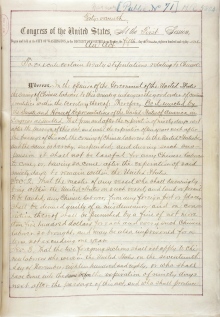
The first page of the Chinese Exclusion Act of 1882. (U.S. National Archives and Records Administration)

The first major law restricting immigration to the U.S. was the Chinese Exclusion Act, which barred all Chinese people from entering the United States.

Signed into law on May 6, 1882, the act came amid outcry from American-born citizens that Chinese workers were to blame for the high unemployment and declining wages plaguing the West Coast.

Not only did the law bar Chinese immigration, but it also prevented Chinese people already living in the country from gaining citizenship.

The law, originally written to last 10 years, was repeatedly amended and extended until its repeal in 1943, when China became an ally against Japan during the Second World War.

2. Immigration Act of 1917

This U.S. federal law was the first to restrict immigration to those who could pass a literacy test.

It also banned all immigration from the so-called “Asiatic Barred Zone,” which encompassed  India, Afghanistan, Persia (now Iran), Arabia, parts of the Ottoman Empire and Russia, Southeast Asia and the Asian-Pacific islands.

Furthermore, it expanded an already-existing category of barred “undesirables” to include sex workers, criminals, alcoholics, political radicals, contract labourers, “idiots, imbeciles, and [the] feeble-minded,” people with epilepsy, tuberculosis or contagious disease, as well as anyone else deemed “mentally or physically defective.”

3. Chinese Immigration Act of 1923

The United States wasn’t alone in discriminating against Chinese immigrants.

In Canada, the federal government imposed a $50 head tax on Chinese immigrants in 1885 after Chinese workers were no longer needed to work on the Canadian Pacific Railway. The amount was raised to $500 in 1903, the equivalent of about two years’ wages at the time.

On July 1, 1923, the head tax was replaced by the Chinese Immigration Act, which barred any Chinese immigrants — or ethnic Chinese people of other nationalities — from entering the country. There were some exceptions for merchants, diplomats and foreign students with proper documentation.

Canada also cast suspicion on those already living here, forcing all people of Chinese origin or descent to register with authorities and to obtain an identity certificate.

The act remained in effect until 1947.

4.Immigration Act of 1924

Travel-NYC-Holocaust Exhibit

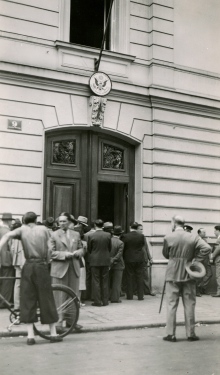
In this 1938 photo, prospective immigrants line up outside the U.S. consulate in Vienna after the German annexation of Austria. American Jews struggled to get refugees out of Nazi-era Europe due to strict immigration quotas in the U.S. (Museum of Jewish Heritage/ Franklin D. Roosevelt Presidential Library/Associated Press)

In an attempt to stem the tide of eastern European immigration to America, the U.S. enacted a quota system, stipulating that visas be provided only to two per cent of the total number of people of each nationality in the United States as of the 1890 national census.

Because so many eastern Europeans moved to the U.S. in the decades leading up to the First World War, lawmakers opted not to use the more recent census of 1910 to calculate the quotas.

The act also barred entry to “any alien who by virtue of race or nationality was ineligible for citizenship” — a provision aimed at the Japanese.

The effects of the quota system were particularly devastating for European Jews, who struggled to obtain visas leading up to the Second World War and the Holocaust.

5. ‘Excessive demand’

The Canadian Immigration and Citizenship Act states “a foreign national is inadmissible on health grounds if their health condition might reasonably be expected to cause excessive demand on health or social services.”

This wording has been used to bar entry of people with illnesses or disabilities.

In 2011, a South Korean family living in New Brunswick faced deportation because their teenage son is autistic. The deportation order was later reversed amid public outcry.

Again in 2012, the National Post reported that a University of Victoria professor from the U.S. and his family were denied permanent residency in Canada because their four-year-old son’s autism.
Source: Donald Trump’s no-Muslims immigration idea right in line with U.S., Canadian history – World – CBC News

ICYMI: Ex-immigration minister Atkey urges Canada to double intake of Syrian refugees

A historical reminder and it appears the Government is listening:

As Canada braces for the arrival of 25,000 Syrian refugees, the man who served as immigration minister during the Vietnamese boat people crisis says Ottawa should be doing much more.

Ron Atkey believes the 25,000 Syrians Ottawa is promising to re-settle initially is a “noble objective” but he wants Canada to up the ante.

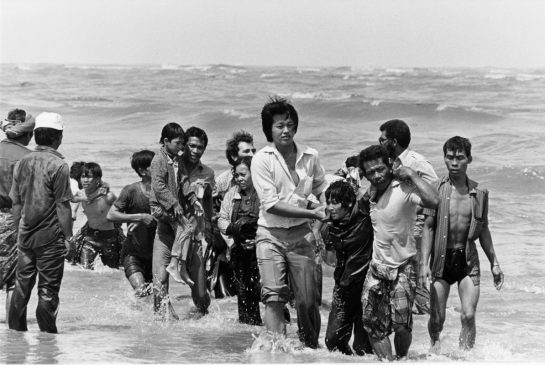
“If Canada can do another 25,000 — that would make a significant contribution in line with Canada’s contribution with the Vietnamese boat people in 1979 to 1980. It will demonstrate to the Americans that they have to do more. We’ll shame them into it, similarly the Australians,” says Atkey, who was immigration minister in the Joe Clark government in 1979 when 50,000 Vietnamese refugees were granted asylum in Canada. By the end of 1980, that number had risen to 60,000.

Canada admitted 60,000 Vietnamese refugees in 1979 and 1980.

Canada admitted 60,000 Vietnamese refugees in 1979 and 1980.

“For us to take a dramatic position on the world stage is important. We won a medal from the United Nations High Commission for Human Rights. We gained a lot of prestige as a humanitarian country. I think that’s consistent with Canadian tradition.”

Atkey, who is also a lawyer, professor and national security expert, is chair of Humanity Wins, a group of prominent Canadians who came together earlier this year to advocate for re-settlement of Syrian refugees to Canada.

Source: Ex-immigration minister urges Canada to double intake of Syrian refugees | Toronto Star

The integration of refugees affirms Canada as a caring society: Governor General Johnston

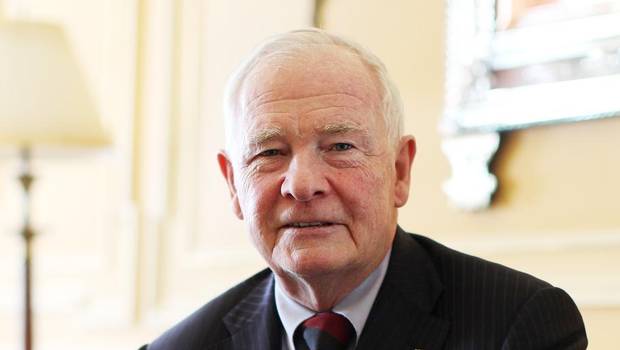
Governor General David Johnston, with the new government’s diversity and inclusion messaging:

Perhaps the bigger challenge we face is the long-term project of positioning our new Syrian-Canadian friends for success in their new country. And just as effective integration poses a significant challenge, so does it present a significant opportunity for Canada. Remember, great nations are built on great challenges.

The great opportunity we have in taking on the challenge of integrating new Canadians is simply this: It’s a chance to revisit and renew our commitment to being a smart, caring and inclusive society, not just for Syrian refugees, but for all Canadians, including the most vulnerable and marginalized among us.

The challenge of integrating refugees is the latest chapter in the continuing experiment we call Canada. At its heart, it’s an experiment in building an inclusive society of opportunity for diverse peoples. Consider our country’s roots. John Ralston Saul calls Canada a “Métis civilization.” Our national character is inclusive and mixed – and strong as a result. In their book Why Nations Fail, Daron Acemoglu and James Robinson argue that politically and economically inclusive societies thrive, while exclusive and extractive societies fail.

But perhaps the most compelling argument I’ve heard of late for rededicating ourselves to building a society of inclusive opportunity comes from a parent in Syria, whose son recently received a refugee scholarship to study at the University of Alberta. In thanks, the parent wrote: “You have pulled my son out of the hell, where he has been taking daily a high dose of risk, tension, worries and sorrow. The wheels of the war have crushed everything; the human and the stones, but not the heart and soul and never the will and hope.”

So to answer the question “How does Canada build a diverse and inclusive society?” I remember “why” we do it: Because it’s both the right and the smart thing to do. Now together, let’s reimagine how.


Source: The integration of refugees affirms Canada as a caring society – The Globe and Mail

Immigration minister reviewing refugee loan program

Interesting – going beyond the mandate letters and platform:

The federal Liberal government will consider reforming a loan program that requires refugees to cover the hefty cost of their flights to Canada, Immigration Minister John McCallum said Friday.

Officials revealed earlier this week that the 25,000 Syrian refugees to enter Canada by February won’t have to pay the cost of their flights and pre-flight medical screening.

While that decision was praised by B.C. opposition MPs and some refugee aid groups, they said the policy should extend to all refugees. They argued that people fleeing persecution already face major challenges finding homes, work and language training, so the last thing they need is to have to service an interest-bearing loan of up to $10,000.

McCallum, in an interview with The Vancouver Sun, said his officials will brief him in coming days on the loans program and present him with options to change it.

“I don’t know what the options are, but I’m telling you this is a policy that we’re certainly considering changing,” he said.

The government’s Immigration Loans Program, created in 1951, provides up to $110 million a year in loans for travel and costs immediately after arrival, like rent deposits and buying work tools. It has a 91-per-cent payback rate.

Refugees can take up to six years to pay, depending on the loan amount, and the interest rate this year was 1.38 per cent. In some cases, loans are interest-free for one to three years, and federal officials will make alternative arrangements if borrowers are having trouble making payments, according to Citizenship and Immigration Canada.

Source: Immigration minister reviewing refugee loan program

Rick Mercer’s Rant on Refugee Worries

Short and to the point:

Canada’s acceptance rate for Syrian refugees around 90 per cent: Ottawa

Some useful background data on Syrian-refugee acceptance rates:

Canada has rejected just two UN-referred Syrian refugee cases because of security concerns over the past 22 months.

The two cases represent 13 people, according to Immigration Department figures. That means more than 99 per cent of the 1,128 cases referred to Canada between January, 2014, and Nov. 3, 2015, were not of sufficient concern to be blocked for security reasons. It’s not clear how many were turned down for other reasons. The cases do not include privately sponsored refugees.

Over all, Canada’s acceptance rate for Syrian refugees has been “around 90 per cent,” said Immigration spokeswoman Nancy Caron. The figure includes both United Nations-referred and privately sponsored refugee streams.

The low number of security-related rejections presents a contrast to estimates in the United States, where officials said they expect their admission rate for Syrian refugees will “edge up” above 50 per cent. But it is also an indication of why Canada’s border services agency and the RCMP have expressed confidence in their ability to assess 25,000 refugees over just a few months.

According to a source, plans for the coming wave of government-sponsored Syrian refugees destined for Canada assume an acceptance rate of about 90 per cent. A case can include more than one person, as families tend to apply together.

Immigration, Refugees and Citizenship Minister John McCallum said in an interview he did not know the current acceptance rate for Syrian refugees, nor could he predict what it might be in the future. When asked about the divergence with U.S. estimates, Mr. McCallum did not have an explanation.

“All I can tell you is we are focused on the most vulnerable. We interview all those applicants with great care. The officials will readily put to one side anyone for whom they have a reasonable suspicion but I cannot tell you what percentage of the people they meet that would be,” Mr. McCallum said.

Source: Canada’s acceptance rate for Syrian refugees around 90 per cent: Ottawa – The Globe and Mail

Congratulations – and some questions – for Canada’s ministers on our refugee policy: Ron Atkey

Ron Atkey [former immigration minister at time of Vietnamese refugees] on the government’s plan and his questions:

Yes, there are continuing uncertainties and omissions. Will the exclusion of single men continue beyond the initial wave and become a permanent part of Canadian refugee policy?

What happens to the Syrian refugee movement after the end of 2016? What happens if the Canadian appetite for PSRs exceeds government expectations (as happened in 1979-1980)?

These issues will be dealt with in the fullness of time as the program rolls out.

But what is important is that the tone has changed. The government has listened to public concerns – some legitimate, some not – and has come up with workable and realistic changes to the initial Liberal promise on Syrian refugees made in the heat of the campaign. This is to be commended.

What is also encouraging is the response of the new Opposition critics to the recent announcement. Immigration critic Michelle Rempel and Public Safety critic Erin O’Toole both distinguished themselves by generally supporting these changes and offering assistance to make the program work.

This refugee movement will need the support of all Canadians through their MPs if it is to succeed in making a significant contribution to alleviating the suffering among the millions fleeing war-torn Syria.

The government has now set the table. There is much still to be done by Canadians throughout the country.

Source: Congratulations – and some questions – for Canada’s ministers on our refugee policy – The Globe and Mail