CNN, MSNBC Insiders Shudder at Idea of Hiring MAGA Mouthpieces

Of note:

If soon-to-be former Trump White House officials were hoping to snag paid talking-head roles at the major television networks, they may be in for a rude awakening.

It’s become a political ritual every four years: After each presidential election cycle, cable and broadcast news executives race to woo outgoing administration officials or top figures from the winning and losing campaigns for cushy roles as talking heads.

Not this time. With Trump’s top aides and advisers all taking their sycophancy to perilous new heights, actively participating in the outgoing president’s efforts to undermine the integrity of the vote, their utility as political pundits may have expired.

The Daily Beast spoke with executives and insiders from many of the top cable and broadcast news networks including CNN, MSNBC, CBS News, and ABC News, and most relayed the same message: Unless they retreat to the comforts of Fox News or even far-right outlets like Newsmax or One America News Network, the former Trump officials who have repeatedly lied to or denigrated reporters shouldn’t expect to land a network paycheck.

CNN, in particular, has traditionally been a safe landing spot for former top campaign officials, regardless of party affiliation. Just days after he exited Trump’s 2016 campaign team, former campaign manager Corey Lewandowski landed a commentator gig at CNN, despite his at-times physically aggressive relationship with the press and the fact that he had a non-disparagement agreement preventing him from speaking freely about the president. His colleague, Trump 2016 spokesman Jason Miller, was also hired by CNN, until being canned in 2018 over allegations (which he vehemently denied) that he impregnated a woman and secretly slipped her an abortion pill.

But the post-2020 outlook for former Trump campaign and administration officials will likely not be as friendly.

“Most of us probably are hoping that we will be seeing very little of these people—unless they are willing to be more honest,” a well-placed CNN insider told The Daily Beast. “The ones that are still out there who are well-known creeps like Jason Miller and Boris Epshteyn—nobody is going to be hiring these people.”

People who work with CNN chief Jeff Zucker relayed that he has been personally offended by the frequent and vicious attacks on CNN from Trumpworld figures, who’ve flamed any and all news outlets reporting remotely negative information on the president. Throughout the Trump era, the network became increasingly emboldened in taking the fight back to a hostile administration. Aside from on-air chyrons fact-checking various Trump lies in real-time, some of the network’s top news personalities have been publicly critical of the administration, in some cases abruptly ending interviews mid-broadcast when Trump officials refuse to substantively engage with the questions, and instead launch ad hominem attacks against journalists.

CNN insiders who spoke with The Daily Beast said there would likely be internal discontent if network bosses decided to pay ex-Trump officials who’ve repeatedly denigrated the network and are now working to undermine the 2020 election on behalf of the outgoing president. There seems to be zero interest, these sources said, in trying to poach even the most visible Trump campaign and White House staffers like Hogan Gidley and Tim Murtaugh—who both have extensive comms backgrounds in D.C.—or Press Secretary Kayleigh McEnany, a career right-wing pundit with previous stints at Fox News and CNN.

But Zucker himself may not be a part of the network’s future for long. It’s widely known in media circles that the CNN boss is unhappy with parent company WarnerMedia’s restructuring moves, which reduced his role, and has not yet re-upped his soon-to-expire contract. It’s possible that a CNN without Zucker—who personally meets with and vets many on-air contributors—could be more receptive to some ex-Trump officials, sources cautioned.

Unlike CNN, MSNBC does not have the same extensive history of paying partisan contributors for on-air appearances, though throughout Trump’s term the network cultivated a stable of so-called “Never Trump” Republicans. Multiple network insiders said the liberal-leaning, Comcast-owned cable network is unlikely to welcome any high-profile Trump loyalists, even gratis, to share their insights into the ongoing failures of a Joe Biden presidency.

“If you’re a person who was a career government official who happened to serve the Trump administration—somebody like Mark Esper or Elliott Abrams—we might have them on,” said an MSNBC insider, “but it’s likely that if Kayleigh McEnany has a book she’s selling, she will definitely be blacklisted. The same goes for someone like Hogan Gidley.”

But it’s not as though they aren’t already trying to get back into the professional pundit class. Even as top Trump officials entertain the president’s “voter fraud” delusions, one agent told The Daily Beast, “They’re all emailing saying, ‘Can you come meet up next week?’” Fox News reported on Wednesdaythat Trump’s communications director Alyssa Farah has been interviewing TV agents, pursuing a job after her White House exit. (Farah declined to respond to The Daily Beast on the record.)

Another MSNBC insider suggested that some shows like Morning Joe would consider booking less aggressive Trump supporters like former New Jersey Governor Chris Christie, currently a contributor at ABC News, “because he has had enough access to be in the room for Trump’s debate prep and get COVID, but at least he’s rooted in reality.”

Meanwhile, predictions that MSNBC’s and for that matter CNN’s ratings are likely to decline under the relative normalcy of a Biden administration might be inoperative if Trump—as seems likely—continues to exert political and cultural influence and presides over a kind of resistance shadow presidency after leaving the White House on Jan. 20.

MSNBC, for one, found a solid business model over the past four years in the relentless narrative, especially in primetime, that Trump was a malevolent force whose presidency was apt to end at any moment in impeachment.

It’s possible, said one cable-news executive, that Trump could still drive ratings even when out of office. “It remains to be seen whether that would compel people to watch obsessively every day like they’ve been doing for the last four years,” the exec said.

Some networks also now have the added concern that Trump-loving contributors could use their perch to feed inside information to anti-media activists as part of Trumpworld’s ongoing efforts to discredit any and all of his critics.

“As a news org, how do you allow someone in your news organization who could James O’Keefe you in a second?” one network executive wondered, referring to the founder of Project Veritas, a right-wing group that uses hidden-camera footage to attempt to show bias at media organizations.

Of course, lack of network interest likely won’t stop some of the most high-profile Trump White House and admin figures from ever popping up again on television.

Gidley, McEnany, Murtagh, and others already get top billing when they appear on Fox News, where they could well join former Trump White House press secretary Sarah Huckabee Sanders, who regularly appears on-air and has a network contributor contract. Other former administration officials like Sean Spicer have found gigs at Newsmax, while others like Sebastian Gorka and Steve Bannon—the federally indicted (for alleged fundraising fraud) former White House chief strategist—have expended their talking-head energies in right-wing radio and podcasting.

“Can I see Mark Meadows appearing as an analyst on MSNBC? No, but on Fox News, yeah, for sure,” one network executive remarked, singling out Trump’s pugnacious chief of staff. Another cable-news insider suggested Fox News might look to hire several MAGA officials to boost its suddenly lagging credibility with Trumpkins angry with the network for calling the election for Biden and not fully playing along with the president’s baseless voter-fraud allegations.

And for networks like CNN and MSNBC—self-styled guardians of democratic norms and civil discourse—President-elect Joe Biden’s reconciliatory Saturday evening victory speech may loom large over decisions on whether to extend an olive branch to ex-Trump henchmen and women.

“Let’s give each other a chance. It’s time to put away the harsh rhetoric. To lower the temperature. To see each other again,” he implored. “To listen to each other again. To make progress, we must stop treating our opponents as our enemy. We are not enemies. We are Americans.”

“Obviously there are 71 million people who voted for the president and there should be someone that represents their views and can talk about the political landscape,” another network executive told The Daily Beast.

And the networks are already seeking workarounds for representing conservative views on their air without hiring toxic ex-Trump officials. One TV industry insider said there has already been interest from various outlets in hiring the Republican Senate candidates who lost this year, as well as other outgoing GOP members of Congress. Like former Sen. Rick Santorum—a CNN contributor who essentially acts as a the network’s pro-Trump punching bag—these outgoing conservative lawmakers would likely be expected to speak about Republican politics as well as the ravings of the soon-to-be former president and his devoted base.

But some cable-newsers are skeptical that even the most repulsive ex-Trump officials will be totally shunned from a career in punditry.

“I won’t be surprised if some of the folks who were most reviled by mainstream media, Democrats, the resistance, etc., find pretty good jobs when this is over—in the media and in Washington—because ultimately politics is transactional,” said one CNN insider. “And the impulse to punish people leaving the Trump administration will be overshadowed by the impulse to profit off the people leaving the Trump administration.”

Source: CNN, MSNBC Insiders Shudder at Idea of Hiring MAGA Mouthpieces

Opinion: Diversity of thought needed in our pandemic response

Good, thoughtful commentary that applies more broadly than to the pandemic, and the risks of simplistic thinking and solutions:

Over the past nine months, we have seen an incredible change in the way we live, work and interact. The world is clearly different now. Our lives are intertwined with the evolving COVID-19 pandemic, and many look to experts from a variety of fields for guidance. Medical, public health and scientific leaders have become sources of insight and direction. Many may think there is only one “scientific truth,” and therefore every expert should be of the same opinion. But science, particularly when dealing with a novel threat, comes with many uncertainties.

As with any important issue, personal values influence how people interpret the science. We all have biases, which are influenced by our life experiences, cultures, emotions and personal beliefs, and experts are susceptible to these factors, as well.

This matters because diversity of thought, spurring civil debate, can help us collectively think through complex issues such as our pandemic response. Disagreement among experts is a normal and essential part of scientific discourse, as data continues to accumulate over time. However, one’s inherent beliefs and biases may play a significant role in the interpretation of the evidence at hand, and the messaging that follows.

Some may be motivated by their fear of infection, some by an urgent desire to return to a sense of normalcy and others by political or ideological beliefs, or even a need for notoriety. Some of the more polarizing views are what sow division among the population.

Oftentimes, the loudest voices espousing simplistic answers are not the correct ones, yet they may garnish the most attention and support in the media and online. The public — not aware of all the nuances — may lose trust in science after being bombarded with polarized, and often incorrect, views that are given as much, or more, attention than those that follow fundamental scientific principles and are transparent about their level of uncertainty. This eroding trust in the scientific community further splits populations.

Due to the emotions at play and the public-facing nature of the discussion, scientific discourse risks becoming politicized and devolving into a polarized conflict.

On the one extreme, discussion is interpreted as fear-mongering by people who think the potential harms of COVID-19 have been greatly exaggerated and that the harms of certain interventions have been underestimated. On the other extreme, the idea of personal freedoms are elevated over disease control and the focus becomes primarily on the harms of lockdown. Both of these positions have a nugget of truth in them, but the dogmatism may preclude any meaningful discussion that could lead to an evidence-based consensus.

Moderate voices that try to find a balance between the two more extreme views matter in this pandemic. It is important to listen to arguments from across the spectrum and try to interpret the data in as nuanced and unbiased a manner as possible. This is a tall order, as the moderate view often carries with it significant uncertainty, and pivots as available evidence evolves.

Recognizing the nuances and complexity of disease is crucial to forming a more complete understanding. Moderate voices may not make headlines or get clicks because the answers to simple questions are long and complex, but they are important to listen to. The moderate voice is not one single voice: opinions vary between the two extremes and the answers are often complex.

In contrast, the more extreme viewpoints have a tendency to be amplified to a great degree within their own echo chambers, which can then be prone to politicization. This drives false dichotomies, and polarized discussions — such as masks versus no masks, aerosols versus droplets, lockdowns versus personal freedoms — where in reality, the answer often lies in between.

People with extreme views often choose to compare countries to prove their point, celebrating certain jurisdictions while condemning the approach of others, but give no consideration to the complex demographic, social, political and geographic factors that lead to particular situations, as well as the changes that occur over time.

Who can be trusted given all the conflicting information? First of all, diversity of thought is crucial. And second, it is important to recognize our own biases and how they influence our perceptions and how we interpret evidence. People who are adaptable to messaging and acknowledge uncertainty as the evidence evolves are key, given that the scientific method is meant to gain more precision over time. Dogmatic stances are best avoided.

We are moving into the future with an evolving roadmap for how to deal with COVID-19 — one that’s guided by lessons learned from our collective global experience. Different perspectives offer valuable insights in this pandemic and together they can offer a clearer picture of the truth. That said, the “infodemic” will continue with the pandemic, and it is important to try to put information into context, recognize our own biases and be willing to revise our positions in the face of new evidence.

We require a diverse group of voices at the table, but must continue to make an effort to foster healthy public discourse that’s free of politicization, by appreciating and considering the input of experts from all walks of life. The general population is as diverse as their experts in their values and opinions, and public policy should try to find the middle ground. Therefore, moving forward, now more than ever, a balanced, pragmatic and evidence-driven approach to the interpretation and messaging of the COVID-19 pandemic is needed.

Zain Chagla is an infectious diseases physician and an associate professor at McMaster University. Sumon Chakrabarti is an infectious disease physician with Trillium Health Partners Mississauga and a lecturer at the University of Toronto. Isaac Bogoch is an infectious disease physician at Toronto General Hospital and an associate professor at U of T. Dominik Mertz is an infectious disease physician and an associate professor at McMaster.

Source: https://ottawacitizen.com/opinion/opinion-diversity-of-thought-needed-in-our-pandemic-response/wcm/c064636f-583e-41e0-8c8f-3b65a3b14e8b

Blanchet seeks to drive values wedge between Quebec and Trudeau government

Virtue signalling during the pandemic, when Quebec has some of the highest per capita infection and death rates worldwide:

Bloc Québécois Leader Yves-François Blanchet is doubling down on efforts to draw a line separating his party’s values from those of the Trudeau Liberals — particularly on the fraught ground of free speech.

Blanchet posted a tweet Sunday suggesting Justin Trudeau’s response to attacks in France that authorities have attributed to Muslim extremists did not go far enough, and highlighted what the Bloc leader called a “disturbing gap” in values that he chalked up to possible “weakness” or “ideology” on the prime minister’s part.

Blanchet said in French that Trudeau is threatening Quebec’s friendship with France. He’s sought to align his province with that country’s “republican and secular” principles, contrasting them with what he called an “Anglo-Saxon multiculturalist doctrine.”

Source: Blanchet seeks to drive values wedge between Quebec and Trudeau government

Alberta’s Little History War

From Chris Champion, the Conservative staffer I worked with developing the Canadian citizenship guide, Discover Canada, and who is playing a similar role with respect to the Alberta education curriculum, providing context for the controversies over the proposed approach:

JASON KENNEY, SWORN in as Alberta Premier on Apr. 30, should not only cancel the revised social studies curriculum drafted under Rachel Notley since 2016. He should scrap the extant 2005 curriculum too, and do what he can to shift the teaching philosophy behind it.

Kenney re-entered the History Wars with finely-calibrated counterattacks in 2016-17, renewed this year on Feb. 16, against “social engineering and pedagogical fads.” He should now bring forward the reserve guns.

Mandatory testing to the end of Grade 12 is laudable and should continue. The deeper problem lies in the current thematic approach to history and civics, in which a series of disjointed topics displaces sequential narrative. As against narrative history, too difficult for most academics, the teaching establishment prefers “‘issues-centred,’ interdisciplinary Social Studies courses,” beloved of two of Kenney’s antagonists, University of Alberta educationists Lindsay Gibson and Carla Peck. But even they admit that educators have been “over-privileging thematic approaches and disregarding chronology.”(1)

Thematic history is lazy, dispensing with the need to juggle sequence and analysis and put people and events in context. True understanding absolutely requires narrative, a discipline that forces teacher and student to interpret and explain, as they should be able to do both orally and in writing (but most of course cannot). A bundle of isolated topics — last week women’s suffrage, tomorrow divestment from Israel, next week Oka — half-fills the student’s head with random happenings, creating the illusion of insight, whose only glue is the social-justice temperament that left-wingers equate with good citizenship.

Just look at the “themes” of 2005. Grade 4 socials is about “analyzing various actions taken to address historical injustices.” Say again? This implies that current fads of the left are the engine of history, turning 9-year-olds into little SJW’s. In Grade 5 it’s “examining Canadian identity,” an inappropriate, post-secondary sociological approach. Grade 7 covers “origins, histories and movement of people” (dry social history). Grade 9 offers “a few isolated topics in Canadian history” such as the Indian Act and local Treaties. It gets worse, with “multidisciplinary investigations” of “globalization” in Grade 10, “nationalism” in Grade 11, and “ideology” in Grade 12. The problem is not that this stuff is, as Notley asserted, “out of date”; it is too up to date: it’s a curriculum designed by a committee, it would seem by some childless educratic clerisy.

It’s deadly stuff! When Kenney accused Notley’s experts of omitting military history, her minister countered that wars would continue to be studied in the context of “ideology.” But that’s the problem. To reduce war to a byproduct of ideology is reminiscent of Lenin’s deterministic “highest and last stage of capitalism.” 

Nor should “Nationalism” be taught as a tedious “-ism” with sermons about equality, discrimination, and the menace of ideology. Instead, tell the story of Cardinal Richelieu putting the state ahead of the church; of Napoleon, his wars, and the nations’ backlash. Tell the romance of Bolívar and the South American Republics; Garibaldi vs. the Pope in the Risorgimento; or, more ominously, Bismarck and German unification. Teach that ideas have consequences; that peace comes at a high price; that all of this lay in the background when Canada was cobbled together and mounted its own make-or-break colonial adventures in the West. “Ideology” be damned!

‘A.J.P. Taylor believed that if you sacrificed narrative, you opened the floodgates to laziness, for it was no longer necessary to take enormous pains organising a moving structure into which everything fitted’

— Paul Johnson

The ongoing fad is that we need “more” First Nations “perspectives.” Far from being new, this must date from at least the 1970s if my own repetitive West Vancouver experience with oolichan, cedar masks, and trickster stories is any guide. The plug must be pulled on the deplorable agitprop of the “KAIROS Blanket,” which brainwashes children into thinking  of themselves as “settlers” stealing the land — the kind of “truth and reconciliation” that is not evidence-based but relies on “knowledge keepers” to “foster truth.” The scientific tradition is that truth is discovered and authenticated. By contrast, the “truth” of Indigenous Elders sometimes contradicts the evidence.

Thematic history seems ideally suited to transmitting left-wing dogma. Is this fair to students? Better to equip them with the great stories and give them a key life-skill by the end of high school: the capacity to think critically about men and ideas and their place in history, as opposed to imposing sterile doctrines of race and “gender.” As my old Latin teacher was fond of saying, “He who marries the Spirit of the Age will be a widower in the next.”

If more proof were needed that educational approaches are in crisis, it is that today’s publicly-schooled millennials have negative impressions of the role of capitalism in history. They seem never to have been exposed to the idea that markets are probably the only system that has ever lifted the mass of people out of poverty. Instead the kids accord high notional support to — of all things — socialism.

Talk about turning the clock back! Oddly that is what CBC Edmonton reporter Alexandra Zabjek now accuses Kenney of doing in Alberta Views magazine. She sees a conspiracy to “grow the privatization movement … to encourage more Albertans to educate outside the traditional public system.”(2) But surely it’s an overly-powerful public monopoly that should be made a thing of the past.

The CBC fired a dud rocket when they called for a “focus on competencies” and “inquiry and discovery — not just the dissemination of information and recall of facts.”(3) Yet contrary to the CBC, one has the impression that facts and recall have been passé for decades.

They shouldn’t be. Elementary-age minds are sponges for memorizing poetry, stories, songs — and yes, dates. Canadian children have a right to know our stories, and by heart. Elementary graduates should also take home with them their own compendious time-line of European and North American history with hand-coloured maps and drawings, from something like 2500 BC to 2000 AD. This could be a project begun in Grade 4 and attentively improved and revised up to the end of Grade 7. Canadians especially need Classical, European, and US history because North American societies are offshoots of Europe’s, particularly those of Britain and France. Of course there is value in other cultures but we can never truly appreciate or evaluate foreign cultures without first knowing our own.

When it comes to content, part of the solution may be to film Ted Byfield’s Alberta in the Twentieth Century, an illustrated series of twelve oversize books, published between 1991 and 2006, that is already approved for use in schools. It’s a comprehensive analytic narrative of the Province in the context of historians’ debates and Canadian and world history. As Byfield told me when he recruited me in 1994 to work on Vol. 5, his dream was that the set would one day become a Ken Burns-style documentary like “The Civil War” on PBS. I’m sure the books could be spun into a few compelling Netflix dramas too, if competent directors can be found.

Once filmed, the documentary could be required for mandatory testing, perhaps in Grade 11. Watch Episode one at home, discuss with your peers, take a supervised test at school. Test the teachers while you’re at it. If you fail, you get to watch the video again and retake until you pass with 85%. Watch Episode 2, repeat. This alone would increase students’ knowledge of the past and provide counterbalance to the prevailing, politicizing social justice tendency that has already gone too far.

— C.P. Champion

Source: https://nuzzel.com/subscriptionstory/08282020/dorchesterreview/albertas_little_history_war?e=6707902&c=6ZpMrqxwRZjsQ21ty4Q3ZNz5DgUMIGhgcRJEW6skW9&u=davidakin&utm_campaign=newsletter_subscription&utm_medium=email&utm_source=nuzzel

From The Folks Who Brought You Boring Meetings: CEOs Want To Ditch Sterile Zoom Calls

I wonder how these assessments compare with the experience in governments. Large scale social experiment on the value of in-person versus remote work. Expect some b-school and other researchers will have ample opportunity for studies and the like.

On a personal level, given some hearing issues, I actually prefer webinars and the like to in-person sessions:

Lately, Zoom meetings have been hitting a nerve with CEOs.

JPMorgan Chase CEO Jamie Dimon says there’s no vital “creative combustion” happening in virtual settings.

American Airlines CEO Doug Parker finds Zoom meetings awful.

And Microsoft CEO Satya Nadella calls them transactional, where “30 minutes into your first video meeting in the morning … you’re fatigued.”

Early during the pandemic lockdowns, in April, many were touting the benefits. James Gorman, CEO of Morgan Stanley, said his bank would need much less real estate in the future because even though he was a fan of having teams together, “we’ve proven we can operate with no footprint.”

Now members of the C-suite have gone full boomerang on Zoom meetings. After finding them awesome and productive at first, they’re now questioning how much they really achieve and are suggesting they lead to a sterile work culture lacking in imagination.

“What we as human beings need, want, seek … is human contact,” Nadella says. He was speaking at a virtual conference organized by The Wall Street Journal last week.

Dimon is particularly worried about how working from home has affected JPMorgan’s younger employees. He told analysts that productivity had dipped, especially on Mondays and Fridays. Dimon says bringing people back to the office is paramount to fostering creativity.

The bloom is clearly off this rose.

Remote workers are using the bathroom during meetings

What Dimon and Nadella are articulating is increasingly bearing out in broader surveys. Architect and design firm Vocon, which of course has an interest in people returning to office spaces, conducted a survey in September. It found that 40% of people who ran businesses have noticed decreases in productivity from remote working staff. Among the same group back in April, 56% rated productivity as “excellent.”

As for the employees, who sit in front of a computer every day in the same spot of their homes, often on video chat, they found the experience “draining.” They missed being able to connect face to face with colleagues and had trouble setting boundaries for when work started or ended.

“It was surprising to see so many people felt this remote work fatigue, especially given the headlines of 100% remote forever,” says Sarah McCann​, a real estate strategy associate at Vocon.

Another survey by virtual tech firm Lucid found that workers didn’t feel like they needed to behave during virtual meetings when no one was looking. Most of them admitted to “questionable behavior” during virtual brainstorm meetings, including 1 in 10 who admitted using the bathroom while on a call.

Some workers also admitted to exercising, taking a shower, watching TV and cooking or preparing a meal while participating in virtual brainstorm meetings.

Nathan Rawlins, the chief marketing officer at Lucid, said that’s because virtual meetings are often a series of monologues where people are often checked out and feel “this meeting is the sort of thing where I could lift weights.”

Rawlins said workers were put off by hearing multiple voices simultaneously, which might not be that distracting in a physical setting. The survey also found that younger workers — as many as 1 in 4 — were even breaking company pandemic protocols and meeting with colleagues in person to discuss work projects.

And corporate leaders found that they had to delay major launches, campaigns, or initiatives. Rawlins says these are exactly the kinds of projects that need people to work together in person and collaborate to finish.

Companies hedge their bets on remote work with new office space

Recognizing the importance of collaboration, some large companies, including those that are offering flexible options to employees, are doubling down on office space. Facebook is leasing all the office space at an ornate New York landmark, the former James A. Farley Post Office building.

Amazon, which so far has said employees can work from home until early next year, just bought the marquee Lord & Taylor building on Manhattan’s Fifth Avenue and leased another 2 million square feet in Bellevue, Wash. But these tech giants will continue to offer employees flexible options, recognizing that much work can be done at home, while betting that their employees are also driven by the human impulse to socialize.

Still, there is a recognition by workers and employers alike that more is possible with virtual settings than before.

“A lot of people have learned that they can work at home, or that there’s other methods of conducting their business than they might have thought from what they were doing a couple of years ago,” the legendary investor Warren Buffett said at the Berkshire Hathaway annual meeting in May. “When change happens in the world, you adjust to it.”

And despite all the misgivings, Microsoft itself announced just last week that its staff will have the option of working from home permanently. It’s what many other companies are — from Facebook and Twitter to Zillow and Nationwide Insurance — are doing.

Many workers enjoy working from home and are saying so. What most surveys show, however, is that they also want to meet their colleagues. They miss the casual moments that spark spontaneous ideas. Some tasks — such as reading, research and writing — can, in fact, be done better in a remote setting. But creative brainstorming sessions, project discussions, new client meetings, onboarding of new employees are better suited to in-person settings.

As with anything, one size hardly fits all. Escaping the drudgery of work from home routines is a great attraction, with more than half saying they are most looking forward to the camaraderie with colleagues at the office. However, 23% said they are not looking forward to any part of returning to the office.

Source: From The Folks Who Brought You Boring Meetings: CEOs Want To Ditch Sterile Zoom Calls

The conservative case for toppling statues: Why ‘bad men’ shouldn’t be revered in the public square

Interesting categorization of monuments of historical figures:

It may have been the easiest political no-brainer of the year when Conservative leader Erin O’Toole rushed to condemn the unruly mob that brought Sir John A. Macdonald’s statue tumbling down in Montreal last month.

Even Prime Minister Justin Trudeau, who has won elections by outflanking the NDP to the left, thought about it for a day or two and then denounced the “vandalism” that has “no place in a society that abides by the rule of law.”

For support and to help convince conservatives, Levy points to the words of 18th century Scottish economist Adam Smith, who gave the world “the invisible hand” of the free market and whose classical liberal economics were vital to 20th century conservatism.Smith believed we are hard-wired to venerate powerful people, whether they are morally upright or not, and that this is an impulse we should fight back against.

“Even when the order of society seems to require that we should oppose them, we can hardly bring ourselves to do it,” wrote Smith in The Theory of Moral Sentiments. We look at political leaders in “delusive colours in which the imagination is apt to paint in,” creating a “peculiar sympathy.”

Levy also points to the words of Lord Acton, who famously said that “power tends to corrupt, and absolute power corrupts absolutely. Great men are almost always bad men.”

Levy argues that if Smith and Acton are right, then we are honouring the wrong people almost across the board. And that extends to people like Macdonald, whose triumphs in government are marked in equal measure by outrages, said Levy in an interview with the National Post.

“There’s no doing without Macdonald in Canadian political history. But that doesn’t mean that celebration has to be a uncritical or has to conceal what is actually a very complicated institutional legacy,” said Levy.

In an article for the Niskanen Center in the United States, Levy divides these historical leaders into three categories. The first are people who committed dishonourable acts and are celebrated precisely for those acts, like Jefferson Davis, who is remembered as the president of the confederacy during the U.S. civil war and a defender of slavery.There are also people who lived unimpeachable public lives, like George Washington, who also owned slaves in his private life. When Washington is publicly revered, it’s for his role as a founding father rather than his private sins.

In Levy’s view, Macdonald represents a middle-ground because he is venerated for a record that has troubling moments along with the great triumphs.

“His wrongs were official wrongs. The head tax and the treatment of First Nations, those are as much a part of his legacy as building Confederation in a way that differs from the private slave-owning of American founders,” said Levy. “That means that his legacy is contested in the same way that the moral character of Canadian Confederation is contested. And I don’t think there’s any way to set aside either part of that.”

Smith believed that we sympathize with the dead and pile on affection, especially “when they are in danger of being forgot by everybody.” Because the dead can’t defend themselves people are moved to do it for them or to hold off on criticism.

Levy’s response to that is simple: Sir John A. could handle criticism when he was alive and he can surely handle it now.

“We not only overestimate the moral standing of rulers, we overestimate the harm in moral criticism of the dead,” wrote Levy.

Although conservatives are more likely to defend statues and monuments, progressives are not immune from the phenomenon that Smith describes. The death of United States Supreme Court Justice Ruth Bader Ginsburg provoked a massive wave of grief, even beyond the borders of the U.S.

“I absolutely think we’re seeing that Smithian dynamic at work,” said Levy. “There’s been 15 years worth of half tongue-in-cheek idolatry about her. There’s a wildly excessive personalization of the relationship to her.”

It’s not just world leaders either. We venerate celebrities and athletes, no matter how many times they disappoint us.

The polling on these monuments suggests that many people are more disturbed by the mob action than the actual removal of the statues. When Trudeau gave his comments about the incident in Montreal he singled out the lawlessness for criticism and almost nothing else.

Levy believes, though, at the heart of it is our out-sized and often irrational affection for the people who lead us.

“There is widespread and justifiable aversion to the sight and the phenomenon of people no one elected taking matters into their own hands,” said Levy. “But the politics of taking statues down through lawful procedures gets so controversial that I’m inclined to doubt that the mob scene is really what’s doing most of the emotional work.”

Source: The conservative case for toppling statues: Why ‘bad men’ shouldn’t be revered in the public square

Kingwell: We are all students of The Plague

Kingwell on reading the plague during COVID:

Albert Camus’s 1947 novel The Plague has enjoyed renewed success during the 2020 pandemic, to the point where it is no longer easy to get a hold of a copy in person or by mail. When I set it as the first text in a small seminar I’m teaching this fall, Ethics and Literature, I knew it would prove both timely and provocative.

The syllabus for this course was fixed some months ago, but since then two significant facts have been added to the resonance of the novel. The first is that this class, a limited-enrolment course for first-year undergraduates, is happening entirely online. The second is that, owing to a visit to the United States to help with my in-laws’ acute but non-COVID-19 medical care, I’m in quarantine right now.

This isn’t onerous. During initial lockdown and even over the more liberated summer months, I spent most of every day at home, with books and screens for company. My spouse and I would meet in the evening to cook dinner and drink some wine. We might go for a walk, or sometimes meet someone in the park nearby. No ballgames, plays, restaurants, or travel.

But a grim truth of Camus’s story is how much it matters whether you are homebound by choice or by decree. Likewise, the routine boredom of his setting, the sleepy town of Oran, becomes a fearsome restlessness under cordon conditions. The denizens, lacking long-distance communication – even the mail is halted for fear of infection – fall back upon themselves in attitudes that run from religious mania and suicidal tendencies to resolute fortitude and various degrees of self-delusion.

There are also many instances of bureaucratic incompetence and heartlessness, of just the sort we have come to expect from authorities in our own plague days. Attempting to cross into the U.S., I was challenged to justify my existence in a manner as stonily ruthless as anything in Kafka. “What do you need him for?” my American spouse was asked incredulously. (To her credit, her first response was, “Well, he’s my husband.”) I managed to say nothing during this hostile exchange, even though I really wanted to point out that, barring family duty, I had no desire to visit the insane, disease-riddled, conspiracist-authoritarian wasteland that used to be America.

The most unsettling period was between this first “interview” and the second stage of inspection, which we endured in a parking lot without our passports. Like many Canadians, I take for granted the magical niceness of the Canadian passport, which usually opens doors without a pause. At that moment, I felt the tiniest twinge of stateless anxiety, the feeling that you are nothing absent highly contingent credentials. We got across, finally, and spent the next 10 days dealing with hospitals, caregivers, medical supply companies and big-box stores that sell everything from baby monitors and special pillows to probiotics and painkillers.

One of the students in my seminar is in quarantine, too. Another is in Delhi, attending the class late at night. The rest are scattered around Toronto and distant parts of Canada and the U.S. There is no such thing as a perfect technology, but our online meetings have been upbeat and fun considering how depressing the subject matter is. A shared story creates community. The students are especially fond of the chat function on our video platform, adding a running commentary to the main conversation that I find funny and they find engaging. So far so good.

In their weekly papers and comments during class, though, a darker mood emerged. Camus’s novel offers many obvious parallels to the COVID-19 pandemic, not least the initial refusal of citizens and authorities alike to take it seriously. Then, as the pestilence takes hold more firmly, comes a creeping sense that life may never be the same again.

One of my students wrote, “I’m constantly questioning whether it’s possible for us to go back to the way things were, or if the pandemic will ever end at all.” Another said: “Before the plague, the people of Oran are imprisoned by their habits but, during the plague, they are prisoners to their city and furthermore imprisoned within themselves. … [T]he irony of the situation is that they yearn to go back to being prisoners of their habits, almost as though suffering from Stockholm syndrome.”

This is Camus on the larger point: “[N]ow they had abruptly become aware that they were undergoing a sort of incarceration under that blue dome of sky, already beginning to sizzle in the fires of summer, they had a vague sensation that their whole lives were threatened by the present turn of events.” A plague is many things, sometimes only incidentally a potentially fatal disease. It is above all a social condition and a challenge to self – and maybe an opportunity for reflection. One needn’t be an absurdist to appreciate how Camus demonstrates the lurking meaninglessness of ordinary life when it is unmoored from familiar lines, habits and experiences of time.

Consider perhaps the most interesting character in the novel, the loner Jean Tarrou. In one of his notebooks we find this query: “How contrive not to waste one’s time? Answer: By being fully aware of it all the while. Ways in which this can be done: By spending one’s days on an uneasy chair in a dentist’s waiting-room; by remaining on one’s balcony all a Sunday afternoon; by listening to lectures in a language one doesn’t know; by traveling by the longest and least-convenient train routes, and of course standing all the way; by lining up at the box-office of theaters and then not buying a seat; and so forth.”

Later, speaking of his choice to affirm life over death, he says this: “[O]n this earth there are pestilences and there are victims, and it’s up to us, so far as possible, not to join forces with the pestilences.” Not all plagues are physical, after all. Unwasted time is a form of resistance, especially when the hours drag. Lively minds in action, struggling with new realities and old books, my seminarians remind us all how to cope when life feels stalled and out of joint. The cardinal virtues are patience, humility and compassion – because, in philosophy class or out, we’re all plague students now.

Source: https://www.theglobeandmail.com/opinion/article-we-are-all-students-of-the-plague/

Exploring the danger behind Quebec’s anti-mask conspiracy theorists

Of concern:

Late one Tuesday night in May, while most of Quebec was still under lockdown orders, the phone rang in Premier François Legault’s riding office.

In a calm but firm voice, a man left a message saying he regretted voting for Legault, and then warned the premier that his days were numbered.

A few hours later, at 3:16 a.m., the man called back and left another message. This time he was screaming and swearing about Quebec’s top public health official, Dr. Horacio Arruda.

The man said he could get access to a gun and wanted to shoot Arruda.

A member of Legault’s office staff who heard the message alerted Quebec provincial police. Their investigation quickly turned international.

The calls were traced to a 47-year-old trucker from Quebec City, Philippe Côté. A tracking device on his truck indicated Côté was in Texas, not far from a gun shop, when he phoned Legault’s office.

Canadian border guards were placed on alert. When Côté crossed back into Canada on May 16, they spent three hours searching his truck.

The border guards didn’t find any weapons, but they did uncover evidence of a different threat, one that also crosses borders and has the potential for violence.

“Several bits of paper were found on which were written different political conspiracy theories,” reads a description of the incident contained in court documents.

Côté was allowed to re-enter the country, but was arrested by provincial police a short time later. On May 21, he pleaded guilty to two counts of uttering death threats, and will be sentenced later this month.Côté’s lawyer, Olivier Morin, told reporters back in May that his client had been emotionally distraught by the pandemic and the rules he had to follow as a trucker.

“He was mixed up. He wanted answers and he went on conspiracy websites,” Morin said.

Since May, provincial police in Quebec have arrested at least four other people for allegedly making online threats against politicians and other public figures. Police have interviewed several more about their online activities following complaints from the public.

The suspects all have Facebook accounts that promote conspiracy theories about COVID-19, including some that originate from QAnon, a conspiracy movement that began in the U.S. and is now considered a national security threat by the FBI.

Experts who monitor extremist groups in Quebec are concerned about the role conspiracy theories are playing in radicalizing online behaviour, and the possibility it could turn into real-world violence.

“We’ve seen it before, and it was called Alexandre Bissonnette,” said Martin Geoffroy, who heads an anti-radicalization research centre at Cégep Édouard-Montpetit, a public francophone college in Longueuil.Geoffroy was referring to the man who killed six people at a Quebec City mosque in 2017.

“QAnon is ravaging the mainstream population right now,” Geoffroy said. “This is part of the collateral damage of the pandemic.”

Conspiracy theories take root in pandemic

Conspiracy theories shape the way a significant number of Quebecers think about the pandemic.

A poll conducted last month for Montreal’s La Presse newspaper suggested 35 per cent of the population believe mainstream media outlets are spreading false information about COVID-19; 18 per cent believe the pandemic is a tool created by governments to control them.

Those findings echo a survey done in June by the province’s public health research institute (INSPQ), which found 23 per cent of Quebecers believe that COVID-19 was fabricated in a laboratory — a theory rejected by scientists who have studied the genetic code of the virus and determined it was not manipulated.

Among the most popular purveyors of conspiracy theories in the province is Alexis Cossette-Trudel, the son of two convicted FLQ terrorists, who broadcasts his views on social media under the moniker Radio-Québec.His YouTube channel has more than 110,000 subscribers. Analytics show that number has nearly quadrupled since the pandemic hit Quebec in March.

Cossette-Trudel openly expresses support for QAnon, which holds, among other claims, that U.S. President Donald Trump is waging a battle against an international cabal of high-profile liberals who are Satan-worshipping pedophiles operating a child sex-trafficking ring.

In one recent video, Cossette-Trudel said Legault was exaggerating the risks of COVID-19 as part of a global plot to ruin the economy and prevent Trump from being re-elected.

This strain of conspiracy thinking is a visible component in the ongoing anti-mask demonstrations in Quebec.

At a protest last Saturday in Montreal, which attracted several thousand people, there were dozens of posters and T-shirts inspired by QAnon symbols and slogans.

Many participants said they thought the pandemic was “over” or “fake” and that the government was lying about the deadliness of the disease.”At first I thought Radio-Québec was too extreme, but then with time I realized they are right,” said Marie-Josée Bernard, a mother of three who took part in Saturday’s demonstration.

Arrests for alleged threats

Conspiracy theories, though, are not only contributing to anti-mask protests in Quebec, they also appear to be playing a role in violent online behaviour.

  • On July 28, a 26-year-old man was arrested for allegedly making online threats against a journalist. His Facebook page has links to conspiracy videos about the pandemic, and content from QAnon supporters.
  • On July 30, a 27-year-old man was charged with intimidation, obstructing an officer and three counts of uttering threats against Legault, Arruda and Prime Minister Justin Trudeau. His Facebook page features links to far-right content, videos by Radio-Québec and various other conspiracy videos about the pandemic.
  • On August 4, a man in his 60s was arrested for allegedly making online threats against both Legault and Arruda. The arrest came shortly after a Facebook account that circulates QAnon conspiracies published Arruda’s home address.
  • On Aug. 7, a 45-year old man from Drummondville was charged with intimidation and two counts of uttering threats, reportedly against Arruda. Along with posting conspiracies about the pandemic, his Facebook page also features racist and anti-Semitic content.

Along with the arrests, Quebec provincial police have also met with several other individuals about threats associated with their social media accounts, at least three of which indicated support for Radio-Québec.

Cossette-Trudel did not respond to a request for comment.

‘We don’t want to wait until it’s too late’

In the U.S., conspiracy theories in general, and those associated with QAnon in particular, have contributed to the radicalization of several people who have committed acts of violence.

recent study published by West Point’s Combating Terrorism Center concluded that the “increasing frequency of criminal or violent acts by QAnon supporters seems possible, even likely” in the months to come.

Experts in Quebec have similar fears that online violence could move offline.

“We’re speaking with police to help with prevention. We don’t want to wait until it’s too late,” said Roxane Martel-Perron, who heads education efforts for Montreal’s Centre for the Prevention of Radicalization Leading to Violence.

The issue, said Martel-Perron, is not that people would question the government’s handling of the pandemic. It’s that the answers they are receiving — about shadowy plots out to control them — can be used to justify extreme acts.

“What we’re worried about is the violent means that might be taken in response to these perceived grievances,” she said.

Quebec politicians have signalled their growing concern, as well.

On Tuesday, the first day of the fall legislative session, independent MNA Catherine Fournier introduced a motion calling on the National Assembly to “recognize that the rise of conspiracy theories in Quebec is alarming and requires concerted action from civil society and public authorities.”

The motion passed unanimously.

Source: Exploring the danger behind Quebec’s anti-mask conspiracy theorists

Should you be civil to a racist? Yes, but you should still call them out

Right approach but difficult to implement. Requires good faith on both sides, and a willingness to listen and related ground rules:

This summer, Americans’ treatment of marble and bronze statues has exemplified an important divide in how we judge public discourse. In the name of anti-racism, statues of Confederate heroes like Robert E. Lee, former Canadian prime ministers like John A. Macdonald and colonial murderers like Christopher Columbus have been torn down, supported by the argument that these are painful reminders to many of our citizens.

Are these actions acceptable? Do they cross a line? Why does that line matter? These are the questions of civility, and some of the most urgent of the current moment.

Statues celebrating slavery are an assault on descendants of enslaved people and a reminder of a time when lynching was all too common. If these statues celebrate slavery, then civility — which requires equal treatment of all — demands their removal. Strong civility also demands a public conversation about southern racial history, and how these statues figure into it.

Democracy is a way of life

Democracy is not just a system of government that preserves rights and freedoms and allows for voting and public consultation. It is also a way of life. Democracy requires that we learn how to live well with others who are different from us. Those differences can range from skin colour to religious affiliation and beliefs about progressive taxation.

We build a democracy so that we can find peaceful ways to co-exist in the face of real, deep differences. If we build a democracy well, then those differences, painful as they may seem, can actually be resources for more effective decision-making and innovation.

But we need a way to preserve enough social cohesion, in the face of all of those differences, to create change and work toward an anti-racist future. That means we have to be willing to be made uncomfortable, and to make others uncomfortable. As American comedian Larry Wilmore has pointed out:

Civility isn’t just being nice, it isn’t just showing manners. Civility is coming together as a civil society, and making people uncomfortable, and doing the right thing, and yelling at people who are not doing the right thing when you have to.

Toxic behaviours

Toxic incivility — threatening to assault others and destroy property — threatens the social fabric that preserves democracy as a way of life. Examples include Tucker Carlson’s acrimonious rants on Fox News (“Black Lives Matter is coming for YOU,”) and sociologist James Thomas’s suggestion that students ruin legislators’ lunches because “They don’t deserve your civility.”

We’re in a dangerous moment right now because our social fabric has been so badly strained and torn by partisan incivility, led by a president whose central communication strategy is to insult and demean those who oppose him and a cable news network that profits from the demonization of others.

Deep engagement

Civility matters for democracy because it offers us a set of communication practices for engaging our differences without recourse to violence. Yet sometimes there are ideas at play that undermine a basic sense of equality. Engaging in debates about the humanity of others is uncivil and pointless.

But shunning or cancelling is not the only alternative. Our aim ought to be to persuade others, to change their minds and to transform the social world we inhabit. To do this, we must engage deeply with others that are different from us, which is a risk for any of us.

We’re not talking about “mere civility” as a practice of being polite in order to make people feel comfortable, which can be used as a weapon of oppression. We’re talking about a kind of radical civility, a set of practices that can engage differences in ways that will deepen a sense of community and help create possibilities for change.

Radical civility

This requires careful listening, respect, openness to dialogue and other-centred communication practices. Yes, even with someone who we clearly think is racist, whether it’s a friend, acquaintance or your inappropriate uncle. Often radical civility is most important for those in traditionally privileged social positions.

Meeting people where they are, regardless of how noxious we might believe that place to be, is necessary for persuasion. Any teacher of rhetoric, and we’ve both spent our careers teaching and writing about rhetoric, knows this.

So that brings us to the big question: Why be civil to a racist?

Our willingness to see others, even racists, as multi-dimensional human beings, capable of change and transformation, is central to living in a democracy. Radical civility can, and often does, include conflict. We should call out a racist and challenge their beliefs, but we should do so in a manner that deepens engagement; that is tough, demanding work.

Change through dialogue

Violence toward statues is debatable in the context of trying to collectively figure out how to change a racist system. What matters is the way we choose to communicate with one other, and the methods and practices we use, so that our relationships with others can become resources for change.

Whether on the left or on the right, when communication practices demonize, objectify and belittle others, we forgo the possibility of persuasion or even empathy. The question facing our democracy right now is whether we can find ways to treat others with respect and consideration, draw them into public conversation and change their minds.

This is a task for strong civility, and it will mean that tearing down the monuments to slave owners will produce durable social and political change instead of animosity and division. Strong civility offers us the best set of communication practices for repairing the torn social fabric and making possible what’s next for our democracy.

Without it we’re just deepening the cycles of polarization and anger.

Source: Should you be civil to a racist? Yes, but you should still call them out

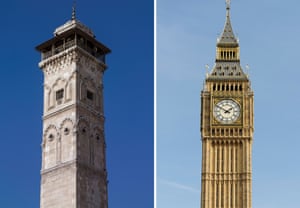
Looted landmarks: how Notre-Dame, Big Ben and St Mark’s were stolen from the east

Most cultures borrow from each other:

It is not only the twin towers and rose window that have their origins in the Middle East, she pointed out, but also the ribbed vaults, pointed arches and even the recipe for stained glass windows. Gothic architecture as we know it owes much more to Arab and Islamic heritage than it does to the rampaging Goths. “I was astonished at the reaction,” says Darke. “I thought more people knew, but there seems to be this great gulf of ignorance about the history of cultural appropriation. Against a backdrop of rising Islamophobia, I thought it was about time someone straightened out the narrative.”

Source: Looted landmarks: how Notre-Dame, Big Ben and St Mark’s were stolen from the east