ICYMI: Liberal mosque opens in Berlin – The Washington Post

Interesting example of how Islam can evolve in the West:

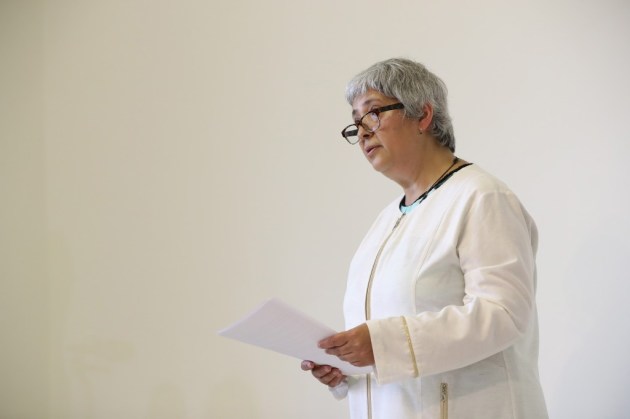
Inside the red-brick building that now houses the German capital’s newest and perhaps most unusual mosque, Seyran Ates is staging a feminist revolution of the Muslim faith.

“Allahu akbar,” chanted a female voice, uttering the Arabic expression “God is great,” as a woman with two-toned hair issued the Muslim call to prayer. In another major break with tradition, men and women — typically segregated during worship — heeded the call by sitting side by side on the carpeted floor.

Ates, a self-proclaimed Muslim feminist and founder of the new mosque, then stepped onto the cream-colored carpet and delivered a stirring sermon. Two imams — a woman and a man — later took turns leading the Friday prayers in Arabic. The service ended with the congregation joining two visiting rabbis in singing a Hebrew song of friendship.

And just like that, the inaugural Friday prayers at Berlin’s Ibn Rushd-Goethe Mosque came to a close — offering a different vision of Islam on a continent that is locked in a bitter culture war over how and whether to welcome the faith. Toxic ills like radicalization, Ates and her supporters argue, have a potentially easy fix: the introduction of a more progressive, even feminist brand of the faith.

“The intention is to give liberal Islam a sacred space,” Ates said. “I feel very discriminated by regular mosques where women have to pray in ugly backrooms.”

The subject of withering criticism as well as hopeful support, the house of worship is part of a small but growing number of liberal mosques founded all or in part by women.
Seen by their backers as an antidote to gender bias that often leaves Muslim women praying in smaller spaces, the new kind of “feminist mosques” amount to a rallying cry for change, observers say.

In London, for instance, the female-founded Inclusive Mosque Initiative opened its doors in 2012. Female imams routinely lead prayers in spaces that welcome male and female Muslims of any sect — gays and lesbians included. More recently, mixed-gender or all-female prayers have spread to boutique mosques from California to Switzerland to Denmark.

Women and men traditionally pray separately in mosques for reasons of modesty. Some argue that the Koran does not explicitly call for separation, but others say that female voices should not be heard during prayer.

Source: Liberal mosque opens in Berlin – The Washington Post

Too many Canadians don’t recognize the Islamophobia in their country

Melayna Williams on Islamophobia:

Indeed, plenty of work has already been done to capture, contextualize and fully understand what Islamophobia means. A paper published in 2011 by the Ontario Human Rights Commission highlights the “negative stereotyping and discrimination as a result of pre-existing perceptions of Muslims as ‘different’ from the rest of Canadian society, along with negative associations of their communities with violence and terrorism” in the decade following the Sept. 11, 2001, terrorist attacks in New York City.

These problems even occur in institutions that pledge tolerance and inclusion, like Canadian universities. Following the Quebec City mosque attack, Muslim students publicly recounted incidents that are part of their daily reality: the defacing of posters for a conference on Islam at Durham College and the University of Ontario Institute of Technology; and the distributing of anti-Muslim flyers and insults on student election materials at McGill University, the University of Calgary and the University of Ottawa. A student at Simon Fraser University was told to remove her hijab, and horrifyingly, last year, a woman had her hijab pulled, was punched and spat on in a grocery store in London, Ont.

We don’t need more evidence—yet there’s still denial by many white Canadians. Exercising privilege in this way has clear detrimental effects, argues Tim Wise, an anti-racism writer and activist. “That white Americans don’t by and large see what people of colour see doesn’t mean that white folks are horrible people, of course,” he writes in an essay called “White Denial.” “What it does suggest is a degree of isolation and provincialism that should lead us to think twice before pontificating about a subject that we simply don’t have to know nearly as well as those who are the targets of it.”

This is why “recognition of Muslims as part of the fabric of this country is so critical,” argues Shirazi. Many Canadians have the luxury of not acknowledging racism, and they’ve done so to the extent that white denial has become its own narrative. Any attempt to ignore the problem—or treat its victims as “other”—undercuts any effort toward inclusion in the next 150 years.

Source: Too many Canadians don’t recognize the Islamophobia in their country – Macleans.ca

To escape abusive marriages, many Christians in Pakistan convert to Islam | Religion News Service

Interesting:

For a Pakistani Christian like Shameela Masih, divorcing her abusive husband meant two choices — both nearly as bad as staying in the marriage.

“I have to prove adultery allegations against him,” said Masih, a 34-year-old mother of two. “The other option I have is to convert to Islam.”

Masih recently filed for divorce from a husband she said “frequently beats me up” and a mother-in-law who she said burned her leg with coal.

But under the majority-Muslim country’s laws, she must produce a witness who would testify to committing adultery with her husband. As a result, she’s now reluctantly planning to renounce her faith.

“Converting is the easiest way out,” she said. “My family tells me that they will disown me as a Muslim, but I don’t have a choice.”

Now Pakistani officials are considering revising the law to make it easier for couples to part ways.

“There are so many things in the existing 19th-century Christian Marriage Act that need to be revised and updated to stop the exploitation of people and protect the human rights,” said Kamran Michael, the federal minister for human rights who is spearheading the drive for the legislation.

The law grants divorces to Christian couples on four grounds: adultery, conversion, marriage to another or cruelty. But proving adultery or cruelty is tough, especially in Pakistan, where adultery is a crime, and the stigma against domestic violence is weak in many parts of the country. Christians comprise less than 2 percent of Pakistan’s population of 189 million.

Muslims, on the other hand, can easily obtain a divorce for a variety of reasons, including irreconcilable differences.

Formerly, Pakistan’s laws on divorce mirrored those in Britain. But in the early 1980s, then-military dictator Muhammad Zia-ul-Haq restored older laws from the colonial period that applied to Christians divorcing. For Muslims, he left revised laws from the 1960s intact.

“The current law on Christian divorce undermines the dignity of women,” said Fauzia Viqar, who chairs the Punjab Commission on the Status of Women. “Many Christian women are left in marriages where they are suffering cruelty by husbands without any relief from the state.”

Source: To escape abusive marriages, many Christians in Pakistan convert to Islam | Religion News Service

More faith, not fanaticism, needed in politics: Coren

Michael Coren on Christianity and politics:

Within moments of Andrew Scheer being elected as the new leader of Canada’s Conservative Party his opponents began to criticize his opinions. That’s politics of course. But this time the analysis went a little deeper.

Scheer may have said that he will not reopen debates around equal marriage or abortion, it was argued, but he doesn’t believe in same-sex marriage or a woman’s right to choose and that matters a great deal. And on issues such as euthanasia and trans rights, it was claimed, he will certainly be politically involved.

But his defenders responded that this was an “anti-Christian” attack and that the new champion of the Tories was being condemned for his religious beliefs.

Now just hold on one Bible-believing moment.

Contrary to what social conservatives have tried to tell us, there is nothing especially Christian about these issues. Jesus didn’t mention homosexuality, abortion, or euthanasia but He did speak a great deal about peace, love, justice, the dangers of wealth, the sin of materialism, and a preferential regard for the poor.

So Mr. Scheer and his friends, with all due respect and humility let me take you on a magical mystery tour of what that Jesus fellow actually did say.

There was the worryingly egalitarian, “Servants are not greater than their master”, and the snowflake nonsense of, “Do not judge, so that you may not be judged, and “Why do you see the speck in your neighbour’s eye, but do not notice the log in your own eye?”

Then we have the lefty silliness of, “Blessed are the peacemakers, for they will be called children of God”, and “Let anyone among you who is without sin be the first to throw a stone,” and “How does God’s love abide in anyone who has the world’s goods and sees a brother or sister in need and yet refuses help?”

Moving on there is, “In the temple he found people selling cattle, sheep, and doves, and the money changers seated at their tables. Making a whip of cords, he drove all of them out of the temple. He also poured out the coins of the money changers and overturned their tables.”

Not very conservative at all! Even worse there is, “Again I tell you, it is easier for a camel to go through the eye of a needle than for someone who is rich to enter the kingdom of God.”

Or the nastily socialistic, “For I was hungry and you gave me food, I was thirsty and you gave me something to drink, I was a stranger and you welcomed me, I was naked and you gave me clothing, I was sick and you took care of me, I was in prison and you visited me.”

So in a way we could say that every time someone on the right attacks a Liberal or New Democrat calling for a higher minimum wage, stronger welfare, increased funding of socialized medicine or an end to war, it is they who are being attacked for promoting Christian ideas.

In other words, Christianity is not what politicians who wear their faith on their sleeve have led us to believe. Both Old and New Testament scream for social and economic fairness and the story of the Christian God is a seamless garment of care, not for some, but for all, especially those least able to look after themselves.

Roman Catholic nun Sister Joan Chittister said it so well: “I do not believe that just because you’re opposed to abortion, that that makes you pro-life. In fact, I think in many cases, your morality is deeply lacking if all you want is a child born but not a child fed, not a child educated, not a child housed. And why would I think that you don’t? Because you don’t want any tax money to go there. That’s not pro-life. That’s pro-birth. We need a much broader conversation on what the morality of pro-life is.”

I’m one of those odd, unfashionable people who want more and not less mingling of church and state, but a church informed by the authentic teachings of its founder and not the sex-obsessed monomania of the new Catholic and evangelical right.

Sorry Mr. Scheer, but the criticism of you had nothing to do with your faith and everything to do with your fanaticism. God bless you.

Source: More faith, not fanaticism, needed in politics: Coren | Toronto Star

How the Muslim community can tackle the scourge of extremism: Sheema Khan

Her latest op-ed and usual sensible suggestions and recommendations:

In the elusive search for clues on radicalization, there are meaningful steps that Muslim communities can take toward addressing this scourge.

There should be “safe” spaces available for Muslim youth to discuss their concerns and passion for justice, in the company of those with sound knowledge of Islamic teachings. Rather than the traditional one-way lecture, there should be round tables in which topics are discussed frankly in context with normative Islamic principles. Currently, most Muslim institutions shy away from such discussions, for fear of being accused of fomenting extremism. Local organizations can sponsor a screening of Tug of War, a short Canadian indie film that boldly tackles this topic.

Grassroots initiatives that teach resiliency to Muslim youth must be developed. Since Canada opened the doors of immigration, a plethora of ethno-religious groups have experienced racism. Yet, such groups have found the resiliency to survive and thrive.

Muslims have deep resources within their faith about dealing with hostility through patience, principled justice and forgiveness. They can also use valuable anti-racism tools developed by civil society. For example, the National Council of Canadian Muslims plays a key role by empowering Muslims to address xenophobia through engagement with civil institutions.

Mentorship will also play a key role in helping youth to integrate. There are many Muslim professionals, entrepreneurs, artists and activists who have faced challenges and succeeded. Their experiences are invaluable for the coming generation. We need forums where such knowledge can be shared and mentoring partnerships established.

Civic engagement is the key to non-violent activism. Whether the focus is local justice or foreign policy, there needs to be further education about the role of NGOs, government institutions and one’s responsibility in the democratic process. The 2015 federal election prompted many Muslims to initiate grassroots campaigns for political engagement. As an example, The Canadian-Muslim Vote provides regular updates about House deliberations, along with interviews of MPs.

Perhaps the most difficult, yet necessary, component is to ask some tough questions. Why is it that a small minority of Sunni Muslim youth is latching on to a death cult? How are the teachings of Islam being twisted to appeal to a hateful, morally bankrupt mindset? Why are appeals to basic morality (e.g., forbiddance of murder and suicide) failing?

Finally, those espousing violence must be reported to the authorities. Friends, family and mosque congregants had warned police about Mr. Abedi’s extremist views – without success. This means we must all try harder to prevent the next incident.

Source: How the Muslim community can tackle the scourge of extremism – The Globe and Mail

Taliban Target: Scholars of Islam – The New York Times

Taliban mentality and reminder of one of the battles within Islam:

A lone grave, its dirt mound shaded under the drooping branches of a mulberry tree and kept adorned with flowers, has become a daily stop for seminary students and staff members near Togh-Bairdi, in northern Afghanistan.

It is the burial site of Mawlawi Shah Agha Hanafi, a revered religious scholar who founded the seminary about two decades ago and helped it grow into a thriving school for 1,300 students, including 160 girls. This month, the Taliban planted a bomb that killed him as he conducted a discussion about the Prophet Muhammad’s traditions, and his grave, at a corner of the seminary grounds, has become a gathering place for prayer and grief.

“When I come to work, the first thing I do is recite a verse of the Quran at his grave,” said Jan Agha, the headmaster of the seminary, in Parwan Province. “Then I weep, and then I go to my office.”

Mawlawi Hanafi joined a rapidly growing list of Islamic religious scholars who have become casualties of the Afghan war.

The scholars have long been targets, of one kind or another, in Afghanistan. Their words carry weight across many parts of society, and they are assiduously courted for their support — and frequently killed for their criticism.

Hundreds are believed to have been killed over the past 16 years of war, and not always by the Taliban. But there has been a definite uptick in the targeted killing of scholars — widely known as ulema — as the Taliban have intensified their offensives in the past two years, officials say.

It is being taken as a clear reminder of the weight the insurgents give not just to military victories but also to religious influence in their campaign to disrupt the government and seize territory.

“The reason the Taliban resort to such acts is that they want to make sure their legitimacy is not questioned by the sermons of these ulema,” said Mohammad Moheq, a noted Afghan scholar of religion who also serves as an adviser to President Ashraf Ghani.

Manchester attack: It is pious and inaccurate to say Salman Abedi’s actions had ‘nothing to do with Islam’ | The Independent

Patrick Cockburn on Salafism and Saudi Arabia’s role in spreading fundamentalism. Bit over the top in terms of wording used, but basic point about Saudi Arabia’s role valid:

In the wake of the massacre in Manchester, people rightly warn against blaming the entire Muslim community in Britain and the world. Certainly one of the aims of those who carry out such atrocities is to provoke the communal punishment of all Muslims, thereby alienating a portion of them who will then become open to recruitment by Isis and al-Qaeda clones.

This approach of not blaming Muslims in general but targeting “radicalisation” or simply “evil” may appear sensible and moderate, but in practice it makes the motivation of the killers in Manchester or the Bataclan theatre in Paris in 2015 appear vaguer and less identifiable than it really is. Such generalities have the unfortunate effect of preventing people pointing an accusing finger at the variant of Islam which certainly is responsible for preparing the soil for the beliefs and actions likely to have inspired the suicide bomber Salman Abedi.

The ultimate inspiration for such people is Wahhabism, the puritanical, fanatical and regressive type of Islam dominant in Saudi Arabia, whose ideology is close to that of al-Qaeda and Isis. This is an exclusive creed, intolerant of all who disagree with it such as secular liberals, members of other Muslim communities such as the Shia or women resisting their chattel-like status.

What has been termed Salafi jihadism, the core beliefs of Isis and al-Qaeda, developed out of Wahhabism, and has carried out its prejudices to what it sees as a logical and violent conclusion. Shia and Yazidis were not just heretics in the eyes of this movement, which was a sort of Islamic Khmer Rouge, but sub-humans who should be massacred or enslaved. Any woman who transgressed against repressive social mores should be savagely punished. Faith should be demonstrated by a public death of the believer, slaughtering the unbelievers, be they the 86 Shia children being evacuated by bus from their homes in Syria on 15 April or the butchery of young fans at a pop concert in Manchester on Monday night.

The real causes of “radicalisation” have long been known, but the government, the BBC and others seldom if ever refer to it because they do not want to offend the Saudis or be accused of anti-Islamic bias. It is much easier to say, piously but quite inaccurately, that Isis and al-Qaeda and their murderous foot soldiers “have nothing to do with Islam”. This has been the track record of US and UK governments since 9/11. They will look in any direction except Saudi Arabia when seeking the causes of terrorism. President Trump has been justly denounced and derided in the US for last Sunday accusing Iran and, in effect, the Shia community of responsibility for the wave of terrorism that has engulfed the region when it ultimately emanates from one small but immensely influential Sunni sect. One of the great cultural changes in the world over the last 50 years is the way in which Wahhabism, once an isolated splinter group, has become an increasingly dominant influence over mainstream Sunni Islam, thanks to Saudi financial support.

The culpability of Western governments for terrorist attacks on their own citizens is glaring but is seldom even referred to. Leaders want to have a political and commercial alliance with Saudi Arabia and the Gulf oil states. They have never held them to account for supporting a repressive and sectarian ideology which is likely to have inspired Salman Abedi. Details of his motivation may be lacking, but the target of his attack and the method of his death is classic al-Qaeda and Isis in its mode of operating.

The reason these two demonic organisations were able to survive and expand despite the billions – perhaps trillions – of dollars spent on “the war on terror” after 9/11 is that those responsible for stopping them deliberately missed the target and have gone on doing so. After 9/11, President Bush portrayed Iraq not Saudi Arabia as the enemy; in a re-run of history President Trump is ludicrously accusing Iran of being the source of most terrorism in the Middle East. This is the real 9/11 conspiracy, beloved of crackpots worldwide, but there is nothing secret about the deliberate blindness of British and American governments to the source of the beliefs that has inspired the massacres of which Manchester is only the latest – and certainly not the last – horrible example.

Source: Manchester attack: It is pious and inaccurate to say Salman Abedi’s actions had ‘nothing to do with Islam’ | The Independent

New Jersey Town Used Zoning to Discriminate Against Islam – The New York Times

Courts worked:

At issue was an official demand that the mosque provide 107 parking spots for its 150 worshipers, instead of the ratio of one spot for every three users required of the township’s churches, synagogues, restaurants and auditoriums.

The Planning Board’s parking requirement for the mosque set off an avalanche: If the Islamic Society were to devote as much of its land to parking as the board demanded, it would not be able to comply with mandates for drainage and lighting.

“Are both synagogues and mosques considered churches under the definitions that the township operates under?” Judge Shipp asked.

Photo

Mohammad Ali Chaudry, president of the Islamic Society of Basking Ridge, at the site of the proposed mosque last year. CreditKarsten Moran for The New York Times

Mr. Mankoff: “No.”

Judge Shipp: “Is a mosque considered a church?”

Mr. Mankoff: “No.”

Judge Shipp: “So it is different?”

Mr. Mankoff: “Yes, your Honor.”

How so, the judge wanted to know. Mr. Mankoff said that mosques were busy on Friday evenings, rather than on Sundays.

Judge Shipp probed the implications of that answer.

“Is the board, in essence, adopting a policy that expressly applies different standards based on religion?” he asked.

“It’s not based on religion,” Mr. Mankoff said. “It’s based simply on the parking needs of the applicants.”

The judge did not accept that. “Counsel, you just stood there and told me that when you look at a mosque, you’re looking at a Friday worship,” Judge Shipp said. “When you look at Christian churches, you’re looking at a weekend worship.”

A lawyer for the Islamic Society, Adeel A. Mangi of Patterson Belknap Webb & Tyler, pointed out that the township’s synagogues did not have the same severe parking requirements. “They pray on a Friday, too,” Mr. Mangi said.

Over nearly four years, the proposed mosque was the subject of 39 hearings. Beneath the technical land-use discussions in public, a sulfurous tone was captured in emails that the Justice Department uncovered.

“As a religion, Islam owes its size and influence to a tradition from Day 1 of forced conversions through violent means,” wrote John Malay, who served on both the Planning Board and the Township Committee. Members of the two bodies discussed ways to exclude the president of the Islamic Society, Mohammad Ali Chaudry, a former mayor of the township, from a Sept. 11 commemoration. John Carpenter, a member of the Township Committee, wrote of President Obama: “Man child. The product of fools, raised by idiots and coddled by affirmative action. Behold the beast.”

None of these materials were part of Judge Shipp’s decision, which was based entirely on the filings made by the township itself.

Michael Turner, a spokesman for the township, said that many people served their township without compensation. They have the power and responsibility to shape the place where they live. In the case of Bernards Township, Judge Shipp found, it was too much.

“The Parking Ordinance unambiguously provides the Planning Board with unbridled and unconstitutional discretion,” he wrote.

Reyhana Patel: Don’t believe the smears. Here’s what Islamic Relief Canada is really all about

Patel on the work her organization does and the Middle East Forum attacks (see Sam Westrop : A call for Trevor Noah to support tolerance and withdraw from Toronto event):

We’ve done some incredible work in the last ten years helping millions of individuals around the world — including in Canada — regardless of their religion, race, gender or sexuality. We’ve been amazed at the generosity of Canadians — those who are Muslim and those of different faith backgrounds who support our work and are strong advocates for the efforts we undertake. For instance, we raised over $100,000 for the victims of the Fort McMurray wildfire, supported Syrian refugee resettlement programs, worked at empowering disadvantaged youth in the Greater Toronto Area, and launched an appeal for the Quebec mosque attack victims that raised thousands of dollars for the families left without their fathers.

This track record stands in stark contrast to the false image painted of Islamic Relief Canada in a one-sided and unsubstantiated article that was published recently in the National Post.

Sam Westrop, writing on behalf of the Middle East Forum (MEF), labelled Islamic Relief Canada a “terrorist organization which regularly gives platforms to preachers who incite hatred against women, Jews, homosexuals and Muslim minorities.” This defamatory statement was removed after our organization contacted the newspaper, along with community members who were justifiably angered by this casual smear of a reputable and valuable charity. The revised article is now online, but for me, it still represents the dictionary definition of fake news: “false, often sensational, information disseminated under the guise of news reporting.”

In my view, Westrop’s article represents the dictionary definition of fake news: ‘false, often sensational, information disseminated under the guise of news reporting.’

Let’s step back for a moment to understand where this is all coming from. The MEF has been named in a well-researched report called Fear Inc. as one of America’s most notorious anti-Muslim think tanks. This is an organization with US$4.6 million in annual revenue that uses some of its resources to paint a negative picture of Islam and Muslims.

The MEF’s piece further reflects the National Post’s unfortunate pattern of allowing Canadian Muslims and their institutions to be unfairly represented as threats to society, rather than highlighting what the vast majority of them truly are: a credit to the community and a positive force for good, working tirelessly to provide a good life not only for their families, but also for many others.

Mr. Westrop is known for inciting fear by using false information. In 2017, he was ordered to pay more than $174,000 in damages to Mohamed Ali Harrath, the CEO of a British Muslim TV Channel, after Westrop wrongfully labelled Harrath a “convicted terrorist.” Westrop also has connections to senior people in the right-wing UK Independence Party. UKIP’s political opponents have condemned some of the party’s policies as “full-throttled Islamophobia.”

The MEF’s president, Daniel Pipes, has publicly supported the internment of the Japanese-American community during the Second World War, an abhorrent act for which the U.S. government under President Ronald Reagan apologized.

It has become the norm for anti-Muslim groups to find any excuse possible to target Muslim institutions.

It is ironic that those who falsely claim that Muslims are all about shutting down freedom of expression do not recognize their hypocrisy of trying to suppress the voices of those who wish to freely discuss religious dogmas. One of the many reasons I love this country is that, at its best, it is a beacon of free speech and diversity, whose people will not tolerate oppression of minorities or attempts to demonize others. Our core common values are of tolerance and inclusion — as long as violence is rejected unequivocally and no one is advocating harm against anyone else.

It has become the norm for anti-Muslim groups to find any excuse possible to target Muslim institutions. Not only do these tactics lead to distrust and alienation but they also undermine valuable work for the most vulnerable communities of this world. Sadly, the National Post still gives the fear-mongers a platform.

Our organization is focused on bringing communities and faith groups together to encourage generous support for the poor and disadvantaged and to promote a message of acceptance and diversity. The publication of harmful innuendo that seeks to undermine this work only proves why events like the one we’re holding with Trevor Noah are so necessary.

Source: Reyhana Patel: Don’t believe the smears. Here’s what Islamic Relief Canada is really all about | National Post

Altruism vs. self-fulfillment: Faithful in Canada are more caring, but compassion has its limits, poll finds | Angus Reid / Cardus poll

Interesting survey in the secondary questions on attitudes and beliefs:

The larger the role faith plays in the lives of Canadians, the more likely they are to say they value altruism over self-fulfillment, a new poll has found.

Religion and politics, it is often said, don’t mix. Just because it’s said doesn’t mean it’s true — and in Canada, it’s not true.

Freshly released poll numbers collected by the Angus Reid Institute (ARI) and Faith in Canada 150, in collaboration with think tank Cardus, suggest faith and religious belief do indeed play a hefty role in our views on politics and the world.

The survey, conducted by the Angus Reid Institute in partnership with Faith in Canada 150, is part of a year-long project gauging Canadians’ beliefs and religious practices. It grouped respondents into four categories ranging from non-believers to religiously committed who attend places of worship regularly.

“Caring for others versus personal fulfillment, those are two very different value constructs,” Angus Reid, the institute’s founder and chairman, said in an interview. “And the relationship between them and religiosity is really significant.”

Asked to choose between two approaches as “the best way to live life,” 53 per cent of respondents picked “achieving our own dreams and happiness” over “being concerned about helping others.”

But when the results were broken down along the spectrum of religiosity, 67 per cent of the religiously committed favoured helping others. For non-believers, 65 per cent chose the pursuit of happiness.


The question revealed significant differences across Canadian regions. Quebec had the highest proportion of respondents across the country opting for self-fulfillment, at 65 per cent. Alberta was second at 54 per cent and British Columbia next at 53 per cent. In all other parts of the country, a majority of respondents picked helping others, with Saskatchewan the most altruistic at 59 per cent.

“What this survey proves is that having a faith, being part of a faith community, seems to propel people in the direction of developing higher levels of compassion or caring,” Reid said.


But that compassion has its limits. The 2,006 Canadian adults surveyed were asked a series of moral questions. The responses showed that the two groups on the religious end of the spectrum – the religiously committed and privately faithful – were together the most likely to say:

  • Canada should accept fewer immigrants and refugees;
  • They would be uncomfortable if a child planned to marry someone from a different cultural or religious background;
  • There should not be greater social acceptance of people who are LGBTQ (lesbian, gay, bisexual, transgender, queer);
  • Preserving life is more important than people’s freedom to choose on issues like abortion and doctor-assisted death.

In another question, the poll asked which statement corresponded most closely to respondents’ personal views:

  • People are fundamentally sinners and in need of salvation; or
  • People are essentially good and sin has been invented to control people.

Two-thirds of those polled sided with the essential goodness of people. But among the religiously committed – who made up about one-fifth of the survey group – 73 per cent said people are fundamentally sinners.


Another set of questions sought to gauge positions on moral relativism – whether the concept of right and wrong is absolute or can change depending on the situation. A large majority, 68 per cent, said what is right or wrong “depends on the circumstances.” But nearly the same proportion, 66 per cent, rejected the notion that “answers to moral questions will be different for different cultures.” At 74 per cent, the religiously committed were the most likely to say universal rights and wrongs apply to the whole human race.

Ray Pennings, executive vice-president of Christian think tank Cardus, welcomed the poll’s finding that a majority of Canadians say their faith is important to their personal identity (54 per cent) and their day-to-day lives (55 per cent.)


“On the one hand, in contrast to the prevalent public narrative that religion is private and it doesn’t matter, it’s quite clear that for the vast majority of Canadians, it does.  Over half say, ‘Religion is actually shaping my identity and my decisions,’ ” Pennings said.

“On the other hand, that engagement is a relatively thin engagement.”

Source: Altruism vs. self-fulfillment: Faithful in Canada are more caring, but compassion has its limits, poll finds | National Post