Interesting good long read about Trinity Western, including the policies of its covenant and the realities of student life:
…After so many years of debate, members of the tight-knit Trinity Western community are used to hearing arguments that bear little relationship to their daily lives.
“Academic staff are required to teach students that the Bible is the ultimate, final, and authoritative guide by which ethical decisions are to be made,” Elaine Craig, a Dalhousie University law professor who is widely cited among those opposed to accreditation, wrote in a 2013 paper.
“This compulsory ideological conformity effectively excludes students on the basis of their sexual orientation or marital status,” the United Church of Canada argued in its factum to the Supreme Court. “It is also demeaning and degrading of these individuals, explicitly characterizing them as immoral outcasts, who are worthy of being shunned, or excluded by being pitied.”
“The Covenant is a binding contract. It governs conduct both on and off campus,” intervenors Start Proud and Outlaws intoned in their factum.
But as anyone who has signed a code of conduct or even scanned a list of institutional policies knows, rules are rarely followed to the letter, and recriminations are anything but guaranteed. It is just so at Trinity. Last year the campus newspaper, Mars’ Hill, conducted a survey of covenant compliance. While unscientific, the results were nevertheless revealing: 28 per cent of respondents said they had used marijuana or other non-medical drugs; 55 per cent admitted to drinking to excess; 32 per cent admitted to sex outside marriage; four per cent admitted to having an abortion.
There are also LGBTQ students at Trinity, as media have reported. Yet the suggestion they might feel welcome despite the covenant “defies logic,” Craig argued in another paper in 2014. “Not only are prospective students required … not to engage in same-sex sexual intimacy under any circumstances, but they are also required to police each other for any breaches of this promise.” (The covenant says it “may at times” be necessary for students “to hold one another accountable,” as most honour codes do.)
Lawyers are naturally going to argue from written policies. But such sweeping statements are simply irreconcilable with the observable reality on campus. And that gets up a lot of noses in the Trinity Western community, including those who would very much like the university to change.
Trinity was first founded as a two-year college on a dairy farm. Today there are all manner of degree options, including education and nursing.(Ben Nelms for National Post)
There is no shortage of such people: In a recent open letter to the community bearing 287 signatures, an LGBTQ-affirming group of Trinity students, faculty and staff, alumni and parents called OneTWU argued “that homophobia and transphobia are affronts to our Creator God,” and that “reconciliation and healing is needed to bridge the gap between the Christian church and the LGBTQ+ community at large.”
Two hundred and eighty-seven signatures is a fair haul in such a small community. And the letter’s language reflects conflicted attitudes about the prospective law school: some strongly believe in Trinity’s right to hold its religious views, even while teaching law, but are also weary of the endless battle and the toll it takes on students.
Bryan Sandberg, who graduated in 2014 and has spoken before about his mostly positive experiences as a gay student at Trinity, says that most in the community are “not rampaging bigots” — “they’re just people” — but the community covenant “explicitly creates this space where homophobia is allowed to exist, where LGBTQ people are viewed as lesser.”
In a word, he says, it is “uncomfortable.”
“These are people who are growing up in churches, who are born into Christian families, and there’s nothing they can do about that. Their faith becomes an extremely important part of who they are,” Cam Thiessen, a graduate student in biblical studies who signed the OneTWU letter as an “ally,” says of Trinity students. Coming to grips with their sexuality in such an environment can obviously be terribly difficult.
“This could have been an opportunity for Trinity to begin making steps toward a more ecumenical approach to this issue — recognizing that there are Christians who are affirming of LGBTQ people and there are entire denominations that are very affirming,” including some evangelical groups, he argues.
“Instead it’s a ton of money and a ton of time going towards fighting for the right to exercise some sort of authority over this group of people” — time and money that Thiessen wishes could go toward “hiring more faculty, or bringing in more guest speakers, or bringing in better resources for people in the LGBTQ community to understand what their place is in this type of religious society.”
In the meantime, however, many students say Trinity is a far more welcoming, tolerant and diverse campus than outsiders realize. Many, including LGTBQ community members and their allies, believe a place they love and where they have felt loved has been unfairly caricatured….
Some valid points (e.g., on polygamy, FGM), less so with respect to the hijab:
The usual gusto accompanied International Women’s Day on March 8, with enlightened people of both sexes commending the strides we have made. Women debated our roles in this day and age, and how our lot can be further improved.
Needless to say, even after decades of public conversations on women’s rights, their plight in undeveloped nations has not changed much. In fact, in this politically correct era there are some nominal Western feminists who say too little about the suffering of third world women.
As always, developed countries have fared better. The biggest news is the #MeToo movement, which has prompted public conversations on sexual harassment faced by women in various settings, but especially the workplace. Actions bring reactions, however; while the movement has raised awareness on these issues, some employers may now fear to hire women because they anticipate sexual allegations.
There were already issues specific to Canadian women, such as workplace discrimination and lack of comparable wages — an issue our prime minister addressed at Davos. Accounting for missing and murdered aboriginal women is an enduring problem, as are violence and abuse in these communities.
Radical ideologies also turn many Muslim women into victims, even in Canada. This is most offensive to me, as a Muslim woman. Feminist groups, who usually expound a leftist worldview, have often defended discriminatory practices in the name of a “new feminism.”
An opinion piece by Nakita Valerio on the CBC website states that “New feminism is based on the understanding that there is nothing inherently liberating about one expression over another. Rather, the liberation is in a woman’s choice and part of modern gender equality rests on the acceptance of diverse womanhood on her own terms, regardless of one’s background.”
Really? So, by extension, there is nothing inherently constraining in any expression of womanhood. Therefore, a woman who is self-assured, economically independent and capable of making career choices is no more liberated than one who lives her entire life according to the whims of her husband? A woman who “chooses” to let her husband take a second wife because her religion permits it, and then suffers all the consequences of a polygamous union, is as liberated as one who rejects such an arrangement as repugnant?
Let’s extend this argument. Submission to the requirements of one brand of Islam has convinced some women to support the heinous practice of female genital mutilation. Their understanding of religion has brainwashed them into considering this beneficial. Such a procedure subjects them or their daughters to pain and poor health. Are they more liberated because they have defined their femininity in these terms?
Clothing matters less than mutilation. The niqab and hijab may be “mere” pieces of cloth, but the expectation that women will wear them remains an important issue. The requirement is rooted in patriarchy, and it is hard to accept that any woman who “chooses” to wear these garments has somehow defined her womanhood in a liberated way.
The new feminists have regressed if they do not call out such practices with the fervour of #MeToo. Their silence endorses a way of thinking which keeps countless women in permanent submission.
Next International Women’s Day it would be encouraging if the women’s movement redefined some of its goals as universal rather than relative. Culture can never be an excuse.
The “safe space” people have struck again at another Ontario university campus.
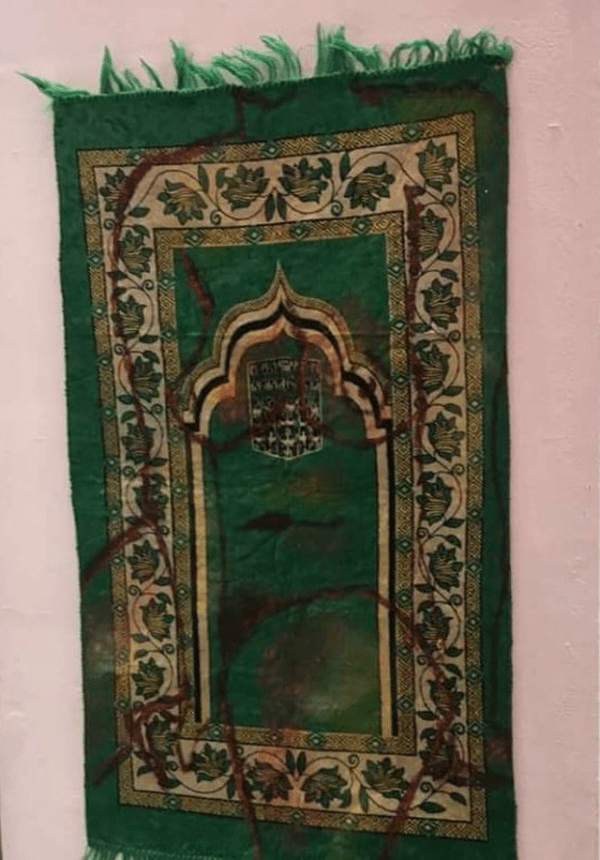
Monday night, an untitled, anonymous piece of art hanging in a student show at the Ontario College of Art and Design University in downtown Toronto was quietly removed.
It was a green Islamic prayer mat with the black outline of a nude woman on it.
In its place is a notice, apparently from the curators and jurors of the show, saying that absent knowing “the intent of the work that was previously hanging in this space,” they had decided to “remove it temporarily … until a statement from the artist can accompany it.”
The notice referred to “the concerns of a number of OCAD University student groups” and offered a one-two apology if either the original inclusion of the piece or its removal “has caused anyone harm.”
The formal complaint came from the Muslim Student Association at the school, which over the weekend issued a statement with several demands — the immediate removal of the piece, an investigation into how it was approved and “whether this was done out of ignorance or not” and an official apology from the university “that this piece was approved for display.”
The controversial piece.
“As a Muslim community,” the statement said, “we feel greatly offended, concerned and disappointed.
“This has already provoked Muslims and has caused very upsetting reactions, and several students’ responses and behaviour towards this is extremely alarming and is starting to make some students feel unsafe at OCAD.
“This is serious and we do not take it lightly.”
In a private, members-only Facebook group for OCAD students, the piece was immediately a lightning rod for controversy after the show, titled Festival of the Body, opened last Friday.
It sparked a spirited debate, sharp rebukes (and much apparent after-the-fact deletion of controversial posts) from the group moderators, one of whom snapped at one point, “This group was doing fine until these recently violent posts by some of you.”
Members of the group say dozens upon dozens of comments were arbitrarily deleted if they weren’t supportive of the decision to remove the piece.
Of those that remain, only one could be remotely described as violent, and it comes from a supporter of removing the prayer mat artwork.
He is a student who works part-time as a cab driver and who asked, “why does someone need to disrespect a whole religion and the way of life of billions of people?” He said the “intent” of the artist didn’t matter.
“… The intent does not change the blatant disrespect to our Islamic faith and the objects, places and symbols we hold dear to our heart.
“Picking up customers in my taxi that swear I hate them and want to kill them simply because I am Muslim or having my mother or my sisters followed and abused for wearing the hijab makes me live a certain anxious and protective lifestyle.”
In a phone interview Tuesday, OCAD professor Natalie Majaba Waldburger, a co-curator of the show, appeared to try to distance the university from the short notice that now sits in place of the art.
She said the artist, whom she identified as a Muslim woman and “we understood she was speaking from within her own cultural practices and experiences,” originally had her name by the piece, but then removed it over the weekend.
Several other pieces — the show includes at least one full-frontal nude, of a male — had no artist statement.
“We didn’t feel we could put up the work without any information,” Waldburger told the National Post.
She said the artist wants to provide an artist’s statement — such statements can range from the direct to the hopelessly oblique — and that “we’ve been working with her the last couple of days. We’ve been in discussion.” Waldburger said she hopes it can be re-installed.
Some sort of authorship, whether the artist’s name or statement, is required, she said. “So for her, no name and no statement means the work has to come down.”
Waldburger said she’s aware of the controversy raging around the work, but “that doesn’t mean we’re shutting the dialogue down. The university supports the right to artistic expression.”
Christine Crosbie, OCAD’s media and communications manager, said the school is aware that freedom of speech issues are controversial on campus at the moment.
“We respect the Muslim Student Association has their opinions, and this is an important dialogue around this piece. It’s a matter of looking at both sides.”
Interestingly, one of the mandatory art history courses at the school covers an infamous piece of art called Immersion (Piss Christ).
A 1987 photograph by American photographer Andres Serrano, Piss Christ is a photo of a plastic crucifix submerged in a tank of Serrano’s own urine.
Just about every time it has been exhibited over the past three decades, Christians have denounced, vandalized or threatened the photograph or photographer.
After the Charlie Hebdo attacks in Paris three years ago, sparked by the satirical magazine republishing the Danish cartoons of the Prophet Muhammad, the Associated Press removed an image of Piss Christ from its editorial archives.
Serrano wrote at that time, “We’ve seen the same impulse for self-censorship in the West before … Given the seriousness of the violence, such self-censorship is understandable; it’s also a step backward at a time when we need to reassert the importance of free expression by artists, activists, journalists and editors alike.”
Interesting commentary on some cross faith commonalities:
Last fall, the Canadian province of Quebec passed legislation, Bill 62, that would make it illegal for anyone to receive public services if they did not show their face. Dubbed as a “religious neutrality” law, critics claimed the bill discriminated against Muslims who wear headscarves as a part of their religious practice — and should be cause for concern for all people of faith.
In recent months another controversy has brewed over Canada’s summer jobs program — a popular funding initiative for businesses and organizations to hire students during summer break — when the government of Prime Minister Justin Trudeau announced that in order to receive funding, you must attest to supporting abortion rights in Canada. Last month, a group of Jewish, Catholic, and Muslim leaders joined together in protest of the decision and called on the government to reverse its policy.
In an interview with Crux, Archbishop Christian Lépine of Montreal said he feared both the example of Bill 62 and the Canadian Summer Jobs program are moving the country in the direction of relegating people of faith to “second-class citizens.”
CRUX: Bill 62 — which requires that people who receive public services to show their faces — will most concretely affect Muslims who wear the niqab or a burka if religious accommodations aren’t put into place. What principles of religious liberty do you believe to be at stake here?
Archbishop Christian Lépine: – The clear intention of the law is to affirm freedom of religion and conscience in the name of neutrality of the state. But what is neutrality? Neutrality can be understood — and it’s my understanding of it — that everyone is welcome. You don’t have to hold a particular belief and whatever your belief might be, generally, you are welcome — just as you are, as a person. When neutrality becomes “You’re welcome, but signs of your belief cannot be visible,” is this still freedom? Is this still welcoming? You are welcome, but not in every respect.
If you are a government official or civil servant, you might say that we are serving the goal of neutrality by excluding certain signs. But, in my view, I think neutrality would be better served by saying that everyone, along with their particular signs of belief, is welcome. In which case, pluralism becomes visible; one can see that we’re a pluralistic society. However, if you say we’re a pluralistic society but certain visible signs are not allowed, then pluralism becomes invisible. I don’t believe in a neutrality that excludes people.
Why should Catholics care about this case?
Well, first there is the issue of principle. You can say: “It doesn’t involve us, it’s for others.” But one day, it might be for us.
Another concern is the ripple effect. Laws have a socialization effect, sending signals about what society considers important. If we choose to exclude in the name of neutrality, then, perhaps one day, a person will be waiting in a line to be served — maybe at a drug store or some company — and someone will say: “What are you doing here with your burka or niqab? Go back to your country if you don’t like it here. Get out of the line or remove your sign.” The ripple effect of this law can affect people’s mentality and their capacity to welcome others and their beliefs.
Do you see this as a sign of a diminishing of religious tolerance in Canada?
It is a sign of diminishing freedom of religion and conscience. Some might say it’s not very much, but Pope Francis talks about “polite persecution,” and it could possibly lead to that. I don’t think that is the intention of the law, but if neutrality of the state is used to exclude the public manifestation of certain religious beliefs, somehow, you are moving in the direction of creating second-class citizens.
Do you think Pope Francis has helped build a bridge between interfaith communities in Quebec?
Some, in Quebec, were at work building interfaith bridges before the Second Vatican Council. But after the council, religious leaders and civil society made a conscious effort to do so. Pope Francis certainly helps in this regard with his focus on “a civilization of encounter.” Of course, encounter means encountering those within our own belief system, but it’s also about encountering people of other beliefs and other ways of life.
Speaking of interfaith issues, multiple faith-based groups have come together to protest the government’s changes to Canada’s Summer Jobs program guidelines requiring a pledge of support for abortion rights before receiving federal funding. How did this happen and what’s at stake here?
We need to go back to the United Nations Declaration of Human Rights in 1948, which is the model of our Charter of Rights. Not everyone around the table professed the same religious beliefs, philosophy or convictions. There were Christians, but there were also Muslims, atheists, and a Communist regime at the table. After two years of discussion, they had trouble drafting a common declaration regarding the grounds for respecting human rights. So, they made a decision to shift their focus, moving from their own unique starting positions and focusing, instead, on making a solid affirmation of the inherent dignity of every human person. That became the starting point, with each group with their own religions or philosophies justifying it their own way. It wasn’t about using the Declaration to create a belief system to judge other belief systems or to diminish them. It’s about creating a society which includes different belief systems and respects them. It’s not about imposing your belief system on others.
The Charter of Rights is there to protect pluralism and the diversity of religions, beliefs and ways of thinking. It’s not there so I can take my Charter and use it against the beliefs of others. In that sense, I don’t think you can use the Charter of Rights to say “Your beliefs, your ways of thinking are not mine, so you won’t receive any funding from the government.” Abortion is not in the Charter of Rights, so if you want to respect people who hold various beliefs, and if you want to be democratic, you don’t decide who receives funding or not based on matters related to their beliefs.
You mention that Pope Francis has talked about the “polite” persecution of Christians—do you think this is also an example of that?
In the example of the Summer Jobs Program, I would call it a form of exclusion. It says: “You are a part of society, but there are certain aspects of who you are that you should keep private, and we don’t want them to be part of society.” Our Charter of Rights was not made for that; it was made to prevent us from creating second-class citizens.
More on Malaysia and Islamic fundamentalism and the impact on the Chinese minority:
With the Lunar New Year round the corner, Chinese around the world are preparing to welcome the Year of the Dog.
But in Malaysia, where people of ethnic Chinese descent make up almost a quarter of the population, images of the dog have been omitted from Lunar New Year decorations and merchandise for fear of offending the country’s Muslim majority.
The omission has raised hackles in the Chinese community and caused concern among Malaysians of all faiths, who see it as yet another symptom of the country’s growing Islamic conservatism, driven by the government’s flirtation with hardline Islamist policies and a cultural shift by religious students returning from the Middle East.
Backlash
Sunway Pyramid decided not to display dogs because they wanted to be respectful to what they perceive as Muslim sensitivities, but it suffered for its decision.
Sarah Chew, a communications officer for the mall, said her company has been the target of a backlash on social media for its decision not to display “contentious” cultural emblems, with calls for a boycott of its mall.
Ms Tan, a 40-year-old Malaysian-Chinese shopkeeper in the mall, who declined to give her full name, said: “This is a multiracial country, when they do something like that it shows disrespect to the Chinese race here.”
“If this is the case they should just make this only an Islamic country, but we have Buddhists, Hindus and other… (religions) as well here,” she added.
Several shops selling the customary red and gold new year decorations in Kuala Lumpur’s Chinatown have kept those featuring dogs inside rather than on display out front.
Last month, Reuters reported that Pavillion Mall, a shopping mall in the heart of Kuala Lumpur which gets about 3 million monthly visitors, also chose not to depict dogs in its decorations, citing religious and cultural sensitivities as a factor in their decision.
Earlier this year, a hypermarket chain around the country was embroiled in controversy when it emerged that Lunar New Year t-shirts being sold there depicted 10 animals in the Chinese zodiac, but not the dog or the pig.
The 2018 Lunar New Year isn’t the only time that animals considered taboo in Islam have caused public furor. There were outcries when Malaysia in 2016 ordered eateries and fast food chains such as Auntie Anne’s and A&W to change the name of dishes such as ‘Pretzel Dog’ and ‘Coney Dog’ to ‘Pretzel Sausage’ and ‘Beef Coney’ or ‘Chicken Coney’.
The reason? The country’s Islamic department said ‘dog’ would confuse Muslims.
Malaysia’s 30-million population is estimated to be 60% Malay Muslim, with prominent Chinese, Indian and other minorities.
Though Islam is Malaysia’s official religion and the country has Sharia courts for civil cases for Muslims, it is constitutionally secular.
Secularism disappearing
Maria Chin Abdullah, a prominent pro-democracy activist, says what’s happening with the Lunar New Year decorations are “just small signs” of growing Islamic conservatism.
“The secularism in our system that we enjoyed seems to be disappearing.”
As evidence, Chin pointed to the increasing frequency with which Malay women now wear the tudung, (headscarf), the Arabisation of Malay vocabulary — for example the word “Eid” being used for the Islamic religious holiday instead of the Malay “Hari Raya Puasa”, and books being banned for espousing moderate forms of Islam.
As the Year of the Dog approaches, some shops run by ethnic Chinese in Malaysia are keeping canine models inside instead of displaying them prominently to avoid causing offence in the Muslim-majority country.
“Schools have become less multi-racial and things are becoming scary,” said Chin.
“My own son will come back from school and tell me we can’t touch dogs and ask why I’m not wearing a headscarf.”
Other critics have pointed to the presence in Malaysia of hardline Indian Muslim televangelist Zakir Naik. He is banned in the UK and his views have sparked a criminal investigation in his native India.
Last year, Prime Minister Najib Razak’s government confirmed it had given Naik permanent residency, a decision to which activists have mounted a legal challenge.
Najib’s support for more Islamist policies has grown since his ruling coalition lost the popular vote in the 2013 general election – its worst ever electoral performance – as he seeks to strengthen his hold on the ethnic Malay Muslim vote.
Malaysia’s evolution has raised alarm bells at the UN, which has urged the country to protect its tradition of tolerance from the rise of fundamentalism.
“I have heard worrying reports of attempts at Islamization spreading in many areas of society which could lead to cultural engineering,” said UN human rights expert Karima Bennoune last year following a 10-day fact-finding mission to the country.
‘Conservatism is becoming worse’
The government, which is widely expected to win elections due before August, drew criticism last year for allowing the opposition Pan Malaysian Islamic Party to put forward a parliamentary bill calling for harsher punishments — including more flogging – for moral “crimes”.
Malaysia’s nine sultans, the official guardians of Islam in Malaysia, last year issued a call for religious harmony after what they described as excessive actions.
Ahmad Farouk Musa, founder of a moderate think-tank, Islamic Renaissance Front, is yet another who says Islamic conservatism is worsening.
“One of the reasons is that Malaysia sends thousands of students to Saudi Arabia, where they are indoctrinated with hardline intolerant forms of Islam like Salafism and Wahhabism.”
“They bring back intolerant ideas, for example, a hatred of Shias. That never existed in Malaysia before,” he added.
But there’s another fundamental problem that dates back to the birth of the country – its race-based political system.
Parties set up on ethnic lines originated under the country’s former colonial rulers, the British, who imported Chinese and Indian labor to Malaysia, largely keeping Malays in impoverished rural areas.
After Malaysia won independence in 1957, its new leaders granted privileges to Malays, including cheaper land, easier access to tertiary education and preference for civil service jobs, to try to help them reach economic parity with the Chinese community.
This policy was strengthened in 1969 after Malay animosity over increasing Chinese economic and political power boiled over into a race riot in Kuala Lumpur in which scores of people, mostly Chinese, were killed.
Reformists argue the system has made Malays dependent on handouts and has bred demagoguery that thrives on religious and ethnic tension.
While I disagree with some of his points regarding the term Islamophobia, his points on the benefits of religion being subject to criticism are valid:
The fruits of the Liberals’ anti-Islamophobia motion, M-103, that called for study and recommendation on religious discrimination in Canada, were revealed Feb. 1. The committee overseeing the issue released their report “Taking Action Against Systemic Racism and Religious Discrimination Including Islamophobia.”
The report has just two recommendations that specifically focus on Islamophobia. The first echoes the report title saying the government should “actively condemn systemic racism and religious discrimination including Islamophobia.”
The second is more substantive suggesting that Jan 29 “be designated as a National Day of Remembrance and Action on Islamophobia, and other forms of religious discrimination.”
For the last year Canadian Muslim groups, led by The National Council of Canadian Muslims (NCCM), have lobbied government to make Jan 29 a Canada-wide anti-Islamophobia day. The date marks the 2017 deaths of six Muslim Canadians gunned down in their Quebec City Mosque.
While Liberal MPs and leading Muslim organizations are supporters of the initiative, a Forum Research poll conducted a few weeks ago showed only 17 per cent of Canadians approve of designating such a day. Conversely, half disapprove; the rest don’t know or are ambivalent.
For many Canadians, overly broad definitions of “Islamophobia” lead them to reject the day of action. Some definitions of the term insist any criticism of Muslim people or Islamic practices — be it political, cultural, or religious — qualifies as Islamophobia.
In their critique of the Liberals’ report, the Conservatives noted 26 definitions of the term were used by witnesses appearing before the committee and some of those, if enforced, would lead to significant erosion of free expression.
The NCCM itself has, in the past, shown it favours a definition of Islamophobia that maximally curbs criticism against their faith. In a guidebook it helped produce for the Toronto Board of Education last year, the group endorsed a definition of the term that stated, in addition to prejudice or hate directed against Muslims, “dislike” directed “toward Islamic politics or culture” also qualifies as Islamophobia.
After protests from various community groups, that definition was amended.
The NCCM’s impulse to shield Islam from criticism may be linked to a particular understanding of Muslims’ sacred texts. Certain sections of the Qur’an and Hadith specify that insulting Allah’s word or his messenger is not permitted.
Whatever is motivating members of the NCCM or others of like mind to shut down critique of Islam, such thinking is misleading and misplaced. It’s misleading because it conflates criticism and discrimination. It’s misplaced because religion is at its best when subjected to constant and fervent critique. Criticism leads to necessary correction.
Some “case studies” from the world’s largest religion, Christianity, prove this point.
In the recent past, Christianity in the West, specifically its conservative Protestant variety — evangelicalism — has been exposed to a steady stream of invective for its treatment of homosexuals.
Of course, being subjected to public and media scorn isn’t enjoyable for evangelicals. On several occasions they’ve rightly complained about unjust criticism. However, overall, the process has led to a “conversion experience.”
In its most recent national survey of religious Americans, Pew Research Center determined that between 2007 and 2017, evangelicals’ support for same-sex marriage rose from 14 per cent to 35 per cent. Among younger evangelicals, Gen Xers and Millennials, acceptance rose to 47 per cent.
Ongoing sociological research in Canada suggests these same trends are reflected among our evangelicals.
While exposure to criticism can make religion better, sheltering it from critique makes it worse. Again, we can look to Christianity for our example.
Last year when speaking before the Pontifical Commission for the Protection of Minors about the Catholic Church’s sex abuse scandals, Pope Francis blamed a religious culture hostile to challenge for the tragedies that occurred. “The old practice… of not facing the problem,” he said, “kept our consciousness asleep.”
In the West, unchecked abuse is not isolated to the Catholic Church. We now have examples of Muslims committing similar, long-standing transgressions in the absence of critique. Most dramatic is the sex trafficking ring of Rotherham, England.
From the late 1980s until the 2010s an organized group of Muslim men abused over 1,000 young girls. Official investigations concluded school, social service, and government personal were aware of a problem but didn’t speak out fearing their comments would be viewed as Islamophobic.
While fear of seeming bigoted may drive some non-Muslims to keep quiet, most Canadians — Muslim and non-Muslims alike — who want to restrict criticism of Islam are more nobly motivated. They believe that such action fosters unity in society.
But censorship is an acid, not a glue, when it comes to progress and social cohesion.
Positive step. Even if Salafism does not necessarily lead to violence, it is extreme and intolerant and not conducive to integration (as are most fundamentalist strains of religions):
Saudi Arabia has agreed to give up control of Belgium’s largest mosque in a sign that it is trying to shed its reputation as a global exporter of an ultra-conservative brand of Islam.
Belgium leased the Grand Mosque to Riyadh in 1969, giving Saudi-backed imams access to a growing Muslim immigrant community in return for cheaper oil for its industry.
But it now wants to cut Riyadh’s links with the mosque, near the European Union’s headquarters in Brussels, over concerns that what it preaches breeds radicalism.
The mosque’s leaders deny it espouses violence, but European governments have grown more wary since Islamist attacks that were planned in Brussels killed 130 people in Paris in 2015 and 32 in the Belgian capital in 2016.
Belgium’s willingness to put its demands to oil-producing Saudi Arabia, a major investor and arms client, breaks with what EU diplomats describe as the reluctance of governments across Europe to risk disrupting commercial and security ties.
Riyadh’s quick acceptance indicates a new readiness by the kingdom to promote a more moderate form of Islam – one of the more ambitious promises made by Crown Prince Mohammed bin Salman under plans to transform Saudi Arabia and reduce its reliance on oil.
The agreement last month coincides with a new Saudi initiative, not publicly announced but described to Reuters by Western officials, to end support for mosques and religious schools abroad blamed for spreading radical ideas.
The move towards religious moderation – and away from the extreme interpretation of Islam’s Salafi branch that is espoused by modern jihadist groups – risks provoking a backlash at home and could leave a void that fundamentalists try to fill.
But Saudi Arabia’s recent moves on religion are seen by Belgian diplomat Dirk Achten, who headed a government delegation to Riyadh in November, as a “window of opportunity”.
“The Saudis are disposed to dialogue without taboos,” he told Belgium’s parliament last month after the mission was hastily put together after the assembly urged the government to break Saudi Arabia’s 99-year, rent-free lease of the mosque.
But he also cautioned: “Some do not, or barely, admit that this form of Salafism leads to jihadism.”
Details of the mosque’s handover are still being negotiated but will be announced this month, Belgian Interior Minister Jan Jambon told Reuters.
The diplomatic contacts, led by the countries’ foreign ministers, were intended by Belgium to prevent what Jambon called an “exaggerated response” from Saudi Arabia — indicating the Belgian government had sought to ensure there was no diplomatic backlash.
This, he said, was “under control” following a visit to Belgium last month by Saudi Foreign Minister Adel al-Jubeir.
Before Saudi Arabia took control in the late 1960s, the Grand Mosque was a disused relic of the Great Exhibition of 1880 – an Oriental Pavilion.
Saudi money converted it to cater to migrants from Morocco invited to work in the country’s coal mines and factories. It is run by the Mecca-based Muslim World League (MWL), a missionary society mainly funded by Saudi Arabia.
Concerns about the mosque grew as militant groups such as Islamic State started recruiting among the grandchildren of those migrants, many of whom say they still feel they do not belong in Belgian society, opinion polls show.
Belgium has sent more foreign fighters to Syria per capita than any other European country. Belgian officials now suggest the Muslim Executive of Belgium, a group seen as close to Moroccan officialdom, should run the Grand Mosque.
Although the Saudi government has denied any role in the Sept. 11, 2001 attacks against the United States which killed more than 3,000 people, 15 of the 19 airplane hijackers who carried them out were from Saudi Arabia and linked to late Al Qaeda leader Osama bin Laden, the plot’s Saudi-born mastermind.
Bin Laden was a follower of Wahhabism, the original strain of Salafism which has often been criticized as the ideology of radical Islamists worldwide. Yet many of Islamic State’s positions are far more radical than Wahhabism, the ultra-conservative branch of Islam dominant in Saudi Arabia and founded by 18th century cleric Mohammed ibn Abd al-Wahhab.
A classified report by Belgian security agency OCAD/OCAM in 2016 said the Wahhabi branch of Islam promoted at the mosque led Muslim youth to more radical ideas, sources with access to the report said.
“The mosque has influence to spread this hateful ‘software’,” a senior Belgian security source said. “Nobody paid attention for decades.”
Belgium’s parliament said what it preached was “a gateway or even a predisposition to a more combative Islam that is violent”, calling in October for an end to the Saudi lease.
The same month, immigration minister Theo Francken tried to expel the Grand Mosque’s Egyptian imam of 13 years, calling him “dangerous”, but a judge reversed that decision.
But Belgian security sources say there is no proof imams at the Grand Mosque preached violence or have had links to attacks.
Some who went to fight in Syria had studied there but men are more prey to recruiters for militant groups online and on the streets of underprivileged boroughs such as Molenbeek, in Brussels, where some of the Paris attackers lived, they say.
Tamer Abou El Saod, who was appointed director of the Grand Mosque in May, says there are problems over the way it is perceived but denies it espouses a fundamentalist version of Islam. He says he is ready to work with Belgian officials.
“There are changes happening already and there are even more changes coming in the very near future,” he told Reuters.
Belgian leaders say they want the mosque to preach a “European Islam” better aligned with their values – a familiar refrain across Europe following the Islamic State attacks of the last few years.
But it is unclear who will operate the sprawling mosque complex, which receives about 5 million euros ($6 million) a year through the MWL which has for decades promoted a hardline interpretation of Islam at dozens of institutions worldwide
The MWL has recently adopted a more conciliatory tone. In just over a year since being appointed, its secretary-general, Mohammad bin Abdul Karim al-Issa, has met with Pope Francis and taken a public stance against Holocaust denial. Issa told Reuters in November the organization’s new mission was to annihilate extremism.
For Saudi Arabia, the mosque is a chance to prove it is turning over a new leaf after years of accusations it turned a blind eye to – if not actively endorsed – extremist ideology.
Crown Prince Mohammed has already taken some steps to loosen ultra-strict social restrictions, scaling back the role of religious morality police, permitting public concerts and announcing plans to allow women to drive this summer.
The changes, however, may be too late since most militant groups that emerged at some point from Saudi networks have grown independent, says Stephane Lacroix, a scholar of Islam in Saudi Arabia.
“That this is going to solve the problem of radical Islam because if the Saudis change, everything’s going to change: It’s not the case,” he told Reuters.
Morocco is in a region vulnerable to terrorist recruitment, but it hasn’t had a significant attack on its own soil since 2011, when terrorists bombed a Marrakesh café. Yet ethnic Moroccans have been at the center of ISIS attacks in Europe. The only alleged survivor of the 2015 Paris rampage is a Frenchman of Moroccan origin; his trial began last week. The men behind the Brussels airport and tram bombings that happened months later were also ethnic Moroccans. The suspected driver of the van that mowed down shoppers in Barcelona was Moroccan-born.Some 1,600 Moroccans are thought to have joined extremist groups, mainly ISIS, since 2012, with some 300 still fighting with ISIS, according to Moroccan Interior Ministry figures. Although these figures are low compared to, say, Tunisia’s—some 7,000 Tunisians joined the group over the same period—the death toll in Europe has brought into focus the need for prevention and Morocco has come to play an outsized role in the debate over how, exactly, young people can be stopped from embracing radical Islam.It’s one of many countries around the world experimenting with various “countering violent extremism” (CVE) or de-radicalization programs. As Maddy Crowell noted in The Atlantic, “Germany, Britain, and Belgium have developed programs that focus on further integrating radicals into their community. Saudi Arabia, on the other hand, focuses on finding jobs and wives for recruited jihadists.” But programs that reach people once they’ve already been radicalized might come too late. “The most effective kind of rehabilitation and reintegration is the rehab and reintegration that doesn’t have to happen, because the person was afforded an off-ramp before they got to the point of no return,” Nathan Sales, the coordinator for counterterrorism at the U.S. State Department, told me. “What does that look like? It looks like early intervention and not necessarily and maybe not ideally by government officials.”Early intervention spearheaded by local community leaders and groups, as opposed to government officials, was a focus of America’s CVE approach under the Obama administration.“Community leaders, neighborhood leaders have a comparative advantage in a number of different dimensions,” Sales said. “They will know more than government officials will about problems that might be cropping up and they also have a way to intervene in a way government people wouldn’t be able to … to steer somebody who is at risk of taking a wrong path and bringing them back into the fold.” President Trump recently stripped fundingfrom several groups aiming to counter extremism through this kind of outreach. Meanwhile, Morocco has continued to invest in it. Through various experimental initiatives, the country is attempting to show how a certain kind of religious education can prevent extremism.One particular initiative comes with a twist: It places a special emphasis on women. Eleven years ago, Rabat saw the opening of an elite new school called L’Institut Mohammed VI Pour La Formation Des Imams, Morchidines, et Morchidates. It turns young women into religious scholars and then sends them out into pockets of the country where radical Islamists are known to recruit disenfranchised youth—to provide spiritual guidance that contradicts the messages they might receive from violent extremists. Making school visits and home visits, each woman—called a morchidat, or spiritual guide—talks to young Muslims and contests interpretations of the Quran that terrorist groups use for recruitment. For women to be employed by the government to do this kind of work within Morocco’s Islamic communities, where spiritual leadership is generally the domain of men, is unusual. Men are also trained at the Rabat school, but it’s the hundreds of female graduates who are having the most impact, according to the program director, Abdeslam El-Azaar.“I’ll tell you frankly, the women scholars here are even more important than men,” said El-Azaar, a thin grandfatherly man in a cream-colored Moroccan tunic and a burgundy fez. “Women, just by virtue of their role in society, have so much contact with the people—children, young people, other women, even men. … They are the primary educators of their children. So it is natural for them to provide advice,” he said. “We give them an education so they can offer it in a scholarly way.”The morchidat program leverages a woman’s familial and social influence to combat radical Islam at the level of the sidewalks—and at individual mosques. “We’ve found over the years that if we have women organize something at the mosque, 450 people show up. If the men are put in charge, they’re lucky if 25 guys make the effort,” El-Azaar said.Zineb Hidra, a morchidat whose cherubic face and tortoiseshell glasses make her look much younger than her 49 years, was in the first graduating class of women 11 years ago. Since then, she has been working as a full-time employee of the Ministry of Islamic Affairs in the inner-city neighborhoods of Casablanca. “It was hard at first,” Hidra told me. “People didn’t trust us. … They’d never seen anything like that before.”One afternoon in 2006, Hidra was rushing down a middle-school corridor when six students and their teacher barreled out of a classroom into the hall. The teenagers wore robes and billowy izaar pants that hit above their ankles—the supposed style of the Prophet Mohammed—and they stood in a circle berating their teacher. His history lesson, they said, was blasphemous, contradicting the words of the Prophet. Hidra felt her heart begin to race. “These were exactly the signs we were told to look for—how they dressed, how they acted at school, and how they talked about religion,” she told me later. “It was clear they had picked up ideas about Islam that were taking them down the wrong path.” Hidra asked them if she could help. It was, she recalled with a smile, her very first radicalization case.
As Hidra continued her work in Casablanca, she faced resistance. When she went to call on mothers in their homes, knocks went unanswered, even though “we knew people were inside,” she said. Local women avoided her at the mosque. Even school administrators wondered what she was doing in the hallways, concerned that if she found radicalized youth among the student body then the schools themselves would suffer.Hidra said it required quiet patience to earn their trust. “As they saw more and more of us, we became easier to accept,” she explained, and people in the community began asking her for advice or suggesting she go talk to this young man or that family where a problem with radical ideas might be developing. “It probably helped that we didn’t argue with [the young people we talked to],” she said. “We just answered their questions. We helped their families. We sat with the mothers and taught them how to help their children.”Many of the young Moroccan men and women who turn to groups like ISIS feel isolated, come from violent homes, or have been involved with petty crime. Radical Islamists offer them community and tell them that a full-throated embrace of their religion—an embrace that includes violence against nonbelievers—is the solution. Morchidats like Hidra suggest the solution is less doctrinaire. They walk young people through Quranic passages that emphasize tolerance, and provide gentler interpretations of passages that could be taken to promote violence. The idea is that young people eventually learn that their faith is not at odds with their families or society more broadly, and that this provides a lasting bulwark against terrorist recruiters.
L’Institute Mohamed VI sits in a neighborhood that feels more southern California chic than North African Maghreb. The school is surrounded by white stucco houses and colorful explosions of bougainvillea. The campus itself is hidden behind a succession of wrought iron gates; security is tight, as many Islamists don’t approve of their moderate teachings.Admission is highly competitive. Students apply from all over the Arab world and Africa; only about 10 percent are accepted. To be eligible, students must have already completed an undergraduate degree and be in good standing in their communities—without, for example, a criminal record. Successful women candidates must have committed half the Quran to memory before they arrive; men, many of whom will go on to become imams, must have it memorized in its entirety. This is an important requirement because it typically takes years to memorize the Quran, and if incoming students are already deeply familiar with the texts, the center can focus on interpretation instead of memorization.Once enrolled, students pay nothing. The Moroccan government picks up the tab for tuition, room and board, books, medical care, flights home, and small monthly stipends.
Of the roughly 250 new students accepted each year, nearly half are women. There is no strict segregation of the sexes, but there is separation. Men and women attend classes together in the same modern lecture hall, and women fill the last 10 rows in the back. Even from their separate perch in the hall, they offer a visual representation of progress. (Often, in devout Muslim-majority countries, men and women are educated in separate classrooms.)
The program has two tracks: One for Moroccan students and another for foreigners. Moroccan candidates study at the center for 12 months, 30 hours a week. The foreign students are placed in a two- or three-year program, depending on their Arabic language proficiency, and then grouped by country so they can receive specific instruction in their nation’s laws, rules of civil society, geography, and history. The goal is to create not just an Islamic scholar, but a respected intellectual who can answer a variety of questions, El-Azaar explained.Morocco may be perfectly positioned to offer this kind of instruction. Its monarch, King Mohammed VI, is believed to be a direct descendant of the Prophet Mohammed. Constitutionally, he is considered the Amir al-Mu’minin, or Commander of the Faithful, which gives him both religious and political authority over the Moroccan people, 98 percent of whom are Sunni Muslim.“In recent years, we’ve relied on the military to combat terrorism on its own,” El-Azaar told me, referring to the nation’s beefed up intelligence and security forces. “Now we’re fighting this on two fronts—the military and the ideological,” he said. “We’ve found over the past ten years that women are uniquely placed to spread moderate messages in a way that imams and fathers can’t, and we’re focusing on that.”
How effective the morchidat program is at preventing young people from joining groups like ISIS is difficult to quantify. While the women undoubtedly have helped young people with questions about their religion, it’s impossible to know how many of those youth might have become radicalized enough to join a terrorist group or launch an attack if not for the presence of the morchidat. The program is also only 11 years old—not long enough to meaningfully measure the success of such an initiative.
For the women in the program, however, there’s a side benefit that they find indisputable: It has elevated their status as women in society. Faitha El-Phammouti, 25, is in the class of scholars graduating later this year. She says the whole experience hasn’t just changed the way other people look at her, it has changed the way she sees herself. “I used to think men were superior to women,” she told me. “Now I don’t just think we’re equals, I think women come out ahead. We aren’t forced to work; we have a lot of autonomy and as morchidats we can have a profound impact on society, even more than men can, because we can talk to the young people and explain to them about the true Islam and they are willing to learn from us.”El-Phammouti seemed unbothered by the possibility that it does not really change the role of women in society, because women at the institute are not permitted to follow a more rigorous course of study and become imams—that job is still reserved for men. Of the program, she said simply, “It’s very exciting.”
And what of those six radicalized students Hidra met years ago in a middle school corridor? She ended up meeting with them three times a week for six months. “Our religion tells us to be patient and insistent and that’s what I was,” she told me. “They asked questions and I gave them answers, guiding them to the right path. It took a long time, but slowly they started changing their clothes and started looking like the rest of the kids. They began engaging in school and stopped challenging their parents. Eventually they got to the right place.”
Today, all six of the young men have jobs. Three have graduated from college. One happily announced to Hidra that he’d just passed the officer’s exam for the police. He didn’t want to talk about what had happened in middle school—he had put those kinds of “foolish ideas,” he said, behind him.
Interesting (the 2011 NHS shows that over three-quarters of Indigenous peoples are Christian, with most of the balance responding “no religious affiliation” – Aboriginal spirituality being under five percent):
As Canadian members of the Baha’i faith continue to bask in the glow of the 200th anniversary of the birth of their Persian founder, Baha’u’llah, they take particular pride in the many Indigenous people among their faith, which emphasizes the divine origins of all religions.
To that end one of Canada’s most prominent Baha’i, Bob Watts, former chief of staff to the Assembly of First Nations, will be taking part in festivities and discussions on Thursday, Feb. 2, at the Aboriginal Friendship Centre in East Vancouver.
Hailing from the Mohawk and Ojibway Nations, and residing at Ontario’s Six Nations Reserve, Watts recently completed his duties with the AFN. Before that he was the interim executive director of Canada’s Truth and Reconciliation Commission, which makes recommendations regarding the Indian Residential School era and its legacy.
The invitational event with Watts in Vancouver will include remarks from Chief Robert Joseph, one of the most truly reconciling voices in Canada’s truth and reconciliation process, which sometimes descends into politics and division.
Baha’i followers emphasize the ethnic diversity of their membership. When Metro Vancouver’s Baha’is marked their founder’s birthday last October, there was significant participation by large numbers of Baha’i who are Indigenous. (See drumming photo above.)
Increasing muscular language by Ofsted. It would be helpful if she could cite some examples of other religions rather just highlighting legitimate concerns with some Muslim schools:
Religious extremists are “perverting” education by using schools to narrow children’s horizons and cut them off from wider society, the head of Ofsted is warning.
Parents and community leaders see schools as vehicles to “indoctrinate impressionable minds with extremist ideology” in the worst cases, Amanda Spielman says. In a speech today, she will call on head teachers to “tackle those who actively undermine fundamental British values”, facing them down using “muscular liberalism” rather than being afraid of causing offence.
Ms Spielman will also throw her weight behind Neena Lall, the head of St Stephen’s primary school in east London, who has tried to stop girls under eight from wearing the hijab in class and to prevent younger pupils taking part in Ramadan fasting during school hours.
Ms Lall was compared to Adolf Hitler in a video circulated by a group of parents and community leaders. Councillors also protested, accusing the head teacher of undermining the freedom to practise faith and insisting that it was up to parents to decide how to dress and bring up their children. The school, a secular state primary in a largely Pakistani and Bangladeshi community, was forced to reverse the decision.
In an unusual move, Ofsted inspectors arrived at the school yesterday to check on the welfare of staff and pupils and to show solidarity with the head. In a speech to be made today at a Church of England schools conference, Ms Spielman attacks those who opposed the stance taken by St Stephen’s, saying it is a matter of “deep regret” that the school, considered one of the best in the country, has been subjected to “a campaign of abuse by some elements within the community”.
Head teachers must have the right to set uniform policies as they see fit to promote cohesion, Ms Spielman says. “Rather than adopting a passive liberalism, that says ‘anything goes’ for fear of causing offence, school leaders should be promoting a muscular liberalism,” she says. “It means not assuming that the most conservative voices in a particular faith speak for everyone — imagine if people thought the Christian Institute were the sole voice of Anglicanism. And it means schools must not be afraid to call out practices, whatever their justification, that limit young people’s experiences and learning.”
Since starting the job as Ofsted’s chief inspector a year ago, Ms Spielman, 56, has made tackling religious extremism one of her main goals. Her speech is her most outspoken attack yet on religious communities who seek to limit the education and opportunities of youngsters in the name of faith.
“Ofsted inspectors are increasingly brought into contact with those who want to actively pervert the purpose of education. Under the pretext of religious belief, they use education institutions, legal and illegal, to narrow young people’s horizons, to isolate and segregate, and in the worst cases to indoctrinate impressionable minds with extremist ideology. Freedom of belief in the private sphere is paramount, but in our schools it is our responsibility to tackle those who actively undermine fundamental British values or equalities law.”
Ms Spielman has confronted unregistered faith schools when she believes they are not serving communities well. She also took legal action against Al-Hijrah, a state-funded faith school in Birmingham, to stop it segregating girls and boys on religious grounds. Another 25 mixed-faith schools will have to follow suit as a result of the ruling by judges in the Court of Appeal.
The Ofsted chief has challenged primaries that allow girls to wear a hijab or similar headscarf, saying that it could be seen as sexualising those as young as five or six. The practice of head covering is usually associated with modesty only after the onset of puberty. She said that inspectors would question girls seen wearing headscarves in primary schools to establish why they did so. As a result of her stance, she and other inspectors have received threats. Last year she told The Times that security measures had been put in place for herself and some Ofsted staff.
Ofsted says that zealous parents and community leaders dictating school policies is not widespread but happens “enough to be a cause of concern”. Its inspectors have identified at least 170 unregistered faith schools, attended by up to 3,000 children.