At Census Time, Asian Americans Again Confront the Question of Who ‘Counts’ as Asian. Here’s How the Answer Got So Complicated

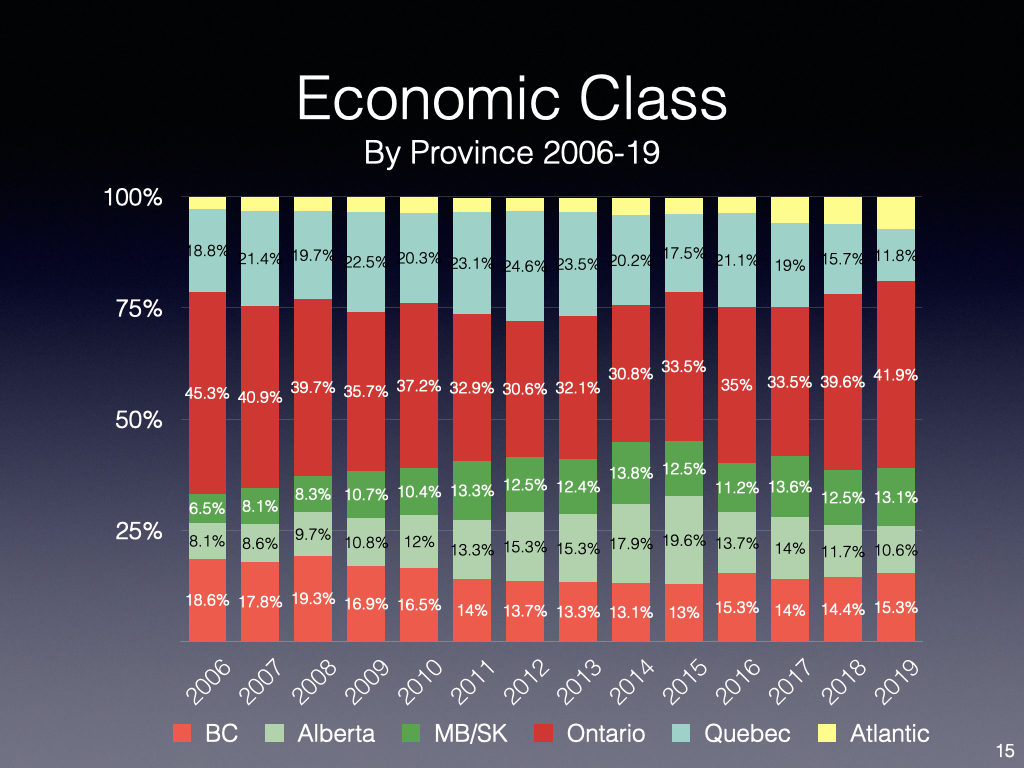
Of interest. Canadian visible minority groups have three Asian groups: East Asian, South Asian and West Asian, in addition to Korean and Japanese.

With the U.S. Census online form set to go live starting March 12, Americans will soon get the once-in-a-decade opportunity to stand up and be counted. But while many of the questions on the Census may seem simple — name or date of birth — at least one is more complicated: race.

For many Asian Americans, who are the least likely among ethnic groups to fill out the Census, this can be especially true. The Census Bureau defines a person of the Asian race as “having origins in any of the original peoples of the Far East, Southeast Asia, or the Indian subcontinent including, for example, Cambodia, China, India, Japan, Korea, Malaysia, Pakistan, the Philippine Islands, Thailand, and Vietnam.”

That means, according to the Pew Research Center, that the Census definition of “Asian” — the fastest growing American population — covers more than 20 ethnicities and 20 million citizens in the United States.

But American culture tends not to think of all regions in Asia as equally Asian. A quick Google search of “Asian food nearby” is likely to call up Chinese or Japanese restaurants, but not Indian or Filipino. Years after someone posted a thread on College Confidential, a popular college admissions forum, titled “Do Indians count as Asians?” the SAT in 2016 tweaked its race categories, explaining to test-takers that “Asian” did include “Indian subcontinent and Philippines origin.”

This issue even made its way to the 2020 Presidential race: during his run for the Democratic nomination, Andrew Yang, who is of Taiwanese descent, was frequently framed by the media and his own campaign as the Asian candidate, despite his rival Kamala Harris having Indian heritage. In addition, while Tulsi Gabbard’s Samoan heritage might put her in a different category on the Census now, before 2000, the Census put “Asian” and “Pacific Islander” together in the same broader category.

“My Asian-ness is kind of obvious in a way that might not be true of Kamala or even Tulsi,” Yang said. “That’s not a choice. It’s just a fairly evident reality.”

But the history of Asian identity in the U.S. shows that what Yang asserted is self-evident today could perhaps have evolved differently — and that, as the U.S. counts its population, the result of that evolution can have serious consequences.

Inventing “Asian American”

The boundary between Asia and Europe has no official line, so the definition of “Asian” may include Central Asians, East Asians, Native Hawaiians and Pacific Islanders, Southeast Asians and South Asians, as well as West Asians — whom the Census counts as white Middle Easterners and may not self-identify as Asian. But today’s common American usage of the term is a relatively recent phenomenon, spiking in popularity in the United States after World War II.

The Corpus of Historical American English shows less than one appearance of “Asian” per million words in American texts from 1810 through the 1940s, but that number rose to nearly 15 mentions per million words in the 1950s. A similar spike can be seen in British English.

At the time of this rise, in the U.S., contact with Asian cultures was predominantly via East Asian countries. “The U.S. was at war with Japan, then Korea, then Vietnam, and has occupied other parts,” explains linguist Lynne Murphy. In addition, the Immigration and Nationality Act of 1965 made way for large-scale immigration from Asia to the U.S.

It’s easy to see how important that contact was. After all, in the U.K., where the breakup of the British Empire contributed to a wave of immigration from South Asia in the mid-20th century, “Asian” has a different meaning. In The Prodigal Tongue: The Love-Hate Relationship Between American and British English, Murphy writes about a British journalist whose use of the word “means ‘from the Indian subcontinent,’ and so when he wants to talk about people from China, Korea, or Japan, he [says] east Asians. In America, the situation is just the opposite: say Asian and people assume ‘east Asian.’ When people mean ‘south Asian,’ they’ll probably say Indian or maybe South Asian.”

As civil rights movements swept the United States in the 1960s and ‘70s, Asian populations likewise seized the moment to agitate for their rights. The term “Asian American” emerged from student activists inspired by those movements and was purposefully broad. Given that their numbers individually were much smaller than other race-based movements, “it was a moment in which Chinese American, Filipino American, Japanese American activists came together and said, ‘You know, let’s unite under this umbrella of Asian American,’” explains Anthony Ocampo, a sociologist at Cal Poly Pomona. The movement soon expanded to include South-Asian Americans, Korean Americans and Vietnamese Americans.

As Asian Americans worked for increased visibility, “Asian” and “Asian American” became more general ways of talking about people while avoiding other terms that were incorrect or problematic, like Oriental, which was prominent before the ‘50s, Murphy notes. But it wasn’t long before the term’s meaning narrowed, increasingly coming to apply only to the most visible subgroups.

Eventually, the term “Asian” came to be associated with “what you look like, how your eyes are shaped, your skin tone and your hair texture,” says Ocampo. “When people hear the word ‘Asian,’ they think of certain types of last names that are aligned with Chinese, Korean or Japanese folks.”

A 2016 study done by the National Asian American Survey found that 42% of white Americans believed that Indians are “not likely to be” Asian or Asian American, with 45% believing that Pakistanis “not likely to be” Asian or Asian American. In addition, 27% of Asian Americans believed that Pakistani people are “not likely to be” Asian or Asian American with 15% reporting that Indians are “not likely to be” either. “The question of Asian American identity is contested, with South Asian groups (Indians and Pakistanis) finding it more challenging for American society to view them as Asian American,” concluded the researchers.

A narrow vision

According to the Pew Research Center, the very first U.S. Census in 1790 only had three categories: “Free white males, Free white females,” “All other free persons,” and “Slaves.” It took nearly a century, until 1870, for a category to be added for people of Asian descent. That category was simply called “Chinese.” In 1890, the Census Bureau added “Japanese,” followed by “Other” in 1910 (which primarily referred to people of Korean, Filipino and Indian descent), and “Filipino,” “Korean,” and “Hindu” (referring to Indians regardless of religion) in 1920.

People were allowed to choose their own race from 1960 onward, and this year’s Census will have the same categories for people of Asian descent it used in 2010: “Chinese,” “Japanese,” “Filipino,” “Korean,” “Asian Indian,” “Vietnamese,” and “Other Asian.”

As straightforward as that list may sound, question of who “counts” as Asian clearly endures, and many are now speaking up about why it matters.

“The narrative defines who gets the already few limited resources and airtime that are afforded to Asian Americans,” says Ocampo. For example, discussion of Asian representation in film centers mainly on films with East Asian characters, like Parasite, The Farewell and Crazy Rich Asians. “I find that Black Asians are nearly entirely erased from the convo of being Asian. Like, I’m not even allowed to audition for Asian roles because Hollywood’s vision of ‘Asian’ is just East Asian,” tweeted actress Asia Jackson.

That feeling can be particularly relevant when it comes to checking a box on a form like the Census. Research into what’s known as “social identity threat” has shown that asking people about their identity can make them doubt their social belonging, which can make people doubt their abilities in areas that have nothing to do with race. “Anything that makes you conscious of your identity in a way that is confusing or upsetting or makes things high-stakes for you in some way can represent a problem,” explains Joshua Aronson, a professor of applied psychology at New York University.

Under-representation on the Census can lead to the misallocation of federal resources and a weak understanding of states’ needs, as the population tally plays a major role in deciding on political issues and funding nationwide. The division of seats in Congress and state legislatures is also affected by Census data.

So why are Asian Americans, even today, relatively less likely to fill out the Census?

Along with questioning the safety of offering up personal information to the government — perhaps due to the fact that the government also used Census data to round up people of Japanese descent for imprisonment in camps during World War II — language barriers, feelings of neglect and lack of familiarity with the Census all play a part in discouraging Asian Americans from participating, according to the New York Times. One study showed that Asian Americans are more likely than other groups to worry that their answers would be “used against” them.

As part of an effort to address the situation, volunteers from civic organizations are canvassing to educate Asian populations about the Census and appease any fears. And, in January, the Census Bureau began rolling out ads in Asian languages, including Chinese, Japanese, Filipino, Tagalog and Vietnamese. But last July, Representative Grace Meng of New York sent a letter to Steven Dillingham, the director of the Census Bureau, urging him to extend that outreach to the South Asian community. “I’m shocked that the Census Bureau failed to include the South Asian community in its outreach leading up to the 2020 Decennial Census,” she wrote. Dillingham wrote back, in a letter shared with TIME, saying that the Census Bureau is in fact trying to expand the campaign to include content produced in South Asian languages.

Whether that outreach made a difference — and whether it worked among allAsian Americans, or just some — won’t be known until after the Census is done.

For demographers, there is some benefit to seeing each subset of “Asian” as separate: “Good data should always be as disaggregated as possible,” says Lakshmi Sridaran, executive director at South Asian Americans Leading Together. “To understand the nuances within the Asian American community, it does matter if somebody is a Pacific Islander, Southeast Asian, East Asian, etc. In terms of how resources get allocated for diversity and hiring, it is actually very critical to meet the needs of those communities, which can be very different.”

However, as the original Asian American activists of the mid-20th century knew, there’s also power in banding together. According to Sridaran, the question for activists today should be “how we can leverage the power of coming together under that broader identity, but also uplift those who often get erased or sidelined.”

Source: At Census Time, Asian Americans Again Confront the Question of Who ‘Counts’ as Asian. Here’s How the Answer Got So Complicated

Peel board review team finds ‘racism and discrimination’ and slams administrators for inaction

Of note:

Three reviewers sent in to investigate the Peel school board heard “painful and difficult” stories of racism — including how white supremacists attend meetings — and have reprimanded senior leaders for being “paralyzed by inaction” to make changes.

The reviewers detail how racism disproportionately impacts Black students, from lower enrolment in academic classes to higher suspension rates — and often for dubious reasons such as “wearing a hoodie,” do-rags or even hoop earrings, says the reviewers’ report, obtained by the Star.

Their report, to be released Friday, also covers issues of equity, poor leadership and a lack of diverse staffing, including a dearth of Black guidance counsellors in the province’s second largest board.

“The accounts of racism and discrimination documented in the report are deeply troubling and will not be tolerated,” Education Minister Stephen Lecce said in a statement. “After decades of inaction, I want to see swift implementation of these recommendations to drive the change racialized and other discriminated students deserve.”

Lecce said “students and the community have demanded change and I want to assure them that we will monitor board implementation and hold them to account to deliver this transformational change that will put every student on a path to success.”

The reviewers — Ena Chadha, Sue Herbert and Shawn Richard — were called in to probe the board late last year as it struggled with allegations of racism, dysfunction and troubling trustee conduct. Patrick Case — a human rights lawyer and assistant deputy education minister — oversaw and assisted in the investigation.

In their final report, the review team found that “some teachers use any excuse to exclude Black students from the classroom and some principals use any excuse to suspend Black students from schools.”

Black students comprise 10.2 per cent of high school students, but make up 22.5 per cent of those suspended — and many of those suspensions don’t meet standards set by the Ministry of Education, they found.

“During our review, Black youth told us that they feel like they are held to higher standards, and different codes of conduct in comparison to white or other racialized students,” and that they are disproportionately streamed into classes that don’t give them the requirements for university, the report says.

“It is untenable that, for many years, the board has been unaware of this terrible state of affairs.”

Black students are the target of “degrading, inappropriate and racist comments” made by teachers and principals, and often hear the N-word uttered by other students without punishment, the report says.

They heard about one teacher who commented that a Black student “will be a drug dealer just like his dad.”

The level of enrolment of Black students in specialized arts schools or International Baccalaureate programs is “abysmal,” and disproportionately low for students of Latin American heritage, the reviewers found.

Islamophobia is also a concern, and the reviewers said they “were provided with French curriculum materials that were clearly Islamophobic, conveyed blatant hostility to the Muslim community and an ignorance of the basic tenants of Islam.”

In speaking to Muslim students and community members, the reviewers said they heard of many incidents of Islamophobia. “Citing conflicts referable to prayers in (Peel) schools and the presence of white supremacists at a meeting of the board of trustees, we heard from the students, families, and educators of the real need for an Islamic co-ordinator to support Muslim students.”

The reviewers acknowledged that trustees and administrators agreed there is anti-Black racism in the board, yet have done nothing to address it.

Teachers and principals “escalate trivial issues unnecessarily…involving police for minor issues leading to arrests and stigmatization of Black children at a very young age,” the report said. Black children, it added, “are leaving the (Peel board) because it is not safe for them.”

The report also says that “approximately 25 per cent of (staff) are racialized, which is almost the opposite of the demographics of the student body.”

In their interim report released in January, the three reviewers said they had already “consistently heard painful accounts of traumatic experiences in schools and school communities.”

The “narratives shared with us signal a profound lack of respect in relationships, demonstrated by stories of marginalization, discrimination, differential behaviour, and harassment.”

The reviewers began their work amid turmoil at the board and after a trustee referred to the diverse McCrimmon Middle School as “McCriminal,” and after a senior administrator in charge of anti-discrimination launched a human rights complaint.

Their report demands that the board “immediately issue a responsive and respectful public apology for the mishandling” of the McCrimmon incident — and it also noted that other diverse schools are known by disparaging nicknames, including Central Peel being referred to as “Central Africa,” and Meadowvale as “Meadow Jail.”

The report also directs the boards to create a four-year plan to improve enrolment and achievement of Black and other racialized students.

Among staff, the reviewers found a “culture of fear” — which past reviews of other boards, including the Toronto public, have also uncovered — as well as poor communications with the community. Trustees, who are bitterly divided, were criticized for often overstepping their roles in hiring and promotions.

“The (Peel District School Board) is facing a crisis of confidence,” they wrote.

Among their recommendations: hire a mediator to broker peace among trustees, as well as between trustees and senior administrators; improved trustee training; and also to “retain the services of an integrity commissioner who has demonstrated experience in, and knowledge of, human rights principles.”

The Peel District School Board has more than 155,000 students in Brampton, Mississauga and Caledon schools, and about 17,000 staff members.

It is highly diverse, and among students the three largest groups are South Asian (45 per cent), white (17 per cent) and Black (10 per cent).

The reviewers heard from more than 300 people, including 115 in-person interviews.

They also noted that there are issues of “factional violence amongst South Asian communities and, in particular, in relation to male youths of the north Brampton Punjabi community” that teachers and administrators “either ignored or were indifferent to the violence.”

Drug and alcohol abuse is also a concern in the South Asian community.

Jamil Jivani, Ontario’s newly named advocate for community opportunities, said the minister is taking action on the recommendations and that is “an important step toward building a public school system that gives each child — regardless of race, background, or postal code — a fair start in life.”

He said “with the announcement of 29 new ministerial directives, the Government of Ontario is positioning the (Peel board) to immediately strengthen its governance and leadership practices to focus its attention on ensuring that all (Peel) students can realize their full potential in classrooms and schools where they are supported, respected, valued and welcomed.”

Source: Peel board review team finds ‘racism and discrimination’ and slams administrators for inaction

Indian politics front and centre in Ontario as legislature debates law declaring Sikh genocide

Diaspora politics at its worst (the Ford government also changed the requirement for Canadian Sikhs to wear helmets given similar pressures).

Concordia Professor Frank Chalk’s comments at the end position the issue correctly:

The emotionally fraught politics of India are poised to again engulf the Ontario legislature, as opposing Indo-Canadian factions pressure lawmakers over a contentious private member’s bill commemorating a 36-year-old massacre.

The legislation to create a “Sikh genocide week,” introduced by the MPP brother of federal New Democratic Party Leader Jagmeet Singh, marks riots in 1984 that saw thousands of Sikhs killed in New Delhi and elsewhere in India.

The killings, encouraged by leaders of the then-ruling Congress Party, remain a festering wound for many Sikh-Canadians. But the terminology in the bill is a red flag for Delhi, and a previous Ontario motion that called the attacks genocide helped raise tensions between Canada and India.

Allies of the current Indian administration — itself under fire for persecution of another minority group, India’s Muslims — were expected to show up in force at Queen’s Park Thursday to voice their opposition to the bill.

Sikh organizations have been working behind the scenes to rally Ontario’s governing Conservative party to back the legislation, adding to expected votes from the NDP and Liberals. One source said more than 40 Tory members pledged their backing this week, anxious not to alienate the powerful Sikh voting bloc in the suburbs west of Toronto.

With that amount of Conservative support, the bill would easily pass second reading in the 124-seat house, a rarity among private-member’s initiatives.

Ivana Yelich, Premier Doug Ford’s press secretary, said Wednesday only that the government is “reviewing” the legislation, and could not reveal what was said about it at a Tory caucus meeting Monday.

Meanwhile, a leading academic expert on genocide said Wednesday the 1984 attacks, as horrific as they were, simply did not meet the internationally accepted definition of the term.

New Democrat Gurratan Singh, who introduced the bill last month, could not be reached for comment. But as he unveiled the legislation, he said the Sikh community’s cries for justice over the event have gone unheeded.

“The trauma of this genocide is real and still impacts Sikhs that call Ontario home,” said Singh. This bill will create a time to allow for reflection and help begin the process of healing for thousands of Sikhs (who) continue to suffer.”

But Anil Shah of the pro-New Delhi Canada India Foundation said the killings were reprehensible acts of revenge, not government-perpetrated genocide. Suggesting otherwise will further anger the government of Prime Minister Narendra Modi, who already believes the federal Liberal government favours the Sikh independence movement. He pointed to Prime Minister Justin Trudeau’s ill-fated trip to India, where Modi largely gave him the cold shoulder.

“There are going to be repercussions” if the bill passes, Shah predicted. “At this point, we should talk about building relations with this country, we should talk about the trade. Something that happened 35, 36 years ago … that has no relevance.”

After two Sikh bodyguards murdered prime minister Indira Gandhi in 1984, a wave of pogroms saw at least 3,000 Sikhs slaughtered by rampaging Hindus, encouraged at times by prominent Congress officials.

The Ontario legislature passed a motion in 2017 at the instigation of a Liberal member describing the events as a genocide. The Indian government at the time called the motion “misguided,” and a misunderstanding of India’s history and legal system. It added to a perception in New Delhi that Liberals federally and in Ontario favoured the Khalistani or Sikh separatist movement and helped put a chill on relations.

But is there, in fact, merit to declaring the vicious pogroms of 1984 as something akin to the Holocaust or the Rwandan massacre?

As it turns out, there is United Nations genocide convention that defines the term, and what happened to the Sikhs, while likely a crime against humanity, does not meet that definition, says Frank Chalk, a Concordia University history professor and past president of the International Association of Genocide Scholars.

While the  victims were clearly targeted because of their religion, the killings were not part of a “long-term, sustained and systematic” effort, perpetrated by government, to wipe out the Sikhs, which is how genocide is described in the UN convention, he said.

“I have enormous sympathy for the Sikh community and the crimes inflicted on the Sikh people in India after Gandhi was assassinated,” Chalk said. “But I fail to sympathize with the priority that some leaders of the community in Canada — not all — give to labeling their suffering and victimization as genocide. I know that gets more media attention … so it’s understandable from the point of view of communications and public relations.”

Source: Indian politics front and centre in Ontario as legislature debates law declaring Sikh genocide

Departmental Plans: Canadian Heritage (multiculturalism), IRCC (citizenship)

Relevant highlights from the departmental plans. No real surprises.

The campaign and mandate letter commitment to eliminate citizenship fees is worded as “to bring forward a plan to eliminate fees for citizenship for those who have fulfilled the requirements for obtaining it.” This suggests that it will take some time which the financial projections, which do not include any impact from elimination of fees, confirm.

The previous mandate commitment to revise the citizenship guide, Discover Canada, remains part of the plan:

Canadian Heritage (multiculturalism) Planning highlights

Canadians value diversity.

In 2020-21, the Department will undertake the following activities towards achieving this departmental result by:

  • Supporting the new Anti-Racism Secretariat, which will demonstrate leadership in overseeing a coherent whole-of-government approach on combating racism and discrimination, ensuring comprehensive and coordinated actions with measurable impact, and fostering continuing dialogue with provinces, territories and our diverse communities.
  • Implementing a new data and evidence approach to promote a better understanding of the barriers faced by racialized communities, religious minorities and Indigenous Peoples; and collecting data and information and conducting research as a means of informing policy and program development and performance reporting on “what works” in anti-racism programming.
  • Delivering more targeted community-based projects to communities, which address systemic barriers to employment, justice and social participation for Indigenous Peoples, racialized communities and religious minorities.
  • Consulting civil society representatives of LGBTQ2 communities to lay the groundwork for an LGBTQ2 action plan that would guide the work of the federal government on issues important to LGBTQ2 Canadians.

Youth enhance their appreciation of the diversity and shared aspects of the Canadian experience.

In 2020-21, the Department will undertake the following activities towards achieving this departmental result by:

  • Supporting projects, exchanges, and forums that allow youth throughout Canada to connect with one another, have a better understanding of what they have in common, and learn new things about Canada’s diverse cultural expressions, history, and heritage, with special emphasis on reconciliation, diversity and inclusion, and official language minority communities.
  • Working towards breaking down barriers to participation and providing more opportunities for diverse youth, such as youth from official language minority communities, racialized and Indigenous communities, and rural, remote and Northern communities.
  • Advancing the government-wide priority of inclusivity by involving young people in federal decision making through its work in 2020-21. For example, the Youth Secretariat will continue to manage the operations of the Prime Minister’s Youth Council, including the recruitment of a diverse and representative cohort of new members in 2020; as well as working with the Privy Council Office to implement the commitment to have 75% of all Government of Canada Crown Corporations include a youth member, as mandated by the Canada Youth Policy.

Planned spending is about $130m. Source: https://www.canada.ca/en/canadian-heritage/corporate/publications/plans-reports/departmental-plan-2020-2021.html#a4d

Immigration, Refugees and Citizenship (citizenship) Planning highlights

Departmental Result 7: Eligible permanent residents become Canadian citizens

In 2018–2019, more than 207,000 people were granted Canadian citizenship, an 84% increase over the previous fiscal year. A significant reason for this increased demand for citizenship was the coming into force of Bill C-6, which amended the Citizenship Act to make it easier and give more flexibility to permanent residents in becoming Canadian citizens. In 2020–2021, the Department will continue updating the citizenship grant operating model and client service tools with the aim of reducing processing times, improving service delivery and client experience, and enhancing system efficiency while maintaining program integrity. The Department will also bring forward a plan to eliminate fees for citizenship for those who have fulfilled the requirements for obtaining it.

The Department remains committed to revising the citizenship guide and Oath of Citizenship to better reflect Canada’s diversity and, in particular, to include more Indigenous perspectives and history. In 2020–2021, the Department will continue to engage with stakeholders, including Indigenous organizations, minority populations, women, Francophones, LGBTQ2 individuals and persons with disabilities, on the content of the revised citizenship guide to support newcomers in studying for the citizenship test. IRCC also remains committed to completing the legislative work on changes to the Oath of Citizenship to reflect the Truth and Reconciliation Commission’s Calls to Action.

IRCC will engage in a proactive communications campaign to encourage eligible permanent residents to become Canadian citizens by showcasing the value and pride of Canadian citizenship and highlighting the benefits of active and engaged citizenship to all Canadians, especially young Canadians.

Citizenship funding

For the citizenship component, resources are mainly used for assessment activities, administration of tests, criminal record checks, activities to detect and prevent fraud, citizenship ceremonies and development of tools such as citizenship tests and guides. Citizenship planned spending from 2020–2021 to 2022–2023 ranges between $69.2 million and $71.7 million.

Source: https://www.canada.ca/en/immigration-refugees-citizenship/corporate/publications-manuals/departmental-plan-2020-2021/departmental-plan.html#core3

Australia: Liberal politician accuses first female Muslim MP of thinking ‘her diversity is better than others’

Sigh:

A debate in the House of Representatives on the importance of multiculturalism in Australia turned sour on Thursday after Assistant Defence Minister Alex Hawke attacked Labor MP Anne Aly for thinking her diversity is “something better than other people’s diversity”.

Egyptian-born Dr Aly was the first Muslim woman to be elected to Federal Parliament after she won the West Australian seat of Cowan in 2016.

The controversial comments came after Dr Aly disputed claims by Mr Hawke that “most” of the politicians in the room were either born overseas or had a parent that was, as part of a speech on the success of multiculturalism in Australia.

“When the member opposite likes to cite her diversity as something better than other people’s diversity she ignores reality,” he said, resulting in shouts of “shame” from Labor MPs.

“The member for Cowan should reflect that people have come from all parts of the world to Australia, over many years. Just because you’re a migrant from one country doesn’t make you better than another.”

Mr Hawke, the Member for Mitchell, was responding to calls by Labor MP Andrew Giles for urgent action from politicians on the rise of racism and anti-Semitism in Australia.

Citing the attack of a heavily pregnant Muslim woman in Parramatta in November last year, he said Australia was “witnessing a creeping normalisation of hate”.

“Let me be clear: the vast majority of Australians abhor racism, but we need national leadership, setting the standard and leading by example. This has been sadly missing in this place,” Mr Giles said.

Mr Hawke defended the comments on Friday morning, accusing Labor of “feigning outrage and falsely claiming racism” in order to shut down debate.

“Labor under Anthony Albanese appears fixated on identity politics and appears constantly triggered by anything and everything,” he said in a statement to SBS News.

“Every MP has the right to engage in robust debate – certainly Labor members did in this discussion.”

Mr Hawke clarified that he was trying to make the point that Labor was misrepresenting the reality of multiculturalism in Australia, which he said is a “free, fair and tolerant place and the greatest multicultural success story in the world”.

“This constant erosion of debate threatens our freedom,” he said.

During the 2019 federal election, Ms Aly was the target of “racist” flyers which used her full Egyptian name, Azza Mahmoud Fawzi Hosseini Ali el Serougi, and accused her of proposing “blasphemy” laws to ban any criticism of Islam.

Dr Aly’s office has been contacted for comment.

Source: Liberal politician accuses first female Muslim MP of thinking ‘her diversity is better than others’

Concerns raised after facial recognition software found to have racial bias

Legitimate concerns:

In 2015, two undercover police officers in Jacksonville, Fla., bought $50 worth of crack cocaine from a man on the street. One of the cops surreptitiously snapped a cellphone photo of the man and sent it to a crime analyst, who ran the photo through facial recognition software.

The facial recognition algorithm produced several matches, and the analyst chose the first one: a mug shot of a man named Willie Allen Lynch. Lynch was convicted of selling drugs and sentenced to eight years in prison.

Civil liberties lawyers jumped on the case, flagging a litany of concerns to fight the conviction. Matches of other possible perpetrators generated by the tool were never disclosed to Lynch, hampering his ability to argue for his innocence. The use of the technology statewide had been poorly regulated and shrouded in secrecy.

But also, Willie Allen Lynch is a Black man.

Multiple studies have shown facial recognition technology makes more errors on Black faces. For mug shots in particular, researchers have found that algorithms generate the highest rates of false matches for African American, Asian and Indigenous people.

After more than two dozen police services, government agencies and private businesses across Canada recently admitted to testing the divisive facial recognition app Clearview AI, experts and advocates say it’s vital that lawmakers and politicians understand how the emerging technology could impact racialized citizens.

“Technologies have their bias as well,” said Nasma Ahmed, director of Toronto-based non-profit Digital Justice Lab, who is advocating for a pause on the use of facial recognition technology until proper oversight is established.

“If they don’t wake up, they’re just going to be on the wrong side of trying to fight this battle … because they didn’t realize how significant the threat or the danger of this technology is,” says Toronto-born Toni Morgan, managing director of the Center for Law, Innovation and Creativity at Northeastern University School of Law in Boston.

“It feels like Toronto is a little bit behind the curve in understanding the implications of what it means for law enforcement to access this technology.”

Last month, the Star revealed that officers at more than 20 police forces across Canada have used Clearview AI, a facial recognition tool that has been described as “dystopian” and “reckless” for its broad search powers. It relies on what the U.S. company has said is a database of three billion photos scraped from the web, including social media.

Almost all police forces that confirmed use of the tool said officers had accessed a free trial version without the knowledge or authorization of police leadership and have been told to stop; the RCMP is the only police service that has paid to access the technology.

Multiple forces say the tool was used by investigators within child exploitation units, but it was also used to probe lesser crimes, including in an auto theft investigation and by a Rexall employee seeking to stop shoplifters.

While a handful of American cities and states have moved to limit or outright ban police use of facial recognition technology, the response from Canadian lawmakers has been muted.

According to client data obtained by BuzzFeed News and shared exclusively with the Star, the Toronto Police Service was the most prolific user of Clearview AI in Canada. (Clearview AI has not responded to multiple requests for comment from the Star but told BuzzFeed there are “numerous inaccuracies” in the client data information, which they allege was “illegally obtained.”)

Toronto police ran more than 3,400 searches since October, according to the BuzzFeed data.

A Toronto police spokesperson has said officers were “informally testing” the technology, but said the force could not verify the Star’s data about officers’ use or “comment on it with any certainty.” Toronto police Chief Mark Saunders directed officers to stop using the tool after he became aware they were using it, and a review is underway.

But Toronto police are still using a different facial recognition tool, one made by NEC Corp. of America and purchased in 2018. The NEC facial recognition tool searches the Toronto police database of approximately 1.5 million mug shot photos.

The National Institute of Standards and Technology (NIST), a division of the U.S. Department of Commerce, has been testing the accuracy of facial recognition technology since 2002. Companies that sell the tools voluntarily submit their algorithms to be tested to NIST; government agencies sponsor the research to help inform policy.

In a report released in December that tested 189 algorithms from 99 developers, NIST found dramatic variations in accuracy across different demographic groups. For one type of matching, the team discovered the systems had error rates between 10 and 100 times higher for African American and Asian faces compared to images of white faces.

For the type of facial recognition matching most likely to be used by law enforcement, African American women had higher error rates.

“Law enforcement, they probably have one of the most difficult cases. Because if they miss someone … and that person commits a crime, they’re going to look bad. If they finger the wrong person, they’re going to look bad,” said Craig Watson, manager of the group that runs NIST’s testing program.

Clearview AI has not been tested by NIST. The company has claimed its tool is “100% accurate” in a report written by an “independent review panel.” The panel said it relied on the same methodology the American Civil Liberties Union used to assess a facial recognition algorithm sold by Amazon.

The American Civil Liberties Union slammed the report, calling the claim “misleading” and the tool “dystopian.”

Clearview AI did not respond to a request for comment about its accuracy claims.

Before purchasing the NEC facial recognition technology, Toronto police conducted a privacy impact assessment. Asked if this examined potential racial bias within the NEC’s algorithms, spokesperson Meaghan Gray said in an email the contents of the report are not public.

But she said TPS “has not experienced racial or gender bias when utilizing the NEC Facial Recognition System.”

“While not a means of undisputable positive identification like fingerprint identification, this technology provides ‘potential candidates’ as investigative leads,” she said. “Consequently, one race or gender has not been disproportionally identified nor has the TPS made any false identifications.”

The revelations about Toronto police’s use of Clearview AI have coincided with the planned installation of additional CCTV cameras in communities across the city, including in the Jane Street and Finch Avenue West area. The provincially funded additional cameras come after the Toronto police board approved increasing the number placed around the city.

The combination of facial recognition technology and additional CCTV cameras in a neighbourhood home to many racialized Torontonians is a “recipe for disaster,” said Sam Tecle, a community worker with Jane and Finch’s Success Beyond Limits youth support program.

“One technology feeds the other,” Tecle said. “Together, I don’t know how that doesn’t result in surveillance — more intensified surveillance — of Black and racialized folks.”

Tecle said the plan to install more cameras was asking for a lot of trust from a community that already has a fraught relationship with the police. That’s in large part due to the legacy of carding, he said — when police stop, question and document people not suspected of a crime, a practice that disproportionately impacts Black and brown men.

“This is just a digital form of doing the same thing,” Tecle told the Star. “If we’re misrecognized and misidentified through these facial recognition algorithms, then I’m very apprehensive about them using any kind of facial recognition software.”

Others pointed out that false positives — incorrect matches — could have particularly grave consequences in the context of police use of force: Black people are “grossly over-represented” in cases where Toronto police used force, according to a 2018 report by the Ontario Human Rights Commission.

Saunders has said residents in high-crime areas have repeatedly asked for more CCTV cameras in public spaces. At last month’s Toronto police board meeting, Mayor John Tory passed a motion requiring that police engage in a public community consultation process before installing more cameras.

Gray said many residents and business owners want increased safety measures, and this feedback alongside an analysis of crime trends led the force to identify “selected areas that are most susceptible to firearm-related offences.”

“The cameras are not used for surveillance. The cameras will be used for investigation purposes, post-reported offences or incidents, to help identify potential suspects, and if needed during major events to aid in public safety,” Gray said.

Akwasi Owusu-Bempah, an assistant professor of criminology at the University of Toronto, said when cameras are placed in neighbourhoods with high proportions of racialized people, then used in tandem with facial recognition technology, “it could be problematic, because of false positives and false negatives.”

“What this gets at is the need for continued discussion, debate, and certainly oversight,” Owusu-Bempah said.

Source: Concerns raised after facial recognition software found to have racial bias

Chinese government’s Confucius Institute holds sway on Canadian campuses, contracts indicate

Of note:

Sonia Zhao had to lie, in effect, when she left China to teach Mandarin at an Ontario university.

The contract she signed with the Beijing-run Confucius Institute indicated that Falun Gong practitioners – people like her – were barred from the job. But she kept her beliefs secret and hoped she could find more freedom in Canada. It was not to be.

She says she was trained beforehand to spin Beijing’s line if students asked about Tibet and other taboo topics, while Chinese staff at McMaster University’s branch of the institute made clear Falun Gong was poison. After a year, she quit and sought asylum here, becoming perhaps the world’s first Confucius Institute whistle-blower.

“I think they’re aiming to build a really beautiful, healthy image (of China) among those students,” Zhao said about the institute’s ultimate purpose. She believes Canada should have nothing to do with the agency. “It isn’t worth it to give up your freedom of speech or freedom even of thinking just to learn about a different language or culture.”

Her experience in 2011 did lead McMaster to end its relationship with the institute, a division of China’s education ministry that pays for Mandarin-language and cultural programs worldwide – and has long been embroiled in controversy. Advocates call the organization a generously funded cultural bridge, critics decry it as a “Trojan horse” for Chinese propaganda and influence.

But 10 other universities, colleges and boards of education across Canada still host their own Confucius outlets. And a National Post survey of the closely guarded contracts they signed found little in them that might prevent the kind of censorship and discriminatory hiring highlighted by Zhao.

Only one of seven agreements obtained by the Post includes any protection for academic freedom.

Several of the contracts indicate the local institutes must accept the agency headquarters’ assessment of “teaching quality.” One at the University of Waterloo-affiliated Renison College says any disagreements about running the institute should be referred to the Beijing headquarters, called Hanban.

Almost all bar the institutes from contravening Canadian or Chinese law, the latter routinely excoriated for its abuse of basic human rights. They also require compliance with the institute’s own constitution and bylaws. To this day, Hanban’s website says overseas teachers must have “no record of participation in Falun Gong and other illegal organizations,” a clear violation of Canadian constitutional and rights law.

Brock University in St. Catharines, Ont., even pledged to find a “prominent location” to erect a statue of Confucius to advertise the institute’s presence.

“I would say (Confucius headquarters) have absolute control,” said lawyer Clive Ansley  after reviewing some of the contracts. The former China studies professor practiced for several years in the country. “Any decision on what they call teaching quality, teaching materials, it’s all going to be made by Hanban.”

Ivy Li of the group Canadian Friends of Hong Kong said she was struck by the different roles set out in the contracts she perused at the Post’s request.

The Canadian hosts agree to provide office and classroom space and a steady supply of students, and in some cases to promote the program. Most of the contracts also say the Canadian school will provide funding, directly or in kind, at least equal to what the Chinese government contributes.

Hanban, the contracts stipulate, supplies the content – Mandarin teachers, textbooks, course software and other educational materials, which Li said come with Beijing’s particular spin.

“Even purely from a business point of view, it’s a very bad deal,” she charged. “Our universities are being used as a platform to promote (China’s) message, and that message is disinformation.”

But administrators here argue that despite what the contracts suggest, China does not actually interfere in the arrangements – arrangements they argue are an important conduit between the two nations. Meanwhile, they say, political issues never arise in the type of activities – from language training to Tai Chi – the institutes oversee.

“We have not had any pressure from China to do anything other than enhance cultural understanding,” said Lorne Parker, an assistant superintendent with the Edmonton public school division. “We are looking at our relationship with (Confucius Institute) as building a cultural bridge and not a wall. You can have more influence … by having those bridges.”

Launched in 2004, Confucius has opened 540 branches around the world. Unlike Alliance Francaise, the Goethe Institute and other cultural-outreach groups funded by some European states, it is an actual department of government and embeds itself, uniquely, inside foreign educational bodies.

The organization is hosted in Canada by two school boards – Coquitlam, B.C., and Edmonton – plus two colleges – Montreal’s Dawson and Toronto’s Seneca – and six universities – Saint Mary’s, Carleton, Waterloo, Brock, Regina and Saskatchewan.

The official stated goal is to teach Mandarin and spread the good word about Chinese culture and traditions. But even Xu Lin, Hanban’s director general, has said Confucius Institutes are “an important part of our soft power.”

“We want to expand China’s influence. This relies on our instructors, Confucius Institutes and language,” she told a conference in Beijing.

After a burst of expansion in Canada, there has been some retrenchment in recent years. Both McMaster and Quebec’s Sherbrooke University shut down their institutes amid controversy, while New Brunswick is in the process of closing the Confucius program run through one of its school districts. Toronto’s board killed the institute in 2014 just as it was about to launch. The B.C. Institute of Technology’s branch has been suspended.

But the program appears to be going strong elsewhere. To understand what the remaining hosts agreed to in exchange for Beijing’s largesse, the Post asked all for copies of the contracts they signed.

Three refused. Carleton University and Seneca College offered no reason for the denial; St. Mary’s University in Halifax said its contract is “with an external organization, and is a record that is not publicly available.” A university spokesman suggested the Post file a freedom of information request, a process that typically takes months, with no guarantee of success.

In fact, several of the Confucius contracts contain non-disclosure clauses.

Other schools said they had secured Hanban’s permission to release their agreements, or the documents had already been disclosed to local media after freedom of information applications.

All set up an arrangement between the Canadian educational facility and a partner college in China, with a director appointed from each side and a board to oversee the institute. In almost every case, Hanban agrees to supply Mandarin teachers, as many as 3,000 textbooks and other teaching material. Some mention start-up funding from Beijing of $150,000 to $250,000.

China provides about 15 teachers at a time to the Edmonton school district, though they act as “supports” in Mandarin classes that are led by the board’s own staff, said Parker.

“We received about a million dollars’ worth of books and materials from Hanban,” Bob Lajoie of the Coquitlam School District enthused to filmmaker Doris Liu in her documentary In the name of Confucius.

The nature of those books is a concern for some institute critics. Terry Russell, a senior scholar in China studies at the University of Manitoba, said institute texts he’s seen talk of Tibet being “liberated” by China and Taiwan forming part of the country.

“The perspective that is set out in the teaching materials is very much the Chinese perspective,” he said.

Most of the contracts also contain a clause that says “the institute must accept the assessment of the headquarters (Hanban) on the teaching quality.”

It suggests a degree of control by Beijing that director general Xu spelled out openly in an interview previously posted on the organization’s website.

“We haven’t lost education sovereignty,” Xu said. “It’s like the foreign universities work for us.”

Zhao said training before she left China was clear: never mention sensitive topics and if asked about them, offer Beijing’s standard line, that “Tibet is part of China and the government is treating them nicely, that Taiwan is part of China.”

When she and other Confucius teachers at McMaster watched and discussed the Hollywood movie Seven Years in Tibet – a critical look at China’s treatment of the region – their Chinese director said “if we kept talking about those things or watching those things, we need to write a report about our thinking because our minds, our thoughts are not following the Communist party.Institute staff immediately tossed in the garbage a Falun Gong pamphlet brought in by a student, she said.

But Edmonton’s Parker said Hanban does not assess the teaching work there, and suggested the clause was included only to ensure the agency’s teachers provide good-quality instruction.

A Coquitlam spokesman said that its Confucius staff are hired locally, without the agency’s input, and Hanban has never visited the district to perform assessments.

Institute administrators in Canada also deny having to abide by any aspect of Chinese law or Hanban rules, despite what the contracts say.

“I’m not aware of any of those restrictions,” Parker said when asked about the Falun Gong teacher ban.

But if some Canadian Confucius partners dismiss any suggestion of undue influence from China, and their contracts erect limited firewalls against potential Beijing meddling, there is at least one exception.

When the University of Saskatchewan renewed its agreement with Hanban in 2016, it managed to include a provision that said the institute’s activities “will respect academic freedom and transparency, as well as University of Saskatchewan institutional values, priorities and policies.”

Without that caveat, the contract would not have been extended, Karen Chad, the university’s vice-president research, said in a statement.

But critics of the Confucius Institute question whether it will have much impact. To achieve its goals, they say, the institute has never needed to overtly propagate Chinese propaganda. It has taught Mandarin and presented Chinese culture in a way that simply avoids mention of religious persecution, censorship and other topics unflattering to the Communist regime.

“The Canadians get duped as they most often do when they deal with the government of China. They get duped into thinking these things are just cultural institutions and ‘Hey it’s a good idea to have a lot of Canadians learning Mandarin,’ ” said Ansley. “That’s not the Chinese goal at all … The goal is soft power, to promote a favourable image of China in the minds of Canadians.”

Source: Chinese government’s Confucius Institute holds sway on Canadian campuses, contracts indicate

Why celebrating women’s rights without an intersectional lens is meaningless

I wouldn’t go as far as meaningless, and I find intersectionality is too jargony to my taste but of course, one should not celebrate or discuss any group, whether men, women, specific religious or ethnic groups, without consideration and acknowledgement of that diversity.

Ironically, when I analyse economic outcomes of visible minorities compared to not visible minorities, the gaps are larger between visible minority men and not visible minority men than is the case for women as the example looking at second generation 25-34 year olds below illustrates (similar pattern for first generation):

Not that many years ago, four to be precise, a senior journalist was sincerely trying to explain how his newsroom was attempting to diversify its staff.

Job applicants could check one of four boxes, he said. Gender, race, disability and sexual orientation. What box would I check, I wondered out loud.

“Race,” he said. And just like that, he erased major parts of my identity, rendering everything beyond my brown skin invisible.

This was about 25 years after civil rights advocate and scholar Kimberlé Crenshaw coined the term intersectionality to describe how people’s identities interact with power to create new forms of discrimination (specifically around Black women) when they overlap, and a few years after it had become a mainstream buzzword.

March 8 was International Women’s Day, a day that sprung from the women’s labour movement and began to be celebrated in many countries since the United Nations’ adoption of it in 1975. It gained a higher profile in recent years following important movements such as #MeToo.

But every day is every woman’s day. Celebrating the fierceness of the suffragettes who helped women win the right to vote doesn’t mean we forget that it was white women who won that right for themselves in Canada, Asians came decades later and that First Nations men and women didn’t have the right to vote until 1960.

If second-wave feminism looked at expanding rights beyond voting, I don’t know how we can celebrate representation in boardrooms and courtrooms without acknowledging that “diversity” initiatives have allowed white patriarchy to bend just enough to accommodate white women.

I don’t know how we can celebrate a narrowing gender wage gap without acknowledging that jobs traditionally done by women, often racialized women — health-care workers, daycare workers, nannies — are undervalued and underpaid. If full-time working women earned on average 75 cents to every dollar earned by a man, racialized and Indigenous full-time working women earned approximately 65 cents.

Women can use their own bodies however they choose, but I don’t know how we can celebrate Femen-type feminists and their topless protests without acknowledging that feminism is often reduced to sexual liberation or that sexual liberation is often reduced to the acreage of skin women expose.

For that matter, I don’t know how we think we’ve got anything close to liberation when women in the richest corporations are most valued when they show up to work looking thin, wearing tight clothes, tall heels and warpaint on their faces. And yeah, not in overly bright colours (too loud), not in overly short skirts (too slutty) or overly long ones (too daggy). Hair is ideally straight with a few waves permitted to flounce up at the bottom. While we’re at it, slow down those promotions if you must keep your hair grey, keep a ’fro or dreadlock or twist it, and heaven forbid you go home every time your kids are sick.

In other words, I don’t know how any reflection on the fight for women’s rights can be authentic unless it is intersectional. By that I don’t mean that we just include the voices of women who continue to be oppressed by identities of race, culture, caste, sexuality and disability.

To hell with “inclusion” and the paternalism inherent in it.

Inclusion is inviting a Black woman at a rally to speak about her experiences in a let’s-expand-our-minds sort of way. In this scenario, her experience — seen as a deviation from the norm rather than central to it — is still in service of non-Black women.

This kind of “inclusion” then allows organizations like the Toronto Public Library to claim diversity of thought and platform voices of those who reject trans women from the fold of womanhood.

On the other hand, true intersectional feminism means radically changing societal structures to put the most marginalized at the centre, making their concerns the first priority.

In this scenario, a discussion around sexual safety would yield not to more policing but less. In her book Invisible No More, Andrea Ritchie outlines how for white women, the concern around sexual assault and domestic violence is around police non-response. For women of colour, that police response is the problem, with too many experiences of officers responding to domestic violence calls sexually assaulting or otherwise violating the person who called for help.

The cases of the Missing and Murdered Indigenous Women and Girlsare not a sideshow from “mainstream” women’s issues, but central to it.

Prioritize those voices and support structures around sexual assault might start to look more like transformative education for all genders at schools and highly trained, legally empowered social workers might be brought to the front line.

On reproductive rights, if issues such as the forced sterilization of Indigenous women or the dignity of the poorest women were at the centre, the discussion would go beyond condoms and abortion rights. It would lead to a revolutionary battle to keep governments away from our bodies, a fight for free services including legal and medical support, among other solutions.

Trevor Phillips suspended from Labour over Islamophobia allegations

Never been a fan of some of the statements of Phillips, including the examples cited in the article. But expulsion only draws further attention to some of the weaknesses of Labour:

The former UK equality watchdog chief, Trevor Phillips, has been suspended from the Labour Party over allegations of Islamophobia.

The Times newspaper reported the anti-racism campaigner is being investigated over past comments dating back years.

Mr Phillips, ex-chairman of the Equality and Human Rights Commission, said Labour was in danger of collapsing into a “brutish, authoritarian cult”.

Labour said it takes complaints about Islamophobia “extremely seriously”.

A spokeswoman added: “[The complaints] are fully investigated in line with our rules and procedures, and any appropriate disciplinary action is taken.”

Mr Phillips was among 24 public figures who wrote to the Guardian last year declaring their refusal to vote for Labour because of its association with anti-Semitism.

He could be expelled from the party for alleged prejudice against Muslims.

Mr Phillips has been suspended pending investigation over remarks, including expressing concerns about Pakistani Muslim men sexually abusing children in northern British towns, according to the Times.

It says the complaint also covers his comments about the failure of some Muslims to wear poppies for Remembrance Sunday and the sympathy shown by some in an opinion poll towards the “motives” of the Charlie Hebdo attackers.

The paper said many of his statements are years-old but that Labour’s general secretary Jennie Formby suspended him as a matter of urgency to “protect the party’s reputation”.

‘A kind of racism’

Speaking to BBC Radio 4’s Today programme, Mr Phillips stood by his previous assertions that Muslims were “different”, adding: “Well, actually, that’s true. The point is Muslims are different and in many ways I think that is admirable.”

But he criticised the party for taking offence, saying: “I am kind of surprised that what is and always has been an open and democratic party decides that its members cannot have healthy debate about how we address differences of values and outlooks.”

Mr Phillips went on to describe the decision by Labour to adopt the definition of Islamophobia agreed by an all-party parliamentary group on British Muslims as “nonsense”, as Muslims were “not a race”.

He added: “My objection is very simple. That definition said…that Islamophobia is rooted in a kind of racism – expressions of hostility towards Muslimness.

“First of all, Muslims are not a race. My personal hero was Muhammad Ali, before that Malcolm X.

“They became Muslims largely because it is a pan-racial faith. This is not a racial grouping, so describing hostility to them as racial is nonsense.”

Mr Phillips was the founding chair of the EHRC, which is currently investigating anti-Semitism in the Labour Party, when it launched in 2006.

He has previously made documentaries about race and multiculturalism, and now chairs Index on Censorship – a group that campaigns for freedom of expression.

Asked if he would change his language as a result of the suspension, Mr Phillips pointed to this new role, adding: “Frankly, it would be a bit odd if I suddenly decided because I had been kicked out of the club, I couldn’t express my beliefs.”

Source: Trevor Phillips suspended from Labour over Islamophobia allegations

ICYMI: A Quebec ban on religious symbols upends lives and careers

Raises visibility of Quebec not in a good way:

A Muslim lawyer who wears a head scarf has put aside her aspiration to become a public prosecutor.

A Sikh teacher with a turban moved about 2,800 miles from Quebec to Vancouver, calling herself a “refugee in her own country.”

And an Orthodox Jewish teacher who wears a head kerchief is worried that she could be blocked from a promotion.

Since the Quebec government in June banned schoolteachers, police officers, prosecutors and other public sector employees from wearing religious symbols while at work, people like these three women have been grappling with the consequences.

François Legault, the right-leaning Quebec premier, says the law — which applies to Muslim head scarves, Sikh turbans, Jewish skullcaps, Catholic crosses and other religious symbols — upholds the separation between religion and state, and maintains the neutrality of public sector workers. The government has stressed that the vast majority of Quebecers support the ban.

“I would not feel comfortable being faced with a judge or lawyer in court wearing a head scarf here, because I would worry about their neutrality,” said Radhia Ben Amor, a research coordinator at the University of Montreal, who is Muslim and said she moved from Tunisia to live in a more secular country.

But the law has prompted vocal protests and legal challenges, as well as condemnation by Prime Minister Justin Trudeau.

Critics say it flouts freedom of religion, breaches constitutional protections and excludes minorities who choose to wear symbols of faith from vital professions. They also say implementing the law will be fraught because it can be hard to discern a religious symbolfrom a fashion accessory or nonreligious garb.

The English Montreal School Board said the law was forcing it to turn away qualified teachers. It said at least one teacher had removed her head scarf while at work to keep her job.

The Coalition Inclusion Québec — a group that includes Roman Catholics, Jews, Sikhs and Muslims — is challenging the law in court, along with three teachers, including two Muslims and a Roman Catholic.

Perri Ravon, a lawyer who has worked on two of the lawsuits against the ban, said that at least for now, “the law is disproportionately affecting Muslim women because the hijab is an outwardly visible religious symbol.” She noted that a Catholic cross was less conspicuous since it could be concealed in a blouse or a shirt while at work.

Nonetheless, the Catholic teacher named in one of the suits, Andréa Lauzon, who wears a visible cross and medallion of the Virgin Mary, said in court papers that her faith and identity were inextricably bound, and that her constitutional right to freedom of religion was being breached.

The ban has its roots in Quebec’s historic evolution into an abidingly secular society with a visceral distrust of religion, stemming from the so-called Quiet Revolution in the 1960s, when Quebecers revolted against dominance of the Roman Catholic Church.

Jean Duhaime, emeritus professor of religion at the University of Montreal, said that even before the recent law, the wearing of crosses in the public sector was stigmatized and discouraged in Quebec society.

He said Catholic opponents to the ban were in solidarity with other religious groups, adding that many proponents of the law saw Muslims wearing head scarves as “the phantom of religion reappearing in Quebec while viewing the hijab as an instrument of patriarchal domination.”

Here are four women whose lives and careers have been affected by the ban (see article).