The Racial Time Bomb in the Covid-19 Crisis Pre-existing health conditions leave one group particularly vulnerable.

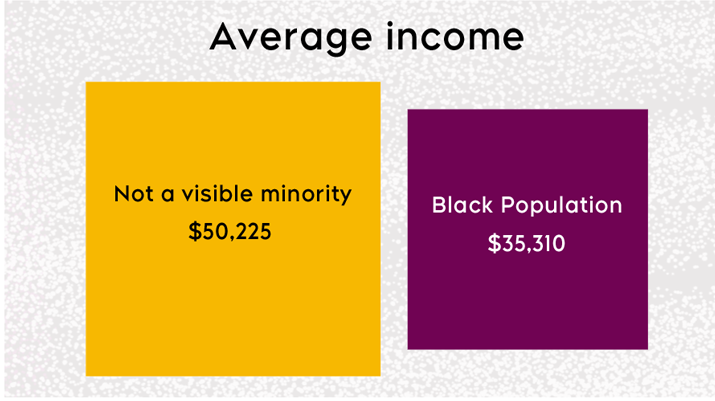
While Canadian universal healthcare will ensure that racial disparities in death rates should be less than in the USA, expect to see some differences and hopefully the data is being collected on COVID-19 victims beyond age and gender:

Early Monday morning the email arrived. The subject line began, “ALARM AT THE GATE,” written in all caps. Someone had died. That is always what that phrasing means.

The message came via a group email list maintained by the fraternity I joined in college some 30 years ago.

A younger member, a rising chef in his 30s, had died. As the email read, he passed away “due to immune system complications resulting from contracting the Covid-19 virus as a Type-1 diabetic.” He was in Detroit, which has emerged as a hot spot for the virus.

This was the third death I’d heard about of someone with a connection to my college or a friend who went there. All relatively young, all black men, all diabetics. The two others were in New Orleans, another emerging hot spot.

I recalled an arresting article I’d read from “Undark,” a Knight Foundation-funded, science-oriented digital magazine in Cambridge, Mass. (I’m on the advisory board of the magazine.) As the article pointed out, the virus may prove most devastating in the South because of “poorer health, curbed health care access and skepticism of government.”

What the article doesn’t state outright, but I read in the subtext, was that the virus is more likely to be deadly to black people. Most black people in America still live in the South. The states with the highest percentage of black people are in the South.

We may be waiting for a racial time bomb to explode with this disease.

In the early days of the virus, the relatively few cases on the African continent, I believe, gave black people in America a false sense of security, that black people may be somehow less susceptible to it.

But that is not true, and African-Americans should not look to Africa as the model. Even as researchers worry about Africans’ vulnerabilities — some being the same issues that exist in the American South — African countries also have advantages that America and, in particular, African-Americans don’t.

As Berkeley economist Edward Miguel explained, “The median age in a lot of countries is 20 or 18, much younger than in Europe, and it appears that young people who are infected are often asymptomatic or just get a cold.” The median age in the United States is 38. Furthermore, some African nations have a medical infrastructure experienced in dealing with pandemics, and in many cases people still live in rural areas.

Israel Faces Challenges In Fighting Coronavirus In Ultra-Orthodox Communities

Like fundamentalists and equivalents of other religions:

Some devout Orthodox Jewish communities have been slow to follow lockdown orders in Israel, helping drive a surge in coronavirus cases that officials are struggling to contain.

Known in Israel as Haredim, or those who tremble in awe before God, ultra-Orthodox Jews make up about 12% of Israel’s population — but they account for as much as 60% of Israel’s COVID-19 cases in major hospitals, according to estimates. More than 6,000 Israelis have been infected and at least 31 have died.

This week marked a turning point for the community’s leadership, after a senior rabbi finally urged his followers to obey government stay-at-home orders. Many in the ultra-Orthodox community only follow the orders of rabbis, not health officials, and for weeks, many ignored government bans against large weddings and prayer services. Many do not own smartphones or TVs, leading authorities and volunteers to employ alternate methods to get the word out about infection prevention.

“Do not hold a prayer gathering! Do not gather for study in synagogues and seminaries! Anyone who defies doctors’ and health officials’ orders to protect against coronavirus is considered as if plotting murder and you must turn him in to authorities!” was the recorded announcement by the ZAKA emergency response organization, whose volunteers drove through ultra-Orthodox neighborhoods this week, broadcasting the warning from loudspeakers.

“Now I see a mother and a child crossing the street going into a shop,” ZAKA’s David Rose, himself ultra-Orthodox, told NPR by telephone from the car. “Some people are not aware of how severe this plague is going around.”

“Murderers,” screams a poster plastered in ultra-Orthodox neighborhoods, addressed to those who defy government orders to close synagogues and schools.

Fleur Hassan-Nahoum, a deputy mayor of Jerusalem, helped organize the posters in a private capacity.

At a recent meeting at City Hall, she says, “One of the elderly ultra-Orthodox members of the city council said, ‘You’re asking us to do everything against what our sages tell us to do.’ It’s been very, very difficult with the ultra-Orthodox community because it’s just asking them to go against everything they know and everything they are.”

The community turns to rabbinic texts on Jewish law for guidance on life’s challenges — but the plagues and calamities of the past were never tackled through isolation. And social distancing is anathema to the Orthodox Jewish communal way of life.

Many in the community are impoverished and families can include as many as seven or eight children, all living in two- or three-bedroom apartments. To prevent the virus from spreading easily at home, authorities are preparing hotels to quarantine healthy relatives of those infected with COVID-19 in the community.

The virus is also hitting ultra-Orthodox communities in the U.S., but in Israel, the crisis highlights a long-running friction between the government and the community’s leaders, some of whom initially dismissed the government’s coronavirus lockdown orders.

“Israel is a Jewish state on the one hand, but it doesn’t espouse the version of Judaism that Haredi society would like to see going on,” said ultra-Orthodox Rabbi Yehoshua Pfeffer of the Tikvah Fund, an educational foundation. “Some of the Israeli regulations and laws are seen to be inhibited or restrictive of the Haredi way of life.”

As the virus hit the country last month, Israeli Health Minister Yaakov Litzman — raised in Brooklyn, New York, and himself ultra-Orthodox — tried to convince rabbis not to allow Jews in quarantine to attend public synagogue gatherings for the Purim holiday. But up until this week, he also permitted prayer gatherings to continue — even though about a quarter of Israeli cases of infection were contracted in synagogues, according to his own health ministry. Now he himself has contracted the virus.

With virus cases rising, Haredi newspapers in Israel ran photos of community members who died in New York, London, Paris and Israel, and the community’s attitude shifted.

This week, a leading Haredi rabbi, Chaim Kanievsky, changed his mind and said his followers should self-isolate and those who ignore the government lockdown should be considered as plotting murder. The mayor of the ultra-Orthodox city of Bnei Brak, near Tel Aviv, begged residents last weekend to stop prayer gatherings. His wife got the virus.

Some ultra-Orthodox Israelis are still skeptical. Yoel Krois, who lives in Jerusalem’s Mea Shearim neighborhood, an ultra-Orthodox enclave, said he is keeping his family inside more but doesn’t trust the government’s infection statistics.

“Whoever is a bit sick or elderly must be careful and should not leave the home, and no one should visit them,” Krois said, “but forbidding young people from buying something on the street or praying, that’s already going too far.”

Some ultra-Orthodox Jews shouted “Nazis!” as police marched through a Jerusalem neighborhood this week, handing out large fines — some over $1,000 — to those ignoring the stay-at-home orders. To impose the restrictions, police set up checkpoints at entrances to some ultra-Orthodox areas and used drones to enforce the rules, even deploying stun grenades to disperse a crowd.

“If they would have been closed three weeks ago, the way that we asked them to, we would be seeing much, much fewer numbers today,” Hassan-Nahoum, Jerusalem’s deputy mayor, told NPR. “They came too late into this.”

Source: Israel Faces Challenges In Fighting Coronavirus In Ultra-Orthodox Communities

‘It was like Nazis had walked into your living room’: Anti-Semitism group’s Zoom meeting crashed with hateful messages

Sigh… Always need to review security settings but deplorable that some people hold these beliefs and zoombomb:

Andria Spindel was at her Toronto home participating in a video meeting on how to stop anti-Semitism when she heard a voice from her computer say “Sieg Heil.”

The executive director of the Canadian Antisemitism Education Foundation says she couldn’t believe what she was hearing.

“It was otherworldly. I don’t know how to describe it,” Spindel said. “For a moment there, I actually couldn’t think where I was. This wasn’t my webinar. Where was I? What had happened?

“It was like Nazis had walked into your living room.”

It’s unclear how someone might have infiltrated the foundation’s meeting on the Zoom video-conferencing web platform. The link to access the meeting had been sent to the group’s master list, which includes about 3,500 people and may have been posted on social media. What is clear to Spindel is that people are exploiting technology to spread hate, and with so many people working from home due to the COVID-19 pandemic, Zoom has become a popular target.

Jewish organizations have also proven to be a target of what is being referred to as “Zoombombing,” in which malicious individuals crash video conferences to spread hateful and offensive content. In just the past week, the BBC, Jewish News Syndicate and news site Forward.com have all reported separate incidents of Jewish organizations’ Zoom meetings being disrupted by uninvited guests spreading anti-Semitic content.

Spindel said it highlights an urgent need for the company to address security concerns and for organizations and individuals who may not be technologically savvy to make sure they’re not ignoring any security vulnerabilities.

It was Monday when Spindel was hosting the web seminar, which had the theme of anti-Semitism as a virus that needs to be stamped out. Suddenly, she noticed rude and misogynistic comments in the chat channel. She started hearing strange background noises and marching music. Then the N-word flashed across the screen.

“That’s when I realized immediately something terrible is happening … and then, within seconds, you hear yelling, and screaming and the screen changing and somebody says ‘Sieg Heil.’”

She said she watched in horror as other participants of the web seminar reacted in shock.

“I actually thought I heard crying,” Spindel said.

She wasn’t able to immediately stop the meeting, because that function had been assigned to the guest speaker. They were eventually able to end the meeting, which had about 45 people participating.

But the damage was done. There was concern the infiltrators might have been able to steal email lists and contacts, something Spindel says a security expert has told her is possible, but unlikely.

“Do these people know who you are? … You have to sit back and say, ‘Oh my God, it’s just on my screen.’”

Retrospectively, she said the incident highlighted the prevalence of anti-Semitism in the world and the need for her organization to continue the work that it does.

Michael Mostyn, the CEO of Jewish advocacy group B’nai Brith Canada, said the organization continues to see a rise in anti-Semitism from year to year, although there was a bit of an anomaly in 2018.

Emerging forms of technology, such as social media platforms, offer those who spread hate anonymity and extended reach, Mostyn said. The crashing of a video-conferencing application such as Zoom is just another way that anti-Semitism is adapting in 2020, he added.

“It’s the morphing of anti-Semitism to modern forms of communication. … Unfortunately, those bigots and hatemongers are taking advantage of the situation and are using it to spread hate.”

Mostyn said anti-Semitism is often deeply rooted in conspiracy theories. Anti-Semitic tropes frequently portray Jewish people as a shadowy cabal with undue influence over the world. Misinformation about the source and spread of COVID-19 has been rife during the coronavirus pandemic, and anti-Semitism has been a factor, Mostyn said.

“The Jewish community has been tied into many of these conspiracy theories with respect to COVID-19,” he said.

Zoom has published several blog posts since March 20 outlining privacy and security best practices, with one titled “Keep the party crashers from crashing your Zoom event.”

In a statement, the company said it has made recent changes to tighten security, such as updating the default screen sharing settings for education users so teachers are the only ones who can share content by default. They also encouraged users to review their security settings.

“We are deeply upset to hear about the incidents involving this type of attack. We take the security of Zoom meetings seriously and for those hosting large, public group meetings, we strongly encourage hosts to review their settings, confirm that only the host can share their screen, and utilize features like host mute controls and ‘Waiting Room,’” a Zoom spokesperson said.

Spindel said the incident made her research the application to avoid similar incidents in the future. She recommends organizations using Zoom for their meetings look at disabling screen sharing, assign more than one moderator and reconsider having an open chat room that anyone can join.

She added that next week is Passover and many families will be holding virtual gatherings.

“This could be so upsetting, you’re sitting at your family dining room table by yourself … and this suddenly happens,” Spindel said. “So everybody needs to take precautions.”

Source: ‘It was like Nazis had walked into your living room’: Anti-Semitism group’s Zoom meeting crashed with hateful messages

Opinion: Tunisia has a problem with internalised Islamophobia

More the tension between more conservative strains of Islam and more secular Muslims than Islamophobia:

On March 13, the Tunisian government announced emergency measures to contain the spread of the coronavirus.

The measures included closing its sea borders, suspending international flights, shutting cafes from 4pm and completely closing mosques.

It was this last decision that sparked controversy on social media and among religious scholars and reminded many Tunisians of something they have long suspected; a deep-seated Islamophobia that has framed internal Tunisian policies and politics since the country’s independence from French colonial rule in 1956.

While the importance of prevention measures and controlling the spread of the virus is not debatable, the choice to completely close down mosques while only partially closing cafes was met with dismay.

Hicham Grissa, president of Zitouna University in Montfleury, criticised the decision as being “unresponsive” to people’s need for religious and spiritual practices in these times.

Grissa said while the spread of the virus will determine future actions, right now “you should not be talking about prohibiting prayer in mosques, unless the same measures are being taken for cafes and clubs.”

One mosque-goer in Nabeul, where I am from, told me: “I went to pray at dawn and the mosque was closed.

“We are usually only a dozen people at the Fajr prayer in the neighbourhood mosque, and we’re only there for 10 or 15 minutes. I just don’t see how that poses a higher risk than cafes downtown that host hundreds of people throughout the day.”

As schools and universities were closed from March 12, Tunisian youth took to cafes, sitting in confined spaces, drinking coffee and playing card games.

The decision to suspend prayer in mosques was, therefore, perceived by many social media users as the continuation of a state tradition of what they see as internalised Islamophobia, and “problematising” Islam and Islamic practices as the first step in dealing with crises.

This is all reminiscent of another problematic decision illustrating the internalised Islamophobia of the Tunisian state – the niqab ban imposed in July 2019.

After a double suicide bombing in June, Tunisia’s prime minister, Youssef Chahed, issued an order banning the wearing of the Islamic face veil in all state buildings and institutions for “security reasons”. This, despite the fact that the Ministry of Interior denied that the culprit had been wearing a niqab to disguise himself.

Several civil society organisations and politicians considered this to be a repetition of the hijab ban which has been imposed several times in Tunisia’s modern history. Over time, such bans have taken their toll on women’s rights and on freedom of religion, with resulting arrests, imprisonment, suspension from work and even police violence.

In 2019, activists argued that, if security is a concern, the state can take several measures to ensure security without infringing on freedom of religion and banning clothing. For example, female police officers or employees could carry out identity checks or searches at the entrance to public buildings in case of security concerns.

However, consecutive Tunisian governments from 1956, while more lenient today than in the past, have continued to exhibit an internalised Islamophobia that has propagated throughout Tunisia.

In the 1960s, Habib Bourguiba, Tunisia’s first post-independence president, sought to weaken Islamic culture and establish a secular national identity. He closed the historical Islamic Zitouna University and discouraged fasting, personally appearing on TV drinking orange juice during Ramadan and advising Tunisians to do the same.

The Bourguiba administration abolished the system of religious endowments and religious courts, banned groups and political parties with an Islamic focus and officially banned the hijab in 1981, a policy that remained in place until the Tunisian revolution in 2011.

This state-sanctioned anti-hijab sentiment can be traced back to French colonial rule when women were encouraged to remove their veils as a statement of modernity and civilisation. This began in Algeria, but it was this Western notion of “modernity” that Bourguiba later sought to enforce in Tunisia.

This imposition of secular national identity resulted not only in the persecution of large groups of people but also in a growing societal mistrust of certain Islamic practices.

Restrictions on Islamic practices intensified during the Zine El Abidine Ben Ali administration from 1987 to 2011, when the state leveraged the fear of the threat of terrorism to crack down even more on religious freedoms and further entice fear of Islam among its population.

The Ben Ali administration enacted the 2003 anti-terrorism law, for example, which served to further alienate and persecute political opposition and ordinary religious people.

According to reports by organisations such as Amnesty International, between 2,000 and 3,000 people were prosecuted under this law. The law was vague and activities that were deemed to warrant police investigation included praying in mosques and owning Islamic items.

Just like the Bourguiba government before it, the Ben Ali administration established an increasingly authoritarian rule, under the cover of “modernity” and “fighting terrorism”, amid silence from Western allies such as the United States and France.

People who wore the hijab, who went to the mosque regularly or who engaged in Quran studies or recitation were perceived as “too religious”, and as a threat to Tunisian homogeneity and state security.

Documents found by protesters in police stations during the 2010 to 2011 protests showed how informants would keep logs of the numbers of people who went to a specific mosque, who was in the front row, how many women wore the headscarf and even how many women wore the headscarf but with more conservative, loose-fitting dresses.

A classified internal document from the Ministry of the Interior dated 2009, which started circulating on social media a few weeks ago, reads: “I am honoured to let you know that on 18/03/2009, a girl wearing a headscarf was detained [….] after investigation it became clear that she practises her religious duties regularly. She was warned about the necessity to remove the sectarian dress and she showed willingness to do so.” “Sectarian clothing” was the term used by the government to describe the headscarf at that time.

The government’s use of both police and neighbours/colleagues to watch out for each other’s “level of religiousness”, has resulted in these policies being adopted at a societal and individual level.

Despite the political changes brought by the revolution in 2011, these policies seeped into certain domains and became part of the culture.

Women wearing the hijab are still discriminated against. They are prohibited from certain swimming pools for “hygiene reasons” while men with long beards are still perceived as a threat.

After the striking incident of the suspension of a hijab-wearing flight attendant from Tunisair in 2015, the then-Minister of Transport declared that the hijab reduces hearingby 30 percent, putting the lives of passengers in danger.

While the justifications switch from safety, national security and hygiene to health concerns, the Tunisian state continues a decades-long tradition of internalised Islamophobia and remains quick to pursue policies that target Islamic practices first and foremost.

Source: Tunisia has a problem with internalised Islamophobia

Islamic missionaries of Tablighi Jamaat may be biggest carrier of Covid-19 in South Asia

Like many evangelical and proselytizing groups:

In a strange pattern, members of Tablighi Jamaat, an Islamic proselytizing group, have been found unrestrainedly preaching in large religious gatherings amid the coronavirus pandemic restrictions in several countries in Asia, leading to hundreds of infections.

Every year in February and March, over a million Islamic preachers from around the world visit South Asian and South East Asian countries for a celebration of Islam and proselytization programmes. After the outbreak of novel coronavirus, which originated in Wuhan city of Hubei province of China in December, many countries imposed travel restrictions. However, Tablighi Jamaat went ahead with its pre-planned celebrations, sources in Islamabad said.

On Monday, Pakistani media reported that 36 cases of community transmission among the members of the Tableeghi Jamaat in Hyderabad, Sindh were detected. At least two deaths from the coronavirus were directly linked to Tablighi Jamaat”s gathering in Raiwind.

The cases were reported from Noor Mosque, where around 200 Jamaat members were initially quarantined. Noor Mosque, the second-largest centre of the Jamaat in Sindh, was sealed off after a 19-year-old Chinese-origin member of the preaching group tested positive for Covid-19 on March 27.

They had arrived at Raiwind from Swat and then went to Hyderabad Noor Mosque for Islamic congregation. From there, they went to Sehrish Nagar for preaching of Islamic teachings and are now in Makki Mosque, Pakistan media reported.

Sources in Islamabad said thousands of Muslim preachers from about 80 countries including Palestine and Kyrgyzstan, attended the Tablighi Jamaat meet early March in Sindh. After hundreds tested positive, sources said, the congregation was called off by the government.

In India, in the first week of March, about 250 foreign nationals arrived in Nizamuddin West locality of New Delhi to attend a religious congregation organised by Tablighi Jamaat. The gathering was attended by over 1,700 to 1,800 people from both India and abroad. Many foreign members, traveled to various states for preaching Islam, even as they were on tourist visas.

Nine Indian participants of the congregation have died of the coronavirus infection. Of the nine, six were in Telangana and one each in Tamil Nadu, Karnataka and J&K. Among foreign nationals, one has died and 19 others are infected so far.

The Delhi Police by Tuesday afternoon, was able to track 1,830 of these missionaries — 501 from tamil Nadu, 216 from Assam, 156 from Uttar Pradesh, 107 from Madhya Pradesh, 109 from Mahrashtra, 86 from Bihar and 73 from West Bengal among others.

Malaysian media reported that more than half of the country”s known coronavirus cases were traced to a Tablighi Jamaat gathering outside Kuala Lumpur, in late February and early March. The New York Times reported that the Islamic missionaries who participated in the congregation in Malaysia spread the virus to Brunei and Thailand as well.

Founded by Deobandi cleric Maulana Muhammad Ilyas Kandhalawi in 1927 in Mewat, India, Tablighi Jamaat grew in prominence in Pakistan under General Zia ul Haq”s Islamization of the country. Former Prime Minister Nawaz Sharif”s father was a prominent Tablighi member and financier.

Tablighi Jamaat rejects modernity and preaches a code of conduct as practised during Prophet Mohammad”s time, on the same lines as Wahhabi-Salafist ideology which many Islamic terror groups follow. The largest group of Islamic proselytizers, Tablighi Jamaat is credited for making Islam one of the fastest growing religions in the world.

Source: Islamic missionaries of Tablighi Jamaat may be biggest carrier of Covid-19 in South Asia

Their work is keeping Canada safe. But they earn a fraction of the national average

Another example of the COVID-19 class divide (‘White-Collar Quarantine’ Over Virus Spotlights Class Divide):

They’re the workers keeping Canada safe and healthy in the midst of a pandemic. But some — like cashiers — bring home just around a quarter of the average Canadian’s annual income.

From food processing to warehouses to delivery services, the workers deemed essential to maintaining the country’s vital supply chain are significantly more likely to be low-wage and racialized compared to the rest of the labour market, according to new statistics from the Canadian Centre for Policy Alternatives.

In some cases, they are bringing home less than half of the average Canadian worker a year.

“In the midst of a pandemic, many of us are going back to the essentials. We need to put food on the table for ourselves and our families. We need to have the medications that we require. And as there have been many new reports on, we all need toilet paper,” said Sheila Block, a senior economist with the CCPA.

“To keep us in these essentials, we rely on these workers whose work has often been undervalued and who are often marginalized.”

The CCPA study relied on 2016 census data, which showed average annual earnings across the entire Canadian economy stood at around $49,500. Analyzing the earnings of workers in essential jobs by both industry and occupation, Block’s research found that grocery store workers — a category that includes managers — earned on average half of that. Cashiers took home just 26 per cent.

Light duty cleaners fared poorly too, earning just over 40 per cent of the national average. Couriers and door-to-door messengers brought home just over 50 per cent.

Racialized workers make up 21 per cent of the total workforce in Canada, but they were overrepresented in sectors deemed essential during the COVID-19 pandemic, the CCPA’s analysis found.

In warehousing and storage, for example, racialized workers made up 37 per cent of the workforce; in food manufacturing, that figure was 30 per cent.

Kulwinder Singh, a truck driver based out of Mississauga, says he is working 10 to 12 hour days bringing goods to Shoppers Drug Mart, Sobeys, and the LCBO. He says the deliveries he makes every day are “essential” — but he’s afraid to come home at the end of his shift to his wife and daughter.

“It’s very risky,” he said.

As an independent owner/operator, he is technically self-employed — meaning he has no health insurance, no medical leave, and no access to protective equipment except for what he purchases himself.

“Everything I’m paying for out of my own pocket,” he said, adding that some companies will not let him use washroom facilities to wash his hands.

The CCPA study notes that many of the sectors deemed essential have low unionization rates; in Canada, less than 8 per cent of retail workers have a union.

Many essential workers — including truck drivers and most gig workers — are classified as independent contractors, meaning they struggle to join unions and or access basic employment protections.

“There is a real divide between the people who can self isolate and who can work from home and the people that we rely on to make that possible,” said Block.

“We have to be particularly concerned that we are relying on industries that have a history of rights violations in this time. These rights violations have historically been threatening to workers’ health for sure and sometimes lives,” she added.

“Now we are actually putting the health of the public at risk if we don’t have good enforcement of health standards.”

Some companies, including Amazon and Loblaws, are offering employees a $2 an hour premium for working during the COVID-19 pandemic — measures Block called a “welcome but insufficient response.”

“We have to really look at governments to respond in a longer term manner by increasing minimum wages, easing access to unionization, and increasing both protections and enforcement under minimum employment standards,” she added.

Last week, federal labour minister Filomena Tassi said experts at the Canadian Centre for Occupational Health and Safety were drawing up best health and safety practices to share with provincial labour ministries for at-risk workplaces such as trucking and food processing.

Enacting 21 emergency leave days during the pandemic — plus seven permanent paid sick days — is also a critical step at the provincial level, Block said.

Source: Star ExclusiveTheir work is keeping Canada safe. But they earn a fraction of the national average A new study by the Canadian Centre for Policy Alternatives shows low-wage and racialized workers are overrepresented in jobs deemed essential during COVID-19 pandemic.

Some U.S. religious leaders flout COVID-19 restrictions

Unfortunately, not that surprising among some evangelical groups:

School buses delivered hundreds of church-goers to Life Tabernacle Church in Baton Rouge, Louisiana, on Sunday, defying physical-distancing guidelines and the state governor’s direct order banning gatherings of more than 10 people.

Religious service, steeped as it is in community, is one area where people are finding it hard to avoid gathering amid the COVID-19 pandemic. And while some churches in the U.S. are finding innovative ways to continue services, such as conducting them virtually, a few are still gathering in person, potentially exposing many people to the novel coronavirus.

South Korea has experience with the danger of public worship services: More than half of the country’s coronavirus cases were linked to the branch of the Shincheonji Church of Jesus in Daegu.

But Life Tabernacle is flouting officials’ pleas in a state where, as of Monday afternoon, more than 4,000 have been infected and 185 have died, according to an ongoing tally by Johns Hopkins University.Gov. John Bel Edwards, a Democrat, on March 22 ordered a lockdown of all but essential services, which did not include religious worship services, and prohibited gatherings of more than 10 people.The father of Life Tabernacle’s pastor Tony Spell says the church is an essential service.

“The church is not a non-essential. The church is the most essential thing in all the world,” Timothy Spell told NBC News outside the church Sunday.

“No one is telling anybody you got to come to church. We tell people not to come if you have a fever, if you have any symptoms, if you’re aged, if you’re elderly, don’t come.”

Florida pastor arrested

That’s got local residents like Ryan Tregre fuming.

“If they really worried about just spreading the [spiritual] word, they would go on Facebook Live or YouTube or some kind of way to spread the word where they would not have to go and meet in places and spread this virus that’s killing people every day,” he told NBC.Life Tabernacle wasn’t the only church to defy public orders and open their doors to parishioners on Sunday.A video posted to the Facebook page of the River at Tampa Bay Pentecostal church in Florida on Sunday shows hundreds of parishioners standing side by side.

Rev. Rodney Howard-Browne has said he would close services only for the Rapture and that shutdowns were for “pansies.” He reportedly held two services Sunday, flying in the face of physical-distancing guidelines and attracting the attention of the local sheriff’s department.

Florida has not ordered a statewide shutdown of non-essential businesses, but on Monday the Hillsborough County Sheriff charged him with unlawful assembly and a violation of health emergency rules.

Canadian clergy urge compliance

It’s a different story in Canada.

A statement released by religious leaders across Canada on Monday urged people to follow public health officials’ guidelines.David Guretzki, vice-president of the Evangelical Fellowship of Canada said there were no evangelical services that he knew of this past weekend and noted his group has signed on to statement.Still, members of all faiths are grappling with how to continue practicing.

Some mosques in the Toronto have stayed open after Ontario Premier Doug Ford declared a province-wide state of emergency March 17.

In Montreal, police were called to a synagogue after receiving a report that someone saw Hasidic men going inside, CTV reported.

Social distancing measures like working from home, school closures and cancelling sporting events could lead to a drop of new infections of coronavirus. 1:54

“Some wonder if this is too much, too fast, but in general the approach has been that, no, the best approach is just to shut down,” said Daniel Cere, an associate professor of Religion, Law and Public Policy at McGill University in Montreal.

“My impression is that on the whole, in Canada, the religious communities have fallen in line with the government on this.”

‘God will take care of your body’

One religious scholar in the U.S. attributes the defiance to a particular type of Christian teaching.

“There is this strand in modern American Christianity that has rejected the norms of science and medicine and that thinks health can be achieved through discourse with the divine, holy spirit,” said Bradley Storin, director of religious studies at Louisiana State University in Baton Rouge.

The philosophy is, he says: “If you are a good and true believer then God will take care of your body.”

He’s noted the church busing people in for services and passing out “anointed” handkerchiefs to people for protection.

“What we see pastor Spell doing is giving way to this ancient tradition of linking faith in God with healing in the body,” said Storin.

“It feels a little violative of the social compact that we have right now,” said Storin.

Source: Some U.S. religious leaders flout COVID-19 restrictions

And meanwhile, in Egypt:

For 55-year-old Coptic housewife Magda Mounir, knowing she can no longer pray at her local church is worse than all the precautions she has had to endure to prevent the spread of the novel coronavirus in Egypt.

“The church is our haven; it is where we go to find moral support,” Mounir told Al-Monitor a few days after Egypt closed all places of worship, including mosques and churches.

The Ministry of Religious Endowments, more often referred to as the Awqaf Ministry, and Egypt’s Orthodox Christian Church both released statements March 21 announcing they would temporarily halt communal prayers.

Egypt’s Coptic Orthodox Church, to which the majority of Egypt’s Christians belong, said it would lock down churches and suspend masses for at least two weeks.

In multicultural and multifaith Egypt, Christians make up roughly 10% of the country’s 100 million-plus population, with the vast majority of Christians in Egypt belonging to the Coptic Orthodox Church.

“The holy week is coming, and we used to spend these days in the church. It seems this year we will not be able to do so for the first time in our lives,” Mounir said tearfully, referring to the Easter holiday on April 19.

Sandy Emad, a 27-year-old engineer, supports the ministry’s decision. “I support the decision [to close places of worship], and I can’t understand the anger of some people,” she told Al-Monitor. “We can’t kill ourselves and our families and say God will rescue us. God gave us brains to use and protect ourselves from any harm. This is what he ordered us to do,” Emad said.

“This decision is considered the most difficult decision the church has made in decades,” admitted Bishop Boules Boutros of St. Michael Church in the district of Heliopolis in Cairo. “However, it is necessary for slowing down the rapid spread of the coronavirus. God does not only exist in churches; we all have him in our hearts and can pray to him to heal the whole world,” Boutros said.

Boutros said he was not sure just how long the churches would remain closed, but it was unlikely they would be opened in time for Easter mass.

Egypt’s Awqaf Ministry decided to suspend congressional Friday prayers in all mosques nationwide until further notice. The suspension came after controversy erupted over Muslim worshippers insisting on flocking to mosques for Friday’s noon prayers despite a religious edict allowing people to pray at home due to the coronavirus pandemic.

“If it was necessary to shut mosques because of the crowd, why not close down the underground, which carries thousands every day?” Mohamed Abdel Monem, a 45-year-old Arabic teacher, said to Al-Monitor. “Now is the time most people need to resort to God and pray. Praying to God is our only way out of this ordeal,” he added.

But not everyone shares his views. Hassan Khaled, a 28-year-old graphic designer, agreed with the decision to shutter holy places. “Given that people insisted on going to the mosques despite the call to stay home, it is a wise decision to close down mosques,” he said. “If only one person is carrying the virus, thousands will be infected, and then they go home to infect their families,” Khaled added.

Khaled said while it is difficult to be deprived of places of worship during times like these, he also understands it is necessary for public health. “I imagine people will resort to praying in open areas if [prayers in mosques] continue to be banned,” he said.

Religion plays a major role in Egyptian society, so statements by religious authorities carry major weight on keeping people at home. Dar al-Ifta, Egypt’s body responsible for issuing religious edicts, issued March 24 a brief statement warning that “any call for people to gather in the streets in any pretext or under a slogan” would be sinful as it would jeopardize public health.

The statement stressed it is a “duty” under Sharia law to comply with official decisions to “protect people from epidemics and diseases.”

The Awqaf Ministry also modified the adhan — the Muslim call to prayer — to include warnings to stay at home and take precautions on preventing the spread of the coronavirus. The new adhan, broadcast on radio and television a day after religious sites were closed, urges believers to take “the utmost caution in adhering to preventive and precautionary” measures.

Islamic scholars say the special adhan was previously used during natural disasters and pandemics as well as in earlier times in Islam’s history when people were instructed to perform prayers at home.

Meanwhile, Minister of Endowments Muhammad Mukhtar Juma suspended on March 22 an imam and a preacher in Beni Suef governorate, south of Cairo, for violating the ministry’s order to close mosques. The two men were banned from giving sermons from the pulpit for a period of three months.

“Preserving life is a main aspect of Islam, and the faithful should comply with preventive measures taken by the government,” Sheikh Mohammed Mehana of Al-Azhar University told Al-Monitor.

“The images of empty mosques would break any Muslim’s heart, but the priority now is to save people’s lives. This is what Allah asked us to do, and the rest is his will,” said Mehana, adding he hoped the crisis would end before the Islamic holy month of Ramadan, which starts on April 24 and goes until May 23, and that everybody would reunite for Taraweeh, the additional prayers carried out at night during Ramadan.

The Ministry of Health has reported some 609 cases of coronavirus and 40 deaths in Egypt so far.

A 7 p.m. to 6 a.m. curfew has been imposed countrywide as part of strict measures to limit the spread of the coronavirus, Prime Minister Mustafa Madbouly said March 23.

All masses as well as public and private transport are suspended during the curfew.

Source: Egypt Egyptians feel demoralized by empty churches, mosques

The Ancient Text Where Jesus Prayed to a Greek God

The equivalent of the “satanic verses” of the Quran and the Rushdie novel of the same name?

The crucifixion was a difficult thing for followers of Jesus to wrap their heads around. How could the Messiah die such a humiliating death? According to the New Testament, in the waning moments of his life, Jesus cries out, “My God, My God why have you forsaken me?” In the Gospel of Mark these are Jesus’ final words. This cry of desolation, as it is known, is painful to read and theologically difficult to manage. But one important ancient copy of Mark has a different take entirely: in the oldest surviving Latin gospel Jesus seems to call out to the sun-god Helios instead.

The book in question, Codex Bobiensis, currently lives at the Turin National Library. It’s easy to overlook; the swarms of religious pilgrims who flood Turin each year prefer to visit the city’s considerably more famous Shroud instead. It’s one of thousands of texts of the New Testament—all of which differ from one another in small and significant ways—that scholars use to try to chart the history of the text of the New Testament.

Though some manuscripts are ornate or difficult to read, Bobiensis is refreshingly clear; the letters are even and, in as much as it is easy for anyone to read ancient manuscripts, it is comparably straightforward to follow. This late fourth or early fifth century book (or ‘codex’ as scholars call it) had come to Italy from North Africa by mistake, when Irish monks mistakenly associated it with the missionary St. Columba and placed it in a monastery in Bobbio. Though the book itself is incomplete and preserves only portions of Matthew and Mark, there’s enough material in it that scholars can draw some conclusions about its age and contents. Some date the version of the gospels in the book as early as the third century and connect it to the Bible used by Cyprian, a famous mid-third century Carthaginian bishop and martyr. Given that there are no first century manuscripts of the New Testament and there are only a few fragments that have survived from the second, it’s a very important text and earlier than the majority of Greek manuscripts.

Despite its ties to what someone who might figuratively be called an early Christian celebrity, most people and even most New Testament scholars don’t know much about this early Christian text. This is in part because it’s in Latin rather than Greek, but also because Bobiensis has some very peculiar, even shocking, features. In the portions of the gospels that have been preserved, sections of the story are missing. In some places the manuscript uses non-standard abbreviations for the sacred names of ‘God,’ ‘Lord,’ and ‘Jesus.’ Where Christian manuscripts would normally have IHS (derived from the Greek for Jesus) this manuscript has it spelled differently. There is even a mistake in the Lord’s Prayer (more on that later). But the most striking and, you might say, theologically troubling places are those instances in the life of Jesus where the copyist has substituted the name of pagan deities “Helion” (god of the sun) and Jove (Zeus) instead of the words for “Eloi” (the Aramaic for “my God”) and “sheep.” Many scribes make mistakes when transcribing and copying texts—our best guess for professional copyists is about one per page—but these kinds of errors are difficult to explain.

What kind of Christian doesn’t know the Lord’s Prayer? A non-Christian, or at least that’s the conclusion to which many scholars have come in the past. No Christian or Christian-employed slave copyist would have erratically omitted parts of the Jesus story. The book must have come from a different kind of source, most likely a late fourth-century North African bookshop. But book manufacturing, like any kind of luxury goods industry, was an expensive business. Parchment was costly and literary slaves were expensive. It’s easy to imagine how a pragmatic bookseller, who was painfully aware of his bottom line, instructed his copyist, who was clearly no Christian either, to leave certain portions out. The less parchment that was used in the production of this book, the greater the bookseller’s margins and potential profit would be.

But now scholar Matthew Larsen, of Princeton University and the author of Gospels Before the Book, has another explanation for Bobiensis’ peculiarity. Larsen told the Daily Beast that in a fourth or fifth century North African context, Jesus’ address to Helios isn’t as strange as it at first seems. During a visit to a late fourth century baptistery last October, Larsen “saw that in the very place where people would have stood while being baptized, there was not a quotation from scripture but a clear allusion to Virgilian poetry.” You can imagine, argues Larsen, “a community [like this one] using this type of gospel, with its strange readings about Helios and Jove.”

As early as the second century, added Larsen “we have evidence of Christians thinking about Jesus’ death and resurrection in association with the setting and rising of the sun, and in the third and fourth century we see a blending of imagery of Christ and Sol Invictus.” The person who made Bobiensis would not have been alone in incorporating sun-god imagery into Christianity, he would just be the first to integrate that idea into scripture itself. Of course, for modern Christians, the idea that Jesus (or any early Christians) believed in and spoke to Helios is deeply problematic. It’s one thing to say that Christians utilized pagan iconography in their artistic depictions of Jesus (which they did), but the idea that Jesus called out to Helios in his dying breath is considerably more challenging. Did Jesus believe in Helios? Almost certainly not, but it might be the case that some ancient Christians did and transposed their beliefs onto him.

Brent Nongbri, a professor at the Norwegian School of Theology, said that some differences in Bobiensis are just accidents, “But in other cases, it’s pretty certain that either the copyist of Bobiensis or one of its ancestor manuscripts intentionally changed the text to clarify its meaning.” For instance, later in the Lord’s Prayer (Matthew 6:13), the copyist of Bobiensis writes “Don’t allow us to be led into temptation” rather than the standard “Lead us not into temptation.” Interestingly, this is the same kind of clarification about the origins of temptation that Pope Francis tried to implement last year. Nongbri told me, “Maybe someone was thinking along the same lines as Pope Francis and absolving God of the act of leading humans into temptation.”

Larsen pointed out that while diverging versions of the Lord’s Prayer seem almost blasphemous to us today, there were at least three other versions of the Lord’s Prayer used in the ancient world, so perhaps this version is not so strange. This manuscript is evidence of the diversity of thought and practice among early Christians. Larsen likened it to modern sports rituals: “Maybe the state of the Lord’s Prayer in Late Antiquity was a bit more like when my football team used to say the Lord’s Prayer together before a game and at two or three lines of the prayer the team would break unison and diverge into different versions of the prayer practiced by the communities we had all come from.” If that’s the case, then Pope Francis should be delighted to have an important early manuscript on his side.

Source: The Ancient Text Where Jesus Prayed to a Greek God

California: Understanding ‘Stay-At-Home’ When It’s Not In Your Language

More on language. Surprising nothing in Spanish among other languages:

Many people scrambled last week to figure out if they could even leave their homes after getting “stay at home” orders from state and local officials.

But for those who don’t speak English, making sure you have the correct information has been even harder.

One problem with the multiple orders that came out of L.A. County, Orange County and the State of California? The actual documents are still only available in English.

While many state and county websites offer Google Translate, there’s an information roadblock once a person has to navigate to an English-only document.

This has some immigrant advocates worried that non-English speakers may be at risk for citations under the new orders if they don’t have the right information.

WHAT’S BEING DONE

Some counties, including Los Angeles, say they’re working on it. In the meantime, some community groups are translating what they can themselves.

Last week, during Orange County’s order confusion, a multicultural press conference was held on Facebook Live by VietRISE, Chíspa and other local activists to address the language issue.

Hairo Cortes, executive director of Chíspa, a Santa Ana-based advocacy group, is one of the many organizers in the area working to get information out to their communities. With a lack of resources from local and state governments, Cortes said people are having to rely on each other for information.

“For Latino communities, at least here in Orange County, broadcast media is a pretty important source of information more than anything else,” said Cortes. “And people are sharing information with each other through social media and one-on-one conversations.”

With people having to stay home now under the new orders, Cortes has seen a drop in the flow of information between communities and local governments.

“With a lot of different things going on, I think at this moment, there’s a big need for just better communication from local government, especially the county and the public health agency,” said Cortes. “That needs to happen.”

Chíspa joined VietRISE, a group for Vietnamese and immigrant communities, at their press conference last Tuesday where they discussed the xenophobic repercussions of COVID-19, and translated health information into Spanish and Vietnamese. (VietRISE also manages thisresource guide.)

VietRISE has called on local governments to make better use of social media to reach out to immigrant communities.

“The county and state governments should be taking more proactive and aggressive measures to make sure that immigrant community members and businesses are getting all updates and orders related to COVID-19,” said VietRISE on their Facebook page. “That means providing it in multiple languages and using more strategies to ensure we receive this information.”

Going forward, the O.C. community groups plan to focus on issues affecting people’s quality of life by working with city governments to address the pandemic through housing moratoriums and outreach, according to Cortes.

TRANSLATIONS

Neighboring areas, such as the San Bernardino and Riverside counties, have made more strides with direct translation and have a few documents available in Spanish or Mandarin.

“We send everything to the translators as soon as they’re complete, and the turnaround seems pretty quick,” said David Wert, San Bernardino County’s public information officer in an email. “Oftentimes the translators are present in the County’s coronavirus Joint Information Center. There might be a lag in getting the documents uploaded because everyone is so busy.”

While San Bernardino County’s latest information on COVID-19 isn’t translated yet, Wert said they are working to get more staff to post the materials online when it’s available.

Currently, Orange County Public Health has an outdated health order and FAQ section with an inconsistent Google Translate ability. The department recommends visitors to refresh their cache to see it. When asked if they would have this site updated, the department provided email saying that they would refer people to the governor’s order. However, there’s no option for this on the website.

Similar to other counties, L.A. County does offer Google Translate on all of its site, except for the orders which officials say are pending translation. A translated FAQ section can be found under the Health Officer Order menu.

“The LA County Public Health Officer Orders are being translated into other languages,” said Steven Frasher, an L.A. County public information officer in an email. “Some are still in approvals processes. There is increasing outreach to Spanish and other ethnic media outlets to increase the reach of official messaging.”

At the state level, the California Department of Public Health said they are, “working continually to translate materials to ensure at-risk populations are receiving information.” Their website offers a dedicated Spanish version of COVID-19 information and translated guides, but as of March 27, the California “stay-at-home” order is not directly available in other languages.

Source: Understanding ‘Stay-At-Home’ When It’s Not In Your Language

Australia: We Need To Get Rid Of Harmony Day

The history of Australia’s Harmony Day to replace the International Day for the Elimination of Racial Discrimination, as part of the Howard government’s more positive historical narratives and opposition to what was called the “black armband” history:

On 21st March 1960, protestors in Sharpeville, South Africa were demonstrating against the country’s discriminatory apartheid laws when police opened fire, killing 69 innocent people and wounding 180 more. Information and photos of what we now refer to as “The Sharpeville Massacre” circulated around the world, demonstrating the brutality of racial discrimination and police militarism that is still echoed in every nation across the globe. In 1966, the United Nations General Assembly proclaimed that March 21st be observed as the International Day for the Elimination of Racial Discrimination. This day commemorates the lives of those who died in the fight for equality during apartheid, but it also calls on the international community to continue doubling down on its efforts to eliminate racial discrimination.

If you’re from Australia, you may not have heard of this day before. It’s not because Australia has solved racial discrimination – far from it. It’s because In Australia, the International Day for the Elimination of Racial Discrimination is patronizingly called “Harmony Day”. During this time of celebration, people across the country are encouraged to wear orange clothing to signify “social communication and encouragement of mutual respect” while schools often have children make art with the celebration’s slogan, “Everybody Belongs”. As you can imagine, this is disingenuous for a plethora of reasons.

When Harmony Day celebrations began in 1999, they purposefully coincided with the International Day for the Elimination of Racial Discrimination so as to “re-centralize a singular and unifying notion of Australian-ness within multicultural policy”, according to the Howard government. But Prime Minister John Howard was himself an active opponent of multiculturalism. In 1988, he helped develop the “One Australia” policy that called for an end to multiculturalism, and this stance never changed. Although Howard eventually commissioned an anti-racism study to “explore the subtleties and nature of racism in Australia”, he actively rejected its findings. The study revealed that 85% of the study’s respondents recognized that racism was widespread and multi-faceted in Australia. These results did not align with Howard’s belief that Australians were not racist, so he rejected them. Instead of creating Harmony Day to focus on eliminating racism, his administration promoted a “living in harmony” approach and suppressed the study’s findings until 2011.

Referring to March 21st as “Harmony Day” acts as a smokescreen that hides the true extent of racism within this country, and conceals the painful yet important history of the date. According to The Secretary for the New South Wales Fabians, “Rather than focusing on tackling racism and the structural barriers that continue to exist, it is instead a self-congratulatory day about how “harmonious” we apparently are.” It almost serves to gaslight the Australian population. Commercial and technology lawyer Dan Ryan states that, “The problem with the harmonious society is not just the disconnect between the rhetoric and the reality. The truth is, while superficially sweet-sounding, the idea is illusory and utopian.”

The day infers that, in Australia, “Everybody Belongs.” But that simply isn’t true. When we examine how Indigenous Australians and people of colour are treated in this country, we see that peace is a far cry from reality. Research shows that 72% of Indigenous Australians and 70% of the general population believe Indigenous and non-Indigenous Australians are prejudiced against each other. 27 years since the end of the Royal Commission into Aboriginal deaths in Custody, more than 400 Aboriginal and Torres Strait Islander people have died in custody. The indigenous population is still massively over-represented in the Australian prison system. In 2017, 27% of inmates were of Aboriginal or Torres Strait Islander descent, much more than their 3% share of the population. Proclaiming that “Everybody Belongs” only diverts attention from anti-racism action to an illusory concept of harmony.

Harmony Day needs to be rebranded as International Day for the Elimination of Racial Discrimination. That way, it can focus on what is really important: decisive action against racism. Instead of dressing children in orange while they draw stick figures standing hand-in-hand, we can teach them cultural competency and the history of racial discrimination. Rather than hold a “Harmony Day Morning Tea”, we can explore the entrenched racism in contemporary society. As opposed to turning away from the past, we can look right at it, finally acknowledge the mistakes made, and the path we must take.

Source: We Need To Get Rid Of Harmony Day