The Whitelash Next Time

Of note despite treating all white Americans the same:

Two months. That’s how long it took for white Americans’ support of Black Lives Matter—which climbed to an unprecedented peak in June after the brutal police murder of George Floyd—to tumble back toward preprotest levels. Over the same period, surveys show, declining numbers of white respondents cited anti-Black racism as a “big problem” in American society. An NPR/Ipsos poll from late August found white people are the racial group least likely to report taking even the most minor “actions to better understand racial issues in America” since protests began sweeping the country. Just half of white Americans concede “racism is built into the American economy, government, and educational systems.” And 49 percent believe America has already done enough “to give Black Americans equal rights with white Americans.”

It’s always true that most white folks are unbothered and unmoved by anti-Black discrimination and violence; the steadfast endurance of American institutional racism proves that. It is also clear from history that white anti-racism has always had a dangerously short shelf life. Ignore the barrels of digital ink spilled lately about white people’s new willingness to reckon with structural racism. When the pendulum swings toward Black equality and full citizenship, white supremacy mounts a counteroffensive.

Cornell University historian Lawrence Glickman notes the word “backlash” gained circulation during the civil rights movement in 1963 as a shorthand for the “topsy-turvy rebellion in which white people with relative societal power perceived themselves as victimized by what they described as overly aggressive African Americans demanding equal rights.” The term summed up the most reliable white reaction to Black rights dating at least to Reconstruction, when the mere facts of Black emancipation and voter enfranchisement were construed as provocations for justifiable white racist terrorism. Between 1865—when six former Confederate soldiers founded the Ku Klux Klan—and 1950, nearly 6,500 Black men, women, and children were lynched for affronts that included bumping into a white woman and not using “Mister” when talking to a white man. “The more I studied the situation,” wrote Ida B. Wells, “the more I was convinced that the [white] Southerner had never gotten over his resentment that the Negro was no longer his plaything, his servant, and his source of income.”

Refugees of the Great Migration, the mass movement of African Americans to the North and West to flee that terror, were subjected to yet more white violence. Enraged by Black folks seeking equal employment and housing, as well as returning Black World War I veterans’ demands for the rights at home they had fought for abroad, white mobs in at least 25 riots around the country—including in Chicago; Syracuse, N.Y.; and Washington, D.C.—killed over 250 African Americans during the Red Summer of 1919. Those murders foreshadowed anti-Black pogroms in the thriving Black enclaves of Tulsa, Okla., in 1921 and Rosewood, Fla., in 1923.

The white backlash is typified by what Glickman identifies as “its smoldering resentment, its belief that the movement [for Black rights is] proceeding ‘too fast,’ its demands for emotional and psychological sympathy, and its displacement of African Americans’ struggles with its own claims of grievance.” Case in point: Just months after passage of the 1964 Civil Rights Act, The New York Times reported pervasive white anger over “inverse discrimination.” Then as now, backlashers maligned Black protests and uprisings, insisting property destruction canceled out Black deservedness of human rights. In one 1963 survey, 73 percent of white Southerners and 65 percent of white Northerners said civil rights demonstrations “hurt the Negro’s cause for racial equality,” and multiple white New York City dwellers told the Times in 1964 that “nonviolent civil rights demonstrations had hurt Negroes’ chances” (my emphasis). Historical revisionism has attempted to erase the fact that 75 percent of white folks disapproved of Martin Luther King Jr. in early 1968. In the 1960s, when he was leading protests, a survey found that just 36 percent of white Americansthought he was helping “the Negro cause of civil rights.”

“The trigger for white rage, inevitably, is black advancement,” Carol Anderson wrote in her 2016 book White Rage. That rage helped ardent segregationist and presidential candidate George Wallace winfive Southern states in 1968 and five primaries in 1972, including Michigan and Maryland. Promises to send “welfare bums back to work” and to defend white home sellers’ right to “discriminate against Negroes” propelledRonald Reagan to California’s governorship in 1966 and later to the Oval Office. It is right to call the 2016 election of Donald Trump a white backlash against the first Black president—one so fervent, it won poorly educated, college-degree-holding, and young white folks alike—but it is also critical to recognize it as just one white backlash among many. Trump’s presidency is no anomaly but a confirmation of America’s pattern of Black political progress and white retaliation.

Source: The Whitelash Next Time

COVID-19 disproportionately impacted immigrants and refugees in Ontario, new report finds

Better data confirming what we know:

The spread of COVID-19 has disproportionately affected immigrants, refugees and those who live in low-income neighbourhoods in Ontario, a new report has found.

The report released Wednesday by ICES, a not-for-profit research institute focusing on health-related data in Ontario, found that while immigrants and refugees in the province accounted for only about a quarter of those tested for COVID-19 between January and June, they represented 43.5 per cent of all positive cases.

“We document disproportionately higher rates of infection among those who landed in Ontario as economic caregivers, refugees, those with lower levels of education and language fluency, those who currently live in lower income neighbourhoods and with more crowded housing,” Dr. Astrid Guttmann, Chief Science Officer at ICES and lead author on the report, said in a statement.

“Apart from addressing many of (the) root causes of higher risk of infections, very high test positivity in certain groups of immigrants also suggests that there may be important barriers to testing that will be important to address if there is a second wave in Ontario this fall.”

The data was pulled from test results conducted between January 15 and June 13. According to the report, rates of testing were lower for most immigrants and refugees compared with Canadian-born and long-term residents—with an exception for economic caregivers who tend to work in health-care and were prioritized for testing.

The data found that of the 4.4 per cent of Canadian-born and long-term residents tested for COVID-19 in Ontario, 2.9 per cent tested positive.

Of the 3.4 per cent of people who identify as immigrants or refugees who were tested for COVID-19, 8.1 per cent received a positive diagnosis.

Refugees alone had the highest positivity rate within that time period at 10.4 per cent.

Chart

The report also found that while testing positivity peaked at the beginning of April among Canada-born and long-term residents, there were two “pronounced peaks of positivity” for immigrants, refugees and newcomers in April and May respectfully.

“The pandemic has sharpened the focus on structural and societal inequalities that have long existed,” the report reads. “These inequities put many racialized and immigrant populations at higher risk of both contracting the infection and suffering poor outcomes.”

The highest rates of positivity in Canada were found in racialized immigrants and refugees from Central, Western and East Africa, South America, the Caribbean, Southeast Asia and South Asia, the report found. The rates were also higher for those living in low-income neighbourhoods.

Public health units with larger immigrant populations such as Toronto, Peel Region, Durham Region, Waterloo, Windsor and York also reported a high number of COVID-19 positive patients among that demographic.

In Toronto specifically, 4,027 immigrants and refugees have tested positive for COVID-19 (9.8 per cent of those tested) compared to 3,788 Canadian-born patients (4.9 per cent of those tested).

What data was available and what was missing?

The general findings presented in the report are not necessarily new. Advocacy groups have been calling on all levels of government to support the gathering of race and socio-economic data for months, arguing that marginalized communities are disproportionately contracting or dying from COVID-19.

As a result of these calls, the City of Toronto began collecting race-based data in May.

Toronto Public Health said that of the data collected between May 20 and July 16, 83 per cent of known COVID-19 cases involve members of racialized communities.

It also found that patients with a household income level of $50,000 or less represents more than 50 per cent of reported infections in the city, despite the fact that the 2016 census revealed only 30 per cent of Toronto’s population reported being in that income bracket.

The data released by city officials are based on voluntary questions collected by a local public health unit.

Provincially, officials and politicians have all said they support the collection of race and income-based data, but they have yet to provide any information about the trends they are seeing.

In mid-June, the government proposed regulatory changes that would allow those who test positive for COVID-19 to be asked about their race, income, languages spoken and household size.

The questions are optional and the government said personal privacy would be protected. Since then, not much has been said about the data collection.

The ICES report said they were limited in the creation of the report by incomplete immigration data and could only include information on immigrants or refugees who landed in Ontario from January 1985 to May 2017 and who became permanent residents. They also included second-generation immigrant children under the age of 19 who were born in Ontario to permanent residents.

A “newcomer,” a status defined separately from an immigrant or refugee, is described as an individual who became eligible for OHIP after May 31, 2017

The authors also noted that ICES lacked data on “important risk factors for testing and positivity” such as occupation and living conditions.

“We currently do not have comprehensive data on important outcomes such as hospitalization and death,” the report says. “We have data on demographic and some census-based characteristics but not on the critical structural factors that play an important role in shaping inequities.”

ICES was able to access information on the health-care sector. The report found that employment as a health-care worker, especially among women, accounted for a disproportionate number of COVID-19 cases among immigrants and refugees. Among the 36 per cent of women employed as health-care workers and who tested positive in Ontario, 45 per cent were within that demographic.

Inequities ‘are complex’ and often rooted in racism

The report suggests that the “causes of these inequities are complex and often rooted in social and structural inequities, including systemic racism.”

It notes that a large proportion of immigrants, refugees and newcomers to Canada hold temporary or minimum-wage jobs at facilities where physical distancing is difficult. These positions may also not have paid sick leave or other health benefits.

ICES says that employment in any of these sectors— such as occupations in retail, factories or transportation– “is considered precarious” and could impact testing and quarantine.

Other factors such as language barriers, education and accessibility to quality healthcare could impact whether a person gets a COVID-19 test.

The not-for-profit is calling for more accessible testing options ahead of a possible second-wave in the fall as well as better training and enforcement of safety measures for those at risk of COVID-19 exposure in the workplace.

“A continued focus is needed on securing funding to house those who cannot safely quarantine in their homes or are homeless, as well as for income supplements for workers must quarantine who do not have employer-sponsored sick leave,” the report says.

The report also noted that the findings should be interpreted in the context of Ontario’s testing strategy. Initially, local public health units were only testing those in essential workplaces, those who had recently travelled and for those with acute medical conditions. Later that strategy evolved to include long-term care homes, hospitalized patients, and the general population, including asymptomatic patients.

“This means that some groups are over-represented in the testing numbers and that positive cases include those who were symptomatic at the time of testing, as well as those who were asymptomatic,” the report says.

“This may distort some associations of characteristics with both testing rates and potential to test positive. It also means that there is an unknown number of untested infected individuals in the general population.

Source: https://toronto.ctvnews.ca/covid-19-disproportionately-impacted-immigrants-and-refugees-in-ontario-new-report-finds-1.5097363

Oscars make historic change to encourage diversity in best picture nominees

Overdue:

In a historic move, the Oscars are raising the inclusion bar for best picture nominees starting with the 96th Academy Awards in 2024. The Academy of Motion Picture Arts and Sciences on Tuesday laid out sweeping eligibility reforms to the best picture category intended to encourage diversity and equitable representation on screen and off, addressing gender, sexual orientation, race, ethnicity and disability.

The film academy has established four broad representation categories: On screen; among the crew; at the studio; and in opportunities for training and advancement in other aspects of the film’s development and release.

Each standard has detailed subcategories as well. To meet the on-screen representation standard, a film must either have at least one lead character or a significant supporting character be from an underrepresented racial or ethnic group, at least 30 per cent of secondary roles must be from two underrepresented groups or the main storyline, theme or narrative must be focused on an underrepresented group.

According to the academy, underrepresented groups include women, people of colour, people who identify as LGBTQ or people with disabilities

The best picture award, which is handed out to the producers of a film, is the one category which every film academy member can vote for. Earlier this year, the South Korean film Parasite became the first non-English language film to win the award.

‘Long-lasting, essential change’

All other categories will be held to their current eligibility requirements.

“The aperture must widen to reflect our diverse global population in both the creation of motion pictures and in the audiences who connect with them,” said Academy president David Rubin and CEO Dawn Hudson in a written statement. “We believe these inclusion standards will be a catalyst for long-lasting, essential change in our industry.”

The second category addresses the creative leadership and crew composition of a film. In order to meet the standard a film must have either at least two leadership positions or department heads be from an underrepresented group and at least one be from an underrepresented racial or ethnic group; at least six other crew be from an underrepresented racial or ethnic group; or at least 30 per cent of the film’s crew be from an underrepresented group.

The third category deals with paid internship and apprenticeship opportunities as well as training opportunities for below-the-line workers, and the fourth category addresses representation in marketing, publicity and distribution teams.

The inclusion standards form will be confidential and will not be required for best picture hopefuls for the 94th and 95th Academy Awards.

The inclusion standards were developed by a task force led by academy governors DeVon Franklin and Jim Gianopulos and in consultation with the Producers Guild of America. They also took into account diversity standards used by the British Film Institute and the British Academy of Film and Television Awards.

These changes will also not affect the 93rd Academy Awards, although the academy has had to make a few alterations because of COVID-19’s effects on the movie business, including pushing the ceremony back two months to April 25, 2021 and allowing films that debuted on a streaming service to be eligible for best picture.

Source: Oscars make historic change to encourage diversity in best picture nominees

Quebec judge who asked woman to remove hijab apologizes, 5 years later

Of note:

A Quebec court judge, who refused to hear the case of a Montreal woman because she was wearing a hijab, has finally apologized for the incident, more than five years after it happened.

At an online hearing of the Quebec Council of the Magistrature on Tuesday, a lawyer for the council read Judge Eliana Marengo’s apology to Rania El-Alloul.

The council is the body responsible for disciplining judges in the province.

In her statement, Marengo said she acknowledged that she erred in asking El-Alloul to remove her hijab, that she regretted any inconvenience and that she never intended any offence or disrespect.

Marengo addressed the fact that at the time she had compared El-Alloul’s hijab to a hat and sunglasses being worn in the courtroom.

“My reference to hats and sunglasses was simply meant to exemplify how the rules of decorum are generally applied in the courtroom and was most certainly not meant to disrespect either you or your beliefs,” Marengo said.

She concluded by offering El-Alloul her most sincere apologies.

El-Alloul read her own statement in response, saying she accepted Marengo’s apology.

“I remember that day in the courtroom like it was yesterday. I couldn’t imagine that I would be turned away from the justice system because of my hijab, that my rights would be taken away because of my beliefs,” El-Alloul said.

“I hope she understands the pain she caused me, and why it is so important for her to account for her actions. Our justice system is not made for some and not others. No, this is a democracy, where everyone is to be treated equally before the law,” she continued.

“I accept her apology. This is what my faith teaches me.”

‘Not suitably dressed’

The controversy dates back to February 2015 when El-Alloul was in court trying to get back her impounded car.

“In my opinion, you are not suitably dressed,” Marengo told El-Alloul at the time. The judge said the court was a secular space, and no religious symbols should be worn by those before it.

The case was suspended, and El-Alloul eventually got her car back. But the story made headlines around the world.

Dozens of people, including El-Alloul, ultimately filed complaints with the Council of the Magistrature.

El-Alloul’s complaint was dismissed on a technicality, but the council agreed to look into the dozens of other complaints on the matter.

Marengo challenged the authority of the council to examine the complaints. She sought leave to appeal a Quebec Court of Appeal decision that unanimously found she was wrong to bar El-Alloul from her courtroom.

But in 2018, the Supreme Court refused to hear Marengo’s challenge.

Change of heart

The Council of the Magistrature sent a letter earlier this summer to the complainants, informing them of today’s hearing.

“The purpose of this hearing will be to study a settlement proposal from the prosecutors on file, including a letter of apology from Judge Marengo to Mrs. El-Alloul,” the letter said.

The council also told the complainants the apology would be released to the public, in exchange for dropping the disciplinary charges against Marengo.

The settlement was jointly proposed by Marengo’s lawyers and the lawyer handling the complaint for the council.

The panel of judges presiding over the hearing said it would take time to consider today’s arguments before deciding whether to accept the settlement.

Source: Quebec judge who asked woman to remove hijab apologizes, 5 years later

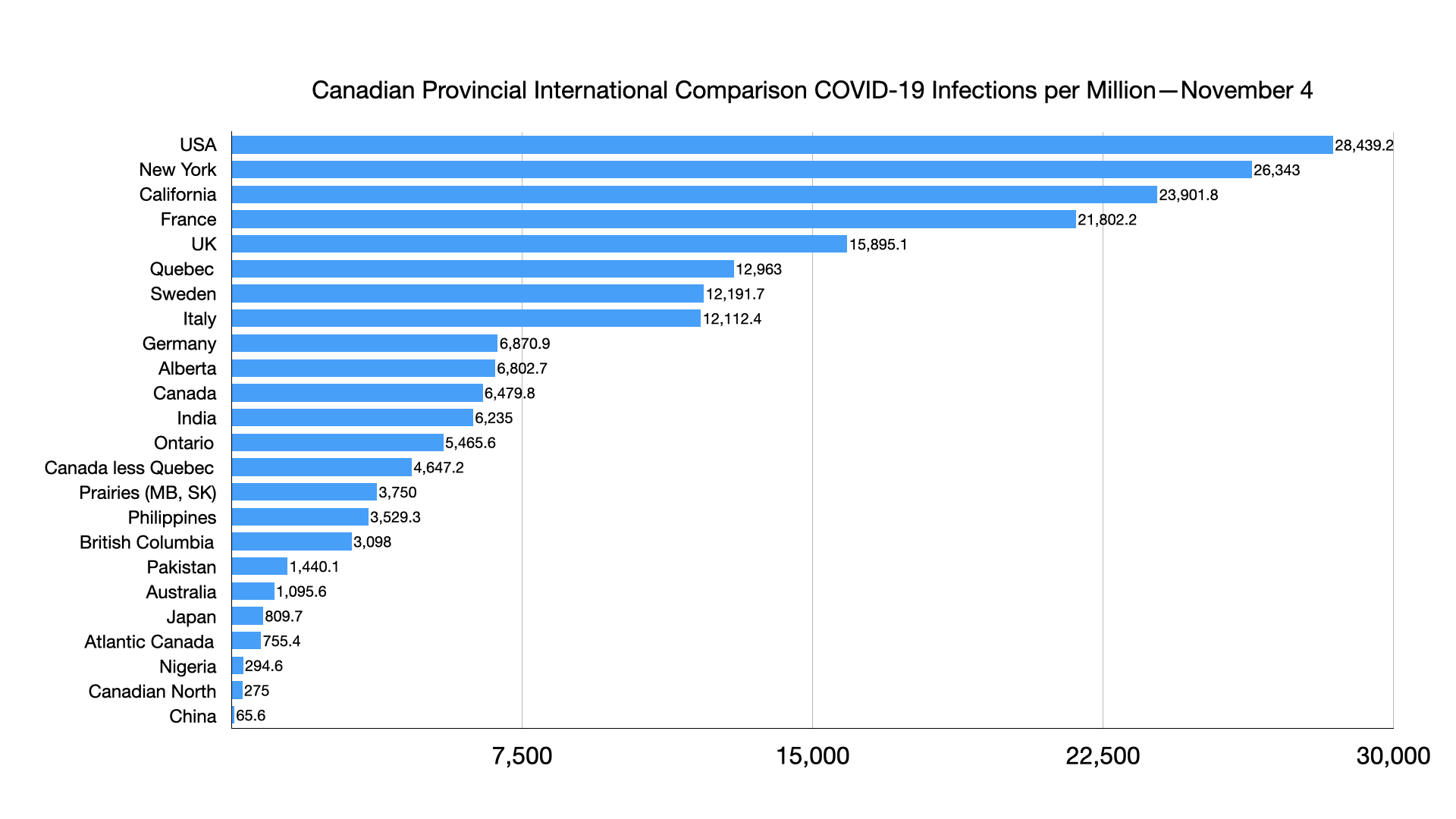
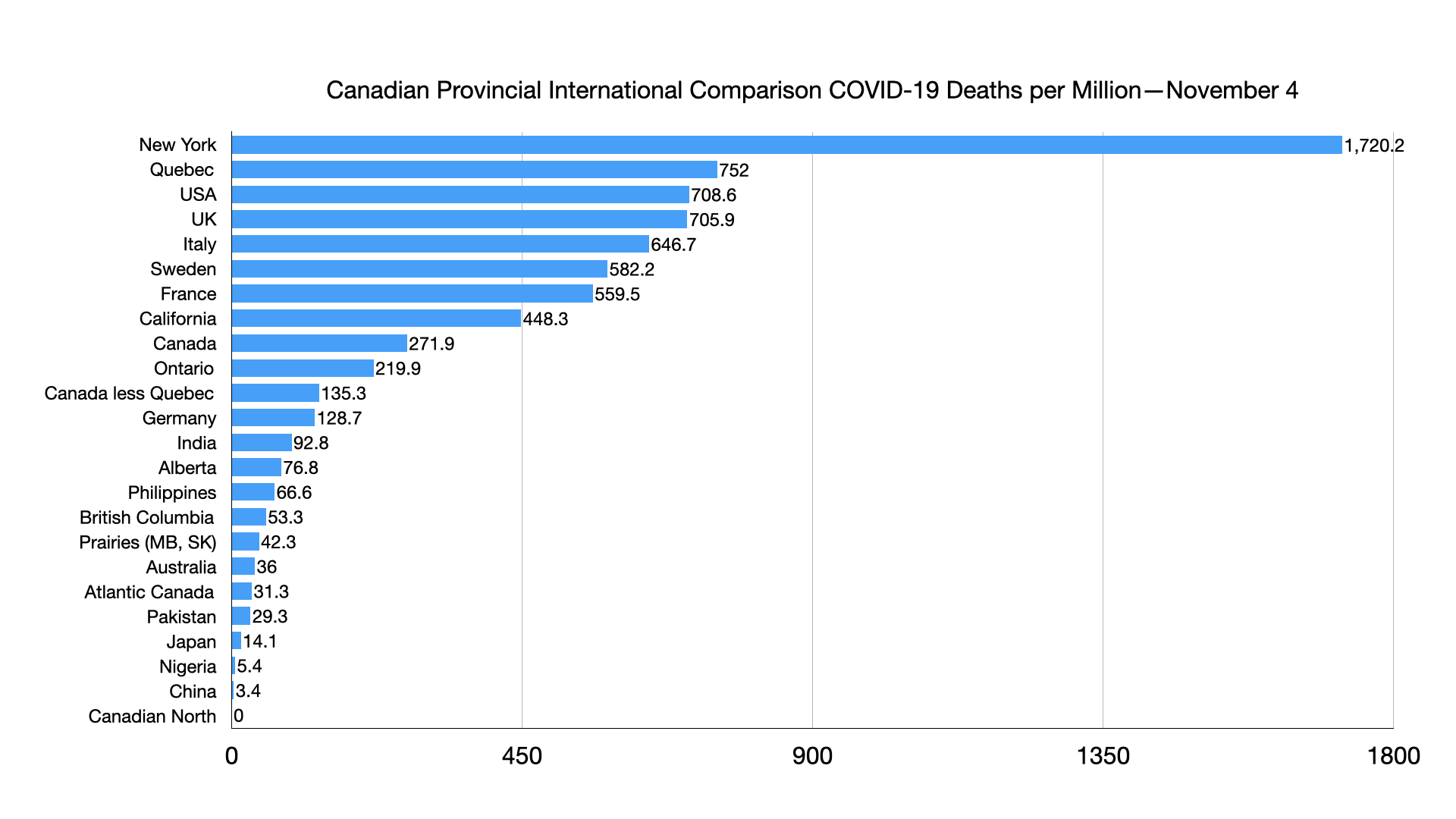
#COVID-19: Comparing provinces with other countries 9 September Update

Highlights:

Deaths per million: USA now higher than Sweden, Australia now higher than Atlantic Canada

Infections per million: France now higher than UK, India now higher than Germany and Ontario, British Columbia now higher than Canada less Quebec


Meta-analysis confirms that multicultural ideology is associated with less racial bias

Not surprising:

A recent memo sent to U.S. government agencies from the Trump administration directs these agencies to suspend trainings related to racial sensitivity, labeling this training “divisive, anti-American propaganda.” This development highlights a broader issue regarding the different, and often conflicting, ways people think about and navigate increasing diversity in society. In other words, the memo taps into fundamental differences in diversity ideologies.

Diversity ideologies refer to the beliefs people hold regarding the importance of differences between groups in society, and the best way to navigate those differences. A significant amount of research has examined how these different ideologies are related to and impact racial/ethnic bias, with mixed results. A meta-analysis recently published in The Journal of Applied Psychology sought to make sense of these conflicting results. In it, psychologists Leslie, Bono, Kim, and Beaver examined the extent to which various diversity ideologies are related to racial/ethnic stereotyping, prejudice, discrimination, and support for diversity-related policies.

Diversity ideologies fall into two broad categories – identity-conscious and identity-blind. Identity-conscious ideologies argue that differences between groups are important and should be meaningfully acknowledged. The most common form is multiculturalism. In contrast, identity-blind ideologies assert that differences between groups are unimportant and it is best for intergroup relations to downplay and minimize these differences.

Three common identity-blind ideologies are colorblindness, meritocracy, and assimilation. Colorblindness adopts the position that one can best minimize group differences by seeking to ignore them (e.g., I don’t see color). Those that embrace the meritocracy ideology “see” color, but believe one should simply try to treat all groups equitably (e.g., I don’t care if you’re purple, green, or polka dot, I treat all people the same). The assimilation ideology also recognizes there are group differences, but seeks to reduce these differences by arguing that members of non-dominant groups should conform to and adopt the culture, practices, and beliefs of the majority group.

In their meta-analysis, Leslie and her colleagues examined how each of these diversity ideologies (colorblindness, meritocracy, assimilation, and multiculturalism) are related to racial/ethnic stereotyping, prejudice, discrimination, and support for diversity policies designed to provide non-dominant groups with additional resources and/or opportunities (e.g., affirmative action).

Since meta-analyses are essentially statistical summaries of previous research findings, their analysis included the results from 167 independent samples from 114 articles that examined diversity ideologies and racial/ethnic bias. The majority of these studies were correlational (77%), but about a quarter (23%) were experimental.

The colorblind and meritocracy identity-blind ideologies yielded mixed outcomes. Colorblindness was associated with less stereotyping, weakly associated with less prejudice, unrelated to discrimination, and associated with less support for diversity policies. Meritocracy was unrelated to both stereotyping and prejudice, but was related to lower discrimination and lower support for diversity policies.

Results were more internally consistent for the assimilation and multiculturalism ideologies. Assimilation was associated with greater stereotyping and lower support for diversity policies. It was also associated with increased prejudice and increased discrimination, but only among study participants that were members of majority groups. In contrast, multiculturalism was associated with lower stereotyping, lower prejudice, lower discrimination, and higher support for diversity policies. These relationships were especially strong among participants from majority groups.

Additional analyses directly compared the ideologies on their associated outcomes. Both colorblindness and multiculturalism were associated with lower prejudice, but this relationship was stronger for multiculturalism. Both meritocracy and multiculturalism were associated with lower discrimination, but this relationship was stronger for meritocracy. Finally, both colorblindness and multiculturalism were associated with lower stereotyping. This relationship was stronger for multiculturalism when the outcome was negative stereotypes, but the relationship was stronger for colorblindness when the outcome was neutral stereotypes.

In sum, multiculturalism showed the most consistent relationship with positive intergroup outcomes. It was most strongly associated with lower prejudice, lower negative stereotyping, and greater diversity policy support. Outcomes were more mixed for colorblindness and meritocracy, but out of all the ideologies, colorblindness was most strongly associated with lower neutral stereotyping, and meritocracy was most strongly associated with lower discrimination. Assimilation was the only ideology to consistently demonstrate associations with negative intergroup outcomes.

Several limitations should be kept in mind when interpreting these results. First, the vast majority of the measures used in the studies to measure stereotyping, prejudice, discrimination, and policy support were explicit rather than implicit. The results of this meta-analysis may not generalize to implicit forms of these biases, and explicit measures are more vulnerable to socially desirable responding. Also note that only one category of diversity policies was examined. Different results might be obtained if the diversity policies focused on enforcing nondiscrimination, as opposed to providing additional resources for non-dominant groups. Finally, the correlational design of the majority of the studies in the analysis limits our ability to determine the extent to which the various diversity ideologies actually cause the observed differences racial bias.

It is clear diversity and racial sensitivity training programs endorse a multicultural ideology – they explicitly acknowledge differences between racial/ethnic groups and assert these differences deserve our careful attention. Critics of multiculturalism often argue that its emphasis on differences exacerbates racial conflict and animosity, and this seems to be an underlying message in the recent memo. However, out of the ideologies examined in the meta-analysis, multiculturalism exhibited the greatest promise for addressing racial and ethnic bias. Of course, this is a moot point if one does not believe there is a significant racial bias problem in society. But that is a subject for another day.

The study, “On melting pots and salad bowls: A meta-analysis of the effects of identity-blind and identity-conscious diversity ideologies“, was authored by Lisa M. Leslie, Joyce E. Bono, Yeonka (Sophia) Kim, and Gregory R. Beaver.

Source: Meta-analysis confirms that multicultural ideology is associated with less racial bias

Black, Native American, and Fighting for Recognition in Indian Country

Of interest:

Ron Graham never had to prove to anyone that he was Black. But he has spent more than 30 years haunting tribal offices and genealogical archives, fighting for recognition that he is also a citizen of the Muscogee (Creek) Nation.

“We’re African-American,” Mr. Graham, 55, said. “But we’re Native American also.”

His family history is part of a little-known saga of bondage, blood and belonging within tribal nations, one that stretches from the Trail of Tears to this summer of uprisings in America’s streets over racial injustice.

His ancestors are known as Creek Freedmen. They were among the thousands of African-Americans who were once enslaved by tribal members in the South and who migrated to Oklahoma when the tribes were forced off their homelands and marched west in the 1830s.

In treaties signed after the Civil War, they won freedom and were promised tribal citizenship and an equal stake in the tribes’ lands and fortunes. But what followed were broken promises, exclusions and painful fights over whether tens of thousands of their descendants should now be recognized as tribal members.

Some of the descendants have won lawsuits seeking inclusion in the Cherokee Nation. Some gained nominal citizenship as Seminoles, but said they could not access tribal services. Others, like Mr. Graham, have nothing.

But now, a landmark Supreme Court decision for tribal sovereignty has breathed new life into their fight.

In July, the Supreme Court recognized a huge portion of eastern Oklahoma as reservation land under the terms of an 1866 treaty. The same treaty also guaranteed that freed slaves and their descendants would “have and enjoy all the rights and privileges of native citizens.”

To groups of their descendants, the logic was simple: If the United States still had to honor treaty promises it made to tribal nations, then tribal nations had to keep their word to the descendants of those formerly enslaved by the tribes.

“We’re making noise,” said Marilyn Vann, a Cherokee citizen and president of the Descendants of Freedmen of the Five Civilized Tribes.

Ms. Vann estimated that there was a diaspora of some 160,000 descendants of those formerly enslaved by the tribes, many of them living in Oklahoma. There are groups representing descendants from each of the five tribes who meet to share sepia photographs of ancestors, compare genealogical records and plan protests.

Ms. Vann added: “There are chiefs who’d like to get rid of what they think of as the Freedmen problem. We have our rights.”

Now, as they file lawsuits in federal and tribal courts, they say they are fighting for tribal benefits including access to jobs, health care at tribal clinics and hospitals, housing, scholarship funds for their children and the right to vote in tribal elections. But also for something more fundamental: “My identity,” Mr. Graham said.

In a statement, the Muscogee (Creek) Nation said that the issue of the status of the descendants of enslaved people raised thorny questions about tribal citizenship that “cut to the core of self-determination.” They said the tribes had fundamental rights to run their own governments and decide for themselves who qualifies as a citizen. Some said that a reconciliation commission would be a better way to resolve the issue, rather than an edict from Congress.

“Many of our citizens feel that identity is at the heart of this issue and that blood lineage is essential to protecting it,” the Muscogee Nation said. “But, on the other hand, the grave injustice done to the slaves owned by some Creeks has to be acknowledged and discussed.”

The fight is unfolding as Oklahoma grapples with another bloody chapter of its history: A white mob’s massacre and destruction of a thriving Black neighborhood in Tulsa in 1921. Many of the Tulsa victims were descendants of people formerly enslaved by the tribes, activists say. This summer, crews excavated a suspected mass burial site searching for remains, and survivors and descendants of the victims recently sued the city.

The legacy of anti-Black racism in tribal nations can be a fraught, uncomfortable topic, one that forces communities who have suffered centuries of land theft, colonialism and genocide to confront the darker corners of their own past. Several tribal officials declined interview requests to discuss the issue.

“When we have that difficult history to deal with, we don’t talk about it,” said Chief Chuck Hoskin Jr. of the Cherokee Nation. About 7,000 descendants of Freedmen were incorporated into the Cherokee Nation after a federal judge ruled in 2017 that they had tribal citizenship rights. That history is “a stain on the Cherokee Nation we’ve got to remove,” the chief said.

Spanish and English colonizers enslaved Native people across the Americas. But tribes in Alabama, Georgia and Florida also adopted the practice themselves, enslaving African-Americans to work on cotton plantations and in homes. When the United States government forcibly removed the Cherokee, Seminole, Choctaw, Chickasaw and Muscogee people to Oklahoma, their slaves also made the deadly march or were transported west in boats, according to historians.

The Civil War and the question of slavery divided tribes, with some fighting for the Union and other tribal members declaring loyalty to the Confederacy. Some enslavers retreated to Arkansas or Texas to escape skirmishes and raids. Black Indians joined the Union or Confederate armies, and later escaped to freedom in Kansas.

“It’s a history that still divides our citizens over what rights the descendants of those Freedmen should have, as well as the larger conversation concerning who is ‘legitimately’ Cherokee,” Rebecca Nagle, a Cherokee writer and host of the podcast “This Land,” wrote this summer after the Cherokee Nation removed two Confederate war memorials in eastern Oklahoma. “We need to do more to confront that history within our tribe.”

The Freedmen were granted tribal citizenship — and in some cases “an equal interest in the soil and national funds” of the tribe — in the treaties that Oklahoma’s tribes signed with the federal government after the Civil War, in which the tribes were forced to cede huge portions of their land to the government.

On the Muscogee (Creek) Nation, there were once three “colored” tribal towns that formed their own small governments. Despite segregation and racist legal structures, Freedmen served as council members, ministers, judges. Jesse Franklin, who was born a slave in Alabama in 1817, was named to the Creek Supreme Court in 1874 — some 93 years before Thurgood Marshall ascended to the United States Supreme Court.

But their descendants say they were edited out of existence over the past half-century by tribal constitutions and other laws denying them citizenship because they were not citizens by blood, or because they or their ancestors had been placed on a roster of ineligible people when government agents began sorting Oklahoma’s tribes into “citizens” and “Freedmen” in the 1890s.

Sharon Lenzy Scott said her mother was stripped of her Creek citizenship when a new constitution was passed in 1979, and spent the next 20 years until her death trying to ensure that her family never forgot.

“She called all her children into the living room and said, ‘I’m going to tell you who you are, and don’t let anyone tell you you’re not,” Ms. Scott said. “She knew who she was.”

The N.A.A.C.P. has weighed in to support the descendants of those formerly enslaved by the tribes, and some members of Congress have proposed legislation that would sever ties between the United States and the Creek Nation, or withhold housing money from other tribes, until the descendants are granted tribal citizenship.

But to some tribal leaders, those threats undermine tribal sovereignty.

Gary Batton, the chief of the Choctaw Nation, wrote in a June letter to the speaker of the House, Nancy Pelosi, that he objected to any legislative maneuvering, and said the “Freedmen issue is a problem caused by the United States, not the Choctaw Nation.”

“America should solve its own problems,” Chief Batton wrote.

Still, the descendants’ cause has supporters among tribal members. Eli Grayson, a Muscogee (Creek) citizen whose family once owned slaves, said the Freedmen’s descendants had been excluded for too long.

“These Freedmen lives don’t matter,” he said, echoing the Black Lives Matter mantra.

Mr. Graham said he has been petitioning for his Muscogee (Creek) status since he went to a tribal citizenship office in 1983 and told the office workers that his father was Theodore “Blue” Graham, who spoke the Creek language and went to traditional stomp dances. On that long-ago day, he said, the clerk told him his father had been nothing but a slave: “It tore my heart out.”

Mr. Graham can speak a few shards of Creek himself, enough to say “Come to dinner” or teach his children “Mvto” for thank you. He has come to dislike the term Freedmen, calling it a pejorative relic.

He would like, one day, to just be a citizen of his tribe.

The EU needs a new story on race and inclusion

Of note:

Three months ago, as angry Black Lives Matter protests erupted across Europe in the wake of the death in police custody of George Floyd, a 46-year-old African-American, in Minneapolis, Minnesota, flustered European Union officials promised urgent measures to tackle the bloc’s own dismal record in combating race-based violence, discrimination and harassment.

The Dutch prime minister, Mark Rutte, and the German chancellor, Angela Merkel, recognised their countries had a long way to go to achieve racial equality. ‘We need to talk about racism with an open mind,’ the president of the European Commission, Ursula von der Leyen, told the European Parliament. ‘Racism is alive in Europe, not just in the US,’ the commissioner for equality, Helena Dalli, confessed, adding: ‘We have to address the roots of the problem, not just the symptoms or the results.’

Von der Leyen held a first-ever commission debate on racism, insisting there must be zero tolerance for discrimination based on colour or race, and promised to ensure more ethnic diversity in EU bodies often described as ‘Brussels so white’. There were plans to craft an ‘action plan’ to tackle inequalities in employment, health and housing, curb police brutality and ensure fair treatment for all.

It was a heady moment. After years of ignoring warnings that racism was a serious problem in Europe and averring that recruitment policies would need to remain ‘colour-blind’, leaders of EU institutions were finally ready to listen and learn—and, most importantly, recognise that discriminatory practices were weakening social cohesion, depriving the economy of its full potential and undermining European values.

Running deep

Turning good intentions into credible and enforceable policies will be a challenge, however. And not just because of the EU’s previous lack of interest and experience in combating ethnic discrimination.

Systemic racism in Europe runs far deeper than toxic far-right diatribes. It has seeped into much of the EU’s institutional discourse and policies. It cannot be wished away by inspiring speeches or noble resolutions.

Moves to dismantle racism in Europe’s economic, political and social systems will therefore need to be deliberate, intentional and sustained—and based on a deeper understanding of the lived reality of Europeans of colour.

Most importantly, to be credible and effective, EU measures to ensure racial justice and equality must be anchored in a fresh and more inclusive European narrative. But that difficult conversation has not even begun.

Toxic stereotyping

Proud talk of ‘unity in diversity’ ignores the fact that European Muslims are still struggling against toxic stereotyping as extremists and potential terrorists. Surveys by rights agencies point to continuing anti-Semitism across Europe, while black Europeans face unrelenting discrimination in their professional and personal lives, including police harassment.

Europe’s estimated 50 million ethnic-minority citizens—representing about 10 per cent of the EU population—are still routinely viewed as permanent ‘migrants’ or exotic foreigners. Many are haunted by the one question they can never, ever, sidestep: ‘Where are you really from?’

That should not surprise. Sometimes unintentionally, though often deliberately, the European narrative—the story of Europe’s history and identity propagated by its leaders and institutions—implies a self-comforting exclusion, contrasting ‘true’ Europeans to unwelcome, intruding outsiders. The ‘European way of life’ which it is now a commission priority to ‘promote’, invokes ‘strong borders’, a ‘modernisation’ of the asylum system and co-operation with ‘partner countries’ to achieve ‘a fresh start on migration’.

The message may be strident or subtle, harsh or soft but it is always clear: Europe is white and Christian. Members of other ethnicities and religions may be tolerated—even needed—but they do not really belong.

Reinforced through school curricula, which ignore the dark side of European colonialism, and by far-right rhetoric, toxic, ‘us’ vs ‘them’ groupthink is no longer the prerogative of Hungary’s Viktor Orbán or other populist leaders. It has been embraced by many mainstream politicians, pliant, uncritical media and anti-migrant campaigners disseminating misinformation.

With ‘race’ and migration so pejoratively linked in the public domain, the systematic demonisation of migrants and refugees, the refusal to accept desperate asylum-seekers and the dehumanising language of tabloid media have further poisoned the conversation.

No quick fixes

Changing Europe’s narrative to become more inclusive will not be easy. There is no miracle solution or quick fix, no one policy which can change years of wilful neglect.

There will have to be a mix of immediate actions—such as raising awareness of dehumanising language and unconscious biases, less discriminatory EU recruitment policies, collection of data on ethnicity, improved police training, close scrutiny of the link between artificial intelligence and structural racism and stricter enforcement of the EU’s 2000 race-equality directive—as well as determined, longer-term policies and measures to change deeply-anchored and long-standing prejudices, stereotypes and cultural norms.

The conversation on facilitating a faster integration of minorities and migrants—which puts the onus on ‘outsiders’ to become part of ‘national culture’, in assimilationist fashion—will need to be replaced by a wider, deeper and fairer concept of inclusion, as developed by the Council of Europe. This recognises the dynamic, multi-faceted and multi-layered interaction between people as they live and work together, providing all members of society with the opportunity to participate equally in political, economic, social and cultural life, and the ‘diversity advantage’ which results in practice.

EU leaders and institutions should play their part discouraging outdated or one-dimensional definitions of ‘European identity’, in favour of a recognition that ‘hyphenated’ Europeans, with fluid, changing and multiple identities, are also true Europeans. As European economies slow down and work begins on ensuring a sustained and sustainable recovery, Europe will need the engagement, skills and talents of all its citizens.

Opportunities for change

The coming months provide important opportunities for change. The EU can prove it is serious about fighting discrimination by developing stronger links with anti-racist organisations, clamping down harder on far-right hate speech and violence and making sure Europe’s ethnic minorities are represented and listened to in the upcoming Conference on the Future of Europe. Access to resources from the recently-agreed, EU-wide, multi-billion-euro recovery fund must also be ensured.

The union’s rule-of-law provisions should include reference to national measures to secure racial equality. And EU institutions should indeed make sure their recruitment policies include outreach to ethnic minorities.

There is no magic wand and no one European leader or institution can immediately make black lives matter in Europe. Dismantling years of neglect, and visible and invisible discrimination, will require sustained and painstaking effort.

An EU action plan to combat racism is a good first step. But it must be accompanied by a modern narrative of a truly inclusive and just Europe, which is genuinely ‘united in diversity’—in deed as well as word.

About Shada Islam

Shada Islam is a commentator and analyst on EU affairs, including migration, inclusion, diversity and women’s empowerment. She runs her own Brussels-based global strategy and advisory company, New Horizons Project.

How race, income and ‘opportunity hoarding’ will shape Canada’s back-to-school season

Good long read on how the impact of COVID-19 will likely increase inequality further:

Two weeks before vice-principal Brandon Zoras was to welcome a group of students back to the classrooms at Toronto’s Westview Centennial Secondary School, a message appeared in his LinkedIn inbox from a stranger.

“Hi Brandon, hope you are doing well! I am looking for an experienced TDSB Grade 11 chemistry tutor to coach my son online only (due to social distancing) – to start right away. Please let me know if that is something you (or someone you know) can help my son with. Best regards.”

Irritated, Mr. Zoras groaned and deleted it without replying.

Westview has one of the largest Black student populations in the country and sits in the northwest corridor of Toronto, which has become the epicentre for COVID-19 infections. Many students live in cramped housing, have parents who are essential workers and rely on public transit to get around, all things that contribute to the high infection rate – which is 10 times that of the least-infected parts of the city. The average annual income for residents in the area is $27,984 – half of what it is for Toronto as a whole.

“It makes my heart hurt for the families who can’t afford a tutor or who can’t afford all these additional things,” said Mr. Zoras, a science educator.

Since he began working as an educator 11 years ago, he has seen the way public education funding has been diminished, how families in the system have found ways to privatize parts of their children’s schooling to get what they want. Education advocates say those efforts are making things less equitable for everyone else.

Every year, parents across the country lobby to get their children into advanced-placement classes, buy houses in neighbourhoods that will give them access to coveted schools and fundraise on the school council to bring in technology and high-level arts programming.

Now, with the return to school amidst a global pandemic, those efforts to secure the best for their children, known in sociology as “opportunity hoarding,” have become more overt. The confidence many had in the public-education system has been ripped apart because of reopening plans and it seems no amount of fundraising, private meetings with principals or school council strategizing can bring about the changes many are seeking for a safe return to school.

The result is some of the most privileged public-school families are opting for distance education, hiring personal tutors and forming private learning pods – decisions that are ostensibly made in the best interests of their children, but which will likely cause major rifts across race and class. Those in lower-income communities are also choosing remote learning because they have elderly relatives living with them who are vulnerable to getting sick, they feel a heightened threat from COVID-19 because they are in areas with the highest infection rates and the buildings in which they live pose challenges to getting to school on time in a pandemic.

That families on both ends of the socio-economic spectrum are opting for remote learning exposes cracks that already existed in the system. There’s a threat the most privileged will pull out to customize their own education since they can afford to, while others who are fearful of sending their children back to school but cannot pay for private help are becoming test subjects for a new realm of online learning. As plans are pulled together haphazardly, there’s a concern the divide will deepen.

This week, school boards in Toronto, Peel Region and Halton Region released the results of parent surveys that show a sizable portion of students will not be in classes this fall: 30 per cent of elementary and 22 per cent of high school students for Toronto; 33 per cent combined for Peel; and 29 per cent elementary and 15 per cent high school for Halton. A portion of households didn’t respond and school staff will be reaching out to them directly, which could change these figures.

At Thorncliffe Park Public School, in a community that has long been a landing pad for newcomers and where the median household income is $46,595, 38 per cent of families surveyed say they’ll do remote learning this fall.

Munira Khilji, a mother of two in Thorncliffe Park, said many parents she knows chose this option because they live in high-rises and don’t want to endure waits of an hour or longer just to take the elevator while pandemic-related capacity limits are in place – and they worry about physical distancing in such a cramped space.

The issue is most apparent in Ontario, where families have been given a clear choice between in-person and remote learning, but it’s forcing a reckoning in many other parts of the country. In Alberta, 28 per cent of students in Edmonton’s public school board have chosen remote learning. In British Columbia, Education Minister Rob Fleming has said that school districts have the flexibility to provide remote learning options, but there is confusion among parents and school officials as to what that will mean and whether students will remain enrolled in their home schools.

“What COVID has done once again is expose the stark inequities in our system and the realities that families in marginalized communities have to navigate,” said Jeewan Chanicka, the former superintendent of equity, anti-racism and anti-oppression at the Toronto District School Board. “These families also know that their communities are going to be hit the hardest. They are behaving in a way where they’re trying to save their children’s lives.”

Some worry the shift out of the classroom could have devastating long-term consequences: If parents come to appreciate the increased attention their child gets from a teacher in a pod with just four other students, they might opt to continue this post-pandemic and permanently withdraw from a system whose funding is determined by head count.

“Where I worry a bit is in particular for those of privilege; if they’re pulling their children out, whether or not they will return to public education, I don’t know,” Mr. Chanicka said. “My hope is that yes, this is a blip because of the pandemic.”

COVID-19 has presented an opportunity to rethink how Canada operates homeless shelters and long-term care – will the same be true for schools, or will navigating the pandemic only further fracture the system?

Before Marty Menard even had a daughter, he and his wife had done their homework on which school they wanted her to attend. Wortley Road Public School in London, Ont., a well-regarded K-8 school known for its small student population and very involved parent community, stood out. When Mr. Menard’s wife was in her third trimester, they bought a house in Wortley Village, which the Canadian Institute of Planners dubbed the best neighbourhood in Canada in 2013, so they’d be in the catchment area for the school they determined was their first and only choice.

In his daughter’s second year there, Mr. Menard enthusiastically joined many of the various parent committees and even became co-chair of the school council, helping organize fundraisers, the breakfast program and cultural celebrations.

When schools shut down in mid-March, Mr. Menard turned to a private tutoring program to offer his daughter an hour of instruction a day and also found a few hours each week to use online resources from the Khan Academy to help boost her development. But after a few months, his daughter said she was lonely and Mr. Menard knew this couldn’t continue into September. A learning pod seemed like the best solution: The risk of his daughter being exposed to the novel coronavirus would be lower than it might be in a packed classroom, but she would still enjoy social interaction. On social media, he found a few other parents and a provincially certified teacher who will lead the pod, but is struggling to find a space that will host them without greatly increasing the costs, which he estimates will be about $500 to $750 a month.

With school already under way in some provinces and just a few weeks away in others, the scramble to clear those logistical hurdles has sent plenty of parents who have chosen the same option as Mr. Menard into a frenzy.

As August wore on, the panic among parents in the Learning Pods – Canada Facebook group was palpable. Thousands from Vancouver Island to Halifax, but mostly in Ontario, had flocked to the group to find others in their neighbourhood to pod up with, to find a teacher to hire, or to share their story about turning to this option to protect an immunocompromised member of their family.

They solicited advice on everything from costs (“Can folks share how much is a reasonable salary to offer a teacher for a pod of four?” asked one mom in Hamilton) to insurance (“My insurance company approved extended insurance for each child in my pod. They will not cover communicable disease transmission. Has anyone else figured out how to get around this? Co-op among parents to share the responsibility? Corporation to reduce risk?” wrote another in Waterloo, Ont.). Some pods will rotate between a group of households where parents share teaching duties; others will be situated in rented spaces with lots of technology and resources provided and come with a cost of up to a few thousand dollars a month.

On and offline, the conversation on learning pods often leads to bigger questions of equity: are they classist? Do they further the divide between the haves and the have nots? Shouldn’t parents with enough privilege to put their children in a learning pod harness it to lobby the government to make classrooms safe for all children?

Those debates have arisen in Mr. Menard’s own marriage. He describes himself as a “lefty” and a proponent of the public school system, which he says has been steadily defunded for years – but still, he and his wife have decided that given the pandemic and the government’s plans, this is the best option for his family.

“Nothing is going to marginalize kids more than people like me who could afford a learning pod,” he says. “The bottom line as a parent is I still have to put my kid’s interests above every other point of view or political point of view that I have.”

It’s a rationale sociologist Margaret Hagerman encountered again and again when she spent time with affluent white families in the American Midwest as part of research for her book White Kids: Growing Up with Privilege in a Racially Divided America. She observed a phenomenon she dubs “the conundrum of privilege”: Parents who identify as progressives, who care about equity, who may have taken their children to the climate strike or hung up a Black Lives Matter poster in their window, don’t think twice about what it means to give their children advantages that others don’t have access to. They want to raise their children in a just society, but they’ve used their privilege to work against that very goal.

“I think we need to reconfigure what we mean when we say we are doing the best for our child or being the best parent,” she said. “I don’t actually think that advocating for your own kid when that harms other people is the best version of anything.”

When parents talk about the gifts they want to give their children for the future, she likes to challenge them: “Don’t you want your kid to live in a society with less racial violence and with less inequality and social conflict and social problems and suffering?” she asks. “If you could do things now that would provide that different future for your child and the other children around him, it’s kind of philosophical, but I just think that that’s a compelling argument.”

While some who have opted for pods defend their choice with the argument that this will make classrooms less populous and therefore safer for students who do attend in person, the net effect isn’t the reduced class sizes parents, epidemiologists and public health experts have recommended. Rather, classes will be combined and likely grow in size because the government has not funded lower class sizes.

In Edmonton, the city’s public school board said nearly 29,000 students, or roughly 28 per cent of its entire enrolment, had opted for online learning as of Wednesday, though the board stressed that those numbers could change. To accommodate them, it has assigned 775 teachers to those online students. The board has hired an additional 100 teachers on temporary contracts, but board chair Trisha Estabrooks said the shift has meant decreased in-class enrolment hasn’t led to a decrease in class sizes.

“Even though we have 30 per cent of our students choosing to learn online, the reality is that doesn’t decrease the overall class size either, because we also need to have teachers in place to teach those online cohorts,” said Ms. Estabrooks, who acknowledged that in many classrooms, physical distancing is difficult, if not impossible.

Atiba Ralph, a single Black father, said he has heard so far that all of his daughter’s friends will return to in-person classes this fall; he hadn’t even heard of learning pods but said they sounded like “a pretty smart idea,” albeit one that was out of reach for him.

“It probably happened with the people that are in a higher tax bracket,” he said. “I have a little bit more financial problems.”

The COVID-19 threat is present every time he steps out of his apartment in Toronto: He lives in the Jane and Finch area, one of the most-infected in the city, and knows of two Black people – one a neighbour of his mother, another a friend of a friend – who died of COVID-19 earlier this year. Public health data collected by the city from mid-May to mid-July showed Black people had the highest share of COVID-19 infections.

Recognizing that some neighbourhoods have been much harder hit than others by COVID-19, the Toronto District School Board is directing extra funds and capping class sizes at abo

ut 80 schools in those areas, most of which are in the northwest corner of the city.

Alice Romo, an education advocate with the Latinx, Afro-Latin-America, Abya Yala Education Network, says she worries about the way children from low-income neighbourhoods will fall behind this year if they are educated at home: They’ll be less engaged, it will be more difficult for them to finish their homework and, crucially, many will miss out on all the non-academic parts of school that keep low-income communities afloat, such as breakfast and lunch programs.

“We’re definitely going to see this a few years down the road. There will be more of an inequality gap,” she said.

Those who withdraw from the system may think the decision only affects their household, “the more you shift the role of education towards families and away from public schools, the more inequality you’re going to have,” says Andrew Franklin-Hall, a philosophy professor at the University of Toronto who studies ethics.

For some students, school might be the only environment where they are exposed to peers from diverse ethnic and socioeconomic backgrounds; in a learning pod, just like in a private school, opportunities for that exposure are limited.

“When parents are suddenly forced to make this kind of decision, naturally they turn to the resources they have, which is their own friends, their own community,” he said. “This is not the sort of thing that people feel comfortable articulating, because they don’t want to say, ’Well, I don’t trust the people who are different than me or I don’t trust the people who aren’t as well off or have a different race.’”

Before the pandemic forced a crisis in the education system, many school boards had committed to addressing systemic racism and inequity by re-evaluating programs, such as French immersion (which attracts a higher proportion of affluent, white students) and streaming (which routinely put Black children on a path to applied courses, which limit their options after graduation), that have disadvantaged students from low-income and racialized communities. Now with educators focused on the basics of opening schools, reimagining the system seems impractical, if not impossible.

In June, Stephanie Brembridge, a Black mother in Toronto whose son attends a public Catholic school, reached out to the school principal to ask whether she could add an item to the agenda for the next parent council meeting of the year: She wanted to discuss what the predominantly white school could do to better help Black and Indigenous students succeed.

Her faith in the school had already been tested. Her son, Trusten, had been suspended several times – once for apparently saying “an inappropriate word” – though the school was never able to tell Ms. Brembridge what that word was. With the help of an advocacy group that works with Black parents, she was able to get a few of those suspensions overturned (data collected at school boards across the country show that Black students are suspended and expelled at a disproportionate rate).

When it came time for the parent council meeting, which was held over Zoom, Ms. Brembridge noticed her item was at the very end of the agenda. She grew anxious as an hour and a half flew by, while the other parents (all but one of them were white) discussed which teachers were retiring, how they might safely plan a social function in the summer and other matters Ms. Brembridge believed to be far less pressing than hers.

“Okay, I think that’s it,” someone said, ready to adjourn the meeting. Ms. Brembridge, surprised, unmuted her microphone and reminded them she still hadn’t spoken. She was told she had three minutes and could see parents starting to leave the chat. “I‘m not going speak until I can get everybody’s full attention,” she said. Her item was moved to the agenda for the next meeting – three months later, in September.

As a teacher in Toronto, Kelly Iggers has been exposed to the type of parental advocacy that’s aimed at “achieving supports that will benefit one’s own child.” When she learned Ontario’s back-to-school plan, released in late July, would not include reduced class sizes, she started a petition arguing in favour of them that netted more than 250,000 signatures across the province and evolved into a campaign with parents, educators, doctors and others discussing and planning in closed groups, including a WhatsApp chat.

“This issue of advocating for a safe and equitable return to school, it’s not about advocating for one’s own community or one’s own child,” she said. “This only works if we’re advocating for something that’s going to support everyone.”

This moment of reckoning in Ontario comes at a time when Alberta is moving toward a model that could heighten class and race disparities within the public system. For now, it’s the only province to have charter schools, which are independently run, non-profit public schools that have a greater degree of autonomy than a normal public school, allowing them to create programming that’s only for girls, or for the academically gifted.

Earlier this week, the Choice in Education Act took effect that, among other things, makes it easier to apply for and create a charter school. Now, a group wanting to establish a new charter school can bypass the local school board and apply directly to the government.

Calgary mom Dallas Hall’s son started Grade 4 last month at Connect Charter School after switching from a local public school. Ms. Hall said she likes the type of education he’s receiving, which includes experiential learning and outdoor learning. She also said the school has less bureaucracy than a traditional public school system – the same features that are making private school or learning pods an attractive option for parents elsewhere. Ms. Hall likes the idea of parents having choice in education. “They should have a voice. Their voice should be welcome,” she said.

Ms. Iggers said she didn’t want to vilify parents who are choosing private options, but says this shift out of the classroom has the potential to cause long-term damage.

“It’s prompting families with the means to do so to leave the system,” she said. And when they leave, “they [take] with them what are often the most powerful voices to advocate for a properly funded education system.”

Source: https://www.theglobeandmail.com/canada/article-how-race-income-and-opportunity-hoarding-will-shape-canadas-back/

Choose: Filipino or Filipinx?

Just as in Latino and Latinx:

There’s a specter haunting the Filipinos today. I came across its presence when I stumbled upon a Facebook post by Gio Caligiua, a fellow scholar in the university, one cool September evening.

He was analyzing the emergence of #Filipinx and #Pinxy. This month, media made a buzz about Dictionary.com’s standardization of these words as the name, term, or signifier for all native inhabitants of the Philippines! Imagine, we will be calling ourselves Filipinxs if we want gender-neutrality.

Gio observes that Filipinx is rooted in US multiculturalism where gender neutrality is part of the culture’s consciousness. Implying that we shouldn’t be surprised at all by the popularization of such word because Filipino Americans are battling the system of gender oppression and racism in the United States. Ergo, carve a name for them, Filipinx. He adds that the suffix of -x can be read as homage to gender-neutrality of Filipino culture (doubtable because we are still haunted by the specters of patriarchy, misogyny, and gender discrimination from the Church and the State). US made it just more explicit. Then, he says we should not act like purists in our country crazed by the conflict between national and regional languages, for calling Filipino a language is problematic because it’s really just Manila Tagalog.

It is quite unsettling at first to encounter new words. And to read them on a Facebook post critical of “Filipino” itself as a national language and conflicting it with our identifier of ethnicity, seems quite a lot to handle. I put on my glasses, opened the libraries, and for once, read on why this word seems to be popular among Twitter users today.

The practice of gender-neutralizing all gendered words began in the 1960s with the purpose of supporting gender equality. Though we may see Filipinx as something to be celebrated for its obvious acknowledgment of gender-neutrality borrowed from the Latinx and Chicanx communities in the US, we must resist such adverse essentializing of our identity.

If we use Filipinx here in the Philippines, many people, referring to the 110 million Filipinos (named and recognized by Catriona Gray in representing Miss Universe Philippines 2018), would bat an eyelash. Probably in shock of such a strange word, they would immediately resist such naming. Think of it too when applied to the department where I graduated, Departamento ng Filipinx at Panitikang Filipinx (the millennial child in me might even ask, “Is Filipinx the Pinoy version of Winx?”).

Absurd as it may seem, these Filipino American digital natives have proved once again the naming power of the American establishment to coopt identities in their own sense. Haven’t we learned from history? The Philippine revolutions… the massacres… the campaigns for sovereignty… our fight to wield the Philippine flag, sing the national anthem, and freely express the song “Ako ay Filipino.” To legitimize Filipinx as gender-neutral is to efface and silence Filipino as gender-neutral.

Filipino, despite the letter o in its spelling denoting maleness, is not quite the same as before. Especially in 21st century Philippines, the ethnic identifier denotes a collective identity, a mass of people –

Indigenous peoples, women, peasants, fisherfolk, working class, unemployed, youths, gay, lesbian, bisexual, transgender, queer, non-binary, and many more. Filipinx alienates us who produce and reproduce language on the Philippine shores.

I told Gio that Filipino transcends binaries and should be acknowledged as a gender-neutral word. Even though we have other gendered words such as Filipina, Pilipino, Filipina, Pinoy and Pinay, Filipino is us instills that collective consciousness which ties us to our fellow Filipino by mere ethnicity.

The Filipino is inscribed and involved in the conditions of crisis throughout history (colonization, Martial Law, pandemics, extrajudicial killings, US and Chinese imperialism, and global war on terrorism).

The Filipino endures as our local way of seeing, despite its origin to King Philip II of Spain. Filipinx is Filipino American and should be redefined in the Dictionary.com as Filipino American usage.

The Filipino also sees that she/her or he/him is “niya” and “siya.” The same words are also found in Bisaya and Hiligaynon. In Ilocano, “kunana.” What could be more gender-neutral than the Philippine languages itself spoken by our fellow Filipinos?

American culture invades our linguistic agency. However, I am not dismissing the fact that we need gender-neutral terms however, isn’t it much more empowering if we own the word Filipino than recreate a post-postmodern name that alienates many of us? I lodge this question to fellow Filipinos in the virtual world to be more nuanced in sharing or engaging with something viral as #Filipinx.

I noticed that in America today the term for people of African descent has returned to identifying as “Black.” They used previously African-Americans, as more neutral than the word for color black itself. However, with the rising number of murders and police brutalities in America among members of the black communities, we saw how they owned again the word that used to be oppressive.

Why can’t we own “Filipino” like that? Why can’t we equally use the three together, Filipino, Filipina, and Filipinx, as all simultaneous ethnicities in different realities across the globe? Despite the deeply rooted conflicting debates on national language, the resolution is simple. Acknowledge that language is fluid and that it is lived and constantly shaped by a community of speakers.

As long as we let the specter, called excessive political correctness, haunt social media, we will always fall in the trap of the “woke” whose opinions are immediately validated by hashtags, likes, shares, hearts, and retweets.

After a string of comments on his post, I wasn’t able to talk again to Gio. But this message responds not only to Gio. We, the Filipino virtual community, have to resist this Western hype and empower our languages in the Philippines. We are all Filipinos. Our concerns are more deeply rooted in our social realities than the post-postmodern neutralized revision Filipinx. Isn’t it much more important today to battle the rhetoric that our mother nation is a province of another nation?

Have we really broken the chains that oppress and colonize us even in language, or are we seeing another symptom of what is yet to come? (Bulatlat.com)

John Toledo, 27, is an Assistant Professor at the Department of Humanities, University of the Philippines Los Baños.

Source: Choose: Filipino or Filipinx?