Germany Moves Toward Requiring Women On Large Companies’ Executive Boards

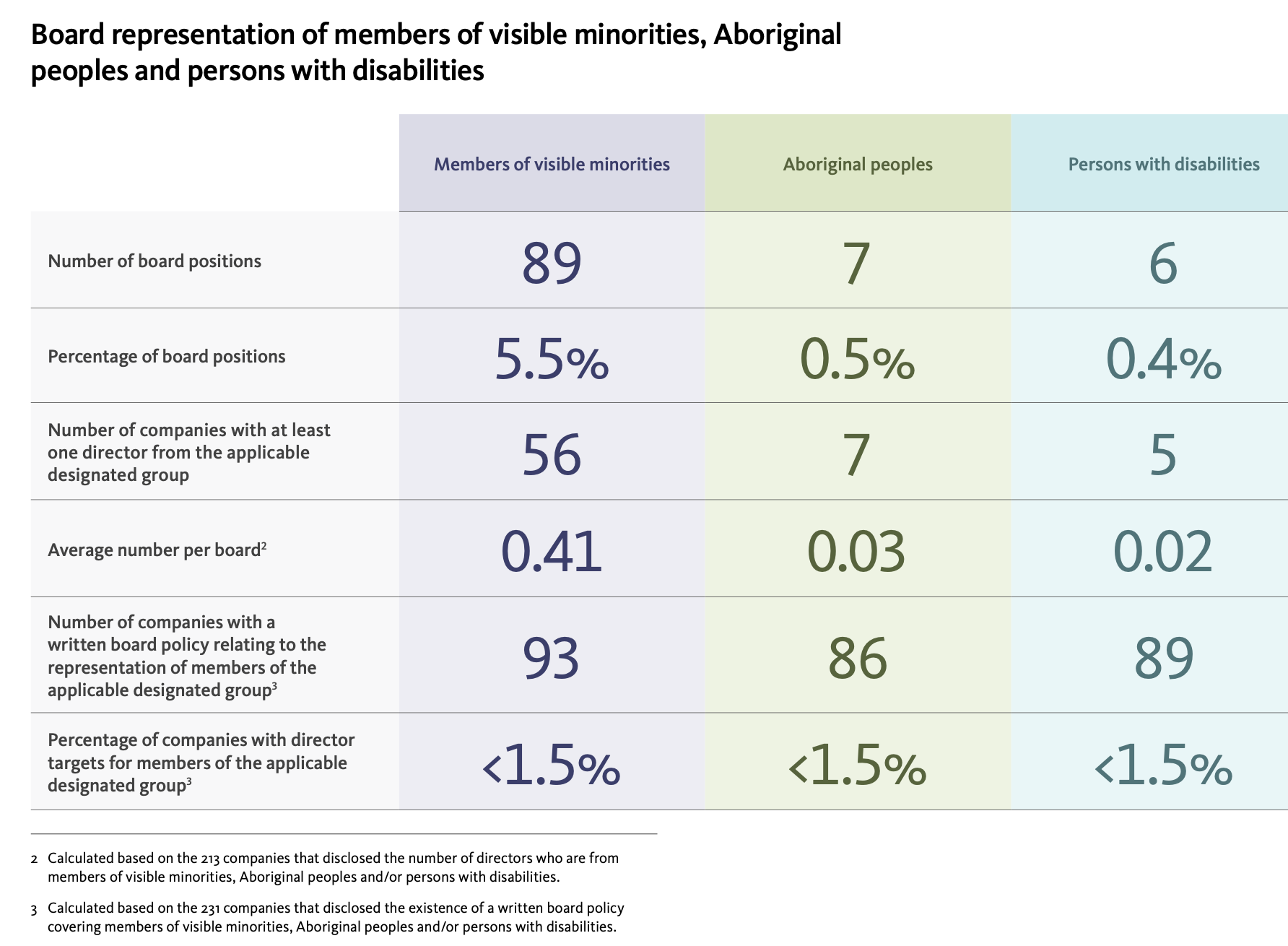
Of note to Canadian regulators, broadening to visible minorities and Indigenous peoples:

Germany has taken a step toward requiring what has not happened voluntarily: putting women on the management boards of the country’s largest companies.

On Wednesday, Germany’s cabinet approved a draft law that would require stock exchange-listed companies with executive boards of more than three members to have at least one woman and one man on those boards.

The rule would affect about 70 companies – of which some 30 currently have no women at all on their management boards, the Justice Ministry said. These companies generally have more than 2,000 employees.

The draft law will now go to the Bundestag, Germany’s parliament, for a vote.

The legislation also contains a provision intended to improve the effectiveness of a 2015 law that requires leading companies’ supervisory boards — which are generally chosen by shareholders and don’t have executive powers — to have at least 30% of their positions occupied by women.

The new law would extend the 30% requirement to companies in which the federal government is the majority shareholder. That includes Deutsche Bahn, the German railway company. In addition, executive boards – responsible for managing the company – that have more than two members will be required to have at least one woman. These measures would affect about 90 companies.

Federal Minister for Family Affairs, Senior Citizens, Women and Youth Franziska Giffeycalled the law a “milestone” that would ensure there will no longer be women-free boardrooms in these large companies. The law would make Germany better prepared for the future, she said, and more able to capitalize on its potential.

“We have seen for years, not many changes are made voluntarily, and progress is very slow,” Giffey said in a statement.

An October 2020 report by the AllBright Foundation, which advocates for boardroom diversity, found that Germany lags the U.S., France, the U.K., Poland and Sweden in the proportion of women on executive boards at leading companies.

The study found that in the U.S., women comprise 28.6% of the executive boards of the 30 largest publicly traded companies. In Germany, that figure is just 12.8%. And only four of Germany’s largest 30 listed companies had more than one woman on their executive boards.

Janina Kugel, a former Siemens executive who is now an equality advocate, told Deutsche Welle the new quota would be an important signal.

“The perception of Germany is that, because we’ve had a female chancellor for the last 15 years, Germany is very progressive in that matter, but actually it is not,” she said.

The U.S. has also begun to confront the issue of gender disparity in boardrooms.

In 2018, California became the first U.S. state to require companies based there to have women on their boards of directors.

And the U.S. stock exchange Nasdaq announced diversity requirements last month. Under the rule submitted to the Securities and Exchange Commission, Nasdaq would require companies traded on its exchange to appoint at least one woman and at least one member of an ethnic or racial minority or LGBTQ+ person to their boards of directors.

Source: Germany Moves Toward Requiring Women On Large Companies’ Executive Boards

I went on Punjabi radio to share COVID information with my community. I learned that multicultural media has been kept in the dark

Ethnic media is often unappreciated at times like these:

“I would encourage listeners to not take medicine as there are lot of side effects.” These are the types of uninformed messages I heard being blasted on a Punjabi radio show as I awaited my turn to speak about COVID-19 precautions.

As a General Surgery Resident at the University of Toronto, I decided to personally reach out to this media outlet to promote awareness around COVID-19 in Punjabi. I had recognized the importance of dissemination of cultural and language specific information while working with my patients, and colleague physicians from different specialties including Public Health, and Infectious Disease.

I was also inspired to connect with Punjabi radio and TV shows after seeing the way my family and friends relied on information from these sources. As part of my social media campaign, Humans in Brampton, I also spoke to a few truck, and taxi drivers who sometimes go on long cross border trips and they informed me that their sole knowledge about COVID-19 is from Punjabi, Hindi, and Urdu radio shows.

Moreover, I came across multiple tweets from community advocates urging physicians and public health officials to speak to the community directly. These tweets were in response to conversations in national media about the rise of COVID-19 cases in specific communities such as North East Calgary in Alberta, and Peel region in Ontario. What emerged from these discussions was the role of socioeconomic status, language barriers, health care and workplace inequities that exacerbated the pandemic burden in such communities.

Speaking to some of the Punjabi Radio and TV media outlets, I was surprised to learn how underutilized these platforms have been throughout the pandemic. One of the spokesmen for such a media platform informed me, “We have hardly been approached by physicians, public health or government bodies to run COVID-19 specific messaging on a regular basis. We would be more than thrilled to have them on our shows,” they said.

In another live Punjabi TV discussion that was being broadcasted throughout North America, I received a question from a New York resident who had tested positive for COVID-19 regarding precautions, and this solidified my belief that these highly impactful public platforms have not been utilized during the pandemic to disseminate life-saving information even across the continent.

I was also shocked to learn that more homeopathy and alternative care providers used these language specific platforms to deliver health related information than government bodies, and physicians. The lack of information and even worse, misinformation, can be dangerous for the community members as they are essentially in the dark about how to protect themselves from COVID-19.

Based on 2016 Statistics Canada data, Peel region in Ontario for instance had the lowest percentage (60.92 per cent) of population speaking in English at home. 4 per cent of the Peel population had no knowledge of English or French. Language, on top of other inequitable factors is another barrier many of these communities face when it comes to inaccessibility to health care and information.

Paradkar: The tens of thousands of white people who rioted at the U.S. Capitol were reclaiming white supremacy

Pretty evident from watching the mob yesterday, and the double standard of relative police inaction compared to the BLM Washington protest:

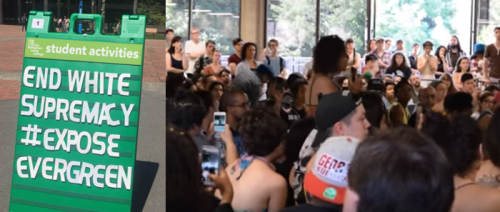
Let it be remembered that it was white people who were allowed to breach the U.S. Capitol during a joint session of Congress, white people who broke the building’s glass windows and rummaged senators’ desks, white people who laid violent siege to the seat of American democracy, white people whose attacks led to Vice-President Mike Pence being evacuated and white people’s violence that put the senate and house chambers on lockdown.

Tens of thousands of white people. Armed white people. Confederate flag-waving, QAnon poster-bearing white people. 

Mostly maskless rioters on a day when the U.S. hit 21 million cases of COVID-19..

They weren’t just white people engaging in democratic protest. “An insurrection,” president-elect Joe Biden called it. 

Whom are we kidding? What we witnessed today was an assertion of white power, a Trump-pumped MAGA crowd staking claim to power without care for facts or truth. 

Depraved racists recreating the death of George Floyd as crudely as you can imagine on the steps of a D.C. church that unfurled a Black Lives Matter banner. 

We witnessed the U.S. brought to the point of anarchy by white people whose beliefs are so mired in falsehood that even an advocacy group funded by a Koch brother — one of the villainous billionaires who funded climate change denial — disagreed with their attempts to delegitimize the election. 

This was a reclaiming of white supremacy because white people are the only group that can spin a fake grievance into violent chaos and not face bodily harm.

Imagine if they were a crowd of Black people. 

A crowd of visibly Muslim people.

Indigenous peoples. Peacefully occupying their own territories.

We don’t need to imagine any of it, really. 

We’ve witnessed that reality many times over. Racist chants, batons, violent arrests, water cannon, tear gas, bullets. A hail of bullets that mainstream narratives would find ways to justify. They were damaging private property! They burned a police station! Why can’t they be more civil?

Those protesters would be agitating for basic human rights. Right to their land. Right to not be murdered by police. Right to a clean planet. Wednesday’s rioters were fighting not for the right to live on equal terms but on unequal ones that would ensure they retained supremacy. 

This violent insurrection has been in the works for weeks. Law enforcement may or may not have been prepared for reasons known only to them. Some did their job. Others participated. Cops were recorded taking selfies with the white throngs. Cops were seen gently opening the barricades to allow the crowd to stream onto the Capitol grounds.

Where’s the need to burn down police stations when you’re all as one?

This is not a double standard. This is the standard. 

When mostly Black athletes knelt respectfully during the national anthem to protest the unequal treatment of Black people, Trump called them “sons of bitches,” saying they “disrespected the flag.”

What a lot of hot air and baloney. An image of a white intruder Wednesday sitting inside the office of House Speaker Nancy Pelosi, with his boots up on her desk, made the rounds on social media. Trump hailed people like him and the rioters as “great patriots.”

When the rioters chanted “Whose capitol? Our capitol?” they were staking a claim to a fundamental truth in America: that the direction of violence has always flowed from white to Black and all the shades in between. 

White supremacy has been the continuous thread weaving through the history of democracy in the U.S. (and Canada) from its founding to the present. It’s ever present and its proponents — whether overt or sheathed in politeness — know it is theirs to evoke. 

And still there is that tone of surprise among media commentators. “This is not America” “This is not how we function” “This is how election results are disputed in a banana republic.” That last statement from former president George W. Bush, the man who butchered Iraq in the name of democracy.

The violence of white innocence continually excels itself — and exhausts the rest of us. 

Source: https://www.thestar.com/opinion/star-columnists/2021/01/06/the-tens-of-thousands-of-white-people-who-rioted-at-the-us-capitol-were-reclaiming-white-supremacy.html


Australia: Protecting girls from genital mutilation

Of note on the limits to accommodation:

Outrage was provoked a few weeks ago by a new Islamic guide for parents fostering children. Reaction to an extremely controversial provision in the guide pointed up the fine balance that continually needs to be struck between religious diversity in a multicultural society and preservation of the norms and laws of a liberal secular democracy.

The Islamic Position on Foster Care, Adoption and Guardianship, published by the Australian National Imams Council (ANIC), contained a paragraph on circumcision for children — both boys and girls.

It stated that circumcision for boys is obligatory in Islam. However, it skirted around the highly contentious matter of circumcision for girls — better known as ‘female genital mutilation’ (FGM).

Critics, including the NSW Families Minister, pounced immediately on the statement, contained in the initial version of the guide, that there is ‘no obligation’ to perform circumcision on girls. And those critics had good cause to be angry. It may well be that FGM is not obligatory in Islam; that’s beside the point. FGM is actually illegal in Australia. Why did the ANIC fail to recognise this?

Soon enough, the Australian Federation of Islamic Councils (AFIC) added its voice, firing a broadside criticising the ANIC for appearing to equate FGM with circumcision, and stating in plain language that there was no place in Islam for ‘the horrors of FGM.’ A revised version of the foster guide was subsequently posted stating that, ‘It is impermissible and forbidden to circumcise girls in Islam.’

It was a welcome amendment — although it addressed only Islamic doctrine without mentioning the law. But the damage had been done.

Foster care in Australia is tightly governed by a set of strict legal requirements with which all providers, whether faith-based or not, must comply. Ensuring that the well-being of the child is protected means there can be no exemptions from the law.

All Australians with religious beliefs want the freedom to order their own lives, and the lives of their families and communities, according to the teachings of their faith tradition. Such teachings often deal with dietary rules, dress conventions, and rules governing attendance at worship. Sometimes they also express clear positions on moral issues, such as opposition to abortion or euthanasia.

As a result, faith-based views and teachings are often out of step with what we are told our wider, secular society demands. This, in turn, can provoke calls for contentious religious opinions to be banished from the public square when campaigners, activists, and even policy makers consider them to be out of step with contemporary secular opinion.

Advocates of multiculturalism profess to welcome the cultural and religious diversity that is one of its principal characteristics. And in Australia, one of the world’s most cohesive multicultural societies, people of all faiths and none are free to go about their lives openly and without hindrance.

This freedom is part of Australia’s so-called ‘secular settlement’.

Under this secular settlement, private religious practices such as dietary customs are tolerated, and faith-based organisations retain certain privileges, such as specific tax advantages, on condition that religious groups do not rock the social or political boat.

The settlement depends for its success on two key requirements being met. First, it requires that those who seek accommodation for their beliefs demonstrate a tolerant acceptance of all other members of society. And, second, it requires members of minority groups to exercise restraint to ensure that their private, faith-based practices do not offend against principles shared by the wider secular society.

Clearly, one of the distinctive characteristics of any religion is that it marks its followers in the practices of their daily lives, such as in their diets, as being somewhat set apart from other members of society. But while religion can be a sign of distinctiveness and apartness from wider society, it must never become a sign of alienation.

According to the 2016 census, Australians claiming an allegiance to Islam comprise 2.6 per cent of the population. Muslims, along with Hindus (1.9 per cent) and Buddhists (2.4 per cent), represent part of the significant demographic change that has taken place over the past 50 years in a country where 52 per cent still retain an allegiance to Christianity.

Our different religious communities advance widely diverging conceptions of the good life. And Australia’s success as a multicultural society depends on the fact that it is a secular state committed to remaining neutral in regard to those conceptions. If multiculturalism is to remain successful here, it also requires demonstrating respect for diverse points of view.

At the same time, the secular state has authority — and an obligation — to intervene in situations where certain practices, whether faith-based or not, threaten not just the well-being of the community, but the well-being of the individual. No exemption can be afforded minorities whose wish to avoid the obligation to obey the law threatens that well-being.

Australia has taken a strong stand on some practices often associated with Islam, such as the marriage of children and FGM, and has declared them illegal. The unacceptability of these practices is not simply a matter of culture or conflicting opinions; it is a matter of law. No faith-based exceptions to law can ever be granted where religious practice threatens to put children at risk.

The ANIC’s perceived failure to condemn FGM signalled not merely an indifference to prevailing Australian norms about the well-being and care of children. It also signalled an apparent unwillingness to ensure that the practice of Islam in Australia always complies unequivocally — and without exception — with the law of the land.

Australian Muslims, and members of other faith communities, must be free to live in ways distinguished by their faith-based customs and practices. But they also bear responsibility for ensuring those customs and practices never contravene the norms and laws of Australia.

Peter Kurti is Director of the Culture, Prosperity & Civil Society program at the Centre for Independent Studies, Adjunct Associate Professor of Law at the University of Notre Dame Australia, and author of Sacred & Profane: Faith and Belief in a Secular Society

Source: Protecting girls from genital mutilation

ICYMI: New Year’s Eve in Cologne: 5 years after the mass assaults

Useful looking back and what has changed:

As a social worker, Franco Clemens has experienced a lot. But nothing prepared him for what happened on New Year’s Eve five years ago. It happened “in multicultural Cologne, of all places, a melting pot of integration,” he reflects. The night began seemingly harmlessly.

Just as in years past, a crowd assembled in the square in front of the central railway station, right next to the city’s landmark gothic cathedral. Nothing unusual for the city in the state of North-Rhine Westphalia. But this time, a throng of about a thousand young men was forming in the crowd. Most of them were from the North African-Arabic region.

The atmosphere was uninhibited, aggressive. Fireworks were pointed at people, passers-by harassed, cellphones and wallets were stolen. The police were surprised and overwhelmed; there were too few officers on duty.

The situation soon escalated completely. It came to especially “abominable” scenes as German Chancellor Angela Merkel would later describe it. Packs of men were hunting down women, cornering many of them. There were sexual assaults, rapes.

Merkel’s ‘welcoming culture’ under pressure

In the following days, a total of 1210 criminal complaints were made, 511 of them involving sexual assaults. Rape or attempted rape accounted for 28 complaints. Similar scenes occurred in other German cities including Hamburg, Frankfurt am Main and Hanover, albeit not on the same scale.

Franco Clemens, who at the time headed a refugee accommodation center in Cologne, is appalled at what was done to the women. For him and his staff, the violence came as a “shock, which felt like the ground was pulled out from under our feet.” Clemens sees the welcoming culture for refugees, which had been promoted by Merkel, as being called into question.

The Cologne New Year’s Eve attacks led “to a paradigm shift in society,” concluded Clemens in an online discussion on the topic led by Berlin-based organization the Migration Media Service (Mediendienst Integration.)

“The welcoming culture was contradicted, in that many people who had previously broadly supported it were suddenly fearful,” the street worker said. With that, a lot of support was lost. “Right up to the refugee homes, where many people had still been helping us to advance social work and integration.”

Instrumentalized by the Trump campaign

Because what happened in Cologne brought fundamental sociopolitical issues to the fore, it triggered a worldwide media response.

During his US presidential election campaign, Donald Trump portrayed the attacks as a cautionary tale from a misguided refugee policy. Trump used them unscrupulously in his anti-immigration polemics.

In Germany itself, the long-running debate about migration policy and how to live together in a pluralistic society flared up. Citizens who until then had no concerns felt a newfound need for security. Sales of alarm pistols, pepper spray, and tear gas soared to record levels.

Among the beneficiaries of these developments was the far-right populist Alternative for Germany (AfD) party, which succeeded in using people’s reservations, fear, and anger to gain votes. Soon it would become the largest opposition party in the Bundestag.

Tightening of asylum and sexual assault laws

As a result of the incident, Germany tightened laws covering the right to asylum and made it easier and quicker to deport foreigners who committed crimes.

Laws governing sexual offenses were also reformed. “Until then, sexual assault was not a criminal offense,” said Behshid Najafi, an educator from agisra, a Cologne-based women’s help service. Because of what happened on New Year’s Eve, that law changed in November 2016.

In addition, the principle of “no means no” was applied from then on. The law was also changed to mean that a sexual act would be considered rape even if the victim did not actively try to defend themselves. And if sexual crimes were committed in a group, then all participants in that group should be liable for prosecution.

There were also consequences for the media. Like the police, they were accused of being too hesitant to report on the foreign citizenship of the suspects. The press council changed its guidelines for naming alleged offenders. Previously, the press code stated that journalists should as a rule refrain from naming a suspected criminal’s country of origin or migration background, regardless of the accuracy of that information. Now, the code states that information can be reported “if there is a justified public interest.”

Racism accusations against police

The Cologne police, meanwhile, assembled a group of specialists in a team called “AG Silvester” to ensure there was no repeat of the incident the following year. On New Year’s Eve 2016-2017, police deployed more officers to the streets. When officials used the word “Nafris“— an abbreviation for North Africans — in a tweet about inspections they were carrying out, they were accused of racial profiling. The police sought to justify themselves by saying that it was undeniable that there was a spate of crimes by people from the North African region. But the vast majority of North African people living in Germany were “of course, not criminals.”

Safety plans were revised, and police training was adapted to meet the demands of the situation. “A lot has happened in the police, if I look at what we do for intercultural competence, anti-discrimination, for stress management and communications training,” the former head of AG Silvester, Klaus Zimmermann said.

But whatever happened to the call from Merkel “to identify the culprits as quickly and comprehensively as possible and punish them, regardless of their origin or background?”

Insufficient evidence due to tumultuous scenes

According to the figures, the “tough” response from authorities is sobering: The Cologne public prosecutor’s office investigated a total of 290 people. Only 37 cases were completed, 32 with convictions. Most of them were for theft or similar offenses. Only two men were convicted and sentenced for sexual assault: A 26-year-old Algerian and a 21-year-old Iraqi each received one-year probation.

However, in chaotic scenes like New Year’s Eve, it’s almost impossible to attribute specific acts to individual perpetrators. “We exhausted all our methods. We tracked phone signals, brought in specialist observers called super-recognizers to analyze video footage in order to detect the offenders,” Zimmermann said.

The changes made by Cologne police have at least ensured largely peaceful New Year’s Eve celebrations near the central station ever since. Things are expected to be even calmer throughout Cologne this year — due to coronavirus restrictions.

Source: New Year’s Eve in Cologne: 5 years after the mass assaults

Forum: Bullying of dance troupe goes against Singapore’s pluralism

A different, and in my view, more balanced, take on cultural appropriation and inclusivity:

The incident with Dance Spectrum International’s (DSI) rendition of lion dance brought me back to a conversation I had with a friend in Tokyo (Dance troupe withdraws from Chingay 2021 after criticism, Dec 30).

Its conclusion was that despite our supposed “multiculturalism”, Japan has a substantially more diverse society than Singapore does. The outcry over DSI’s proposed Chingay performance illustrates this phenomenon.

In decrying it as an “insult” to Chinese culture, we effectively make Chinese culture exclusive.

This is opposed to an inclusive culture which considers various ideas based on their merits.

Perhaps this is a result of pigeonholing our cultures according to the Chinese-Malay-Indian-Others (CMIO) framework.

Unfortunately, in categorising cultures so linearly, we defeat the very diversity our nation was founded upon.

Moreover, these voices of condemnation have a negative impact on artistic licence.

They strike fear in artists, silencing them and thereby depriving our arts scene of its much-needed vibrancy. A polity may survive on its economy and laws alone, but a nation cannot.

Going back to the conversation in Tokyo, Japan’s social diversity is seen in its willingness to accept new ideas into its culture.

To quote a recent example, it is not uncommon to find kimchi in many Japanese dishes nowadays.

Even ramen, which is known as Japanese food worldwide, found its roots in Chinese noodles. Should ramen be labelled as an insult to Chinese culture too?

In many online conversations, I have seen analogies being drawn to black face in the United States.

This analogy is fundamentally flawed. One is clearly offensive due to the historical exclusion of African-Americans from show business.

Can DSI’s proposed rendition be said to be of such a repulsive form or magnitude?

I believe it is high time we stopped pigeonholing our cultures, and hence ourselves.

Not everything has to be demarcated according to the CMIO framework.

Let us not forget the pluralism our nation was founded upon.

Source: Forum: Bullying of dance troupe goes against Singapore’s pluralism

Palestinians excluded from Israeli Covid vaccine rollout as jabs go to settlers

Of note and undermines claims not to be an apartheid-type state:

Israel is celebrating an impressive, record-setting vaccination drive, having given initial jabs of coronavirus shots to more than a 10th of the population. But Palestinians in the Israeli-occupied West Bank and Gaza can only watch and wait.

As the world ramps up what is already on track to become a highly unequal vaccination push – with people in richer nations first to be inoculated – the situation in Israel and the Palestinian territories provides a stark example of the divide.

Israel transports batches of the Pfizer/BioNTech vaccine deep inside the West Bank. But they are only distributed to Jewish settlers, and not the roughly 2.7 million Palestinians living around them who may have to wait for weeks or months.

“I don’t know how, but there must be a way to make us a priority, too?” said Mahmoud Kilani, a 31-year-old sports coach from the Palestinian city of Nablus. “Who cares about us? I don’t think anybody is stuck on that question.”

Two weeks into its vaccination campaign, Israel is administering more than 150,000 doses a day, amounting to initial jabs for more than 1 million of its 9 million citizens – a higher proportion of the population than anywhere else.

Vaccine centres have been set up in sports stadiums and central squares. People over 60, healthcare workers, carers and high-risk populations have priority, while young, healthier people who walk into clinics are sometimes rewarded with surplus stock to avoid the waste of unused vials.

The prime minister, Benjamin Netanyahu, has told Israelis that the country could be the first to emerge from the pandemic. As well as a highly advanced healthcare system, part of the reason for the speed could be economics. A health ministry official said the country had paid $62 a dose, compared with the $19.50 the US is paying.

Meanwhile, the cash-strapped Palestinian Authority, which maintains limited self-rule in the territories, is rushing to get vaccines. One official suggested, perhaps optimistically, that shots could arrive within the next two weeks.

However, when asked for a timeframe, Ali Abed Rabbo, director-general of the Palestinian health ministry, estimated the first vaccines would probably arrive in February.

Those would be through a World Health Organization-led partnership called Covax, aimed at helping poorer countries, which has pledged to vaccinate 20% of Palestinians. Yet vaccines intended for Covax have not yet gained “emergency use” approval by the WHO, a precondition for distribution to begin.

Gerald Rockenschaub, the head of office at WHO Jerusalem, said it could be “early to mid-2021” before vaccines on the Covax scheme were available for distribution in the Palestinian territories.

The rest of the doses are expected to come through deals with pharmaceutical companies, but none have apparently been signed so far.

Despite the delay, the authority has not officially asked for help from Israel. Coordination between the two sides halted last year after the Palestinian president cut off security ties for several months.

But Rabbo said “sessions” with Israel had been held. “Until this moment, there is no agreement, and we cannot say there is anything practical on the ground in this regard,” he said.

Israeli officials have suggested they might provide surplus vaccines to Palestinians and claim they are not responsible for Palestinians in the West Bank and Gaza, pointing to 1990s-era interim agreements that required the authority to observe international vaccination standards.

Those deals envisioned a fuller peace agreement within five years, an event that never occurred. Almost three decades later, Israeli, Palestinian and international rights groups have accused Israel of dodging moral, humanitarian and legal obligations as an occupying power during the pandemic.

Gisha, an Israeli rights group, said Palestinian efforts so far to look elsewhere for vaccines “does not absolve Israel from its ultimate responsibility toward Palestinians under occupation”.

The disparities could potentially see Israelis return to some form of normality within the first three months of this year, while Palestinians remain trapped by the virus. That may have a negative impact on Israel’s goal of herd immunity, as thousands of West Bank Palestinians work in Israel and the settlements, which could keep infection rates up.

In Gaza, an impoverished enclave under an Israeli-Egyptian blockade, the timeframe could be even longer than in the West Bank. The strip’s Islamist rulers, Hamas, have been unable to contain the virus and are enemies with Israel and political rivals with the Palestinian Authority.

Salama Ma’rouf, head of the Hamas-run Gaza press office, estimated vaccines would arrive “within two months”, adding that there was coordination with the WHO and the Palestinian Authority.

Heba Abu Asr, 35, a resident of Gaza, jolted when asked how she felt about others getting the vaccine first. “Are you seriously trying to compare us with Israel or any other country?” she asked. “We can’t find work, food, or drink. We are under threat all the time. We do not even have any necessities for life.”

Source: https://www.theguardian.com/world/2021/jan/03/palestinians-excluded-from-israeli-covid-vaccine-rollout-as-jabs-go-to-settlers

Order of Canada Appointments: 2013-20

With the second batch of 2020 appointments announced, I have updated my analysis of the appointments looking at diversity from the angle of women, visible minorities, Indigenous peoples, province, and area of activity.

While the percentage of women appointed in 2019 was lower than average, this rose to a more typical one-third of appointments in 2020. Representation of visible minorities was higher than previous years, representation of Indigenous peoples also rose from 2019 but remained lower than 2017 and 2018, but still higher than previous years.

There is a certain subjectivity with respect to area of activity. For example, activist, academic, public service or business and philanthropy. I have tried to be as consistent as possible.

The presentation below provides the details.

Top 10 posts of 2020

Always interesting to see what drew readers attention over the past year in terms of reposted articles and original work:

https://multiculturalmeanderings.com/2020/05/01/the-secret-covid-19-rate-in-richmond-canadas-most-chinese-city-isnt-what-racists-might-expect-its-dwarfed-by-the-rest-of-the-nation/

https://multiculturalmeanderings.com/2020/06/11/covid-19-comparing-provinces-with-other-countries-quebec-death-rate-per-million-now-greater-than-italy-june-10-update/

https://multiculturalmeanderings.com/2014/08/12/wwi-racism-black-asian-and-aboriginal-volunteers-faced-discrimination/

https://multiculturalmeanderings.com/2018/06/15/australia-citizenship-minister-alan-tudge-wants-new-english-language-test-for-migrants/

https://multiculturalmeanderings.com/2019/11/04/islamic-republic-on-the-move-charlie-hebdo-mocks-macron-in-muslim-veil-row/

https://multiculturalmeanderings.com/2019/01/09/canadian-immigration-and-refugee-law-a-practitioners-handbook-2nd-edition-by-chantal-desloges-and-cathryn-sawicki-review/

https://multiculturalmeanderings.com/2019/05/06/andrew-sullivan-on-radical-multiculturalism/

https://multiculturalmeanderings.com/2019/02/25/kenan-malik-antisemites-use-the-language-of-anti-zionism-the-two-are-distinct/

https://multiculturalmeanderings.com/2018/11/28/evidence-of-massive-fraud-surfaces-in-st-kitts-nevis-citizenship-programme/

https://multiculturalmeanderings.com/2020/08/17/why-not-us-asylum-seekers-on-covid-19-front-lines-demand-permanent-residency/

#COVID-19: Comparing provinces with other countries 30 December Update, including cumulative data

Will now provide the trend line and weekly data to provide a more complete picture. As the charts are self-explanatory (advise me if not), will continue to keep narrative to a minimum.

Alberta’s infection rate maintains its overall convergence with Quebec whereas the death rate of the Prairie provinces (Manitoba, Saskatchewan) have converged with Ontario’s.

The other related news, despite all the warnings and advice from political leaders, the Ontario finance minister was caught “off message” with a trip to the exclusive Caribbean of St Barts. Not the only one, Quebec MNA Pierre Arcand went to Barbados. Not to forget federal health minister Patty Hajdu’s repeated trips home to her riding during the first wave.

One expects better.

Lastly, may I wish you a happier new year.

Weekly updates below. Minor changes only:

Infections per million: UK moves ahead of Italy

Deaths per million: Prairies (Manitoba, Saskatchewan) moves ahead of Ontario

And the standard weekly charts and table.