Malaysia: ‘Multiculturalism is the country’s prized asset’

Of note:

Civil society leaders have rebuked Tun Dr Mahathir Mohamad’s reference to the continued use of chopsticks by the Chinese community to highlight challenges in assimilating the country’s non-Malay population.

Former ambassador Datuk Noor Farida Mohd Ariffin said it was “totally unacceptable” for the former prime minister to criticise the Chinese community for using chopsticks to eat.

“It does not mean that because of this practice, they are unable to assimilate. Is he questioning the loyalty of the Chinese community to the country because of this practice?

“Malaysians of all races use the knife and fork to eat Western food like steaks or lamb chops. Does this mean these Malaysians are unable to assimilate?” she said when contacted yesterday.

Noor Farida, who is the spokesman of the G25 group of eminent former civil servants, said one should not forget the debt of gratitude the country owed to the Chinese Special Branch officers who fought the communists during the insurgency.

“It is a well-documented fact that these police officers infiltrated communist strongholds in the jungle at considerable risk to themselves, and killed many communist insurgents,” she said.

As a leader of a multiracial country, Noor Farida said Dr Mahathir should show greater respect for the cultural practices of all the races in the country.

“There are Chinese living in many other countries, including the United States, United Kingdom, Canada and Australia. We have never heard of leaders publicly criticising the Chinese community in their countries for using chopsticks,” she added

Federation of Chinese Associations Malaysia president Tan Sri Goh Tian Chuan said the Chinese have long integrated into Malaysian society.

“Malaysia is where we were raised and will die. As the second-largest ethnic group in Malaysia, being Malaysian Chinese is our only identity,” he said.

Despite speaking various Chinese dialects and several languages, Goh said national policies and Malaysian law were what bound the Chinese community.

“For a multiracial and multicultural country like Malaysia, diversity and openness are the unique characteristics of our nation,” he said.

On Dr Mahathir’s view that a single-stream education system was best for Malaysia, Goh said the Federal Constitution clearly states and guarantees the country’s existing multi-stream education, including mother-tongue education.

Universiti Tunku Abdul Rahman Institute of Chinese Studies Assoc Prof Dr Khor Boon Eng said Dr Mahathir’s remarks on assimilation was no longer relevant in terms of multiculturalism.

“In Indonesia, many assimilation policies were scrapped from 1999 on. Since then, the Chinese community there emerged as one of the keenest to learn the Chinese language,” he said, describing the world as a borderless global village.

He added that following China’s opening up, Thailand – which closed Chinese schools during the 1950s – has been encouraging their citizens to learn the Chinese language.Dr Khor said being multicultural was the country’s prized asset “like how it has been said and repeated over time”.

“It is not a bane to racial unity but one that makes us stronger and better,” he added.

Moderation advocate Mohamed Tawfik Ismail pointed out that the use of chopsticks, which was uniquely oriental, does not make anyone alien within a culture, “just as using and forks and spoons did not make a laksa Johor eater a European.”

“Dr Mahathir has overlooked the attractiveness of Malaysia, which is its diversity because historically, it has been a crossroad of cultures and is considered a hub of international trade and commerce.

“There is nothing wrong with anyone looking for the history of their ancestors and it doesn’t make them less loyal to their country.

“There are Malays who have no ancestral ties to the Middle East but seem comfortable adopting the Arabic dress and head covers. Are they less Malay?” he asked.

Source: ‘Multiculturalism is the country’s prized asset’

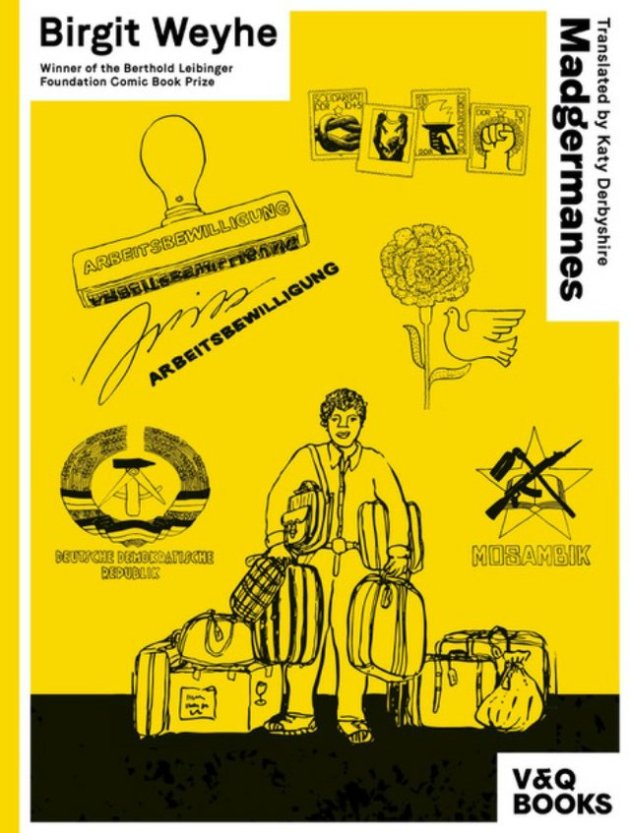
Multiculturalism in the DDR

Source: Multiculturalism in the DDR

USA: Southeast Asians are underrepresented in STEM. The label ‘Asian’ boxes them out more

The impact of overly broad groupings. In contrast, Canadian visible minorities have 7 groupings of Asian: Chinese, South Asian, Filipino, Southeast Asian, Korean, Japanese, West Asian (but of course, considerable differences within most of these groups):

When Kao Lee Yang received a nomination from her university for the Gilliam Fellowship by the Howard Hughes Medical Institute for underrepresented groups in science, technology, engineering and math, she was thrilled. She’s spent years working toward her doctorate in Alzheimer’s research at the University of Wisconsin-Madison.

Yang is Asian American, and more specifically is Hmong American, part of a small minority in the United States with just 327,000 people.

Though the Hmong population in the U.S. is growing, Hmong Americans are still underrepresented in STEM fields and have lower education rates and higher poverty rates overall, compared to the U.S. population at large.

For example, while 24% of all Asians in the U.S. have obtained an additional degree after college, and 13% of all Americans have, just 6% of Hmong Americans have, according to the Pew Research Center’s 2019 analysis of Census Bureau data. To add to that, a very low percentage of Hmong Americans actually go into STEM fields.

That’s why Yang said she was “blindsided” when HHMI emailed her academic adviser saying she wasn’t eligible for the fellowship because she didn’t meet their requirements for who is considered underrepresented.

Though the National Institutes of Health acknowledges that underrepresentation can be determined on a “case by case” basis, people who identify as Asian or white are not seen as underrepresentedin STEM, according to standards set by the NIH.

That means certain fellowships, grant funding and educational opportunities that are meant for underrepresented groups, such as Latino, Black, and Indigenous people, for example, are not always extended toward Asian American applicants. The opportunities are designed to elevate groups who are historically marginalized and make sure STEM workplaces are more inclusive and equitable.

So Yang, who said she has never met another Hmong scientist in her field, said it made no sense to her that she wasn’t considered underrepresented.

“I was dumbfounded,” Yang said. “I did wonder how HHMI came to that determination when I have had such a hard time finding other Hmong American scientists and scientific spaces.”

Yang isn’t the only one who’s experienced the contradictions that come with falling under the broad category of “Asian” in government data collection. Asian Americans have been calling attention to the issue for decades.

Hmong, Vietnamese, Filipino, Laotian, and Cambodian Americans all fall under the broad category of Asian, but their experiences the U.S. when it comes to things like education levels can vary greatly from other Asian groups such as Chinese, Korean, Indian and Japanese. Some South Asian groups such as Bhutanese and Burmese also face lower levels of educational attainment.

Because of the way HHMI looked at Asian Americans as one group, Yang was not considered to be underrepresented — effectively shutting her out from an opportunity that claims to be for someone exactly like her.

Why advocates say more nuanced data is important

“Is every Asian American group underrepresented in higher education? Obviously that’s not the case,” said Janelle Wong, a professor of Asian American studies at the University of Maryland and a co-founder of AAPI Data.

“Indian and Chinese students are the largest groups applying to these programs. And while they do often face implicit bias on campuses, they’re not facing systemic exclusion to access to higher education,” Wong said.

Wong has been advocating for data disaggregation in the Asian American community for years.

Disaggregation would involve collecting more specific data on Asian sub-groups so that a person’s country of origin is apparent, rather than just grouping people together from the entire continent. The data would show specifically if someone was Vietnamese American, or Cambodian American, for example, rather than simply classifying them as Asian.

That kind of detail would allow policymakers, health care professionals, educators and even institutions such as the NIH to better examine the nuances of different Asian populations, because different groups have different needs, experiences and beliefs. The same argument has been made for other racial groups, too, particularly Latinos.

Wong said the issue isn’t just about collecting better data — it’s about justice and civil rights, too.

“This is both a data quality issue and a data justice issue,” she said.

She said lumping all Asian Americans together in one racial category effectively reduces the experience of millions of people — not just when it comes to assessing job or educational candidates, but also for anyone trying to understand their political beliefs, education level, incomeinequality and health outcomes as well. For example, data on the broad category of Asian Americans show that a vast majority are Democratic voters. But if the data is further broken down, it reveals that Vietnamese Americans tend to have far more conservative views and more often identify as Republican.

Rachel Sklar, a post-doctorate scholar in environmental health outcomes at the University of California San Francisco, is Filipino and says she has been denied an academic opportunity in the past because she falls under the “Asian American” category.

Sklar said Filipinos in the U.S. experience what’s called “downward intergenerational mobility.” In other words, U.S.-born Filipinos are less likely to obtain a bachelor’s degree than their foreign-born parents. So efforts to boost groups struggling to obtain higher education should apply to Filipinos, Sklar said, but instead they’re hidden in the broader data on Asian Americans and educational achievement.

“The experiences of groups like Filipinos are just erased. They’re deemed invisible,” Sklar said.

More nuanced data could also be helpful to doctors treating Asian American patients, and policy makers making decisions about targeting health resources to different communities.

Sklar points out that Filipino women have high rates of hypertension and diabetes and other risk factors that can impact childbirth.

“Yet, because they’re grouped as Asians, they’re rarely considered for the types of resources that they need for safe birthing and pregnancy,” she said.

Questions of identity, and guilt

The dichotomy of being considered a minority by some institutions, but not by others, is emotionally confusing, as well.

Brittany Boribong, who was nominated to the Gilliam Fellowship in 2018 — the same one Yang was nominated for — had almost the same experience as Yang.

Boribong is Laotian American and the daughter of refugees. She and her brother are the first in her family to go to college, and she is the first to continue her education beyond a bachelor’s degree. While she was getting her doctorate at Virginia Tech, she was nominated by her school for the fellowship.

Like Yang, the fellowship told Boribong she wasn’t eligible. For her, it brought up a wave of guilt, like she was taking up an opportunity from someone else, a feeling she experienced while participating in a different fellowship for underrepresented people in STEM.

“I’m technically Asian American,” she said, but she couldn’t help thinking, “Do I belong here? Am I taking someone else’s spot? … I always felt like I snuck my way in, that I shouldn’t have been there.”

Being told by the Gilliam Fellowship that she wasn’t eligible was embarrassing, Boribong said, and it was the first time she had been told so bluntly she wasn’t underrepresented.

“I just look around the room and it’s like, where are the other Lao scientists? If I’m not considered a minority, then where are we?”

She and her advisor had to then go through the process of making a case that Boribong is underrepresented. Eventually, they did allow her nomination through, but it pushed her away from applying to other fellowships at HHMI.

There are growing calls for changing the way we collect data

Collecting more specific data about Asian Americans is something scholars and activists have been calling on for years, and it’s been picking up traction.

In November, lawmakers in New York re-upped their legislation calling for disaggregation of data on Asian Americans and Pacific Islanders.

Former Gov. Andrew Cuomo was presented with the same bill before he resigned from office but refused to sign it into law, citing logistical and financial issues of having to create new, uniform methods of collecting data, which is the most common opposition to data disaggregation. Others who have opposed efforts to disaggregate data have also cited privacy concerns, particularly related to immigrant communities, or said that it could divide different Asian groups.

But advocates of the law have pushed back against those concerns and are now asking Gov. Kathy Hochul to sign it into law.

“Asian-Americans and Pacific Islanders in New York represent 30+ different ethnicities and speak numerous languages. Failing to record & report that diversity is harmful,” State Sen. Julia Salazar, who co-sponsored the bill, tweeted.

When it comes to STEM academia in particular, the push for change has been incremental. Both Sklar and Boribong hadn’t realized how many others had gone through the same experience until Yang tweeted about her experience in October.

Elevating the conversation, though, might lead to some change. After Yang’s tweet spread on social media and after being questioned by NPR about their process of determining who is underrepresented, HHMI has updated their standards.

As of Nov. 12, the fellowship now said it recognizes “there are other ethnic populations who might be underrepresented but who are not currently designated as such by the federal government” and will “continue to consider” how they can better determine underrepresentation in STEM.

They’ve also extended the opportunity to Yang and a few others to complete their application, but Yang said she will not be moving forward with the process.

The larger problem that Sklar points out is that many other fellowships in STEM academia still take their guidance on diversity and representation from the NIH. The NIH, when asked by NPR, said they are required to take their guidance on race and ethnicity from the 1997 standards of the White House’s Office of Management and Budget.

But the OMB standards that same year also said the racial and ethnic groups that are outlined are a minimum base for gathering data, so agencies can go into further detail if they choose to. The Department of Health and Human Services guidance also said agencies are encouragedand can go into further detail. Plus, in 2012, a report to the NIH director outlined concerns about the lack of disaggregated data when it came to minority groups, specifically Latinos.

Sklar said if the NIH doesn’t change their process, she doesn’t expect much to change. In the meantime, she is focusing on what she can control: choosing to disaggregate the data she uses in her own scientific research.

For her, showing the vast differences in the Asian American population in her own research is proof in itself that the same should happen on a wider scale.

“The research needs to come first,” Sklar said, “And show that, ‘Wow, look at these experiences we’ve been making invisible just by glossing over and assuming a very heterogeneous group is actually homogeneous.'”
Source: Southeast Asians are underrepresented in STEM. The label ‘Asian’ boxes them out more

Paradkar: Why I’m saying bye-bye to ‘BIPOC’ this year

While Paradkar’s points are valid when applied to the individual, groups are needed to assess differences in socio-economic outcomes at a broader level and understand the degree to which these reflect systemic or other barriers.

As Joseph Heath has argued, we need to stop using the American term BIPOC given that it reflects the centrality of Blacks in American history and exclusion, and use terms more appropriate to Canada’s history and context.

Needless to say, discussing terminology is easier than dismantling barriers and improving inclusion:

Who on earth is a BIPOC person?

BIPOC is an acronym that has flared into public consciousness since the 2020 summer of protests against police brutality against Black people. It stands for Black, Indigenous, People of Colour and was quickly pronounced bye-pock.

I thought it held some promise then. It appeared to be a thoughtful political coalition term, acknowledging disparate impacts of white supremacy by singling out Black and Indigenous experiences, even though both “Black” and “Indigenous” are homogenizing identities in themselves, and not always disparate.

When it comes to police brutality, we’re not all in it together. Black and Indigenous people are treated more unjustly than just about anyone else in our criminal justice system. Other people are treated with disdain, but that contempt often stems from anti-Black, colonial ideas of refinement and race.

However, as with POC or person of colour, BIPOC got swallowed up, quickly lost nuance and got spat out at a racial identifier to say “not white.”

Colonized lands that grapple with human rights face a perpetual puzzle: What to name “the other” without saying “the other?” It has led to a long-standing tension on this continent, a tension between a racial identity and a political one, a tension between the labels white people want to apply versus how people identify themselves.

In Canada that desire for euphemistic framing has translated into various terms over the years. “Coloured,” “minority,” “diverse”. They bunch into one box people held together by the most tenuous of all connections, that of not being of European origin.

Words matter, and they are tricky. They swim in the sociological waters around them, meaning one thing at one point in time and something else the next.

Those sociological realities have now claimed the term BIPOC like they do other racial designations that are rooted not just in history but also prejudice.

I had never been called “East Indian” until I came to Canada. If anything I identified as South Indian, as in one who lived in the southern part of the country. Then I began to be called South Asian, another label I’d never heard before. It instantly flattened the vast diversity of all the nations on the Indian subcontinent into one homogeneous lump, but at least it was a geographical descriptor.

I then came across another widely used term: POC, or person of colour. It sounded a bit like “coloured people,” which I didn’t know then was a slur. I assumed it simply referred to the fact of melanin in my skin.

POC became more of a political identity over time when it bonded me with those who experienced similar responses to our non-European origins, including East Asians. In other words, when I underwent the process of racialization or the process of being forced to see that I was categorized as a certain “race” and feel its impacts. This, even though race itself is anthropological fiction, constructed as a tool of exploitation.

Early 1900s U.S. state laws defined a person of colour as one with some “Negro blood,” but in contemporary Canada at least, the term POC erased Black experiences and kept invisible Indigenous ones. The grassroots advocacy for change came from those groups, but its biggest beneficiaries have always been white women, followed by other people of colour. When the fight for civil rights in the U.S. led to the creation of “affirmative action” laws — or a push for corporations and universities to end discrimination — white women over decades received a far higher share of managerial jobs and degrees.

POC was supposed to be a collaborative term. But even when reduced to an identity, it was more positive than non-white, which sounded like a deficit, an accusation of something lacking.

It was also better than the revolting “visible minority,” which made no sense. Visible to whom? How does it account for those that might be “invisible” but still in the margins, such as First Nations, Métis and Inuit? There is also an irony in naming a global majority a “minority,” but more than that, colonization globally has showed that numerical domination has nothing to do with power.

In a city like Toronto where the presence of “visible minorities” causes white flight, statistics showing that it is populated by a visible “majority” causes white fright, and spawns far-right white grievance ideologies in the rest of the country.

Words are not the solution, but yes, they matter.

That’s why I heard alarm bells ringing when a corporate executive said BIPOC stats had gone up in their staff demographics, but a closer look revealed there were no Indigenous hires.

Emails from publicists began routinely throwing up lines like these: BIPOC founder behind (XYZ) coffee shop. BIPOC sommelier breaks barriers on wine’s role.

At a discussion on online harassment, a white woman described another woman at the receiving end of abuse saying, “And she’s bye-pawk. She’s bye-pawk.”

How does an individual become BIPOC?

In that moment I realized I’d gone from being Indian to being South Asian to be a person of colour to now being either Black or Indigenous and a Person of Colour. In the span of a few years, my identity had been diluted beyond recognition. This absolute homogenization is the opposite of what the term BIPOC was meant to do.

It’s true that some people are simply anxious to keep up with the terminology to signal support for anti-racism, but when they do so without paying attention to the nuance of those terms, and flatten our identities and conflate the unique struggles of different groups, they replicate the problem the terminology is trying to eradicate.

I am done. Bye, bye BIPOC.

In my work I opt to use individuals’ own preference for identities and describe backgrounds as specifically as I can. I’ve also deliberately used non-white, not as a racial identity, but to emphasize experiences of people who are penalized for not being white. I quite like the term “racialized” although plenty of people of colour have not awoken to their own racialization and plenty of white people have. I realize that “racialized,” too, is used as another word for “not white.” But like “marginalized” — an even bigger umbrella term — it at least insists on being seen as a process.

Several months ago, NPR journalist Gene Demby referenced the linguistic term “euphemism treadmill” on the podcast Code Switch. It’s a term that refers to polite words, softer words used to replace those that might give offence. But over time, these euphemisms become toxic by association and themselves need to be replaced. Demby pointed to words such as Oriental, Coloured or Negro that were all proper terms at some point.

“The terminology can only stay ahead of the negative attitudes for only so long,” he said presciently. “The problem is not the language we use to refer to people. The problem is the attitude we have when referring to those people.”

Source: https://www.thestar.com/opinion/star-columnists/2021/12/11/why-im-saying-bye-bye-to-bipoc-this-year.html

Wells: And now, the inevitable Bill 21 fight

Usual insightful column by Paul Wells:

Here’s one measure of how little Building Back Better we’re getting done here in the nation’s capital: MPs from different parties and perspectives are having an interesting conversation about important matters. But it’s entirely off-book. It’s spontaneous, the leaders of the various parties didn’t ask for it, and it’s pretty clear they desperately wish it weren’t happening. In Ottawa, saying what you think is an act of rebellion.

The week’s topic is, of course, Quebec’s Bill 21, which forbids hiring public servants, including teachers, who dress incorrectly (“The persons listed in Schedule II are prohibited from wearing religious symbols in the exercise of their functions.”) The bill was introduced in March of 2019 and passed into law soon after. Federal party leaders fielded questions about it in debates during the 2019 and 2021 elections. Each time, Quebec’s premier François Legault got angry at the people who asked the questions. So did federal party leaders, who pay ever-growing hordes of witless staffers to tell them how to move and talk and who cannot for the life of them understand that the rest of us aren’t also conscripts in that effort.

Anyway the inevitable happened. This week news broke that a Grade 3 teacher in the bucolic Quebec town of Chelsea, a stone’s throw from Ottawa, was pulled from class for wearing a hijab. Here’s how it played in one early story: nameless teacher reassigned to “another function” outside the class, school officials shtum on details, shocked community hanging green ribbons.

A chain reaction ensued. Kyle Seeback, a Brampton Conservative MP, kicked it off by tweeting, “I cannot in good conscience keep silent on this anymore… Bill 21 has to be opposed. In court, in the house of commons and in the streets.” Jamie Schmale, Chris Warkentin and Mark Strahl tweeted their agreement.

Seeback’s conscience seems to have gnawed at him after he retweeted a Wednesday-night tweet from the Globe’s Robyn Urback wondering why Catherine McKenna, the former Liberal environment minister, now calls Law 21’s application “appalling” but didn’t, at the time, contradict Justin Trudeau’s milder language in the 2019 and ’21 campaigns. Good for Seeback, actually, for amplifying some snark aimed at a Liberal and then realizing it applied to him too. Soon McKenna and the Conservative MPs had company among Liberals still in caucus: Alexandra Mendes, Salma Zahid, Iqra Khalid, Marc Garneau. Finally a sitting cabinet minister, Marc Miller, called the law’s application “cowardly.” There is also a clip of Chrystia Freeland, the federal Minister of Careful What You Wish For, saying as close to nothing as she can possibly say, a recurring highlight of many recent debates.

I don’t like Bill 21 either. It’s based on silly reasoning—“the state” must have no religion, so nobody who works for the state may be seen to have any religion. This is like saying the state has no particular height, so public servants must be required to hover above the ground. Somewhere around here there’s an old column I wrote patiently explaining this logic and its heritage in the receding role of the Catholic church in Quebec society, a column some of my Toronto colleagues still enjoy mocking, but there’s a difference between understanding the argument and buying it. On a list of the top, say, thousand problems facing modern Quebec, “teachers in head scarves” would not appear. And one of the most obvious things we can say about this law is that the costs it imposes—in personal freedom, economic opportunity, social ostracism—is essentially never borne by people named Tremblay or Côté or Wells. Somehow the burden seems to land reliably on people named—well, in the current instance, on Fatemeh Anvari. About whom more in a moment.

I have also never felt that Bill 21 reveals some universal moral failing of “Quebec.” Every criticism I can level against this law has been levelled, many times, by Quebecers, including several of the Liberal MPs who ran out of patience yesterday; the Quebec Liberal and Québec Solidaire parties, which between them won more votes than Legault’s party did in 2018; an impressive selection of municipal politicians and commentators in, mostly, Montreal; and Judge Marc-André Blanchard of Quebec Superior Court, whose ruling struck down parts of Bill 21 and exclaimed his helplessness with regard to the rest: he plainly doesn’t like the thing, but Legault’s use of the constitution’s “notwithstanding” clause protects most of the law from legal challenge or judicial invalidation. Solid majorities in Quebec have supported the law in polls, but I’m not sure how long that will last, and since the law’s Charter-proofing provisions must be renewed every five years in the National Assembly, I’m not sure the law itself will last long either. I reject the notion that only Quebecers may have an opinion on the thing, because of course everyone can have an opinion on anything. But the conversation among Quebecers is plenty multifaceted already.

A few points of context. First, the provisions of the law, as they apply to the Western Quebec School Board which employs Fatemeh Anvari, have already been struck down. Minority-language education rights are notwithstanding-proof, and Judge Blanchard did to the provisions regarding English school boards what he plainly wished he could do to the whole law. Legault’s government appealed the ruling, and under Quebec law the provisions remain in place pending appeal, but Legault will lose the appeal and by next year, there may be no remaining barrier to teachers in hijabs teaching in Quebec’s English-language schools. This doesn’t help the rest of the province, at least not immediately, but it sets up two cases that parents will be able to observe and compare. Which is a ball that can bounce in many different ways over time.

Second, in interviews Anvari is plainly rattled by a situation she should not be in. But neither is she fired nor banished to the furthest reaches of her school’s steam-pipe trunk distribution venue. As the Lowdown’s excellent story notes, she’s been assigned to lead “a literacy project for all students [that] will target inclusion and awareness of diversity.” This is not as good as simply letting her teach the curriculum would have been, if the law had permitted it, but it shows considerable wit. Again, in a complex society, citizens respond in ways governments often don’t intend and wouldn’t prefer. Governments often don’t take that news well.

Third: those calling on governments to do something, now including members of the federal governing caucus, are sometimes short of ideas about what, precisely, to do. Federal lawyers in a court challenge could make no argument that hasn’t already been made—and, largely, rejected by the frustrated Judge Blanchard. Short of reviving the obsolete powers of reservation and disallowance, a step even Pierre Trudeau declined to take against even Bill 101, there’s not much a federal intervention could add.

Is there therefore no point in simply talking, or simply sending federal lawyers to say what lawyers for civil-society groups have already said? No, I think there’s a point, in that it brings government’s actions more closely in line with what are obviously the opinions of the people who compose the government. (Note that there isn’t a single Liberal MP tweeting, “Guys, Bill 21 is great!”) A reduction in the amount of hypocrisy in a system is always welcome and lately well overdue. But as a practical matter, the feds can’t do much to change the situation.

Finally, less important but still worth mentioning: When four Conservative MPs tweeted within minutes about their renewed love of freedom, it was hard to escape the suspicion that there’s something else going on. Perhaps this: those Conservatives are not, by and large, conspicuous Erin O’Toole fans, and many come from ridings where much of the Conservative voter base is spitting mad at O’Toole for perceived softness on vaccine mandates. When Seeback talks about opposing Bill 21 “in the street,” that sure sounds like an echo of the way a lot of people opposed vaccine mandates. MPs who can’t give their voters much satisfaction on the latter are probably grateful for a chance to blow off some steam on the former. That’s not to dismiss or rebut the Bill 21 Freedom Four; it’s just to note that motives are often mixed or additive.

Here’s the thing: in a liberal democracy you can’t keep a cork in everyone’s mouth forever. You shouldn’t try. It’s been fun watching the leaderships of three federal political parties try to deny simple human feelings over an inherently emotional issue. But the fun’s over. Now citizens are going to act like citizens. Always a scary moment for communications professionals.

British Labour MP: Children are being priced out of British citizenship – it’s unjust and must change

All UK citizenship fees are comparatively more expensive that other EU countries and Australia, Canada and the USA. But the fees for children are particularly high. The previous Conservative government, while increasing adult fees from $200 to $630 (including the right of citizenship), it left fees at $200 for children:

In the 2019 Conservative leadership election, Boris Johnson claimed: “I want everybody who comes here and makes their lives here to be and to feel British”. But government policy is effectively telling hundreds of thousands of children the exact opposite.

The children in question, born here to parents with leave to remain, like me, or born abroad but resident here for most of their lives, like our Prime Minister, are growing up in limbo in the country they call home instead of enjoying their full citizenship rights.

There are between 85,000 to 215,000 children with a legal entitlement to British citizenship who have ended up undocumented due to the extortionate registration fee. Through no fault of their own, they will go on to experience real difficulties in later life as a result, subjected to the same hostile environment measures that caused so much suffering to members of the Windrush generation. Many young people may not even realise they do not have citizenship until they try to travel, get a job, rent a home or are suddenly asked to pay international fees for their university education.

If the £35 fee introduced in 1983 had risen in line with inflation, it would be £120 today. Instead, it is now £1,012 and one of the highest such fees in Europe, doubling in the last decade alone. We are charging British children ten times more to claim their citizenship rights than their counterparts in Spain, France, Belgium, Denmark and Sweden.

Of the current fee, the Home Office reports that £372 accounts for administrative costs and freely admits that the remaining £640 is pure profit. Research by Citizens UK shows that between 2017 and 2020 alone, the government has made a £102,749,216 profit from these child citizenship fees.

When I challenged the Prime Minister on this practice earlier in the year at PMQs, the Prime Minister said there were “costs that must be borne by the taxpayer” and that citizenship was “a prize”. The courts have consistently disagreed with the Prime Minister’s stance, with the Court of Appeal recently upholding the High Court’s ruling that this fee was unlawful and ordering the Home Office to reconsider it.

On questions of citizenship, it’s clear that the government knows the price of everything and the value of nothing. For these children, British citizenship is a legal entitlement, not a prize or an investment. Instead of endlessly appealing, they should accept it’s wrong to set fees so high that it blocks families from applying.

Most of the children priced out of citizenship come from households facing higher levels of hardship and poverty. Many are from Black, Asian and ethnic minority backgrounds. Some come from families slapped with the ‘no recourse to public funds’ condition, preventing them from accessing basic services.

The government continues to justify these fees on the basis of fiscal responsibility but it’s absurd that they believe an effective levy on poorer households is a sustainable way of financing their immigration system. Above all, there’s nothing responsible about creating a situation where children are deprived of their rights for want of money.

It’s also a scandal that many looked after children are emerging from our care system without British citizenship. These children have been entrusted to the care of the state. The state has a responsibility to get the best outcomes for them.

I regularly speak to young people in my constituency who face feelings of worry, alienation and social exclusion as a result of being denied citizenship. The harm of being denied your citizenship rights in the only country you truly know cannot be overstated. It’s not just about the societal barriers you face, it’s about the psychological impact of being constantly treated as a second-class citizen.

You can’t put a price on belonging. Yet that’s exactly what this government continues to do. With the return of the nationality and borders bill, we have a chance to change this. My amendment to the legislation would cut the registration fee down to cost price, scrap it completely for looked after children and compel the government to produce a report on the impact that fees have on children’s right to citizenship.

These children are as British as anyone else. It is immoral and unjust that they continue to be blocked from citizenship and subjected to humiliating treatment as a result. If you grow up in the UK, British citizenship should be your right – not a privilege you pay the government large sums of money to bestow.

Source: Children are being priced out of British citizenship – it’s unjust and must change

Raj: Erin O’Toole denounces religious persecution abroad. Why can’t he do it in Canada?

Good question. And other political leaders need to step up as well:

“I cannot in good conscience keep silent on this anymore,” Conservative MP Kyle Seeback tweeted Thursday morning. “This is an absolute disgrace. It’s time politicians stood up for what’s right. Bill 21 has to be opposed. In court, in the house of commons and in the streets.#bill21mustgo #cdnpoli

It was an unusual statement from a Conservative MP, and a risky one. This is not Conservative Leader Erin O’Toole’s position on Quebec’s controversial law, which bars individuals who wear religious symbols from holding certain jobs in public institutions. Since his election as leader, O’Toole has defended Quebec’s right to enact such discriminatory legislation. After his first meeting with Quebec Premier François Legault, back in September 2020, O’Toole pledged not to challenge Bill 21 in court. “We need a government that respects provincial autonomy and provincial legislatures,” he told reporters.

For the MP for Dufferin—Caledon to go out on such a limb publicly, amid a climate of fear and retribution (O’Toole’s team has threatened caucus expulsions to those who don’t toe the party line), is commendable. Behind closed doors, Tory MPs tell me Seeback has been pitching to caucus and to the party leadership that a strong position denouncing Bill 21 is not just the right thing to do, it’s the smart political thing to do.

While his pleas resonate with some of his colleagues, they don’t appear to have nudged his leader.

But Seeback, who declined an interview request, is right. Opposing Bill 21 is a great wedge against the Liberals on an issue where the Tories desperately need to rebrand, and in an area of the country where they need to win.

The Conservatives have a GTA problem and a visible-minority problem. Out of the 56 ridings in the Greater Toronto Area, the Conservatives hold six (although all but two are located on the periphery), while the Liberals have 50. It wasn’t always this way. In 2011, Stephen Harper found his majority in the GTA, sweeping the ethnically diverse areas of Brampton and Mississauga.

But over the past decade, the Tories pursued policies that alienated many of these communities. From immigration minister (now Alberta Premier) Jason Kenney’s niqab ban during citizenship ceremonies, to the barbaric practices snitch-line, to leadership hopeful Kellie Leitch’s values test, to the Tories fervent opposition to M-103, a motion denouncing Islamophobia.

In 2015, Brampton and Mississauga showed Harper the door. Seeback lost his seat in Brampton West. The same happened in 2019, and again in 2021.

Source: Erin O’Toole denounces religious persecution abroad. Why can’t he do it in Canada?

Quebec teacher removed from classroom because she wears a hijab

Hopefully, personal stories like this can shift public discussion in Quebec although doesn’t seem likely:

A teacher in Chelsea, Que., has been removed from her Grade 3 classroom because the hijab she wears contravenes the province’s law on state secularism, sparking an outcry among local families and a range of Canadian politicians who have denounced the legislation as “discriminatory.”

Fatemeh Anvari had been teaching language arts at Chelsea Elementary School since late October. She was reassigned to another role focusing on literacy and inclusion in early December, when the Western Quebec School Board became aware that her presence in class violated provincial law, interim chair Wayne Daly said.

Quebec’s Bill 21 has been in place since June, 2019. It bars a range of public servants in authority roles, including teachers, from wearing visible religious symbols.

Although Ms. Anvari has become a focal point in a long-running debate about religion in Quebec’s public sphere, she said she has been heartened by the response from community members and wants to use this moment to raise awareness about the need to express oneself in the workplace.

“I was sad, but at the same time I find it empowering to get so much support,” she said in an interview. “This isn’t about me so much. It’s a human issue.”

The 27-year-old has worn the hijab since she was young. She previously taught English in Iran and began supply-teaching at the Western Quebec School Board in March. She believed Bill 21 didn’t apply to English schools, and no one raised possible legal issues with her until recently, she said.

“There were no comments, there were no issues, there was no hostility.”

In her new role with the school, she will still be interacting with students, speaking to them about the value of diversity and inclusion. She feels it’s a testament to the board’s support that they offered her the job.

“I think the board is doing this initiative to spread awareness,” she said.

Parents and students have been protesting the decision to remove Ms. Anvari by tying green ribbons to a fence outside the school. Nicole Redvers said her eight-year-old daughter was deeply upset when she learned she would be losing a teacher she loved.

“She said, ‘Mum, she’s only wearing a scarf!’” Ms. Redvers recalled.

It remains unclear how Ms. Anvari was hired with the secularism law in place. Mr. Daly said it “may have been an oversight.”

In April, the English Montreal School Board (EMSB) won a court ruling exempting it from Bill 21 because the law violated the English-language community’s rights. But the provincial government appealed, and the restrictions remained in place. In November, the EMSB was denied a stay of the law while the appeal proceeds.

Federal parties have generally been cautious about denouncing the law, which is popular in Quebec, but Ms. Anvari’s removal caused outrage across the political spectrum. In a statement, the Prime Minister’s Office said “nobody in Canada should ever lose their job because of what they wear or their religious beliefs,” adding that “Quebeckers are defending their rights through the courts.”

“I think it’s cowardly,” said Marc Miller, a Liberal MP and the Crown-Indigenous Relations Minister. “It’s disheartening and it’s picking on someone vulnerable.“

Conservative Leader Erin O’Toole offered a milder response, calling it “an issue that is best left for Quebeckers to decide.” But one member of his caucus, Ontario MP Kyle Seeback, lashed out at the law on Twitter.

“I cannot in good conscience keep silent on this anymore,” he wrote. “This is an absolute disgrace. It’s time politicians stood up for what’s right.”

The Western Quebec School Board, which serves anglophones and opposes Bill 21, has said it had no choice but to comply with the law when it realized Ms. Anvari was teaching in a hijab.

“It was the correct ruling under Bill 21, we cannot have this teacher in our school board if they will not comply with Bill 21,” Mr. Daly said. “She had decided that she would not comply with Bill 21, and in not complying that is justification for termination of a contract.”

The interim chair added that Bill 21 hurts the school board by denying it teachers during a labour shortage, and that the need to apply the law has left the community “outraged.”

“It doesn’t matter what nation you’re from or what race they belong to. If you’re part of that community, you’re part of that community.”

In Quebec City, several politicians put the responsibility for the situation on Ms. Anvari herself. Parti Québécois secularism critic Pascal Bérubé said that she “tried to make a statement wearing a hijab.”

Source: https://www.theglobeandmail.com/canada/article-quebec-teacher-removed-from-classroom-because-she-wears-a-hijab/

Korean Prime minister’s message: For more diverse, inclusive society

Interesting signal given long-standing ethnic-based citizenship:

Greetings, beloved children. I’m Kim Boo-kyun, prime minister of the Republic of Korea.

You are receiving very special awards today.

Yang Geun-mo, Noh Yeon-kyeong, Jun Blessing, Lee Yu-rim, Wu Zhengxiu, Lee Jeong-in, Ban Jun-hwi, Jo Un-ol, Pak Olga, Han Ga-in and Pyo Yoon-seo ― I congratulate all of you 11 award winners.

I also congratulate and express gratitude to your parents and teachers who have led you as students to these achievements.

I also thank President-Publisher Oh Young-jin and staff at The Korea Times which has provided children with special and meaningful memories for the last 10 years.

On this happy day, I wish I could shake hands with you in person, and it is regretful that I can’t do so but instead send my message through this video because of the COVID-19 social distancing rules.

Dear children, Korea now has more than 1 million people from multicultural families. Korea has become an international society of diverse cultures and races. You are citizens of Korea and also citizens of the world.

Despite the changes, you still face many hardships in society. I learned some multicultural families had difficulties in responding to COVID-19 due to the language barrier in the early stages of the pandemic. I heard many students had problems in taking online classes.

We, the government, will make more efforts. We’ll take a closer look at such hardships, to create a social atmosphere where difference is respected and where all of you can benefit under the government’s policy on multiculturalism.

Thanks to you, the inclusivity and diversity of our society is growing. So each and every one of you are precious for society. The life of children from multicultural families, including you award winners, is a precious gift to society.

The awards you receive today are an expression of gratitude and respect from adults. It is okay for you to be happy and proud of yourselves.

Dear children, you are proud citizens of Korea. Please remember that your happiness is key to the happiness of the whole nation.

We hope you’ll grow with more confidence. The Korean government and society will do our best to support you. Congratulations again.

Kim Boo-kyum is the prime minister of the Republic of Korea.

Source: Prime minister’s message: For more diverse, inclusive society

Canadians’ health data are in a shambles

Unfortunately, all too true, with too few exceptions, based upon my admittedly anecdotal experience in Ottawa:

Canadians see new and increasingly powerful computerization in almost every facet of their day-to-day lives – everywhere, that is, except for something as fundamental as our health care, where systems are too often stuck in the past.

When we go to the doctor, we get prescriptions printed on paper; lab results are sent via fax; and typically, medical offices have no direct links to any patient hospitalization data. And while the pandemic sparked a mad scramble to set up many new data systems – to track who was infected, where there were ventilators, who has been vaccinated and with which vaccine – this has happened in a largely unco-ordinated way, with Ottawa and provincial governments each developing systems separately.

As a result, even these newest computer systems are duplicative, and they do not communicate across provincial boundaries, or even within some provinces – not even, for example, to connect vaccinations, infections, the genotype of the virus, hospitalizations, other diseases and deaths so they are centrally accessible. And so Canada’s recent health-data efforts have wasted millions of dollars while failing to provide the evidence base needed for real-time effective responses to the fluctuating waves of COVID-19 infections..

This kind of failure is not new. Even before the pandemic, key kinds of data have long been imprisoned by data custodians who are excessively fearful of privacy breaches, even though the data are generally collected and stored in secure computer databases. A broad range of critical health care data remains unavailable – not only for patients’ direct clinical care, research and quality control, but also for tracking adverse drug reactions, showing unnecessary diagnostic imaging and drug over-prescribing. The result is that major inefficiencies in the systems remain hidden – and may actually cause health problems, and even deaths by medical misadventure.

There are many directions one could point the finger of blame, but as a new report from the Expert Advisory Committee to the Public Health Agency of Canada found, the root cause is a failure of governance. Federal and provincial governments have failed to agree on strong enforcement of common data standards and interoperability, though this is not only a problem of federalism. Health-data governance problems are also evident within provinces where one health agency’s data system is not connected to others within the same province.

What Canada and the provinces have now is essentially provider-centric health-data systems – not just one but many kinds for hospitals, others for primary care, and yet others still for public health. What Canadians want and need is patient- or person-centric health data. That way, no matter where you are in the countryyour allergies, chronic diseases and prescriptions can be known instantly by care providers.

Private vendor-centric health-data software also pose a threat, as do data collected by powerful tech companies from new wearable technologies that offer to collect your health data for you. If Canada does not act swiftly and decisively to establish the needed governance, competing vendor software and individual data will continue the rapidly growing cacophony of proprietary standards. This trend is raising new concerns about privacy, along with untracked increases in health care costs.

The fundamental importance of standardized, interoperable, securely protected health data has been known for decades. There have been repeated efforts to achieve a modern effective health-data system for Canada. But federal cajoling and even financial incentives have failed. Much stronger governance mechanisms are required, and urgently, as the global pandemic has revealed.

The federal government has the constitutional authority to play a much stronger role, given its powers in spending, public health, statistics, as well as “peace, order and good government.” It also has readily available regulatory powers under the Canada Health Act.

Of course, high-quality data collection and data software have costs. But given the tens of billions of health care dollars the federal government is providing to the provinces through fiscal transfers, it is long past time they leveraged this clout – using both carrots and sticks – so Canadians can finally have informed, accessible health data when and where they need it most.

Michael Wolfson is a former assistant chief statistician at Statistics Canada, and a current member of the University of Ottawa’s Centre for Health Law, Policy and Ethics. Bartha Maria Knoppers is a professor, the Canada Research Chair in Law and Medicine, and director of the Centre of Genomics and Policy at McGill University’s Faculty of Medicine. They are both members of the Expert Advisory Group for the Pan-Canadian Health Data Strategy.

Source: https://www.theglobeandmail.com/opinion/article-canadians-health-data-are-in-a-shambles/