Liberals’ replacement for Office of Religious Freedom will promote broader range of rights | National Post

Less new than meets the eye and unclear regarding resources(there was an existing Human Rights Division with 14 people) so it may be more repackaging and reorientation:

The Liberals have unveiled a long-awaited replacement for the Office of Religious Freedom, which will now include championing the rights of indigenous peoples abroad.

Canada has a “duty” to speak up for and help indigenous peoples around the world who may be struggling for their rights, Foreign Affairs Minister Stéphane Dion said in an exclusive interview to mark the launch of the new Office of Human Rights, Freedoms and Inclusion on Tuesday.

“If we are improving, as we hope, the situation of indigenous people in Canada, we have the duty to try to do the same around the world,” Dion said from Vienna. “The situation of indigenous people around the world is worrying. There is a lot of room for improvement, to say the least.”

The emphasis on indigenous rights creates a potential conflict with Canada’s commercial interests, especially in Latin America and Southeast Asia where local populations have opposed Canadian mining operations. But Dion said he believed most Canadian mining companies would welcome the new approach.

“I’m sure that the overwhelming majority of the mining industry of Canada will welcome this focus and will say it’s exactly what they want,” he said. “In order to do good business, you have to have the support of the populations. … So they will be willing to work with this office, I’m sure.”

The new office effectively replaces the Office of Religious Freedom, which the Conservatives established in 2013. Representatives from some faith groups had urged the Liberals to keep the religious freedom office open but the government let its funding expire in March.

Dion described the new office as a “pooling” of the former Office of Religious Freedom’s resources with Global Affairs Canada’s work on human rights promotion. He said the new office will have a budget of $15 million — three times that of the religious freedom office.

Dion said it was a “mistake” to “isolate” freedom of religion from Canada’s broader human rights efforts. The new office’s mandate will include promoting religious freedom, and an official will be in charge of interacting with faith groups and other stakeholders. But the work will fall under the broader rubric of inclusion.

“Inclusion is not only the freedom of religion,” Dion said. “It could be sexual exclusion. It may be political exclusion. So inclusion includes freedom of religion with other aspects of our society. Pluralism. Rights of women. Rights of refugees.”
Source: Liberals’ replacement for Office of Religious Freedom will promote broader range of rights | National Post

On Saudi arms deal, the new boss in Ottawa is just like the old boss: Neil MacDonald

As someone in the past who has written comparable memos, I can only congratulate the various writers and editors of the memo on the Saudi LAV to FM Dion. Macdonald captures it perfectly:

Well. If further proof was needed that the sunny new regime in Ottawa is perfectly capable of behaving just like the un-sunny previous regime, we now have it, in a memo that was stamped “Secret,” then rather inconveniently laid bare in the Federal Court of Canada.

The document, signed by Foreign Affairs Minister Stéphane Dion, is a gem of hair-splitting, parsing, wilful blindness and justification for selling billions worth of fighting vehicles and weaponry to Saudi Arabia, one of the most oppressive regimes on Earth.

Source: On Saudi arms deal, the new boss in Ottawa is just like the old boss – Politics – CBC News

To have meaning, ‘genocide’ must be protected from political exploitation: Erna Paris

Edna Paris on some of the cynicism involved with the use of ‘genocide’ in describing the war crimes of the Islamic State:

In his formal remarks, Mr. Kerry seemed notably vague on the subject. He spoke about threats to Christians, about crimes against humanity and war crimes – all indisputable facts, but unlikely to meet the threshold of genocide. He spoke of his belief that if IS were ever to create its hoped-for caliphate, “it would seek to destroy what remains of the ethnic and religious mosaic once thriving in the territory.” Tellingly, he distanced himself by saying he was “neither judge nor prosecutor nor jury,” and that potential charges against the extremists must result from an independent international investigation.

That, as Mr. Kerry certainly knew, was the crux of the matter. Genocide is the worst crime ever to be codified into law; as human beings we had to invent the category to contain the terrifying contents of the Nazi assault on the Jews of Europe during the Second World War. Mr. Kerry’s charge of genocide against Christians, made under heavy political pressure, with sparse evidence, degraded the crucial concept we must rely upon to punish the most vicious crimes.

In Britain, Prime Minister David Cameron bluntly labelled attempts to classify IS crimes as genocide, “politicization.” “These decisions must be based on credible judicial processes,” he said, lending credence to Mr. Kerry’s own words about the need for independent investigation. The government of Canada (typically more polite) also declined to join the United States, stating that it would stick with the designation of war crimes.

It’s hard to predict where the Kerry declaration will lead. What the Secretary of State did offer was refuge for Christian and other minority victims of IS brutality; however, many of those other victims are Muslims – and in the harsh world of Donald Trump, Muslims are less than welcome in America.

What matters most is the cynicism with which the singular term “genocide,” with its real and symbolic import, has been abused. If it is to continue to have purpose and meaning, the charge of genocide must be protected from political exploitation.

Obama to Turnbull on Indonesia, Islam and the Saudis: ‘It’s complicated’

Always interesting to have a more inside account of these discussions, highlighting awareness in this case:

A revealing series of interviews with US President Barack Obama has given insight into a private discussion he had with Australian Prime Minister Malcolm Turnbull.

The 20,000-word feature published in The Atlantic magazine also relies on interviews with Mr Obama’s former Secretary of State Hillary Clinton, her successor John Kerry, Israeli Prime Minister Benjamin Netanyahu, other world leaders and key White House insiders.

It details part of a meeting between Mr Obama and Mr Turnbull during November’s APEC summit in Manila.

The president, according to The Atlantic, described to Mr Turnbull how he had watched Indonesia gradually move from a relaxed, multi-faceted Islam to a more fundamentalist, unforgiving interpretation with large numbers of Indonesian women adopting the hijab Muslim head covering.

“Why, Turnbull asked, was this happening?” the author of the feature, Jeffrey Goldberg, wrote.

Mr Obama told the prime minister the Saudis and other Gulf Arabs have funnelled money and large numbers of imams and teachers into Indonesia and in the 1990s the Saudis heavily funded Wahhabist madrassas, seminaries that teach the fundamentalist version of Islam favoured by the Saudi ruling family, according to The Atlantic.

Mr Obama also told Mr Turnbull Islam in Indonesia was much more Arab in orientation than it was when he lived there.

“Aren’t the Saudis your friends?,” Mr Turnbull reportedly asked Mr Obama.

Mr Obama smiled and said: “It’s complicated”.

Source: Obama to Turnbull on Indonesia, Islam and the Saudis: ‘It’s complicated’

Not your grandparents’ world: Canada needs to rethink foreign policy – Stephen J. Toope

Good overview of some of the challenges and opportunities facing Canadian foreign policy and domestic linkages by Stephen J. Toope, the director of the Munk School of Global Affairs at UofT.

Excerpts of his piece on leveraging Canada’s diversity, echoing the Trudeau Foundation’s The Pluralism Project focussing on the economic dimension of pluralism, diversity and the future of citizenship.

But can we please stop trying to rebrand multiculturalism as pluralism as the previous government tried but ultimately realized that multiculturalism was in the Charter and was embraced by a majority of Canadians. The word may be ‘tainted’ in the USA and Europe, reflecting their very different histories and experiences, but isn’t here.

Pluralism should only be used in the Canadian context in an overarching sense, capturing the diversity between and among indigenous peoples, anglophones and francophones, and the diversity created by successive waves of immigration:

The new government has already declared that our pluralism is a primary asset to bring to our global engagements. This is true if we move beyond the lofty and too-often smug assertions that “diversity is our strength.”

Although our historical record is by no means pure, by world standards Canada has created a society that is generally inclusive of newcomers. Sadly, we have done far worse as concerns indigenous peoples. Our relative success with social pluralism is an asset only if we avoid preaching and use our diversity constructively.

That means making investments in development assistance that allow us to showcase and share how Canadian pluralism works. It means contributing actively in intergovernmental forums where migration and refugee issues are thrashed out. Above all, it means finding ways to mobilize our diaspora communities to create stronger linkages for Canadian business, culture and educational institutions with countries around the world. That is not the same as cynically pandering to narrow foreign-policy interests of those same communities in the hope of gaining domestic electoral advantage.

….The French, the British, the Germans, the Spanish, the Scandinavians and the Australians have all used culture, educational exchange, people-to-people ties, online communication campaigns, and tourism promotion to create a strong public awareness of their countries all around the world. We have no Canadian equivalent to the British Council or the Goethe Institute. Canadian embassies and high commissions effectively have no program budgets. The last government cut funding to the Commonwealth Scholarship, and reduced support to Canadian studies programs around the world so much that they are now on drip feed.

We shouldn’t resurrect tired models, but a new approach to promoting the creativity of Canadians globally is sorely needed, backed with increased resources. Canadian culture could be connected to that much-vaunted pluralism to create excitement around contemporary Canada. That is a major asset. We should strike while the positive and fresh Trudeau brand is putting Canada back on the global radar screen.

After identifying and focusing upon our assets, we then need to connect those assets to the projection of both interests and values. In a world where more and more Canadians are connected beyond our borders in value-based environmental, religious or human-rights networks, and where devastating events that take place halfway around the world are known immediately, it is no longer plausible to argue that nations have only economic or other material interests. One picture of a little Syrian boy dead on a Turkish beach forced a Canadian response. Our foreign-policy calculations are not only rational, but emotional as well, rooted in shared perceptions of who we are as Canadians and, increasingly, by who we define as allies, partners and friends.

Source: Not your grandparents’ world: Canada needs to rethink foreign policy – The Globe and Mail

Seven steps for reopening an embassy in Tehran

Good piece by Campbell Clark on the sequence and steps involved in re-opening an Embassy (I was part of the team that did so in 1988 and his list brings back memories):

Foreign Affairs Minister Stéphane Dion has publicly confirmed Canada’s desire to reopen the Canadian embassy in Tehran that’s been shuttered since the Conservative government suddenly cut ties on Sept. 7, 2012. It marks a symbolic end to diplomatic hissing and spitting. Now what?

There’s still a locked Iranian embassy in downtown Ottawa, behind eight-foot bars, with a faded Iranian flag outside – and a beige-brick and stained-glass ambassador’s mansion sitting empty in upscale Rockcliffe Park. But Canada lost the lease on its old four-storey concrete embassy building on Shahid Sarafraz Street in Tehran, so it will need a new home for an embassy where secure communications equipment and other special features can be housed.

But reopening an embassy is never as simple as calling movers. There’s not just a diplomatic dance, and political sensitivities to watch at home, but protocol and practical steps. Canada’s last full ambassador to Iran, John Mundy, thinks it will be many months before the two countries exchange diplomats, and late 2017 before they accredit ambassadors. If all goes well. “We’re starting almost from zero,” he said.

So how do you open an embassy in Tehran? A spokesman for the Global Affairs department said there’s “no standard approach.” But experts say there are some likely steps.

Source: Seven steps for reopening an embassy in Tehran – The Globe and Mail

‘Submission’ to Islam: Critics Slam Cover-Up of Rome’s Nude Statues for Iran’s President

The challenges in finding a balance in protocol.

Personally, while serving halal food is one thing, a more balanced approach would be to pick another venue without the statues and make wine optional rather than automatically served.

And Iranians sometimes show more flexibility than expected. While working in Tehran in the late 80s, I was sometimes offered food and tea during Ramadan given that the obligation to fast did not apply to me as a non-Muslim:

Italian opposition politicians have lashed out at a decision to cover up classical statues ahead of a visit by Iranian President Hasan Rouhani to a world-famous Roman museum, for fear of offending his Muslim sensibilities.

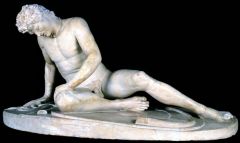
Nude statues among the historical collections at the Capitoline Museums were hidden behind large white panels when Rouhani visited on Monday for a meeting with Prime Minister Matteo] Renzi. The museum said the prime minister’s office requested the cover-up.

Italian media also reported that no wine was served during an official dinner for Rouhani.

“The level of cultural subordination of Renzi and the left has exceeded all limits of decency,” declared right-wing politician Giorgia Meloni, who served as Youth Minister in a previous Silvio Berlusconi cabinet.

Writing on her Facebook account, she wondered what Italy could expect next – the covering of St. Peter’s Basilica “with a huge box” when the emir of Qatar visits next week?

Rouhani’s European tour, his first since the lifting of sanctions under the nuclear deal, promises to open up billions of dollars in business deals, including a major order for Airbus aircraft. At a ceremony held in the Capitoline Museums on Monday, Rouhani and Renzi oversaw the signing of contracts worth up to $18.3 billion.

“Renzi was clearly keen to avoid offending his new business partner,” the Italian news site The Local commented of the statue cover-up.

The Dying Gaul, one of the historical statues at Rome’s Capitoline Museums. (Photo: Musei Capitoli)

A lawmaker in Berlusconi’s Forza Italia party, Luca Squeri, described the concealing of the historical statues as “a sign of excessive zeal.”

“Respect for other cultures cannot and must not equal the negation of ours. This is not respect, it is the cancellation of differences or, worse still, submission,” the ANSA news agency quoted him as saying.

Source: ‘Submission’ to Islam: Critics Slam Cover-Up of Rome’s Nude Statues for Iran’s President

Men-only Ontario college campuses in Saudi Arabia unacceptable: Wynne

Not exactly news that Saudi Arabia has gender-segregated campuses, workplaces etc so why waking up now? While I have no sympathy with the Saudi regime, I think focusing only on Ontario colleges is shallow and parochial.

The dynamics at play were and are complex. Universal education in Saudi Arabia, if memory serves me correctly, dates from the 1970s, and the regime took some chances in ensuring that this applied to both boys and girls:

Premier Kathleen Wynne says it is unacceptable to her that two Ontario colleges are operating campuses in Saudi Arabia that don’t admit women students.

Niagara College and Ottawa-based Algonquin College have been operating men-only campuses for a couple of years in two cities in Saudi Arabia, where Sharia law forbids the education of women and men in the same classes.

Colleges and Universities Minister Reza Moridi, who had earlier said it was up to colleges to determine the student makeup on their campuses, said Thursday he was concerned that women were excluded from the Ontario-run campuses.

Wynne says she told Moridi to meet with the two colleges as soon as she found out about the situation, which she says has “got to change.”

Progressive Conservative critic John Yakabuski calls it a “stretch” for Wynne not to have known Ontario colleges are excluding women from their Saudi campuses, and says she’s only expressing concern because the media picked up the story.

Ontario provides $1.44 billion in funding to its 24 community colleges, with Algonquin getting $103 million for the current fiscal year, while Niagara College received $45 million.

Source: Men-only Ontario college campuses in Saudi Arabia unacceptable: Wynne

Canada: Please don’t stop empowering Afghan girls

Well-argued piece by Maryam Naquibullah:

But a woman with an education has a voice, and a woman with a job has influence. She supports her family – her uncles, her brothers, maybe even her father. And slowly, things start to change. The neighbours who think that educating a woman is about as valuable as educating a dog start to change their minds when they see a house with a car and a garden. All because a woman is working.

Since 2006, the ACCC and its sister organization, the Kandahar Institute of Modern Studies, have offered professional education to more than 4,000 women in Kandahar, and enabled more than 2,500 employed graduates to support more than 12,500 family members. All for a total investment of less than $600,000 from the Canadian government. These schools have been a beacon for the women in Kandahar for almost a decade, educating most of the women now working in professional jobs. But that beacon is about to go out.

I urge you, as Minister of International Development, and your fellow members of Parliament to please support our recent proposal – the Women’s Skills for Rights and Empowerment Program – submitted to Global Affairs Canada. This multiyear program would reach more than 4,500 women in Kandahar, Helmand and Zabul provinces, and create lasting partnerships between Afghan civil-society organizations and international non-profit organizations.

I understand that there are many important priorities for the Canadian government at the moment, and that there is a huge need to help the refugees who are fleeing conflict and extremism. And I also hope you will spare a thought for those organizations that are standing up against the roots of extremism, and that are preventing people from fleeing their homes in the first place.

Source: Canada: Please don’t stop empowering Afghan girls – The Globe and Mail

Clinton e-mails reveal Canadian foreign service enmity towards Harper Tories – The Globe and Mail

Not unique to the newly-renamed Global Affairs but nevertheless particularly striking and reinforces the Conservative government’s suspicion of public servants, particularly the foreign affairs and aid public servants.

And this strikes me as disloyalty to the former government, not in keeping with the public service ‘loyal implementation’ obligation:

The U.S. special co-ordinator for Haiti said Canadians were worried about budget cuts that would have slashed down an operation from 11 employees to four, for a country that was ostensibly a major Canadian foreign policy priority.

“I was a little astonished at how openly the career folks at the foreign and assistance ministries disliked their new political masters and wanted us to convince them not to cut Haiti,” said Tom Adams, in a May 2012 e-mail forwarded to Clinton and released Monday.

“In my many years here I have never seen such open disloyalty with a change of administrations. Although the political appointees told me there was no need to have the Secretary talk to Baird about Haiti, the senior career folks, on the margins, implored me to have this done.”

The dynamic described in that e-mail was on public display recently after the federal election, when employees at the foreign ministry cheered during a visit from their new Liberal bosses.

Clinton replied that she was happy to call her counterpart John Baird, if necessary. The presidential contender’s e-mails are now being released in instalments, after an uproar over her use of a private home-based server that couldn’t be searched for freedom of information requests.

Source: Clinton e-mails reveal Canadian foreign service enmity towards Harper Tories – The Globe and Mail