Birth Tourism: Non-resident self-pay 2018-19 numbers

Further to my article last year on birth tourism which used Canadian Institute for Health Information’s DAD to provide a more accurate indication of the extent of birth tourism than StatsCan/Vital Statistics agency date (Hospital stats show birth tourism rising in major cities), I have obtained data for the last fiscal year.

As per the earlier article, it is important to note the overall caveat still applies that non-resident self-pay covers a broader range of births than birth tourists: international students, Temporary Foreign Workers, and corporate transfers.
The increase in numbers, while notable, does not necessarily justify the costs associated with changes to the Citizenship Act to prohibit birth tourism but do continue to justify regulatory and other approaches to curb the practice.
My understanding is that IRCC’s work with CIHI and StatsCan to link health data with immigration records is ongoing. While the linkage will provide more accurate data, it is unlikely to change the overall trend of an increase.
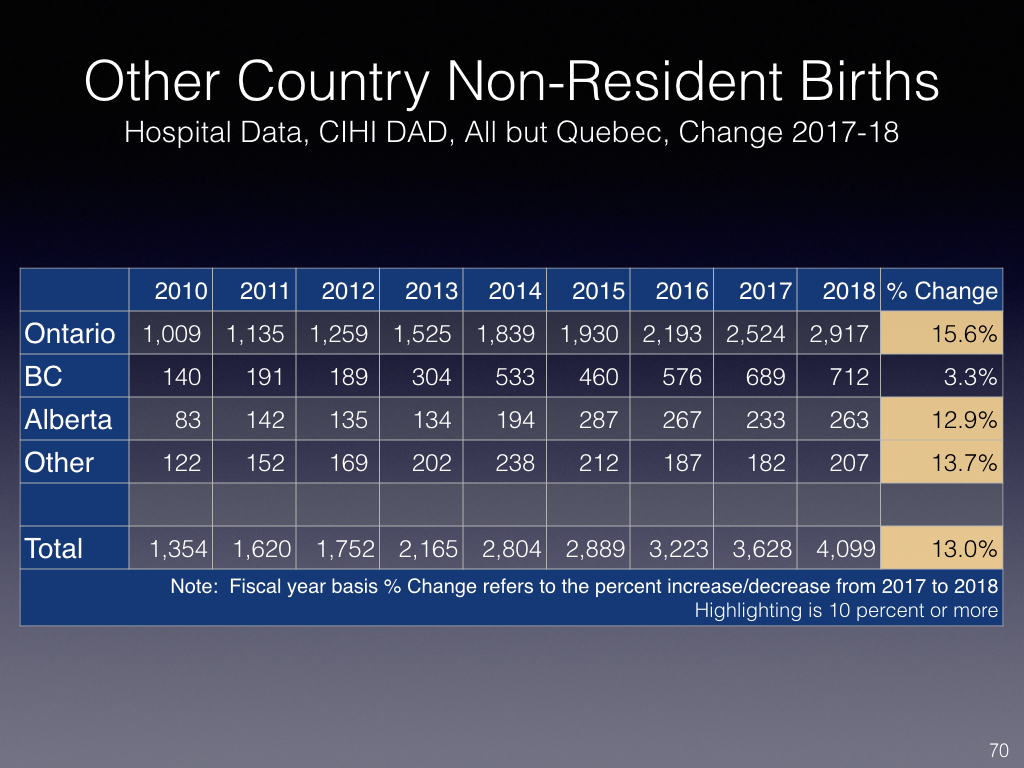
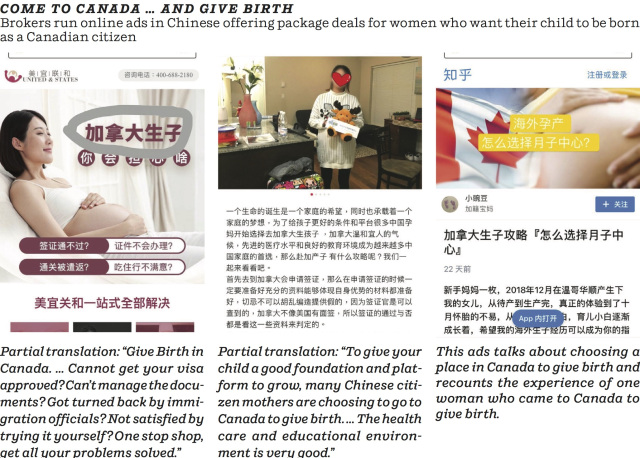
The first slide shows the overall increase in absolute numbers as well as percentage of all live births for all provinces save Quebec (Quebec’s health ministry has not agreed to share its data through CIHI).
The second slide shows the breakdown by province, showing that Ontario and Alberta had the largest increase (Manitoba accounts for about one-third of the “other” category, and non-resident births in Manitoba increased by more than 50 percent).
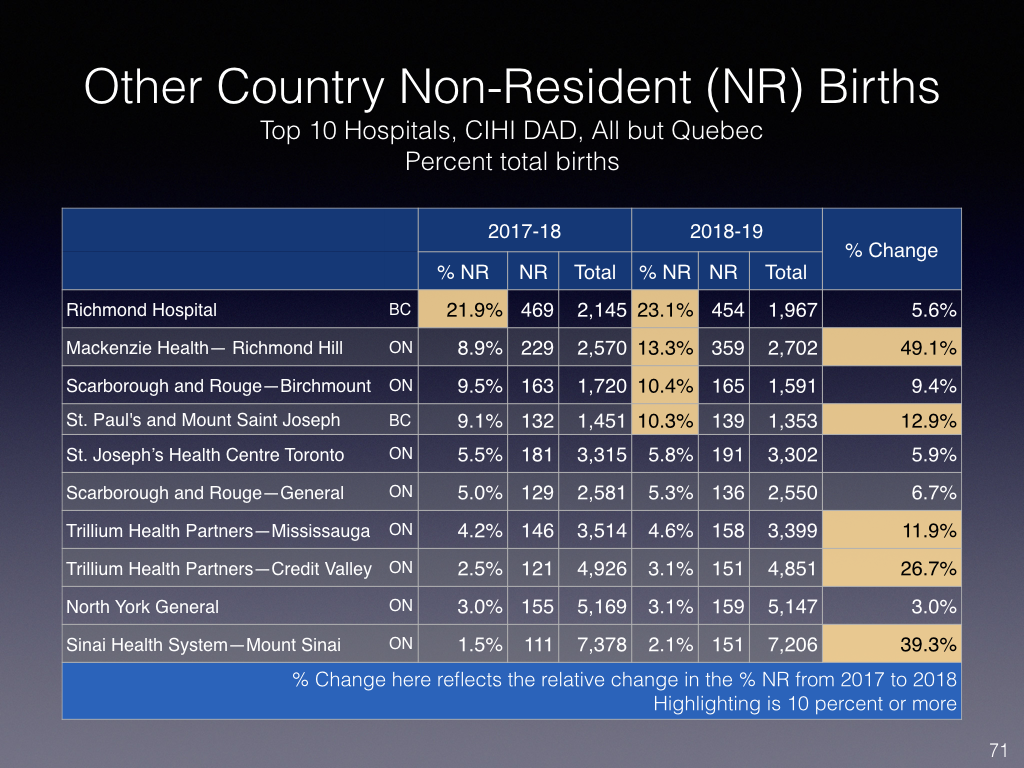
The third slide looks at the 10 hospitals with the largest number of non-resident self-pay births for the past two fiscal years, by percentage and absolute numbers, the year-to-year change.
Mackenzie Health in Richmond Hill had the largest percentage increase of the top 10. Richmond, the epicentre of birth tourism in Canada, was relatively stable (the percentage increase is largely due to a lower number of total births.
Note: Percentage increases updated following methodology suggestions by CIHI.

Yes, you can hold an Australian passport but not be a citizen. Here’s how – Analysis & Opinion

For citizenship policy nerds and people falling between the cracks:

Being born in Australia does not make you an Australian citizen.

The Tamil family with two Australian-born daughters on Christmas Island awaiting a decision on their future knows this only too well.

In some countries, such as the United States, children born there automatically become citizens of that country.

But in Australia, this isn’t the case.

In Australia, the automatic birthright to citizenship ended on August 19, 1986, under section 12 of the Australian Citizenship Act 2007.

Children born in Australia from August 20, 1986 are only Australian citizens by birth if, at the time of their birth, at least one of their parents was an Australian citizen or permanent resident.

If they meet this criterion, they can obtain a passport.

The Department of Foreign Affairs and Trade (DFAT), which issues Australian passports, says: “Only Australian citizens can be issued with Australian passports”, but the Department of Home Affairs sometimes has other ideas.

This has had a negative impact on children who might fall into the gap between the passport and citizenship requirements of these two government departments.

Most of the time, acquiring an Australian passport at birth, based on providing standard evidence of identity, like birth certificates, means citizenship for life.

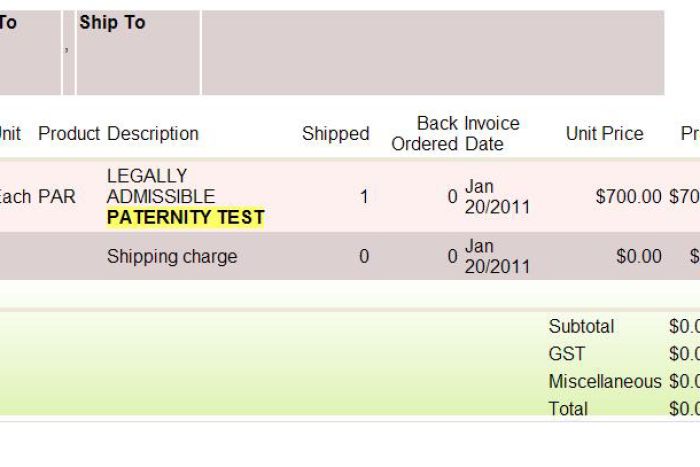
In some instances, though, Home Affairs has the power to request, arbitrarily and with no explanation, that further evidence be provided to justify a child’s citizenship, even DNA testing.

DNA testing to prove citizenship

In one recent case our firm dealt with, the foreign mother of an Australian child who had an Australian passport was told she needed to produce evidence of citizenship for her son, even though he was born in Australia and his father had always held Australian citizenship.

The family birth certificates and passports she had provided when successfully obtaining her child’s passport were “not deemed sufficient evidence” of citizenship.

She was required to obtain a “certificate of citizenship” from Home Affairs. And to get this, DNA testing was requested to prove the Australian citizen was indeed the biological father of the child in question.

But the mother’s relationship with the child’s father had broken down irreparably at the time of the child’s birth, and the father refused the DNA test.

DNA testing was not compulsory, Home Affairs advised. Other methods could be used to prove the relationship between the father and son was biological.

But the alternative social evidence recommended by Home Affairs, and supplied by the mother, included exhaustive personal, hospital, social work and government records.

They detailed the mother and child’s contact with the father and grandparents before and after the birth. This was still deemed “not sufficient”.

In effect, this shows DNA has become the only acceptable evidence, despite Home Affairs’ claims.

The outcome, Home Affairs advised, is that the child’s passport will be cancelled and the child will lose his status as an Australian citizen.

In another example, the father of a child in care, an Australian passport holder, was asked to do a DNA test as part of the process of obtaining a certificate of citizenship for the child.

He was estranged from the child and the mother, and so he refused. Home Affairs made its assessment of paternity based on that refusal, and the child’s passport and citizenship were cancelled.

Losing citizenship from ‘insufficient’ evidence

Citizenship can be revoked and a passport consequently cancelled in limited circumstances — mostly relating to criminal or security issues.

There is no provision in the Australian Citizenship Act 2007 for the cancellation of citizenship held by a child under 16 who became a citizen at birth.

Yet it is happening.

Our firm has recently seen an increase in cases where the citizenship status of a child passport holder has been challenged if the child’s mother is a temporary resident.

While investigating a mother’s circumstances, Home Affairs delegates have required children — Australian passport holders with citizenship acquired through their father — to verify their citizenship by obtaining “certificates of citizenship”.

In these recent cases, the evidence usually required to obtain such a certificate — relevant birth certificates linking the child to the father, and evidence of citizenship or permanent residence of the father at the time of birth — has been rejected as insufficient.

The common thread is the absence of the father, where family relationships have broken down.

The child is consequently caught in a bureaucratic tangle: their birth certificate identifying their father remains valid, but Home Affairs refuses to accept this.

Evidence of paternity can’t always be provided when families break down

For Home Affairs, sometimes the standard evidence of identity isn’t enough to justify a child’s citizenship.

And where a relationship has broken down, or if a father has moved on physically or emotionally from the child, there may be no way of providing biological proof of that paternity.

The onus of proof in this case is on the child or its mother, with Home Affairs providing no explanation why such evidence may be necessary or relevant.

A child’s birth certificate signed at the time of birth by an Australian citizen father, or social evidence of a paternal relationship, can count for nothing here.

What’s disconcerting is the apparently unfettered right of Home Affairs to request additional evidence of citizenship from children who already hold Australian passports, granted following the normal protocols, without any need for Home Affairs to explain on what basis such information is sought.

This is at odds with the practice under the Migration Act 1958, which acknowledges principles of “natural justice”.

Cancelling children’s passports and withholding citizenship — effectively a consequence of their absent father and their parents’ inability to maintain a harmonious relationship — seems clearly unjust.

Refusing to accept certificates issued by state Registrars of Births, Deaths and Marriages, and overturning the capacity of the Department of Foreign Affairs and Trade to issue passports based on its own sets of rules, is yet another indicator of the enormous and — despite its denials — unchecked power of Home Affairs.

If birth certificates no longer suffice as evidence of paternity, perhaps we’ll all be looking at DNA testing in the future.

Source: Yes, you can hold an Australian passport but not be a citizen. Here’s how – Analysis & Opinion

Trump Again Says He’d End Birthright Citizenship

More identity politics:

President Donald Trump said Wednesday he was looking “very seriously” at ending the right to citizenship for babies born to non-U.S. citizens on American soil.

Trump spoke to reporters as he departed the White House for a speech in Louisville, Kentucky. He said birthright citizenship was “frankly ridiculous.”

“We’re looking at it very, very seriously,” he said.

This isn’t the first time Trump has claimed he’d do away with it — he said something similar in October.

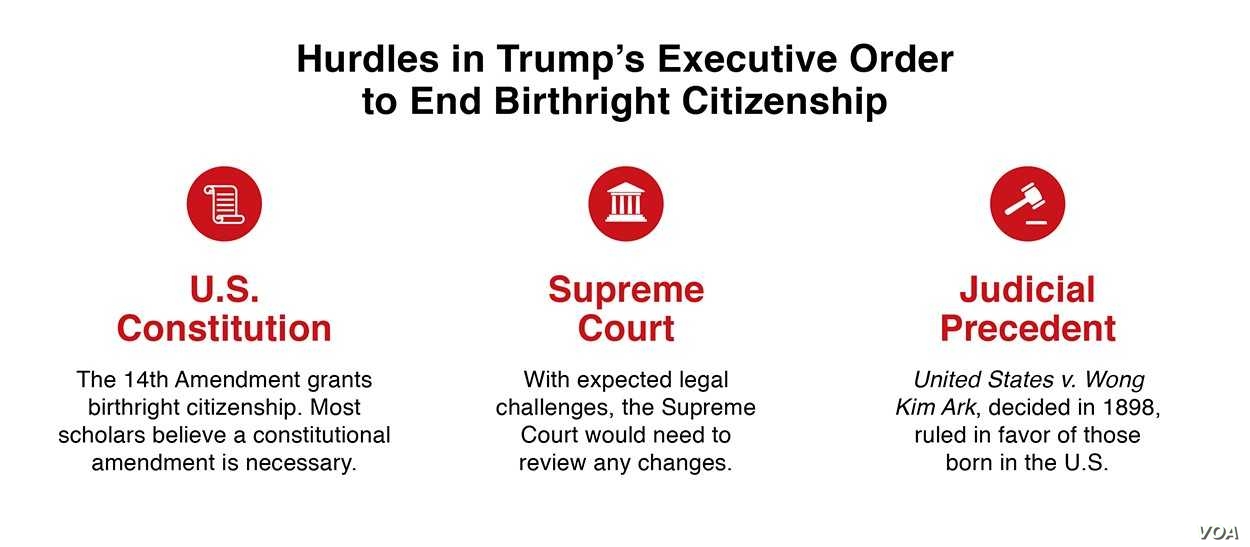
But the citizenship proposal would inevitably spark a long-shot legal battle over whether the president can alter the long accepted understanding that the 14th Amendment grants citizenship to any child born on U.S. soil, regardless of a parent’s immigration status.

Hurdles in President Trump's executive order to end birthright citizenship
Hurdles in President Trump’s executive order to end birthright citizenship

Executive order

James Ho, a conservative Trump-appointed federal appeals court judge, wrote in 2006, before his appointment, that birthright citizenship “is protected no less for children of undocumented persons than for descendants of Mayflower passengers.”

But Trump has said he was assured by his lawyers that the change could be made “just with an executive order” — an argument he has been making since his early days as a candidate, when he dubbed birthright citizenship a “magnet for illegal immigration” and pledged to end it.

There are no figures on how many foreign women travel to the U.S. specifically to give birth. The Center for Immigration Studies, a group that advocates for stricter immigration laws, estimated that in 2012 about 36,000 foreign-born women gave birth in the U.S., then left the country.

Places like Florida have seen in a boom in so-called “birth tourism.” Every year, hundreds of pregnant Russian women travel to the United States to give birth, paying from $20,000 to more than $50,000 to brokers who arrange their travel documents, accommodations and hospital stays. Sizable numbers of women from China and Nigeria also come to the U.S. for the same reason.

Immigrant detention

Trump’s comments Wednesday came as the administration continued to make immigration changes pushed by his hard-line advisers that have been in the works for months. On Wednesday, the Department of Homeland Security announced it had moved to end a longstanding federal agreement that limits how long immigrant children can be kept in detention. The decision will almost certainly lead to a legal battle over the government’s desire to hold migrant families until their cases are decided.

The rule also follows moves last week to broaden the definition of a “public charge” — a burden to the U.S. — to include immigrants on public assistance, potentially denying green cards to more immigrants. There was also a recent effort to effectively end asylum altogether at the southern border.

Source: Trump Again Says He’d End Birthright Citizenship

Colby Cosh: Vancouver’s birth-tourism issue could soon become Ottawa’s problem

More on birth tourism and good summary of some of the issues involved.

Will remain to see if the Conservatives decide to address the issue or not in their election platform or one of Andrew Scheer’s policy speeches beyond his earlier policy statement (SCHEER STATEMENT ON BIRTH TOURISM | Press & Media, “ending birth tourism will be among the objectives of our policy”):

It would be faintly ludicrous to suggest children born in Canada to mere visitors cannot have their entitlement to auto-magical citizenship compromised or questioned

Is birthright citizenship doomed in Canada? An omen appeared in Friday morning’s Vancouver Sun: B.C. Liberal MLA Jas Johal did some research and presented the paper with a number of examples of online advertising from Chinese websites that tout the benefits of intentionally delivering an anchor baby on Canadian soil.

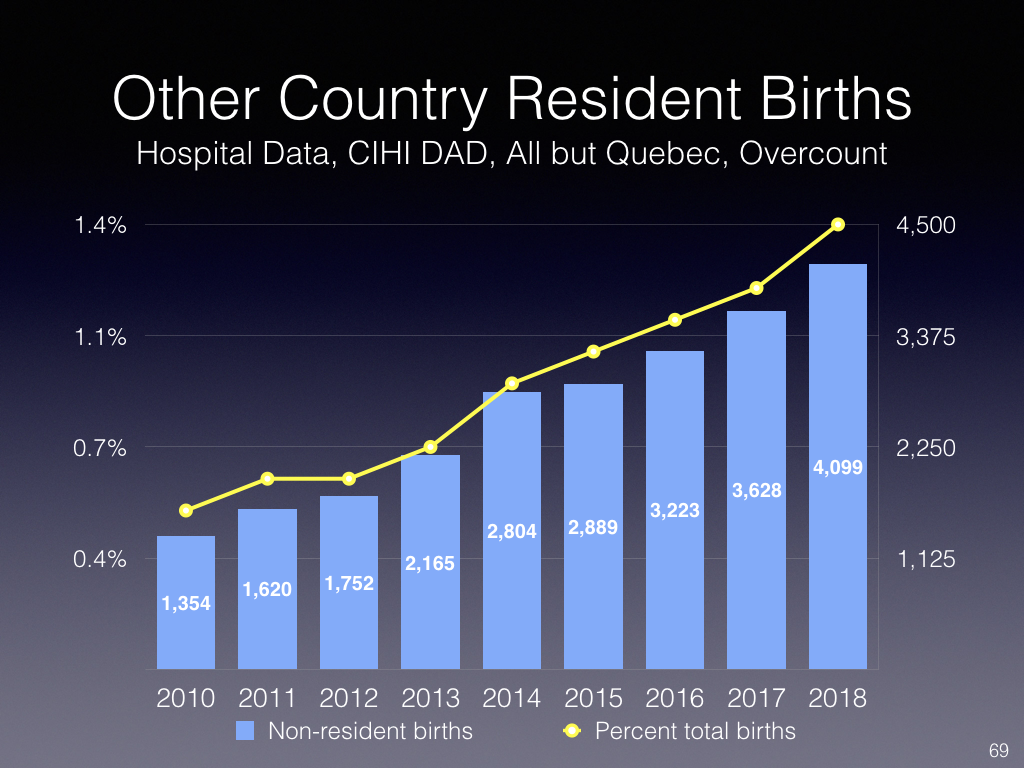
The ads suggest that brokers are offering “one-stop shopping” for pregnant women: they promise to set up housing, transportation, and perinatal care, all so that the blessed event itself can happen in a comfortable, clean, high-quality Canadian hospital. This gives your child the golden ticket of Canadian citizenship — coming as it does with access to superior Canadian education, Canadian welfare and social insurance, and widespread visa-free international travel.

In turn, your Canadian infant can one day serve as your own access point for Canada’s family-reunification immigration stream. Or you may set your eyes on higher vistas: one ad says enticingly that “Canadian passports mean immigration to the U.S.” (The Sun says that it checked Johal’s translations from the Chinese.)

Last year there was a controversy over birth tourism when the Conservatives voted at their annual convention to eliminate automatic citizenship for the children of non-citizens born in Canada. This policy plank was contentious at the time, and the Conservatives were denounced for even discussing the issue. Nobody, of course, was willing to defend birth tourism as such. You would have to be a pretty extreme advocate of open borders to say, on being presented with Chinese ads for birth-tourism brokers, that these are legitimate businesses serving a noble purpose to the benefit of Canada. (Although it might be true!)

The complaint against the Conservatives was not that automatic “jus soli” citizenship for everybody born here makes sense as an eternal, universal principle, but that birth tourism just doesn’t happen enough to be a problem. The question now being raised — the question that Johal’s folder of ads is likely to emphasize — is whether anybody was really bothering to check.

In November, Andrew Griffith, a former senior bureaucrat in the federal Citizenship and Immigration department, did some research using hospital finance statistics from the Canadian Institution for Health Information (CIHI). Griffith found that the numbers of non-residents giving birth in Canadian hospitals was growing, that they are approaching 10 per cent of all births at a few urban hospitals, and that for one enormous outlier they are twice that. And, surprise! The outlier is the Richmond Hospital in Richmond, B.C.

These numbers are still not enormous (against a national background), and they include some births that obviously are not “tourism,” within families that are in Canada for study or business. Nonetheless, it is hard to imagine a non-tourism explanation for the patterns Griffith found. The situation at the Richmond Hospital had already been noticed locally, and had become a pet issue of local Liberal MP Joe Peschisolido.

Johal challenged B.C.’s health minister, the former provincial NDP leader Adrian Dix, on birth tourism in a legislature committee this week. Dix did not give the natural New Democrat answer that jus soli citizenship is sacred. He said he was concerned about the tourism issue, that he doesn’t support or favour birth tourism, and that only Ottawa can do something about it — “if they want to act.”

This does not sound to me like an issue that is likely to remain confined to B.C. in the long run, or to be easy for the federal Liberals to deflect if it emerges. It is hard to imagine the provinces being able to limit birth tourism at the hospital level: a woman standing in a Canadian emergency room in a pool of amniotic fluid is going to receive care whatever her own citizenship or other bona fides are. Preventing anchor-baby births by means of the visa process, Griffith acknowledges, “would be virtually impossible.” The humane solution to the problem, if it is a problem, must involve putting new restrictions on birthright citizenship.

Canada’s constitution does not specify automatic jus soli citizenship, explicitly or otherwise. The enterprising gadfly lawyer Rocco Galati tried to argue the opposite in a case that reached the Federal Court in 2015, and he got his head handed to him by Justice Donald Rennie, who piled up eons of British and Canadian law and concluded that “Nationality and citizenship are entirely statutory constructs.” Canada has tinkered with the rules concerning the children of its citizens born abroad several times, and now restricts “jus sanguinis” (inherited citizenship) to one generation in most cases.

It would be faintly ludicrous to suggest that we can make such a change affecting persons descended solely from undoubted Canadian citizens, but that children born in Canada to mere visitors cannot have their entitlement to auto-magical citizenship compromised or questioned. I sense, however, that making exactly this argument will be the initial instinct of a Trudeau government, if it comes to that.

Ads promote Canada’s benefits to would-be birth tourists

More on birth tourism and the related “industry:”

Ads urging women to come to Canada to give birth tout the value of providing their child with Canadian citizenship.

“Go to Canada to vacation and give birth to a child,” says one online ad targeting Mainland Chinese mothers. “U.S. rejected your visa? No problem! In fact, Canada is better!”

Ads tell women that going to Canada for automatic citizenship is a “gift” for their babies since their children will be able to get free education, cheap university tuition and student loans, according to translations provided by Liberal MLA Jas Johal and verified by Postmedia.

Under Canadian law, a child born in this country is entitled to Canadian citizenship.

The ads are being run by brokers offering “one-stop shopping” for women, with offers to put together packages including transportation, housing, meals, contracts, pre- and postnatal medical appointments, shopping and checking in at hospitals. The ads generally do not mention the broker’s fees.

Some of the ads tell women their offspring can sponsor their parents under family reunification plans once they are adults: “You want to retire in Canada, but you don’t meet the requirements?” asks one such online ad. “You can give birth to your child in Canada. When your child turns 18, your child can apply for the parents.”

Ads tout monthly government subsidies, Canadians’ visa-free entry to 200 countries, unemployment benefits, and that “Canadian passports mean immigration to the U.S.,” Johal said.

Others say birth tourism is ideal for people who “care about their children’s education.”

And in a reference to China’s long-standing policy that limits most couples to a single child, some of the ads suggest birth tourism is ideal for “people who would like to have several kids.

Johal, the Richmond-Queensborough MLA, said birth tourism offends a large proportion of his constituents who want the practice banned. And Health Minister Adrian Dix is looking for Ottawa to take a stand on the issue.

Johal said the latest numbers of births by non-residents, reported by Postmedia, are a wake-up call to all levels of government. There was a 24 per cent increase in births by non-resident mothers in B.C., to 837 babies in 2017-18.

“At its core, birth tourism debases the meaning of citizenship,” Johal said. “As a son of immigrants, and an immigrant to this country, let there be no doubt those of us who have come emigrated to Canada by following the rules are the ones who are most offended by this practice.”

Johal finds the content of many of the ads downright offensive: “When you come to this country and strive and sacrifice, you strengthen this country and the value of Canadian citizenship. Allowing affluent foreigners to essentially purchase a passport is not what this country is about.”

In a legislature committee this week, Johal asked Dix about birth tourism. Dix acknowledged his concerns about the growing numbers of foreign women coming to B.C. to have babies.

“I don’t agree with it. I don’t support it,” Dix stated. But it’s an issue, he said, that comes under federal jurisdiction since it’s a citizenship and immigration matter.

“I mean it’s time, if they want to act, that they should act,” he said of the federal Liberals. “Or alternatively, say they don’t want to act.”

Birth tourism is expected to become a federal election issue this fall.

The Conservatives want the law changed so that one parent must either be a landed immigrant or a Canadian citizen before a baby can gain citizenship.

Postmedia asked the federal immigration minister for comment about birth tourism and any possible changes to policies. But a spokeswoman said the federal government can’t “speculate” on that.

Nancy Caron, a spokeswoman for Immigration, Refugees and Citizenship Canada, said the birth-on-soil policy for citizenship has existed since 1947.

The 2019 federal budget has allocated $51.9 million over five years to improve oversight of immigration advisers, including those who deal with birth tourists. Some of the funds will be used to ensure that they aren’t telling women to misrepresent the purpose of their visitor visas.

Mathieu Genest, press secretary to Ahmed Hussen, minister of immigration, refugees and citizenship, said that the Conservatives had once proposed ending the citizenship-on-soil policy but that was “roundly rejected by Canadians.” Now the Conservatives have “backtracked” on their policy, he said.

Source: Ads promote Canada’s benefits to would-be birth tourists

Richmond Hospital leads the way as birth tourism continues to rise

No new data in this report:

The number of pregnant foreigners coming to B.C. hospitals so their newborns can get automatic Canadian citizenship continues to rise.

Births by non-residents of B.C. increased 24 per cent from the 2016-17 fiscal year to 2017-18, from 676 babies to 837 the following year, according to records obtained through freedom of information requests.

About two per cent of all births in B.C. hospitals are now by non-residents, just as the birthrate among B.C. residents is dropping.

Richmond hospital continues to be at the forefront of the phenomenon, with the total number of babies born to non-residents of B.C. at the hospital rising from 337 in the 2014-15 fiscal year to 474 by 2017-18. Four years ago babies born to non-residents accounted for 15.4 per cent of all births at Richmond Hospital, compared to 22.1 per cent in the last fiscal year.

By comparison, St. Paul’s Hospital and Mount Saint Joseph Hospital — both operated by Providence Health Care — had a combined 132 babies born to non-residents of B.C. in the 2017/18 fiscal year.

While non-resident births account for about two per cent of all babies delivered in B.C., at Richmond Hospital, that proportion is 10 times higher. Indeed, as a New York Times article reported, the hospital is now perceived around the world as a coveted destination for so-called anchor babies, a term to describe children born here to non-residents to gain citizenship.

Health minister Adrian Dix is concerned by the numbers.

“The immigration issues are in federal jurisdiction. This is where concerns must be addressed, not by turning health professionals and skilled health care workers into immigration officers. That is not their role,” said Dix.

Richmond Mayor Malcolm Brodie agreed with Dix that birth tourism is a federal issue but said there are significant local impacts as well.

“As a city council, we haven’t discussed this but there are individuals who have concerns about the impacts on our already crowded hospital resources,” said Brodie, referring to the aging facilities and to situations when local women are diverted to other hospitals when Richmond Hospital is full.

Brodie said he supports a change to federal laws because he doesn’t believe anchor babies should get automatic citizenship.

“The practice of birth tourism should be curtailed,” he said.

Birth tourism is not illegal and a report by the Institute for Research and Public Policy showed that the numbers are climbing year after year. In 2017, there were at least 3,628 births, mainly in B.C., Alberta, and Ontario, by mothers who live outside Canada.

In 2016, Postmedia reported 295 of the 1,938 babies born at Richmond Hospital for the year ended March 31 were delivered, largely to foreign Chinese mothers. And dozens of birth houses were cropping up across the municipality, catering to women who need housing, meals, transportation and help with documents like birth certificates and passports.

As Dix has said, the provincial government has taken the approach that it doesn’t endorse the marketing and provision of birth tourism services but at the same time, patients needing urgent care can’t be turned away. 

While hospital staff cannot refuse care when women in labour arrive at the front door, Dix said measures have been put in place to help ensure taxpayers aren’t subsidizing the costs of non-resident hospital care.

For instance, late last year the ministry and Vancouver Coastal Health decided to raise fees charged to non-residents when they go to the Richmond Hospital. The cost for a vaginal birth increased to $8,200 from $7,200 and the cost of a caesarean section rose by $300 to $13,300. If their medical care becomes more complicated patients are assessed higher fees.

In 2017, Vancouver Coastal Health billed non-residents of B.C. about $6.22 million for maternity services at Richmond Hospital.

For maternity cases at Richmond Hospital … the majority of non-residents pay their bills in full,” said Vancouver Coastal Health spokesperson Carrie Stefanson. Approximately 80 per cent of billing to non-residents is recovered, she added.

But sometimes, as in the case of Yan Xia, a birth tourist from China, patients leave Canada after giving birth and leave behind a healthy bill.

Vancouver Coast Health has filed a lawsuit against Xia, who gave birth at Richmond Hospital in 2012. The bill for an extended stay in hospital due to complications totalled $313,000.

The case remains in legal limbo as Xia’s exact whereabouts are unknown and the bill may eventually have to be written off by Vancouver Coast Health.

Stefanson said the Xia case is believed to be VCH’s only maternity debt lawsuit over $100,000.

Richmond Liberal MP Joe Peschisolido has sponsored a petition calling on the federal government to end birth tourism. The petition garnered 11,000 signatures and denounces the practice as “abusive and exploitative” for “debasing” the value of Canadian citizenship. The Peschisolido petition was presented to Parliament last fall.

“The Government of Canada is committed to protecting the public from fraud and unethical consulting practices and protecting the integrity of Canada’s immigration and citizenship programs,” said Ahmed Hussen, minister of immigration, refugees and citizenship in response to the Peschisolido petition.

“To this end, (we) are currently undertaking a comprehensive review, with a view to developing additional information and strengthened measures to address the practices of unscrupulous consultants and exploitation of our programs through misrepresentation.”

Birth tourism will likely be an issue in the upcoming federal election as the Conservatives have vowed to withhold citizenship unless one parent is a Canadian or a permanent resident.

Source: https://vancouversun.com/news/local-news/richmond-hospital-leads-the-way-as-birth-tourism-continues-to-rise

When does birthright citizenship become citizenship for sale?

No new information and misses government response to petition (the ongoing study):

Kerry Starchuk’s activism begins with homemade granola cookies – specifically, when she took a plate to her new neighbors.

Except the man and a toddler boy who she heard bouncing a basketball outside, and the two pregnant women with them, hadn’t moved into the house next door to hers, where she has lived since 1988. Visitors from China, they were residing in her neighborhood only temporarily and didn’t respond to her greeting. After they awkwardly accepted her cookies, she never saw the group again.

It wasn’t the first time she’d seen pregnant women coming and going in her neighborhood or heard about why they were there. But the meeting began her personal battle against “birth tourism,” where wealthy mothers like the ones she encountered next door pay to give birth, get citizenship for their babies, and return home.

It is an issue gaining prominence across North America, where jus soli, or rules by which citizenship is determined by birthplace, is the standard practice (yet otherwise rare among developed countries, as in Europe where citizenship is more restricted and often granted along bloodlines). An online petition that Ms. Starchuk started against the practice last year, garnering some 11,000 signatures, was supported by a federal Liberal lawmaker representing Richmond. Meanwhile, the federal Conservatives, in opposition during an election year, voted on a motion last summer to tighten laws around birthright citizenship. In the United States, President Donald Trump has said he will end it by executive order.

Mr. Trump’s threat drew widespread criticism by critics who call it anti-immigrant pandering. But concerns about citizenship rules span partisan lines. In Canada, a poll from the Angus Reid Institute in March showed that while more believe birthright citizenship is a good policy than a bad one (40% versus 33%), 60% believed rules needed to be tightened to counter abuse of the system.

Ms. Starchuk, a part-time housecleaner, insists her position is not anti-Chinese or anti-immigrant but is about rules and values, especially in a region where foreign wealth and capital have changed the face of communities. In Richmond, the mothers hail mostly from China, lured by advertisements that sell all-inclusive packages including a stay at a “birth hotel.” Other hospitals in Toronto and Montreal have seen increases in mothers from Eastern Europe or Africa. A recent data analysis showed Richmond’s local hospital with the highest percentage of births to mothers residing outside Canada.

“It does undermine me, because I’m trying to build community and welcome my neighbors to the neighborhood,” she says. “And then I find out it’s not a single-family home where there’s going to be a new family but an international, underground birth-tourism hotel. … It’s like selling citizenship.”

An abuse of the system?

The issue under debate in Canada, which established citizenship rules under the 1947 Canadian Citizenship Act, is largely about the power of foreign money and how it devalues citizenship. The debate in the U.S., on the other hand, sometimes targets so-called anchor babies but revolves around undocumented migration. It was rekindled last fall with Mr. Trump’s threat, which has been highly polarizing.

The national conversations converge around questions of fairness and the changes people fear and perceive around them.

Joe Peschisolido, a Liberal lawmaker, says birth tourism is an abuse of the system. ‘It’s a business where people are making money off of the goodness of Canadians.’

Martha Jones, who wrote “Birthright Citizens: A History of Race and Rights in Antebellum America,” says that citizenship is always an evolving political question. In the U.S., questions about birthright citizenship arose in the early 19th century around the status of former slaves, which culminated in the 14th Amendment in 1868.

But that didn’t settle the issue, and in some ways the debate today is analogous to the one around former slaves because it leaves an entire class of people in a legal limbo. “It is a tragic example of the ways in which American lawmakers have failed in my view to fulfill their obligation to extend to people some basic sense of who they are,” Ms. Jones says.

In Canada, the Conservatives last summer voted that the party should support the position that a baby born in Canada should receive citizenship only if one parent is a Canadian or permanent resident.

Not all Conservatives agree with their party. Deepak Obhrai, a Tory lawmaker from Calgary, says that birth tourism abuses could be addressed with immigration procedures that target the parents but not the child. “It takes away the fundamental right of the child,” he says. “A Canadian is a Canadian is a Canadian.”

Those fighting birth tourism have been accused of overexaggerating the problem. Federal statistics show only 313 births by nonresident mothers in 2016. But new research using hospital financial data puts the number at 3,223 that year. One of 5 births at Richmond Hospital is to nonresident mothers, those figures show.

Joe Peschisolido, the Liberal lawmaker who sponsored Ms. Starchuk’s petition and is awaiting a government response, says it might not be illegal, but that doesn’t make it right. “It’s an abuse of the system,” he says at his offices in Richmond. “It’s a business where people are making money off of the goodness of Canadians.”

And it’s something that many in the community care about, he says. His next meeting is with a constituent who, on his way in, says he’s here to talk to Mr. Peschisolido about ending “birth tourism.”

Among some of the fiercest critics of birth tourism are Chinese immigrants in Richmond.

“Why would the parents want to get their children Canadian citizenship if they themselves don’t want Canadian citizenship?” says one mother, who didn’t want to share her name. She’s at Parker Place, one of several shopping centers catering to the Chinese community.

She emigrated to Canada in 1990 from Beijing and says she had to work hard to learn English. But today, Richmond is 54% Chinese, compared with 34% in 1996. And now newer Chinese immigrants don’t learn the language as she had to, she says, and Mandarin is increasingly heard in town.

‘It’s the unfairness of it’

It is easy to dismiss Ms. Starchuk, who also ran a campaign against Chinese-only signage in Richmond, in a country that embraces multicultural tolerance. But, as a fourth-generation resident of Richmond that has always been diverse, she says her fight is about inclusion and maintaining a healthy community.

This battle is, in fact, amplified by the backdrop of larger changes taking place around her in Greater Vancouver. Foreign money has pushed up housing prices and displaced locals, including her own grown children, who she says haven’t been able to purchase homes and instead rent in Richmond.

She says she probably wouldn’t have gotten involved in the birth tourism fight if it had not been in her backyard, literally.

“This is not ‘a nothing issue,’” says Ms. Starchuk, who has binders full of letters, petitions, and news clips she’s collected about her efforts.

She says not everyone will agree with her. “Some will say, about birth tourism, that they will do whatever they can to get to Canada, even if I have to cheat. Others will say, ‘I paid for it. Why shouldn’t I be able to get what I want?’”

Ultimately, though, it violates her sense of what it means to be Canadian.

“It’s the unfairness of it,” she says. “Citizenship is not partisan, Liberal or Conservative, but about Canadian values. When you’re an immigrant, you take and you contribute.”

“This,” she says, “is a free-for-all.”
Source: When does birthright citizenship become citizenship for sale?

DHS Sec. Kirstjen Nielsen to Tucker Carlson: Getting Rid of Birthright Citizenship Is ‘on the Table’

Reality will eventually catch up with virtue signalling given the 14th amendment:

Hours after President Trump declared he would “100 percent” close America’s southern border if he can’t make a deal with Congress on border security and immigration, Department of Homeland Security Secretary Kirstjen Nielsen told Fox News host Tucker Carlson that eliminating birthright citizenship is “on the table” as a way to stop the flow of undocumented immigrants and asylum-seeking migrants.

Nielsen, who recently requested additional resources from Congress as border officials aim to quadruple the number of deportations of asylum seekers, appeared on Tucker Carlson Tonight Tuesday evening to discuss the influx of Central American migrants at the southern border, and Carlson immediately began grilling her about what the administration was doing to “fix this.”

At times, it even seemed as if the Fox News host might be gunning for Nielsen’s job as he bombarded her with his own proposed solutions to the border crisis.

What about punishing employers “who are setting the bait in this trap, who are encouraging illegal aliens to come into this country?” he asked. (Interestingly, the president’s own businesses allegedly employed numerous undocumented workers—until they were caught by the press.)

“That is part of the problem,” Nielsen said, adding that steps are already being taken to address just that issue. “We’re looking to do everything we can throughout the system to apply penalties where we can,” she said.

Carlson was not satisfied with that answer. “Well how bout this, why wouldn’t your agency write an executive order, present it to the president, have him sign it and do it tomorrow?”

Nielsen went on to argue that “there’s a debate in Congress” regarding the executive branch on implementing an order like that, prompting Carlson to blast Congress while advocating for more direct executive actions.

“It looks like Congress is not going to act because one party has a vested interest in changing the population and the other party is, in effect, controlled by people who want illegal immigration,” Carlson asserted. “So would there be a downside for the president to act unilaterally on that question or, for example, birthright citizenship? Would you be willing to draft an executive order eliminating birthright citizenship?”

The Homeland Security chief responded that Trump has been clear that it is “all on the table” and he’s serious about shutting down the border.

“Yes, everything is on the table,” she reiterated.

Carlson, after noting that “things seem less under control now” at the border than before Trump was elected, asked later in the interview if the administration would send the military to the border since “it’s really a crisis of that magnitude.”

Nielsen said they “are looking into that” and have sent a request to the Department of Defense, causing Carlson to ask who is in charge and if it would be possible for the commander-in-chief to move “troops to the border tomorrow.”

Source: DHS Sec. Kirstjen Nielsen to Tucker Carlson: Getting Rid of Birthright Citizenship Is ‘on the Table’

‘Birth tourism’ case presents quandary for parents after break-up: to settle their custody dispute in Canada or China?

Another wrinkle when families fall apart:

In 2015, a Chinese couple expecting a child wanted their son to have Canadian citizenship. They arranged to give birth in Richmond, B.C.

What they didn’t anticipate was the legal and jurisdictional quagmire this “birth tourism” arrangement would create when they broke up. At issue: where to settle their custody dispute? In a Canadian courtroom or a Chinese one?

Their years-long court battle — at a time when some critics are pushing the federal government to do away with birthright citizenship altogether — was only settled recently when B.C.’s highest court upheld a ruling that the parent’s custody battle should be dealt with in China even though the boy, now 3, was born in Canada.

Alina Chekh, a Vancouver family lawyer who has been monitoring the case, said while she sees a lot of jurisdictional questions arise in family disputes, it’s the first one she’s seen in the context of a birth tourism case. Parents, she said, should not interpret the outcome of this case as indicative of a trend of judges punting cases to other jurisdictions.

“If you look at the facts of the case, this case is very unique. This won’t apply to every baby in Canada,” she said.

According to court records, the father, who has permanent resident status in Canada, was said to split his time between China and Canada. In September 2015, records show, the mother flew to Canada on a visitor’s visa a couple months before her due date. She and her partner acknowledged this was a “birth-tourism arrangement.”

(The National Post is withholding the names of the parents as the B.C. Provincial Court Act prohibits the identification of a child or party to a family matter before the court.)

Their son was born that November in Richmond, B.C., often dubbed the “epicentre” of Canada’s birth tourism industry. According to Vancouver Coastal Health, during the 2017-18 fiscal year 474 babies were born to non-residents in the Vancouver suburb, representing 22 per cent of all babies born there in that period.

After spending six months in Canada, the trio returned to China in May 2016. At some point, the relationship between the unmarried couple fell apart.

They agreed on a living arrangement: the boy would reside primarily in Beijing with his mother, a television host, and her parents, and spend the rest of the time in nearby Tianjin with his father, a bottled-water business owner, and his family.

Tensions flared in December 2017 when the father flew with his son to Vancouver son on one-way tickets, apparently without the mother’s consent. The mother flew to B.C. a few days later and spent a couple of weeks with her son before flying back to Beijing for work. She agreed to let her son stay in Canada until February 2018.

However, when February rolled around the father refused to hand over their son’s passport, prompting the mother to apply in B.C. Supreme Court for a declaration that the boy was a “habitual resident” of China who had been wrongfully removed from China, and that all matters concerning guardianship and parenting arrangements should be handled in China.

The father argued that matters involving the child should be decided in B.C. because his son was a Canadian citizen and had spent a good part of his life in B.C. He said it was always their intent for their son to return to B.C. for at least part of his education.

After reviewing the evidence, Justice Andrew Mayer said in an August 2018 ruling that it was clear the boy’s habitual residence was China, citing the fact that the mother never quit her job and never made an application for permanent resident status in Canada. Even though the boy was born in B.C., “place of citizenship and place of habitual residence are not the same thing,” Mayer said.

As for whether the parents had a “settled intention” of having their son stay for an extended period in B.C., the judge concluded they had not. He cited several text messages between the pair.

During one exchange on Sept. 24, 2017, the mother wrote: “In the future if you ever go over there alone and bring the child with you … I would not object to that so long as the child likes it and can adapt to it.”

The father replied: “I am just hoping that our son can stay a little longer. Our son should not be living like this.”

“But for our child the bulk of his education should still be received here in China. … The opportunities of the world exist in China,” she wrote back. “Therefore he must be familiar with China and understand everything about China. It is okay for him to live in Canada for a while when he is young in order to establish the framework for English thinking.”

Mayer ruled that the father did not have authorization from the mother to remove their son from China and concluded that B.C. was not the proper jurisdiction to settle questions about the boy’s guardianship and parenting arrangements given his “tenuous” connection to the province.

The father appealed the decision arguing that Mayer had committed a number of errors of law or fact.

But writing on behalf of a three-person panel, Justice Daphne Smith of the B.C. Court of Appeal dismissed the appeal on March 8.

The Post reached out to lawyers for both parents but they either did not return messages or were unavailable.

Canada is one of about 30 nations that confers automatic citizenship to those born on Canadian soil. A recent online survey by Research Co. of 800 B.C. residents found that 66 per cent of respondents said birth tourism degrades the value of Canadian citizenship and 73 per cent supported establishing new guidelines for birthright citizenship.

Critics have also complained that there is a flourishing underground industry of hotels and food providers catering to expectant birth tourists.

But some legal observers have said the issue is overblown and that any attempts to restrict birthright citizenship could lead to unnecessary bureaucracy and cause some newborns to become stateless.

Immigration Minister Ahmed Hussen has said his department is studying the extent of the phenomenon. In a statement, a department spokeswoman said there is “no set date for reporting on any findings.” She noted, however, that available data show “only a small proportion of more than 380,000 annual births in Canada are by women who do not reside in Canada” and includes “Canadians living abroad who may have chosen to return to Canada to give birth.”

• Email: dquan@postmedia.com | Twitter:

Source: ‘Birth tourism’ case presents quandary for parents after break-up: to settle their custody dispute in Canada or China?

South Florida Sees a Boom in Russian ‘Birth Tourism’

Another birth tourism centre and clientele:

Every year, hundreds of pregnant Russian women travel to the United States to give birth so that their child can acquire all the privileges of American citizenship.

They pay anywhere from $20,000 to sometimes more than $50,000 to brokers who arrange their travel documents, accommodations and hospital stays, often in Florida.

While the cost is high, their children will be rewarded with opportunities and travel advantages not available to their Russian countrymen. The parents themselves may benefit someday as well.

And the decidedly un-Russian climate in South Florida and the posh treatment they receive in the maternity wards — unlike dismal clinics back home — can ease the financial sting and make the practice seem more like an extended vacation.

The Russians are part of a wave of “birth tourists” that includes sizable numbers of women from China and Nigeria.

President Donald Trump has spoken out against the provision in the U.S. Constitution that allows “birthright citizenship” and has vowed to end it, although legal experts are divided on whether he can actually do that.

Although there have been scattered cases of authorities arresting operators of birth tourism agencies for visa fraud or tax evasion, coming to the U.S. to give birth is fundamentally legal. Russians interviewed by The Associated Press said they were honest about their intentions when applying for visas and even showed signed contracts with doctors and hospitals.

There are no figures on how many foreign women travel to the U.S. specifically to give birth. The Center for Immigration Studies, a group that advocates for stricter immigration laws, estimated that in 2012, about 36,000 foreign-born women gave birth in the U.S., then left the country.

The Russian contingent is clearly large. Anton Yachmenev of the Miami Care company that arranges such trips, told the AP that about 150 Russian families a year use his service, and that there are about 30 such companies just in the area.

South Florida is popular among Russians not only for its tropical weather but also because of the large Russian-speaking population. Sunny Isles Beach, a city just north of Miami, is even nicknamed “Little Moscow.”

“With $30,000, we would not be able to buy an apartment for our child or do anything, really. But we could give her freedom. That’s actually really cool,” said Olga Zemlyanaya, who gave birth to a daughter in December and was staying in South Florida until her child got a U.S. passport.

An American passport confers many advantages. Once the child turns 21, he or she can apply for “green card” immigration status for the parents.

A U.S. passport also gives the holder more travel opportunities than a Russian one; Americans can make short-term trips to more than 180 countries without a visa, while Russians can go visa-free only to about 80.

Traveling to the U.S. on a Russian passport often requires a laborious interview process for a visa. Just getting an appointment for the interview can take months.

Some Russians fear that travel opportunities could diminish as tensions grow between Moscow and the West, or that Russia might even revert to stricter Soviet-era rules for leaving the country.

“Seeing the conflict growing makes people want to take precautions because the country might well close its borders. And if that happens, one would at least have a passport of a different country and be able to leave,” said Ilya Zhegulev, a journalist for the Latvia-based Russian website Meduza that is sharply critical of the Kremlin.

Last year, Zhegulev sold two cars to finance a trip to California for him and his wife so she could give birth to their son.

Trump denounced birthright citizenship before the U.S. midterm election, amid ramped up rhetoric on his hard-line immigration policies. The president generally focuses his ire on the U.S.-Mexico border. But last fall he mentioned he was considering executive action to revoke citizenship for babies born to non-U.S. citizens on American soil. No executive action has been taken.

The American Civil Liberties Union, other legal groups and even former House Speaker Paul Ryan, typically a supporter of Trump’s proposals, said the practice couldn’t be ended with an order.

But others, like the Center for Immigration Studies, which advocates for less immigration, said the practice is harmful.

“We should definitely do everything we can to end it, because it makes a mockery of citizenship,” said Mark Krikorian, executive director of the Center for Immigration Studies.

Vladimir Zhirinovsky, an outspoken Russian lawmaker, said the country can’t forbid women from giving birth abroad, and many of them also travel to Germany and Israel.

“Trump is doing everything right, because this law is used as a ploy. People who have nothing to do with the U.S. use it to become citizens,” Zhirinovsky said.

Floridians have shown no problem with the influx of expectant mothers from Russia.

Yachmenev, the agency manager, says he believes it’s good for the state because it brings in sizable revenue.

Svetlana Mokerova and her husband went all out, renting an apartment with a sweeping view. She relished the tropical vibe, filling her Instagram account with selfies backed by palm trees and ocean vistas.

“We did not have a very clear understanding about all the benefits” of a U.S. passport, she said.

“We just knew that it was something awesome,” added Mokerova, who gave birth to a daughter after she was interviewed.

Zemlyanaya said that even her two nights in the hospital were a treat, like “a stay in a good hotel.”

In contrast to the few amenities of a Russian clinic, she said she was impressed when an American nurse gave her choices from a menu for her meals.

“And then when she said they had chocolate cake for dessert, I realized I was in paradise,” Zemlyanaya added.

She even enjoyed how nurses referred to patients as “mommies,” as opposed to “rozhenitsa,” or “birth-giver” — the “unpleasant words they use in Russian birth clinics.”

Zemlyanaya said she was able to work remotely during her stay via the internet, as were the husbands of other women, keeping their income flowing. Yachmenev said his agency doesn’t allow any of the costs to be paid by insurance.

Most of the families his agency serves have monthly incomes of about 300,000 rubles ($4,500) — middling by U.S. standards but nearly 10 times the average Russian salary.

Yachmenev said he expects that birth tourism among Russians will only grow.

Business declined in 2015 when the ruble lost about half its value, but “now we are coming back to the good numbers of 2013-14,” he said.

Source: South Florida Sees a Boom in Russian ‘Birth Tourism’