Why Legal Immigration Is Impossible for Nearly Everyone
2025/01/08 Leave a comment
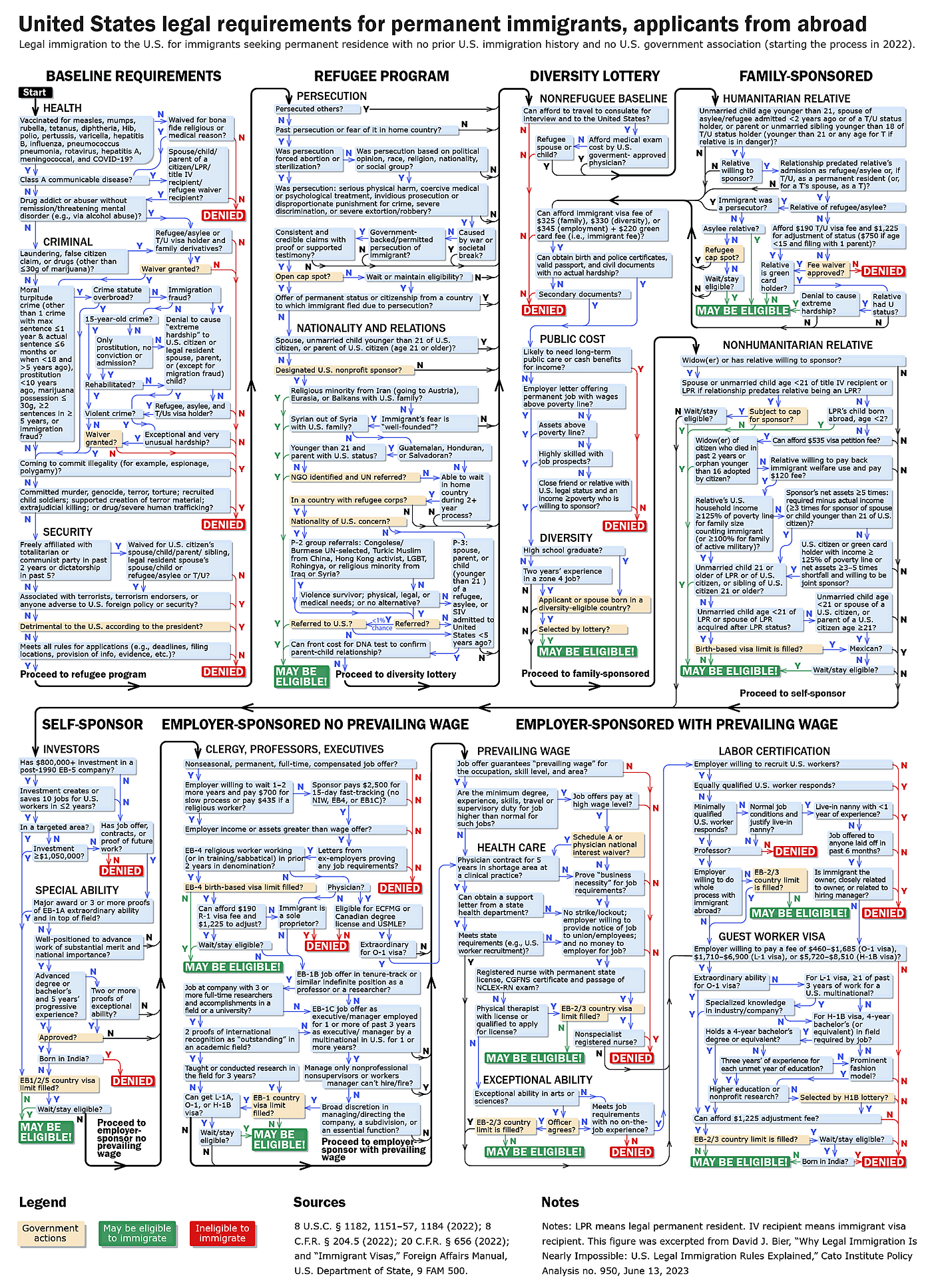
Wonderful graphic illustrating the complexity of immigration to the USA. Canadian system if anything is more complex, given Provincial Nominee Program and the various “boutique” or targeted programs. Would be nice if IRCC could prepare such a chart as part of the briefing package for the expected incoming Conservative government as a basis for streamlining, simplification and automation:
My latest policy analysis published today explains why it is impossible for nearly all immigrants seeking to come permanently to the United States to do so legally. The report is a uniquely comprehensive and jargon-free (to the extent possible) explanation of U.S. legal immigration. Contrary to public perception, immigrants cannot simply wait and get a green card (permanent residence) after a few years. Legal immigration is less like waiting in line and more like winning the lottery: it happens, but it is so rare that it is irrational to expect it in any individual case.
The figure below shows the U.S. legal immigration system for people who are abroad who presently intend to immigrate permanently to the United States. Below I briefly describe the main problems and choke points in this labyrinth.
Guilty Until Proven Innocent
Until the Immigration Act of 1924, everyone in the world was eligible to immigrate to the United States unless the government proved they fell into an ineligible category. In other words, innocent until proven guilty. Since then, the foundational principle of U.S. immigration law is that everyone in the world is ineligible to immigrate unless they prove to the government they fit into an eligible category. The result is that over 99 percent of all those wanting to immigrate to the United States cannot do so legally.
Source: Why Legal Immigration Is Impossible for Nearly Everyone
 About Andrew
 Multicultural Meanderings