Sappani: Politicians should be guided by victims of terrorism, not their killers

Of note, some valid points regarding political considerations:

Four Muslim names spanning three generations slain by an act of terror in London, Ont., now also belong to those we memorialize on the National Day of Remembrance for Victims of Terrorism this June 23. Sixteen years since it was first enacted, the list of victims continues to grow longer. Surprisingly, this is happening in one of the safest countries in the world, despite Air India Flight 182’s bombing in 1985 and the 2014 attack on Parliament Hill.

Prime Minister Justin Trudeau’s statement on this occasion takes note of the horrific events in 1985, yet the measure of actions taken to confront extremism remains a project of politics, not national security.

The 1985 terrorist attack on Air India, killing 280 Canadian citizens, should have catalyzed the creation of a top-tier security system. The attack constituted the biggest aviation terror event until 9/11, and today, 38 years after the tragedy and more than a decade after the John Major report, Canada still seems incapable of confronting extremism.

Hard questions have to be asked.  What has been learned since 1985? Do security professionals have the mandate to do their jobs, or do politics prevail over the security of Canadians?

A 2018 CSIS report explicitly described Sikh radicalism, Islamic radicalism, and far-right fanaticism, as among the top five terror threats to Canada. The report created an uproar in certain segments of the Indo-Canadian diaspora, resulting in it being watered down – not due to new facts or errors, but under political pressure from vote banks decrying discrimination. Indeed, Canadian politicians interfering with national security reports is the natural product of decades of growing identity politics.

Despite the Air India bombing, the Canadian terrorists behind the attack continue to be hailed as heroes at parades in Canada, widely attended by elected Canadian representatives. Canadian politicians also happily attend events glorifying the banned LTTE terrorist group pandering for votes in Tamil communities.

Identity-based vote banks play a significant role in partisan politics. Politicians prioritize their own ambitions over the values of our nation and at the expense of fallen victims, elevating these brokers of extremist ideologies. A select few of our national leaders refuse to compromise on these values, like Bob Rae during the 2006 Liberal leadership race. Yet they too, often, learn the hard lessons of the extent to which extremist agendas dominate Canadian politics.

At times, pandering to diverging extremes produces dark comedy. All of Canada’s national leaders rightfully condemned Islamophobia after the London terror attack, while contradicting themselves by refusing to condemn the naked Islamophobia of Quebec’s Bill C-21.

NDP leader Jagmeet Singh is a case in point. In delivering a thundering speech – in English – on Canada as a “racist country,” he failed to deliver the same sentiment – in French – to the Quebec legislature. He is unfortunately also known for his controversies in describing Khalistani separatism.

The Conservatives are also experiencing their own issues, having rejected MP Derek Sloan for associating with far-right extremists. One can also point to Alberta MP Garnett Genuis, who is the party’s self-appointed champion of Punjab – read: Khalistan – independence.

Even today, the majority of politicians in Greater Vancouver and Toronto will not openly condemn banned terrorist organizations in Canada, fearing reprisals from extremist vote banks. Extremists groups have learned to exploit membership-driven nomination processes, even as our security agencies fail to confront these metastasizing threats.

On this 16th National Day of Remembrance for Victims of Terrorism, it is not the victims whose memory are guiding our national debate, but the agendas of the extremists who killed them. The victims themselves are often immigrants, from the Air India bombing to our murdered Muslim family, leaving one us to wonder why these murders slip so easily from national memory.

In elections to come, politicians would be wise to discover courage in going beyond the platitudes of unprincipled pandering and explicitly refuse to platform extremism. It would be refreshing to see Canadian leaders whose political outreach is more informed by terrorism’s victims, than those who celebrate their murderers.

Source: Politicians should be guided by victims of terrorism, not their killers

Ivison: O’Toole’s pro-Canada speech may resonate with voters tired of apologies

Ivison’s take. We shall see.

Of course, it was Conservative governments that started the trend, Mulroney’s apology to Japanese Canadians (and “drive-by” apology to Italian Canadians), and Harper government apologies to Chinese Canadians and a “drive-by” apology to Sikh Canadians, and the most significant, the apology to Indigenous peoples for residential schools. The Liberal government just extended the practice (in contrast to earlier Liberal governments).

The Australian equivalent to “sack-cloth and ashes” is the “black armband” portrayal of history.

That being said, there is a balance between recognizing and acknowledging the negative aspects of our history and present without acknowledging the positive ones:

Erin O’Toole’s leadership pledge to “take back Canada” was viciously lampooned. “Indigenous folks, did you hear Erin O’Toole wants to give you your land back,” quipped one social media satirist.

The slogan may have helped O’Toole get elected leader but its Trumpian undercurrent ensured it was retired after he decided to present a more moderate image to Canadians.

Source: O’Toole’s pro-Canada speech may resonate with voters tired of apologies

Australia: Citizenship application costs set to soar

High Canadian fees being used (along with UK and USA) to help justify increase:

Australian citizenship application fees are being jacked up to recoup more of the processing costs.

The standard fee for Australian citizenship by conferral will soar from $285 to $490, an increase of 72 per cent.

People applying for citizenship by descent or under other situations will also pay significantly more.

So will those seeking to renounce, resume or apply for evidence of Australian citizenship.

Immigration Minister Alex Hawke insists the July 1 price hike will better reflect the cost of handling increasingly complex applications, which take longer to process.

Mr Hawke said it was the first change to citizenship application fees since 2016.

“Based on existing fees, the government is only recovering approximately 50 per cent of the costs of processing citizenship applications,” he said on Thursday.

“The cost of citizenship applications remains comparable with other countries.”

Mr Hawke said the cost of citizenship would still be lower than the UK, Canada and US.

The decision is guaranteed to raise eyebrows given the impact of coronavirus border closures, which have driven a wrecking ball through migration into Australia.

Source: Citizenship application costs set to soar

Ethnic makeup of Buckingham Palace workforce not ‘what we would like,’ says senior source

Smaller gap than I would have guessed but perhaps London would be a better benchmark than the UK as a whole (40 percent ethnic minorities):

Buckingham Palace has for the first time released figures on the ethnic makeup of its staff, following the Duke and Duchess of Sussex’s allegations of racism in the Royal Family.

The Royal Household said Thursday that 8.5 per cent of its staff come from ethnic minorities, compared with a target of 10 per cent by next year. The latest census data shows that ethnic minorities account for about 13 per cent of the U.K. population. The staffing figures were released as part of an annual report on royal finances.

A senior palace source said publishing the figures was an effort to ensure greater accountability because there would be “no place to hide” if diversity goals aren’t met. The source acknowledged that much more needed to be done.

Source: Ethnic makeup of Buckingham Palace workforce not ‘what we would like,’ says senior source

‘Forgotten Canadians’ are paying a price for delays in processing their citizenship papers. A new study reveals the real cost

Makes reference to earlier IADB study on economic impact of citizenship delays (Citizenship and the Economic Assimilation of Canadian Immigrants ):

An engineer for one of the world’s largest car manufacturers in Ontario, Syeda Umar says a Canadian passport will be handy for her to travel for work assignments — and crucial for advancing her career.

So as soon as the Pakistani immigrant met all the citizenship requirements, she submitted her application in September 2019.

Now, almost 22 months later, she is still waiting to be scheduled a citizenship exam stalled amid the COVID-19 pandemic.

Her job as a senior quality engineer requires her to deal with the company’s global supply chain and, at times, she’s expected to spend weeks and months overseas on assignment.

Due to the visa limitation as a Pakistani passport holder, Umar says twice so far her boss has had to ask her colleagues to step in to cover the business trips for her.

“This is starting to affect my job and my career,” says the 33-year-old Woodstock, Ont., resident, who arrived here in 2014 for a postgraduate degree at University of Waterloo and became a permanent resident in 2017.

“I feel extremely frustrated and sad.”

But even more is at stake with any prolonged delay in citizenship acquisition, according to a recent study by the Inter-American Development Bank that examined the relationship between citizenship and Canadian immigrants’ economic assimilation.

Source: ‘Forgotten Canadians’ are paying a price for delays in processing their citizenship papers. A new study reveals the real cost

Liberals to introduce new hate speech bill, possibly bringing back controversial Section 13

Virtue signalling, given likely election call?

Right before the House of Commons breaks for summer, the Liberal government will introduce a new bill tackling hate speech, which could bring back a controversial law under the Canadian Human Rights Act.

Justice Minister David Lametti has given notice the government will introduce a new bill, dealing with “hate propaganda, hate crimes and hate speech.” Heritage Minister Steven Guilbeault has been working on a new online harms bill with Justice and other ministries, though government spokespeople declined to say Tuesday whether that bill is the legislation that will be tabled by Lametti.

One possibility is that Lametti’s bill could leave out online regulation and focus only on changes to hate speech law the government consulted on last year — though if that includes bringing back a civil remedy for hate speech, the bill still stands to garner much opposition.

Source: Liberals to introduce new hate speech bill, possibly bringing back controversial Section 13

US to review Native American boarding schools’ dark history

Of note as USA also confronts this sad part of its history:

The federal government will investigate its past oversight of Native American boarding schools and work to “uncover the truth about the loss of human life and the lasting consequences” of policies that over the decades forced hundreds of thousands of children from their families and communities, U.S. Interior Secretary Deb Haaland announced Tuesday.

The unprecedented work will include compiling and reviewing records to identify past boarding schools, locate known and possible burial sites at or near those schools, and uncover the names and tribal affiliations of students, she said.

“To address the intergenerational impact of Indian boarding schools and to promote spiritual and emotional healing in our communities, we must shed light on the unspoken traumas of the past no matter how hard it will be,” Haaland said.

A member of New Mexico’s Laguna Pueblo and the first Native American to serve as a Cabinet secretary, Haaland outlined the initiative while addressing members of the National Congress of American Indians during the group’s midyear conference.

She said the process will be long, difficult and painful and will not undo the heartbreak and loss endured by many families.

Starting with the Indian Civilization Act of 1819, the U.S. enacted laws and policies to establish and support Indian boarding schools across the nation. For over 150 years, Indigenous children were taken from their communities and forced into boarding schools that focused on assimilation.

Haaland talked about the federal government’s attempt to wipe out tribal identity, language and culture and how that past has continued to manifest itself through long-standing trauma, cycles of violence and abuse, premature deaths, mental health issues and substance abuse.

The recent discovery of children’s remains buried at the site of what was once Canada’s largest Indigenous residential school has magnified interest in the troubling legacy both in Canada and the United States.

In Canada, more than 150,000 First Nations children were required to attend state-funded Christian schools as part of a program to assimilate them into society. They were forced to convert to Christianity and were not allowed to speak their languages. Many were beaten and verbally abused, and up to 6,000 are said to have died.

After reading about the unmarked graves in Canada, Haaland recounted her own family’s story in a recent opinion piece published by the Washington Post.

Haaland cited statistics from the National Native American Boarding School Healing Coalition, which reported that by 1926, more than 80% of Indigenous school-age children were attending boarding schools that were run either by the federal government or religious organizations. Besides providing resources and raising awareness, the coalition has been working to compile additional research on U.S. boarding schools and deaths that many say is sorely lacking.

Interior Department officials said aside from trying to shed more light on the loss of life at the boarding schools, they will be working to protect burial sites associated with the schools and will consult with tribes on how best to do that while respecting families and communities.

As part of the initiative, a final report from agency staff is due by April 1, 2022.

Chuck Hoskin Jr., principal chief of the Cherokee Nation in Oklahoma, which had about 80 boarding schools, called the announcement encouraging and said anything that can be done to address those “troubling chapters of history” is a positive thing.

“I hope we don’t discover gruesome incidents like were discovered in Canada. I just think it’s good in this country to have conversations about what happened to Native American children,” Hoskin said.

Navajo Nation President Nez also offered his support for the initiative, noting discrimination against Native Americans continues today on many fronts — from voter suppression to high numbers of missing and murdered people.

“Last week, Congress and President Biden established ‘Juneteenth’ as a national holiday, in observance of the end of slavery, which I fully support as a means to healing the African American community,” Nez said. “Now, from my perspective as a Navajo person, there are so many atrocities and injustices that have been inflicted upon Native Americans dating back hundreds of years to the present day that also require national attention, so that the American society in general is more knowledgeable and capable of understanding the challenges that we face today.”

This is not the first time the federal government has attempted to acknowledge what Haaland referred to as a “dark history.”

More than two decades ago, Assistant Secretary of Indian Affairs Kevin Gover issued an apology for the emotional, psychological, physical and spiritual violence committed against children at the off-reservation schools. Then in 2009, President Barack Obama quietly signed off on an apology of sorts that was buried deep in a multibillion-dollar defense spending bill; the language had been watered down from the original legislation introduced years earlier.

Source: US to review Native American boarding schools’ dark history

Why doctors want Canada to collect better data on Black maternal health

Need this for many groups:

A growing body of data about the heightened risks faced by Black women in the U.K. and U.S. during pregnancy has highlighted the failings of Canada’s colour-blind approach to health care, according to Black health professionals and patients.

Black women in the U.K. and U.S. are four times more likely to die in pregnancy or childbirth than white women, according to official data. A recent U.K. study published in The Lancet found that Black women’s risk of miscarriage is 40 per cent higher than white women’s. In Canada, that level of demographic tracking isn’t available.

“For our country, we don’t have that data. So it’s difficult to know exactly what we’re dealing with,” said Dr. Modupe Tunde-Byass, a Toronto obstetrician-gynecologist, and president of Black Physicians of Canada. “We can only extrapolate from other countries.”

Source: Why doctors want Canada to collect better data on Black maternal health

Joseph Heath: Woke tactics are as important as woke beliefs

Always interesting to read Heath and his uncomfortable observations and analysis:

After several years of creeping illiberalism under the guise of progressive politics, American liberals are finally getting their act together. They are pushing back, creating several organizations committed to combating the influence of “woke” politics and ideology. They have momentum, not just because many woke mantras like “defund the police” have proven spectacularly unpopular, but also because there is genuine growing alarm about the intolerant and authoritarian brand of politics that has become associated with the woke left.

Unfortunately, many of the woke genuinely do not understand why anyone finds their politics, or their political tactics, threatening. In particular, the accusation that they are being authoritarian, or that “cancel culture” is a threat to freedom of expression, is one that they are simply unable to process. 

There is a reason for this — and one that’s worth understanding. There are several key phrases that play an enormously important role in woke politics (e.g. “safety,” “mental health,” “microaggression,” “bullying” and even “human rights”) which they use to deflect the accusation of authoritarianism. If you adopt the right words, it’s easier to convince yourself that you’re the good guys even as you’re acting like the bad ones.

I want to take a shot at explaining how this works. 

The most important thing to understand about woke politics is that it is not a conventional form of illiberalism, it is better thought of as a type of “illiberal liberalism.” It involves making a set of political demands that are fundamentally illiberal, but then articulating them in a way that fits the conventional structure of liberal political discourse. Because of the way that their complaints are packaged, the woke are able to brush off criticism of their tactics.

Take an issue like freedom of speech. There are various versions of this traditionally liberal virtue; predominant among them, is that those who hold this belief are opposed to content-based restrictions on speech. In the old days, lots of politicians didn’t really believe in freedom of speech, as many among the ruling class maintained straightforwardly illiberal views. 

Consider, for example, the aftermath of the “police riot” that occurred during the 1968 Democratic Party Convention in Chicago. The Democratic nominee, Hubert Humphrey, put the blame for the violence squarely on the protesters. In those pre-feminist times, it was a common tactic for hippie protesters to provoke police by describing, in graphic detail, the various sex acts that they intended to perpetrate on the wives and daughters of the forces of order. Humphrey found this intolerable, and so defended police violence in the following terms:

The obscenity, the profanity, the filth that was uttered night after night in front of the hotels was an insult to every woman, every mother, every daughter, indeed, every human being, the kind of language that no one would tolerate at all. You’d put anybody in jail for that kind of talk. And yet it went on for day after day. Is it any wonder that the police had to take action?

This is good-old-fashioned illiberalism. Someone said something outrageous, something intolerable, and so needs to be punished for it. If you insult the police, you can’t complain if you get beat up. According to Humphrey, it was the content of what the protesters said that justified throwing them in jail.

What I find striking about this example is that people who want to censor speech don’t talk this way any more, because it is such an obvious violation of liberal principles. Modern enemies of free speech have found ways to formulate their demands for punishment in ways that violate the spirit, but still respect the letter, of those very principles. Most obviously, they take advantage of certain exceptions to the general prohibition on content-based restrictions.

Anyone who has studied free speech issues or read John Stuart Mill’s On Liberty will of course be familiar with these exceptions. The biggest one is that, while it may not be permissible to prohibit the expression of an idea, any particular episode of speech can be prohibited if the performance of the speech act is likely to bring serious harm to some other person. Mill, for example, famously suggested that while it was permissible to publish the opinion that “corn dealers rob the poor,” chanting that slogan in front of an agitated mob outside the corn dealer’s home is another matter entirely. The latter can be prohibited, because it is likely to cause harm to the corn dealer.

While this caveat may seem reasonable at first glance, it creates all sorts of problems, precisely because the concept of harm is not well-defined. Notice that in Mill’s example, the speaker does not directly harm the corn dealer. The speaker rather incites the mob, and it is members of the mob who then pose a threat to the corn dealer (and that threat may never materialize). 

This loophole is the one that has been taken advantage of most aggressively by the woke left to push for restrictions on speech. When they come across something they don’t like, rather than calling for censorship on the basis of content, they will instead attempt to restrict it on the grounds that it causes harm. Of course, they are smart enough to realize that the mere fact that it upsets them is not enough to qualify as a harm. So they posit a causal connection to a more serious physical or psychological harm. For example, students who are trying to censor the expression of ideas in the classroom will claim that the discussion makes them feel “unsafe,” or that it threatens their mental health. What is crucial about this move is that it allows them to call for illiberal actions (i.e. censorship or punishment of speech) on grounds that are, in principle at least, not illiberal.

Consider a concrete example of this. My own academic discipline was rocked by a cancel-culture scandal in 2017, involving an article published by the Canadian philosopher Rebecca Tuvel in the journal Hypatia. In the article, Tuvel upset a lot of people by asking the awkward question why, if it’s all just socially constructed, we accept the claims of people who want to switch genders, but not those who want to switch races. What ignited the real controversy, however, was not the article, but rather the attempt by hundreds of academics to cancel it, by signing an online petition demanding that the journal retract the piece. 

This recent trend of demanding the retraction of controversial academic work is a perfect example of illiberal liberalism. Traditionally, the way that philosophers have responded to journal articles they disagree with is to write their own articles criticizing the view. Demanding that the journal retract the paper is an entirely different tactic. On the surface, it is not illiberal, since academic journals are committed to publishing material that meets a certain standard, and are committed to retracting work that is subsequently shown to have fallen below that standard. And yet at the same time, it is clearly punitive. Having published a journal article that subsequently had to be retracted is a major stain on a scholar’s reputation, and could easily serve as an obstacle to being granted tenure.

In the case of Tuvel’s paper, the purpose of the online petition was obviously punitive, since the case for retraction was non-existent. It was clearly a demand for censorship (something illiberal), but it was presented under the guise of a demand for retraction (something consistent with liberalism). 

In the petition letter, the central argument for retraction was made in terms of the “harm” caused by the article, as well as the claim that its publication was “dangerous.” Many wondered how an article published in a feminist academic journal, dealing with an entirely abstract argument about identity and social construction, could possibly cause harm. In its defence, some of the signatories pointed to the high rate of suicide among transgendered individuals, claiming that anyone seeking to ask questions or to debate their claims was putting them at risk of self-harm.

This argument is obviously spurious. The suggestion that upsetting someone who belongs to a social group with an elevated suicide rate should count as a “harm,” sufficient to justify restrictions on speech, is not a defensible conception of harm. Young white American men who own guns also have an extremely high rate of suicide, and yet no one worries much about hurting their feelings. More generally, expanding the category of harm in this way makes it so broad that practically any action can be construed as harmful, and therefore completely undermines freedom of speech. This argument was obviously being gerrymandered to prohibit the expression of a specific view that certain people found offensive.

What is crucial though is the form of the argument. By pointing to these ephemeral harms, those who are trying to engage in censorship of speech that they disagree with are nevertheless able to convince themselves that this is not what they are doing. The appeal to harm is a “fig leaf” argument, in that it conceals their true motive from others, but also, one senses, from themselves.

This analysis allows us to better understand some of the strange “snowflake” behaviour that one sees among young people of a certain political persuasion. Explicitly or implicitly, they have internalized the idea that in order to get other people punished for doing things you don’t like, you have to claim that they have harmed you. This is why they are so quick to claim injury (e.g. damage to their mental health, fear for their safety, etc.), in circumstances that a normal person would shrug off. They are like soccer players trying to draw a penalty. It’s not a “culture of victimhood,” on the contrary, it is more often an act of social aggression, since these performances of injury are typically carried out, not to attract sympathy, but rather punish and control others.

This is also why HR departments have become an important vector for illiberalism. At my own university, for example, staff at the Office of Accessibility Services have attempted to censor the curriculum in certain philosophy courses. The logic of this is not difficult to see. Students realize that they are not going to get authors or texts banned by appealing to the faculty. So instead they go to their disability services counsellor and claim that they cannot attend class when certain authors are being discussed, because they feel unsafe. Staff have no particular commitment to academic freedom, and so are happy to take up the cause. 

HR departments aren’t full of cultural Marxists, they’re a liberal fig leaf used to cover up these fundamentally illiberal impulses. Most HR professionals have no particular ideology, they are just extremely averse to conflict, and think that the easiest way to make a conflict go away is for the person who is saying the thing that is upsetting other people to stop saying it.

As a member of Generation X dealing with young people, I sometimes feel like a hockey player watching a soccer game, trying to figure out whether the players are completely hamming it up, or whether they actually are that delicate. The answer is probably somewhere in between. I have no doubt that many young people truly are lacking in psychological resilience, but it is important to recognize that there are also important political motives at work that encourage them to act this fragile.

It is equally important to recognize the futility of calling them “left fascists” or authoritarian.  Not only do they brush off the accusation, but it encourages them to double down on the snowflake behaviour,because it’s precisely by claiming injury that they deflect the accusation of intolerance.

Source: https://email.mg2.substack.com/c/eJxVkk1vozAQhn9NuCXyB2A4cKiKkiUq6XY3TdtckLGH4MQxLJgS8uvXSfayku2RXs-8I80zgls4NN2UtE1vvdtT2KmFxMDYa7AWOm_ooSuUTDBiOA4Q82TiSxwFkaf6ouoAzlzpxHYDeO1QaiW4VY25VTCEKPHqREQMgS8jJpn0ZUliWokKQUk5ECk4f_Tlg1RgBCTwDd3UGPB0Ulvb9jP6NCNLd2wNWhlY9EPZWy5OC9Gcndy6e2x6aOt5DdzW87E5wdwlWCX6Oe9gzp3H0jrVzGgK0xoLsps-iT5lx-aSp-Lyun0fN9OoxCq-ymXc7p-zML8Kf3N8J5v0qc_OupY3bfs1bdI3nF-_gvz3qPjn5uo8lPixUy9bMeZpPmXK-dCduus3v2c87T-WR7nS36VaxwvD1kwc5Av6lcdMy-VHGja0362MZoS9-e2fn9nrZarHbI88lRBEMAoJxRQFPl3gBa9wQEouQ3CKG2oMURkiFmHsSxbGZOaj84H8NySvS7iRHYz60KmqUrZ2SUroZpD3b8etcPE8GGWnAgwvNcgHUvvYjDvk4gAGOrcxsuA2wSHx_YC6jhSFD4SOOWVRGIQ-8lx_2bgqk_zD9hfzNtGv

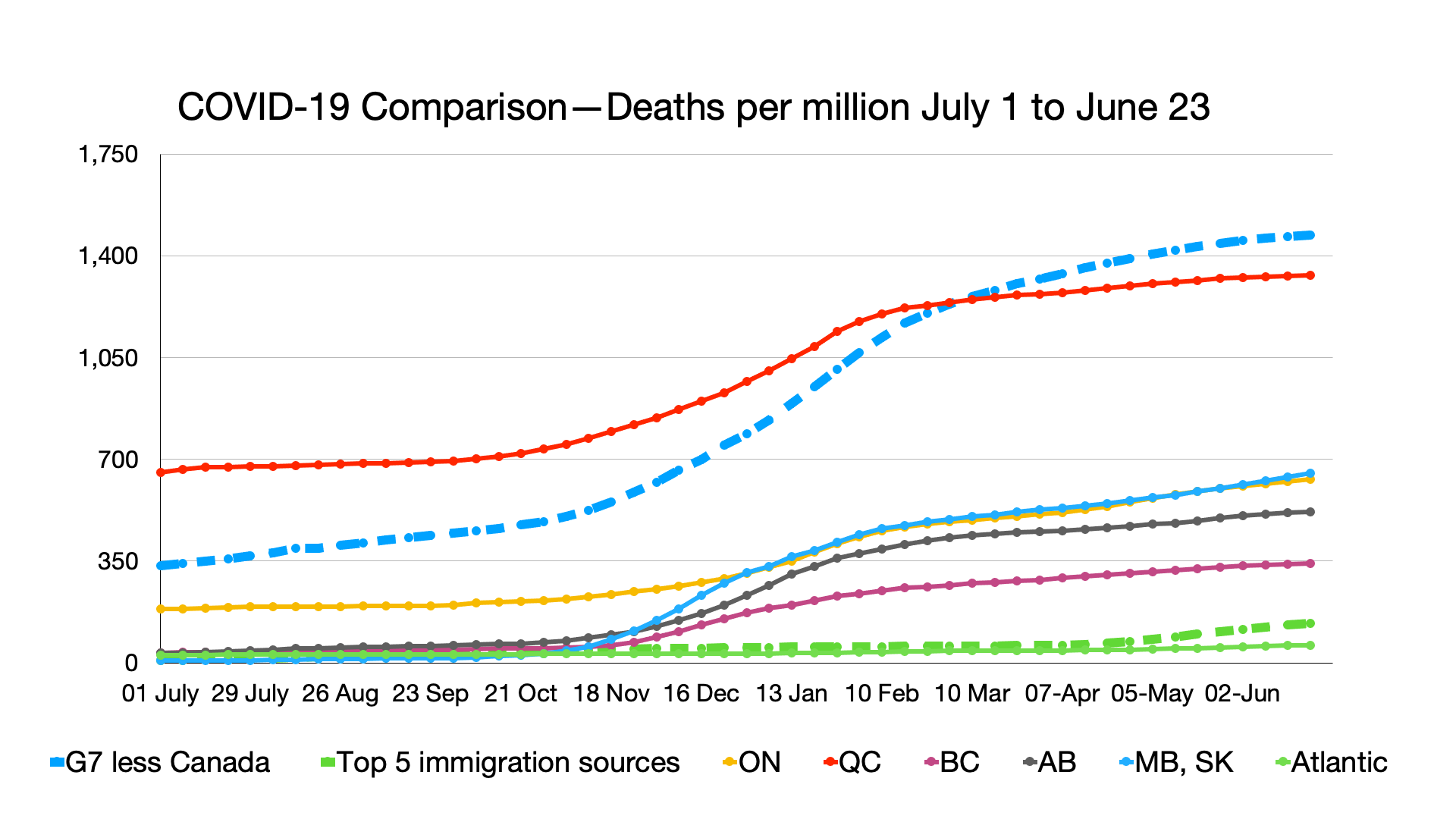
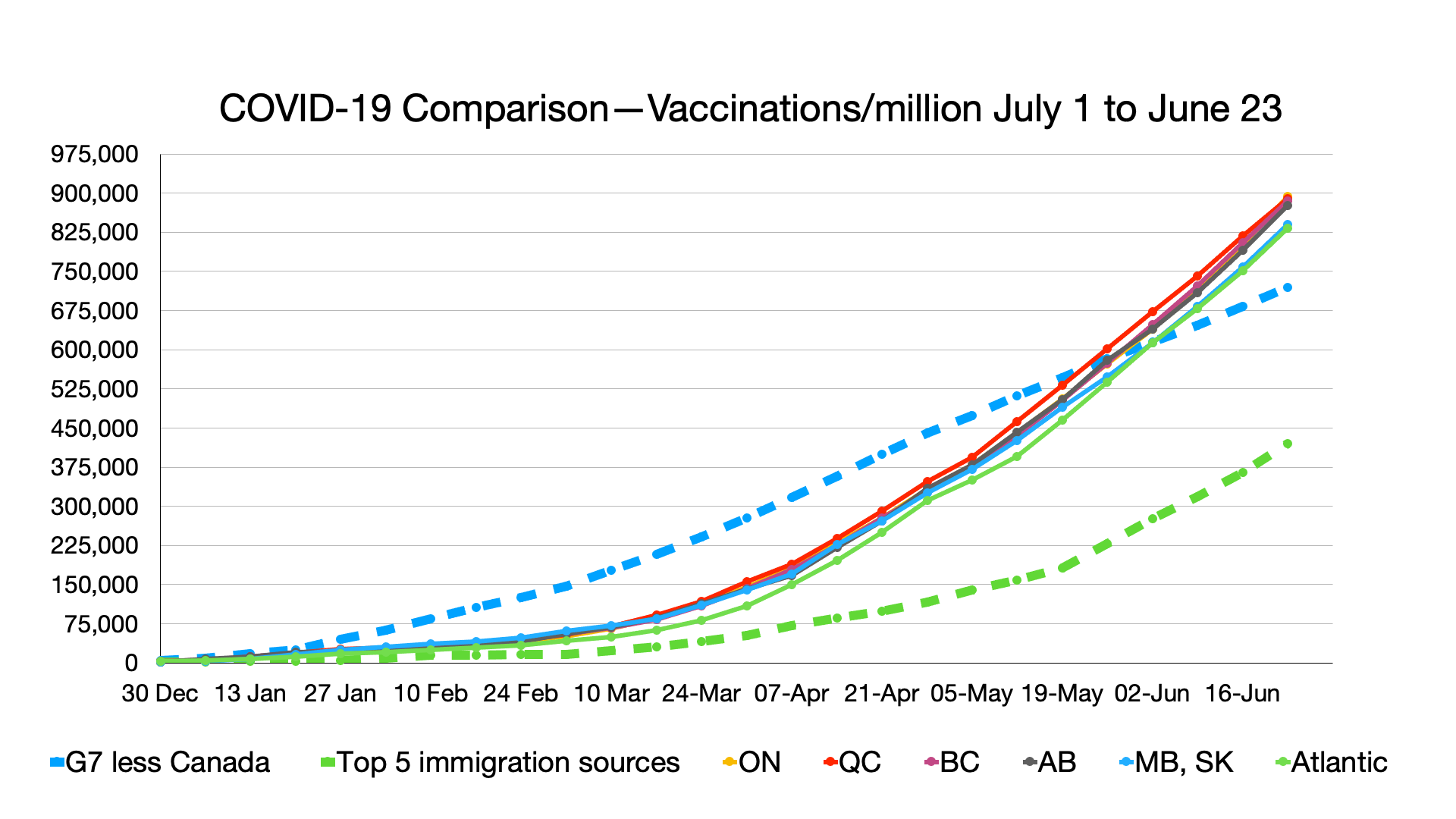
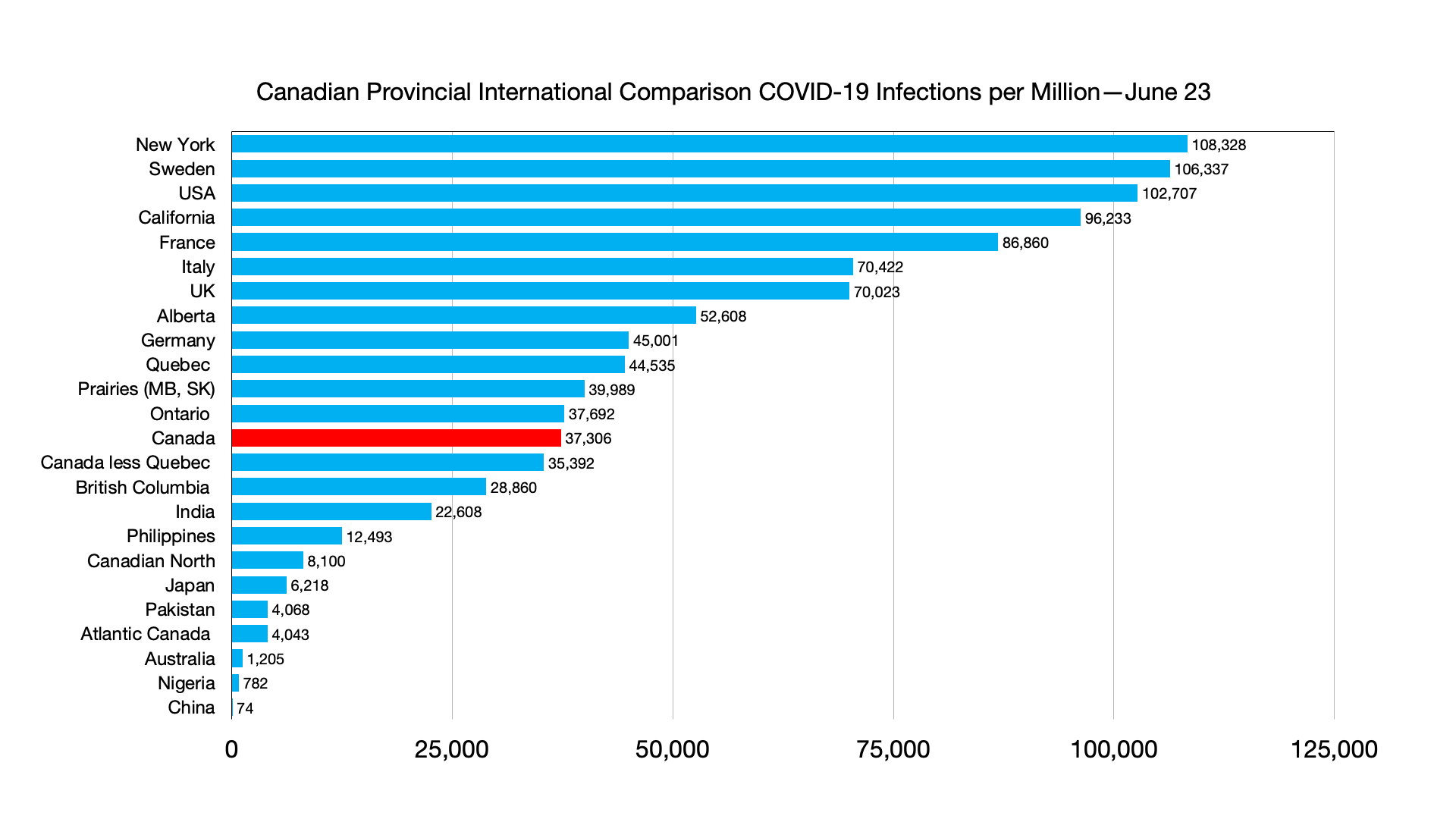
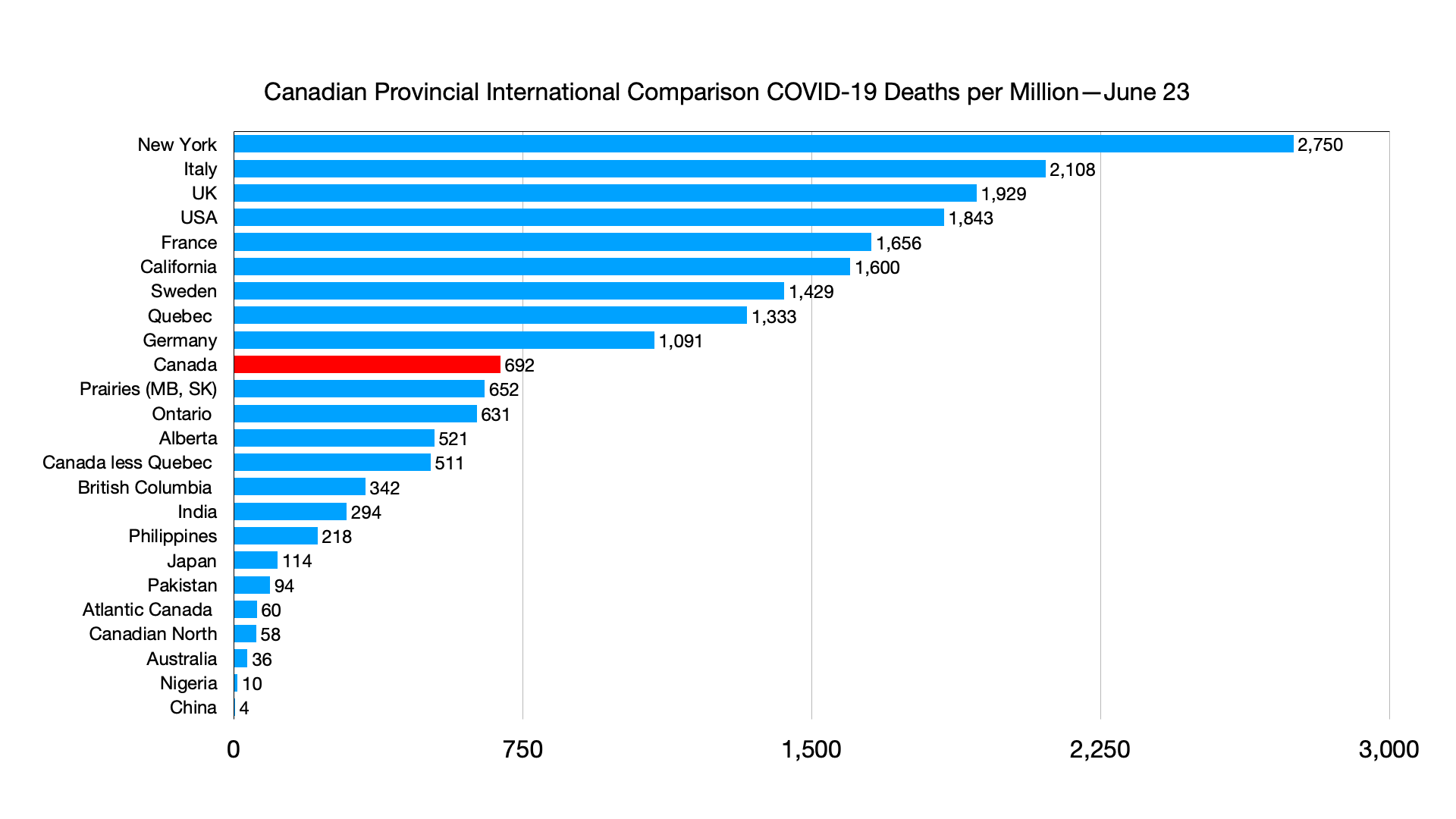
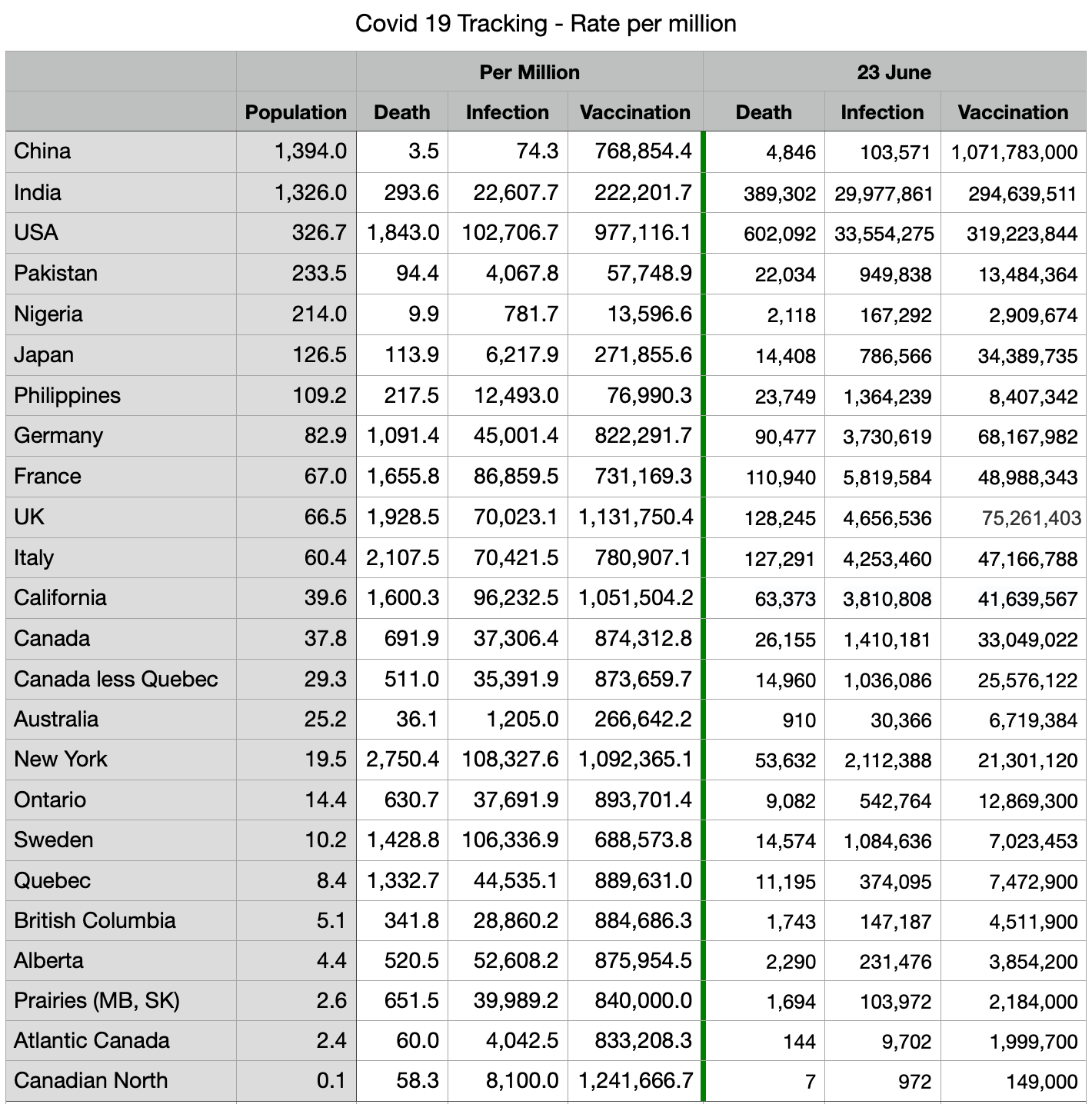
#COVID-19: Comparing provinces with other countries 23 June Update, China’s vaccine diplomacy

The latest charts, compiled 23 June as overall rates in Canada continue to decline along with increased vaccinations (still largely first dose, fully vaccinated 20.8 percent, most EU countries are between 25 to 35%).

Vaccinations: Minor relative changes with Ontario ahead of Quebec and British Columbia. China’s vaccination rate continues to grow dramatically (about 16% fully vaccinated. Article below charts describes lower efficacy of Chinese-made vaccines.

Trendline charts

Infections per million: No relative changes.

Deaths per million: No relative change.

Vaccinations per million: Canadian vaccination rates continue to exceed G7 less Canada. Vaccination rate increase in immigration source countries driven by China (up 16% from last week) with Indian vaccination rates up 12.5% compared to last week.

Weekly

Infections per million: No relative change.

Deaths per million: No relative changes.

They Relied on Chinese Vaccines. Now They’re Battling Outbreaks

Interesting data on the relative weakness of Chinese vaccines, likely to undermine the Chinese government’s vaccine diplomacy:

Mongolia promised its people a “Covid-free summer.” Bahrain said there would be a “return to normal life.” The tiny island nation of the Seychelles aimed to jump-start its economy.

All three put their faith, at least in part, in easily accessibleChinese-made vaccines, which would allow them to roll out ambitious inoculation programs when much of the world was going without.

But instead of freedom from the coronavirus, all three countries are now battling a surge in infections.

China kicked off its vaccine diplomacy campaign last year by pledging to provide a shot that would be safe and effective at preventing severe cases of Covid-19. Less certain at the time was how successful it and other vaccines would be at curbing transmission.

Now, examples from several countries suggest that the Chinese vaccines may not be very effective at preventing the spread of the virus, particularly the new variants. The experiences of those countries lay bare a harsh reality facing a postpandemic world: The degree of recovery may depend on which vaccines governments give to their people.

In the Seychelles, Chile, Bahrain and Mongolia, 50 to 68 percent of the populations have been fully inoculated, outpacing the United States, according to Our World in Data, a data tracking project. All four ranked among the top 10 countries with the worst Covid outbreaks as recently as last week, according to data from The New York Times. And all four are mostly using shots made by two Chinese vaccine makers, Sinopharm and Sinovac Biotech.

“If the vaccines are sufficiently good, we should not see this pattern,” said Jin Dongyan, a virologist at the University of Hong Kong. “The Chinese have a responsibility to remedy this.”

Scientists don’t know for certain why some countries with relatively high inoculation rates are suffering new outbreaks. Variants, social controls that are eased too quickly and careless behavior after only the first of a two-shot regimen are possibilities. But the breakthrough infections could have lasting consequences.

In the United States, about 45 percent of the population is fully vaccinated, mostly with doses made by Pfizer-BioNTech and Moderna. Cases have dropped 94 percent over six months.

Israel provided shots from Pfizer and has the second-highest vaccination rate in the world, after the Seychelles. The number of new daily confirmed Covid-19 cases per million in Israel is now around 4.95.

In the Seychelles, which relied mostly on Sinopharm, that number is more than 716 cases per million.

Disparities such as these could create a world in which three types of countries emerge from the pandemic — the wealthy nations that used their resources to secure Pfizer-BioNTech and Moderna shots, the poorer countries that are far away from immunizing a majority of citizens, and then those that are fully inoculated but only partly protected.

China, as well as the more than 90 nations that have received the Chinese shots, may end up in the third group, contending with rolling lockdowns, testing and limits on day-to-day life for months or years to come. Economies could remain held back. And as more citizens question the efficacy of Chinese doses, persuading unvaccinated people to line up for shots may also become more difficult.

One month after receiving his second dose of Sinopharm, Otgonjargal Baatar fell ill and tested positive for Covid-19. Mr. Otgonjargal, a 31-year-old miner, spent nine days in a hospital in Ulaanbaatar, the capital of Mongolia. He said he was now questioning the usefulness of the shot.

“People were convinced that if we were vaccinated, the summer will be free of Covid,” he said. “Now it turns out that it’s not true.”

Beijing saw its vaccine diplomacy as an opportunity to emerge from the pandemic as a more influential global power. China’s top leader, Xi Jinping, pledged to deliver a Chinese shot that could be easily stored and transported to millions of people around the world. He called it a “global public good.”

Mongolia was a beneficiary, jumping at the chance to score millions of Sinopharm shots. The small country quickly rolled out an inoculation program and eased restrictions. It has now vaccinated 52 percent of its population. But on Sunday, it recorded 2,400 new infections, a quadrupling from a month before.

In a statement, China’s Foreign Ministry said it did not see a link between the recent outbreaks and its vaccines. It cited the World Health Organization as saying that vaccination rates in certain countries had not reached sufficient levels to prevent outbreaks, and that countries needed to continue to maintain controls.

“Relevant reports and data also show that many countries that use Chinese-made vaccines have expressed that they are safe and reliable, and have played a good role in their epidemic prevention efforts,” the ministry said. China has also emphasized that its vaccines target severe disease rather than transmission.

No vaccine fully prevents transmission, and people can still fall ill after being inoculated, but the relatively low efficacy rates of Chinese shots have been identified as a possible cause of the recent outbreaks.

The Pfizer-BioNTech and Moderna vaccines have efficacy rates of more than 90 percent. A variety of other vaccines — including AstraZeneca and Johnson & Johnson — have efficacy rates of around 70 percent. The Sinopharm vaccine developed with the Beijing Institute of Biological Products has an efficacy rate of 78.1 percent; the Sinovac vaccine has an efficacy rate of 51 percent.

The Chinese companies have not released much clinical data to show how their vaccines work at preventing transmission. On Monday, Shao Yiming, an epidemiologist with the Chinese Center for Disease Control and Prevention, said China needed to fully vaccinate 80 to 85 percent of its population to achieve herd immunity, revising a previous official estimate of 70 percent.

Data on breakthrough infections has not been made available, either, though a Sinovac study out of Chile showed that the vaccine was less effective than those from Pfizer-BioNTech and Moderna at preventing infection among vaccinated individuals.

A representative from Sinopharm hung up the phone when reached for comment. Sinovac did not respond to a request for comment.

William Schaffner, medical director of the National Foundation for Infectious Diseases at Vanderbilt University, said the efficacy rates of Chinese shots could be low enough “to sustain some transmission, as well as create illness of a substantial amount in the highly vaccinated population, even though it keeps people largely out of the hospital.”

Despite the spike in cases, officials in both the Seychelles and Mongolia have defended Sinopharm, saying it is effective in preventing severe cases of the disease.

Batbayar Ochirbat, head researcher of the Scientific Advisory Group for Emergencies at Mongolia’s Ministry of Health, said Mongolia had made the right decision to go with the Chinese-made shot, in part because it had helped keep the mortality rate low in the country. Data from Mongolia showed that the Sinopharm vaccine was actually more protective than the doses developed by AstraZeneca and Sputnik, a Russian vaccine, according to the Health Ministry.

The reason for the surge in Mongolia, Mr. Batbayar said, is that the country reopened too quickly, and many people believed they were protected after only one dose.

“I think you could say Mongolians celebrated too early,” he said. “My advice is the celebrations should start after the full vaccinations, so this is the lesson learned. There was too much confidence.”

Some health officials and scientists are less confident.

Nikolai Petrovsky, a professor at the College of Medicine and Public Health at Flinders University in Australia, said that with all of the evidence, it would be reasonable to assume the Sinopharm vaccine had minimal effect on curbing transmission. A major risk with the Chinese inoculation is that vaccinated people may have few or no symptoms and still spread the virus to others, he said.

“I think that this complexity has been lost on most decision makers around the world.”

In Indonesia, where a new variant is spreading, more than 350 doctors and health care workers recently came down with Covid-19 despite being fully vaccinated with Sinovac, according to the risk mitigation team of the Indonesian Medical Association. Across the country, 61 doctors died between February and June 7. Ten of them had taken the Chinese-made vaccine, the association said.

The numbers were enough to make Kenneth Mak, Singapore’s director of medical services, question the use of Sinovac. “It’s not a problem associated with Pfizer,” Mr. Mak said at a news conferenceon Friday. “This is actually a problem associated with the Sinovac vaccine.”

Bahrain and the United Arab Emirates were the first two countries to approve the Sinopharm shot, even before late-stage clinical trial data was released. Since then, there have been extensive reports of vaccinated people falling ill in both countries. In a statement, the Bahraini government’s media office said the kingdom’s vaccine rollout had been “efficient and successful to date.”

Still, last month officials from Bahrain and the United Arab Emirates announced that they would offer a third booster shot. The choices: Pfizer or more Sinopharm.

Source: https://www.nytimes.com/2021/06/22/business/economy/china-vaccines-covid-outbreak.html?searchResultPosition=1