Would Canadian citizenship be a lifeline to this jailed Saudi blogger? Ottawa ‘not convinced’

Raises some broader citizenship policy issues (e.g., likely sets a precedent for other detained prisoners) and likelihood of impact on Saudi government incarceration of Badawi likely to me minimal at best, counter-productive at worst. That being said, yet another reminder of the false veneer of MBS’s modernization initiatives:

The federal government appears reluctant to grant Canadian citizenship to a jailed blogger in Saudi Arabia whose wife and children live in this country.

Weeks after the House of Commons passed a unanimous motion to ask the immigration minister to bestow citizenship on Saudi dissident Raif Badawi, a source told the Star on Wednesday that the federal government is “not convinced” such an act would help — and fears that a show of public support might in fact worsen his treatment.

As a result, the federal government prefers, for now, to stick with diplomatic “back channels” to advocate for his release, said the source, on the condition of anonymity as they were not authorized to speak publicly on the matter.

The case appears to be the latest to spotlight the fine line the Canadian government is trying to walk when it comes to using public pressure versus quiet diplomacy on the international stage.

Badawi, who has championed support for religious pluralism and respect for minorities, was arrested in 2012 and accused of using the internet to “infringe on religious values” in violation of a Saudi Arabian law against cybercrime, according to his international legal team. He was later found guilty of the charges and sentenced to 10 years in prison, 1,000 lashes and a steep fine.

“This new investigation is likely an act of intimidation, intended to silence Raif and his family as the Kingdom faces growing backlash for its human rights abuses,” said Brandon Silver, an international human rights lawyer and the centre’s director of policy and projects.

The centre says Badawi’s ongoing imprisonment is unjust and it has urged Saudi authorities to include Badawi among the list of prisoners who, as part of an annual tradition, will be granted royal pardons during Ramadan this year.

“Nine years have been long enough. My kids are growing up without their father, and we all miss him terribly,” Haidar said in a recent statement.

A written appeal previously sent to Saudi authorities by Irwin Cotler, Canada’s former justice minister and the centre’s founding chair, argued that Badawi’s “moderate and reasonable voice” did not defame Islam or personally attack authority figures, posed no threat to national security and reflected a “deep patriotism.”

The clemency appeal noted that Saudi Arabia’s “reputational crisis” following the 2018 murder of Washington Post columnist Jamal Khashoggi in the Saudi consulate in Turkey, as well as other events, could intensify if the kingdom doesn’t send a “clear signal” to the world it is committed to reforming.

A motion in late January calling on Immigration Minister Marco Mendicino to use his discretion under a section of the Citizenship Act, which allows granting of Canadian citizenship to a person facing “special and unusual hardship,” was put forward by Bloc Québécois leader Yves-François Blanchet and approved unanimously in the House. 

Thomas Juneau, an associate professor of international affairs at the University of Ottawa, said he sees both sides of the argument when it comes to conferring citizenship upon Badawi.

On the one hand, granting citizenship is the morally right thing to do and helps bring attention to the case. On the other hand, there’s a powerful counterargument that granting citizenship could make the Saudi government feel like it’s been backed into a corner and there’s a risk it could dig its heels in because it does not want to be seen as bending to outside pressure.

“It’s not a democracy, but it still has its own domestic considerations,” Juneau said. “It might be reluctant to be seen as responding to external pressure.”

Juneau says this sort of dilemma over whether Canada should exert public pressure on another country or use more discreet back-channel talks to get its way can be seen in this country’s handling of the ongoing detention of Canadians Michael Kovrig and Michael Spavor in China and terrorist kidnapping cases abroad.

“Is it better when these terrorist kidnappings are managed with as low profile as possible or when there’s attention brought to the case? We don’t know the answer to that. There’s still a very serious debate,” he said.

Juneau adds that going the quieter route can invite speculation whether the government is seeking to avoid political embarrassment.

Silver told the Star conferring Canadian citizenship upon Badawi would “give Canada greater standing in its interventions on Mr. Badawi’s behalf, including in requests for clemency and consular visits.”

“As well, (Badawi) is subject to a 10-year travel ban following the completion of his sentence, and Canadian citizenship may also help secure him a passport and safe passage to Canada despite the ban.”

There is precedent for this, Silver added, citing the federal government’s efforts under Pierre Elliott Trudeau to secure the release of Soviet dissident and human-rights advocate Anatoly Sharansky, who was sentenced to 13 years in prison in the late 1970s on espionage charges. According to a 1978 Canadian Press story, Trudeau told Soviet authorities “We would take him off their hands” and that the House had earlier given unanimous approval to grant Sharansky landed-immigrant status. (Sharansky was eventually released in 1986 and flew to Israel).

Asked Wednesday if the government planned to act on the motion regarding Badawi, Alexander Cohen, the minister’s press secretary said in a statement, “We continue to raise (Badawi’s) case at the highest levels and we have repeatedly called for clemency to be granted. We remain in contact with Ms. Haidar and we want to see Mr. Badawi reunited with his family. The recent motion demonstrates the concern of Parliament with regard to Mr. Badawi’s detention.”

Syrine Khoury, press secretary to Foreign Affairs Minister Marc Garneau, would not elaborate, saying, “We will continue to raise our concerns regarding (Badawi’s) situation in Riyadh and Ottawa.”

However the government source said Ottawa was “treading carefully” on the question of granting citizenship to Badawi.

“The idea it could confer benefits is tenuous,” the source said.

For one, the Saudis don’t recognize dual citizenship, so giving Badawi Canadian citizenship would basically amount to a symbolic gesture.

Secondly, the source said, there is concern the Saudis could perceive the act of granting citizenship as Canada unnecessarily “meddling” in their internal affairs and potentially hurt Badawi’s clemency bid and result in a deterioration of his conditions. (Badawi is allowed brief phone calls with his wife but is not allowed visitors, according to his international legal team).

Informed Wednesday of the government’s lukewarm position on granting citizenship to Badawi, Silver said public advocacy and private diplomacy are equally important and proved to be an effective combination in getting the recent release from detention of Loujain Alhathloul, the Saudi women’s rights activist and former UBC graduate.

The granting of citizenship to Badawi, Silver added, would give “great hope” to Badawi and to his family and potentially protect him from future reprisals.

“I don’t think symbolism is something that should be so quickly papered over.”
Source: https://www.thestar.com/news/canada/2021/03/03/would-canadian-citizenship-be-a-lifeline-to-this-jailed-saudi-blogger-ottawa-not-convinced.html

Ford government says it’s changing judicial appointments to promote diversity. Racialized lawyers accuse it of ‘power grab’

Of note. The annual reports by the Ontario Judicial Appointments Advisory Committee allow for assessment of these changes:

Organizations representing racialized lawyers have all come out against the Ontario government’s proposed changes to judicial appointments, which the attorney general says are partly needed to improve diversity on the bench. 

Major organizations representing Black, Asian, South Asian and Muslim lawyers told the Star they didn’t ask for these changes. They argue the new system will lead to the perception that the appointments of provincial court judges in Ontario is no longer an independent and impartial process and could allow for provincial governments to make patronage appointments. 

“We see this as a power grab dressed up in the very thin veneer of purported diversity,” said Nader Hasan, a member of the legal advocacy committee of the Canadian Muslim Lawyers Association. 

“Our view is that diversity and excellence are best preserved by maintaining the independence and integrity of the current process.” 

Added Raphael Tachie, president of the Canadian Association of Black Lawyers, “It’s challenging to read something that says, ‘We’re doing this to increase the diversity of the judiciary,’ when the equity-seeking groups didn’t ask for it.”

In an omnibus justice bill tabled at Queen’s Park last month, Attorney General Doug Downey proposed several changes to the way provincial court judges are appointed. 

It includes significant changes to Ontario’s Judicial Appointments Advisory Committee (JAAC), the independent panel of judges, lawyers and members of the public that vets judicial applicants and submits a ranked short list of at least two candidates to the attorney general. 

Under the proposed amendments, that shortlist would grow to at least six candidates. “It allows for a bigger look at what’s out there in terms of creating some diversity and creating more choice,” Downey told the Star when he tabled the bill. 

The attorney general could also reject the six-person shortlist and ask to see the names of the next six candidates, as he is currently permitted to do with the two-person shortlist. Downey says he has already asked the committee to provide shortlists with more than two names, and that this change merely formalizes that practice. 

Janani Shanmuganathan, a board member of the South Asian Bar Association, argues that allowing the attorney general more choice in who to appoint to the bench leaves room “for a partisan or patronage appointment — some sort of appointment based not on the selection criteria or on who is best fit for the job, but for other reasons.”

A spokesperson for Downey maintained that the proposed changes reflect feedback received from lawyers and “justice-sector partners” and will ensure the appointments process remains non-partisan. 

“We believe it is responsible to update the system to help Ontario’s bench better reflect the evolving diversity of the province’s communities,” Nicko Vavassis said in an email. 

Another proposed change would mean the three legal organizations with representatives on the committee — the Law Society of Ontario, the Ontario Bar Association and the Federation of Ontario Law Associations — would no longer pick their own representatives, but would submit a shortlist of candidates for the attorney general to choose from.

“That will allow us to manage balance and diversity on the committee itself as well,” Downey told the Star last month. 

The attorney general already picks the seven community members on the 13-person committee.

Legal groups representing racialized lawyers say improving diversity on the bench is a laudable goal, but say they struggle to see how the government’s more significant changes would accomplish that. 

“Is there a problem with diversity on the JAAC itself? I don’t think there is. No one has complained there is an issue,” said Emily Lam, chair of the advocacy and policy committee and board member at the Federation of Asian Canadian Lawyers. 

“The irony is Mr. Downey himself has described JAAC as the gold standard, so why does he need these changes?” Lam said. 

“The concern is that this is actually for partisan purposes, and I think that transparency and fairness call for a discussion to be had by Mr. Downey with stakeholders and the public before taking any further steps.” 

The Federation of Ontario Law Associations said it did not receive much of an explanation from Downey for the proposed change to selection of committee members. 

“It has been suggested that it might be to achieve some greater diversity; however, given that the (attorney general) appoints the majority of the committee and the fact that our bench is quite diverse, it does not appear that we have an issue in this regard,” federation chair Bill Woodward said in an email. 

“This change gives the appearance of allowing the (attorney general) to have even greater control over the composition of the JAAC.” 

The Law Society of Ontario and the Ontario Bar Association have not objected to the proposed changes, and told the Star that they support a system that produces diverse judges. 

Source: https://www.thestar.com/politics/provincial/2021/03/02/ford-government-says-its-changing-judicial-appointments-to-promote-diversity-racialized-lawyers-accuse-it-of-power-grab.html

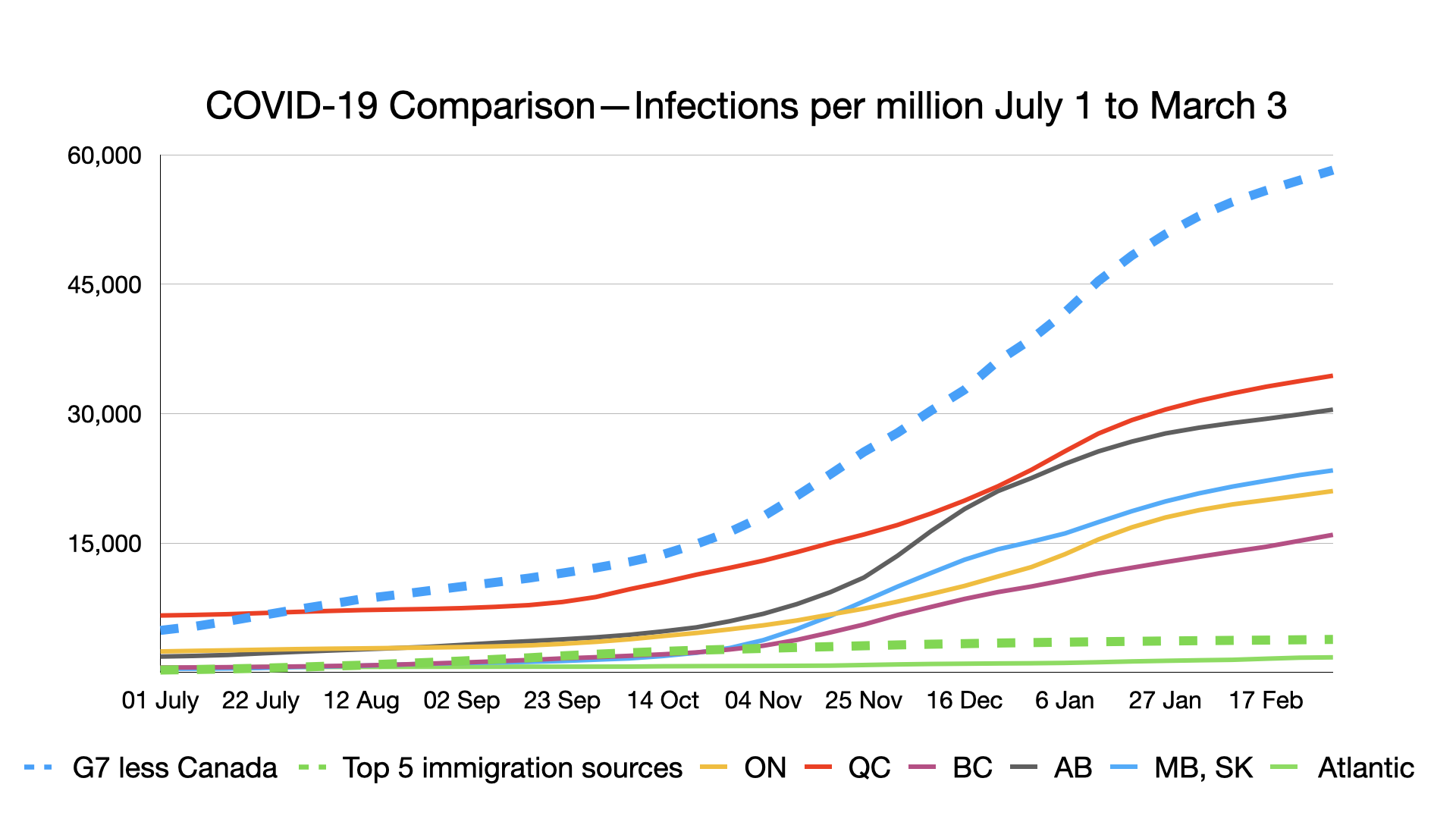
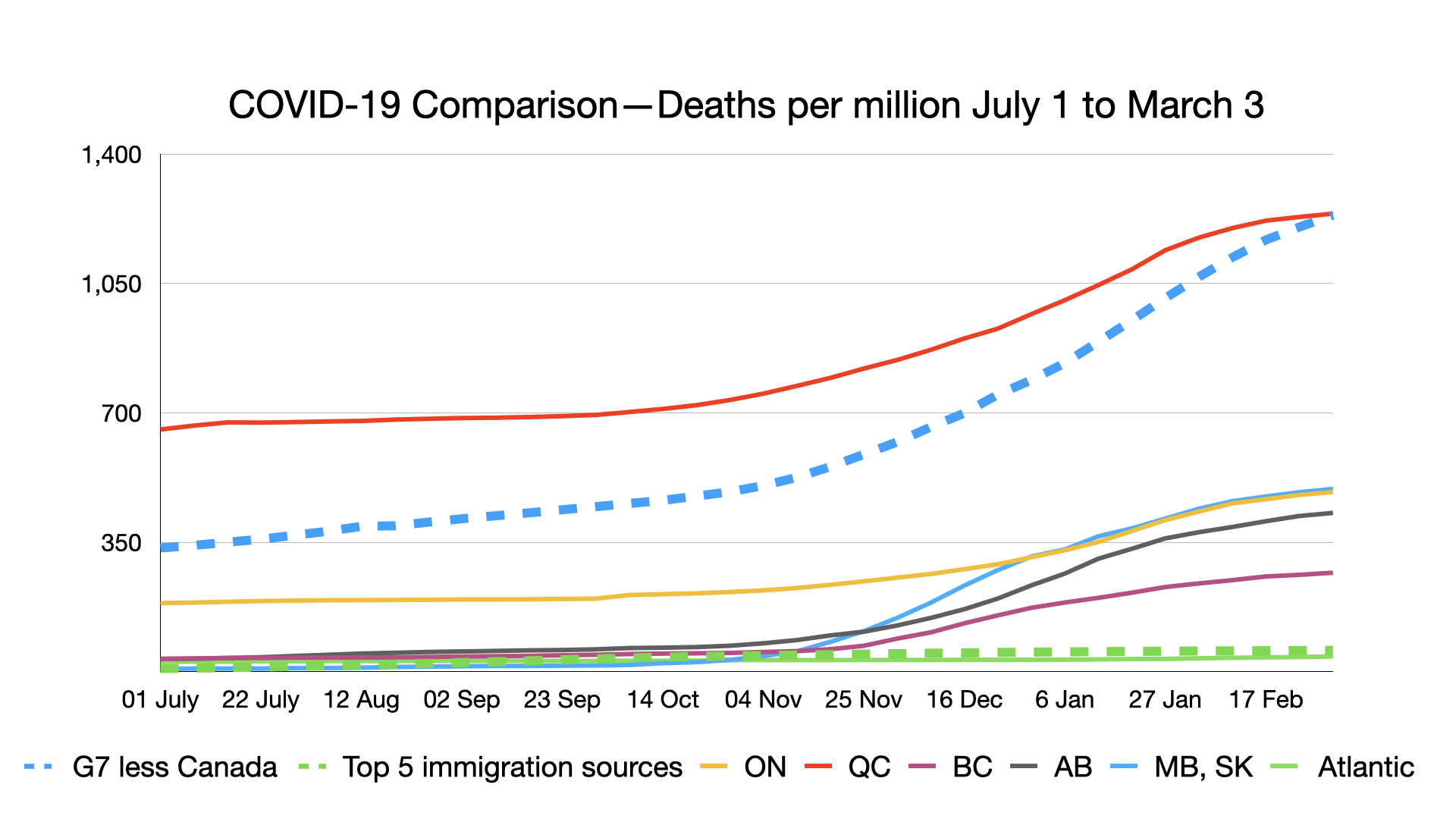
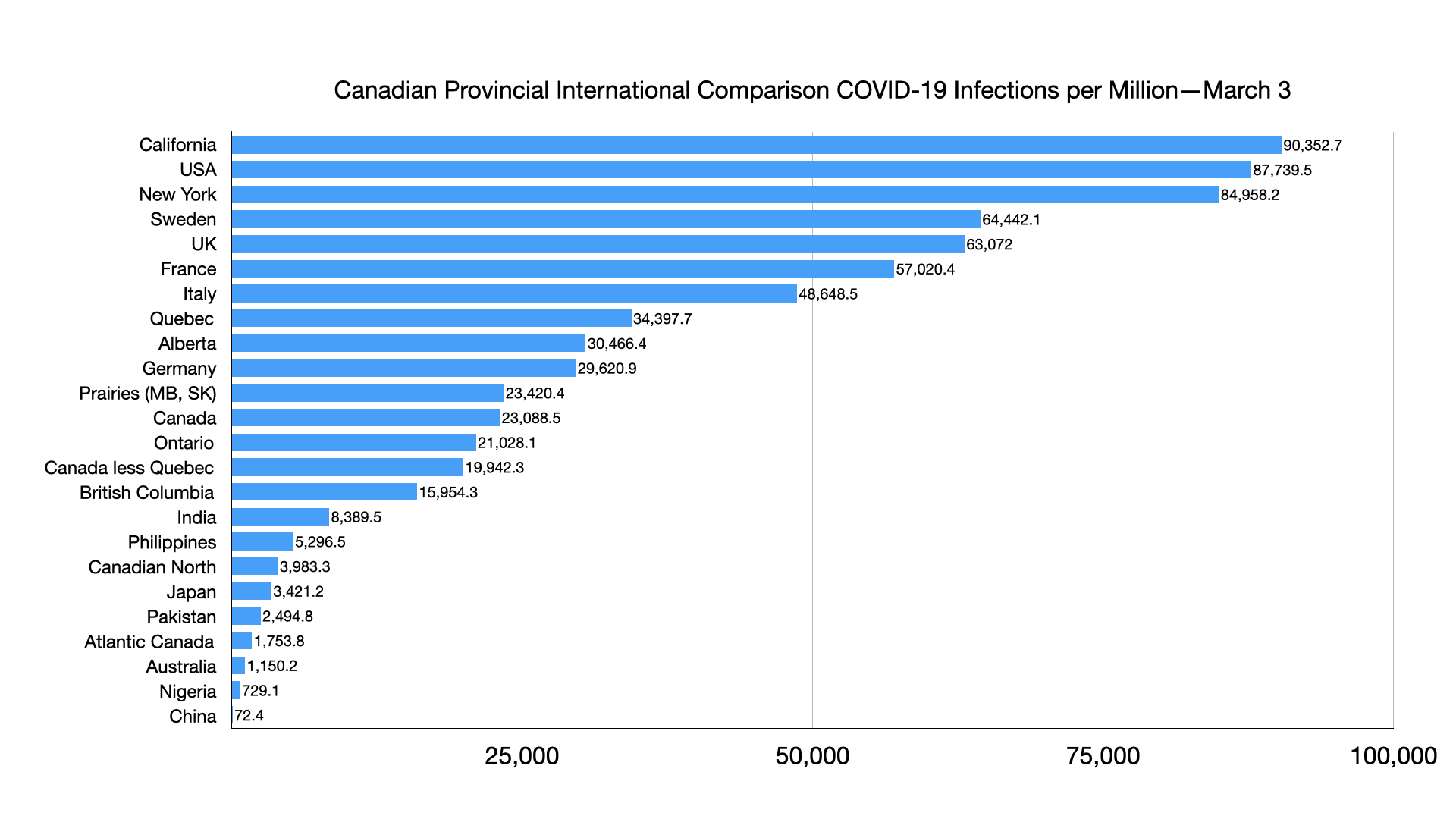
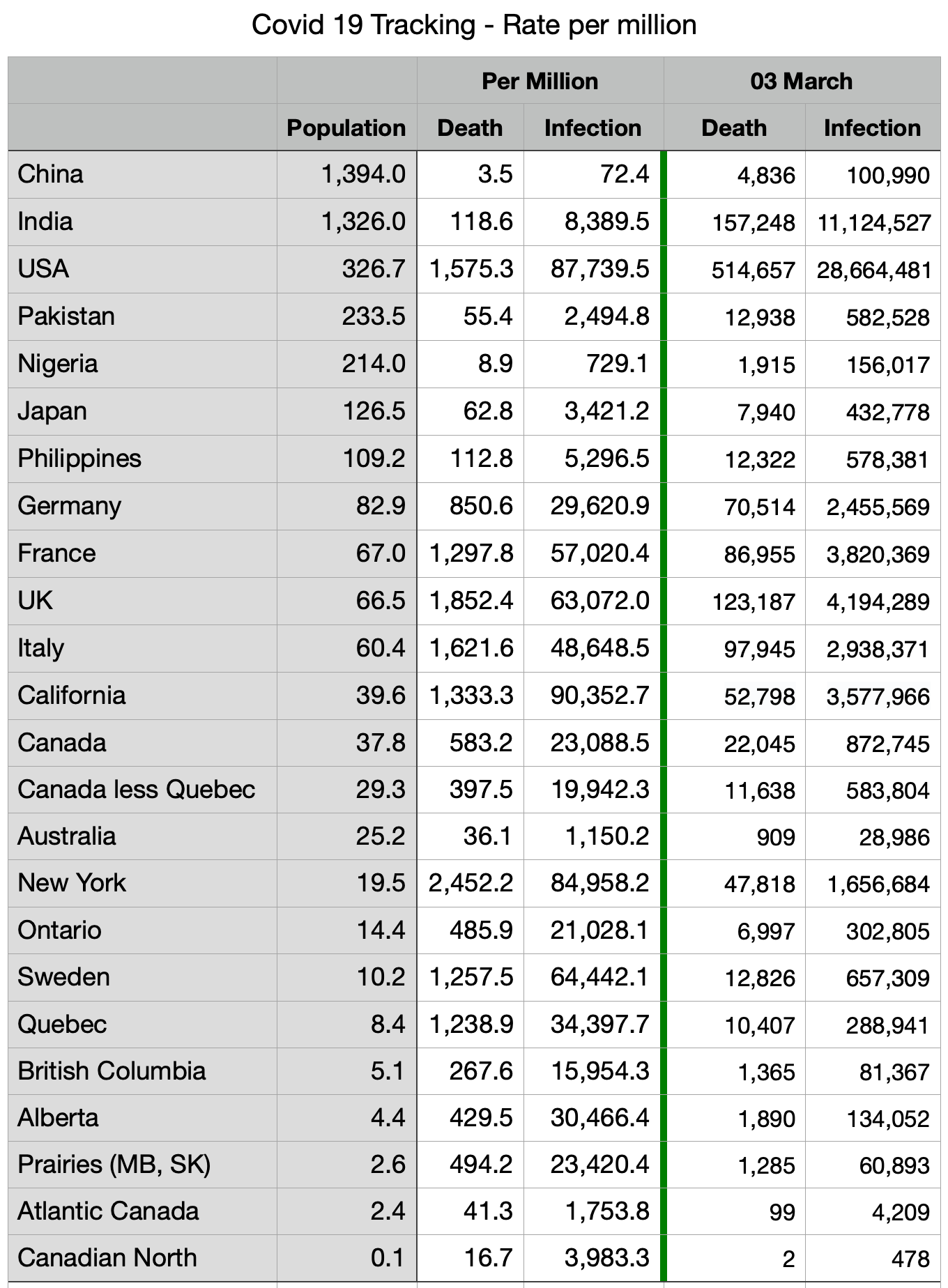
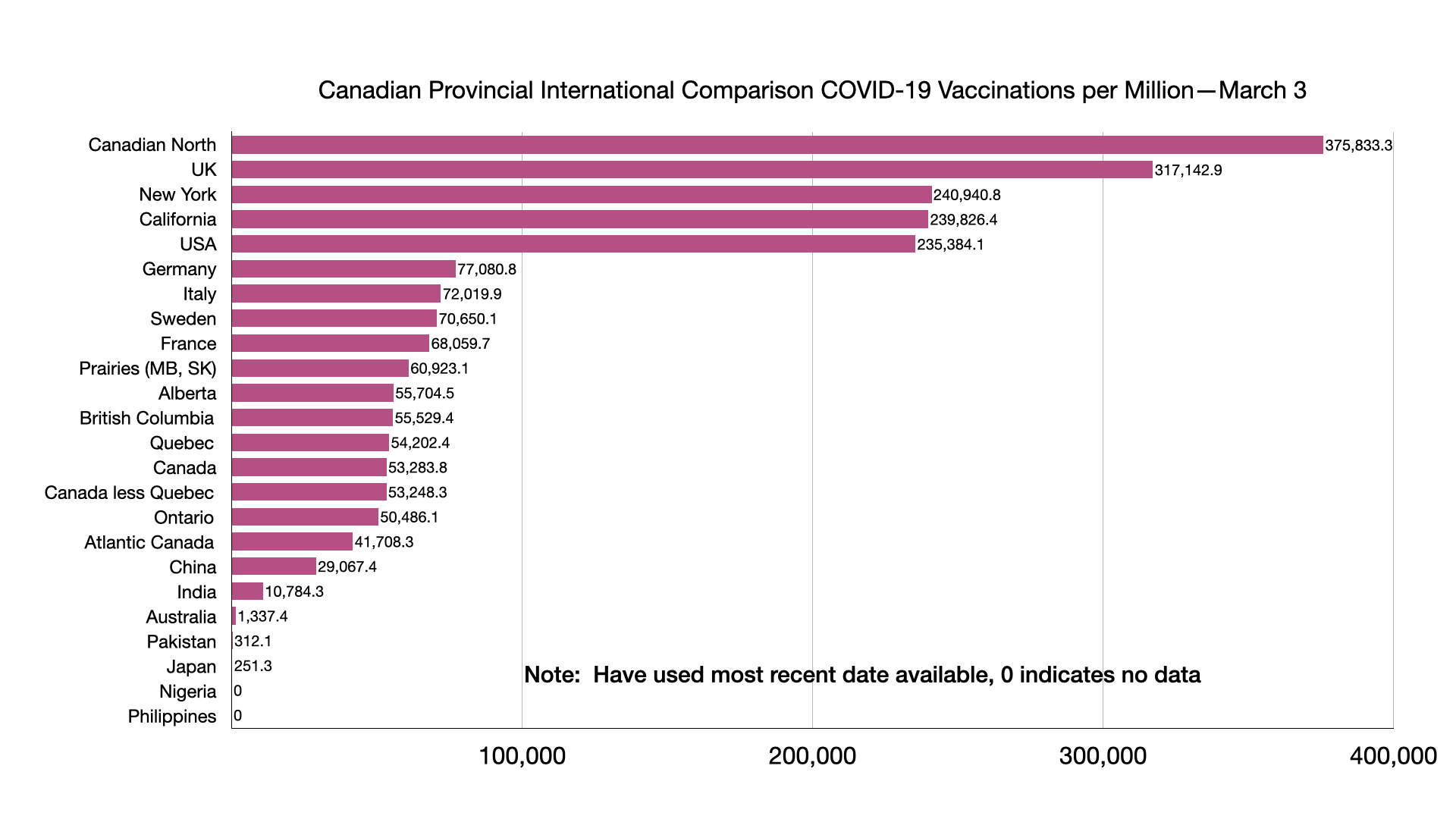
#COVID-19: Comparing provinces with other countries 3 March Update

The latest charts, compiled 3 March (not international vaccination data is latest available).

Vaccinations: The gap between all G7 countries save Japan continues to grow, all European countries slightly ahead of Canada.

Trendline charts

Infections per million: The overall trend of a flattening curve is seen in G7 countries and most provinces save for the Prairies and British Columbia.

Deaths per million: Most Canadian provinces continue to flatten the curve, Quebec most dramatically. Overall G7 death rate at point of surpassing Quebec.

Vaccinations per million: Gap between G7 and Canada, driven not only by the UK and USA, remains largely unchanged.

Weekly

Infections per million: No relative change.

Deaths per million: California ahead of Sweden and Quebec, Sweden ahead of Quebec 

Blogging break this week

Laptop repair

Public Service Disaggregated Data for Visible Minorities and Indigenous peoples, Citizenship status

Over the past few months, I have been analyzing the various datasets breaking down public service employment and employee survey data by the individual visible minority and Indigenous groups.

The three articles, What new disaggregated data tells us about federal public service diversity (Policy Options, October 2020), What the Public Service Employee Survey breakdowns of visible minority and other groups tell us about diversity and inclusion (The Hill Times, November 2020) and Diversity and Inclusion: Public Service Hirings, Promotions and Separations (The Hill Times, March 2021) allow for a more comprehensive view of visible minority and Indigenous groups in the federal public service. Moreover, recent Public Service Commission studies analyzing recruitment of employment equity groups add an important element to discussions on public service staffing and recruitment practices.

Much of the debate and discussions have understandably focussed on Blacks in the public service. Yet public service data indicates that their situation is not unique in terms of representation, hirings and promotions and the employee satisfaction, with many commonalities with the other groups. A more granular analysis within each occupational group (i.e., comparing representation at each level by occupational group, as some departments are conducting, may very well provide such evidence).

Key findings are:

  • Overall EE analysis shows considerable variation among the different visible minority and Indigenous groups
  • Visible minorities
    • Correlation between lower educational attainment and representation for most groups save Chinese
    • Overall under-representation common to most groups
    • Blacks, West Asian/Arab small over-representation
    • EX: All groups under-represented save Japanese with Filipino, Latin American and Blacks having the largest gaps
    • Hirings: Hirings of visible minorities have increased for all groups in most occupational groups save for technical and administrative support. Hirings at the EX level have increase for Black, Chinese, South Asian/East Indian and West Asian/Arab, with other groups showing no increase.
    • Promotions: While promotions have increased marginally for virtually all groups at the agregate level, promotions by occupational category provide a mixed picture, with most groups and most occupational categories experiencing a marginal decline in promotions.
  • Indigenous peoples
    • First Nations under-represented, Métis and Inuit over-represented
    • Hirings: While hirings at the EX level have increased slightly, this is less the case for the other occupational categories. Hirings of Métis have increased the most in the operational category, hirings of First Nations the most in the technical category, while hirings of Inuit the most at the EX level.
    • Promotions: A marginal decline across all Indigenous groups and occupational
  • Harassment/Discrimination experiences vary
    • Harassment: Japanese report the most as do First Nations and Métis, Chinese and Filipino least satisfied with resolution as is the case with Métis
    • Discrimination; Blacks report the most, but all groups encounter discrimination on the basis of race, ethnic origin or colour. Black, Japanese and Latin American least satisfied with resolution. All Indigenous groups report having been discriminated against, mainly based on race or ethnic origin, with Métis also least satisfied with resolution

The recent PSC Audit of Employment Equity Representation in Recruitment provides some interesting data and analysis of the staffing process and how the different employment equity groups, and visible minority largest sub-groups, fare at each of the five stages in the staffing process: job application, automated screening, organizational screening, assessment and appointment (FY 2016-17 data).

The most significant stages were organizational screening and assessment where most filtering took place as shown in the table below:

The next table breaks down visible minorities by the largest groups:

As noted in the audit, Blacks have the largest decrease in representation at all stages save for appointment, with a non-negligible being screened out by automatic screening. Chinese are screened out more by organizational screening whereas West Asian and South Asian are more likely to be screened in as the assessment stage.

The audit provides the following explanation for visible minority groups. Overall, visible minority women have higher success rates than visible minority men at the organizational screening and assessment stages. Visible minorities screened out at the organizational screening stage due to citizenship status (Canadian citizens are given preference over non-citizens) and experience qualifications. Those with public service work experience were more likely to be screened in at this stage but overall “experienced less success than their counterparts regardless of whether or not they had federal public service experience.”

At the assessment stage, visible minorities were less successful when written tests were used, particularly the case for Black candidates.

A separate PSC report addresses the Citizenship of applicants and external appointments. While Canadian citizens have a hiring preference, the share of non-citizen applicants has risen from 9.4 percent in 2015-16 to 14.5 percent in 2018-19, with the share of hires has increased to 2.5 percent from 1.5 percent over the same period

Non-citizen visible minority applicants account for 22.9 percent of all visible minority applicants, for non-visible minorities, the share is only 12.1 percent.

The table below contrasts applicants and appointments by citizenship status for the past four years. For Canadian citizens, the percentage of applicants and appointments are comparable, for Permanent Residents and others, appointments are significantly greater than applicants suggesting that citizenship may be less of a barrier than commonly believed.

Visible minority Canadian citizens represented 17.2 percent of all applicants and 19.5 percent of all hires (2018-19).

Saunders: How Canada learned what’s wrong with its immigration system – by slamming its borders shut

Usual thought provoking column by Doug Saunders, even if I am more sceptical regarding the government’s approach:

How do you find 401,000 immigrants to become new Canadians when nobody’s even allowed to enter the country? That was the puzzle Ottawa faced at the beginning of the year, after the federal government set admirably high annual immigration targets in 2020 that will bring in 1.2 million people over the next three years in a bold effort to build economic growth through population expansion.

Air and land borders have been shut tight because of the coronavirus pandemic, and neither immigrants nor refugees have been arriving – 2020′s immigration intake was the lowest since the 1990s. The new targets, representing more than 1 per cent of Canada’s population per year, would produce immigration rates Canada hasn’t seen since the 1960s – but begin during a border-closing pandemic. Opposition and business critics said our immigration bureaucrats could never meet that target.

Two weeks ago, those bureaucrats announced a solution that was surprising and potentially ingenious. But it also revealed some of the deep flaws in an outdated and overcomplicated immigration system that was designed for restriction rather than growth, and that leaves hundreds of thousands of families in Canada unable to participate fully in its economy.

In essence, Immigration Minister Marco Mendicino recognized that most of those 401,000 immigrants are already living and working in Canada, and often have been for years – they just don’t have the right kind of visa, or haven’t accumulated right number of points along our Byzantine immigration pathway, to qualify for permanent-residency status and eventual citizenship.

On Valentine’s Day weekend, as it does every few weeks, the Immigration Department sent out invitations for selected temporary immigrants, all of whom have worked in Canada for at least a year, to apply for permanent-resident status. Instead of the usual 3,000 to 5,000 invitations, though, it sent out more than 27,000, and hinted that this high rate would continue for some time. In order to find enough current residents to invite, the number of points needed was lowered dramatically. (Canada’s long-established points system, properly known as the Comprehensive Ranking System, awards points toward permanent status for such things as work experience, education and language skills.)

Immigrants who expected to have to wait months or years longer, and to jump through dozens more bureaucratic hoops, suddenly learned they were on a pathway to become Canadians. Immigration lawyers, who found themselves deluged with clients last week, said the supply of qualified high-quality people was always here; it just took a crisis for the government to see it.

“Yes, they can hit the 400,000 target because there are half a million temporary foreign workers and international students in Canada right now,” says Raj Sharma, a Calgary-based immigration lawyer. “I think they’re going to meet the target, and it’s going to have repercussions on the way they do things – they always should have prioritized people already living in Canada.”

Drawing on immigrants with lower point scores is not a case of “scraping the bottom of the barrel,” as Mr. Sharma notes, because the great majority of those in Canada on a temporary basis (with only a few possible exceptions, such as seasonal agricultural workers) are able to be here, for study or work, precisely because they have skills and are fluent in a Canadian language. What has denied most of these people and their families access to citizenship is not a lack of actual skills or experience, but a complex and often self-contradictory set of rules and classifications.

For example, a temporary worker employed for a year as an accounts-receivable clerk does not earn enough points to qualify under normal rules; the same worker employed as a bookkeeper does. In some provinces, an immigrant employed caring for elderly and disabled people in their own homes is ineligible to apply for permanent residency, while an immigrant doing the same work in a long-term care facility is.

At root are two decades-old assumptions behind our immigration system, both of which have been challenged by the pandemic. The first is that highly skilled, educated and fluent immigrants are a comparative rarity and a lengthy weeding-out process is needed to find them. The second is that immigrants divide neatly into two groups of very different people: temporary and low-skilled, and permanent and high-skilled.

That hasn’t been true for decades. Not only are most “temporary” immigrants to Canada people who are educated and considered middle-class in their countries of origin, but temporary low-wage work is most often used as a stepping-stone to permanent work in professions or skilled trades, or to small-business ownership. A high proportion of temporary-immigrant women employed as live-in caregivers and nannies, for example, have postsecondary diplomas and degrees from their home countries.

These assumptions have exacted a high cost on Canada’s economic prospects, by leaving large numbers of newcomers in a limbo state, unable to invest in their communities, start legal businesses or set down family roots because they’re not eligible to become Canadians – even though they’re here because the economy needs them. In the early 2000s, under prime minister Stephen Harper’s earlier policies, a majority of immigrants in Canada were temporary foreign workers without access to permanent residency.

The later Harper years and early Trudeau years saw pathways to permanent residency created for most classes of temporary workers and students. In the prepandemic years, several thousand people per month were making this transition, though few of them were lower-wage immigrants from the Temporary Foreign Worker Program, who face difficult bureaucratic hurdles regardless of their skill or education level.

The pandemic shone a light on this problem. The jobs deemed “essential” – and thus the jobs that expose employees to the greatest coronavirus risk – are very often the ones held by immigrants who have the least possibility of becoming Canadians.

“I do think that COVID-19 provides an opportunity to rethink our immigration policy, given what we have seen in terms of essential workers, traditionally undervalued and underpaid,” says Andrew Griffith, a former director-general of Canada’s immigration department. He doesn’t believe it will be necessary for the government to permanently lower its points-score requirements for permanent residency, especially during a pandemic recession. Even though there are many labour shortages in low-skill fields, much of that demand is filled not by primary immigrants but by their relatives – the family members who accompany them, and who they later sponsor.

This crisis may have come along at just the right time. If Canada wants to reach a level of population density that provides the most ecological, economic and cultural benefits – especially in a world whose borders and markets are becoming less open – it doesn’t have much time. As recent academic analyses have pointed out, Canada’s projected peak population this century (double its current level) may be difficult to reach because many of our chief countries of immigration are watching their own population growth levels collapse and are trying to hold onto their own populations.

What the pandemic has shown us is that newcomers are not guaranteed to be available when we need them, and might not always be willing to jump through all our hoops – not when other wealthy countries, including warmer ones, may be willing to make better offers.

An immigration policy designed for a growing, educated population needs to do three things.

First, it needs to keep families intact – an immigration system built on unaccompanied individuals is bad for immigrants and bad for Canada, as it leaves out the long-term population benefits of immigration.

Second, it needs to avoid leaving people stuck in Canada for a long time without a clear pathway to citizenship. This is true for both refugee applicants and immigrants – it is a huge wasted opportunity to have hundreds of thousands of ambiguous-status individuals knocking around the country, unsure if they should invest in this country or some other one, or when they’ll know for sure.

We wrongly think of our “points system” as assessing the intrinsic worth of an individual, but in fact most immigrants build up points during the time they spend in Canada. Might it make more sense to allow them to accumulate those points not before but after they earn permanent-resident status? That way, the earnings and savings they build up during that time will be used to build a stake in Canada’s society and economy.

But the flip side of a generous and large-scale controlled-immigration system is that removal of non-qualified people should be quick and decisive – ideally through economic incentives rather than far more expensive deportation. Immigration and citizenship should be valued and treated as precious accomplishments, and that means making decisions quickly and fairly.

And finally, the system should allow rapid movement between categories and classes of immigration – ideally without changing anything. Someone in Canada as a temporary medical-industry worker should be able to become a university student, or a permanent-residency applicant, without having to pay lawyers and questionable immigration agents to navigate a labyrinth of applications, waiting lists, lotteries and restrictions. The number of immigration categories, and steps, could easily be cut in half without any detriment to the system.

Canada will never be an open-borders country, and it will never need to return to the era of mass immigration, as we experienced a bit more than a century ago. We can double or triple our population this century within current immigration rates, and without lowering our standards – but we need to start taking advantage of the immigration assets we already have. If nothing else, the pandemic’s border closings have taught us that we need to do things differently.

Source: https://www.theglobeandmail.com/opinion/article-how-canada-learned-whats-wrong-with-its-immigration-system-by-slamming/

Federal government must allow for immigrants and refugees to receive Canada Child Benefits

Would be helpful to their case if they would provide some estimates of the number of “refugee claimants and other individuals with precarious immigrant status” affected. The total number of refugee claimants as of December 2020 is about 80,000 (IRB data) with no reliable numbers for others, a relatively small number. However, there is merit to their arguments for those who are working and paying income tax:

Given that As COVID-19 rages on, the federal government has rightly extended several emergency benefits, including the Canada Recovery Benefits (CRB) — though not to all in need.

This is welcome news for many Canadians, particularly women and racialized community members, who are among the hardest hit by the pandemic triggered economic downturn. The January 2021 Statistics Canada Labour Force Survey showed unemployment rate has increased to the highest level since August 2020, with core-age women posting the largest employment declines in the month and many racialized groups continuing to experience disproportionately higher job loss rates.

The CRB and its predecessor CERB have kept many struggling families afloat, including many migrant workers and people with precarious status, who could access these benefits with a valid work permit.

During the pandemic, the government has also made an additional one-time payment of $300 per child for families who are receiving the Canada Child Benefits (CCB) and a promise of an additional $1,200 for eligible families with children under six in 2021.

However, not every child in Canada, and not every family in need, is able to enjoy this quasi-universal benefit.

To qualify for the CCB, an applicant parent must be a Canadian citizen, permanent resident, protected person, or a visitor who has lived in Canada for at least 18 months. 

Excluded from accessing CCB are refugee claimants and other individuals with precarious immigrant status, even though many are working legally and filing personal income tax return. In some cases, these families have Canadian-born children, but are still denied CCB because of the parents’ immigration status.

The denial of CCB has a disproportionate impact on women who are still the primary caregivers for children in most Canadian families. Given that the vast majority of people with precarious immigration status are people from the Global South, the denial of CCB adversely affects individuals from racialized communities, who have long been overrepresented among the low income population in Canada.

The federal government has been promising since 1989 to end child poverty. Most recently, the government reprioritized this issue with the release of its national poverty reduction strategy in 2018, followed by poverty reduction legislation that received royal assent in 2019. This strategy calls for a “human rights-based approach to poverty reduction, [one that] reflect[s] principles that include universality, non-discrimination and equality, participation of those living in poverty, accountability and working together.”

Despite this, 1.3 million children, or 18.2 per cent of children, live in poverty in Canada today. Before the pandemic, in many parts of the country, that rate was on the rise.

Child poverty is more prevalent for communities marginalized by race, gender, and their immigration status. 

The exclusions of CCB based on immigration status have been in our law books for many years. Former bureaucrats involved in the design of the child benefits scheme could not explain why these exclusions were introduced in the first place, other than noting that the government of the day did not anticipate that refugee claimants and others in similar situations would be working legally and filing income tax. 

The CCB is a proven tool to reducing child poverty. Access to this benefit for families with precarious status is a matter of equity and justice.

As the federal government prepares for its 2021 budget, there is no better time than right now for the federal government to move swiftly. Deputy Prime Minister Chrystia Freeland has set forth an economic vision of an intersectional feminist and green recovery in the last fall fiscal update. Prime Minister Justin Trudeau has said that no one will be left behind in pandemic response and recovery efforts to build back better. 

But without investments to support families who are falling through the cracks, these words are empty.

People with precarious immigration status are important members of our communities. They are doing the essential work to keep us safe and the economy going.

The federal government should honour its human right obligations and stop discriminating against low-income children and families with precarious status by providing them with immediate access to the Canada Child Benefit.

Source: https://www.thestar.com/opinion/contributors/2021/02/25/federal-government-must-allow-for-immigrants-and-refugees-to-receive-canada-child-benefits.html

Shamima Begum loses fight to restore UK citizenship after supreme court ruling

Of note:

Shamima Begum, who fled Britain as a schoolgirl to join Islamic State in Syria, has failed to restore her British citizenship after the supreme court ruled she had lost her case.

The judgment on Friday from the UK’s highest court is a critical – and controversial – test case of the UK’s policy to strip the citizenship of Britons who went to join Isis and are being detained by Syrian Kurdish groups without trial.

Lord Reed, the president of the court, said its judges had decided unanimously to rule in favour of the home secretary and against Begum on all counts before it. That means the 21-year-old will not be able to re-enter the UK to fight her case in person and will not be able to have her citizenship restored while she is being detained in Syria.

“The supreme court unanimously allows the home secretary’s appeals and dismisses Ms Begum’s cross-appeal,” Reed said.

But the court did hold out the slender hope that Begum could have a final appeal against the decision to revoke her citizenship if she were ever to be in a position where she could properly instruct lawyers. However, her detention in a Syrian camp, where she is not able to communicate with her legal team, makes that unlikely.

ICYMI: Revoking citizenship just global NIMBYism

Good commentary:

Last week, news broke that New Zealand-born woman Suhayra Aden had been detained with her surviving two children (aged five and two) near the Syrian border by Turkish authorities, who labelled her an Islamic State terrorist. She now faces the prospect of being deported to New Zealand – despite having not lived in New Zealand since childhood, and despite her family residing in Australia. Just how did this happen?

Aden left New Zealand aged six to live in Australia, and she eventually became an Australian citizen. In 2014, she reportedly travelled on her Australian passport to join the Islamic State. She was known to both Australian and New Zealand authorities, and the question of which country ought to be responsible in the event of her capture had been discussed by Prime Ministers Jacinda Ardern and Scott Morrison.

However, Ardern was subsequently informed that Australia had revoked Aden’s citizenship, leading to the prospect of Aden’s deportation to New Zealand. Ardern expressed her disappointment, stating that she was “tired of having Australia export its problems”. Morrison responded that he was simply putting Australia’s national security first and that Aden’s citizenship had been automatically revoked under Australian law.

Underlying this diplomatic stoush is the phenomenon of citizenship deprivation for counterterrorism purposes, which some states have employed to bar the return of so-called foreign terrorist fighters – in essence, individuals who travel overseas to participate in an armed conflict with a terrorist group. In this case, by stripping Aden of her citizenship, Australia makes her New Zealand’s problem (since she is no longer legally entitled to return to Australia), while avoiding the international law prohibition on rendering people stateless (since she still has New Zealand citizenship).

Two provisions of the Australian Citizenship Act that were in force between December 2015 and September 2020 automatically revoked the citizenship of dual citizens aged 14 years or over if they engaged in various terrorism-related activities, served in the armed forces of a country at war with Australia, or fought for, or were in the service of, a declared terrorist organisation. These provisions operated automatically; no actual decision was needed to revoke citizenship. As soon as the person engaged in the specified conduct, the revocation occurred – as if by magic. In contrast, further action, such as the cancellation of a passport, requires official action.

From the standpoint of administrative fairness and accountability, these automatic provisions are deeply problematic. The practical obstacles to challenging the revocation of citizenship are daunting – not least because there was no ministerial decision to challenge, but also because notice that revocation had occurred could be lawfully delayed for several years. These provisions are also problematic from the standpoint of legal certainty. Since these provisions did not depend on any Australian official even being aware of the conduct triggering the loss of citizenship, it can be unclear who had actually had their citizenship revoked and when.

Take Aden’s case as an example. She reportedly travelled to Syria in 2014. But beyond her having three children to two Swedish men (both deceased), little is known about what she did there. If (as I think most likely) Aden’s citizenship was revoked because she was in the service of a declared terrorist organisation, she would have lost her Australian citizenship on or after May 6, 2016, the date the declaration that Islamic State was a terrorist organisation became effective. (As an aside, if the foregoing analysis is correct, Aden’s eldest child, reportedly aged five, would remain an Australian citizen by descent.)

The leader of the opposition, Judith Collins, suggested the Government has been outmanoeuvred by the Australian government and should have revoked Aden’s citizenship first. However, the only New Zealand legal provision that might have applied to Aden requires that she voluntarily acquired the citizenship of another country and acted in a manner contrary to the interests of New Zealand. She must also have done these things “while a New Zealand citizen and while of or over the age of 18 years and of full capacity”. So in order for this provision to be applicable, Aden would have had to have acquired Australian citizenship only as an adult. Moreover, deprivation of citizenship requires a ministerial decision that is rightly subject to judicial scrutiny. Set against the Australian provisions that automatically revoke citizenship at the point in time specified conduct occurs, there was never much prospect of New Zealand winning this race to the bottom.

Dual citizenship offered Australia an easy out in Aden’s case; the law automatically revoking her citizenship conveniently obfuscated responsibility (the Australian government has, unsurprisingly, not drawn attention to its power to exempt a person from losing citizenship under these provisions). But Aden is just one instance of a broader phenomenon. The Syrian civil war attracted tens of thousands of foreigners, among them women. There are thousands of women, often with children, who find themselves in a similar situation to Aden. In the end, citizenship deprivation is a form of legalised NIMBYism with dual citizens as objects, and as such, is neither a sustainable nor internationally responsible way of addressing the problem.

Source: Revoking citizenship just global NIMBYism