Glavin: Beijing casts shadow of fear across Canada

Terry Glavin and Ian Young have valid points along with a good thought experiment to underline them. The distinction between “Canada’s Chinese community” and Chinese Canadians is an important one:

Serving mainly the city’s ethnic Chinese community, Vancouver’s Tenth Church, in the Mount Pleasant neighbourhood, has been a venerable Vancouver institution, a refuge for the poor and the marginalized, since the 1930s. During a prayer service on Sunday, Aug. 19, a braying, flag-waving mob gathered outside. It took 20 officers from the Vancouver Police Department to guard the church doors, block passing traffic, and escort the frightened parishioners, at the conclusion of the service, through a gathered crowd of more than 100 people.

That same weekend, in Montreal, another crowd of shouting flag-wavers crashed the Pride parade after bullying organizers into barring a group of LGBTQ Chinese-Canadians from participating in the parade. Leading up to the event, on social media, the bullies had talked about following members of the ethnic Chinese group after the parade, to beat them up. The bullies went on to march alongside the annual Montreal parade in their own column, belting out a fiercely nationalistic song in a disruption of the conventional moment of silence honouring the gay community’s dead from homophobic murders, and from the time of the AIDS crisis.

In the case of the Vancouver incident, the mob was made up of people who had showed up earlier in the day, waving Chinese flags, to disrupt a rally in support of Hong Kong’s pro-democracy movement that had assembled outside the Vancouver consulate of the People’s Republic of China. The flag wavers heard about the prayer service, which was devoted to Hong Kong’s protesters, and followed the church-goers from the rally.

At the time, a thought occurred to me. Why wasn’t this a Canada-wide, above-the-fold national news story? That little puzzle is easily solved. Most of the churchgoers were not white people, and neither was the mob. They were all mostly ethnic Chinese. If the mob had been made up of preposterously nationalistic, flag-waving white people, it would have been a shocking story about a horrible, racist incident in Vancouver. But if the Christians had been mostly white people, and the mob mostly ethnic Chinese, the incident would have been lurid grist for racist teeth-grinding mills and radio hotline shouters from coast to coast.

In the case of the Montreal Pride incident, a similar thought occurred to the South China Morning Post’s Ian Young, who has developed a habit of breaking big stories overlooked by Canada’s mainstream news media. Based in Vancouver, Young ended up reporting the most complete story about what had happened in Montreal, and his thought experiment went like this: What if a mob of flag-waving American right-wingers had threatened violence and bullied the Pride organizers into expelling an ethnic Chinese group that wanted to honour Hong Kong’s LGBT community? What if the right-wingers had then crashed the parade with their own marchers, and the song they belted out during the solemn moment of silence was the Star-Spangled Banner?

You can probably imagine how widely and thoroughly a story like that would have been reported, and the sorts of stirring speeches our politicians would have made about it. But the bullies in Montreal were from the same pro-Beijing cohort as the bullies in Vancouver, and the song they sang was March of the Volunteers, the anthem of the People’s Republic of China.

You can’t say that the event in Montreal was racist, or even necessarily homophobic, exactly, just as it can’t be said that what happened in Vancouver was categorically racist, or even a straightforward case of religious bigotry. But it is exceedingly difficult to argue that something kindred to racism is not at least involved to some degree, in the way the news media fails to pay attention to the phenomenon of Beijing’s bullying and influence-peddling in Canada. And in the way our politicians, from all the political parties, if only most egregiously the Liberal Party, pander and placate in these matters.

It may not be exactly racist to resort to the term “Canada’s Chinese community,” but it will get you off on the wrong foot, and if you’re not careful, whatever your intentions, you may end up at least serving a fundamentally racist purpose.

There at nearly 2 million people of Chinese descent in Canada, but until very recently, owing to migration facilitated mainly by the scandal-plagued and now-shuttered federal Immigrant Investor Program, Canada’s ethnic Chinese came almost exclusively from the five Cantonese-speaking communities at the mouth of the Pearl River and adjacent areas around Hong Kong. Among Canada’s immigrants classified as ethnic Chinese, there are at least hundreds of thousands of people that Beijing describes in the argot of Communist Party propaganda as the “five poisons”: Taiwanese, Tibetan and Uighur nationalists, followers of Falun Gong religious practices, and democrats.

Increasingly, these Canadians are living in fear. If they aren’t careful about what they say, their family members back in China will end up being badgered, blacklisted, or worse. This fear is particularly acute among Canada’s Uighurs, whose fellow Muslims in Xinjiang have been interned, as many as 2 million of them, in re-education camps.

The fear is spreading in Canada, now that Hong Kong is in turmoil. It is restraining Canadians from exercising their rights to free speech and freedom of assembly in the Chinese-language news media — now controlled almost entirely by wealthy pro-Beijing interests — and in their decisions about whether to risk raising their voices or attending rallies in support of pro-democracy Hongkongers. It is spreading on university campuses — Beijing closely monitors the activities of Canada’s nearly 80,000 Chinese student-visa holders — and Beijing’s United Front Works Department now effectively controls hundreds of Chinese community and business associations, big and small, across Canada.

In these ways, Beijing is asserting its international reach to undermine the inviolable human rights of hundreds of thousands of Canadian citizens, and by the reckoning of the Geneva-based Human Rights Watch organization, the problem is getting worse. Earlier this year, Amnesty International and a coalition of diaspora groups presented the Canadian Security Intelligence Service with an exhaustive study that describes in detail the threats and harassment Beijing and its operatives in Canada are spreading.

“Definitely, people are afraid to speak out,” Ivy Li of the Canadian Friends of Hong Kong told me. “But it is a dilemma. People are also afraid of backlash, that Canadians in the mainstream will think all Chinese Canadians are involved in infiltration, or are working for Beijing, and will be suspect.”

Li, who emigrated from Hong Kong decades ago, said she has personally experienced hostility owing to perfectly well-justified concerns about Chinese money-laundering and the gross distortions created by Chinese capital investment in the real estate market. “But Canadians are very considerate, and we want our society to be more fair and just, and so this fear of being accused of racism, it is part of why mainstream society, especially the media, allows the pro-Beijing supporters to play the racism card.”

The role racism plays in these necessary debates is obviously complex, but even the most virtuous Canadian politicians have been happy to see Chinese immigrants as cash cows, and to regard Chinese Canadians as voting blocs, Li tells me, “and as Chinese diaspora first, rather than as Canadian citizens first.

“This allows Beijing to own at least part of us in Canada, and it means we are left to fend for ourselves against the Chinese government. And that is racist.”
Source: Glavin: Beijing casts shadow of fear across Canada

The Multicultural Myopia: More on marketing

Clever tagline but with some good perspective and analysis, particularly second and third generation Latinos and Asian Americans:

According to the official U.S. Census Bureau’s projections, next year, 2020, will be the year when the majority of our country’s population of 17-years-olds and under will come from a minority background, most of them from a Latino, African-American or Asian-American ethnicity.

Moreover, also according to the same projections, what starts with our younger population is a trend that will continue over the next two decades, age group by age group, culminating at some point between 2040 and 2050, when the entire nation will become a so-called minority-majority country.

Not surprisingly, driven by this significant demographic transformation, we have also been witnessing a backlash to the idea of a multicultural America with probably its most visible face being the attacks on the value immigrants bring to this country. This couldn’t be more ironic, given the fact that this country was shaped by immigration, whose values of resilience, hard work, perseverance, optimism, and the search for a better life to their families, permeates the fabric of our society for many centuries to come.

In my experience as a business leader and multicultural marketing expert, I am frequently asked how corporations should navigate the balance between catering to the new demographic changes in the marketplace while avoiding getting caught up in the heated political debate and the divisiveness we are experiencing in our society. My answer is that as business leaders, while we must pay attention to what’s happening in the short term, it is imperative that we look and plan for the next five, ten, twenty years and that the demographic changes we are experiencing today won’t change in the next two decades, no matter which political party is in power.

The demographic forces shaping the changes we are facing today are less driven by immigration policies, as they are more impacted by the organic population growth, mostly from Latinos and Asian-Americans residents. While we expect that the population growth rate from minority groups to slow down over the next few decades, their growth rate it will still be significantly higher than the white Caucasian population growth rate, which may even be facing negative population growth, following a pattern seen in some countries in Western Europe and in Japan.

In my opinion, not recognizing the transformational power of these demographic changes in almost every aspect of our society and, most importantly, the impact they will have on business is what I call “Multicultural Myopia,” to paraphrase an expression coined by Professor Theodore Levitt’s work to explain a short-sided approach to marketing that doesn’t focus on consumers.

Research has shown that multicultural consumers have demonstrated slightly different behaviors, preferences and attitudes towards brands and services in a vast array of industries, including consumer goods, healthcare and financial services, to name a few. These behaviors may offer opportunities for different products and services, changes in packaging, sales channels, customer services, distribution, pricing, to name a few.

Moreover, significant studies conducted by industry leaders like Nielsen, Kantar, Simmons have all confirmed that the new generation of multicultural consumers does not adhere to the old assumption of “natural assimilation,” fully adopting a monolithic Anglo culture as seen by many early 20th century immigrants. As a matter of fact, we are seeing signs of the opposite trend: not only younger, U.S.-born, multicultural consumers seek to retain important aspects of their cultural heritage like language and culture, but are also exerting a significant influence power into shaping America’s mainstream culture. This can be seen in their choices of food, music, fashion and sports, for instance. The number one music genre watched on YouTube? Latino Music.

Why is this discussion meaningful? Similar to changes in our business environment driven by technological advances, the changes we are witnessing – and will continue to observe at a faster rate in the years to come – will create a fertile environment for growth, innovation and, most importantly, changes in the current competitive positioning of several corporations and brands in America. In short, leading corporations and brands may see significant shifts in their market share positioning, and sales growth trajectory. These movements will be tracked closely by Wall Street, and analysts will start to assess a brand’s value based on their ability to navigate these new demographic changes.

How to prepare for this new multicultural marketplace? Leading companies have been successful by following a few useful strategies: getting alignment at the senior leadership level on a plan that addresses the opportunity; investing consistently over the years versus approaching the opportunity as a tactical short-term project, recognizing the need for a holistic approach that includes investing in consumers; having community engagement; and building a strong recruitment, retention and advancement program for minority employees and suppliers.

As a friend of mine, the author and business expert Rishad Tobaccowala, recently stated when discussing the topic of America’s demographic changes, “If you don’t like change, you may not like irrelevancy either.” The stakes are high, and this is the time for corporate America, and the time has come to consider multicultural marketing as a growth strategy has come. Victors will reap the benefits of a young, loyal and vibrant set of new consumers; the markets will penalize the losers. This is a long-overdue conversation that board of directors and C-suites across our country should have. Who’s taking the lead on the race for market leadership in the decades to come?

Source: The Multicultural Myopia

Ousted Liberal candidate says party was aware of his online comments for weeks

Widely covered and unclear exactly how his comments made it through the vetting process given that they were likely to be uncovered by B’nai Brith and others. And intriguing if Liberals were working on defensive media lines (which could be developed):

Ousted Liberal candidate Hassan Guillet admits to posting online about a Hamas-aligned activist, but says the party was well aware of his comments and were even working on a public relations plan before they withdrew his nomination.

Last week, the Liberal Party dumped Guillet as a candidate in Quebec after a Jewish human rights group accused him of making a number of anti-Semitic and anti-Israel statements.

In a statement posted to its website Friday, B’nai Brith Canada alleges Guillett congratulated a Hamas-aligned activist, Raed Salah, upon his release from a “prison of occupied Palestine” and prayed that he would one day succeed in liberating “all of Palestine.” The group said he described Salah as “frontier-fighter.”

The group also said it found a since-deleted Facebook post from 2016 in which Guillet allegedly wrote “the Zionists control American politics.”

The group said it reached out to the Liberal Party more than a week ago to make it aware of their allegations against him. The Conservative Party also called for his withdrawal.

Later that day, the Liberal Party said Guillet’s “insensitive comments” don’t align with the party’s values and revoked his candidacy in the riding of Saint-Léonard—Saint-Michel.

Guillet held a press conference in the riding on Wednesday, sitting shoulder-to-shoulder with supporters. He said the party was aware of the contents of his Facebook page since at least Aug. 8 and already had discussed an action plan that involved reaching out to the Jewish community.

Guillet, a member of the Council of Quebec Imams who gained national attention after delivering a speech in Quebec City honouring victims of the Quebec mosque shooting, said he did congratulate Salah after he was released from prison because he had protested the closure of a Jerusalem mosque, but insisted he wasn’t aware of his background.

Liberals say decision is final

“The party either knew or should have known what it contained. Why, then, if these words were so problematic, why was my candidacy … accepted?” he said. “One is entitled to ask the question, was it incompetence or bad faith?

“I am not anti-Semitic. On the contrary, I campaigned and I will always campaign against all forms of racism, including Islamophobia and anti-Semitism.”

Guillet said a member of the Liberal Party approached him Friday and said he could resign for personal reasons — or the party would withdraw its support.

The Liberal Party isn’t changing its mind.

“Following an internal review, the Liberal Party of Canada took the appropriate steps to remove Mr. Guillet as the Liberal candidate for the riding of  Saint-Léonard—Saint-Michel. That decision is final,” said party spokesperson Parker Lund in an email Wednesday.

Neither is B’nai Brith Canada.

“Today’s press conference only confirms our position that Hassan Guillet is not fit to carry the Liberal Party banner,” said Michael Mostyn, the group’s chief executive officer.

“We are satisfied with our role in exposing his anti-Semitic statements, and disappointed that he spurned an opportunity to retract them.”

Source: Ousted Liberal candidate says party was aware of his online comments for weeks

‘See beyond difference’: Japan looks to Aussie example as it opens door to foreign workers

Interesting challenges and modest expectations:

The woman tasked with repitching Japan’s strict immigration policy to open the doors to foreign workers for the first time says she wants to avoid the ‘friction’ evident in Australia’s multicultural community.

Japanese MP Yoko Kamikawa said the country has a lot to learn from Australia in ‘drafting a multicultural community’.

“I understand Australia has welcomed a lot of immigrants,” she told SBS News.

“Australia has faced several frictions coming from the difference in the cultures or religions with people from different backgrounds.

“Japan has a lot of things to learn from your country to overcome these challenges.”

Japan started rethinking it’s immigration policy last year, faced with an aging population and a shrinking labour force.

A new visa program, aiming to lure more foreign workers to Japan took effect in April, and Ms Kamikawa said it was working well so far.

But she flagged room for further improvement.

The visa covers 14 industries that need foreign workers to boost labour forces –  including food services, cleaning, construction, agriculture, fishing, vehicle repair and machine operations.

Ms Kamikawa said, so far, the number of foreign workers entering Japan would be relatively small.

“We estimate that there will be merely 350,000 foreign workers in the next five years,” she said.

“We will improve the system step by step. We are trying to make the best effort to make our system properly workable.”

But there has been resistance to the new visas.

Ms Kamikawa said while some tension was ‘inevitable’, she believed the key to a successful multicultural community was a mutual understanding.

“We have to see beyond the difference in the cultures and the religious differences, especially in the workplace and at the community level,” she said.

“We must try to study from each other and learn from each other.

“The foreign workers should study Japanese culture but at the same time, the Japanese community must understand the people with a different background, from foreign countries.

“Mutual understanding is the key and I strongly believe with mutual understanding it will lead to achieving a true multicultural society eventually.”

Ms Kamikawa said Japan was also looking at ways of ‘improving the process’ for refugee intake.

Japan has accepted just over 40 asylum seekers so far in 2019, which is already double the intake of last year.

“Japan is now looking a process of welcoming refugees and the convention relating to the status of refugees,” Ms Kamikawa said.

“We try to continue to improve these operations and we try to have more refugee intake into our society in accordance with international obligations.”

Source: ‘See beyond difference’: Japan looks to Aussie example as it opens door to foreign workers

Ross Douthat: Four Things That Are Not White Nationalism

His list:

  1. It is not white nationalism to recognize limiting principles on liberal universalism, and a justifiable role for particularity — ethnic, cultural, religious — in many political arrangements.
  2. It is not white nationalism to believe that countries like the United States would be better off with more babies.
  3. It is not white nationalism to believe that growing ideological uniformity in the commanding heights of culture makes American politics more polarized.
  4. It’s also not white nationalism for conservatives to try to find ways to persuade and reel back people on the right who are tempted by bigoted ideas

As always, it is the specifics that indicate whether the beliefs and principles are inclusive or exclusive, positive or negative.

Useful reminder not to automatically label or dismiss:

The American right in the Trump era has a racism problem. It’s fed by a Republican president who race-baits, a media ecosystem whose guardrails have collapsed, the lure of far-right ideas after various center-right failures and the influence of toxic forms of internet community on impressionable minds.

At the same time, the American right in the Trump era faces a liberalism that’s eager to discover and condemn racism where it does not actually exist. Positions that any de-Trumpified conservatism would necessarily hold are conflated with white nationalism, figures who opposed Donald Trump are hammered as enablers of racism, and progressives indulge a political fantasy in which the racist infiltration of the mainstream right is an opportunity to delegitimize conservatism entirely.

The coexistence of these two realities was usefully illustrated in the last two weeks. If you want evidence that bigotry on the right is a bottom-up problem as well as a feature of the president’s birtherism and Twitter wars, just read last week’s SplinterNews exposé on the email group where a cluster of youthful and not-so-youthful right-wingers gathered to play at white nationalism while holding down normal jobs for conservative publications and institutions. What was reported in the piece I can confirm anecdotally: Every extended conversation I have with 20-something conservatives includes a discussion of how to deal with racist flirtations in their peer group.

But if you want evidence that unjust delegimitization is happening as well, consider that in the very same period that the email exposéappeared, a succession of mainstream media outlets served up bogus accusations of racism against prominent and not-so-prominent conservatives.

Liberal backbencher accuses his own government of ‘pandering’ to Sikh separatists

By way on context, Brampton Centre has the lowest percentage of Canadian Sikhs of the five Brampton ridings (7.8 percent), with the other ridings ranging from 13 to 33.8 percent). Other significant religious groups include Muslims and Hindus (8.5 and 9.6 percent respectively, all figures from the 2011 NHS:

MP Ramesh Sangha seemed to place the blame on Sikh Canadian cabinet ministers and other MPs, noting that Trudeau supports the status quo in India

South Asia-related politics is again causing turbulence for the Liberal government, as one of its own MPs charges that his party has been “pandering” to Sikh separatists, threatening Canada’s relations with India in the process.

Ramesh Sangha, who represents Ontario’s Brampton Centre riding, delivered the surprising critique of his caucus colleagues during a recent Punjabi-language television interview. His comments revive an issue that has been an irritant for Prime Minister Justin Trudeau for more than two years, flaring up during his ill-fated tour of India last year.

Indian officials have previously accused the Liberals of trying to win favour with Canadians pushing for an independent Sikh homeland — known as Khalistan — in the Punjab region of India. Punjab’s state governor even charged that Trudeau’s four Sikh cabinet ministers are Khalistanis. They have strenuously denied the accusation.

It is less expected to hear such complaints from a member of the government itself — two months before a federal election.

“There is no doubt, there cannot be two opinions that the Liberal party is pandering (to) Khalistan supporters,” Sangha said in the interview on 5AAB, a Punjabi-language channel based in Mississauga, Ont. “One thing is for sure, when we raise this issue, it will raise an anti-India slogan or demand the division of India on some ground. In that, ultimately our relations, the Canada-India relationship will certainly develop cracks.”

The interviewer asked if he thought the party had a “soft corner” for Khalistanis. “It does,” he responded.

But Sangha seemed to place the blame on those Sikh Canadian cabinet ministers and other MPs, noting that Trudeau himself has made clear he supports the status quo in India.

“(The prime minister) said in strong words that we don’t want a divided India, we want a united India and we will work for that,” said the MP. “Sikh ministers, MPs of our Sikh brotherhood, these brothers of mine, they have their own … These are their own views and as long as they demand it, it is viewed that they are separatists. When this view surfaces, India also voices its hard view.”

He said his observations were not based on being friends with Capt. Amarinder Singh, the Punjab state governor, but stemmed from his role with a Canada-India parliamentary association.

“I have observed this issue very closely,” Sangha said.

The MP, a lawyer serving his first term in Parliament, could not be reached for further comment Monday.

A statement from Trudeau’s office did not address Sangha’s remarks directly, but firmly denied the government was sympathetic to the Khalistani movement.

“Canada’s position on a united India is unwavering and we are unanimous as a government on this issue,” said the statement. “Canadians have the right to freedom of expression and speech and they have the right to peacefully express their views.”

Sikh-Indian tensions have played an over-sized role in Canadian politics in recent years, thanks in part to the large concentrations of electorally active Sikh-Canadians in several swing ridings in Ontario, B.C. and Alberta. Almost all those constituencies voted Liberal in the 2015 election.

The government of Indian Prime Minister Narendra Modi has voiced concern previously about Trudeau and other Liberals appearing at Sikh-community gatherings that also featured tributes to alleged terrorists, and objected to a 2017 resolution passed by the then Liberal-dominated Ontario legislature that declared a 1984 massacre of Sikhs in India a “genocide.”

Singh, the governor of Punjab, fanned the flames further when he alleged the same year that the four Sikh-Canadian cabinet members were Khalistanis, and refused to meet with one of them, Defence Minister Harjit Sajjan.

Singh did sit down with Sajjan and Trudeau on the prime minister’s state visit to India in February 2018, voicing satisfaction at their strong rejection of the separatist movement.

But the issue caused the Liberals more trouble on that trip when it came to light that a convicted Sikh terrorist, Jaspal Atwal, had been invited to two official functions, including one where he was photographed with Sophie Gregoire Trudeau, the prime minister’s wife.

And yet, government attempts to get tough on alleged Sikh extremists have also proven politically tricky for the Liberals.

The latest edition of an annual Public Safety Canada report on terrorism released in December 2018 mentioned Sikh extremism for the first time, sparking outrage among community leaders who felt the citation tarred the religion as a whole. The report’s wording was later changed to talk about unspecified separatist movements in India.

Punjab governor Singh, in turn, criticized that change, and later accused Canada of “covertly and overtly” supporting Sikh extremists, suggesting India might need to pursue sanctions against this country.

Source: Liberal backbencher accuses his own government of ‘pandering’ to Sikh separatists

Election news has outdated ideas about social conservatives

Part of the Policy Options series on the elections with Ray Pennings of Cardus painting a more nuanced picture of social conservatives, noting the range of views and that they are generally not single issue voters.

Also noteworthy, is the increased religiosity of immigrants as various surveys have shown:

It seems surprising that just 15 years ago, Parliament’s vote redefining marriage to include same-sex relationships passed 158-133 with 16 MPs absent. Ninety-three Conservatives, 32 Liberals, five Bloc Quebecois MPs, and one New Democrat (as well as two Independents) cast a “social conservative” (so-con) vote on this question. These dissenters knew they were swimming against strong cultural trends, but were still part of the mainstream in their political parties.

Much has changed since then and the upcoming federal election campaign will test the commitment of Canadians and their political leaders to tolerance and including people whose views may not fit today’s cultural mainstream.

Current trends and the so-cons

For example, the Liberals and NDP today require MPs to take socially liberal positions; it’s no longer acceptable to leave certain issues to individual conscience.  Conservative leaders perform a delicate dance, insisting party policy rejects attempts to re-open issues like abortion or same-sex marriage, while ostensibly defending the free speech and conscience of so-cons within their party.

Given trends during the last two decades, so-cons feel more ostracized and marginalized than ever. Whether it’s on abortion (Morgentaler 1988), LGBTQ issues (same-sex reference 2004, Trinity Western 2018), prostitution (Bedford 2013), or euthanasia (Carter 2015), Supreme Court of Canada decisions have catalyzed significant socially liberal turns.

Few so-cons, therefore, expect politics to answer their concerns. Most political appeals for their votes contribute to a cynical mood at best. They also feel profoundly misunderstood.

The so-con label is one that, for the most part, is imposed, not chosen.  The small percentage who embrace the label are divided between purists and incrementalists.  Most voters who fit the so-con profile are silent observers. For them, “so-con” is a reluctant identity, disowned because it is most frequently heard as an epithet or insult. The coverage of so-con issues in politics and media tells a story in which they do not recognize themselves.

CBC and the Angus Reid Institute partnered in 2016 to conduct a comprehensive poll that examined the values, beliefs, priorities, and identities of Canadians. As a result, the poll suggested five basic mindsets among the electorate. The mindset dubbed “faith-based traditionalists,” including so-cons, made up 20 percent of the population, the survey found. The group was over-represented among immigrants in Canada less than a decade and visible minorities. And whereas 11 percent of Canadians said they attended religious services weekly, a third of this cohort did.

In their 2017 book Religion and Canadian Party Politics, David Rayside, Jerald Sabin and Paul E.J. Thomas attempted to map the policy outcomes of religious activism in an increasingly secular context. They concluded that reality was far more complex than the popular narrative assumed. For example, assuming all so-cons hold the same views on such issues as abortion and sexual diversity is somewhat outdated, they noted. Another recent factor (at least since the 2015 federal campaign) is the increased prominence of minority religions, which has added to what the authors termed “a new ‘axis’ of contention…centered on the place of minority faiths in the social fabric.”

So what does all of this mean for media coverage of so-cons and their potential influence on the 2019 federal election campaign?

First, nuance is required in defining so-con issues. Few so-cons expect politics to solve their issues, certainly not in the short-term.  For example, on abortion, a typical church bulletin includes notices about pregnancy support centres, adoption, counselling programs, and other hands-on activities; these far outnumber political messages.

It would also be a mistake to reduce so-cons to single-issue voters on hot-button issues. We know this because those “faith-based traditionalists” in the 2016 poll overlap significantly with the one-fifth of Canadians labelled as “religiously committed” in a 2018 Cardus and Angus Reid Institute study. These two surveys, based on different criteria and tested through at least four polling samples between 2016 and 2018, point to similar conclusions. The “religiously committed” group tended to be more pro-immigrant than the overall population; and were less white and Christian than typically presumed. Forty-nine percent of Canadians born outside the country reported, in the 2018 poll, receiving material support from faith-based communities on their arrival and 63 percent relied on faith communities to form a community or network.

Environmental issues are also significant for many faith communities, given that stewardship of creation is a significant theme in most religious traditions. The Evangelical Fellowship of Canada’s faith toolkit for churches includes environment among priority concerns. Likewise, poverty relief is a significant concern, demonstrated by hands-on involvement and financial support for faith-based social service agencies.

Looking for signs of respect

Being used as fodder in a political culture war context has a perverse impact. Religious pro-life supporters, convinced that abortion involves something more than a collection of tissue, are expressing love for their neighbour. Some do it caringly, others less delicately. However, the declaration that anyone who veers from a publicly accepted orthodoxy is violating human rights is debilitating to democracy. Remember the Canada Summer Jobs attestation debacle – when the beliefs of potential employers, including anti-poverty groups and church camps, disqualified them from government grants? That sent a loud message that so-cons were unwelcome in public life.

Quebec’s new secularism law takes things even further. Turban-wearing Sikhs, and those of any faith wearing religious symbols, are effectively being banished from provincial public service. While religious freedom in Canada is very different than in countries where believers risk their lives to follow their convictions and worship, denying privileges in society based on people’s beliefs still matters greatly. During the October 2019 federal election campaign, so-cons will undoubtedly look for signs of genuine respect as they consider how to cast their ballots.

Fifteen years has marked a hasty change in the place that so-cons have in Canada. Most so-con Canadians, who like others pay relatively little attention to politics but vote as a matter of responsible citizenship, face an increasingly hostile culture. They view themselves as good citizens, loving their neighbour through their personal relationships and also by donating and volunteering in their faith communities and neighbourhoods. But those stories are rarely reported. So-cons only see themselves in the news when others declare how outdated or unwelcome so-con views are.

That hostility is seen in the numbers. When a Cardus-Angus Reid Institute study in 2017 asked if the presence of religion in public life was a net positive or a negative in society, the results were startling. Those who were religiously committed, regardless of tradition, were more positive about the contribution of others, including those of different faiths. Those who were least religiously committed were reluctant to acknowledge the benefit to society of anyone but themselves.

Sadly, it would seem that the constructive involvement of faith in Canadian public life has taken a back seat to a culture war mentality with so-cons perceiving themselves on the defensive.

The question for political leaders and the media is the extent to which so-cons will be respected players in the 2019 campaign game or be tossed around as a political football. While the resistance offered by a group religiously committed to live by the Golden Rule may be less militant than other political actors, the upcoming campaign will still test Canadians’ commitment to tolerance and inclusiveness toward those whose views may not be in the cultural mainstream.

Source: Election news has outdated ideas about social conservatives

Yes, you can hold an Australian passport but not be a citizen. Here’s how – Analysis & Opinion

For citizenship policy nerds and people falling between the cracks:

Being born in Australia does not make you an Australian citizen.

The Tamil family with two Australian-born daughters on Christmas Island awaiting a decision on their future knows this only too well.

In some countries, such as the United States, children born there automatically become citizens of that country.

But in Australia, this isn’t the case.

In Australia, the automatic birthright to citizenship ended on August 19, 1986, under section 12 of the Australian Citizenship Act 2007.

Children born in Australia from August 20, 1986 are only Australian citizens by birth if, at the time of their birth, at least one of their parents was an Australian citizen or permanent resident.

If they meet this criterion, they can obtain a passport.

The Department of Foreign Affairs and Trade (DFAT), which issues Australian passports, says: “Only Australian citizens can be issued with Australian passports”, but the Department of Home Affairs sometimes has other ideas.

This has had a negative impact on children who might fall into the gap between the passport and citizenship requirements of these two government departments.

Most of the time, acquiring an Australian passport at birth, based on providing standard evidence of identity, like birth certificates, means citizenship for life.

In some instances, though, Home Affairs has the power to request, arbitrarily and with no explanation, that further evidence be provided to justify a child’s citizenship, even DNA testing.

DNA testing to prove citizenship

In one recent case our firm dealt with, the foreign mother of an Australian child who had an Australian passport was told she needed to produce evidence of citizenship for her son, even though he was born in Australia and his father had always held Australian citizenship.

The family birth certificates and passports she had provided when successfully obtaining her child’s passport were “not deemed sufficient evidence” of citizenship.

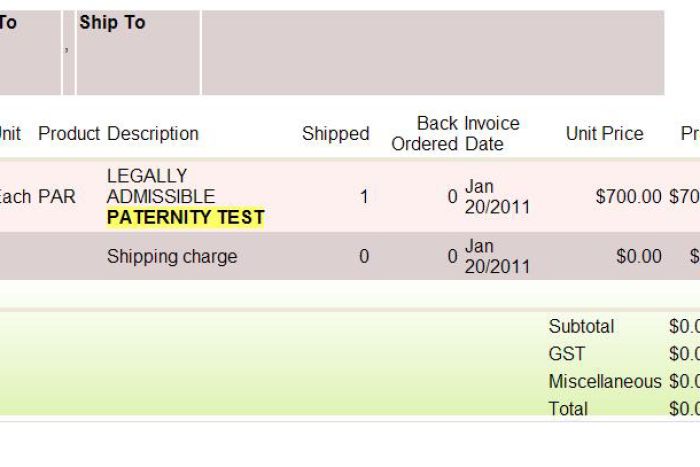
She was required to obtain a “certificate of citizenship” from Home Affairs. And to get this, DNA testing was requested to prove the Australian citizen was indeed the biological father of the child in question.

But the mother’s relationship with the child’s father had broken down irreparably at the time of the child’s birth, and the father refused the DNA test.

DNA testing was not compulsory, Home Affairs advised. Other methods could be used to prove the relationship between the father and son was biological.

But the alternative social evidence recommended by Home Affairs, and supplied by the mother, included exhaustive personal, hospital, social work and government records.

They detailed the mother and child’s contact with the father and grandparents before and after the birth. This was still deemed “not sufficient”.

In effect, this shows DNA has become the only acceptable evidence, despite Home Affairs’ claims.

The outcome, Home Affairs advised, is that the child’s passport will be cancelled and the child will lose his status as an Australian citizen.

In another example, the father of a child in care, an Australian passport holder, was asked to do a DNA test as part of the process of obtaining a certificate of citizenship for the child.

He was estranged from the child and the mother, and so he refused. Home Affairs made its assessment of paternity based on that refusal, and the child’s passport and citizenship were cancelled.

Losing citizenship from ‘insufficient’ evidence

Citizenship can be revoked and a passport consequently cancelled in limited circumstances — mostly relating to criminal or security issues.

There is no provision in the Australian Citizenship Act 2007 for the cancellation of citizenship held by a child under 16 who became a citizen at birth.

Yet it is happening.

Our firm has recently seen an increase in cases where the citizenship status of a child passport holder has been challenged if the child’s mother is a temporary resident.

While investigating a mother’s circumstances, Home Affairs delegates have required children — Australian passport holders with citizenship acquired through their father — to verify their citizenship by obtaining “certificates of citizenship”.

In these recent cases, the evidence usually required to obtain such a certificate — relevant birth certificates linking the child to the father, and evidence of citizenship or permanent residence of the father at the time of birth — has been rejected as insufficient.

The common thread is the absence of the father, where family relationships have broken down.

The child is consequently caught in a bureaucratic tangle: their birth certificate identifying their father remains valid, but Home Affairs refuses to accept this.

Evidence of paternity can’t always be provided when families break down

For Home Affairs, sometimes the standard evidence of identity isn’t enough to justify a child’s citizenship.

And where a relationship has broken down, or if a father has moved on physically or emotionally from the child, there may be no way of providing biological proof of that paternity.

The onus of proof in this case is on the child or its mother, with Home Affairs providing no explanation why such evidence may be necessary or relevant.

A child’s birth certificate signed at the time of birth by an Australian citizen father, or social evidence of a paternal relationship, can count for nothing here.

What’s disconcerting is the apparently unfettered right of Home Affairs to request additional evidence of citizenship from children who already hold Australian passports, granted following the normal protocols, without any need for Home Affairs to explain on what basis such information is sought.

This is at odds with the practice under the Migration Act 1958, which acknowledges principles of “natural justice”.

Cancelling children’s passports and withholding citizenship — effectively a consequence of their absent father and their parents’ inability to maintain a harmonious relationship — seems clearly unjust.

Refusing to accept certificates issued by state Registrars of Births, Deaths and Marriages, and overturning the capacity of the Department of Foreign Affairs and Trade to issue passports based on its own sets of rules, is yet another indicator of the enormous and — despite its denials — unchecked power of Home Affairs.

If birth certificates no longer suffice as evidence of paternity, perhaps we’ll all be looking at DNA testing in the future.

Source: Yes, you can hold an Australian passport but not be a citizen. Here’s how – Analysis & Opinion

Surge in Gulf applicants for US scheme offering citizenship amid price increase

Still remarkable cheap sale of citizenship, even with the increase. Absolute numbers are small:

There has been a huge surge in Gulf residents applying to take part in an American scheme offering the chance to earn citizenship, ahead of new reforms due to come into effect on November 21, which will increase the cost of applying by 80 percent, according to industry experts in Dubai.

The EB-5 visa for Immigrant Investors was created by the US Immigration Act of 1990 as a way of encouraging foreign investment in projects across the United States.

At present, for a minimum investment of $500,000, investors can apply to be part of the scheme, which can lead to a green card and the chance of full American citizenship after five years.

Last month, the EB-5 Modernisation regulations were introduced, meaning that, from November 21, the minimum investment amount for projects classed as targeted employment areas will increase from $500,000 to $900,000. At the same time, the minimum investment for non-targeted employment area projects will increase from $1 million to $1.8 million.

This has led to a surge in applications as potential investors look to get their paperwork filed before the November 21 deadline.

“I have seen almost more than 100 percent surge in applications as it has been out there now for nearly a month,” Preeya Malik, managing director of Step America, a Dubai-based firm which offers the EB-5 visa scheme, told Arabian Business in an interview on Wednesday.

“People are getting to know about it and it is the first time since 2015 they have written a price increase into legislation. If we were getting five applications every week, now we are getting five people almost every other day. People who have been sitting on the fence, this has been the deciding factor to move forward,” she added.

Higher cost bracket

The majority of applicants coming from the GCC are in the higher cost bracket, which are projects in metropolitan districts – or those classed a ‘non-targeted employment areas’ – which are keen to use the scheme to encourage overseas investments.

Targeted employment areas are classed as areas in the US which are economically challenged and have an unemployment rate more than 150 percent of the federal average.

There has been talk over the last few years of an increase in the cost of participation in the EB-5 scheme, which led to a dramatic increase in the number of approvals from the GCC, which collectively rose 564 percent to 93 approvals – a majority of them expats – in 2018.

A total of 54 UAE residents were approved for the programme in 2018, a 350 percent jump from the year before. Neighbouring Saudi Arabia, which saw just a single approval in 2017, recorded 15, a 1,400 percent increase.

Malik said the nationalities looking to take part varied a lot, but the motivation was usually the same, to support their families and children and help them to obtain a green card or passport in the US.

“We have a lot of Arab clients, Pakistani, Indian, but definitely the same in that they are wanting to do it for their children, that is the same no matter the nationality,” she said.

Source: Surge in Gulf applicants for US scheme offering citizenship amid price increase

Community groups gear up to counter far-right propaganda in federal election

Of note. And encouraging, as reported, more dialogue and conversation-based than haranguing or labelling:

It worries Janice Folk-Dawson when the veteran union leader sees hate posters popping up on university campuses and far-right supremacist groups showing up in her community.

“It’s frightening to see small towns becoming the targets of hate groups,” said the president of the Guelph and District Labour Council. “Fascism started in small towns and the education system. We need to address the rise of the right and bust the myths they spread.”

Earlier this year, the 62-year-old, who is of Russian and Irish descent, enrolled in a workshop held by the Migrant Rights Network, a national anti-racism alliance that aims to help communities stand up against racism and the far right in the run-up to the federal election, when immigration and refugees are expected to be a wedge issue.

Formed last December to put migrant issues on the agenda for the Oct. 21 election, the alliance began canvassing migrant groups about the issues they were most concerned about. Almost everyone cited their fear of rising racism and xenophobia in Canada and asked for assistance in pushing back against the spread of far-right ideologies.

The alliance spent months developing training materials including a video and a tool kit, and since April has delivered more than 50 workshops training hundreds of volunteers — affiliated with unions, charities and community groups — from Squamish, B.C. to St. John’s, Nfld. The aim is to have them reach out to their local communities and have conversations with family, friends and colleagues about immigration and refugee issues, armed with the facts on policies to counter myths fuelled by propaganda.

The network has organized rallies across the country, including a number on Labour Day, and begun monitoring candidates’ campaign rhetoric and calling out those they feel are misinforming the public with racist and anti-immigrant comments.

A newsletter will be distributed to people who sign up to support the alliance’s work to keep them informed on issues and concerns raised during the campaign.

Karen Cocq, the alliance’s education co-ordinator, said political parties and politicians, to consolidate their support base, often draw attention away from their own policy failures and point fingers at “the others,” such as migrants.

Instead of blaming migrants for straining government services and pushing down wages, said Cocq, people should be asking politicians why they cut budgets and fail to properly protect workers with decent wages.

“We understand people are anxious about their future, about the economy and try to make sense of the problems they face. We want to focus on this climate of anxiety that allows scapegoating in our society,” said Cocq. “We try to provide everyday folks the tools they need to understand what’s going on and not get fooled by those who use racism to divide us.”

Ottawa climate activist Katie Rae Perfitt of Our Time, a campaign that engages young people to push for a New Green Deal in the upcoming election, said her volunteers often hear Canadians raising issues about migration when they are canvassing about climate change.

Born and raised in a farming community in the Ottawa Valley, Perfitt said far-right groups exploit the fears of people who worry for the future of their children, about jobs being taken away and migrants being a drain on existing government services and the health-care system. When she heard about the workshop put on by the Migrant Rights Network earlier this summer, she jumped at the opportunity.

Recently, she was canvassing on Sparks St., a pedestrian mall in downtown Ottawa, when she struck up a conversation with an older man about climate change and the chat quickly turned to the influx of asylum seekers in Canada via the United States land border over the last two years.

“We really clicked talking about climate change and the political action needed. It caught me off guard when he started talking about what he thought of the people who crossed the border,” recalled the 32-year-old. “I realized I had to pull out my migrant tool box.”

Perfitt started asking the man about his source of information and presenting him with the facts that refugees have the legal right to seek asylum here, and trying to calm his fear that Canada has lost control of its border.

“We did not agree 100 per cent, but we were able to centre our values, have a conversation and push back some of that fear,” she said.

Folk-Dawson said these conversations can be hard because it’s much easier for people to point at someone else for causing their miseries. Over the summer, she has used her own labour movement network to raise awareness of migrant issues and far-right rhetoric.

“A debate of facts is not a debate of opinions. We try to help people work through their feelings and experience to alleviate their fear. It can be uncomfortable and confrontational,” said Folk-Dawson, adding that even union supporters are susceptible to the myths that migrants are stealing jobs and pushing down wages.

In June, she was handing out flyers at the University of Guelph when a businessman in his 60s started complaining to her that border-crossing asylum seekers were queue-jumpers and immigrants were straining the health-care system. She explained to him that those refugees really have no queue to jump because they are ineligible for any immigration program and that migrants do contribute to Canada’s tax base but often have limited access to government services.

“At the end, the man said he would go back and have the same conversation with others. That’s one person we changed,” said Folk-Dawson gleefully. “We have to get to them before some other folks get to them first.”

Source: Community groups gear up to counter far-right propaganda in federal election