Xinjiang’s Uyghurs were enslaved and forced to convert to Islam, Chinese white paper claims
2019/07/23 Leave a comment
Sigh…. Rewriting and reinterpreting history (and yes, Islam dates from the 7th century, spread by conquest and conversion, but to question its legitimacy 1,400 years later?)
Perhaps the 2020 International Metropolis Conference in Beijing will have this or other tendentious presentations justifying this approach to integration:
Uyghurs in Xinjiang were forced to become Muslim and have been an integral part of China for thousands of years, Beijing said in a new report, in an attempt to justify its controversial crackdown against the ethnic minority in the far-western region.
Key points:
- China has sought to justify treatment of Uyghurs that Western countries have condemned as “cultural genocide”
- Beijing’s report hits back at “double standards” of critics and defends “anti-terrorism” efforts
- Experts say the white paper is a classic case of China’s ongoing information warfare
A white paper released yesterday by China’s State Council Information Office — the Government’s propaganda arm — presents the ruling Communist Party’s interpretation of history, claiming “Islam is neither an indigenous nor the sole belief system of the Uyghur people”.
The report also said that Islam spread into Xinjiang by “the Arab Empire” and that the Turkic Uyghur people “endured slavery” at the hands of “the Turks”.
“Conversion to Islam was not a voluntary choice made by the common people, but a result of religious wars and imposition by the ruling class,” it said, declaring that the Government nevertheless respects “the Muslims’ right to their beliefs”.
More than a million Uyghurs, Kazakhs and other Muslim ethnic minorities are thought to be detainedin what the Communist Party calls vocational education centres, referred to by the UN as “re-education camps”.
Those living outside the camps are also subject to mass surveillance, with Beijing declaring it wants to “Sinicise Islam” — a hardline policy increasingly referred to by observers as “cultural genocide”against the Turkic minority group.
The report was published as part of Beijing’s broader campaign to deflect international criticism of its crackdown against the Uyghurs, and reiterates its stance that repressive measures in Xinjiang are “counter-terrorism” tactics against Uyghur separatists and Islamic extremists.
“I don’t think anybody outside China who follows what happens in Xinjiang is fooled by this white paper,” Elaine Pearson, Australia director at Human Rights Watch, told the ABC.
James Leibold, a La Trobe University expert on Uyghurs and other Chinese ethnic minorities, said the white paper is a “classic case of China’s ongoing information warfare.”
“Like any piece of propaganda, it’s filled with partial truths,” he said.
But state-run English-language newspaper the Global Times applauded the report, claiming that with the paper, “kind-hearted people can distinguish between right and wrong.”
“It is hoped malicious agitators will zip their lip,” it said.
Beijing claims Turkic Uyghurs have always been Chinese
The Uyghurs are a mostly Turkic-speaking minority who share more in common linguistically and culturally with Turks than they do with China’s ethnic Han majority.
Historians believe parts of the Xinjiang region have been referred to as Turkestan since the medieval era.
According to China’s white paper, however, the region has “long been an inseparable part of Chinese territory” and has never been East Turkestan — a term it claims is used only by separatists in their “clamour for independence”.
Mr Leibold said this claim was “frankly not true”.
Beijing’s report claims that “from the very beginning”, Uyghur culture “reflected elements of Chinese culture” and was an integral part of Chinese civilisation.
“It’s foolish to speak about the existence of a unified Chinese nation 5,000 or even 3,000 years ago to include what is today Xinjiang and the Uyghur people,” Mr Leibold said, adding that claims about religious freedom in Xinjiang were “laughable”.
“Xinjiang always upholds equality for all religions,” the white paper said.
But the Communist Party’s crackdowns against Muslims and other faith communities including Christians and the Falun Gong are well documented.
A report from Amnesty International in 2018 claimed that public expressions of faith in Xinjiang were now deemed “extremist” by authorities, including growing a beard, praying or fasting during the Islamic holy month of Ramadan.
“We have seen many ways in which Uyghur identity has been suppressed in recent years,” Ms Pearson said, noting that China has also banned names deemed too Islamic.
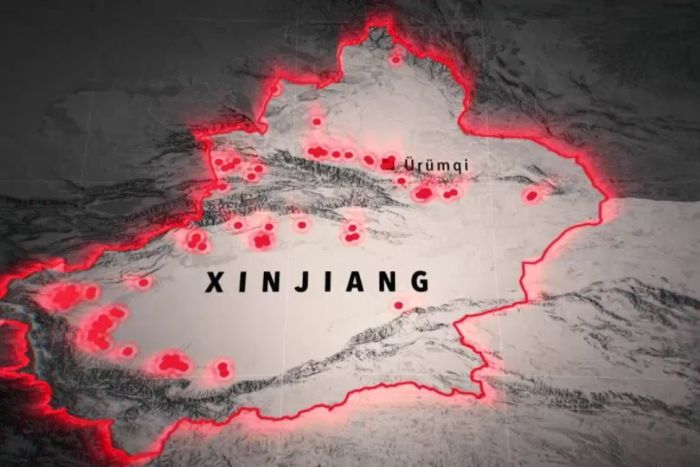
Source: Xinjiang’s Uyghurs were enslaved and forced to convert to Islam, Chinese white paper claims
 About Andrew
 Multicultural Meanderings