Underlying bias and discrimination remains of concern, but useful nuance to current debates:
A new study confirms that black men and women are treated differently in the hands of law enforcement. They are more likely to be touched, handcuffed, pushed to the ground or pepper-sprayed by a police officer, even after accounting for how, where and when they encounter the police.
But when it comes to the most lethal form of force — police shootings — the study finds no racial bias.
“It is the most surprising result of my career,” said Roland G. Fryer Jr., the author of the study and a professor of economics at Harvard. The study examined more than 1,000 shootings in 10 major police departments, in Texas, Florida and California.
The result contradicts the image of police shootings that many Americans hold after the killings (some captured on video) of Michael Brown in Ferguson, Mo.; Tamir Rice in Cleveland; Walter Scott in South Carolina; Alton Sterling in Baton Rouge, La.; and Philando Castile in Minnesota.
The study did not say whether the most egregious examples — those at the heart of the nation’s debate on police shootings — are free of racial bias. Instead, it examined a larger pool of shootings, including nonfatal ones.
The counterintuitive results provoked debate after the study was posted on Monday, mostly about the volume of police encounters and the scope of the data. Mr. Fryer emphasizes that the work is not the definitive analysis of police shootings, and that more data would be needed to understand the country as a whole. This work focused only on what happens once the police have stopped civilians, not on the risk of being stopped at all. Other research has shown that blacks are more likely to be stopped by the police.
Photo
Roland G. Fryer Jr., a professor of economics at Harvard.CreditErik Jacobs for The New York Times
Mr. Fryer, the youngest African-American to receive tenure at Harvard and the first to win a John Bates Clark medal, a prize given to the most promising American economist under 40, said anger after the deaths of Michael Brown, Freddie Gray and others drove him to study the issue. “You know, protesting is not my thing,” he said. “But data is my thing. So I decided that I was going to collect a bunch of data and try to understand what really is going on when it comes to racial differences in police use of force.”
About Andrew Andrew blogs and tweets public policy issues, particularly the relationship between the political and bureaucratic levels, citizenship and multiculturalism. His latest book, Policy Arrogance or Innocent Bias, recounts his experience as a senior public servant in this area.
 Underlying bias and discrimination remains of concern, but useful nuance to current debates: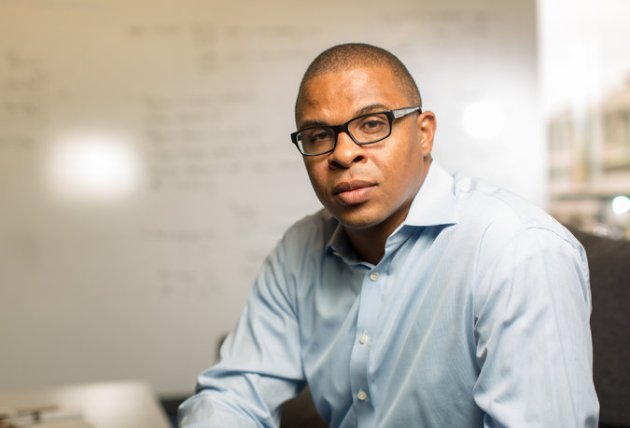
 About Andrew
 Multicultural Meanderings