Inevitable: Alleged EB-5 Fraudster Already Has a Third Nation’s Citizenship | Center for Immigration Studies

David North on the use/abuse of the US EB-5 investor immigrant visa program:

It had to happen. One of the alleged fraudsters involved in an EB-5 scandal in the United States has also purchased an additional citizenship in another nation.

We reported a few days ago that Charles Liu and his wife, Lisa Wang, were exposed by the Securities and Exchange Commission as diverters of $18 million in EB-5 investments involving a cancer treatment center in Southern California. They sent the money to their own bank accounts and to three companies in China rather than building the medical center.

It now turns out that Liu, before the SEC’s move, had already purchased a citizenship from Grenada, the little ex-British island we invaded during the Reagan administration. They call their equivalent of our EB-5 program “citizenship by investment” (CBI); several other island nations have similar programs.

Irritatingly, neither the SEC complaint nor any of the press coverage describes, in this immigration-related case, the immigration status of Liu and Wang. SEC says he is a “resident of Laguna Niguel, California” as is she. The form that Liu used when applying for Homeland Security permission to run a regional center (the I-924) does not ask about the civil status of the person applying for the center. I would think it would be a perfectly legitimate question.

One Caribbean newspaper reported that the government of Grenada had said in the blandest of terms, following the SEC announcement: “Through our diplomatic channels, the Government of Grenada continues to monitor the situation, to communicate with all diplomatic and other sources, and continues to fully engage mutual cooperation with all the parties concerned.”

Another, earlier report said that Liu is already deeply embedded in that nation’s diplomatic channels as he is the commercial attaché in the little nation’s Beijing embassy. This is presumably a part-time, probably unpaid position, as the incumbent is, according to SEC, living in yet a third country, the United States.

There are no indications as of this writing that anything has gone wrong with the island investment.

So we have what appears to be a Chinese national who has already purchased one additional citizenship, and has secured what appears to be a diplomatic post from his new nation, putting together a company which will promote tourism in Grenada while simultaneously seeking to sell American green cards to Chinese investors by falsely promising to build a cancer treatment center in the United States.

Charles Liu is just one example of the interesting people who are attracted to our EB-5 program.

Source: Inevitable: Alleged EB-5 Fraudster Already Has a Third Nation’s Citizenship | Center for Immigration Studies

Promotion to top ranks ‘not an entitlement,’ public-service group APEX warns

More on public service changes at senior levels:

Michael Wernick, clerk of the Privy Council and head of the public service, has been busy managing changes to the senior ranks of the public service as government executives retire at a faster rate. Prime Minister Justin Trudeau has made more than 20 changes to the top levels of the bureaucracy since coming to power. The Prime Minister announced more changes to the senior bureaucracy this month, including the retirements of Margaret Biggs, Anita Biguzs and Ward Elcock.

“The dominant challenge of the next two years is moving, as smoothly and as orderly as we can, the baby boomers like me, off the stage, and recruiting and developing the next generation of public service leadership,” Mr. Wernick said in a speech at an APEX event in Ottawa on June 1.

The clerk said he wants to capture “the creativity, the innovation, and the energy” of new leadership and talent. “So that is the takeaway. Baby boomers, it’s time to go…myself included,” he said.

Mr. Wernick said he will be reintroducing some training and leadership programs after their cancellation in recent years. One new program will place public service executives into academic institutions for about a year, he said.

Mr. Vermette said he welcomes more training, leadership programs and exchanges for senior officials. “We don’t fear that [outside] competition, but we should also be given the opportunity to develop our own experience,” Mr. Vermette said.

A senior public servant, Mr. Vermette is working as head of APEX on an executive exchange program, having last worked as deputy commissioner of the Canadian Coast Guard.

Machinery-of-government experts Peter Larson and David Zussman conducted interviews with executive recruits in the public service in 2006. Their resulting report, which highlighted the difficulties of success for senior recruits in Ottawa, noted a culture of careerism and competition for advancement among senior officials, mixed with a “climate of fear” and “self-censorship.”

One former senior public servant, speaking on a background basis, said outside recruitment is a good idea, but there can be issues with private sector executives moving into the public service. Corporate executives are accustomed to making final decisions, the person said, whereas the role of senior officials is to advise the government for decisions by the PM and cabinet.

The former government executive suggested outside candidates may be better off starting at the assistant deputy or associate deputy level, and would be better off having some government or public sector experience, such as in a hospital, provincial government or university.

PCO spokesman Raymond Rivet said by e-mail that the majority of deputy ministers are appointed from the federal rank of assistant deputy minister. There are about 70 senior officials at the deputy minister and associate deputy level.

Source: Promotion to top ranks ‘not an entitlement,’ public-service group warns – The Globe and Mail

Supreme Court rejects American Samoan citizenship case

Lack of congressional statute, unlike Puerto Rico, the Virgin Islands, Guam and the Northern Marianas, raising of course the question of why no statute:

American Samoans have no automatic claim to U.S. citizenship by birth despite living in a U.S. territory, according to a move by the Supreme Court on Monday.

The court declined to reconsider a ruling from the U.S. Court of Appeals for the District of Columbia Circuit that the Constitution does not confer citizenship on those born in American Samoa. The Supreme Court’s move effectively preserves the appellate court’s decision in the case as the last word.
In the case, an American Samoan, Leneuoti Fia Fia Tuaua, petitioned the U.S. courts for citizenship under the clause of the Constitution that confers citizenship at birth to those born in the United States. American Samoa has been a U.S. territory since 1900.
Those born in the other U.S. territories — Puerto Rico, the Virgin Islands, Guam and the Northern Marianas — all get citizenship at birth, but that was determined by statute in Congress. No such statue exists for American Samoa.
Tuaua was opposed in his quest by the American Samoan government itself, which argued that recognizing a right to citizenship at birth could complicated the legal structure in the territory.
The appeals court, in an unanimous ruling, agreed with the American Samoan government, emphasizing that the resident population has also avoided automatic U.S. citizenship.
The opinion from a conservative panel of justices drew criticism for heavily drawing from a set of cases that have grown controversial. The so-called Insular Cases, a series of rulings at the turn of the 20th century, distinguished between U.S. territories destined for statehood, such as Hawaii and Alaska, and those that weren’t, like Puerto Rico and American Samoa. Those residents in territories not likely to become states were entitled to only “fundamental” rights, the cases say.
But the cases have drawn criticism for being racially tinged and vestiges of colonialism, and the appellate court’s decision relying on them likewise drew flak.

Source: Supreme Court rejects American Samoan citizenship case – CNNPolitics.com

Has the activist left decided #antisemitism doesn’t exist?: Neil Macdonald

Another good piece by Neil Macdonald:

The conflation of all supporters of BDS with Jew-hating is as scattershot and sweeping as the conflation of all Jews with Israel.

It ignores the inconvenient truth that some pro-Israeli Jews are embarrassed by that country’s current government, as well as the fact that some of the strongest proponents of BDS are Jewish.

But it is all of a piece with the scorched-earth nature of modern political discourse.

There is us, and them, and no-man’s land in between. Detail and nuance and history are just annoyances, to be marched past, or over.

Source: Has the activist left decided anti-Semitism doesn’t exist?: Neil Macdonald – Politics – CBC News

The threat of the demagogues: Ian Buruma

Good piece on the threat to democracy and society:

It is clear that today’s demagogues don’t much care about what they derisively call “political correctness.” It is less clear whether they have enough historical sense to know that they are poking a monster that post-Second World War generations hoped was dead but that we now know only lay dormant, until obliviousness to the past could enable it to be reawakened.

This is not to say that everything the populists say is untrue. Hitler, too, was right to grasp that mass unemployment was a problem in Germany. Many of the agitators’ bugbears are indeed worthy of criticism: the European Union’s opacity, the duplicitousness and greed of Wall Street bankers, the reluctance to tackle problems caused by mass immigration, the lack of concern for those hurt by economic globalization.

These are all problems that mainstream political parties have been unwilling or unable to solve. But when today’s populists start blaming “the elites” (whoever they may be) and unpopular ethnic or religious minorities for these difficulties, they sound uncomfortably close to the enemies of liberal democracy in the 1930s.

The true mark of the illiberal demagogue is talk of “betrayal” – the cosmopolitan elites have stabbed “us” in the back; we are facing an abyss; our culture is being undermined by aliens; our country can become great again once we eliminate the traitors, shut down their voices in the media, and unite the “silent majority” to revive the healthy national organism. Politicians, and their boosters, who express themselves in this manner may not be fascists, but they certainly talk like them.

The fascists and Nazis of the 1930s did not come from nowhere. Their ideas were hardly original. For many years, intellectuals, activists, journalists and clerics had articulated hateful ideas that laid the groundwork for Mussolini, Hitler and their imitators in other countries. Some were Catholic reactionaries who detested secularism and individual rights. Some were obsessed with the supposed global domination of Jews. Some were romantics in search of an essential racial or national spirit.

Most modern demagogues may be only vaguely aware of these precedents, if they know of them at all. In Central European countries such as Hungary, or indeed in France, they may actually understand the links quite well, and some of today’s far-right politicians are not shy about being openly anti-Semitic. In most West European countries, however, such agitators use their professed admiration for Israel as a kind of alibi and direct their racism at Muslims.

Words and ideas have consequences. Today’s populist leaders should not yet be compared to murderous dictators of the fairly recent past. But by exploiting the same popular sentiments, they are contributing to a poisonous climate, which could bring political violence into the mainstream once again.

Source: The threat of the demagogues – The Globe and Mail

Multiculturalism can foster a new kind of Englishness: Modood

Good and interesting account of how the multiculturalism reality of UK and identities have and continue to evolve by Tariq Modood:

Yet over the last couple of decades a new set of challenges have become apparent, initially in Scotland but increasingly throughout the UK. In none of the nations of the union does the majority of the population consider themselves British, without also considering themselves English, Welsh, Scottish or Northern Irish first.

The 2011 census is not a detailed study of identity but it is striking that 70% of the people of England ticked the “English” box and the vast majority of them did not also tick the “British” box, even though they were invited to tick more than one. This was much more the case with white people than non-whites, who were more likely to be “British” only or combined with English. Multiculturalism, then, may actually have succeeded in fostering a British national identity among the ethnic minorities.

Multiculturalism in this case, then, offers not only the plea that English national consciousness should be developed in a context of a broad, differentiated British identity. But also, ethnic minorities can be seen as an important bridging group between those who think of themselves as only English, and those who consider themselves English and British.

Paradoxically, a supposedly out-of-date political multiculturalism becomes a source of how to think about not just integration of minorities but about how to conceive of our plural nationality and of how to give expression to dual identities such as English-British. It is no small irony that minority groups who are all too often seen as harbingers of fragmentation could prove to be exemplars of the union.

The minimum I would wish to urge upon a centre-left that is taking English consciousness seriously is that it should not be simply nostalgic and should avoid ethnic nationalism, such as talk of Anglo-Saxonism. More positively, multiculturalism, with its central focus on equal citizenship and diverse identities and on the renewing and reforging of nationality to make it inclusive of contemporary diversity, can help strengthen an appreciation of the emotional charge of belonging together.

Source: Multiculturalism can foster a new kind of Englishness

Toronto 18 may have been shock for Canada, but it was not harbinger of a path to ruin: Gurski

Phil Gurski’s reflections on what we learned from the Toronto 18:

The event was a seminal one for me as a CSIS analyst and I’d like to reflect on what this meant then as well as what is means now. Much has happened in the intervening decade and much of that has been good in Canada. Firstly, the Toronto 18 investigation proved—or rather should have proven—to skeptical Canadians that terrorism was real and not just something that happened ‘”over there.” Truth be told, there were significant doubts about the real nature of the threat in June 2006 and whether this cell was that dangerous: many believed that CSIS and the RCMP had exaggerated the plot. I am happy to say that 10 years later most Canadians accept the fact that we have terrorists in our midst. This turnaround in public opinion may have had a lot to do with the attack on the National War Memorial and Parliament on Oct. 22, 2014, but in any event it is a step forward in our collective understanding and acceptance of the issue.

Secondly, the RCMP advised Muslim leaders of the impending takedown just before it took place to allow them to prepare their communities for the news. This was an outstanding decision at the time and the relationship between Canadian government officials and these communities has only gotten better since then (albeit with an unfortunate downturn at the end of the Harper years). All this shows that we do things differently in Canada and I know that many countries have sought our input as they seek to learn from our model. Are we perfect? No, but we are in a much better position than most Western countries on this issue.

Thirdly, the case demonstrated clearly that a group of Canadian Muslims can radicalize to violence entirely at home with no significant foreign input. This was not an al-Qaeda-led or—directed plot (Islamic State did not exist back then) but rather a terrorist act planned based on what is known as the al-Qaeda (or single) narrative—the notion that the West was at war with Islam and that “true” Muslims (self-defined) had to fight to defend the faith. The Toronto 18 sought to punish Canada and Canadians for their decision to send soldiers to Afghanistan back in 2001. In an era where we obsess about IS and their involvement in organizing attacks abroad, it is important to remember that most plots in the West are homegrown.

Fourthly, the case showed that CSIS and the RCMP could work hand in glove to successfully stop a terrorist act from occurring. The investigation started with CSIS and was handed over to the Mounties when it was clear a criminal act was being planned. CSIS sources became RCMP agents (not always an easy thing to do) more or less seamlessly and a serious terrorist attack was averted. There is little doubt that the CSIS-RCMP relationship has had its ups and downs but the two do work together well and Canadians are safer as a result.

Lastly, despite more foiled plots and two successful ones in the interim, Canada remains in a good position when it comes to homegrown terrorism. We are not in the same league as France or Belgium or the U.K., or even the U.S. Our government has done a much better job at understanding the threat and putting measures into place, both soft and hard, to deal with it. We had the five-year $10-million Kanishka research project which, although many thought it under-delivered (I am among that group), set the stage for a more robust and more mature academic environment to look at terrorism where none existed before. Public Safety Canada’s Citizen Engagement branch developed a community outreach program that was the envy of all our allies and the creation of the new Office of the Coordinator for Counter Radicalization and Community Outreach will hopefully enhance this effort. There is more work to be done but these are all enviable achievements.

The Toronto 18 may have been a shock to the system for Canada, but it was not the harbinger of a path to ruin. We are still a relatively safe country and while we must remain vigilant and ensure that our security and law enforcement agencies enjoy the necessary resourcing and public trust, we will likely remain so.

Source: Toronto 18 may have been shock for Canada, but it was not harbinger of a path to ruin |

Russia Quietly Strips Emigres of Dual #Citizenship – Forward.com

Another example of the links between citizenship and identity, and how government changes affect the latter:

Tens of thousands of Russian dual nationals are being effectively stripped of their Russian citizenship via a quiet policy of Russian consulates worldwide refusing to renew their passports.

Under new regulations the consulates are enforcing, anyone seeking to renew a passport who was not registered as living in Russia on February 6, 1992, will be rejected, even if his or her passport had been renewed on previous occasions.

It is unclear just how many people this new policy will affect. But it will certainly apply to thousands of Jews who emigrated from Russia after July 1, 1991 — the date on which the Soviet Union, then in its final days, ended its policy of taking away the passports of Jews who left the country with exit visas to Israel. (The Soviet Union was formally dissolved on December 25, 1991.)

In Soviet times, the only way that Jews were allowed to leave the country was with their Russian passport confiscated — if they were allowed to leave at all. Many actually moved to the United States or to Europe once they got out, despite the Israeli stamp on their exit visa. But under the late Soviet policy, which was continued by the successor Russian government following the Soviet Union’s breakup, Jews could, for the first time, like others, become dual nationals. This allowed them to return freely to Russia to visit — or even move back if they changed their minds.

“I’ve always had two citizenships, two languages, two identities and two cultures. It’s who I am,” said Katya Rouzina, a 27-year-old college Russian instructor and graduate student who expects her Russian passport application will be rejected—as was this reporter’s—because she left Russia before February 1992. Like many Russian expatriates, Rouzina, who moved to the United States when she was 1-year-old, considers her continued tie to Russia a matter of identity. “They can’t just randomly say you’re not a Russian citizen anymore. That just makes me angry,” she said.

Like the United States, the Russian Federation allows for dual citizenship, though estimates of how many Russians have this status vary widely. Konstantin Romodanovsky, the director of Russia’s Federal Migration Service, told the newspaper Komsomolskaya Pravda that between 1 million and 6 million Russians have dual citizenship.

Asked about the new policy, which was never formally announced, the Russian Embassy in Washington confirmed the change, which it said was not a matter of any new law passed by the country’s legislature. “Our laws expand, they don’t change,” embassy press secretary Yury Melnik said. “The laws are interpreted better…. An expired passport isn’t considered a valid document.”

The Russian Consulate in New York City acknowledged that in the past, Russia had issued passports to people who had been expatriate citizens of the old Soviet Union, even if they had never registered as residents and citizens of the new Russian Federation, established after the Soviet Union’s breakup. It acknowledged having renewed their passports, as well.

“The people with such passports considered themselves citizens of the Russian Federation,” the consulate wrote in its email. “While we are aware that the persons holding such passports are not to be blamed for the existing situation, we must now, nonetheless, put things in order. We cannot issue passports to those whose Russian citizenship is not properly registered.”

The consulate suggested that those caught in this situation apply for a visa to visit Russia as American citizens instead. Michael Drob, director of a new documentary, “Stateless,” which tells the story of Jewish immigrants from the Soviet Union, said that not having a Russian passport would not only make travel to Russia more difficult, it might also prevent elderly people from receiving their Russian government pensions when they reach retirement age.

Moreover, he said, those caught up in this change, who came to America and became permanent residents but who never applied for citizenship, would now effectively be rendered stateless; so would those who came on more limited visas and stayed in America illegally.

The exact number of people who emigrated from Russia between July 1, 1991, when the Soviet-era passport confiscation policy for departing Jews ended, and February 6, 1992, could not be obtained. But it is clearly on the scale of tens of thousands.

Source: Russia Quietly Strips Emigres of Dual Citizenship – World – Forward.com

ICYMI: How my book on immigration became the voice of Germany at the Venice Biennale

Good account by Doug Saunders on how art based upon his book Arrival City helps communicate the issues and challenges:

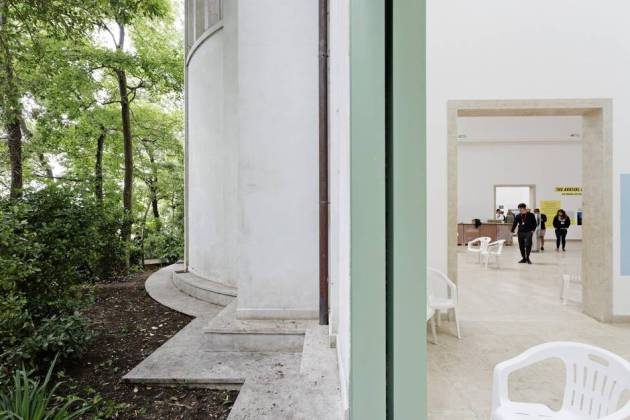
This put us at the centre of Europe’s most urgent and politically challenging crisis. In an architecture biennale that is often given over to the most abstruse and ephemeral of ideas and visions, we had been asked to create the least abstract pavilion of them all.

After all, the 2016 Biennale’s theme, selected by the acclaimed architect Alejandro Aravena, is “Reporting from the Front”: He wanted exhibitions to focus on the architecture of “the margins,” not the pricey mega-structures that tend to dominate architecture fairs.

The stuff in this pavilion is really happening. And there is real money on the table. Germany is in the midst of an enormously controversial and difficult process of settling around a million refugees who’ve fled the conflicts in Syria, Afghanistan and elsewhere – almost half the refugees arriving in Europe – and housing them in dozens of cities.

For the many thousands of people who have passed through our pavilion during the past two weeks, it has been a break from capital-A architecture and a swift plunge into the most turbulent debate in Europe’s modern history. ( Kirsten Bucher)

This has resulted in Berlin’s federal administration spending unprecedented sums on new buildings for this process: Shortly after the committee she sits on chose our “arrival city” exhibition in January, Ms. Hendricks announced that her government will fund the construction of 300,000 to 400,000 new units of social housing each year (for both refugees and established Germans), year after year, for the foreseeable future.

No other government in the Western world is spending this kind of money on housing – and it has been decades since any government has deployed architectural solutions to social problems on this scale. When finished, it will be the equivalent of having created a second Berlin, largely with public funds.

So Europe’s largest demographic and social crisis has suddenly become an architectural and urban-planning crisis: There is an urgent need to learn from the best lessons of the past seven decades of public-housing construction – and, more importantly, to avoid the many design failures of that period, the horrid “projects” and council flats and plattenbau districts, some of which led directly to impoverished and isolated immigrant districts prone to crime and extremism.

A core component of our pavilion is a database, available online, which documents more than 400 refugee-housing projects currently under way in Germany (many are intended to be turned into social or student housing once the refugee emergency abates). Some of them are awful. Some are ingenious. After standing in a room surrounded by these examples, the notion that architectural design has large-scale social consequences becomes far less abstract: These designs, for better or worse, will affect the lives and outcomes of families, communities and cities for generations.

Open to the elements and the passing crowds, the pavilion becomes an informal, improvised place, a teeming marketplace not just of ideas but of real-life things(Kirsten Bucher)

Other rooms, and the pavilion’s main chamber, are devoted to the “eight theses of the arrival city” we developed in a series of meetings in Frankfurt. These, distilled from my research conclusions, are emblazoned on the walls and illustrated with case studies of districts and projects in European cities:

The arrival city is a city within a city. The arrival city is a network of immigrants. The arrival city is affordable. The arrival city is close to business. The arrival city is informal. The arrival city is self-built. The arrival city is on the ground floor. The arrival city needs the best schools.

For the many thousands of people who have passed through our pavilion during the past two weeks, it has been a break from capital-A architecture and a swift plunge into the most turbulent debate in Europe’s modern history. Some, like Italian Prime Minister Matteo Renzi, have lingered to take notes. Some have started arguments, sketched designs or told us they suddenly see their city’s kebab-shop district very differently. Others have just hung out, had a bite and soaked up the simultaneous sense of comfort and unfamiliarity – in the process, experiencing a small version of the sort of place we’re chronicling here.

Source: How my book on immigration became the voice of Germany at the Venice Biennale – The Globe and Mail

Prisons pay more for native spiritual services than all other faiths combined

While the issue may be more underfunding of chaplain services for other religions than overfunding of Indigenous spiritual services, it is nevertheless an interesting disparity, particularly given that relatively few Indigenous peoples according the 2011 NHS practice Aboriginal spirituality (less than 5 percent).

The previous government’s cut to chaplaincy services and subsequent restoration may also have played a part (Corrections Canada reverses course on chaplains | Toronto Star):

Canada’s federal prisons are paying significantly more each year for indigenous spiritual services than for all other religions combined.

Indigenous populations are grossly overrepresented in the prison population, a systemic issue. But statistics show that only five per cent of offenders identify as having “native spirituality.”

Still, the Correctional Service of Canada (CSC) is spending $8 million annually on sustaining spiritual services for those offenders — versus its $6.75 million ceiling for other religions.

Spokesperson Avely Serin said Elder services help offenders follow a “traditional healing path” and provide advice to the heads of institutions about “access to ceremonial objects and traditional medicines within the institution.”

As of last October, 85 per cent of indigenous offenders in custody, or 3,156, had undergone an “Elder review,” which requires multiple meetings, according to Serin.

Meanwhile, in the 2015-16 year, chaplaincy services registered 407,639 individual contacts with offenders. That number includes attendance at religious services and faith-based educational sessions, along with individual counselling.

The correctional service takes “a lot of criticism for the overrepresentation of First Nations people in the prison system,” said Catherine Latimer, executive director at the John Howard Society. She suggested that could be one reason for the extra funding.

Indigenous people make up a quarter of the prison population versus 4.3 per cent of the general population, according to Canada’s Correctional Investigator. And 31 per cent of female prisoners are indigenous.

Latimer questioned the fairness of offering different amounts of spiritual support based on ethnicity.

Indigenous offenders do have better outcomes when “reconnected with their spiritual and cultural traditions,” said the Correctional Investigator of Canada’s annual report for 2014-15.

But spiritual services help offenders of other religions, too, said Kate Johnson, a former chaplain at Joyceville Institution in Kingston, Ont.

Almost half of offenders are Christian, a majority of those Catholic, and just over five per cent are Muslim. About 15 per cent report having no religion.

“Chaplains generally are the people who provide that kind of bridge from institution to community,” said Johnson, now chaplain at Queen’s University after leaving corrections three years ago. “The better care we provide for somebody, the less likely they are to reoffend.”

Source: Prisons pay more for native spiritual services than all other faiths combined | National Post