Report calls for a ‘humanized’ public service

A good initiative of the previous government:

The report, which recommends implementing the Mental Health Commission’s national psychological standard across government, concludes that the way the public service is managed must shift from an “output-focused environment to one that is more people-focused.”

The recommendations revolve around fixes in key areas: leadership, engagement, education on mental health, training and workplace practices, communication, and promotion and accountability.

“We must humanize the workplace … A more people-focused environment contributes to a high-quality federal public service (and) compassion is fundamental to this shift,” said the report.

Treasury Board President Scott Brison said the report shows the government and unions have “common ground” where they can work together.

“Humanizing is consistent with our government agenda to create a culture of respect for the public service,” said Brison.

“Mental health is part of that, ensuring public servants have a healthy workplace,” he said. “It is the right thing and healthy workplaces are more productive.”

The task force grew out of the bargaining demand PSAC tabled nearly a year ago. It asked the government to adopt the Mental Health Commission’s national psychological standard across government and enshrine it in all collective agreements.

Clement took the extraordinary step of taking the proposal off the table, and setting up a task force to examine the standard and identify the toxic factors in the workplace that are making workers sick.

“The unions deserve credit … and I give full marks to Tony Clement for having helped to initiate this,” said Brison. “I told the unions that it this is just the beginning.”

Brison stressed the committee’s work won’t be used as a bargaining chip in “any way, shape or form” when Treasury Board negotiators and the 18 unions resume collective bargaining on sick leave in January.

The cost of mental illness, from absenteeism to productivity, has been on the government’s radar for the past decade, with mental health claims accounting for 47 per cent of all disability claims.

The 2014 public service survey found employees’ engagement was falling and one in five said they were harassed, mostly by co-workers or bosses.  Studies of executives and their health showed similar trends.

Last year, 40 per cent of all calls to the hotline for the Employee Assistance Program were about mental health.

Source: Report calls for a ‘humanized’ public service | Ottawa Citizen

Review: Robin Higham’s What Would You Say? … as guest speaker at the next Canadian citizenship ceremony

what would you saysRobin Higham, my helpful ‘trusted reader’ for my book, Policy Arrogance or Innocent Bias: Resetting Citizenship and Multiculturalism, has written What Would You Say? … as guest speaker at the next Canadian citizenship ceremony, an anecdote-based approach to understanding the rights and responsibilities of citizenship.

His latest book develops further his thoughts on integration, first expressed in his earlier work, Who Do We Think We Are, which focussed on reasonable accommodation,.

As before, Higham uses archetype-characters both Canadian-born and immigrants to express a range of perspectives, ranging from ‘old-stock’ (indigenous, two francophones, anglophone) to ‘new-stock’ (East European, Latin American, Indo-, and Muslim) Canadians. Higham uses these characters to fashion a conversation regarding the responsibilities of integration and citizenship.

This is an effective technique to outline some of the issues involved and capture different perspectives.

However, like any anecdote-based approach, it has a number of weaknesses, starting from how one frames such discussion, and what assumptions and premises underlie his argumentation.

Higham’s underlying bias and ideology are clear. His choice of Gilles Paquet’s apocalyptic frame — political correctness, reluctance to confront, culture of entitlement, and unreasonable accommodation — and how these are interpreted, reflect a distinctly conservative perspective, focussed on social cohesion more than inclusion.

But this frame is more asserted than demonstrated through evidence, along with his underlying premise that integration is the responsibility of the newcomer. His characters all largely assert this, with the anecdotes selected to buttress his arguments, with limited examples of the more nuanced approach to integration.

In reality, there is a more complex dynamic of integration and accommodation, whereby wider society also plays a significant role in how it adjusts to the needs and requirements of newcomers, within the general framework of Canadian law.

A large part of the relative success of Canadian immigration, citizenship, and multiculturalism policies reflects this integration and accommodation dynamic. Canadian society adapts over time as its diversity changes. Integration is not one-way but multi-dimensional, as successive debates over what kinds of accommodation are reasonable and what are not illustrate.

There is an abundance of evidence, ranging from Statistics Canada, OECD and other international organizations, along with and public opinion research and election results, that indicates, overall, that Canada is remarkably successful compared to other countries in building an integrated society that recognizes the diversity of different groups, and one that most Canadians are comfortable with. A large part of this success reflects precisely our ability to be flexible and accommodate difference, allowing integration to take place over time, but within the overall Canadian constitutional and legal framework.

Anecdotal evidence suggests that ‘political correctness’ and a ‘reluctance to confront’ can be seen as civility and that the alternative, as seen in the recent Canadian election (e.g., the wedge politics of the niqab), the USA (e.g., the Republican primary) and Europe is neither helpful to integration and belonging. And while a preference for a more Cartesian approach to accommodation issues may be seductive given greater clarity, society evolves with time, and the more ad hoc approach of (English) Canada has arguably proven more effective.

This is not to say that Canada is without challenges, whether it be with respect to the persistence of poorer economic outcomes, finding the right balance between integration and accommodation, or the declining rate of citizenship.

But given this, where does Higham end up on citizenship rights and responsibilities for newcomers?

  1. Be mindful of what wasn’t working when you left home – emigrated – and also remember why you chose to come to Canada. Many newcomers probably arrive here with valuable citizenship lessons for us all.
  2. Exercise civility … even towards the ‘others’ in your community. You should also find that there are many fewer ‘others’ around you once you join the ‘otherness community.’
  3. Civics … we need your engagement and investment in our democratic processes and institutions. They are our default complaint-management mechanism.
  4. Strive for low maintenance citizen status, especially, but not only, with respect to government and community-funded, social-support programs.
  5. Build trust amongst citizens, all citizens. Always talk to strangers. Seek to minimize ‘transaction costs.’
  6. Be sensitive to the package of those obvious un-Canadian transgressions. Know what kinds of things it is best to avoid.
  7. At home, be alert to your responsibility to respect and protect each of your family members’ rights. You will have to both monitor and coach the youngsters in your entourage.
  8. Accept that there are limits to the capacity of your community to accommodate new expressions of values, beliefs and traditions. Expect to have to make adjustments of your own in order for you and your family to develop and to prosper.

To Higham’s credit, these are expressed with respect, modelling how one can overcome the ‘reluctance to confront’ in a manner that encourages dialogue rather than shutting it down.

But it does beg the question: how would one construct such a list that applies to all, both old and new Canadians? My take, drawing on Higham’s list, suggests that this is not difficult:

  1. Be mindful of what wasn’t working when you or your ancestors left the country of origin and chose to come to Canada.
  2. Exercise civility towards all, whether new or old Canadians, whether from one’s ethnic or religious group or not, whether male or female, whether gay, straight or transgendered, etc.
  3. Engage and participate actively in wider Canadian political life and debates, not just ones of immediate interest to you.
  4. Our social safety net is to be used when needed, not abused.
  5. Be trustful of others and forgiving of misunderstandings.
  6. Be understanding of others and their sensitivities, whether cultural, religious or other. Accommodate where feasible and treat accommodation requests with respect.
  7. Be mindful of one’s biases and prejudices before acting or opining.
  8. Apply these in the home, workplace and wider society.

Returning to a theme that I have explored in my own writings, the relative strengths and weaknesses of evidence and anecdote, I think it important to underline that while both have their place in terms of policy development, assertions and anecdotes are invariably more susceptible to bias and ideology.

Evidence may not be bias-free — how one chooses which evidence to cite and how one constructs an evidence-based narrative — but is more constrained than relying on pure anecdote. With Ottawa returning (thankfully) to more evidence-based policy making, public servants nevertheless must be mindful of the risks of such bias in their choice of evidence, particularly since it may be less challenged by the political level.

I encourage those interested in citizenship and multiculturalism issues to read Higham’s book for his modelling of respectful dialogue. But I would also encourage all to consider how to frame such discussions in a manner that includes old and new Canadians alike, and offer my list above to continue the conversation.

A slightly condensed version of this article appeared here: Integration Not Sole Responsibility of Newcomers – New Canadian Media


Restoration of the Court Challenges Program

Another one of the mandate letter commitments of interest, noted by Jeff Sallot writing on the challenges the Liberal government has in reversing the previous government’s approach to the courts (it used to be administered by the Human Rights program at Canadian Heritage, part of the then Multiculturalism and Human Rights Directorate when I was there):

Trudeau’s mandate letter to Wilson-Raybould suggests that shameful foot-dragging by government lawyers will no longer be part of the federal government’s litigation strategy.

The minister’s mandate goes even further. She’s been told to work with Heritage Minister Mélanie Joly on restoring a “modern Court Challenges Program.” The last version of this program was killed by the Harper government in 2006. It provided financial assistance to people and groups who had what looked like legitimate beefs with the government involving equality rights.

Program officials were independent and worked at arms’-length from the government. They looked for cases that raised important questions about rights and public policies so that the courts could render judgment and provide guidance on how the Charter should be interpreted in similar circumstances down the road.

Many of the earliest rights cases, including gender equality cases, might never have made it through the courts without the financial assistance of the Court Challenges Program. And we would all be the poorer for it.

How Harper tied the courts in knots — and what Trudeau should do about it

An Alberta MLA on battling gender identity

A reminder of the value of having diversity among Parliamentarians:

The Alberta legislature has lately become a place for remarkable confessionals, courtesy of the governing New Democrats. Last month, it was a member from Lethbridge who told of the brutal abuse her ex-husband inflicted on her, to bring clarity to a debate on reforms making it easier for Albertans to escape domestic violence.

On Tuesday, an Edmonton-area New Democrat personalized transgender issues, as the legislature debated—and would unanimously support—explicitly adding gender identity and expression to the Alberta Human Rights Act. Estefania Cortes-Vargas, a former office aide to Premier Rachel Notley, had previously been public about being one of the first openly gay MLAs in Alberta history. Tuesday, Cortes-Vargas opened up about gender identity, and started with frustration that assembly Hansard traditionally records members with gender-specific honorifics like Mr. or Ms.

From the Hansard, here is the member recorded simply as Cortes-Vargas:

As I wrote my notes, Speaker, I started off by asking myself why I need to include in that your gender in order to identify you. I asked myself this question before I even came into this Legislature and was asked to identify my gender so Hansard could put that into the transcription.

I have always battled with gender identity, gender expression, and I continue to do so. A lot of the time I don’t have the answers to who I am, why I act this way, why I dress this way, but I do know this: I do know that I’m a person, that I deserve rights, and that anything less than that is unacceptable. Gender, Speaker, plays a role in everyone’s life, but for the trans community and for the gender-variant community it’s magnified to a level that creates high suicide rates, high unemployment rates, high levels of work in the sex trade because people are shunned.

People feel like they cannot be themselves without continuously having to explain to people that, hey, maybe I’m a boy and maybe I’m a girl. It shouldn’t matter. If the way I look confuses people, I love it. I will always continue to challenge that the way I look needs to define anything about me, because at the end of the day, when I look in the mirror, I say: “For the first time in my life, when I cut my hair, when I chose different wardrobes, when I challenged my cultural identity as a Hispanic woman, hey, maybe I don’t need to wear heels, and maybe I don’t need to have long hair just because that’s what is expected and that’s what’s considered beautiful. I think I’m a beautiful person.”

Source: An Alberta MLA on battling gender identity – Macleans.ca

Clinton e-mails reveal Canadian foreign service enmity towards Harper Tories – The Globe and Mail

Not unique to the newly-renamed Global Affairs but nevertheless particularly striking and reinforces the Conservative government’s suspicion of public servants, particularly the foreign affairs and aid public servants.

And this strikes me as disloyalty to the former government, not in keeping with the public service ‘loyal implementation’ obligation:

The U.S. special co-ordinator for Haiti said Canadians were worried about budget cuts that would have slashed down an operation from 11 employees to four, for a country that was ostensibly a major Canadian foreign policy priority.

“I was a little astonished at how openly the career folks at the foreign and assistance ministries disliked their new political masters and wanted us to convince them not to cut Haiti,” said Tom Adams, in a May 2012 e-mail forwarded to Clinton and released Monday.

“In my many years here I have never seen such open disloyalty with a change of administrations. Although the political appointees told me there was no need to have the Secretary talk to Baird about Haiti, the senior career folks, on the margins, implored me to have this done.”

The dynamic described in that e-mail was on public display recently after the federal election, when employees at the foreign ministry cheered during a visit from their new Liberal bosses.

Clinton replied that she was happy to call her counterpart John Baird, if necessary. The presidential contender’s e-mails are now being released in instalments, after an uproar over her use of a private home-based server that couldn’t be searched for freedom of information requests.

Source: Clinton e-mails reveal Canadian foreign service enmity towards Harper Tories – The Globe and Mail

Minorities Get Less Pain Treatment in E.R. – The New York Times

Highlights a problem, with a large gap in treatment:

White patients receive more pain treatment in emergency rooms than African-Americans and other minorities, a new study reports.

Researchers studied four years of data collected nationwide by the Centers for Disease Control and Prevention. They used a sample of 6,710 visits to 350 emergency rooms by patients 18 and older with acute abdominal pain.

White and black patients reported severe pain with the same frequency — about 59 percent. But after controlling for age, insurance status, income, degree of pain and other variables, the researchers found that compared with non-Hispanic white people, non-Hispanic blacks and other minorities were 22 percent to 30 percent less likely to receive pain medication. Patients were also less likely to receive pain medicine if they were over 75 or male, lacked private insurance or were treated at a hospital with numerous minority patients. The study is in the journal Medical Care.

The senior author, Dr. Adil H. Haider, the director of the Center for Surgery and Public Health at Brigham and Women’s Hospital in Boston, said: “It may be that different people communicate differently with their providers. If we as providers could improve our ability to better communicate with patients so that we could provide more patient-centered care, we’ll be making several steps toward reducing and hopefully eliminating these disparities.”

Source: Minorities Get Less Pain Treatment in E.R. – The New York Times

Lulu Book Sale – 35 percent off, today only

Lulu 3 DecFor those interested in the print version of Multiculturalism in Canada: Evidence and Anecdote or Policy Arrogance or Innocent Bias: Resetting Citizenship and Multiculturalism, one of Lulu.com’s regular sales.
The direct link to my book page is: My Author Spotlight.

New code of conduct introduced for political aides: Kathryn May

Good synopsis of the new code:

With the new code, ministerial staff must act with integrity and honesty, support the minister’s duties, be diligent and loyal to the minister, and work with the public service to support the minister.  When working with bureaucrats, they must:

  • be aware of the ethical standards, guidelines and codes of conduct that public servants must comply with;
  • stay out of departmental operations, including how money should be spent;
  • not engage public servants in activity that breaches their ethical and legal obligations as non-partisan public servants;
  • not direct or issue orders to public servants;
  • not undermine or circumvent the authority of deputy ministers; and
  • not suppress or alter advice that public servants prepare for ministers.

The code also calls for a separation between ministers’ social media accounts and those of the government. That’s long been the policy but the Conservatives were repeatedly called out for using the government’s communications machinery to promote partisan interests.

They made public servants refer to the Government of Canada as the Harper Government on all news releases and backgrounders.

In another case, departments were asked to send retweets promoting a family-tax measure not yet passed by Parliament, including a hashtag with the Conservative slogan #StrongFamilies. Employment Minister Pierre Poilievre had public servants work overtime to create promotional videos about child benefits, which featured him.

The government has two types of social media accounts – departmental and thematic accounts — which are targeted at specific topics or audiences. They are used to promote or advertise federal programs but can’t have identifying “party symbols” or partisan content.

The code allows ministers and parliamentary secretaries to have their own social media accounts, but won’t allow government resources to manage or create content for them.

Departments can’t tweet, retweet or link to the personal or political accounts of ministers. Ministers, however, can link or tweet content from Government of Canada websites.

Source: New code of conduct introduced for political aides | Ottawa Citizen

The integration of refugees affirms Canada as a caring society: Governor General Johnston

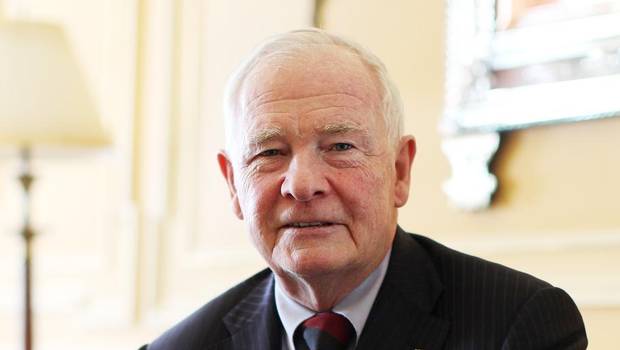
Governor General David Johnston, with the new government’s diversity and inclusion messaging:

Perhaps the bigger challenge we face is the long-term project of positioning our new Syrian-Canadian friends for success in their new country. And just as effective integration poses a significant challenge, so does it present a significant opportunity for Canada. Remember, great nations are built on great challenges.

The great opportunity we have in taking on the challenge of integrating new Canadians is simply this: It’s a chance to revisit and renew our commitment to being a smart, caring and inclusive society, not just for Syrian refugees, but for all Canadians, including the most vulnerable and marginalized among us.

The challenge of integrating refugees is the latest chapter in the continuing experiment we call Canada. At its heart, it’s an experiment in building an inclusive society of opportunity for diverse peoples. Consider our country’s roots. John Ralston Saul calls Canada a “Métis civilization.” Our national character is inclusive and mixed – and strong as a result. In their book Why Nations Fail, Daron Acemoglu and James Robinson argue that politically and economically inclusive societies thrive, while exclusive and extractive societies fail.

But perhaps the most compelling argument I’ve heard of late for rededicating ourselves to building a society of inclusive opportunity comes from a parent in Syria, whose son recently received a refugee scholarship to study at the University of Alberta. In thanks, the parent wrote: “You have pulled my son out of the hell, where he has been taking daily a high dose of risk, tension, worries and sorrow. The wheels of the war have crushed everything; the human and the stones, but not the heart and soul and never the will and hope.”

So to answer the question “How does Canada build a diverse and inclusive society?” I remember “why” we do it: Because it’s both the right and the smart thing to do. Now together, let’s reimagine how.


Source: The integration of refugees affirms Canada as a caring society – The Globe and Mail

We need to talk about how Islamic State interprets Islam

Good discussion by Balsam Mustafa:

There is no immediate magical solution to this problem. A comprehensive, constructive, and critical reading of Islamic fiqh (the human understanding of Sharia law) and history in all its stages requires a huge collective effort. That effort needs to include governments, religious authorities and other institutions, such as academia and the media.

Such effort needs to start with challenging religious messages that incite hatred or violence. That should include TV channels that support sectarian and ethnic division. These are not only broadcast from Arabic countries but also from Western countries, including the US and Britain.

Given the political conflict that feeds religious and sectarian conflict – often supporting and funding extremist voices delivering the message of hatred among and beyond Muslims – this might be difficult to achieve in the foreseeable future. Still, there are steps that need to be taken to pave the way for this ultimate goal.

People are already creatively trying to shift the extremist language and narratives through comedy and factual programmes. These efforts often emphasise the human over religion or ethnicity.

And messages of this kind can be found in religious texts too – even if they are largely overlooked by extremists. Take the Quranic verse: “there is no obligation in religion”; the Hadith by prophet Muhammed: “religion is how you treat others”; and the saying by Ali Ibn Abi Talib, cousin of prophet Muhammed, “people are two types: your brothers in religion, or your human counterparts, otherwise”.

We need to listen to these messages and use them to confront violence. It will be a long journey, but it is worth all our efforts. If we defeat IS but do not have an honest, critical re-reading of Islam, another group will only come along to replace it.

As the debate among Islamic scholars has shown, it has been difficult to establish the consensus that, even if sabi and jizya were once considered valid, they are no longer legitimate. But that very difficulty reinforces the need to undertake the task.

Source: We need to talk about how Islamic State interprets Islam