Regional differences in the educational outcomes of young immigrants
2015/11/21 Leave a comment
 Interesting study comparing the educational outcomes of immigrant children and third-generation or more Canadians. The findings regarding Quebec are particularly worrisome, given implications for longer-term integration:
This article examines regional differences in the math and reading skills of immigrant children aged 15 based on data from the Programme for International Student Assessment (PISA). It also examines regional differences in high-school and university completion rates among young immigrants who came to Canada before the age of 15 using National Household Survey (NHS) data. Throughout the article, comparisons are made with the children of the Canadian-born (third- or higher-generation Canadians).
- In Canada, the average PISA math score of immigrant students aged 15 was similar to the score of third- or higher-generation students. The average PISA reading score of immigrant children was slightly lower than the score of third- or higher-generation children.
- In almost all regions, immigrant students had lower PISA reading scores than third- or higher-generation students. With respect to PISA math scores, immigrant students performed better than third- or higher-generation students in the Atlantic provinces and British Colombia, but performed less well in Quebec and in Manitoba and Saskatchewan.
- Young immigrants aged 20 to 24 were more likely to have a high school diploma than their third- or higher-generation counterparts (93% versus 87%). Young immigrants aged 25 to 29 were also more likely to have a university degree (40%, compared with 26% of third- or higher-generation individuals in this age group).
- Manitoba and Saskatchewan (29%) and Quebec (32%) had the lowest proportions of immigrants aged 25 to 29 with a university degree. In contrast, British Columbia (44%) and Ontario (41%) had the highest proportions.
- Regional differences in the source countries of immigrants explained, in part, why some regions had higher university completion rates than others.
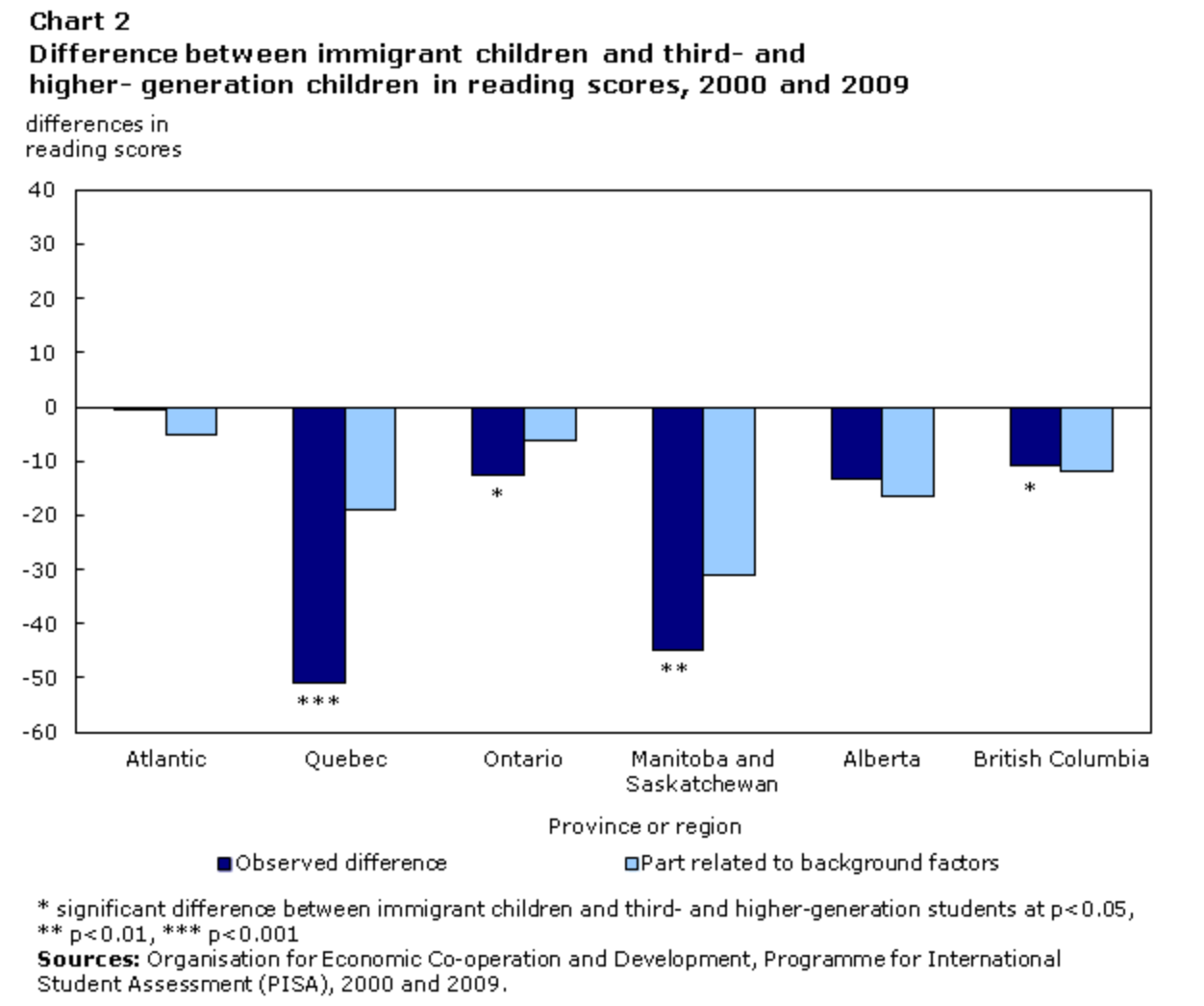 Source: Regional differences in the educational outcomes of young immigrants
 About Andrew
 Multicultural Meanderings