Israel, Gaza, War & Data — i ❤ data — Medium
2014/08/07 Leave a comment
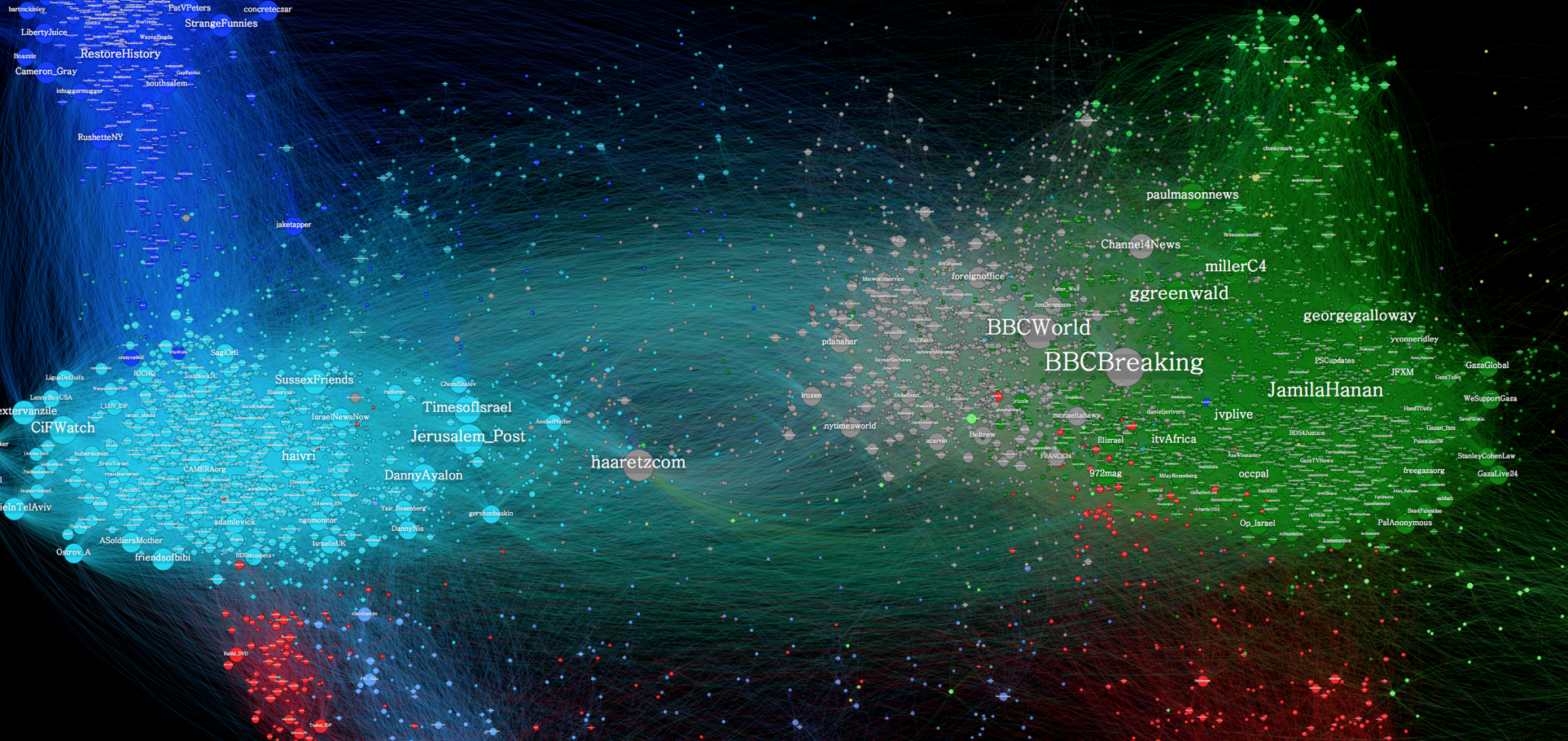 For data visualization geeks, as well as those more broadly interested in social networks and how they reinforce our existing views, this article by Gilad Lotan is a must read (Haaretz, the left-wing Israeli newspaper, draws the most from both sides):
Facebook’s trending pages aggregate content that are heavily shared “trending” across the platform. If you’re already logged into Facebook, you’ll see a personalized view of the trend, highlighting your friends and their views on the trend. Give it a try.
Now open a separate browser window in incognito mode Chrome: File->New Incognito Window and navigate to the same page. Since the browser has no idea who you are on Facebook, you’ll get the raw, unpersonalized feed.
How are the two different?
Personalizing Propaganda
If you’re rooting for Israel, you might have seen videos of rocket launches by Hamas adjacent to Shifa Hospital. Alternatively, if you’re pro-Palestinian, you might have seen the following report on an alleged IDF sniper who admitted on Instagram to murdering 13 Gazan children. Israelis and their proponents are likely to see IDF videos such as this one detailing arms and tunnels found within mosques passed around in their social media feeds, while Palestinian groups are likely to pass around images displaying the sheer destruction caused by IDF forces to Gazan mosques. One side sees videos of rockets intercepted in the Tel-Aviv skies, and other sees the lethal aftermath of a missile attack on a Gazan neighborhood.
The better we get at modeling user preferences, the more accurately we construct recommendation engines that fully capture user attention. In a way, we are building personalized propaganda engines that feed users content which makes them feel good and throws away the uncomfortable bits.
Worth reflecting upon. I try to have a range of news and twitter feeds to reduce the risk.
 About Andrew
 Multicultural Meanderings