Akbar: Canada’s labour market is failing racialized immigrant women, requiring an urgent policy response

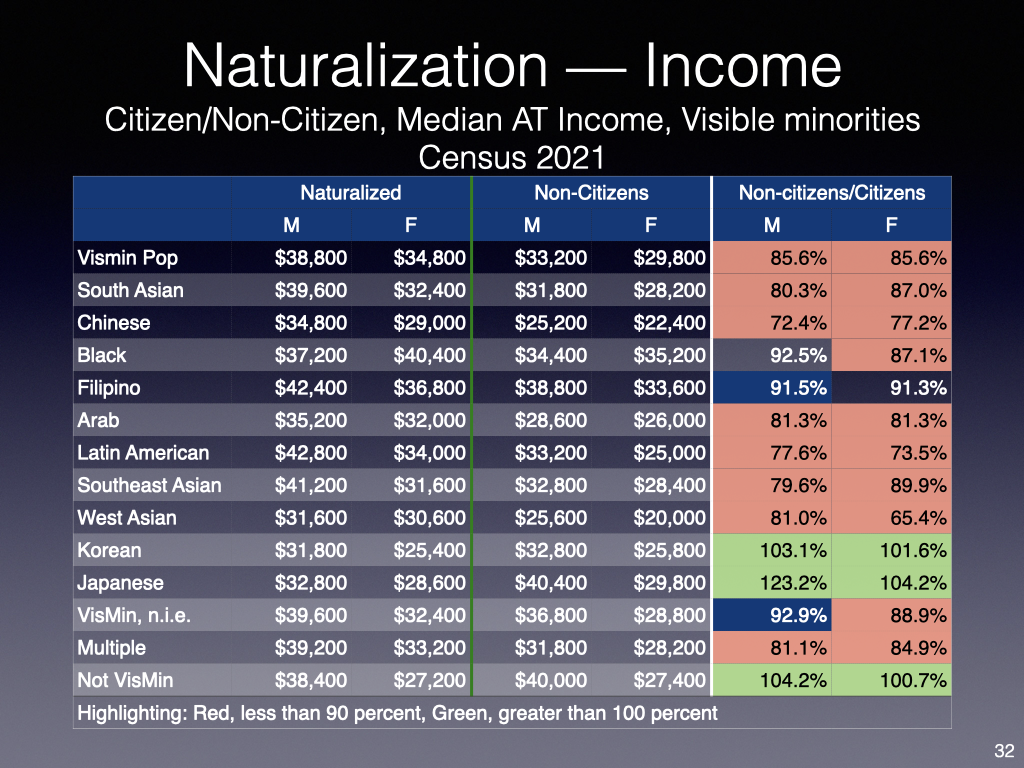
Would be helpful to have breakdowns by visible minority groups as they are significant (chart below compares citizens and non-citizens by visible minority group and not visible minority):
…To address these challenges, future research should adopt a problem-solving approach to address the root causes. Simultaneously, a comprehensive policy response is needed to tackle the systemic barriers in the labour market. 

Targeted solutions are needed to help racialized immigrant women. Strengthening credential recognition, for instance, can help employers assess transferable skills across countries. Implementing equitable hiring practices and workplace integration policies are also essential. 

Digital technology and artificial intelligence can also help eliminate bias in hiring and job matchingSettlement programsshould account for the intersecting identities of racialized immigrant women to provide tailored support.

Most importantly, it’s crucial to recognize that ensuring equitable access to meaningful employment is not only vital for advancing gender and racial equity, but also essential for unlocking Canada’s full economic potential.

Source: Canada’s labour market is failing racialized immigrant women, requiring an urgent policy response

Akbar: Canadian immigrants are overqualified and underemployed — reforms must address this

Well, labour economists would disagree regarding competitiveness given the current mix of temporary workers and students but interesting that CERC academics recognize the value of AI without automatically expressing concerns of algorithmic biases. Kahneman argues convincingly that such systems ensure greater consistency, albeit with the risk of coding of biases:

…Canada’s long-term competitiveness is hindered not by immigration, but by systemic labour market discrimination and inefficiencies that prevent skilled newcomers from fully contributing to the economy. 

Eliminating biases related to Canadian work experience and soft skills is key to ensuring newcomers can find fair work. The lack of recognition of foreign talent has a detrimental effect on the Canadian economy by under-utilizing valuable human capital.

To build a more inclusive labour market, a credential recognition system should support employers in assessing transferable skills and experience to mitigate perceived hiring risks related to immigrants. 

For international students, enhanced career services at educational institutions are critical. Strengthening partnerships between universities, colleges and employers can expand internships, co-op placements and mentorship programs, providing students with relevant Canadian work experience before graduation. 

Such collaboration is also key to implementing employer education initiatives that address misconceptions about hiring international graduates and highlight their contributions to the workforce. 

Artificial Intelligence (AI) can also play a role in reducing hiring biases and improving job matching for new immigrants and international graduates. Our recent report, which gathered insight from civil society, the private sector and academia, highlights the following AI-driven solutions:

  • Tools like Toronto Metropolitan University’s AI resume builder, Mogul AI, and Knockri can help match skills to roles, neutralize hiring bias and promote equity.
  • Wage subsidies and AI tools can encourage equitable hiring, while AI-powered programs can help human resources recognize and reduce biases.
  • Tools like the Toronto Region Immigrant Employment Council Mentoring Partnership, can connect newcomers with mentors, track their skills and match them to employer needs.

Harnessing AI-driven solutions, alongside policy reforms and stronger employer engagement, can help break down hiring barriers so Canada can fully benefit from the skills and expertise of its immigrant workforce.

Source: Canadian immigrants are overqualified and underemployed — reforms must address this