Study shows virus hit African immigrants hardest in France

As is the case everywhere, those at the lower economic scale, living in worse areas, and with more precarious yet essential work:

Death rates among immigrants from sub-Saharan Africa doubled in France and tripled in the Paris region at the height of France’s coronavirus outbreak, according to a study from the French government’s statistics agency released Tuesday.

The INSEE agency’s findings are the closest France has come yet to acknowledging with numbers the virus’s punishing and disproportionate impact on the country’s Black immigrants and the members of other systemically overlooked minority groups.

The study was the first in France to cross-reference deaths that occurred in March and April, when intensive care units were swamped with COVID-19 patients, with the regions of origin of the people who died. By highlighting dramatic increases in deaths among immigrants born in Africa and Asia, the research helps fill some of the gaps in France’s understanding of its minority communities.

The topic has become an increasingly hot-button issue for French administrators in the wake of Black Lives Matter protests sparked by the death of George Floyd. French researchers hailed the study as an important step but also said it only begins to scratch the surface of how the pandemic is impacting France’s minorities, who often live in crowded, underprivileged neighborhoods.

French Black rights activists have long pushed for more and better ethnic-specific data. Officially, the French republic is colorblind, refusing to categorize or count people by race or ethnicity. For critics, that guiding philosophy has made the state oblivious to discrimination and put minorities at additional risk during the pandemic.

“I’m delighted, and I know colleagues are delighted, because we have been waiting for this data,” Solene Brun, a sociologist specializing in issues of race and inequality, said. “But our enthusiasm is tempered by the fact that this concerns only countries of origin. It’s not looking at Black populations or North African and Asian populations in their entirety.”

Most glaringly, the study shed no light on how the French-born children of immigrants are faring in the pandemic. Still, its findings pointing to high death rates among their foreign-born parents suggest that minorities, especially Black people from Africa, may have disproportionately borne much of the brunt in France.

“They have very clearly been hard hit. That is undeniable,” said Sylvie le Minez, who heads INSEE’s department of demographic studies.

Mounting evidence from the United States and Britain pointing to greater COVID-19 mortality risks for Black residents than whites has increased pressure for French studies. Researchers bemoaned that their hands were tied by French taboos against identifying people by race or ethnicity and by legislation that regulates the scope of research and data collection.

“France doesn’t do ethnic-racial statistics, but we have the country of birth,” Le Minez said. “That is already very, very illuminating.”

INSEE researchers drilled down into data gleaned from France’s civil registry of births, deaths and marriages to look at the birth countries of people who died during the March-April peak of the country’s outbreak. France has reported about 30,000 virus-related deaths in all since the pandemic started.

The research findings were particularly alarming for the Paris region, especially in the densely populated and underprivileged northern reaches of the French capital. Compared to March-April of 2019, Paris-region deaths during the same two months this year shot up by 134% among North African immigrants and by 219% for people born elsewhere in Africa.

The region’s increased March-April mortality in 2020 was less marked among people born in France: 78%.

Skewed death rates were even more pronounced in Seine-Saint-Denis, the northern outskirt of Paris long troubled by poverty and overcrowding. There, deaths increased by 95% among the French-born but by 191% among people born in North Africa and by 368% among those from sub-Saharan Africa.

The study suggested that African immigrants were more exposed to infection because they live in more crowded conditions, make greater use of public transportation to commute to work and are more likely to have been among the key workers who continued at their posts when white-collar workers stayed home during France’s two-month lockdown.

Sociologist Brun said the study, by exposing limits in France’s knowledge about minorities, offered compelling arguments for broader research.

“Once you wedge a foot in the door, it becomes easier to open it,” she said. “What’s precious about this data is that, roughly put, it gives us a glimpse of what we could learn if we agreed to really look at racial inequalities in health. So not just immigrants, but also their descendants and even perhaps their grandkids, that’s to say all those people who are racialized as non-white in France and live with discrimination because of that.”

Source: Study shows virus hit African immigrants hardest in France

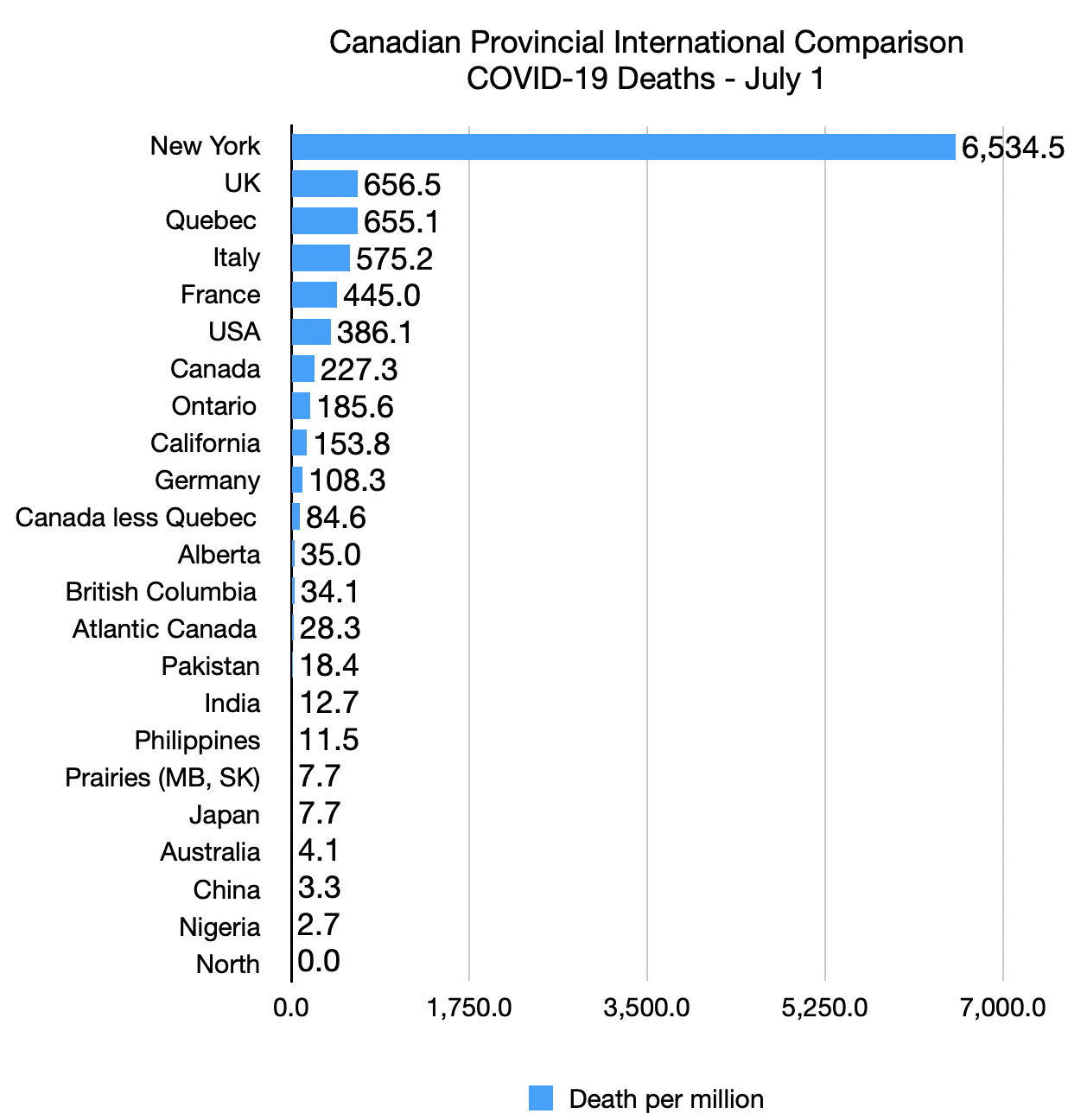
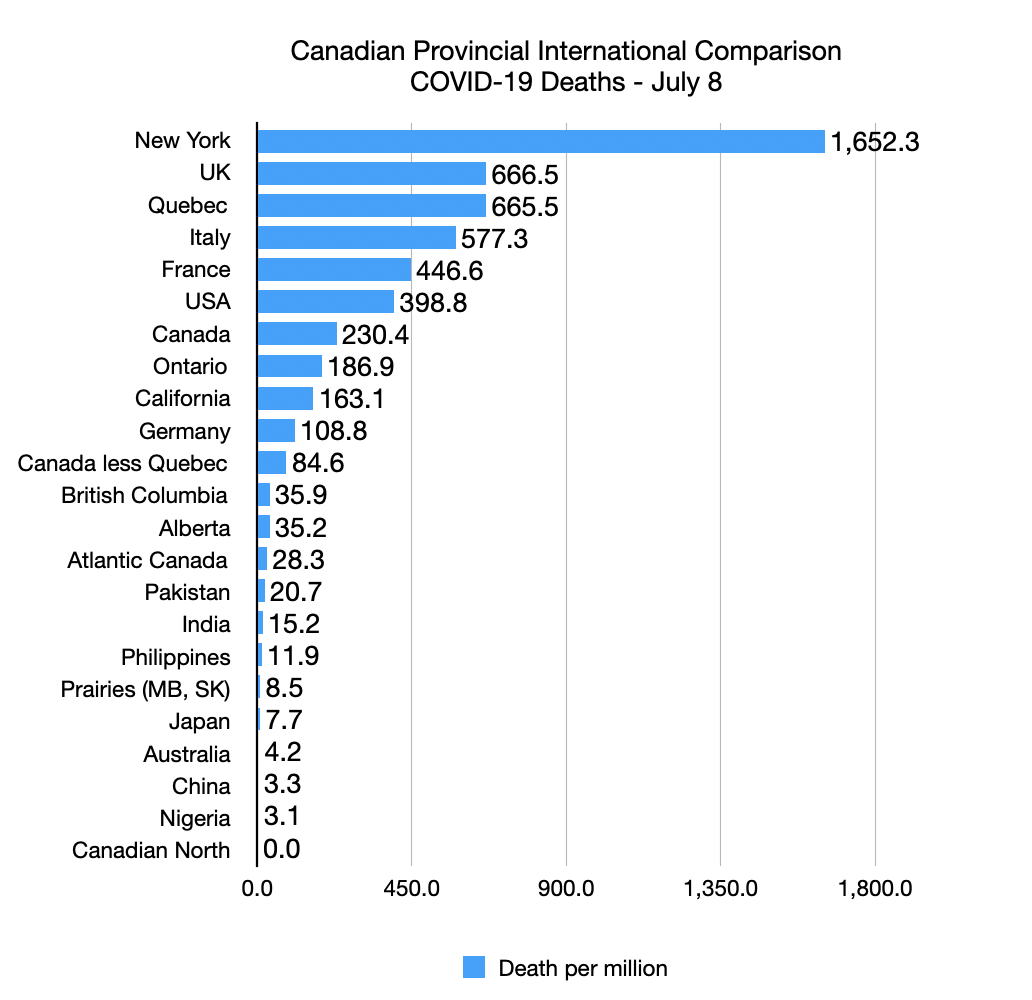
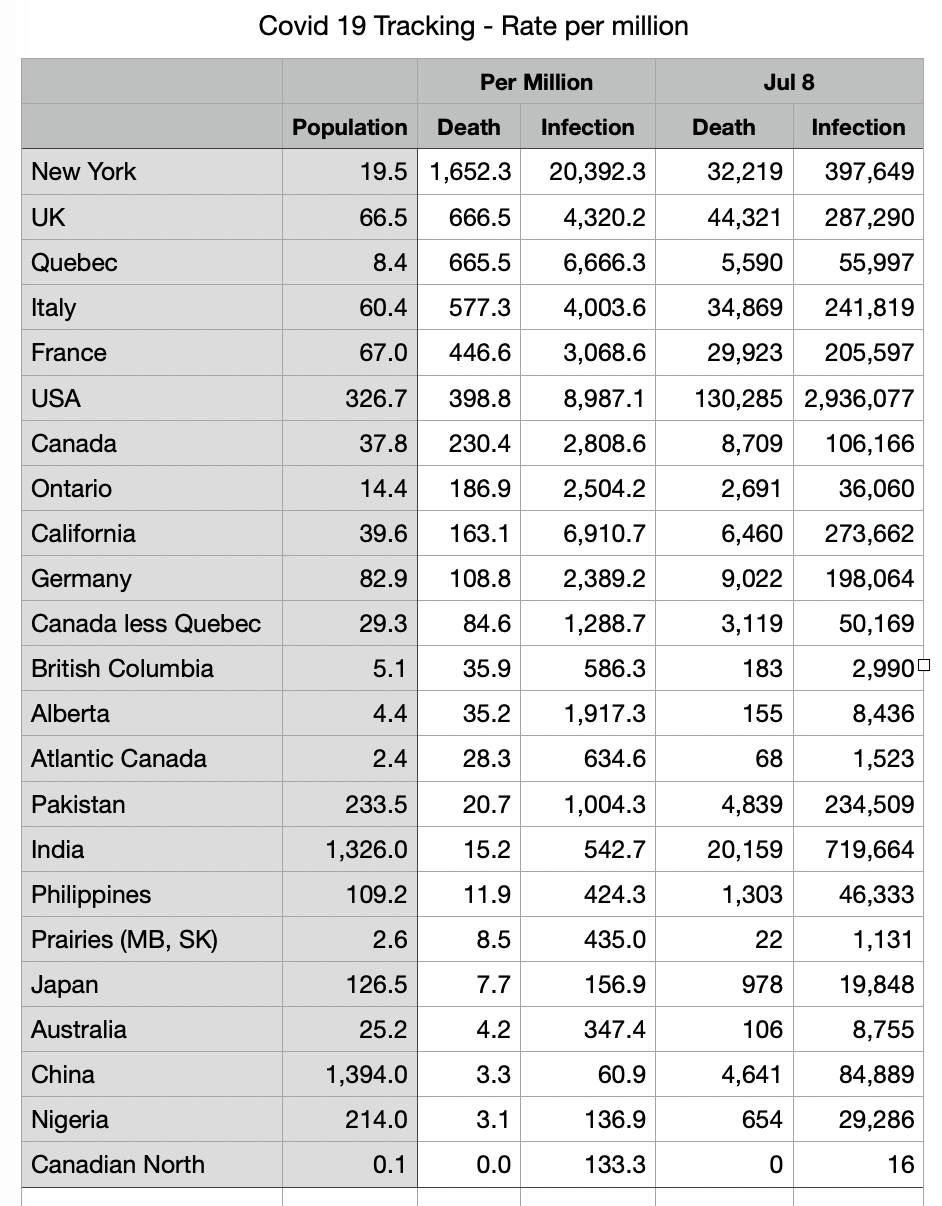
#COVID-19: Comparing provinces with other countries 8 July Update

The latest weekly stats showing no major changes from last week in terms of relative ranking, although the USA can likely be expected to surpass the harder hit European countries in deaths per million given current trends (it already has with respect to deaths).

My apologies for last week’s incorrect data of New York deaths, this week has the correct number:


Australia: Victorian economy hardest hit by coronavirus fallout as immigration dries up

While Australian approach to immigration is more restrictive than Canada’s, Canada’s economic and immigration recovery may also be longer than expected. But like all projections and estimates, time will tell.

Australia has been one of the more successful countries in addressing COVID-19, with only 311 infections and 4 deaths per million (July 1):

Australia’s second-most populous state was poised to take the biggest economic hit from the COVID-19 pandemic even before a dramatic spike in cases over the past fortnight forced renewed shutdowns in large parts of Melbourne.

The latest business outlook from consultancy Deloitte Access Economics tips Victoria to suffer the biggest fall in gross state product in the 2020-21 financial year, which just began.

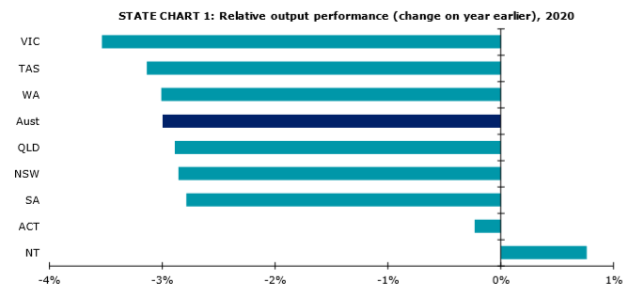
Deloitte predicts Victoria’s domestic economy will shrink 1.6 per cent this financial year, also leaving it with the worst economic performance in the nation this calendar year.

“The largest downturn is likely to be felt in Victoria given its current spike in cases, as well as that state’s dependence on migration and on foreign students in an age of lockdowns and closed borders,” Deloitte’s Chris Richardson said in the report.

Most state economies are expected to shrink around 3 per cent this year due to the pandemic.
Most state economies are expected to shrink around 3 per cent this year due to the pandemic.(Supplied: Deloitte)

Mr Richardson said Victoria’s economy was particularly vulnerable due to the latest wave of coronavirus cases, which would see the state cut off from the rest of the country, once the border with New South Wales closed from Wednesday.

“Victoria has had the strongest COVID restrictions across the country and now, with the prospect of a second wave returning and the reintroduction of restrictions, the state is likely to see some prolonged misery in particularly hard-hit sectors,” he noted.

Melbourne’s construction sector facing ‘severe setback’

While travel-related sectors, such as tourism and education, and hospitality will be the most immediate casualties, Mr Richardson says the medium-term effects will be felt acutely in the state’s previously booming construction sector.

“Victoria’s construction sector was already showing signs of weakness before COVID hit,” he wrote.

“With high levels of uncertainty, and an unexpected drop in population growth, construction is likely to suffer a severe setback over the coming year.

“Demand for office and apartments in Melbourne, including those projects that are halfway through, are being reconsidered as the density of Melbourne’s CBD is now less attractive across people’s daily lives.”

Mr Richardson added that one silver lining for Victoria’s construction sector was that there was a lot of planned infrastructure investment, something which would also be seen in the second-most pandemic-affected state, New South Wales.

It will particularly target transport projects in Melbourne and Sydney.

However, that investment is not expected to wholly make up for the loss of overseas arrivals.

“Other things equal, keeping tourists, students and migrants away for longer means that Australia’s economy will be some 4 to 5 per cent smaller than it could otherwise be,” Mr Richardson said.

Deloitte observed that New South Wales was similarly affected by the closure of international borders, with the state usually receiving more than a third of migrants who arrive in Australia from overseas.

However, in recent years, New South Wales has been losing existing residents to other Australian states, notably Victoria, a trend which Deloitte expects to have paused during the crisis, especially due to hard border closures.

The state’s comparatively better success in containing the virus so far has Deloitte tipping just a 0.1 per cent fall in New South Wales gross state product this financial year, as domestic activities continue to return to normal.

Some other states are expected to see a rise in their domestic activity — again excluding the large drop in exports, which includes foreign tourism and education — while the two territories are tipped to perform best.

“The lift in LNG-related exports from the Ichthys project will protect the Northern Territory, while its strong public sector base is a very welcome anchor in the storm for the ACT,” Mr Richardson explained.

Even though their domestic economies are expected to take a smaller hit than the bigger states, Deloitte is warning South Australia and Queensland will suffer the nation’s highest unemployment rates, above 9 per cent, while Western Australia and Tasmania will also have a weaker jobs market than Victoria.

Deloitte tips unemployment to be at its lowest in the ACT (5.7 per cent) and New South Wales (7.5 per cent).

COVID-19 infections ‘best’ economic indicator

Overall, Deloitte is forecasting a relatively fast recovery from the pandemic, tipping only a 0.4 per cent decline in GDP nationwide this financial year, following on from a 0.1 per cent fall in 2019-20.

It is predicting robust national economic growth of 5.3 per cent the following financial year, 2021-22.

However, this forecast is based on Australia keeping COVID-19 cases suppressed, a vaccine or good anti-viral treatments being widely available by the middle of next year, and international travel gradually recommencing, starting with trips to New Zealand at the end of this year and expanding to a general reopening of Australia’s borders by the end of next year.

Mr Richardson said a continued and widespread spike in cases would lead to much worse economic outcomes.

“That’s why opening up if virus numbers aren’t under control is risky.

“And, in a volatile environment, it is also why the best leading indicator of how an economy will perform is how that nation is going in its fight against the virus.”

Source: Victorian economy hardest hit by coronavirus fallout as immigration dries up

Are Protests Unsafe? What Experts Say May Depend on Who’s Protesting What

Good nuanced discussion, based upon US experience but likely also applicable here:

As the pandemic took hold, most epidemiologists have had clear proscriptions in fighting it: No students in classrooms, no in-person religious services, no visits to sick relatives in hospitals, no large public gatherings.

So when conservative anti-lockdown protesters gathered on state capitol steps in places like Columbus, Ohio and Lansing, Mich., in April and May, epidemiologists scolded them and forecast surging infections. When Gov. Brian Kemp of Georgia relaxed restrictions on businesses in late April as testing lagged and infections rose, the talk in public health circles was of that state’s embrace of human sacrifice.

And then the brutal killing of George Floyd by police in Minneapolis on May 25 changed everything.

Soon the streets nationwide were full of tens of thousands of people in a mass protest movement that continues to this day, with demonstrations and the toppling of statues. And rather than decrying mass gatherings, more than 1,300 public health officials signed a May 30 letter of support, and many joined the protests.

That reaction, and the contrast with the epidemiologists’ earlier fervent support for the lockdown, gave rise to an uncomfortable question: Was public health advice in a pandemic dependent on whether people approved of the mass gathering in question. To many, the answer seemed to be, “Yes.”

“The way the public health narrative around coronavirus has reversed itself overnight seems an awful lot like … politicizing science,” the essayist and journalist Thomas Chatterton Williams wrote in The Guardian last month. “What are we to make of such whiplash-inducing messaging?”

Of course, there are differences: A distinct majority of George Floyd protesters wore masks in many cities, even if they often crowded too close together. By contrast, many anti-lockdown protesters refused to wear masks — and their rallying cry ran directly contrary to public health officials’ instructions.

And in practical terms, no team of epidemiologists could have stopped the waves of impassioned protesters, any more than they could have blocked the anti-lockdown protests.

Still, the divergence in their own reactions left some of the country’s prominent epidemiologists wrestling with deeper questions of morality, responsibility and risk.

Catherine Troisi, an infectious disease epidemiologist at The University of Texas Health Science Center at Houston, studies Covid-19. When, wearing a mask and standing at the edge of a great swell of people, she attended a recent protest in Houston supporting Mr. Floyd, a sense of contradiction tugged at her.

“I certainly condemned the anti-lockdown protests at the time, and I’m not condemning the protests now, and I struggle with that,” she said. “I have a hard time articulating why that is OK.”

Mark Lurie, a professor of epidemiology at Brown University, described a similar struggle.

“Instinctively, many of us in public health feel a strong desire to act against accumulated generations of racial injustice,” Professor Lurie said. “But we have to be honest: A few weeks before, we were criticizing protesters for arguing to open up the economy and saying that was dangerous behavior.

“I am still grappling with that.”

To which Ashish Jha, dean of Brown University’s School of Public Health, added: “Do I worry that mass protests will fuel more cases? Yes, I do. But a dam broke, and there’s no stopping that.”

Some public health scientists publicly waved off the conflicted feelings of their colleagues, saying the country now confronts a stark moral choice. The letter signed by more than 1,300 epidemiologists and health workers urged Americans to adopt a “consciously anti-racist” stance and framed the difference between the anti-lockdown demonstrators and the protesters in moral, ideological and racial terms.

Those who protested stay-at-home orders were “rooted in white nationalism and run contrary to respect for Black lives” the letter stated.

By contrast, it said, those protesting systemic racism “must be supported.”

“As public health advocates,” they stated, “we do not condemn these gatherings as risky for Covid-19 transmission. We support them as vital to the national public health.”

There is as of yet no firm evidence that protests against police violence led to noticeable spikes in infection rates. A study published by the National Bureau of Economic Research found no overall rise in infections, but could not rule out that infections might have risen in the age demographic of the protesters. Health officials in Houston and Los Angeles have suggested the demonstrations there led to increased infections, but they have not provided data. In New York City, Mayor Bill de Blasio has instructed contact tracers not to ask if infected people attended protests.

The ten epidemiologists interviewed for this article said near-daily marches and rallies are nearly certain to result in some transmission. Police use of tear gas and pepper spray, and crowding protesters into police vans and buses, puts people further at risk.

“In all likelihood, some infections occurred at the protests; the question is how much,” said Professor Lurie. “No major new evidence has emerged that suggests the protests were superspreader events.”

The coronavirus has infected 2.89 million Americans, and at least 129,800 have died.

The virus has hit Black and Latino Americans with a particular ferocity, hospitalizing those populations at more than four times the rate of white Americans. Many face underlying health issues, and are more likely than most Americans to live in densely populated housing and to work on the front lines of this epidemic. As a result, Latinos and Black people are dying at rates well in excess of white Americans.

Mary Travis Bassett, who is African American, served as the New York City health commissioner and now directs the FXB Center for Health and Human Rights at Harvard University. She noted that even before Covid-19, Black Americans were sicker and died more than two years earlier, on average, than white Americans.

And she noted, police violence has long cast a deep shadow over African Americans. From the auction block to plantations to centuries of lynchings carried out with the complicity of local law enforcement, blacks have suffered the devastating effects of state power.

She acknowledged that the current protests are freighted with moral complications, not least the possibility that a young person marching for justice might come home and inadvertently infect a mother, aunt or grandparent. “If there’s an elder in the household, that person should be cocooned to the best extent that we can,” Professor Bassett said.

But she said the opportunity to achieve a breakthrough transcends such worries about the virus. “Racism has been killing people a lot longer than Covid-19,” she said. “The willingness to say we all bear the burden of that is deeply moving to me.”

Others take a more cautious view of the moral stakes. Nicholas A. Christakis, professor of social and natural science at Yale, noted public health is guided by twin imperatives: To comfort the afflicted and to speak truth about risks to public health, no matter how unpleasant.

These often-complementary values are now in conflict. To take to the street to protest injustice is to risk casting open doors and letting the virus endanger tens of thousands, he said. There is a danger, he said, in asserting that one moral imperative overshadows another.

“The left and the right want to wish the virus away,” Professor Christakis said. “We can’t wish away climate change, or the epidemic, or other inconvenient scientific truths.”

He said that framing the anti-lockdown protests as white supremacist and dangerous and the George Floyd protests as anti-racist and essential obscures a messier reality.

When he was a hospice doctor in Chicago and Boston, he said, he saw up close how isolation deepened the despair of the dying — a fate now suffered by many in the pandemic, with hospital visits severely restricted. For epidemiologists to turn around and argue for loosening the ground rules for the George Floyd marches risks sounding hypocritical.

“We allowed thousands of people to die alone,” he said. “We buried people by Zoom. Now all of a sudden we are saying, never mind?”

There are other conflicting imperatives. Lockdowns, and the shuttering of businesses and schools and enforcing social isolation, take a toll on the working class and poor, and the emotionally fraught who live on the economic margins.

The lockdown is justified, most epidemiologists say, even as it requires acknowledging a moral truth: To save many hundreds of thousands of lives, we risk wrecking the lives of a smaller number of Americans, as businesses fail and people lose jobs and grow desolate and depressed.

The pandemic has also brought an increase in deaths from heart attacks and diabetes during this period.

“Have people died because of the closed economy? No doubt,” said Professor Lurie, the Brown University epidemiologist. “And that pain is real, and should not be dismissed. But you won’t have a healthy economy until you have healthy people.”

There’s another epidemiological reality: No one quite understands the path of this idiosyncratic virus and how and when it strikes. The public health risks presented by the protests are not easily separated from the broader risks taken as governors, in fits and starts, move to reopen state economies. The protesters represent a small stream filled with 500,000 to perhaps 800,000 people, merging with a river of millions of Americans who have begun to re-enter businesses and restaurants.

“To separate out those causes, when we look, will be very difficult,” Professor Lurie noted.

Still, he admitted to some worries. He said he took his daughter to a protest early in June and felt a chaser of regret in its wake.

“We felt afterward that the risk we incurred probably exceeded the entire risk in the previous two months,” he said. “We undid some very hard work, and I don’t see how actions like that can help in battling this epidemic, honestly.”

Source: Are Protests Unsafe? What Experts Say May Depend on Who’s Protesting WhatEpidemiologists decried the anti-lockdown protests last spring as dangerous but seem less comfortable doing so now that the marches are against racism.

The Fullest Look Yet at the Racial Inequity of Coronavirus

Good in-depth analysis (for charts, see the article):

Teresa and Marvin Bradley can’t say for sure how they got the coronavirus. Maybe Ms. Bradley, a Michigan nurse, brought it from her hospital. Maybe it came from a visiting relative. Maybe it was something else entirely.

What is certain — according to new federal data that provides the most comprehensive look to date on nearly 1.5 million coronavirus patients in America — is that the Bradleys are not outliers.

Racial disparities in who contracts the virus have played out in big cities like Milwaukee and New York, but also in smaller metropolitan areas like Grand Rapids, Mich., where the Bradleys live. Those inequities became painfully apparent when Ms. Bradley, who is Black, was wheeled through the emergency room.

“Everybody in there was African-American,” she said. “Everybody was.”

Early numbers had shown that Black and Latino people were being harmed by the virus at higher rates. But the new federal data — made available after The New York Times sued the Centers for Disease Control and Prevention — reveals a clearer and more complete picture: Black and Latino people have been disproportionately affected by the coronavirus in a widespread manner that spans the country, throughout hundreds of counties in urban, suburban and rural areas, and across all age groups.

Latino and African-American residents of the United States have been three times as likely to become infected as their white neighbors, according to the new data, which provides detailed characteristics of 640,000 infections detected in nearly 1,000 U.S. counties. And Black and Latino people have been nearly twice as likely to die from the virus as white people, the data shows.

The disparities persist across state lines and regions. They exist in rural towns on the Great Plains, in suburban counties, like Fairfax County, Va., and in many of the country’s biggest cities.

“Systemic racism doesn’t just evidence itself in the criminal justice system,” said Quinton Lucas, who is the third Black mayor of Kansas City, Mo., which is in a state where 40 percent of those infected are Black or Latino even though those groups make up just 16 percent of the state’s population. “It’s something that we’re seeing taking lives in not just urban America, but rural America, and all types of parts where, frankly, people deserve an equal opportunity to live — to get health care, to get testing, to get tracing.”

The data also showed several pockets of disparity involving Native American people. In much of Arizona and in several other counties, they were far more likely to become infected than white people. For people who are Asian, the disparities were generally not as large, though they were 1.3 times as likely as their white neighbors to become infected.

The new federal data, which is a major component of the agency’s disease surveillance efforts, is far from complete. Not only is race and ethnicity information missing from more than half the cases, but so are other epidemiologically important clues — such as how the person might have become infected.

And because it includes only cases through the end of May, it doesn’t reflect the recent surge in infections that has gripped parts of the nation.

Still, the data is more comprehensive than anything the agency has released to date, and The Times was able to analyze the racial disparity in infection rates across 974 counties representing more than half the U.S. population, a far more extensive survey than was previously possible.

Disparities in the suburbs

For the Bradleys, both in their early 60s, the symptoms didn’t seem like much at first. A tickle at the back of the throat.

But soon came fevers and trouble breathing, and when the pair went to the hospital, they were separated. Ms. Bradley was admitted while Mr. Bradley was sent home. He said he felt too sick to leave, but that he had no choice. When he got home, he felt alone and uncertain about how to treat the illness.

It took weeks, but eventually they both recovered. When Mr. Bradley returned to work in the engineering department of a factory several weeks later, a white co-worker told Mr. Bradley that he was the only person he knew who contracted the virus.

By contrast, Mr. Bradley said he knew quite a few people who had gotten sick. A few of them have died.

“We’re most vulnerable to this thing,” Mr. Bradley said.

In Kent County, which includes Grand Rapids and its suburbs, Black and Latino residents account for 63 percent of infections, though they make up just 20 percent of the county’s population. Public health officials and elected leaders in Michigan said there was no clear reason Black and Latino people in Kent County were even more adversely affected than in other parts of the country.

Among the 249 counties with at least 5,000 Black residents for which The Times obtained detailed data, the infection rate for African-American residents is higher than the rate for white residents in all but 14 of those counties. Similarly, for the 206 counties with at least 5,000 Latino residents analyzed by The Times, 178 have higher infection rates for Latino residents than for white residents.

“As an African-American woman, it’s just such an emotional toll,” said Teresa Branson, the deputy administrative health officer in Kent County, whose agency has coordinated with Black pastors and ramped up testing in hard-hit neighborhoods.

Experts point to circumstances that have made Black and Latino people more likely than white people to be exposed to the virus: Many of them have front-line jobs that keep them from working at home; rely on public transportation; or live in cramped apartments or multigenerational homes.

“You literally can’t isolate with one bathroom,” said Lt. Gov. Garlin Gilchrist II, who leads Michigan’s task force on coronavirus racial disparities.

‘We just have to keep working’

Latino people have also been infected at a jarringly disparate rate compared with white people. One of the most alarming hot spots is also one of the wealthiest: Fairfax County, just outside of Washington, D.C.

Three times as many white people live there as Latinos. Yet through the end of May, four times as many Latino residents had tested positive for the virus, according to the C.D.C. data.

With the median household income in Fairfax twice the national average of about $60,000, housing is expensive, leaving those with modest incomes piling into apartments, where social distancing is an impossibility. In 2017, it took an annual income of almost $64,000 to afford a typical one-bedroom apartment, according to county data. And many have had to keep commuting to jobs.

Diana, who is 26 and did not want her last name used out of fear for her husband’s job, said her husband got sick at a construction site in April. She and her brother, who also works construction, soon fell ill, too. With three children between them, the six family members live in a two-bedroom apartment.

Diana, who was born in the United States but moved to Guatemala with her parents as a small child before returning to this country five years ago, is still battling symptoms. “We have to go out to work,” she said. “We have to pay our rent. We have to pay our utilities. We just have to keep working.”

At Culmore Clinic, an interfaith free clinic serving low-income adults in Fairfax, about half of the 79 Latino patients who tested for the virus have been positive.

“This is a very wealthy county, but their needs are invisible,” said Terry O’Hara Lavoie, a co-founder of the clinic. The risk of getting sick from tight living quarters, she added, is compounded by the pressure to keep working or quickly return to work, even in risky settings.

The risks are borne out by demographic data. Across the country, 43 percent of Black and Latino workers are employed in service or production jobs that for the most part cannot be done remotely, census data from 2018 shows. Only about one in four white workers held such jobs.

Also, Latino people are twice as likely to reside in a crowded dwelling — less than 500 square feet per person — as white people, according to the American Housing Survey.

The national figures for infections and deaths from the virus understate the disparity to a certain extent, since the virus is far more prevalent among older Americans, who are disproportionately white compared with younger Americans. When comparing infections and deaths just within groups who are around the same ages, the disparities are even more extreme.

Latino people between the ages of 40 and 59 have been infected at five times the rate of white people in the same age group, the new C.D.C. data shows. The differences are even more stark when it comes to deaths: Of Latino people who died, more than a quarter were younger than 60. Among white people who died, only 6 percent were that young.

Jarvis Chen, a researcher and lecturer at the Harvard T. H. Chan School of Public Health, said that the wide racial and ethnic disparities found in suburban and exurban areas as revealed in the new C.D.C data should not come as a surprise. The discrepancies in how people of different races, ethnicities and socioeconomic statuses live and work may be even more pronounced outside of urban centers than they are in big cities, Dr. Chen said.

“As the epidemic moves into suburban areas, there are good reasons to think that the disparities will grow larger,” he said.

The shortfalls of the government’s data

The Times obtained the C.D.C. data after filing a Freedom of Information Act lawsuit to force the agency to release the information.

To date, the agency has released nearly 1.5 million case records. The Times asked for information about the race, ethnicity and county of residence of every person who tested positive, but that data was missing for hundreds of thousands of cases.

C.D.C. officials said the gaps in their data are because of the nature of the national surveillance system, which depends on local agencies. They said that the C.D.C. has asked state and local health agencies to collect detailed information about every person who tests positive, but that it cannot force local officials to do so. Many state and local authorities have been overwhelmed by the volume of cases and lack the resources to investigate the characteristics of every individual who falls ill, C.D.C. officials said.

Even with the missing information, agency scientists said, they can still find important patterns in the data, especially when combining the records about individual cases with aggregated data from local agencies.

Still, some say the initial lack of transparency and the gaps in information highlight a key weakness in the U.S. disease surveillance system.

“You need all this information so that public health officials can make adequate decisions,” said Andre M. Perry, a fellow in the Metropolitan Policy Program at The Brookings Institution. “If they’re not getting this information, then municipalities and neighborhoods and families are essentially operating in the dark.”

Higher cases, higher deaths

The higher rate in deaths from the virus among Black and Latino people has been explained, in part, by a higher prevalence of underlying health problems, including diabetes and obesity. But the new C.D.C. data reveals a significant imbalance in the number of virus cases, not just deaths — a fact that scientists say underscores inequities unrelated to other health issues.

The focus on comorbidities “makes me angry, because this really is about who still has to leave their home to work, who has to leave a crowded apartment, get on crowded transport, and go to a crowded workplace, and we just haven’t acknowledged that those of us who have the privilege of continuing to work from our homes aren’t facing those risks,” said Dr. Mary Bassett, the Director of the FXB Center for Health and Human Rights at Harvard University.

Dr. Bassett, a former New York City health commissioner, said there is no question that underlying health problems — often caused by factors that people cannot control, such as lack of access to healthy food options and health care — play a major role in Covid-19 deaths.

But she also said a big determinant of who dies is who gets sick in the first place, and that infections have been far more prevalent among people who can’t work from home. “Many of us also have problems with obesity and diabetes, but we’re not getting exposed, so we’re not getting sick,” she said.

The differences in infection case rates are striking, said Jennifer Nuzzo, an epidemiologist and professor at the Johns Hopkins Bloomberg School of Public Health.

“Some people have kind of waved away the disparities by saying, ‘Oh, that’s just underlying health conditions,’” Dr. Nuzzo said. “That’s much harder to do with the case data.”

In June, C.D.C. officials estimated that the true tally of virus cases was 10 times the number of reported cases. They said they could not determine whether these unreported cases had racial and ethnic disparities similar to those seen in the reported infections.

But they said that more-severe infections — which are more often associated with underlying health conditions, and with people seeking medical care — are more likely to be recorded as cases.

That difference in the reporting of cases might explain some portion of the race and ethnicity disparities in the number of documented infections, C.D.C. officials said. But they said that it was also clear that there have been significant disparities in the number of both deaths and cases.
Australia’s Economic Slump Threatens Openness to Immigration

Will continue to watch how this plays out and whether it influences Canadian debates and discussion (not seeing many signs it is to date). Canada has also largely been dependent on immigration for economic growth and the drop this year will have a comparable impact:

Australia’s immigration program, a key factor in the economy’s record stretch without recession, is under threat amid calls for the nation to turn inward while it recovers from the coronavirus pandemic.

Skills-based immigration has helped fill roles in industries experiencing high demand, slowing the aging of the country’s workforce. Crucially, the swelling population has delivered about 1.5 percentage points to annual GDP growth, allowing the economy to defy the business cycle.

Harry Triguboff personifies the program. The billionaire octogenarian fled to Sydney from China in 1948 ahead of Mao Zedong’s takeover, eventually becoming Australia’s fifth-richest man. His wealth was generated by building apartments to house the multitudes who followed in his footsteps.

“Australia was always built on migrants. We are the most successful with it,” Triguboff said in an interview with Bloomberg News. “Migrants are important because they work and build, and migrants of course need housing.”

Yet Australia’s bipartisan openness toward immigration is fraying amid a pandemic-induced recession. With the virus forcing the closing of borders, Prime Minister Scott Morrison anticipates an 85% drop in permanent arrivals this fiscal year.

Bill Evans, chief economist at Westpac Banking Corp., estimates that such a reduction could limit overall population growth to about 0.75%. The population could even contract if the number of Australians leaving the country doesn’t change, he said.

This has “profound implications for the nature of the job market, from the perspective of supply, the future and structure of the dwelling construction cycle and Australia’s potential growth rate,” Evans said. “Supporting Australia’s population growth is paramount. Australia should not accept the prospect of a collapse in net migration.”

Australia has been hailed for running the world’s best immigration program. In 2016, just under half of all Australians were either born overseas or had a parent who was. It ranks highly even among developed-world counterparts: 29% of Australians were born overseas, compared with 23% in New Zealand, 21% in Canada and around 14% in the U.S.

Immigration played a central role in helping Australia avoid recession for 28 years — until coronavirus hit. In per capita terms, however, the expansion halted temporarily in 2013 following the mining investment boom, and again in late 2018 as residential dwelling construction slowed.

“The post-COVID-19 question we must ask now is this: when we restart our migration program, do we want migrants to return to Australia in the same numbers and in the same composition as before the crisis?” said Kristina Kenneally, the opposition Labor party spokesperson for immigration.

“Our answer should be no,” she wrote in a May opinion article. “Our economic recovery must help all Australians get back on their feet, and to do that we need a migration program that puts Australian workers first.”

What Bloomberg’s Economists Say

“Migration has been a key driver of Australia’s growth story over the past decade, bolstering demand – particularly for housing – and easing labor market and demographic pressures through a strong supply of younger skilled workers. A migration-led slowdown in population growth risks exposing several underlying weaknesses in the economy, dampening demand, and revealing shortcomings in the training of skilled workers.”

James McIntyre, economist

Australia’s Treasury department said in a 2018 research report that migration is typically attacked because it adds to existing problems. The department noted that from 1996 to 2016 Australia’s population rose by more than 6 million people, with 75% of the growth in the states’ capital cities.

“Issues such as congestion and pollution are not new. These issues have concerned policy makers for decades and are the result of a range of legacy issues, such as environmental practices or town planning decisions, in addition to population growth,” the Treasury report said. “However, population growth tends to heighten existing challenges.”

Veronica Sparagis, business manager and co-owner of Ultima Building Group in Sydney’s western suburbs, warned that scaling back migration would hurt home building. It could erode demand for new homes and deprive the industry of specialist knowledge from offshore, she said.

Net immigration creates demand for an additional 80,000-100,000 homes per year, responsible for around two-thirds of underlying property demand, based on a calculation of net arrivals and average persons per household. Almost 10% of Australians work in construction, which accounts for about 9% of GDP.

“The industry most impacted by a cut in immigration is construction,” Sparagis said. “The building industry may be forced into a standstill.”

Source: Australia’s Economic Slump Threatens Openness to Immigration

How to build a better Canada after COVID-19: Rethinking immigration can boost the economy

Good overview of some of the challenges and options facing Canada post-COVID. The idea of “digital work permits” is innovative but not sure about how the practicalities of implementation would be that simple:

The coronavirus pandemic hasn’t stopped the flow of goods coming into Canada. That’s because countries around the world worked together to keep trade markets open for business. But Canada faces a potential crisis if its borders remain closed to people for a prolonged period of time.

Canadian governments, regardless of the party in power, have traditionally increased immigration numbers as a strategy to offset the country’s declining domestic birthrate. A continual flow of immigrants is essential for economic stability and growth.

How then can you maintain economic growth if no new immigrants are allowed into the country?

Every crisis can lead to new opportunities. And we’ve already seen challenges that emerged during the pandemic lead to innovative government programs. The same should happen with Canada’s immigration policy.

While the pandemic has temporarily closed the territorial borders to all foreigners for non-essential travel, there’s an opportunity to keep our “virtual” borders open to the best and brightest workers who want to come to Canada.

One million new immigrants by 2021

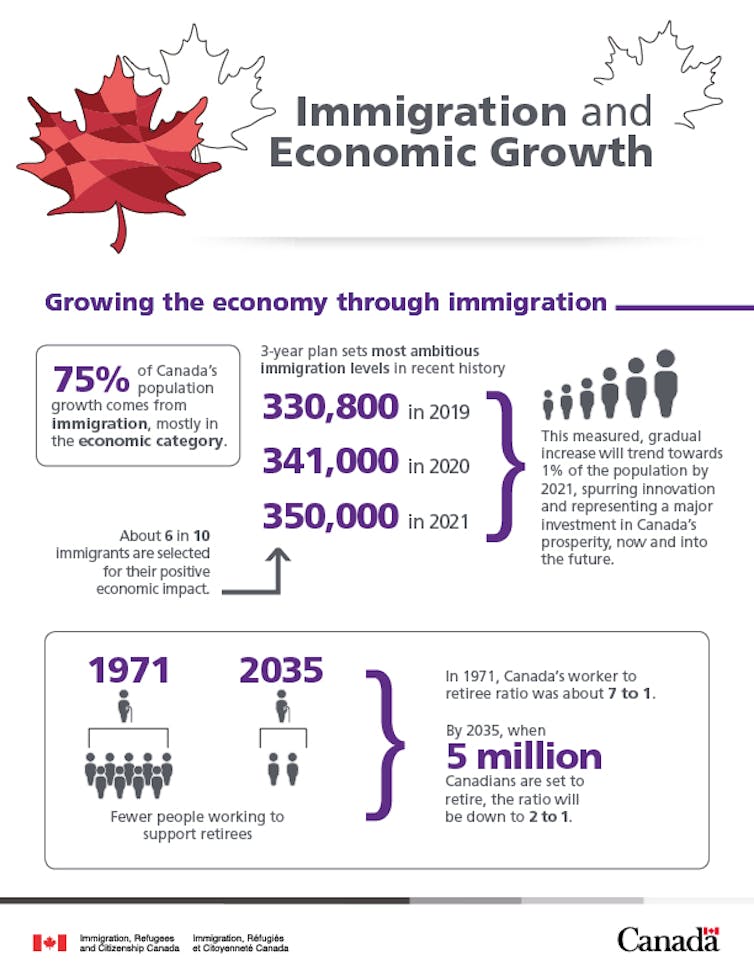
The current immigration plan calls for more than one million new permanent residents between 2019 and 2021. Of these newcomers, the majority will be economic migrants, coming through various provincial and federal programs such as the Federal Skilled Worker Class and the Provincial Nominee Program.

Illustrating the vital role of immigration for Canada, with emphasis on economic gain and global competitiveness, Canada’s then minister of immigration, Ahmed Hussen, stated in 2018: “The new multi-year immigration levels plan supports Canadian employers and businesses by ensuring they have the skilled labour they need to spur innovation and help to keep our country at the forefront of the global economy.”

This graphic from the government of Canada explains how immigration policy is linked to economic growth. (Immigration, Refugees and Citizenship Canada)

Some of the dilemmas that Canada will face in the post-pandemic recovery period will involve how to continue attracting the best and brightest, what sectors of the economy should be prioritized and how to deal with essential work like agriculture.

Unprecedented challenges

I have studied highly skilled and lower-skilled migration in Europe and internationally for over 20 years, with a special interest in how migration policy interacts with other sectors such as agriculture, the care industry and the competition for talent. But the COVID-19 pandemic poses unprecedented challenges for Canada’s immigration policy because of the level of uncertaintythat the whole world is facing.

What’s happened to the government’s plans to attract “the best and brightest from around the world” — people who will be fundamental to the country’s economic future?

For more than three months, Canada has temporarily stopped processing work permit or permanent residency applications. This presents many challenges for businesses and for workers and their families.

While working remotely is a possibility for most highly skilled workers in Canada who are in non-essential sectors, that’s not an option for those who have a job offer but are still abroad. They cannot receive a work permit, a Social Insurance Number unless they enter the country. They also can’t be paid without a SIN number. There are important consequences for organizations that seek workarounds and do not respect labour laws.

Digital work permits

Technology can offer a solution to this impasse. A security-proof digital work permit and a social identification number could be assigned remotely to allow these “virtual immigrants” to start working remotely with their Canadian employers while they wait for the entry ban to be lifted.

The permit could be for three or six months and would automatically be replaced by the regular work permit and SIN if the ban is lifted and the worker moves to Canada. The worker and employer would commit to honouring their contract by coming to Canada within 90 days of lifting the entry restrictions.

This would give everyone — government, employers, workers and their families — both the necessary guarantees and flexibility to deal with this unexpected disruption.

But are those workers truly needed now — especially given the country’s record unemployment rate since the outbreak of the pandemic?

Canadian immigration policy involves long-term planning related to the country’s demographic composition, growth (or rather decline, without immigration), key industries and efforts to attract new immigrants to the smaller regional centres across this vast country.

In February, just before the pandemic was declared, Minister of Immigration, Refugees and Citizenship Marco Mendicino told the Canadian Club in Toronto that Canada welcomed 341,000 new immigrants last year. He then added: “In 2020, the future of Canada hinges on immigration.” But the current situations means it seems unlikely Canada will be able to meet its immigration targets this year or next.

Not a job competition

Unemployment and underemployment data from April show temporary workers, those with less than one year at their last job or people not covered by a union or collective agreement, were hit the hardest by COVID-19. While it is imperative to provide for these workers and their families, these newly unemployed workers are not in competition for the same jobs as those to be filled by the highly skilled newcomers attracted by the Express Entry or Global Talent immigration streams.

As we go through and hopefully leave behind the pandemic, Canada needs to build a stronger health sector including industries that produce gowns, masks and gloves or health-care equipment like ventilators. The medical and pharmaceutical research sector should also remain a top priority. Transnational co-operation is key to Canadian entrepreneurship. Such sectors can only gain from highly skilled migrants who bring to the country innovative ideas, much needed skills and connections to other countries and continents.

New ideas needed

While rethinking policies about bringing highly skilled immigrants to Canada, new ideas are also needed for lower-skilled workers who are essential to the economy.

The deaths of Mexican farm workers in southern Ontario have raised an important debate about the responsibility of employers, but also the need for monitoring the health and the working conditions of those we bring to Canada to do jobs that are essential. There has been a growing awareness that the temporary foreign worker program in agriculture needs both a short- and long-term overhaul.

We need to consider how agricultural policy and migration policy can work hand in hand to promote better working and living conditions for migrant farm workers. One idea could be the expansion of a pilot project launched in May that will allow a small number of migrant agriculture workers to apply for permanent residency.

The many challenges that both highly skilled and low skilled migrants face during the pandemic can be turned into an opportunity that would help Canada’s post-COVID-19 economic recovery.

#COVID-19: Comparing provinces with other countries 1 July Update – Adding major immigration source countries

While the data from major source countries reflects large undercounting compared to G7 countries, nevertheless of interest given that perceptions of relative rates of COVID-19 infections and deaths may affect interest in immigrating to Canada:


COVID-19 Immigration Effects: Some early data

I have been working with Dan Hiebert of UBC and Howard Ramos of UWO on a project to understand the short and medium term effects of COVID-19 on immigration (permanent and temporary residents), settlement services and citizenship.

Pending the specialized operational data sets from IRCC, we have been looking at the publicly available numbers on open data.

This deck highlights the dramatic impact as noted by others but with more detail.

https://www.linkedin.com/posts/andrewlgriffith_covid-19-immigration-effects-key-slides-activity-6682724191990530049-ms5k

We plan to update and refine this each month, with greater analysis and depth once we have the specialized datasets.

Express Entry mid-year 2020 report: The Coronavirus Impact

Some good analysis and data here. The degree to which those invited will come, of course, remains to be seen once the travel restrictions relax.

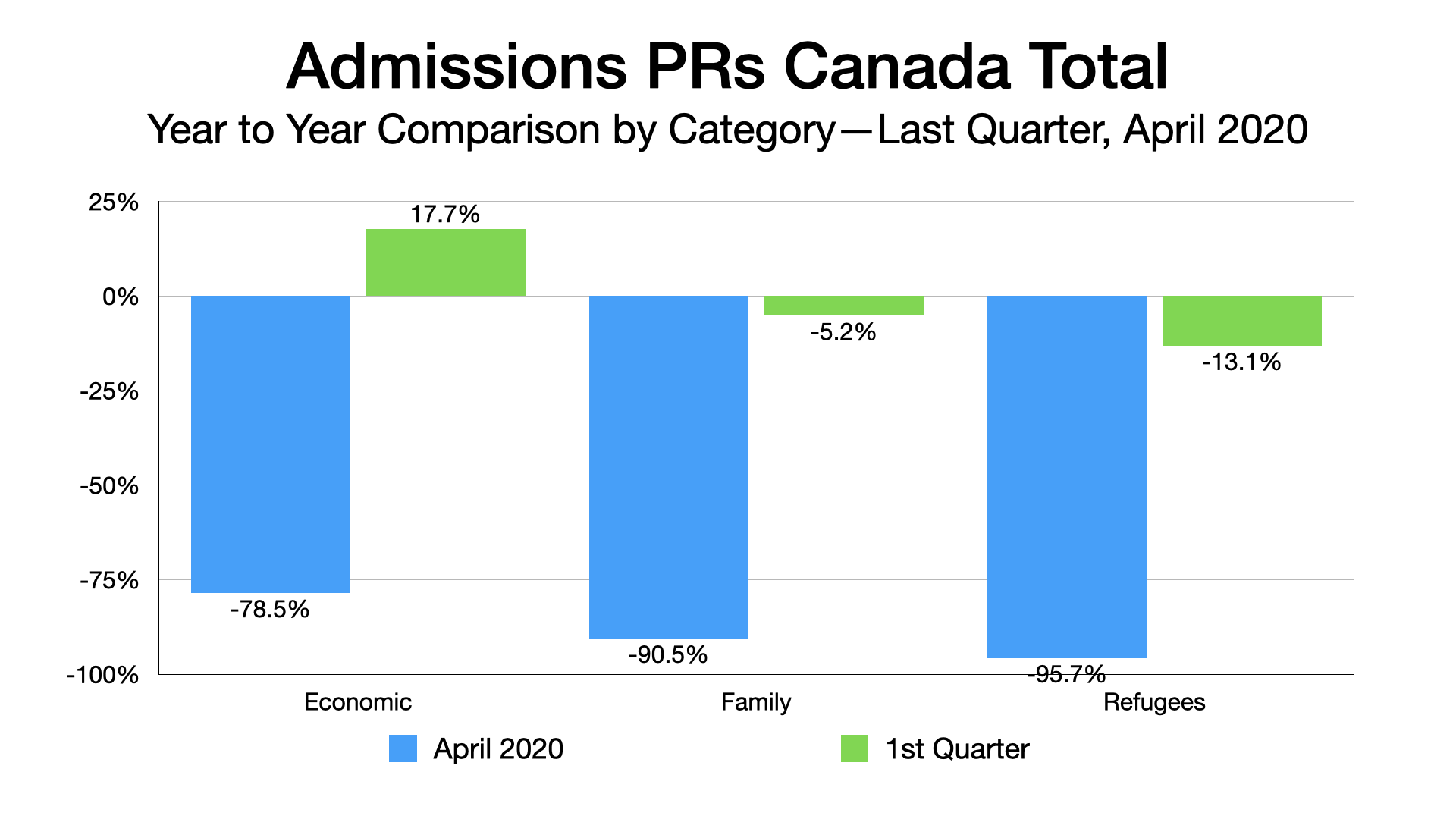
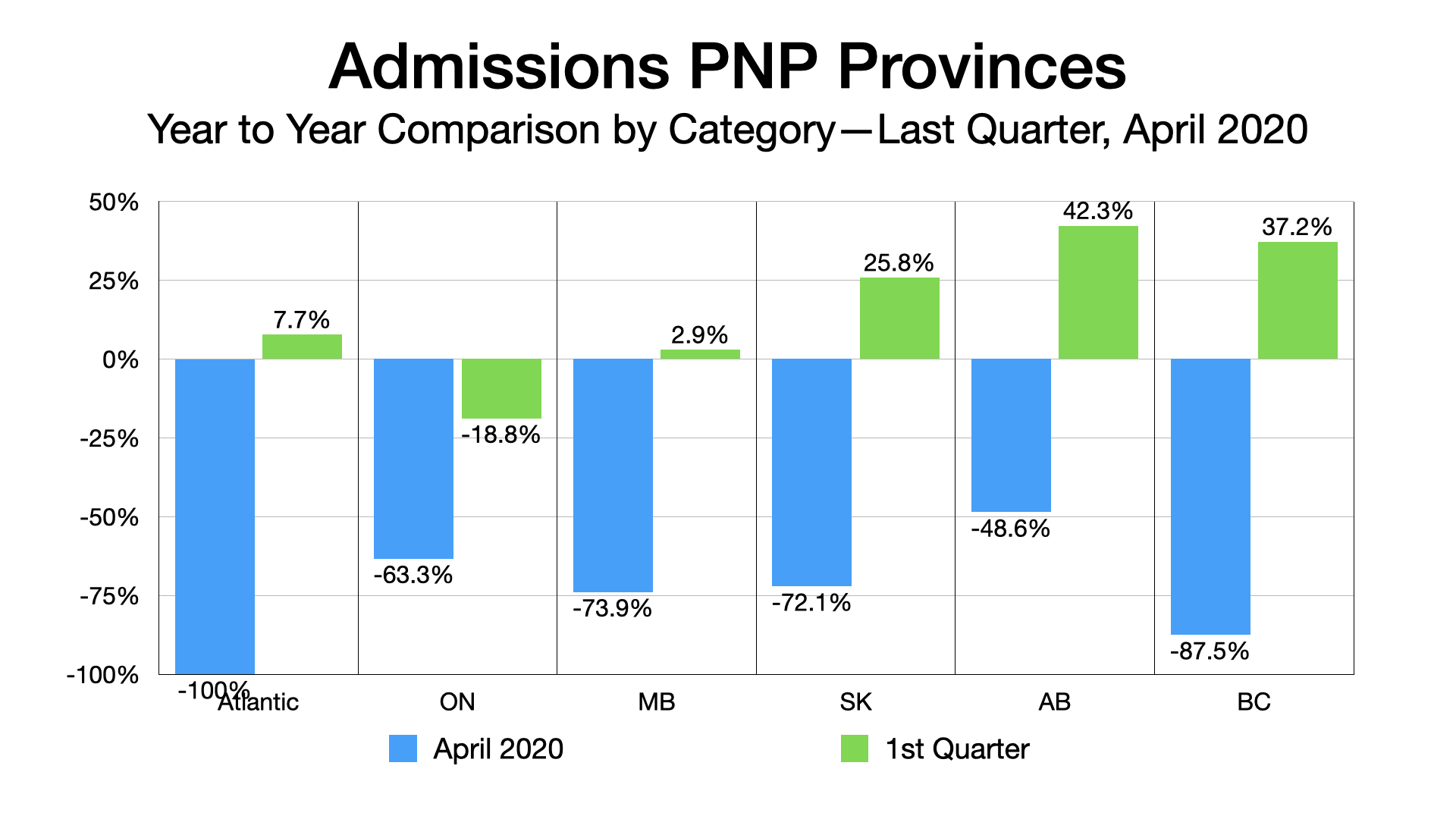
The following charts show the dramatic drop in actual admissions for the three immigration categories as well as a separate view for PNPs:

The first half of 2020 has been unlike any other period in the history of Express Entry. Canada saw both the largest and smallest Express Entry draws ever as a result of the coronavirus pandemic.

Immigration, Refugees and Citizenship Canada (IRCC) held the biggest Express Entry draw ever on February 19, inviting 4,900 candidates in a single draw.

A few weeks later, on March 12, the new immigration minister, Marco Mendicino, announced that Canada would welcome over one million immigrants by 2022, many of whom would arrive through Express Entry.

Just a few days later, March 18 would change many things for hopeful Canadian immigrants. Coronavirus was becoming a bigger threat within Canada, and so the federal government closed the border to most foreign travel. The future of Express Entry was up in the air.

Find out if you are eligible for any Canadian immigration programs

More Express Entry draws during pandemic

It was quickly established that Canada would continue to hold Express Entry draws, and Minister Mendicino said that immigration would be key to economic recovery.

Express Entry draws changed significantly. The all-program draws, which includes candidates from the Foreign Skilled Worker Program (FSWP), Federal Skilled Trades Program (FSTP), and Canadian Experience Class (CEC), were no longer held every two weeks. Instead, two draws would be held within days or hours of each other. One would target Provincial Nominee Program(PNP) recipients, and the other would only invite people from CEC. These draw pairings would take place roughly every two weeks.

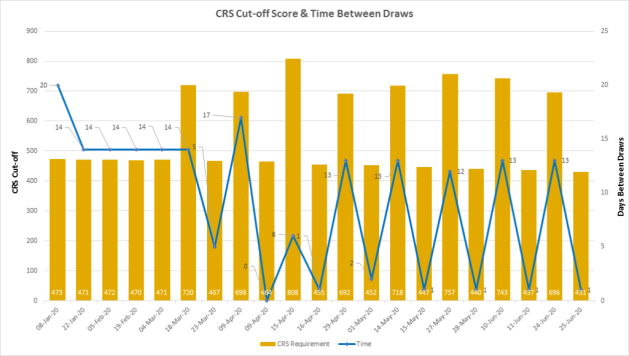
As a result, there have been 21 draws held as of today, including the June 25 Express Entry draw. Last year, 2019, there were 12 draws held in the same time frame.

However, more Invitations to Apply (ITAs) have been issued this year compared to the same time last year.  This year 49,900 ITAs have been issued in the first half of 2020, whereas 2019 saw 41,800 ITAs issued at the mid-year point.


The differences in PNP and CEC draws

PNP draws would always be smaller than CEC draws, and they would have higher Comprehensive Ranking System (CRS) score requirements.

This is because a provincial nomination automatically gives candidates an extra 600 points in addition to their human capital score. The lowest CRS requirement of a PNP draw this year was 692 on April 29. This means, without the nomination, recipients only needed a human capital score of at least 92 in addition to the requirements of the PNP that awarded them the nomination.

The smallest Express Entry draw ever was a PNP draw that issued 118 ITAs on April 15. It also had the largest CRS cutoff of the year at 808. This is still not the biggest CRS requirement of all time, which was 886 in the first Express Entry draw ever on January 31, 2015.

CEC candidates must have at least one year of skilled work experience in Canada, meet the Canadian Language Benchmark (CLB) required in their field, and live outside of the province of Quebec.

Express Entry draws that targeted CEC candidates this year were comparatively bigger and had much smaller CRS requirements.

FSWP and FSTP candidates were not drawn unless they had a provincial nomination. IRCC said they are prioritizing programs like CEC and PNP for the number of candidates that are currently in Canada.

IRCC has not said when FSWP and FSTP candidates will once again be included in Express Entry draws.

Nonetheless, Express Entry candidates currently outside of Canada who do not have Canadian work experience or a Canadian job offer are still receiving ITAs through Express Entry-linked PNP draws.

Express Entry-linked PNP draws

Alberta has held a total of 11 Alberta Express Entry Stream draws so far this year, at least six of them took place after the March 18 travel restrictions went into effect. Candidates invited on the latter dates had to be in Canada at the time of their nomination, as part of Alberta’s temporary measures against coronavirus.

B.C. continues to hold draws weekly, though certain draws were affected by business closures resulting in some occupations being left out of draws. Candidates were invited from both the Express Entry BC and Skills Immigration categories

Manitoba started off the year with the first PNP draw on January 2. In total Manitoba has held 12 draws so far, with seven of them taking place during the travel restrictions. A number of Express Entry candidates were invited in each draw.

Nova Scotia has held two Labour Market Priorities draws. The first inviting Express Entry candidates who could demonstrate French and English proficiency, among other eligibilty criteria. The second invitation round was for candidates who had work experience in nursing.

Ontario has held eight draws that invited Express Entry candidates, most of them during the travel restrictions. There were also two Express Entry Human Capital Priorities stream draws, and two Tech draws. Invitation rounds for candidates who may be eligible for the French Speaking Skilled Worker, and Express Entry Skilled Trades streams happened within one day of each other on two occasions.

Prince Edward Island normally follows a predetermined schedule for its PNP draws, however due to coronavirus, draws were re-scheduled in March, April, May and June. The draws they have held so far targeted Express Entry candidates who worked in essential services such as healthcare and trucking.

Saskatchewan has held five Express Entry-linked draws this year. The province is allowing some flexibility for nominees and applicants who are unable to submit completed applications, or whose circumstances had changed due to coronavirus.

Express Entry in the next half of 2020

A lot will be determined before the end of the month, as the current travel ban restrictions are in effect until June 30. Prime Minister Justin Trudeau is due to make the announcement in the coming days.

In a new TV interview, minister Mendicino reiterated that Canada will continue to rely on Express Entry and other streams to welcome global talent from all over the world.

Source: Express Entry mid-year 2020 report: The Coronavirus Impact