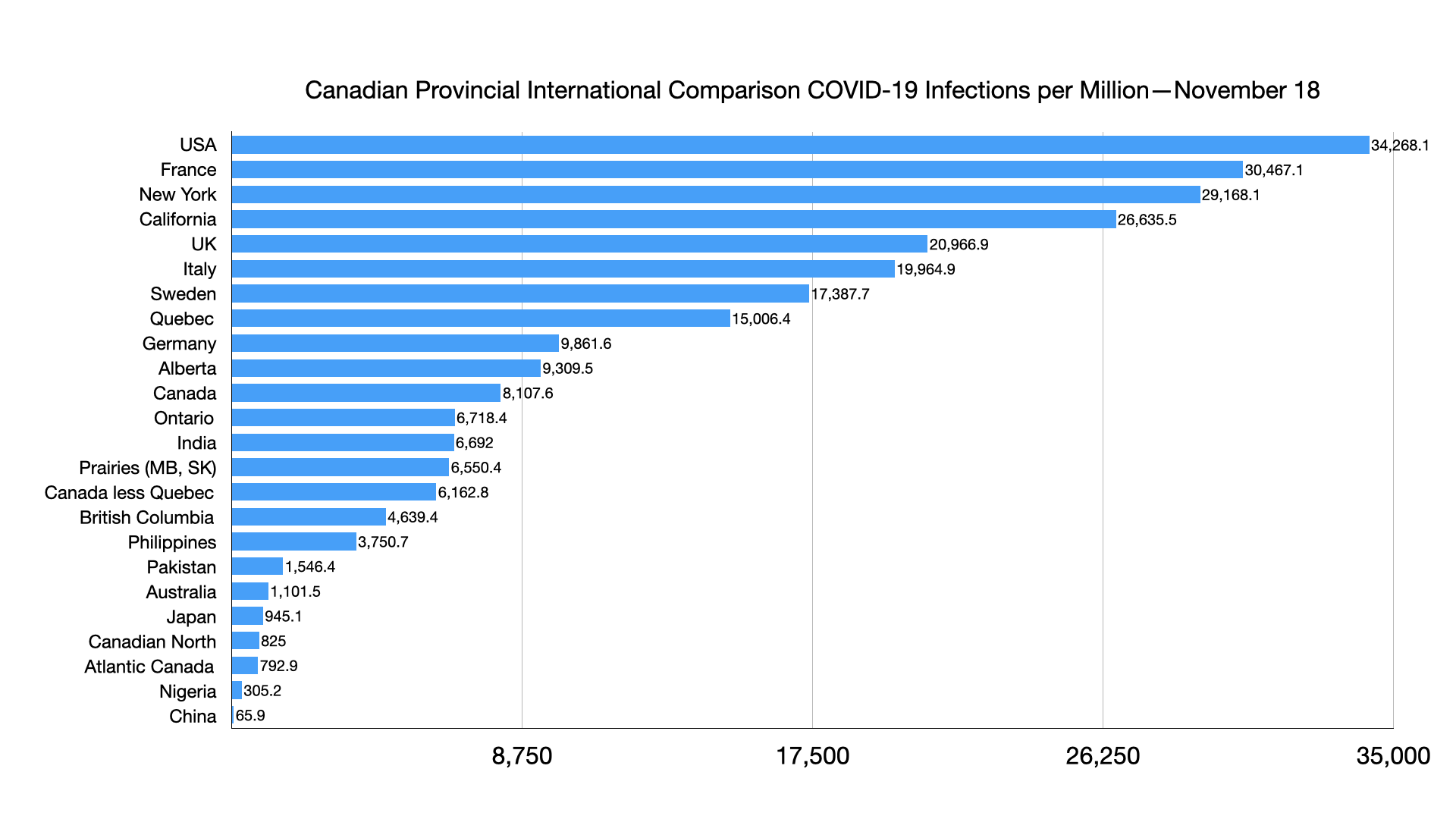
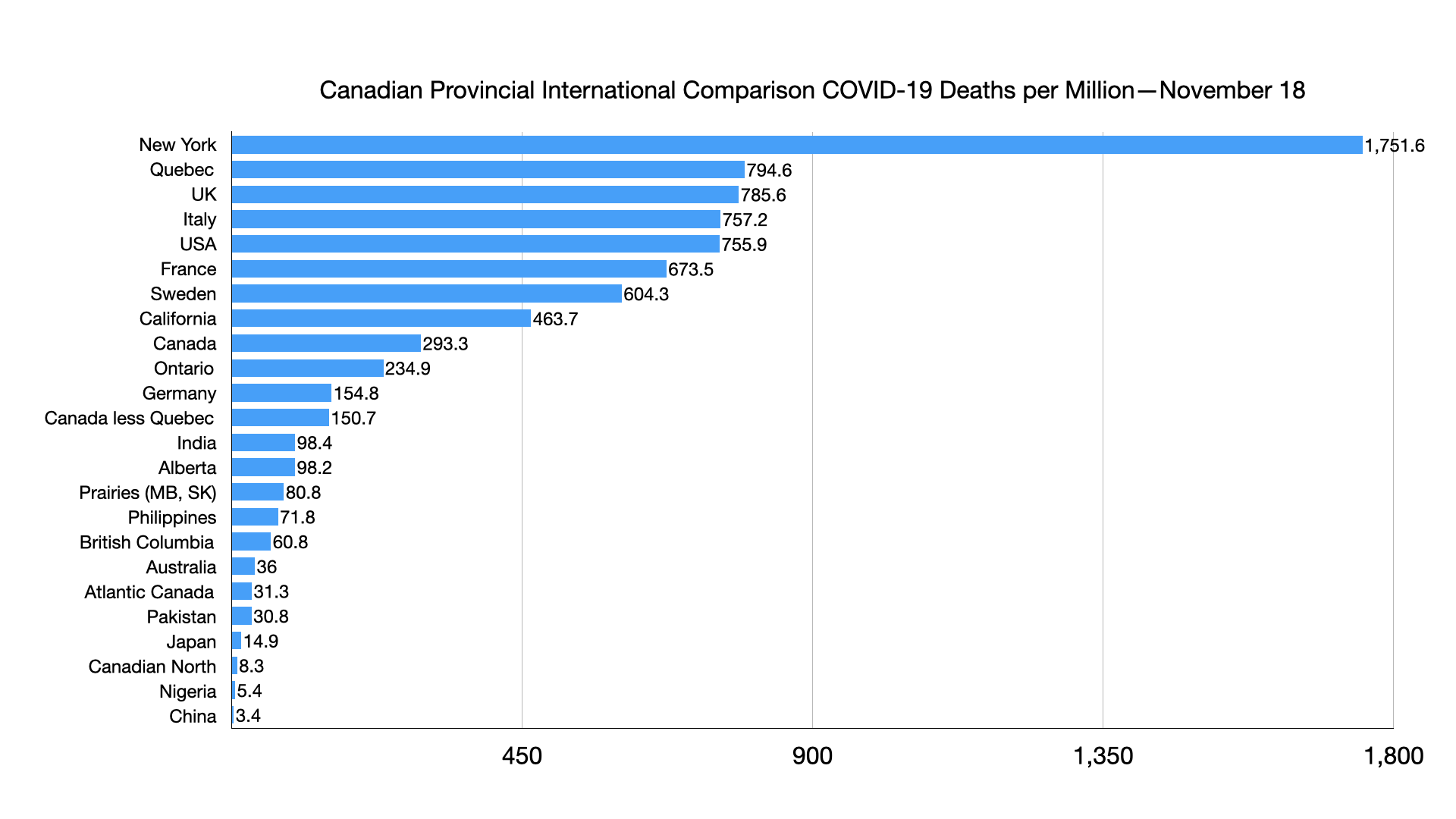
#COVID-19: Comparing provinces with other countries 11 November Update

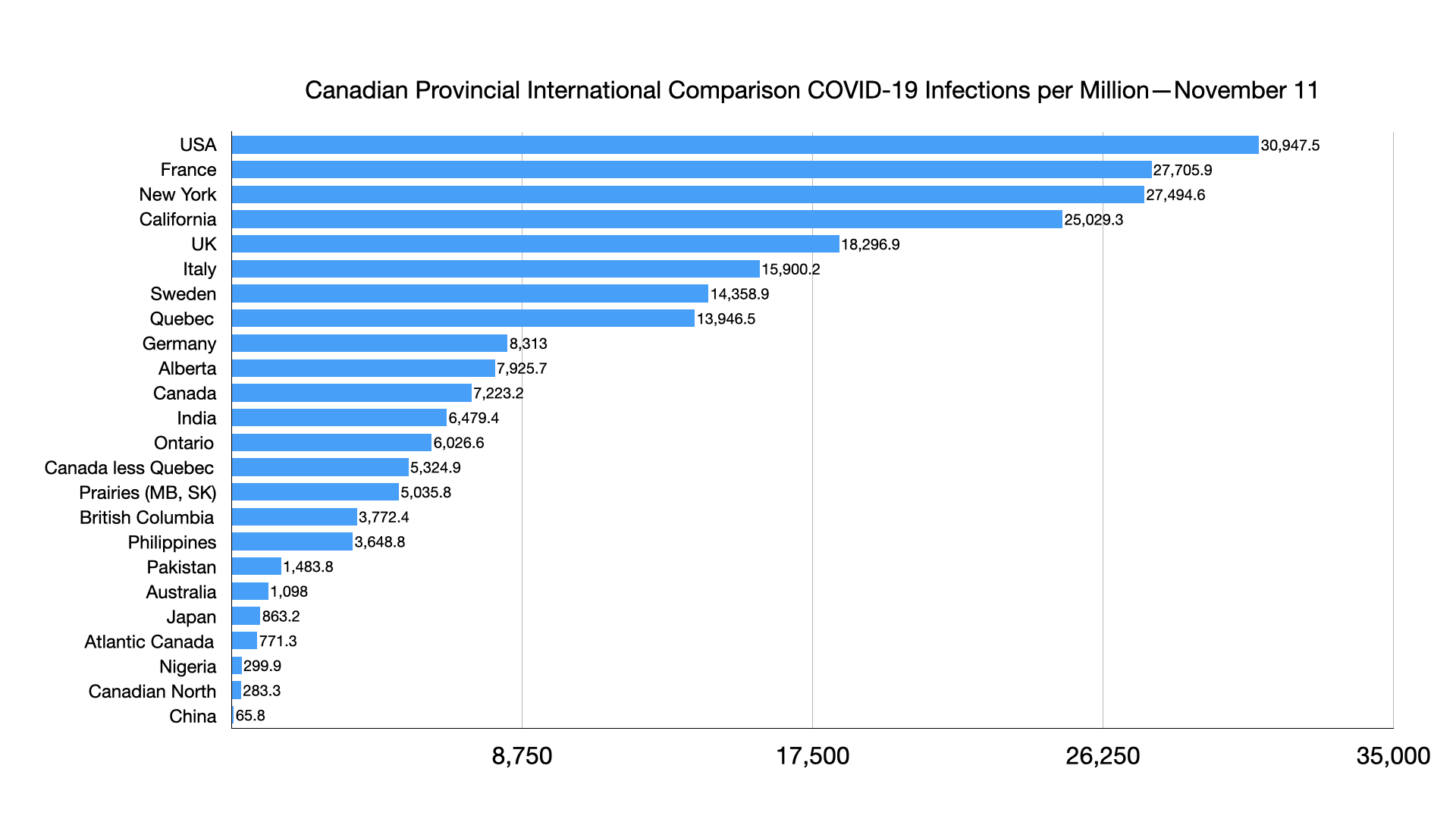
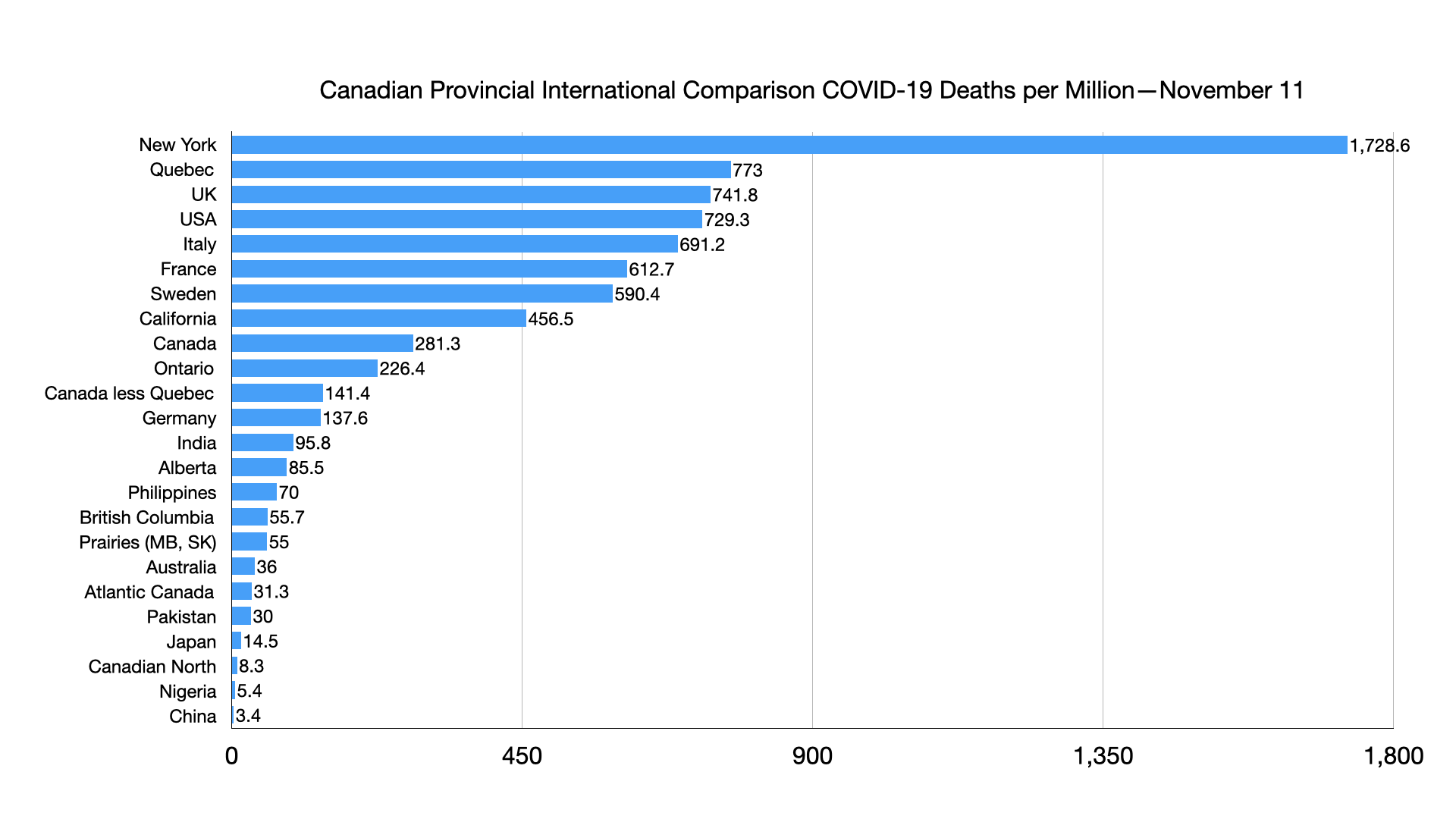
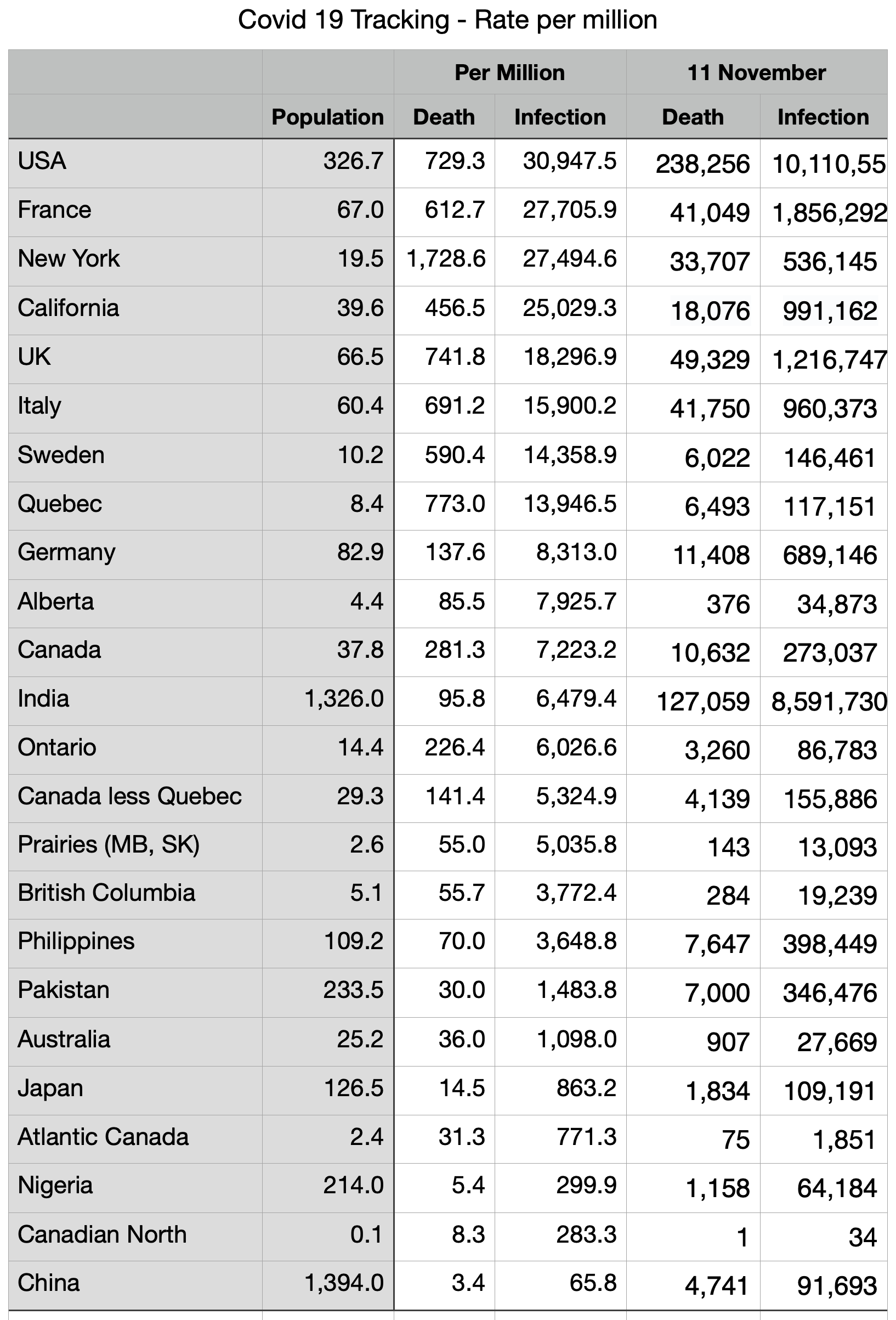
Overall, infection rates continue to skyrocket with some increase in death rates. Prairies and North numbers particularly noteworthy.
 
Weekly:
 
Infections per million: Ontario ahead of India, Prairies ahead of Canada less Quebec, Canadian North ahead of Atlantic Canada 
 
Deaths per million: Italy ahead of USA, Germany ahead of Canada less Quebec, Prairies ahead of Philippine


South Asians play a part in COVID-19 transmission and we need to acknowledge it

Important and courageous piece by South Asian Canadian doctors:

Canadian society is an interwoven matrix of multiculturalism that contributes to the strength of our nation. The South Asian community comprises a significant part of this rich heterogeneity. Today, we write to you both as physicians, and also members of this vibrant community.

South Asian culture itself is extremely diverse, but there are some themes that are common throughout the vast subcontinent. One such theme is hospitality to others, no matter what background or creed. A guest leaving your house on an empty stomach is considered a travesty, and results in long meals and conversation. 

We grew up with a strong bond with our elderly relatives, and many of us still live in multi-generational families, respecting the traditions of our ancestors before us. Our weddings, cultural holidays, and music nights celebrate not only our unique culture, but embrace the family and friends that enrich our lives. This is the ethos that shaped us as health care providers and human beings. 

COVID-19 has changed the life of everyone on the planet, and South Asians are certainly no exception. The virus that transmits from person to person (especially in close, indoor environments) are the same places we find the most comfort in our community. While we all have been given the same public health advice and messaging, it is increasingly apparent that some groups are being affected harder than others. 

It is time to acknowledge that South Asians are acquiring and dying of COVID-19 at a degree higher than other Canadians, and we need to take immediate action.

The evidence is fairly profound. In Peel Region, one of the hardest hit areas across the country, South Asians account for about a third of the population, but account for almost half the COVID-19 cases. 

COVID-19 has changed the life of everyone on the planet, and South Asians are certainly no exception. The virus that transmits from person to person (especially in close, indoor environments) are the same places we find the most comfort in our community. While we all have been given the same public health advice and messaging, it is increasingly apparent that some groups are being affected harder than others. 

It is time to acknowledge that South Asians are acquiring and dying of COVID-19 at a degree higher than other Canadians, and we need to take immediate action.

The evidence is fairly profound. In Peel Region, one of the hardest hit areas across the country, South Asians account for about a third of the population, but account for almost half the COVID-19 cases. 

In Toronto, despite only being about a tenth of the population, South Asians account for a fifth of total cases. The city of Surrey in British Columbia, where approximately 30 per cent identify as South Asian, there have been three times the number of cases of any other greater Vancouver area. 

Many well publicized COVID-19 outbreaks in Canada have been associated with South Asian events, such as weddings. When these infections are later introduced into a large, multi-generational household, it’s easy to see how the problem can compound quickly. 

What are the consequences of this spread? South Asian populations are at higher risk for dying of COVID-19. Canadian data suggests the rate of death is 25 per cent higher in neighbourhoods with large South Asian communities as compared to those with small communities. 

A large study from the United Kingdom suggested South Asians were more likely to die of COVID-19 than the general population. The high rates of underlying diabetes, hypertension, cardiovascular disease, stroke, and obesity within the South Asian population are the very profile of risk factors that increase the risk of hospitalization, intensive care stay, and death with COVID-19. 

Furthermore, South Asians have a strong presence in public-facing professions in health care, commercial business, and the service/manufacturing industry, creating a higher risk of acquiring COVID-19 outside of home. 

Financial instability, particularly amongst new Canadians, creates disincentives for testing and participating in contact tracing. People afraid of losing income are liable to go to work even if feeling unwell thereby further propagating the spread of infection. 

Family structures, embracing our multi-generational cultures, create situations where young and old mix with prolonged close contact. Stigmatization, particularly of those who need to go into isolation or infect others, creates more hesitancy around testing when symptomatic. 

The next few months pose a difficult journey for COVID-19 cases and deaths, and the time for action is now. Our health care providers, communication experts, cultural and religious leaders, and the community as a whole need to embrace this challenge. 

Our values teach us the ethics of protecting our communities, and in this pandemic, protecting our most vulnerable members is a part of that. We need to examine our day-to-day activities, and provide support for one another, but in a safe way where non-essential contact is minimized. 

Indoor gatherings of individuals outside of our direct household must be temporarily stopped in order to limit spread — particularly with large celebrations, such as Diwali, upcoming. 

We need to be creative with outdoor spaces, trying to allow for some in person interaction while minimizing risk. 

We need to create virtual support networks to provide the stability and welfare of our community. 

We need to reach those suffering mental health and other consequences of the pandemic. 

Finally, we need to create culturally and linguistically appropriate materials to disseminate amongst our hardest to reach, encouraging distancing, hand hygiene, masking, self evaluation for symptoms, how to access testing, and holistic support for those who test positive. 

From a societal standpoint — a recognition of this minority community that has been hit particularly hard is paramount. Partnering with our local public health units and trying to engage our community leaders is essential for creating a position of trust. Understanding the cultural contexts that are unique to our population, such as multi-generational families, public-facing occupations, poor English literacy, and densely populated communities, allow for individualized planning that benefits society as a whole. 

The next few months pose a difficult journey for COVID-19 cases and deaths, and the time for action is now. Our health care providers, communication experts, cultural and religious leaders, and the community as a whole need to embrace this challenge. 

Creating campaigns discouraging large gatherings around festive events, rites of passage, and religious ceremonies, with local cultural leaders will help to prevent scenarios involving sustained indoor spread. Encouraging healthy workplaces, particularly reinforcing indoor masking and avoidance of prolonged close contact is paramount. 

The successes of these campaigns will not only benefit the South Asian population, but given how interwoven we are, the larger community will also prosper. The financial and human resource needs should be prioritized for the greater good of our society.

Many of our community made incredible sacrifices leaving their homes across the globe to reestablish themselves in Canada for the promise of a better life. We are fortunate in Canada to live in a society where our customs and traditions can be practiced freely, and we can contribute to the growth and success of our nation in all sectors. 

The time has come for us to recognize that collaboration with internal and external stakeholders in the South Asian community will lead to more sustainable outcomes for COVID-19 transmission, and the health of our community. 

Dr. Zain Chagla is an infectious diseases physician, St Joseph’s Healthcare in Hamilton and associate professor at McMaster University.Dr. Sumon Chakrabarti is an infectious diseases physician in Mississauga and a lecturer at the University of Toronto.Dr. Tajinder Kaura is an emergency medicine physician at the William Osler Health System and a clinical assistant professor (Adj) at McMaster University.
Source: https://www.thestar.com/opinion/contributors/2020/11/15/south-asians-play-a-part-in-covid-19-transmission-and-we-need-to-acknowledge-it.html?li_source=LI&li_medium=thestar_recommended_for_you

‘A fight for the soul of the city’: Report shows how COVID-19 has deepened Toronto’s racial and economic divide

No real surprise as it confirms other reports and analysis, both in Toronto and elsewhere. Nevertheless, extremely disturbing:

Higher COVID-19 infection rates. Higher unemployment. Deepening poverty.

Racialized and lower-income Torontonians are bearing a heavier burden during the coronavirus pandemic, which is widening the gap between rich and poor in this city.

That’s the grim conclusion delivered by the Toronto Fallout Report, which provides a snapshot of where Torontonians stand in the midst of the pandemic.

Released Thursday by the Toronto Foundation — which also produces the annual Vital Signs report — this latest report offers an interim look at how the pandemic has exacerbated pre-existing inequality in the city.

Among the report’s findings:

  • People earning less than $30,000 a year are 5.3 times as likely to catch COVID-19 than those making $150,000 or more.
  • Black, Latin American and Arab, Middle Eastern or West Asian Torontonians have COVID-19 infection rates at least seven times as high as white residents.
  • About 30 per cent of Torontonians are struggling to pay rent, mortgage, food, utilities and other essentials.
  • Across the country, Canadians who are Black, Indigenous and people of colour (BIPOC) have unemployment rates almost twice as high as white Canadians. Nearly one-third of BIPOC youth are unemployed, compared to 18 per cent of white youth.

The report shows just how much of a “crisis moment” this is for Toronto, said Mohini Datta-Ray, the executive director of the North York Women’s Shelter and one of the dozens of non-profit leaders who were consulted for the report.

“The consensus is really, really loud and clear that this is a fight for the soul of the city, for who we are as a city.”

The pandemic didn’t create this inequality, she said, but it has magnified it and exploded it into view.

“We’ve all been ringing the alarm bells for years, decades really,” Datta-Ray said. “There’s been a worsening over time and any of us that are working with vulnerable, marginalized, low-income families know how desperate these times have already been.”

The report looks at a broad range of issues, from income and employment, to food security and housing, and what comes up again and again is the widening gulf between rich and poor, and how that divide is increasingly occurring along racialized lines.

“When I looked through the report, for me it really highlighted how deeply embedded racism and white supremacy are in just about all of our systems and institutions,” said Paul Taylor, executive director of FoodShare Toronto, which has dramatically increased its services in response to rising food insecurity during the pandemic.

“It seems like communities that are made up predominantly of white folks have had a very different experience of the pandemic.”

In Toronto, racialized people make up 52 per cent of the population, but currently account for 79 per cent of the COVID-19 infections. The highest infection rates in the city are concentrated in the neighbourhoods with the most racialized people.

It’s in those neighbourhoods where people are often living in crowded housing, Taylor said, and where people are more likely to have to take public transit to low-wage jobs without adequate sick days, PPE or the opportunity to physically distance.

“We really have to ask ourselves what allows us to chronically underinvest in the communities where there are higher incidences of COVID infections,” Taylor said.

Datta-Ray, who lives in a relatively affluent downtown neighbourhood and works in the hard-hit northwest corner of the city, has seen first hand the city’s divergent pandemic experiences.

Where she lives, the pandemic has been novel, almost festive, she said. “You wouldn’t even know that the virus is around.”

But in the city’s northwest, where infection rates are 10 times as high, most people aren’t able to work from home and public transit is crowded. “Those neighbourhoods feel the city in crisis.”

Neethan Shan, executive director of the Urban Alliance on Race Relations, said governments need to put racial equity at the heart of any pandemic recovery plan.

“Universal programs aren’t going to be enough,” he said. “If you’re serious about racial equity you have to start looking at it.”

If you target the most vulnerable and most affected communities, he said, everyone will benefit.

“But if you just keep continuing with universal programs that are in some ways colour-blind, we’re not going to see the solutions that we need.”

Liben Gebremikael, executive director of the TAIBU Community Health Centre in Scarborough, said attention on Black communities is often driven by high-profile news events — such as the so-called “Summer of the Gun” in 2005 — which leads to cyclical but unsustained investment.

“We can’t really do systemic change with cyclical investment,” he said. “We have to have a long-term strategy, from the city, the province and the federal government, on how to address these injustices and inequities that are mostly impacting Indigenous and Black communities.”

Gebremikael said he’s hopeful the inequities laid bare by COVID-19 will garner enough attention for more substantial, long-term investment. He cited the provincial government agreeing to collect race-based data during the pandemic — after their initial reluctance — as an example of a step in the right direction.

“If we have evidence then we can really advocate for the resources and the policies and the strategies we need.”

Source: ‘A fight for the soul of the city’: Report shows how COVID-19 has deepened Toronto’s racial and economic divide

Immigration committee study highlighting coronavirus impact on Canadian immigrants

Will be interesting to follow, particularly with respect to backlogs and processing (hopefully citizenship as well):

Separated family members, approved permanent residents unable to travel to Canada, and others are speaking up in the House of Commons as witnesses in a study on Canadian immigration.

Canada’s Standing Committee on Citizenship and Immigration is conducting a study that will examine the impact of COVID-19 on the Canadian immigration system over the course of no more than eight sessions. Once the study is complete, the committee will report its findings to the House. The government then has 120 days to table a comprehensive response, however, they are not obligated to make any change in policy.

This particular study will look into the following issues relevant to the coronavirus impact on Canadian immigration:

  • Application backlogs and processing times for the different streams of family reunification and the barriers preventing the timely reunification of loved ones, such as denials of Temporary Resident Visas (TRVs) because of section 179(b) of the Immigration and Refugees Protection Regulations, and the ongoing closures of Visa Application Centres;
  • Examine the government’s decision to reintroduce a lottery system for the reunification of parents and grandparents; to compare it to previous iterations of application processes for this stream of family reunification, including a review of processing time and the criteria required for the successful sponsorship;
  • TRV processing delays faced by international students in securing TRVs, particularly in francophone Africa, authorization to travel to Canada by individuals with an expired confirmation of permanent residency, use of expired security, medical, and background checks for permanent immigration.

While House is in session, the committee is meeting at 3:30 p.m. on Mondays and Wednesdays. The next meetings are scheduled for November 16, and 18. Immigration minister, Marco Mendicino, has been invited to appear before the committee on November 25 and December 2.

How travel restrictions are affecting immigrants’ mental health

Among other early findings, the mental health of immigrants and their Canadian family members was examined in two scenarios relating to family separation.

Faces of Advocacy is a grassroots organization established to reunite families in Canada during COVID-19 travel restrictions. They say they are directly responsible for the exemption on extended family members, which was announced on October 2.

The group indexed the mental health of 1,200 members at the end of August. They used validated mental health rating scales for depression, anxiety, and post-traumatic stress in civilians. The results are not diagnostic, but offer a glimpse into the mental health effects that have resulted from travel restrictions.

Despite 49 per cent of respondents reporting they have never been diagnosed with mental illness, just over 69 per cent would screen positive for symptoms of clinical depression. In addition, 16 per cent of respondents had a history of self harm or suicidal thoughts prior to the travel restrictions, but after family separation this nearly doubled to 30 per cent.

Spousal Sponsorship Advocates was established during the pandemic. It is as another grassroots movement, created to advocate for the accelerated reunification of families with ongoing spousal sponsorship applications in Canada.

Their survey took a mental health snapshot of 548 respondents, who had been separated from family for months or even years at a time. Of these, a reported:

  • 18 per cent have suicidal thoughts;
  • 22 per cent had to stop working;
  • 70 per cent have anxiety and 44 per cent generalized anxiety;
  • 35 per cent started having panic attacks;
  • 78 per cent have periods of severe depression;
  • 76 per cent have severe energy loss;
  • 57 per cent now have physical pain;
  • 52 per cent gained or lost weight abnormally;
  • 85 per cent have sleep problems.

The mental state of expired confirmation of permanent residence, or COPR, holders was also mentioned. These are people who were approved for permanent residence, but were not able to travel to Canada before their documents expired. As a result, many are unable to come to Canada without an authorization letter from Immigration, Refugees, and Citizenship Canada, and they have already upended their lives in their home country. The evidence includes a series of tweets that are intended to show the “pains, agony, [and] mental torture” experienced by COPR holders.

Source: Immigration committee study highlighting coronavirus impact on Canadian immigrants

Citizenship applicants call on Ottawa to resume knowledge tests halted due to COVID-19

Given that we are unlikely to be out of various lockdowns and restrictions for the next 6 months, hard to understand why the government is not able to move faster on this beyond citizenship being a lessor priority for IRCC.

The last dataset on new citizens dates from June, compared to immigration datasets which include August data and will likely be updated with September data this week:

After spending the prime years of her childhood fleeing conflict and living as a refugee in Turkey, Sedra Alshamaly describes her arrival in Canada four years ago with warmth and gratitude.

“It’s the first place we felt welcomed,” said Sedra, now 12. “We felt like we belonged here.”

Sedra and her family arrived in Canada in 2016 after a circuitous journey sparked by the Syrian civil war. Today, she describes herself as a more-or-less ordinary Canadian Grade 7 student and a budding artist.

Source: Citizenship applicants call on Ottawa to resume knowledge tests halted due to COVID-19

#COVID-19: Comparing provinces with other countries 11 November Update

Main news continues to be with respect to rapid increase in infections in most countries and provinces:
 
Weekly:
 
Infections per million: France ahead of New York, Italy and Sweden ahead of Quebec, British Columbia ahead of Philippines
 
Deaths per millionUK ahead of USA, France ahead of Sweden, Canadian North ahead of Nigeria


Pandemic risks companies’ diversity efforts, CPPIB CEO Mark Machin says

Of note:

The pandemic is threatening the pipeline of emerging female leaders and risks thwarting the progress Corporate Canada has made in diversity and inclusion efforts, the head of the country’s largest pension fund is warning.

The pace of change, particularly in diversifying executive teams, was already slow, said Mark Machin, president and chief executive officer of the Canada Pension Plan Investment Board, in an exclusive interview with The Globe and Mail. Now, with the COVID-19 pandemic, “you see some particularly alarming trends. … It could leave a permanent scarring and a setback for a lot of the progress that’s been made in the past,” he said.

The pandemic pushed women’s participation in the labour force down to a three-decade low, he noted; though there’s been a partial recovery in recent months, he cited recent surveys showing women are experiencing severe stress and burnout during the pandemic, with many considering quitting or reducing hours.

“It is fragile,” he said of the current situation, ahead of a gender diversity white paper that CPPIB will publish on Monday.

Female directors now account for 30 per cent of the board seats at TSX 60 index-listed companies – and just 15 per cent of the C-suite for the same group of companies, it noted.

To address that dearth, companies should set measurable targets for diversity on both boards and executive positions, Mr. Machin said. “I am a huge believer in targets. As business people, once we know what the target is, then we’ll solve for it.”

Few companies in Canada, however, have publicly stated targets: 29 per cent of companies say they have targets for women on boards, while just 7 per cent have targets for female executive officers, according to a report last month by Osler, Hoskin & Harcourt LLP.

With so few companies setting diversity targets, some say the federal government may have to step in. Last week, Senator Howard Wetston, the former chair of the Ontario Securities Commission, said Ottawa may have to require corporate boards to set targets if the provinces fail to do so. “We haven’t gone far enough and we need to do better,” he said.

Boosting diversity in leadership is also crucial to Canada’s economic recovery, Mr. Machin said, citing studies showing that businesses with diverse work forces came through the previous recession in better shape.

As long-term investors, “it’s something that matters for us,” he said. “If you have companies that have diverse senior managements and diverse boards, they’re more likely to produce better risk-adjusted returns, because they make better decisions over time. It’s not just a belief – we’ve done that analysis multiple different ways.”

CPPIB, which has a $434-billion portfolio, has stepped up efforts to improve board diversity. In 2017, it started voting against the election of the nominating committee chair if the board had zero female directors. Last year, it voted against 13 Canadian public companies with no women on the board, and another 26 companies with only one female director.

This year, it voted against directors at 10 public companies (nine of which on the S&P/TSX Composite Index had only one woman on the board; the other, not listed on the benchmark index, was a company with none). Globally, it voted against 323 companies for failing to have any women on their boards.

“Watch this space,” Mr. Machin said, when asked if the fund is going to further ramp up pressure in the coming year.

The white paper issued several recommendations to accelerate the participation of women at all corporate levels, among them, giving workers more control over their schedules and removing bias by, for example, running job descriptions through software programs to eliminate terms that may appeal more to men.

It also urged more support for child care. Furloughs and reduced hours “may turn into permanent departures if parents who lack child care are forced to put their professional ambitions on hold,” it cautioned. Businesses can address this by creating more on-site daycares, helping employees source child care and accommodating workers who can’t return to the office because their children remain at home, the report said.

The CPPIB is not the only institution urging a greater priority on child care. Bank of Nova Scotia CEO Brian Porter called on the federal government in September to “significantly” enhance supports for parents with kids in daycare, to enable more women to enter the work force. The Ontario Chamber of Commerce also recently called for child-care reforms to improve affordability and accessibility, saying the COVID-19 crisis is having a “disproportionate” economic impact on women.

In an accompanying opinion piece submitted to The Globe, Mr. Machin noted the looming challenges in the coming months, with the economy projected to shrink by 6 per cent. “We expect a recession more than twice as deep as the one following the global financial crisis in 2008,” he said. “Let’s not hobble ourselves by denying our companies the talents and wisdom of half the population.”

Source: https://www.theglobeandmail.com/business/article-cppib-ceo-mark-machin-says-canada-needs-to-accelerate-the/

Opinion: Diversity of thought needed in our pandemic response

Good, thoughtful commentary that applies more broadly than to the pandemic, and the risks of simplistic thinking and solutions:

Over the past nine months, we have seen an incredible change in the way we live, work and interact. The world is clearly different now. Our lives are intertwined with the evolving COVID-19 pandemic, and many look to experts from a variety of fields for guidance. Medical, public health and scientific leaders have become sources of insight and direction. Many may think there is only one “scientific truth,” and therefore every expert should be of the same opinion. But science, particularly when dealing with a novel threat, comes with many uncertainties.

As with any important issue, personal values influence how people interpret the science. We all have biases, which are influenced by our life experiences, cultures, emotions and personal beliefs, and experts are susceptible to these factors, as well.

This matters because diversity of thought, spurring civil debate, can help us collectively think through complex issues such as our pandemic response. Disagreement among experts is a normal and essential part of scientific discourse, as data continues to accumulate over time. However, one’s inherent beliefs and biases may play a significant role in the interpretation of the evidence at hand, and the messaging that follows.

Some may be motivated by their fear of infection, some by an urgent desire to return to a sense of normalcy and others by political or ideological beliefs, or even a need for notoriety. Some of the more polarizing views are what sow division among the population.

Oftentimes, the loudest voices espousing simplistic answers are not the correct ones, yet they may garnish the most attention and support in the media and online. The public — not aware of all the nuances — may lose trust in science after being bombarded with polarized, and often incorrect, views that are given as much, or more, attention than those that follow fundamental scientific principles and are transparent about their level of uncertainty. This eroding trust in the scientific community further splits populations.

Due to the emotions at play and the public-facing nature of the discussion, scientific discourse risks becoming politicized and devolving into a polarized conflict.

On the one extreme, discussion is interpreted as fear-mongering by people who think the potential harms of COVID-19 have been greatly exaggerated and that the harms of certain interventions have been underestimated. On the other extreme, the idea of personal freedoms are elevated over disease control and the focus becomes primarily on the harms of lockdown. Both of these positions have a nugget of truth in them, but the dogmatism may preclude any meaningful discussion that could lead to an evidence-based consensus.

Moderate voices that try to find a balance between the two more extreme views matter in this pandemic. It is important to listen to arguments from across the spectrum and try to interpret the data in as nuanced and unbiased a manner as possible. This is a tall order, as the moderate view often carries with it significant uncertainty, and pivots as available evidence evolves.

Recognizing the nuances and complexity of disease is crucial to forming a more complete understanding. Moderate voices may not make headlines or get clicks because the answers to simple questions are long and complex, but they are important to listen to. The moderate voice is not one single voice: opinions vary between the two extremes and the answers are often complex.

In contrast, the more extreme viewpoints have a tendency to be amplified to a great degree within their own echo chambers, which can then be prone to politicization. This drives false dichotomies, and polarized discussions — such as masks versus no masks, aerosols versus droplets, lockdowns versus personal freedoms — where in reality, the answer often lies in between.

People with extreme views often choose to compare countries to prove their point, celebrating certain jurisdictions while condemning the approach of others, but give no consideration to the complex demographic, social, political and geographic factors that lead to particular situations, as well as the changes that occur over time.

Who can be trusted given all the conflicting information? First of all, diversity of thought is crucial. And second, it is important to recognize our own biases and how they influence our perceptions and how we interpret evidence. People who are adaptable to messaging and acknowledge uncertainty as the evidence evolves are key, given that the scientific method is meant to gain more precision over time. Dogmatic stances are best avoided.

We are moving into the future with an evolving roadmap for how to deal with COVID-19 — one that’s guided by lessons learned from our collective global experience. Different perspectives offer valuable insights in this pandemic and together they can offer a clearer picture of the truth. That said, the “infodemic” will continue with the pandemic, and it is important to try to put information into context, recognize our own biases and be willing to revise our positions in the face of new evidence.

We require a diverse group of voices at the table, but must continue to make an effort to foster healthy public discourse that’s free of politicization, by appreciating and considering the input of experts from all walks of life. The general population is as diverse as their experts in their values and opinions, and public policy should try to find the middle ground. Therefore, moving forward, now more than ever, a balanced, pragmatic and evidence-driven approach to the interpretation and messaging of the COVID-19 pandemic is needed.

Zain Chagla is an infectious diseases physician and an associate professor at McMaster University. Sumon Chakrabarti is an infectious disease physician with Trillium Health Partners Mississauga and a lecturer at the University of Toronto. Isaac Bogoch is an infectious disease physician at Toronto General Hospital and an associate professor at U of T. Dominik Mertz is an infectious disease physician and an associate professor at McMaster.

Source: https://ottawacitizen.com/opinion/opinion-diversity-of-thought-needed-in-our-pandemic-response/wcm/c064636f-583e-41e0-8c8f-3b65a3b14e8b

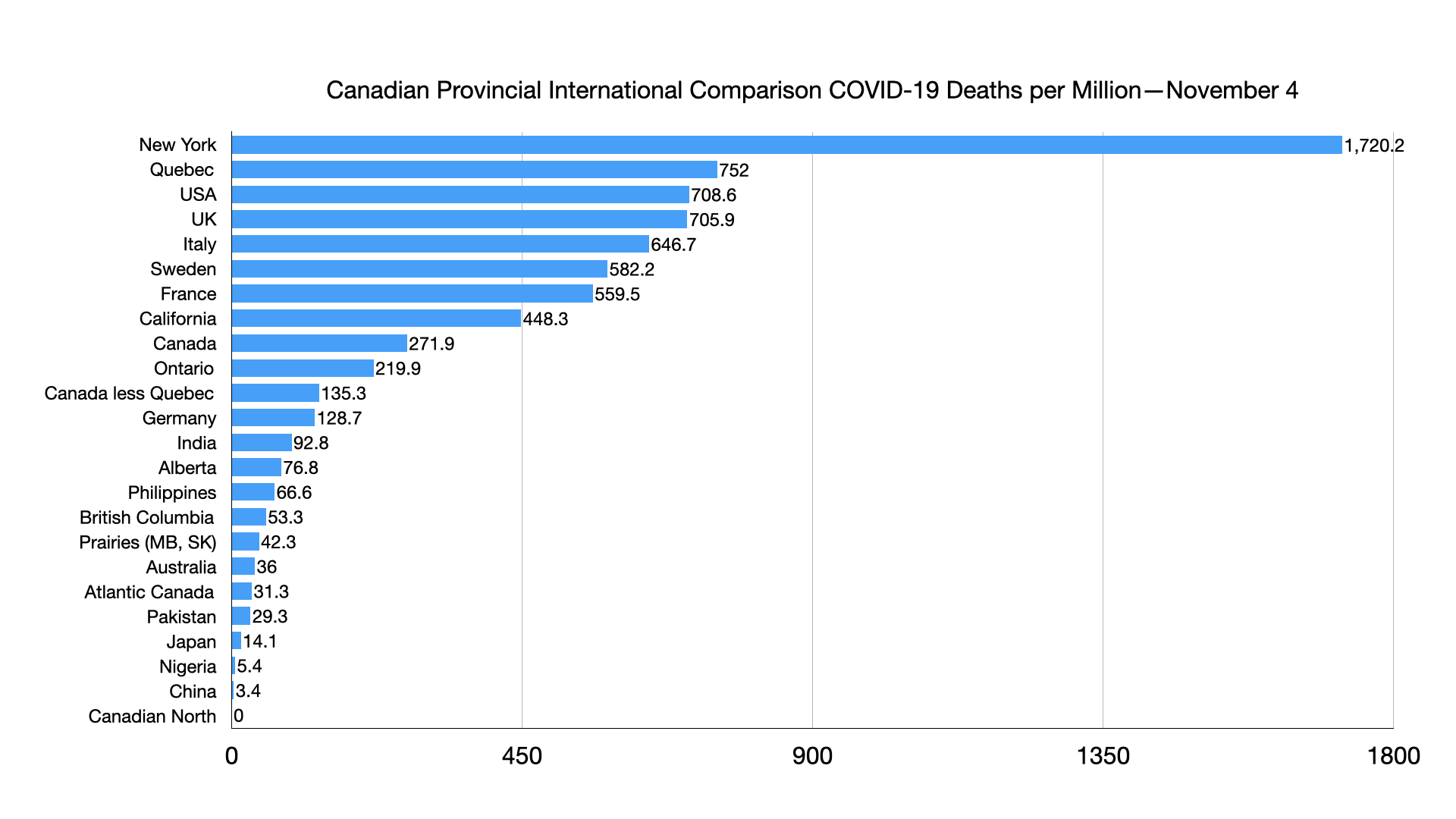
#COVID-19: Comparing provinces with other countries 4 November Update

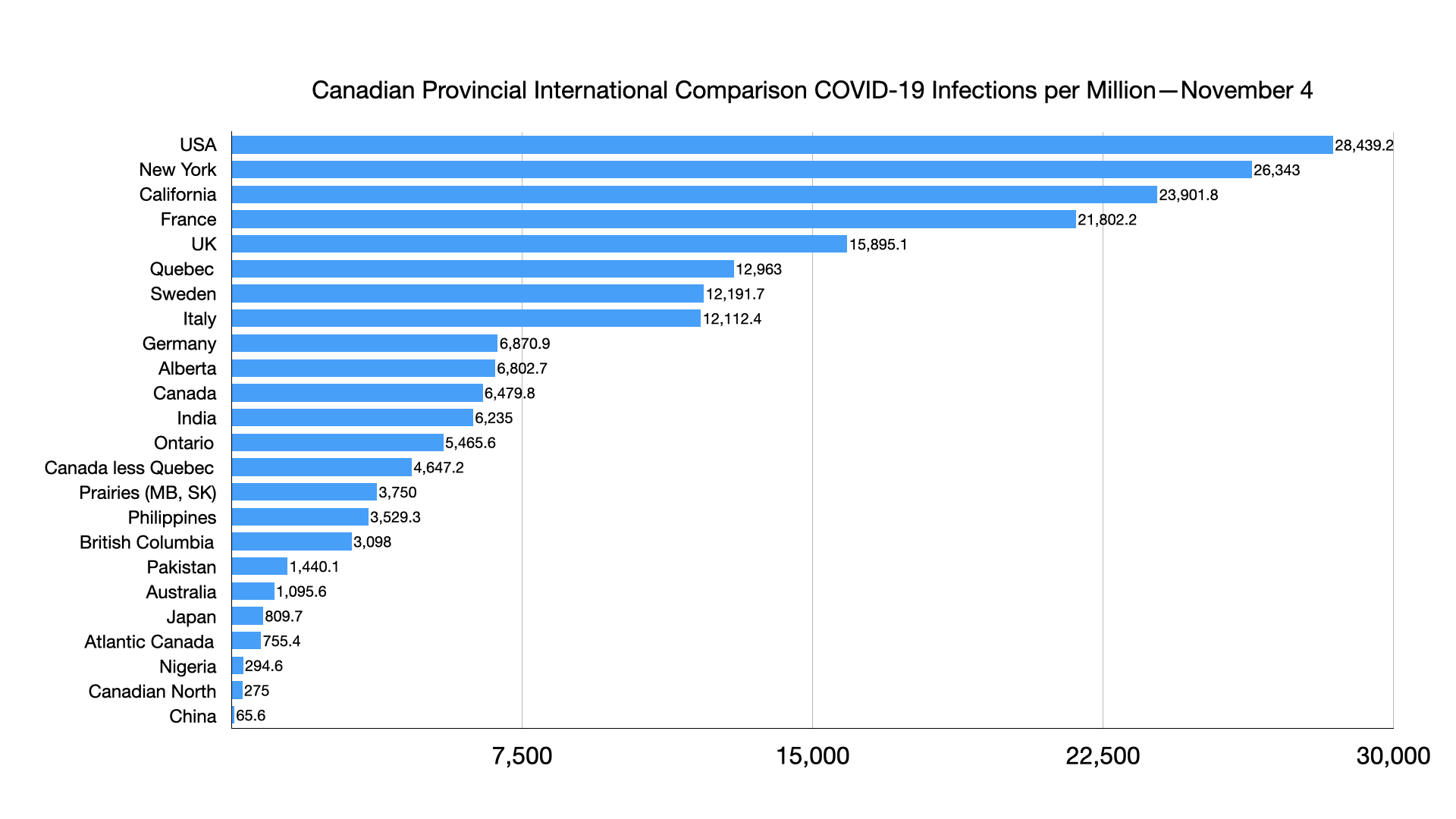
Main news continues to be with respect to infections and relative increase of COVID cases and deaths in Prairie provinces:
 
Weekly:
 
Infections per million: Germany now ahead of Alberta, Canada, India, Prairies now ahead of Philippines
 
Deaths per million:nPrairies now ahead of Australia


Study Links Trump Rallies to 700 COVID-19 Deaths

Despite some of the methodological concerns, overall no surprise and akin to a death cult:

Eighteen Trump rallies may have led to more than 700 COVID-19 deaths, including among people who did not attend the rallies, according to a new working paper from Stanford University researchers.

While Joe Biden has tailored his presidential campaign toward smaller, more socially distanced events during the pandemic, President Donald Trump has made a selling point of his packed rallies, where mask use is often scarce. The Stanford paper studied 18 Trump rallies this year, and linked them to a significant spike in COVID-19 cases—approximately 30,000—in surrounding counties.

The paper, from the school’s economics department, has not been peer reviewed, leading epidemiologists to raise some caveats about its findings. However, one such infectious disease expert told The Daily Beast that the study’s broader findings do suggest a post-Trump COVID bump, and further illustrate the effect of wearing a mask.

The study’s authors wrote that their findings affirmed previous warnings about large gatherings.

“Our analysis strongly supports the warnings and recommendations of public health officials concerning the risk of COVID-19 transmission at large group gatherings, particularly when the degree of compliance with guidelines concerning the use of masks and social distancing is low,” they wrote. “The communities in which Trump rallies took place paid a high price in terms of disease and death.”

Dr. Jeffrey Klausner, an infectious diseases expert at UCLA who was not involved with the study, said it “does indeed raise the possibility that these outdoor rallies increased the incidence of COVID in counties where they occurred.”

Klausner raised several caveats, noting that the study’s authors had not individually counted deaths, but looked at post-rally COVID surges, applied COVID death rates in the affected counties and predicted the number of deaths that had resulted from the rallies. The method meant researchers could not control for certain demographic factors, like the age of the affected people, he said. (Old age appears to be a significant factor in COVID death rates.)

Other epidemiologists, like Michael Mina of the Harvard T.H. Chan School of Public Health, also urged caution in extrapolating too much from the study.

“There are better ways to look at this data through actual infectious disease epidemic lenses,” Mina told Politico. “It offers a data point, but nothing I would want to draw any strong conclusions from. It is also so overtly political that it makes it hard to distinguish if there were decisions made out of perhaps unrecognized bias.”

Klausner and another epidemiologist who spoke to Politico said the study’s methods seemed generally sound, if a little speculative.

Fifteen of the 18 Trump rallies (held from June to September across multiple states) were held outside. COVID-19 research has suggested outdoor events with good ventilation are safer than indoor events with poor air circulation. Despite that, the researchers recorded a notable uptick in COVID-19 cases in surrounding areas after the rallies. Meanwhile, similar studies on outdoor Black Lives Matter rallies this summer did not find a notable outbreak among protest participants.

The difference might have been mask use, Klausner noted.

Although Black Lives Matter rallies “had crowding, a lot of people yelling, and other attributes we associate with COVID, you had a much higher percentage of mask-wearing,” compared to Trump rallies where fewer people were photographed in protective gear, he noted.

“Lack of masks may have been the key difference between Black Lives Matter rallies and Trump rallies,” Klausner said.

Source: Study Links Trump Rallies to 700 COVID-19 Deaths