#COVID-19: Comparing provinces with other countries 24 February Update

The latest charts, compiled 24 February.

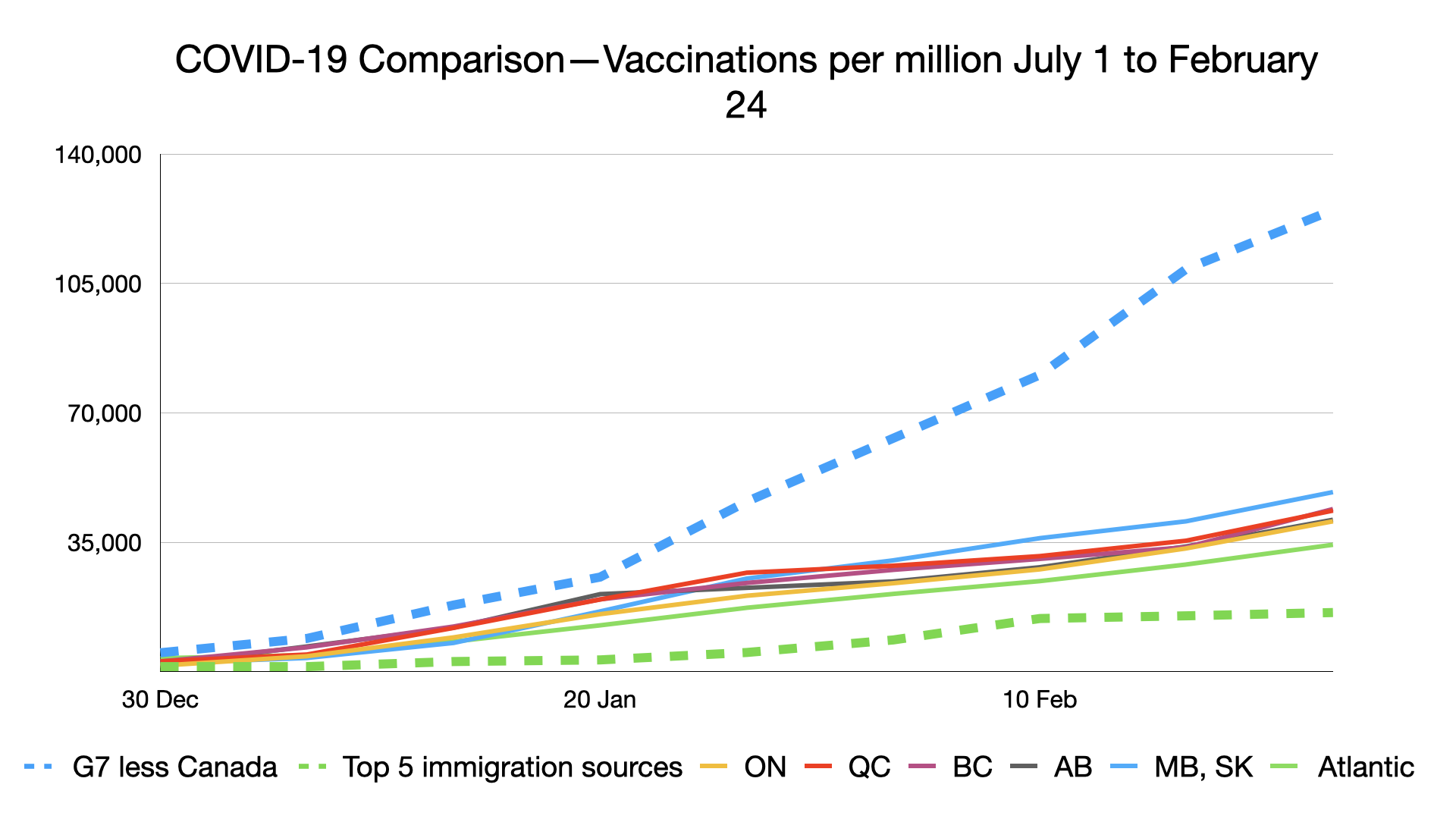
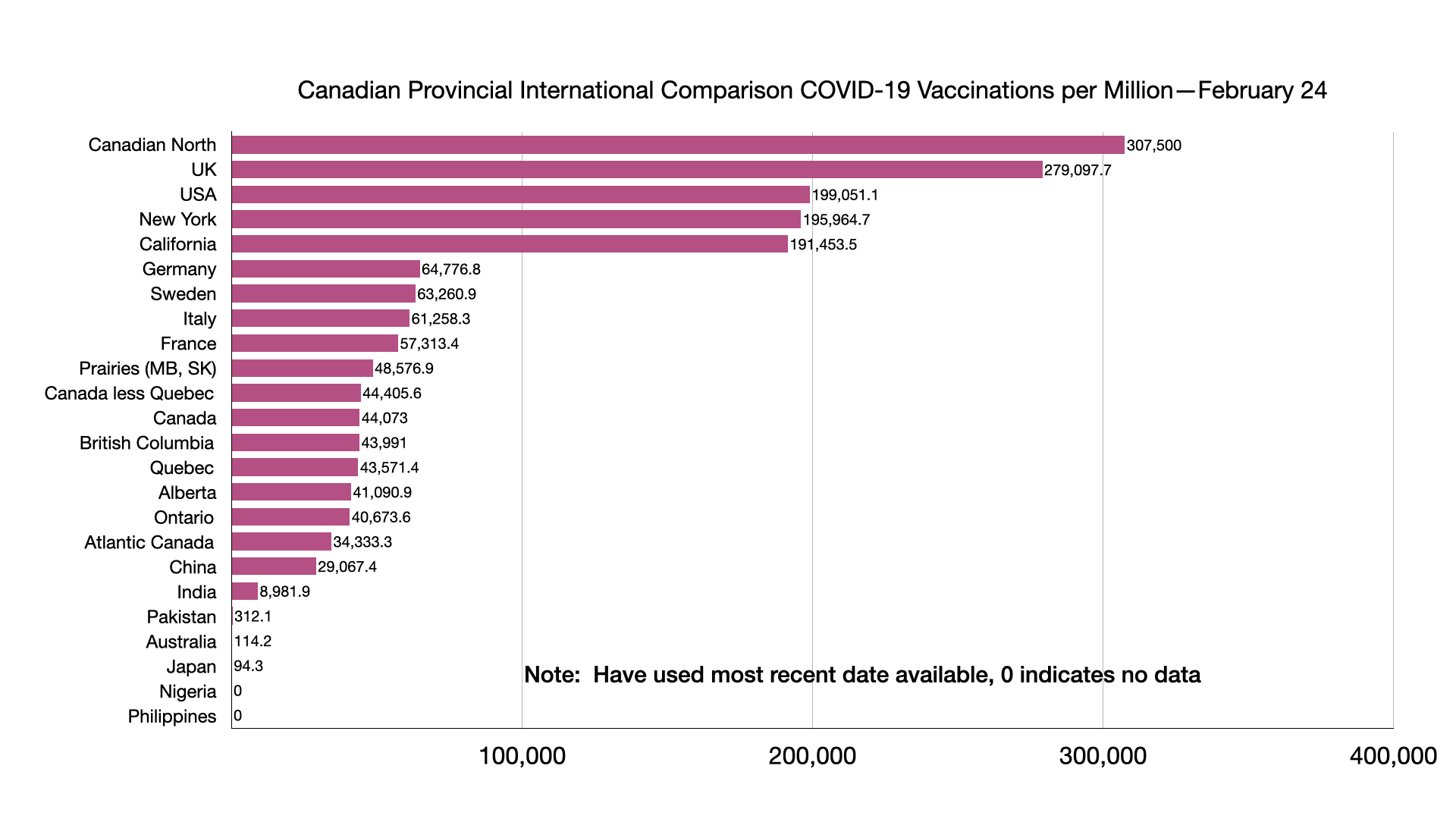
Vaccinations: The gap between all G7 countries save Japan continues to grow with the effect of increased deliveries to Canada not yet apparent.

Trendline charts

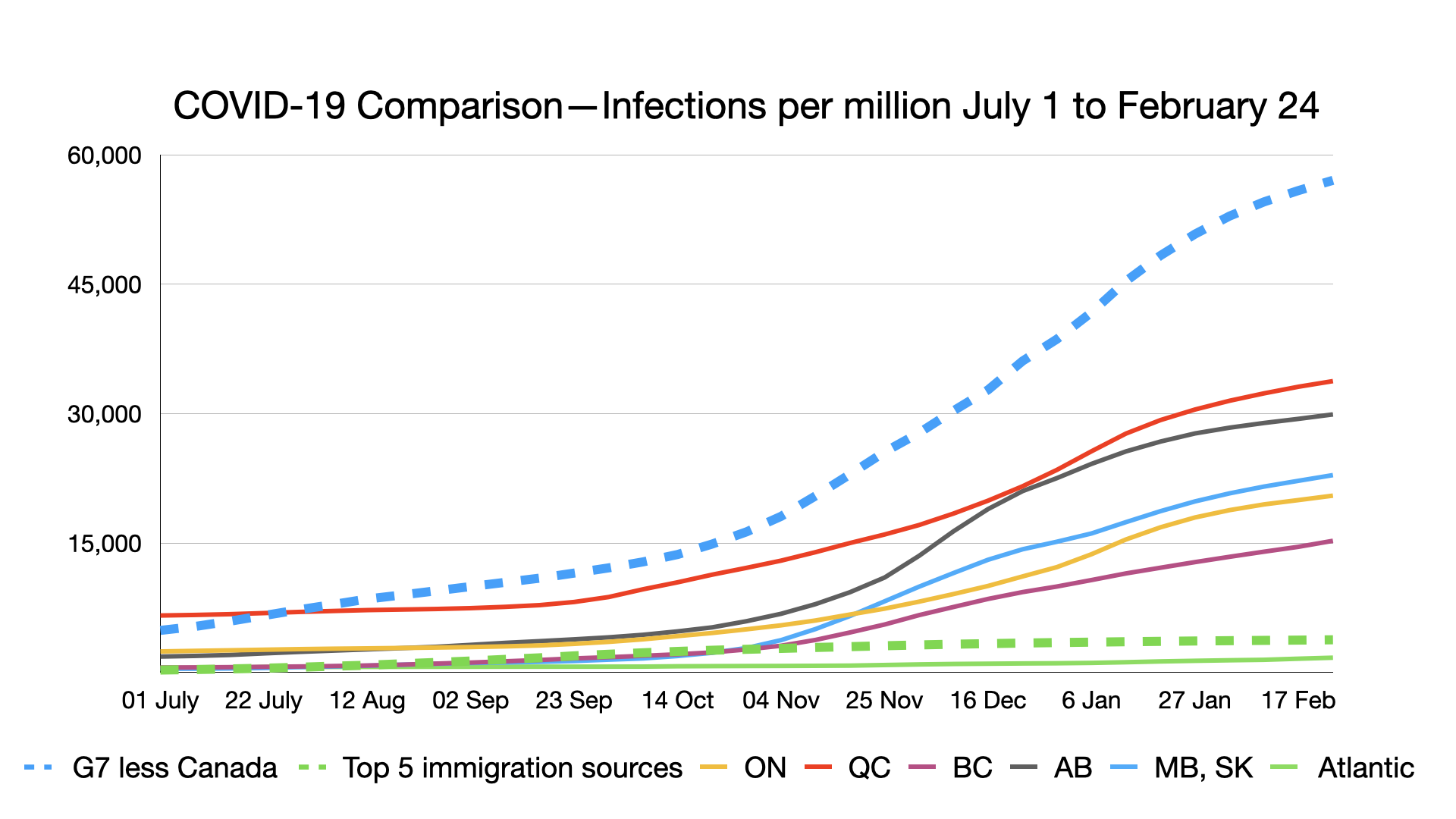
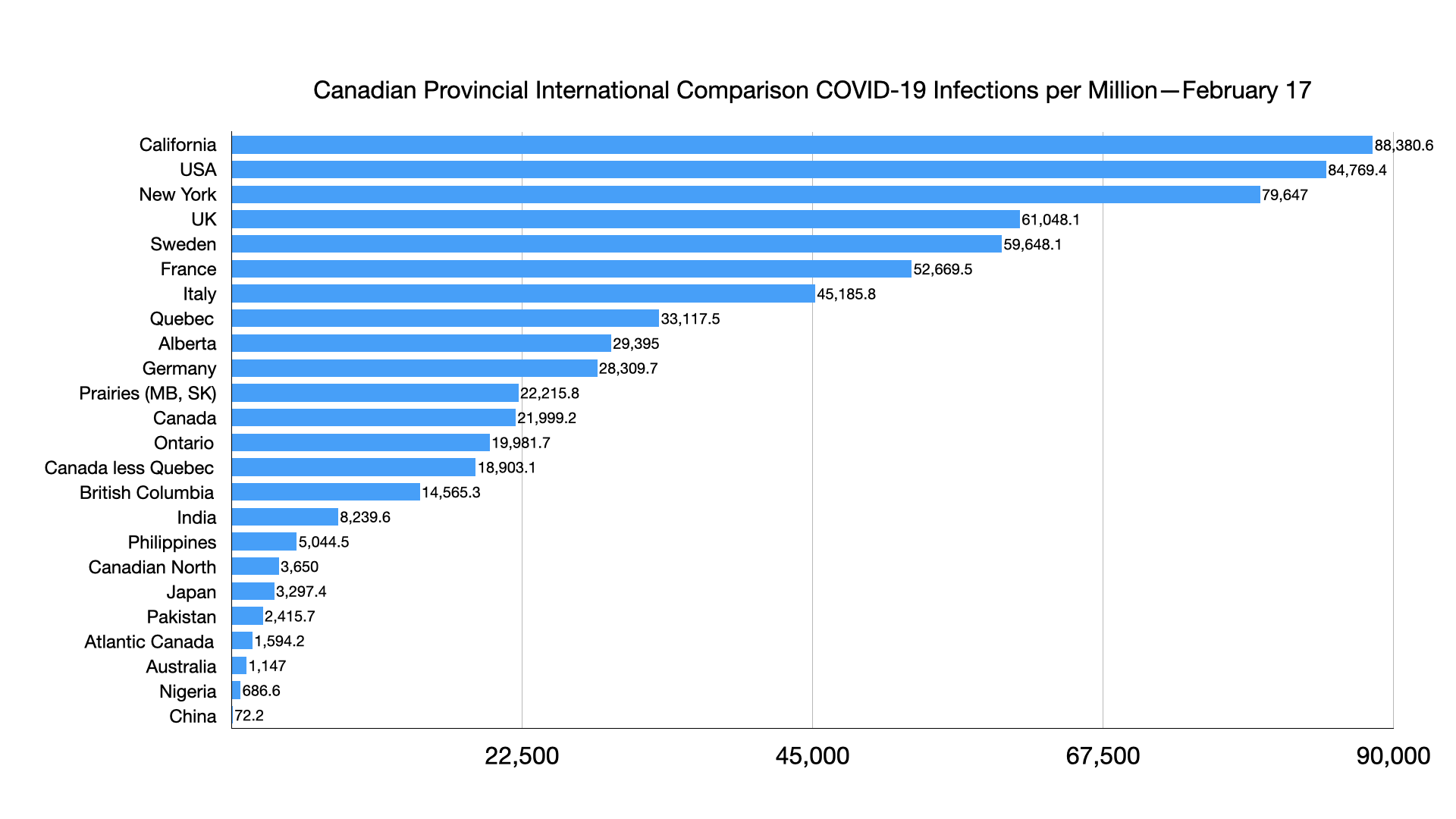
Infections per million: The overall trend of a flattening curve is seen in G7 countries and most provinces save for the Prairies and British Columbia.

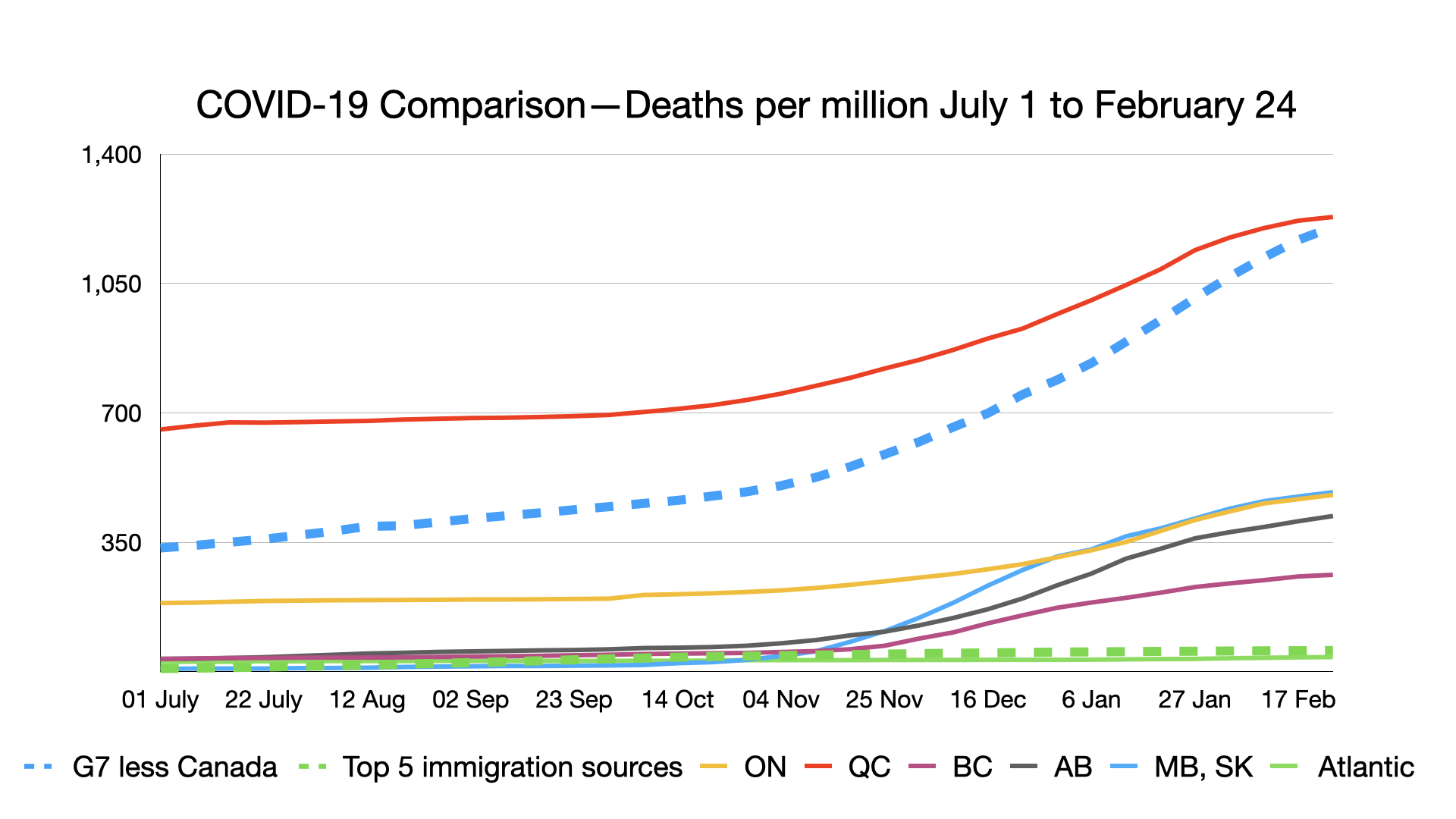
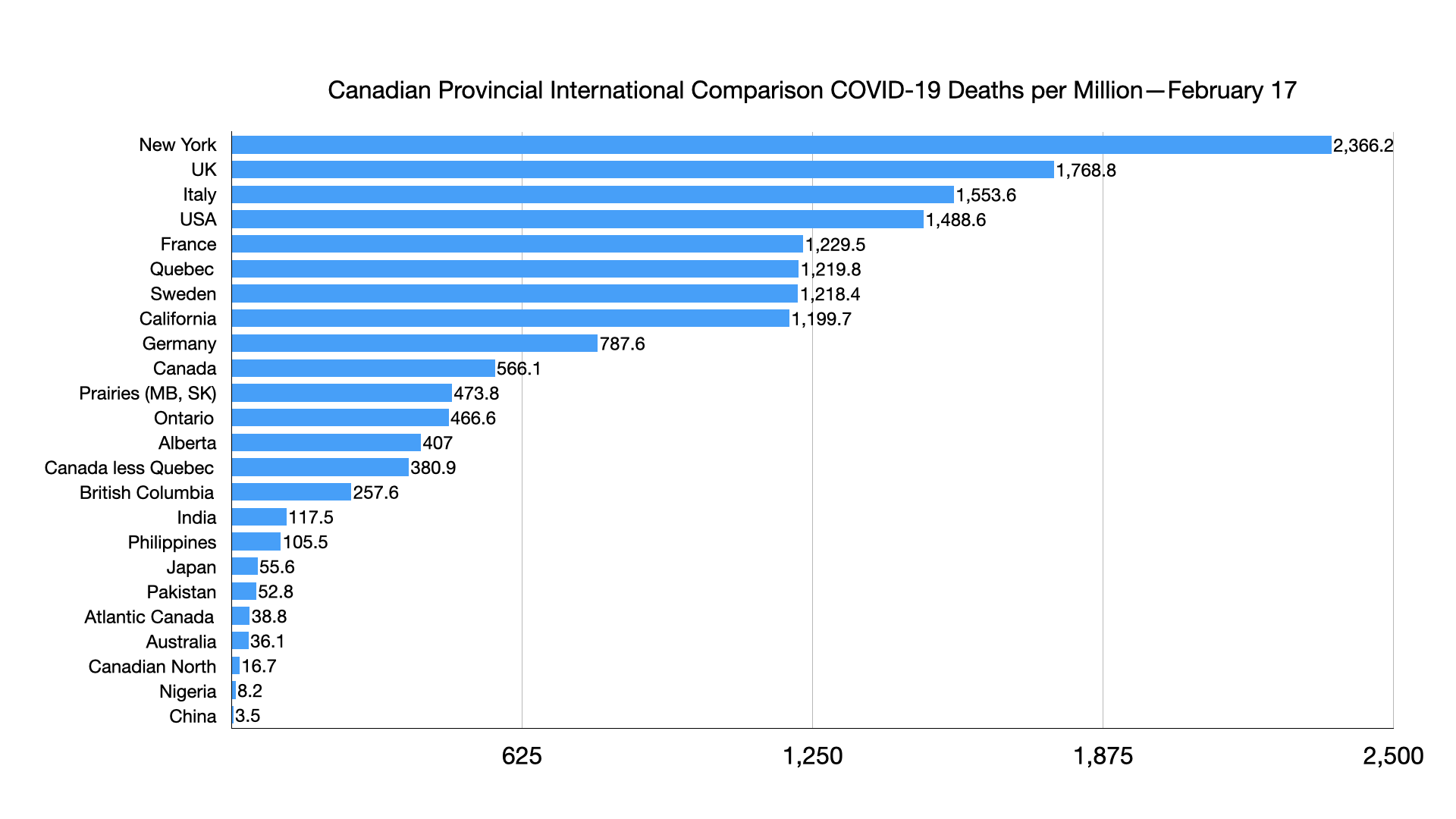
Deaths per million: Most Canadian provinces continue to flatten the curve, Quebec most dramatically. Overall G7 death rate will likely surpass Quebec.

Vaccinations per million: Gap between G7 and Canada, driven not only by the UK and USA, remains largely unchanged.

Weekly

Infections per million: No relative change.

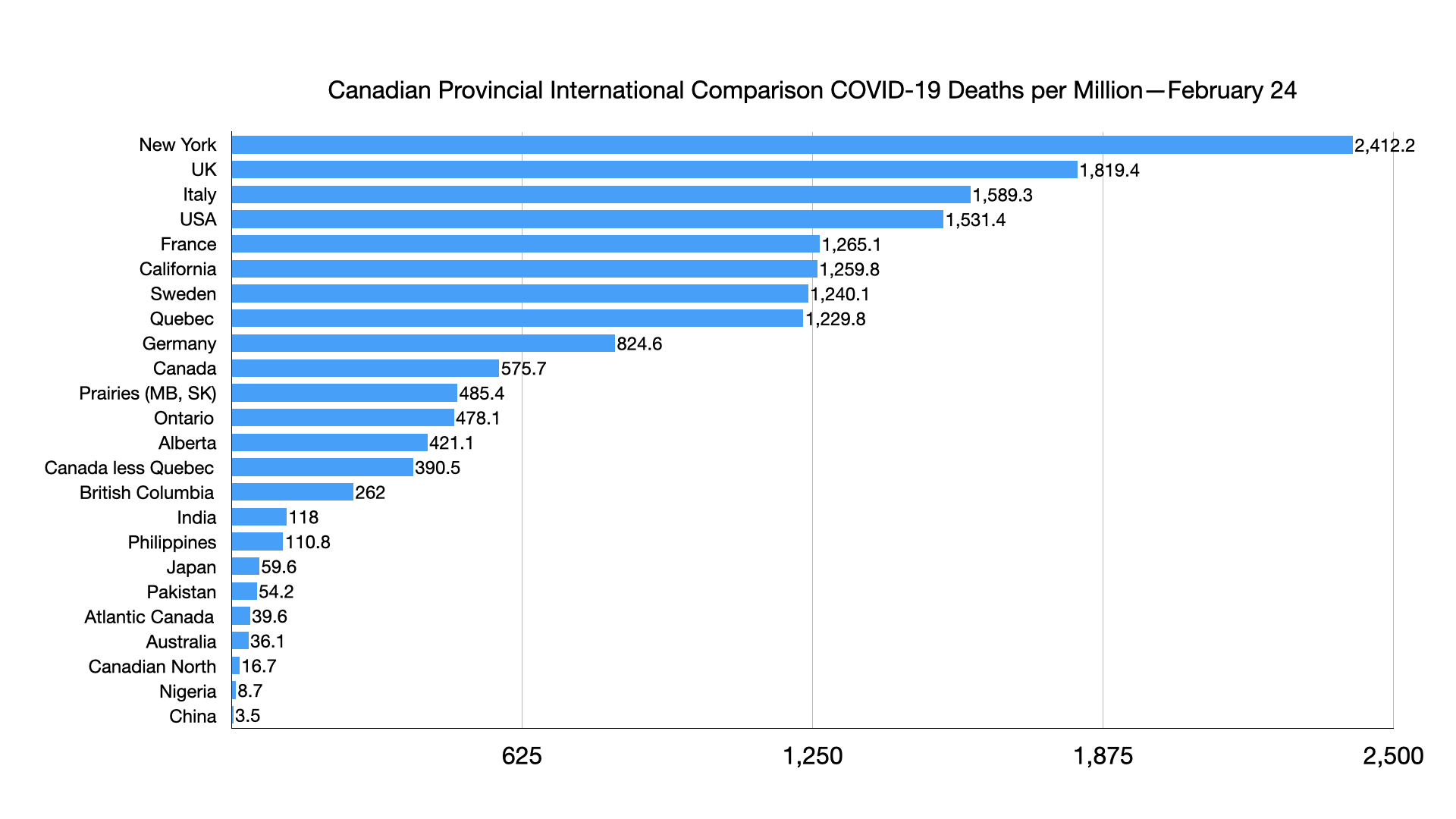
Deaths per million: California ahead of Sweden and Quebec, Sweden ahead of Quebec 

Delacourt: ‘The nudge unit’: Ottawa’s behavioural-science team investigates how Canadians feel about vaccines, public health and who to trust

Innovative and appropriate:

Vaccines are one miracle of science in this pandemic. But another scientific experiment has also produced surprisingly speedy and widespread results over the past year. It happened in the realm of behaviour science — and ordinary citizens were the laboratory subjects. 

One year ago, few people would have believed that science would come up with a vaccine, ready for mass immunization around the world, by the start of 2021. 

But who would have also predicted that citizens could be persuaded to turn their lives upside down, wear masks and isolate themselves from their families and friends for months on end? 

“I know we’re asking a lot,” Prime Minister Justin Trudeau said in early April, when no one knew just how much COVID-19 would force Canadians into behaviour change on a grand scale. “A lot” is an understatement: not since wartime has the government had to request this much of the citizenry for so long. 

Yet while the government’s medical scientists have been front and centre on the public stage almost every day since last March, the behavioural scientists have mostly been operating under the radar. If you know where to look, though, evidence of the behaviour-nudging team keeps peeking out under all those public proclamations from Canada’s COVID-19 crisis managers. 

When Trudeau and the premiers use their podiums to calm fears or tell hard truths about the pandemic, for example, their words don’t just come from hunch or political instincts. Reams of behavioural data is being collected by government throughout the pandemic, on everything from people’s general emotions about COVID-19 to their willingness to get vaccinated. 

Dr. Theresa Tam, Canada’s chief public health officer, spoke earlier this month about the problem of vaccine hesitancy in this country and what the government knows about it. It was one of the few times that public officials have made direct reference to the behaviour-studying unit inside government. 

“Some of the studies are actually carried out by the Privy Council Office, where there is a behavioural insight team,” Tam said. “We do know that the intention for Canadians to get the vaccine is actually quite high and I think has improved since we started the vaccine campaign itself.” 

Tam went on to explain how people’s views on vaccines are shaped by where they get their information. Since you are reading this story in a mainstream news medium, you might be interested to know that you’re more likely to feel positive about getting immunized. Consumers of traditional information sources tend to have more trust in vaccines and what the government is saying about them. Conversely, if you’re the kind of person who gets your news from social media, you’re likely more wary of vaccines. 

So the government is doing some fine-tuning of its communication channels, Tam explained at this Feb. 5 briefing. “We know that we have to work with the internet and social media companies and that has been happening with Facebook, Google, YouTube and others,” she said. 

That behavioural-insight team Tam mentioned is actually called the “impact and innovation unit” of government, which was set up within the PCO in 2017, meant for more low-key work than it has been doing, now that the pandemic suddenly created an urgent need for its insights into how citizens behave.

Headed up by veteran public servant Rodney Ghali, this group has kept its eye on the huge social-science experiment of the COVID-19 crisis. (Ontario too has a behavioural insights unit, which has been working closely with the federal government over the course of the pandemic.) 

In normal times, this federal team would have been researching questions such as what would motivate people to invest more in RRSPs or cut down on food waste. 

Its members prefer to remain low-profile — a couple of them talked to me for this article, but on condition that they would not be named or quoted.

Results of the team’s research are quite public, though — anyone can check them out on their web page, along with reports of some communication campaigns they’ve tested on the population and what the ads were supposed to achieve. The most visible ad — one Canadians may remember — is one that depicted COVID-19 as a green cloud, spreading noxiously over the buttons in an elevator. 

The behaviour being studied by the government has shifted as the pandemic has dragged on, naturally. In the beginning, the research focused a lot on compliance with public health measures, what it would take to get people to wear masks, and so on. 

Nowadays, the main concern is with vaccines and whether enough people will take them to achieve herd immunity. Medical science handles the immunity part of that equation — behavioural scientists have to build the herd. For that to happen, the government has to know where and how to administer the nudging. 

“Nudge” is the operative word. Britain blazed the trail for the use of behavioural insights in government back in 2010 when it set up a team inside the cabinet office nicknamed ‘the nudge unit.” The name comes from the hugely influential book “Nudge” by Richard Thaler and Cass Sunstein, which laid out how people could be influenced to make better choices in their lives. 

Sunstein is now the chair of an advisory group for the World Health Organization, set up specifically to use behavioural insights in COVID-19 management. And that leads us right back to Canada, which has taken the WHO’s tool for tapping behavioural insights in the pandemic and put it to comprehensive use in this country for nearly a year now. According to officials inside the behaviour unit, Canada has made the most comprehensive use of the WHO tool, creating a chronicle of behavioural ups and downs throughout the COVID-19 crisis. 

Since last April, a static group of about 2,000 Canadians — chosen randomly but in proportion to statistical, demographic considerations — have been taking part in a rolling series of surveys, plumbing their attitudes and behaviour on all things pandemic-related. The process is called “COVID-19 snapshot monitoring,” which has been shortened to COSMO.

In the early months, the COSMO respondents were a dreary lot, reporting that they believed things would get worse before they got better. But they were keen on vaccines — keener than they are now, in fact. Last April, more than 70 per cent of respondents were interested in a vaccine if it was either safe or effective. By the end of 2020, that enthusiasm had dropped to the low and mid-sixties. 

Herd immunity is generally accepted to be around 70 per cent, so governments — with the help of the behaviour scientists — need to get those numbers up again. 

The COSMO group has also been asked regularly about which people they trust to provide information — perhaps one of the more important pieces of insight sought by government in this pandemic. If you’re going to nudge the population in one direction or another, after all, it’s crucial to know who should do the nudging. 

Repeated waves of data on this issue show that public health officials rank high on the trusted list, whereas politicians and the news media rank lower. This would explain why Tam and her provincial colleagues have become household names over the past year (the provincial public-health chiefs have actually been rated slightly higher for trust than their federal counterparts). 

On top of vaccine hesitancy, the biggest concern right now for the behaviour monitors is simple COVID-19 fatigue. For almost a year now, governments have been asking, imploring, begging and arguing for citizens to keep large areas of their lives on hold. The same tools that worked last April, when Trudeau was “asking a lot,” may not keep working over the long term. 

In December, the COSMO participants started being asked about pandemic fatigue. Here’s what the behaviour unit learned: “Adherence to key protective behaviours remains reportedly high, and many participants are not getting tired of having to wash their hands frequently, physical distancing or wearing a mask. However, most participants (80 per cent) indicate they are getting tired or somewhat tired of having to avoid gathering with loved ones.”

It’s probably safe to assume that the weariness has only grown since then, but the results of more recent surveys haven’t yet gone online. 

Whenever the pandemic is over, most Canadians may be too busy getting back to their normal lives to reflect on the massive social-science experiment that has taken place over the planet this past year. But that radical change in people’s lives is the other great scientific achievement of COVID-19, one that may have given government important clues on how to modify citizens’ behaviour for other big global issues — such as climate change, for instance. 

“The behaviour and choices made by each and every one of us matter a great deal,” Tam said in a briefing earlier this year, which is why a small behavioural-science unit inside government suddenly became a big deal in 2020. 
Source: https://www.thestar.com/politics/political-opinion/2021/02/21/the-nudge-unit-ottawas-behavioural-science-team-investigates-how-canadians-feel-about-vaccines-public-health-and-who-to-trust.html

Provinces are working with outdated vaccine tracking systems, hindering national data

Canada’s patchwork system at its worst:

As Canada prepares for a massive increase in vaccine doses from abroad, some provinces and territories are using outdated technology to record their vaccination data and not fully participating in a system Ottawa created to manage infectious disease outbreaks.

The results of a Globe and Mail survey sent to every province and territory found a patchwork of systems for recording vaccine information that will be crucial in monitoring supply, adverse reactions and population immunity across the country, and for booking appointments. Some provinces reported that they had not enabled core pieces of the technology, called Panorama, that the federal government designed for campaigns like this one.

The SARS epidemic of 2003 highlighted the fact that Canada lacked a modern public-health database to manage all the information related to outbreaks of infectious diseases. Ottawa funded the creation of Panorama for all provinces and territories to use. The platform is actually a suite of technologies and databases for vaccine and infectious disease tracking. But more than a decade of delays and the increasing cost of participation led some provinces to opt out of some parts, revert to their previous systems, or adopt other technology platforms.

The end result is 13 different vaccine-tracking systems, many of which do not communicate with each other or Ottawa.

Shannon MacDonald, an adjunct professor at the University of Alberta faculty of nursing and a researcher with the Canadian Immunization Research Network, said the situation gives the federal government an incomplete picture of the national vaccine program.

“We can’t look at immunization coverage nationally,” Prof. MacDonald said. Some provinces and territories, she added, will struggle even to track their own programs.

Panorama has been in use for several years to track immunizations. The federal government obtained new technology in January to address some of the gaps, and that platform came online on Feb. 2.

Every province that responded to The Globe confirmed it has yet to plug in to the new system.

Representatives of some provinces said health officials still use paper or basic Excel spreadsheets to track vaccines and vaccinations.

The Globe survey found that Quebec, British Columbia, Yukon and Saskatchewan use Panorama, or some version of it, for various aspects of the COVID-19 vaccination campaign. Alberta, the Northwest Territories, Ontario and Manitoba have their own systems. Other provinces did not respond or did not indicate what technology they use.

In light of COVID-19, Ontario hired the accounting company Deloitte Canada to develop a new system. COVaxON, once it comes online, will manage “scheduling, client management, recording administered doses, site inventory management, receipt of vaccination” in a platform that is easy to use, Ministry of Health spokesman David Jensen wrote in response to the Globe survey.

Since December, Canada has received just over a million doses of two types of COVID-19 vaccines. In the next six weeks, four million are scheduled to arrive, and tens of millions more before the end of summer.

The shelf life and storage requirements of each vaccine must be closely monitored. Dale Hunter, a spokesperson for Saskatchewan’s Health Ministry, said the state of the province’s vaccine cold storage is “reported and tracked manually,” meaning the data are sent to the ministry via e-mail or fax. Panorama can be used to manage inventory, but several provinces and territories, including Saskatchewan, said they had not enabled that feature.

The Northwest Territories is using Excel spreadsheets and “specially trained logisticians” to ensure that “no dose is wasted,” Health Ministry spokesperson Andrea Nilson said.

Panorama includes a feature that allows health authorities to scan the barcodes on pallets and doses to keep track of the vaccines and who needs a second dose of which one. None of the provinces or territories that responded to the survey said they had enabled that feature, meaning health authorities enter the data manually.

In Ontario, government employees enter lot numbers into COVaxON when vaccine shipments arrive. Nurses and doctors who administer the vaccines can select the identifying serial numbers on their computers from a drop-down list. This helps clinics track doses both used and unused. Quebec does something similar, Health Ministry spokesperson Robert Maranda wrote.

Mr. Jensen wrote that Ontario’s system could be more efficient if the federal government provided lot numbers in advance.

Many provincial and territorial health systems are accessible on only a limited number of hospital and clinic computers, raising the question of whether they could be used more widely, such as in pop-up clinics or pharmacies.

The Globe asked provinces how they would deal with data entry for vaccinations in makeshift clinics or pharmacies. Manitoba, Alberta, Ontario and Quebec said their systems are designed to be accessible in all clinics and pharmacies. Saskatchewan reported that only public health facilities and some First Nations communities have access to Panorama. Data from pharmacies will be entered manually.

Prof. MacDonald said most provinces and territories have “good enough” systems to manage the vaccination programs. But she said that if any continue recording data with pen and paper, “we’re in a lot of trouble.”

There’s also the question of how provinces and territories will book vaccination appointments.

Alberta, British Columbia, and Saskatchewan are finalizing their booking systems. The Northwest Territories is leaving that issue to health authorities and hospitals. Booking systems for Quebec and Ontario are online.

Health authorities will need to monitor for adverse reactions and the possibility that some people who received the vaccine still contract COVID-19 – which could indicate a defective batch, a more potent variant, or that the patient is among the few for whom the vaccine is not effective.

Quebec’s system is designed to identify defective batches based on reports of adverse reactions and to notify those who received doses. Ontario is tracking adverse reactions with a system that has not been integrated into COVaxON. Saskatchewan and the Northwest Territories have not activated Panorama’s adverse-reaction module, and submit their reports manually.

The Public Health Agency of Canada is the main body responsible for monitoring adverse reactions. However, some provinces told The Globe they report to Ottawa on that manually or infrequently.

As the vaccinations continue, provinces will want to know what proportion of their population is immune at any given time. A 2016 study found the majority of provinces and territories lacked the ability to do a complete analysis of a mass vaccination campaign.

New Brunswick spokesman Shawn Berry said the province’s technology can “obtain near real-time immunization data for COVID-19 vaccinations.” Quebec said its system allows good population surveillance for infectious disease outbreaks, which includes vaccination data. While many provinces and territories that responded did not provide much detail, most told The Globe that, even if they can analyze their data, they do not automatically share the results with the federal government.

Most provinces and territories provided complete answers to the Globe survey, but British Columbia spokesman Devon Smith wrote that “confidentiality and safety” issues prevented the province from answering. Manitoba spokesman Brian Smiley said the province was unable to respond to most questions. Newfoundland and Labrador spokesperson Erin Shea indicated the province was still struggling with a recent outbreak of COVID-19 cases and could not fulfill the request. Nunavut, Nova Scotia and Prince Edward Island did not send responses.

Prof. MacDonald said the COVID-19 crisis should inspire provinces to modernize their health infrastructure. “God forbid it takes a pandemic for us to get moving on this,” she said. “But let’s make hay.”

Source: https://www.theglobeandmail.com/canada/article-provinces-working-with-outdated-vaccine-tracking-systems/

Dependent on foreign students, Canada universities risk revenues as vaccines lag

More on the impact on university revenues from COVID-19 travel restrictions and a reference to how Canada’s currently lower vaccination rate may affect Canada’s relative competitiveness in attracting international students:

Public universities have become increasingly dependent on foreign students, who pay far higher tuition than domestic students, to boost their profits. International enrollment jumped 45% over the last five years, advocacy group Universities Canada said, but it fell 2.1% this year amid coronavirus restrictions.

Reuters Graphic

That decline, coupled with a sharp fall in revenues from campus services like conferences, dorms, food halls and parking, has hit the schools hard. Canada’s slow vaccine campaign – it currently lags well behind global peers on inoculations – and the emergence of new variants, could extend the slump in enrollment and campus revenues into the next year school, experts warn.

“Overall, we are expecting universities to post consolidated deficits this year,” said Michael Yake, a senior analyst with rating agency Moody’s.

It is still too soon to know the final impact of COVID-19 on the current year. The University of British Columbia, for example, is projecting a deficit of C$225 million ($177.2 million) this year compared with a C$60 million surplus budgeted pre-COVID-19. And the uncertainty will continue.

“We’re not assuming the vaccine is going to be in place for the fall,” Yake added. “Even if in Canada the vaccines are available, that doesn’t means it’s going to be available for the international students.”

BIDEN EFFECT

While most of Canada’s universities are well positioned to weather the COVID-19 storm, an unexpected move by Laurentian University in Ontario to file for creditor protection this month has sparked concerns. Experts says that while Laurentian’s situation is unique, other schools also face cost pressures and some may be too reliant on foreign tuition.

International students brought in almost C$4 billion in annual revenue for Canadian universities in 2017/18, the most recent data from Statistics Canada showed. On average, they pay five times the tuition of domestic students and account for nearly 40% of all tuition fees.

Reuters Graphic

At Canada’s top three ranked universities, foreign students make up at least a quarter of the student body. Many stay in Canada after graduation and contribute to economic growth.

Canada did stave off a feared enrollment plunge this year, in part because the federal government made it easier for international students to get work permits after graduation, but the huge gains in foreign students of the previous five years are likely over.

Indeed a trend that saw many international students choose Canada over the United States in recent years could reverse as U.S. President Joe Biden’s administration overhauls the U.S. immigration.

“Something that’s benefited Canada for some time is the political environment in the U.S., as it drove more international students to Canada,” said Travis Shaw, a senior analyst at rating agency DBRS Morningstar.

The change of administration “probably means we’ve got more competition for those international students in the years ahead,” he said.

An increase in domestic students could offset some of the need for new foreign students, but their lower tuition fees will create a significant financial gap. Other cost-saving alternatives might include reducing course offerings and consolidating smaller schools.

And while international enrollment is expected to stabilize as COVID-19 restrictions are lifted, the longer the pandemic drags on, the greater the risk that more international students will go elsewhere to study, particularly if competitor campuses are able to safely reopen before those in Canada.

“Most students want to come to Canada for the student experience. If a student experience does not seem viable over the term of the course, it is sure to be a deterrent,” said Aditi Joshi, an analyst at DBRS Morningstar.

Source: https://www.reuters.com/article/us-canada-education/dependent-on-foreign-students-canada-universities-risk-revenues-as-vaccines-lag-idUSKBN2AF189?rpc=401&

India’s Vaccine Rollout Stumbles as COVID-19 Cases Decline. That’s Bad News for the Rest of the World

Of note:

India’s COVID-19 vaccination scheme looked set for success.

For the “pharmacy of the world,” which produced 60% of the vaccines for global use before the pandemic, supply was never going to be a problem. The country already had the world’s largest immunization program, delivering 390 million doses annually to protect against diseases like tuberculosis and measles, and an existing infrastructure that would make COVID-19 vaccine distribution easier. Ahead of the launch, the government organized dry runs, put up billboards touting the vaccines and replaced phone ringing tones with a message urging people to get vaccinated.

And yet, one month into its vaccination campaign, India is struggling to get even its health workers to line up for shots. In early January, India announced a goal to inoculate 300 million people by August. Just 8.4 million received a vaccine in the first month, less than a quarter of the number needed to stay on pace for the government’s goal. So far, vaccinations are only available for frontline health workers, and in some places police officers and soldiers.

And even that initial interest might be waning. India’s vaccine scheme relies on a mobile phone app that schedules vaccination appointments. On the first day doses were administered, Jan. 16, some 191,000 people showed up. But four weeks later, when those people were summoned for the second dose, only only 4% returned.

A. Valsala, a community health worker in the southern city of Kollam who spent months fighting COVID-19 door-to-door, skipped her appointment to get her first dose of the vaccine after a hectic day on Feb. 12. “I don’t feel the need to rush because the worst is over,” she says. “So there is a sense that it is okay to wait and watch since there are concerns about how these vaccines were developed so fast.”

A. Valsala’s comments point to a troubling trend—one reflected in TIME’s interviews with health workers across India. A combination of waning COVID-19 cases nationwide, questions over the efficacy of one of the two vaccines currently authorized for use in the country and complacency are resulting in growing hesitancy to get vaccinated.

“There is a reduced perception of threat with regard to the virus,” says Dr. Chandrakant Lahariya, a New Delhi-based epidemiologist. “Had the same vaccines been available during the peak of the pandemic in September and October, the uptake would have been different.”

A troubling sign for the rest of the world

Public health experts are now concerned that the sluggish start could impact the subsequent phases of the vaccination drive, especially when the vaccination scheme is widened next month to include older people and those with preexisting conditions.

“In India, people have an inherent trust in doctors,” says Dr. Smisha Agarwal, Research Director at the Johns Hopkins Global mHealth Initiative. “So when [doctors] don’t turn up to get vaccines, it reaffirms any doubts that the general public might have.”

In an effort to accelerate the vaccination drive, the government started walk-in vaccinations as opposed to allowing only those scheduled for the day to get the shots. It also set up new vaccination centers across the country.

For now, India might be an outlier: a country with a surfeit of vaccines with few takers. But its experience shows that, while the first challenge is stocking up on vaccine supplies, convincing people to take them can be its own huge task. It might be a portent for the rest of the world as the number of COVID-19 cases decline globally and vaccines become more widely available, warns Dr. Paul Griffin, an infectious diseases specialist at the University of Queensland in Brisbane.

It’s easy to be complacent about getting a vaccine when cases are declining,Griffin says, “but now, when the trajectory looks favorable, is the right time to step back and realize that this will be our reality for a long time if we don’t speed up the vaccinations at this moment.”

How India fell behind on vaccinations

Despite being well-positioned, India’s vaccination drive got off to a rough start. The hasty approval of the country’s homegrown vaccine, Covaxin, with little data available while Phase 3 trials were still underway (those remain ongoing) drew criticism from health workers and scientists. The mainstay of India’s vaccination scheme is Covishield, the Indian variant of the vaccine developed by University of Oxford and AstraZeneca, which has been approved by regulators in the U.K., the E.U. and elsewhere. However, Covaxin is the only vaccine on offer in some vaccination centers in urban areas and health workers don’t get to choose which jab they receive.

“Covaxin might be efficacious but what guides me is data,” says Dr. Nirmalya Mohapatra at the Dr. Ram Manohar Lohia Hospital in New Delhi, where only Covaxin is available. “We also want vaccines faster because we have seen deaths because of this disease but that doesn’t mean we should cut corners with the data.” Mohapatra has refused to take Covaxin until more data is available.

But even for Covishield, there aren’t as many takers as expected. In the western city of Nagpur, fewer than 36% of those scheduled to take the vaccine turned up Feb. 11, as per a Times of India report. In the north, the city of Chandigarh is planning to set up counselling centres to dispel fearsabout the vaccines. In a hospital in the southern city of Thrissur, Dr. Pradeep Gopalakrishnan was the last one to get the vaccine on the morning of Feb. 8. “No one came in after me, so around 69 doses set aside for the day remained unused,” he says.

Experts say the lack of enthusiasm could also be attributed to a decline in cases. India’s daily case average has dropped to less than 12,000—down from more than 90,000 in September. At the peak of the pandemic, health care systems were overwhelmed, with shortages of hospital beds and oxygen cylinders being reported across the country. India’s official COVID-19 tally, now at nearly 11 million, surged to No. 2 in the world, behind the U.S (where it remains to this day).

In a Feb. 4 press conference, the Indian Council of Medical Research said that more than 20% of subjects over age 18 from across the country tested in late December and early January had antibodies for the coronavirus that causes COVID-19, meaning they likely had the disease and recovered. Similar studies in Mumbai and Delhi showed even higher levels of antibodies—up to 56%, according to Delhi’s health minister. Several health workers interviewed by TIME said they contracted COVID-19, and were less concerned about getting the vaccine immediately because they believe they have immunity.

But health experts warn India is far from herd immunity. And many worry that people not taking vaccines seriously might not bode well for India, given that other countries’ later waves of COVID-19 were even more severe than those early in the pandemic. Already, Maharashtra, the worst-hit state in the country, has seen a COVID-19 spike in recent days, with daily casesabove 5,000 on Feb. 18 for the first in two and a half months

‘The worst is not over yet’

On a global level too, the tendency to let the guard down might hamper efforts to bring the pandemic under control. Experts say vaccination is necessary not only to get long-term immunity but to also reduce the potential for new mutations, which are largely behind recent surges in cases in the U.K and Brazil.

“High vaccination coverage rate reduces the potential for new variants,” says Griffin of the University of Queensland. “The more cases we have in circulation, the more chances there are of generating mutations that confer some kind of benefit to the virus.”

Even in countries like the U.S. and the U.K., where vaccination started during a surge in cases, there is a risk that people lose enthusiasm once cases decline. Experts emphasize the need for better communication with the public to ensure that vaccination drives don’t slow down with COVID-19 case counts.

“There isn’t any time to wait because the worst is not over yet,” says Agarwal of Johns Hopkins. “Despite the fatigue, ramping up the vaccination is the only and best weapon we have against what might otherwise be a very long winter.”

Source: India’s Vaccine Rollout Stumbles as COVID-19 Cases Decline. That’s Bad News for the Rest of the World

American Life Expectancy Dropped By A Full Year In The First Half Of 2020

Telling. Haven’t seen any comparative Canadian data but likely a similar but smaller effect:

The average U.S. life expectancy dropped by a year in the first half of 2020, according to a new report from the National Center for Health Statistics, a part of the Centers for Disease Control and Prevention.

Life expectancy at birth for the total U.S. population was 77.8 years – a decline of 1 year from 78.8 in 2019. For males, the life expectancy at birth was 75.1 – a decline of 1.2 years from 2019. For females, life expectancy declined to 80.5 years, a 0.9 year decrease from 2019.

Deaths from COVID-19 are the main factor in the overall drop in U.S. life expectancy between January and June 2020, the CDC says. But it’s not the only one: a surge in drug overdose deaths are a part of the decline, too.

“If you’ll recall, in recent pre-pandemic years there were slight drops in life expectancy due in part to the rise in overdose deaths,” explains NCHC spokesperson Jeff Lancashire in an email to NPR. “So they are likely contributing here as well but we don’t know to what degree. COVID-19 is responsible for an estimated 2/3 of all excess deaths in 2020, and excess deaths are driving the decline.”

The group that suffered the largest decline was non-Hispanic Black males, whose life expectancy dropped by 3 years. Hispanic males also saw a large decrease in life expectancy, with a decline of 2.4 years. Non-Hispanic Black females saw a life expectancy decline of 2.3 years, and Hispanic females faced a decline of 1.1 years.

Throughout the coronavirus pandemic, Black and Latino Americans have died from COVID-19 at disproportionately high rates.

The life expectancy decline was less pronounced among non-Hispanic whites: males in that group had a decline of life expectancy of 0.8 year, while for white females the decline was 0.7 year.

Women tend to live longer than men, and in the first half of 2020, that margin grew: the difference in their life expectancy widened to 5.4 years, from 5.1 in 2019.

The report estimated life expectancy in the U.S. based on provisional death counts for January to June 2020. Because the NCHS wanted to assess the effects of 2020’s increase in deaths, for the first time it published its life expectancy tables based on provisional death certificate data, rather than final counts.

Its authors point out a few limitations in these estimates. One is that the data is from the first six months of 2020 – so it does not reflect the entirety of the COVID-19 pandemic. There is also seasonality in death patterns, with more deaths generally happening in winter than summer. This half-year data does not account for that.

Another limitation is that the COVID-19 pandemic struck different parts of the U.S. at different times in the year. The areas most affected in the first half of 2020 are more urban and have different demographics than the areas hit hard by the virus later in the year.

As a result, the authors write, “life expectancy at birth for the first half of 2020 may be underestimated since the populations more severely affected, Hispanic and non-Hispanic black populations, are more likely to live in urban areas.”

The report parallels the findings published last month by researchers at the University of Southern California and Princeton University, which found that the deaths caused by COVID-19 have reduced overall life expectancy by 1.13 years.

In the U.S., more than 488,000 people have died from COVID-19. The latest estimates from the University of Washington’s Institute of Health Metrics and Evaluation predict 614,503 U.S. deaths by June 1.

Source: American Life Expectancy Dropped By A Full Year In The First Half Of 2020

The polite xenophobia compelling Canada’s ever tighter travel restrictions

Don’t really get the arguments. Travel restrictions apply generally to all Canadians, and hard to see how any particular group is more affected than others pending data proving the contrary.

And arguably, visible minorities with family members abroad may be more affected, many non-visible minorities also have family members abroad (we haven’t been able to see our son in Germany for over a year).

And if one is going to criticize flight cancellations to Mexico and the Caribbean on the grounds that Canadians with Mexican or Caribbean connections will be unduly affected, one needs to base this assertion with data regarding sun vacation travel (the target of the government policy) and those visiting family.

The more serious issues pertain to the situation of front-line service workers, many of whom are visible minorities and immigrants, not travel restrictions:

Some of the exceptions favour Canada prides itself as a compassionate leader in an otherwise hostile world. However, the country’s reaction to the COVID-19 pandemic exposes a unique brand of Canadian xenophobia.

Once Canada closed its borders to foreign travellers in March 2020, returning Canadians became required to quarantine or isolate at home for 14 days, unless exempt to perform “essential work.” As the first wave showed signs of decline in late June, the federal government expanded entry to family members of Canadians. Strict border measures seemed to have thwarted COVID.

Fast forward to December 2020: Canada is in the throes of a disastrous second wave, holiday beachgoers crowd Canadian airports, and new variants erupt around the world. Coincidentally, a majority of Canadians begin to support an international travel ban. Notoriously xenophobic Quebec Premier François Legault urged the federal government to cancel all “non-essential” inbound flights and require quarantine in hotels at the traveller’s expense. In Ontario, conservative Premier Doug Ford called for mandatory COVID testing of landed air travellers and heightened quarantine surveillance.

On Jan. 29, federal ministries announced sweeping measures to curb border crossing — notably, targeted flight cancellations and mandatory hotel quarantine with a price tag of at least $2,000. The renewed strategy also increases quarantine policing and promises to detain COVID-positive returnees in undisclosed government “isolation hotels.”

A recent Canada Border Services Agency (CBSA) report revealed that, out of 8.6 million travellers into Canada since March 2020, only 26 per cent required quarantine; 6.3 million workers entered Canada with quarantine exemptions in 2020, says CBSA. While setting “leisure travellers” against “essential workers” oversimplifies various travel situations, COVID cases linked to all travel linger at 2 per cent of Canada’s case total.

Canadians have relied on migrant workers to maintain their “critical infrastructure” throughout the pandemic. Though Canadian corporations regularly exploit migrant workers, their situation only worsened under COVID, for example in Windsor-Essex, Ont. where exploitative labour practices exposed surrounding communities to COVID. Nevertheless, Canada’s COVID cases bottomed out during the peak of migrant work last summer.

The data points to travel’s low public health burden and the impossibility of completely closing borders. Tightening travel restrictions are not reasonable, but dangerous errors that distract from deadly domestic problems.

Behind travel restrictions is a unique brand of Canadian xenophobia. During the pandemic, BIPOC (im)migrants and newcomers experience increasing hardship. COVID-related scapegoating and stereotyping — from microaggressions to federal policies — benefit privileged Canadians and affirm right-wing extremists while the rest of us suffer.

Source: The polite xenophobia compelling Canada’s ever tighter travel restrictions

Canada lowers threshold for immigrants to get permanent residency

Money quote by Mikal Skuterud: “What the government did on Saturday is signal very clearly, our only objective here is to hit the target,” rather than a substantive policy rationale:

Ottawa has made it easier for thousands of immigrants living in Canada to become permanent residents, a sign that policy makers are focused on hitting an aggressive target for 2021 after last year’s intake fell way short because of the COVID-19 pandemic.

Immigration Canada invited 27,332 people to apply for permanent residency through Express Entry, a system designed to approve applications in six months or less. The candidates were part of the Canadian Experience Class category, which requires immigrants to have at least one year of recent work experience in the country.

The weekend invitation was more than five times larger than the typical draw under the program. Draws tend to happen every couple weeks and usually result in just 3,000 to 5,000 invitations. This time, to send out significantly more invitations, Immigration Canada slashed the number of points required to get an invite.

Nearly all of those people – 90 per cent – are already living in Canada, the federal government said. The move reflects efforts by Ottawa to prioritize those already in the country to add 401,000 new permanent residents in 2021, a target that has been complicated by border restrictions because of COVID-19.

Canada is coming off an exceptionally weak year for immigration. Roughly 184,000 new permanent residents were added in 2020, the lowest since 1998, and well short of the 341,000 target. To make up for that setback, Ottawa has ramped up its intake goals for the next three years.

Express Entry is one avenue for becoming a permanent resident. In gaining entry to that pool of candidates, people are assigned a score that’s based on a number of factors, including English or French language skills, age, education and work history.

For each draw, a cut-off score is set. Typically, the minimum score for those in the Canadian Experience category is above 400. Successful candidates were often younger than 30, had strong language skills, advanced degrees and extensive Canadian work experience.

This time, however, the points threshold for the weekend draw was just 75, essentially allowing all available candidates to qualify.

For many observers, the lowered cut-off was a seismic event for the Express Entry system. Mikal Skuterud, a University of Waterloo economics professor, likened Saturday’s move to a university dramatically lowering its grade requirements to boost enrolment.

“What the government did on Saturday is signal very clearly, our only objective here is to hit the target,” he said.

The abrupt shift sent immigration lawyers scrambling to contact clients on the weekend who had been advised to hold off on applying because their scores were considered to be too low.

The changes open a path for many immigrants to become permanent residents who may have otherwise struggled, such as people in their 40s and older and who may have a bachelor’s degree or less education, said Mark Holthe, an immigration lawyer in Lethbridge, Alta., who specializes in Express Entry applications.

“These people are here. They’ve been working, they’ve been paying taxes, they speak the language, they’re adjusted,” he said. “They’re quality candidates every bit as much as those with super-high human capital.”

But the weekend draw also cast uncertainty over the Express Entry system, raising questions about whether Ottawa intends to keep its criteria lowered for future draws, or boost targets for other immigration streams.

“What the government has done is basically throw away the playbook,” said Toronto immigration lawyer Sergio Karas. “They have really transformed the Express Entry system into a lottery ticket. The message that has been sent overseas is that this is a government that is desperate to meet their quotas.”

Mr. Karas said the aggressive targets in this recent draw have exhausted the pool of domestic candidates in the Canadian Experience Class program, meaning future draws will likely have to target people living overseas.

Prof. Skuterud questioned the timing of Ottawa’s immigration push, given tough labour conditions during the pandemic. As of January, there were nearly two million people who fit Statistics Canada’s definition of unemployed – largely, that one must be available and searching for work – while another 700,000 wanted work but weren’t looking.

“The evidence is overwhelming, that immigrants who enter labour markets during recessions … struggle more than immigrants who don’t,” he said. By lowering the points cut-off, “that means having immigrants who are going to struggle more.”

The sheer size of the weekend draw is also likely to upend immigration targets set by various provinces under the Provincial Nominee Program, which frequently draws from the same pool of domestic candidates. The Alberta government, for instance, had planned to restrict its provincial nominees to only those immigrants already working in Alberta.

“Instantly their whole pool of candidates is going to be gutted,” Mr. Holthe said. “They’re going to have to look at people that are outside of Canada now, I believe, in order to meet those targets.”

Source: https://www.theglobeandmail.com/business/article-ottawa-goes-on-blitz-to-boost-immigration-make-up-for-pandemic-induced/?utm_medium=email&utm_source=Morning%20Update&utm_content=2021-2-17_6&utm_term=Morning%20Update:%20Canada%20lowers%20threshold%20for%20immigrants%20to%20get%20permanent%20residency&utm_campaign=newsletter&cu_id=%2BTx9qGuxCF9REU6kNldjGJtpVUGIVB3Y

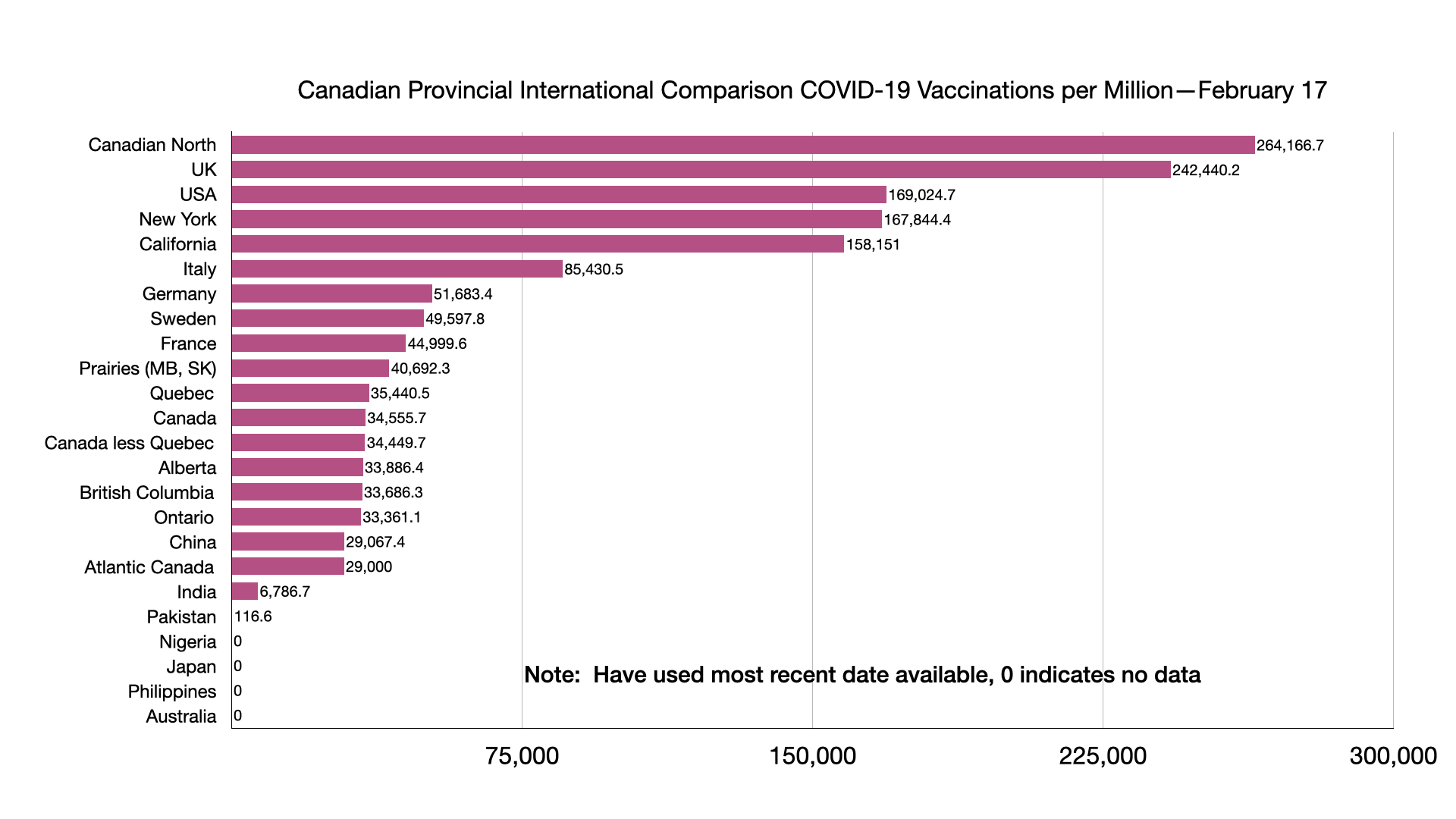
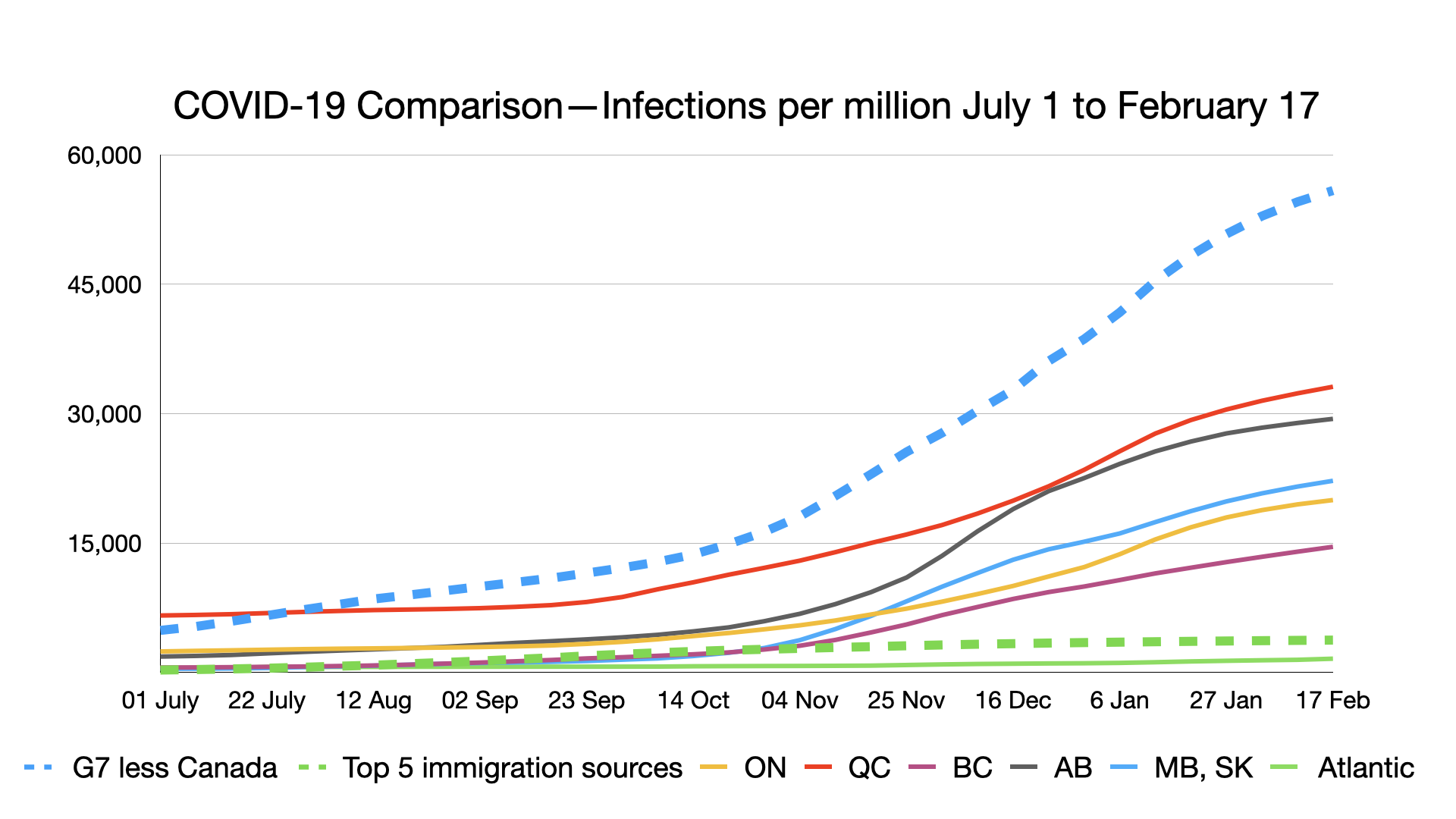
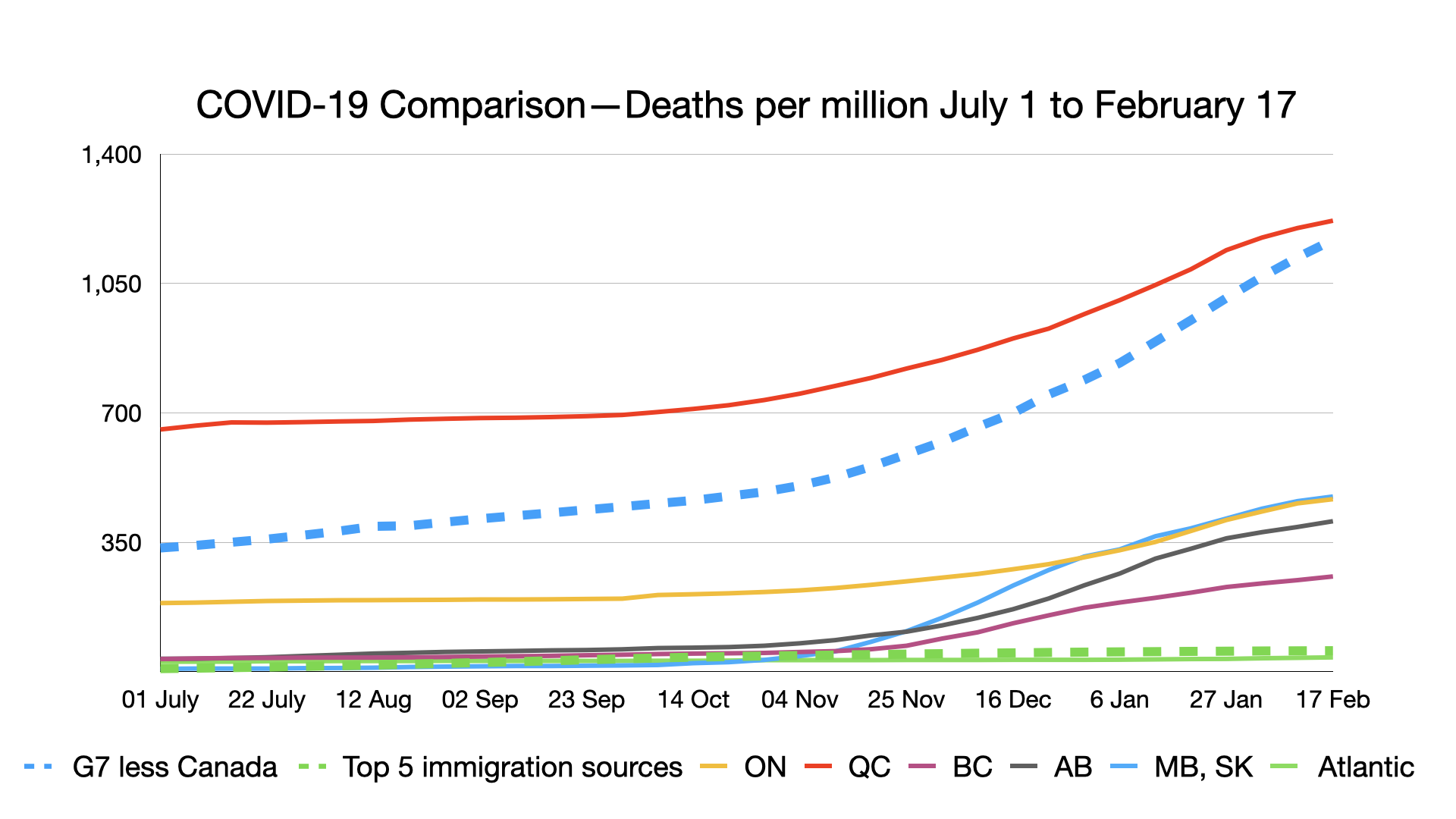
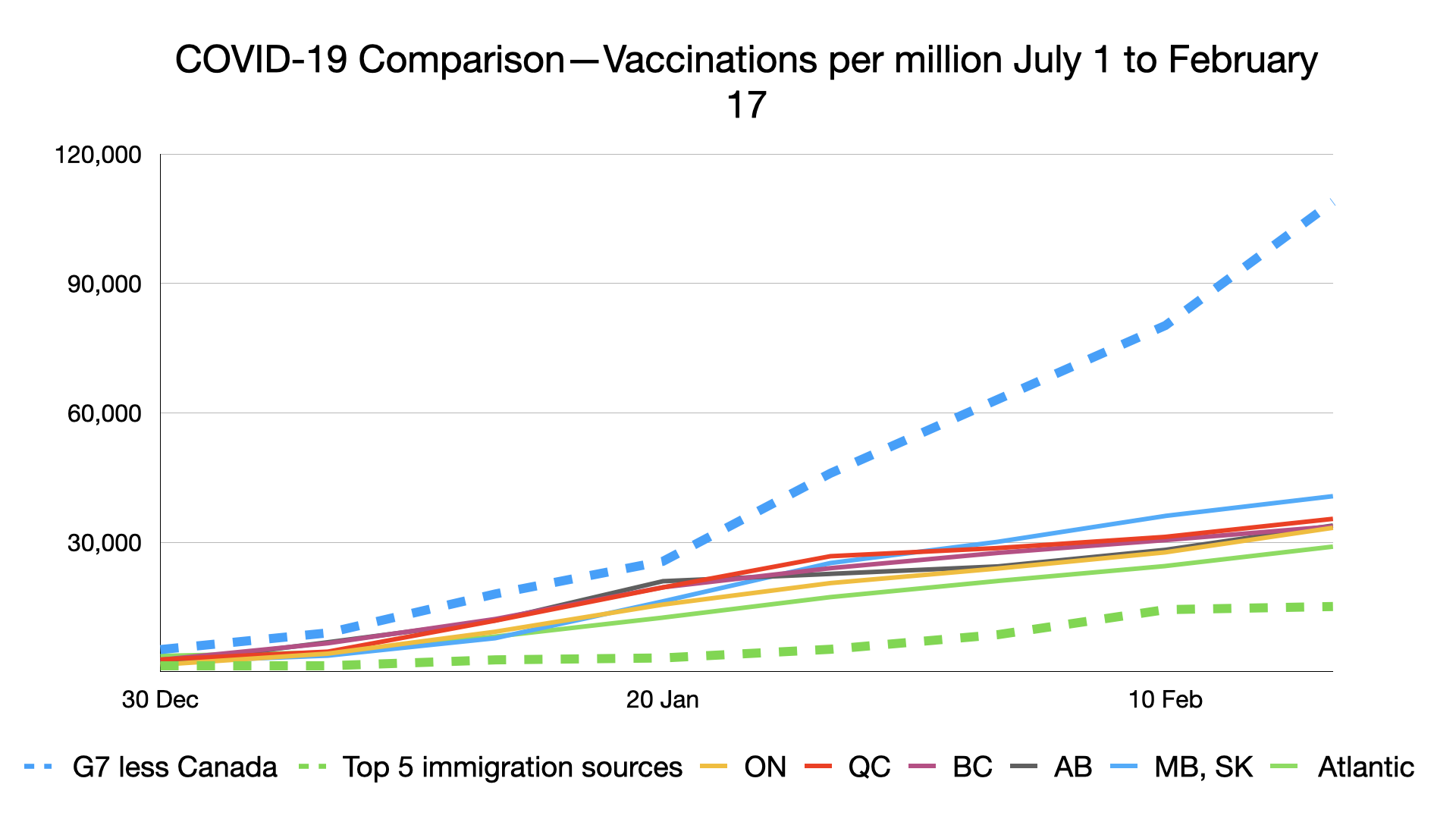
#COVID-19: Comparing provinces with other countries 17 February Update

The latest charts, compiled 17 February.

Vaccinations: The gap between all G7 countries save Japan continues to grow given the pause in deliveries to Canada, with the notable exception of the Canadian North.

Trendline charts

Infections per million: Alberta continues to be controlling the virus better than Quebec with an overall flattening of growth.

Deaths per million: While Canadian provinces are starting to flatten the curve, G7 has yet to see a flattening.

Vaccinations per million: Gap between G7 and Canada, driven not only by the UK and USA, continues to widen.

Weekly

Infections per million: No relative change.

Deaths per million: Quebec ahead of France, Japan ahead of Pakistan.

COVID-19 Immigration Effects December 2020

With the release of all December 2020 datasets, I have updated my slides showing the impact of COVID-19 on immigration to Canada. Slides 3 and 4 have the highlights.

The dramatic decrease in immigration and related programs in 2020 helps explain the government’s response, whether reasonable in the case of providing more flexibility in when and how to submit documents, flexibility for international students studying online from their country of origin, shift to online testing for citizenship; some more questionable as having express entry drafts with minimum score of 75 for invitations of apply (compared to the more reasonable scores of mid to high 400s:

Pdf: https://multiculturalmeanderings.com/wp-content/uploads/2021/02/covid-19-immigration-effects-key-slides-december-2020-draft.pdf):