#COVID-19: Comparing provinces with other countries 17 March Update

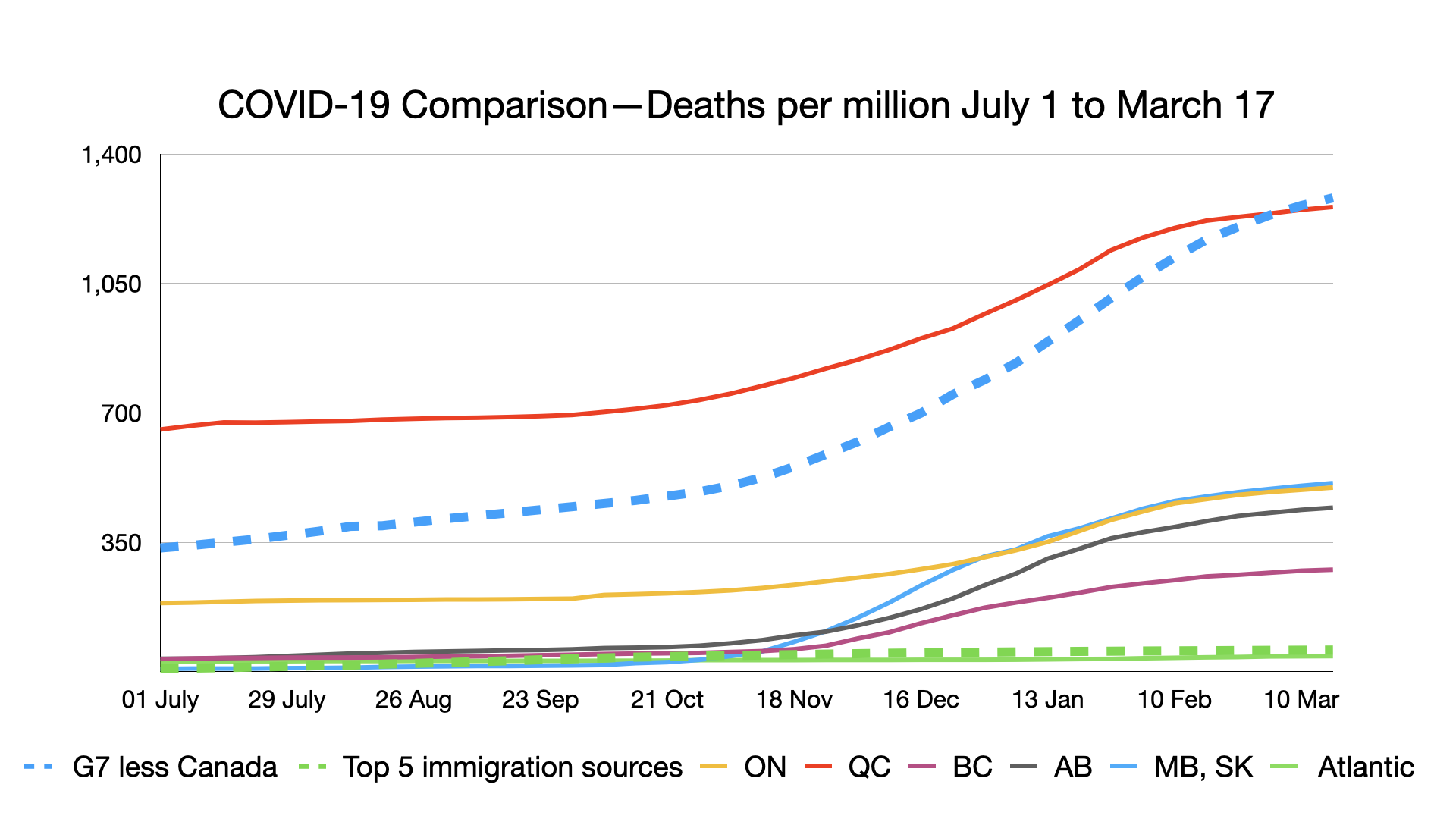
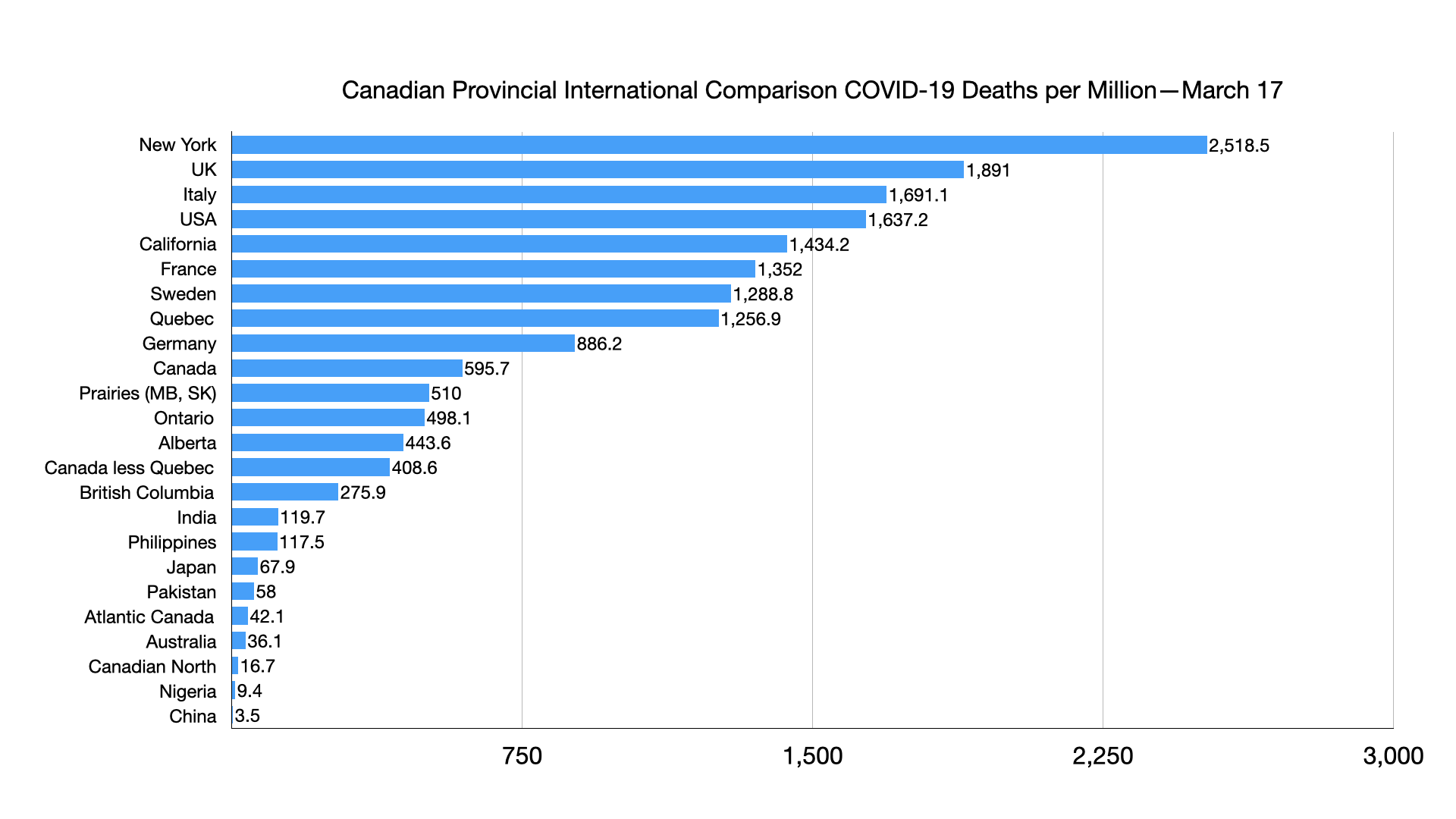
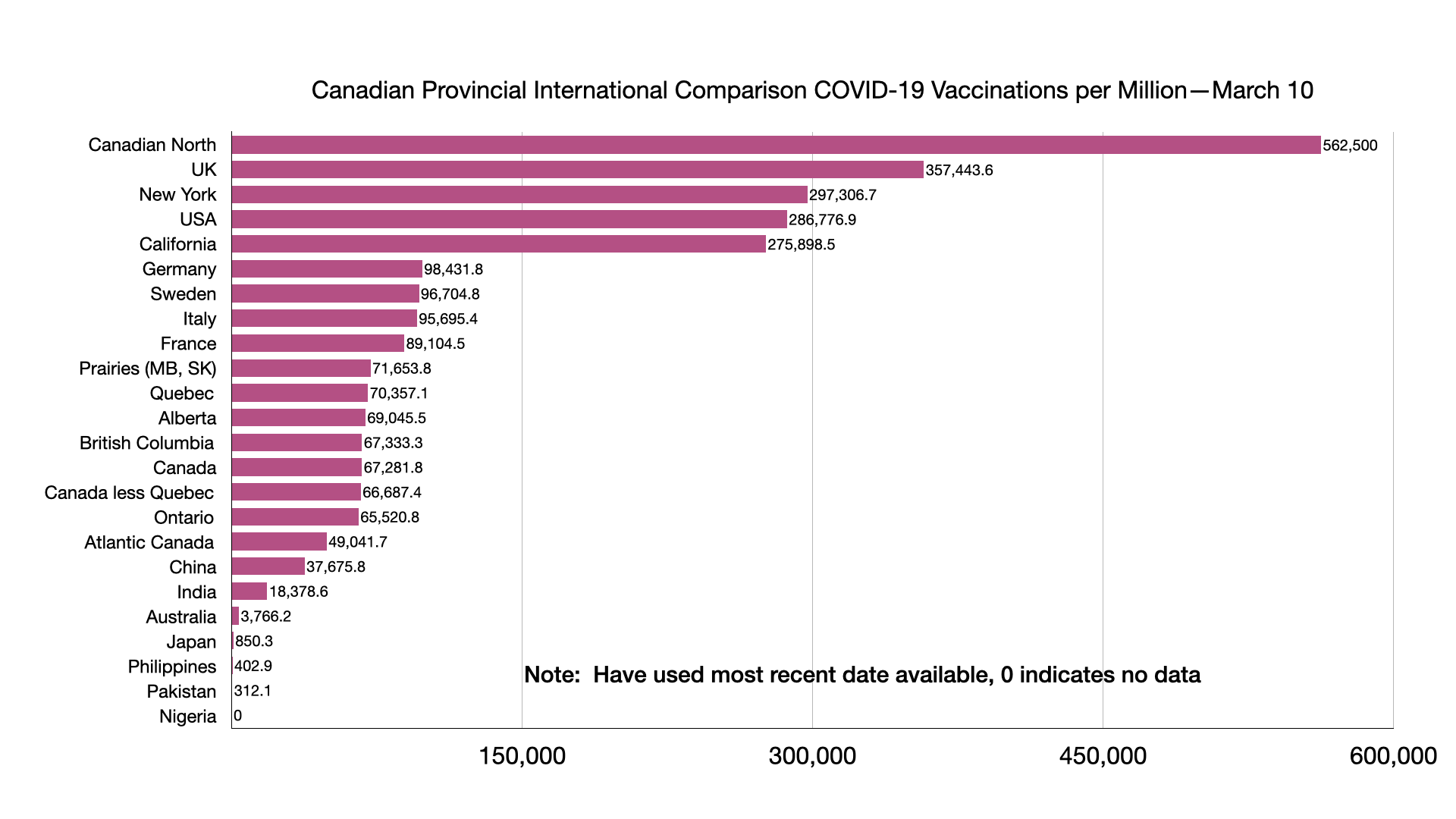
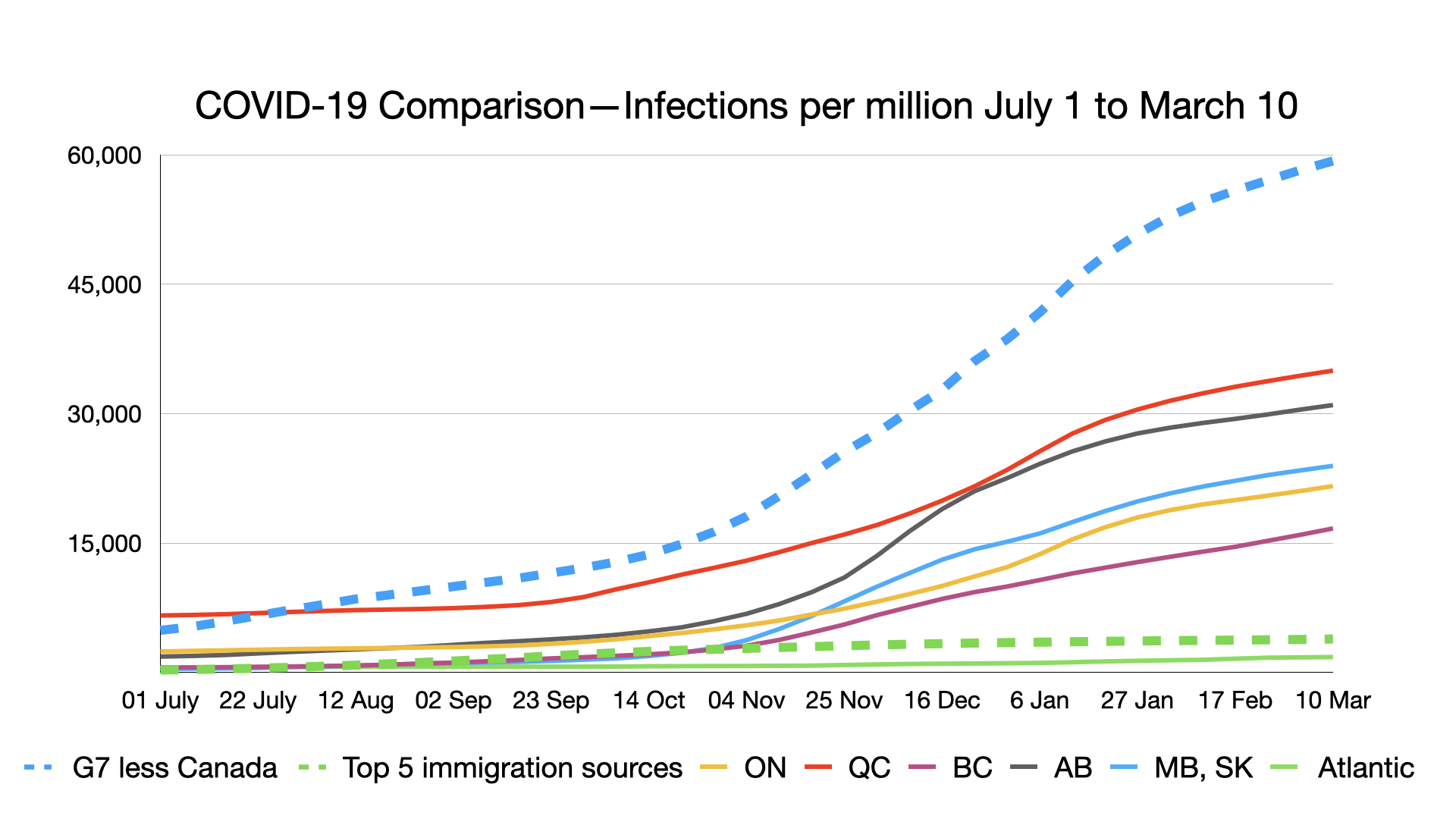
The latest charts, compiled 17 March.

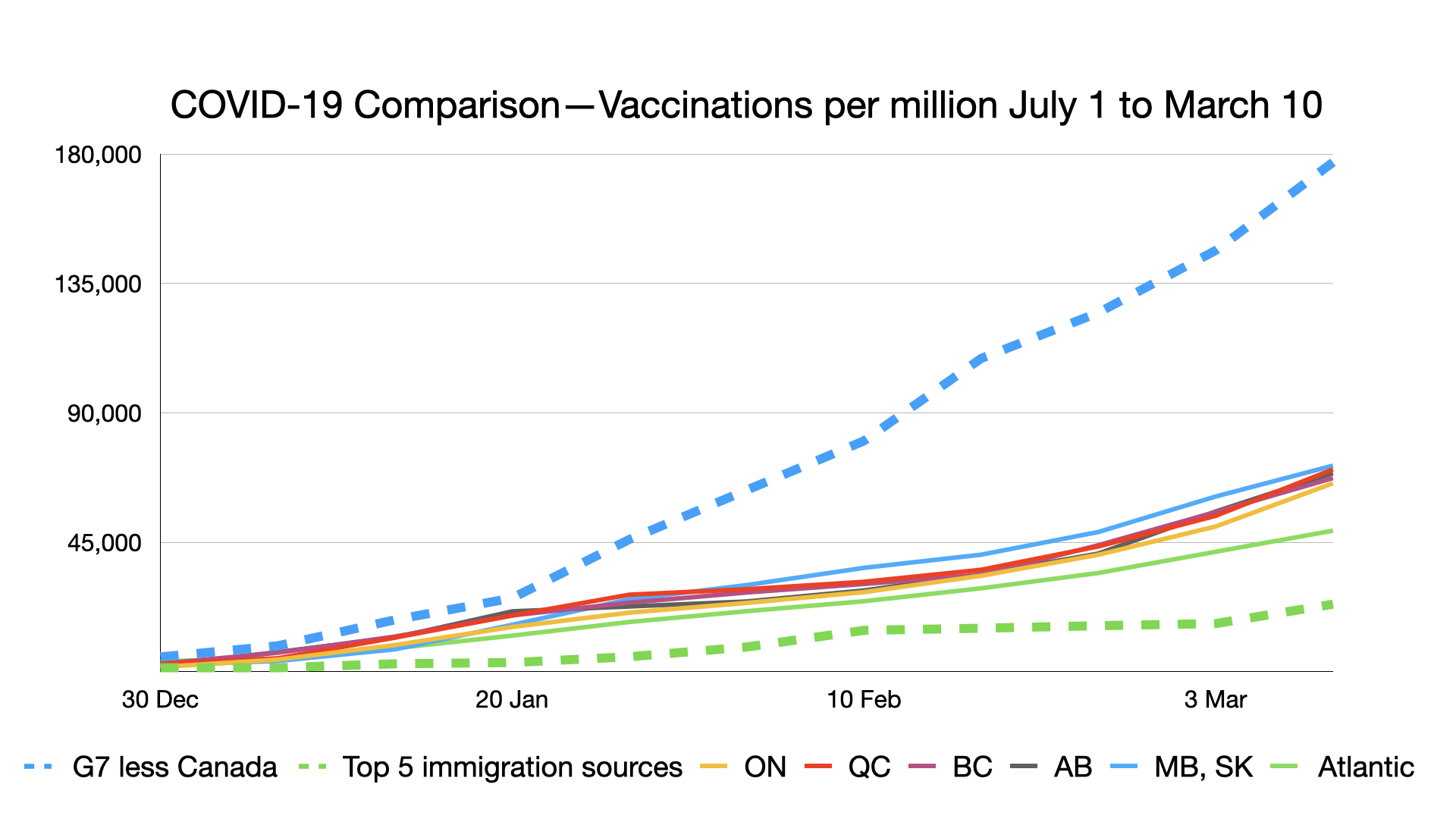
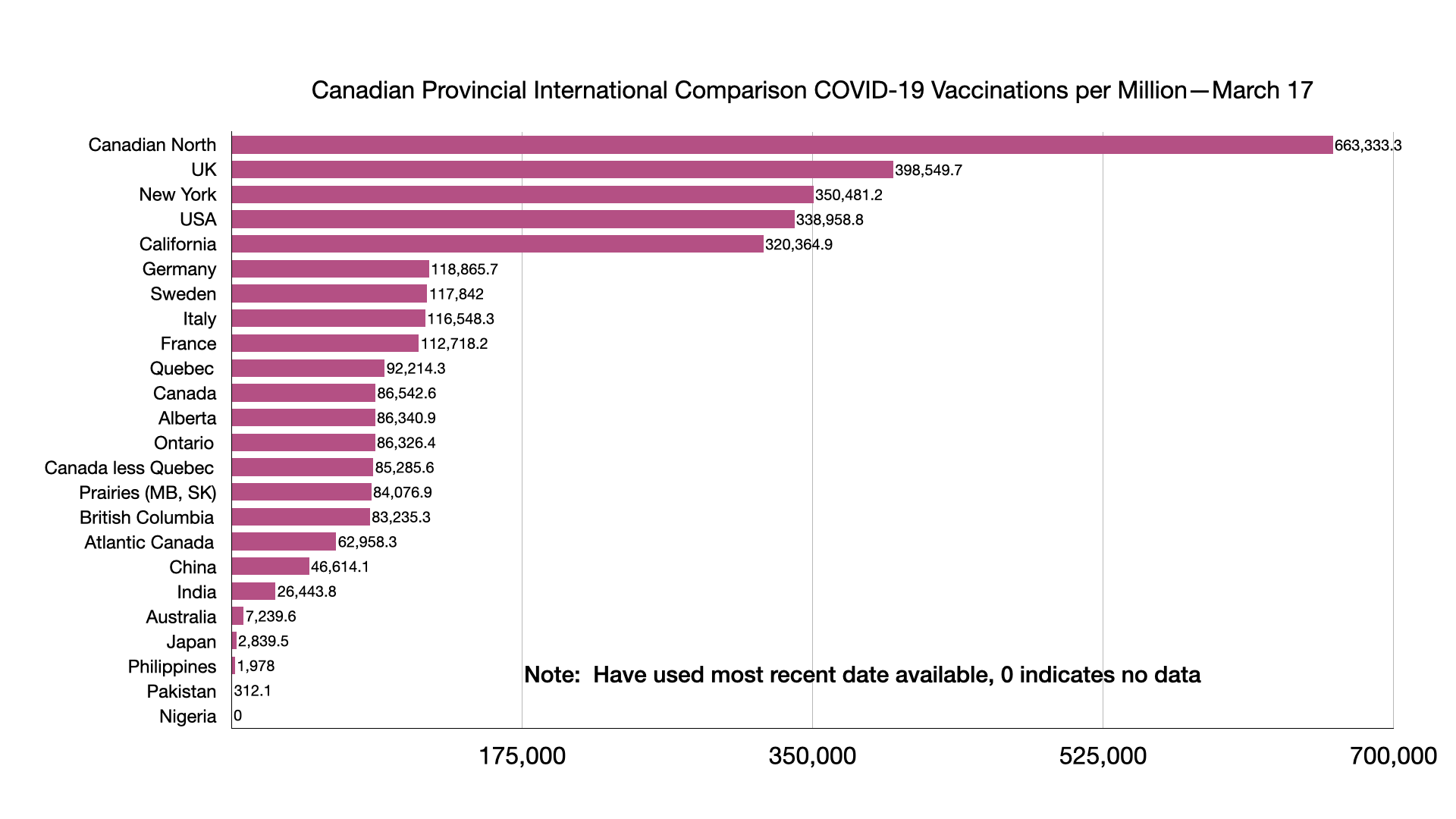
Vaccinations: The gap between all G7 countries save Japan continues to grow, all European countries ahead of Canada with no narrowing yet of the gap.

Trendline charts

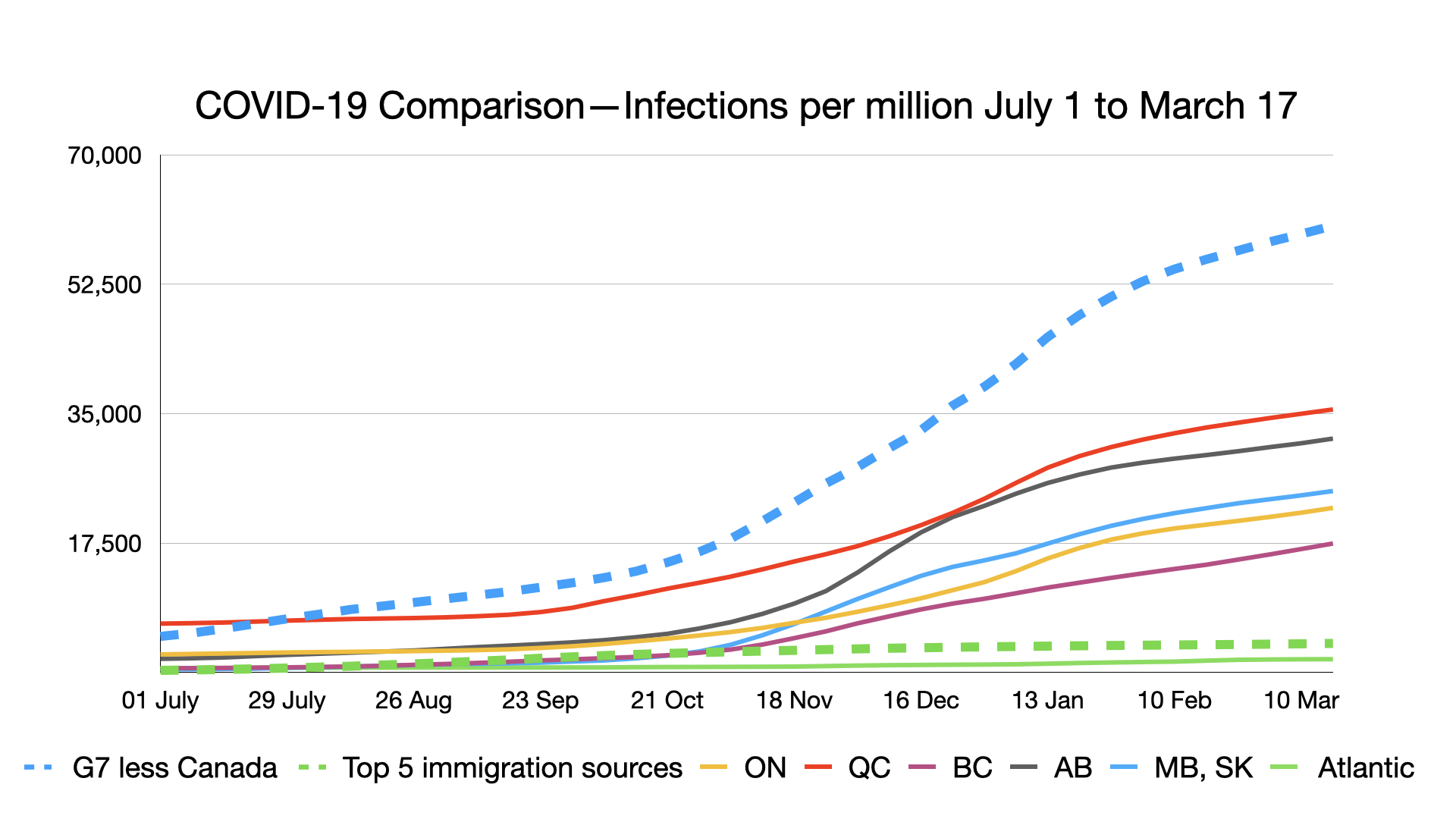
Infections per million: The overall trend of a flattened curve is seen in G7 countries and most provinces.

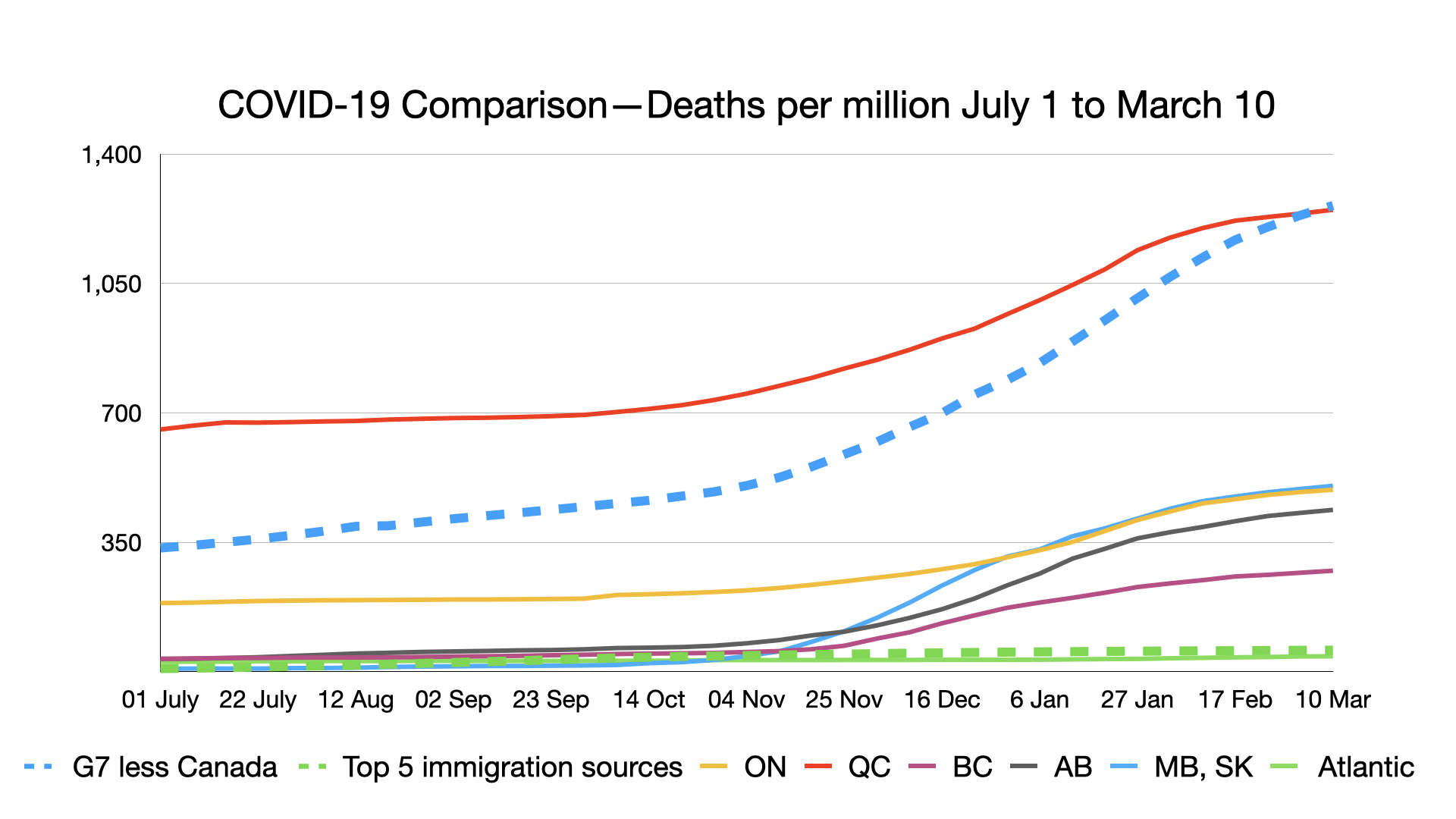
Deaths per million: Most Canadian provinces continue to flatten the curve, Quebec most dramatically. Overall G7 death rate have surpassed Quebec’s.

Vaccinations per million: Gap between G7 and Canada remains despite the arrival of more vaccines.

Weekly

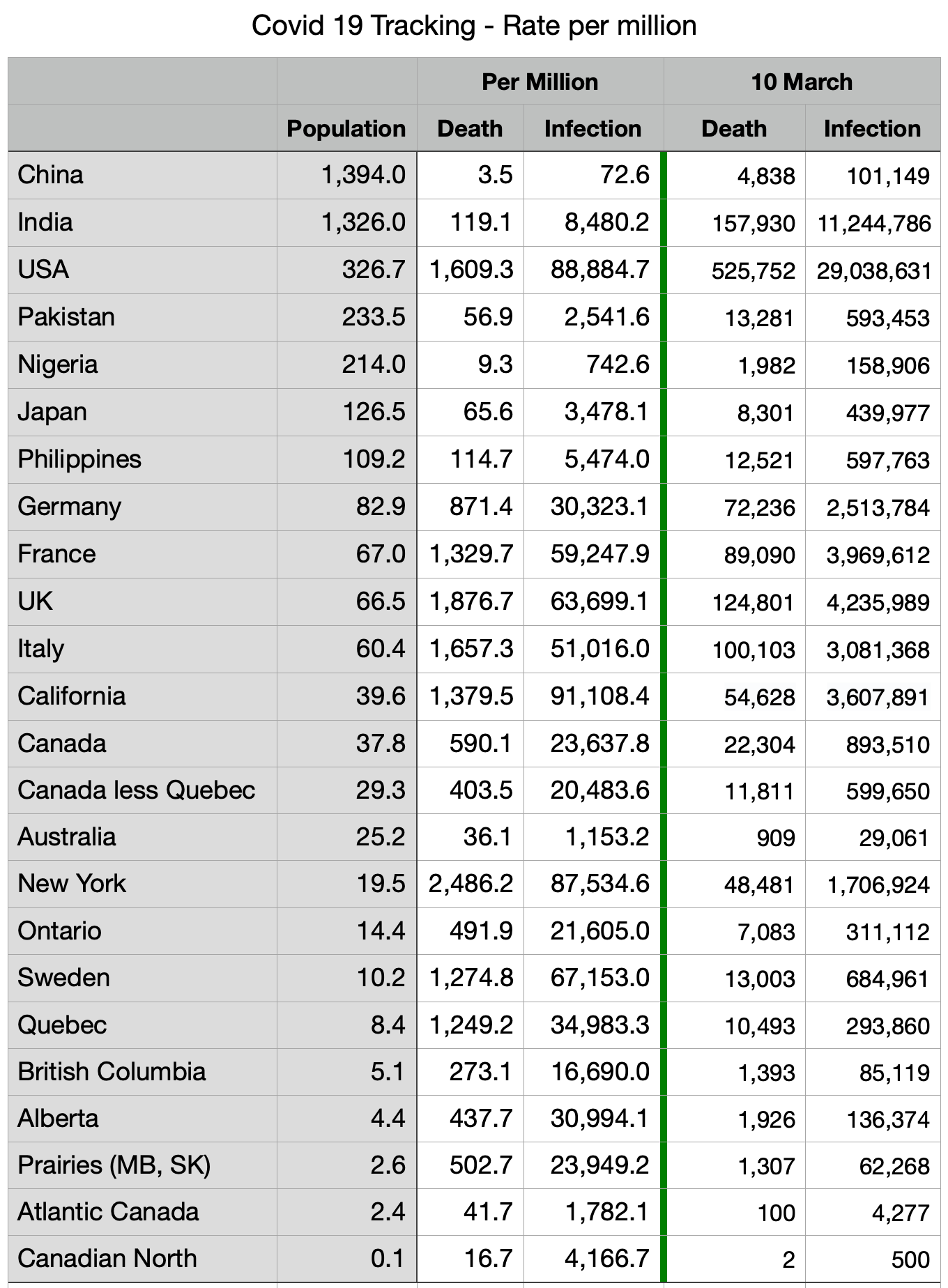
Infections per million: No relative change.

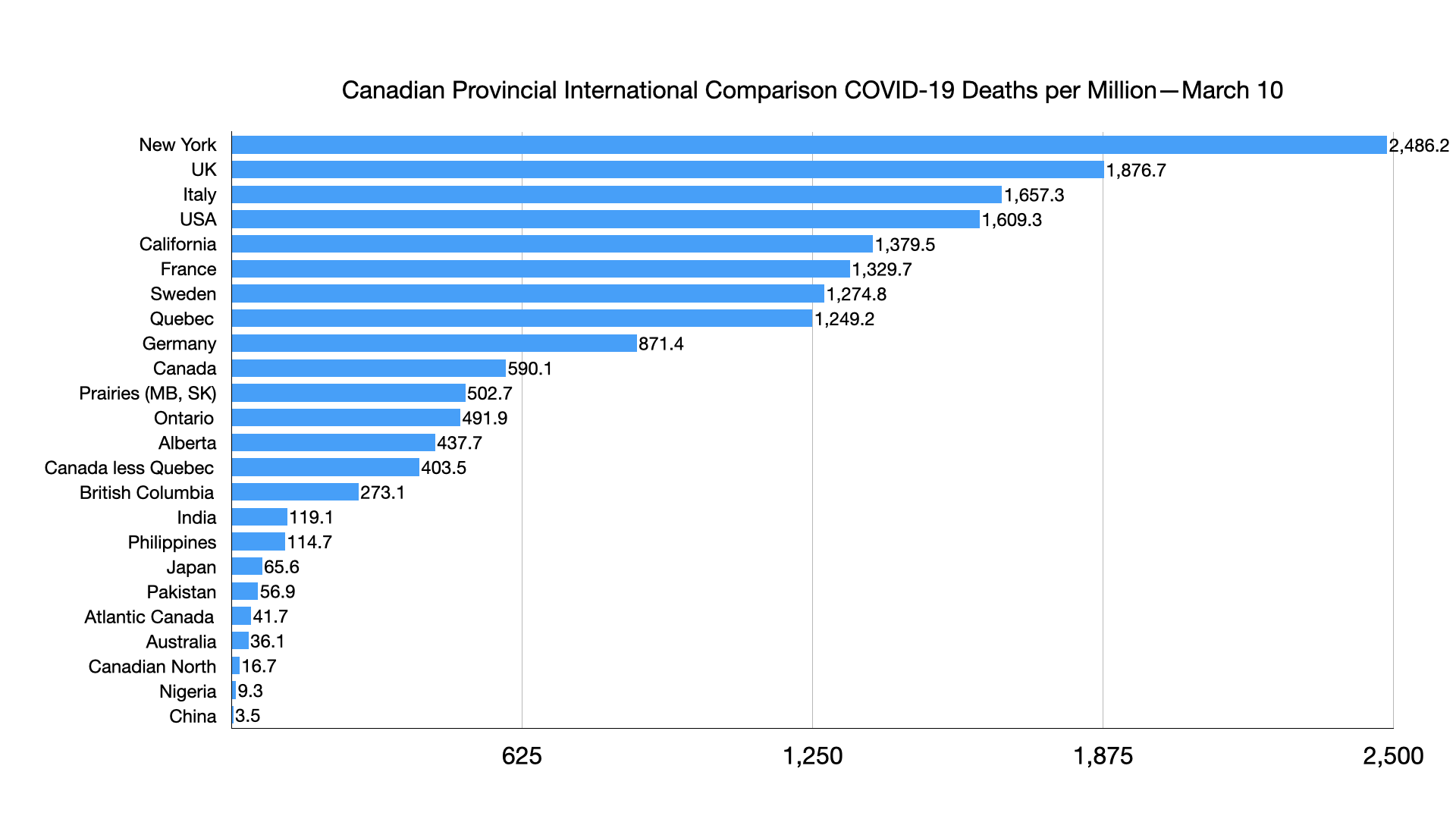
Deaths per million: No relative change 

Ottawa is right to attract more immigrants

The Conference Board pro-immigration level opinion. Money quote: “It’s prioritizing its immigration targets and devaluing the very high social-capital standards that underpin Canada’s system of economic immigration.”

As I have indicated a few times, I disagree with this approach as I think it understates, if not ignores, some of the inequality aspects of this policy:

In the short term, spending by immigrants can help fuel economic recovery, while the availability of immigrant labour will be essential in restoring the restaurant and hospitality sectors.

The federal government’s latest efforts to make it easier for immigrants with Canadian work experience to become permanent residents is another sign it’s committed to attracting more immigrants. 

Clearly, federal officials are convinced of the social, economic, and labour-market benefits of high immigration levels.

But what does their approach mean for the immigrants who will arrive at this challenging time? And what might this period teach us about our immigration system?

Earlier this month, Immigration, Refugees and Citizenship Canada invited 27,322 people to apply for permanent residency as part of the Express Entry program’s “Canadian experience” class. This draw from the pool of registered candidates was five to 10 times greater than the usual number of invitations made in a single draw.

The increase was made possible by significantly lowering the points threshold to qualify for an invitation to become a permanent resident. These points are awarded for a variety of social and human-capital reasons that align with long-term integration and economic resiliency, such as: education, age, knowledge of an official language, and experience living in Canada as a temporary resident.

This is the second major step by the federal government to ensure we continue to attract immigrants in large numbers, despite the COVID-19 pandemic. Last October, Ottawa updated its three-year immigration planwith record targets culminating in 421,000 arrivals in 2023.

The new targets were warmly received by immigration advocates who hoped the federal government wouldn’t follow the lead of many other countries by restricting immigration because of the pandemic and the recessions caused by its associated public-health measures.

However, even advocates are skeptical that Ottawa can attract 401,000 immigrants in 2021 — not because of a lack of demand, as Canada’s appeal as a destination for emigrants has only increased during the pandemic. Rather, they fear that continued travel restrictions, and the news that mass vaccinations won’t arrive in Canada until this fall at the earliest, will have a dampening effect on immigration.

Even in 2020, the government relied heavily on those already in Canada to boost invitations for permanent residency. Research by the Conference Board of Canada shows that 60 per cent more permanent-resident “arrivals” were already in Canada than in the previous two years.

The latest move is a doubling-down on this strategy, and leans heavily on temporary workers and students who are already in the country.

In this way, Ottawa is making a clear trade-off. It’s prioritizing its immigration targets and devaluing the very high social-capital standards that underpin Canada’s system of economic immigration.
So how do we assess this trade-off?

The long- and short-term benefits of maintaining high immigration levels are clear. In the long term, immigration fuels economic growth, improves our ratio of working-age Canadians to retirees, creates more tax revenue, and supplies skilled labour to key sectors. Economic and population modelling by the Conference Board of Canada demonstrates that more immigration benefits the economy.

In the short term, spending by immigrants can help fuel economic recovery, while the availability of immigrant labour will be essential in restoring the restaurant and hospitality sectors, for instance.

Therefore, the government has good reasons to want to get as close to its immigration targets as possible, despite the challenges of COVID. The pattern of relying on immigrants who have Canadian experience, but lower social capital, might continue as long as significant travel restrictions remain.

But this doesn’t mean immigrants who arrive during this period won’t be successful or contribute as much to the Canadian economy. Our economic modelling indicates that even immigrants with comparatively lower social-capital attributes — for instance, refugee and family-class immigrants — still make significant contributions to the economy, especially over time.

Also, most newcomers with experience living in Canada will already have Canadian work experience. This helps with future job searches, as employers tend to assess Canadian experience more favourably than foreign work experience. They will also arrive at jobs with a better understanding of Canadian culture and workplace norms, and greater facility with our official languages, neither of which may be their first.

There is great short- and long-term economic value in trying to reach Canada’s immigration targets. In closely observing the progress of immigrants who arrive during and just after the pandemic, we can learn a lot about the value of Canadian experience, compared to other social-capital factors.

The key is not to let individual immigrants suffer for the sake of Canada’s economy and our understanding of the integration process. They should be monitored closely, and both government and the immigration sector should be prepared to offer additional support if they struggle.
Source: https://go.conferenceboard.ca/MDk0LUVHRi02MzkAAAF71qV7cSskUNcrhiS4-30l_NQZjeNl-F2yhUwu_YEwPrJPoUe8DYze02tYZtddvE27AJPjm1k=

How to Reach the Unvaccinated: To counter online misinformation, it helps to knock on doors.

Of note, likely similar in Canada:

What does it take to get credible information about the coronavirus vaccine, and the vaccines themselves, to more people?

My colleague Sheera Frenkel spoke to experts and followed a community group as it went door to door in an ethnically diverse neighborhood in Northern California to understand the reasons behind the low vaccination rates for Black and Hispanic Americanscompared with non-Hispanic white people.

What Sheera found, as she detailed in an article on Wednesday, was how online vaccine myths reinforce people’s fears and the ways that personal outreach and easier access to doses can make a big difference.

Shira: What surprised you from your reporting?

Sheera: One question I was trying to answer was whether the incorrect narratives floating around online about the vaccines — that they change people’s DNA or are a means of government control — were reaching Black and Hispanic communities and other people of color in the real world. I heard false information like that firsthand. It was eye opening.

The other surprise was how effective it was for someone to stand on a person’s doorstep and talk about their own experience getting a coronavirus vaccine and answer questions. The outreach group talked to each household for half an hour or longer sometimes. That may make more of a difference than any online health campaign ever could.

But it’s laborious to go door to door. Can reliable information ever travel as far and fast as misinformation?

Internet platforms amplify misinformation, and countering it isn’t simple. It takes more than a celebrity posting a vaccine selfie on Instagram.

Are we overstating the impact of vaccine hesitancy? The pediatrician Rhea Boyd recently wrote in our Opinion section that the primary barrier to Covid-19 vaccinations among Black Americans is a lack of access, not wariness about getting the shot.

It’s both.

Two things struck me from my reporting. First, false vaccine information is persuasive because it builds on something that people know to be true: The medical community has mistreatedpeople of color, and the bias continues. And second, vaccine hesitancy is different in each community.

That makes reaching Black Americans different than reaching new immigrants who are reading articles in Vietnamese or Chinese that make them concerned about vaccine safety. It’s an opportunity for community leaders to address what’s keeping people who trust them from getting vaccinated.YOUR CORONAVIRUS TRACKER: We’ll send you the latest data for places you care about each day.Sign Up

You’ve written about Russian propaganda in Latin America that fanned concerns about European and American coronavirus vaccines. Is that also reaching people in the United States?

Yes. Two Russian state-backed media networks, Sputnik and Russia Today, have among the most popular Spanish-language Facebook pages in the world. Their news reaches Spanish speakers in the United States.

I heard people ask in my reporting, Why should they get an American vaccine when the Russian one is better? (Those articles tend to cite real statistics but in misleading contexts.) I asked one man I met, George Rodriguez, where he had read that, and we figured out that it was from one of those Russian news sites.

What has been effective at increasing the coronavirus vaccination rates among Black and Latino Americans?

It seems effective to hold walk-in vaccination clinics. People can show up, ask questions they have and get a shot.

What about Republicans? Surveysshow that they are among the wariest Americans about coronavirus vaccines.

There have been concerns among some Republicans that people will be forced to get vaccinated, but that isn’t happening. 

It’s clear that among Republicans and other groups with vaccine hesitancy, once we know more people who are getting vaccinated, we’re more willing to do it, too.

How do you see this moving forward?

In just the last few weeks, I’ve gotten more optimistic about closing the vaccination gap. There have been huge strides in reaching people, getting those walk-in vaccination clinics open or taking vaccines to people, and addressing people’s concerns.

Source: https://www.nytimes.com/2021/03/10/technology/vaccine-misinformation-access.html

Migrant workers need priority access to the COVID-19 vaccine

While some of the specific recommendations have merit (e.g., free access to tests and vaccines, not needing a health card to access vaccines), others are either unnecessary or raise broader policy issues.

For example, a cursory search of PHAC and other public health sites indicates COVID information being available in many languages.

Should vaccination be subject to consent for workers in vulnerable settings or not, given the risks to other workers?

While their advocacy for a number of paid sick days makes sense, other advocacy – permanent residency status, full coverage under labour and social protection laws, family reunification and an effective right to collective bargaining – raise broader policy issues that need more reflection and analysis:

Their general points, attentive information in migrant worker languages (some already being done

Last year, in the first COVID-19 wave, 12% of migrant agricultural workers in Ontario were infected with the virus after arriving in Canada, and three men died. Migrant agricultural workers’ incidence of infection exceeded other high risk occupational categories like front line health care workers. But as the 2021 agricultural season quickly approaches, Canada still has no plan to ensure these essential workers receive priority, free and safe access to the COVID-19 vaccine.

As of 31 January, 5,400 migrant agricultural workers were already in Canada. Over 50,000 more will be returning across the country soon. Media attention waned after the fall harvest season, but COVID-19 outbreaks have continued on farms every month since – including 53 since the end of October.

The virus spreads quickly on farms because migrant workers typically live in crowded employer-provided congregate living quarters. Without a plan to give these workers priority access to the COVID-19 vaccines, we stand on the verge of another season where essential workers will risk their lives to feed Canadians.

Governments promised to increase health and safety inspections for agricultural workers. However, a blitz by health and safety officers this month revealed that nearly one-fifth of Ontario farms are not compliant with COVID safety protocols. Action is required urgently to prevent further tragedy.

Agricultural workers are only the most visible of the 85,000 low-wage migrant workers who come to Canada under the Temporary Foreign Worker Program each year. Other migrant workers perform essential jobs delivering in-home care to children, the elderly and people with disabilities as well as working in meat processing plants, warehouses, food preparation, grocery stores, cleaning services, delivery services, construction and many other jobs that keep the economy running. Tens of thousands more workers are undocumented.

Whether they have temporary or undocumented status, migrant workers need priority access to vaccines because most live in congregate settings and work in spaces or roles that preclude physical distancing, putting them at high risk for infection.

Vaccine access must be delivered with keen awareness of the imbalance of power that puts migrant workers at risk of coercion. Access to vaccines must be free, informed, consensual and safe. Migrant agricultural workers from rural Mexico report travelling a day or more into urban centres to take pre-departure COVID-19 tests for which they have been charged up to $350. They must then take another test after arriving in Canada. This is prohibitive for minimum wage workers. It puts them in debt before they start work in Canada which increases the risk of exploitation.

Here are four steps for government to take to protect workers in accessing the vaccine.

First, migrant workers need access to free COVID-19 testing and vaccines. Workers must also be able to receive both of the required vaccine doses while they are in Canada. Unless this is guaranteed, they may return to their home country not fully vaccinated and without access to the same or any vaccine to complete their immunization.

Second, public education about the vaccines must be delivered directly to migrant workers in their own language. Many racialized migrant workers come from communities that distrust the medical system because of longstanding histories of systemic racism in healthcare. Migrant agricultural workers in southern Ontario have particular reasons to be wary after they were subjected to mass DNA testing by police due to racial profiling in 2013.

Third, migrant workers must be able to access vaccines on the basis of informed consent and that consent must be real. Workers must be able to freely agree to or decline a vaccine. Migrant workers’ precarious immigration status and dependence on their employers due to their employer-specific work permits and housing arrangements must not be leveraged to coerce migrant workers into mandatory vaccination.

Fourth, migrant workers must be able to access vaccines in a way that is safe and attentive to their precarious status. Many migrant workers do not have health cards or coverage under provincial healthcare programs due to the nature of their work permit, being between contracts or being on implied status awaiting their permanent residency. Having a health card must not be a precondition for vaccine access.

At the same time, undocumented migrant workers must be able to access vaccines without fear that their immigration status will be disclosed to the Canadian Border Services Agency. Coming forward to protect themselves, their co-workers and the broader community during a global pandemic must not put them at risk of detention or deportation.

But vaccination alone will not eliminate the risks that migrant workers face.

Like 70% of low wage workers, most migrant workers do not have the right to paid sick days. Governments must move immediately to legislate, on a permanent basis, a minimum of 7 paid sick days with an additional 14 paid sick days during a public health crisis. Unless workers can stay home without penalty when they are ill, poverty and the risk of being fired will force them to keep working. At all times, going to work while sick increases the probability of disease spreading. During the pandemic, it means those who are already most marginalized will continue to become ill and die in disproportionate numbers.

Over the past year, the pandemic has laid bare the underlying structures that drive social and economic inequality in our society. While prioritizing migrant worker access to COVID-19 vaccines is of immediate urgency, real security won’t exist until governments address the laws and policies under Canada’s labour migration programs that make migrant workers exploitable. Permanent residency status, full coverage under labour and social protection laws, family reunification and an effective right to collective bargaining would go a long to more lasting security.

Source: https://www.theglobeandmail.com/canada/article-migrant-workers-need-priority-access-to-the-covid-19-vaccine/

More racially diverse areas reported much higher numbers of COVID-19 deaths: StatsCan

Confirmation of what we have seen in other studies with respect to minorities being more affected given many are employed in healthcare and other front line occupations:

The most racially diverse neighbourhoods in Canada reported COVID-19 mortality rates more than twice as high as those reported by districts that are overwhelmingly white, according to new data released Wednesday by Statistics Canada.

The report, titled Year in Review, lays bare the uneven effects of this pandemic on Canadians of different racial backgrounds.

The data affirms what some Canadians have reported anecdotally for months: Black people in particular have been far more likely to succumb to the virus than members of other groups.

Source: More racially diverse areas reported much higher numbers of COVID-19 deaths: StatsCan

StatCan report: https://www150.statcan.gc.ca/n1/pub/11-631-x/11-631-x2021001-eng.htm

#COVID-19: Comparing provinces with other countries 10 March Update

The latest charts, compiled 10 March (note international vaccination data is latest available). One year after the start of Canadian lockdowns.

Vaccinations: The gap between all G7 countries save Japan continues to grow, all European countries slightly ahead of Canada with no narrowing yet of the gap.

Trendline charts

Infections per million: The overall trend of a flattening curve is seen in G7 countries with limited flattening in Canada.

Deaths per million: Most Canadian provinces continue to flatten the curve, Quebec most dramatically. Overall G7 death rate surpassing Quebec.

Vaccinations per million: Gap between G7 and Canada continues to grow despite the arrival of more vaccines.

Weekly

Infections per million: No relative change.

Deaths per million: No relative change 

COVID-19: Ethnic Media Lessons from 2020 for an Inclusive Recovery

Useful and informative summary and report:

Multilingual International Research and Ethnic Media Services presents its year long research into ethnic media coverage on the COVID-19 pandemic in 2020 in the form of five articles. These articles were published or excerpted by New Canadian Media as a result of support from Canadian Heritage through its Digital Citizen Contribution Program. We would like to thank New Canadian Media for giving us the opportunity to write these pieces.

The white paper provides an overview of the lessons learned in 2020 from engaging with diverse communities in the fight against the COVID-19, which may useful in 2021 as the pandemic continues. In order to capture coverage needed to produce this white paper, we spent a year regularly monitoring over 800 ethnic media outlets across Canada in 30+ language groups.

The 30+ language groups/communities whose ethnic media we tracked include Arabic, Armenian, Bengali, Caribbean, Chinese (incl. Cantonese & Mandarin), Farsi, Filipino, German, Greek, Gujarati, Hindi, Italian, Japanese, Jewish, Korean, Muslim, Polish, Portuguese, Punjabi, Romanian, Russian, Serbian, Somali, South Asian, Spanish, Sri Lankan, Tamil, Turkish, Ukrainian, Urdu and Vietnamese.

The ethnic media outlets we tracked spanned the four mediums of print, web, radio and TV and were mostly based in the metropolitan areas of Vancouver, Edmonton, Calgary, Winnipeg, Toronto, Ottawa and Montreal. These urban centres attract the most immigrants each year, thus resulting in a concentration of ethnic media outlets in Canada’s most populated cities.

The actionable intelligence gained as a result of our ethnic media research provides insight into the impact of COVID-19 on newcomers and racialized communities, who have been some of the most affected by the pandemic. Out of the 1,130 translated ethnic media story summaries we produced in 2020 for this report, 169 were focused on mental health, 193 on the economic impact of COVID-19, 350 on immigration and 118 on the culture vs. economy debate as a cause of the prevalence of COVID-19.

 Our white paper is divided into five pieces, four written by MIREMS Editor-in-Chief Silke Reichrath and one by MIREMS President Andres Machalski. The following are brief abstracts:

 1) Media Representation of Newcomer Communities with High COVID-19 Rates

This channel is extremely influential in the fight against social media disinformation among newcomers. It shows these outlets fulfill a very real need to translate government and expert messaging into culturally and linguistically relevant formats and in adding information from the grassroots. This channel is extremely influential in the fight against social media disinformation among newcomers 

2) Mental Health and Domestic Violence in the Ethnic Media

Stigma around mental health challenges is still widespread in newcomer communities and many newcomers are not aware of available supports through community organizations and settlement service providers, especially now that programs have moved online. In this context, ethnic media have a significant role to play in raising awareness around mental health issues, the impacts of the pandemic on different segments of the population, and the services available to them.

3) Economic Impact of COVID-19 on Immigration Communities

The ethnic media have fulfilled a valuable role during the pandemic in keeping their audiences informed about the latest public health guidelines regarding business openings and closures, and about benefits and aid programs available from the three levels of government. These outlets have raised awareness in general about how the pandemic is affecting the national and local economy, have featured charitable initiatives by the community, and have encouraged community members to support local businesses by buying local, particularly from smaller businesses. Recovery is only a matter of time, and ethnic media can be expected to do their share in reflecting community concerns and advocating for equity in the rebuilding process.

 Ethnic media have been instrumental in highlighting community initiatives to counteract the pandemic spread and in giving voice to grassroots opinions. It shows these outlets fulfill a very real need to translate government and expert messaging into culturally and linguistically relevant formats and in adding information from the grassroots.

  4) COVID-19 Impact on Immigration – Analysis

Over the pandemic year of 2020, the ethnic media has been instrumental in reporting on and clarifying government policy, processes and programs. Ethnic media coverage focused on the impact of COVID on immigration levels, border closures and travel restrictions, visa extensions for temporary residents stranded in Canada, work permit regulations, farm worker rights and COVID safety protocols, COVID-related accommodations for international students, modifications to the Express Entry draws, and the guardian angel program for front-line care providers. The ethnic media also documented the unique challenges different migrant constituencies face, reflecting the lived experiences of the various newcomer communities.

5) The Role of Ethnic Media in the War Against Pandemic, Pandemonium, Poverty and Panic

The ethnic media undeniably exists and is part of the communications fabric of our society, but it is one that is often ignored, despite its key positioning as a conduit to and from diverse communities. These outlets are essential to the central position diverse communications will play in restoring the social cohesion needed to overcome not only the COVID-19 virus, but its fall out. Canadian corporate and government leaders need to recognize the ethnic media as a key asset in the fight against COVID-19, which is at the same time a fight against social disruption, poverty, and mental anguish.

Source: http://www.mirems.com/uploads/8/1/4/2/8142628/covid-19_-ethnic_media_lessons_from_2020-_white_paper.pdf

Women at risk of long-term work disruption as pandemic alters jobs market, RBC warns [also visible minorities and immigrants]

More on the “she-cession” and “imm-cession:”

Women in Canada are at risk of prolonged unemployment as the COVID-19 pandemic accelerates structural changes to the job market, RBC Economics warned Thursday.

The health crisis has dealt uneven blows to the labour market – and often, to the greater detriment of women. There’s been a substantial increase in the number of women who are jobless for six-plus months, while many have dropped out of the labour force entirely.

At the same time, the pandemic is forcing many companies to adopt new technologies sooner than planned, while some consumer spending habits may have shifted permanently, the RBC report said. That could spell trouble for jobs at risk of automation, and in particular, for the women who staff the service industries most affected by health restrictions.

“As we reopen, the economy is changing,” Dawn Desjardins, deputy chief economist at Royal Bank of Canada and one of the report’s authors, said in an interview. “We need all hands on deck … in trying to get people re-engaged” in the labour market.

Using data from Statistics Canada, RBC pointed to a handful of indicators where women are lagging, and where the recovery process could prove challenging.

For instance, employment for women earning less than $800 weekly was down nearly 30 per cent from February, 2020, while for men it fell 24 per cent. Women have also sustained roughly two-thirds of the job losses in the struggling hospitality sector.

As well, nearly 100,000 women aged 20-plus have dropped out of the labour force – meaning they aren’t working or searching for a job – while fewer than 10,000 men have done so. Young and racialized women, female immigrants and mothers are among those who have suffered outsized work disruptions.

“The longer these women are out of the labour force, the greater the risk of skills erosion, which could potentially hamper their ability to get rehired or to transition to different roles as the economy evolves,” the report said.

Ms. Desjardins and economist Carrie Freestone wrote that accessible and targeted training is needed to help displaced workers, and that digital skills are crucial.

Such efforts could be unveiled in the federal government’s spring budget. Ottawa has said it will spend up to $100-billion over three years in fiscal stimulus, to help with the recovery process. And in a mandate letter sent to Employment Minister Carla Qualtrough in January, Prime Minister Justin Trudeau called for “the largest investment in Canadian history in training for workers.”

Much like RBC, the Bank of Canada has flagged concerns over structural changes to the job market. In a recent speech, Governor Tiff Macklem said automation helps companies become more productive and creates new work opportunities. But the pandemic has sped up the transformation, and that comes with collateral damage.

“Some of the jobs that have been lost during the pandemic will not return,” Mr. Macklem said. “Many low-wage jobs have a high potential of being automated. And some jobs that are disproportionally held by women and youth, such as retail salesperson and cashier, are also the kinds of jobs where the pandemic has accelerated structural change.”

The RBC report also called for “more options” in affordable child care. “But it’s no solution if [low-earning mothers] don’t have jobs to return to.”

Ultimately, Ms. Desjardins said Canada should be working toward women participating in the labour force at the same rates as men. It’s a gap that predates the pandemic, but if closed would result in a much larger and dynamic economy.

“The idea of women participating at the same level as men in the labour market, and what that can add to our economy – it just makes that pie bigger,” she said.

Source: https://www.theglobeandmail.com/business/article-women-at-risk-of-prolonged-unemployment-rbc-warns/

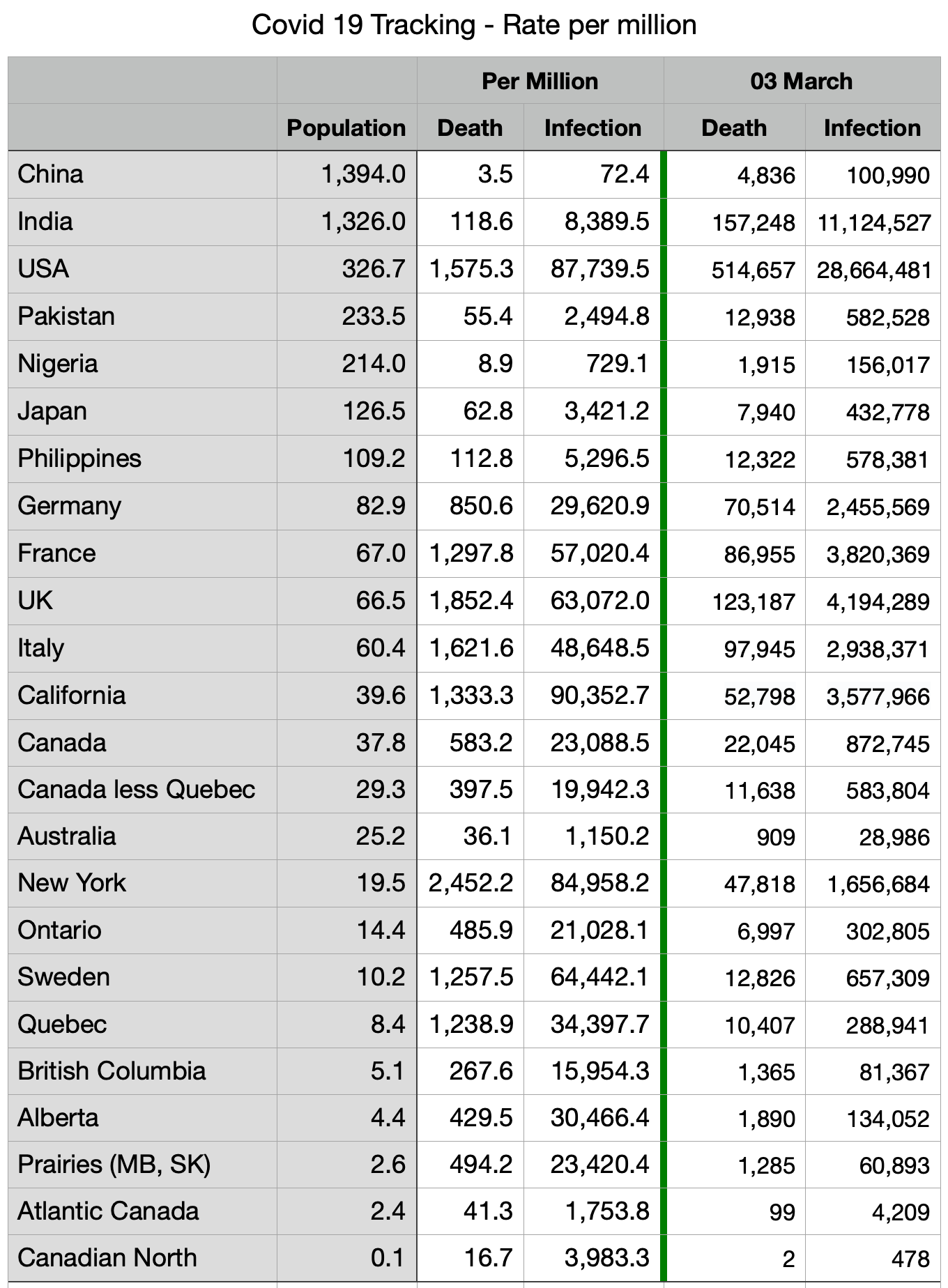
#COVID-19: Comparing provinces with other countries 3 March Update

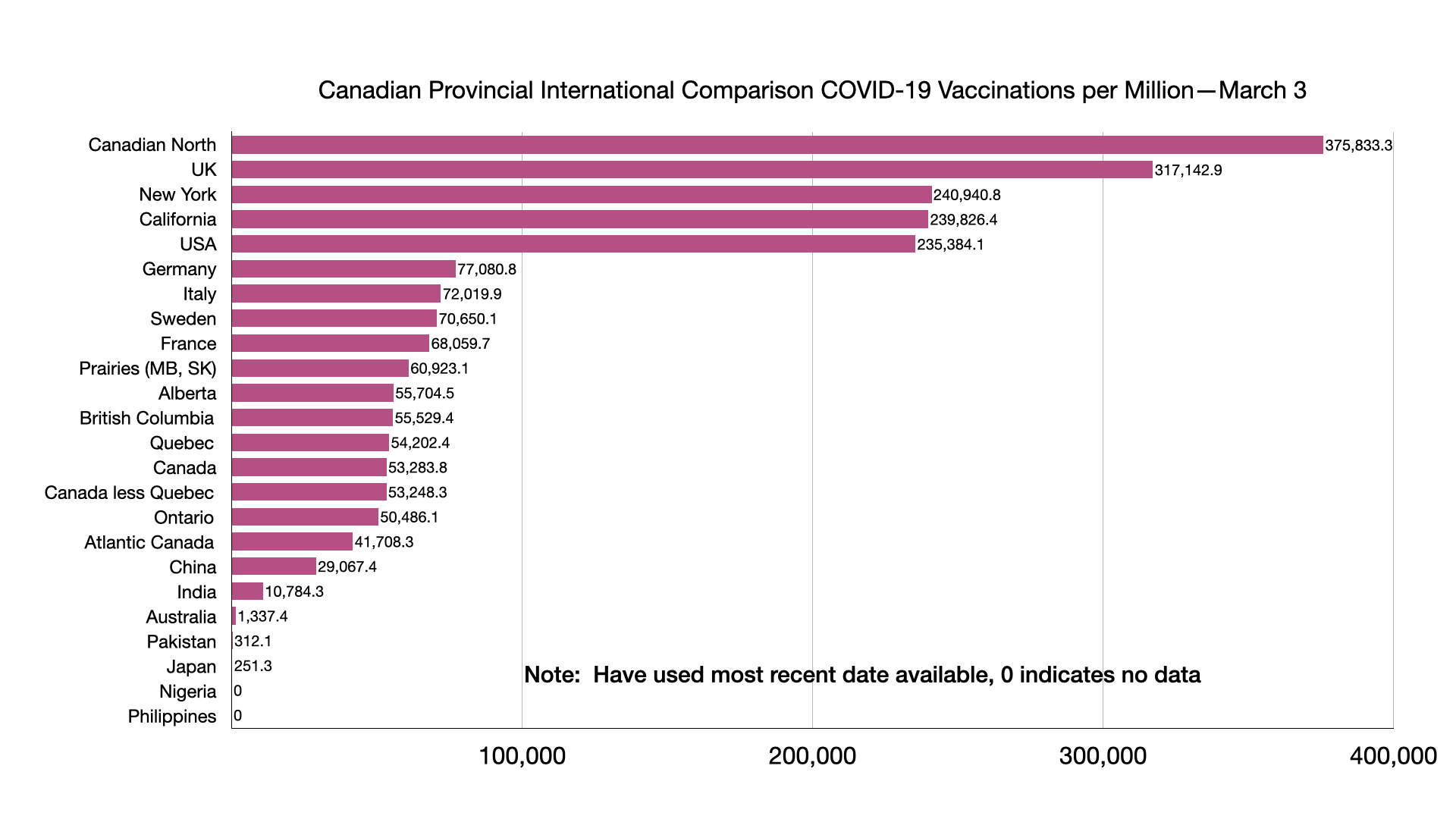
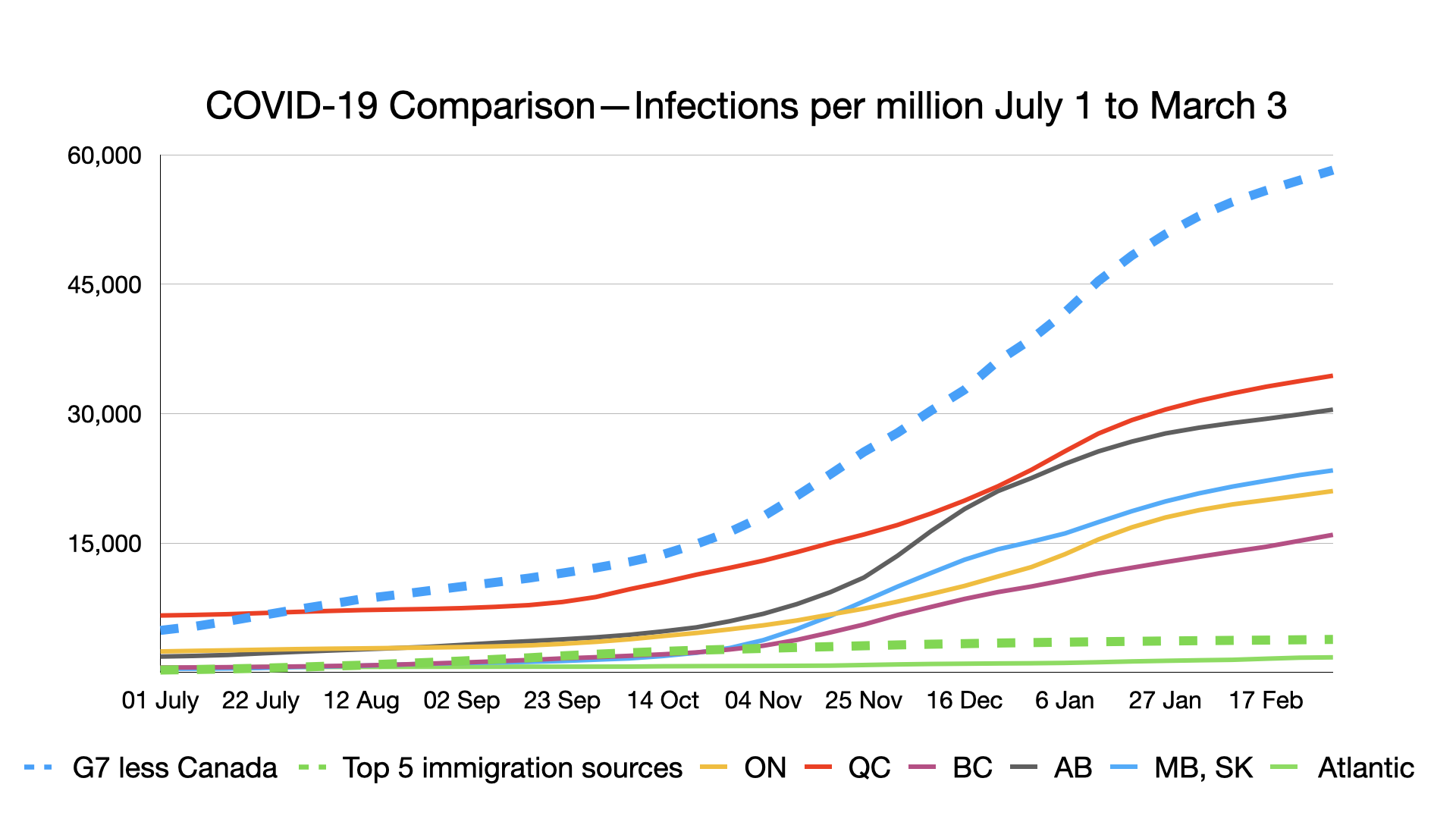
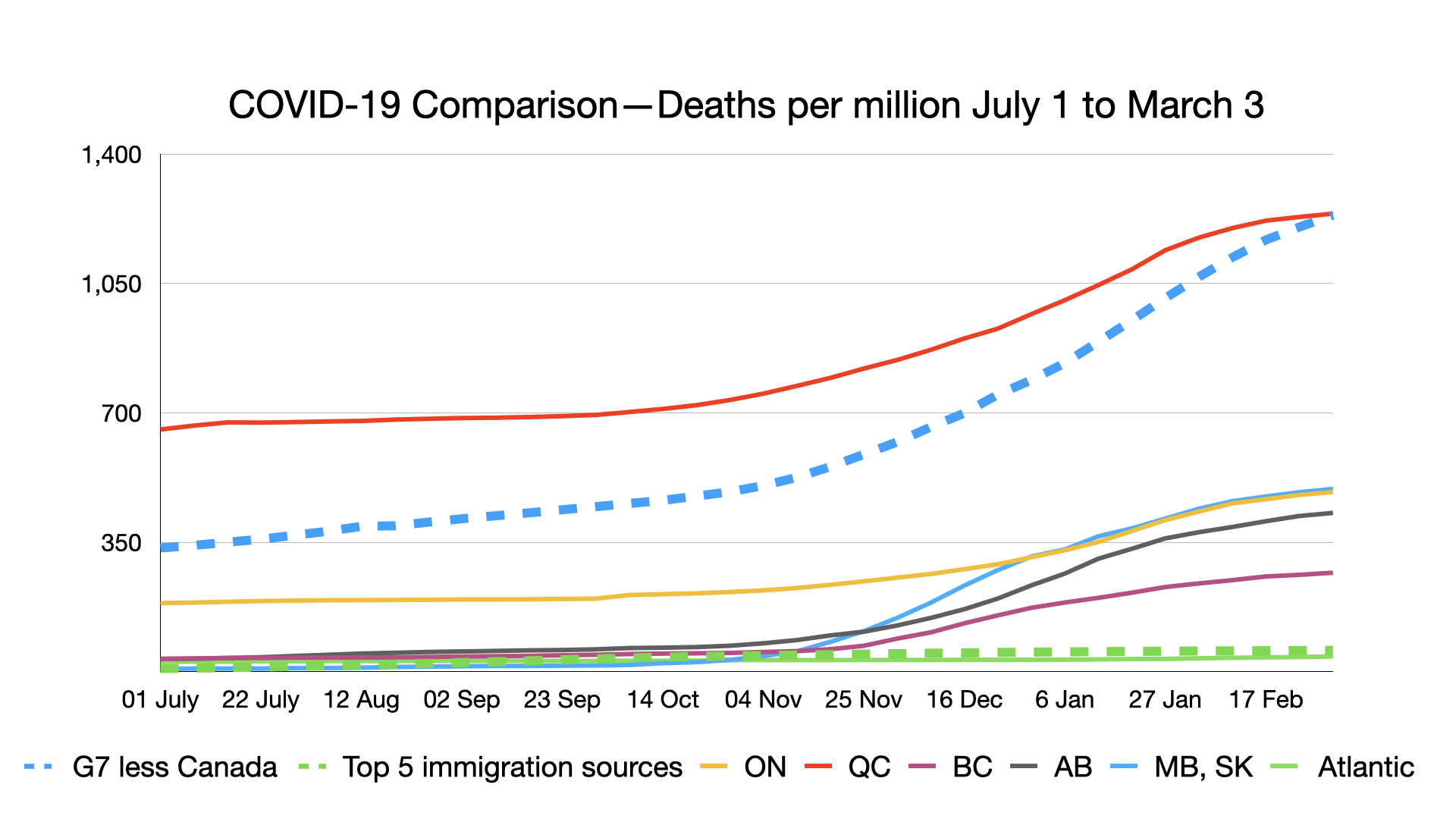
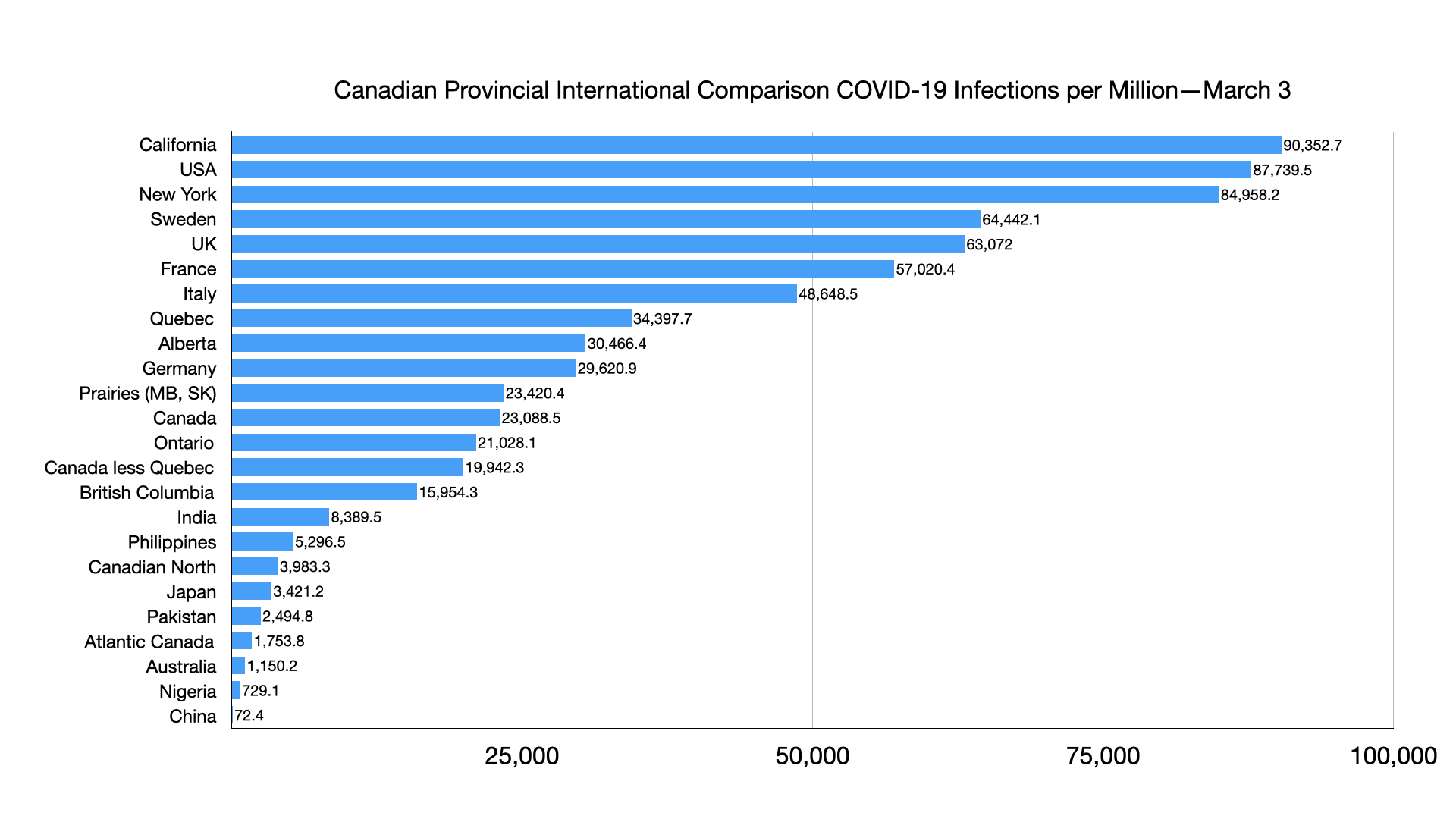
The latest charts, compiled 3 March (not international vaccination data is latest available).

Vaccinations: The gap between all G7 countries save Japan continues to grow, all European countries slightly ahead of Canada.

Trendline charts

Infections per million: The overall trend of a flattening curve is seen in G7 countries and most provinces save for the Prairies and British Columbia.

Deaths per million: Most Canadian provinces continue to flatten the curve, Quebec most dramatically. Overall G7 death rate at point of surpassing Quebec.

Vaccinations per million: Gap between G7 and Canada, driven not only by the UK and USA, remains largely unchanged.

Weekly

Infections per million: No relative change.

Deaths per million: California ahead of Sweden and Quebec, Sweden ahead of Quebec 

Federal documents show sharp decline of Canada’s pandemic warning system, and debate over who was to blame

Looks like decision was mainly at the bureaucratic, not political level:

Newly released government documents paint a stark picture of how quickly Canada’s pandemic early warning system fell into decline before COVID-19 hit.

E-mails between staff at the Prime Minister’s Office show how alerts issued by the Global Public Health Intelligence Network, or GPHIN, dropped precipitously from 2009 to 2019, when key parts of the operation were curtailed.

The numbers confirm internal Public Health Agency data obtained by The Globe and Mail last summer, which showed how Canada’s internationally renowned pandemic early warning system was effectively shuttered less than a year before COVID-19 began spreading.

GPHIN was created in the 1990s to provide Canada and its allies with the earliest possible warnings of outbreak threats, so that governments could move quickly and decisively. A Globe investigation last year detailed how GPHIN played an integral role in detecting and helping the international community respond to past outbreaks such as SARS, H1N1 and MERS.

The e-mails between PMO staff are part of a release of thousands of federal documents that are being disclosed in response to a production order for COVID-19 records that was approved by the House of Commons in October over objections from the Liberal government.

In those e-mails, PMO advisers are responding to The Globe’s GPHIN investigation, which reported that the pandemic early warning system had issued more than 1,500 alerts on potential outbreak threats between 2009 and 2019. The probe found that GPHIN suddenly fell silent on May 24, 2019, less than eight months before COVID-19 started to become a world crisis.

The investigation detailed how shifting priorities within Public Health led to GPHIN’s resources being moved to other areas. With no apparent pandemic threats on the horizon, analysts were reassigned to study domestic issues, such as the effect of vaping and the spread of syphilis in Canada. When GPHIN’s alert system went silent last year, its surveillance of international outbreaks was also significantly curtailed.

According to an e-mail between PMO staff on Oct. 8, GPHIN issued 1,598 alerts between 2009 and 2019, including 877 in 2009, the year of the H1N1 outbreak. These alerts spanned a wide range of threats – from Zika to Ebola, yellow fever and Crimean-Congo hemorrhagic fever – and most never evolved into a crisis, though GPHIN would have kept close tabs on each situation as needed.

But the numbers began to decline sharply. After issuing 198 alerts in 2013, when an outbreak of H7N9 bird flu emerged, GPHIN’s alerts dropped in half the following year and soon declined further. By 2018, GPHIN issued just 21 alerts, a drop of 97 per cent from 2009 levels.

The e-mails suggest that as staff inside the PMO deliberated on how to respond to The Globe’s investigation, they appeared concerned about whether the Liberal government could be blamed for financial cuts to the operation, or whether the decisions that shifted GPHIN’s focus and resources inside the department rested solely with the Public Health Agency of Canada (PHAC).

“PHAC may have reprioritized its efforts, but it is an Agency that gets to decide, to an extent, their own priorities – those would be internal, bureaucratic decisions, not political ones,” Elise Wagner, a senior special assistant in the PMO wrote to a colleague. “Our government did not cut funding for the global early warning system.”

The shuffling of resources within the department had a significant effect, though. GPHIN’s role was not only to detect the first signs of an outbreak, but to provide continuing, rapid intelligence of an evolving situation, so that Ottawa could quickly bolster stockpiles of personal protective equipment and ensure hospitals and long-term care homes were ready if needed.

The goal was to inject urgency into government decisions, including when to implement physical distancing, mask wearing and stricter border measures. However, scientists inside PHAC told The Globe that they struggled to get important messages up the chain of command.

Members of the Canadian intelligence community have since raised concerns about the curtailing of GPHIN, given its role in informing the government’s risk assessments on COVID-19. Through January, February and into March of 2020, Ottawa rated the outbreak a low threat to the Canadian public, even as evidence emerged about how deadly the virus was and how easily it was spreading, and despite other countries implementing unprecedented measures.

Faced with criticism over the government’s early response, Prime Minister Justin Trudeau said he wasn’t sure what role added intelligence could have played in Ottawa’s decisions, but said he regrets not acting sooner to bolster stockpiles of personal protective equipment. However, informing such decisions is exactly what GPHIN was created to do.

The federal documents show GPHIN first picked up on the outbreak on Dec. 31, 2019, after news of a strange pneumonia in China made international headlines and a New York based disease-tracker called ProMed issued an alert to doctors and hospitals around the world. Scientists now believe COVID-19 had likely been spreading several weeks by that point, and that China did not fully disclose the problem.

Epidemiologists say the speed at which governments can implement containment measures has a major effect on the spread of a virus and its death toll, even if only by a few days or a week.

The problems surrounding GPHIN are now the subject of two federal probes; the Auditor-General of Canada has launched an investigation while the Minister of Health has ordered an independent federal review. The results of both are expected sometime this spring.