COVID-19 and essential workers at risk, some examples

Two classic cases, where private companies and weak government regulators have failed to protect workers from COVID-19 (largely immigrants, visible minorities or temporary workers), and the Ontario and Alberta governments only belatedly addressing risk in workplaces through vaccination of workers. Older stories, haven’t seen many updates:

Amazon Brampton Warehouse

An Amazon warehouse that was ordered to shut down last week due to a major COVID-19 outbreak is also being investigated for potential labour violations, the Ontario government said Monday.

A spokesman for the Ministry of Labour said the investigation was already underway when the local public health unit ordered thousands of workers at the Brampton, Ont., facility on Friday to isolate for two weeks,

“We continue to work closely with Peel Public Health and others to provide support, advice and enforcement as needed to ensure the health and safety of Ontario’s workers,” Harry Godfrey said in a statement.

Godfrey noted that penalties for labour violations could be as high as $1.5 million or imprisonment. He said the government would not hesitate to hold employers accountable if they fail to keep their employees safe.

Peel Region’s top doctor said the outbreak at the Amazon facility, which employs approximately 5,000 workers, began in October and has since been linked to more than 600 cases.

Dr. Lawrence Loh said nearly half of the cases were detected in the last few weeks, prompting the public health unit to issue a special order requiring the workers to self-isolate for two weeks starting March 13.

Workers were ordered to isolate until March 27 unless they’ve tested positive for COVID-19 in the last 90 days and have already completed their isolation period for that infection.

Amazon Canada said workers would be paid during the 14-day quarantine, but it disputed the data being used to support the plant closure, pointing to a round of tests that recently came back with a positivity rate of less than one per cent. It has said it plans to appeal the decision.

Peel Public Health said the closure will give the company further time to consider additional operational changes that may help prevent outbreaks in future.

The Ministry of Labour said its inspectors had visited the site 12 times and issued eight orders since March 2020.

Gagandeep Kaur, an organizer with Brampton-based Warehouse Workers Centre that advocates for workers’ rights in the sector, said conditions had been getting worse in the facility for months. She said workers “were kind of surprised” that it took so long for public health to get involved and force the shutdown.

Kaur said people reported that safety precautions like physical distancing have been impossible to maintain inside, especially as workers rushed to meet strict productivity targets.

She said workers are now concerned that they will be asked to push themselves harder once they return from quarantine.

“They are not at home right now enjoying this two week vacation,” Kaur said by phone. “They are more worried that once they are back … management might put higher targets for them to reach.”

Kaur said the pressures of the warehouse workplace, where employees’ time on floor is constantly measured and tracked, created safety issues before the pandemic. Those challenges only increased with the viral threat that also coincided with more hiring, and greater demands as more people relied on the delivery service.

She said the company should use the two-week shutdown to implement changes at the plant such as further separating work stations and reducing performance targets as workers are dealing with the added stress of the pandemic.

“Amazon must use it wisely,” she said of the shutdown. “Maybe implementing those changes inside the facility that will make the work safer so that we don’t end up with this crisis again.”

Last month, labour inspectors carried out a “blitz” operation on the warehouses and distribution centres in Peel Region – a COVID-19 hot spot with a high number of outbreaks in workplaces.

About 200 inspections took place and 26 tickets were issued, according the Ministry of Labour.

Source: https://www.cp24.com/mobile/news/ontario-labour-ministry-investigating-brampton-amazon-site-ordered-to-shut-down-over-outbreak-1.5348106?cache=

Alberta Olymel meat packing

Slaughterhouses. Meat packing. Sick and dead employees. The pandemic has sharpened our vision about a lot of things.

Such as: the workers who are key to making sure Canadians have plenty of steaks, hamburger, and bacon on the menu have become about as disposable as paper plates. This became more than evident over the past month as hundreds of workers in yet another meat packing plant in Alberta became infected with COVID-19.

Three employees have died. The first to die was 35-year-old Darwin Doloque, a recent immigrant from the Philippines who was found dead in his home at the end of January. 

At that point it was clear that infection was spreading among the 1,850 women and men at the Olymel slaughterhouse and pork processing plant in Red Deer. And yet neither government nor public health officials moved to it shut down.

It was only in mid-February after public pressure from the Union of Food and Commercial Workers, which represents the employees, that Olymel management decided to shut down for two weeks. Workers were laid off without pay and advised to apply for Employment Insurance so the government could pick up the bill.

And lest you think Olymel is owned by a U.S. or Brazilian mega-meat packer, it is not. It is a division of Quebec-based Sollio Cooperative Group, Canada’s largest agriculture co-op, which last year reaped $8.1 billion in revenue. Besides being the biggest pork and poultry producer in Canada, Olymel exports to China, Japan, South Korea and Australia.

Most of the workers at the Red Deer plant — midway between Calgary and Edmonton — are recent immigrants, refugees, or temporary foreign workers. They come from Sudan, Guatemala, the Philippines, Mexico, and Dominican Republic and usually don’t speak English. 

It’s the same story at most large slaughterhouses/meat packing plants because it is bloody, back breaking, and dangerous work that only people with limited employment options are willing to take. 

For most of us working at a job site where 45,000 hogs a week are killed is beyond imagination. But that is par for the course at the Olymel plant. Every week, the pigs just keep coming from hog farming operations in Alberta and Saskatchewan, which need to keep those pigs moving if they are to be profitable. They do not want processing plants to close down because it hits them right on the bottom line. 

So workers are pushed to keep working even after a quarter of them have been infected with the coronavirus; even though the majority of those workers have jobs outside the plant and could spread the virus in the larger community.

The COVID-19 outbreak at Olymel and the subsequent inaction on the part of government, public health officials, and plant management could be better understood if we were in the beginning stages of the pandemic and those in charge were still trying to figure out what to do about workplace outbreaks.

But this is hardly the case. In Alberta alone during the past year we have seen serious outbreaks in eight meat packing facilities.

In April, the Cargill plant in High River (owned by a U.S. mega-meat packer) had a total of 950 cases among 2,000 employees, the worst COVID-19 outbreak in Canada. Three people died, dozens were hospitalized. 

In the U.S, 50,000 meat packing workers were infected, and about 250 died. Communities around those facilities had some of the highest infection rates in the country. 

This was all known long before the outbreak at Olymel. The U.S Congress has launched an investigation into how the meat packing industry responded to the pandemic.

In Alberta, both Rachel Notley, leader of the official opposition, and the Alberta Federation of Labour have called for a public inquiry into the Alberta government’s handling of the outbreak at the Olymel plant. 

A public inquiry takes time but given the repeated performance of government agencies and meat packing companies during the pandemic we need to know more about why so many people became infected and died so it won’t happen again. 

In the meantime Olymel is re-opening the Red Deer plant and calling back workers. Bacon anyone?

Source: https://www.thestar.com/opinion/contributors/2021/03/08/alberta-is-still-not-protecting-its-meat-packing-workers.html 

@Justin_Ling: Canada’s public health data meltdown

Good long read, highlighting ongoing policy failure at both federal and provincial levels:


For weeks, Canadians have been casting their envious eyes to Israel, where more than half the country has been inoculated against COVID-19. Israel, less than a quarter the size of Canada, has administered nearly twice as many doses of the COVID-19 vaccine.

The Middle Eastern country has some innate advantages: It is small and centralized, and offered top dollar to ensure vaccines from Pfizer and Moderna would come fast, and in large volumes. But geography and money aren’t the reason why Israel is outpacing Canada by 10-to-one.

Israel has the vaccines because it has the data.

In its shrewd deal with Pfizer, Israel offered to turn the country into one giant clinical trial: Providing the vaccine manufacturer unprecedented large-scale visibility as to the vaccine’s efficacy. It’s all made possible because of the country’s state-of-the-art information technology and robust national vaccination database.

The rest of the world is currently benefiting from that incredibly granular information.

Canada could never have struck such a deal. Its health technology is, charitably, a decade out of date. It lacks the ability to adequately track infectious disease outbreaks, efficiently manage vaccine supply chains and storage, quickly administer doses, and monitor immunity and adverse reactions on a national basis.

Even though all the shipments of vaccines arriving in Canada come with scannable barcodes, to make tracking and logistics easier—with some manufacturers even barcoding the vials themselves—no Canadian province can scan them. In many provinces, pharmacies can’t access the provincial vaccine registry. Provinces do not automatically submit reports on COVID-19 cases or vaccines into the federal system, and must submit reports manually. Many crucial reports are still submitted by fax: Where fax has recently been phased out, they have been replaced by emailed PDFs.

Ours is a dumb system of pen-and-paper and Excel spreadsheets, in a world quickly heading towards smart systems of big data analytics, machine learning and blockchain. It’s unclear how Ottawa will be able to issue vaccine passports, even if it wants to.

At the core of the omnishambles is a simple fact that Canada has no national public health information system, but 13 different regional ones. Many of those regional systems have smaller, disconnected, systems within: Like a Russian nesting doll of antiquated technology.

But there’s good news: It doesn’t have to be this way. In some parts of the country, real progress is being made. Small technology start-ups are figuring out cheap, scalable and innovative solutions. In some provinces, progress can be as simple as updating operating systems.

If we are ever going to build efficient, cost-effective, and effective health infrastructure, Ottawa needs to take the lead. We need to abandon the idea that federalism requires us to have each sub-national government run entirely independent, walled-off, health databases.

We need data sharing. We need shared infrastructure. We need a national public health system.

***

For decades, Canada has been building out computer systems designed to track infectious disease outbreaks and vaccination campaigns. In non-pandemic times, that means monitoring the spread of sexually transmitted infections, keeping track of supplies of vaccines for things like influenza and mumps, and keeping an eye out for novel outbreaks of infectious diseases.

Most of the country relies on a public health system called Panorama, but not everywhere: Alberta, P.E.I., Newfoundland and Labrador, Vancouver Coastal Health, and the Public Health Agency of Canada itself all use other systems.

The provinces and territories that do have Panorama use it to varying degrees. From one province to the next, the heath infrastructure has different names, different features, unique customizations and varying capabilities.

This was never the plan. Canada, in fact, was once a world leader in digitizing its public health infrastructure.

In 1996, at a national conference of health officials, it was decided that “an immunization tracking system is urgently needed in Canada.” It included a list of goals: To identify children in need of vaccination, to book appointments, to do population-level analysis of immunity to diseases, and so on.

In 2002, basic national standards were drafted: “The time has arrived for a national program to be administered provincially, thus ensuring compatibility between provinces so that this health care information can be accessed when needed.”

When SARS hit Canada in 2003, before any of this technology could actually be implemented, health authorities found themselves woefully unprepared. The federal government and province of Ontario tried to manage the epidemic relying on “an archaic DOS platform used in the late 80s that could not be adapted for SARS,” per an Ottawa-commissioned report.

The country had only gotten a taste of what a deadly and hard-to-control infectious disease outbreak looked like. And it wasn’t ready. It only underscored just how crucial this national database was. The solution to that was Panorama.

It wasn’t cheap. Paul Martin’s government committed $100 million in its 2004 budget to seed the creation of Panorama, through the not-for-profit, government-funded Canada Health Infoway. His government also created the Public Health Agency of Canada to ensure there was central preparedness for the next SARS.

“With this budget, we begin to provide the resources for a new Canada Public Health Agency, to be able to spot outbreaks earlier and mobilize emergency resources to control them sooner,” then-finance minister Ralph Goodale said in his budget speech. He promised “a national real-time public surveillance system.”

The subsequent Harper government, seemingly recognizing the wisdom of what his predecessor had started, provided another $35 million more to fund the work. The contract to build this national surveillance system would ultimately go to IBM Canada.

In 2007, Canadian health officials flew to a conference in Florida to tell their American colleagues how far ahead we were on this health technology.

“By 2009 there will be a national surveillance system that will include a network of immunization registries,” their powerpoint presentation said. They broke down how it would work: A vaccinator would enter a patient’s information, scan the barcode on the side of the vaccine vial, and it would all go straight into the provincial database and, later, the federal system. A computer system could manage an outbreak from infection to immunity.

Dr. Robert Van Exan, who ran health and science policy at Canadian vaccine giant Sanofi-Pasteur, was tapped by Ottawa to figure out how to effectively barcode vaccines in the early 2000s.

“Technically, it’s a huge challenge,” Van Exan told me when I interviewed him in March for the Globe and Mail. “At least, it was.”

At the manufacturer, vaccines moved along a conveyor belt at a rate of about 300 to 1,000 vials per minute, he explained—adding new labelling was a logistical nightmare. But, within a few years, he had corralled the technological know-how to get it working. He went back to the federal government, excited that he and his company were part of this digital revolution.

“Canada was ahead on this by a decade,” Van Exan told me.

But through the late 2000s and early 2010s, that plan seemed to fall further away. There were delays and cost overruns, which largely fell to the provinces and territories. In 2015, British Columbia’s auditor general reported that the province had budgeted less than $40 million to build and maintain Panorama. The cost wouldn’t just double: It nearly tripled. The B.C. government alone would pay more than $110 million, not including ongoing annual costs.

As the program struggled, the Public Health Agency of Canada—the body specifically created following SARS to help build a national public health strategy—pulled out of Panorama. It let the provinces and territories fend for themselves. Nobody was left to actually enforce those brilliant minimum standards from years earlier. It stopped being a cross-compatible national system, administered provincially, and became a smattering of incompatible systems with no real national buy-in at all.

Provinces like Alberta bailed on Panorama in frustration.

The provinces and territories that stuck with it wound up with an inferior product. Beyond just the increased costs, the devastating report from the B.C. auditor general found that core components were just missing. Online vaccine appointments? Vaccine barcoding? Offline usage? Federal integration? All those features were promised, but “not delivered.”

“The system cannot be used to manage inter-provincial outbreaks, the main reason for which the system was built,” reads one particularly galling passage.

Other features didn’t work, or had severe limitations.

Van Exan recalls how “fed up” the vaccine industry was with Ottawa. “They went through this trouble to put the label on the vials,” he said. And for what?

“Despite a substantial federal investment,” one peer-reviewed study pointed out in 2013, “Canada continues to lag behind other countries in the adoption of public health electronic health information systems.” A 2015 study found that multiple provinces failed to even meet the minimum standards set out in 2002—standards that were already becoming stale and anachronistic.

Those 2002 national standards haven’t been updated since. (Health Canada told Maclean’s that the most recent standards were issued in 2020, although the document it pointed to clearly labels them as recommendations for new standards.)

Whether the standards are from 2002 or 2020 is somewhat immaterial. Ottawa doesn’t even know to what degree the provinces follow the standards.

The standards clearly call for Canada to have “reliable digital access and exchange of electronic immunization information across all health providers with other jurisdictions (including federal).”

In response to a question submitted in the House of Commons, Health Canada wrote last summer that “it is not possible for the federal government to know the details of any of the configurations of the provincial/territorial instances of Panorama in order to judge whether it meets a particular standard.” The Public Health Agency has not performed an audit of Panorama, the government added.

There are lots of reasons for the boondoggle. Many provinces and territories had competing priorities for what their health infrastructure ought to look like, and many balked at the idea of sharing data with Ottawa or even their neighbouring governments. “The provinces chose to do things independently,” said one source with knowledge of the system, who spoke on the condition of anonymity. Some provinces tried to make Panorama “too many things to too many people,” they said, and ended up with a system that disappointed everyone. That’s a common problem in Canadian technology procurement.

Part of the issue was the technology itself. Canada tried to stand up an ambitious IT infrastructure at a time when things like cloud hosting and barcoding capabilities were still expensive, clunky and hard to do on a large scale. But the core problem was a total lack of leadership. Ottawa pioneered the idea for a national registry, then walked away when things got hard.

Ontario family doctor Iris Gorfinkle has been calling for this national strategy for years. Last year, before we even saw our first vaccine, she warned in the Canadian Medical Association Journal that “it is imperative that we have the ability to provide potentially limited vaccines to those jurisdictions with higher disease rates to optimize vaccine distribution and coverage.”

I asked her why we haven’t been able to do this. She answered in a word:

“Inertia.”

***

In the last decade, provinces have had to make do. Alberta has modernized the legacy system it reverted to when Panorama went sideways. Ontario has tried valiantly to customize and upgrade Panorama until it resembled the system the province ordered.

Over time, however, Panorama did improve. By about 2017, IBM was finally adding those features that had been left off. It built out new data dashboards, integrated barcode scanning, and added APIs to make Panorama compatible with other systems. Most critically, Panorama went from a clunky program that could only run on designated computers to a cloud-based program that could be accessed by any laptop, tablet or phone.

Indigenous Services Canada, which administers some health services to First Nation communities, actually won an eHealth award in 2014 for its implementation of Panorama. One B.C. public health official lauded the agency’s work, saying it would allow health professionals “to better detect early signs of outbreaks by enabling sharing vital information between different public health related services providers.”

Some provinces, like Nova Scotia, upgraded Panorama into the new, more functional version. “One of the great things about Panorama in terms of helping in an outbreak is just having more timely access to information,” a prescient Nova Scotia provincial health official told CBC in 2019.

But it hasn’t been uniform: Ontario’s heavily customized system is running an old version of Panorama. Saskatchewan still hasn’t implemented core Panorama modules, like the one that tracks adverse reaction reports.

One source said provinces could enable its system to scan barcodes and health cards with a flip of a switch—several provinces, the source said, actually refused, insisting manual entry was more efficient.

Meanwhile, provinces and territories are still relying on manual data entry and spreadsheets to track inventory and shipments. Some jurisdictions are logging immunizations with pen and paper. A citizen can’t readily carry their immunization record from the Northwest Territories to Yukon.

Pharmacists in Ontario need to enter every immunization into two systems: once, into their own record management program; and again, into Ontario’s newly fashioned COVaxON, a front-end interface that is supposed to feed into Ontario’s outdated version of Panorama.

The inefficiencies are glaring. But it gets worse.

Notwithstanding inefficiencies and outmoded technology on the local level, the whole point of the Public Health Agency of Canada is to be able to track infectious disease outbreaks across the country. Right now, this is top of mind, as we wait to see the countervailing impacts of the COVID-19 variants and vaccines. A good system should be able to show us how different variants are spreading, and whether any or all of the vaccines are effective against which strains. But that only works if PHAC has the data.

Ottawa technically has information-sharing agreements with the provinces, but a government response to a question filed by Tory MP Scott Reid exposes how archaic the infrastructure truly is. Ottawa “does not have automatic access to data held in [provincial and territorial] systems, including Panorama,” the government wrote. “In the early weeks of the outbreak, some provinces were sending case information to PHAC via paper.” For the first four months of the pandemic, Ottawa wasn’t even collecting basic data on COVID-19 cases, like ethnicity, dwelling type, or occupation. Things have improved somewhat: Provinces now submit their reports manually, via a web portal.

The Public Health Agency of Canada reported that its “emergency surveillance team receives electronic files in .csv format from provinces and territories.”

A March report of the federal auditor general found that “although received electronically from provincial and territorial partners in the majority of cases, health data files were manually copied and pasted from the data intake system into the agency’s processing environment.” The audit also reports that many aspects of Ottawa’s data sharing agreements with the provinces and territories are not yet finalized. The audit further found that crucial information about COVID-19 cases—such as hospitalizations and onset of symptoms—was often not being reported to Ottawa.

The auditors came to a similar conclusion to many experts, like Gorfinkle and Van Exan: “We found that for more than 10 years prior to the COVID‑19 pandemic, the agency had identified gaps in its existing infrastructure but had not implemented solutions to improve it.”

When it comes to any vaccine, there are reports of adverse reactions—while they are rare, the recent panic over the AstraZeneca vaccine and blood clots shows this tracking is absolutely crucial. When a Canadian reports an adverse reaction to any vaccine, the province must pass it onto PHAC—which must, in turn, send it to the World Health Organization. Until very recently, Ottawa required that provinces and territories submit those reports via fax. More recently, it has modernized: “provinces and territories submit data [on adverse reactions] in a variety of formats, including line list submissions and PDF submissions,” the government said. That still means the reports must be entered manually. Some provinces only submit their reports weekly.

Panorama, meanwhile, has an adverse reaction tracking and reporting feature. PHAC just hasn’t been using it.

PHAC insists it has “well-developed surveillance and coverage information technology” and it responded to the auditor general with further more promises to address the gaps it has been vowing to fix for a decade. It’s hard to know if that progress is real or not.

In November—already some eight months into the pandemic—the federal government sent a secret request for proposals to a shortlist of pre-qualified suppliers looking for a “mission-critical system” to manage vaccine supply chains, inventory, and to ”track national immunization coverage.” The $17-million contract went to Deloitte, and it is supposed to plug into the disparate provincial systems to provide some semblance of a national picture. But Ottawa is refusing to disclose any timelines, details of the project or really anything beyond some boilerplate talking points. We only know about the project because the request for proposals was leaked to me in December. (“It’s awe-inspiring that they would withhold that information,” Gorfinkle says. I agree.)

So long as we commit to this madly off in all directions strategy, Ottawa can’t build a functional national system. Federal agencies can’t coordinate, much less individual provinces and territories. The patchwork makes national visibility impossible. Worse than a garbage-in, garbage-out problem—provinces can’t even agree on how to format the garbage. The result has been error and inefficiency.

One Ontario woman was hospitalized after receiving three doses of a COVID-19 vaccine, two of them just days apart—something that would never happen if she had an accessible, up-to-date vaccination record.

Meanwhile, seniors have been forced to stand in line for hours in Toronto, as health staff waste time doing work that could be easily automated. Epidemiologist Tara Gomes tweeted that her mother “had to repeat her address so many times to the person at check-in that she finally asked for a pen and paper and wrote it down.” It gets more frustrating when you realize, as Gomes noted, that her mother had to provide her personal information to get the appointment—the province’s COVaxON booking portal doesn’t connect to the COVaxON vaccine registry.

“You can’t blame one government,” Van Exan says. Every level of government of every political stripe has let this Frankenstein’s monster of a digital health system continue to limp along.

”Including the current one.”

***

The barriers to improvement are lower than you might think.

There is no particular reason why Vancouver ought to be using different vaccine management software than Victoria, or why Toronto should be running a different version of Panorama than Halifax. The diseases these health authorities face are the same, as are the vaccines dispatched to combat them.

Ottawa seems, a year after the start of this wretched pandemic, to be coming around to that idea. The Public Health Agency of Canada told Maclean’s it will finally be adopting Panorama, which “will enable more automated and timely data sharing and reporting.” At the end of March, it wrote that the new system “is expected to be online in the coming weeks.” Deloitte, IBM and the Government of Canada have been working together to get Panorama working with the Public Health Agency’s existing systems.

But just adopting Panorama isn’t nearly enough.

Step one is deciding if we really want a national system. If the provinces and territories are truly, completely incapable of running a system to national standards—or Ottawa is incapable of managing those standards—then maybe we should actually commit to decentralization. Shut down PHAC and download money and responsibility for public health to the provinces.

The benefits of a national system, however, are real and obvious. If we can agree with that principle, then step two is picking a technology and sticking to it.

We shouldn’t be married to sunk costs: If there is a better system out there than Panorama, we should consider it. But actually committing to Panorama is the obvious choice. It is already the standard for most of the country, and there’s no guarantee that starting from scratch will rectify our jurisdictional issues. What’s more: A list of other countries are now relying on Panorama. The more customers, the better.

Sticking with Panorama doesn’t mean that Alberta and Vancouver need to abandon their proprietary systems—but it does mean they need to be speaking the same language.

To that end, step three is standardizing data collection and sharing.

This, of course, needs to be done wisely: Patient data should be anonymized, for security reasons. Any cloud systems must have their servers within Canada (Nova Scotia’s data is available on the cloud, but entirely located in Halifax and Quebec.) And we need to make sure that governments are entirely transparent about how, when and why they use this aggregated health data. But all those jurisdictions need to use the same file formats, collect the same variables, and report them in the same efficient, automatic, manner.

Step four is investing in the infrastructure we need to make all this work—and sharing resources where that makes sense. If health authorities need an app to scan barcodes to track shipments, it doesn’t make sense for every province and territory to be using a different app. If we need to buy barcode scanners, every province should be buying the same one. Where it makes sense to share servers, we should share servers.

Step five is the easiest: Keep things current. It’s hard to think of any other instance where relying on 20-year-old technology standards makes sense. We need to be constantly revising and updating how we handle infectious diseases—the benefits will be apparent, in how we tackle everything from mumps, to HIV, to the next highly infectious disease that reaches our shores.

Again, these things are very doable, and don’t require any government to sacrifice autonomy. And, best yet, it can save us money.

On barcoding alone, a government panel estimated in 2009 that Canada would see $1 billion in savings by saving time, preventing wastage and reducing errors. On virtually every other front: Struggling through antiquated IT, and relying on overworked health staff to make up the difference, is expensive.

Governments don’t have to do it alone, either. Private industry can help.

In Alberta, start-up Okaki devised a simple, scalable system that can manage vaccination campaigns and even scan vaccine barcodes. The company has been running immunization drives for years, mostly in First Nations, and feeds its data directly into the provincial system—it is also compatible with Panorama.

CANImmunize, which began as an app allowing individuals to track their own vaccination record, now does many of the things Canada’s national system was supposed to do—including tracking appointments, monitoring adverse reactions, scanning vaccine barcodes. The technology can be fully integrated with Panorama.

Since I began writing about this issue for the Globe and Mail, my inbox has been inundated with emails from companies insisting that they could fix these problems in no time at all. There is no shortage of qualified people looking to help, and to innovate.

A group of companies, led by IBM, recently won a contract to build Germany’s vaccine passport system. It will use blockchain technology to make citizens’ vaccination records accessible, secure and verifiable. If we don’t get our act together soon, Canadians will be lucky to even get laminated paper vaccination records.

The provinces and territories need to come to the table and do this together. Our self-injurious commitment to federalism at all costs is endangering our own citizens. Because every province plays in their own needlessly walled garden, they are less prepared to deal with epidemics, they are less efficient at administering vaccines, and their citizens are more at risk from getting sick and dying.

Our country is supposed to be one of cooperative federalism, where provinces and territories can pursue creative solutions to unique problems. But when it comes to the basic mechanics of infectious disease outbreaks, there is no central leadership.

COVID-19 does not change shape when it crosses from Manitoba to Nunavut. We need the same set of tools in every province, or else we’re never going to fully beat this virus—and we’re going to be dangerously ill-equipped for the next one.
Source: Canada’s public health data meltdown

#COVID-19: Comparing provinces with other countries 31 March Update

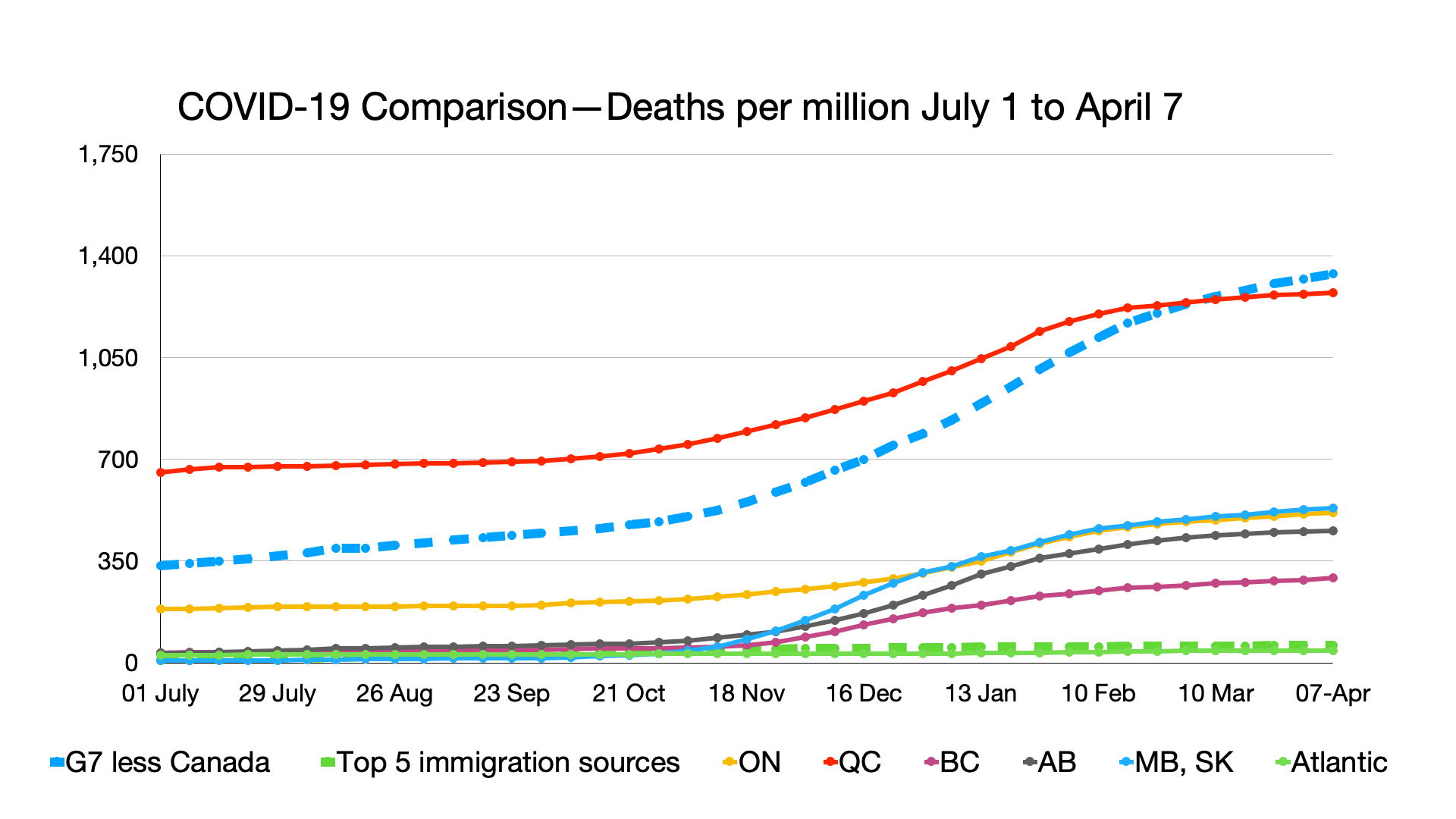
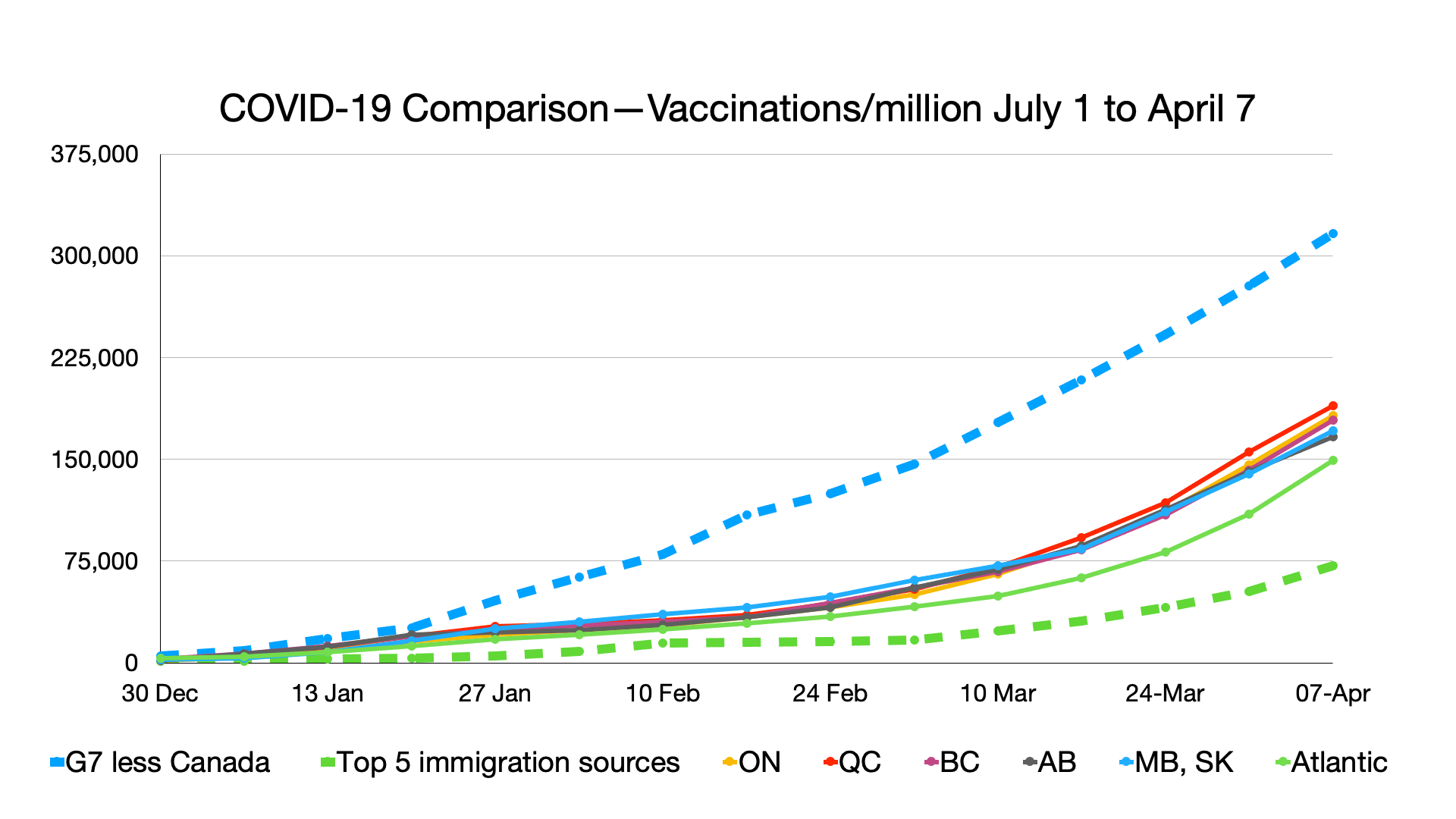
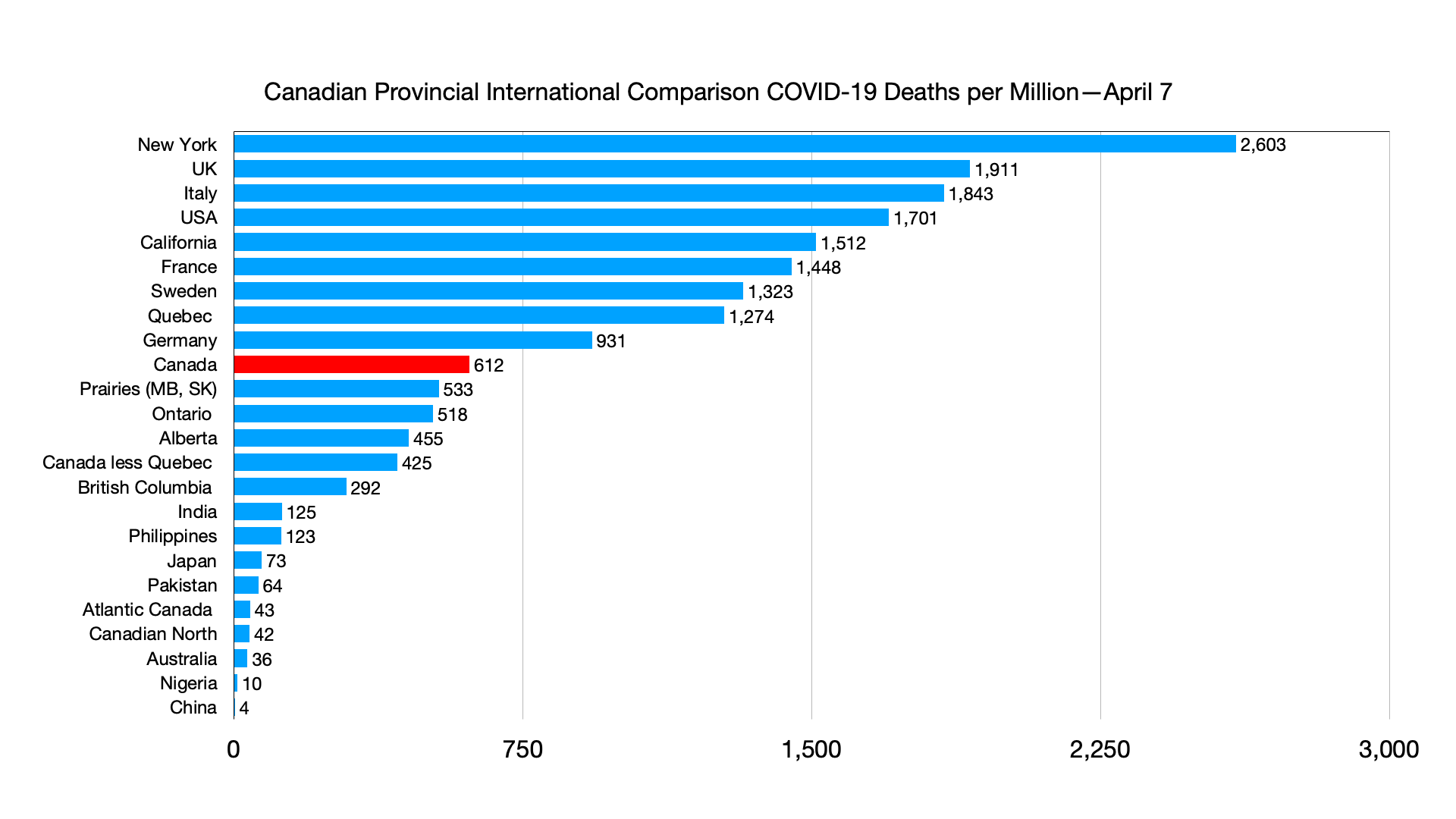
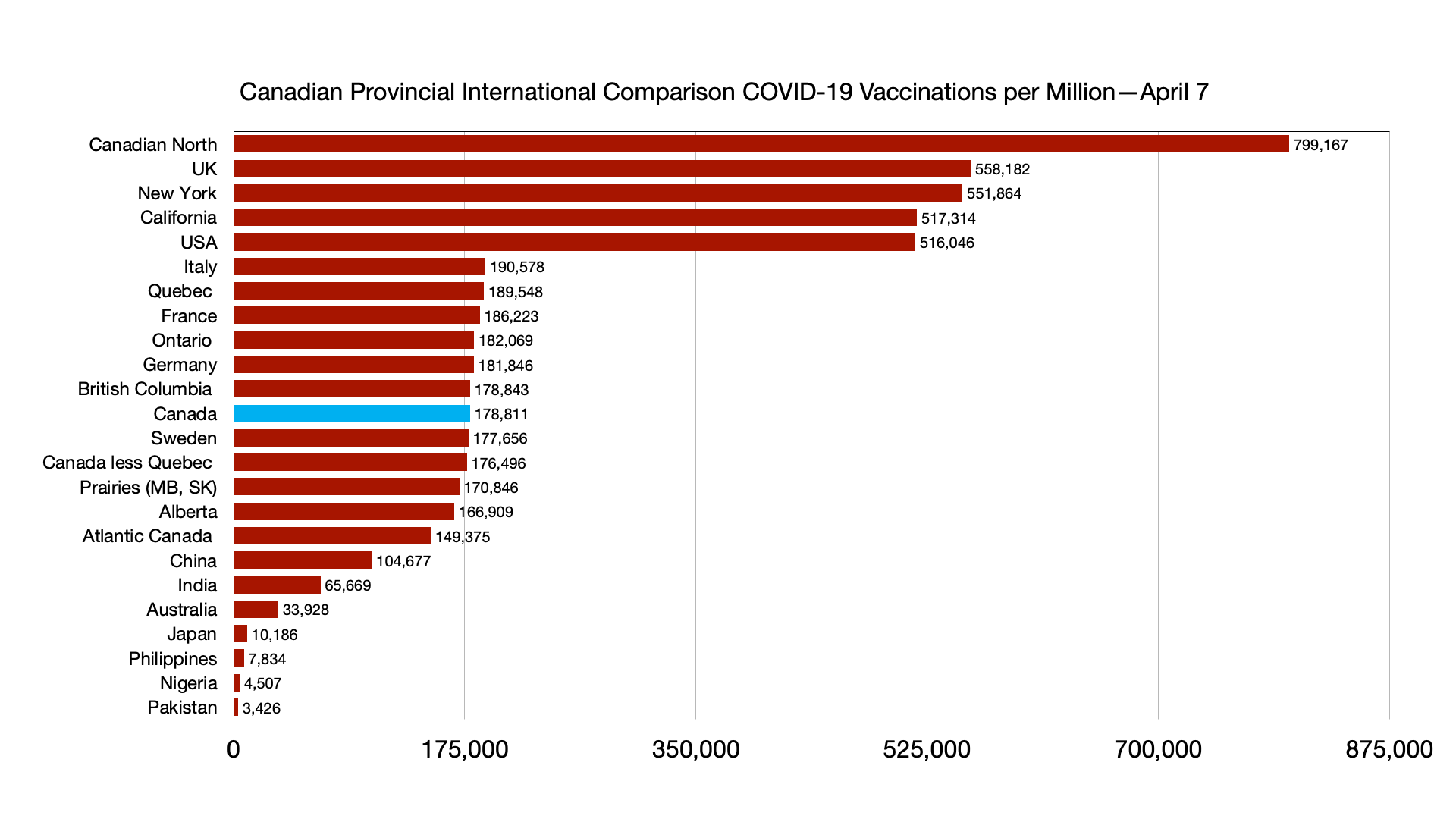
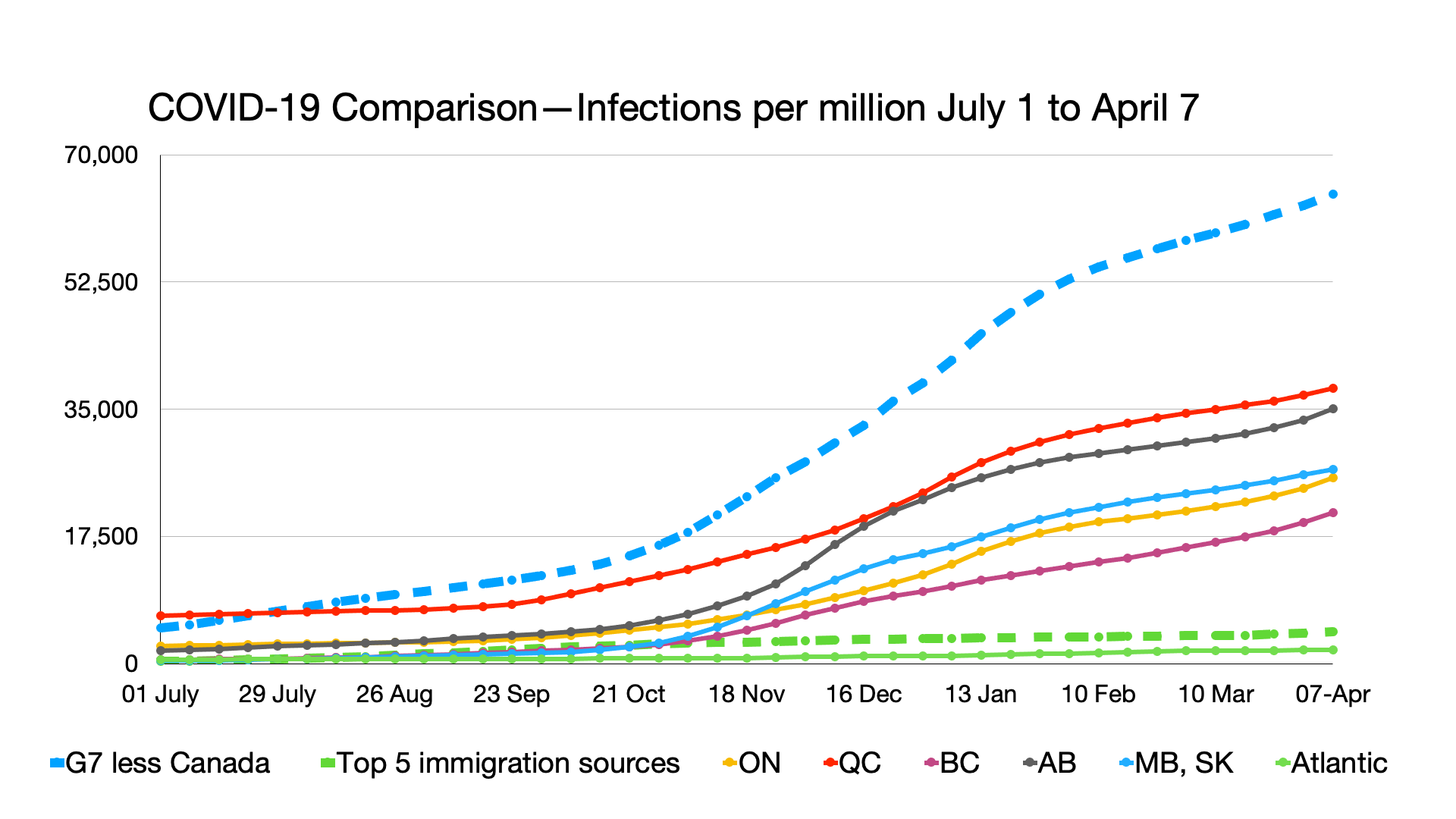
The latest charts, compiled 7 April as the third wave has started.

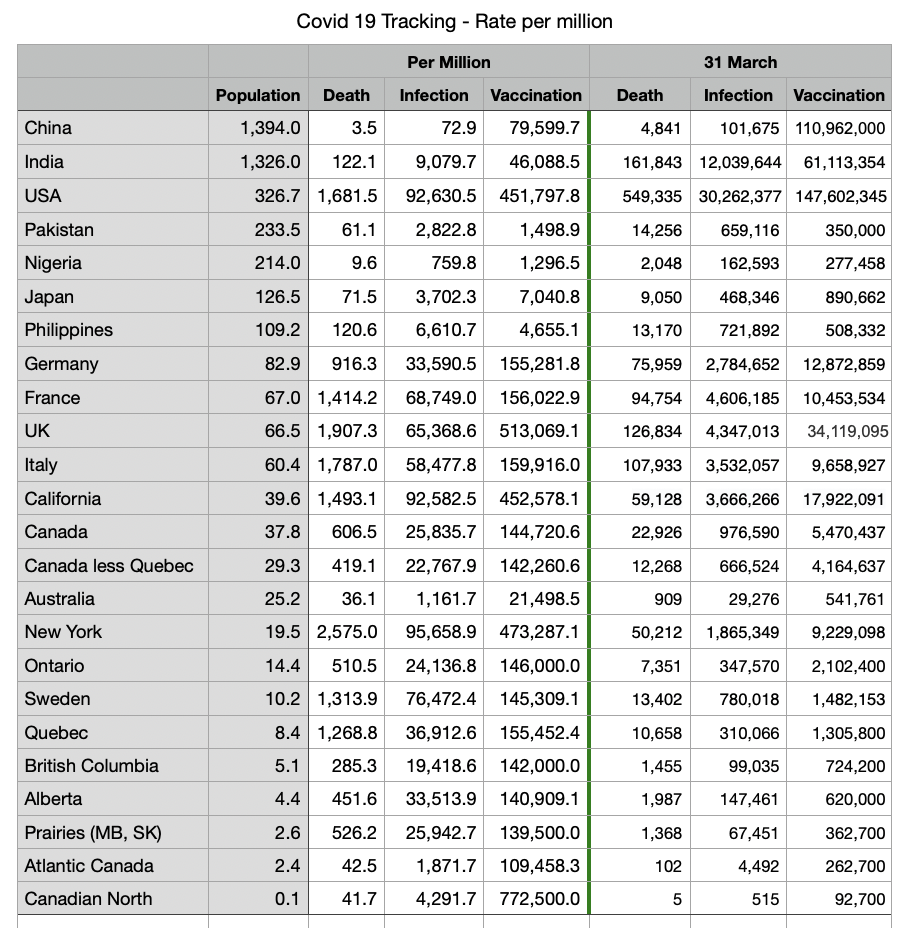
Vaccinations: Change from last week: Some Canadian provinces doing slightly better than EU countries. Quebec ahead of France, Ontario ahead of Germany, British Columbia and Canada ahead of Sweden,  Prairies ahead of Alberta.

Trendline charts

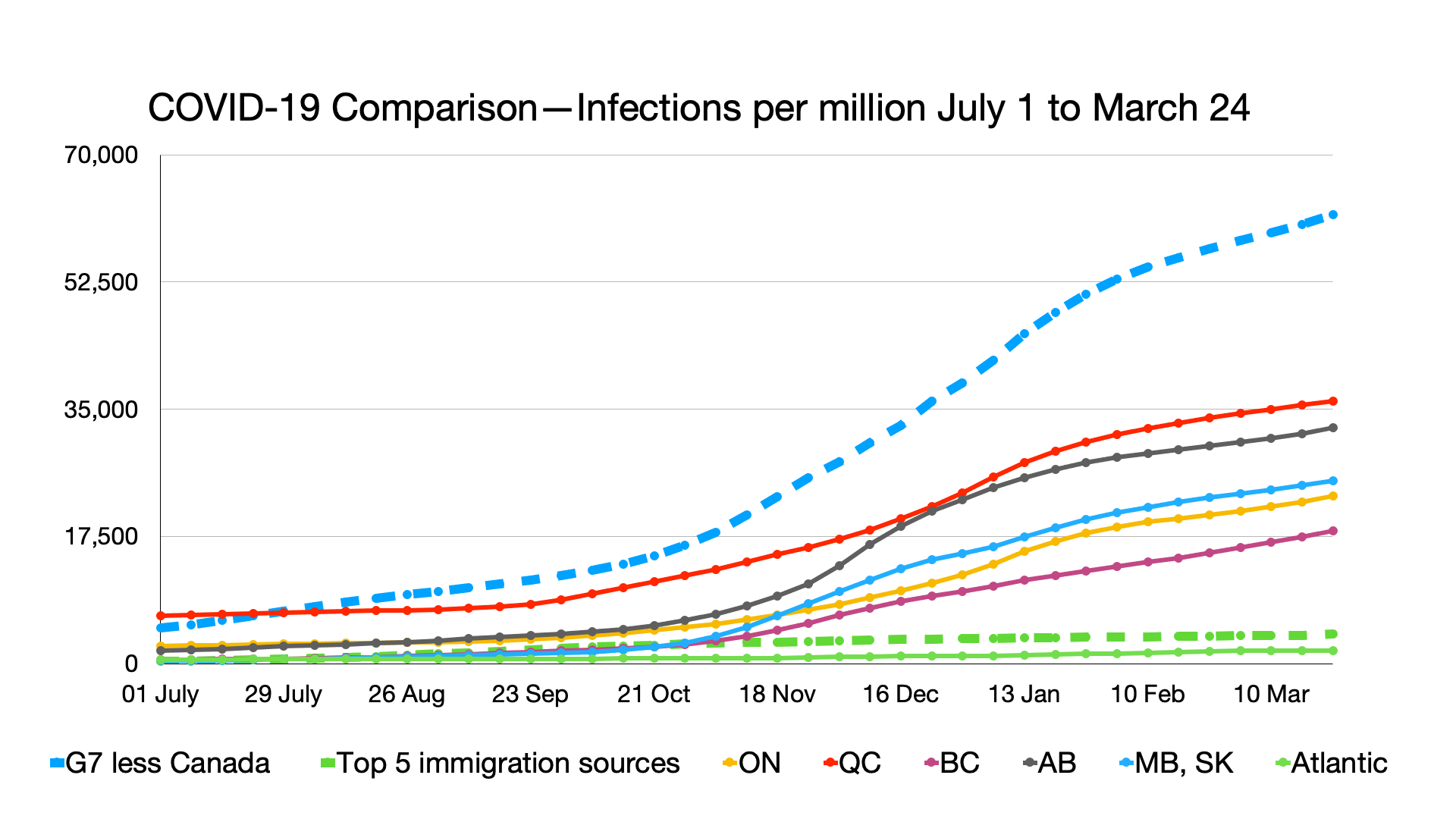
Infections per million: Overall steady increase of infections in most provinces but better than G7 less Canada.

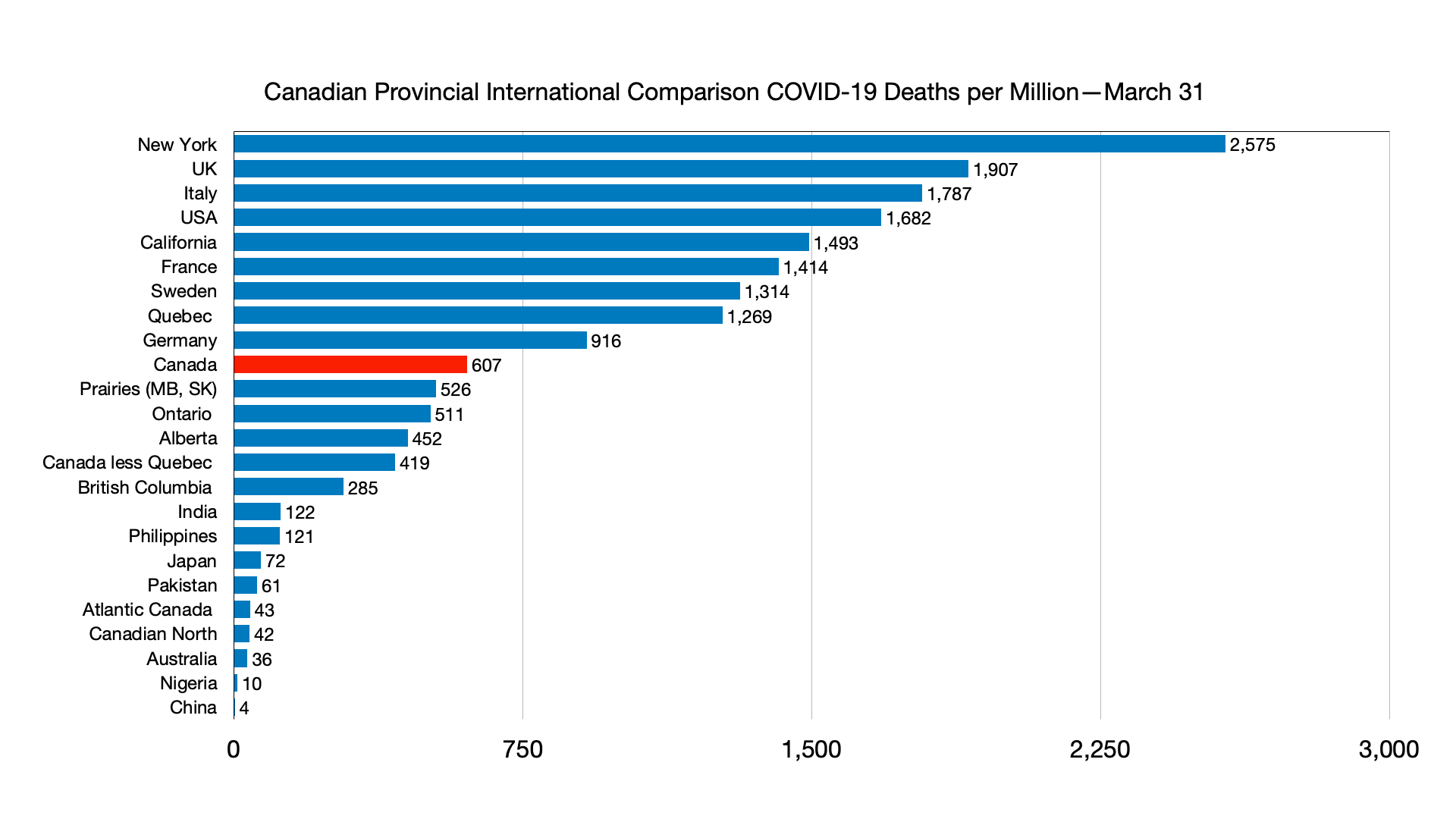
Deaths per million: No major changes.

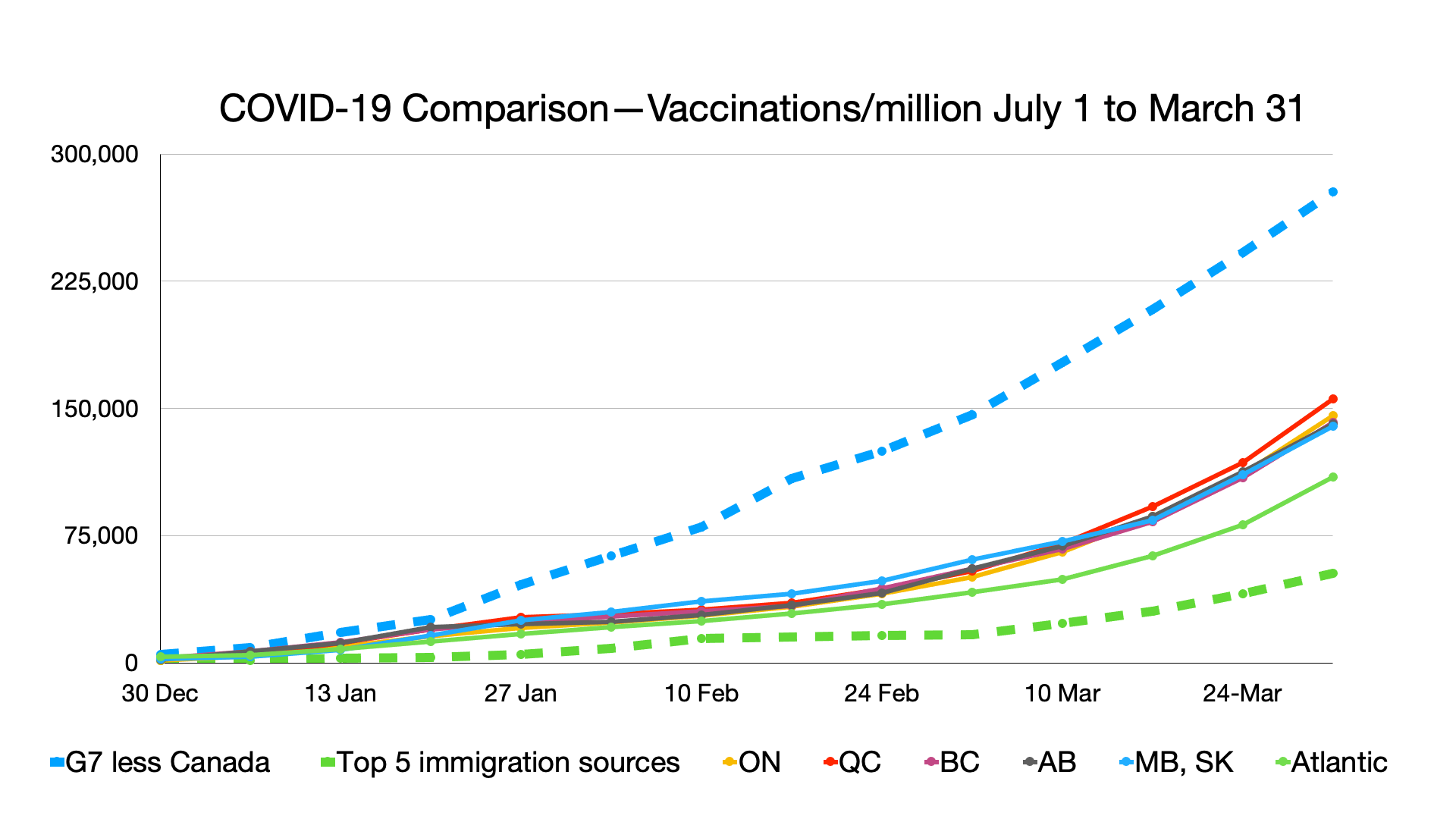
Vaccinations per million: While the gap between G7 and Canada remains, the rate has largely approached other G7 countries. Of note is the increase in vaccination rates of immigration source countries (China and India).

Weekly

Infections per million: Some minor shifts: Alberta ahead of Germany, Canada ahead of Prairies.

Deaths per million: No relative change.

USA: African Immigrant Health Groups Battle A Transatlantic Tide Of Vaccine Disinformation

Of note:

Switching between Swahili and English, Dr. Frank Minja asked the African immigrants on the Zoom call if they had any questions about the COVID-19 vaccine.

Minja, who is originally from Tanzania, was asked how to get the vaccine, how it works, whether it’s safe.

Then one person asked him about a video promoting the conspiracy theory that the vaccine is part of a plot to reduce the Black race.

“That’s the realm of nonsense and misinformation,” he said.

Minja’s Q & A was hosted by the organization, African Family Holistic Health Organization (AFHHO), in Portland, Oregon. It’s one of a number of grassrootsorganizations across the country that are helping Africans in the U.S. get vaccinated.

In the United States, skepticism about the vaccine can be found in all segments of the population, including African Americans. However, efforts to address hesitancy among Black people often overlook African immigrants, who get much of their information from their countries of origin.

Minja has been paying close attention to threads of COVID-19 disinformation coming from Africa.

“We’ve seen the whole gamut of misinformation that basically started with the fact that Africans and people of African ancestry are not susceptible to COVID,” he said in an interview following the Zoom session.

Minja said many African immigrants do not rely on American media as trusted sources of information. Some do not speak English well enough yet. Others are used to getting information from friends and family back home through social media platforms, such as WhatsApp.

Chioma Nnaji, a health worker and community organizer for African immigrants and the wider Black community in Massachusetts, said it’s important to take into account that “certain communities live and operate in two spaces.”

“This is usually applicable to immigrants and refugees where they still have connections to their home countries while they are resettling in a new country,” she added.

A lot of what they hear from back home is helpful, she said. For example, traditional herbal remedies are popular. Minja said those can be useful for treating symptoms of non-severe forms of COVID-19.

However, there’s also quite a bit of misleading information about the vaccine that is spread through these channels, Minja said.

“And a lot of it is really about just planting the seeds of distrust,” he said.

For African immigrants, the distrust is partly rooted in the memory of being exploited by western countries, said Dr. Ifeanyi Nsofor. He’s a global health expert from Nigeria, who has also been battling vaccine misinformation on the continent.

“It’s almost like anything that you say is coming from the white man, people look at it with lots of suspicion, based on that experience of colonialism,” he said.

And that experience did not end with independence. Over the years, global health advocates have accused multinational pharmaceutical firms of using African countries as living laboratories for clinical trials of experimental drugs. In 1996, 11 children died and dozens were left disabled in Nigeria after being given an experimental anti-meningitis drug created by Pfizer — the developer of one of the COVID vaccines.

A year later, the U.S. government was accused sponsoring studies that gave pregnant women in developing countries a placebo during tests of the effectiveness of an antiviral drug for HIV.

And in April 2020, two French doctors sparked outrage when they suggested that a potential treatment for COVID-19 should be tested in Africa. The director of the World Health Organization, Tedros Adhanom Ghebreyesus, condemned the suggestion as a “hangover from a colonial mentality.”

“All this fear comes from a history,” said Haika Mushi, a health worker at AFHHO. She is also originally from Tanzania and moved to the U.S. 12 years ago. She has been helping organize the group’s Zoom calls since the pandemic began.

When the vaccine became available, AFHHO started helping people sign up for appointments. At first, it brought in a white doctor to answer questions, and people were still skeptical. She says the group had more success when it brought in Minja and a doctor from Zimbabwe. They also have translators speaking French, Swahili and Tigrinya.

“It makes sense to hear from our own,” she said.

Another type of disinformation that is being spread, according to Nnaji, is that immigration status affects a person’s ability to get the vaccine. She says that is why community-based organizations who can help people sign up for vaccinations, such as AFHHO, are so important.

AFHHO hopes that its sessions will also help curb disinformation in the countries of origin, too.

“We feel like if the people here are well enough educated about the vaccine, they will be able to educate our families back home — our friends, neighbors back home,” Mushi said.

Source: African Immigrant Health Groups Battle A Transatlantic Tide Of Vaccine Disinformation

CDC: COVID-19 Was 3rd Leading Cause Of Death In 2020, People Of Color Hit Hardest

More confirmation of COVID-19 racial disparities:

COVID-19 was the third-underlying cause of death in 2020 after heart disease and cancer, the Centers for Disease Control and Prevention confirmed on Wednesday.

A pair of reports published in the CDC’s Morbidity and Mortality WeeklyReport sheds new light on the approximately 375,000 U.S. deaths attributed to COVID-19 last year, and highlights the pandemic’s disproportionate impact on communities of color — a point CDC Director Rochelle Walensky emphasized at a White House COVID-19 Response Team briefing on Wednesday.

She said deaths related to COVID-19 were higher among American Indian and Alaskan Native persons, Hispanics, Blacks and Native Hawaiian and Pacific Islander persons than whites. She added that “among nearly all of these ethnic and racial minority groups, the COVID-19 related deaths were more than double the death rate of non-Hispanic white persons.”

“The data should serve again as a catalyst for each of us [to] continue to do our part to drive down cases and reduce the spread of COVID-19, and get people vaccinated as soon as possible,” she said.

The reports examine data from U.S. death certificates and the National Vital Statistics System to draw conclusions about the accuracy of the country’s mortality surveillance and shifts in mortality trends.

One found that the age-adjusted death rate rose by 15.9% in 2020, its first increase in three years.

Overall death rates were highest among Black and American Indian/Alaska Native people, and higher for elderly people than younger people, according to the report. Age-adjusted death rates were higher among males than females.

COVID-19 was reported as either the underlying cause of death or a contributing cause of death for some 11.3% of U.S. fatalities, and replaced suicide as one of the top 10 leading causes of death.

Similarly, COVID-19 death rates were highest among individuals ages 85 and older, with the age-adjusted death rate higher among males than females. The COVID-19 death rate was highest among Hispanic and American Indian/ Alaska Native people.

Researchers emphasized that these death estimates are provisional, as the final annual mortality data for a given year are typically released 11 months after the year ends. Still, they said early estimates can give researchers and policymakers an early indication of changing trends and other “actionable information.”

“These data can guide public health policies and interventions aimed at reducing numbers of deaths that are directly or indirectly associated with the COVID-19 pandemic and among persons most affected, including those who are older, male, or from disproportionately affected racial/ethnic minority groups,” they added.

The other study examined 378,048 death certificates from 2020 that listed COVID-19 as a cause of death. Researchers said their findings “support the accuracy of COVID-19 mortality surveillance” using official death certificates, noting the importance of high-quality documentation and countering concerns about deaths being improperly attributed to the pandemic.

Among the death certificates reviewed, just 5.5% listed COVID-19 and no other conditions. Among those that included at least one other condition, 97% had either a co-occurring diagnosis of a “plausible chain-of-event” condition such as pneumonia or respiratory failure, a “significant contributing” condition such as hypertension or diabetes, or both.

“Continued messaging and training for professionals who complete death certificates remains important as the pandemic progresses,” researchers said. “Accurate mortality surveillance is critical for understanding the impact of variants of SARS-CoV-2, the virus that causes COVID-19, and of COVID-19 vaccination and for guiding public health action.”

Officials at the Wednesday briefing continued to call on Americans to practice mitigation measures and do their part to keep themselves and others safe, noting that COVID-19 cases continue to rise even as the country’s vaccine rollout accelerates.

The 7-day average of new cases is just under 62,000 cases per day, Walensky said, marking a nearly 12% increase from the previous 7-day period. Hospitalizations are also up at about 4,900 admissions per day, she added, with the 7-day average of deaths remaining slightly above 900 per day.

Dr. Celine Gounder, an infectious disease specialist at New York University who served as a COVID-19 adviser on the Biden transition team, told NPR’s Morning Edition on Wednesday that she remains concerned about the rate of new infections, even as the country has made considerable progress with its vaccination rollout.

She compared vaccines to a raincoat and an umbrella, noting they provide protection during a rainstorm but not in a hurricane

“And we’re really still in a COVID hurricane,” Gounder said. “Transmission rates are extremely high. And so even if you’ve been vaccinated, you really do need to continue to be careful, avoid crowds and wear masks in public.”

Source: CDC: COVID-19 Was 3rd Leading Cause Of Death In 2020, People Of Color Hit Hardest

#COVID-19: Comparing provinces with other countries 31 March Update

The latest charts, compiled 31 March, in the context of a likely third wave.

Vaccinations: Change from last week: Slight decline in gap between EU countries and Canadian provinces. USA overall ahead of California, New York, France and Quebec ahead of Germany, Ontario ahead of Sweden but Sweden ahead of Canada and Canada less Quebec, British Columbia ahead of Alberta and Prairies.

Trendline charts

Infections per million: The previous trend of a flattening curve is seen in G7 countries and most provinces appears to be changing for the worse.

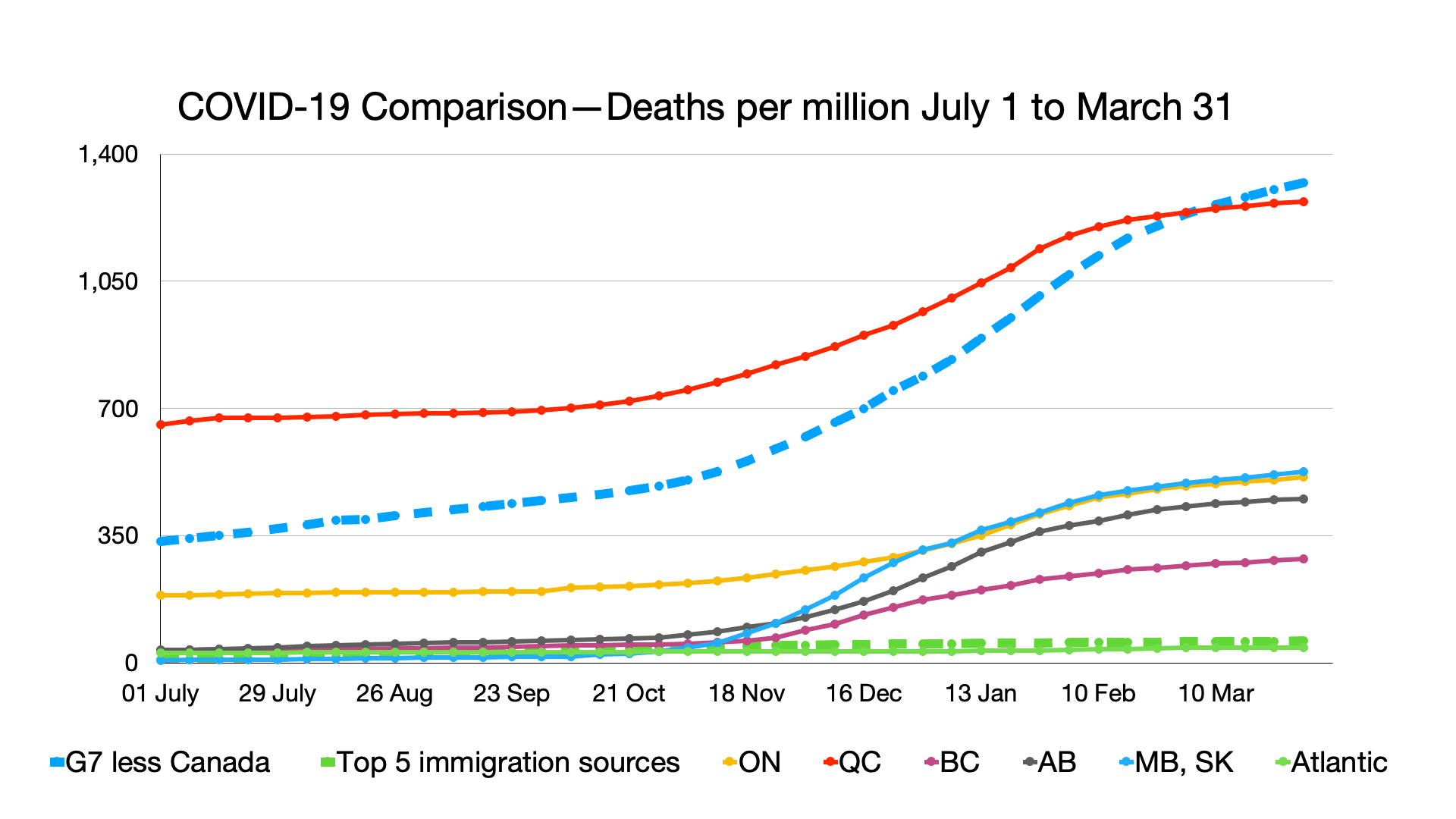
Deaths per million: Most Canadian provinces continue to flatten the curve, Quebec most dramatically. Overall G7 death rate continue to surpass Quebec’s by an increasing margin.

Vaccinations per million: While the gap between G7 and Canada remains despite the arrival of more vaccines, one can see that Canadian provinces have been ramping up. The increase in vaccination rates of immigration source countries driven by China and India.

Weekly

Infections per million: Some minor shifts: New York ahead of USA and California, Germany ahead of Alberta.

Deaths per million: No relative change.

Why Pandemics Give Birth To Hate: From Bubonic Plague To COVID-19

Useful historical reminder:

The pandemic has been responsible for an outbreak of violence and hate directed against Asians around the world, blaming them for the spread of COVID-19. During this surge in attacks, the perpetrators have made their motives clear, taunting their victims with declarations like, “You have the Chinese Virus, go back to China!” and assaulting them and spitting on them.

The numbers over the past year in the U.S. alone are alarming. As NPR has reported, nearly 3,800 instances of discrimination against Asians have been reported just in the past year to Stop AAPI Hate, a coalition that tracks incidents of violence and harassment against Asian Americans and Pacific Islanders in the U.S.

Then came mass shooting in Atlanta last week, which took the lives of eight people, including six women of Asian descent. The shooter’s motive has not been determined, but the incident has spawned a deeper discourse on racism and violence targeting Asians in the wake of the coronavirus.

This narrative – that “others,” often from far-flung places, are to blame for epidemics – is a dramatic example of a long tradition of hatred. In 14th-century Europe, Jewish communities were wrongfully accused of poisoning wells to spread the Black Death. In 1900, Chinese people were unfairly vilified for an outbreak of the plague in San Francisco’s Chinatown. And in the ’80s, Haitians were blamed for bringing HIV/AIDS to the U.S., a theory that’s considered unsubstantiated by many global health experts.

Some public health practitioners say the global health system is partially responsible for perpetuating these ideas.

According to Abraar Karan, a doctor at the Brigham and Women’s Hospital and Harvard Medical School, the notion persists in global health that “the West is the best.” This led to an assumption early on in the pandemic that COVID-19 spread to the rest of the world because China wasn’t able to control it.

“The other side of that assumption is, ‘Had this started anywhere else, like in the U.S. or the U.K. or Europe, somehow it would’ve been better controlled, and a pandemic wouldn’t have happened,'” says Karan, who was born in India and raised in the U.S. He has been working closely with the Massachusetts Department of Public Health to respond to COVID-19.

China’s response was not without fault. The government’s decision to silence doctors and not warn the public about a likely pandemic for six days in mid-January caused more than 3,000 people to become infected within a week, according to a report by the Associated Press, and created ripe conditions for global spread. Some of the aggressive measures China took to control the epidemic – confining people to their homes, for example — have been described as “draconian” and a violation of civil rights, even if they ultimately proved effective.

But it soon became clear that assumptions about the superiority of Western health systems were false when China and other Asian countries, along with many African countries, controlled outbreaks far more effectively and faster than Western countries did, says Karan.

The Twitter Blame Game And Its Repercussions

Some politicians, including former President Donald Trump publicly blamed China for the pandemic, calling this novel coronavirus the “Chinese Virus” or the “Wuhan Virus.” They consistently pushed that narrative even after the World Health Organization (WHO) warned as early as March 2020, when the pandemic was declared, that such language would encourage racial profiling and stigmatization against Asians. Trump has continued to use stigmatizing language in the wake of the Atlanta shooting, using the phrase “China virus” during a March 16 call to Fox News.

A report by researchers at the University of California at San Francisco (UCSF), released this month, directly linked Trump’s first tweet about a “Chinese virus” to a significant increase in anti-Asian hashtags. According to a separate report by the Center for the Study of Hate and Extremism, anti-Asian hate crimes in 16 U.S. cities increased 149 percent in 2020, from 49 to 122.

“Diseases have often been racialized in the past as a form of scapegoating,” says Yulin Hswen, an assistant professor of epidemiology and biostatistics at UCSF and lead author of the study on Trump’s tweet. Sometimes, it’s to distract from other events that are occurring within a society, such as the early failures of the U.S. response to the pandemic, says Hswen.

Suspicion tends to manifest more during times of vulnerability, like in wartime or during a pandemic, says ElsaMarie D’Silva, an Aspen Institute New Voices fellow from India who studies violence and harassment issues. It just so happened that COVID-19 was originally identified in China, but, as NPR’s Jason Beaubien has reported, some of the early clusters of cases elsewhere came from jet setters who traveled to Europe and ski destinations.

“What you’re seeing in the U.S. is this pre-existing, deep-seated bias [against Asians and Asian Americans] – or rather, racism – that is now surfacing,” says D’Silva. “COVID-19 is just an excuse.”

A Racist History In Global Health

For Karan, though, the problem lies deeper — with the colonialist history of global health systems.

“It’s not that the biases are necessarily birthed from global health researchers,” he says. “It’s more that global health researchers are birthed from institutions and cultures that are inherently xenophobic and racist.”

For example, the West is usually regarded as the hub of expertise and knowledge, says Sriram Shamasunder, an associate professor of medicine at UCSF, and there’s a sense among Western health workers that epidemics occur in impoverished contexts because the people there engage in primitive behaviors and just don’t care as much about health.

“[Western health workers] come in with a bias that in San Francisco or Boston, we would never let [these crises] happen,” says Shamasunder, who is co-founder and faculty director of the HEAL Initiative, a global health fellowship that works in Navajo Nation in the U.S. and in eight other countries.

In the early days of COVID-19, skepticism by Western public health officials about the efficacy of Asian mask protocols hindered the U.S.’s ability to control the pandemic. Additionally, stereotypes about who was and wasn’t at risk had significant consequences, says Nancy Kass, deputy director for public health at the Johns Hopkins Berman Institute of Bioethics.

According to Kass, doctors initially only considered a possible COVID-19 diagnosis among people who had recently flown back from China. That narrow focus caused the U.S. to misdiagnose patients who presented with what we now call classic COVID symptoms simply because they hadn’t traveled from China.

“Inadvertently, we [did] a disservice both to patients who need[ed] care and to public health,” says Kass.

It’s reminiscent of the HIV/AIDS epidemic in the 1980s, Kass says. Because itwas so widely billed as a “gay disease,” there are many documented cases of heterosexual women who presented with symptoms but weren’t diagnosed until they were on their deathbeds.

That’s not to say that we should ignore facts and patterns about new diseases. For example, Kass says it’s appropriate to warn pregnant women about the risks of traveling to countries where the Zika virus, which is linked to birth and developmental defects, is present.

But there’s a difference, she says, between making sure people have enough information to understand a disease and attaching a label, like “Chinese virus,” that is inaccurate and that leads to stereotyping.

Karan says we also need to shift our approach to epidemics. In the case of COVID-19 and other outbreaks, Western countries often think of them as a national security issue, closing borders and blaming the countries where the disease was first reported. This approach encourages stigmatization, he says.

Instead, Karan suggests reframing the discussion to focus on global solidarity, which promotes the idea that we are all in this together. One way for wealthy countries to demonstrate solidarity now, Karan says, is by supporting the equitable and speedy distribution of vaccines among countries globally as well as among communities within their own borders.

Without such commitments in place, “it prompts the question, whose lives matter most?” says Shamasunder.

Ultimately, the global health community – and Western society as a whole – has to discard its deep-rooted mindset of coloniality and tendency to scapegoat others, says Hswen. The public health community can start by talking more about the historic racism and atrocities that have been tied to diseases.

Additionally, Karan says, leaders should reframe the pandemic for people: Instead of blaming Asians for the virus, blame the systems that weren’t adequately prepared to respond to a pandemic.

Although WHO has had specific guidance since 2015 about not naming diseases after places, Hswen says the public health community at large should have spoken out earlier and stronger last year against racialized language and the ensuing violence. She says they should have anticipated the backlash against Asians and preempted it with public messaging and education about why neutral terms like “COVID-19” should be used instead of “Chinese virus.”

“Public health people know there is a history of racializing diseases and targeting particular groups,” says Hswen. “They could have done more to defend the Asian community.”

Source: Why Pandemics Give Birth To Hate: From Bubonic Plague To COVID-19

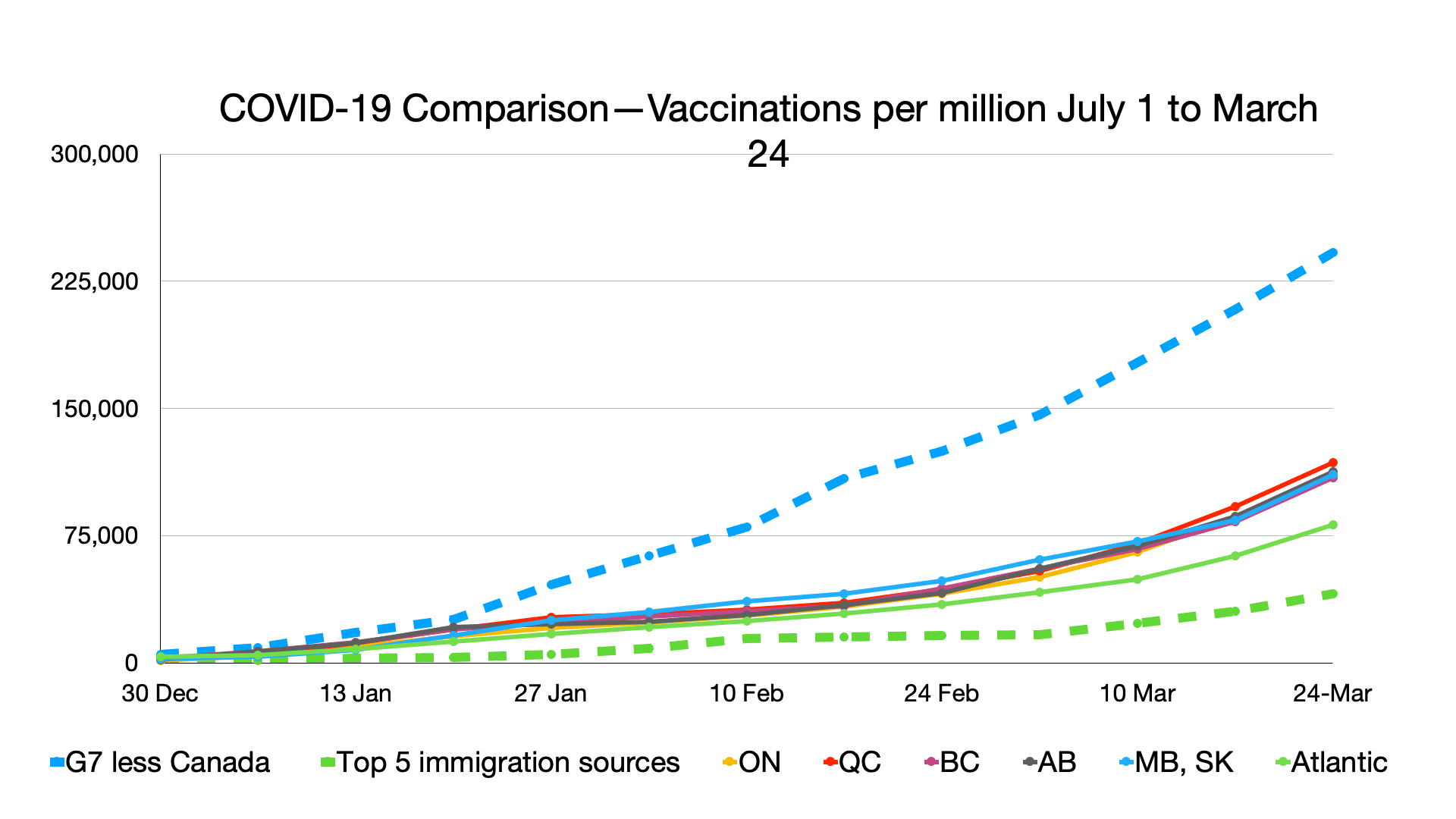
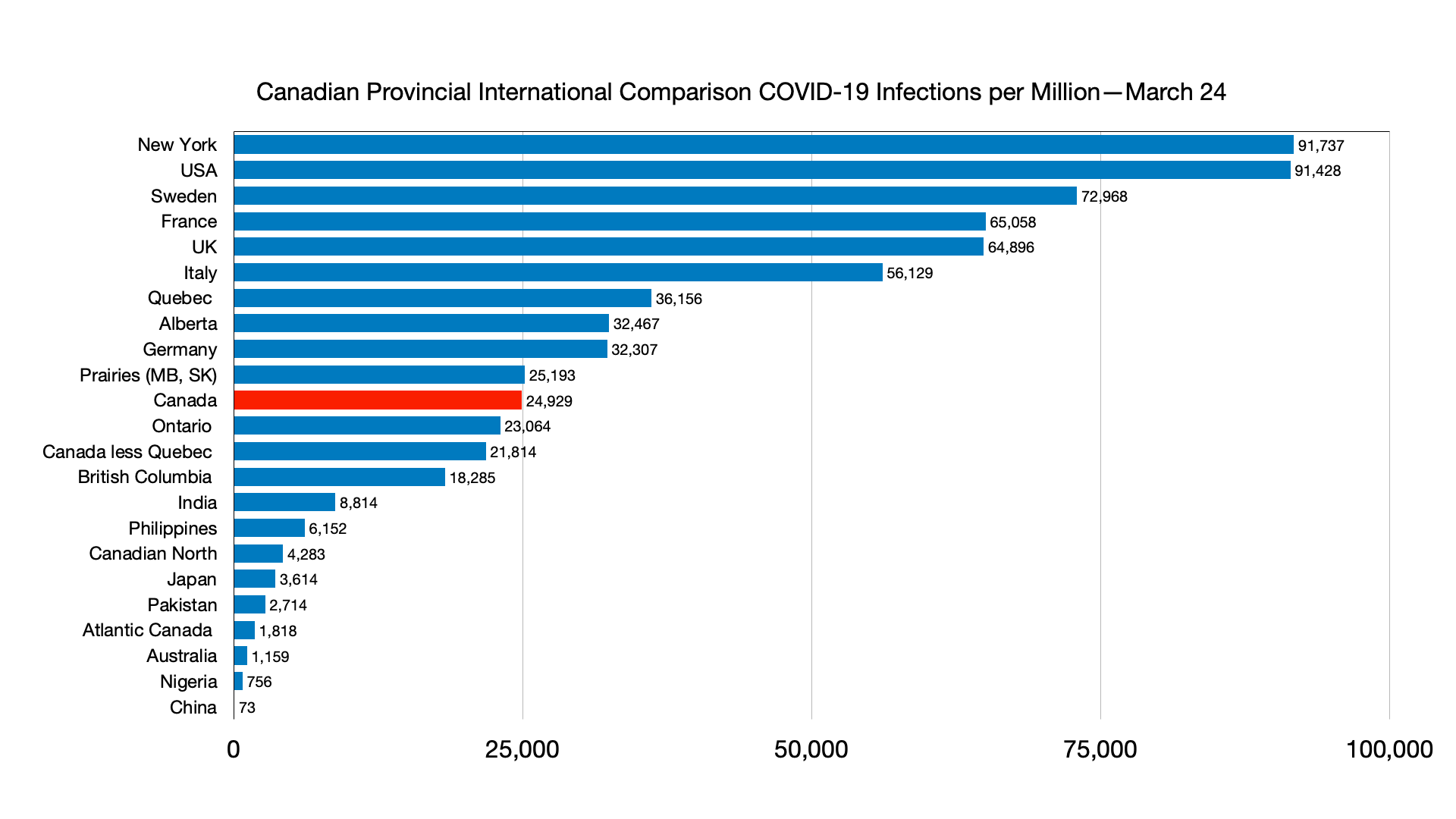
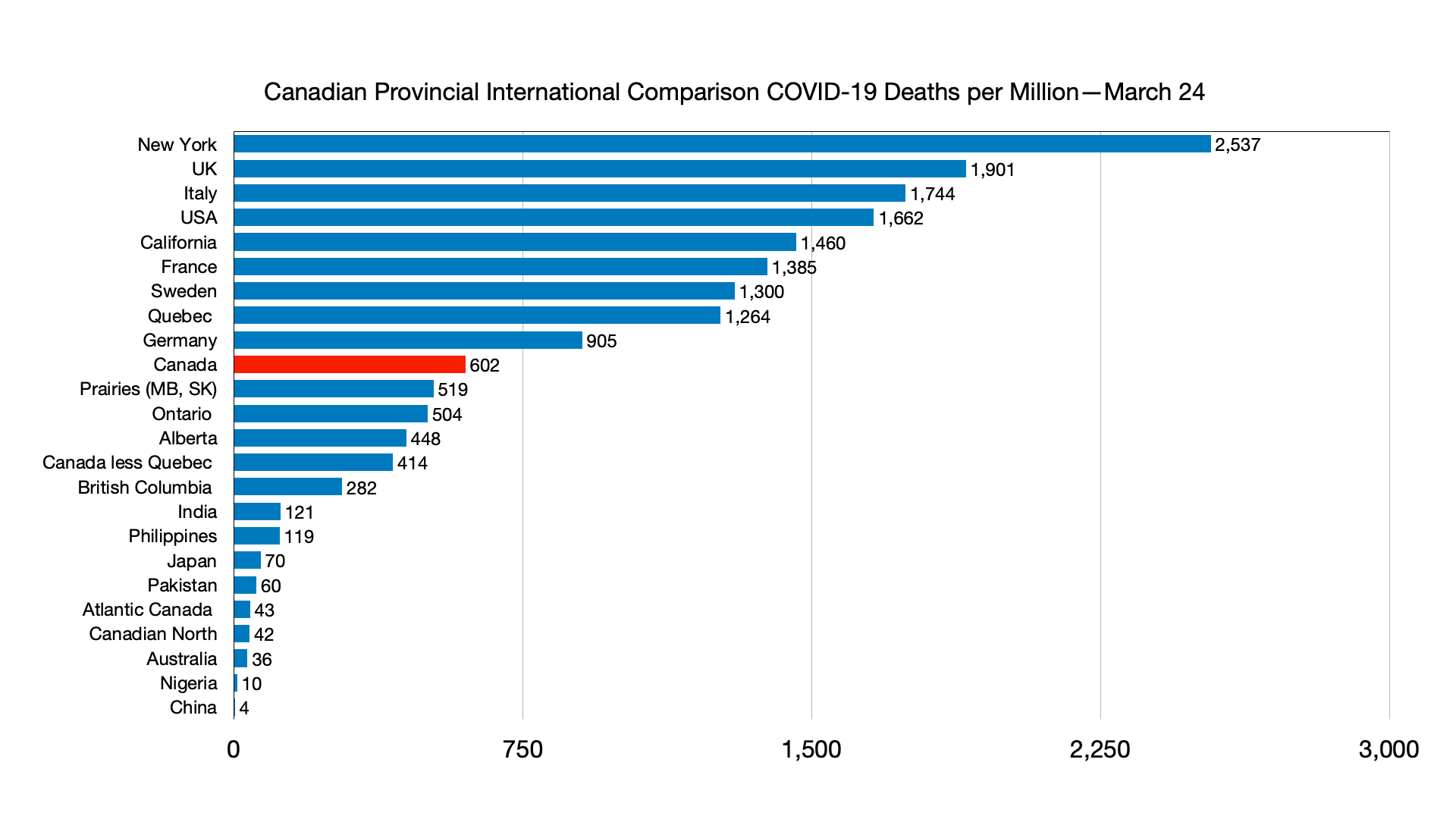
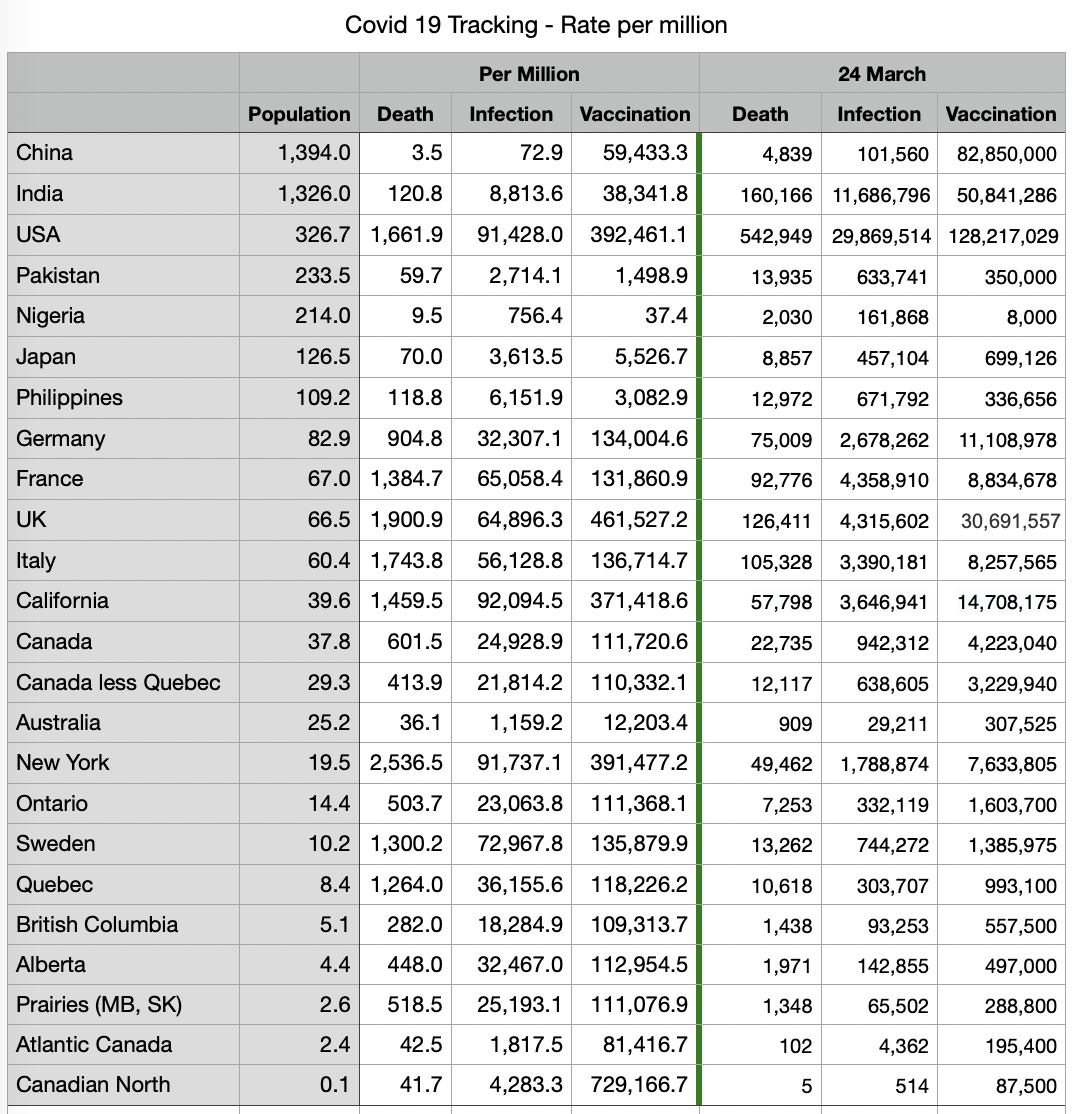
#COVID-19: Comparing provinces with other countries 17 March Update

The latest charts, compiled 24 March.

Vaccinations: The gap between all G7 countries save Japan continues to grow, all European countries ahead of Canada with no significant narrowing yet of the gap.

Trendline charts

Infections per million: The overall trend of a flattened curve is seen in G7 countries and most provinces.

Deaths per million: Most Canadian provinces continue to flatten the curve, Quebec most dramatically. Overall G7 death rate continue to surpass Quebec’s.

Vaccinations per million: While the gap between G7 and Canada remains despite the arrival of more vaccines, one can see that Canadian provinces have been ramping up.

Weekly

Infections per million: Some minor shifts: New York ahead of USA, France ahead of UK,Prairies ahead of Canada.

Deaths per million: Canadian North ahead of Australia (reflecting increase in deaths from 1 to 4 in Nunavut.

Douglas Todd: Slow vaccine rollout threatens Trudeau’s lofty immigration target

Of note:

Canada’s vaccine rollout, which is slower than 41 other countries, threatens Prime Minister Justin Trudeau’s chances of reaching his record target for immigration this year. But that could benefit young Canadians and recent migrants struggling to find work during the pandemic.

University of B.C. geographer Daniel Hiebert has found COVID-19 has elevated the number of “underutilized” workers in Canada to almost four million — many of whom will compete with the 401,000 immigrants Ottawa is welcoming in 2021, in addition to temporary workers.

Saying Canada is only about “halfway” through resolving the pandemic through vaccinations, Hiebert told the influential Affiliation of Multicultural Societies and Service Agencies of B.C. (AMSSA) it will be a “really significant challenge” to “economically integrate 400,000 newcomers into a labour market with nearly four million looking for work — or more work. It’s completely unprecedented.”

Source: Douglas Todd: Slow vaccine rollout threatens Trudeau’s lofty immigration target

COVID-19 Immigration Effects January 2021 Update

Regular monthly update showing the impact of government using temporary residents as a major “inventory” for permanent residents. Highlights:

  • January immigration increased, reflecting government decision to use inventory of temporary residents to transition to permanent residency. The reduction of Canadian Experience Class Express Entry minimal score further demonstration of government intent. 
  • PRs: Admissions increased from 10,070 in December to 24,650 in January. January Year-over-year decline: Economic 5.5%, Family 24.8%. Refugees increase of 68.1% 
  • Permanent Residents Applications: Decrease from 17,376 in December to 15,613 in January. January year-over-year decrease 41.3% 
  • Web “Immigrate to Canada”: Largely flat, from 62,161 in January to 64,507 in February. February year-over-year increase of 9.3% 
  • Provincial Nominee Program: Increase from 1,475 in December to 6,355 in January. January year-over-year increase: 26.72% 
  • TR to PRs transition (i.e., those already in Canada): Dramatic increase from 2,725 in December (some double counting) to 12,990 in January. January Year-over-year increase of 41.8% 
  • Temporary Residents IMP: Increase from 29,885 in December (post-grad employment slightly less than half) to 31,605 in January. January Year-over-year change: Agreements increase of 26.9%, Canadian Interests increase of 44.9% 
  • Temporary Residents TFWP: Increase from 6,490 in December to 10,695 in January. January year-over-year increase: Caregivers 74.4%, Agriculture 42.8% and Other LMIA 34.6%. 
  • Web “Get a work permit”: From 73,343 in January (outside Canada) to 58,958 in February. February Year-over-year decline: 24.9% 
  • Students: Increase from 24,775 in December to 27,690 in January. January year-over-year increase of 9.1% 
  • Study Permit Applications: Decline from 36,946 in December to 27,735 in January. January Year-over-year decrease: 9.2% 
  • Web “Get a study permit”: From 62,161 in January (outside Canada) to 64,507 in February. Year-over-year increase: 9.3% 
  • Asylum Claimants: Small decline from 1,240 in December (about 75% inland) to 1,070 in January. January year-over-year decrease: 77.1% 
  • Settlement Services (NEW 2020 data December): Decline from 48,700 in November to 42,890 in December. December Year-over-year decrease 21.6 percent 
  • Web “Find immigrant services hear you”: From 11,076 in January to 8,201 in February (outside Canada). February Year-over-year decrease: 32.5% 
  • Citizenship: Small increase from 2,476 in December to 2,689 in January. January Year-over-year decrease: 89.2%. 2020 Application data pending 
  • Web “Apply for citizenship”: From 28,179 in January (outside Canada) to 20,965 in February. February Year-over-year decrease: 31.3% 
  • Visitor Visas: Decrease from 5,237 in December to 3,507 in January. January Year-over-year decrease: 94.4%

Pdf: https://multiculturalmeanderings.com/wp-content/uploads/2021/03/covid-19-immigration-effects-key-slides-january-2021-draft.pdf