China could keep dual citizenship Canadians from leaving Hong Kong amid protests: lawyer

Legitimate worry:

A Canadian legal activist is warning the federal government to grant asylum to democracy activists in Hong Kong and expanded settlement to those with links to Canada before China prevents them from leaving.

The warning came Monday from Avvy Go, the director of the Chinese and Southeast Asian Legal Clinic, which has already helped bring Hong Kong pro-democracy activists to Canada.

There are 300,000 Canadians of Hong Kong descent in China, and Go says if Ottawa doesn’t act now to accommodate those who want to leave, Beijing will prevent them from leaving in the future.

“The time to act is now. As China continues to crack down on the democracy movement in Hong Kong, it may soon find ways to prohibit Hong Kong activists from leaving that city, period,” Go said Monday at a joint video press conference hosted by Amnesty International.

“Even with those who are Canadian citizens, China may refuse to recognize their dual citizenship status and deny their exit from Hong Kong.”

MPs from the four major Canadian political parties and one independent senator stood in solidarity with the proposals Go put forward at a virtual press conference convened by Amnesty International.

Canada, along with the United States, Britain and Australia, have condemned Beijing’s imposition of a new national security law that they say violates Hong Kong’s freedom from Chinese communist interference.

“This is the Beijing government’s most breathtaking, threatening and callous attack yet … discarding any pretence of fulfilling China’s international promises made when Hong Kong was handed over in 1997,” said Alex Neve, the secretary general of Amnesty’s Canadian branch.

Go called on the federal government to implement several immigration and asylum measures, to help people get out of Hong Kong before it is too late. They are:

— Expediting family sponsorship applications by Canadians with spouses and parents in Hong Kong.

— Expanding family-reunification sponsorship programs beyond parents and spouses.

— Issuing more temporary-resident permits, work visas and student visas.

— Granting refugee status to democracy advocates, and offering them stepped-up resettlement options.

Last year, Hong Kong residents took to the streets in mass protests against a proposed extradition law from Beijing that was eventually abandoned.

During that unrest, Go’s clinic received requests from Canadians of Hong Kong descent whose relatives participated in pro-democracy protests, she said.

Since Beijing announced the new security law, the clinic is getting calls from Canadians who are worried about their families even though they may not have been involved with the democracy movement, said Go.

“These are our people. And as parliamentarians dedicated to promoting and protecting democracy, we cannot stand by silently. I endorse all of the actions,” said Independent Sen. Marilou McPhedran.

McPhedran said she has travelled across Africa and seen the effect of China’s massive development spending, an influence-buying effort that many analysts say is a power play by Beijing’s ruling communist party.

“The weaponization of economic support is something that we need to understand better as we look at what is happening in Hong Kong,” said McPhedran.

“The violation of the Hong Kong Basic Law, which is the essence of what China is saying it is going to do, is in fact a precursor to threats to democracies in many other countries as well.”

Conservative MP Kenny Chiu, who was born in Hong Kong, said the people of his homeland respect human rights and the rule of law, and they are prepared to commemorate Thursday’s anniversary of the Tiananmen Square massacre that saw the Chinese army kill scores of pro-democracy student protesters in 1989.

“We’re witnessing in Hong Kong basic dictatorship in disguise, exerting its power out of fear for these values,” said Chiu.

Source: China could keep dual citizenship Canadians from leaving Hong Kong amid protests: lawyer

Working with China can’t be at the expense of our values or the rule of law

Good opinion piece by former ambassador Guy Saint-Jacques:

“Canada is China’s best friend,” former Chinese premier Zhu Rongji famously said in November, 1998. There was then a heavy flow of visitors in both directions and a genuine desire in China to move forward with the rule of law and gradual democracy. Its impending entry into the World Trade Organization was going to result in more business opportunities and more contacts with the outside world, which would help China move in the right direction. Well, that plan didn’t work.

Instead, China has become more assertive and aggressive – certain that maintaining an authoritarian regime is the best way for the Communist Party of China (CCP) to survive and protect the privileges of its princelings and their families. Technological development has enabled the CCP to better limit freedom of speech and religion, while silencing calls for a more transparent political process.

When Xi Jinping became the paramount leader in November, 2012, he gave a new impetus to this model. He declared that the time had come for China to take its rightful place on the international scene, placing its people in prominent international organizations, creating its own institutions and launching the Belt and Road Initiative to increase its sphere of influence (and the size of its markets). At the 19th CPC Congress in October, 2017, Mr. Xi went further by underlining the economic success China had achieved without adopting Western values.

In terms of its relationship with China, Canada has gradually lost influence. We are now China’s 21st export market, and China has lost hope in concluding a free-trade agreement with us, which would have been its first with a G7 country. This potential agreement was our last bargaining chip. Despite repeated warnings about Mr. Xi’s tightening grip on Chinese society, and events such as the arrests of Kevin and Julia Garratt in August, 2014, some of the political class in Ottawa remained ambivalent about China.

All this changed after the arrests of Michael Kovrig and Michael Spavor in retaliation for the arrest of Huawei chief financial officer Meng Wanzhou in December, 2018. The successful campaign to get international support for Mr. Kovrig and Mr. Spavor’s release took Beijing by surprise and tarnished its image of a benevolent superpower that pretends to be the new champion of multilateralism and free trade. Even still, Ottawa decided to adopt an appeasement strategy, hoping that it would lead to the release of our two Canadians.

A year and a half later, what has been achieved? There has been no improvement in the detention conditions of Mr. Kovrig and Mr. Spavor, and we lost $4.5-billion in exports in 2019, with a further 16-per-cent drop in the first quarter of this year. We expressed little criticism of what is happening to Uyghurs in Xinjiang and pro-democracy activists in Hong Kong. We were late to support Australia’s resolution for an independent investigation of the COVID-19 pandemic. And we tolerate Chinese interference on Canadian campuses, not to mention continuing industrial espionage. China has succeeded in getting us to exercise self-censorship without ever giving us anything in return. The way China handled the new coronavirus pandemic confirmed how the CCP functions. Simply put, China has lost the trust of the international community.

After the decision by Associate Chief Justice Heather Holmes in the case of Ms. Meng, we have to brace ourselves for the fact that relations with China won’t improve for a long time. The extradition process may drag on for years unless it is decided after a June hearing that Ms. Meng’s rights were not respected when she was arrested.

It is high time for the Canadian government to adopt a much firmer attitude with China: That is the only language the CCP respects. As Paul Monk put it in the Australian on May 16, “We have nothing to hope for from [Mr. Xi] and must accustom ourselves to playing economic and strategic hardball, because it is the way he is playing the game.”

We should continue to work with like-minded countries to put pressure on China to free the two Michaels and to reinforce a multilateral system. The message should be clear: We want a constructive relationship with a prospering China and constructive change inside China – as long as it respects international laws and treaties and stops acting like a bully when a country does not follow its diktats. We can also take domestic measures to make China realize that while we may be insignificant to them, there is still a price to pay. Finally, we need to build up our China competencies to better inform our dealings with the CCP’s leadership.

UK could offer ‘path to citizenship’ for Hong Kong’s British passport holders

Canada may well have to prepare for a return to Canada of Canadian expatriates, whether of Hong Kong or other ancestry, as well as a likely increase in immigration demand as the situation continues to deteriorate as it appears unlikely China will change course:

The UK could offer British National (Overseas) passport holders in Hong Kong a path to UK citizenship if China does not suspend plans for a security law in the territory, UK Foreign Secretary Dominic Raab says.

It comes after China’s parliament backed proposal that would make it a crime to undermine Beijing’s authority.

There are fears the legislation could end Hong Kong’s unique status.

China said it reserved the right to take “countermeasures” against the UK.

Foreign ministry spokesman Zhao Lijian said the UK and China had agreed that holders of British National (Overseas) – or BNO – passport should not enjoy UK residency.

“All such BNO passport holders are Chinese nationals and if the UK insists on changing this practice it will not only violate its own stance but also international law,” he added.

There are 300,000 BNO passport holders in Hong Kong who have the right to visit the UK for up to six months without a visa.

Mr Raab’s statement came after the UK, US, Australia and Canada issued joint condemnation of Beijing’s plan, saying imposing the security law would undermine the “one country, two systems” framework agreed before Hong Kong was handed over from British to Chinese rule in 1997.

The framework guaranteed Hong Kong some autonomy and afforded rights and freedoms that do not exist in mainland China.

China has rejected foreign criticism of the proposed law, which could be in force as early as the end of June.

Li Zhanshu, chairman of the parliamentary committee that will now draft the law, said it was “in line with the fundamental interests of all Chinese people, including Hong Kong compatriots”.

What did Raab say?

British National (Overseas) passports were issued to people in Hong Kong by the UK before the transfer of the territory to Chinese sovereignty in 1997.

Announcing the possible change in policy, Mr Raab said the six-month limit on stays in the UK for BNO holders would be scrapped.

“If China continues down this path and implements this national security legislation, we will remove that six month limit and allow those BNO passport holders to come to the UK and to apply to work and study for extendable periods of 12 months and that will itself provide a pathway to future citizenship,” he said.

The BBC’s diplomatic correspondent James Landale says that in Beijing might not mind if some pro-democracy campaigners escape to the UK, but the flight of talented wealth creators would be of concern.

Some MPs want the UK to go further and offer automatic citizenship. Conservative MP Tom Tugendhat, chairman of the foreign affairs select committee, said BNO holders should have an automatic right to live and work in the UK.

The government has in the past rejected calls to give BNO holders in Hong Kong full citizenship.

Last year more than 100,000 people in Hong Kong signed a petition calling for full rights. The government responded by saying that only UK citizens and certain Commonwealth citizens had the right of abode in the UK and cited a 2007 review which said giving BNO holders full citizenship would be a breach of the agreement under which the UK handed Hong Kong back to China.

However in 1972 the UK offered asylum to some 30,000 Ugandan Asians with British Overseas passports after the then-military ruler Idi Amin ordered about 60,000 Asians to leave. At the time some MPs said India should take responsibility for the refugees, but Prime Minister Edward Heath said the UK had a duty to accept them.

What other reaction has there been?

Shadow Foreign Secretary Lisa Nandy earlier said the UK had to be more robust with Beijing.

Referring to the security law, she told the BBC: “This is the latest in a series of attempts by China to start to erode the joint declaration which Britain co-signed with the Chinese government when we handed over Hong Kong, and protected its special status.”

“We want to see the UK government really step up now,” she said.

Former Foreign Secretary Jeremy Hunt said the UK should bring together a coalition of countries to avoid a tragedy in the territory.

He told the BBC: “This is definitely the most dangerous period there has ever been in terms of that agreement.

“With our unique legal situation, Britain does have a responsibility now to pull together that international coalition and to do what we can to protect the people of Hong Kong.”

On Thursday Prime Minister Boris Johnson’s official spokesman told a Westminster briefing: “We are deeply concerned about China’s legislation related to national security in Hong Kong.

“We have been very clear that the security legislation risks undermining the principle of one country, two systems.

“We are in close contact with our international partners on this and the Foreign Secretary spoke to US Secretary [Mike] Pompeo last night.”

He added: “The steps taken by the Chinese government place the Joint Declaration under direct threat and do undermine Hong Kong’s high degree of autonomy.”

On Wednesday, Mr Pompeo said developments in Hong Kong meant it could no longer be considered to have “a high degree of autonomy” from mainland China.

This could lead to Hong Kong being treated the same as mainland China under US law, which would have major implications for its trade hub status.

Source: UK could offer ‘path to citizenship’ for Hong Kong’s British passport holders

University of Queensland student suspended for two years after speaking out on China ties

Outrageous and a reminder of accepting funding from the Chinese government, one that Canadian universities and institutions also face:

A student activist highly critical of the University of Queensland’s ties to Beijing has been handed a two-year suspension from the institution.

Drew Pavlou faced a disciplinary hearing on 20 May at the university over 11 allegations of misconduct, detailed in a confidential 186-page document, reportedly linked to his on-campus activism supporting Hong Kong and criticising the Chinese Communist Party.

The university ordered his suspension on Friday after the 20-year-old philosophy student reportedly left the previous hearing after about one hour, citing procedural unfairness.

UQ chancellor Peter Varghese said on Friday he was concerned with the outcome of the disciplinary action against Pavlou.

“There are aspects of the findings and the severity of the penalty which personally concern me,” Varghese said in a statement.

“In consultation with the vice chancellor, who has played no role in this disciplinary process, I have decided to convene an out-of-session meeting of UQ’s Senate next week to discuss the matter.”

The University of Queensland has faced media scrutiny for its relations with the Chinese government, which has co-funded four courses offered by the university.

The institution is also home to one of Australia’s many Confucius Institutes – Beijing-funded education centres some critics warn promote propaganda.

Source: https://www.theguardian.com/australia-news/2020/may/29/university-of-queensland-student-suspended-for-two-years-after-speaking-out-on-china-ties?CMP=Share_AndroidApp_Email

Canada braces for economic retaliation from China following Meng Wanzhou court ruling

Good overview. Of particular interest to me was the quote below Wang Huiyao, president of the Center for China and Globalization.

As you may recall, Howard Ramos and I organized a successful petition against them hosting the 2020 International Metropolis Conference on the grounds that CCG was an organ of the Chinese government.

The quote proves our point and the willful or not naïveté of the International Steering Committee board members:

Wang Huiyao, president of the Center for China and Globalization, a think tank closely affiliated with the Chinese government and its efforts to exert foreign influence, called the ruling “a very bad decision.”

It’s “really not good for business. Not good for traditional long friendship ties. Not good for any further improvement.”

The decision will generate “a lot of unhappiness among the Chinese people,” he said. It is “really very unfortunate to see Canada following the U.S. on these issues. Canada should be a little bit more independent.”

Source:    Canada braces for economic retaliation from China following Meng Wanzhou court ruling Ottawa sought to assure China that the court’s decision was a product of Canada’s legal system and out of its hands <img src=”https://www.theglobeandmail.com/resizer/rXfA7texOBbdizY0RX9LtuO6Xvs=/0x33:3000×2033/740×0/filters:quality(80)/cloudfront-us-east-1.images.arcpublishing.com/tgam/3M3YKHU4LNKKZL6WGMHUKUL4JI.jpg” alt=””>     

Matas and Cotler: Legal steps must be taken against China for initial inaction

In order to safeguard global public health, the world must take action against the Government of China for its role in this global pandemic crisis. The Chinese Communist Party of China (CCP) and the Government of China, which the party directs, bear a large measure of responsibility for the global spread of COVID-19.

In the early days of the pandemic’s spread and during the Lunar New Year travel season, the Chinese government downplayed the severity of the illness and its spread. Human Rights Watch said in January that Chinese authorities had “detained people for ‘rumor-mongering,’ censored online discussions of the epidemic, curbed media reporting, and failed to ensure appropriate access to medical care for those with virus symptoms and others with medical needs.” Amnesty International warned soon after that the withholding of information was putting at risk the medical community’s ability to combat the virus.

There is authoritative and compelling evidence – including a study from the University of Southampton – that if interventions in China had been conducted three weeks earlier, transmission of COVID-19 could have been reduced by 95 per cent.

Meanwhile, an analysis of Chinese censorship around COVID-19, by the Munk School’s Citizen Lab, found that “Censorship of COVID-19 content started at early stages of the outbreak and continued to expand blocking a wide range of speech, from criticism of the government to officially sanctioned facts and information.”

The Chinese government’s wrongdoing and the suffering of its victims within its borders and internationally calls out for justice and accountability. There are clear and compelling legal remedies that should be considered to effectively address and redress this matter.

International

The International Court of Justice through a request for an advisory opinion from the United Nations General Assembly

The United Nations Charter provides that the UN General Assembly may request the International Court of Justice (ICJ) to give an advisory opinion on any legal question. Any UN member state can ask the General Assembly to make such a request to the ICJ, and China would not be able to veto such a resolution. The General Assembly could therefore request that the ICJ determine whether the actions of Xi Xinping’s China regarding coronavirus were in breach of its international legal obligations.

United Nations Human Rights Council

The United Nations Human Rights Council can pass a condemnatory resolution, or even establish a commission of inquiry into China’s actions regarding the coronavirus. If such initiatives are unlikely to muster the necessary majority of votes by member states of the council, independent statements can be made at the council’s regular sessions. Under agenda item 4 — “human rights situations that require the council’s attention” — any country, whether a member of the council or not, can deliver an oral statement. The wrongdoing of the Chinese government in the global spread of the coronavirus should be a matter of continuing concern at future sessions of the Human Rights Council.

The UN Special Rapporteur on the Right to Health

The UN Special Rapporteur on the Right to Health, currently Dr. Dainius Puras, can consider individual complaints, issue annual reports and conduct country visits. Accordingly, he should be asked to address China’s culpability in the spread of COVID-19.

There is a sense of urgency to such a prospective path towards accountability, as the current Special Rapporteur on the Right to Health will be replaced at the Council Session taking place between June 15th and July 3rd.

China was appointed in April to the Consultative Group of the Human Rights Council. The group advises the President of the council on the appointment of special rapporteurs and holds final approval over council appointments. It is therefore unlikely that the council, with a member of the Chinese Communist Party as part of its makeup, would appoint to any specialized mechanism a person who may be critical of the government of China.

The World Health Organization

The World Health Organization (WHO) was critical in 2003 of the Chinese Communist Party for its secrecy, dishonesty and cover-up concerning the Severe Acute Respiratory Syndrome (SARS) outbreak in Guangzhou, Guangdong of 2002. However, the behaviour of the WHO in the current pandemic is disappointing.

One might have hoped that the Chinese government has learned the lessons of its failures from the time of the SARS outbreak. Instead, of China reforming its policies and practices, it is the WHO that has altered its approach, failing to stand up to China.

The WHO has an important ongoing mandate and responsibility for our health and security which becomes particularly urgent in a time of a global pandemic, such as SARS in 2003 and now with COVID-19. Therefore, the WHO must be a particular focus of accountability efforts and encouraged to do the right thing, which is also the smart thing, for global public health and effectively confronting the Coronavirus.

International Health Regulations

The International Health Regulations were adopted in 2005 by the World Health Assembly of the WHO, to protect humanity from the international spread of disease. The unprecedented global impact of COVID-19 has demonstrated the ineffectiveness of these regulations.

In particular, there are no effective mechanisms when a state party violates regulations. All measures are subject to the approval of the violating state party, an unrealistic expectation when it comes to Xi Jinping’s China.

Yet, these regulations should not be rendered inoperative merely because of the necessity of agreement from Xi Xinping’s China to make them effective. An effort should be undertaken to render these regulations operable, and the very pursuit of this objective will underpin accountability efforts, promote a truthful narrative and mitigate Chinese propaganda.

International Court of Justice through the World Health Organization

The Constitution of the WHO provides that any dispute concerning the application of the constitution not settled by negotiation or by the World Health Assembly shall be referred to the International Court of Justice. A dispute regarding whether Xi Xinping’s China violated the International Health Regulations would likely constitute a dispute that could be referred by any WHO member state to the International Court of Justice.

The World Health Assembly

More broadly, the systemic challenges of the WHO must be addressed, and its next gathering from May 17 to 21 in Geneva presents such an opportunity. Ironically, the assembly may be unable to meet due to the failings of the WHO and the International Health Regulations in combatting the spread of COVID19.

In the World Health Assembly, as in the United Nations General Assembly, Xi Xinping’s China does not have a veto. This an opportunity for the international community to prioritize public health and pursue justice regarding the pandemic.

The Biological Weapons Convention

The Biological Weapons Convention obligates state parties, of which China is one, not to retain biological agents other than for peaceful purposes. A biological agent has been defined under the Convention to mean any organism which can cause death, disease or incapacity. 

Repressing or misrepresenting information about the virus, detaining health practitioners who seek to sound the alarm, and arguing publicly against global travel restrictions, are forms of retention of the virus that have harmed global peace and security.

Any state party to the convention could therefore make a complaint to the U.N. Security Council. Given that the convention has 183 state parties, that includes nearly every country in the world. The UN Security Council, on receipt of a complaint of violation, must investigate the matter and produce a report.

National

Magnitsky laws

Magnitsky laws for global justice and accountability, named for murdered Russian whistle-blower Sergei Magnitsky, allows for the public listing of serious human rights violators – naming and shaming them – and subjecting them to visa bans and asset seizures, thus challenging the cultures of corruption and criminality, and the impunity that underpins them.

There are six countries with this law. None of them have targeted any rights violators in Xi Xinping’s China. More countries should enact such laws, and all those with Magnitsky legislation should consider implementing them to pursue justice and accountability for those responsible for perpetrating and perpetuating COVID-19.

Universal jurisdiction laws on crimes against humanity through prosecution 

Many countries have laws which allow for the domestic prosecution of those who have committed crimes against humanity abroad. While these laws typically apply to permanent residents and citizens, some may also apply to visitors.

The accused would have to be found in the territory of the country in order for the local courts to have jurisdiction. While it varies by country – with some allowing for the private initiation of prosecutions – it is most often the exclusive decision of public prosecutors. Prosecutors are, however, usually reluctant to engage in such prosecutions, due to the prohibitive costs and evidentiary obstacles inherent in a case where the criminality and material evidence is abroad. Where private prosecutions are possible, they should be vigorously pursued.

There are other states, beyond China, that have contributed to the spread of COVID-19 through bad public policy and poor governance. Any liability response should be compelling and comprehensive, holding all wrongdoers to account. Yet, in doing so, the intentional and particularly intensive wrongdoing of China should be duly considered.

The denial, coverup and counter-factual narrative surrounding COVID-19 – underpinned by the use of global political pressure abroad and the repression of whistleblowers and medical heroes at home – has become standard operating procedure for the Communist Party of China. Immunity and impunity invite repetition.

In order to safeguard global public health, the world must act. Short-term political or economic considerations encouraging the indulgence of wrongdoing in Xi Jinping’s  China come with a long-term cost. Preventing another pandemic and protecting humanity necessitates pursuing justice and accountability for the Communist Party’s actions.

Source: Legal steps must be taken against China for initial inaction
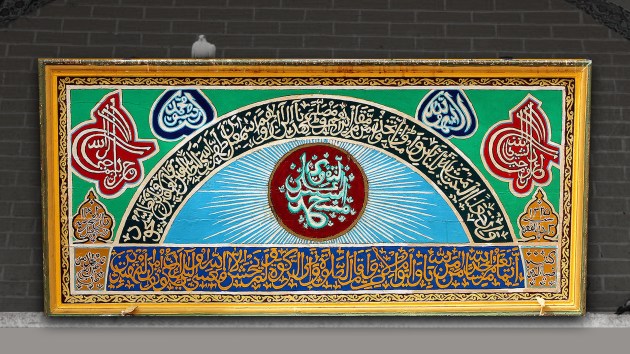
Removal of Islamic Motifs Leaves Xinjiang’s Id Kah Mosque ‘a Shell For Unsuspecting Visitors’

Of note:

Since 2016, the Chinese authorities have been systematically destroying mosques, cemeteries, and other religious structures and sites across the Xinjiang Uyghur Autonomous Region (XUAR). Last year, the Washington-based Uyghur Human Rights Project (UHRP) published a report detailing this campaign, titled “Demolishing Faith: The Destruction and Desecration of Uyghurs Mosques and Shrines”; the report was referenced in the 2020 annual report of the United States Commission on International Religious Freedom (USCIRF). The report uses geolocation and other techniques to show that anywhere between 10,000 and 15,000 mosques, shrines, and other religious sites in the XUAR were destroyed between 2016 and 2019. In some cases, only the domes and towers were destroyed from certain structures, while in others, characteristically Islamic elements such as stars and crescents, domes, and scripture plaques were removed. In some cases, entire mosques have also been felled.

China has made no official response to the report or to claims about the large-scale and widespread destruction it has undertaken. However, the Chinese authorities have continued to bring international visitors to mosques such as Id Kah in Kashgar, as well as to other religious sites around the region, and to publish articles depicting the mosque in state-run media, all in support of the official line that Uyghurs enjoy religious freedom in the region.

Id Kah is the largest and oldest mosque in the XUAR and the largest mosque in all of China. Uyghurs have long regarded Id Kah as a symbol of Islamic culture and a representative of Islamic architecture in the region. While the mosque is still standing mostly intact today, there are some very alarming signs that it is merely a shell of what it used to be. In 2018, authorities removed the star-and-crescent structures from the tops of the mosque’s dome and minarets, along with the colorful scriptural plaque that long hung above its front entrance. As of 2020, those features appear not to have been restored to the mosque. The plaque, which dates to hijra 1325 (1908 C.E.) contains Quranic scriptures along with information about the construction of the mosque and the identity of the artist who made the sign.

Ahead of Eid al-Fitr, which on May 23 will mark the end of the Islamic holy month of Ramadan, RFA’s Uyghur Service spoke with Turghunjan Alawudun, director of the Religious Affairs Committee for the Munich-based World Uyghur Congress (WUC) exile group, and Henry Szadziewski, a senior researcher with the UHRP, about the significance of the missing plaque.

A close up view of the plaque adorning the front entrance of Id Kah mosque, taken before its removal.
A close up view of the plaque adorning the front entrance of Id Kah mosque, taken before its removal. RFA

Alawudun: The disappearance of the scriptural plaque from the entrance to Id Kah is one aspect of the Chinese regime’s evil policies meant to eliminate the Islamic faith among Uyghurs, to eliminate Uyghur faith, literary works, and language—and Uyghurs themselves. This scriptural plaque above the door into Id Kah, like the [mosque’s] minarets, has an Islamic character and is a symbol that has been there from the founding of the mosque until today. The Chinese regime can’t bear this, it can’t stand it, and the inner hatred they feel toward Uyghurs has boiled over such that they had the plaque removed.

They’ve left Id Kah [itself] there for the international community, as part of a bid to fool the world. By taking visitors from Islamic countries there every once in a while to see it, showing it to international visitors who come to investigate [the situation in the region], and sharing it in the media every now and then, they’re pursuing policies that deceive the world. Even so, we can still see that the cruel things that China is doing—the destruction by the Chinese regime of things connected to Uyghurs, Uyghur culture, symbols of the Uyghur people, expressions of Uyghur culture—are signs of the Chinese regime’s horrible plan to eliminate the Uyghurs.

Szadziewski: Religious freedom is not a reality for Uyghurs. Across their homeland, mosques, shrines, and other sacred spaces have been bulldozed into history. In the camps, Uyghurs are indoctrinated into the supposed evils of religion. Id Kah in Kashgar has remained standing. Its disappearance would cause outrage given its importance. The significance of its existence to the Chinese authorities is to demonstrate to the world observance of Uyghurs’ religious freedoms. However, the removal of Islamic motifs from the building tells a different story. It tells us Id Kah is being stripped of religious meaning to become a shell for unsuspecting visitors. There is no reason to remove Islamic motifs from the building other than to demonstrate to Uyghurs that belief in Islam belongs to the past. As such, the despoiling of Id Kah signals a move toward an effective ban on the Islamic faith.

Source: Removal of Islamic Motifs Leaves Xinjiang’s Id Kah Mosque ‘a Shell For Unsuspecting Visitors’

Burton: In Canada, the tide of opinion is turning on China

Good summary by former Canadian diplomat Charles Burton:

In what should be a wake-up call for the federal government, the Canadian public’s perception of China appears to be swinging dramatically.

An Angus Reid poll last week found four in five Canadians want Huawei banned from any role in building this country’s 5G network, and just 11 per cent of respondents felt Canada should focus its trade efforts on China – down from 40 per cent in 2015. And 76 per cent said Canada should prioritize human rights and the rule of law over economic opportunity.

If Ottawa has been delaying a decision all these months while it awaits the “right moment” to announce that the future of Canadian telecommunications lies with Huawei, it is now clear that moment will never come.

Our government continues to behave as if Canada-China relations will resume status quo ante once the matter of Huawei chief financial officer Meng Wanzhou is resolved. Earlier this year, when Foreign Affairs Minister François-Philippe Champagne chose an adviser for the Asia-Pacific file, he namedPascale Massot, a former senior mentor to Mr. Champagne’s predecessor Stéphane Dion. Mr. Dion was the architect of Canada’s failed policy of strategic appeasement with Russia, China, Iran and Saudi Arabia. There is no indication Ms. Massot has undergone any Damascene conversion on how best to engage the People’s Republic of China.

Last month, Canadian Minister of Health Patty Hajdu, consistent with her party’s line, vigorously defended the credibility of the PRC’s actions and reporting of COVID-19 cases, insisting, “there is no indication that the data that came out of China in terms of their infection rate and their death rate was falsified in any way.” She then told the reporter questioning her on this that they were “feeding into conspiracy theories that many people have been perpetuating on the internet.” A lot of us must be deceived by the conspiracy, as the Angus Reid poll found 85 per cent of respondents believe Beijing has not been honest about what happened in its own country regarding the novel coronavirus.

Certainly, China’s aggressive new “wolf warrior” diplomacy has the attention of Canadians. Lu Shaye, China’s former envoy in Ottawa, suggested last January that Canada and its Western allies were displaying white supremacyby calling for the release of two Canadians imprisoned since December 2018 without any coherent charges. Mr. Lu’s ridiculous, highly offensive blathering obviously went over well in Beijing, as he has since been promoted to China’s ambassador to France.

In a Global TV interview on Sunday, Mr. Lu’s successor, Cong Peiwu, linked the arrests of Michael Kovrig and Michael Spavor – who have been denied any form of consular access (including by phone or video) since January – to the detainment of Ms. Meng, who faces extradition to the United States. Mr. Cong also refuted suggestions that the Chinese Communist Party has been intimidating or bullying its critics.

If the party has been bullying its critics, it’s not a new tactic in the grand scheme of its political activities. A report released in March by the Canadian Coalition on Human Rights in China and Amnesty International Canada included details of an apparent intimidation program targeting the Chinese diaspora in Canada.

Last week, Canada’s ambassador in Beijing, Dominic Barton, made headlinesafter he candidly told members of the Canadian International Council that China is alienating other countries by accumulating “negative” soft power in response to international criticism over its handling of the COVID-19 pandemic. Indeed, the response from the PRC has been both defensive and irrational.

Regrettably, the impact of this disease has led to episodes of ugly racism in Canada against Chinese-Canadians. Obviously ethnic Chinese people in Canada have no connection to the Chinese Communist Party’s alleged false reporting on the spread of the virus, which has claimed more than 300,000 lives globally. It should be a government priority that any race-based persecution in Canada is met with the full force of Canadian law.

As for Mr. Barton, while it is not his place to set Canada’s China policy (an ambassador’s job is to implement Canadian foreign policy), Prime Minister Justin Trudeau has implied support for what Mr. Barton said. The fact that he hasn’t been fired for speaking out of turn – like his predecessor, John McCallum – offers some hope that this government will finally do the China-policy reset voters seem to have an appetite for.

Source: Opinion In Canada, the tide of opinion is turning on China. The Communist Party’s handling of COVID-19 has renewed contention over Huawei and the arrests of Michael Kovrig and Michael Spavor: Charles Burton

China ramping up bullying and intimidation of activists in Canada, report says

Ongoing concern:

Chinese government officials and supporters of the Communist Party of China are increasingly resorting to “threats, bullying and harassment” to intimidate and silence activists in Canada, including those raising concerns about democracy and civil rights in Hong Kong and Beijing’s mistreatment of Uyghurs, Tibetans and Falun Gong practitioners, a new report says.

A coalition of human-rights groups led by Amnesty International Canada says a timid response by Ottawa to this foreign interference is exacerbating the problem. “Chinese state actors have almost certainly become emboldened by the inadequate responses of Canadian officials,” the coalition writes.

The report, Harassment & Intimidation of Individuals in Canada Working on China-related Human Rights Concerns, also sounds the alarm over what it calls escalating intimidation and interference at Canadian schools and universities. “Consequently, academic freedom and freedom of expression of university students in Canada speaking out on China has been increasingly stifled, as many individuals fear that Chinese government or consular agents are monitoring their speech or their activities.”

The Canadian Coalition on Human Rights in China is calling for a public inquiry into threats at Canadian educational institutions and recommends that Ottawa set up a monitoring office to collect complaints of harassment and refer incidents to police.

“It takes place on social media, through surveillance, monitoring and hacking of phones, computers and websites … on university and college campuses, at public rallies and cultural events,” Alex Neve, secretary general of Amnesty International Canada, said. “Individuals responsible for the threats often remain anonymous or invisible, but make it clear that they are strong backers of the Chinese government, often leaving no doubt that they are directed, supported or encouraged by the Chinese government.”

He said the threats are “bullying, racist, bigoted and frequently involve direct threats of violence, including sexual violence and even death.”

The coalition is asking the federal government to expel Chinese diplomats where necessary or enact sanctions on them if the evidence warrants.

The coalition’s report documents incidents of Chinese harassment between July, 2019, and March, 2020, aimed at “suppressing dissidents and mobilizing overseas Chinese communities to act as agents of China’s political interests.

“The Canadian government must treat this issue with increased urgency, as it has resulted in insecurity and fear for human-rights defenders in Canada working on Chinese human-rights issues.”

Gloria Fung, president of Canada-Hong Kong Link, speaking Tuesday, recalled an Aug. 17 protest in Toronto last year in support of civil rights in Hong Kong, where more than 100 counterprotesters showed up, blocking the activists and chanting “One China.” They began insulting the demonstrators and taking photos in an apparent attempt to intimidate. When Ms. Fung and the activists sang O Canada, the counterprotesters booed them and sang China’s national anthem in return. “Our protesters needed a police escort to leave safely,” she said.

In a statement, Foreign Affairs Minister François-Philippe Champagne said the government welcomed the report and would study its recommendations closely.

“Reports of harassment and intimidation of individuals in Canada are deeply troubling and allegations of such acts being carried out by foreign agents are taken very seriously,” Mr. Champagne said.

“Chinese government representatives in Canada, like all foreign government representatives in Canada, have a duty under international law to respect the laws and regulations of Canada,” the minister said.

“Canada will continue to use every opportunity to call on China to uphold its international human-rights obligations, including in the areas of freedom of expression, freedom of association, and freedom of religion or belief.”

The Chinese embassy in Ottawa did not have an immediate response to the report.

Uyghur-Canadian activist Mehmet Tohti, speaking Tuesday, said telephone calls are another means of intimidation to stop people in Canada from raising concern about the hundreds of thousands of predominantly Muslim people locked up by China as part of a deradicalization campaign. “Chinese public-security officials are making direct phone calls to Uyghur-Canadians here and asking us to be silent or accept the danger our loved ones [in China] could face.”

Chemi Lhamo, a member of the Canada Tibet Committee and Students for a Free Tibet Canada, said Tuesday that mainland Chinese students studying in Canada face pressure, too.

“Imagine being a Chinese international student, paying four to five times more than a domestic student, only to be bullied here in Canada by the Chinese embassy to follow their party line and go protest against pro-Tibet and pro-human-rights events.”

Beijing’s attempts to dampen criticism in Canada of its authoritarian regime has been taking place amid a historic chill in bilateral relations that began in late 2018, after China jailed Canadians Michael Kovrig and Michael Spavor in apparent retaliation for the arrest at the Vancouver International Airport of Huawei executive Meng Wanzhou on a U.S. extradition warrant.

The report also urges Ottawa to consider passing legislation that would require the registration of Canadian citizens acting as agents for foreign governments, similar to what Australia has enacted.

The coalition says Chinese authorities “cannot be directly implicated” in many of the incidents highlighted in the report, but it “considers the scale and consistency of rights violations, over a prolonged period, to be consistent with a co-ordinated Chinese state-sponsored campaign to target political, ethnic, religious and spiritual groups and individual activists who raise concerns about China’s human-rights record.”

Source: China ramping up bullying and intimidation of activists in Canada, report says

‘Textbook’ Discrimination: Human Rights Report Accuses China Of Mistreating Africans

Yet another need for an independent examination of Chinese government human rights abuses:

Human Rights Watch is accusing China of discrimination against African communities during the coronavirus pandemic.

Authorities in China’s Guangdong province, home to China’s largest African population, have singled out people of African descent for testing, the rights group alleges. It characterizes the tests as forcible, and says that as many Africans were forced to quarantine, landlords evicted them.

Guangdong authorities said in April that all foreigners were required to submit to testing and quarantine. However, Human Rights Watch says that “in practice, the authorities just targeted Africans for forced testing and quarantine.”

Many of the incidents that Human Rights Watch discusses allegedly took place in Guangzhou, the capital and the largest city in Guangdong.

“Chinese authorities claim ‘zero tolerance’ for discrimination, but what they are doing to Africans in Guangzhou is a textbook case of just that,” Human Rights Watch researcher Yaqiu Wang says in the release. “Beijing should immediately investigate and hold accountable all officials and others responsible for discriminatory treatment.”

In an apparent response to the complaints, Chinese state media reported earlier this week that Guangdong has “unveiled measures requiring sectors … to extend the same treatment to all from home and abroad.”

Videos have surfaced of black people being denied entry into a McDonald’sand a shopping center, as well as forced tests and evictions. A black Canadian man told the rights group about his experience being denied entry to the subway.

“The metro station worker told us, ‘As of this morning, we’ve been told not to let any black people onto the subway,'” the unnamed man is quoted as saying by Human Rights Watch. “Then four or five security guards showed up and questioned me. The subway refused me just because of the color of my skin. They don’t care about any documents, or what my health app said.”

Human Rights Watch says the city of Guangzhou is home to more than 14,000 Africans. It has had a large African community for years.

Hundreds of African human rights groups submitted an open letter to the African Union Commission in late April denouncing the “xenophobic, racist and inhuman treatment” of African people in China. They called for an independent investigation into the situation in Guangdong province and throughout China. Kenya said last month that it will help its nationals stranded in China return home starting in May.

In recent years, China has spent hundreds of billions of dollars in development projects throughout the African continent. Human Rights Watch notes that the investments have “boosted Africa’s economy,” but that governments are often hesitant to criticize China as a result.

Source: ‘Textbook’ Discrimination: Human Rights Report Accuses China Of Mistreating Africans