Enclaves of Islam see UK as 75% Muslim | News | The Times & The Sunday Times

Failure of British integration and related programs. Some interesting observations at the end of the article about the risk of monocultural white schools and far right radicalization:

Some Muslims lead such separate lives that they believe Britain is an Islamic country where the majority of people share their faith, according to a report to be published this week.

Evidence gathered by Dame Louise Casey, the government’s community cohesion tsar, will lift the lid on how some Muslims are cut off from the rest of Britain with their own housing estates, schools and television channels.

Her report finds that thousands of people from all-Muslim enclaves in northern cities such as Bradford, Dewsbury and Blackburn seldom, if ever, leave their areas and have almost no idea of life outside.

A source who has read the report said: “Certain Muslims, because they are in these communities and go to Muslim schools, think Britain is a Muslim country. They think 75% of the country is Muslim.”

The correct figure, according to the 2011 census, is 4.8% of the population in England and Wales. Christians account for 59.3%.

Casey’s report will be embarrassing for ministers, and Theresa May in particular, because it will say the government does not have any serious integration strategy.

The report will criticise the Home Office, which May used to run, and other departments for not doing enough to manage the pace and consequences of mass immigration.

“It will say that nobody has been on it,” said a source familiar with the contents.

A source close to Casey said: “There is a desire [among policymakers] to tolerate such a level of significant difference that you have overcompensated and gone way too far.”

Those familiar with the report say Casey, who investigated failings by children’s services at Rotherham council after the child abuse scandal, has seen off attempts by the Home Office to water down her report. One described it as “full-fat Louise”.

The report will “send shock waves through the system”, a Whitehall source said, adding: “It’s going to be quite hard reading for some people.”

Casey will attack the police and other state bodies for “weakness” and pandering to false notions of what they think ethnic communities want — such as a police chief who said female officers could be allowed to wear the full veil.

“The report will say that we are in a vicious circle where some institutions are so wrongfully interpreting their version of political correctness that they are gifting the far right,” a source said.

Sir Michael Wilshaw, the departing chief inspector of schools, warns today that about 500 schools in England are either 100% white or 100% ethnic minority — and pupils in them are at risk of alienation and radicalisation.

Wilshaw told The Sunday Times that parallel communities were developing in Britain and children growing up in monocultural schools in these communities were in danger of being cut off from British values and vulnerable to either far-right or Islamist causes.

The chief inspector said that he was particularly worried about a cluster of 21 schools in Birmingham — many of them primaries with predominantly Muslim pupils — where there were no white pupils. Nearly half of the schools have been judged “less than good”.

“We have to make sure these schools are good schools so youngsters in them feel they are part of British society and they have to respect other people’s faiths and cultures,” Wilshaw said.

“In white-only schools the same thing applies. Though we might not be as concerned in white communities about radicalisation, certainly we are worried about alienation and the rise of the far right.

“If these children have not been well educated and cannot get jobs as a result that will feed into alienation and the espousal of right-wing ideologies.”

Casey has examined the social alienation felt by the white working class. Although her report will not dismiss the far right it will say that Islamist extremists pose a more serious threat.

The report will also attack the government for not doing enough to defend Prevent, its embattled counter-extremism policy, against misinformation put out by Islamist and far-left groups.

Source: Enclaves of Islam see UK as 75% Muslim | News | The Times & The Sunday Times

L’État rate Latin American cible: La campagne publicitaire du ministère de l’Immigration fait rager des membres du comité consultatif sur la radicalisation

When advertising campaigns get it wrong:

« Assimilationniste »« négationniste », pleine de « clichés ». La campagne sur la diversité lancée lundi par le ministère de l’Immigration du Québec choque des leaders de la communauté musulmane. Au moins l’un d’eux, invités à siéger à une table de travail sur la prévention de la radicalisation, a annoncé son départ et d’autres songent à le faire, jugeant leur rôle inutile au sein de ce comité consultatif, a appris Le Devoir.

« La campagne me semble tout à fait grossière compte tenu de la responsabilité du ministère », a déclaré Haroun Bouazzi, président de l’Association des musulmans et des Arabes pour la laïcité au Québec (AMAL-Québec). « D’un côté, on a la négation du racisme et de l’autre, la discrimination est abordée du bout des lèvres. » Furieux, ce Canado-Tunisien a quitté la Table de travail intersectorielle sur la prévention de la radicalisation menant à la violence, à laquelle il siégeait bénévolement à la demande du ministère de l’Immigration (MIDI), aux côtés d’une dizaine d’autres leaders de la communauté musulmane.

Au coût de 1,2 million, la première phase de la campagne « Ensemble, nous sommes le Québec » qui se déploiera sur cinq ans consiste pour l’instant en deux capsules vidéo, tournées par le réalisateur Ricardo Trogi et diffusées à la télé et sur Internet. Misant sur des modèles d’intégration réussis, on y voit le joueur de soccer de l’Impact Patrice Bernier, un Haïtien d’origine né à Longueuil, et la productrice et animatrice Alexandra Diaz, une Chilienne qui a grandi au Québec, parler de leur expérience d’immigrant de façon positive, faisant allusion aux jokes de Rock et Belles oreilles, au hockey et à la tarte au sucre.

« Le bon immigrant, dépeint par les deux publicités, ne doit pas seulement apprendre le français, il doit aussi connaître toutes les répliques de RBO par coeur. Le bon racisé ne doit pas se contenter d’être un bon joueur de soccer (le sport le plus pratiqué au Québec), il doit aussi savoir jouer au hockey », a déploré M. Bouazzi dans une lettre coup de gueule envoyée au MIDI.

Vernis interculturel

Siégeant également à cette table intersectorielle, Bochra Manaï, professeure et spécialiste d’études urbaines à l’Université d’Ottawa, croit que la campagne du ministère rappelle celles des années 1980-1990, où le Québec faisait encore du « vernis interculturel »« Ça me fait penser à [la vidéo] pour le 375e de Montréal, c’est complètement à côté de la plaque, dit-elle. Si, politiquement, on continue à faire dans le très superficiel, c’est qu’on ne comprend rien à l’époque dans laquelle on vit ». Elle appelle à plus de « courage » de la part du gouvernement. « Je ne vois pas qui on peut vraiment choquer aujourd’hui en faisait une pub d’un immigrant qui dit qu’il a du mal à se trouver une job parce qu’il s’appelle Mohamed », soutient Mme Manaï.

Ève Torrès, coordonnatrice de La Voie des femmes, s’étonne aussi que le gouvernement soit à ce point « frileux » en lançant une campagne aussi consensuelle. « On se moque de nous, s’indigne-t-elle. Nous, on pensait que le message était passé et qu’il y avait vraiment un éveil, une compréhension des enjeux et une envie de collaborer. Mais même après toutes ces années de collaboration des communautés, il n’y a rien qui sort. »

La professeure à l’UQAM, Maryse Potvin est d’avis que le gouvernement donne l’impression qu’il n’est pas à l’écoute. « Il semble ne pas entendre les voix qui lui demandent de prendre en charge certains problèmes de discrimination. Il fait simplement montrer des gens bien intégrés qui sont heureux d’être ici […] les gagnants, constate-t-elle. Le vivre-ensemble, c’est aussi être conscient qu’il y a des gens qui sont rejetés dans la société et dire un peu plus comment on va faire et ce qu’on a mis en oeuvre pour les aider. »

Exclus de la discussion

Certains membres de cette table de travail sur la radicalisation, fondée il y a deux ans à la demande du gouvernement Couillard, sont d’autant plus choqués qu’ils disent n’avoir jamais été consultés à propos de la campagne audiovisuelle. Ils n’ont été mis au courant que deux jours avant son lancement lundi dernier. « On est un peu le comité “ bonne conscience ”, qui légitime et valide ce que [le gouvernement] choisit de faire », indique Bochra Manaï. Elle se dit « choquée » que la table de travail, qui avait été lancée pour discuter des questions d’islamophobie et de radicalisation, n’ait rien produit de probant à cet effet. « Je suis la seule chercheuse qui siège. Il faut beaucoup plus de monde et de chercheurs. »

Il n’y a pratiquement que des Maghrébins qui siègent à cette table, et aucun musulman converti ou non francophone. Tous de bonne foi, ils ont même accepté de participer à une rencontre convoquée par le ministère le 12 septembre dernier… jour même de l’Aïd, qui est aux musulmans ce que Noël est aux chrétiens.

« On est là bénévolement pour s’assurer qu’on a un vrai vivre-ensemble, qui évite la xénophobie et l’exclusion, mais on n’a pas été écoutés », déplore une personne membre de cette table qui désire garder l’anonymat. Elle reconnaît toutefois que la ministre Kathleen Weil semble avoir « une volonté d’écouter nos propositions, mais ça ne se reflète pas dans les actions du ministère ».

Source: L’État rate la cible | Le Devoir

Toronto lifts curtain on extremism prevention plan, quietly operating for more than 2 years

Part of the arsenal in combatting extremism and increasing resilience:

Police in Toronto are lifting the curtain on an extremism prevention program that has been quietly operating in the city for more than two years — but experts in the field say getting young people at risk of radicalization to use it will come down to a question of trust.

The project, which first sprouted in 2013, has been purposely kept from public view until this week.

“At this point in time we feel that we have a good service in place and we’re ready for people to participate in it,” Deputy Chief James Ramer told CBC News. Together with the City of Toronto, Ramer said, the force hoped to fine-tune the program behind the scenes through direct involvement from community groups, rather than simply present a made-by-police project.

Here’s how it works.

A person deemed at risk for extremism is referred by a police officer or a participating agency to one of four hubs, each consisting of 15 to 20 bodies, including medical professionals, faith groups, the school board and community housing.

Referrals require the consent of the person at risk and are based on a list of some 103 risk factors. Participation, said police, is entirely voluntary.

Cases are assessed at the hub, and depending on the most pressing concerns, two participating organizations are chosen to lead an intervention, which can range from spiritual counselling to mental health assistance.

Referrals anonymous

“All of this is done in complete anonymity,” said Ramer, adding that the hub process meets the privacy commissioner’s “gold standard” in terms of protection of personal information. Only cases that involve a criminal element or pose risks to public safety are formally investigated.

As for what kinds of extremism the program addresses, Sgt. Kelly Gallant said it runs the gamut from Islamist-inspired, to white supremacist to environmental extremism, to name a few. “We talk about all different kinds of extremism.… Not just what we mostly see on TV.”

It’s not the first time a deradicalization program has been floated in Toronto, but it is the city’s first police-led initiative.

Toronto police

Deputy Police Chief James Ramer, Sgt. Kelly Gallant and Staff Sgt. Donovan Locke say the extremism prevention program has been quietly operating in the city for more than two years. (CBC)

Six months ago, the Canadian Council of Imams announced plans to open two to three deradicalization clinics in Toronto that would take a “holistic” approach, as early as this fall. Those clinics, Toronto imam Hamid Slimi told CBC Toronto, have not yet taken off owing to a lack of community support.

Toronto’s program is housed under the police’s existing community safety program, which also tackles gangs and drugs. Montreal also has an anti-radicalization centre, but not one led by police.

Trust ‘in shambles’ in some communities

But whether young people will consent to being involved in the program will ultimately depend on whether they feel safe engaging with police, says University of Waterloo religious studies post-doctoral fellow Amarnath Amarasingam.

“It depends much on how the police are able to gain the trust of communities. In some communities, this trust is in shambles, but in others, there is a history of working together. So, it really depends if the cops can shed some of this baggage,” Amarasingam said.

Source: Toronto lifts curtain on extremism prevention plan, quietly operating for more than 2 years – Toronto – CBC News

Japanese American internment is ‘precedent’ for national Muslim registry, prominent Trump backer says – The Washington Post

Sigh … not learning or mislearning the lessons of history:

A spokesman for a major super PAC backing Donald Trump said Wednesday that the mass internment of Japanese Americans during World War II was a “precedent” for the president-elect’s plans to create a registry for immigrants from Muslim countries.

During an appearance on Megyn Kelly’s Fox News show, Carl Higbie said a registry proposal being discussed by Trump’s immigration advisers would be legal and would “hold constitutional muster.”

“We’ve done it with Iran back awhile ago. We did it during World War II with the Japanese,” said Higbie, a former Navy SEAL and a spokesman for the pro-Trump Great America PAC.

Kelly seemed taken aback by the idea.

“Come on, you’re not proposing we go back to the days of internment camps, I hope,” she said.

“I’m not proposing that at all,” Higbie told her. “But I’m just saying there is precedent for it.”

Higbie’s remarks came a day after a key member of Trump’s transition team, Kansas Secretary of State Kris Kobach, said Trump’s policy advisers were weighing whether to send him a formal proposal for a national registry of immigrants and visitors from Muslim countries. Kobach, a possible candidate for attorney general, told Reuters that the team was considering a reinstatement of a similar program he helped design after the Sept. 11, 2001, terrorist attacks while serving in the Justice Department under President George W. Bush.

Known as the National Security Entry-Exit Registration System (NSEERS,) the program required people from “higher risk” countries to submit to fingerprinting, interrogations and, in some cases, parole-like check-ins with authorities. The program was suspended in 2011 after criticism from civil rights groups who said it targeted Muslims.

When an NBC News reporter asked Trump last year whether he would require Muslims to register in a database, he said he “would certainly implement that — absolutely.”

In his appearance on Kelly’s show, Higbie, a frequent political commentator, said noncitizens were not protected by the same constitutional rights as citizens. He said he believed most Muslims were “perfectly good people” but argued that a small percentage of them adhered to an “extreme ideology.”

Source: Japanese American internment is ‘precedent’ for national Muslim registry, prominent Trump backer says – The Washington Post

Women’s Rights Become A Battleground For Israel’s Ultra-Orthodox Jews : NPR

Continuing religious radicalization in Israel:

Four years ago, a lawsuit was filed by an Orthodox feminist group called Kolech, which means “Your Voice” in the Hebrew feminine. It was one of the biggest class-action lawsuits in Israeli history, and it targeted what was then an all-male, ultra-Orthodox radio station called Kol Barama, founded in 2009.

“There were no women interviewing. You wouldn’t be able to hear a woman on this radio channel,” says Kolech’s executive director, Yael Rockman. “Not only that. This radio channel is not private. They get money from the government. ”

The discrimination lawsuit went all the way to Israel’s highest court, and in late 2014, the women won.

With a birth rate double that of the national average, Israel’s ultra-Orthodox community is growing — and so is its political power. Feminists are girding for more legal battles over women’s rights.

In recent years, Israel’s ultra-Orthodox have lobbied to omit women’s faces from advertisements on the side of Jerusalem buses that circulate in religious areas. During recent Jewish holidays, signs appeared in a religious neighborhood of Jerusalem, Mea Sharim, instructing women to keep off the main road and use side streets for the sake of modesty.

“Radicalization is getting worse, for sure. At the same time, the vision of equal rights, equal participation and women’s power — all of that is getting stronger around the world,” says gender sociologist Elana Sztokman, author of a book called The War on Women in Israel.

Despite the feminists’ legal victory against Kol Barama, Sztokman believes not enough is being done to protect women. She says that because the ultra-Orthodox tend to vote as a homogeneous bloc, they have achieved disproportionate political power and the Israeli government caters to them in an unprecedented way.

Until now, “Jews have never gone to the government authority and said, ‘Let’s make sure that the public spaces fit the needs of our most radical views on women, because it offends our most extreme strict men,'” Sztokman says. “That has never happened until Israel [in the] 21st century.”

Source: Women’s Rights Become A Battleground For Israel’s Ultra-Orthodox Jews : Parallels : NPR

ICYMI – Saudis and Extremism: ‘Both the Arsonists and the Firefighters’ – The New York Times

Good long read:

The idea has become a commonplace: that Saudi Arabia’s export of the rigid, bigoted, patriarchal, fundamentalist strain of Islam known as Wahhabism has fueled global extremism and contributed to terrorism. As the Islamic State projects its menacing calls for violence into the West, directing or inspiring terrorist attacks in country after country, an old debate over Saudi influence on Islam has taken on new relevance.

Is the world today a more divided, dangerous and violent place because of the cumulative effect of five decades of oil-financed proselytizing from the historical heart of the Muslim world? Or is Saudi Arabia, which has often supported Western-friendly autocrats over Islamists, merely a convenient scapegoat for extremism and terrorism with many complex causes — the United States’s own actions among them?

Those questions are deeply contentious, partly because of the contradictory impulses of the Saudi state.

In the realm of extremist Islam, the Saudis are “both the arsonists and the firefighters,” said William McCants, a Brookings Institution scholar. “They promote a very toxic form of Islam that draws sharp lines between a small number of true believers and everyone else, Muslim and non-Muslim,” he said, providing ideological fodder for violent jihadists.

Yet at the same time, “they’re our partners in counterterrorism,” said Mr. McCants, one of three dozen academics, government officials and experts on Islam from multiple countries interviewed for this article.

Conflicting Goals

Saudi leaders seek good relations with the West and see jihadist violence as a menace that could endanger their rule, especially now that the Islamic State is staging attacks in the kingdom — 25 in the last eight months, by the government’s count. But they are also driven by their rivalry with Iran, and they depend for legitimacy on a clerical establishment dedicated to a reactionary set of beliefs. Those conflicting goals can play out in a bafflingly inconsistent manner.

Thomas Hegghammer, a Norwegian terrorism expert who has advised the United States government, said the most important effect of Saudi proselytizing might have been to slow the evolution of Islam, blocking its natural accommodation to a diverse and globalized world. “If there was going to be an Islamic reformation in the 20th century, the Saudis probably prevented it by pumping out literalism,” he said.

Photo

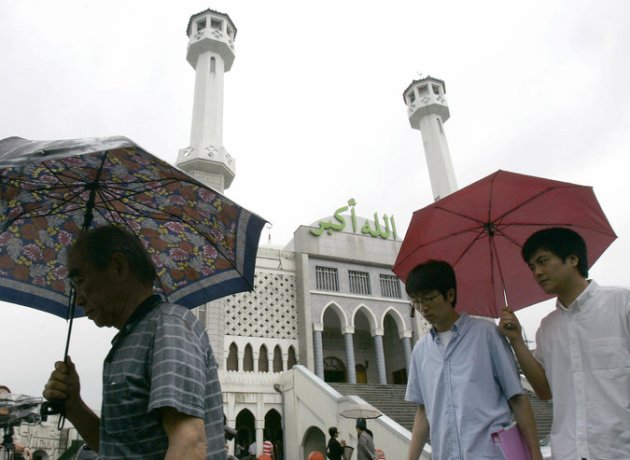
The Seoul Central Mosque in South Korea, one of hundreds of mosques around the world built using Saudi donations. CreditChoi Won-Suk/Agence France-Presse — Getty Images 

The reach of the Saudis has been stunning, touching nearly every country with a Muslim population, from the Gothenburg Mosque in Sweden to the King Faisal Mosque in Chad, from the King Fahad Mosque in Los Angeles to the Seoul Central Mosque in South Korea. Support has come from the Saudi government; the royal family; Saudi charities; and Saudi-sponsored organizations including the World Muslim League, the World Assembly of Muslim Youth and the International Islamic Relief Organization, providing the hardware of impressive edifices and the software of preaching and teaching.

There is a broad consensus that the Saudi ideological juggernaut has disrupted local Islamic traditions in dozens of countries — the result of lavish spending on religious outreach for half a century, estimated in the tens of billions of dollars. The result has been amplified by guest workers, many from South Asia, who spend years in Saudi Arabia and bring Saudi ways home with them. In many countries, Wahhabist preaching has encouraged a harshly judgmental religion, contributing to majority supportin some polls in Egypt, Pakistan and other countries for stoning for adultery and execution for anyone trying to leave Islam.

Limits of Influence

But exactly how Saudi influence plays out seems to depend greatly on local conditions. In parts of Africa and Southeast Asia, for instance, Saudi teachings have shifted the religious culture in a markedly conservative direction, most visibly in the decision of more women to cover their hair or of men to grow beards. Among Muslim immigrant communities in Europe, the Saudi influence seems to be just one factor driving radicalization, and not the most significant. In divided countries like Pakistan and Nigeria, the flood of Saudi money, and the ideology it promotes, have exacerbated divisions over religion that regularly prove lethal.

And for a small minority in many countries, the exclusionary Saudi version of Sunni Islam, with its denigration of Jews and Christians, as well as of Muslims of Shiite, Sufi and other traditions, may have made some people vulnerable to the lure of Al Qaeda, the Islamic State and other violent jihadist groups. “There’s only so much dehumanizing of the other that you can be exposed to — and exposed to as the word of God — without becoming susceptible to recruitment,” said David Andrew Weinberg, a senior fellow at the Foundation for Defense of Democracies in Washington who tracks Saudi influence.

Exhibit A may be Saudi Arabia itself, which produced not only Osama bin Laden, but also 15 of the 19 hijackers of Sept. 11, 2001; sent more suicide bombers than any other country to Iraq after the 2003 invasion; and has supplied more foreign fighters to the Islamic State, 2,500, than any country other than Tunisia.

Mehmet Gormez, the senior Islamic cleric in Turkey, said that while he was meeting with Saudi clerics in Riyadh in January, the Saudi authorities had executed 47 people in a single day on terrorism charges, 45 of them Saudi citizens. “I said: ‘These people studied Islam for 10 or 15 years in your country. Is there a problem with the educational system?’ ” Mr. Gormez said in an interview. He argued that Wahhabi teaching was undermining the pluralism, tolerance and openness to science and learning that had long characterized Islam. “Sadly,” he said, the changes have taken place “in almost all of the Islamic world.”

In a huge embarrassment to the Saudi authorities, the Islamic State adopted official Saudi textbooks for its schools until the extremist group could publish its own books in 2015. Out of 12 works by Muslim scholars republished by the Islamic State, seven are by Muhammad ibn Abd al-Wahhab, the 18th-century founder of the Saudi school of Islam, said Jacob Olidort, a scholar at the Washington Institute for Near East Policy. A former imam of the Grand Mosque in Mecca, Sheikh Adil al-Kalbani declared with regret in a television interview in January that the Islamic State leaders “draw their ideas from what is written in our own books, our own principles.”

Small details of Saudi practice can cause outsize trouble. For at least two decades, the kingdom has distributed an English translation of the Quran that in the first surah, or chapter, adds parenthetical references to Jews and Christians in addressing Allah: “those who earned Your Anger (such as the Jews), nor of those who went astray (such as the Christians).” Seyyed Hossein Nasr, a professor of Islamic studies at George Washington University and the editor in chief of the new Study Quran, an annotated English version, said the additions were “a complete heresy, with no basis in Islamic tradition.”

Accordingly, many American officials who have worked to counter extremism and terrorism have formed a dark view of the Saudi effect — even if, given the sensitivity of the relationship, they are often loath to discuss it publicly. The United States’ reliance on Saudi counterterrorism cooperation in recent years — for instance, the Saudi tip that foiled a 2010 Qaeda plot to blow up two American cargo planes — has often taken precedence over concerns about radical influence. And generous Saudi funding for professorships and research centers at American universities, including the most elite institutions, has deterred criticism and discouraged research on the effects of Wahhabi proselytizing, according to Mr. McCants — who is working on a book about the Saudi impact on global Islam — and other scholars.

One American former official who has begun to speak out is Ms. Pandith, the State Department’s first special representative to Muslim communities worldwide. From 2009 to 2014, she visited Muslims in 80 countries and concluded that Saudi influence was pernicious and universal. “In each place I visited, the Wahhabi influence was an insidious presence,” she wrote in The New York Times last year. She said the United States should “disrupt the training of extremist imams,” “reject free Saudi textbooks and translations that are filled with hate,” and “prevent the Saudis from demolishing local Muslim religious and cultural sites that are evidence of the diversity of Islam.”

Source: Saudis and Extremism: ‘Both the Arsonists and the Firefighters’ – The New York Times

Liberals replacing Harper Tories’ anti-terror project with new program

Looks like the Kanishka Project, one of the previous government’s rare and good “committing sociology” initiatives, will continue albeit in different form:

As the Liberals prepare to launch their signature anti-terrorism initiative, they have closed the door on a previous one by the Conservative government.

On Thursday, Liberal Public Safety Minister Ralph Goodale released a report on the terrorist threat to Canada that said the Islamic State is the main concern. The report also said that a five-year initiative by the Tories that had delivered $10-million, mostly to academics researching terrorism in hopes of finding ways to understand and fight it, had ceased operations in March.

The initiative, known as the Kanishka Project, began in 2011, and the Conservatives promised last year to renew it if they were re-elected. The Liberals pledged a more hands-on approach. Last week, Mr. Goodale said that by the end of the summer, he will appoint an official to advise the government on de-radicalization.

The office of the adviser is expected to cost $7-million to $10-million a year, and the government says it is intended to get civil servants, academics, religious and ethnic communities to work together to find ways to deal with extremists.

The Liberals are calling this a wholly new approach for Canada, but experts say this office may absorb the function of the Kanishka Project.

“In a sense, the new office will be the successor of Kanishka. … There is more continuity than discontinuity,” said Lorne Dawson, a University of Waterloo professor who studies terrorism. The one big difference, he said, is “that there is now a stress on actually doing something in terms of [countering violent extremism].”

In 2012, Dr. Dawson co-founded the Canadian Network for Research on Terrorism, Security and Society, which got hundreds of thousands of dollars a year from Kanishka. Saying the old program blazed a trail for serious study of terrorism, he anticipates the new government office will also finance such work.

The terrorism report said Kanishka was not renewed when its five-year funding ran out in the spring. “Public Safety and its partners continue to publish results and build on the program’s research,” it said, adding that the new counterradicalization office will “foster research on radicalization to violence” among other functions.

Source: Liberals replacing Harper Tories’ anti-terror project with new program – The Globe and Mail

Extremist literature common in many mosques and Islamic school libraries in Canada, study says

Old story, but one that raises interesting issues:

One year ago, the Senate defence and security committee issued a report saying some foreign-trained imams had been spreading extremist religious ideology and messages that are not in keeping with Canadian values, contributing to radicalization.

The committee has urged the government to explore imam training and certification in an effort help curb radicalization, one of 25 recommendations it made in the interim anti-terrorism report.

When the report was released, an Ottawa imam, Mohamad Jebara, raised questions about its key recommendation.

“Who is going to do the certifying?” asked Jebara. “Islam is so diverse, like many religions. So what sect or school of thought are you going to certify?

“It is extremely complex,” he said. “It’s like having certification for Christian clergy. The question is: Would the Catholics, Protestants, Jehovah’s Witnesses and Mormons agree on requirements for certification? Obviously not.”

Targeting Muslim clergy exclusively could backfire, said Jebara, and result in further marginalizing Muslims.

The committee report called on the government to work with the provinces and Muslim communities to “investigate the options that are available for the training and certification of imams in Canada.”

The report was not supported by Liberal senators on the committee. It was denounced by the National Council of Canadian Muslims as stigmatizing and failing to offer effective solutions to the challenge of violent extremism.

Source: Extremist literature common in many mosques and Islamic school libraries in Canada, study says

Jailing Jihadis for Destroying Treasures – The Daily Beast

Appropriately, this trial and verdict are getting considerable attention:

The monsters of al Qaeda and the so-called Islamic State probably never will be held to account the way the Nazis were at the Nuremberg Tribunals after World War II. The snarled red tape and convoluted politics of today’s international organizations will frustrate such grand designs for justice, even after the self-proclaimed “caliphate” is reduced to dust on the ground and unread footnotes in history.

But the trial going on at the International Criminal Court in The Hague this week gives us a hint of what can be done, and, indeed, what must be done.

The defendant, Ahmad al Faki al Mahdi, served the branch of al Qaeda in North Africa that very nearly took over all of the nation of Mali in 2012, until French troops intervened. The terrorists’ greatest prize was the ancient city of Timbuktu, al Mahdi’s hometown, and he did everything he could to show he supported his fanatical mentors’ gruesome diktats.

But al Mahdi is not on trial for the amputations, beheadings, torture, and rapes associated with the “holy war” waged by al Qaeda, ISIS, and their offshoots.

Al Mahdi is on trial for massacring history.

We have seen a lot of savage iconoclasm over the last 15 years. In 2001, the Taliban brought down the towering twin statues of Buddha in Bamayan, Afghanistan—a prelude to the operation by their allies in al Qaeda, who brought down the twin towers of the World Trade Center in New York only a few months later.

More recently we’ve seen the devastation wrought by ISIS on the ancient monuments of Nimrud in Iraq, and those of Palmyra in Syria: winged bulls turned to gravel with jack-hammers, the Temple of Baal erased from the map with high explosives.

These would-be holy warriors claim to have a direct line to God, a unique and exclusive understanding of His Truth. They are determined to destroy anyone and anything that does not fit their view, and they do all this in the name of Islam.

So it is worth noting that al Mahdi is on trial, specifically, for leveling the mausoleums of Muslim saints in a city that was one of the cradles of Islamic civilization, and that the prosecutor who leveled the charges against al Mahdi in court on Monday, Fatouh Bensouda, is a Gambian woman from a large Muslim family. She knows where this guy is coming from, which may account in part for the power and passion of her opening statement.

This trial, said Bensouda, is about answering “the destructive rages that mark our times, in which humanity’s common heritage is subject to repeated and planned ravages.”

The mausoleums al Mahdi destroyed were “the embodiment of Malian history, captured in tangible form, from an era long gone yet still very much vivid in the memory and pride of the people who so dearly cherished them.”

“Your honors,” Bensouda told the judges, “culture is who we are.”

Bensouda has been criticized for failing to make the ICC a new Nuremberg. But the criteria she has to work with are suffocating and contradictory.

The court has no jurisdiction over territories where the government is not a party to the Rome Statute that established the court in 1998. So the court has no territorial jurisdiction over the ISIS heartland that straddles Iraq and Syria, neither of which signed on.

Counselling as important as criminal charges for radicalized Muslims returning to Canada: Report

Sensible recommendations:

Ottawa needs a more humane approach to effectively deal with terrorism cases, including court-ordered therapy for at-risk individuals and counselling — not just criminal charges — for those coming back from Syria and Iraq, according to a new report.

The recommendations are contained in an in-depth account of how a group of young Muslims from Quebec were, according to police allegations, radicalized by charismatic preachers, peer pressure and polarizing political debates, and attempted to flee the country in 2015 for the ranks of Daesh, the terror group also known as the Islamic State.

Eleven of the people who are the focus of the report — six females and five males — attended the same school, Montreal’s Collège de Maisonneuve. Four of them were among 10 stopped at the Montreal airport just before boarding a flight for Turkey, which borders Syria, police have alleged. Two others are facing criminal terrorism charges in Quebec.

But five students who disappeared in January 2015 made it to Syria and Iraq and some of them now regret their decision and want to return home, said Benjamin Ducol, head of research for the Centre for the Prevention of Radicalization Leading to Violence, which prepared the report.

“That leaves us with some issues in terms of how we are going to bring them back. Do they pose a security threat? I’m sure some of them have been really traumatized by what they have seen and what they have done there,” he said.

The report, which was commissioned by Collège de Maisonneuve, is based on interviews with family, friends and acquaintances of the students, as well as officials at the school.

The report estimates that up to 250 Canadians have travelled to Syria and Iraq, including up to 30 from Quebec.

Some may want to return because of remorse or family pressures, disillusionment with life in a war zone, fear of injury and death, or due to more nefarious plans to conduct attacks in Canada, the report says.

 But they may waver out of fears they will be arrested or killed by the groups they try to desert, or the likelihood of arrest upon their return to Canada, the report said. Others may be worried about being labelled a national security threat or having to pay back the financial debts incurred to fund their initial voyage, it read.

There must be legal consequences, the report said, but it is folly to prosecute young radicals without also trying to reason with them and offer rehabilitation.

“The conviction of radicalized individuals cannot be society’s end goal,” it says. “Our system of justice has long recognized the importance of working towards the social reintegration of offenders.”

Source: Counselling as important as criminal charges for radicalized Muslims returning to Canada: Report | Toronto Star