Nigeria’s wealthy use Henley in Caribbean passports for cash plan

More on the citizenship-by-investment industry:

A year ago, the office of Citizenship by Investment Program (CIP) in the small Caribbean island nation  of St. Lucia had received no applications from any Africans in its nearly five years of operations.

But in the past few months, it has issued up to 60 passports to Nigerians and is reporting steady increases in applications from the country—still its sole African market.

That sharp rise reflects spiking demand among Nigeria’s wealthy private citizens who are increasingly tapping into “investment migration” programs offered by foreign countries. The programs allow foreign nationals to obtain fast-tracked citizenship and passports or permanent residency permits in exchange for specified amounts of cash investments. The payment for the passports can come in form of direct “contributions” to the development funds set up by the national governments or through investment in real estate projects which offer the promise of not just passports but also possible profits.

With around 40,000 passports believed to have been issued through investment migration programs globally, citizenship by investment is now estimated to be a $3 billion industry. It is often favored by high-net worth individuals from countries with “weak” passports often from countries in sub-Saharan Africa and some Middle Eastern countries.

“What you have is a community of wealthy individuals who cannot travel without visas.”

Henley & Partners, the world’s largest investment migration consultancy, has also set up shop in Africa’s largest economy after seeing a sharp rise in demand from the country over the past three years. The office in Lagos is only Henley & Partners’ third in Africa, in addition to offices in Cape Town and Johannesburg opened six years ago.

“The reason we opened in Nigeria is because we saw significant potential in the market with growth in private wealth without global mobility for high net worth individuals,” says Paddy Blewer, public relations director at Henley & Partners. “What you have is a community of wealthy individuals who cannot travel without visas.”

That reality is best captured by the weakness of Nigeria’s international passport. In fact, Nigerian passport holders can visit two fewer countries now than they could in 2010 without first obtaining a visa. The country also suffered the worst decline in passport power over the past decade, according to rankings on the annual Henley Passport Index.

But even paperwork-intensive visa application processes have also gotten more complicated for Nigerians. Under the Trump administration, for example, US visa application fees for Nigerian applicants have been increased, an interview waiver process  for visa renewals for frequent travelers has been indefinitely suspended while a ban has also been placed on issuing immigrant visas to Nigerians. The net effect of these restrictions resulted in Nigeria recording the largest global drop-off in visitors to the US last year.

In search of improved international mobility, investment migration programs by Caribbean nations offer wealthy Nigerians and other citizens a legal and established workaround that ticks two crucial boxes: price point and access.

For instance, St. Lucia’s lowest-priced program, a “contribution to the national economic fund,” costs $100,000 for individuals and $140,000 for a family of four, as well as $15,000 for each additional family member. “That pricing model has really resonated well with the Nigerian community,” says Nestor Alfred, chief executive of St. Lucia’s CIP office. “A lot of our Nigerian applications consist of families.”

Other Caribbean islands including Dominica as well as St. Kitts and Nevis also offer investment migration programs with minimum costs of $100,000 and $150,000 respectively, a lot less than similar European programs typically cost. The US program issues permanent residence permits in exchange for investment ranging from $500,000 to $1 million.

But in addition to relative affordability, passports of Caribbean island nations also rank much higher than Nigeria’s on a global scale. For instance, St. Lucia passport holders have visa-free and visa-on-arrival access to 145 countries—more than triple Nigeria’s figure. And for extra context, St. Lucia passport holders’ visa free access allows them into the entire European 26-country “Schengen” area, the UK, and Switzerland.

Taking it up

With Nigeria’s oil-dependent economy battered by the pandemic and set for its worst recession in three decades, there are few indications interest in investment migration from Nigeria will slow down.

Nigeria and South Africa dominate demand from Africa and currently account for 85% of Henley & Partners’ business on the continent, with Nigeria growing rapidly with an interest in Caribbean-based citizenship programs.

That momentum will likely remain fueled by Nigeria’s super-wealthy with the country’s population of people with a net worth of more than $30 million—currently at 724 people—forecast to grow by 13%in the next five years.

But as it turns out, interest in emigration is not restricted to Nigeria’s super-wealthy alone. Over the past three years, middle-class Nigerians have also increasingly emigrated through skill-based programs offering legal pathways to residency and citizenship in Canada and Australia. In the last five years alone, the number of Nigerian immigrants issued permanent resident permits in Canada has tripled.

One distinction however is that high net-worth individuals who have earned most of their wealth locally are typically simply looking to boost their mobility options rather than permanently relocate. “What we’re dealing with people whose businesses and largely their wealth is derived from Nigerian investment—they’re not going to leave permanently,” says Blewer. “This is about being able to go where they want at the drop of a hat. It’s not about leaving Lagos.”

Double-checking

For tourism-based economies in the Caribbeans, investment migration programs offer a significant alternative to receiving foreign direct investment. And as recent history shows, with the Covid-19 pandemic paralyzing global travel and tourism, the revenue diversification opportunities these programs offer can prove vital. Indeed, after Hurricane Maria devastated Dominica in 2017, the government sought to shore up tourism deficits by reducing some of its processing fees to make its investment migration programs more attractive and in turn, provide much-needed funds to rebuild and boost the local economy.

But Dominica has also been caught in the crosshairs of a corruption scandal involving its passports program. Last year, an Al Jazeera investigation showed high-powered officials involved in brokering transactions to sell diplomatic passports to foreign business people suspected of corrupt dealings. Diezani Alison-Madueke, Nigeria’s embattled former minister of petroleum who is wanted for alleged corrupt dealings while in office, was identified in the investigation as one of the recipients of a diplomatic passport under questionable circumstances.

The scrutiny from such scandals amplify why investment migration programs claim to place a premium on due diligence. Even though it’s not legally required to, Henley & Partners says it carries out client verification processes, covering sources of wealth, and criminal history.

“We’re not interested in persons involved in military, government officials, or politically exposed persons. Our interest is more in executives and young professionals,” Alfred tells Quartz Africa. As such, the increased applications from Nigeria being primarily from private business executives across sectors, including banking, is ideal for St. Lucia because “it’s easier for us to determine the source of funds,” Alfred says.

Source: Nigeria’s wealthy use Henley in Caribbean passports for cash plan
Canada needs to walk the talk on migrant rights

COVID-19 has exposed a number of the long-standing issues, particularly with respect to agriculture workers:

If you drive around the farming communities of Southern Ontario, you’ll see workers in the fields toiling under the hot sun. Their exhausting work puts food on Canadian tables. It also puts food on tables in Mexico, Jamaica and across the Caribbean. These front line workers ensure we don’t go hungry, particularly during the pandemic; they are critical to our food security.

Almost all migrant workers arriving in Canada were tested and confirmed to be free of COVID-19. Through no fault of their own, hundreds have contracted the virus through community transmission after they arrived, and three have died. The virus spread quickly because of their cramped living quarters and inadequate working areas.

Canada has been a leader in establishing international standards on migration, but our country’s treatment of migrant workers runs counter to its international commitments and threatens to damage its global reputation.

In 2018, Canada endorsed the Global Compact for Safe, Orderly and Regular Migration at the United Nations. The Global Compact is a framework of principles, objectives and actions to strengthen migration standards and protect the rights of migrants. It applies to both sending and receiving countries, and by endorsing it, Canada made a commitment to implementing those standards.

Over two years of negotiations, Canada was recognized as a leader by the UN. Canada identified and proposed concrete solutions to global migration challenges. It worked closely with civil society organizations and built partnerships that crossed the world. Canada was regularly asked by the Global Compact organizers to mediate with countries that were backpedalling on migration issues and to assist in garnering international commitment for the compact’s implementation.

Canada’s accomplishments are doubly impressive given the rise of populist movements around the world. In the U.K., the Brexit side won in part because of a campaign against migration, and in the United States, President Donald Trump ran on an anti-migration platform, subsequently pulling out of the Global Compact. Globally, anti-migrant sentiment has been growing. Even in Canada, a misinformation campaign claimed the compact would impinge on sovereignty and encourage mass migration.

Now COVID-19 has put a spotlight on Canada’s own policies. The outbreaks among farm workers have exposed the pre-existing weaknesses in how we treat these migrants.

For decades, Canada’s migrant worker programs have been plagued with vulnerabilities to abuse, exploitation, workplace injuries and deplorable living conditions. This vulnerability is particularly true for those on work permits tied to only one employer. Migrant workers risk losing their jobs and livelihoods if they raise complaints.

Implementing the Global Compact can help Canada do better.

The compact’s underlying, non-negotiable principle is respect for human rights, including labour rights. It also promotes partnerships among governments, employers and migrant worker organizations. It stresses that policies should “not create, exacerbate or unintentionally increase vulnerabilities.” Following the premise of the compact means that including migrant workers as partners is an important first step. For example, working directly with migrants early in the pandemic to understand why they feared COVID-19 tests could have reduced the number of outbreaks.

In adopting the compact, states committed “to adapt options and pathways for regular migration in a manner that facilitates labour mobility and decent work.” In order to do so, one action outlined in the compact is to provide “flexible, convertible and non-discriminatory visa and permit options.” In line with the compact, Canada’s migrant worker programs should move from providing migrants with employer-specific visas to open or occupation-specific visas or even permanent residency.

Not tying workers to one employer reduces the risk of exploitation and abuse. Furthermore, not fearing reprisals, migrants may more often report violations and access services, thus recognizing their rights. Canada moved toward open visas with last year’s regulatory change allowing migrant workers at risk of workplace abuse to apply for an open visa, usually for one year. However, the onus is still on the migrant worker in a vulnerable situation.

Migration, and specifically the impact of COVID-19 on migrant workers, is a global story as much as it is a national one. What we do at home affects how we are seen elsewhere. Recently, Foreign Affairs Minister François-Philippe Champagne noted that Canada would “continue to play a leadership role and continue to defend and promote our values and principles around the world.” If Canada is committed to a global leadership role, it must improve its own standards before advocating to others the importance of principles and values.

By truly improving migration standards at home and acting on the international commitments it has made to protect the most vulnerable, Canada will build healthier communities and stronger economies – at home and abroad.

Source: https://www.theglobeandmail.com/opinion/article-canada-needs-to-walk-the-talk-on-migrant-rights/

The Happiest and the Most Racist: Institutional Racism in Nordic Countries

Of note:

The Nordic countries are well known for topping charts globally in education, equality, and happiness levels. Nordic welfare systems provide citizens with myriad state benefits and free healthcare and education from pre-school to university. However, in The European Union Agency for Fundamental Rights’ “Being Black in the EU” study, Finland has also topped the charts for something far more insidious as well: racism.

Based on the study made in 2018, 63 percent of people of African descent in Finland have experienced racially motivated harassment, compared to a group average of 30 percent in the 12 European Union states surveyed. In both Denmark and Sweden, the number was 41 percent.

Besides the EU survey, another study showed that the coronavirus death rate in Sweden was 220 percent higher among people born outside the country. In an interview with the HPR, Vesa Puuronen, a researcher on racism and sociology professor at the University of Oulu, commented that “it can be partially blamed on the lack of instructions in minority languages. [Without access to adequate information] those individuals could not act in the appropriate way to be spared from the virus.”

A study shows that in Finland views on immigration have become less tolerant in the past five years. In 2015, 65 percent of the Finnish population strongly disagreed with the statement that the “white European race must be prevented from mixing into darker races because otherwise, the European autochthonous population will go extinct”, but in 2020 the number had decreased to 56.

Segregation problems can be found all across Nordic territories. Iceland recently introduced a custom-designed car to carry out border surveillance, which has been used to disproportionately target Albanians and Romanians; such practices have been criticized as racial profiling. In Denmark, the government has compiled a “ghetto list” of neighborhoods for a decade; new proposals of dealing with the neighborhoods have been identified  by United Nations High Commissioner for Human Rights as “hugely troubling and risks heightening racial discrimination against people of migrant origin – further ‘ghettoising’ them.”

In Sweden, segregated neighborhoods have long been considered a major problem, which has also become a tool for the right-wing to oppose immigration. Nationalist parties overall have been on the rise in Europe, and the Nordic countries are at a breaking point. If Nordic nations want to keep taking pride in their progressiveness and egalitarianism, definitive steps against racism must be taken now.

Systemic Racism in Academic and Professional Settings 

Nordic countries have free and well-working education, but there is inequality embedded in the same system that has been admired worldwide. The 2020 OECD report about Finland criticizes that their education is unevenly distributed. In an interview with the HPR, Michaela Moua, a senior officer at the Office of the Non-Discrimination Ombudsman in Finland, recognizes racially motivated guidance in schools, especially in the Finnish as Second Language studies: “Black and Brown students are often advised to take these classes even if Finnish is their first language.”

She adds that “this shows how it is still widely thought that one cannot be a person of color and Finnish at the same time.” Even though the original goal of Finnish as Second Language studies was to support equal language learning, downward-guidance deteriorates the development of academic language, which will affect those students’ later studies. Often, these same students are also advised downwards in student counseling. Women, in particular, are guided towards care working, even if they are planning on going to university. This kind of downward guidance could affect those individuals’ income levels in the future.

In the Nordic countries, university admissions work solely on grades, which leaves no room to account for different student contexts. This creates inequality, as it incorrectly assumes everyone to have the same background and opportunities to receive excellent grades. In the interview, Vesa Puuronen agrees that “the Nordic university admissions system does not include any attempts to level inequalities”.

Going from school to the labor market, language skills is one particularly troubling factor. In an interview with the HPR, Fatim Diarra, Vice-Chair of the Finnish Greens Party, noted that the Finnish labor market is not prepared enough to accept people without perfect language skills to “access working life and become beneficial for society”, especially considering that Finnish, for instance, is considered one of the most difficult languages in the world to learn.

In the interview, Michaela Moua also mentions a research study by Akhlaq Ahmad from the University of Helsinki. Five thousand fake resumes were sent out from five different ethnic groups: Finnish, English, Russian, Iraqi, and Somali with the same qualifications and language proficiency. The research shows that a foreign-sounding name is a significant factor in job applications; local sounding names received callbacks multiple times more likely than foreign-sounding names.

Moua recognizes that there are two levels of discrimination in the Finnish labor market: Horizontal and vertical discrimination. In horizontal discrimination, a specific group gets stuck in a low paying field even when they often have much higher qualifications than the job actually requires.

In vertical discrimination, a person that is discriminated against might be hired for a job, but career progress is unfairly challenging because of racially-motivated factors. The job benefits, like salary and access to training by the employer, are lower, but despite that, the person that is discriminated against is reluctant to report their unfair treatment even if they experience clear racist harassment. “It is so difficult to get the job in the first place so those people do not want to ruffle the waves, so to say, even when their peers left and right are going higher up the ladder”, says Moua.

Hiding Racism Won’t Make It Disappear

Shouldn’t the Nordic states that take such pride in their supposed progressive values be above such behavior? Yet, there is still widespread reluctance to accept racism as an actual problem, which is reflected in the current history curriculum.

It is typically thought that one major reason for racial discrimination is that Nordic societies have long been homogenous, blonde-haired, blue-eyed people who have only gone through rapid demographic changes due to increased immigration since the 1990s. However, the idea of homogenous Nordic societies can be contested. Michaela Moua told the HPR that Finland’s racist history towards Roma and Sami surprises most people because it has not been written about in the school books and it is not part of common knowledge to know about the extreme measures taken to assimilate those minority groups. The Finnish nation is largely considered homogenous, even though there have been people like Tatars, Sami, and Roma for hundreds of years. “Global nationalistic phenomena have affected how our narrative was switched into a strong belief of homogeneity”, comments Moua, but “studying these historical events gives a lot of answers to why things are here how they are now”.

Moua adds that based on the reports sent to the Finnish Ombudsman office, Romas are a group that suffers widespread discrimination in Finland: for instance, restaurants and other services refuse to let them in or they are demanded to pay beforehand. Romas often end up changing their name to get a job or an apartment more easily, even though they have been living in the region for hundreds of years and do not typically consider themselves outsiders. According to Moua, “this is a strong example of ethnic profiling happening here.”

Diarra said in the interview that “it is dangerous to squeeze the situation in the US straight into our context, and this challenges the activists in the Nordic countries to understand how hundreds of years of oppression elsewhere affect our culture.” There are basically no slave owner statues to loot in Helsinki or Oslo, but the thought is prevalent in the region that immigrants come to the Nordic countries just to idle with the state benefits supported by the welfare system.

According to Diarra, studies show that the system currently blocks certain people from truly accessing the supporting net, which entraps people of color in cycles of unemployment and poverty. It must be more widely pondered how the system favors the people born inside the country and fails to give adequate support to minorities who are not able to access the network on their own. Neighborhood segregation has long been a problem in Sweden in particular, but segregation is a threat to the whole region. If that isn’t addressed, the supposed multiculturalism of the region will only be lip service as people become estranged from people from different ethnic backgrounds.

A major problem in the Nordic countries is that racism is not properly recognized. Puuronen noted that “the term [racism] is loosely used and there are people who express racist opinions but get away with them by saying ‘I am not a racist, but…’” In his opinion, an ordinary citizen’s perception and understanding of racism are highly incomplete. According to Diarra, political discussions about racism are outdated and engage in discourse that  “had been done in other countries 50 years ago”. Moua notes that “in Finland racism is understood only as a conscious and deliberate act, but simply not shouting racist slurs on the streets does not make you an anti-racist.” The discourse must be switched from whether there is racism to how to abolish it.

Looking Forward

Recent happenings in the US have brought the issue of racism into wide discourse worldwide, including the Nordic countries. Even though the survey discussed at the beginning of this article shows that trust in police was highest in Finland and happiness appears to be high among immigrants, Black Lives Matter protests in the region demonstrate that things may be more turbulent than the data initially suggests. Policy initiatives to improve workplace equitability have also been spearheaded recently, acknowledging a deep-seated institutional problem. For instance, Helsinki city has introduced an anonymous recruiting policy, meaning that job applications for the city are sent without name, ethnicity, age or gender.

“Globally, we are on the top, but it doesn’t mean we don’t have things to do”, says Michaela Moua. According to her, it is crucial for the Nordic governments to be committed to the human rights programs they are currently pursuing and promote decisions that will affect people’s everyday life in a positive way. Vesa Puuronen adds that more well-conducted and comprehensive research should be made in order to understand the current issues deeper. Those who do not have to experience racism themselves must try to consider how others experience it, and the illusion of Nordic exceptionalism must be broken.

The Nordic countries are in a situation where they still can choose their direction, but action must be taken now and it won’t necessarily be easy. “Our welfare state system truly can ensure opportunities for everyone, but it should be updated and developed further. We are proud of our society and when someone points out flaws, it challenges us to think critically of ourselves, which is extremely difficult”, says Diarra, but “the era of self-reflection has now begun.”

Source: The Happiest and the Most Racist: Institutional Racism in Nordic Countries

University of Toronto research to explore racism in health care during pandemic

Should be an interesting study which hopefully will identify some pragmatic approaches:

A new research project will look at the impact of the COVID-19 pandemic on racialized communities as well as existing biases in the health-care system.

The national project was launched by Roberta Timothy, an assistant professor with the University of Toronto’s Institute for Pandemics.

Timothy says many members of the Black and Indigenous communities already avoid interacting with the health-care system mostly due to experiences with racism and biases.

During a global pandemic, Timothy says that can have grave consequences for the well-being of those communities.

“People will seek help when it’s an emergency and by then it’s too late,” she says. “Because of the bias, because of anti-Black racism, because of violence they experience, their health becomes more at risk.”

Timothy says there’s a need for more data to effectively understand the impact of COVID-19 on racialized communities.

The Ontario government refused to collect race-based data earlier in the pandemic, but it was forced to change course in June. Now it mandates the collection of data around race, income, household size and language when following up with people who’ve been infected with COVID-19.

A spokesman for the Ministry of Health said the government is engaging with people from racialized communities and other health equity experts regarding the data collection.

“We plan to share findings of this data collection, informed by this engagement,” David Jensen said in an email.

Jensen said the ministry is concerned about the spread of the virus in “certain groups of people and in certain neighbourhoods,” and would welcome additional insights and information about how COVID-19 is affecting racialized communities.

Early data compiled by Toronto Public Health showed that 83 per cent of COVID-19 cases occurred in racialized people. Black people represented 21 per cent of cases in Toronto, but only nine per cent of the city’s population.

“There is growing evidence in North America and beyond that racialized people and people living in lower-income households are more likely to be affected by COVID-19,” said Dr. Christine Navarro,  associate medical officer of health for Toronto.

“While the exact reasons for this have yet to be fully understood, we believe it is related to both poverty and racism.”

Timothy’s project will collect more data about how Black people interact with the health-care system, but also about economic impacts, evictions, support networks and essential work being done by marginalized communities.

“An underlying part of the project is not only to bring better data, but to support the community in strategizing and finding interventions to find how we get through this,” said Timothy.

Rudayna Bahubeshi, a Toronto resident and post-graduate student in public policy, says she has first-hand experience with racism in the health-care system. During a stint in a mood disorder ward when she was 18, Bahubeshi said a nurse mistook her for a 30-year-old patient — the only other Black person in the ward at the time — and tried to make her take the other person’s medication.

Bahubeshi says she argued but was ignored, and believes her race was a factor in the way she was treated by staff. She says the nurse only realized the mistake when the other patient happened to walk by.

In another hospital visit during the pandemic, Bahubeshi says she was taken to a “COVID ward” because she had fever. She says staff would not answer simple questions about whether there were risks involved with using a shared washroom, or about the fact that some staff weren’t wearing PPE.

“The way she (the nurse) was engaging with me was very much that I was the problem,” says Bahubeshi. “When I talked to a doctor afterwards they told me I was fully in the right and that was unacceptable.”

Bahubeshi says experiences like those erode her trust in the public health system and its ability to provide quality care for her. She says more data about the experience of Black people in health care will be a first step in the right direction.

“The fact that we don’t have race-based data is a way we’ve decided that Black communities are not a priority,” said Bahubeshi.

Timothy’s national project is set to begin in a few months, and will involve surveys and focus groups among Black Canadians.

Source: University of Toronto research to explore racism in health care during pandemic

Australia: ‘Depressed, anxious, bored, frustrated’: Christmas Island detainees struggle with isolation

Speaks for itself:

More than 30 people transferred to a remote immigration detention facility on Christmas Island have little access to internet and are struggling to contact their families.

The controversial North West Point detention centre on Christmas Island was reopened in August to relieve pressure on the onshore detention network, which had been nearing capacity.

At least 31 people have so far been transferred to the facility. The Australian Border Force declined to confirm the current detainee population on Tuesday.

One of the detainees is Les Reilly, who was transferred to Christmas Island from the Yongah Hill detention centre outside Perth in early August.

He said there were four computers with no video-calling software at the Christmas Island facility, but “you’re lucky if one works at a time”.

Quebec won’t use COVID-19 notification app for now

Again, surprising given Quebec’s overall poor performance in managing and containing the pandemic. And another kudos to Premier Ford for his plain language messaging “Just do it…”:

Quebec won’t use a smartphone application to notify the public about potential exposure to COVID-19 for now, arguing its testing and contact-tracing capability are sufficient at this stage of the pandemic.

While the province is not closing the door on using an app in the future, Premier François Legault says he would rather use one that was developed in Quebec.

“We would prefer a Quebec company, but I don’t think this is our main argument,” Legault said Tuesday afternoon in Saint-Hyacinthe, Que.

He says there is a lack of broad support for such an app in the province, due to privacy concerns.

“Maybe in six months we will come to another decision,” he said.

The decision puzzled the federal Health Ministry. Thierry Bélair, a spokesperson for Health Minister Patty Hajdu, pointed out that the app offered by the federal government, COVID Alert, does not track a user’s location nor collect any other personally identifiable information.

“It’s also an additional tool we can use as we prepare for a possible increase in cases this fall. So why not make it available now in Quebec?” said Bélair.

COVID Alert, which uses open-source technology built by a volunteer team of engineers at Ottawa-based Shopify, is designed to warn users if they’ve spent at least 15 minutes in the past two weeks within two metres of another user who later tested positive for the coronavirus.

It was launched at the end of July and currently only works in Ontario, where it has been downloaded more than two million times.

Adoption of one app across Canada would be “very helpful” to ensure those who travel between provinces are notified of possible exposure to the virus, Dr. Theresa Tam, Canada’s chief public health officer, said at a Tuesday news conference.”From the federal perspective, we want as many Canadians as possible to be participating,” she said.

Experts in both technology and public health stress that the more people who use the app, the better it will be.

Canada’s Chief Public Health Officer Dr. Theresa Tam says more widespread adoption of the COVID Alert app is one more layer of protection. This comes as Quebec announces it will not sign on to the app for now. 1:03

Éric Caire, Quebec’s minister responsible for digital transformation, said the government is interested in a made-in-Quebec app and is also running tests on the federal app to ensure it is secure.

He said the province has learned from public consultations and legislative hearings that a solid understanding of the technology used in an app makes Quebecers more open to installing it.

“The more that people are told what it does and does not do, the more they will be reassured,” said Caire.COVID Alert relies on Bluetooth technology to detect proximity to other users, instead of GPS data.

The province heard from 16,456 Quebecers in online public consultations about the use of a COVID-19 notification app. Seventy-seven per cent believed such an app would be useful, and 75 per cent said they would install it, the province said in a statement.

But the voices heard at hearings, held by the Institutions Committee in Quebec City, about a possible contract-tracing app were more skeptical.

“Quebec’s legal framework is inadequate in terms of data and personal information protection and access to information, informed consent and the fight against discrimination,” said a report prepared by the committee once those hearings concluded.

Committee members acknowledged that almost all of the 18 experts who testified at the hearings expressed serious reservations about the effectiveness and reliability of the technology.

Dr. David Buckeridge, an epidemiologist at McGill University’s School of Population and Global Health, said the right time to start using such an app would be before the number of daily new cases reaches the crisis levels seen in the spring.”I think the risks, frankly, from this app are relatively quite low, and it was designed in that way,” he said.

“The main issue here is going to be trust and adoption.”

Caire said the province will continue to watch how widely the app is used in Ontario and that Quebec will consider using an app in the event of a second wave.

Ontario Premier Doug Ford said he would ask Legault to reconsider his government’s decision.

“Just do it. It protects everyone,” he said to reporters Tuesday afternoon. “It’s not a big deal.”

Source: Quebec won’t use COVID-19 notification app for now

Fact Check And Review Of Trump Immigration Policy

Good summary:

At the Republican National Convention, Donald Trump and his supporters have given the impression that Trump administration policy, while tough on illegal immigration, has been welcoming to legal immigrants, people trying to become American citizens and refugees fleeing government persecution. Below is a review of Trump administration policies on legal immigration from 2017 to the present.

Legal Immigration Cut in Half, Most Categories Blocked: By 2021, Donald Trump will have reduced legal immigration by 49% since becoming president – without any change in U.S. immigration law, according to a National Foundation for American Policy analysis. An April presidential proclamation blocked the entry of legal immigrants to the United States in almost all categories.

Reducing legal immigration most harms refugees, employers and Americans who want to live with their spouses, parents or children, but it also affects the country’s future labor force and economic growth: “Average annual labor force growth, a key component of the nation’s economic growth, will be approximately 59% lower as a result of the administration’s immigration policies, if the policies continue,” according to the National Foundation for American Policy.

The Most Highly Skilled Foreign-Born Blocked or Denied at High Rates: The denial rate on new H-1B petitions for high-skilled foreign nationals has increased from 6% in FY 2015 to 30% in FY 2020. A June 2020 presidential proclamation suspended the entry of foreign nationals on H-1B and L-1 (intracompany transferees) visas.

As reported in August, “Today, even the most highly skilled individuals in the world cannot enter America under the Trump administration’s immigration policy. Reports from attorneys and a statement from the State Department confirm that U.S. consular officers in Europe are denying O-1 visas for individuals with ‘extraordinary ability’ based on a health pretext.”

Refugees and Asylum Seekers, including from Venezuela, Denied:At least one speaker at the convention discussed the protection Americans once offered Cuban refugees and spoke sympathetically about the victims of Venezuela’s socialist government. For FY 2020, the Trump administration established an annual ceiling for refugees 84% lower than the final year of the Obama administration (from 110,000 down to 18,000). As of July 17, 2020, only 7,848 refugees have arrived in the United States in FY 2020.

As of December 2019, 24,451 Venezuelans were in U.S. immigration court facing removal, an increase of 277%, from 6,492 in September 2018, reports the Syracuse University Transactional Records Access Clearinghouse (TRAC). “Rather than make things easier for fleeing Venezuelans, the Trump administration has tightened asylum standards,” according to Miami New Times reporter Manuel Madrid, who writes that many Venezuelans consider being deported to Venezuela to be a death sentence.

Despite pleas from religious leaders, the administration has not designated Venezuelans for Temporary Protected Status and has continued to deport people back to Venezuela. Immigration and Customs Enforcement (ICE)removed more than 900 people to Venezuela between 2017 and 2019. In FY 2016, the last full year of the Obama administration, 182 Venezuelans were removed, compared to 327 in FY 2019 under the Trump administration, an 80% increase.

Asylum seekers from Cuba and Venezuela (and Central America) who try to enter the United States and apply for asylum would be unlikely to obtain a hearing under current administration policies at the U.S. border. New asylum regulations also make it difficult for those fleeing persecution to be approved if they receive a hearing.

A Significant Increase in Denials for Military Naturalizations: The denial rate for military naturalizations increased from 7% in FY 2016 to 17% in FY 2019, a 143% increase in the denial rate, according to a National Foundation for American Policy analysis. Due to policy decisions, between FY 2016 and FY 2019 the number of immigrants in the military who naturalized dropped by 54%, from 8,606 in FY 2016 to 3,987 in FY 2019.

On August 25, 2020, the same day a naturalization ceremony was held at the White House, a federal court ruled against the Trump administration’s efforts to make it more difficult for active-duty service members to become American citizens. “A federal court today ruled that the Trump administration’s policy of depriving military service members of an expedited path to citizenship is unlawful,” reported the American Civil Liberties Union (ACLU). “The ruling comes in a lawsuit, Samma v. U.S. Department of Defense, filed by the ACLU on behalf of eight non-citizen U.S. service members who represent a class of thousands in uniform.”

Naturalization Slowed and Ceremonies Stopped for Many Applicants: The five people who received naturalization at the White House on August 25, 2020, were fortunate. Over 100,000 immigrants have been waiting to become U.S. citizens due to administration policies. In March, in response to the coronavirus pandemic, U.S. Citizenship and Immigration Services (USCIS) closed offices and for months would not provide alternative methods for completing the citizenship process, such as administering oaths virtually or incorporating social distancing in naturalization ceremonies.

While naturalization ceremonies slowly came back, it is likely many immigrants will not be citizens in time to vote in the November election, due, in part, to long delays in processing. (See also this report from Boundless, which has estimated as many as 300,000 immigrants may not gain citizenship before November.)

On August 3, 2020, the administration significantly increased the fees for immigrants to become American citizens, increasing the cost of the application (N-400) to become a U.S. citizen by more than 80%, from $640 to $1,160 (for online filings, although a separate $85 biometrics fee would be eliminated).

Some have wondered about the Trump campaign’s motivations for presenting a picture of its immigration policies that differs from the policies the administration implemented over the past three and a half years. The Washington Post’s Fact Checker Glenn Kessler asked, “Hmm, wouldn’t a speech by Stephen Miller at this point better reflect the president’s immigration policies in the past three years than this naturalization ceremony?” Washington Post columnist Catherine Rampell replied, “Exactly. If Trump’s (anti-)immigration agenda is so great, why not defend it on the merits? Why misrepresent what it actually does, by pretending Trump welcomes political refugees and newly-naturalized immigrants?”

Source: Fact Check And Review Of Trump Immigration Policy

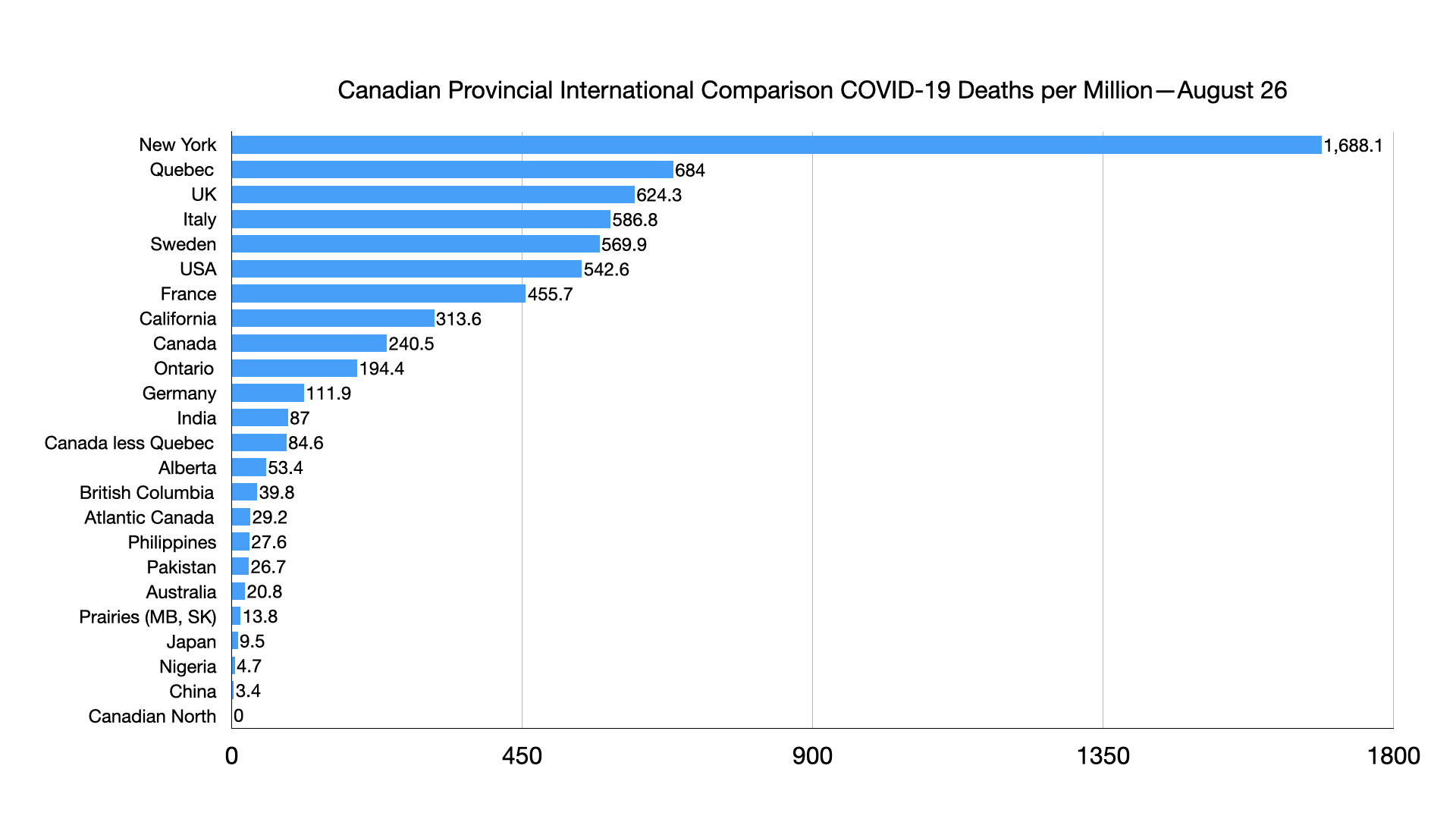
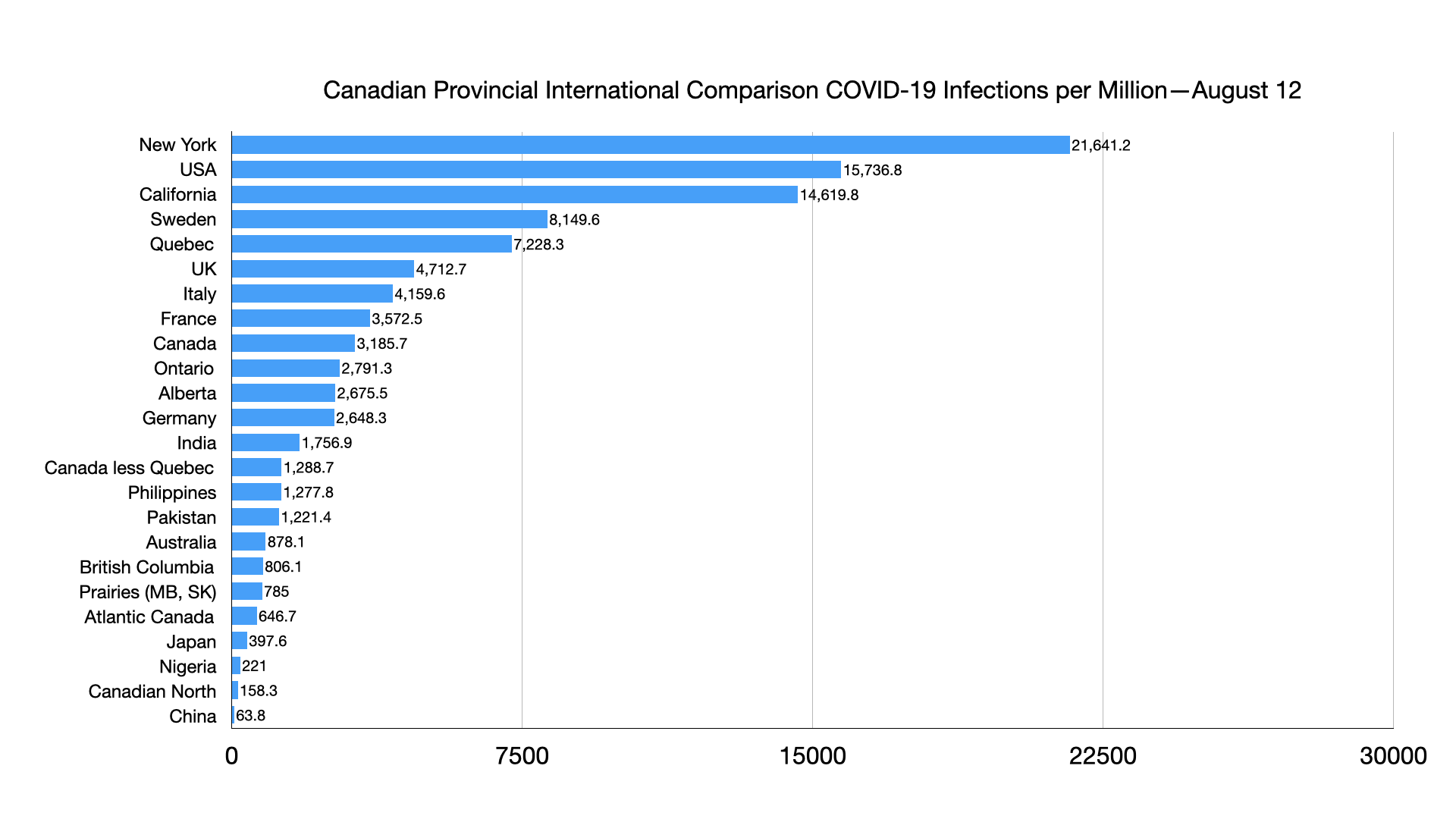
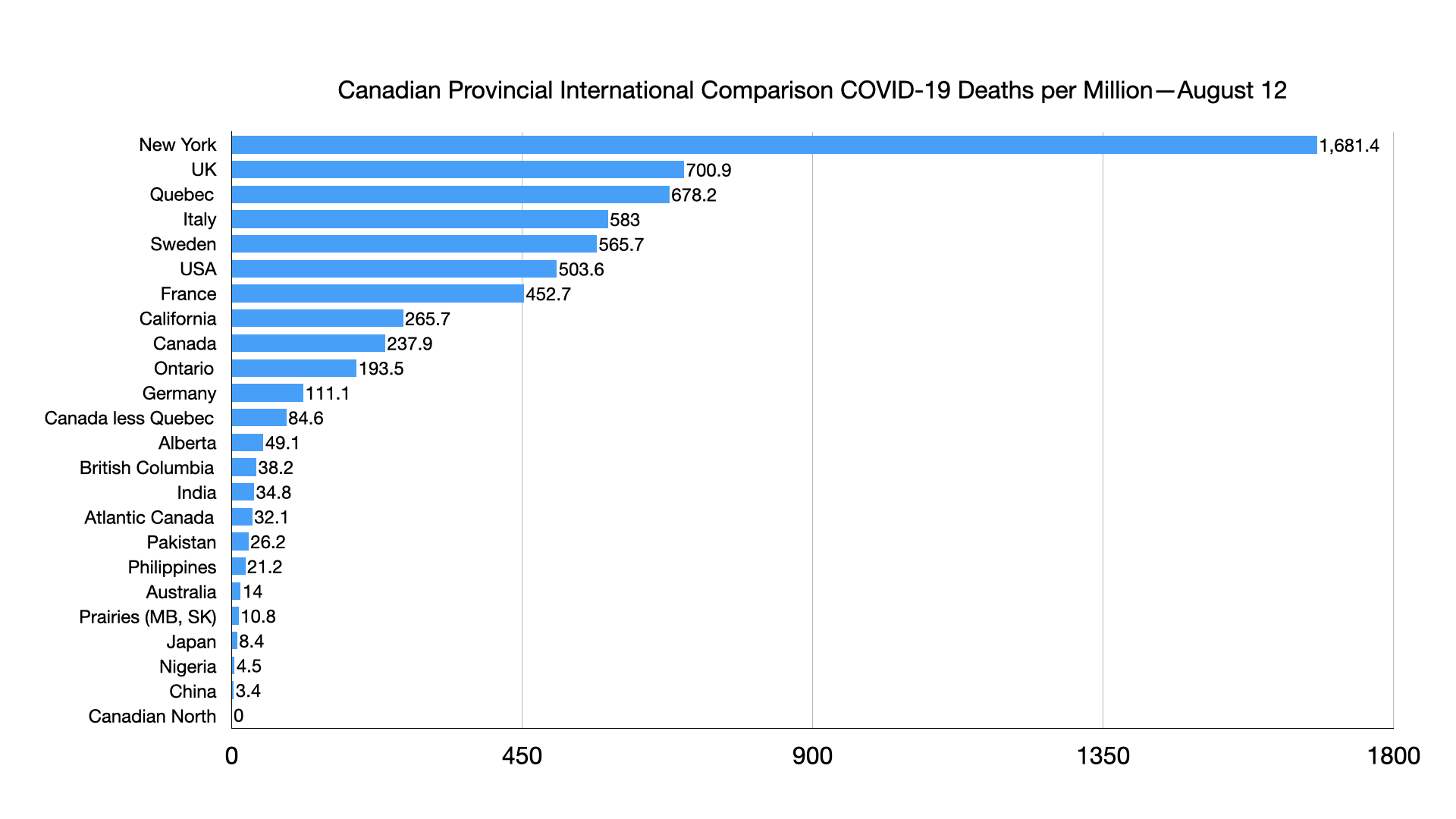
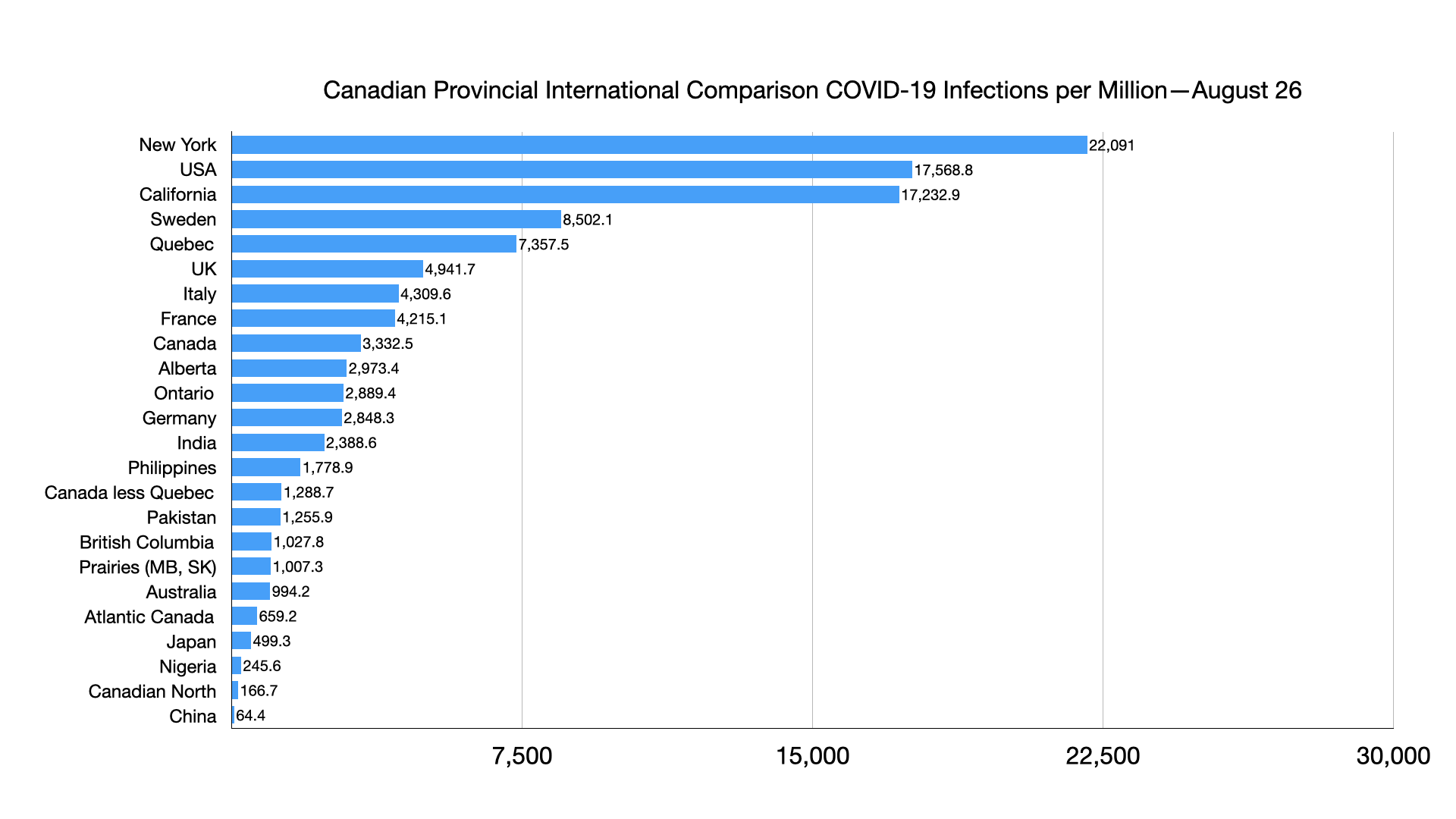
#COVID-19: Comparing provinces with other countries 26 August Update and Globe editorial on Quebec’s handling of the pandemic

Changes of interest include Alberta now has a higher number of infections per million than Ontario, with India and the Philippines having higher infection rates than Canada less Quebec.
India’s death rate per million now exceeds Canada less Quebec.


Lastly, a good Globe and Mail editorial on the failures of the Quebec government in managing the pandemic (Quebec’s COVID-19 death toll is Canada’s highest, and one of the worst in the world. No, that’s not fake news):

There is no province in Canada that has done a perfect job of limiting the spread of the COVID-19 virus. But there is one province that stands out as having done the least perfect job of all, and that is Quebec.

As of Tuesday, Quebec had recorded 724 confirmed cases of COVID-19 per 100,000 people. The national average is 332 per 100,000. The province with the next highest rate, Alberta, stood at 295 on Tuesday.

The same gaps exist in the number of deaths per capita. Quebec has had 67 deaths per 100,000 people – one of the highest death rates in the world, and well above Italy, Spain or the United States. The next highest province, Ontario, is at 19 deaths per 100,000.

It may not be entirely fair to compare across jurisdictions, but Quebec Premier François Legault has invited such scrutiny by resorting to divisive tactics to distract from the painful reality of the crisis in his province.

Last week, he once again accused the veteran health reporter at The Gazette, Montreal’s English-language daily newspaper, of being biased. It was the third time he has claimed that Aaron Derfel is trying to undermine his government with false reporting.

The Premier also said that, if anglophones in Quebec are more worried about catching COVID-19 than francophones, as at least one poll suggests, it must be because they are spending their time reading Mr. Derfel’s tweets and watching CNN and other American news channels.

Attacking journalists and taking cheap shots at a minority group is no way to address a crisis that has claimed the lives of more than 5,700 Quebeckers. Columnists in the province’s French-language newspapers have rightfully pilloried Mr. Legault for trying to shoot the messenger.

Mr. Legault’s tactic has backfired in another way, too, by shining a spotlight on his government’s handling of the crisis. It’s fair to say the Premier has not had a good pandemic.

Not that it’s entirely his government’s fault. Quebec had the misfortune of scheduling its annual school spring break in late February, a week ahead of the rest of the country. Many Quebeckers holidayed in the United States and Europe just as the pandemic was picking up steam. Some experts believe Quebec’s early spike in cases was mostly bad luck.

But the curve of new cases continued to climb after lockdown was imposed in March. And Quebec’s outbreaks in long-term care homes were bigger, longer and deadlier than anywhere else in Canada.

The government’s most glaring misstep occurred on June 24, a provincial holiday, when Quebec’s public-health agency announced it would no longer release data about new cases and deaths on a daily basis – a practice common around the world – and would instead only make them public once a week.

The surprise decision came after Horacio Arruda, Quebec’s chief public-health officer, attended a provincial cabinet meeting at which the issue was discussed, raising concerns that Dr. Arruda had yielded to demands from the Legault government.

Dr. Arruda denied there was any political interference. But three days later, after much criticism from epidemiologists and francophone commentators, the decision was reversed.

In the midst of all that, Mr. Legault demoted his health minister, Danielle McCann, and replaced her with Treasury Board president Christian Dubé.

Firing your lead minister in the middle of a major crisis is never a good look, but Mr. Legault was reportedly fed up with the endless bad news battering his government.

The government has also come under fire for reopening bars in late June, causing a fresh spike in cases, and for raising the maximum number of people at an indoor public gathering to 250 from 50 as of Aug. 3, a move that has backfired in European countries and many American states.

This week it’s the government’s back-to-school plan that is drawing fire. Unlike most other provinces, Quebec students will not have to wear masks or physically distance in classrooms. And parents will not have the option of keeping their children at home to learn remotely, unless they provide a “valid medical note.”

Mr. Legault is not the only premier facing tough questions about their handling of the COVID-19 pandemic. But he’s the only one trying to make a farce of this tragedy, by blaming a reporter for reporting the news.

Source: https://www.theglobeandmail.com/opinion/editorials/article-quebecs-covid-19-death-toll-is-canadas-highest-and-one-of-the-worst/

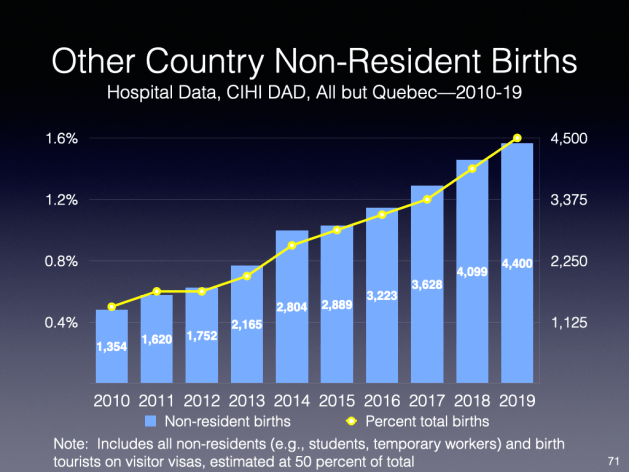
Birth Tourism: Non-resident births 2019-20 numbers show steady increase

The 2019-20 numbers, obtained from the Canadian Institute for Health Information (CIHI) for all provinces save Quebec, show an overall increase of about 7 percent compared to the previous year, with British Columbia showing an increase of more than 20 percent.

Quebec does not authorize CIHI to release their comparable data, unfortunately.

As non-resident numbers are a broader measure than those on visitor visas coming to give birth (e.g., students, temporary workers), my estimate is that about 50 percent are likely birth tourists.

It appears that the efforts underway by IRCC, CIHI and Statistics Canada to link healthcare and immigration data, that would allow identification of those on visitor visas from other non-residents, has stalled given shifting priorities due to COVID-19.

So these numbers remain the best we have.

Vancouver area hospitals (Richmond General: 24 percent, St. Pauls and Mount St. Joseph: 14.1 percent) continue to have the largest percentages of non-resident births, with an active cottage industry supporting women coming to give birth from China. While awareness of COVID-19 in China was greater and earlier than elsewhere, with a corresponding decrease in visitor visas issued and air travel, this did not impact non-resident births, likely given that plans were set.

2020 numbers, of course, are expected to reveal a sharp decline reflecting travel restrictions, particularly with respect to birth tourists on visitor visas.

Hopefully, the work to link healthcare and immigration data will resume shortly, not only to provide more accurate numbers with respect to birth tourism but to improve our understanding of healthcare and immigrants more generally.

My original article on how non-resident birth data provides a better indication of birth tourists, which provoked the government commitment for the aforementioned study, can be found here An analysis of hospital financial data shows that birth tourism is rising, and not just in British Columbia. Two of the critiques are: Revoking birthright citizenship would affect everyone and Birth tourism and the demonizing of pregnant migrant women.

Citizenship - Slide Gallery 2018.071Citizenship - Slide Gallery 2018.072Citizenship - Slide Gallery 2018.073

Ontario students say business schools foster hostile environment

While more anecdotal that evidence-based, still of note given that visible minorities are more prevalent than not visible minorities in business and administration studies as shown above:

Business school students in Ontario are sounding the alarm about what they call outright racism from fellow students and a lack of equity and diversity training among faculty.

A number of social media accounts have popped up in recent months, anonymously recounting stories of racism happening in universities across the province.

Schools such as Queen’s University in Kingston, Ont., and York University in Toronto are among those that have come under fire.

Kelly Weiling Zou, a 20-year-old Singaporean-Chinese student studying commerce at the Smith School of Business at Queen’s, said the racism she witnessed pushed her to create a platform for students to vent about their experiences.

Zou created the Instagram account, stolenbysmith, which has amassed more than 12,000 followers and shared more than 300 stories, ranging from tales about barriers to career opportunities, social ostracism based on students’ backgrounds and encounters with discrimination from faculty.

“The Smith administration has historically failed to respond to students’ call to action in addressing issues of discrimination within the school,” Zou said in an interview. “We can’t change systemic barriers. Only they can as they have the power.”

Meena Waseem, a second-year business student at Queen’s, said her first brush with racism at the school came on her second day of orientation week last fall.

The 19-year-old said one student leader, also in the business program, used the “N-word” in a song to a room full of students.

“Witnessing this was disappointing, and it made me feel unsafe,” Waseem said. “This was the first of many experiences, which made it clear that racism is normalized here.

“For me personally, being a visibly Muslim brown woman at this school is exhausting. Being a lower-income student doubles that exhaustion. I have to consistently advocate for my needs.”

Incidents described as ‘unacceptable and deeply troubling’

Brenda Brouwer, interim dean at the Smith School of Business, said the university is working on addressing concerns raised by its students. She called the incident detailed by Waseem “completely unacceptable and deeply troubling” and said it would be a clear violation of the school’s code of conduct.

“Improving diversity and increasing inclusion is an urgent priority,” Brouwer said. “While progress has been made, we know there is more work to be done, and we will continue to actively foster a culture of inclusion, dignity and respect.”

Aba Mortley, co-chair of the council of anti-racism and equity at Queen’s, said she works as a bridge between faculty and students in order to bring about discussions on campus and in the wider Kingston community.

“There is no denying that these issues regarding Black and Indigenous people are clear and present,” Mortley said.

“No one can say that racism isn’t happening when it is out in the open.”

She said the school is in a better position to work on these discussions now, thanks to the recent momentum of the Black Lives Matter movement.”With all these stories coming out, it is forcing the school to take action,” Mortley said.

Students say schools foster a ‘hostile environment’

Sara Reza, a student at York University’s Schulich School of Business, said discrimination and racism are also present on her campus.

Reza is the founder of a social media account called SilencedatSchulich, which, like Zou’s account, highlights the stories of Black, Indigenous and students of colour at York’s business school.

“Business programs rarely integrate diversity and inclusion, which fails to address the persistent inequality that exists in our communities and worldwide,” she said.

Reza said business university programs foster a “hostile environment” in which topics of privilege, inequality and race are rarely brought up in the classroom.

Humera Dasu, a third-year York student, said she was left feeling uneasy when a white professor and group of students allegedly made inappropriate comments when discussing Islam.”The professor implied to a class of 50 students that she thinks the religion is oppressive to women,” said Dasu, 20.

“I was deeply offended and hurt.… Islamophobia has been normalized to the point that such a comment can be made in a classroom environment.”

‘More needs to be done,’ says interim dean

Detlev Zwick, interim dean at Schulich School of Business, said the school is aware of concerns brought forward recently by students and graduates.

“The Schulich School of Business does not tolerate or excuse discrimination and racism of any kind. As one of the most diverse business schools in North America, Schulich has a long tradition of actively encouraging and supporting inclusivity and diversity,” he said.

“Obviously, more needs to be done, and we have already begun taking action in various ways to ensure greater awareness surrounding issues of racism, especially anti-Black racism, as well as sexism and discrimination.”

Zwick said the school is also currently in talks with other leading business schools in Ontario regarding several joint initiatives to tackle barriers for Black and Indigenous students, particularly from high schools in economically disadvantaged communities.

Source: Ontario students say business schools foster hostile environment