Welcome to the country: Refugees are helping a prairie town grow

Good long read by Erin Anderssen on the welcome and support given to Syrian and other refugees in Altona, Manitoba, a community originally settled by Mennonite refugees.

Source: Welcome to the country: Refugees are helping a prairie town grow – The Globe and Mail

Josiah Wilson, the Indian Act, hereditary governance and blood quantum

Fascinating account of the different aspects of identity, ranging from bloodline requirements to culture, and the challenge this poses across a number of fronts:

The story of Josiah Wilson, the Haiti-born, Heiltsuk First Nation adopted basketball player, has raised questions of Indigenous identity much bigger than whether he should be allowed to play in an All-Native Basketball Tournament in B.C.

The tournament committee’s decision to ban Wilson, 20, a status Indian, because he doesn’t have at least 1/8th First Nations ancestry or “blood quantum” is a symptom of a greater conflict.

This conflict lurks in band offices, treaty offices, on the land and on reserves across the country.

What, or who, defines someone as Indigenous — is it the hereditary system, the Indian Act, a blood test?

According to the Canadian government, Wilson is an “Indian.” According to the Heiltsuk, he is Heiltsuk. And according to the All-Native Basketball Tournament, he is an adoptee, Canadian and Haitian, but not Heiltsuk.

Heiltsuk hereditary system

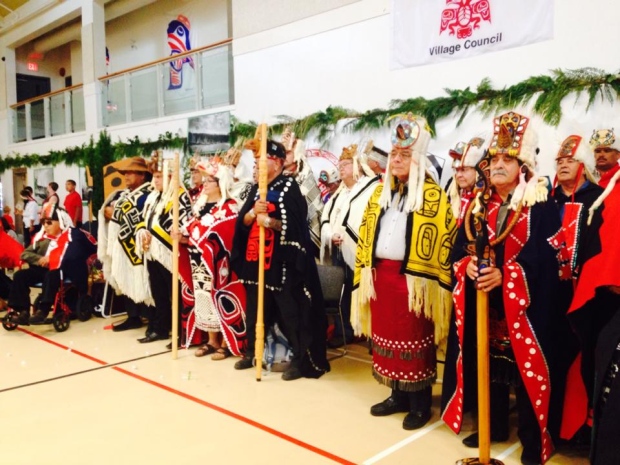
In the eyes of the Heiltsuk Hemas (hereditary chiefs), Wilson is Heiltsuk. The Hemas embody the Heiltsuk Nation’s traditional social structure and hereditary system of governance, which identifies members through cultural protocol and a connection to family crests and clans.

Heiltsuk Hemas standing with Haida Hereditary Chiefs

In the eyes of the Heiltsuk Hemas (hereditary chiefs), Josiah is Heiltsuk. Here, Heiltsuk Hemas are shown with Haida hereditary chiefs. (Don Wilson/Facebook)

Heiltsuk cultural adviser Frances Brown says the hereditary system is a complex set of laws that governs not only a responsibility to the land, but also social relationships to one another, including adoption.

“If there’s a customary adoption it means that you adopt a child and you do it in a potlatch where there’s many witnesses and the chiefs are there,” said Brown.

Gary Housty was one of the Heiltsuk Hemas to witness the ceremonial adoption of Wilson by a First Nations family. He says he wrote a letter to members of the all-native committee urging them to let Wilson play, but received no response.

“I really have a problem with the way they’re setting down rules that disallow people to participate in these very important cultural events, such as the All-Native Tournament. There’s so much culture there. And we are talking about culture here.

“In my eyes Josiah is a Heiltsuk boy, a Heiltsuk person. He belongs here with us,” said Housty.

Source: Josiah Wilson, the Indian Act, hereditary governance and blood quantum – Aboriginal – CBC

U of T gets personal with staff to track race, gender data

Lessons for the federal public service and other organizations?

Particularly significant is the removal of names from resumés to remove implicit (and explicit) bias.

Ontario EducationI was able to drill down to visible minority groups using NHS data for the  education sector as in the chart above for Ontario, as differences among groups are increasingly more important than between visible minorities and non-visible minorities:

Canada’s largest university is asking its employees remarkably personal questions — from what race they are and where they come from to whether they’re transgendered — in a bid to make sure certain groups aren’t being left out of jobs and promotions.

In a new survey given this week to all 10,000 employees from professors to secretaries, the University of Toronto goes beyond asking staff if they see themselves as “persons of colour” or “racialized,” to whether they are black, white, Asian, Latin/Hispanic, Middle Eastern or mixed.

And that’s just to start.

The updated Employment Equity Survey then dives to a level believed unmatched on any other Canadian campus: If you answer ‘black,’ are you African, Caribbean, European, North American or South American?

If you said Asian, do you mean East Asian (Chinese, Japanese, Korean), South Asian (Indian, Pakistani, Sri Lankan), Southeast Asian (Malaysian, Filipino, Vietnamese) or Asian Caribbean from, say, Trinidad? Hispanic employees are asked if their heritage is Caribbean, Central American, European or South American.

The questions also offer a sneak peek at what the university’s 85,000 students will be asked this fall on its first student demographic survey.

“Students have made it very clear they don’t see themselves reflected in faculty and staff, so collecting data is part of an overall move to get a better sense of who is under-represented so we can do better outreach and targeted recruitment,” said Angela Hildyard, vice-president of human resources and equity.

Like other organizations that do a certain amount of business with the federal government, U of T has for decades been required to track its employees by gender, disability, whether they’re aboriginal or members of a ‘visible minority.’

“But this language no longer makes sense,” said Hildyard, especially with students. “If you’ve been to one of our convocations lately, you’ll see we’re so diverse, the visible minority would likely be white.” Even changing the category last year to “person of colour or racialized person” shed little light on the true diversity of campus workers.

“If equity and diversity are linked to excellence — and we are the only university in North America to have a statement making it clear we’ll only be excellent with diversity and equity — then we need to collect more information on how different groups are represented on campus.”

Some black faculty members have been vocal about the need to increase their ranks, she said, “but we have no idea how many we have because we don’t have data. This gives us a better sense of who we have here and if they are under-represented, and target candidate pools.”

Moreover, the university will start giving the survey to job applicants as well, so it can track where the gaps begin.

“Black students feel woefully under-represented (among U of T faculty and staff), so this will allow us to actually see the numbers of black applicants in the first place, and are they being shortlisted? Is there some kind of discrimination going on?”

Too, U of T will take the unusual step of removing names from job applicants’ resumés “to see if that enhances certain groups’ possibility of being interviewed. We always want to be sure we hire the best candidate, but is there something happening (that blocks particular groups) like hiring committees having a bias against certain kinds of names?”

Anecdotally, the ranks of professors at Canadian universities “are not very representative of the wider population,” noted David Robinson, executive director of the Canadian Association of University Teachers, “so gathering this kind of information is a positive thing.” It also could help reveal which university departments are less diverse than others, not only with regards to race, but also gender and abilities.

The U of T survey asks about disabilities and sexual orientation, and a new question on gender includes check-boxes for man, woman, two-spirit, “another gender identity” or “trans: a person who identifies with a gender other than the one assigned to them at birth, or differs from stereotypical masculine and feminine norms.”

Said Hildyard: “The data can help us learn who applies, who gets shortlisted, who gets interviewed for jobs, so if we find the candidate pool is not diverse, that’s where we can focus our efforts.”

Source: U of T gets personal with staff to track race, gender data | Toronto Star

Christie Blatchford: We need light, not heat as violence by and toward police grows

One of her better columns:

As Martin Luther King, Jr. said in the very first speech that brought him to wide American attention, “There comes a time when people get tired.”

Well then, let’s hope we are all there now — the frightened and furious young black men whose brothers are shot and killed by U.S. police in staggering numbers and in sometimes galling circumstances, the scared and beleaguered police, and yes, the mass media and social media with our giddy group embrace of violence in all its forms.

As the CNN commentator Van Jones said Friday, if you bleed for Alton Sterling and Philando Castile (the black men killed by police this week in Baton Rouge, La., and near Minneapolis, Minn.) but not for the five dead Dallas police officers murdered during a Black Lives Matter protest Thursday night, “you need a heart check.” If you bleed for the slain police but not for Sterling and Castile, Jones said, “You need a heart check.”

It is, in other words, time for empathy, that great saving human ability to feel the pain of another without having to have walked in his actual shoes.

The great American civil rights leader made his speech on Dec. 5, 1955.

It was long ago and far away.

King was in Montgomery, Ala., about 585 kilometres from Baton Rouge, where Sterling was killed, and almost twice that to Falcon Heights, Minn., where Castile was shot to death.

But what he said, in part, to a thousand black Americans crowded into the Holt Street Baptist Church that night was this: “We are here this evening to say to those who have mistreated us so long that we are tired — tired of being segregated and humiliated; tired of being kicked about by the brutal feet of oppression.

“There comes a time my friends when people get tired of being plunged across the abyss of humiliation, when they experience the bleakness of nagging despair.”

Segregation ended, though it was another nine years before the Civil Rights Act of 1964 put an official end to it, and while much has changed, does that language not sound an awful lot like the same general bone weariness heard in recent weeks from black residents in U.S. city after U.S. city and even in Toronto? It does.

This week, former Canada AM news anchor and co-host Marci Ien was a guest host on The Live Drive, a Newstalk 1010 radio show.

Conflict-of-interest declaration, I do a bit on the show, but listened afterwards as Ien spoke with tremendous eloquence of her experiences as a smart young black woman growing up in Toronto.

In her quiet voice, she said, “There isn’t a man in my life, from my father who’s in his 70s to my husband to my brothers-in-law, who hasn’t been stopped by police (in effect, for driving while black) at some point.”

Born and raised in Scarborough, Ont., and proud of it, Ien had a girl seven years before she learned her second child was a boy. “My heart skipped a beat,” she said, “when I realized I was having a son. I was worried. No mother should ever feel that.”

Now, as her little boy grows up, Ien said, she is braced for the conversation she will have to have with him — about the clothes she wonders if he can wear (“Can he wear a hoodie? Low-slung jeans?”) and how he’s to behave if he’s stopped by police. “The utmost respect should be there anyway,” she said, meaning she and her husband would teach that as a matter of course, but their son will be told to ramp it up.

“These are the conversations black families have with their sons and the young men they care about,” she said. If this great woman has to have this sort of discussion with her son, that’s something the rest of us, including the police, have to accept.

Ien was commenting on Tuesday, after Sterling’s death, but before Castile’s and before the shocking Dallas mass murder.

The officers — seven others were wounded — were slain by what the FBI says now was a lone sniper, 25-year-old Micah Xavier Johnson, a former U.S. Army reserve veteran.

Dallas Police Chief David Brown said that before he was essentially blown apart by a bomb-laden robot the police force dispatched, Johnson told hostage negotiators “he was upset about Black Lives Matter. He said he was upset about the recent police shootings. The suspect said he was upset about white people. The suspect stated he wanted to kill white people, especially white officers.”

Armed to the teeth, better equipped than the unsuspecting police watching over the protest, Johnson did just that.

The ambush came everywhere as a terrible shock to police officers, who, as Chief Brown said drily at one point, “aren’t very accustomed to hearing thank you, sometimes from the citizens who most need our help.” That’s putting it kindly; even at peaceful protests, even in Canadian cities, police are routinely faced with people spitting at them, cursing them and trying to provoke them.

Yet few of them would have predicted what happened in Dallas.

It was Newstalk host Jay Michaels who suggested Friday that just as hateful ISIL propaganda and violent beheading videos on the web have served to radicalize unhappy young men in the West and turn them into homegrown terrorists, so perhaps the constant inflamed rhetoric about police violence in the press and the ghastly cellphone videos of police shootings may have inspired Johnson.

It feels as though we’re on a precipice. We need to be accountable for what we collectively have sown: the bad and racist police officers and the forces that employ them, the empty violent rhetoric of the mob, and the media and web airing of every grievance anywhere in the world and making it local.

What we need is light, not heat, and we need to do Van Jones’ heart check.
Source: Christie Blatchford: We need light, not heat as violence by and toward police grows | National Post

Shootings raise unanswered life-or-death question for black men in America: Neil Macdonald

Good column by Macdonald:

In the racially electrified fog of fear and rage following the events in Dallas Thursday, one question remains conspicuously unanswered: If you are a black man in America, how are you supposed to cope?

President Barack Obama has no real answer, nor do the members of Congress who bowed their heads in memory of the slain Dallas police officers, nor does Dallas’s anguished police chief, a black man himself.

The deadly consequences of carrying while black
#SayHisName: Americans react to videos of police killings
The only advice black Americans seem to get is to respectfully submit when some cop calls them out on the street, or looms at the door of their car, or shows up at their home, no matter how terrified they may be.

‘Comply, comply, comply’

For heaven’s sake, don’t give the officer any lip, or try to run away, even if you aren’t guilty of anything, and no matter how abusive the cop may become.

Because if you are black, that policeman is far more likely to gun you down, or choke you to death, or Taser you, or beat you into a coma.

“Comply, comply, comply,” Philando Castile’s mother says she used to tell him. “Comply — that’s the key thing in order to try to survive being stopped by the police.”

‘When is it going to stop?’: Philando Castile’s family speaks out1:10

Perhaps Alton Sterling’s parents gave him the same counsel. It’s as common for black parents to have that talk with their kids as it is for white parents to warn about talking to strangers.

But of course supine compliance does not guarantee survival at the hands of police if you are black in America (or, to be honest, if you are Indigenous in some parts of Canada, but that’s a separate discussion).

Philando Castile was evidently complying with the Minnesota policeman who’d pulled him over for a broken tail light this week when that policeman opened fire through the driver’s window. The police force has not said otherwise.

And a day earlier, Alton Sterling was pinned down, hands free of weapons, when two Louisiana cops shot him in the back and chest.
After the Castile killing, Minnesota Gov. Mark Dayton stated the obvious: “Would this have happened if those passengers, the driver and the passengers, were white? I don’t think it would have …”

There is simply no question that your race can determine whether you live or die at the hands of police in America. If you are black, you are several times more likely to be killed.

Benefit of the tiniest doubt

And, chances are, your killer will walk away, unpunished, and likely consoled by his fellow officers for having had to go through such trauma.

Source: Shootings raise unanswered life-or-death question for black men in America: Neil Macdonald – Politics – CBC News

Panel addresses realtor language barrier in British Columbia – The Globe and Mail

Yet another aspect of Vancouver’s real estate industry problems:

Many of B.C.’s realtors lack the English skills necessary to protect buyers and sellers in a market where English is the operating language for licensing education and official contracts, says a report from an independent panel being used by the provincial government as a road map for regulation reform.

Among the panel’s 28 recommendations is a suggested comprehensive review of the licensing and education requirements for aspiring realtors, including a consideration of the role of fluency in a market where many licensees deal mainly with fellow non-native English speakers.

The provincial government released data on Thursday showing that during a three-week period last month, about one in 20 homes in the Vancouver area was purchased by a foreign buyer, the majority from China. But even if many transactions are conducted in a language other than English, the formal documents required to complete the deal are entirely in English.

“This creates a risk that licensee’s education and ongoing proficiency will be impacted by language proficiency or comprehension issues,” the report stated. “This is a risk that the regulator cannot ignore.”

Many long-time agents have argued the current system makes it far too easy for anyone to join the industry and that language proficiency requirements are too easy to skirt.

Aspiring real estate agents in British Columbia must spend at least 10 weeks completing a series of online assignments through the University of British Columbia’s Sauder School of Business. Applicants must then complete a 100-question multiple-choice test, earning a mark of 65 per cent or higher, to become licensed.

If they weren’t educated in English, the real estate students must also write a separate exam where they prove their fluency by attaining a mark of at least 60 per cent on a several-hundred-word essay.

Language proficiency within the real estate industry has become part of the charged debate around foreign ownership. But formal complaints about it are rare: A search of recent disciplinary decisions by the Real Estate Council of B.C. failed to turn up a case of realtor wrongdoing where a language barrier was a direct factor.

Tony Gioventu, a member of the advisory panel and head of a trade association for B.C.’s condominium owners, said submissions from the public and industry insiders to the advisory panel made it clear that language proficiency has been an issue.

“The parties didn’t necessarily always understand what they were signing or what the implications of what they were signing was,” he said.

Several real estate brokerages offer prep courses to help aspiring realtors cram for the multiple-choice licensing exam, as well as the essay component that non-native speakers must write.

New Coast Realty, one of Metro Vancouver’s most controversial and fastest-growing brokerages, has five branches across the region that prep students seeking to become licensed.

“This complicated professional course intimidates even native English speakers. The difficult-to-understand legal and real estate terms discourage many otherwise interested people,” states a Chinese advertisement for the company’s prep course. “Our knowledgeable instructors and concise materials will help you learn easily and pass the exam quickly, paving the way for your career or investment plans.”

UBC in the past has defended its licensing program as rigorous, but says it looks forward to working with the government to “help to promote public protection and satisfy the professional education requirements” of realtors across the province.

Realtor Gary Wong suggested that adding a written essay or oral exam component to the multiple-choice licensing test would automatically raise the language-proficiency bar and make it harder for everyone to become a realtor, something the province has promised to do as it overhauls the existing real estate regulations.

He said roughly half the Chinese-Canadian agents he deals with see his name and start their conversation in Mandarin. Mr. Wong, who speaks Cantonese and only a smattering of Mandarin, said business continues as usual once he asks them to switch back to English.

“It’s not the greatest, but you can work around it,” he said, noting that agents can use templates for most contract clauses, which eliminates grammar mistakes or spelling errors.

Source: Panel addresses realtor language barrier in British Columbia – The Globe and Mail

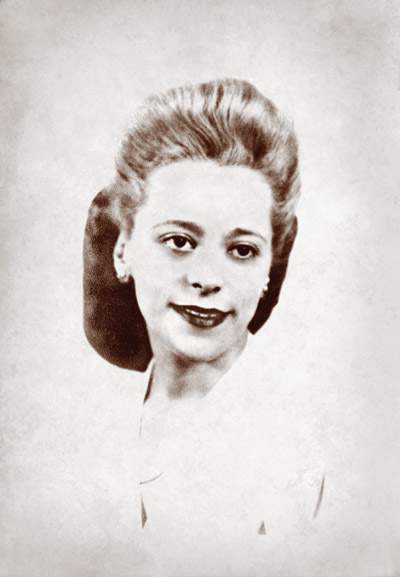
Viola Desmond’s ‘singular act of courage’ paid tribute with Halifax ferry named for civil rights pioneer

Good person to recognize:

A black businesswoman whose contribution to the civil rights struggle in Canada went largely unrecognized for decades has begun to assume her rightful place as a national hero, according to historians.

On Thursday the city of Halifax launched a new harbour ferry named for Viola Desmond, whose simple act of defiance nearly 70 years ago exposed the injustice of racial segregation in her home province and elsewhere in Canada.

Handout / AFP / Getty Images

Handout / AFP / Getty ImagesDesmond is on the short list of potential women to be the first featured on a Canadian banknote, due to be issued in 2018.

It’s the latest in a growing list of tributes for Desmond, who was briefly jailed in November, 1946, for sitting in a whites-only section of a segregated movie theatre in New Glasgow, N.S. A stamp was recently issued in her honour, and Desmond is also among the candidates to become the first woman featured on a Canadian banknote.

Graham Reynolds, a history professor at Cape Breton University, said Desmond’s story has gained more prominence over the past decade — in particular since 2010 when the Nova Scotia government apologized and granted a special pardon to Desmond, who died in 1965.

“There has been a tremendous raising of public awareness,” said Reynolds, the university’s Viola Desmond Chair in Social Justice. “More so in Nova Scotia, but she does have national stature.”

Desmond, who sold beauty products, was on a business trip to Sydney, N.S., when her car broke down. She decided to kill time while it was being repaired by attending a movie at the Roseland Theatre in New Glasgow.

Reynolds said Desmond, who had vision problems and wanted to be closer to the screen, would not have automatically assumed that the main section was whites-only. He said there was no legal underpinnings for segregation in Canada, where segregation became the norm under the principle of freedom of commerce.

She wasn’t an activist, she was a citizen that faced a situation and had the courage to stand up and resist

“In Canada … the practice of racial segregation was really a matter of local business practices,” he said.

Police were eventually brought in by management and Desmond was forcibly removed after refusing to leave her seat and she subsequently spent the night in jail.

She was eventually convicted of defrauding the province of a penny, which was the difference in price between the main seating area and the balcony. Desmond paid a $20 fine in addition to the theatre’s $6 court costs.

But her fight didn’t end there. Desmond returned to Halifax, where she rallied the black community to help her launch an appeal of her conviction.

However, that effort went down to defeat when the Nova Scotia Supreme Court dismissed an application for judicial review in 1947. Desmond eventually left Nova Scotia and died in New York City at the age of 50.

Source: Viola Desmond’s ‘singular act of courage’ paid tribute with Halifax ferry named for civil rights pioneer | National Post

Government by referendums is not democracy – Cappe and Stein

One of the better articulations against referendums by Mel Cappe and Janice Gross Stein:

The value of representative democracy has been clear since Edmund Burke wrote in the eighteenth century. Public policy problems are by their nature complex. Representatives, meeting again and again formally and informally, can study, analyze and deliberate before they make their judgments. Referendums, by definition, require simplified “yes” or “no” choices and a one-time only opportunity to vote.

This is not, as some populist critics allege, a defence of “elitism” or the “hubris of experts.” Rather, it is an acknowledgment that it is the full-time responsibility of elected representatives to deliberate and come to an informed decision. They are accountable to the voters if they do not, and can be removed from office. Members of the public, by definition, have no such responsibilities or accountabilities.

Referendums also polarize opinion and sharpen divisions among the electorate. It is almost an inevitable result, as partisans on both sides seek to mobilize voters, often by invoking stereotypes and playing to the fears of the public. Witness Jacques Parizeau and Nigel Farage.

The public often responds emotionally to these arguments, especially in a climate of insecurity that is in part the result of leaders on each side manipulating fear to get out the vote.

Especially in these kinds of circumstances, the debate that leads up to a referendum can ride roughshod over the rights of minorities. Immigration in Britain from former colonies surpasses immigration from other countries in the European Union and far exceeded immigration of Syrian refugees. But Nigel Farage used his Breaking Point poster of refugees from the Middle East to whip up passions against the EU. There was no discussion during the period before the referendum that Polish plumbers and Romanian hair stylists were generally doing jobs that Britons were not disposed to do. Polls after the referendum showed that these kinds of attacks against minorities and refugees worked; immigration was the overriding issue among those who voted Leave.

Parliamentary debate is a different kind of process. Debates are a matter of public record and representatives are accountable for their comments. In well-functioning democracies, parliamentarians – not always but often – work to find solutions that serve the interests of the majority but simultaneously protect the rights of minorities. The debate on the right to assisted death in Canada was an example of exactly that kind of debate. For electoral reform in Canada, parliament should study it, consult the public, deliberate and then allow members a free vote on the issue.

Finally, there is a challenge function in parliamentary debate that helps to inform representatives and correct glaring errors of fact. This is especially the case when an independent and vigorous media report on parliamentary debates. This challenge function was largely absent in the run up to the British referendum. Boris Johnson disavowed his allegation that 350-million pounds a week that was going to the European Union would go to the health care system … but only after the vote. Nigel Farage’s charge that Britain would be overrun by immigrants from Turkey was finally exposed as an entirely imaginary issue … but only after the vote.

Misrepresentations and outright lies dominated the referendum debate in ways that would have been unsustainable in a contested parliament where members can challenge each other.

Source: Government by referendums is not democracy – The Globe and Mail

ICYMI: Did you also celebrate Multiculturalism Day? | Mark Bonokoski

The choice and use of words reveals his underlying xenophobia and anti-immigrant views:

“Multiculturalism is our strength,” our PM said in his statement. “It is as synonymous with Canada as the Maple Leaf.”

This is a very strong analogy, especially coming so close to Canada Day, and on the heels of last year’s 50th anniversary of the Canadian flag.

It is also an ill-thought comparison.

Canada is not the Canada of our grandparents, of course. Its British-French roots are withering with each new wave of immigration, with the Official Languages Act the only major factor reminding Quebecers they were founding fathers and therefore essential to the future of our nation as a whole.

Our whiteness, too, is dissolving. According to the Government of Canada, the majority of today’s immigrants now come from Arab League countries, China, the Philippines and India.

A full quarter of Canada’s population speak languages other than French and English.

This is not a criticism, nor racism. It’s just a statistical fact.

During the 2015 federal election, which saw the Harperites demoted to Official Opposition, the influence of the immigrant demographic, and particularly issues dealing with their religion, was both persuasive and incendiary, aided and abetted by politically-correct progressives whose myopic ignorance regarding inclusiveness is often staggering.

The niqab, a head scarf arbitrarily worn by many Muslim women that covers all but the eyes, became an election flashpoint against the Conservatives, who simply wanted it removed momentarily during citizenship ceremonies.

Pushback against the Conservative campaign’s musings about a hotline to report “barbaric cultural practices” like female genital mutilation was so intense that you’d think the Harper government was handing out the scalpels.

Who, even five years ago, would have conceived that these would be front-and-centre election issues in Canada that would play a role in overthrowing a government?

Source: Did you also celebrate Multiculturalism Day? | BONOKOSKI | Columnists | Opinion

ICYMI: Isolationism and the fear of the foreign: Saunders

Saunders largely nails the electoral calculations of political figures:

What caused a complete reversal of positions in 2016? It certainly wasn’t logic or ideological coherence. Rather, it was electoral calculation: In 1975, fear of economic ruin was a potent driver. In 2016, fear of outsiders was equally strong.

Arguments in favour of cutting off trade and political relations have almost always been, at root, election bids based on fear of the foreign. That doesn’t mean that every trade agreement is a good idea, or that policies to protect or bail out national industries are wrong. But exits, prohibitive tariff walls, or complete isolation are never rational or principled.

The original free-trade battles of the 1860s pitted isolationist segregationists and colonialists against movements that linked free trade with peace and anti-slavery campaigns. The 1930s isolationism was tightly linked to the exclusionary nativism of the time. A large part of the opposition to Canada-U.S. free trade in the 1980s was pure anti-Americanism. Donald Trump’s pitch to completely cut off China and Mexico has nothing to do with economic logic, or conservative values, but with a manipulated hatred of the foreign.

The fact that left and right have traded positions so many times shows isolationism for what it is: not ideology or economics, but a reflex appeal to fear.

Source: Isolationism and the fear of the foreign – The Globe and Mail